
Roasting is where cookware gets exposed. Not “weeknight pasta” exposed. I mean the full stress test: high heat, heavy birds, splattering fat, bubbling drippings, oven mitt chaos, and that one moment when you pull the pan out and realize… your handles are wider than your oven rack.
If you’re shopping for a stainless roasting pan with rack, you’re not really buying a pan. You’re buying outcomes: crisp skin instead of steamed skin, drippings that don’t scorch into bitter black, and a rack that lifts cleanly without bending like a paperclip when you’re carrying dinner.
Most buying guides treat roasting pans like sheet pans with taller sides. That’s the fastest way to end up disappointed. A roasting pan is an ecosystem: the metal thickness affects how drippings behave, the rack geometry changes airflow and browning, the handle design decides whether it fits in your oven, and the cleaning reality determines whether you’ll actually use it outside of holidays.
So here’s the promise of this guide: we’re going beyond “bigger is better” and into the real-world friction points that show up in owner feedback again and again—warping, handle clearance, rack stability, gravy-making practicality, and clean-up sanity. By the end, you’ll know exactly which pan matches your oven, your cooking style, and your “I never want to fight this again” threshold.
Below are 15 standout picks—from professional clad roasters to lidded monsters for big gatherings, plus a couple of specialized options for small ovens and smokers. The goal isn’t to overwhelm you. It’s to make your decision feel obvious.
In this article
How to Choose the Right Stainless Roasting Pan With Rack
A roasting pan is one of those purchases that can either feel “boringly perfect” for 20 years… or become the pan you avoid because it’s awkward, warps, or cleans like a nightmare. The difference is rarely the brand name on the box. It’s whether the pan matches your oven, your roasting habits, and the way you actually cook on big days.
1. Start with your oven reality (not your fantasy turkey)
The #1 roasting-pan mistake isn’t buying “too small.” It’s buying a pan that technically holds a bird, but doesn’t live well in your oven. That shows up as:
- Handles that steal rack space (a “16-inch pan” becomes 21 inches overall).
- Pan walls that crowd airflow (your turkey roasts unevenly because heat can’t circulate).
- A pan that forces you to remove an oven rack (which feels fine… until you need space for sides).
Before you buy, do a two-minute oven check: measure the usable rack width (not the door opening), and pay attention to how your oven rack slides. If your rack wobbles when extended, you want a pan with handles that give you control, not just something to grab.
2. Choose your roasting “style” first
Roasting pans aren’t one-size-fits-all because roasting isn’t one-size-fits-all. Most home cooks fall into one (or two) of these patterns:
- The holiday host: You roast big poultry once or twice a year and want a pan that feels “heirloom,” not flimsy.
- The weekly roaster: You roast chicken, pork loin, vegetables, and sheet-pan-style dinners often—your pan needs to clean easily and store reasonably.
- The gravy maker: You want to deglaze drippings on the stovetop without scorching or hot spots.
- The smoker/grill cook: You need a pan that behaves as a drip pan, a roasting pan, and sometimes a rib setup.
- The small-oven cook: You want smart handle geometry and a pan that doesn’t bully your oven cavity.
Once you know your type, the right pick becomes obvious. The wrong pick becomes expensive clutter.
3. Understand why rack design is not “just a bonus”
A rack changes roasting physics. It lifts meat above the drippings, which does three big things:
- Improves browning by letting hot air circulate under the roast.
- Keeps skin and fat from stewing in liquid (especially poultry).
- Gives you cleaner drippings because the roast isn’t blocking evaporation across the pan bottom.
But not all racks behave the same:
- V-shaped racks are the classic turkey/prime rib choice. They cradle rounder roasts and help fat render evenly down the sides.
- Flat racks are fantastic for spatchcock chicken, ribs, salmon, and vegetables—anything you want laid out and browned evenly.
- U-shaped racks are common in nonstick roasters and are surprisingly good for easy lifting, but often sit a bit lower.
In real life, the best situation is a rack that feels sturdy and has enough clearance to keep food above the “drippings line,” while still leaving room for vegetables underneath. Bonus points if the rack has handles that let you lift a roast without jabbing forks into it (which loses juice).
4. Metal construction: why drippings either behave or burn
Roasting pans live in a tough zone: the oven is hot, but drippings can be sugar- and protein-heavy (hello, sticky glaze), and those drippings sit directly on metal. Here’s how construction impacts your day:
- Clad (3-ply/5-ply) pans distribute heat more evenly across the base and often up the sidewalls, which helps drippings reduce instead of scorch in one spot.
- Thicker single-layer stainless can still be excellent if it’s truly heavy gauge; it resists warping and holds heat well.
- Thin pans can roast fine, but they’re more likely to warp, and drippings can burn in hot spots—especially if your oven runs hot or you roast at high heat.
If you plan to make gravy in the pan on the stovetop, construction matters even more. A pan that heats evenly across burners feels like a cheat code. A pan with uneven heat becomes the reason your gravy tastes “a little too toasted.”
5. Depth and sidewall shape: the hidden “mess control” feature
Shallow pans brown vegetables beautifully, but they splatter more and don’t hold as much liquid. Deep pans contain more drippings, accommodate taller roasts, and reduce mess—but can restrict airflow if the roast sits too low.
Here’s the practical sweet spot:
- Holiday turkey & big roasts: medium-to-deeper walls help control splatter and hold drippings for gravy.
- Weeknight chicken & vegetables: a slightly shallower profile can brown better and store easier.
- Covered roasting: deeper, lidded pans shine when you want moist heat and controlled evaporation.
6. Handles: comfort is safety (and fit)
Handles aren’t a style choice. They’re a safety system. The best handles do three things:
- Give mitt space without forcing your wrists into the oven door.
- Stay clear of food so they don’t press into a large bird or roast.
- Don’t steal oven width so the pan fits without drama.
Vertical or “inset” handles (seen on several premium pans) are especially helpful if your oven is tight. Traditional outward handles can be comfortable, but you want to confirm overall width before committing.
7. Lid or no lid? It depends on your goal
Lids can be game-changing—if you want moist heat, controlled drippings, and a calmer roast. But they also change the result: a covered roast browns less aggressively unless you finish uncovered. This can be perfect for:
- Keeping turkey breast moister during the main roast, then uncovering for final browning.
- Braising-style roasts where you want a tender, fall-apart texture.
- Transporting food or holding heat while carving.
If your pan doesn’t have a lid, a snug foil seal can do a similar job—but only if the handle design doesn’t prevent a tight seal.
8. Cleaning and “will I actually use this again?”
Roasting pans earn their keep when you use them more than twice a year. That means cleaning matters. A few reality-based notes:
- Polished stainless looks gorgeous and cleans well, but shows scratches (normal and not a performance problem).
- Dishwasher-safe is convenient, but hand washing often preserves the finish longer (especially with high-alkaline detergents).
- Nonstick racks can make lifting and cleanup easier, but require gentler tools and more careful handling.
9. The “hard day” test (the only test that matters)
Your hardest day is the one where you’re cooking multiple dishes, juggling timing, and moving a heavy pan while tired. So choose a pan that helps on that day:
- Sturdy rack that won’t flex under a large roast.
- Handles you can grip confidently with oven mitts.
- Even heating so drippings reduce instead of burn.
- Clean-up that doesn’t punish you after guests leave.
Quick Comparison: 15 Stainless Roasting Pan With Rack Picks
Use this table to spot the pans that match your cooking personality fast—then jump into the deep reviews for the real-life details: handle clearance, rack behavior under heavy loads, drippings performance, and which pans feel like “forever gear.”
On smaller screens, swipe or scroll sideways to see the full table.
| Model | Roaster type | Roasting strength | Best match | Amazon |
|---|---|---|---|---|
| Made In Stainless Clad Roasting Pan | 3‑ply clad | Pro-level heating + smart vertical handles that keep ovens and foil seals happy | Most cooks who want one “forever” roaster that actually gets used | Amazon |
| All-Clad Specialty Stainless Steel Roaster | 18/10 SS | Heirloom feel + straight sides + nonstick rack for easy lifting and cleanup | Holiday hosts who want a “buy once” pan with a premium finish | Amazon |
| Viking 3‑Ply Stainless Roasting Pan | 3‑ply clad | Induction-ready + stovetop gravy friendly + nonstick rack for easy release | Serious cooks who deglaze drippings and want even heat control | Amazon |
| KitchenAid 5‑Ply Clad Stainless Roaster | 5‑ply clad | Excellent sear + deglaze performance and strong warp resistance | Home cooks who want one roaster that can act like cookware on the stovetop | Amazon |
| Cuisinart MultiClad Pro 16‑Inch Roaster | 3‑ply clad | Even heat distribution + confident rack design + strong everyday practicality | Cooks who want reliable roasting and predictable drippings behavior | Amazon |
| CONCORD Premium 12‑Quart Roaster w/ Griddle Lid | Lid + griddle | Two-in-one design (deep roaster + griddle pan lid) with showpiece looks | Holiday entertainers who want versatility beyond roasting | Amazon |
| QPMR 22" Roasting Pan with Lid and Rack | Lidded XL | Extra-large covered roasting capacity for big gatherings and moist results | Families cooking very large birds or multiple roasts at once | Amazon |
| Cuisinart Chef’s Classic 16‑Inch Roaster | Stainless | Classic straightforward design with a rack that handles real family roasts | Most kitchens wanting a familiar, easy-to-own roaster | Amazon |
| Amazon Basics Stainless Roasting Pan with Rack | Value SS | Surprisingly sturdy roasting performance with easy cleaning | Value shoppers who still want a solid stainless pan | Amazon |
| E‑far 16 x 11.5 Roasting Pan (V + Flat Racks) | 2 racks | Small-oven friendly handles + two rack styles for flexible roasting | Small ovens and cooks who want both V-rack and flat rack options | Amazon |
| EWFEN 17 x 13 Roasting Pan Set (V + Flat Racks) | Deep set | Deep walls + sturdy rack set for drippings, brisket, and holiday volume | Cooks who want a deep pan that stays stable under heavy food | Amazon |
| Farberware Classic Traditions Stainless Roaster | Budget SS | Simple, durable, table-ready roasting with easy cleanup | Budget-conscious cooks who still want stainless and a rack | Amazon |
| Cuisinart 14" Lasagna Pan with Roasting Rack | Crossover | Perfect “smaller roasts + casseroles” workhorse that stores easily | Weeknight cooks, smaller ovens, and casserole lovers | Amazon |
| DOLAMOTY Roasting Rack with Pan (Smoker-Friendly) | Smoker set | Dual-purpose rack for ribs/turkey + drip-pan utility for grills and smokers | Big Green Egg / Kamado / pellet grill cooks needing a drip setup | Amazon |
| Circulon Nonstick Roaster with Rack | Nonstick | Easy-release cleanup and simple lifting for big holiday cooks | Anyone who prioritizes nonstick cleanup over stainless-only materials | Amazon |
In‑Depth Reviews: 15 Stainless Roasting Pan With Rack Options That Earn “Keeper” Status
Now we’ll go pan by pan—like someone who actually roasts in a real oven, not someone reading a spec sheet. I’ll focus on the details that change your experience: how the rack behaves under heavy weight, whether the pan feels stable when you pull it out, how drippings cook (or burn), and what makes clean-up feel manageable after a big meal.
1. Made In Cookware Stainless Clad Roasting Pan – The “Use It All Year” Pro Workhorse
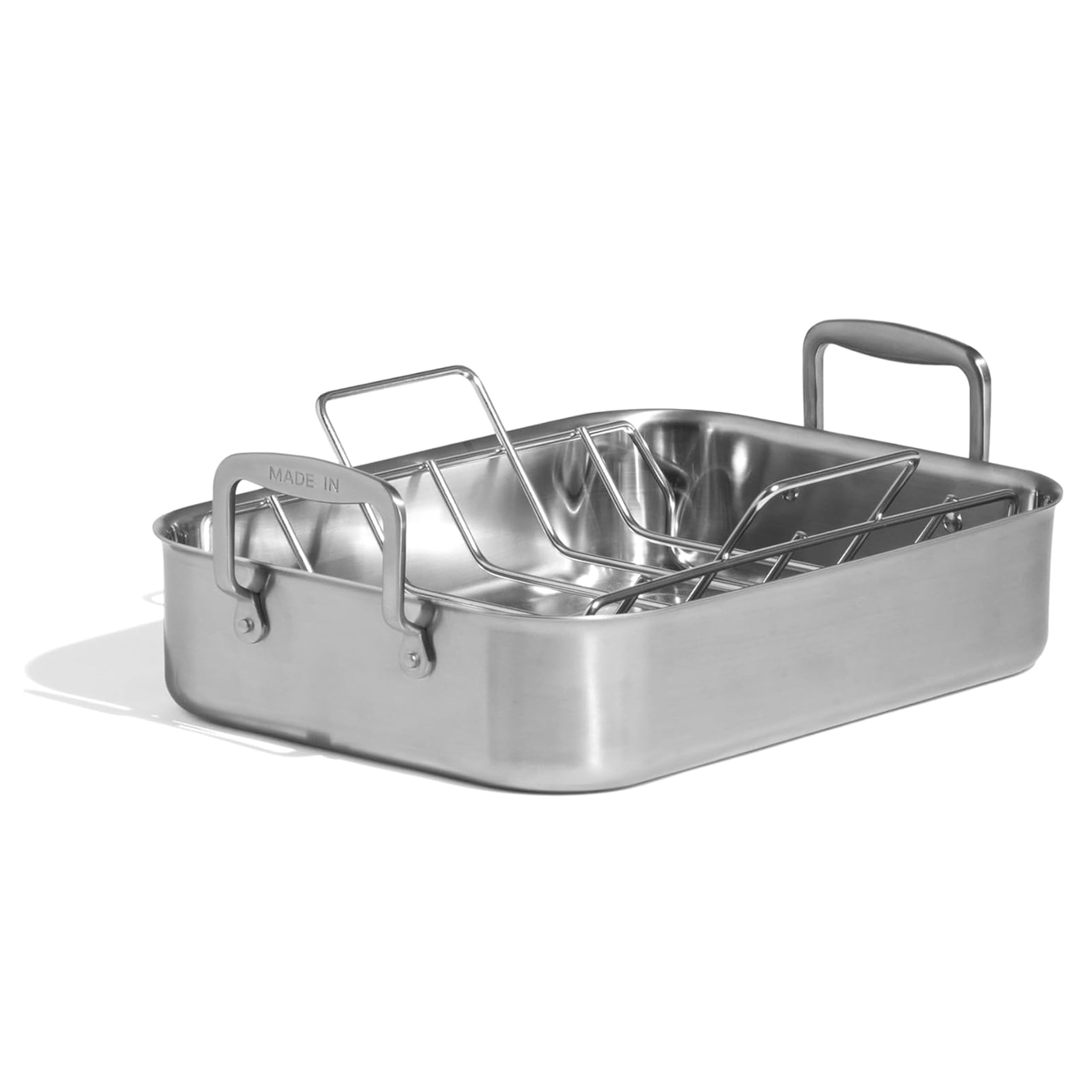
The Made In roaster feels like it was designed by someone who has actually tried to fit a loaded roasting pan into a crowded oven while balancing sides on other racks. Its handle design is one of the most underrated features in roasting: it’s shaped to keep the pan’s footprint cleaner, so you’re not losing precious oven width to “handle sprawl.” That matters in standard home ovens, but it’s a lifesaver in tighter ovens and holiday setups.
Performance-wise, the clad construction is the big win. You’re not just roasting meat—you’re cooking a pan sauce at the same time. When the base heats evenly, drippings reduce with fewer hot-spot burns, which means your gravy tastes richer and cleaner instead of bitter at the edges. This is the kind of pan where you can roast a bird, pull it to rest, then deglaze right in the pan and build sauce with confidence.
The rack is also thoughtfully designed for real cooking, not just “included because people expect it.” A good rack should elevate without wobbling, keep the roast stable while carving, and lift cleanly without bending under load. This one is built for that job, and it’s the kind of rack you’ll start using for more than turkey—think: pork shoulder, prime rib, whole chicken, even big trays of roasted vegetables where airflow improves browning.
If you want one pan that feels premium, cooks evenly, and makes you more likely to roast on a random Sunday, this is the most balanced “buy once” choice in this lineup.
Why you’ll like it
- Oven-friendly handle footprint – Less awkward fitting and better control when sliding in/out.
- Clad heating helps drippings behave – More even reduction, less scorching, better gravy potential.
- Rack feels intentional – Stable under heavy roasts and useful beyond turkey season.
- Year-round versatility – A true “roast, rest, deglaze, serve” workflow pan.
Good to know
- It’s a premium-feeling pan; if you only roast once a year, you might prefer a simpler value pick.
- To keep the finish looking fresh, hand-washing is typically kinder than harsh dishwasher detergents.
- Like any serious roaster, storage space matters—measure your cabinet shelf depth.
Ideal for: cooks who want one professional-grade roaster that fits real ovens, roasts evenly, and makes sauce-making feel effortless.
2. All-Clad Specialty Stainless Steel Roaster – The “Holiday Muscle” Pan That Lasts
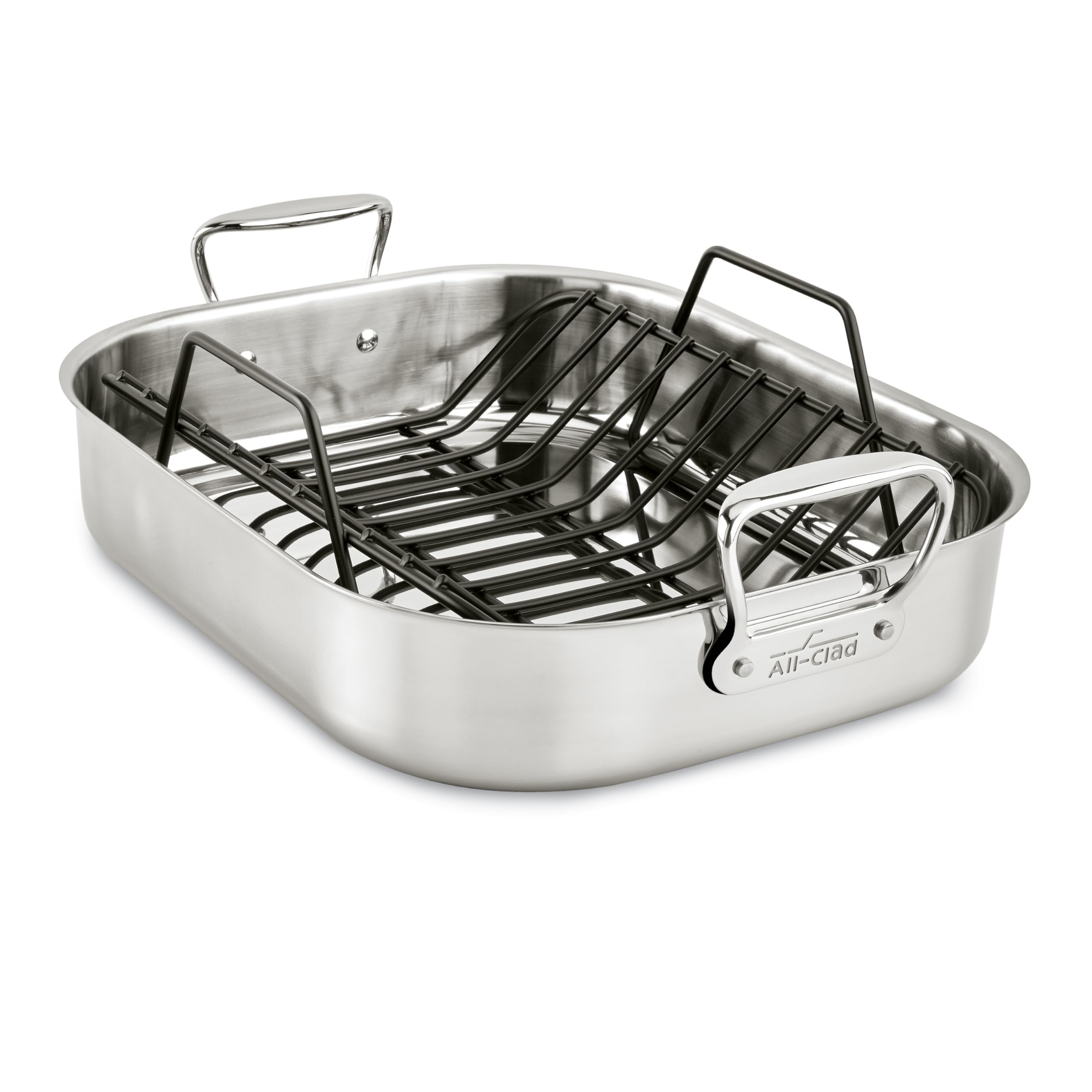
All-Clad is the “you buy it once and stop thinking about it” brand for a reason—and this roaster carries that same vibe. What stands out first is the confidence factor: the pan feels substantial, the sides are tall and straight enough to contain splatter, and the overall build feels like it’s made for big roast days where you’re moving serious weight.
The rack is the second major win. A nonstick rack may not be everyone’s preference, but it can make the roasting experience smoother in two ways: first, it helps release sticky skin or sugary glazes without tearing; second, it makes cleaning easier when you’re dealing with rendered fat and caramelized drippings. For turkey and big roasts, that’s a genuine quality-of-life benefit—especially if you’re lifting the roast out to carve or rest.
What I appreciate most with this pan is how it behaves after the roast. The drippings and fond (those browned bits at the bottom) are where flavor lives, and this pan is built to handle that moment when you add stock or wine and scrape. You want a bottom that feels stable—not something that flexes when you press with a spoon. If gravy is part of your holiday identity, this matters more than people admit.
This is not the “lightest” choice, and it’s not trying to be. It’s a sturdy, premium roasting tool that makes big meals feel controlled. If you want a roaster that feels like it belongs in your family for years, it’s hard to beat.
Why it’s worth it
- Heirloom build feel – Designed for heavy roasts and repeat holiday use.
- Nonstick rack convenience – Easier lifting and less “stuck skin” drama.
- Great for drippings and pan sauce – Encourages deglazing and gravy making with confidence.
- High-heat capable – Built for serious oven temps and broiler moments.
Good to know
- Because it’s substantial, it can feel heavy when fully loaded—plan your lifting strategy (two hands, solid mitts).
- Nonstick racks last longer when you avoid metal tools and aggressive scrubbing.
- Check oven rack clearance if your oven is tight; straight sides and strong handles take space.
Ideal for: holiday hosts who want a premium roasting setup that feels stable, powerful, and built for decades of big meals.
3. Viking 3‑Ply Stainless Roasting Pan – Even Heat for Roasting, Reducing, and Deglazing

The Viking 3‑ply roaster is for the cook who sees roasting as a complete system: roast the meat, roast the vegetables, then build a sauce that tastes like you planned it. Its clad construction is a practical advantage, not a bragging point. With even heat distribution, the bottom behaves more predictably when drippings reduce. That’s what keeps gravy from going “dark and bitter” at the edges while staying watery in the middle.
The handle design is another underrated win. Viking’s handles are shaped to be ergonomic and oven-friendly, which matters more than you think when you’re wearing bulky mitts and the pan is loaded. If you’ve ever felt your wrists twist awkwardly while trying to lift a roasting pan out, you understand why handle geometry is not cosmetic.
The rack here is also designed for real use. Because it’s nonstick, it helps release sticky poultry skin without tearing and makes cleanup less punishing—especially after a high-heat roast where sugars and proteins have bonded to the rack. That’s the kind of detail that can be the difference between “I’ll roast more often” and “this pan only comes out on Thanksgiving.”
This roaster feels like a strong choice for cooks who want a pan that can live in both worlds: it can be a dedicated oven tool, but it also behaves like cookware when you’re reducing sauces or finishing gravy on the stovetop.
Why it stands out
- Clad heating for drippings – Helps reduce and deglaze more evenly.
- Induction-ready versatility – Great if your kitchen uses induction or you want future-proofing.
- Comfortable handle shape – Easier control when lifting heavy food.
- Nonstick rack practicality – Less stuck-on mess and easier lifting.
Good to know
- Nonstick racks need gentler tools and cleaning habits to stay great long-term.
- It’s a serious, heavier-duty pan—plan storage space and lifting.
- If you mainly roast vegetables and smaller proteins, a smaller “crossover” pan may get used more often.
Ideal for: cooks who want consistent roasting results and a pan that can confidently handle stovetop gravy and sauce reduction.
4. KitchenAid 5‑Ply Clad Roaster – For People Who Treat Roasting Like Cooking, Not “Baking”

Some cooks roast like it’s a one-step process: put meat in, take meat out. Other cooks roast like they’re building a full flavor story: brown, baste, deglaze, reduce, adjust, serve. The KitchenAid 5‑ply roaster is built for the second group. The multi-layer construction is designed to hold heat and distribute it evenly, which is exactly what you want when you’re not just roasting—you’re finishing.
Where this pan really earns its keep is in those “after the roast” moments. When you deglaze drippings, you’re asking the pan bottom to behave like a sauté pan. Thin roasting pans can create hot spots and scorch. A sturdier clad pan gives you more control, which means your gravy and sauces taste cleaner and richer. If you like making pan gravy directly in the roaster, this can feel like leveling up without changing your recipes.
The rack here is a practical, no-drama partner. It’s removable, easy to position, and doesn’t feel like it’s going to flex under a heavy roast. A lot of owners talk about the pan feeling solid and resistant to warping in long cooks (including smoking-style low-and-slow roasts in the oven). That’s a big deal if you’ve ever had a pan twist slightly and turn your drippings into a burnt ring.
The only “fit note” is that the handles have a distinctive shape. Some people love the look; some find the ergonomics less perfect for certain grips. If you’re extremely handle-sensitive, check your oven mitt fit and how you naturally lift a pan.
Why cooks love it
- Excellent heat control – Built for even roasting and confident deglazing.
- Feels warp-resistant – Holds up well to longer roasts and heavier loads.
- Sturdy removable rack – Supports large roasts and cleans without drama.
- Oven-to-stovetop flexibility – Great if gravy and pan sauces are part of your routine.
Good to know
- Handle shape is a love-it-or-not detail; comfort depends on your grip and mitts.
- Clad pans reward gentle cleaning habits if you want to preserve the polish.
- If you rarely make sauces in-pan, you may not “feel” the value compared with simpler stainless pans.
Ideal for: cooks who want a high-performance roaster that behaves like real cookware—especially for stovetop gravy and sauce finishing.
5. Cuisinart MultiClad Pro 16‑Inch Roaster – Predictable Heat and Practical Everyday Handling

The MultiClad Pro roaster is one of those pans that feels “quietly correct.” It doesn’t need gimmicks because the fundamentals are strong: solid construction, a rack that does its job, and heat behavior that supports both roasting and drippings. If you want a pan that feels comfortable for big meals without feeling fussy, this is a seriously good fit.
A major advantage of this style of roaster is consistency. Even heat distribution helps your drippings reduce more evenly, and the pan tends to feel stable during the chaotic moments—like pulling the roast to rest while your oven is full of sides. The rack is designed to elevate properly, encouraging airflow under the roast (which helps browning) and keeping the meat out of drippings (which helps texture).
Another detail that matters more than people admit: pouring. A drip-free rim sounds like marketing until you’re trying to pour drippings into a separator without creating a greasy waterfall down your counter. A roaster that pours well reduces mess, stress, and cleanup time. It also makes you more likely to save drippings (and drippings are flavor).
If you want a roaster that’s “nice enough” for holidays but still practical enough to use for weeknight roast chicken or a sheet of vegetables, this is one of the most balanced options in the lineup.
Why it’s a smart pick
- Reliable even heating – Helps with both roasting and drippings performance.
- Solid rack design – Elevates properly and supports heavy roasts.
- Useful pouring control – Less mess when you transfer drippings.
- Strong “everyday” practicality – Not too precious to use often.
Good to know
- Like many full-size roasters, it takes cabinet space—plan storage.
- If you have a very small oven, check overall width including handles.
- If you prefer a lidded roast style, look at the covered options in this guide.
Ideal for: cooks who want a dependable clad roaster with solid heat behavior and a low-drama workflow from roast to gravy.
6. CONCORD Premium 12‑Quart Roaster – The “Bougie” Two‑Pan Setup That Replaces Multiple Pieces

This Concord set is for the cook who wants their roasting pan to feel like an event—because it kind of is. The “lid” is not a flimsy cover. It’s a second usable pan that doubles as a griddle-style surface when flipped. That means you’re not buying a single-purpose roaster; you’re buying a multi-use cooking vessel that can roast a turkey, sear proteins, pan-fry sides, and even behave like a deep casserole or braising setup.
In real life, the two-pan concept changes storage and utility. Yes, it’s large (and you should expect it to take up space), but you also end up with two pieces you’ll actually use: a deep roaster base and a shallower top pan that can work for roasting vegetables, baking, or high-volume prep. For people who love cooking big meals, it’s the kind of purchase that feels “worth it” every time you pull it out.
The rack design is also more practical than it first appears. A rack that can sit in either the deeper pan or the shallower pan gives you flexibility: you can roast one protein in the deep base while using the top pan for sides, or you can use the deep base as a braising pot while the top pan handles high-heat roasting. That flexibility is rare at this level.
The trade-off is weight and size. This is not a “light and easy” roaster. It’s a statement piece that roasts like it means business. If you want a cookware set that feels like it belongs on a holiday table (not just in the oven), this is the one.
Why it’s different
- Two usable pans – The lid is a real pan, not a thin cover.
- Griddle-style flexibility – Flip the top for searing and pan frying.
- High-volume roasting confidence – Built for big birds and big meals.
- Looks stunning – A true oven-to-table presentation piece.
Good to know
- It’s large and can feel heavy when loaded—plan storage and lifting.
- Not everyone wants to hand-wash a showpiece pan; cleaning takes a bit more intention.
- If you only roast once a year, a simpler full-size roaster may feel more practical.
Ideal for: serious home cooks and holiday entertainers who want a multi-use roasting setup that feels premium and replaces multiple cookware pieces.
7. QPMR 22" Roasting Pan with Lid – Big Capacity, Moist Results, and Calm Holiday Energy
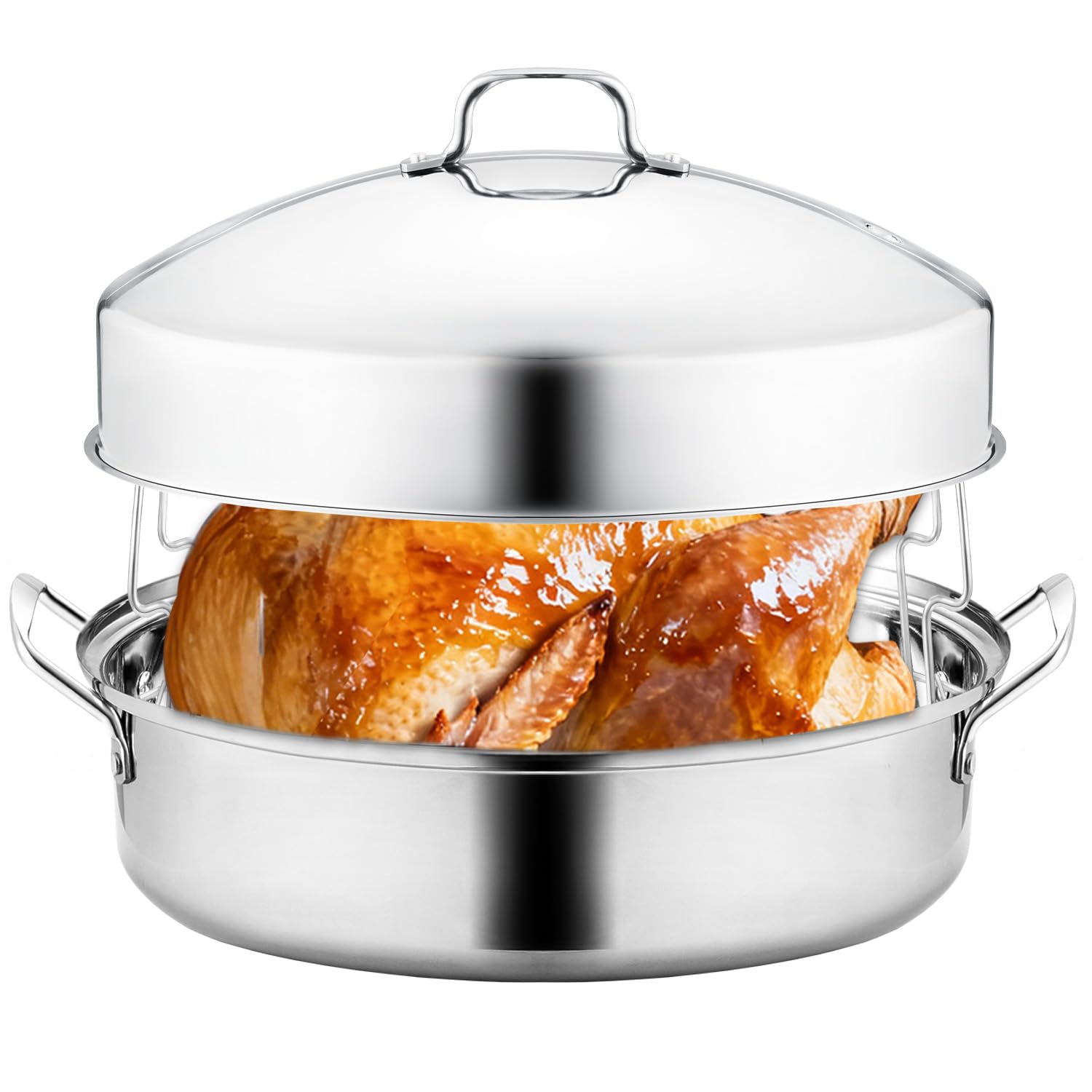
Covered roasters are a different category of comfort. When you can roast with a lid, you gain control over moisture and timing—especially with turkey breast, which is notorious for drying out if the roast is too aggressive. The QPMR is built for that “big day” scenario: larger capacity, a lid that helps trap heat and moisture, and a rack that elevates the bird so it’s not swimming in liquid.
The real-life win here is flexibility. You can roast covered for a good portion of the cook (keeping meat moist), then uncover toward the end to brown and crisp. That approach often produces a more forgiving roast day, especially if your oven runs hot or you’re juggling multiple dishes and can’t babysit the bird.
Another advantage: containment. Deep, large roasters with lids tend to reduce splatter and oven mess—huge for people who don’t want their oven to smell like “rendered fat” for a week. And because the pan is extra-long, it can handle big birds or even multiple smaller roasts at once—useful for families who cook more than one protein.
The honest limitation is storage and fit. A 22-inch pan is not subtle. Before buying, measure your oven rack width and your cabinet space. If you have room, it’s one of the easiest ways to make big roasting feel more controlled.
Why it’s a holiday hero
- Covered roasting flexibility – Helps keep meat moist, especially poultry.
- Large capacity – Handles big birds and high-volume roasting.
- Less splatter and mess – Deep design and lid reduce oven chaos.
- Rack with lift handles – Makes removing roasts easier and safer.
Good to know
- Storage and oven fit are the big considerations—measure first.
- Covered roasting usually needs an “uncover to brown” step for best skin color.
- If you roast mostly smaller meals, a full-size covered pan may feel like overkill.
Ideal for: big-family cooks who want a covered roasting option for moister results and a calmer, more forgiving holiday workflow.
8. Cuisinart Chef’s Classic 16‑Inch Roaster – Simple, Familiar, and Built for Real Holiday Meals

This is the kind of roasting pan many people picture when they imagine “a roasting pan.” Rectangular, full-size, with a stainless rack and sturdy handles. For most households, that’s exactly what you need: a straightforward pan that fits a big bird, feels stable when you lift it, and cleans without drama.
What makes the Chef’s Classic roaster appealing is how practical it feels for real households. It’s large enough for serious holiday work, but it doesn’t try to be complicated. The rack elevates well, the handles give you a secure grip, and the overall footprint works for turkey, ham, prime rib, and big trays of vegetables. People often talk about it as a dependable “do the job” pan that they reach for year after year.
You will see mixed feedback in the wild about thickness. That’s not unique to this pan—many full-size stainless roasters can feel lighter than expected because they’re not all built like clad cookware. Here’s the reality-based perspective: even thinner stainless can roast well, especially if you use the pan correctly. Avoid temperature shock (like running cold water onto a screaming hot pan), and don’t preheat the empty pan at high heat for long periods. Treat it like a roaster, not a cast-iron skillet, and it tends to behave much better.
If you want a classic roaster that feels familiar and gets the job done for large meals without turning into a “project,” this is a solid choice.
Why it’s popular
- Full-size usefulness – Handles big holiday proteins and large vegetables well.
- Simple, familiar workflow – Easy to understand and easy to use.
- Rack handles lifting – Helps remove roasts without stabbing or tearing.
- Easy cleanup path – Straightforward stainless cleaning with soak-and-wipe routines.
Good to know
- Overall length includes handles; check oven fit if your oven is narrow.
- Like many non-clad roasters, it rewards avoiding extreme thermal shock.
- If stovetop gravy is your priority, a clad roaster will feel more controlled on burners.
Ideal for: most families who want a classic, full-size roasting pan with rack that feels easy to own and dependable across years of holiday meals.
9. Amazon Basics Stainless Roasting Pan – The “Surprisingly Sturdy” Value Buy

Amazon Basics cookware can be hit-or-miss depending on the category—but this roaster has a reputation for pleasantly surprising people. The common theme is “I expected it to feel cheap, and it didn’t.” For value shoppers, that matters because roasting pans live hard lives: high heat, heavy loads, aggressive cleaning. If the pan feels too thin or flimsy, you’ll feel it fast.
This pan’s sweet spot is practical roasting with a sturdy rack and easy cleanup. It has enough structure to handle real birds and roasts without feeling like a disposable upgrade. The rack helps with browning and keeps the meat elevated so drippings gather cleanly underneath. That’s essential if you want gravy, or if you roast vegetables under the bird to catch the fat and flavor.
It’s also a friendly “gateway” to stainless roasting. A lot of cooks move away from disposable foil pans and nonstick pans because they want something that can be scrubbed, soaked, and reused without worrying about coating damage. This is a simple, satisfying step up—especially if you’re building your cookware lineup and want a roaster that works now, not later.
If you want a stainless pan that feels sturdier than its price category suggests (without trying to be a luxury piece), this is one of the safest value picks in the list.
Why it’s a great value
- Sturdy for the category – Many owners describe it as thicker and more solid than expected.
- Useful rack included – Elevates food for better browning and cleaner drippings.
- Easy to clean with soaking – Stainless behaves well with simple soak-and-scrub routines.
- Great “upgrade from disposable” pan – Makes holiday roasting feel less fragile.
Good to know
- It’s a value pan, not a showpiece; expect normal stainless marks and patina.
- For stovetop gravy, clad pans typically feel more even on burners.
- Always check handle-to-handle length if your oven is narrow.
Ideal for: cooks who want a dependable stainless roaster with a rack at a value-friendly tier—especially as an upgrade from disposable pans.
10. E‑far 16 x 11.5 Roasting Pan – Smart Handles + Two Racks for Flexible Roasting

The E‑far roaster is one of the most practical “small oven” answers because it solves a problem many people don’t realize until too late: some roasting pans don’t fail because they’re too small—they fail because their handles make them too wide to fit comfortably. E‑far’s upright handle approach is designed to keep the pan footprint cleaner, which makes it easier to slide into older or narrower ovens.
The other reason this set stands out is the two-rack approach. Most pans give you one rack and call it a day. E‑far includes both a V-shaped rack and a flat rack, which gives you true versatility: use the V-rack for turkey breast, whole birds, or round roasts; use the flat rack for vegetables, fish, or anything you want spread out and browned evenly. That’s not a gimmick—it changes how often you can use the pan outside of holidays.
Owners often mention “no coating” as a big selling point. If you want stainless for clean cooking, the lack of chemical coatings is reassuring, and stainless holds up well to real utensils and scrubbing. The pan also has enough depth to contain drippings and hold vegetables underneath without overflowing, which is a huge practical win.
If you want a pan that fits smaller ovens and still handles serious roasting jobs, this is one of the most functional options in the guide.
Why it’s a smart buy
- Oven-friendly handle design – Easier fit in smaller or older ovens.
- Two rack styles – V-rack and flat rack cover more roasting scenarios.
- No coating approach – Stainless simplicity with scrubbing-friendly durability.
- Practical depth – Holds drippings and veggies without messy overflow.
Good to know
- Not built for induction stovetop use; if induction is essential, choose a clad induction-ready roaster.
- Smaller footprint means it’s not the “giant turkey” pan for everyone—match it to your typical roast size.
- As with all stainless, a short soak makes cleanup dramatically easier.
Ideal for: small-oven cooks and practical roasters who want a flexible rack system without paying for a premium brand ecosystem.
11. EWFEN 17 x 13 Roasting Pan Set – Deep Walls, Sturdy Racks, and Easy Holiday Volume

If you’ve ever tried to roast a brisket, a ham, or a big turkey breast and watched juices slosh toward the edge every time you move the pan, you understand why depth matters. The EWFEN set leans into that practical reality with deeper walls and a rack setup that’s meant to handle large cuts without feeling wobbly. It’s the kind of pan that makes “big protein” roasting feel less risky.
The included racks are the star here. A sturdy V-rack supports rounder roasts and keeps poultry stable for browning, while the flat rack adds flexibility for vegetables, fish, or cooling and resting. That combination gives you options: you can roast meat high while still having space below for aromatics and vegetables to catch drippings. That’s how you get sides that taste like they were cooked in a restaurant kitchen.
Owners often describe it as sturdy but not unmanageably heavy—an important balance. A roasting pan that is too light can feel flimsy; a pan that is too heavy can make you dread lifting it. This set is aiming for a middle ground: solid enough for holiday weight, manageable enough for real use.
If you want a deep pan for drippings, brisket-style roasts, and high-volume holiday cooking, this set delivers a lot of practical functionality.
Why it works well
- Deeper walls – Better containment for drippings and big roasts.
- Two-rack versatility – V-rack for roasts, flat rack for flexible cooking.
- Even-roast support – Rack elevation encourages airflow and browning.
- Cleanup-friendly stainless – Polished surface pairs well with soak-and-wipe routines.
Good to know
- Deeper pans can reduce browning on sides if the roast sits too low; use the rack for airflow.
- Storage space matters—deep pans take vertical room.
- As always, confirm oven fit, especially handle-to-handle width.
Ideal for: cooks who want a deep roasting pan with sturdy racks for drippings-heavy roasting and big holiday cuts like ham, turkey, and brisket.
12. Farberware Classic Traditions Roaster – Budget-Friendly Stainless That Still Feels Table-Ready

Farberware has a long history in “practical family cookware,” and this roaster fits that identity. It’s the kind of pan you buy because you want a real roasting setup without turning it into an expensive hobby. It’s stainless, it includes a rack, it holds big holiday food, and it looks nice enough to bring to the table when the meal is done. That’s the core promise—and for a lot of kitchens, that’s enough.
The real-world feedback tends to be consistent: people are pleasantly surprised by how sturdy it feels for the category, and they like the mirror-polished exterior. The wide handles are also a practical win because they give you a confident grip when the pan is heavy. That matters more than you think—many roasting “accidents” happen when someone has to adjust their grip mid-lift.
One honest limitation you’ll see mentioned is rack height. Some cooks wish the rack sat higher off the bottom. That’s a fair note because higher elevation can mean better airflow under the roast. But in practice, even a slightly lower rack still improves roasting compared with placing meat directly on the pan bottom. If you want more clearance, you can often elevate further with halved onions or thick carrot “rails” under the rack.
If you want a stainless roaster that feels sturdy enough for repeated use, looks good, and doesn’t require a premium budget, this is a smart, straightforward choice.
Why it’s a solid budget pick
- Stainless + rack at a friendly tier – A real upgrade from disposable roasting pans.
- Mirror-polished table look – Nice enough to serve from.
- Wide handles – Easier grip with oven mitts and heavy food.
- Easy cleanup with soaking – Stainless responds well to simple cleaning routines.
Good to know
- Rack sits lower than some premium designs; airflow is improved but not maximum.
- As a lighter pan, it benefits from avoiding extreme thermal shock.
- If stovetop gravy is essential, clad roasters feel more even on burners.
Ideal for: budget-conscious cooks who want a real stainless roasting pan with rack that looks good and handles holiday meals without fuss.
13. Cuisinart 14" Lasagna Pan with Rack – The Weeknight Roaster That Stores Like Bakeware

Not every kitchen needs a full-size “Thanksgiving pan” as their primary roaster. For many people, the most-used roasting pan is the one that’s easy to store and perfectly sized for everyday cooking: a whole chicken, a tray of vegetables, a smaller pork roast, or a lasagna that feeds the family without leftovers for a week. That’s where this Cuisinart lasagna pan earns its keep.
The best part is the identity shift: it’s bakeware and roasting gear. You can use it for layered casseroles, baked pasta, brownies, or roasted vegetables—then drop the rack in and roast meat with better airflow and drippings management. This kind of crossover pan tends to get used more often than a giant holiday-only roaster, which makes it a smart investment for many homes.
In practice, this pan is also a “control” tool. Because it’s smaller, it’s easier to maneuver, easier to lift, and easier to clean. It’s also less likely to overwhelm a smaller oven. If you’ve ever tried to roast in a pan that barely fits and blocks airflow, you know why a right-sized pan can produce better results.
If you roast often and don’t always roast huge, this is the kind of pan you’ll love because it feels easy to own. And on big holidays, it becomes a perfect second pan for sides or smaller roasts.
Why it’s an everyday favorite
- Stores easily – Smaller footprint means more frequent real use.
- Great for casseroles + roasting – Rack converts it into a roaster without needing a second pan.
- Easy handling – Less awkward lifting and better control for weeknight cooking.
- Perfect “second pan” for holidays – Great for vegetables, stuffing, or smaller proteins.
Good to know
- Not meant for huge turkeys; it’s a smaller-roast and bakeware crossover.
- Rack size is tuned for the pan; it’s not a universal “big turkey” rack.
- If your priority is an XL holiday roaster, choose a full-size model instead.
Ideal for: weeknight cooks and smaller-oven households who want a versatile pan that roasts, bakes, and serves without needing a huge dedicated roaster.
14. DOLAMOTY Roasting Rack with Pan – A Smoker-Friendly Set for Ribs, Turkey, and Drip Control
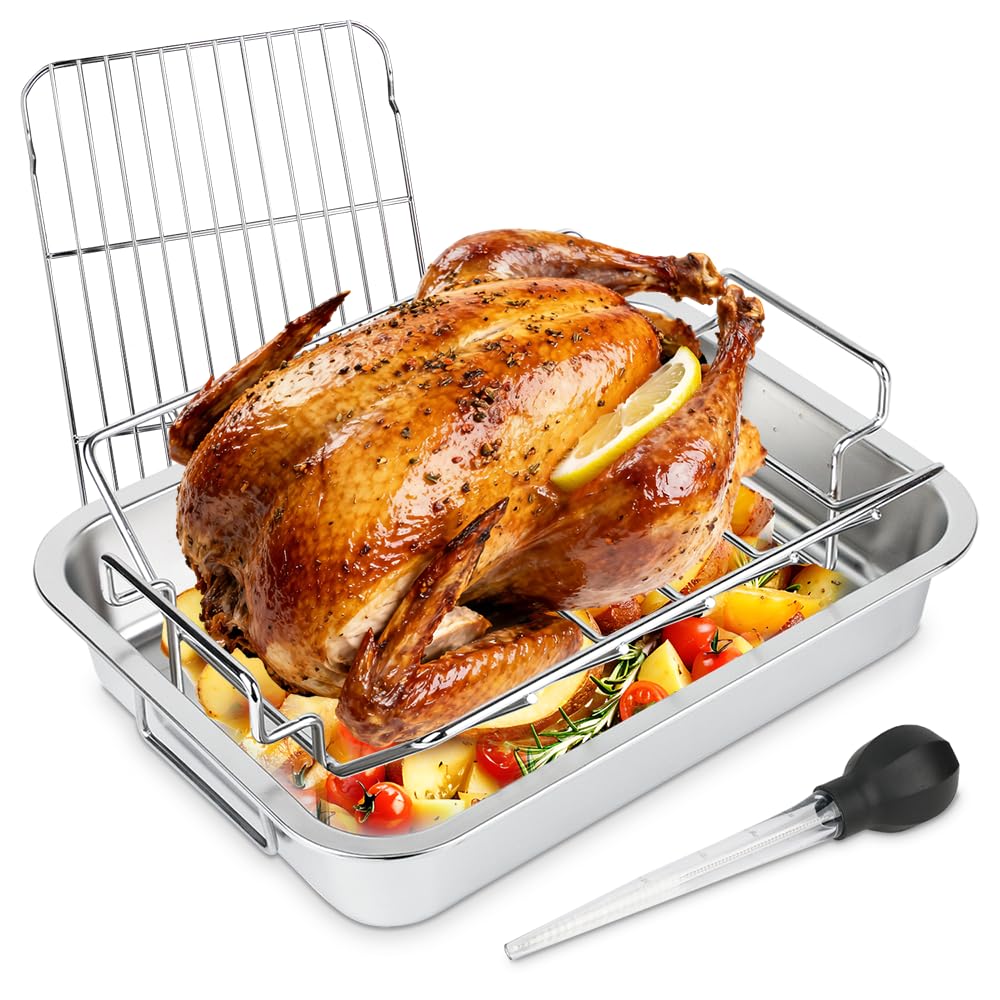
This is a very different pick from the classic oven roasters in this guide—and that’s intentional. If you smoke food on a pellet grill, Big Green Egg, or Kamado-style setup, you don’t always need a traditional “tall-sided roasting pan.” You need a pan that can catch drippings cleanly, behave as a drip pan, and pair with a rack that actually fits your grill space. That’s the world the DOLAMOTY set is trying to serve.
The rack is the main feature: a dual-purpose design that lets you orient it for ribs or flip it for poultry/roasts. For grill cooks who hate clutter, that’s a practical win—you get more versatility without needing multiple accessories. And because it comes with a pan, you can catch drippings for gravy or for keeping your grill cleaner (which is a real-life improvement you’ll feel after the second cook).
A realistic expectation check: this set behaves more like “grill gear” than premium kitchen cookware. Some users describe the pan as lighter and thinner than heavyweight oven roasters. That’s not automatically bad—lighter drip pans can be easier to handle in a grill environment. But if you want a thick, clad-style pan for stovetop gravy, this isn’t that. Think of it as a functional, flexible rack + pan system for smoking and roasting outdoors.
If your “roasting day” happens on the grill as often as it happens in the oven, this is a practical tool that solves a different set of problems than most roasters.
Why grill cooks like it
- Dual-purpose rack – Flip between rib setup and poultry/roast support.
- Drip control – Helps keep grills cleaner and captures flavorful drippings.
- Useful for high-volume cooks – Handles large amounts of food without extra accessories.
- Simple cleaning approach – Fewer tricky corners means easier soak-and-wipe cleaning.
Good to know
- This is more “smoker accessory” than “premium oven roaster” in feel and thickness.
- Hand washing is usually the easiest path for grill gear with heavy drippings.
- If you need a big, deep, stovetop-friendly roaster, choose a dedicated oven model instead.
Ideal for: smoker and grill cooks who want a versatile rack system and drip-pan control for ribs, poultry, and larger outdoor roasts.
15. Circulon Nonstick Roaster – The “Nothing Sticks” Option for Stress-Free Cleanup

While this guide is centered on stainless roasting, I’m including Circulon because a lot of real cooks have a simple priority: “I want to roast a big turkey and not spend the next hour scrubbing.” If that’s your top requirement, a quality nonstick roaster can feel like a gift. Circulon’s nonstick reputation is built around easy release and easy cleanup, and many owners talk about wiping it clean after big meals. That’s a real quality-of-life win.
The included U-shaped rack is practical for lifting and supports good airflow under the roast. It helps fat drip away and makes removing the turkey less awkward. If you’ve ever tried to lift a heavy bird out of a pan without a rack, you know why a rack is not optional for many holiday cooks.
The trade-offs are the standard nonstick realities: you need gentler tools (no sharp metal scraping), and you should avoid extreme high-heat abuse that can shorten coating life. If you treat it like bakeware and keep your tools soft, it can be a very satisfying “big day” pan—especially for people who roast infrequently and want maximum simplicity.
If your goal is the easiest cleanup possible, this is one of the most straightforward solutions. If your goal is stainless-only cooking and ultra-high-heat versatility, stick with the stainless options earlier in the guide.
Why people choose it
- Easy cleanup – Nonstick surface reduces scrubbing after big roasts.
- Good rack utility – U-rack supports airflow and easier lifting.
- Holiday-friendly size – Works well for big roasts and large gatherings.
- Low-stress ownership – Simple to use and simple to clean.
Good to know
- Nonstick requires gentler tools and cleaning habits to preserve the coating.
- Not the choice for aggressive stovetop deglazing with metal utensils.
- If you want stainless-only “forever” cookware, pick a stainless/clad model instead.
Ideal for: cooks who want the easiest cleanup possible and prioritize nonstick release over stainless-only materials.
How Roasting Actually Works (and Why Rack Design Matters)
The secret to better roasting isn’t a magic recipe. It’s understanding what your pan is doing to heat, airflow, and moisture. Once you see that, you can predict which roasting pans will make your food crisp and flavorful—and which will quietly sabotage you.
What makes a roaster “works every time” in real life
- Stable bottom + even heating – Helps drippings reduce instead of scorch. This is why clad and heavy-gauge pans feel easier.
- Rack elevation that makes sense – A rack should keep meat out of liquid and create airflow underneath for browning.
- Pan size that matches the roast – Too tight and you trap steam; too big and drippings spread thin and can burn faster.
- Handles that don’t fight your oven – Comfort, control, and fit matter more than you think.
- Finish that matches your cleaning style – If cleanup is punishing, you’ll avoid roasting, and the pan won’t earn its keep.
Here’s the big “aha”: browning loves dryness. A rack helps by lifting the roast so hot air can circulate. If you skip the rack and roast directly in liquid, you can still make tasty food—but you’ll get more “braise energy” than “crisp roast energy.” That’s perfect for certain dishes, but it’s not what most people want from turkey skin.
Rack geometry in plain English
- V-shaped racks cradle round roasts and keep poultry stable while fat renders down the sides.
- Flat racks shine for spatchcock chicken, ribs, fish, and vegetables—anything you want spread out and evenly browned.
- Handled racks matter more than you expect: they let you lift without tearing skin or stabbing the roast (which leaks juice).
Roasting-day moves that reliably improve results
- Dry the surface early – Pat poultry dry and give it time uncovered in the fridge if you can. Drier skin = better browning.
- Use the rack intentionally – Put aromatics and vegetables under the rack so they catch drippings while the roast stays elevated.
- Don’t drown the pan – A little liquid can prevent scorching, but too much turns roasting into steaming.
- Deglaze while the pan is warm – Warm pan + liquid + gentle scraping turns browned bits into sauce instead of cement.
- Clean smarter, not harder – Soak with hot water, then use a gentle scrub. Stainless cleans best when you let chemistry do the work.
If you’ve ever burned drippings, here’s the fix most cooks skip: don’t blame the bird—adjust the pan environment. A sturdier pan with more even heat, a rack that lifts properly, and a sensible amount of liquid in the bottom (or vegetables acting as a buffer) can completely change your outcome.
The “foil lid” trick (when you don’t have a lid)
- Foil is a tool – A snug foil cover can protect the breast early in the roast and reduce splatter.
- Handle shape affects sealing – Some pans seal cleanly; others create gaps that leak steam and drip.
- Finish uncovered – For best color and crispness, uncover for the last stretch.
FAQ: Roasting Pans (Without the Confusion)
Do I really need a rack, or can I roast directly in the pan?
How do I choose the right size roasting pan for my oven?
Why do some pans warp, and how do I prevent it?
Can I make gravy directly in the roasting pan on the stovetop?
What’s the best way to clean stainless roasting pans after a big meal?
Should I choose stainless or nonstick for a roasting pan?
Final Thoughts: Pick the Roaster That Makes You Feel In Control
The best roasting pan is the one that makes you feel calm when the oven is full, the timer is loud, and you’re lifting something heavy. When your pan is stable, your rack is solid, and your drippings behave, roasting stops feeling like a holiday gamble and starts feeling like a skill you own.
Here’s the easiest way to turn this guide into a confident purchase:
- Want the most balanced “buy once” pick? Start with the Made In Stainless Clad Roasting Pan. It’s the best blend of smart oven fit, even heating, and real-world usefulness beyond holidays.
- Want a premium heirloom-style roaster for holiday muscle? Go for the All-Clad Specialty Stainless Steel Roaster. It’s built for big meals and long-term confidence.
- Care about stovetop gravy, even drippings, and induction flexibility? Choose the Viking 3‑Ply Stainless Roasting Pan or the Cuisinart MultiClad Pro for predictable heat behavior and easier sauce-making.
- Want maximum versatility beyond roasting? The CONCORD Premium 12‑Quart Roaster is the two-pan setup that can roast, sear, and serve like a showpiece.
- Need a covered, extra-large roaster for big gatherings? Look at the QPMR 22" Roaster with Lid for moist results and calm, contained holiday roasting.
- Want a full-size classic without premium pricing? The Cuisinart Chef’s Classic 16‑Inch Roaster is a straightforward family workhorse.
- Want strong value in stainless? Start with Amazon Basics Stainless Roasting Pan for a sturdy, easy-to-own upgrade from disposable pans.
- Small oven or want two rack styles without fuss? The E‑far Roasting Pan is a practical fit-first option with both V and flat racks.
- Smoke meats and want a rack + drip setup? Grab the DOLAMOTY Roasting Rack with Pan for grill-friendly flexibility.
- Want the easiest cleanup possible? The Circulon Nonstick Roaster is the low-scrub option when convenience is your top priority.
The win is not owning the “best” pan on paper—it’s owning the pan you actually enjoy using. Pick the stainless roasting pan with rack that fits your oven, matches your cooking style, and makes cleanup feel manageable, and your next roast day won’t feel like a gamble. It’ll feel like you’ve done it a hundred times—and loved the result.
