
Cold brew looks simple from the outside—coffee + water + time. But the truth is that the “best cup” doesn’t come from a secret recipe. It comes from removing the messy friction points that quietly ruin cold brew at home: muddy sediment, under-extracted watery batches, over-extracted bitterness that sneaks in after a day in the fridge, and cleaning routines so annoying you stop brewing altogether.
That’s why this guide is built like an expert’s troubleshooting map, not a spec sheet. If you’re trying to pick the best cold brew maker, you don’t need a list of capacities—you need to know which design is predictably smooth, which one is brutally easy to clean, which ones are “coffee-hungry” (and why), and which brands have patterns in real owner feedback (good and bad) that matter after month three.
We’ll cover every major cold brew style you’ll see in the wild: immersion concentrate brewers (the gold standard for body), fast electric / vacuum systems (the morning-saver category), Kyoto-style slow drip towers (clarity + ritual), and nitro systems (the “why does this taste sweeter?” upgrade). You’ll also get practical technique you can use immediately—because the machine only wins if your process matches it.
Below you’ll find 15 standout picks, organized in an order that matches real user needs: from everyday reliable brewers, to fast “I need coffee now” machines, to showpiece drip towers, to nitro gear that turns your fridge into a coffee bar.
In this article
- How to choose the right brewer for your routine (and avoid the “why is mine watery?” trap).
- Quick comparison table of 15 standout cold brew makers.
- In-depth reviews of each machine, with pros and cons.
- How cold brew extraction really works (and how to make any brewer taste better).
- FAQ + final “pick the right one” shortcuts.
How to Choose the Best Cold Brew Maker for Your Routine
A cold brew machine is only “great” if it fits the way you actually live. The best models don’t just make coffee—they remove decisions and reduce the chances you mess up a batch when you’re tired. Here’s the framework we use to evaluate a brewer like an expert: not by how fancy it looks, but by whether it consistently produces a smooth cup with minimal drama.
1. Start with your “cold brew personality”
Cold brew buyers usually fall into one of these buckets. Identify yours first—then choose a brewer designed for it.
- The weekly batch brewer: You want concentrate you can dilute all week, with a clean, repeatable workflow.
- The morning sprinter: You want cold coffee fast (minutes, not hours) and you’re okay trading a bit of “traditional body” for speed.
- The clarity snob: You hate grit. You’ll trade some thickness for a cleaner, tea-like cup with precise flavor notes.
- The fridge-tap family: You want “grab a glass, pour, done” convenience—especially in summer or in busy homes.
- The coffee-lab hobbyist: You enjoy tweaking drip speed, bloom behavior, and ice melt—cold brew as a craft ritual.
- The nitro addict: You want that cascading pour and creamy head that makes cold brew taste sweeter (even without adding sugar).
2. Understand the 4 brewing styles (and the trade-offs no one explains)
Cold brew makers fall into four main styles, and each style “wins” in a different way.
- Immersion concentrate brewers (classic): Grounds steep in water for hours, then filter. This style tends to produce the most body and the most forgiving flavor. If you want a deep, chocolatey, “cold brew concentrate” profile, immersion is the safest bet. The big variable here is filtration quality: great filters deliver silky concentrate; weak filters leave grit and sludge.
- Fast extraction machines (electric or vacuum): These systems use agitation, recirculation, pressure, or vacuum-style movement to accelerate extraction. They can be incredible for convenience, but the cup can lean lighter-bodied compared with a long immersion steep. The best ones give you strength control and a reliable cleaning cycle.
- Kyoto / slow drip towers: Ice water drips slowly over grounds through an adjustable valve. This creates a very clean, aromatic brew that highlights distinct flavor notes. When it’s dialed in, it’s gorgeous. But it requires patience, stable setup, and careful handling—especially with thin glass and delicate parts.
- Nitro systems: Nitro isn’t a brew method—it’s a serving upgrade. You typically make cold brew first (often concentrate), then infuse with nitrogen (or nitrous oxide in some setups) to create microfoam and a creamy mouthfeel. Nitro gear is amazing when you love the texture, but it adds parts, seals, and a “process” you need to enjoy.
3. Decide: concentrate or ready-to-drink?
This is the decision that changes everything.
- Concentrate strategy: You brew strong, then dilute in the glass (water, milk, or ice). This is the “best value of effort” approach because one brew becomes many drinks. Concentrate also travels well in the fridge because you can keep it strong and dilute only what you need.
- Ready-to-drink strategy: You brew at drinking strength. It’s simpler, but you’ll brew more often. Ready-to-drink can feel cleaner and lighter, but it also makes watery results more likely if your grind or ratio is off.
4. Filtration is the hidden make-or-break
Everyone talks about capacity. Experts talk about filters—because the filter determines whether you end up with a clean, bright cup or a dusty, muddy one. Here’s the filtration reality:
- Fine mesh metal filters can be great, but they can also let micro-silt through. If you’re sensitive to sediment, you may want a secondary filter strategy.
- Paper filters can produce an impressively clean cup and reduce “oily heaviness,” but some people feel it removes too much body. It’s a taste preference.
- Multi-stage filtration (mesh + secondary layer) often gives the best balance: clean without stripping the soul out of the coffee.
- Clogging patterns happen when grind is too fine, the coffee is dusty, or the filter surface area is too small. A clogged brewer is usually a grind problem, not a machine problem.
5. The “coffee-hungry” factor (and why it matters)
Fast machines tend to use more coffee per ounce of finished drink if you want a bold result. That’s not “bad”—it’s physics and extraction speed. If you’re the kind of drinker who wants big, dark flavor, be prepared to:
- Use coarse or medium-coarse grinds (avoid powdery supermarket grind for most systems).
- Use very cold water for fast machines—cold liquid helps nitro texture and improves flavor smoothness.
- Experiment with strength settings and adjust by taste, not by the marketing promise on the box.
6. Cleaning and durability: what separates “I love it” from “I stopped using it”
Cold brew is a daily habit product. If cleaning is annoying, you’ll cut corners—and flavor will suffer. The best designs tend to share a few traits:
- Few parts, obvious assembly – you shouldn’t need a YouTube video to put it back together.
- No hidden crevices – coffee oils love tiny corners. If you can’t reach it, it will eventually smell.
- Replaceable seals / gaskets – especially for towers and nitro gear, where a tiny misalignment can cause leaks.
- Smart draining mechanics – switch-based draining (like some immersion brewers) prevents mess and makes the routine satisfying.
7. If you want nitro at home, know these two rules
Nitro systems are wildly satisfying when you set them up right—and wildly frustrating when you don’t. Two rules keep you sane:
- Leave headspace: Nitro systems need room for gas to dissolve and build texture. Overfilling is the fastest path to weak foam or messy pours.
- Chill everything: Cold liquid holds gas better, pours better, and produces better microfoam. Nitro + lukewarm coffee = sadness.
If nitro is your goal, choose a system whose routine you’ll actually enjoy—cartridges, no cartridges, keg-in-fridge, or portable infuser.
Quick Comparison: 15 Best Cold Brew Maker Picks
Use this table to find the brewers that match your style, then jump to the full reviews for the details that matter in real life—like how messy the drain step is, whether the filter clogs, and which ones are actually easy to keep clean.
On smaller screens, swipe or scroll sideways to see the full table.
| Model | Brewer style | Signature strength | Best match | Amazon |
|---|---|---|---|---|
| Instant Cold Brew Electric Coffee Maker | Fast electric | Quick cold brew + “hybrid overnight” option when you want smoother depth | Most households who want speed without giving up quality | Amazon |
| OXO Good Grips 32 Ounce Cold Brew Coffee Maker | Immersion | Clean concentrate with a “switch-drain” workflow that feels controlled | Weekly batch brewers who hate mess and love repeatability | Amazon |
| KitchenAid 38 oz Cold Brew Coffee Maker (KCM5912) | Fridge tap | Dispense cold brew like a mini beverage station—clean, convenient, satisfying | “Pour and go” families who want fridge-friendly serving | Amazon |
| asobu Cold Brew Coffee Maker (KB900) | Immersion | Insulated stainless carafe keeps your brew cold and travel-ready | People who want cold brew that stays cold (desk, gym, commute) | Amazon |
| VINCI Express Cold Brew (10–20 min) | Fast electric | Push-button speed with strength settings and a cleaning cycle | Busy mornings when you refuse to plan 12 hours ahead | Amazon |
| DASH Rapid Cold Brew Maker (VacuPress) | Vacuum | Fast batches with a surprisingly clean profile when dialed in | People who want “cold brew now” and don’t mind some machine noise | Amazon |
| Cuisinart DCB-10P1 Automatic Cold Brew Coffeemaker | Automatic | Hands-off “spin brew” with strength settings and easy batch size | Set-it-and-enjoy households who want a machine-driven routine | Amazon |
| KEENSTAR 20Bar Espresso Machine (Hot + Rapid Cold Brew) | 2-in-1 | Espresso + quick cold brew mode for people who want variety | Countertop minimalists who want one machine that does more | Amazon |
| Nispira Cold Brew Drip Tower (6–8 cup) | Kyoto drip | Clarity + aroma with adjustable drip control (ritual brewer) | Hobbyists who want café-style slow drip at home | Amazon |
| Hemli Cold Drip Coffee Tower (ICT2) | Kyoto drip | Showpiece tower + aerating coil concept for a smoother finish | People who want a coffee bar centerpiece (and will handle glass carefully) | Amazon |
| Original NitroPress (Portable Nitrogen Infuser) | Nitro | Handheld nitro microfoam for coffee, tea, and cocktails | Small-batch nitro lovers who want portability | Amazon |
| GrowlerWerks uKeg Nitro (50 oz) | Nitro | All-in-one brew/store/pour with pressure gauge and regulator cap | Nitro fans who want a premium, integrated fridge system | Amazon |
| Royal Brew Nitro Cold Brew Keg (64 oz) | Nitro | Fridge keg format with stout-style faucet and home coffee-bar vibe | Families who want nitro “on tap” and don’t mind a setup routine | Amazon |
| Royal Brew Nitro Cold Brew Keg (128 oz) | Nitro | Extra-large batch nitro for heavy drinkers, hosting, and weekly prep | Big households who want fewer refills and more “tap time” | Amazon |
| NitroPress DS (Electric, No Cartridges) | Nitro | Cartridge-free nitro-style microfoam for drinks at home | People who want nitro texture without the cartridge habit | Amazon |
In‑Depth Reviews: 15 Cold Brew Makers Worth Your Counter Space
Now we go model by model. I’ll talk like someone who cares about the cup and the routine: what feels easy, what gets annoying, what makes your brew cleaner or smoother, and what you should know before you commit.
1. Instant Cold Brew Electric Coffee Maker – The “Fast + Flexible” Home Winner

If you want one machine that can deliver a satisfying cold brew quickly but still lets you chase smoother results when you have time, this Instant brewer is the most balanced “do-it-all” choice in the list. Its strength is not that it magically replaces a 24‑hour steep with identical flavor. Its strength is that it gives you a controlled, repeatable process that can produce a good cup on a weekday morning—then lets you go deeper when you feel like brewing ahead.
Here’s why that matters: speed-based brewers tend to be vulnerable to two common outcomes—thin body or uneven extraction—unless the machine controls how water moves through the bed of grounds. The Instant approach leans into “managed extraction”: you choose a time/strength, the machine does the movement, and you get a finished batch you can chill or pour over ice. If you’re the kind of person who wants consistency without babysitting, that predictability becomes addictive.
The second big win is workflow. The removable pitcher is sized for real life: big enough for a few servings, small enough to store easily, and simple to pour. Many owners also like that even if the base ever became the problem in the far future, the pitcher and basket can still function as a classic fridge-steep setup. That’s an underrated kind of “long-term practicality” in an electric appliance.
Why it’s the sweet spot
- Fast when you need it – Great for mornings when you didn’t plan ahead.
- Flexible brewing strategy – You can chase smoother results by using longer, more patient methods when you want.
- Simple pitcher workflow – Brew, serve, and store in the same glass container.
- Strength control that actually matters – Lets you adjust for different beans, roasts, and drink styles.
Good to know
- Fast cold brew can taste lighter-bodied than long immersion concentrate—use coarser grinds and colder water to improve depth.
- Cleaning is easy when you keep up with it; letting coffee oils sit will make any machine smell “stale.”
- If your goal is thick concentrate for milk drinks, an immersion brewer like OXO may feel more “classic.”
Ideal for: households that want a reliable everyday cold brew routine with the option to go faster or smoother depending on your schedule.
2. OXO Good Grips 32 Ounce – The “Clean Concentrate, Zero Mess” Specialist

The OXO is what you buy when you want the cold brew process to feel organized. The design is quietly brilliant: a rainmaker-style water distributor helps saturate grounds evenly (which reduces the “dry pocket” problem), and the drain switch makes the filtration step feel controlled instead of chaotic. That last part is huge—most bad cold brew experiences at home come from messy straining, spills, and a filter that takes forever.
This brewer is a concentrate machine first. When it’s dialed in, you get a smooth, low-acid concentrate that dilutes beautifully with water or milk. The carafe format makes fridge storage easy, and the whole system nests for storage without turning into a cabinet nightmare. If your goal is “brew once, enjoy all week,” this is one of the most repeatable routines you can build.
Expert-level note: concentrate brewing rewards a slightly coarser grind than people expect. If you go too fine, you increase sediment and slow the drain time. If you go too coarse, you lose intensity. The OXO is forgiving, but it shines most when you treat the grind like a French press grind—chunky, not dusty.
Why it earns loyalty
- Switch-drain filtration – Cleaner, calmer workflow than “pour through a sieve and pray.”
- Even saturation – The rainmaker lid helps reduce uneven extraction and sour notes.
- Great concentrate structure – Smooth body that dilutes well without tasting weak.
- Storage-friendly design – Nests nicely, doesn’t dominate your kitchen when not in use.
Good to know
- Like many mesh-filter systems, ultra-fine “micro-silt” can appear depending on coffee and grind—paper filter add-ons can help if you’re sensitive.
- Some long-term users mention moving parts can stiffen over time; careful cleaning and gentle handling keeps it happy.
- If you want coffee in minutes, this is not the category—this is the “worth the wait” machine.
Ideal for: people who want classic cold brew concentrate with a clean, structured workflow and minimal mess.
3. KitchenAid 38 oz Cold Brew Maker – The “Pour From the Fridge” Convenience King

This KitchenAid is not just a brewer—it’s a mini cold brew station. The reason it wins hearts is the same reason people love a water dispenser: you stop “making coffee” and start pouring coffee. That’s a huge behavioral shift. If you’re consistent about cold brew (especially in warmer months), this is one of the most habit-friendly designs on the market.
The core is simple: fill the stainless steeping basket with coarse grounds, add cold water, steep, then remove the basket and let it drain. What makes it feel premium is the fridge-ready form factor and the tap. Instead of unscrewing lids and dealing with drips, you can dispense cleanly. That alone reduces the “I’m too lazy today” barrier that kills most at-home routines.
From an expert perspective, the KitchenAid is especially good for households with mixed preferences. One person can dilute with water, another with milk, another over a full glass of ice. You can also treat it like a concentrate brewer: steep strong, then dilute per cup. The filter is fine enough that many users report less grit than basic pitcher setups—though you still want a coarse grind to keep draining smooth.
Why it’s so easy to live with
- Tap dispensing – Makes cold brew feel like a ready-to-drink beverage station.
- Fridge-friendly footprint – Designed to live where you actually need it: in the fridge.
- Clear routine – Fill, steep, lift the filter, pour. No complicated assembly puzzle.
- Great for households – Everyone can dilute to taste without changing how you brew.
Good to know
- Steel steepers can be delicate if bent; treat the basket like a fine kitchen tool, not a garbage disposal screen.
- If you use fine grinds, you’ll clog it and hate it—coarse is non-negotiable here.
- If you want ultra-high clarity like slow drip towers, this is “clean immersion,” not Kyoto-level clarity.
Ideal for: cold brew drinkers who want daily convenience—open fridge, pull tap, enjoy.
4. asobu Cold Brew Brewer – The “Brew + Chill + Travel” Power Combo

The asobu brewer is built for a specific kind of person: someone who doesn’t just want cold brew at home—they want cold brew that stays cold when life moves. The insulated stainless carafe changes how you use your coffee. It’s not a fragile glass vessel you baby on the counter. It’s a “fill it, chill it, take it” approach that fits desks, commutes, and busy days.
The cleverness is in how it handles the messy part. Good cold brew is coffee oils + time. Bad cold brew is coffee oils + time + a painful cleanup. The asobu’s design aims to make dumping grounds and cleaning seals less of a hassle than jar-and-sieve methods. People who’ve used filter bags and funnels often describe this style as a relief: fewer disposable filters, less splatter, more routine consistency.
The expert caution is simple: seals matter. A ball-valve or gasket-based design can be fantastic when aligned properly and infuriating when it isn’t. If you’re the kind of person who overtightens lids or rushes assembly, you’ll want to slow down for 20 seconds and make sure everything is seated correctly. Once you do, the payoff is a portable, chilled cold brew system that feels surprisingly “premium” day-to-day.
Why people love it
- Insulated carafe – Keeps your brew cold and fresh-feeling longer.
- Portable lifestyle – Built for offices, commuting, and “I need coffee later” planning.
- Less disposable waste – Reusable filtration strategy instead of constant paper filter buying.
- Clean flavor profile – Immersion-style depth without the “muddy jar” vibe when used correctly.
Good to know
- Gasket alignment matters; if you rush assembly, you may experience leaks.
- It rewards coarse grind and patience—fine grounds can clog and make draining slow.
- If you want a big countertop “brew once for everyone” unit, a larger immersion brewer may fit better.
Ideal for: people who want cold brew that stays cold beyond the kitchen—without switching to flimsy bottles or disposable filter bags.
5. VINCI Express Cold Brew – The Morning-Saver With Surprisingly Clean Taste
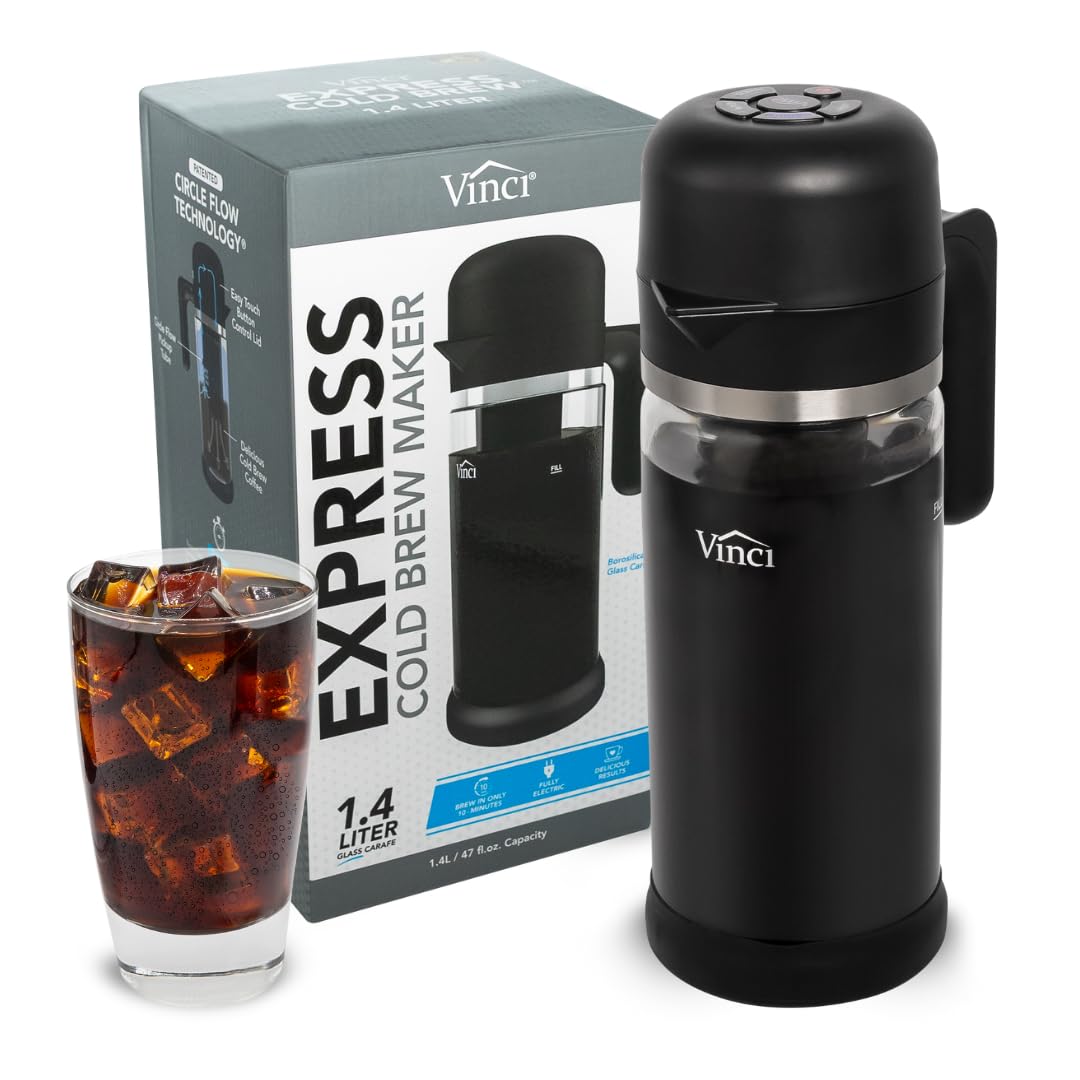
The VINCI exists for one reason: you refuse to wait overnight. And here’s the surprising part—when you use the right grind and don’t fight the machine, it can produce a cup that tastes “legit” enough that many people stop buying bottled cold brew entirely. The key is understanding what the machine is doing: it’s accelerating extraction by moving water through the grounds repeatedly, not by heating the coffee.
This style of brewer has two recurring real-life themes. First: it’s convenient enough that you actually use it. Second: it can be “coffee-hungry” if you want a bold result. That’s not a flaw; it’s the cost of speed. If you use too little coffee and expect a thick concentrate, you’ll call it watery. If you load it properly and choose the right strength setting, you get a strong, pleasantly smooth cold coffee—especially good over ice.
Where the VINCI wins at expert level is the maintenance workflow. A cleaning cycle sounds boring until you own a machine that doesn’t have one. Coffee oils build up. That’s just physics. A built-in cleaning mode makes it easier to keep flavor clean and keep the brewer from developing “old coffee” smell. If you want fast cold brew and you value a hygienic routine, that matters.
Why it’s a top fast pick
- Cold brew in minutes – Perfect for people who won’t plan a day ahead.
- Strength settings – Lets you adjust for different beans and different drink styles.
- Cleaning cycle – Helps keep flavor clean and reduces the “machine funk” problem.
- Simple workflow – Fill, press a button, pour. It feels approachable.
Good to know
- Expect to use more coffee for bolder results compared with overnight immersion brewing.
- Coarse grind is crucial; fine grind increases sludge and makes the cup harsh.
- Like many electric brewers, long-term performance depends on cleaning discipline—don’t skip it.
Ideal for: busy cold brew drinkers who want a strong cup quickly and prefer push-button convenience over “brew the night before” routines.
6. DASH Rapid Cold Brew (VacuPress) – Quick, Clean, and Surprisingly Addictive

The DASH is the “I want cold brew in my cup before my mood gets worse” machine. It’s fast, it’s largely automatic, and when you choose the right setting and coffee, it can produce a surprisingly clean cup that reminds people of popular café-style cold brew. The main mechanism is vacuum-style movement through the grounds, which is why it can brew quickly without heat.
Two honest truths about the DASH: it’s not silent, and it’s not a magic wand that replaces long immersion concentrate in flavor structure. But if you treat it like what it is—a fast extraction system—you can get a very satisfying result. Most experienced users end up living in the “regular” or “bold” range because that’s where flavor shows up most clearly. The cup tends to shine over ice, especially with a splash of milk or a sweet creamer.
Where this machine can outperform expectations is clarity. Many fast cold brew methods create muddy cups because they churn grounds too aggressively. The DASH, when used with the right grind, can land in a “cleaner than expected” zone. It’s the kind of machine that makes cold brew feel easy, which is why so many people use it frequently once it becomes part of their counter routine.
Why it’s so popular
- Very fast brewing – Great for “today” coffee needs, not tomorrow planning.
- Big enough for real life – Makes enough for multiple drinks without feeling huge.
- Strength control – Lets you tune flavor for your beans and your taste.
- Surprisingly clean profile – When the grind is right, it avoids the “muddy” fast-brew problem.
Good to know
- It can be noisy—normal for pump/vacuum-style systems.
- Fine grinds are the enemy; they increase sediment and can cause weak or inconsistent results.
- Some owners note occasional “didn’t brew right” cycles—consistent loading and cleaning helps.
Ideal for: people who want fast, repeatable cold coffee and are willing to accept a little machine noise for huge time savings.
7. Cuisinart DCB-10 – The “Press Start, Get Cold Brew” Machine Routine

The Cuisinart is for people who love the idea of cold brew, but not the “kitchen project” part of it. It automates a lot of the process by circulating the coffee during brewing—then draining into a dedicated carafe. The experience feels familiar if you’ve used a drip coffee maker: load grounds, add water, select strength, start.
In real-world use, this machine tends to shine for households that want ready-to-drink cold brew fast, with minimal manual steps. Where it can surprise people is flavor: when the grind is right and you choose the strength that matches your taste, it can produce a smooth, pleasant cup that feels “fresh,” not bottled. And because it doesn’t rely on heat, it preserves that softer, less bitter profile many people love about cold brew.
The expert perspective: treat it like a system that needs calibration. If you expect thick concentrate, you may be disappointed. If you expect an easy, machine-driven cold brew routine that produces a lot of drinkable coffee with minimal fuss, it can be a home staple. Also—this is one of the systems where cleaning matters because grounds and oils live in a basket and internal parts. If you treat it gently and keep it clean, it rewards you with convenience you’ll actually use.
Why it fits busy homes
- Automatic workflow – Makes cold brew feel like a normal appliance routine.
- Strength settings – Useful for dialing in beans without guesswork.
- Big batch capacity – Great for households that drink cold brew daily.
- Less manual straining – No funnel + filter circus on your countertop.
Good to know
- Some users find it louder during operation than expected (it’s moving liquid/grounds).
- Basket parts can feel delicate if handled roughly—treat it like a coffee tool, not a blender jar.
- If you want café-style concentrate, immersion brewers may give you a deeper “syrupy” base.
Ideal for: people who want cold brew without the craft—an appliance routine that’s easy to repeat.
8. KEENSTAR 20Bar Espresso + Rapid Cold Brew – The Countertop Multitasker
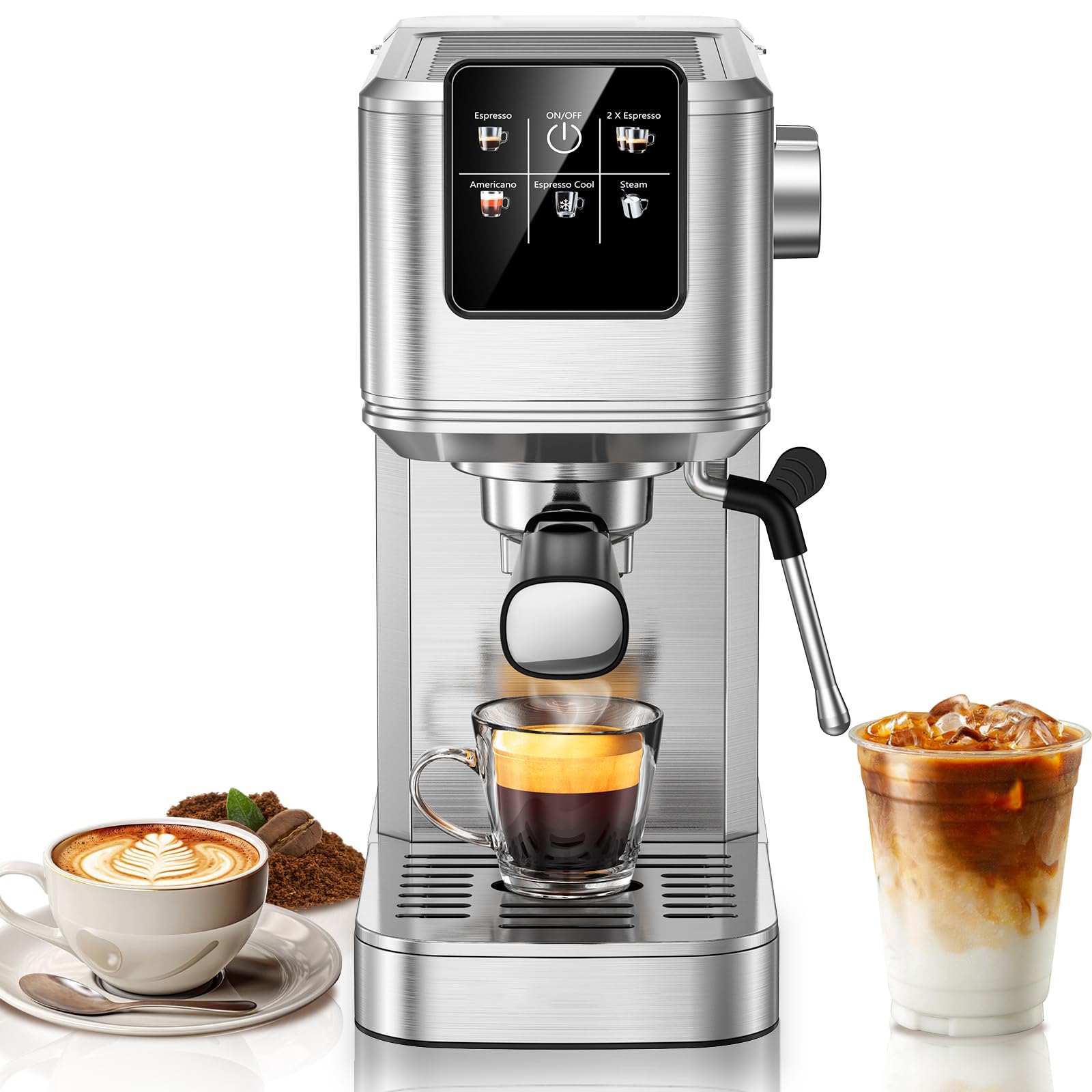
Most cold brew guides ignore a real household truth: a lot of people don’t just drink cold brew. They bounce between espresso, lattes, Americanos, and iced drinks depending on the day. That’s why a 2‑in‑1 machine like this can be the “right” choice even if it isn’t a pure cold brew device. It’s built for variety: espresso with crema, milk frothing, and a rapid cold brew mode for when you want cold coffee without waiting overnight.
The expert way to think about this machine is “workflow consolidation.” Instead of buying an espresso setup and a separate cold brew machine, you get one footprint that covers a lot of cravings. That’s not just about saving space; it’s about reducing friction. If your routine is scattered—morning espresso, afternoon iced coffee, weekend latte—this kind of machine supports your habits instead of fighting them.
Where it matters for cold brew: rapid cold brew programs tend to work best with an intentional grind choice and an expectation of “cold coffee quickly,” not “24-hour concentrate clone.” When users are happy, it’s usually because they treated the cold brew mode as a bonus that adds versatility—then leaned on espresso for intensity and milk drinks when they want richness. When users are unhappy, it’s often because they expected café portions or silent operation from a compact machine.
Why it’s a smart hybrid
- One machine, many drinks – Espresso, milk drinks, and cold brew options in one setup.
- Milk frother versatility – Great for iced lattes, cappuccinos, and café-style foam.
- Touch controls – Easy, modern interface for daily use.
- Compact footprint – Useful for smaller kitchens or apartment counters.
Good to know
- Output and strength expectations vary—dialing in grind size and technique makes a big difference.
- Some units can be noisy or vibrate; stable placement and proper setup helps.
- If your only goal is “best pure cold brew concentrate,” a dedicated immersion brewer is more direct.
Ideal for: people who want an espresso-first setup with a fast cold brew option—especially for iced milk drinks and variety-driven routines.
9. Nispira Cold Brew Drip Tower – The “Coffee Ritual” Clarity Machine
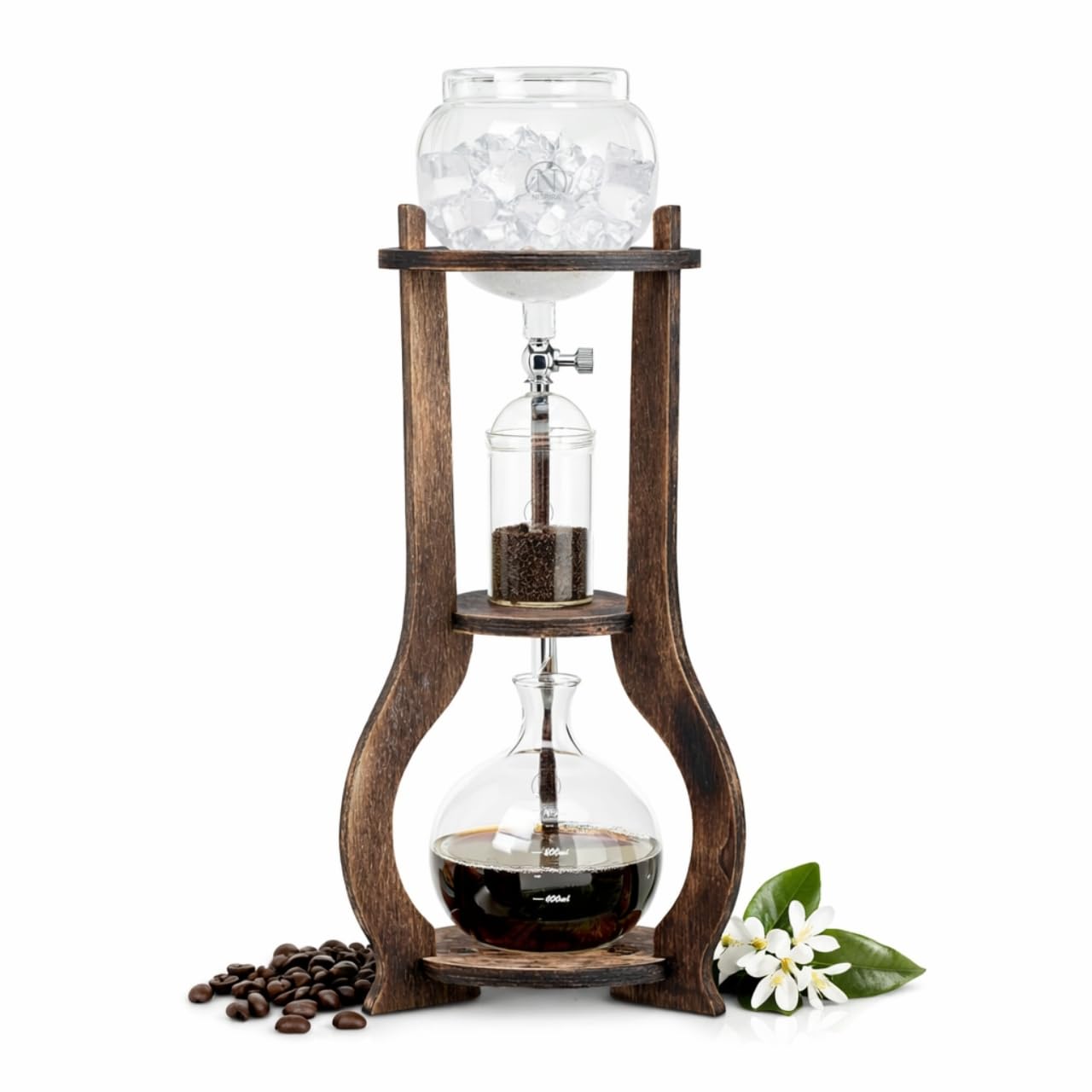
If immersion cold brew is “deep and bold,” Kyoto-style drip is “clean and aromatic.” The Nispira tower sits in that world: ice water slowly drips over a bed of grounds, and you control the drip rate with an adjustable valve. When you get it right, the cup has a distinct clarity—less sludge, more defined flavor notes, and a lighter body that feels refreshing.
This is not a lazy-person brewer. It’s a brewer for people who enjoy the process—watching the drip rate, tweaking the valve, dialing in how long the ice melt lasts, and learning what your beans taste like when extracted gently. A good drip tower brew can feel like coffee and tea had a smooth, elegant baby: aromatic, layered, and shockingly easy to drink black.
Real-world note: many owners report that these towers don’t always include the kind of “hand-holding” instructions beginners want. That’s not a dealbreaker. It just means you should treat your first brew like a calibration session. Start with a slow drip, keep everything stable, and don’t rush. Thin glass and wood frames can be beautiful but demand careful handling—especially during assembly and cleaning.
Why drip tower fans love it
- High clarity cup – Less grit, more clean flavor definition.
- Adjustable valve – Gives you real control over extraction speed.
- Conversation piece – Looks like a coffee bar centerpiece, not a plastic gadget.
- Great for experimentation – Drip speed changes flavor in a way you can taste.
Good to know
- Often minimal instructions—expect a learning curve for ratios and drip rate.
- Glass can be thin; careful assembly and stable placement matter.
- Not a “set and forget” brewer; it’s a craft method with attention required.
Ideal for: coffee hobbyists who want a clean, aromatic cup and enjoy the ritual of dialing in slow-drip extraction.
10. Hemli Cold Drip Tower (ICT2) – For the “Home Café Bar” Aesthetic

The Hemli tower is the kind of brewer you buy when you want your kitchen to feel like a café. It’s tall, dramatic, and built to be seen. Functionally, it lives in the same world as Kyoto slow drip systems: ice water drips over grounds slowly, producing a clean, nuanced cold coffee that can highlight sweetness and reduce harsh bitterness.
The distinctive element in the Hemli pitch is the “aerating coil” concept—designed to add body and smoothness as the brewed coffee moves through the system. Whether you notice that effect depends on your beans and your drip settings, but the bigger point is the overall experience: this is not the fastest brewer, it’s the most theatrical. If you love watching coffee brew, this is your style.
The honest drawback you’ll see in real user feedback across tower-style systems is fragility and instruction quality. Tall drip towers are made of glass components that need careful assembly. If you expect a robust, toss-it-around appliance, you’ll be disappointed. If you treat it like a beautiful piece of brewing glassware—stable placement, gentle cleaning, no rushing—this style can be incredibly rewarding.
Why it’s a vibe
- Showpiece aesthetic – Looks like a premium coffee bar feature.
- Clean, nuanced brew – Slow drip tends to emphasize sweetness and aroma.
- Fun for hosting – People notice it; it becomes a conversation starter.
- Drip control mindset – Lets you tweak the experience (and learn what you like).
Good to know
- Assembly guidance can be limited; expect to learn the routine with patience.
- Glass components can be thin—handle and clean carefully.
- This is a “ritual brewer,” not a weekday convenience machine.
Ideal for: coffee enthusiasts who want a stunning slow drip tower and are willing to treat it with careful, glassware-level respect.
11. Original NitroPress – Café-Style Nitro Texture, Anywhere You Pour
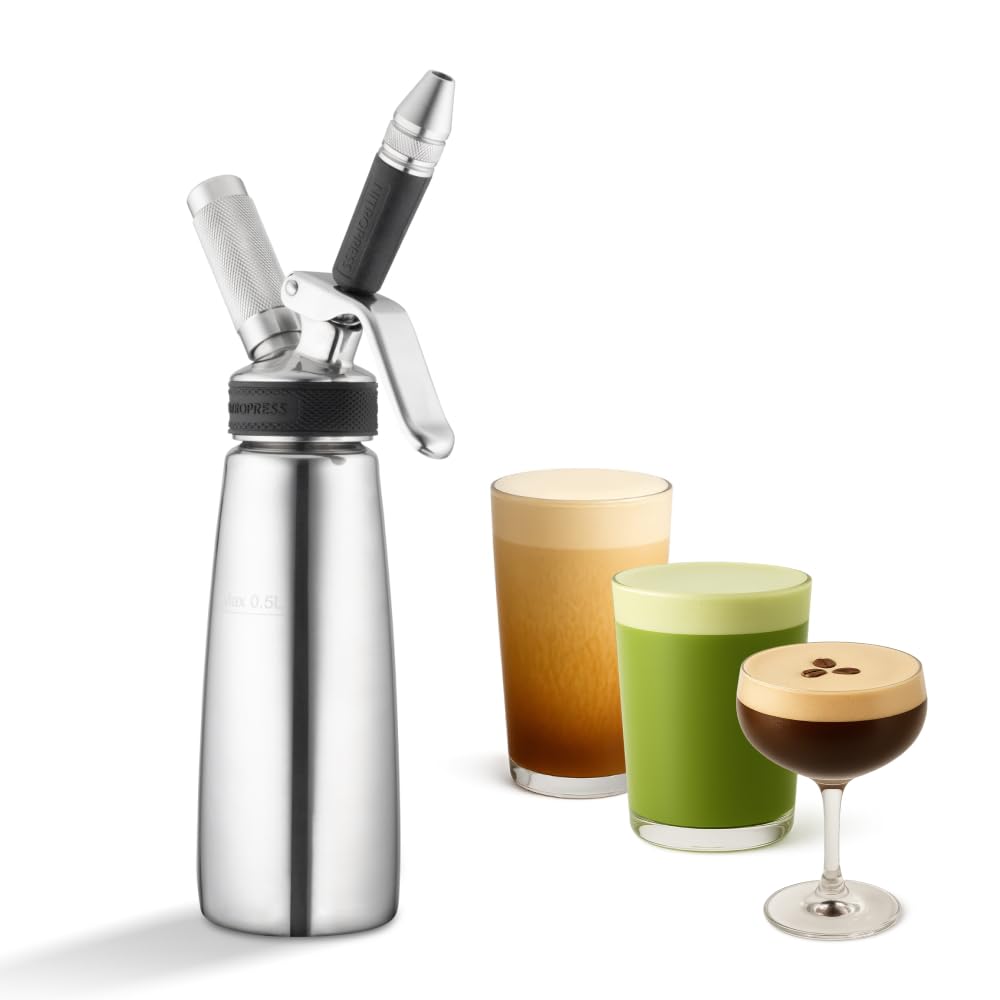
This is the nitro gateway drug for people who want the creamy, cascading pour without committing to a full keg-in-the-fridge lifestyle. The NitroPress is basically a handheld nitrogen infuser: fill it with cold coffee (or tea, or cocktails), charge it, shake, and pour. When it’s dialed in, it produces that silky microfoam texture that makes cold brew taste sweeter and smoother even without adding sugar.
From an expert standpoint, the NitroPress shines when you respect the physics: your liquid should be very cold, you should shake thoroughly, and you should treat seals and O-rings like they matter (because they do). When people love it, they describe it as “coffee shop nitro at home” with surprisingly easy cleaning. When people hate it, it’s usually because they tried to nitro lukewarm coffee, expected a giant batch size, or didn’t do the first deep-clean routine and got weird performance.
The secret advantage is versatility. This tool isn’t only about coffee. Nitro-infused tea can be gorgeous, and cocktails like espresso martinis or citrus-forward drinks can gain a creamy head that looks like a bartender made it. If you’re a “small batch, high satisfaction” person, this style of nitro tool is incredibly fun.
Why it’s so fun
- Portable nitro experience – Bring the texture anywhere without a fridge keg.
- Versatile drinks – Coffee, tea, cocktails, and creative infusions.
- Fast results – You can nitro a drink in minutes once you know the routine.
- Premium feel – Stainless construction and satisfying pour when dialed in.
Good to know
- Small capacity by design; it’s a “few drinks,” not a weekly batch system.
- Cold liquid matters—warm coffee will not foam the same way.
- Like any nitro tool, it requires careful sealing and proper cleaning for consistent performance.
Ideal for: people who want nitro texture without a bulky setup—and love experimenting with coffee and cocktails.
12. GrowlerWerks uKeg Nitro – The Premium “Brew, Store, Pour” Nitro System

The uKeg Nitro is what you buy when you want nitro cold brew to feel like a real system, not a gadget. It’s an integrated setup designed to brew (or accept your own cold brew), keep it cold, maintain pressure, and dispense with a nitro tap that creates that signature cascading pour. In other words: it’s built to mimic the “draft nitro” experience in a home-friendly size.
The expert-level appeal here is stability and control. A pressure gauge and regulator-style cap aren’t just fancy—they reduce guesswork. With nitro, tiny changes in pressure, temperature, and time can change the pour dramatically. Systems that give you feedback help you build a routine that stays consistent. Owners who love the uKeg tend to describe two things: the satisfying pour quality, and the fun of experimenting with different beans and ratios until they hit their “perfect café match.”
The trade-off is that you’re buying into a “process product.” You need to learn your best routine: how cold your coffee should be before charging, how aggressively to shake/infuse, how long to rest, and how to keep parts clean. Once you learn it, it becomes extremely rewarding. If you want push-button simplicity with nitro texture, you’ll likely prefer a different style.
Why nitro fans upgrade to it
- True nitro system feel – Tap, pressure control, and the “draft coffee” experience.
- Integrated storage – Built to keep your brew fresh and ready to pour.
- Durable stainless build – Premium feel, travel-friendly toughness compared with glass systems.
- Experimentation heaven – Great for dialing in beans, roast levels, and concentrate strength.
Good to know
- Requires a consistent routine (temperature + infusion technique) for the best results.
- Some accessories use specific cartridge formats—plan your supply setup ahead of time.
- Cleaning and drying components matters more than most people expect for consistent pours.
Ideal for: nitro lovers who want a premium, integrated system and enjoy perfecting a repeatable “home draft” routine.
13. Royal Brew Nitro Keg (64 oz) – The Home Coffee Bar Classic

The Royal Brew 64 oz keg is the “mini taproom” version of coffee at home. It’s modeled after stout-style dispensing systems, which is exactly why the pour can look so satisfying when you do it right: you get that thick head, that cascading effect, and that creamy texture that makes cold brew feel like a special drink—not just coffee over ice.
What separates a great Royal Brew experience from a frustrating one is assembly discipline. Nitro systems are seal-dependent. If an O‑ring is mis-seated, you’ll blame the product when the real culprit is alignment. The good news is that once you’ve done the setup once and you understand your routine, it becomes easier than most people expect. Many experienced users also learn a key truth: a small drip after pouring can be normal with stout-style faucets because foam remains in the tip and settles. This isn’t always “a leak” in the keg—it’s often just faucet behavior.
Expert technique that upgrades the result: brew your cold brew slightly stronger than you think you need, because nitrogen tends to soften flavor perception. Many people who are underwhelmed at first realize they were using a brew that was perfect without nitro, then became too mellow with nitro. Dialing that in is where this system goes from “fun” to “I can’t go back.”
Why it’s a coffee bar favorite
- Authentic nitro vibe – Stout-style faucet delivers café-style drama in a home setup.
- Fridge-based convenience – Once installed, it’s literally “pour and enjoy.”
- Great for entertaining – Makes coffee feel like a bar drink guests remember.
- Strong community knowledge – Plenty of routine tips exist because it’s a popular style of system.
Good to know
- Requires correct O-ring/seal placement; setup is easy once learned, but not “guess-proof.”
- Leave headspace in the keg; overfilling reduces foam and can cause messy behavior.
- Best results come from very cold coffee and a consistent shake/infusion routine.
Ideal for: households who want nitro cold brew on tap and enjoy a simple, repeatable setup routine.
14. Royal Brew Nitro Keg (128 oz) – The “More Tap Time, Less Refilling” Upgrade

The 128 oz version is for one type of cold brew household: the kind that runs out too fast. If you’re making nitro for multiple people, or you drink it daily and don’t want to refill constantly, the larger keg changes the lifestyle. Instead of “brew, fill, charge, repeat,” you batch bigger, recharge on your schedule, and treat your fridge like a coffee bar.
But bigger does change the routine. First, you need to plan fridge space. Second, shaking a larger vessel can be more work, which means technique matters: don’t overfill, chill your coffee thoroughly, charge properly, then shake with intention (not lazily). If you do that, many owners describe the result as café-quality nitro that becomes a daily treat. If you cut corners, you’ll get weaker foam and think the system doesn’t work.
Expert tip for large kegs: avoid “half batches” unless you know what you’re doing. Nitro systems behave differently depending on volume and headspace. If you fill too low, you can end up wasting gas and getting inconsistent texture. A full, properly planned batch tends to produce the most stable pours across the life of the keg.
Why big-batch people love it
- Fewer refills – Perfect for heavy use and multi-person households.
- True coffee bar feel – Makes nitro part of daily life, not a weekend project.
- Great for hosting – Guests can pour their own without you playing barista all day.
- Same nitro payoff – Same satisfying texture and cascade when dialed in.
Good to know
- Requires fridge space and a confident shaking routine (bigger keg = more physical effort).
- Headspace rule still applies; overfilling reduces quality and increases frustration.
- Best results come from consistent prep—bigger systems punish rushed shortcuts.
Ideal for: big cold brew households who want nitro on tap with fewer refills and a true “batch once, enjoy often” rhythm.
15. NitroPress DS – Electric Nitro Texture Without the Cartridge Habit
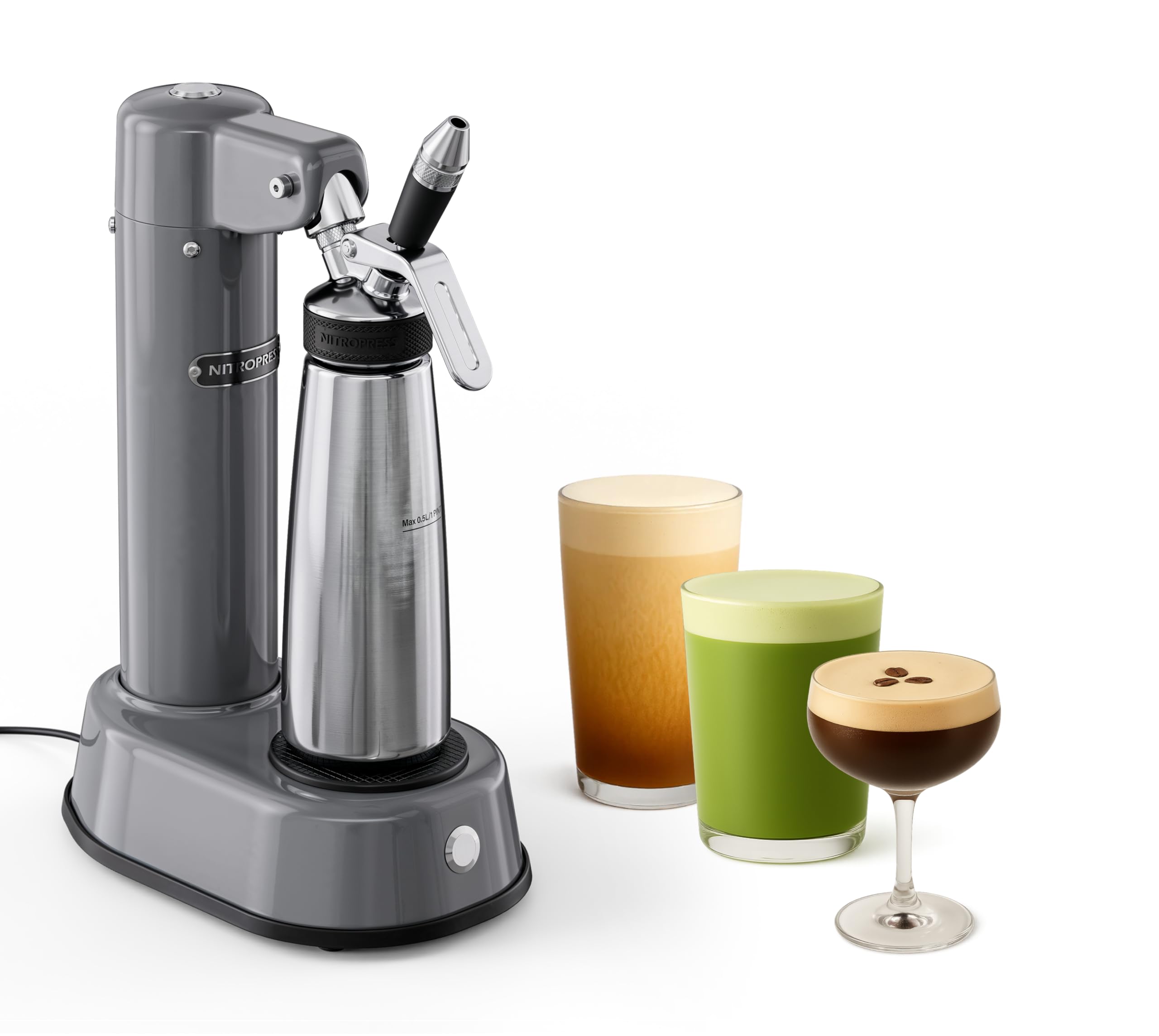
If you love nitro texture but hate the idea of constantly buying and managing cartridges, the NitroPress DS is the most interesting category shift in this guide. It’s designed to create smooth, creamy nitro-style microfoam with an electric, air-powered approach—so you get the “press, pour, enjoy” experience without treating cartridges like a weekly grocery item.
In real use, the appeal is simple: consistency and convenience. People who are happy with this style of machine tend to describe a smooth, low-acid-feeling cup and a noticeable texture upgrade—even for basic store-bought cold brew. The DS also plays well with cocktail experiments: espresso martinis, sours, and infused drinks can pick up a velvety head that looks and feels like a bartender did it.
Expert reality: this is a premium “experience product.” It’s for people who care about texture and presentation, not just caffeine delivery. Like any multi-part device, it rewards routine cleaning (especially around the pour path) so you don’t get flavor carryover between coffee and cocktails. If you want nitro vibes without the bulk of a fridge keg, and you prefer a modern countertop tool, this is the high-end upgrade lane.
Why it’s a luxury upgrade
- No cartridges – Eliminates a major ongoing hassle for frequent nitro drinkers.
- Easy operation – Fill, press, pour: designed for consistent results.
- Great for cocktails – Adds creamy texture and a pro-style finish to drinks.
- Premium build – Looks and feels like a serious countertop tool.
Good to know
- Best for people who care about texture and presentation; it’s not meant to replace a simple immersion brewer.
- Cleaning discipline matters—foam + coffee oils require routine care to keep flavor clean.
- If you want massive batch volume, a fridge keg system may fit your lifestyle better.
Ideal for: nitro lovers who want a modern, cartridge-free way to create creamy microfoam texture at home.
How Cold Brew Actually Works (and How to Make Any Brewer Taste Better)
Cold brew is not “iced coffee.” Iced coffee is hot extraction poured over ice. Cold brew is cold extraction—slow, gentle, and chemically different in how it pulls flavor. Once you understand a few practical levers, you can dramatically improve results with any machine in this guide.
The 5 levers that control flavor (more than the machine does)
- Grind size: Coarse grind = cleaner cup and better draining. Fine grind = higher extraction speed but more sludge and bitterness risk.
- Water temperature: Colder water extracts slower and smoother. Room-temp extracts faster and can taste sharper if time isn’t controlled.
- Time: Longer isn’t always better. Past the sweet spot, you start extracting harsh woody notes, especially with darker roasts.
- Agitation: Stirring or recirculation can increase extraction quickly—but too much can over-extract fines and create mud.
- Filtration: Clarity and “smoothness” are often a filter story, not a coffee story.
A lot of “this machine makes watery coffee” complaints come from one mismatch: using the wrong grind. If your grounds look like powder, you’re fighting extraction and filtration at the same time. Choose coarse, reduce fines, and your cup improves immediately.
The “clean cup” playbook (especially for grit-sensitive drinkers)
- Start with coarse grinds and avoid dusty pre-ground coffee when possible.
- Rinse filters (yes, even metal mesh) to remove manufacturing dust and reduce flavor carryover.
- Don’t shake immersion brewers mid-steep unless you like sediment; gentle initial saturation is better than constant churn.
- Use a two-stage filter strategy if you hate grit: a mesh filter plus an optional fine filter layer.
- Store smart: Keep concentrate covered and cold. Pour what you need; don’t constantly open and “air it out.”
Fast machines have one special rule: use the coldest water you can (without freezing) and load coffee generously for your preferred strength. That helps prevent the “thin and unbalanced” outcome that people get when they try to brew fast with a light coffee dose.
And for nitro? Keep everything cold, leave headspace, and remember that nitrogen smooths flavor perception—so your base brew should be slightly stronger than usual.
FAQ: Cold Brew Without the Confusion
What’s the difference between cold brew and iced coffee?
Why is my cold brew watery?
Why is my cold brew bitter if it’s “supposed to be smooth”?
How long should I steep cold brew?
Do I need a burr grinder?
How do I get café-style nitro texture at home?
What’s the easiest cold brew setup for a busy household?
Final Thoughts: Your Best Cold Brew Maker Match
The truth is simple: the best cold brew maker is the one you’ll actually use on a normal Tuesday. That means the “best” pick is not always the fanciest one—it’s the one that matches your patience, your cleaning tolerance, and the flavor style you want to drink every day.
Use these shortcuts to choose confidently:
- Want the most balanced “do it all” pick? Start with the Instant Cold Brew Electric Coffee Maker. It’s fast when you need it and flexible when you want smoother results.
- Want classic concentrate with a clean, controlled workflow? Choose the OXO Good Grips Cold Brew Maker. That switch-drain routine is a real quality-of-life upgrade.
- Want the easiest daily habit (just pour from the fridge)? Pick the KitchenAid Cold Brew Maker with Tap. It turns cold brew into a “dispense and go” lifestyle.
- Want portable cold brew that stays cold? Go with the asobu Cold Brew Brewer for an insulated, travel-friendly approach—great for desks and commutes.
- Want fast cold brew without overnight planning? Try the VINCI Express Cold Brew or the DASH Rapid Cold Brew Maker. Both are built for “coffee now” mornings.
- Want a machine-driven cold brew routine with minimal effort? The Cuisinart DCB-10 Automatic Cold Brew is for people who want to press a button and get a batch.
- Want one machine for espresso + cold brew variety? Consider the KEENSTAR Espresso Machine with Rapid Cold Brew for a flexible “one footprint, many drinks” setup.
- Want ultra-clean, aromatic coffee and enjoy the ritual? Choose a drip tower like the Nispira Drip Tower or the showpiece Hemli Cold Drip Tower. They’re not convenience machines—they’re craft machines.
- Want nitro texture in small batches? Grab the Original NitroPress for portable nitro-style microfoam.
- Want a premium “home draft” nitro system? Pick the GrowlerWerks uKeg Nitro or a fridge keg like Royal Brew 64 oz (or Royal Brew 128 oz for bigger batches).
- Want cartridge-free nitro-style texture? The NitroPress DS is the modern “no cartridges” upgrade lane.
Pick the brewer that matches your real routine—weekly batch, morning sprint, ritual drip, or nitro bar—and your cold brew stops being a “project” and becomes the easiest part of your day.
