
Buying heat is different from buying almost anything else for your home. A heater isn’t “nice to have.” It’s the thing you’re counting on when the wind picks up, when the power flickers, when the house feels drafty, and you just want the room to stop feeling like a refrigerator.
If you’re searching for a small pellet stove, you’re not shopping for “less heat.” You’re shopping for fit: a footprint that actually works in your room, a hopper you can live with day-to-day, controls that don’t make you feel like you’re programming a spaceship, and a cleaning routine that won’t steal your weekends.
Here’s the part most guides skip (and why so many online “reviews” feel like copy-paste): pellet stoves are not just boxes that make fire. They’re systems. Fuel quality, airflow tuning, sensor placement, vent layout, room layout, and maintenance habits all stack together. That’s why you’ll see one owner call the same stove “a beast” and another call it “temperamental.” They might both be right—because they’re living with different pellets, different chimneys, different drafts, and different expectations.
This guide is built around real-life friction points owners keep mentioning: hopper lids that are annoyingly narrow, thermostats that overshoot because the sensor sits too close to the stove body, glass that soots when you run too low, fans that hum in quiet homes, “eco modes” that sound smart but can be rough on ignition components if they cycle constantly, and customer support realities when you need a part in the middle of winter.
Below are 15 carefully selected picks—starting with true indoor pellet stoves for small homes, cabins, basements, and workshops, then ending with a handful of smart alternatives for people who can’t (or don’t want to) run venting: a vent-free electric stove for apartments, plus pellet-burning patio and camping options that still deliver that cozy flame vibe.
In this article
How to Choose the Right Small Pellet Stove
A pellet stove can be the most satisfying “grown-up purchase” you make… or it can become the thing you resent because it’s loud, finicky, or demands more cleaning than you expected. The difference usually isn’t the brand name on the door—it’s how well the stove matches your space, your lifestyle, and your willingness to do light maintenance. Here’s the decision framework I use to prevent buyer’s remorse.
1. Start with your “heat mission,” not the marketing number
Most people fall into one of these real-world use cases. Identify yours first—then pick a stove that was built for it.
- The “main heat” homeowner: You want steady heat day and night, and you care about hopper size, thermostat behavior, and long-run efficiency.
- The “zone heat” strategist: You’re heating the living room / basement / great room and letting the rest of the house ride. Quiet fans and controllable output matter.
- The “shop heater” or garage user: You want fast warm-up, durable build, and easy cleaning—looks are a bonus, not the goal.
- The “weekend cabin” owner: You want simple startup and predictable behavior, even if you haven’t used it in days.
- The “small-space” reality: You need compact width/depth, and you need the stove to not roast you out of the room.
- The “no-vent option” shopper: You can’t install venting (rental, apartment, HOA). Your best move may be electric, not pellet.
2. Understand control styles: manual vs thermostat vs “eco” behavior
This is where a lot of disappointment comes from. Many stoves offer multiple modes, but they don’t all behave the way people expect. Here’s the plain-English reality:
- Manual (fixed heat level): You choose a power level and the stove runs there. This is often the most stable, least annoying mode—especially in small spaces.
- Thermostat (maintain a target): The stove ramps up to reach a set temperature, then either drops to a low maintenance burn or cycles down. Great when tuned, frustrating when the sensor is poorly placed.
- Eco / cycle mode: The stove may shut down and re-ignite to maintain temperature. It can save pellets in some setups, but constant cycling can feel slow, smoky during re-light, and hard on ignition components over time.
If you’re buying for a small room, stability matters more than “smartness.” Many experienced owners end up using a steady low-to-mid manual setting and let the home’s airflow (fans, open doors, ceiling fan) do the balancing.
3. Hopper capacity is only half the story: the “one-bag test” and the lid test
Owners don’t get annoyed by hopper size because they hate refilling. They get annoyed because refilling becomes messy, awkward, or unpredictable. Two details determine whether the hopper feels like a joy or a chore:
- The lid opening: A hopper can be “big,” but if the opening is narrow, you’ll spill pellets and dust. That becomes a daily annoyance—especially when you’re refilling quickly at night.
- Pellet flow behavior: Some hoppers “bridge,” meaning pellets hang up on the sides instead of sliding down. If you’ve ever come downstairs to a shutdown with pellets still in the hopper, you’ve experienced this.
A practical trick: when you’re choosing between models, prioritize the stove that makes your “nightly refill” easy and clean. A slightly smaller hopper that loads cleanly can feel better than a larger hopper that’s fussy.
4. Predict cleaning effort before you buy
Pellet stoves don’t demand backbreaking maintenance—but they do demand consistent maintenance. The “ownership experience” comes down to how accessible the dirty parts are. Here’s what matters in real life:
- Burn pot access: If you can scrape and vacuum quickly, you’re more likely to stay on schedule.
- Ash pan design: A roomy, easy-slide pan makes the whole system feel calmer.
- Hidden chambers: Some designs are clean on the surface but hide ash paths that require deeper seasonal cleaning.
- Glass behavior: Sooty glass is usually a clue—either low burn temps, airflow imbalance, pellet quality, or the need for a quick burn pot scrape.
If you want the easiest life: favor stoves described as “simple to clean,” “no hidden chambers,” or “tubeless” style interiors. They’re often the models owners keep the longest because maintenance feels quick instead of endless.
5. Noise is real—know what you’re signing up for
Pellet stoves are quieter than many people expect, but they’re not silent. There are three common sound sources:
- Room blower hum: This is the “constant fan” sound most people notice.
- Auger and pellet clink: You’ll hear pellets drop and the feed mechanism cycle, especially in very quiet rooms.
- Thermal expansion pings: Metal expands and contracts. Some owners hear occasional pings, especially during warm-up and cool-down.
The best way to avoid “noise regret” is to pick a stove that owners describe as quiet on the settings you’ll actually use (not just “quiet on low”). Also, stability matters: an uneven floor can amplify rattles and pings, while a level setup often calms the whole system.
6. Installation reality: venting, airflow, and power planning
Most indoor pellet stoves require proper venting and electricity. That’s not a downside—it’s what makes them controllable and efficient. But it does mean you should think through:
- Where the vent will exit: A clean, simple vent run tends to make stoves behave more predictably.
- Air supply and drafts: Drafty rooms, negative pressure, and windy vent locations can change how stoves burn.
- Power stability: Startup draws more power than steady running. If your area has outages, a well-chosen backup setup can protect comfort and electronics.
If venting is a dealbreaker, don’t force it. A high-quality electric fireplace heater can be the smarter, cleaner solution for apartments and rentals— and you’ll still get warmth and ambiance without vent complexity.
Quick Comparison: 15 Small Pellet Stove Picks
Use this table to find the models that match your space and your “heat mission,” then jump to the full reviews for the ownership details— like whether the hopper tends to bridge, how the thermostat behaves in small rooms, and what maintenance feels like after the honeymoon phase.
On smaller screens, swipe or scroll sideways to see the full table.
| Model | Type | Real-world strength | Best match | Amazon |
|---|---|---|---|---|
| ComfortBilt HP50S (Arctic White) | Indoor pellet | Big heat in a compact body, quiet operation, daily-use simplicity | Most homes needing a dependable main/zone heat pellet stove | Amazon |
| ComfortBilt HP22 (Bay Window) | Indoor pellet | Whole-home muscle, very quiet heat delivery, strong long-term reputation | Larger homes who want serious output without constant babysitting | Amazon |
| ComfortBilt HP42 Alpine (120 lb hopper) | Indoor pellet | Long runtime focus, huge hopper convenience, strong thermostat-style comfort | People who hate refilling and want marathon burn time | Amazon |
| Castle Serenity 41278 | Easy clean | Simple interior cleaning, flexible modes, “tune once then relax” potential | Owners who want easy maintenance and schedule-based heat | Amazon |
| Cleveland Iron Works No.200 (60 lb hopper) | Indoor pellet | Smart control + big hopper in a mid-size footprint | Workshops, open living areas, and app-control lovers | Amazon |
| Cleveland Iron Works No.215 Mini (Mr. Heater) | Compact | Small footprint + Wi-Fi, strong heat for small rooms and shops | Cabins, small rooms, and hobby shops that need real flame heat | Amazon |
| ComfortBilt HP40 Mini (25 lb hopper) | Narrow | Very tight footprint, strong heat for its size, tuning-friendly controls | Basements and small homes where width matters | Amazon |
| ZAFRO Electric Fireplace Stove | No vent | Apartment-friendly heat + cozy flame vibe without installation | Renters and small rooms that can’t vent a pellet unit | Amazon |
| GREEN STOVE Pellet Stove w/ Oven (portable) | Camping | Pellet burn time for hot tents + oven-style cooking bonus | Base-camp hot tenters who want longer burns than wood alone | Amazon |
| unho Hot Tent Stove (stainless) | Camping | Sturdy build + strong draft, great heat in small-to-mid hot tents | Car camping, ice fishing, and “real stove” tent heat | Amazon |
| AVOFOREST Hot Tent Stove (accessory kit) | Camping | Accessory-packed bundle + viewing window for “fireplace feel” | People who value included tools and compact pack-up | Amazon |
| Rayzi 58" Pellet Patio Heater | Outdoor | Striking spiral flame “statement piece” that burns pellets cleanly | Patios and gatherings where ambiance is the point | Amazon |
| EAST OAK Fuoco Tabletop Smokeless Fire Pit | Outdoor | Efficient secondary burn, easy cleanup, strong “mostly smokeless” vibe | Decks, patios, and compact backyard hangouts | Amazon |
| AmazStove Tabletop Fire Pit (travel bag) | Outdoor | Portable low-smoke flame with thoughtful accessories | RVers and campers who want a tiny “fireplace moment” | Amazon |
| GODSAX Rocket Stove (cooking) | Outdoor | Fast boil “chimney effect” cooking with sticks and scraps | Preparedness cooking and backyard boil-broth nights | Amazon |
In‑Depth Reviews: 15 Small Pellet Stove Choices That Make Real-Life Sense
Now we’ll go model by model. I’m going to talk like an owner, not a brochure: what feels easy, what feels annoying, what you’ll love after month three (not just week one), and which stove makes sense for your space.
1. ComfortBilt HP50S – Compact “Main Heat” Power That Stays Simple

If you want a pellet stove that feels like it was built for real people (not just spec sheets), the HP50S earns its reputation. Owners keep using the same words: simple, quiet, and heats way more than it looks like it should. That combination is rare—because many compact stoves either feel underpowered or they feel fussy.
The biggest win here is that the HP50S can function as true “main heat” in a lot of setups, while still fitting into rooms where larger stoves feel bulky. That matters if you’re heating a basement, a great room, a cabin living space, or a zone of the house that you actually live in. It’s not just about output—it’s the sense that you can run it daily without it turning into a part-time job.
Here’s the expert detail that separates “happy owners” from “why is this thing doing that?” owners: thermostat behavior is only as smart as the sensor placement and airflow. Some users report the temperature control calling for heat even when the room feels warm. In practice, this often happens when the sensor is reading a warmer (or weirder) microclimate near the stove body instead of the room. The fix is usually not complicated: give the sensor a fair reading of the actual room, and choose a mode that matches your lifestyle. In small spaces, a steady low-to-mid manual setting often feels smoother than aggressive cycling modes.
One more real-world point: several owners love this stove so much they forget one truth—pellet stoves reward light daily care. A quick burn pot scrape and a tidy ash routine keeps the HP50S burning clean, keeps the glass clearer, and prevents the “mysterious shutdown” that often traces back to airflow or ash buildup. The design here is owner-friendly, so that routine doesn’t feel like punishment.
Why it’s best overall
- Big heat in a compact body – The form factor makes sense for real rooms, not just open basements.
- Quiet, comfortable output – Owners frequently describe it as calm to live with, especially compared to noisier units.
- Daily usability feels straightforward – Controls and operation are approachable even if this is your first pellet stove.
- Strong “set it up and live your life” potential – When maintained, it delivers steady comfort without drama.
Good to know
- Like many pellet stoves, sensor placement and mode choice heavily influence thermostat satisfaction—expect a short learning curve.
- Some owners recommend professional installation for the cleanest venting and safest long-term performance.
- Even “quiet” stoves have fans and pellet feed sounds; in very silent homes, you’ll still notice it.
Ideal for: homeowners who want a compact pellet stove that can genuinely carry a home or zone, with simple daily operation and a strong comfort-to-effort ratio.
2. ComfortBilt HP22 – Whole-Home Output With a Surprisingly Calm Personality

The HP22 is the stove you choose when you’re done playing around with “supplemental heat.” Owners who move to this style of pellet stove often say some version of: “Why didn’t we switch sooner?” And the reason isn’t just higher output. It’s the lifestyle shift: steady heat, strong blower performance, and a fire view that makes it feel like part of the room, not just machinery.
What surprises many first-time buyers is how quiet this unit can feel relative to how much warmth it moves. A lot of high-output stoves get loud and harsh because they’re basically trying to brute-force airflow. The HP22’s reputation leans toward controlled power: it warms quickly, then settles into a rhythm. That “rhythm” matters if you’re using it daily, because what you want is comfort—not constant fiddling.
Now, let’s talk about a very specific real-world complaint that shows up repeatedly: hopper loading and pellet flow. Some owners love the capacity but dislike a narrower fill opening and the occasional pellet hang-up on the hopper slopes. This isn’t the kind of thing you notice in week one. You notice it in week six—when you’re refilling quickly and you don’t want to babysit pellets like they’re picky houseplants. Here’s the practical solution owners use: top the hopper up before bed, and treat the hopper walls like part of your routine—if you see pellets bridging, break the bridge before it becomes a shutdown. It’s not hard, but it’s worth knowing upfront.
There’s also an ignition nuance with any auto-ignite pellet stove: if the burn pot is overfilled, airflow can be restricted during startup. A few owners describe smoky ignition moments—usually tied to an overfull pot or an airflow situation that needs cleaning or tuning. The “expert move” is boring but effective: keep the burn pot tidy, don’t let ash cake up, and don’t ignore early signs of lazy flame behavior. Do that, and the HP22 feels like the long-term heater people brag about.
Why owners stick with it
- Serious heat for serious spaces – Great match for people who want one stove to do real work.
- Comfortable, steady performance – Warm-up is quick, then it settles into reliable output.
- Quiet for its class – Many owners describe it as surprisingly calm given the heat it delivers.
- Fire view matters – The bay-style window makes the stove feel like a feature, not just equipment.
Good to know
- Hopper loading can feel narrow, and pellet bridging can happen—learn your refill rhythm early.
- This is a heavy stove; plan moving, placement, and installation thoughtfully.
- Auto-ignite stoves like clean burn pots—neglecting the basics is how “mystery smoke” happens.
Ideal for: larger homes, open layouts, and owners who want a pellet stove that can take over real heating duty while still feeling pleasant to live with.
3. ComfortBilt HP42 Alpine – The “I Don’t Want to Refill” Marathon Heater

If your biggest annoyance with pellet heat is refilling—especially overnight—this style of stove is your antidote. The HP42 Alpine is built around one headline advantage: a huge hopper that can run for long stretches without constant attention. For many owners, that’s not a luxury. It’s the difference between “pellet heat is amazing” and “pellet heat is annoying.”
When this stove is running right, owners describe the comfort in a very specific way: it behaves more like a home heating system than a “space heater.” It can bring the house to temperature, then hold it with thermostat-style control, turning itself down and back up in a predictable pattern. That’s exactly what you want if you’re heating daily and you don’t want a rollercoaster of hot/cool/hot.
Now the honest expert conversation: big, feature-packed stoves sometimes carry more “first month friction.” Some owners describe initial issues that trace back to manufacturing tolerances (missing hardware), shipping damage, or a sensor/switch that needs attention. Others describe control boards and motors requiring replacement—paired with frustration about support channels being slower than they’d like. This is not here to scare you. It’s here so you buy with the right mindset: if you want a “marathon hopper” stove, you should also be the kind of owner who inspects the unit carefully on arrival, keeps documentation organized, and is willing to do the basics—clean ash on schedule, keep airflow paths clear, and avoid bargain pellets that produce heavy ash.
One of the smartest pieces of owner wisdom for this class of stove: power stability matters. Pellet stoves have electronics and motors, and start-up is the most sensitive moment. If your area has outages or surges, owners often recommend a more robust backup approach than a basic power strip. That’s not about paranoia—it’s about protecting the brains of a machine you’re relying on for heat.
If you’re the type who wants to “install it and forget it forever,” you might prefer a simpler stove with fewer electronic dependencies. But if your goal is long, uninterrupted heating stretches with minimal refilling, the HP42 Alpine can be an outstanding lifestyle upgrade when cared for properly.
Why the big hopper matters
- Long runtime convenience – Fewer refills means fewer interruptions and less daily mental load.
- Thermostat-style comfort – Owners like the “furnace-like” feel when maintaining temperature.
- Easy maintenance features – Removable ash pan designs make routine cleaning faster.
- Modern look – If the stove is visible in your home, the Alpine styling helps it feel intentional.
Good to know
- Some owners report early hiccups that require troubleshooting; inspection and setup discipline matter.
- Support experiences can feel slower depending on the issue and timing—plan for “owning a system,” not a toaster.
- Pellet quality and cleaning schedule affect reliability more than most people expect.
Ideal for: people who prioritize long, uninterrupted run time and want a pellet stove that behaves like a home heating appliance—especially in larger spaces.
4. Castle Serenity 41278 – “Clean in Minutes” Design With Real Heat Potential

The Castle Serenity is one of the best examples of a pellet stove that’s designed around living with it. Owners repeatedly talk about cleaning because this stove makes it unusually fast: fewer hidden chambers, a simpler firebox layout, and a design that doesn’t make you feel like you need to disassemble half the unit to keep it happy. If you’re new to pellet stoves, this is the kind of design that reduces the chance you’ll fall behind on maintenance.
A second theme in owner feedback is that this stove can heat bigger than you’d expect—when it’s tuned to your setup. Altitude, vent length, pellet type, and airflow adjustments can change the behavior dramatically. Some owners describe a short “dial it in” period: tweaking exhaust fan voltage, adjusting intake restrictions, and learning which burn level matches their house. Once dialed, many describe it as “set it and forget it.”
Here’s a very practical, slightly nerdy detail that matters: pellet stoves are airflow machines. If a tiny vacuum switch hose or pressure pathway clogs with ash, the stove can shut down or throw alarms. Owners who love the Serenity often mention they learned the stove’s “easy checkpoints” and then it became reliable. That’s the best-case pellet stove experience: a few habits that prevent 90% of problems.
Hopper size is the most common “wish list” complaint. A 40 lb hopper is workable, but a lot of owners want the convenience of dumping a full bag without leftovers. You can absolutely live with it—just accept that refilling becomes part of your daily routine in cold weeks. If you want the least refilling possible, jump to larger hopper models like the HP42.
Glass sooting can happen quickly if you run low and the burn gets dirty. That’s not necessarily a defect; it’s a signal. Scrape the burn pot, check airflow, and don’t be afraid to run a hotter burn briefly to clean up the flame. Owners who do that tend to keep the Serenity looking and running better.
Why it’s loved
- Fast cleaning design – The simple chamber makes routine care quick and realistic.
- Flexible control modes – Manual, thermostat-style, weekly scheduling, and eco options for different lifestyles.
- Solid heat for real homes – Many owners report it warms more space than expected once tuned.
- Great “first pellet stove” energy – It teaches you the basics without punishing you for learning.
Good to know
- The hopper is the main limitation—expect more frequent refills in cold spells.
- Like most stoves, it may need an initial tuning period to match your venting and pellets.
- Glass can soot quickly when airflow or pellet quality isn’t ideal—routine burn pot care helps.
Ideal for: people who value easy cleaning and reliable daily use, and don’t mind a little initial tuning to get the best burn for their environment.
5. Cleveland Iron Works No.200 – Big Hopper + App Control for Workshops and Open Rooms
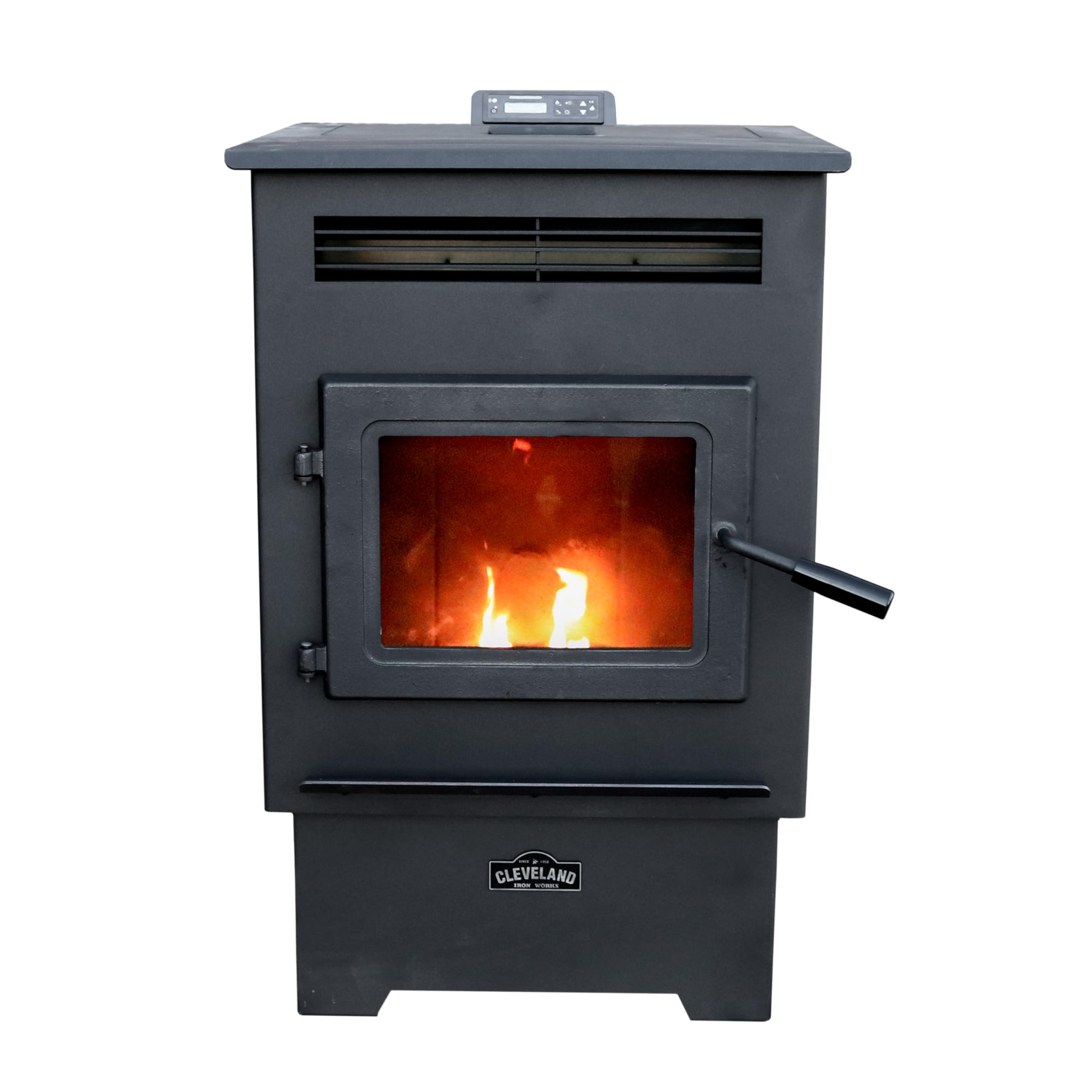
The No.200 is built for a very specific kind of owner: someone who wants strong heat coverage, wants the convenience of a larger hopper, and likes the idea of controlling temperature from across the house without hovering over the stove. In the best-case scenario, this is a “smart heat appliance” that warms a shop, a living area, or an open layout with minimal fuss.
Owners who are happy with it often describe it as dependable and warm, especially in workshop-style spaces where steady heat matters. The app-based thermostat and programming can be a genuine quality-of-life upgrade when you use it as intended: set a target, adjust when you’re busy, and let the stove do the work. If you’re the kind of person who loves checking the temp from your phone, this stove speaks your language.
Now, the expert angle you need to hear: stoves with multiple power levels and adjustable fan parameters can create confusion. Some owners describe the P-level system and fan settings as unintuitive at first—especially when trying to get “enough heat” on lower settings without constant tweaking. This isn’t necessarily a flaw; it’s a learning curve. But it does mean you’ll be happiest if you’re willing to do a short “setup season” where you learn what each setting actually does in your home, not just what the manual implies.
You’ll also see a more serious theme in unhappy reviews: error codes and component issues. The best way to buy a stove like this is to treat arrival day like a checklist moment: inspect for missing hardware, confirm the auger and panels feel solid, and do your first runs when you’re awake and available. Owners who run a few controlled test burns early tend to discover any quirks before they’re relying on it at 2 a.m.
When everything is in sync—good pellets, clean airflow, stable venting—this stove can be a “big warmth, smart control” win. If you want a simpler control experience, consider the HP50S or Castle Serenity. If you want big-hopper convenience with app control, this model stays on the shortlist.
Why it can be a great fit
- Large hopper convenience – Less refilling stress during long burn days.
- Wi‑Fi + remote control – Comfortable if you want modern thermostat-style adjustments.
- Strong heating capability – Works especially well in shops and open areas when airflow is good.
- Service access design – Built with maintenance access in mind, which matters long-term.
Good to know
- Some users find the control logic and setting combinations confusing at first; plan a learning curve.
- Error codes and component complaints show up in owner feedback—inspect and test early.
- Like most pellet stoves, performance is sensitive to pellet quality and cleaning habits.
Ideal for: workshop owners, open-layout homes, and “smart control” users who want a bigger hopper and don’t mind a short learning curve to dial it in.
6. Cleveland Iron Works No.215 Mini (Mr. Heater) – Small Footprint, Real Heat, Wi‑Fi Control

This mini unit has a clear mission: put real pellet heat in spaces where a normal stove feels too large. Think: small cabins, all-season rooms, hobby shops, or that corner of the basement where you want the chill gone. Owners who love it tend to say the same thing: “It heats way better than I expected for its size.”
The Wi‑Fi feature (plus remote) is a genuine perk in a small space because it lets you adjust without hovering. But the strongest “expert advice” I can give is this: ignore the idea that you should understand every mode perfectly on day one. Owners repeatedly complain that the manual is vague or mismatched to what the control panel actually does. The happy owners tend to do something smarter: they run the stove, observe the behavior, and then set it up to match how they live.
One detail that shows up in real feedback and is worth knowing: some units ship with a temperature sensor coiled or positioned in a way that doesn’t read the room well. If the stove is making decisions based on a sensor that’s basically hugging the stove body, the control logic can feel “wrong.” When the sensor is allowed to read actual room air, thermostat behavior tends to make more sense.
The biggest limitation is the hopper size. In small spaces, that’s not always a problem—because you’re often running lower and you’re not trying to heat a full house. But if you expect to run overnight at higher output, you’ll refill more often than with larger hopper stoves. If your dream is “load once, run forever,” that’s the HP42 or HP22 style of purchase. If your dream is “fit it where nothing else fits and actually get warm,” the No.215 is a smart little machine.
This stove also highlights a universal pellet truth: maintenance isn’t optional, it’s just quick. Owners who keep it clean tend to call it dependable. Owners who don’t… tend to blame the stove for what is usually airflow and ash reality.
Why it works
- Compact footprint – Fits spaces that can’t accommodate wider or deeper stoves.
- Surprisingly strong heat – Many owners report it warms small shops and rooms fast.
- Wi‑Fi + remote convenience – Great for small spaces where you adjust often.
- Good “first pellet stove” entry – When approached with patience, it’s a satisfying starter unit.
Good to know
- The manual is a common complaint; plan to learn via observation and a few test runs.
- Smaller hopper means more frequent refills if you run it hot for long stretches.
- Sensor placement can affect thermostat behavior—make sure it’s reading the room, not the stove body.
Ideal for: small cabins, small workshops, and tight rooms where footprint matters more than overnight hopper capacity.
7. ComfortBilt HP40 Mini – Tiny Width, Big Output… If You Treat It Like a System

The HP40 Mini is one of the most “love it or leave it” stoves in this guide—and that’s exactly why it’s valuable to include. For the right owner, it’s fantastic: narrow enough to solve space problems, strong enough to heat surprisingly well, and efficient when tuned. For the wrong owner, it can feel noisy, underwhelming, or “not as smart as advertised.”
Here’s what’s actually going on: this stove rewards people who understand pellet reality. On low settings, some owners describe it as temperamental—humming, rattling at parts of the cycle, and darkening the glass quickly. That’s the classic sign of a small stove operating near the edge of clean combustion: low fuel feed, low flame temperature, and ash that doesn’t fully burn off. Owners who get the best results typically do two things: (1) keep the stove clean daily (because a small firebox shows ash effects faster), and (2) tune combustion and airflow to their vent run and pellet type.
If that sounds intimidating, here’s the friendly truth: once dialed, many owners run it on the lower heat levels most of the time and get excellent comfort. Some owners even share very detailed personal settings (feed rates, blower adjustments, intake tweaks) because they’ve turned this stove into a custom heat tool. That’s not required—but it tells you what kind of stove this is: it’s for people who like control and don’t mind learning.
The hopper size is “small stove honest.” You’ll refill more often than with larger indoor units. But if you’re buying the HP40, you’re usually buying it because the width makes it possible to have pellet heat at all. In that context, the trade-off feels fair.
If you want a more plug-and-play daily experience, choose the HP50S or Castle Serenity. If you need narrow width and you’re willing to be the kind of owner who cleans and tunes, the HP40 can feel like a smart, space-saving heater that punches above its size.
Why it’s worth considering
- Very narrow body – Solves placement problems that wider stoves can’t.
- Strong heat for its size – Many owners report excellent warmth once tuned.
- Efficiency potential – Runs efficiently when combustion is dialed in and maintenance is consistent.
- Great for hands-on owners – If you like optimizing settings, this stove gives you room to do it.
Good to know
- Noise complaints show up (fans, feed, rattles)—especially in quiet homes.
- Glass can soot quickly on low settings; routine burn pot care matters more than average.
- It’s not “set it and forget it” for everyone—this is a tune-and-own style stove.
Ideal for: people who need a narrow pellet stove footprint and don’t mind being hands-on with tuning and daily cleaning for best performance.
8. ZAFRO Electric Fireplace Stove – Apartment-Friendly Warmth With Cozy Flame Vibes
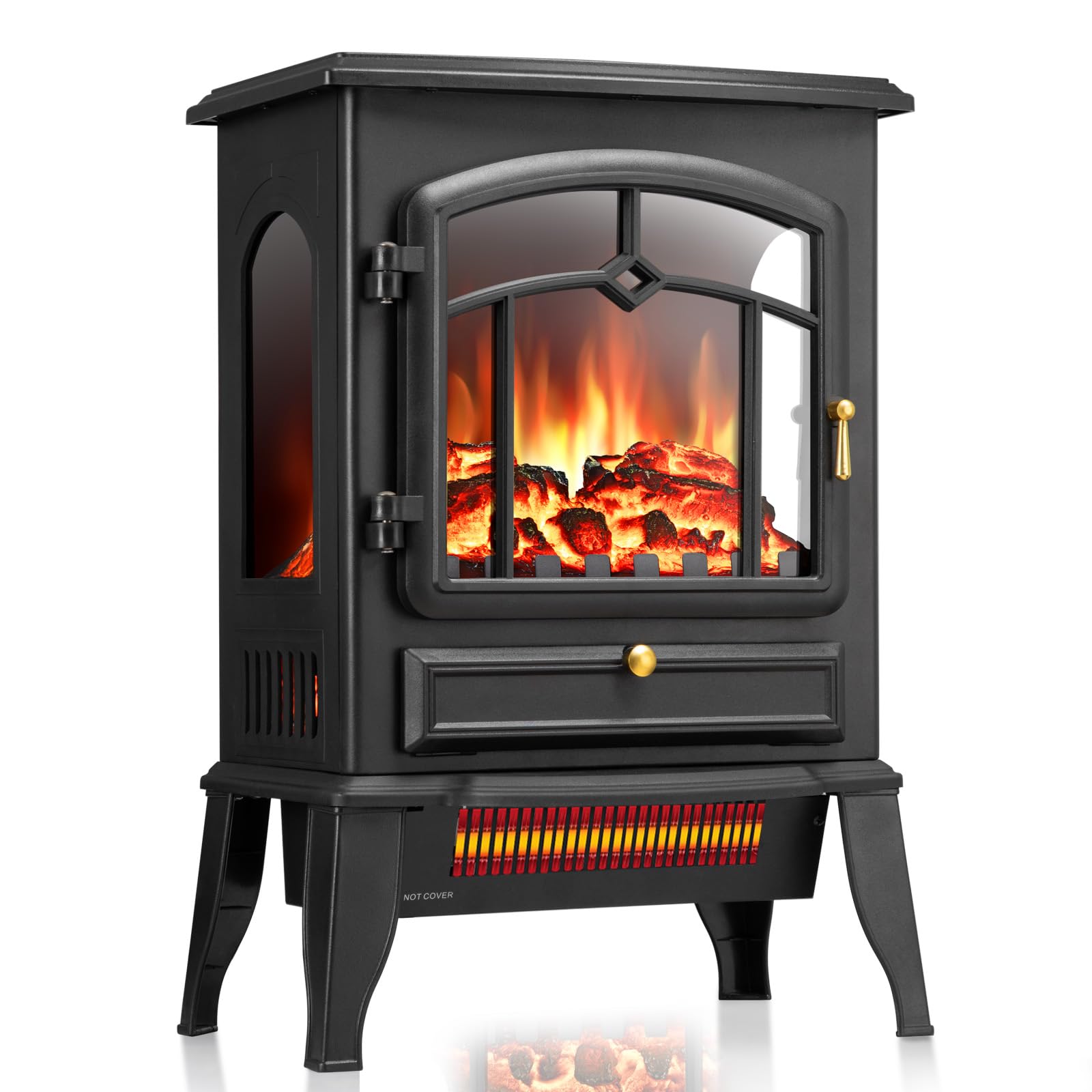
Not everyone can (or should) install a vented pellet stove. Rentals, apartments, and some HOA situations make it unrealistic. This is where a well-chosen electric fireplace stove becomes the smartest “small space heat” move. The ZAFRO is popular because it combines two things people actually want: (1) quick, noticeable warmth and (2) a flame effect that feels cozy instead of cheap.
Owners consistently mention that it heats fast, looks surprisingly upscale in person, and has adjustable flame brightness so it doesn’t feel like a neon sign at night. That matters more than people think—because many electric units look okay in photos, then look harsh in real living rooms. This one tends to feel softer and more “fireplace-like.”
Here’s the ownership reality: electric fireplace heaters use a fan to push heat. In quiet homes, you will hear fan noise. Most owners describe it as a steady whir rather than an annoying rattle, but if you’re extremely sensitive to sound, you should expect to notice it. Also, some parts (like the door handle) may feel less premium than the body—common in compact electric units.
The big upside is the simplicity: no pellets, no ash, no venting, no chimney planning. If what you actually want is “warm room, cozy vibe, no installation drama,” the ZAFRO can be the most satisfying decision in this whole guide. And it’s a great backup heater even for homes that do use pellet heat—because it gives you a quick boost in a bedroom or office without lighting anything.
Why renters love it
- No venting needed – Plug it in, place it, enjoy.
- Fast heat for small rooms – Great for bedrooms, offices, and apartments.
- Adjustable flame brightness – Lets you set the mood without harsh light.
- Looks more premium than expected – Owners often say it doesn’t look “cheap” in person.
Good to know
- Fan noise is part of the package; quiet rooms will notice it.
- No remote on some versions—check your preference for control style.
- This is room heat, not a whole-house heating system replacement.
Ideal for: apartments, rentals, and small rooms where venting isn’t possible and you want instant warmth with a cozy visual effect.
9. GREEN STOVE Pellet Stove With Oven – Long-Burn Tent Heat With a Real Cooking Bonus

This is a very different kind of “pellet stove” than the indoor home units above—and it solves a different problem: hot tent campers who want longer, steadier burns than they typically get from feeding sticks all night. With a pellet box system, you can get meaningful burn time while still enjoying the comfort of a real stove and chimney setup.
What makes this stove special is not just that it burns pellets. It’s that it behaves like a tiny controlled furnace when you run it correctly. Owners who learn the stove’s airflow and pellet preferences report strong heat output—strong enough to make tents uncomfortably warm on higher settings. And yes: the oven compartment can actually be useful for quick toasting and heating, even if it runs hotter than you’d expect. Think “fast toast and warm-up,” not “precision baking.”
Now the expert insight you absolutely need: pellet type matters more here than on many indoor stoves. Some owners report hardwood pellets clumping in the pellet basket, which blocks airflow and causes smoke to backtrack toward the hopper. That’s not a fun lesson to learn at midnight in a tent. The practical fix owners use is straightforward: use pellets that burn cleaner in this design, run with enough heat and airflow to avoid clumping, and learn how to clear the basket quickly through the access point if ash starts building where it shouldn’t. Once airflow is restored, the smoke issue often disappears.
This stove also highlights “draft reality.” In tent setups, you need a strong upward draft for clean behavior. Owners often recommend establishing draft early (a quick preheat of the chimney zone, then steady feed) so smoke doesn’t have a reason to wander. When the draft is strong, this stove can be impressively clean for a portable unit.
One more practical note: some parts are considered consumable in high-heat pellet burning (like the pellet cage). That’s not necessarily a flaw—it’s the reality of concentrated high-temperature burn zones in compact steel designs. If you treat it like an outdoor tool and keep it maintained, it can be an awesome base-camp heat solution.
Why hot tenters choose it
- Longer burn potential – Pellets can extend heat time compared to constant stick feeding.
- Strong heat output – Owners often describe it as “surprisingly hot” in tent setups.
- Smart pack-away design – Components store inside the stove, reducing lost parts.
- Oven compartment bonus – Great for quick toasting and warming food while heating the tent.
Good to know
- Pellet choice and airflow settings matter a lot; clumping can cause smoke behavior if run too cool.
- It’s heavy for hiking—best for car camping, base camp, or short carry-ins.
- Some internal parts may be consumable under sustained high heat; treat it like outdoor equipment.
Ideal for: hot tent campers and base-camp setups where long burn time and real stove heat matter, and you’re willing to learn the stove’s “best pellets + airflow” recipe.
10. unho Hot Tent Stove – Solid Stainless Build With Strong Draft and Real Heat

If you want a traditional hot tent stove—wood-fed, direct heat, no electronic complexity—this unho model keeps showing up as a satisfying “it just works” choice. Owners often mention the stainless steel feels heavier gauge than expected, the fittings feel tight, and the airflow/draft is strong once assembled. That’s the combination you want when you’re heating a tent: clean draft and predictable burn.
Where this stove shines is the balance between portability and “real stove feel.” It’s not a featherweight backpacking stove—most owners treat it as car camping or base camp gear. But once it’s in place, it produces real warmth quickly. Several users describe getting small hot tents very warm fast, which is exactly the point.
The glass window adds a surprisingly cozy “fireplace” feel in a tent environment. But this is also where smart owners learn a lesson: glass and fasteners require care. Some feedback mentions cracked glass after the first burn, often tied to overtightening or stress on the panel. In other words: assemble thoughtfully, don’t crank hardware like you’re tightening a truck lug nut, and let the stove heat-cycle naturally.
Another practical point owners mention is initial burn odor. That’s common with new stoves as manufacturing residues burn off. Many experienced campers do a first burn outdoors before tent use so the first few heat cycles are clean and comfortable. After that, the stove tends to settle into the “what you smell is wood” normal.
If you want maximum burn time without feeding, pellet-based tent stoves like the GREEN STOVE may be better. If you want a sturdy, classic wood tent stove that drafts well and actually warms your setup, this is one of the better “value-to-build” picks in this category.
Why it’s a strong camp pick
- Sturdy stainless construction – Owners often describe it as solid and durable.
- Strong airflow and draft – Good draft is the difference between cozy heat and smoky frustration.
- Heats small tents fast – Great for winter camping comfort when set up correctly.
- Cook on top – Simple cooking surface adds real utility in camp life.
Good to know
- Not ideal for backpacking; best as car camping/base camp gear.
- Glass requires careful assembly and heat cycling; overtightening can cause issues.
- First burn can produce odor—many owners do an initial burn before tent use.
Ideal for: hot tent campers who want a sturdy, classic wood stove that drafts well, heats quickly, and feels built to last through seasons of use.
11. AVOFOREST Hot Tent Stove – Feature-Rich Kit With a Real “Fireplace Window” Feel
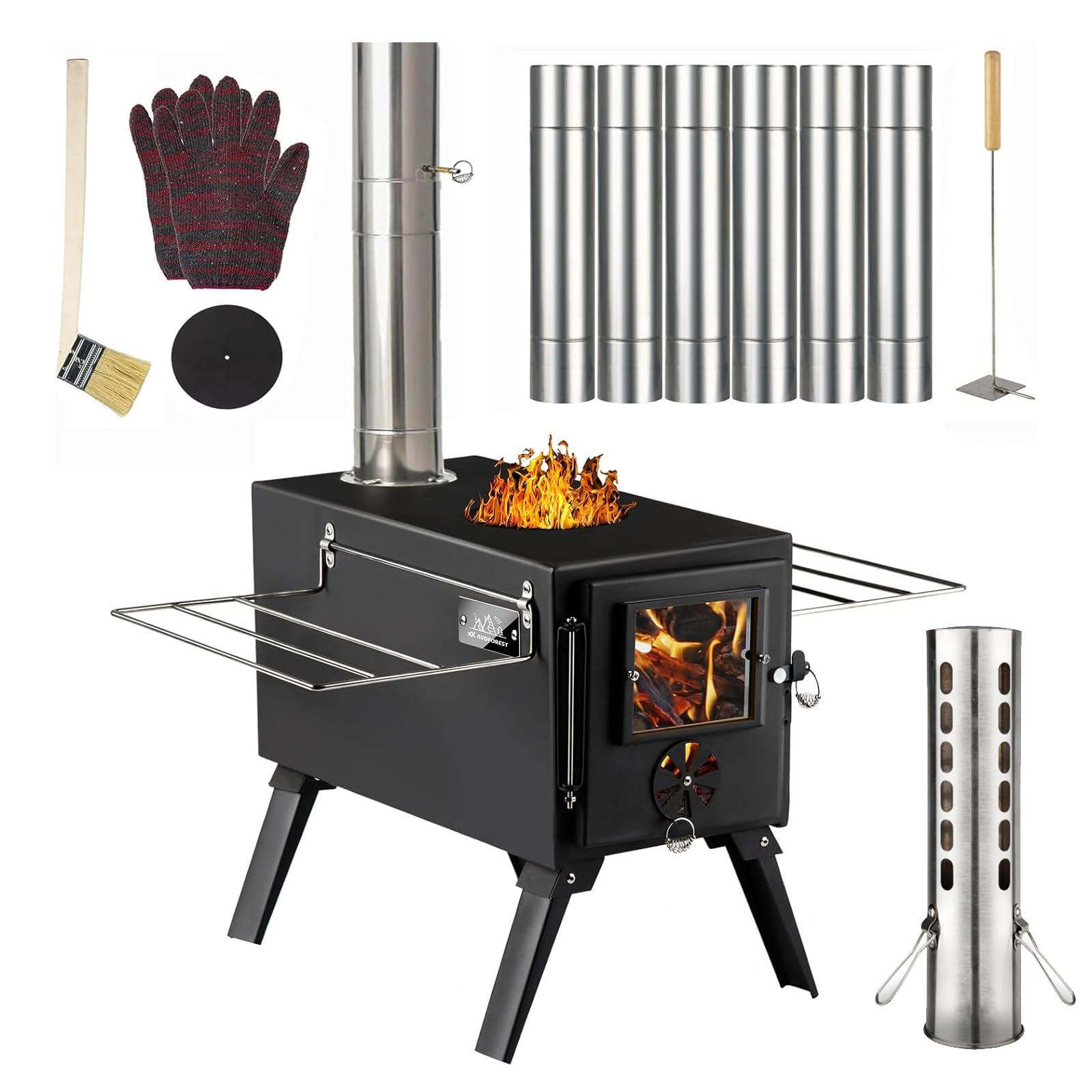
The AVOFOREST stove is appealing for one reason: it looks like a complete “ready kit.” Chimney sections, damper control, viewing window, extra tools—this kind of bundle helps first-time hot tent campers feel prepared. And when the stove is assembled well and drafting properly, owners often say it heats fast, warms the tent effectively, and packs down neatly for transport.
The glass window is a big emotional upgrade in tent life. If you’ve never sat in a canvas tent with a glowing fire in the corner, it’s hard to explain how much that changes the vibe. It’s not just heat—it’s comfort and atmosphere. That’s why people seek out windowed tent stoves even when simple box stoves would technically work.
Now, the honest expert note: tent stoves are only as good as their seals, their draft, and their build consistency. Some users report smoke leakage around the door or cooking surface area, and in severe cases, dissatisfaction with heat output. This type of complaint is often a combination of factors: poor draft setup, a door that doesn’t seal tightly, or parts that are slightly out of tolerance. In a perfect world, every unit is identical. In the real world, some camping stoves vary.
If you choose this stove, the smart “owner mindset” is to treat setup like a system check: make sure the chimney joints seat well, use the damper intentionally (not randomly), and ensure the door closes snugly. If the glass is mounted with screws, don’t overtighten—glass doesn’t like stress. A careful initial burn and a steady draft often turns these stoves from “smoky mess” into “warm and wonderful.”
If you want the most consistent “sturdy build” feedback, the unho model above tends to attract that kind of praise. If you want a bundled kit approach and love the idea of accessories included, the AVOFOREST can still be a strong pick—just go in with the right expectations and do your setup carefully.
Why people buy it
- Accessory-heavy bundle – Tools and extras make it feel more “ready out of the box.”
- Viewing window vibe – Adds comfort and makes fire monitoring easier.
- Compact portability – Packs down well for car camping and base camp setups.
- Fast heat potential – When drafting correctly, it can warm a tent quickly.
Good to know
- Some users report smoke leakage or glass issues—assembly quality and sealing matter.
- Draft setup is everything; a weak draft makes any tent stove miserable.
- This is outdoor equipment—expect to learn its quirks during the first few burns.
Ideal for: hot tent campers who want a feature-rich kit and a viewing window, and are willing to be careful with assembly and draft setup.
12. Rayzi 58" Pellet Patio Heater – Spiral Flame Ambiance That Turns Heads

Let’s be honest: this one is an ambiance purchase first. The Rayzi pellet patio heater is built for the “wow, what is that?” reaction—the tornado-like flame effect inside a tall glass tube that makes a patio feel like a lounge. It can provide warmth, but its real superpower is atmosphere. If your goal is to create a cozy outdoor gathering spot that looks premium and feels special, this is the style of product that does it.
Owners who like it tend to mention how beginner-friendly it feels: assembly is manageable, the flame is calming, and the included cleaning tools help keep the glass presentable. That last part matters, because clear glass is the whole point. When the glass stays clean, the heater looks incredible. When it soots up, it looks like a science experiment.
The negative feedback is also predictable for this kind of design: glass can get black marks, cleaning can feel annoying if you expected “zero maintenance,” and if pellets are damp or airflow is off, it can smoke more than you’d like. That’s not a dealbreaker—it’s just outdoor fire reality in a tall tube. Treat it like a patio fire feature: use clean pellets, keep airflow in the happy zone, and clean the glass when you want it to look its best.
The expert way to think about this purchase: this is not your “heat the whole yard” solution. It’s your “make the patio feel like a destination” solution. If you want true smokeless sit-around-the-fire behavior, jump to the tabletop smokeless fire pits below. If you want a statement flame that turns your outdoor space into an experience, Rayzi is the vibe pick.
Why it’s a vibe upgrade
- Spiral flame effect – The main attraction: looks stunning and feels cozy.
- Beginner-friendly setup – Many owners describe it as manageable even without fire-feature experience.
- Clean pellet burning potential – When pellets are dry and airflow is right, smoke can be minimal.
- Ash box design – Simplifies cleanup compared with messy open fire features.
Good to know
- Glass will need cleaning to keep the “wow” look; soot marks are common in real use.
- This is more ambiance than serious outdoor heating—set expectations accordingly.
- Fuel quality and ignition technique affect smoke behavior more than most people expect.
Ideal for: patios, backyard gatherings, and outdoor spaces where the goal is a premium-looking flame feature with pellet convenience.
13. EAST OAK Fuoco – Compact Smokeless Flame With Surprisingly Strong Heat
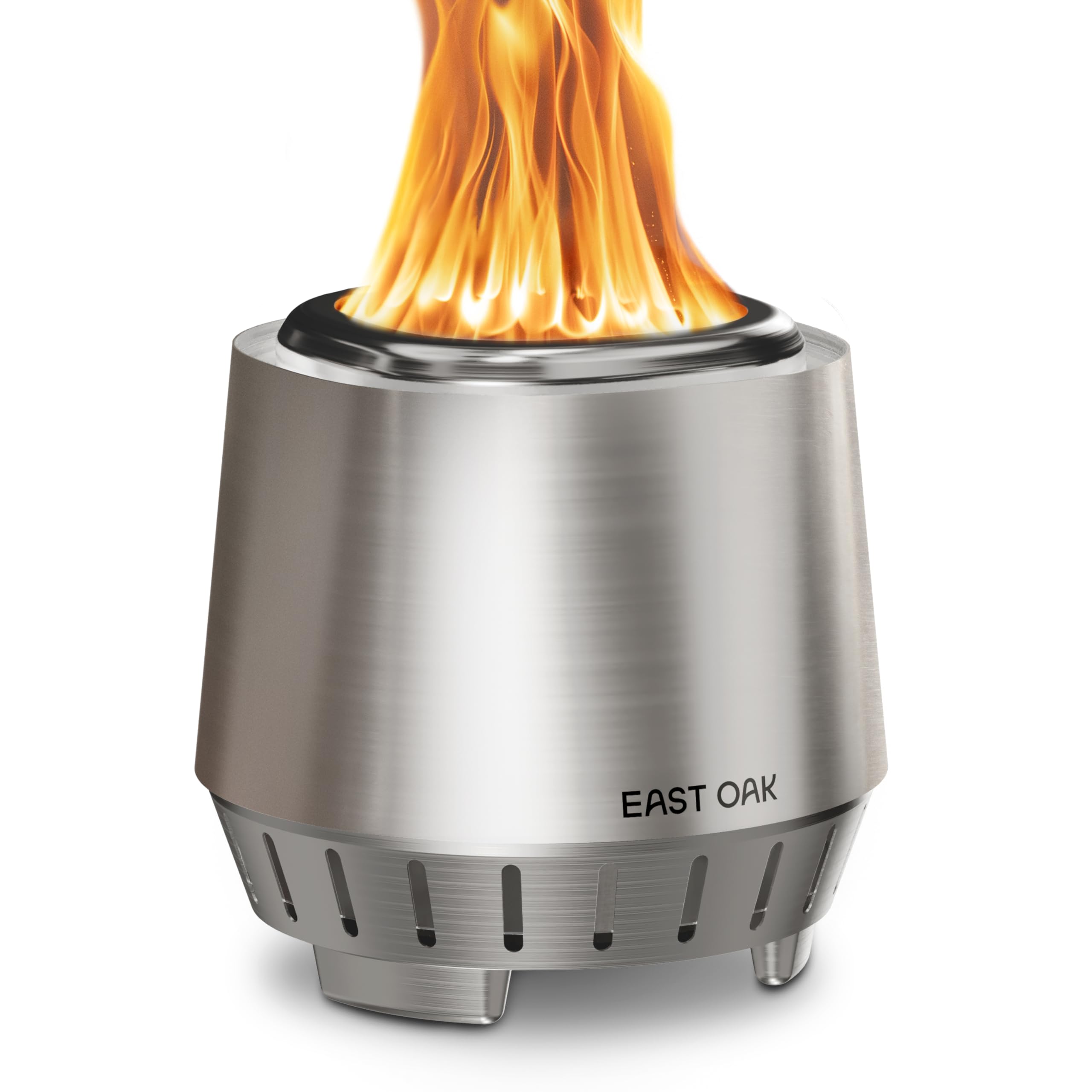
Tabletop smokeless fire pits are one of the most underrated “small space cozy” upgrades. The EAST OAK Fuoco hits the sweet spot: compact enough to move easily, powerful enough to feel like a real flame, and efficient enough that you’re not feeding it constantly. Owners often describe it as surprisingly hot for its size, with smoke dropping dramatically once the burn gets established.
The “smokeless” magic comes from airflow and secondary burn: once the stove body heats up, rising hot air pulls in fresh oxygen and re-burns smoke particles. In real life, that means you’ll still see some smoke during ignition and occasional puffs depending on fuel and wind—but most of the time it’s dramatically cleaner than an open fire bowl. Less smoke = less stinging eyes, less smoky clothes, and more “let’s actually sit here.”
Dual fuel is a practical win. Pellets give you a steady, predictable burn pattern. Wood chunks give you more flexibility when you’re not carrying pellets around. Owners who get the best experience tend to use simple ignition helpers and let the unit heat up fully before judging smoke. Once it’s at temperature, the flame becomes taller, cleaner, and more stable.
The cleanup experience is another reason this unit earns praise. A removable ash pan sounds like a small feature, but it’s the difference between “I’ll use this often” and “I’ll avoid this because cleanup is annoying.” With the Fuoco, the whole point is repeat use: quick light, cozy flame, quick cleanup, repeat.
One practical expectation check: tabletop fire pits throw heat mostly upward. That’s perfect for ambiance and hand-warming (hands above the flame), but it won’t heat your whole patio like a large fire pit. Treat it like a “cozy center” that makes evenings better, not a furnace.
Why it’s so popular
- Strong flame for its size – Owners often describe it as surprisingly powerful.
- Low smoke once established – Secondary burn behavior makes it more pleasant to sit around.
- Dual fuel flexibility – Pellets for convenience, wood for flexibility.
- Cleanup is genuinely easier – Ash pan design encourages frequent use.
Good to know
- Heat is mostly vertical; great for ambiance, not for “warm the whole yard.”
- Expect some smoke during ignition or in windy conditions—smokeless is “mostly,” not magic.
- Keeping it covered helps maintain the stainless look over time.
Ideal for: patios, decks, RV trips, and small backyard hangouts where you want a cleaner flame experience that’s easy to use often.
14. AmazStove Tabletop Fire Pit – Low Smoke, Portable, and Surprisingly Thoughtful Accessories
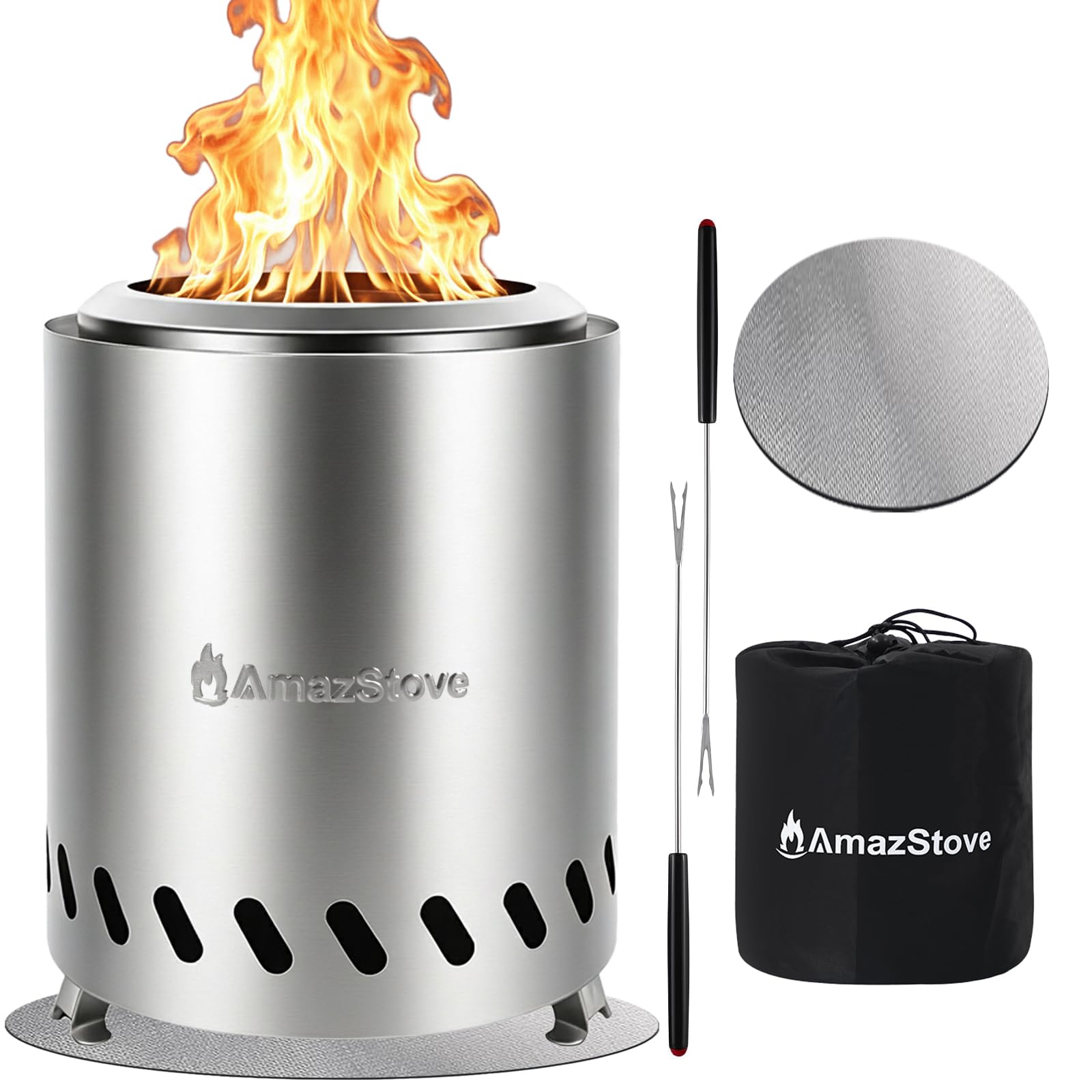
The AmazStove tabletop unit is the kind of product that wins on “details you notice later.” Owners mention the travel bag, the included tools, and the heat pad as things that make it easier to actually use. And that’s the whole story with tabletop fires: if it’s easy to set up and clean up, you’ll use it often. If it feels like a hassle, it becomes garage decor.
In real-world use, many owners report very low smoke once it’s burning cleanly—especially with pellets. A common pattern: light it with a simple starter, let the flame establish, then enjoy a tall secondary burn flame that looks great and feels relaxing. Burn times vary with how full you load it and what fuel you use, but the experience is typically long enough for a meal, conversation, and a few marshmallows. That’s exactly what most people want from a tabletop fire.
One extremely useful “expert expectation”: tabletop units don’t radiate heat like big fire bowls. The warmth rises. That means hands and faces above the fire feel great, but sitting three feet away won’t feel like a heater. Owners who understand that tend to love these products. Owners who expect “space heating” tend to feel underwhelmed.
Aesthetic note: stainless rings and surfaces can discolor with repeated high heat. That’s normal for steel in flame environments. Some people prefer darker finishes for that reason. If you buy stainless, buy it because you like the look and accept that fire changes materials over time.
If your goal is “portable, low smoke, easy to use,” this is an excellent little fire feature—especially for RVers, campers, or anyone who wants a compact fire experience without the big mess.
Why it’s easy to live with
- Thoughtful accessories – Bag, tools, and pad make setup and packing easy.
- Low-smoke burn potential – Many owners describe it as close to smokeless once burning.
- Portable and compact – Great for travel, picnics, and RV life.
- Simple ignition – Lights easily with basic starters and gets going quickly.
Good to know
- Heat rises more than it radiates outward; it’s ambiance-first by design.
- Stainless can discolor with use—normal for high-heat metal.
- Like all smokeless-style pits, it performs best once fully heated and drafting well.
Ideal for: RVers, campers, and patio owners who want a compact low-smoke fire feature with easy portability and a complete accessory kit.
15. GODSAX Rocket Stove – The “Boil Water Fast” Outdoor Workhorse
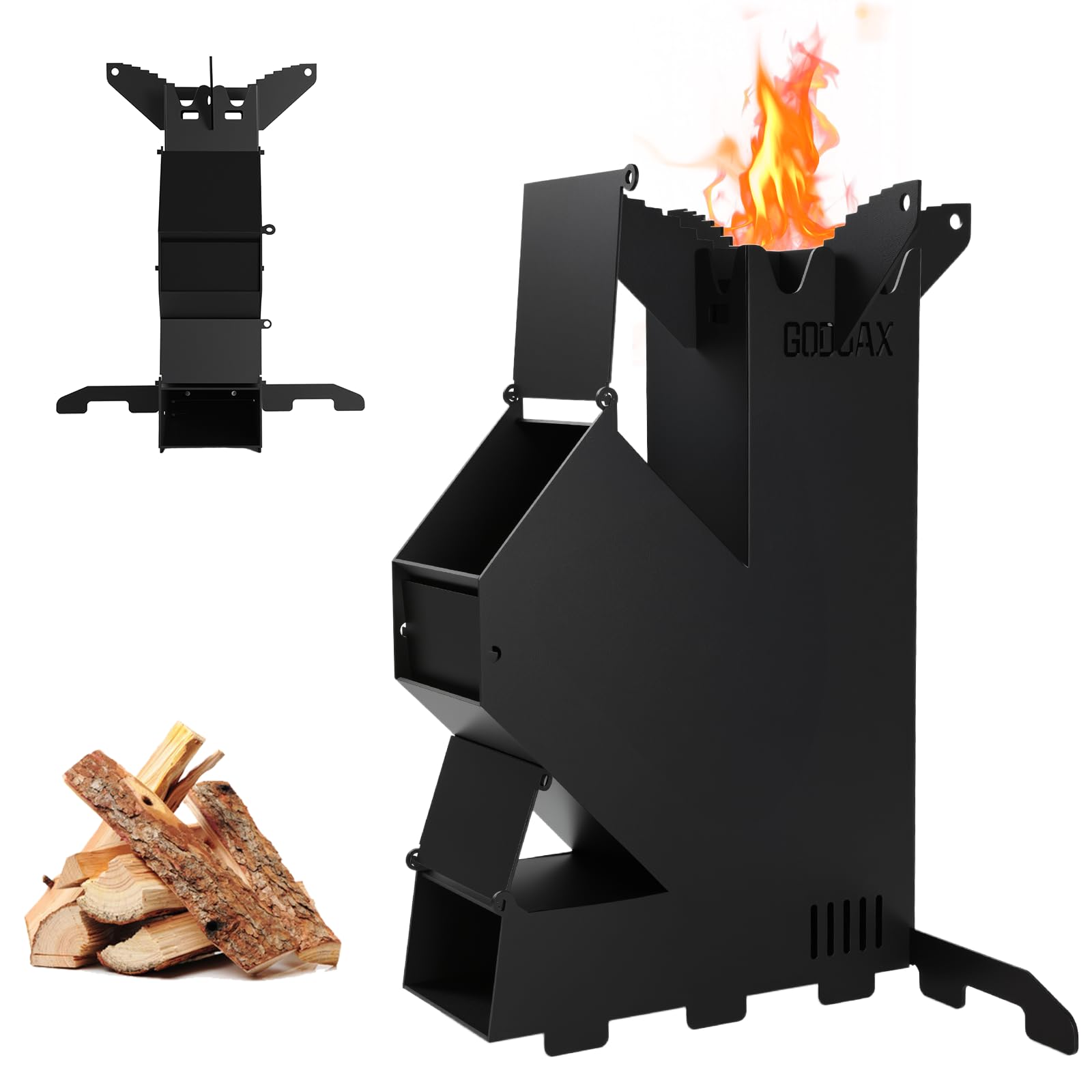
A rocket stove isn’t a pellet stove, but it earns a spot in this guide because it solves a problem pellet stoves don’t: fast, efficient outdoor cooking with whatever fuel you can scavenge—twigs, sticks, scrap wood, and small splits. If you want a “backup cooking plan” that doesn’t depend on propane canisters or electricity, this style of stove is the move.
Owners rave about one thing: boil speed. The chimney effect pulls air through the fuel chamber and concentrates heat up the cooking chimney, so you can get water boiling quickly and cook efficiently with surprisingly little fuel—as long as you keep feeding it. That’s the trade: rocket stoves burn hot and efficient, but they like frequent feeding if you’re running high heat.
Build quality is a major selling point here. This unit is often described as heavy-duty and stable—good for backyard use, preparedness kits, or car camping. It’s not the kind of stove you carry on long hikes. But if your “outdoor cooking” is near the car, on a deck, or in a backyard during an outage, the weight becomes a benefit: stability and durability.
The best ownership tip is simple: load smaller fuel pieces and feed steadily. Big chunks can overwhelm airflow. Small sticks and splits keep the rocket effect strong. And when you’re done, you’ll appreciate the ash door design—cleanup is quick and the stove cools down once fuel is gone.
If you want warmth and ambiance, choose a tabletop smokeless fire pit. If you want efficient cooking power that feels like a mini outdoor engine, this rocket stove is a smart tool to own.
Why it’s a powerhouse tool
- Fast boil performance – Great for cooking and water heating when you need speed.
- Fuel flexibility – Burns sticks, twigs, and scrap wood so you’re not dependent on specialty fuel.
- Stable, heavy-duty build – Built for real use, not delicate “camp gadget” vibes.
- Good for preparedness – A practical backup cooking plan for outages and emergencies.
Good to know
- Not for backpacking—weight is part of the design.
- Runs hottest with frequent feeding; this is active cooking, not “set it and walk away.”
- It’s a cooker, not a heater; don’t buy it expecting patio warmth.
Ideal for: outdoor cooking, preparedness, backyard boil nights, and car camping where you want powerful heat without relying on gas canisters.
How Pellet Stoves Actually Work (and Why “Tuning” Beats Spec Sheets)
Pellet stoves look simple: pellets go in, fire happens, room warms up. But the real magic—and the real frustration—comes from how the stove balances three systems at once: fuel feed, combustion air, and room air. When those systems are balanced, you get clean flame, clear glass, and steady heat. When they’re out of balance, you get soot, lazy flame, shutdowns, and the feeling that “this stove is picky.”
What makes a pellet stove feel “easy” in real life
- Accessible burn pot – Fast scrape-and-vac maintenance prevents most headaches.
- Predictable hopper behavior – Pellets feed cleanly without bridging or “false empty” shutdowns.
- Stable thermostat logic – Sensor placement and mode choice match your actual room layout.
- Clear controls – You shouldn’t need a decoder ring to run your stove comfortably.
- Low drama airflow – Good vent layout and clean air paths make stoves behave better and cleaner.
This is why some owners fall in love with “simple” designs like the HP50S or Castle Serenity: the basics are easy, so the stove becomes a comfort tool instead of a hobby. More complex systems can be excellent—but only if you’re willing to learn them.
Simple habits that prevent the most common problems
- Keep the burn pot clean – Most “poor heat” and “dirty glass” complaints start here.
- Don’t starve the flame – Running too low without enough air creates soot and clinkers.
- Use consistent pellets – Different pellet brands burn differently; consistency makes settings predictable.
- Give sensors real room air – Sensors pressed against hot stove surfaces cause weird thermostat behavior.
- Learn your “happy setting” – Many homes run best on a steady low-to-mid setting rather than aggressive cycling.
Once those habits are in place, the stove stops feeling mysterious. It becomes what you wanted in the first place: steady warmth with a cozy flame you actually enjoy looking at.
FAQ: Pellet Stoves Without the Confusion
How do I know if a stove will actually heat my space?
Do pellet stoves need daily maintenance?
Why does my stove’s glass turn black so fast?
Is “eco mode” worth using?
What if I can’t install venting?
Are tabletop “smokeless” fire pits actually smokeless?
Final Thoughts: Buy the Stove That Fits Your Space—and Your Personality
The best stove isn’t the one with the biggest marketing number. It’s the one you’ll still appreciate when it’s cold, you’re tired, and you just want heat without drama.
Here’s the simplest way to turn this guide into a confident purchase:
- Want the best overall balance for most homes? Start with the ComfortBilt HP50S. It’s compact, powerful, and built for real-life daily use.
- Need bigger-house output and a more “main heat” feel? Go with the ComfortBilt HP22 for strong whole-home warmth with a calm, comfortable personality.
- Hate refilling and want marathon runtime? The ComfortBilt HP42 Alpine is built around hopper convenience and long-run comfort—best for owners who treat it like a system and maintain it well.
- Want easy cleaning and flexible control modes? Choose the Castle Serenity for a maintenance-friendly design and “tune once, relax” potential.
- Want Wi‑Fi control in a mid-size heater? Consider the Cleveland Iron Works No.200 for a big hopper and modern control—especially useful in shops and open layouts.
- Need the smallest footprint pellet heater in this list? The Cleveland Iron Works No.215 Mini is the “fits where others don’t” option for cabins and small rooms.
- Need narrow width and like hands-on tuning? The ComfortBilt HP40 Mini can be excellent when maintained and dialed in.
- Can’t vent a pellet stove? Grab the ZAFRO Electric Fireplace Stove for easy, apartment-friendly warmth and a cozy flame look.
- Want pellet-style heat for hot tent camping? The GREEN STOVE Pellet Stove with Oven is a strong base-camp option when you run the right pellets and airflow.
- Want outdoor fire ambiance with pellet convenience? Pick the vibe you want: the tall spiral flame from Rayzi, or the compact “mostly smokeless” tabletop experience from EAST OAK Fuoco and AmazStove.
- Want a backup outdoor cooking beast? The GODSAX Rocket Stove is a smart tool for fast boiling and preparedness cooking.
At the end of the day, the right small pellet stove is the one that matches your space and your habits: a footprint that fits, controls you’ll actually use, a hopper routine that won’t annoy you, and a cleaning rhythm you can keep. Pick that combination, and you won’t need to read another guide—you’ll just be warm.
