
A pellet stove looks simple on the outside—box, glass, flame, heat—but the experience is anything but basic. A good one feels like a calm, steady “background furnace” that quietly carries your coldest weeks. A frustrating one feels like a part-time job: refill, relight, scrape, troubleshoot, repeat.
If you’re shopping for an indoor pellet stove, you’re not just buying heat. You’re buying a routine. That routine includes how often you refill, how often you clean, how loud the blower is during a movie, how the glass looks after three days of real burning, and what happens when the power flickers on a windy night.
Most buying guides stop at surface-level specs: “big hopper,” “high BTU,” “EPA certified,” “heats X square feet.” Those numbers matter—but they don’t tell you what it’s like to live with the machine. This guide is built around the real friction points that show up again and again in owner feedback: hopper openings that spill pellets everywhere, settings that feel confusing until week two, glass that soots faster than expected, eco modes that cycle more than you’d like, and customer-service experiences that can make (or break) a long winter.
Below, you’ll find 11 carefully selected picks. Most are true pellet stoves designed for indoor heating. A few are smart alternatives for homes where pellet venting isn’t possible or where you want a plug-and-play, low-commitment “warmth + ambiance” solution. I’ll be blunt about what each one does well, what owners complain about, and how to decide in a way that feels obvious once you’re done reading.
In this article
- How to choose a stove you’ll still love in the coldest week.
- Quick comparison table of 11 standout picks.
- In-depth reviews: the real-life pros, cons, and who each one fits.
- How pellet stoves really work (and why some “feel” stronger than others).
- FAQ: venting, power outages, cleaning, noise, and pellet quality.
How to Choose the Right Indoor Pellet Stove
A pellet stove is a little combustion system with a brain: an auger feeds fuel, a combustion fan manages burn intensity, a room blower moves heat, and sensors try to keep everything stable. When people feel disappointed, it’s rarely because the stove is “weak.” It’s usually because the stove is mismatched to their home, their lifestyle, or their tolerance for daily maintenance. Here’s the framework I use to make the decision feel crystal clear.
1. Start with your heat strategy (primary heat vs. targeted zone heat)
Before you fall in love with hopper sizes and Wi‑Fi apps, answer one question: what role is this stove playing in your home?
- Primary heat for a whole home: You want high output, predictable thermostat behavior, and a refill routine that won’t wear you down.
- Zone heat for one big space: Living room, basement, great room, workshop—here you care more about blower strength and air movement.
- “Shoulder season” comfort: Spring/fall cabins and cottages—often a smaller, simpler stove (or even electric ambiance heat) is the smarter pick.
- Backup heat mindset: If power outages are common, you’ll think differently about electronics, ignition cycling, and backup power.
2. Venting is the “yes/no gate” that decides everything
Pellet stoves are not “ventless.” They need a safe exhaust path, and the vent setup heavily affects performance. If the vent is poorly planned, the stove can feel smoky, lazy, or error-prone—even if the unit itself is great.
- Short, clean vent runs tend to draft better and stay cleaner.
- Longer, more complex runs can work, but they raise the stakes on correct installation and routine cleaning.
- Outside Air Kits (OAK) can be a game changer in tighter homes, basements, or rooms that feel “negative pressure heavy.”
This is also where your purchase becomes practical: if venting is difficult in your space, it can be smarter to choose a non-pellet alternative (like a vent-free gas stove where permitted, or a strong electric fireplace heater) rather than forcing a pellet setup that will never behave.
3. Hopper size isn’t a brag—it’s your refill schedule
A hopper is not a spec. It’s a lifestyle. If you love the idea of “set it and forget it,” look for a stove that can run long stretches without you babysitting fuel. If you don’t mind quick daily interaction, a smaller hopper can be totally fine (and sometimes easier to place in tight rooms).
Two real-life truths that owners say out loud:
- Hopper openings matter as much as hopper capacity. A big hopper that’s awkward to pour into can still make you miserable.
- Pellet flow matters. Some hoppers “bridge” or hang up pellets, so you end up stirring or topping off more often than expected.
If you’re the kind of person who wants to sleep through the night without thinking about pellets, prioritize a bigger hopper and a stove that owners say feeds consistently.
4. Control modes: thermostat vs. eco vs. manual (what feels best in real life)
On paper, more modes sounds better. In real houses, the best mode is the one that gives stable comfort without constant cycling.
- Manual mode is underrated. It often produces the calmest, most stable heat because the stove stays lit.
- Thermostat mode is great when implemented well—especially if it can step down smoothly instead of “full blast or nothing.”
- Eco mode can be efficient, but it may cycle the igniter more often, and some owners prefer fewer on/off events for longevity and peace of mind.
This is why you’ll see experienced pellet owners saying variations of: “Once you tune it, you stop touching it.” The goal is not fancy scheduling. The goal is predictable behavior you trust.
5. Noise reality: fans, augers, and what “quiet” actually means
Every pellet stove makes sound. What matters is whether the sound feels like “white noise” or “constant mechanical activity.” There are three noise personalities to know:
- Room blower whoosh: The main sound. Better stoves feel smoother here.
- Auger feed clicks: Normal, but the rhythm varies by model and setting.
- Vibration/rattle moments: Often install-related (feet not even, vent not secured) rather than a true defect.
If you’re putting the stove in a living room where you watch TV, you should care about noise as much as heat. If it’s going into a basement utility zone, you can choose more aggressively for output and hopper size.
6. Cleaning: the weekly routine you can’t avoid (so choose wisely)
Pellet stoves are clean compared to cordwood… but they are not maintenance-free. A stove that is “easy to clean” isn’t one that magically stays clean. It’s one that makes the routine fast:
- Easy ash removal: Ash pans and easy access matter.
- Easy burn pot access: You’ll scrape it. Choose one that makes it a 2-minute job.
- Easy internal pathways: Designs with fewer hidden chambers usually frustrate people less.
- Glass expectations: Glass blackening can be normal depending on pellets and airflow. Great “air wash” helps, but pellet quality matters too.
7. Power plan: pellet heat is “electric-assisted heat”
A pellet stove needs electricity for the control board, auger motor, and fans—plus a higher draw during ignition. If you live where power outages happen, you should decide this up front:
- No outage concerns: Any modern pellet stove is fine.
- Occasional outages: Consider a quality battery backup with clean output, especially for stoves with sensitive electronics.
- Frequent outages: Think in “systems”: stove + backup power + realistic expectations about runtime.
This is also why some people choose a vent-free gas stove as their backup heat: it can run without household electricity (depending on model).
8. Serviceability is the hidden “total cost of ownership”
Owner happiness is strongly linked to two things: how easy it is to access service areas, and how responsive support is when something goes wrong. A stove can be great—until a sensor fails, a blower needs cleaning, or an auger issue shows up.
Look for:
- Access panels you can actually reach without disassembling the universe.
- Manuals that are readable (and ideally include troubleshooting steps that match the real control panel).
- A reputation for parts availability and reasonable support response times.
If two stoves look similar on paper, choose the one you feel you can live with on a bad day—because that’s when you’ll judge it.
Quick Comparison: 11 Indoor Pellet Stove Picks
Use this table to match a stove to your lifestyle fast—then jump into the deep reviews for the details that don’t show up in product bullets, like hopper frustrations, noise personality, control logic quirks, and what owners end up doing after week three.
On smaller screens, swipe or scroll sideways to see the full table.
| Model | Type | Real-life strength | Best match | Amazon |
|---|---|---|---|---|
| Castle 41278 Serenity Pellet Stove | Pellet stove | Easy-clean firebox + smart controller modes that make daily comfort feel predictable | Most homes that want a “set it, trust it” pellet routine | Amazon |
| ComfortBilt HP42-Alpine Modern Pellet Stove | High-capacity pellet | Big hopper + high efficiency feel: fewer refills, steadier long runs | People who hate refilling and want long, uninterrupted heat | Amazon |
| ComfortBilt HP22 Wood Pellet Stove | High-output pellet | Powerful heat + large viewing area; beloved when installed and tuned well | Bigger homes, cold climates, and “I want real heat” buyers | Amazon |
| Medium Pellet Stove (Cleveland Iron Works No.200) | Pellet + WiFi | Wi‑Fi control + larger hopper makes it a “modern furnace vibe” for mid-size homes | Tech-friendly users who want app control and fewer refills | Amazon |
| Mr. Heater Small Pellet Stove (Cleveland Iron Works No.215) | Compact + WiFi | Small footprint, quick warmth, and smart controls for shops and tight rooms | Cabins, workshops, and small-space pellet heat setups | Amazon |
| ComfortBilt Alpine HP40 Mini Pellet Stove | Compact pellet | Strong heat for size, easy daily cleaning—best for hands-on owners who like to tune | Tight installs where you still want “real pellet heat” | Amazon |
| Castle Wood Pellet Stove Serenity 12327 | Easy-clean design | Simple interior layout + programmable controller; owners praise cleaning speed | People who prioritize maintenance simplicity over mega hopper size | Amazon |
| ProCom QNSD250RT Vent Free Dual Fuel Stove | Vent-free gas | No venting required; strong supplemental heat when pellet venting isn’t feasible | Homes that need indoor heat without pellet exhaust venting | Amazon |
| ZAFRO Electric Fireplace Stove (5100 BTU) | Electric | Plug-and-play warmth + adjustable flame ambiance for smaller rooms | Renters, bedrooms, offices, apartments, “no installation” buyers | Amazon |
| East Oak Fuoco Smokeless Tabletop Fire Pit | Pellet/wood firepit | Smokeless tabletop flame + fast cleanup; great “pellet ambiance” outdoors | Patios, camping, backyard nights, and outdoor gatherings | Amazon |
| Rocket Stove for Cooking (Portable Wood Burning) | Outdoor cook stove | Ridiculously fast boil times + sturdy build for emergency cooking outdoors | Off-grid cooking, camping, preparedness, backyard events | Amazon |
In‑Depth Reviews: 11 Stoves (and Smart Alternatives) That People Actually Enjoy Living With
Now we go model by model—using the stuff that makes or breaks winter comfort in real homes: how it behaves when it’s running overnight, how annoying (or easy) refills feel, what the maintenance rhythm looks like, and what owners say after the honeymoon phase.
1. Castle 41278 Serenity – The “Easy-Clean, Predictable Heat” Sweet Spot

If you want a pellet stove that feels like a repeatable routine—not a science project—the Serenity is one of the best “most homes” answers. It focuses on the stuff that keeps owners happy month after month: a smart controller that gives you real scheduling and thermostat options, and an interior design that’s deliberately simplified so cleaning doesn’t turn into an hour-long teardown.
Here’s the real-life reason people stick with this model: when a stove is easy to clean, it tends to stay clean. That’s not just comfort—it’s performance stability. Pellet stoves are airflow-sensitive. When ash builds up in the wrong places, you get lazier flames, dirtier glass, and more shutdowns. The Serenity’s tubeless-style, straightforward firebox layout is designed to minimize “hidden” areas where ash quietly accumulates until your stove starts acting strange.
Owners also talk about the controller in a way that matters: not “cool,” but “useful.” Manual mode is there when you want steady heat. Thermostat mode is there when you want comfort automation. Weekly scheduling is there when you want the stove to behave like a household appliance rather than a hobby. And Eco mode can be helpful—especially in milder weather—if you like the idea of the stove toggling to maintain a set temperature.
The honest tradeoff is hopper size and glass behavior. A 40 lb hopper is a normal, practical size—but it’s not “fill once and forget.” If you burn hot and steady, you’ll be interacting with pellets daily. Also, some owners report that the window can darken relatively quickly. That can happen on many stoves depending on pellet quality and airflow tuning; the key is understanding that “pretty flame view” is earned by a clean burn: dry pellets, correct air, and a burn pot that isn’t caked up.
My expert take: this is a “real home” stove. It rewards owners who want a clean routine and predictable operation—not maximum brag-factor capacity. If you want a mega hopper and multi-day runs, jump to the HP42. If you want a balanced, sane pellet lifestyle, start here.
Why you’ll like it
- Cleaning stays fast – The simplified interior layout makes weekly maintenance feel manageable instead of dreaded.
- Controller feels practical – Manual, thermostat, weekly scheduling, and Eco options cover real household routines.
- Comfort feels steady – Owners who tune it tend to describe it as reliable and warm for the space it targets.
- Great “first pellet stove” energy – Not because it’s basic—because it’s understandable and livable.
Good to know
- Expect daily pellet interaction during heavy burn weeks; the hopper is practical, not giant.
- Glass can darken quickly if pellets burn dirty or airflow is off; cleaning routine matters.
- If you want multi-day runtime without refilling, a larger-hopper model will suit you better.
Ideal for: homeowners who want a balanced pellet stove experience: dependable heat, an easy cleaning rhythm, and controls that feel like “home appliance logic,” not guesswork.
2. ComfortBilt HP42-Alpine – The Big Hopper Choice for People Who Hate Feeding Stoves

There are two types of pellet stove owners: people who don’t mind “feeding the machine,” and people who want the stove to behave like a furnace. If you’re the second type, the HP42’s big headline is simple: a huge hopper changes how your winter feels. Instead of constantly thinking about pellets, you think about comfort. That’s a big psychological win—and it’s why large-hopper models earn loyal fans.
Here’s what matters beyond the headline: the HP42 is built for long, steady operation. Owners who have good experiences often describe it as “warm, sturdy, and straightforward once installed.” They also point out something that beginners sometimes miss: pellet stoves don’t just “run.” They run well when you respect the basics: keep ash under control, choose decent pellets, and protect the electronics from sketchy power. One owner’s update-style feedback is particularly useful: better pellets burned cleaner (less ash, less frequent shutdown behavior), and a stronger battery backup helped the stove ride through brief outages without drama. That’s not brand propaganda; that’s real-world pellet life.
Now the honest part: this model has polarized feedback, and you should know why. Some negative experiences are strongly tied to early failures (like blowers) and frustration with support response times. That doesn’t mean the stove is automatically a bad purchase—but it does mean you should buy it with a “systems mindset.” If this stove will be your primary heat source, treat installation, venting, and electrical protection as part of the purchase—not optional extras. A pellet stove with a large hopper encourages long burns. Long burns magnify whatever is slightly wrong: dirty pellets, ash buildup, poor draft, or weak power.
When it’s dialed in, the HP42’s advantage is comfort continuity. You get fewer refills, a steadier heat rhythm, and a “home always feels warm” feeling that smaller hoppers struggle to deliver unless you’re constantly topping off. If your winter stress comes from waking up to a cool house, a large hopper is the most direct solution.
My expert recommendation: if you’re buying a pellet stove because you want to stop thinking about heat, choose a model that reduces daily interaction. This is one of the clearest ways to do that—just go in with your eyes open about support and setup quality.
Why it stands out
- Big hopper = fewer refills – The strongest lifestyle upgrade in pellet stove ownership is simply touching pellets less often.
- Built for long runs – Great for consistent, stable comfort in cold spells.
- Modern, functional layout – Removable ash pan and large fill lid help the routine feel less annoying.
- Strong “whole-day heat” energy – Owners who get it tuned often describe steady, satisfying warmth.
Good to know
- Mixed reliability stories mean installation and maintenance discipline matter more than average.
- Plan on weekly ash management; dirty pellets can cause faster shutdown behavior.
- If support responsiveness is your #1 priority, you may prefer a model with a stronger service reputation in your area.
Ideal for: homeowners who want long runtime, fewer refills, and a stove that feels more like a steady heating system than a “tend the fire” ritual.
3. ComfortBilt HP22 – The “Hot Damn, This Actually Heats” Pellet Stove for Big Spaces

The HP22 has a certain reputation among pellet owners: it’s the stove people buy when they’re done playing games with cold. Owners describe fast light-ups, serious heat output, and a surprisingly quiet operation for a high-output unit—especially once everything is installed correctly. If you’re heating a large home, a big open-plan area, or a space where a smaller stove would constantly run at its limit, this model is a logical “step up.”
Let’s talk about the real-life details that matter. One of the most consistently praised aspects is the feel of the stove: sturdy cabinet, solid door, and a large viewing area that makes the flame feel like an actual fireplace rather than a tiny “appliance flame.” That matters if you’re placing it in a living space. People don’t just want heat; they want the room to feel good. The HP22’s bay-style look delivers that “warm hearth” vibe in a way many boxy stoves don’t.
Now the quirks—because the quirks decide happiness. Some owners note the hopper fill opening can feel smaller than expected for pouring a full bag cleanly, which can lead to spills and pellet dust. Others mention that thermostat behavior isn’t always exactly how they imagined: depending on how the thermostat is implemented, some people prefer it to modulate down rather than come on aggressively. And there’s a “real pellet stove learning curve” issue that shows up in multiple stories: if airflow is restricted (ash buildup, dirty pellets, or venting issues), ignition can be smoky and the burn pot can behave poorly. That’s not unique to this stove, but high-output stoves magnify airflow problems because they move more air and burn more fuel.
One owner tip that’s worth internalizing: pellet stoves are incredibly stable when they’re clean. When they’re dirty, they can look “temperamental.” That’s why experienced HP22 owners talk about quick cleaning routines and pellet choice as performance tools, not optional niceties. They also frequently mention that once the stove is dialed in, it can heat far beyond the room it’s in— especially in homes with open stairwells, good air movement, and reasonable insulation.
My expert take is simple: if you need big heat and you’re willing to treat this like a real heating appliance (meaning you’ll keep up with ash removal and vent maintenance), the HP22 delivers the “wow, this is real heat” experience people buy pellet stoves for in the first place. If you want something tiny, ultra-quiet, and maintenance-light, you’ll be happier in the compact category.
Why big-home owners love it
- Serious heat output – Designed for larger spaces where smaller stoves feel like they’re always sprinting.
- Flame view is legitimately satisfying – The big window and bay-style shape make it feel hearth-like, not clinical.
- Quick warm-up – Owners often note fast ignition and rapid “room changes.”
- Quiet for the category – Many users describe it as surprisingly calm once running smoothly.
Good to know
- Hopper opening and pellet flow can be a “daily friction” point—pouring carefully matters.
- Thermostat behavior may not match everyone’s preferences; learning the modes helps.
- Like any high-output stove, it rewards good pellets and consistent cleaning.
Ideal for: people who need real, powerful pellet heat and want a stove that feels substantial in both performance and “living room presence.”
4. Medium Pellet Stove (Cleveland Iron Works No.200) – App Control + Big Hopper Convenience
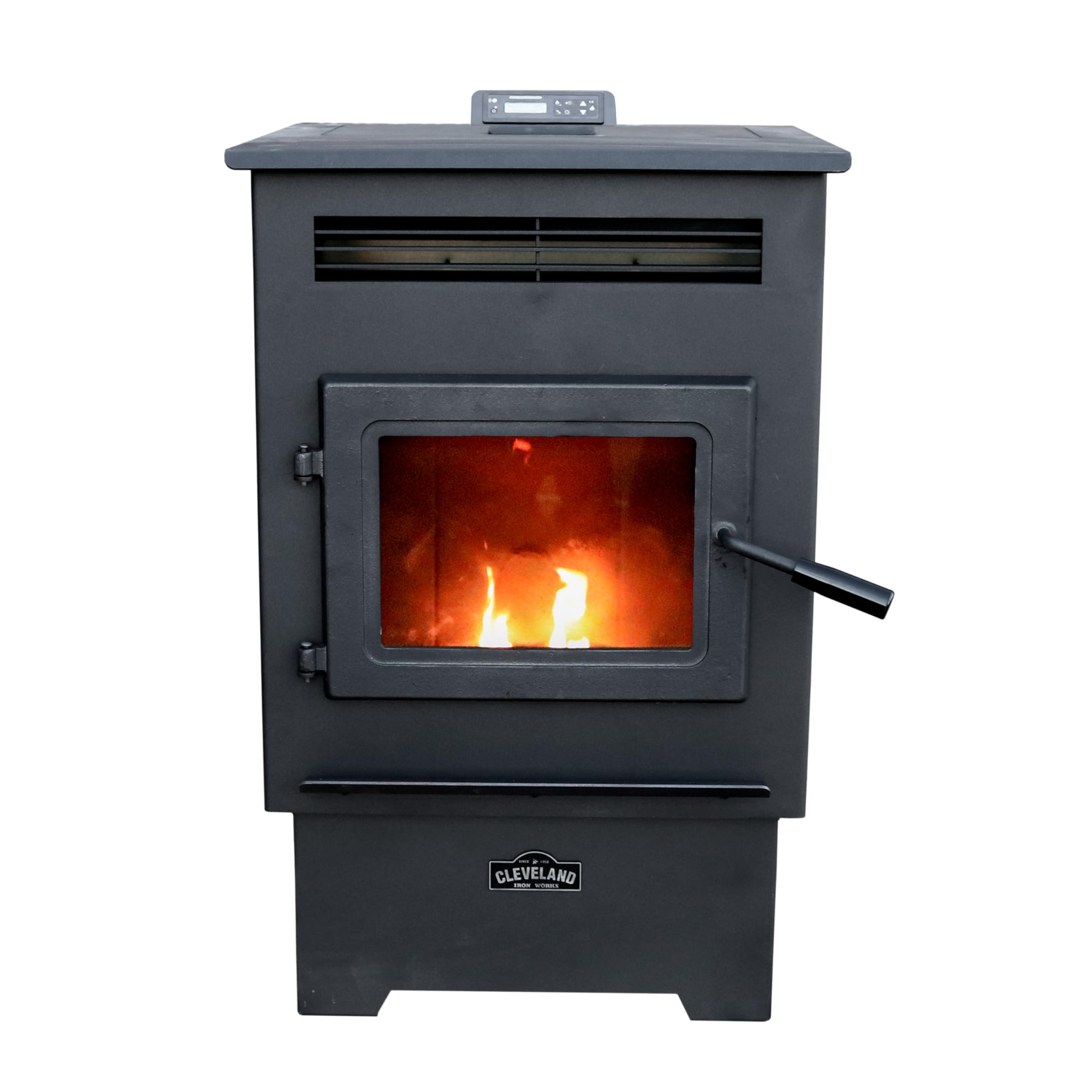
The No.200 is for the person who wants pellet heat to feel modern: app control, remote control, programmable behavior, and a hopper size that reduces the “refill anxiety” that smaller stoves can create. In real life, this model often shows up in workshops, mid-size homes, and “main living zone” installs where people want consistent warmth without standing over a stove like it’s a campfire.
Owners who are happy with it tend to describe three things: (1) it throws real heat for the space, (2) the programmable thermostat behavior makes it feel like a household appliance, and (3) once you understand the settings, it becomes simple. That “once you understand the settings” part matters—because some owners report the interface can feel confusing at first, especially when you see multiple power levels and adjustable fan settings. If you’re new to pellet stoves, this is where you win by reading the manual before you panic: these stoves have logic, but the logic isn’t always explained in a way that matches how humans think about heat.
The most useful real-life feedback isn’t “it’s good” or “it’s bad.” It’s the specifics: people love the thermostat programming, and they love being able to adjust behavior without standing at the unit. But some users report error codes or shutdown behavior—often at higher burn settings—especially if the stove is dirty, the vent is restricted, or the airflow balance is off. That’s not me blaming the owner. That’s how pellet stoves work: they are safety-sensor-driven appliances. If draft isn’t right, they protect themselves.
The best way to think about the No.200 is “tech convenience with pellet discipline.” If you are willing to do light daily/weekly upkeep (quick ash sweep, burn pot scrape, and regular vent checks), you’ll likely enjoy the smart control and the larger hopper. If you are looking for a stove you can ignore for weeks, pellet stoves in general will disappoint you—no matter the model.
One more expert note: pay attention to parts and access. A model is only as enjoyable as it is serviceable. If you’re using this in a shop or detached building, make sure you’re comfortable with basic cleaning and that you keep a spare gasket or two on hand if you run it hard all season. Those small preparations turn “winter stress” into “winter comfort.”
Why it’s a smart pick
- Wi‑Fi + remote control – Real convenience when you want changes without walking to the stove.
- Bigger hopper feel – Less frequent refills compared to compact units.
- Great for workshops – Owners love it in shop settings where steady warmth matters.
- Strong “system” behavior – Thermostat programming can make comfort feel automatic once set up properly.
Good to know
- Some users report confusing settings at first; this is not the most “intuitive on day one” interface.
- Error codes can appear if airflow/venting/cleanliness is off—maintenance discipline matters.
- As with many Wi‑Fi appliances, your experience improves if you treat setup like setup (not like a quick plug-in toy).
Ideal for: tech-friendly buyers who want app control and a larger hopper, and who are comfortable maintaining a pellet stove like a real heating appliance.
5. Castle Serenity 12327 – The “Two-Minute Clean” Pellet Stove People Keep Rebuying
The Serenity line has one superpower that’s easy to underestimate until you live with a pellet stove: it’s designed to be cleaned without drama. Owners who love this model don’t gush about exotic features. They gush about how fast they can keep it running well. And that’s exactly how pellet stoves stay enjoyable.
In real-life reviews, you see an unusually detailed pattern: people talk about tuning, airflow, pellet quality, and the “dance” of getting the stove dialed in. That’s not a negative—it’s actually a sign that the stove is responsive. Once tuned, owners report strong warmth for surprisingly large spaces, especially when running on middle settings. They also point out a truth many new owners don’t want to hear: pellet stoves are not pure plug-and-play. They’re appliances with combustion. Combustion needs air balance. Altitude, vent length, pellet brand, and even how level the stove sits can change the feel.
The best Serenity owner advice is practical: make sure the stove is evenly supported on all feet (it reduces expansion noises and helps stability), expect to refill more than once a day during colder stretches because the hopper is built around a single-bag rhythm, and keep the unit clean because the vacuum switch and airflow sensors can trigger shutdowns when ash builds up in the wrong place. Owners also talk about the glass getting black within a few hours. That’s not always a defect. That’s often a signal: burn is running rich, pellets are dirty, or the air wash isn’t keeping up. When people improve pellet quality and tweak airflow, the glass often improves too.
Another real-world highlight: the controller features are there when you want them, but the stove can also be operated simply. Some owners never touch scheduling at all—they just use manual heat levels and fan speed—and stay happy. That’s a great sign, because it means you’re not locked into “app life” to enjoy the stove.
My expert view: this is a strong choice for people who value maintenance simplicity over maximum hopper size. If you are the kind of person who will vacuum ash every couple days and do quick burn pot scrapes, you’ll appreciate how straightforward this design is. If your dream is touching pellets once every few days, pick a larger hopper stove. But if your dream is “I can clean this fast and it just works,” this is exactly that.
Why owners stick with it
- Cleaning is genuinely quick – The interior layout is designed to reduce hidden ash traps.
- Heats very well for the class – Once tuned, owners report strong, satisfying warmth.
- Flexible control styles – Program it, thermostat it, or keep it simple in manual mode.
- Good “practical home heater” feel – It’s built to be used daily, not admired occasionally.
Good to know
- Hopper size means more frequent refills during hard winter weeks.
- Expect a tuning period based on pellets, venting, and altitude—patience pays off.
- Glass can darken quickly if the burn is dirty; better pellets and proper airflow help.
Ideal for: people who want a pellet stove that stays enjoyable because maintenance is fast, the layout is simple, and the stove responds well once tuned.
6. Mr. Heater Small Pellet Stove (Cleveland Iron Works No.215) – Compact Heat with Wi‑Fi Convenience

Small pellet stoves are underrated—because many homes don’t need a monster unit. They need strong zone heat in a tight space: a workshop, a cabin, an all-season room, a small basement home. That’s where the No.215 shines. It’s built to fit where bigger stoves simply won’t, and it adds smart-home convenience on top.
Owners who love it often talk like this: “I have multiple stoves… this is my favorite.” That’s high praise, and it usually comes from the same strengths: it’s dependable once set correctly, it heats a smaller space quickly, and the app/remote experience feels genuinely useful when you’re in a shop or moving around the house. If you’ve ever been halfway through a task and realized the stove needs adjusting, you understand why remote control feels like a luxury that quickly becomes a necessity.
Now the truth that saves you frustration: compact stoves have compact hoppers. That means your refill rhythm is tighter, especially if you’re running higher heat levels. For many owners, that’s fine—because the benefit is placement and quick heat response. But you should buy this model only if you accept the “small hopper reality” up front.
The second reality is the documentation and interface learning curve. Some owners report the manual doesn’t perfectly match how the stove behaves in real life. That doesn’t automatically mean the stove is bad—many pellet stoves have manual issues. It means you should expect a short “learn the stove” period. One of the most practical user insights I’ve seen: room temperature sensor placement matters. If a sensor is bundled too close to the stove, the stove can think the room is warmer than it is, which affects cycling behavior. When the sensor is positioned properly in the room environment, the stove behaves more like people expect.
Expert mindset: treat this as a compact heat appliance with smart features—not as a “set it and ignore it for days” heater. If you keep it clean, feed it consistently, and install the venting properly, it can be a fantastic small-space solution. If you want multi-day runtime, you’re shopping in the wrong size category.
Why it’s a great compact pick
- Fits tight spaces – Ideal when a larger stove simply won’t work physically.
- Smart control is genuinely useful – App and remote operation fits workshop/cabin life perfectly.
- Quick heat response – Great for spaces you want warm fast.
- Good build feel for the size – Many owners describe it as well-made and efficient.
Good to know
- Small hopper means more frequent refills, especially on higher settings.
- Manual/interface can feel confusing at first—expect a short learning curve.
- As with all pellet stoves, cleanliness and airflow strongly influence reliability.
Ideal for: workshops, cabins, and small homes that want real pellet heat in a compact footprint—plus the convenience of smart controls.
7. ComfortBilt Alpine HP40 – Small Stove, Big Attitude (Perfect for Hands‑On Owners)

The HP40 is the kind of stove that creates two very different types of owners: people who love tinkering and end up getting an incredibly efficient, satisfying burn… and people who expect “press button, forget it exists,” who get annoyed fast. If you know which type you are, this model becomes a simple decision.
Let’s start with what it does best: heat per footprint. Owners regularly say variations of “this little thing has no problem heating my space.” That’s the core appeal. You can fit it in tighter installs, and it still throws real warmth. For basements, small homes, or a dedicated zone where you want steady heat without a huge appliance, it’s a strong contender.
Now the lived experience: the HP40 is happiest when it’s clean and when the airflow balance matches your pellets and your vent. A detailed owner story (the kind I trust most) describes running in manual mode to reduce cycling, keeping cleaning extremely consistent, and focusing on lower heat levels because they burn efficiently. That same real-world feedback also highlights the routine reality: because it’s compact, ash can accumulate faster relative to the system size, so owners tend to vacuum more frequently. The upside is that cleaning is usually quick because the stove is small. If you accept the routine, it becomes an easy habit.
The most common “friction points” are also worth respecting: some owners report hums or rattles at certain cycle points, glass can carbon up quickly (especially with dirtier pellets or poor airflow), and some users feel the unit is loud compared to what they expected. Here’s my expert translation: compact pellet stoves often sound more “present” because the room is smaller and you’re closer to the unit. Also, a slightly loose panel or uneven feet can turn normal vibration into an irritating rattle. That’s why leveling and stable placement are not cosmetic—they’re quality-of-life features.
One more important point: control logic and expectations. Some owners complain that “smart” behavior feels dumb—like feeding pellets before ignition or behaving strangely on lower settings. That’s where pellet stove ownership becomes honest: if your pellets are damp, your burn pot is dirty, or your draft isn’t right, startup can be messy and the stove can behave unpredictably. This model rewards owners who learn their pellets and keep airflow clean. If you do that, it becomes stable. If you don’t, it becomes a complaint generator.
My expert recommendation: this is not the stove for someone who hates maintenance. It’s a great stove for someone who doesn’t mind a little daily attention, who likes the idea of tuning for their home, and who wants a compact unit that can still seriously contribute to comfort.
Why it can be a winner
- Strong heat for the footprint – Excellent when space is limited but you still want real pellet warmth.
- Quick cleaning potential – Small stove means maintenance can be fast once you have a rhythm.
- Tunable performance – Owners who learn their settings can get efficient, clean burns.
- Great for hands-on owners – If you “give an eff,” it tends to reward you.
Good to know
- Not everyone loves the noise personality; placement and leveling matter a lot.
- Glass can darken quickly with dirty pellets or poor airflow—pellet quality matters.
- Some users report quirky behavior on low settings; this model benefits from learning and tuning.
Ideal for: compact installs and owners who don’t mind a little routine and tuning in exchange for strong heat from a small pellet stove.
8. ProCom QNSD250RT Vent-Free Dual Fuel Stove – Serious Indoor Heat Without Pellet Venting

This is not a pellet stove—and it’s here on purpose. Because a surprising number of people start shopping pellet stoves for one reason: “I need serious heat in a room where venting is hard.” If that’s you, it’s smarter to consider a strong vent-free gas stove (where permitted) than to force a pellet install that will always be compromised.
The ProCom QNSD250RT is built around that use-case: strong heat output, a freestanding “stove look,” and dual-fuel flexibility (natural gas or propane depending on your setup). Owners who love it often describe quick, satisfying warmth and a realistic flame presentation that feels more like a fireplace than a space heater. They also mention the remote control as a major comfort upgrade—especially when the goal is “heat this room fast” without constantly adjusting knobs.
But vent-free products come with a different kind of real-life feedback: control reliability and support responsiveness matter a lot. One owner story is the exact warning you should absorb: when a thermostat-based remote behaves inconsistently, it turns comfort into stress. A heater that won’t shut off reliably is not “quirky”—it’s a problem. If you choose this model, treat the remote as convenience, not as your only safety/comfort plan. Know the unit’s manual shutoff behavior, keep your batteries fresh, and test the temperature cycling during the day before you ever trust overnight operation. That’s not paranoia—it’s smart appliance ownership.
The deeper expert insight: vent-free heat changes the “air feel” of a room. That can mean humidity changes and an “occupied air” feel in tighter spaces. Some people love the comfort. Some people don’t. That’s why this stove is best for larger rooms with reasonable air exchange—and for owners who want powerful supplemental heat without construction work.
My bottom line: if pellet venting is a dealbreaker in your home, this is one of the strongest “skip pellet complexity” choices in the list. Just buy it like an adult: test it, learn it, and make sure the controls behave reliably in your space.
Why people choose it
- No pellet venting required – The biggest advantage: strong heat without the vent installation hurdle.
- Dual-fuel flexibility – Useful for homes set up for natural gas or for propane users.
- Fireplace vibe – Realistic logs and visible flame create a warm “living room hearth” feel.
- Strong zone heat – Excellent for making a downstairs or main room feel comfortable fast.
Good to know
- Remote/thermostat behavior should be tested thoroughly; inconsistent cycling is a dealbreaker for some owners.
- Support responsiveness varies in owner stories; keep documentation and be proactive if issues appear.
- Vent-free heat has a different “air feel” than pellet heat—some love it, some don’t.
Ideal for: homeowners who want powerful indoor heat but can’t (or don’t want to) install pellet venting—and who value flame ambiance as part of the experience.
9. ZAFRO Electric Fireplace Stove – Cozy Heat for Small Rooms (Without the Pellet Commitment)
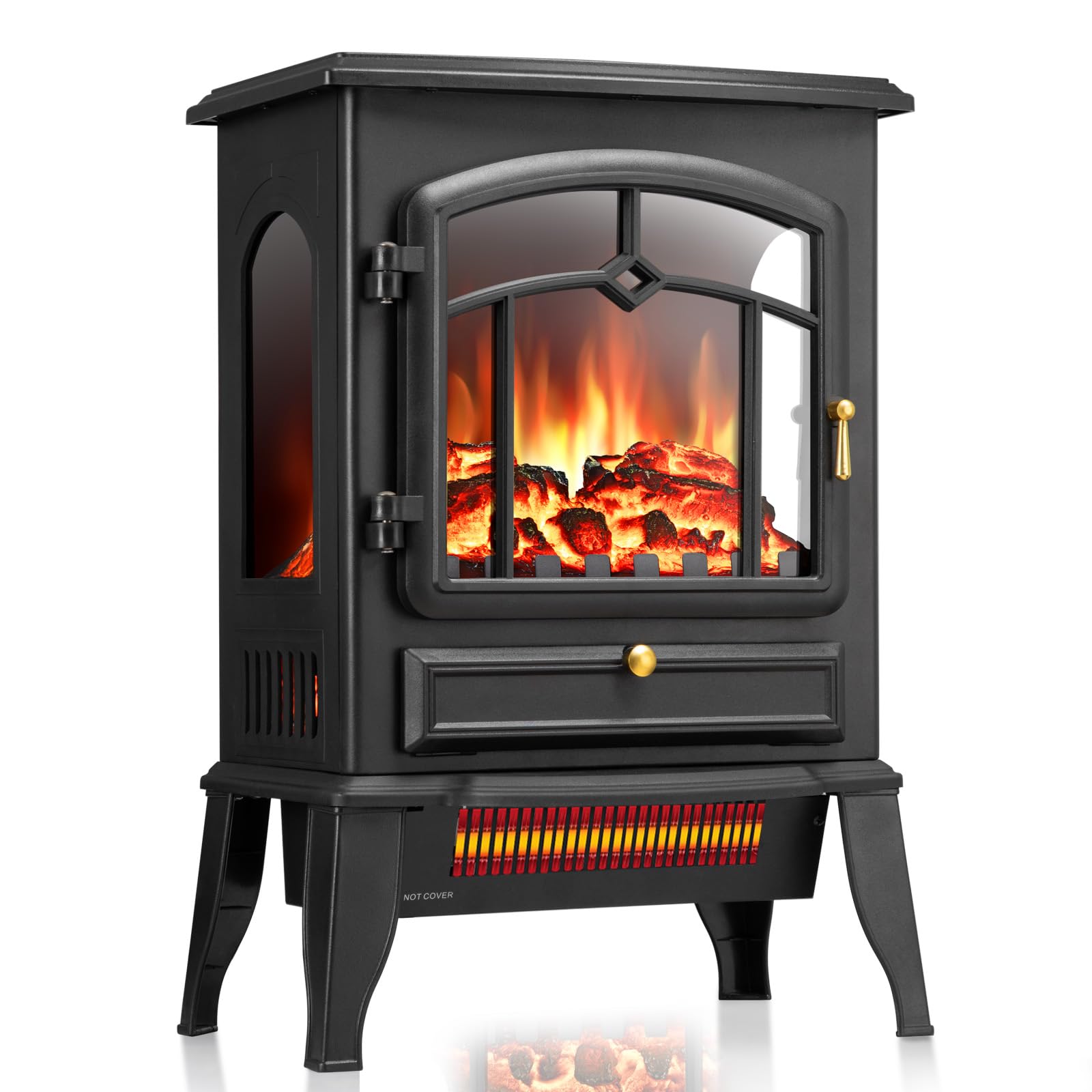
Sometimes the smartest move is not a pellet stove. If you’re renting, if you only need warmth in a bedroom or office, or if you want “cozy flame vibes” without venting, an electric fireplace stove can be the perfect choice. The ZAFRO model is popular because it looks more “real” than many budget electric heaters and it actually produces meaningful room warmth for small spaces.
Owners consistently praise the same trio: it heats quickly, it looks upscale for the category, and the flame effect is adjustable without being obnoxiously bright. That matters more than people admit. A fake flame that feels harsh becomes visual clutter. A flame that feels soft becomes atmosphere. This model is built around that softer, warmer look—especially in low light.
The real-life details to know: assembly is simple (attach feet), and the unit is easy to move. That’s huge for apartments and multi-room living. People also like that the body doesn’t become dangerously hot to the touch in normal use, and the heat output is directed in a predictable way. If you’ve ever used a cheap heater that smells odd or feels flimsy, you’ll appreciate that this one is described as solid enough to not feel “toy-like.”
Now the honest complaints: fan noise and a few build choices. Multiple owners mention that in a very quiet home, you will hear the fan’s whir even on lower heat. That’s normal for many electric heater fireplaces, but it’s worth stating clearly: this is not “silent radiant heat.” It’s forced-air heat. Also, some components (like the door and handle) can feel more plasticky than the body, which is a common reality in this category. It doesn’t always affect performance, but it can affect the “premium feel” expectation.
Expert perspective: use this the way it’s meant to be used—zone heat. Turn it on where you are, enjoy the ambiance, and let it lift comfort in one room. If you’re trying to heat a whole large home with a small electric unit, you’ll be disappointed. But if your goal is a cozy, controlled warm space—especially for evenings—this is a strong, low-commitment win.
Why it’s worth it
- Plug-and-play warmth – No venting, no pellets, no install drama.
- Adjustable flame ambiance – Looks cozy without being harsh or gimmicky.
- Great for small spaces – Bedrooms, offices, apartments, dens.
- Easy to move – Portable comfort is underrated.
Good to know
- Fan noise is noticeable in very quiet homes.
- No remote on this model—plan on using the onboard controls.
- Not a whole-home heat solution; it’s a room-by-room comfort tool.
Ideal for: renters and small-space owners who want instant warmth and cozy fireplace vibes without venting, fuel handling, or maintenance routines.
10. East Oak Fuoco Smokeless Tabletop Fire Pit – The “Pellet Flame Night” Patio Upgrade
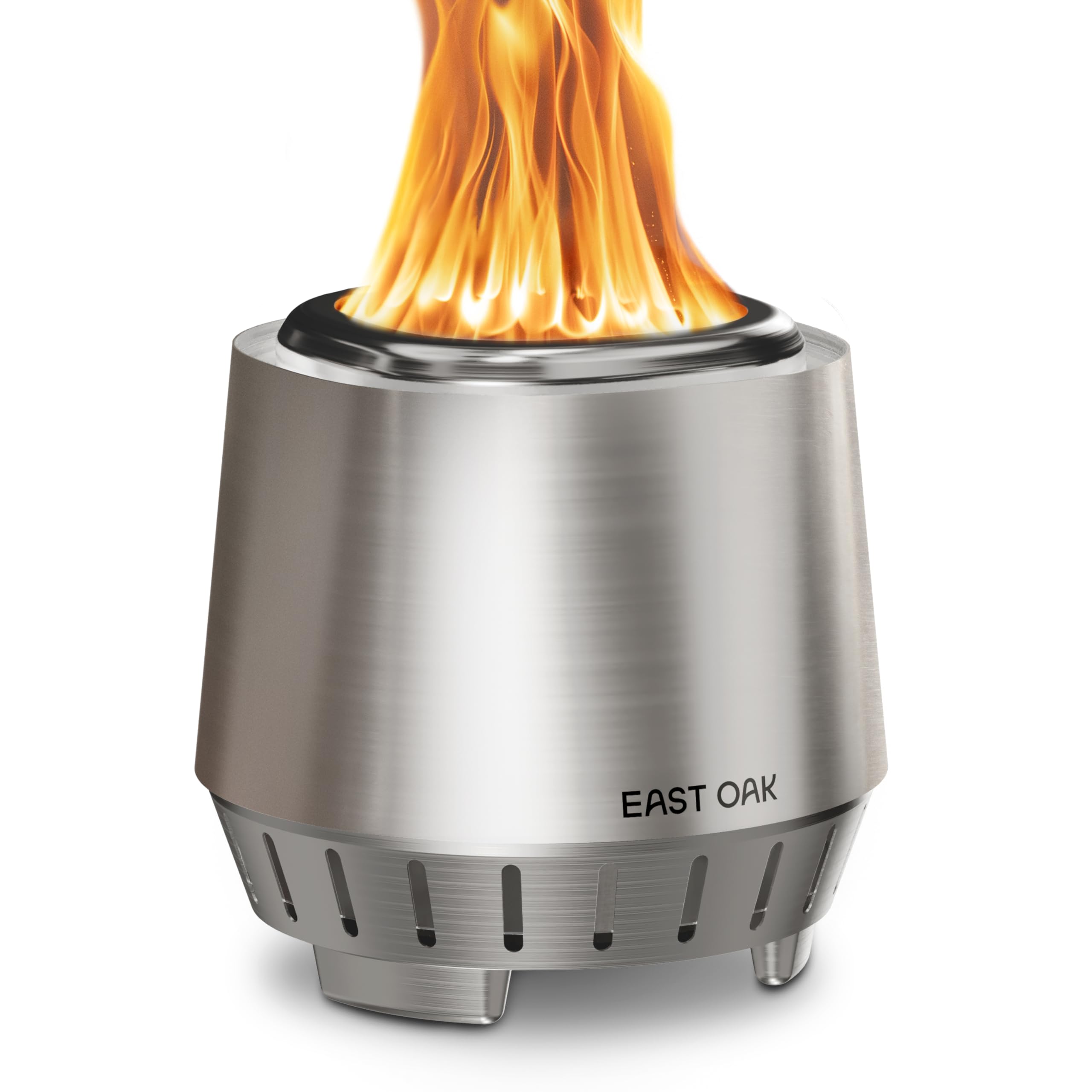
This isn’t a home heater. It’s an experience enhancer—especially if you already live the pellet lifestyle. If you like the idea of pellets creating a clean, bright flame without the smoke drama, a tabletop smokeless fire pit can be ridiculously satisfying on a patio, in a backyard, or at camp. The East Oak Fuoco earns its spot because owners describe it as “shockingly effective” for the size.
The consistent praise is specific: it produces excellent heat with very little smoke once it’s rolling, it burns hot and clean with pellets, and cleanup is easy thanks to the ash pan design. That last part is bigger than it sounds. People buy fire pits, then stop using them because cleanup becomes annoying. A design that makes ash disposal quick is what keeps the product in your weekly routine instead of your garage.
Another detail owners love: it’s compact but not “too tiny to be useful.” The flame height and secondary burn effect create real ambiance, and multiple people mention burn times that feel satisfying rather than “blink and it’s done.” For small groups, it’s a warm focal point. For table-top ambiance, it’s a vibe machine. If you want to roast marshmallows, you can. If you want a clean flame while sipping something warm, you can.
Expert reality check: “smokeless” doesn’t mean “never any smoke.” It means the design improves airflow and secondary combustion so the fire burns cleaner once hot. That’s exactly how owners describe it: some smoke during startup, then mostly clean once it reaches operating temperature. This is also why pellet fuel works so well in these devices—pellets ignite fast and burn consistently.
If you’re building a home comfort setup, this kind of product is a smart complement. Pellet stove inside. Pellet ambiance outside. Same fuel mindset, different use-case. And because it’s stainless and designed to resist discoloration, owners feel comfortable leaving it as a long-term patio tool.
Why people love it
- Impressively low smoke once hot – Clean flame experience compared to typical small fire pits.
- Pellets burn beautifully – Consistent flame, strong heat, satisfying secondary burn effect.
- Cleanup is easy – Ash pan design keeps it in your routine instead of becoming a chore.
- Portable, durable feel – Great for patios, camping, and backyard nights.
Good to know
- This is for outdoor use—think ambiance and gathering heat, not indoor room heating.
- “Smokeless” improves the experience but doesn’t eliminate all startup smoke.
- Burn time depends on fuel choice and how aggressively you run the flame.
Ideal for: people who love the clean-burning pellet flame vibe and want a portable, easy-to-clean outdoor fire experience for patios, backyards, and camping.
11. Rocket Stove for Cooking – The “Boils Water Fast” Outdoor Workhorse for Preparedness
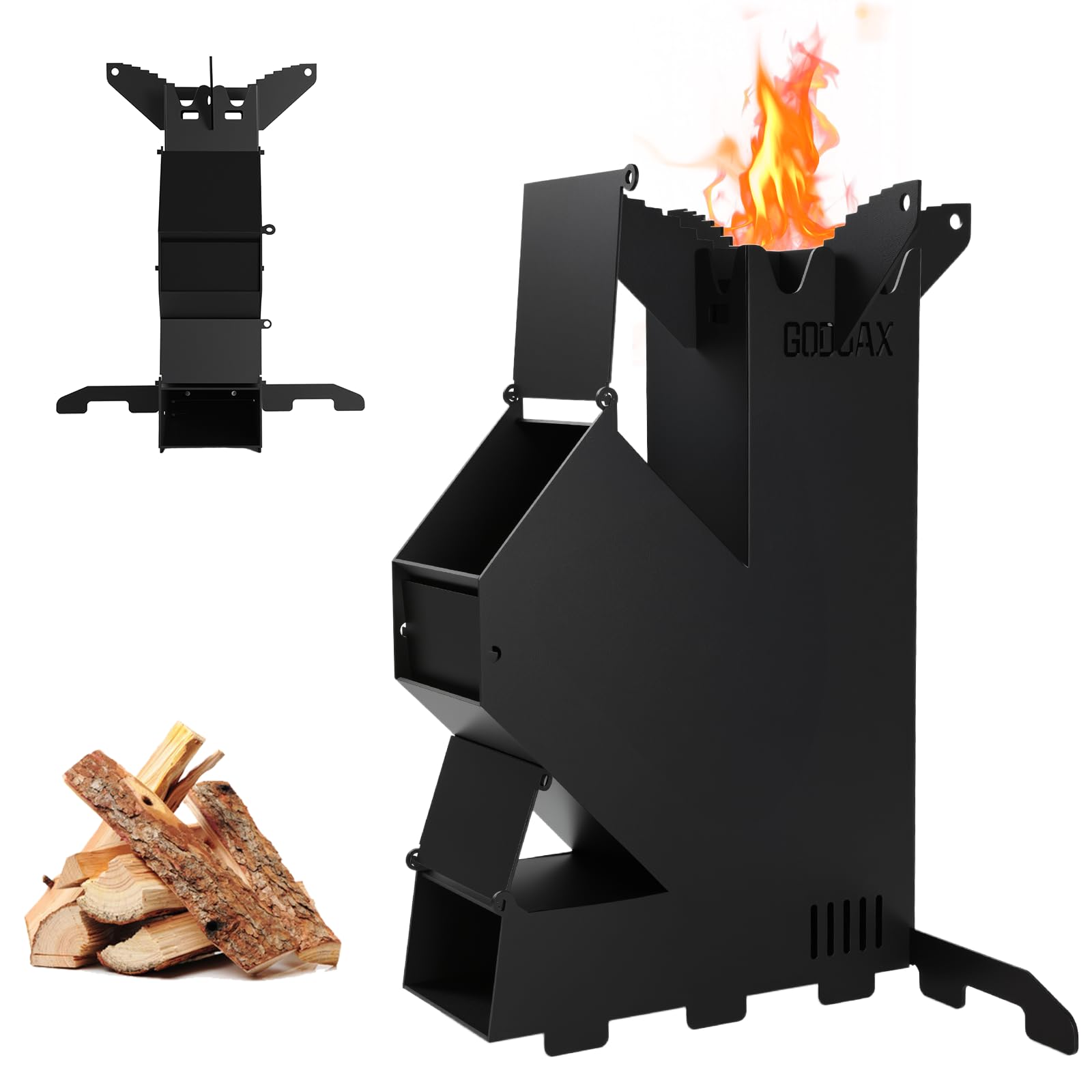
A rocket stove is a different animal from a pellet stove—but it belongs in a “complete heating mindset” guide for one reason: when the grid is down, people don’t just want warmth. They want hot water, cooked food, and a reliable flame they can fuel with what’s available. That’s where a rocket stove wins.
Owners who buy this model tend to sound pleasantly surprised: assembly is simple, the design is sturdy, and the heat output is intense. Multiple people describe boiling water in minutes and needing to remove wood because the flame is so aggressive it can boil over a pot. That’s not marketing fluff—that’s the “chimney effect” doing its job: hot air rises, fresh air is drawn in, combustion gets fierce, and you get a concentrated flame that’s excellent for cooking.
Here’s the real-life nuance: this is not for ultralight backpacking. Owners point out it’s heavy-duty and not something you want to hike with for long. But for backyard cooking, car camping, outdoor events, or preparedness storage, that heavy-duty build is exactly the appeal. People like that it can handle real cookware (including cast iron) and that it doesn’t feel flimsy once set up. They also appreciate that the stove burns out quickly once you stop feeding it—useful for control and cleanup.
Cleanup and usability are also better than many expect: an ash door makes dumping ash easy, and the design lets ash slide down and out rather than building up instantly in the burn zone. Owners love that fuel is “found fuel”: twigs, sticks, small cutoffs, scrap wood. That’s the preparedness advantage. You’re not dependent on pellets, propane cylinders, or electricity.
Expert advice: if you keep one outdoor flame tool for emergencies, keep one that can boil water fast. A rocket stove is one of the most efficient ways to do that with minimal fuel. For homes that rely on pellet heat, it’s a great “plan B” because pellet stoves themselves need electricity. This fills a different role: cooking resilience and outdoor heat when you need it most.
Why it’s impressive
- Very fast boil times – Owners regularly describe “shockingly fast” cooking performance.
- Sturdy build – Heavy-duty steel design handles real cookware and repeated use.
- Easy fuel sourcing – Uses small wood pieces you can find nearly anywhere.
- Simple cleanup – Ash door and design make ash removal straightforward.
Good to know
- Not for lightweight backpacking; it’s more “car camping and preparedness” than “ultralight hiking.”
- You will feed fuel more frequently when cooking aggressively—high heat burns fuel faster.
- This is an outdoor cooking tool, not an indoor room heater.
Ideal for: emergency preparedness, backyard cooking, camping, and anyone who wants an efficient outdoor flame tool that doesn’t rely on electricity or packaged fuel.
How Pellet Stoves Actually Work (and Why Some “Feel Weaker” Than the Specs Suggest)
Pellet stoves are engineered heat systems. They don’t behave like cordwood stoves, and they don’t behave like electric heaters. They behave like a controlled combustion appliance with airflow rules. Once you understand the rules, you can predict which stove will feel great in your home—and which one will frustrate you no matter how good it looks online.
What makes a pellet stove feel powerful in real life
- Airflow balance – A clean burn pot and proper draft create a bright, active flame and stronger heat delivery.
- Blower placement + room layout – A stove can be “hot” but still feel weak if the heat isn’t moving into your living space.
- Venting quality – Poor venting can cause lazy combustion, dirty glass, and safety shutdowns that feel like “the stove is unreliable.”
- Pellet quality – Dirty pellets create more ash, which reduces airflow, which reduces performance. It’s a loop.
- Thermostat logic – A stove that modulates smoothly feels better than one that blasts on/off in a way your body notices.
This is why two owners can buy the same model and have opposite experiences. One has good pellets, solid venting, and a cleaning rhythm. The other has marginal pellets, ash buildup, and a longer vent run that needs more attention. Same stove. Different reality.
Real-world tips that make pellet ownership easier
- Build a two-minute daily habit – Quick burn pot scrape + a fast ash check prevents most “mystery problems.”
- Don’t ignore glass soot – It’s a signal. If glass blacks fast, check pellet quality and airflow before assuming the stove is “bad.”
- Refill with a method – Pour slowly, minimize dust, and avoid dropping debris into the hopper. It keeps feeding more consistent.
- Expect a tuning week – Even great stoves take a short “learn the machine” period. That’s normal.
- Plan for power stability – Pellet stoves are electric-assisted heat. In outage-prone areas, backup power is comfort insurance.
When you remove tiny friction (spills, soot, confusing settings), the whole experience changes. The best stove isn’t the one with the longest feature list—it’s the one that makes you think, mid-winter, “Yeah… this was the right decision.”
FAQ: Pellet Stoves Indoors (Without the Confusion)
Do pellet stoves need venting?
How often do I need to clean a pellet stove?
Why does the glass turn black so fast on some stoves?
Are pellet stoves loud?
Can a pellet stove run during a power outage?
What’s the biggest mistake first-time buyers make?
Final Thoughts: Pick the Stove That Makes Winter Feel Simple
A great stove purchase isn’t the one with the fanciest bullet list. It’s the one that makes you feel calm when the weather is doing the most. If you finish this guide and feel like you finally understand how pellet stoves “behave,” you’re exactly where you need to be.
Here’s how to turn everything above into one confident decision:
- Want the best all-around pellet stove experience for most homes? Start with the Castle 41278 Serenity. It’s the best blend of easy cleaning, smart control modes, and a “predictable comfort” feel.
- Hate refilling and want longer runs with fewer interruptions? Look at the ComfortBilt HP42-Alpine. A bigger hopper changes the daily routine more than almost any other feature.
- Need real heat for a larger space and want a stove with “serious output” reputation? Choose the ComfortBilt HP22. It’s the “this actually heats” choice for big-room and big-home situations.
- Want smart-home controls and a mid-size system feel? Consider the Cleveland Iron Works No.200 Medium Pellet Stove. App control is not a gimmick when you’re living with daily heat adjustments.
- Heating a shop, cabin, or tight room and want compact pellet heat with smart convenience? The Cleveland Iron Works No.215 Mini is built for small footprints where bigger stoves can’t go.
- Want compact pellet heat and don’t mind a hands-on owner vibe? Try the ComfortBilt Alpine HP40. It’s a strong small stove that rewards tuning and consistent cleaning.
- Prioritize fast cleaning and a simple interior layout above all else? The Castle Serenity 12327 is a great “maintenance feels easy” pick.
- Can’t vent a pellet stove and still want serious flame-based heat indoors? The ProCom QNSD250RT is a powerful vent-free alternative where that style of heater fits your home and local rules.
- Want simple warmth + cozy vibes without installation? Go with the ZAFRO Electric Fireplace Stove for easy zone heat and a charming flame look.
- Want pellet-burning ambiance outdoors? The East Oak Fuoco Tabletop Fire Pit delivers a clean, fun flame experience for patios and camping.
- Need an outdoor emergency cooking flame that runs on found wood? Choose the Rocket Stove for Cooking for fast boils and rugged off-grid usefulness.
Pick the model that matches how you actually live: how often you’re willing to refill, how much cleaning you’ll realistically do, and whether you want smart controls or simple knobs. When those match, the right indoor pellet stove stops feeling like a “project” and starts feeling like the most satisfying comfort upgrade in your home.
