
A good air fryer doesn’t just make food “crispy.” It fixes the tiny, everyday kitchen frustrations you feel on repeat: the fries that go limp by the time you plate them, the chicken thighs that are browned outside but still shy in the middle, the weeknight dinner that turns into two batches because your basket is too small… and the cleanup that makes you think, “I should’ve just used the oven.”
That’s why people obsess over the ninja basket air fryer category specifically. Ninja tends to build machines that feel like they were designed by someone who actually cooks under pressure: fast heat-up, strong airflow, intuitive controls, and features that reduce the “now what?” moments when you’re trying to cook two things with two different timelines.
But here’s the trap: the model that looks best on paper is often not the model that feels best in real life. A stacked design can be a dream in a small kitchen… or it can feel like a learning curve if you don’t know how to use the racks. A dual-basket unit can be a weeknight miracle… or it can disappoint if you expected each drawer to be as wide as a full oven tray. A countertop oven with an air-fry basket can replace your toaster and oven habits… but it’s not the same “toss-and-crisp” feel as a drawer basket.
So this guide is built around real-life usage: what actually makes these units feel effortless (or annoying), how to avoid the common “why is this cooking unevenly?” mistakes, and which models match different kitchens— from tiny apartment counters to big-family batch cooking. I’m going to be direct, practical, and a little picky, because that’s how you end up with a purchase you’ll still love months from now.
How to Choose the Right Ninja Basket Air Fryer
Let’s make this simple: the “best” air fryer is the one that matches the way you cook when you’re hungry, busy, and trying to get food on the table without turning the kitchen into a mess. The fastest way to buy smart is to decide on the basket layout first, then choose your “features that actually matter,” and finally pick the model that fits your counter and your habits.
1. Pick your basket layout first (this decision does 80% of the work)
Most buying guides start with wattage and temperature. Real life starts with: “How many things do I cook at once?” Here are the four layouts you’ll see in this guide, and what they feel like in day-to-day cooking.
- Single basket (classic drawer): The simplest workflow. You load, shake once or twice, and you’re done. These tend to crisp aggressively because the fan is close to the food, which is why people who love wings, fries, nuggets, and reheating leftovers often swear by a great single drawer.
- Dual basket (side-by-side): Two independent drawers, two heaters/fans. This is the weeknight “complete meal” machine: protein in one side, veg in the other—finishing together without babysitting. It’s also the best layout for families who hate batch cooking.
- Stacked dual basket (vertical): The space-saving twist. You get two drawers but in a slimmer footprint. If your counter is tight, this can be a game changer. The tradeoff is that you need to use the racks well and learn a couple of “rotate for evenness” habits.
- Flex basket / MegaZone (divider removable): The “one big roast” option plus the “two-zone dinner” option. You can cook a large protein across a wide zone, or insert a divider to split it into two cooking areas. This is for people who sometimes cook big (like a roast or ribs) but still want dual-zone convenience.
2. Understand what “Smart Finish” actually fixes (and what it doesn’t)
Smart Finish / syncing features are brilliant—but only when you use them like a grown-up. Here’s the realistic version:
- It syncs end times so two foods stop together, even if the settings are different.
- It doesn’t cancel physics. Thick chicken still needs time. Dense vegetables still need space. Frozen food still releases moisture.
- It reduces mental load. You stop doing timer math, and you start cooking like someone who has their life together.
Where people get disappointed is expecting Smart Finish to fix overcrowding or to magically crisp a basket that’s packed too tightly. If you want crisp, you still need airflow. Smart features make timing easier; airflow makes texture happen.
3. Airflow is the real “secret feature” (and it decides crispness)
Crispness isn’t just temperature—it’s air contact. That’s why two people can use the same air fryer and get totally different results. In real kitchens, crisp results come from these habits:
- One layer beats a mountain. Food stacked on food steams itself. Spread it out, even if it means slightly smaller batches.
- Dry surfaces crisp faster. Pat proteins dry, especially skin-on chicken. Dry your vegetables after rinsing.
- A tiny bit of oil is not a sin. A light spritz helps browning. The goal is coating, not pooling.
- Shake and rotate like you mean it. If your fryer has racks, swap positions mid-cook when you’re pushing capacity.
This is also why some single baskets “feel crispier” than large dual units for certain foods: the airflow is more concentrated. Dual baskets win on convenience and total meal output. Single baskets win on simple, aggressive crisping.
4. Temperature range matters—mostly for two types of cooks
You’ll see models that top out around 400°F and models that push higher. Here’s the practical meaning:
- You’ll love higher heat if you’re a wings-and-fries person, if you like fast browning, or if you want to “finish” a meal with an extra-crisp blast.
- You’ll love lower-and-slower options if you dehydrate snacks, reheat without drying, or want gentler roasting for vegetables and fish.
If you mostly cook frozen snacks, higher heat feels like cheating. If you mostly cook fresh proteins and vegetables, the difference is less dramatic— your technique matters more than the number on the screen.
5. The cleaning reality: what stays easy after month three
Every air fryer is “easy to clean” in week one. The question is: what happens after repeated use? Here’s what actually keeps cleanup painless:
- Nonstick that stays nonstick when you treat it kindly: use silicone tongs, avoid metal scraping, don’t blast it with abrasive pads.
- Removable plates that lift out easily (so crumbs don’t weld themselves to the bottom).
- A basket shape you can actually reach into without knuckle gymnastics.
- Dishwasher-friendly parts if you know you’ll use it. (Some people love the dishwasher; others prefer quick hand-wash to protect coatings.)
Also: the “cleaning hack” that’s so boring it’s genius—when you’re done cooking, pull the basket out, let it cool for a minute, then add warm water + a drop of soap and let it sit while you eat. Most stuck-on mess softens and wipes away without a fight.
6. Counter space and venting: the detail that becomes your daily mood
Big dual-basket units are powerful, but they’re not small. Stacked units are slimmer, but taller. And some units vent heat in a way that matters if your fryer sits near a backsplash or under cabinets. Before you buy, check these “invisible daily realities”:
- Height clearance: stacked units fit under many cabinets, but if you have a low shelf or a deep upper cabinet, measure once and avoid regret.
- Vent direction: give the fryer breathing room so hot air isn’t blasting directly into a wall or appliance.
- Basket clearance: drawers need space to pull out fully—especially important in tight kitchens.
When people say “I use it every day,” it’s usually because the machine fits their kitchen as much as it fits their recipes.
7. Decide your “must-have” features (then ignore the rest)
Here’s a quick cheat sheet of features that tend to matter most in real life:
- Dual-zone syncing if you cook meal components together.
- A thermometer/probe if you cook steaks, thick chicken, pork, or salmon and want doneness confidence without guesswork.
- Dehydrate if you genuinely snack-prep (jerky, fruit chips, herbs). If you don’t, it’s a “nice-to-have.”
- Keep Warm if your household eats in waves or you want food hot while you finish the second item.
- Racks if you want “more surface area,” especially in stacked designs.
Quick Comparison: 12 Ninja Basket Air Fryer Picks
Use this table to shortlist fast—then jump to the in-depth reviews for the real-life details (like which ones feel loud, which ones feel easiest to clean, and how to get even results when you’re cooking a lot at once).
On smaller screens, swipe or scroll sideways to see the full table.
| Model | Basket layout | Sweet spot | Best match | Amazon |
|---|---|---|---|---|
| Ninja DoubleStack XL SL401 | Stacked dual | Two drawers + racks for “4 foods” cooking in a slim footprint | Busy families who want dual-zone power without a wide countertop takeover | Amazon |
| Ninja Foodi DualZone XL DZ401 | Dual basket | Big family output + Smart Finish/Match Cook with a classic workflow | People who want “main + side” dinners without batch cooking | Amazon |
| Ninja Foodi DualZone Smart XL DZ550 (Renewed) | Dual basket | Integrated thermometer for doneness confidence on steaks & chicken | Meat lovers who want “set it, trust it” doneness without cutting food open | Amazon |
| Ninja Foodi DualZone DZ201 | Dual basket | The “sweet spot” size for most weeknight meals with dual-zone convenience | Most households who want dual drawers without going full extra-large | Amazon |
| Ninja Foodi FlexBasket DZ071 | Flex basket | Divider-in for two foods, divider-out for one large “MegaZone” cook | Cooks who want occasional big proteins without giving up dual-zone life | Amazon |
| Ninja French Door Premier FO101 | Oven style | Air fry + toast + bake/roast with a French door countertop setup | People who want an “oven replacement vibe” more than drawer-style tossing | Amazon |
| Ninja Foodi XL DualZone AD300CO (Renewed) | Dual basket | Dual-zone cooking with a Keep Warm option for “eat when ready” households | Families who snack, graze, or serve food in waves | Amazon |
| Ninja DoubleStack XL SL400 (Renewed) | Stacked dual | Compact stacked design with simpler function set | Smaller kitchens that want stacked benefits without feature overload | Amazon |
| Ninja XL Single Basket AF150AMZ | Single basket | Bigger single drawer with easy cleanup and classic “shake & crisp” workflow | People who want simple operation and strong crisping without dual drawers | Amazon |
| Ninja Air Fryer AF142 | Single basket | Modern “space saver” design with extra cooking mode flexibility | Everyday cooks who want a slim profile and more cooking options | Amazon |
| Ninja Air Fryer Pro AF141 | Single basket | Simple, compact, no-drama crisping with easy cleaning | First-time buyers or small households who want reliable basics done well | Amazon |
| Ninja DualZone DZ100 (Renewed) | Dual basket | Dual drawers for meal building with a straightforward control style | Shoppers who want dual-zone convenience and don’t mind a renewed listing | Amazon |
In‑Depth Reviews: 12 Ninja Basket Air Fryer Models That Feel Great to Use
Now we go model-by-model, but we’re not doing “spec bingo.” We’re doing real-life ownership: how these cook when you’re hungry, how they behave when you push capacity, how to avoid the common mistakes, and what each one is genuinely best at.
1. Ninja DoubleStack XL SL401 – Dual-Zone Power Without the Wide Counter Takeover

If your kitchen counter is precious real estate, the SL401 is the air fryer that feels like it was designed to respect that. The stacked format is the headline—two drawers in a slimmer footprint—but the real win is how it changes your cooking rhythm: you can run two foods with different settings, or use the included racks to turn each drawer into a two-level cook when you’re chasing a full meal.
Here’s the expert truth about stacked designs: they reward you for cooking like an air fryer cook, not like an oven cook. That means you give your food breathing room, you shake or rotate once, and you learn which foods want the rack vs the plate. If you do that, the SL401 becomes the “why didn’t I buy this earlier?” machine—especially in households where people want snacks, quick lunches, and fast dinners without waiting for an oven.
Real-life feedback around this category tends to be consistent: people love the counter-space efficiency and the convenience of two drawers, but the best results come when you treat it like two small convection zones instead of one big oven cavity. The racks are not gimmicks. They are airflow tools. Use them for things like:
- Proteins on the rack, veg below (drippings flavor the veg, and everything stays crisp).
- Two snack layers (top rack for nuggets, bottom for fries—then swap positions once).
- Meal-prep cooking where you want more surface area without buying a huge, wide unit.
One more detail that matters more than people expect: where the hot air vents and how the unit “lives” on your counter. Many owners love that the stacked footprint frees space compared to classic side-by-side dual baskets. If your alternative is a big wide dual drawer that never fits nicely, the SL401 feels like a smarter kind of large.
Why you’ll like it
- Space-saving design that’s actually useful – You keep dual drawers without sacrificing half your counter width.
- Racks enable real “4 foods” workflow – This is one of the few setups where multi-level cooking isn’t just marketing.
- Great for busy households – Teens, snackers, quick-dinner families… this one fits that lifestyle beautifully.
- Strong “set it and move on” feel – Smart syncing features reduce timer math and dinner stress.
Good to know
- Stacked designs are not “load and forget” when you fully pack them—plan one mid-cook shake/rotation for best evenness.
- If you only cook one big tray-style meal, a side-by-side dual basket may feel more intuitive.
- The learning curve is real—but it’s short. Two weeks of use usually turns it into muscle memory.
Ideal for: families who want the power of dual-zone cooking but need a smarter footprint—and who like the idea of cooking multiple items efficiently with racks.
2. Ninja Foodi DualZone XL DZ401 – The “Dinner in One Round” Classic for Larger Households

The DZ401 is the dual-basket model that earns its reputation the honest way: it makes weeknight cooking easier without requiring you to become an air fryer wizard. Two drawers, two independent zones, and syncing features that help your food finish together. That’s the core—and it’s a core that fits real families.
What owners consistently love about this style of unit is the “meal-builder” vibe. You stop thinking in batches and start thinking in plates: chicken + broccoli, burgers + fries, salmon + asparagus, sausages + peppers. And because each drawer has its own airflow, you can cook foods that want different temps without compromise.
Now, let’s talk about the thing most guides skip: drawer size doesn’t equal usable surface area. Dual-zone drawers can be deep, but not always as wide as people imagine. That’s not a flaw—it’s a design reality. The key to loving the DZ401 is cooking the way it likes to be cooked:
- Use the crisper plate so food sits up in the airflow (this alone often fixes “why isn’t this crisp?” complaints).
- Spread proteins so air can wrap around them (overlapping chicken thighs can brown unevenly).
- Shake “starchy” foods like fries and tots once mid-cook (you’ll get even color instead of pale spots).
Where the DZ401 becomes a true workhorse is busy-day consistency. It heats quickly, it cooks evenly when you respect airflow, and it reduces the number of pans you wash because dinner happens in drawers instead of on trays. It’s also the kind of appliance that quietly replaces your oven for a lot of meals—especially if you’re cooking for a few people and don’t want to preheat a big cavity.
One more real-life detail: people who love this model tend to describe it as a “favorite appliance” not just because of crispness, but because the controls are intuitive. You can teach someone else in the house to use it in five minutes. That matters in a household where multiple people cook.
Why it stands out
- Dual baskets feel like a lifestyle upgrade – Real dinners, not just snack cooking.
- Syncing features reduce dinner stress – You stop doing timer math and start building meals.
- Strong everyday crisping – Great for wings, fries, roasted veg, and reheat without sogginess.
- Easy cleaning workflow – Nonstick baskets + removable plates make it realistic to use often.
Good to know
- It’s a wide unit—plan your counter space and drawer pull-out clearance before you commit.
- Big family portions may still require smart loading (two layers of wings need a shake/flip moment).
- If you mostly cook one item at a time, you may prefer a strong single-basket model for pure simplicity.
Ideal for: households that want dual-zone cooking as their default dinner strategy—especially families who want a main and a side done together without juggling pans.
3. Ninja Foodi DualZone Smart XL DZ550 (Renewed) – The Thermometer Advantage That Changes How You Cook Meat

If you’ve ever “cooked by anxiety” (cutting into chicken early, poking steaks too many times, hovering like a nervous hawk), a built-in thermometer can feel like a superpower. That’s the DZ550’s core advantage: it takes the hardest part of air frying proteins—doneness timing— and turns it into a guided process.
In real kitchens, the thermometer feature changes behavior in a great way. People who used to avoid cooking steaks at home start cooking them regularly. People who guessed chicken doneness start trusting the process. And because you can cook in one basket while the other basket handles sides, it becomes a “protein confidence + meal convenience” setup.
Now let’s talk about the renewed reality in a way that’s actually helpful: renewed units can arrive in excellent condition, but they sometimes come with “missing the small extras” issues—like no printed manual, or a missing little cover for the probe storage slot. None of that changes the cooking performance, but it can change the unboxing experience. The smart move is simple: plan to download the manual and do a quick “inventory check” the day it arrives, so you’re cooking confidently right away.
Cooking-wise, here’s how to get the most out of the probe (and avoid the two mistakes that trip people up):
- Insert into the thickest part of the protein, not the center of the basket. You’re measuring the food, not the air.
- Give the probe cable slack so the drawer slides smoothly and doesn’t pinch the wire.
- Use “rest time” like a pro – when a protein hits target temp, pull it and rest briefly while sides finish. It stays juicier and feels restaurant-level.
The DZ550 also fits meal prep beautifully. You can probe chicken breasts or thick pork chops on one side, and roast vegetables on the other. That’s a “weekday win” setup that feels like it saves time and brain space.
Why it’s a game changer
- Thermometer removes guesswork – You cook to temp instead of cooking to panic.
- Perfect for steaks, chicken, pork, salmon – Proteins that usually cause overcooking become easy.
- Dual baskets keep meals moving – Protein in one zone, sides in the other, finishing together.
- Great for people who “weren’t good at cooking meat” – This is the model that often changes that story.
Good to know
- Renewed units may ship without a printed manual or small accessories—plan to grab the manual online and check contents immediately.
- This is a substantial appliance; if counter space is tight, a stacked model may fit better.
- If you rarely cook meat, the probe is less valuable—then you may prefer a simpler dual-basket model.
Ideal for: meat lovers who want doneness confidence and hate overcooking—plus families who still want the “main + side” convenience of dual-zone cooking.
4. Ninja Foodi DualZone DZ201 – The Mid-Size Dual Drawer That Makes Everyday Cooking Feel Easy

The DZ201 is the kind of model people buy, use hard, and then replace with… the same model again. That tells you something. It sits in a sweet spot: dual drawers for real meals, but not so huge that it feels like a countertop commitment you have to justify daily.
What makes it feel “easy” is the mental model it creates. You stop thinking of air frying as a single-item appliance, and you start cooking like you’re running two small ovens at once—except faster, crispier, and with less cleanup. For weeknight life, that’s the whole point.
Real-life praise for this style usually hits the same themes:
- Two baskets are the best feature because you can cook different foods at different temps and times.
- Smart Finish feels like magic when you want a protein and side to land together.
- Cleaning stays manageable because the baskets and plates are built for repeated use without drama.
Here’s the “expert beyond specs” guidance that makes people love the DZ201 long-term: treat each drawer like a cooking lane, not a storage bin. When you overload, you steam. When you spread, you crisp. If you want to cook a big pile of fries or wings, split it across both baskets and match settings. You’ll get better texture and often faster results than cramming it all into one side.
And if you’re someone who used to “use the oven by default,” this is the model that quietly changes that habit. Many households end up using their oven far less—not because the air fryer is magical, but because it reduces the friction of cooking: less preheat, less waiting, less dishwashing, more quick wins.
Why it’s a keeper
- Dual baskets fit real weeknights – Protein + side, done together, without batch cooking.
- Easy to operate – People who don’t “like gadgets” still find this straightforward.
- Consistent results – Even cooking when you respect airflow and shake once for starchy foods.
- Great “second air fryer” upgrade – Often replaces a single basket that couldn’t keep up with family meals.
Good to know
- If you regularly cook very large portions, you may prefer the larger XL dual-basket format.
- Like all dual drawers, each basket is not as wide as an oven tray—plan for “spread vs stack” loading.
- For ultra-small counters, stacked designs may fit more comfortably.
Ideal for: most households who want the benefits of dual-zone cooking in a size that feels practical, not excessive—especially for daily dinners and meal prep.
5. Ninja Foodi FlexBasket DZ071 – The “Divider In or Out” Choice for Big Proteins and Full Meals

Some households cook in two very different modes: (1) “normal weeknight” mode (protein + side), and (2) “big protein” mode (a roast, ribs, a large tray of vegetables, a full batch of wings). The DZ071 is built for that exact dual personality.
With the divider inserted, you get two cooking zones for foods that want different times or temps. Remove the divider, and you unlock a larger continuous cooking space for oversized proteins and full-meal layouts. That flexibility is the real feature—not just capacity, but shape. A wider zone changes what you can cook without folding food or crowding it.
Here’s where expert technique turns this model into a star:
- MegaZone is for “flat and wide,” not “tall and stacked.” Think ribs laid out, chicken pieces spread, vegetables in a wide layer.
- Divider mode is for timing control. Use it when you need crisp fries at high heat and gentle veggies at a lower setting.
- Don’t ignore the crisper plates. They elevate food into airflow and reduce soggy bottoms—especially important in a wide basket.
This model is also sneaky-good for entertaining. If you’re hosting and want to keep food moving, FlexBasket lets you adapt: two zones for appetizers and sides, or one zone for a large “main batch” while you finish other items. It’s the kind of flexibility that makes you cook more confidently because your appliance isn’t forcing you into one workflow.
One honest note: FlexBasket units reward good spacing. If you pull the divider and pack the MegaZone like a storage drawer, you’ll get steaming. If you spread and rotate once, you’ll get crisping that feels “how is this so easy?” The unit is capable—the only question is whether you use it in a way that supports airflow.
Why it’s different
- Most adaptable basket design – Two-zone dinners or one-zone big proteins in the same appliance.
- Solves the “my basket is too narrow” problem – MegaZone shape is the win for large cuts and wide-layer cooking.
- Great for entertaining – Easy to switch between appetizer mode and main-batch mode.
- Dual-zone syncing still available – You keep the convenience features that make weeknights easy.
Good to know
- MegaZone cooking still needs airflow discipline—spread food and rotate once for best results.
- If you never cook large proteins, a classic dual-basket unit may feel simpler.
- Flex designs can feel “different” at first; give yourself a few cooks to build intuition.
Ideal for: cooks who want dual-zone weeknight convenience but also want the ability to cook larger, wider proteins without awkward crowding.
6. Ninja French Door Premier FO101 – The “Oven, Toaster, Air Fryer” Upgrade for Serious Kitchen Flow
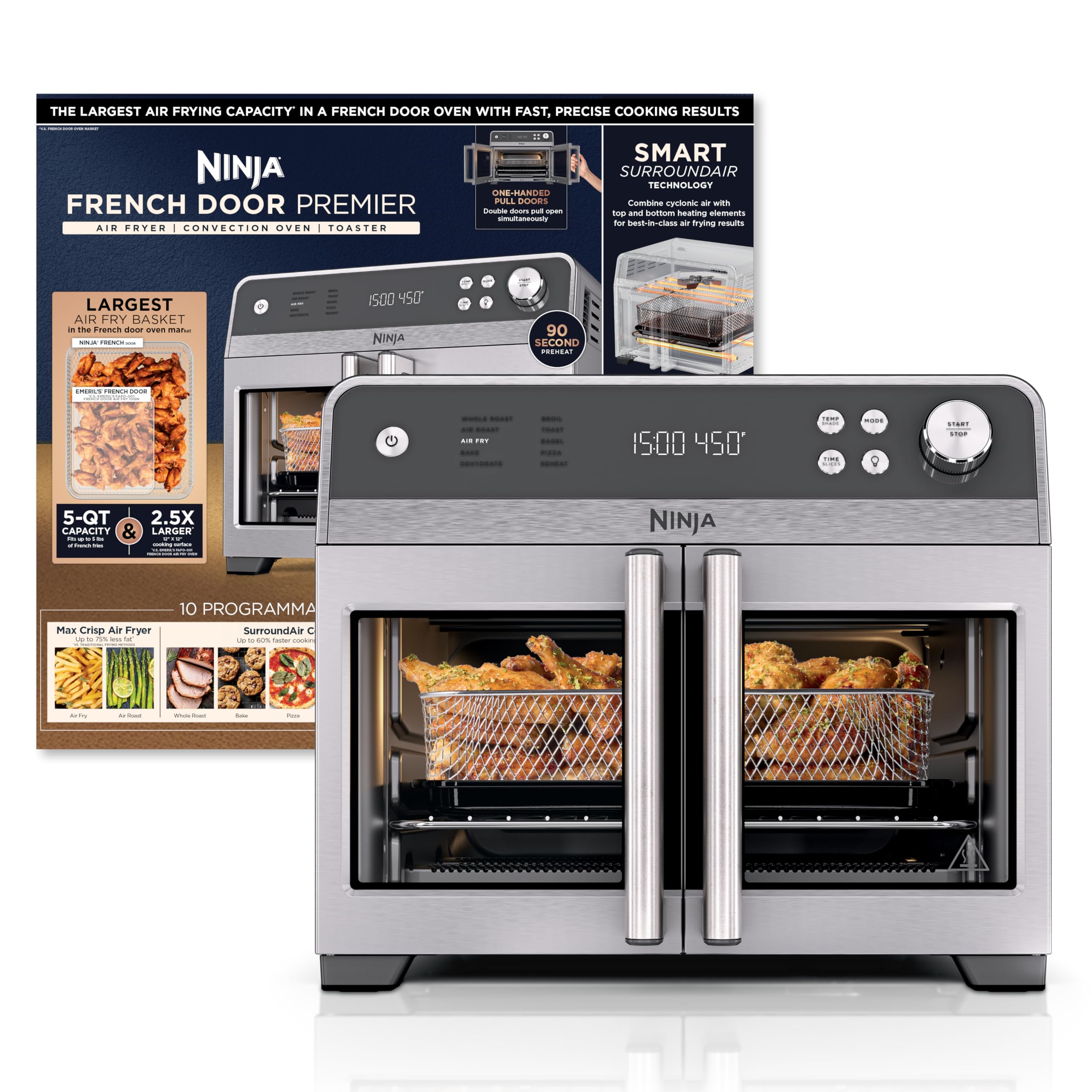
This one is for a very specific kind of buyer: the person who doesn’t just want “an air fryer,” but wants a countertop appliance that can realistically replace a chunk of oven and toaster duty. The FO101 is a French door convection setup with an included air fry basket, sheet pan, racks—basically a small, capable cooking station.
In real-world kitchens, this style wins when you want:
- Even baking and roasting in a smaller cavity (less wasted heat than a full oven).
- Toast that’s actually consistent (no half-burnt, half-pale slices).
- Air frying in “tray form” for foods that like to be spread wide, like fries, wings, or roasted vegetables.
Now the important distinction: oven-style air fry is not the same vibe as drawer air fry. Drawer air fry feels like a jet engine blasting directly onto food in a compact chamber. Oven-style air fry feels like high-powered convection with a basket/tray that maximizes airflow. Both can get crisp results—but the workflow and feel are different. If you like “toss, shake, crisp,” drawers are your friend. If you like “tray, spread, roast, toast,” this French door style can feel like your new kitchen center.
Owners who love this type of unit usually highlight three things: (1) speed (quick preheat and fast cooking), (2) versatility (lots of modes, from pizza to broil to dehydrate), and (3) convenience (the French doors are genuinely nice for quick access, especially when your counter is busy). It also tends to earn points for being easy to wipe down and keep tidy—especially if you use the crumb tray as intended.
Expert tip: treat the air fry basket like a “crisping tray,” not a deep bin. Spread food in a single layer, give it one stir halfway, and you’ll get results that are shockingly close to a full-size convection oven, but faster and with less heat blasting your whole kitchen.
Why it’s worth considering
- Multi-appliance replacement feel – Air fry + toast + roast/bake can reduce how often you use your main oven.
- French door access is genuinely convenient – Easy to open, easy to check food, easy to work around on a counter.
- Great for hosting and batch cooking – Tray-style cooking is excellent for larger spreads and multi-item meals.
- Cleanup workflow is practical – Accessories and crumb management help keep it user-friendly over time.
Good to know
- This is not a drawer-style “shake basket” experience—if that’s what you love, stick with drawer models.
- Oven-style air fry typically benefits from a halfway stir/rotate for perfect evenness on larger batches.
- It’s a bigger countertop statement than a compact basket unit—measure your space and plan where it lives.
Ideal for: cooks who want a countertop cooking station that can handle air frying and daily toaster/oven tasks—especially in homes where the oven feels slow or overkill.
7. Ninja Foodi XL DualZone AD300CO (Renewed) – Keep Warm + Dual Baskets for Real Household Timing

The AD300CO hits a very real household problem: not everyone eats at the exact same moment. Maybe kids want food earlier, maybe someone’s coming home late, maybe you’re finishing one item while another rests. That’s where a Keep Warm function can actually matter—not as a gimmick, but as a practical “dinner stays pleasant” feature.
This model still gives you the dual-zone foundation: two baskets, two independent cooks, syncing options. So you can run the classic workflow—protein in one, side in the other—then keep one side warm while you finish plating or while someone grabs their share. In real life, that can be the difference between “crispy, hot dinner” and “why is everything lukewarm?”
Where renewed listings matter here is in the details of setup and learning. Some renewed buyers report that the button workflow can feel a little confusing at first, especially if you’re coming from a simpler older unit. The fix is straightforward: do two “practice cooks” with low-stakes foods (fries and chicken tenders are perfect), and you’ll learn the button rhythm fast. Once it clicks, it becomes intuitive.
Another real-life note people mention with large dual units: counter space. These are not small appliances. The payoff is meal capacity. The compromise is that it will “earn its place” on your counter. If you have to store it after every use, a stacked design might feel easier. If you have space, this style becomes a daily driver.
Expert cooking tip for this model category: if you want to use Keep Warm without losing crispness, use it for proteins and roasted veg more than for fries. Fries love high airflow. Keep Warm is gentler. So: crisp fries last, or re-crisp them quickly at the end. You’ll keep texture and still get the convenience.
Why it’s a practical win
- Keep Warm supports real household timing – Dinner doesn’t have to be a synchronized performance.
- Dual baskets keep meal prep efficient – Two foods, two temps, one end time.
- Strong capacity for family meals – Great for households that cook multiple components often.
- Easy cleanup design – Nonstick baskets and removable plates make frequent use realistic.
Good to know
- Some renewed buyers report a short learning curve with button flow—two practice cooks usually solve it.
- This is a bigger unit; if space is tight, stacked designs may fit more comfortably.
- Keep Warm is best used strategically so you don’t soften foods that want maximum crisp.
Ideal for: families and households that don’t eat all at once—plus anyone who values the flexibility of dual baskets with a “hold food hot” option.
8. Ninja DoubleStack XL SL400 (Renewed) – The Slim-Profile Dual Drawer for Smaller Kitchens

The SL400 is for the buyer who wants the stacked footprint advantage—two drawers in a slimmer space— but doesn’t necessarily care about having every cooking mode under the sun. It focuses on a tighter set of core functions, which can be a feature, not a limitation, if you like simple and repeatable.
In real-world use, this kind of model shines in households that cook “air fryer foods” often: frozen snacks, quick proteins, roasted vegetables, reheated leftovers. And because it’s stacked, it tends to fit better in kitchens where a wide dual basket would dominate the counter. That’s why you’ll see so many happy reviews that basically translate to: “It works great and doesn’t take up too much space.” That’s not a small compliment—it’s the difference between daily use and occasional use.
The stacked racks are still the power tool here. If you want to get the best results:
- Use the rack for foods that like top airflow (wings, breaded items, thicker veg).
- Keep the bottom level for sturdier foods (potato wedges, dense vegetables, reheating items).
- Rotate once when you’re pushing capacity—top to bottom, or left to right if you load unevenly.
With renewed units, the main “expert advice” is the same as any renewed appliance: do a first-week stress test. Cook a few different foods, confirm both drawers heat properly, confirm the timer and syncing behavior, and make sure the racks and plates are in good condition. If it passes that first-week test, most owners find these units run reliably.
Why it works
- Slim footprint – Great for kitchens where a wide dual basket won’t fit comfortably.
- Two-drawer convenience – Still enables complete meals, not just single-item cooking.
- Simple function set – Fewer modes can mean less button complexity if you like straightforward cooking.
- Great for snack-heavy households – Teens and quick-eaters love stacked dual setups.
Good to know
- Renewed listings can vary in packaging and included materials—expect a practical unboxing rather than a gift-ready one.
- For perfectly even results at full capacity, plan one mid-cook rotation.
- If you want maximum cooking modes, the SL401 offers a more feature-rich version of the concept.
Ideal for: smaller kitchens that still want dual-drawer convenience, plus households that value compactness and repeatable “everyday air fryer” cooking over extra modes.
9. Ninja XL Single Basket AF150AMZ – The Simple, Strong Crisping Machine That’s Easy to Live With

Not everyone needs dual baskets. Some people want one basket that cooks fast, crisps hard, and cleans easily—without turning dinner into a control-panel exercise. That’s exactly where the AF150AMZ wins. It’s the kind of unit that becomes your daily default because it’s simple and effective.
Single baskets often have one underrated advantage: crisping intensity. Because airflow is concentrated, foods like fries, wings, nuggets, and reheated pizza slices can come out with that “how is this not deep fried?” texture— especially if you avoid overcrowding and shake once. This is why so many owners describe a great single-basket model as a “GOAT” appliance: it delivers the kind of results that make you stop ordering takeout out of habit.
Here’s the expert move that makes this model shine for full meals, not just snacks: use it in stages. Air fry your protein, pull it to rest, then reheat/finish your sides quickly. Air fryers reheat in minutes, so “two-stage cooking” still feels fast—and it gives you crispness that dual baskets sometimes sacrifice when you’re cooking two foods simultaneously.
This model is also a strong pick for people who care about cleanup. Dishwasher-safe parts and a basket that doesn’t trap grease in weird corners makes frequent use realistic. And that matters: the air fryer you use daily is the one that earns its keep.
One real-life quirk some users mention in this model category is auto shut-off behavior. If your fryer powers down quickly after finishing, you simply adapt your routine: have your next food ready to load, or use that brief moment as the reminder to plate and serve. It’s a small behavior shift—and once you adjust, it’s not a problem.
Why people love it
- Excellent crisping performance – Concentrated airflow is great for classic air fryer foods.
- Simple, repeatable workflow – You don’t need a learning curve to get great results.
- XL basket helps avoid tiny batches – More room to spread food out for better airflow.
- Cleanup stays easy – Dishwasher-friendly parts and nonstick surfaces reduce friction.
Good to know
- Single basket means sequential cooking for full meals (protein first, sides second), unless you cook one-pot style.
- Best crisp results still require shaking/turning once—air fryers are powerful, not magical.
- If you want true “two foods, two temps” at once, step up to a dual-zone model.
Ideal for: anyone who wants a simple, powerful single-basket unit with strong crisping and easy cleanup—especially for snacks, quick dinners, and reheating leftovers properly.
10. Ninja Air Fryer AF142 – A Sleek Daily Driver With the Right Modes for Real Cooking
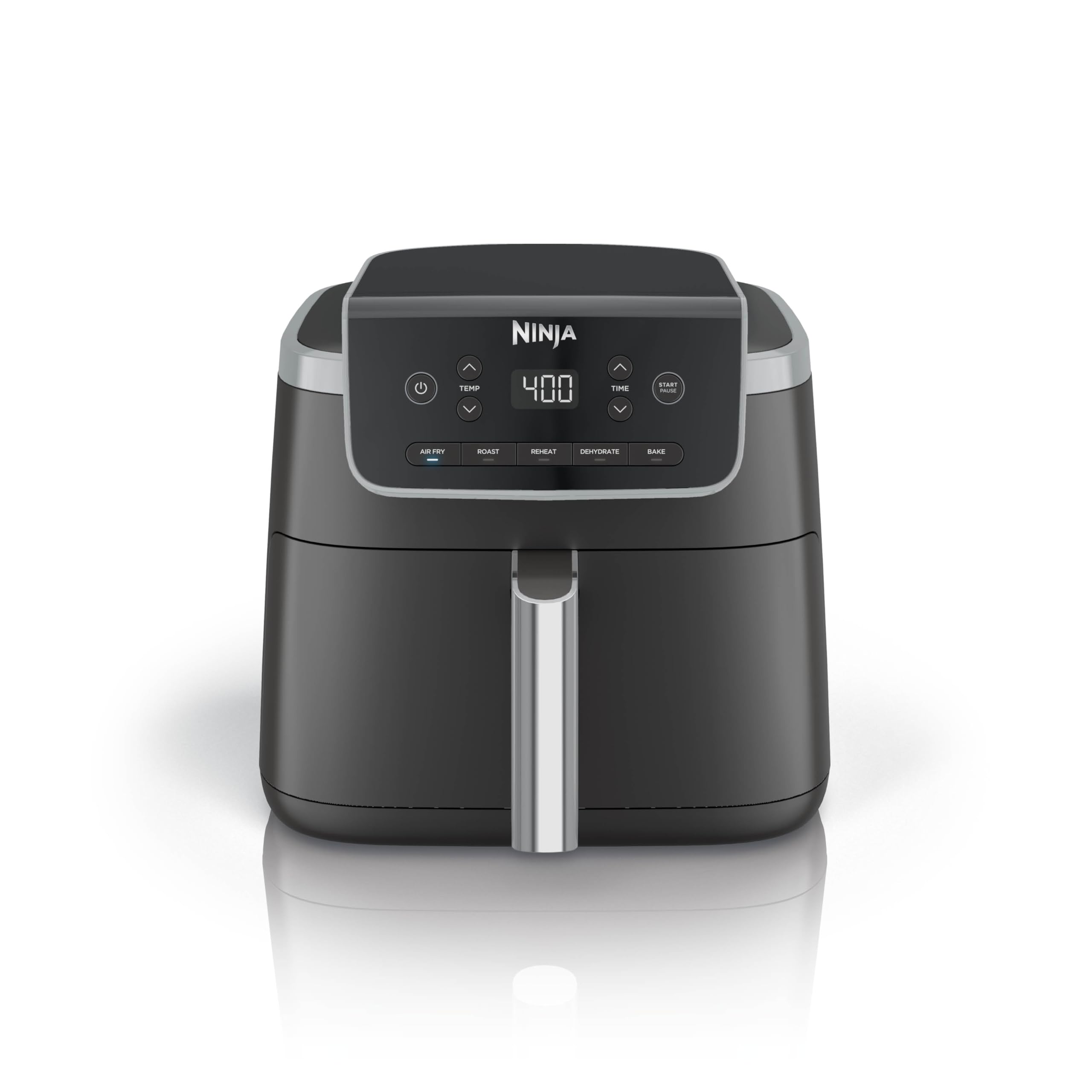
The AF142 is one of those models that fits the way modern kitchens actually look: not a giant box, not a flimsy toy—just a clean, compact-ish design with a strong basket size and the modes people truly use. It’s built for daily cooking, not just “air fryer experiments.”
What owners tend to love about this category is the combination of:
- Speed (it gets food from frozen to crisp quickly),
- Consistency (it cooks evenly when you shake once), and
- Confidence (controls feel intuitive and you quickly learn your go-to settings).
Where the AF142 quietly wins is as a “do it all without drama” unit: air fry for crisp, roast for vegetables and proteins, bake for simple quick desserts or rolls, reheat for leftovers that don’t deserve microwave sadness, and dehydrate when you actually feel like snack prep. The key is that it’s not overloaded with modes you never touch.
Here’s the expert guidance that makes single-basket units like this feel premium: create your own “house presets.” For example:
- Fries and tots: higher heat, shake once, finish with a short extra crisp blast if you like aggressive texture.
- Chicken thighs: roast first to render fat, then air fry briefly to crisp the skin.
- Reheat pizza: lower temp first to warm through, then a short high-temp finish to crisp the base.
That two-step approach is how you get restaurant texture without drying food out—and once you learn it, your air fryer becomes “better than takeout leftovers.”
One practical note from real shoppers: always test your unit early. If any appliance arrives with issues, you want to know immediately—especially if you’re ordering across borders or dealing with more complex shipping. A simple first-week test cook (fries + chicken) tells you almost everything about airflow, heat, and control behavior.
Why it’s a strong pick
- Great daily cooking mode mix – Air fry + roast + bake + reheat covers real life.
- Compact design without feeling tiny – Basket size is still practical for everyday meals.
- Fast cooking for frozen foods – Excellent for busy schedules and quick snacks.
- Nonstick workflow – Easier cleaning makes it more likely you’ll actually use it often.
Good to know
- Single basket means sequential cooking for multi-part meals unless you plan smart stages.
- Some models in this family may prefer hand-washing for long-term nonstick care—treat the coating gently.
- If you want true “two foods at once,” a DualZone or DoubleStack model will fit your style better.
Ideal for: everyday cooks who want a modern, compact-ish single basket air fryer that feels easy, fast, and flexible without being overly complex.
11. Ninja Air Fryer Pro AF141 – The “No Excuses” Starter That Still Feels Like a Quality Upgrade

If you’re buying your first air fryer (or replacing a cheaper one that didn’t cook evenly), the AF141 is the kind of purchase that feels immediately satisfying. It focuses on the core functions people use most—air fry, roast, reheat, dehydrate—and it does them with the signature Ninja “fast crisp” personality.
In real-life reviews, you’ll often see a specific theme with this kind of model: people expected hype, but they got results. Faster cooking, more even browning, and food that actually tastes better than it did in a generic unit. That’s usually because airflow and heat control are simply better engineered.
Where the AF141 becomes a long-term favorite is when it matches a real lifestyle:
- Small household cooking (one or two people) where a giant dual basket would be unnecessary.
- Snack-heavy routines where you want quick wins without turning on an oven.
- “I hate cleaning appliances” reality where an easy-to-clean basket makes daily use possible.
Expert tip: if you want the best crisp results from this model, use the crisper plate and avoid “sauce-first” cooking. Sauces and sugary glazes can burn fast in an air fryer. Instead, cook until crisp, then toss in sauce after. That simple shift makes wings and sticky-style foods taste better and keeps cleanup far easier.
Another pro-level habit: learn the reheat mode properly. A lot of people ignore it and just “air fry everything.” Reheat is often gentler, which can warm leftovers through without drying them out. Then, if you want crispness, finish with a short air fry blast. That two-step approach is how you get leftovers that feel fresh instead of tired.
Why it’s a smart buy
- Simple core functions done well – No wasted modes; just practical cooking.
- Compact and light enough for daily use – Easier to store if you don’t keep it on the counter.
- Strong crisping performance – Great for wings, fries, nuggets, and reheating.
- Easy cleanup habit forming – When cleanup is easy, you cook more at home. That’s the real value.
Good to know
- It’s not the biggest basket if you’re feeding a larger family—bigger households may prefer dual-zone options.
- Dehydrate is useful for snack prep, but if you’ll never use it, focus on air fry and roast performance.
- Like all air fryers, it performs best when food is spread out and shaken once.
Ideal for: first-time buyers, small households, and anyone who wants a reliable, easy-to-use air fryer that delivers crisp results without complex features.
12. Ninja DualZone DZ100 (Renewed) – A Straightforward Two-Basket Workhorse for Everyday Meals

If your main goal is simple: “I want two baskets so I can cook two foods at once,” the DZ100 hits that need directly. It gives you the dual-basket lifestyle—separate baskets, separate cooking lanes, and the ability to finish meal components without back-to-back batches.
Renewed buyers who are happy with this model tend to say the same things: it arrives in great condition, it’s easy to use once you start, it cleans well, and the dual baskets change how you cook. That last part is the real payoff. Two baskets makes meal prep feel manageable because you can stop juggling.
Here’s how to get the “I use this every day” experience with a renewed dual-zone unit:
- Do a first-day test cook to confirm both sides heat and run correctly.
- Learn one dual-zone pattern (protein on one side, veg on the other) and repeat it until it’s effortless.
- Respect counter space—dual units are bigger. Plan where it lives or where it stores.
The most common surprise for people new to dual baskets is size. Even when total capacity is generous, each drawer has its own shape. So instead of thinking “I can cook everything in one drawer,” think “I can cook dinner across two drawers.” Once you shift that mindset, results get better and cooking feels easier.
Also worth noting: dual-zone cooking makes you a better cook if you let it. You start timing foods intentionally. You stop overcooking one item while waiting on another. You learn which foods want a shake, which foods want a flip, and which foods can ride untouched. That’s how air frying becomes a habit, not a novelty.
Why it’s worth it
- Dual baskets change weeknight cooking – Full meals without waiting for batches.
- Easy to clean and use – Owners often describe it as low-drama once you start cooking.
- Great for “two foods, two ways” cooking – Different temps and times without compromise.
- Solid everyday results – Crispy, fast cooking that reduces oven use for many meals.
Good to know
- Renewed listings may not include every paper insert—plan to find the manual digitally if needed.
- It’s a larger appliance; consider storage and drawer clearance before you buy.
- If you want premium extras like a built-in thermometer, step up to a Smart Cook model.
Ideal for: shoppers who want the core DualZone advantage—two baskets, two foods, one dinner—without paying for extra features they may not use.
How to Get Truly Crispy Results (Without Drying Food Out)
The best air fryer in the world can’t fix two things: overcrowding and wet surfaces. But once you understand the small rules that drive crispness, nearly every Ninja model in this guide can produce that “restaurant crunch” texture—consistently.
The “airflow rules” that separate average from amazing
- Air needs access. Use the crisper plate and spread food. If air can’t circulate, you steam instead of crisp.
- Dry first, crisp second. Pat chicken dry, especially skin-on. Dry veg after rinsing. Wet food = slower browning.
- Oil is a tool, not a requirement. A light coating helps browning. Too much oil can weigh food down and soften texture.
- Shake once for starchy foods. Fries, tots, and wedges almost always improve with one mid-cook toss.
- Finish hot. If food is cooked through but not crisp, a short high-temp finish can transform texture.
If you remember one thing: crispness is created by dry heat and moving air. When you keep surfaces dry and give air a path, you win.
The “two-stage method” for juicier proteins
- Stage 1: Cook through gently. Roast or lower temp first to bring the inside up safely without drying.
- Stage 2: Crisp fast. Finish at higher heat for color and texture.
- Rest briefly. Even a short rest makes meat juicier and prevents “dry bite” disappointment.
- Sauce after cooking. Sticky sauces burn fast. Crisp first, toss after, then return briefly if needed.
- Use a thermometer when you can. It’s the fastest path to confidence—especially on thicker cuts.
This method is how you get chicken that’s crispy outside and still juicy inside—without hovering and guessing.
FAQ: The Questions People Ask After They Buy an Air Fryer
Should I preheat my air fryer?
Why are my fries not crispy?
Can I use parchment paper or liners?
How do I keep the nonstick coating in good shape?
What’s the biggest mistake people make with dual baskets?
Stacked (vertical) vs side-by-side dual baskets: which is easier?
Final Thoughts: Pick the Model That Matches Your Real Life
A good air fryer is not just about features—it’s about momentum. The right model makes you cook more at home because it removes friction: less waiting, less cleanup, less “I don’t feel like dealing with dinner.”
Here’s the simplest way to choose from this guide without overthinking:
- Want the best overall balance of capacity, space efficiency, and real meal convenience? Start with the Ninja DoubleStack XL SL401. It’s the dual-zone solution that respects small counters while still feeding real households.
- Need big-family output with a classic dual-basket workflow? Choose the Ninja Foodi DualZone XL DZ401. It’s built for “main + side” dinners without batch cooking.
- Want the most confidence cooking meat perfectly? Go with the Ninja DZ550 DualZone Smart XL for the built-in thermometer advantage.
- Want the dual-basket sweet spot for everyday cooking? Pick the Ninja DZ201 DualZone. It’s the “most households” dual drawer size that tends to feel easy and repeatable.
- Cook big proteins sometimes, but still want dual-zone convenience? Grab the Ninja FlexBasket DZ071 so you can switch between two zones and one wide MegaZone.
- Want a countertop oven vibe with air fry power too? The Ninja French Door Premier FO101 is the pick for toast, baking, roasting, and tray-style air frying in one sleek station.
- Want a strong single-basket classic with easy cleanup? Choose the Ninja AF150AMZ XL for simple operation and strong crisping.
- Want a compact single basket with a modern feel? Look at the Ninja AF142 or Ninja AF141 depending on how many cooking modes you want.
- Want renewed dual-zone value without losing the dual-basket lifestyle? Consider the Ninja DZ100 (Renewed) or the Keep Warm-friendly Ninja AD300CO (Renewed) if that feature matches your household timing.
If you take nothing else from this guide, take this: the right choice isn’t the one with the longest feature list. It’s the one that fits your kitchen, your appetite, and your everyday routine—so you actually use it. Pick the ninja basket air fryer setup that matches how you cook in real life, and you’ll end up with the rare kind of appliance that feels like a daily upgrade, not a countertop ornament.
