
A backyard pizza night can feel like two totally different experiences. On one night, you’re casually stretching dough, turning pies, and everybody’s hovering nearby because the smell alone is a party. On the other night, you’re fighting wind, your stone is scorching the bottom before the top even wakes up, and you’re sprinting between “too pale” and “too burned.”
If you’re shopping for a natural gas outdoor pizza oven, you’re already halfway to the “good night” version. A hard-plumbed fuel supply changes the entire rhythm: no tank swaps, no half-empty surprises, no “we’ll make more pizza after I run to the store.” But it also introduces a different kind of decision: do you want an oven that’s built-in and permanent, or a faster, lighter oven that’s still connected to a gas line? Do you want pure pizza performance, or do you want a true outdoor oven that can bake, roast, and even smoke on slower, steadier heat?
Most buying guides stop at surface-level specs. That’s not helpful. What actually determines whether you love your oven after 10 cooks is the stuff you only learn through real use: how quickly the stone recovers after you launch a cold dough, whether the flame pattern “punishes” you if you’re slow to turn, how readable the heat situation is without guessing, whether the door design improves your bake or just traps heat in the wrong way, and how annoying (or effortless) the natural gas hookup is for your patio setup.
In this guide, I’m going deeper—into the friction points that show up repeatedly in real owner feedback: missing connection pieces that derail your first cook, combo grills that do three jobs but require one smart workflow, built-in ovens that are gorgeous but need a realistic expectation for temperature style, and premium pizza machines that are so powerful they’ll make you better… as long as you know what they’re asking from you.
Below you’ll find 8 strong picks across every style: a rotating-stone built-in that makes pizza nights safer and easier, a true outdoor oven with racks and a smoker box, the classic high-heat portable performer in three purchase options, a surprisingly capable 3-in-1 grill/griddle/pizza station, and two serious premium ovens for people building a “forever” outdoor kitchen.
In this article
How to Choose the Right Natural Gas Outdoor Pizza Oven for Your Backyard
A great oven isn’t “the hottest one” or “the biggest one.” A great oven is the one that matches the way you actually cook—your space, your patience level, your party size, and how you want pizza night to feel. Here’s the decision framework I use when helping people buy once and stay happy.
1. Start with the most important question: pizza machine or outdoor oven?
These two categories look similar in photos, but they cook very differently in real life.
- A high-heat pizza machine (like the Ooni Koda 16 NG or Alfa Moderno line) is built to create intense top heat and a blazing-hot stone. It’s designed for fast bakes, constant turning, and a “driver’s seat” experience where you actively manage each pie.
- A true outdoor oven (like the Summerset) behaves more like a compact backyard baking oven. It’s better for longer cooks—roasts, bread, casseroles, and pizza styles that benefit from steadier heat and a slightly longer bake window.
- A hybrid outdoor kitchen showpiece (like Blaze or Alfresco) tries to give you the best of both: a more enclosed, controllable chamber, but with pizza-centric features that make high-heat cooking easier and more repeatable.
2. Natural gas readiness: “NG-only” vs “convertible” is a lifestyle choice
This is where many people get surprised. Natural gas setups come in three realities:
- Designed exclusively for natural gas: These are built to run on a fixed NG supply and stay there. They’re fantastic for consistency and simplicity once installed. But you need to be sure you’re buying the right fuel version from day one because you’re not planning to “switch later.”
- Convertible designs: Some grills and combo units can run propane or be converted to natural gas with the right parts. The upside is flexibility and often a wider accessory ecosystem. The downside is that your first cook can get delayed if you don’t plan the conversion path early.
- Multi-fuel by design: Some premium outdoor kitchen ovens include parts designed to support more than one fuel approach. This can be convenient if you ever change homes, remodel, or reconfigure an outdoor kitchen.
Here’s the practical truth: the “hard part” is rarely the oven itself. It’s the match between your patio gas line (pressure, connection type, quick-connect setup) and what the oven expects. If you want a smooth first cook, plan the connection like a grown-up: know where the line is, know how far the oven will sit, and know whether your setup needs a quick-connect fitting.
3. Heat is not one thing: you’re balancing three temperatures
Pizza ovens mess with people because they think in one thermometer number. Real pizza success is a balance of three zones:
- Stone temperature (the floor): decides crispness and how quickly the bottom browns.
- Top heat (dome / radiant): decides leopard spotting, cheese melt, and whether toppings cook before the crust overbakes.
- Air heat (chamber temperature): matters more on enclosed ovens and combo cookers than on open-front pizza machines.
When people complain “the edges burned but the middle was pale,” that’s usually a stone-and-airflow geometry problem. When they complain “bottom charred before cheese melted,” that’s a floor-too-hot / top-heat-too-low mismatch. The best ovens aren’t necessarily the hottest. They’re the easiest to get into a balanced state—and to stay there when you’re making multiple pies.
4. Your pizza style should pick your oven (not the other way around)
Different ovens naturally “favor” different pizza styles. If you pick an oven that fights your style, you’ll end up frustrated even if the oven is excellent.
- Neapolitan-ish (fast bake): You want strong top heat, a hot stone, quick recovery, and an opening that makes turning easy.
- New York / tavern (longer bake): A slightly longer, steadier bake window can be your friend. Enclosed ovens and combo units can shine here.
- Pan, Detroit, grandma: These reward controlled, even heat and benefit from an oven that doesn’t punish you for slower bakes.
- Non-pizza cooking: If you also want bread, roasts, vegetables, and smoked flavor, prioritize chamber design, racks, doors, and usable “oven behavior.”
5. Throughput matters: “how many people are you feeding?”
Capacity is not just a bragging right. It’s a social experience decision.
- One large pizza at a time is perfect for couples, small families, and “craft pizza” nights where you enjoy the process.
- High-throughput ovens are for hosts. If you regularly feed a group, the oven should keep up without making you feel like a short-order cook.
- Rotating-stone designs change throughput in a sneaky way: they make the oven feel easier to run, which means you can cook faster without stress.
6. Ease-of-driving beats raw performance for most homeowners
This is the part most guides skip: an oven can be objectively powerful and still be a bad fit if the user experience is stressful. These details decide whether your oven feels friendly or fussy:
- Opening size and ergonomics: Can you turn a pizza comfortably, or does every turn feel like a risky wrist move?
- Flame pattern: Does the burner cook evenly, or does it create a “hot corner” that punishes slow turning?
- Visibility: Can you see your pizza without opening a door and dumping heat?
- Stone recovery: After you launch, how quickly does the floor bounce back? This matters more as you cook multiple pies.
- Stability and build feel: Wobbly legs and flimsy doors don’t just annoy you—they make you cook timidly.
7. Weather and storage are part of the purchase
Outdoor cooking means wind, humidity, and “where do we keep this when we’re not using it?” A few important truths:
- Wind changes your flame: Open-front ovens can lose heat quickly when wind hits the opening. Enclosed ovens can hold heat better, but might need longer preheats.
- Moisture changes your stone: A damp stone takes longer to heat and can lead to inconsistent bakes. A cover is not an accessory; it’s a performance tool.
- Stainless still needs care: Even premium stainless benefits from basic wipe-downs and protection from constant salt air if you live coastal.
8. The smartest buyers build a “first 5 cooks” plan
You don’t need to be a pizza nerd, but you do need a plan that turns your first week into success. Here’s the simple playbook:
- Cook something easy first: flatbreads or a simple cheese pizza. No mountains of toppings.
- Use an IR thermometer if possible: measure the stone, not your hopes.
- Run one pizza at a time until you learn turning rhythm: speed comes after control.
- Adjust one variable per cook: hotter stone, less sauce, thinner dough, shorter preheat—pick one.
- Write down what happened: your oven “personality” reveals itself quickly if you track outcomes.
Now let’s make this concrete with a quick table—then I’ll walk you through each product like a real owner would.
Quick Comparison: 8 Natural Gas Outdoor Pizza Oven Picks
Use this table to narrow down your “short list,” then jump into the deep reviews for the details that actually decide satisfaction: heat behavior, setup friction, turning ease, versatility, and the little annoyances you’ll feel after month two.
On smaller screens, swipe or scroll sideways to see the full table.
| Model | Oven style | Natural gas setup | Best match | Amazon |
|---|---|---|---|---|
| Blaze 26-Inch Built-In Outdoor Pizza Oven (Rotisserie) | Built-in | Made for outdoor kitchens; strong “pizza + roasting” versatility | People who want a premium built-in that makes pizza easier (rotating stone) and adds real oven capability | Amazon |
| Summerset SS-OVBI-NG Built-In Outdoor Oven | Built-in | Outdoor oven behavior with a pizza stone + smoker box | Outdoor kitchen owners who want baking/roasting plus pizza—without running a full pizza “turning station” | Amazon |
| Ooni Koda 16 Natural Gas (Oven Only) | Portable | NG-dedicated performance in a compact footprint | Most homeowners who want big-pizza capacity with the classic “dial it up and go” experience | Amazon |
| Ooni Koda 16 NG Essentials Bundle (Peel Included) | Portable | Same oven; bundled to reduce “first-cook missing tool” mistakes | First-timers who want a smoother start and the right launching tool from day one | Amazon |
| Ooni Koda 16 NG Pro Bundle (Peel + Cover) | Portable | Same oven; bundled for storage/weather protection | People who’ll keep the oven outdoors and want better long-term cleanliness and readiness | Amazon |
| Cuisinart Propel+ 3-in-1 Grill/Griddle/Pizza Station | Combo | Convertible path to NG (kit sold separately) | Backyard cooks who want one appliance for burgers, bacon, and pizza (and accept a learning curve) | Amazon |
| Alfa Moderno 3 Pizze Natural Gas Oven | Premium | High-throughput, host-friendly performance; optional hybrid wood kit | Entertainers who want serious pizza speed and the confidence of a premium Italian build | Amazon |
| Alfresco 30-Inch Built-In Outdoor Pizza Oven Plus | Luxury | Outdoor kitchen centerpiece built around intense radiant heat | People building a “forever” outdoor kitchen and want commercial-style performance at home | Amazon |
In‑Depth Reviews: 8 Natural Gas Outdoor Pizza Oven Options That Earn Their Spot
Now we go oven by oven. I’m going to talk like someone who actually cooks outside: how each unit behaves when your dough is cold, how it reacts to wind, how predictable turning feels, what ownership is like after the honeymoon phase, and which oven matches which personality.
1. Blaze 26-Inch Built-In Natural Gas Outdoor Pizza Oven (Rotisserie) – The “Easier Pizza Night” Built-In
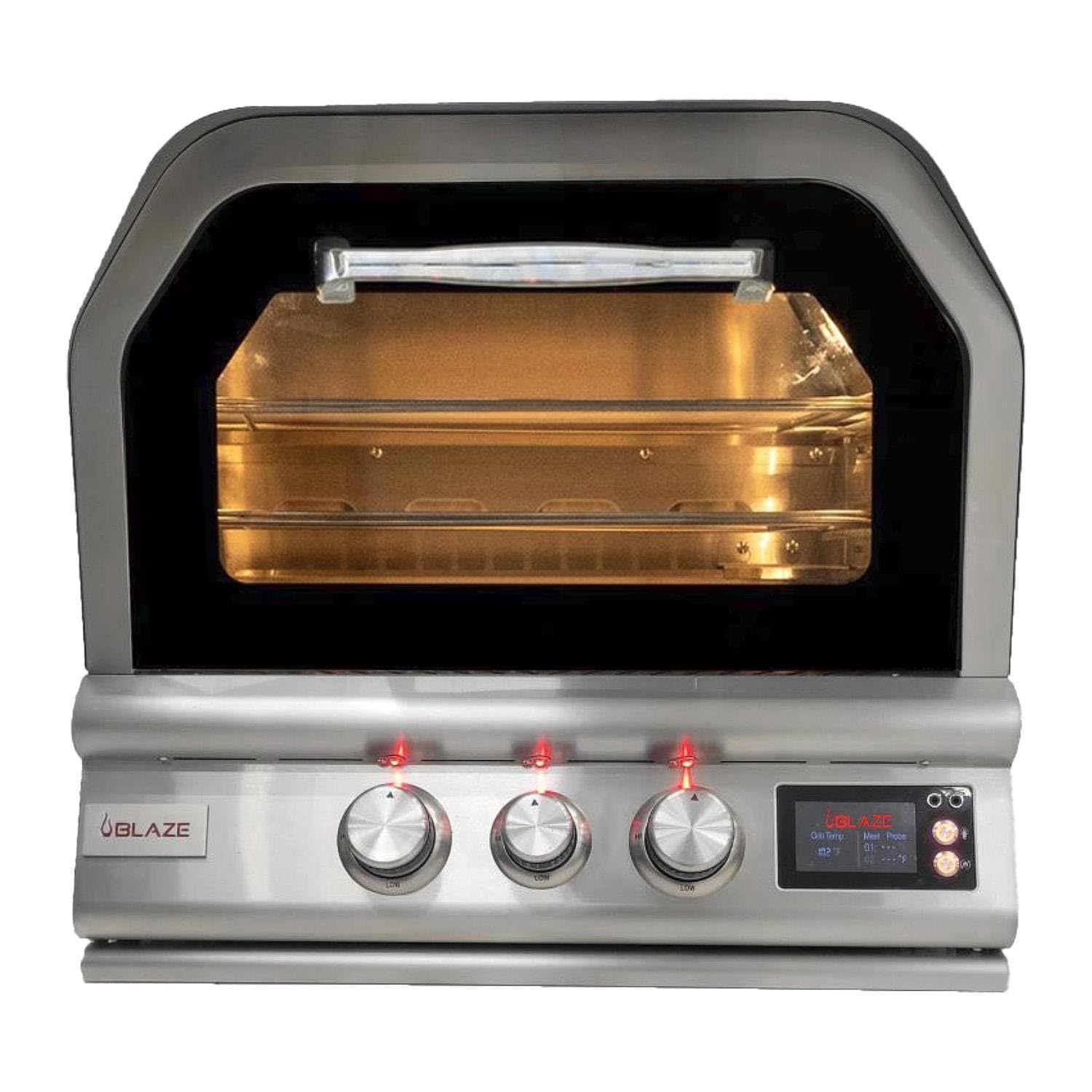
If you want a premium outdoor kitchen oven that makes pizza feel less stressful, Blaze gets the assignment. The rotating stone is the headline, but the real story is what that rotation does to the entire user experience: it lowers the skill barrier, keeps kids and guests safer (less reaching deep into a hot chamber), and turns “perfect turning rhythm” into “press a button and focus on your toppings.”
In real-world use, rotating stones solve one of the most common backyard pizza problems: hot spots. Many ovens have a “strong corner” where the flame pattern concentrates heat. That’s great for speed, but it punishes slow turning and creates the classic edge-burn while the center still needs time. A rotating deck flattens that learning curve. You still have to watch your pie—but you’re watching for doneness, not fighting geometry.
The other reason Blaze sits in the “best overall” seat is the ownership arc. A lot of buyers start with pizza… then realize they own a legitimate outdoor oven. Rotisserie nights, roasted vegetables, baked dishes, bread experiments—this kind of unit invites variety. If you cook outside often, that matters. The value isn’t just one great pizza style; it’s a whole category of cooking unlocked.
Now the expert-level part: a built-in rotating-stone oven tends to reward a specific workflow. Don’t treat it like an open-mouth pizza rocket where you blast the flame, launch, and spin every 15 seconds. Instead, think in two phases: (1) preheat to saturate the stone and dome, then (2) maintain the chamber in a stable state where the top heat and deck heat stay balanced. That’s when you get crisp bottoms, evenly melted cheese, and repeatable results across multiple pies.
One more thing I love about this category: the door and viewing design. A common mistake with enclosed ovens is opening the door constantly, dumping heat, then chasing temperature. When you can monitor without constantly opening, your pizzas get better—and you look calmer doing it. That matters when you’re hosting.
Why you’ll like it
- Rotating stone = lower stress – More even cooking, fewer frantic turns, safer workflow for families.
- Real oven versatility – This isn’t “pizza only.” It’s pizza plus roasting, baking, and rotisserie cooking.
- Built-in presence – Looks and feels like an outdoor kitchen centerpiece, not a temporary gadget.
- Repeatability – Once you learn your preheat and maintenance rhythm, results become predictable.
Good to know
- It’s built for outdoor kitchens, so plan your space and airflow around it (this is an appliance, not a camping oven).
- Rotating stone helps a lot, but you still need to learn what “done” looks like in your preferred style.
- Enclosed ovens reward patience: a thorough preheat makes everything easier, especially when cooking back-to-back pizzas.
Ideal for: homeowners who want a premium built-in that makes pizza nights easier, safer, and more repeatable—without giving up the ability to roast, bake, and run full outdoor-oven meals.
2. Summerset SS-OVBI-NG Built-In Outdoor Oven – For People Who Want Pizza and Real Baking

This is the oven you buy when your brain says, “I love pizza… but I also want to cook outside like a real kitchen.” The Summerset is less of a pure pizza “machine” and more of a compact outdoor oven with pizza capability—and that distinction matters. It changes how you should judge it, and it changes how happy you’ll be after you own it.
Let’s talk about the biggest point of confusion: temperature expectations. Some owners come in expecting a dedicated Neapolitan burner that turns pizzas in under a minute. When they don’t get that “jet engine” vibe, they feel disappointed. But when you approach it like an outdoor oven—where you can bake, roast, use racks, and add smoky flavor—the Summerset can feel like a smart outdoor kitchen upgrade.
What stands out in owner feedback is the concept and the look: it’s an attractive built-in, it offers a large cooking chamber, and it comes with the kinds of accessories that make you actually use it (stone, racks, cover, and the smoker box idea). The window is also not a gimmick—being able to check without opening the door helps you keep the heat steady and reduces the “peek panic.”
Now the expert tip that makes this oven dramatically more satisfying: stop trusting the door gauge as your main truth. Outdoor conditions, door placement, and airflow can make that reading feel “low” compared to what your pizza stone is doing. If you judge pizza readiness by stone temperature (not just air temp), you’ll unlock better results. That’s because the stone is your crust engine—especially on an oven designed to behave like an oven, not a flame-licking pizza rocket.
Where this oven shines is with styles that love a slightly longer bake window: New York-ish pies, pan pizzas, thicker crust, and “pizza-night-with-sides” where you’re also roasting vegetables or warming bread on an upper rack. The racks change the experience. You can actually run a meal, not just a pizza sprint.
One more honest note from a lot of “real people” reviews: setup can be less turnkey than you expect if you assume “natural gas ready” means every single hose/regulator scenario is handled. That’s not unique to Summerset—outdoor gas appliances often assume you have a proper line and fittings. But it’s a recurring point: plan the hookup path early, and you’ll avoid the frustrating “the oven is here but we can’t cook” moment.
Why it’s different (in a good way)
- More than pizza – Racks, chamber size, and oven behavior make it great for baking and roasting.
- Window + light = fewer mistakes – You can monitor without dumping heat, which improves consistency.
- Smoker box option – Adds a fun “outdoor flavor” angle for people who like experimenting.
- Outdoor kitchen aesthetic – Looks built-in and intentional, not like a temporary appliance.
Good to know
- If your dream is ultra-fast Neapolitan bakes, a dedicated high-heat pizza machine may feel more natural.
- Plan for a longer preheat than a compact open-front oven—this style needs time to saturate the chamber.
- Stone-temp thinking is the key. If you treat it like an indoor oven thermometer contest, you’ll misunderstand it.
Ideal for: outdoor-kitchen owners who want a genuine oven experience outside—pizza included—plus visibility, racks, and a cooking style that supports full meals.
3. Ooni Koda 16 Natural Gas – The Classic Big-Pizza Performer (If You Plan the Hookup)

The Koda 16 is popular for a reason: it’s the rare oven that feels both approachable and legitimately powerful. You unfold the legs, drop in the stone, connect the gas, turn the dial, and you’re in the game. And because it’s the 16-inch class, you get real working room—space to launch, space to turn, and enough deck area to cook pizzas that feel “restaurant sized,” not snack sized.
In real owner feedback, the love usually sounds like this: “easy to set up,” “heats fast,” and “we’re making pizza all the time now.” That last part is the big win. The best oven isn’t the one with the most features; it’s the one you actually use on a random Tuesday. The Koda 16 has that “turn it on and go” energy, and it makes pizza feel like a habit, not a project.
Now the reality check that separates happy owners from frustrated ones: the natural gas version changes the first-cook logistics. A recurring complaint across buyers is not about performance—it’s about connection expectations. People assume the oven will magically match whatever line they have at home. Then the oven arrives, friends are coming over, and they realize they still need the right adapter or fitting to connect safely to their gas source. That’s not a Koda problem; it’s a planning problem. But it’s common enough that it’s worth treating seriously.
Once it’s connected, the Koda’s heat behavior is what you’d expect from a strong open-front oven: it rewards turning discipline and punishes distraction. That’s not a negative—many people love the “hands-on” feel because it makes pizza night interactive. The oven gives you fast top heat, but you must respect the hot zone. Your first breakthrough will be learning a simple rhythm: launch, set the crust, begin turning before the edge overcolors, and finish with intention.
Here’s my advanced tip for the Koda 16 that makes it feel easier: don’t run full blast the whole time. Preheat hot, then reduce slightly during the bake so the top and bottom stay in sync. Full blast can be amazing for certain styles, but for most home dough and most topping loads, a slightly moderated flame gives you prettier melt and fewer “burn-and-save” moments.
Why people keep buying it
- Fast, simple workflow – “Unfold and cook” vibes that turn pizza into a regular habit.
- Big working room – The 16-inch class is forgiving and easier to maneuver than smaller decks.
- Dial-controlled heat – Lets you learn and repeat your sweet spot instead of guessing every cook.
- Versatile beyond pizza – Roast vegetables, sear proteins in a pan, cook flatbreads—this oven can do more than people expect.
Good to know
- Plan the natural gas connection ahead of time so your first cook doesn’t get delayed by missing fittings.
- Open-front ovens require turning attention; if you want “set and bake,” an enclosed oven may fit better.
- The first few cooks are about learning the hot zone and turning rhythm—then it gets addictive.
Ideal for: homeowners who want a powerful, portable-feeling oven with serious pizza capacity—especially if they like the interactive “turning and dialing” craft of pizza night.
4. Ooni Koda 16 NG Essentials Bundle – The Smoothest First Week (Because the Peel Matters)
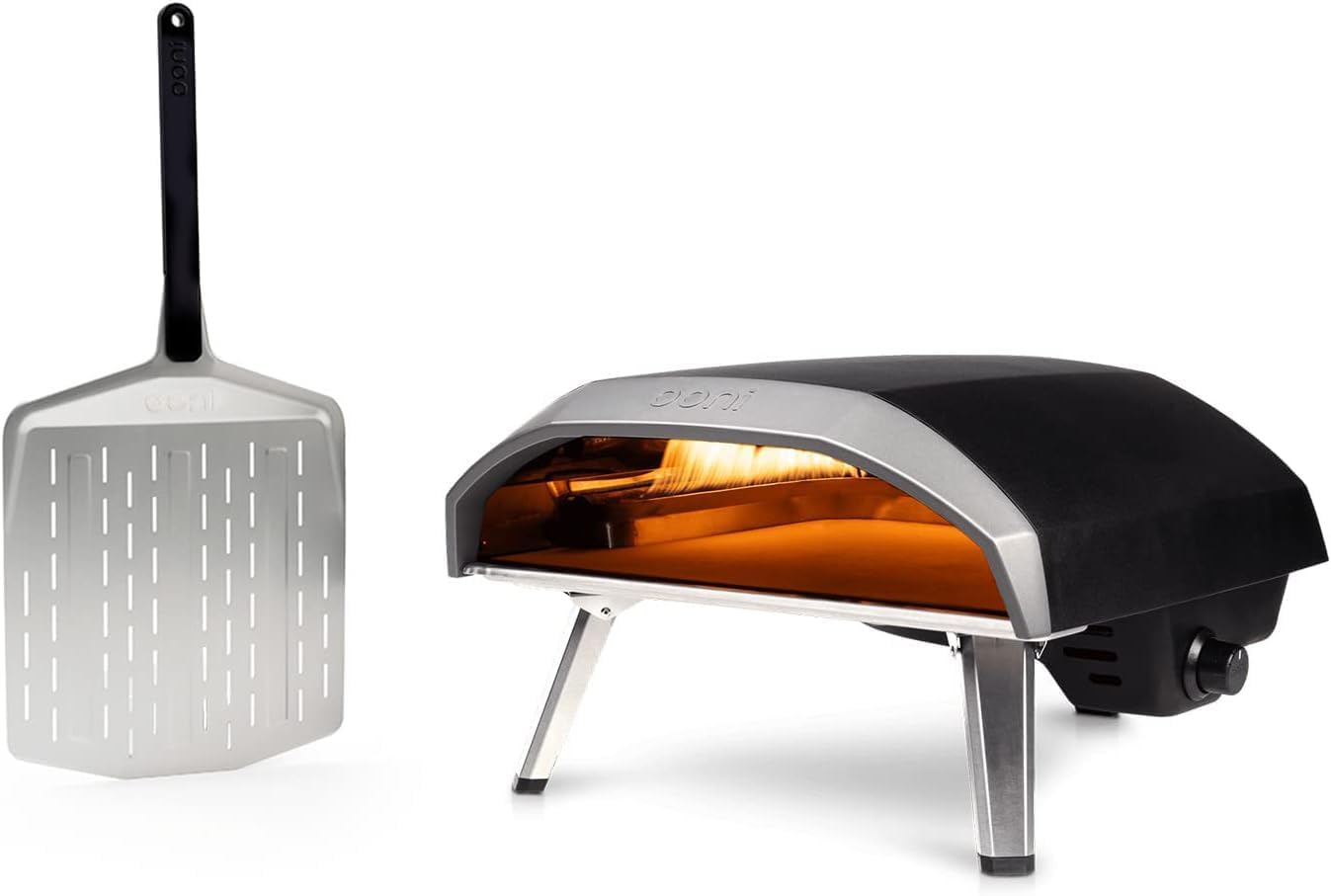
A lot of “bad first pizzas” are not oven problems—they’re tool problems. The most common beginner pain points are: (1) the pizza sticks when you try to launch, (2) you panic and shake the peel, and (3) the toppings migrate into a chaotic pile while the dough folds. That’s why bundling matters. When you have the right launching tool from day one, your first cook becomes a confidence-builder instead of a comedy sketch.
This bundle is basically the “make it easier on yourself” purchase. It’s the same Koda 16 NG performance, but it reduces the most common missing-piece moment: “Wait… what do we slide the pizza in with?” Yes, you can buy tools later. But early success matters, because pizza making is a skill loop. When your first few bakes feel good, you practice more. When your first few bakes feel frustrating, the oven starts collecting dust.
Here’s the real owner-level advantage: a peel changes your workflow and your timing. With a proper peel, you can build on the peel, check for sticking, and launch smoothly. That means your dough spends less time sitting while you “figure it out,” so you get fewer stuck launches and fewer odd-shaped pies. For a hot oven that rewards speed, that’s a big deal.
My favorite “pro move” for beginners with this bundle is the two-peel idea: use one peel for launching (dry, floured, fast), and a separate turning peel or smaller tool for rotating. Even if you’re not ready to buy a second peel immediately, thinking this way improves your technique: launch clean, then manage the bake with a different tool so you’re not wrestling a full-size peel inside the oven.
Also: the included peel pushes you into better habits. You’ll learn to dust lightly (too much flour burns), you’ll learn to do the “shake test” before launch, and you’ll learn that speed is kindness—because the longer your dough sits on a peel, the more likely it is to glue itself down.
Why this bundle makes sense
- Better first pizzas – The peel reduces sticking and launch chaos, which is where most beginners struggle.
- Faster learning curve – Early success leads to more practice, which leads to better pizza (quickly).
- Same Koda 16 performance – You’re not giving up heat or capacity; you’re making the workflow smoother.
- Cleaner process – A proper peel keeps you from improvising with trays, cutting boards, or awkward substitutes.
Good to know
- You still need the right gas connection plan; the bundle helps tools, not hookup logistics.
- Launching is a skill: the peel helps, but you still need simple habits (shake test, light dusting, don’t overload toppings).
- If you already own a peel you love, the oven-only option may be enough—just make sure your tool fits your pizza size comfortably.
Ideal for: first-time pizza oven buyers who want a smoother start, fewer launch failures, and a “good first week” that turns pizza into a repeatable hobby.
5. Ooni Koda 16 NG Pro Bundle – The Smart Choice for Outdoor Storage (Cover = Performance)
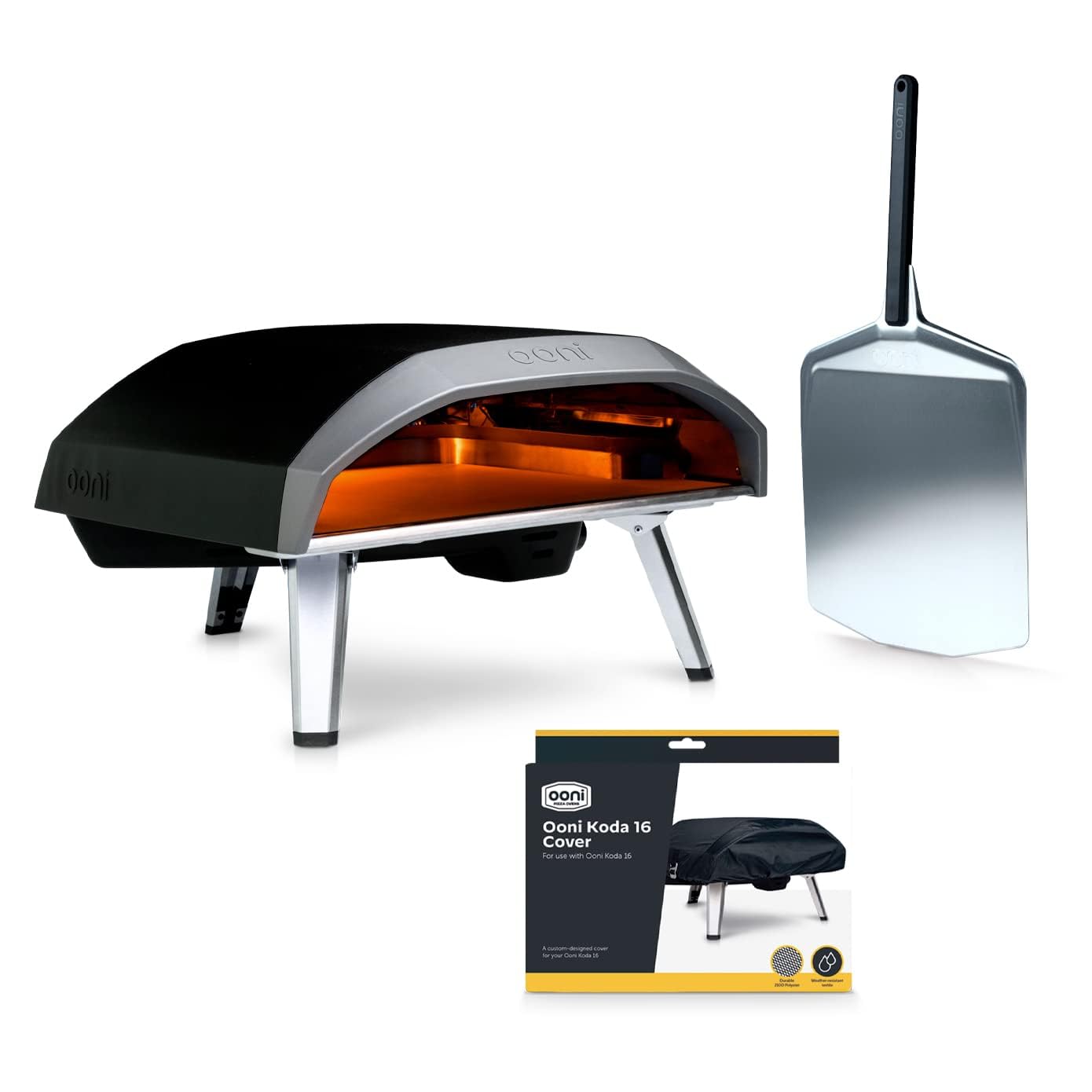
People underestimate covers. Then they own an outdoor oven for six months. And suddenly the cover becomes the thing that keeps the oven clean, keeps the stone dry, and keeps “let’s make pizza” from turning into “we have to wipe, sweep, and troubleshoot first.”
This bundle is for the real world: pollen, dust, drizzle, humidity, and the fact that most of us don’t want to carry an oven inside after every cook. If your oven will live outdoors, the cover isn’t about looks—it’s about readiness. A dry, protected stone heats more predictably. A cleaner burner area means fewer weird ignition moments and less “why is the flame doing that?” anxiety. And psychologically, a covered oven feels like a permanent part of your patio setup, not a temporary project.
From an expert standpoint, the biggest “performance” advantage of a cover is stone behavior. Stones that absorb moisture take longer to heat, and they can heat unevenly. That can show up as inconsistent browning across the crust and longer recovery between pizzas. Keeping the stone sheltered helps your oven act like the oven you bought.
The peel inclusion also matters for the reasons we covered above: better launches, fewer early failures, and a faster learning curve. So this bundle becomes the “most complete” version of the Koda 16 NG buying path. It doesn’t change the core oven performance, but it improves the ownership experience. And for most people, ownership experience is what determines whether the oven becomes a weekly tradition.
One more small but real benefit: covers reduce “surface anxiety.” Outdoor cooking gear naturally collects heat marks, soot, and patina. Some people don’t care; others hate it. A cover keeps the oven looking nicer longer, which honestly helps some owners enjoy the product more. And when you enjoy it more, you use it more.
Why it’s the long-term comfort pick
- Cover improves readiness – Less cleaning, less moisture, faster “let’s cook” moments.
- More consistent stone behavior – A dry stone heats more predictably and recovers better.
- Peel included – Better launches and a smoother learning curve from day one.
- Outdoor-friendly ownership – If it lives on the patio, this bundle supports that reality.
Good to know
- You still need to plan the NG connection path; the cover doesn’t solve fitting/adapter surprises.
- Wind still matters on open-front ovens—positioning your oven out of direct gusts makes your life easier.
- If you store your oven indoors already, the cover may be less valuable than upgrading other tools (turning peel, infrared thermometer, dough box).
Ideal for: Koda buyers who plan to store the oven outside and want cleaner ownership, more predictable preheats, and fewer “setup chores” before pizza night.
6. Cuisinart Propel+ 3-in-1 Grill/Griddle/Pizza Station – The “Do Everything” Choice (With Quirks)

This is the “one appliance, many meals” pick. And it’s important to judge it correctly: you are not buying a dedicated Neapolitan oven. You’re buying a backyard cooking station that can grill burgers, griddle breakfast, and still deliver pizza with real stone-baked flavor. For a lot of families, that’s the smarter purchase—because it gets used constantly, not just on pizza nights.
Owner feedback on combo units tends to split into two camps: people who expect one mode to be world-class (and feel disappointed when it’s merely good), and people who value the fact that all three modes are available in one footprint (and love it). When you buy the Propel+ with the second mindset, it can feel like a backyard superpower.
Let’s talk about the real-life wins first: many owners praise how quickly it heats, how sturdy it feels once assembled, and how satisfying it is to cook different parts of a meal in one place—pizza in the dome while toppings or sides cook nearby. That “parallel cooking” is the hidden advantage most pizza-only ovens don’t give you. You can roast peppers, crisp sausage, or cook onions while your pizza bakes. That changes how complete your pizza nights feel.
Now the honest part: combo designs come with quirks. Some owners report cosmetic heat marks near the glass area over time (a “working appliance” look), and some mention that certain components feel less premium than the overall concept deserves. A few reviews point out griddle behavior that requires technique: surface finish can be sticky until properly seasoned, and grease management can be awkward if you use the drain hole the way the design expects. That doesn’t mean it’s unusable—it means it’s not “plug-and-perfect” unless you’re willing to learn the griddle personality.
Pizza mode itself is often described as the strongest mode—just not identical to a dedicated pizza oven. That makes sense. With a stone that sits in a dome designed into a grill, you get a strong bake and great flavor, but you may see slightly faster browning near edges depending on stone size, airflow, and pizza placement. The fix is simple: rotate once or twice during the bake and avoid overloading toppings until you learn your hot spots.
The biggest expert tip for this unit is workflow. Don’t treat it like three separate machines. Treat it like a system: preheat the stone properly, use the grill/griddle zones for toppings and sides, then time your pizza bakes so you’re not constantly opening the pizza door (which can steal heat). Once you learn that rhythm, the Propel+ becomes genuinely fun.
Why it’s a smart “family” buy
- It gets used constantly – Grill and griddle modes make it valuable beyond pizza night.
- Parallel cooking is a cheat code – Cook toppings and sides while your pizza bakes.
- Good heat and satisfying flavor – Stone-baked crust results without owning a separate pizza-only appliance.
- Backyard convenience – Integrated storage and multi-zone cooking feel like a mini outdoor kitchen.
Good to know
- Combo units reward technique. Expect a short learning curve, especially for the griddle surface and grease management.
- Pizza mode is strong but not identical to a dedicated ultra-high-heat oven—plan for a slightly longer bake style.
- Natural gas use depends on the conversion path; plan that early so you’re not stuck waiting on parts.
Ideal for: households who want one backyard station that covers everyday grilling, weekend breakfasts, and pizza nights—without dedicating patio space to a pizza-only appliance.
7. Alfa Moderno 3 Pizze Natural Gas Oven – High-Throughput Pizza for People Who Host
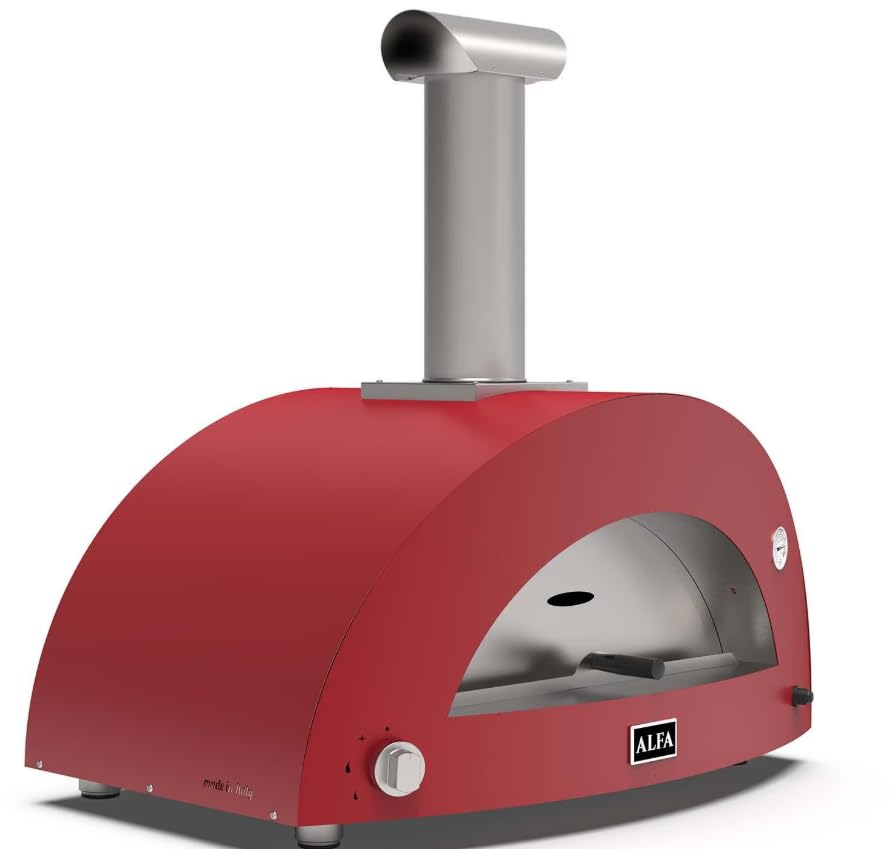
This is the oven for a specific kind of person: the host. The person who doesn’t just want to make pizza—they want to run a pizza night that feeds a group without turning into a two-hour bottleneck. That’s what a multi-pizza oven changes. It’s not just “more space.” It’s a different social experience.
A high-throughput oven shifts your role from “chef under pressure” to “party conductor.” You can stage dough, run multiple pies, and keep the flow going. And because the Moderno line is built around performance engineering, the point isn’t just capacity—it’s the ability to cook consistently at serious heat. When an oven is both hot and spacious, it becomes easier to manage multiple pizzas without constantly losing temperature between launches.
One of the most underappreciated advantages of a premium oven like this is heat balance. In lower-cost ovens, you often fight a mismatch: the stone gets hot fast, but the top heat can lag (or vice versa). Premium designs aim to cook base and toppings in sync, so you spend less time “saving” pizzas with awkward flame tricks. In practical terms, that means better melt, cleaner spotting, and fewer pies that look like two different pizzas stitched together.
Another real-world benefit: “confidence construction.” Premium ovens feel sturdy. Doors feel deliberate. Heat retention feels intentional. And that matters because you cook differently when you trust your equipment. You open less, you panic less, and you make calmer choices. That’s how you go from occasional good pizza to consistently great pizza.
Now let’s talk about the optional hybrid concept (gas with an optional wood approach via a kit). For some hosts, that’s the best of both worlds: natural gas for convenience and fast startup, with the option to add wood character when you want the full ritual. The key is to treat that option as a “special night” tool, not something you need every cook. Most people who truly love hybrid flexibility use gas as the reliable baseline and wood as the occasional flavor flex.
This oven is also the type of purchase that changes your menu. Once you own a high-performance outdoor oven, you stop thinking “pizza only.” Bread, roasts, skillet dishes, and desserts start showing up—because the oven can handle real cooking, not just quick bakes. If you like cooking as a hobby, not just a meal task, that matters.
Why hosts love it
- High throughput – Feeds groups without turning you into a stressed short-order cook.
- Premium heat balance – Designed to cook toppings and crust in sync, reducing “save the pizza” moments.
- Serious build feel – Sturdy construction improves confidence and consistency.
- Hybrid flexibility option – Gas convenience with the ability to add wood ritual when you want it.
Good to know
- More capability means more responsibility: you’ll want a clear workflow (dough ready, tools staged, turning plan) to maximize the advantage.
- It’s a premium footprint—plan your patio space so you’re not cramped while turning and launching.
- If you usually cook for two and never host, you might not need multi-pizza capacity; a 16-inch oven could feel more “right-sized.”
Ideal for: entertainers who want a premium oven that keeps pizza flowing, handles serious heat with confidence, and supports a true outdoor-cooking lifestyle beyond pizza.
8. Alfresco 30-Inch Built-In Outdoor Pizza Oven Plus – The “Backyard Pizzeria” Statement Piece
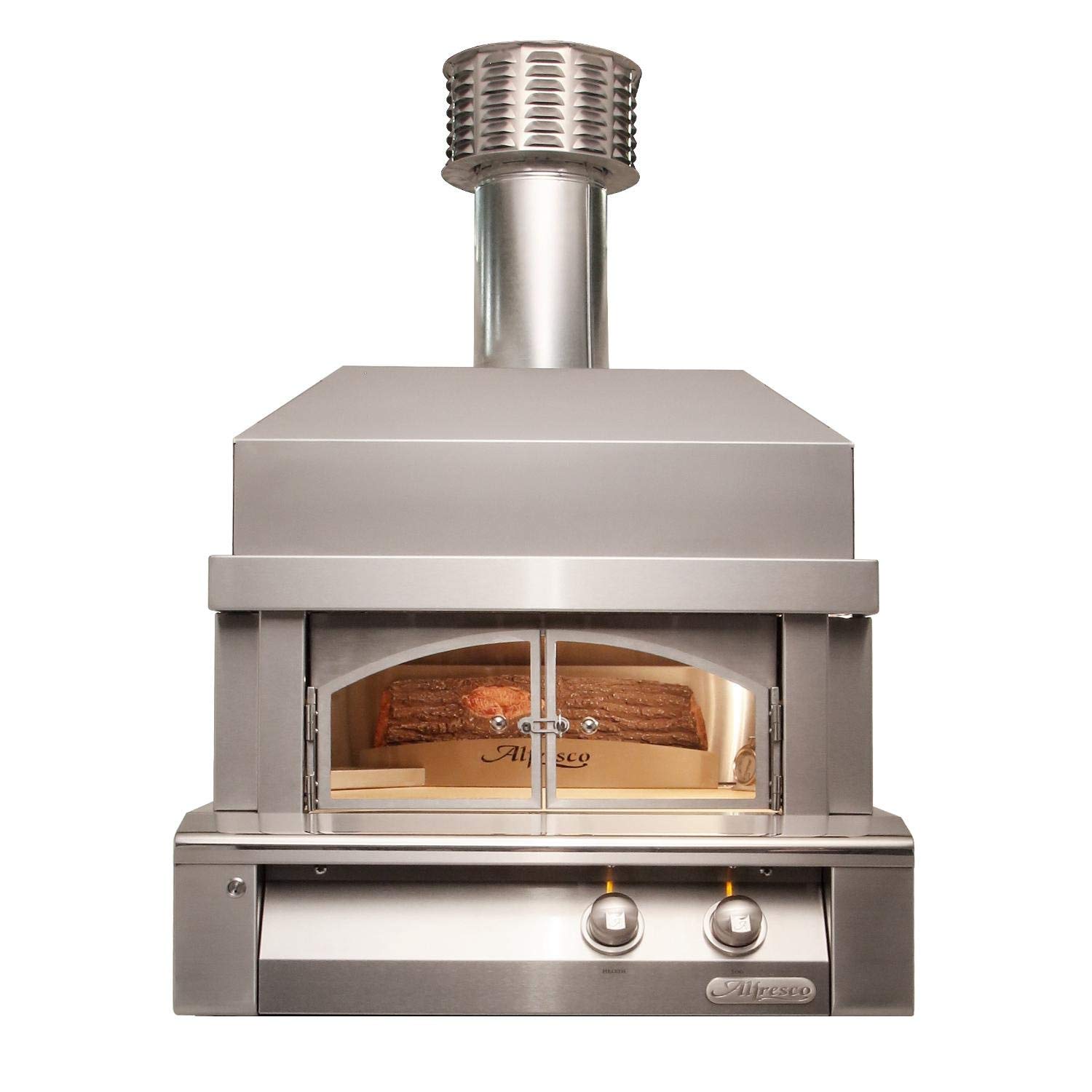
This is not a casual purchase. This is the oven you buy when you’re building an outdoor kitchen that’s meant to feel permanent, intentional, and genuinely high-performance. It’s the kind of appliance that changes how people talk about your backyard—because it looks like a real culinary tool, not a weekend toy.
The easiest way to understand this oven is to think in “commercial logic.” Luxury outdoor ovens often focus on radiant heat behavior and a chamber designed to hold serious temperature. That creates a different pizza experience than smaller open-front ovens: you can get intense cooking performance while also having the control and enclosure of a built-in system. When this style of oven is driven well, it produces pizzas that feel like they came from a dedicated kitchen—not just “pretty good for outside.”
But here’s the part that separates happy luxury owners from frustrated ones: a powerful built-in oven rewards restraint and rhythm. If you treat it like a random grill attachment and constantly open, close, and fiddle, you’ll make your life harder. If you treat it like a real oven—preheat properly, keep the chamber stable, use visibility tools (lights/windows) to reduce unnecessary opening—you get consistency. And consistency is what makes premium feel worth it.
This oven is also for people who care about cooking beyond pizza. Built-in outdoor ovens that include thoughtful extras (like utility boxes for wood/herb/steam-style use) invite broader cooking: bread that benefits from humidity control, roasts that want steady heat, and skillet dishes that love intense top heat. If you enjoy cooking as a craft, not just a meal, this kind of oven becomes a playground.
From an ownership standpoint, the “best” luxury ovens tend to create a predictable weekly pattern: pizza nights become your signature, holidays become easier because you can cook outside, and gatherings become more social because the oven becomes a focal point. People don’t just eat—they hover, watch, talk, and participate. That’s what a statement oven does: it turns cooking into an experience.
This is also the rare category where you should think about your future self. If you’re building an outdoor kitchen you plan to love for years, a high-end built-in can be a “forever appliance.” But it only feels like a forever purchase when it matches your lifestyle: you cook often, you entertain, and you want an oven that’s as much a feature of your home as your indoor range.
Why it’s a luxury standout
- Outdoor kitchen centerpiece – Built-in presence that looks and feels permanent.
- Serious performance potential – Designed for intense heat behavior and high-level pizza results.
- Better visibility + control – Built-in design invites stable-chamber cooking rather than constant fiddling.
- Beyond pizza – Supports a broader outdoor “oven cooking” lifestyle for people who love experimenting.
Good to know
- Luxury ovens reward proper preheat and disciplined workflow—treat it like a real oven, not a grill side quest.
- Built-in means commitment: plan your outdoor kitchen layout so you have comfortable working space and ventilation.
- If you mainly want fast casual pizza and nothing else, a simpler portable oven may satisfy you with less complexity.
Ideal for: homeowners building a premium outdoor kitchen who want a high-performance, built-in oven that turns pizza nights into a signature experience and supports broader outdoor baking/roasting.
How Gas Pizza Ovens Actually Behave (So You Stop Chasing Random Results)
Here’s the truth that makes outdoor pizza click: most “problems” are really heat-management mismatches. Once you learn what your oven is doing—and what it’s asking from you—pizza stops feeling like luck. This section is the difference between “sometimes great” and “consistently great.”
The 5 most common problems (and what they really mean)
-
“Bottom burned before the top was done.”
Your stone is too hot for your current flame/top-heat setting. Fix by reducing flame slightly during the bake, raising the pizza briefly toward top heat near the end, or launching at a slightly lower stone temp. -
“Cheese browned but crust was pale.”
Top heat is dominating while the stone isn’t fully saturated. Fix by extending preheat, measuring stone temp, and giving the deck time to recover between pizzas. -
“Edges cook faster than the center.”
This is usually airflow and stone size geometry. Fix by rotating once or twice and placing the pizza slightly farther from the hottest wall/burner zone. -
“First pizza is amazing, second pizza is worse.”
Stone recovery issue. Your first launch pulls heat from the deck. Fix by giving a short recovery pause, slightly increasing flame between pizzas, or running a smaller pizza size if you’re doing rapid-fire back-to-backs. -
“Everything is inconsistent when it’s windy.”
Wind steals heat and distorts flame patterns. Fix by positioning the oven so the opening isn’t facing the gusts and using a wind-blocking placement strategy.
The big lesson: “hot” is not one setting. You’re balancing deck heat, top heat, and airflow. When you get that balance right, your pizza becomes predictable.
The simple “pro workflow” for most gas ovens
- Preheat with intention: don’t rush. The goal is stone saturation, not just “the flame is on.”
- Stage your tools: peel, turning tool, cutter, and a landing board. The oven rewards speed and calm.
- Launch light: fewer toppings at first. Build complexity after you learn your oven’s personality.
- Turn early: the first rotation matters most. If you wait too long, you’re already behind.
- Finish smart: if the crust is done but cheese needs more, lift the pizza slightly into the top heat zone for the final seconds instead of overbaking the bottom.
- Reset between pies: give the stone a short recovery window if you’re doing multiple pizzas.
Rotating-stone ovens simplify the turning piece. Enclosed ovens simplify wind issues. Portable open-front ovens simplify speed and startup. Your job is picking the style that matches your personality.
Once you understand these patterns, you don’t need to obsess over endless specs. You need one oven that fits your style—and a repeatable workflow that makes great pizza a normal outcome.
FAQ: Natural Gas Pizza Ovens (Answered Like a Real Owner)
Do I need a dedicated natural gas line for an outdoor pizza oven?
Is an enclosed outdoor oven better than an open-front pizza oven?
How do I avoid burning the bottom of my pizza?
What’s the biggest “first-cook mistake” people make?
Should I buy a rotating-stone oven if I’m a beginner?
Can a 3-in-1 grill/griddle/pizza station replace a dedicated pizza oven?
Final Thoughts: Pick the Oven That Makes You Cook More (Not Stress More)
The best oven purchase is the one that turns pizza into something you do often—because it feels fun, predictable, and social. You don’t need the most complicated machine. You need the right match for your patio and your personality.
Here’s the fastest way to choose with confidence:
- Want the best overall built-in “pizza night made easier” choice? Start with the Blaze 26-Inch Built-In Outdoor Pizza Oven. The rotating stone is a real quality-of-life upgrade, and the oven versatility makes it a true outdoor-kitchen workhorse.
- Want pizza plus real outdoor baking/roasting with a window and racks? The Summerset SS-OVBI-NG is the “outdoor oven” pick—especially if you like longer bakes and meal-style cooking outside.
- Want the classic, high-heat portable experience with big-pizza capacity? Choose the Ooni Koda 16 Natural Gas and plan your connection path early so your first cook is smooth.
- Want the easiest first week (because launching matters)? Go for the Ooni Koda 16 NG Essentials Bundle so you start with the right peel and avoid the most common beginner mistakes.
- Keeping the oven outdoors and want cleaner, faster readiness? Pick the Ooni Koda 16 NG Pro Bundle for the cover + peel ownership comfort.
- Want one backyard station that does grill, griddle, and pizza? The Cuisinart Propel+ 3-in-1 is the “use it constantly” choice—best for families who value versatility and don’t mind learning its quirks.
- Host often and want serious throughput and premium engineering? The Alfa Moderno 3 Pizze is built for feeding groups and delivering consistent results when pizza night is a big event.
- Building a luxury outdoor kitchen and want a true statement oven? Consider the Alfresco 30-Inch Built-In Pizza Oven Plus if you want a premium centerpiece that can define your entire backyard cooking experience.
Pick the natural gas outdoor pizza oven that matches how you actually cook—fast and hands-on, steady and oven-like, built-in and permanent, or versatile and do-it-all—and you’ll end up with the one outcome every buyer wants: pizza night that feels easy enough to repeat.
