
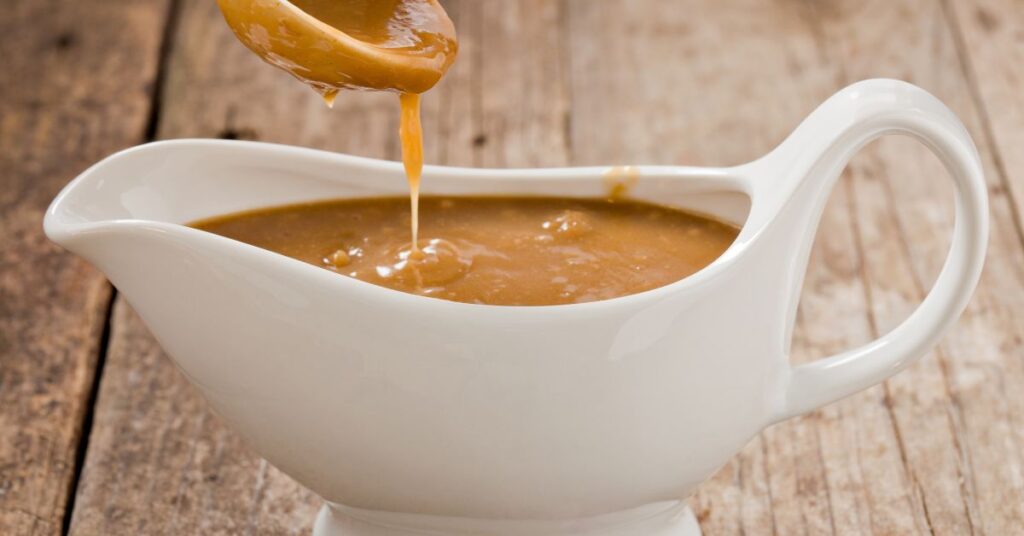
No, gravy left out overnight isn’t safe to eat; discard it, since bacteria can multiply at room temperature and a reheat won’t erase all risk.
You spot the gravy pot the next morning and your brain starts bargaining. “It was covered.” “I’ll boil it.” “It smells fine.” I get it. Gravy feels like a cooked, finished food, so it’s easy to treat it like it’s sturdy.
In a home kitchen, prepared gravy is perishable. Once it sits out for hours, the safe move is to toss it. Below I’ll show a quick decision table, why gravy is touchy, what to do right now, and how to store and reheat gravy safely next time. If you’re on the fence, I’ll keep the decision simple, then show steps for later.
Quick Gravy Safety Check
| What happened | Risk level | What to do |
|---|---|---|
| Gravy sat out all night on the counter or stove | High | Throw it out. Skip taste tests. |
| Gravy sat out more than 2 hours at room temperature | High | Throw it out, even if it looks normal. |
| Gravy sat out 1–2 hours, then went into the fridge | Lower | Keep it cold and reheat fully before eating. |
| Room was hot (90°F / 32°C or above) and gravy sat out 1+ hour | High | Throw it out. Heat speeds growth. |
| Gravy was covered, but left on the counter | High | Covering doesn’t make it safe. Throw it out. |
| Gravy stayed above 140°F / 60°C the whole time | Lower | Eat that day, then chill and refrigerate quickly. |
| Gravy was cooled fast in shallow containers and refrigerated | Lower | Use soon, or freeze for longer storage. |
| You’re not sure how long it sat out | High | When in doubt, toss it. |
Is Gravy Ok To Eat If Left Out Overnight In A Normal Kitchen?
If gravy was left out overnight, it’s not safe to eat. Overnight usually means many hours at room temperature, and that’s enough time for bacteria to grow to unsafe levels.
Smell and taste don’t protect you here. Some foodborne bacteria don’t create strong odors, and a few can leave toxins that heat may not destroy. Gravy can also heat unevenly, so a quick “boil for a minute” can miss cooler spots.
Why Smell, Taste, And A Quick Reheat Don’t Prove Safety
Gravy can slide from “still smells fine” to unsafe without a clear warning. Many bacteria grow quietly, so your nose doesn’t get a reliable signal.
Reheating is for gravy that was chilled on time. It doesn’t rescue gravy that spent hours on the counter. Heat can kill bacteria, but it can’t always remove toxins that some bacteria can leave behind. That’s why the time limit matters.
- A tiny taste is still exposure.
- Warming the surface isn’t the same as heating the whole pot.
- A warm room shortens the safe window.
Why Gravy Becomes A Problem On The Counter
It Passes Through The “Danger Zone” For Too Long
As gravy cools, it can sit for a long stretch between 40°F and 140°F (4°C to 60°C), a range where bacteria can multiply quickly. The USDA advises not leaving perishable foods out beyond 2 hours, or 1 hour when temps are above 90°F / 32°C. USDA guidance on the 40°F–140°F “danger zone”
It’s Thick And Cools Unevenly
Gravy is dense. In a deep pot, the center can stay warm while the edges cool. That warm middle is where bacteria can take off, even if the top feels “fine.”
Common Ingredients Are Perishable
Many gravies use meat drippings, broth, milk, cream, or butter. Those ingredients are great fuel for microbes once they sit at room temperature. Plant-based gravy can still be risky once cooked, since it’s a moist food meant to be held hot or kept cold.
What To Do If You Forgot Gravy Overnight
This is one of those times where the simplest answer is the right one.
- Discard the gravy. Don’t sample it. Put it in the trash.
- Wash the pot and utensils. Use hot, soapy water. Wash the lid too.
- Clean the counter and stove area. If gravy dripped, wipe it up, then clean as you normally would after handling raw meat.
If someone already ate it, watch for dehydration or severe symptoms. If symptoms are serious or don’t ease up, get medical care.
How To Store Leftover Gravy Safely Next Time
The goal is quick cooling, quick refrigeration, and a full reheat when you eat it.
Cool Gravy Fast Without A Mess
Move gravy out of a deep pot and into shallow containers. Smaller portions cool faster. If you made a big batch, split it into two or three tubs.
If you want faster cooling, set the container in a sink of ice water and stir for a minute or two. Don’t put a big, hot pot straight into the fridge; it can warm nearby foods and the gravy can stay in the danger zone longer. Once it cools down, cover and refrigerate.
Reheat Gravy Hot All The Way Through
When reheating, stir often and heat until it reaches at least 165°F / 74°C. For sauces and gravies, the USDA also notes you can reheat by bringing them to a boil. USDA reheating guidance for soups, sauces, and gravies
Avoid Slow Cooker Reheats
Slow cookers heat gently, so gravy can spend too long warming up. Use the stovetop or microwave to reheat quickly, then hold it hot for serving.
Gravy Storage And Reheat Targets
| Step | Target | Notes |
|---|---|---|
| Time left out after serving | Under 2 hours | Pack it up while you’re clearing plates. |
| Hot-room rule | Under 1 hour at 90°F / 32°C+ | Heat shortens the safe window. |
| Cooling | Shallow containers | Split a big pot into smaller portions. |
| Fridge | 40°F / 4°C or colder | A fridge thermometer helps. |
| Fridge time | 1–2 days for best safety and quality | Freeze if you won’t use it soon. |
| Freezer | Portion and label | Leave a little headspace for expansion. |
| Reheat | 165°F / 74°C or boil | Stir to avoid cold spots and scorching. |
| Thaw | In the fridge | Thaw overnight, then reheat fully. |
Does The Type Of Gravy Change The Answer?
What matters is whether the gravy is prepared and perishable.
Homemade, Pan-Dripping, Or Restaurant Gravy
If it was cooked and sat out overnight, discard it. These often include meat drippings and dairy, so the risk is higher when left out.
Dry Mix Gravy
The dry packet can sit in the pantry. Once you cook it with water, milk, or broth, it becomes a perishable food with the same time rules.
Jarred Or Canned Gravy
Unopened jars and cans are shelf-stable. Once opened and heated, treat it like any other leftover gravy: chill fast, refrigerate, then reheat fully.
A Simple Habit That Stops This From Happening Again
Here’s a trick that works. Before you sit down to eat, set two empty containers on the counter. When dinner ends, they’re staring at you, so leftovers get packed before you fade.
If the gravy is still steaming, let it sit for 10 minutes without a lid so steam can escape. Then portion it, cover it, and get it into the fridge. If you forget and find gravy sitting out overnight again, you’ll know the call: toss it.
