
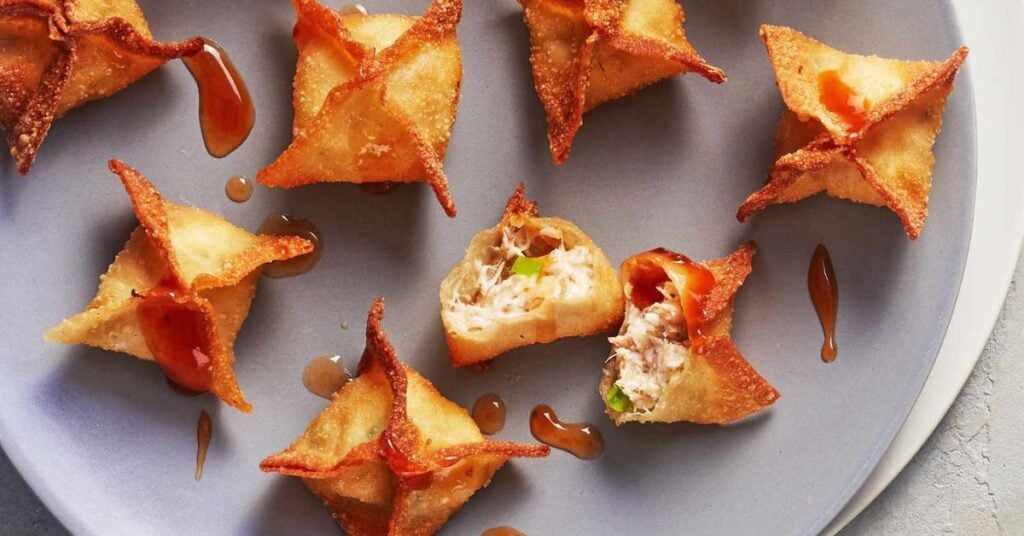
No, crab rangoon left out overnight isn’t ok to eat; toss it unless it stayed under 40°F the whole time.
Crab rangoon feels harmless because it’s small, crispy, and “just a snack.” But the filling is the risky part. Cream cheese, crab (real or imitation), and any chopped veg or sauces count as perishable foods. When that mix sits warm for hours, germs can multiply fast.
If you’re here because a plate of crab rangoon spent the night on the counter, I’ll save you the stress: don’t taste-test it. Overnight at room temperature is well past the time window used in mainstream food-safety guidance. Your stomach shouldn’t be the thermometer.
If it sat out overnight, trash it and move.
Why Crab Rangoon Turns Risky On The Counter
Crab rangoon is a time/temperature controlled food. It has moisture, protein, and a soft filling that warms up quickly. A crisp shell doesn’t protect what’s inside.
The tricky part is that “bad” bacteria don’t always make food smell weird. Some grow without changing taste. Some can leave toxins behind. So the usual rescue plan—“I’ll just heat it up again”—doesn’t fix an overnight mistake.
Bacteria grow fastest in a range often called the danger zone. USDA explains that this range runs from 40°F to 140°F in its danger zone guidance. A normal kitchen counter sits right in that range for most of the day.
Crab Rangoon Left Out Overnight: What To Do
I use this decision table at home. If you don’t have a real time-and-temperature log, treat “overnight” as a toss. It’s not worth gambling on a snack.
On small screens, scroll sideways to read the full table.
| Situation | Time And Temperature | What I’d Do |
|---|---|---|
| Just finished frying | Held hot at 140°F+ | Serve now; keep hot foods hot, not “warm.” |
| End of dinner | Under 2 hours at room temp | Pack into shallow containers and refrigerate. |
| Party tray | 2 to 4 hours at room temp | Toss. This is where risk climbs fast. |
| Hot day, patio, car, heater nearby | Over 90°F for 1 hour+ | Toss. Heat speeds up growth. |
| Turned-off oven “holding” | Warm but under 140°F | Toss. Cozy temps land in the danger zone. |
| In a cooler with ice packs | Stayed under 40°F | Refrigerate and eat within 3–4 days. |
| Fridge door left cracked | Unknown temp for hours | If you can’t confirm it stayed cold, toss. |
| Counter all night | 8+ hours at room temp | Toss, no debate. Don’t sample it. |
CDC gives a simple rule for homes: don’t leave perishable food out more than 2 hours, or 1 hour if it’s over 90°F. Crab rangoon hits every “perishable” checkbox, so that rule fits it well.
Why Reheating Doesn’t Rescue Overnight Crab Rangoon
Reheating can kill many living bacteria. That sounds comforting, but it’s not the whole story.
When food sits out too long, bacteria can multiply to high levels. Some types can also create toxins while they grow. Heat may knock out the bacteria, yet toxins can stick around. That’s why “smell it and reheat it” is a shaky plan for creamy, protein-rich appetizers left out overnight.
When It Might Be Ok: The Only Real Exception
People ask, “What if my house is cold?” or “What if it was only a few hours?” Here’s the clean line: crab rangoon can be ok if you can say it stayed out of the danger zone.
That usually means one of two things:
- It stayed cold: in a fridge, or in a cooler that held under 40°F the whole time.
- It stayed hot: held at 140°F or hotter from cooking through serving.
Most “left out overnight” situations are neither. Room temperature is right in the growth range. If you’re guessing, treat it as unsafe and toss it.
How To Store Crab Rangoon So You Don’t Waste A Batch
Crab rangoon stores better than people think, as long as you cool it fast and keep it cold. The shell softens in the fridge, but you can bring back the crunch with the right reheat method.
Cool It Fast
Don’t pile hot rangoon into a deep bowl. Spread them out in a single layer for a short cool-down, then move them into shallow containers. Shallow storage helps the filling drop in temperature quicker.
Fridge First, Freezer Second
If you’ll eat them within a few days, refrigerate. If you made a big batch, freeze the extras the same day. Freezing keeps quality higher than letting them linger until they’re soggy.
Label The Container
A date on the lid stops the “Is this from Tuesday or last week?” game. USDA’s leftovers and food safety page also advises using refrigerated leftovers within 3 to 4 days.
Best Reheat Methods For Crunch And Food Safety
You want a hot center and a crisp shell. A thermometer helps because crab rangoon is small and can heat unevenly. USDA guidance for leftovers uses 165°F as the target when reheating.
On small screens, scroll sideways to read the full table.
| Method | Target In The Center | Crunch Tips |
|---|---|---|
| Oven | 165°F | Heat on a rack so air hits both sides. |
| Air fryer | 165°F | Don’t crowd; cook in one layer. |
| Skillet | 165°F | Use a small splash of oil; turn often. |
| Microwave | 165°F | Use short bursts, then finish in oven or air fryer. |
Smell And Taste Won’t Prove It’s Ok
I get the temptation: “It smells fine, so it’s fine.” That test fails with a lot of foodborne germs. Many don’t change odor or flavor, and some problems show up after you’ve already swallowed a few bites.
If you already ate a piece from a tray that sat out overnight, don’t panic. Most people recover, but pay attention to how you feel over the next day. If symptoms are intense, you can’t keep fluids down, or you’re in a higher-risk group (older adults, pregnancy, or a weakened immune system), reach out to a medical professional.
A Simple Party Plan So Crab Rangoon Stays Fresh
Crab rangoon is a party magnet. That’s also when it gets abandoned on the counter. This plan keeps it moving without turning your kitchen into a headache.
Serve Smaller Batches
Put out a small plate, keep the rest cold, and refresh the plate as people eat. Less food sits out, and you keep that just-fried bite longer.
Use A Timer, Not Your Memory
If food is out, start a timer on your phone. Two hours goes by fast when you’re chatting and refilling drinks. A timer makes the call clear when it’s time to pack leftovers or toss what’s been sitting.
Don’t Mix Old And New
When a fresh batch comes out, don’t stack it on top of pieces that have already been out. Keep “new” and “out” separate so you can store the right stuff and discard the rest.
The Call That Saves Your Weekend
If your crab rangoon sat out overnight, tossing it feels annoying, but it’s the smartest move. Foodborne illness can hit hard, and the cost of a wasted appetizer is small next to losing a day to cramps.
Toss the overnight tray. Then next time, use the small-batch trick and a timer, and you’ll get the crunch you wanted without the worry.
