
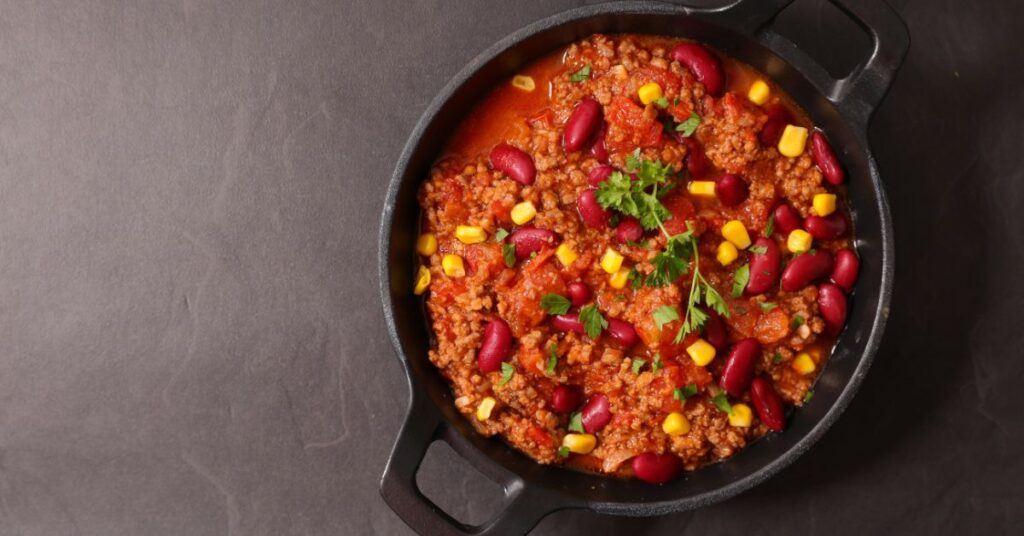
No, chili left out overnight isn’t safe to eat; throw it out, since bacteria can grow fast at room temperature.
You finish dinner, the pot’s still half full, and you tell yourself you’ll pack it up after one more episode. Next thing you know, it’s morning and the chili is still on the counter. The question “Is chili ok to eat if left out overnight?” feels simple, yet the answer isn’t the one people want.
I’ll help you make the call without guesswork: when chili has sat out overnight, treat it as a toss. No tasting. No “maybe it’s fine.” This guide also shows how to cool and store chili the right way next time so you keep the flavor and skip the risk.
Quick Safety Calls For Chili That Sat Out
Use this table like a fast decision card. When you don’t know the exact clock time, assume the longer window.
| Situation | What It Means | What To Do |
|---|---|---|
| Chili sat out overnight (6–12+ hours) | Time in the danger zone is long | Discard it |
| Chili sat out 2–4 hours at room temp | Risk rises fast once it cools | Discard it |
| Chili sat out under 2 hours | You’re still inside the common safety window | Cool fast, then refrigerate |
| Room was hot (above 90°F / 32°C) | Bacteria multiply faster in heat | Use a 1-hour limit, then toss |
| Chili stayed above 140°F / 60°C the whole time | Hot holding can block bacterial growth | Eat soon or cool and refrigerate |
| Chili was in a switched-off slow cooker all night | It cools through the danger zone for hours | Discard it |
| You can’t tell how long it sat out | Unknown time is a risk you can’t measure | Discard it |
| Someone already ate some | Most cases pass, yet watch for red flags | Hydrate and seek care if symptoms turn severe |
Chili Left Out Overnight Rules That Decide The Call
Food safety is mostly time and temperature. Once cooked chili drops into the “danger zone,” germs can multiply fast. The danger zone is 40°F to 140°F (4°C to 60°C). The practical home rule: don’t leave perishable food out longer than 2 hours, or 1 hour when the room is over 90°F. That’s straight from the CDC guidance on leaving perishable food out.
“Overnight” blows past those limits in most kitchens. Even if your home runs cool, room temperature isn’t refrigerator temperature, and chili is built from foods that spoil: meat, beans, onions, peppers, broth, and often dairy toppings.
One more trap: chili that stays “warm” on the counter isn’t the same as chili held hot. A pot with no heat source drifts down through the danger zone. If you’re using a slow cooker, keep it plugged in and check that it stays steaming hot.
Why Chili Is A High-Risk Leftover
Chili is thick. Thick food cools slowly, and slow cooling keeps the middle warm while the surface sits in the danger zone. That combo gives bacteria time to multiply.
Chili also sits in big batches. A deep pot takes longer to drop from hot to cold than a shallow container. USDA food safety pages call out big pots of soup and similar foods as slow-cooling troublemakers, and they give storage and reheating rules on their USDA FSIS leftovers and food safety page.
Why Smell And Taste Can’t Clear Chili
Chili can smell normal and still carry enough germs to make you sick. Your nose catches spoilage odors, not every pathogen that causes food poisoning.
Also, the move that feels “smart” can backfire: tasting a spoonful to “check.” A small taste is still a dose. If you’re on the fence, skip the test and trash it.
Will Boiling Make Overnight Chili Safe?
Reheating can kill many live bacteria, yet it can’t promise a reset after a long night on the counter. Some bacteria can leave toxins behind as they grow, and those toxins may not break down with normal reheating. That’s why food safety agencies push the time-and-temp rules instead of “just boil it.”
If chili was cooled and stored right, reheating is a win. If it was left out overnight, the safest move is still the trash.
What To Do Right Now If You Left Chili Out Overnight
This part is simple, even if it feels wasteful.
- Don’t taste it. Put the lid on so you’re not tempted.
- Throw it out. If your trash is indoors, bag it first to cut odor.
- Wash the container. Hot soapy water works. If you use a sponge, rinse it well and let it dry.
- Wipe the counter. Clean up any drips or splashes.
If Someone Ate It, What Symptoms Matter
Food poisoning can show up as nausea, cramps, vomiting, diarrhea, fever, or dehydration. Many cases pass with rest and fluids. Still, some signs mean it’s time to get medical help. The CDC lists red flags like bloody diarrhea, diarrhea that lasts more than 3 days, fever over 102°F, vomiting that blocks fluids, and signs of dehydration.
Kids, older adults, pregnant people, and anyone with a weakened immune system should take symptoms seriously and contact a clinician sooner.
How To Cool Chili Fast So It Stays Good
Most chili gets “left out” because it’s still hot and you don’t want to steam up the fridge. Fair. The fix is to cool it fast in smaller portions.
Use Shallow Containers, Not One Deep Pot
Split the chili into two to four shallow containers. More surface area means quicker cooling. Leave a little headspace so you can stir without spills.
Speed It Up With A Cold-Water Bath
Set the containers in a sink or big pan with cold water and ice. Stir the chili now and then. The goal is to bring the temperature down fast, then refrigerate.
Don’t Seal It Tight While It’s Hot
Set the lid on ajar while it cools so steam can escape. Once it’s cool, seal it and refrigerate.
Chili Storage And Reheating Targets
The steps are simple. The details are what keep the leftover tasty and low-risk.
| Step | Target | Notes |
|---|---|---|
| Refrigerate after cooking or serving | Within 2 hours (1 hour if above 90°F / 32°C) | Start the clock once the pot is off heat |
| Fridge temperature | 40°F / 4°C or colder | Use a fridge thermometer if yours runs warm |
| How long chili keeps in the fridge | 3–4 days | Store in sealed containers; label the day |
| Freeze for longer storage | Freeze within 3–4 days | Portion first so you thaw only what you’ll eat |
| Reheat | 165°F / 74°C | Stir and check the center; soups and sauces can be brought to a boil |
| After reheating | Return leftovers fast | Don’t leave the reheated pot on the counter for hours |
What I’d Do In Your Spot
If chili sat out overnight, I’d toss it. I wouldn’t try to “save” it by boiling, slow-cooking, or reheating twice. The downside is food poisoning. The upside is one more bowl of chili. That trade isn’t worth it.
Next time, I’d cool it in shallow containers, chill it within the 2-hour window, and reheat only what I plan to eat. You keep the taste, you keep the texture, and you don’t have to play roulette with leftovers.
