
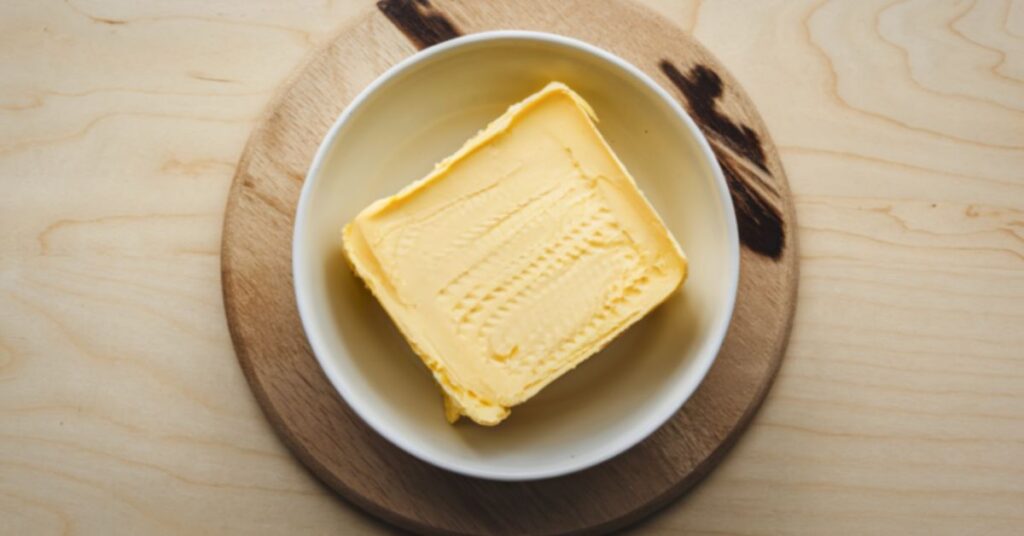
Yes, butter left out overnight is usually safe to eat if it stayed cool, covered, and within its normal shelf life.
I get why this question pops up: you want spreadable butter, you don’t want to waste food, and you also don’t want to gamble with dinner. The good news is that butter behaves differently than milk or yogurt. Most of it is fat, and salted butter has less available water for germs to use.
Still, “left out overnight” can mean eight calm hours in a 68°F kitchen, or eight sticky hours near a warm stove. So the smart move is to judge the conditions, not just the clock.
Quick Butter Safety Checklist
Use this table as a fast screen. It covers both food safety risk and quality risk, since rancid butter can taste awful even when it won’t make you sick.
| Situation | Risk Level | What I’d Do |
|---|---|---|
| Salted stick butter, covered, room about 60–75°F, 8–12 hours | Low | Use it, then put it back in the fridge after breakfast. |
| Unsalted butter, covered, room about 60–75°F, overnight | Low to medium | Smell and taste a tiny bit; refrigerate after, use soon. |
| Whipped or spreadable tub butter, left on the counter overnight | Medium | Refrigerate; if it smells “off” or looks wet, toss it. |
| Butter dish left open to air, crumbs seen in the butter | Medium | Scrape off the top layer; if sour smell shows up, discard. |
| Kitchen over 80°F for hours, butter softened to a puddle | Medium to high | Skip eating it; heat speeds spoilage and invites mess. |
| Outdoor picnic table, sun exposure, unknown temp time | High | Discard; treat it like other perishables left warm. |
| Butter left out overnight but still cold to the touch in a chilly room | Low | Use it; store covered and avoid double-dipping with a used knife. |
| Butter shows fuzzy spots, odd colors, or heavy “cheesy” odor | High | Discard right away. |
What “Overnight” Means For Butter
Food safety rules usually talk about the time a food spends in the warm range where bacteria grow fastest. USDA calls 40–140°F the “Danger Zone” (40°F–140°F). CDC gives a plain home rule: don’t leave perishable food out more than two hours, or one hour when it’s above 90°F, as noted in CDC guidance on leaving perishables out.
Butter sits in a gray area. It’s a dairy product, yet it’s not a wet dairy product. Most bacteria need water to multiply. Butter has little water, and salted butter pushes the odds further in your favor. That’s why many people keep a small amount on the counter day after day.
The flip side is that butter can pick up contamination from hands, knives, crumbs, and raw food splash. Those introduce moisture and microbes right on the surface. Heat then acts like a booster. So the overnight question comes down to temperature and cleanliness, not just the label.
Eating Butter Left Out Overnight In A Warm Kitchen
If your kitchen ran warm, think about what “warm” did to the butter. Butter that turns glossy and slack is still butter, yet that softness tells you the fat warmed up and the water phase warmed too. If the room sat above 80°F for a long stretch, I treat that butter like a perishable that missed the fridge.
That doesn’t mean everyone who eats it will get sick. It means your margin shrinks, and you lose the easy confidence you had in a cooler room. If anyone in your home is pregnant, elderly, young, or immune-compromised, I’d be stricter and keep butter refrigerated unless it’s in active use.
Salted Vs. Unsalted
Salted butter is more forgiving on the counter. Salt slows microbial growth and also makes it harder for odors to hide, so you’ll spot trouble sooner by smell and taste. Unsalted butter has a cleaner flavor and can go “flat” faster at room temp. If you bake a lot and buy unsalted, store most of it cold and leave out only what you’ll finish in a day.
Stick Butter Vs. Tub Butter
Sticks tend to be plain pasteurized butter with few extras. Many tub butters include oils or have a whipped structure that holds more air. That can mean faster flavor changes and a wetter surface. If a tub butter sat out overnight, chill it and check for water separation, sour odor, or a slick, soapy taste.
How To Tell If Butter Is Still Good
You don’t need lab gear. Your senses work well here.
- Smell: Fresh butter smells clean and creamy. Rancid butter can smell like crayons, stale nuts, or old cooking oil.
- Look: Watch for beads of water, dark patches, or fuzzy growth. A dry, slightly darker surface from air exposure is often just oxidation.
- Taste: Touch a tiny amount to your tongue. If it tastes bitter, soapy, or sharp, don’t use it.
When butter is “off,” the common issue is rancidity, not a pathogen boom. Rancidity is a fat breakdown that wrecks flavor. It won’t always make you ill, but it can ruin toast and baked goods.
Better Counter Storage Without Drama
If you like soft butter, set yourself up so “left out” stays controlled. These habits cut risk without turning your kitchen into a rulebook.
- Keep the portion small: Put out only what you’ll use in 24–48 hours. Store the rest cold.
- Use a clean utensil: No used knife back into the dish after it touched jam, bread, or raw flour.
- Cover it: A lidded butter dish blocks dust, pests, and fridge-to-counter odors.
- Pick a cool spot: Keep it away from the stove, toaster, sunny window, and dishwasher vent.
- Label your rhythm: If you keep butter out daily, swap the dish, wash it, and refresh the butter on a schedule.
Storage Choices By Butter Type And Use
This table helps you match storage to how you cook. It’s geared to home kitchens, not restaurant rules.
| Butter Type | Best Storage | Notes |
|---|---|---|
| Salted stick butter for toast | Counter for short stretches | Keep covered; refresh often; chill during heat waves. |
| Unsalted stick butter for baking | Fridge, portion out as needed | Leave out what you’ll use that day for easy creaming. |
| Whipped butter | Fridge | Air and softer texture make flavor drift faster. |
| Spreadable butter blends (butter + oils) | Fridge | Soft straight from cold; counter time adds little benefit. |
| Compound butter with herbs or garlic | Fridge | Add-ins add moisture; keep cold and use within days. |
| Butter in a butter bell | Counter with water changed often | Works well in cool rooms; keep everything clean. |
| Clarified butter or ghee | Pantry | Less milk solids and water; stable when sealed. |
What I’d Do If You’re Unsure
If the butter was covered, the room stayed on the cool side, and the butter still smells normal, I’d eat it and move on. If it sat in heat, sat open, or picked up crumbs and smears, I’d skip it. Butter costs less than a rough night and a ruined meal.
When you want spreadable butter without leaving it out, slice off what you need and let it sit for 10–15 minutes, or grate it into a bowl so it softens fast. That way you get soft butter, and your main stash stays cold and steady.
