
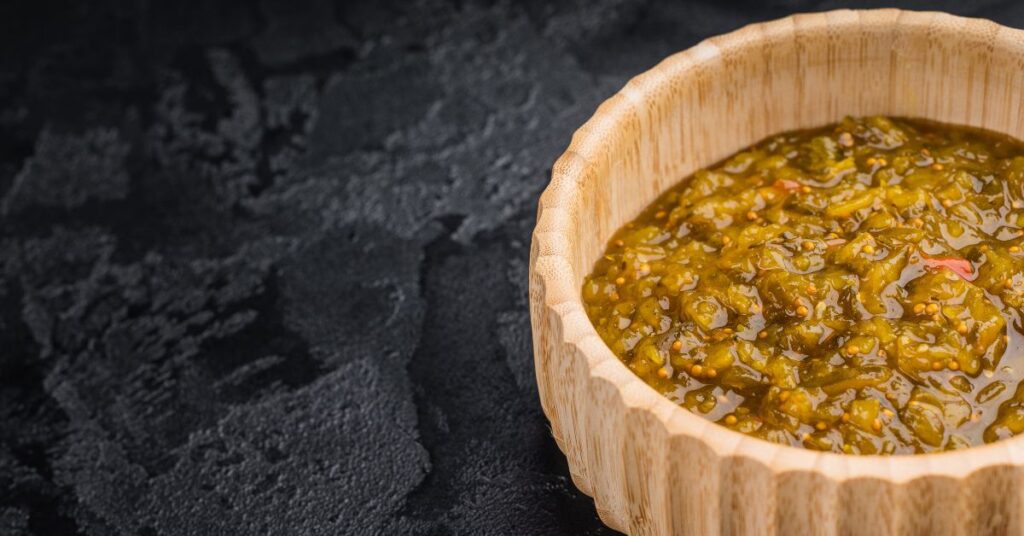
No, pickle relish left out overnight isn’t safe to eat; if an opened jar sat out past 2 hours, toss it.
Pickle relish feels “safe” because it’s tangy, salty, and packed with vinegar. You dip a spoon, make a burger, leave the jar on the counter… then notice it the next morning.
If the jar was opened and sat at room temp overnight, I don’t gamble with it. Relish is cheap. A stomach bug isn’t.
Fast Decision Guide For Relish Left Out Overnight
On smaller screens, swipe or scroll sideways to see the full table.
| What Happened | Risk Snapshot | What I’d Do |
|---|---|---|
| Unopened, factory-sealed jar left on the counter overnight | Low | Wipe the jar, store it as the label says, then open later. |
| Opened jar left out under 1 hour | Low | Put it back in the fridge right away. |
| Opened jar left out 1–2 hours | Low to medium | Refrigerate it, then use sooner, watching for spoilage. |
| Opened jar left out over 2 hours at normal room temp | Medium | Discard it, even if it smells fine. |
| Opened jar left out overnight (8–12 hours) | High | Discard it. No “taste test.” |
| Opened jar left out during a hot day (over 90°F / 32°C) | High | Discard it after 1 hour out. |
| Homemade relish with no tested canning process, left out overnight | High | Discard it and refrigerate future batches right after serving. |
| Relish served from a jar at a party, spooned by many hands, left out | High | Discard any leftovers from that jar. |
What “Left Out Overnight” Means In Food Safety Terms
Food safety isn’t a vibe check. It’s time and temperature. Bacteria grow fastest in the range that food agencies call the “Danger Zone” (40°F to 140°F).
USDA’s 2-hour rule is the simple guardrail: if a food that needs refrigeration sits out longer than 2 hours, it’s time to throw it away. If the room is hot (over 90°F / 32°C), the window shrinks to 1 hour.
Relish is acidic, so it slows some germs. Still, an opened jar picks up microbes from spoons, fingers, food, and air.
Why Pickle Relish Can Still Go Bad On The Counter
Acid Helps, Yet It Doesn’t Make Relish Bulletproof
Most store-bought pickle relish is made with vinegar, salt, and sugar. Those ingredients lower pH and limit growth of some bacteria. That’s why unopened jars can sit on a pantry shelf for months.
After opening, refrigeration slows yeast, mold, and bacteria carried in by a used spoon.
Cross-Contamination Is The Quiet Problem
Relish gets scooped with a utensil that touched mayo, meat juices, or a bun. That adds moisture and nutrients, then the jar sits warm.
Homemade Relish Needs Extra Care
Homemade relish ranges from “properly canned and shelf-stable” to “quick fridge relish.” If you didn’t follow a tested canning recipe and processing time, treat it as a refrigerated food. Leaving it out overnight is a toss in my book.
Does An Unopened Jar Count As Safe After A Night Out?
Often, yes. A factory-sealed jar that stayed sealed is usually fine after one night on the counter, since it was built to be shelf-stable in stores. Still, check two things: the label storage directions and the lid seal.
If the lid was already popped, sticky, or bulging, don’t eat it. If the jar got hot near a stove or in a sunny window, I’d replace it.
If You Ate Some Relish That Sat Out, What Should You Watch For?
A small bite often won’t cause trouble. Still, nausea, cramps, vomiting, or diarrhea can show up within hours or a day or two.
If symptoms are intense, or fluids won’t stay down, contact a clinician. Watch hydration closely.
How To Store Pickle Relish So This Never Happens Again
Use A Clean Spoon Each Time
This single habit lowers the “mystery germs” problem. No double-dipping. No knife that touched raw meat. If the spoon touched food, swap it out.
Keep The Rim Clean And The Lid Tight
After scooping, wipe the jar rim so bits of relish don’t dry there. Those bits can trap air, stop a tight seal, and drip back in later. Close the lid, then put the jar in the colder part of the fridge, not the door.
If your fridge runs warm, set it to 40°F / 4°C or below. A fridge thermometer removes guesswork. Write the open date on the lid with a marker so you know later.
Portion Relish For Serving
For cookouts, spoon some relish into a small bowl, then keep the main jar cold. When the bowl warms up, replace it with a fresh portion.
Signs Your Relish Has Turned
Smell and taste can miss trouble, so I treat “looks fine” as weak proof. Still, spoilage signs can help you spot a jar that’s past its prime.
- Mold: fuzzy spots, film, or specks near the surface or under the lid.
- Yeast activity: bubbling, hissing, or a lid that pops with pressure.
- Texture shift: slimy bits, soft mush, or a watery layer that won’t mix back in.
- Color drift: dulling, dark patches, or odd streaks that weren’t there before.
- Off odor: sharp in a rotten way, not the normal vinegar punch.
If any of those show up, toss the jar, wash the shelf, and start fresh.
Storage Targets And Shelf-Life Habits That Work
Relish safety is mostly about time out of the fridge. Quality is the slow fade: flavor gets flat, crunch softens, and the bright tang dulls. These targets keep both in a good place.
On smaller screens, swipe or scroll sideways to see the full table.
| Relish Situation | Best Habit | Notes |
|---|---|---|
| Opened store-bought relish | Refrigerate after each use | Follow the jar label; cold storage keeps flavor and slows spoilage. |
| Relish on a table during meals | Set a 30–60 minute timer | Put it back between rounds of burgers and hot dogs. |
| Outdoor serving in warm weather | Use a cooler or an ice bowl | Swap small bowls instead of letting one sit out for hours. |
| Homemade fridge relish | Chill fast after making | Store in a clean jar; label the date so you don’t guess later. |
| Homemade canned relish | Store sealed jars in a cool pantry | Once opened, treat it like store-bought relish and refrigerate. |
| Jar that was left out overnight | Discard and replace | If it was opened, the safe call is to toss it, even if it smells normal. |
A Simple Checklist Before You Trust A Jar
When you’re standing in the kitchen wondering what to do, run this quick list:
- Was the jar opened? If yes and it sat out overnight, discard it.
- Was the room hot (summer kitchen, sunny window, near a stove)? Treat it like a shorter time window.
- Did more than one person use the jar, or was it used at a gathering? Toss leftovers sooner.
- Do you see mold, bubbles, slime, or a bad smell? Discard it right away.
- If you’re still unsure, skip the risk and open a new jar.
Pickle relish is one of those foods that feels harmless until it isn’t. If it spent the night on the counter after being opened, the safest move is simple: throw it out and start clean.
