
Wood-fired cooking is not a “set it and forget it” hobby. It’s a rhythm: fuel, airflow, thermal mass, timing, and that one tiny vent adjustment that turns smoke into clean heat. When it’s dialed in, it feels almost unfair—crispy crusts, deep roasty flavors, and the kind of cozy winter-camp meals that make people wander over and ask, “What are you cooking?”
If you’re shopping for a wood fired stove oven, you’re really shopping for two things at once: a heater you can trust and a cooking chamber you can control. Most guides get lazy here and talk only about “temperature” like it’s a single number. But anyone who’s actually cooked on live fire knows the truth: you can have a high thermometer reading and still burn the bottom while the top stays pale. Or you can have a modest reading and still bake beautifully because the stone is heat-soaked and your draft is clean.
This guide is built around real friction points—what owners praise after dozens of cooks, what makes a door suddenly hard to close once metal heats up, how a thin stone changes the whole session, why a wide chimney can feel like a cheat code for draft, and the small “workflow” features that matter when your hands are cold and you’re trying to cook fast.
Below, you’ll find 7 standout picks across two real-world categories: hot tent stove + oven combos for off-grid baking and winter warmth, and portable pizza ovens for backyard, tailgate, and campsite pizza nights. The goal is simple: by the end, you’ll know exactly which model fits your style—and how to use it like someone who’s been doing this for years.
How to Choose the Right Wood Fired Stove Oven
A “good” wood-fired setup isn’t the one with the longest feature list—it’s the one that gives you repeatable results. Repeatable heat. Repeatable browning. Repeatable meals. That repeatability comes from design choices you can actually feel while cooking: how air enters the firebox, how heat moves into the oven chamber, how stable the base is, and whether the whole thing stays pleasant to use once it’s ripping hot. Here’s the decision framework I use when I’m helping people pick a setup they’ll still love after the novelty phase.
1. Start with your mission: heat-and-bake or pizza-and-party?
Most shoppers are really deciding between two “jobs.” Identify your main job first, because it narrows your best options instantly.
- Heat-and-bake (hot tent / off-grid cooking): You want real heating output and the ability to bake, roast, or warm food inside a dedicated oven chamber. These are your winter-camp heroes.
- Pizza-and-party (backyard / tailgate / campsite): You want fast preheat, quick cooks, and a stone that can crank out pizzas in sequence. These are built for throughput, not “heat the whole shelter.”
- Hybrid flexibility: If your schedule flips between camp trips and backyard nights, multi-fuel pizza ovens (gas + pellets/wood) are often the easiest way to get consistency without losing the wood-fire vibe.
2. Understand the three heat zones (this is where most buyers get tricked)
Wood-fired cooking isn’t a single temperature—it’s three zones that fight each other if the design is off:
- Flame zone (firebox): Determines draft quality and how cleanly you burn. Smoldery fire = smoky food and unstable temps.
- Floor zone (stone or base plate): Determines bottom browning. Too much floor heat = burnt bottoms fast.
- Dome/roof zone (upper chamber): Determines top browning and melt. If top heat lags, you’ll burn the bottom while waiting for cheese to finish.
A great oven makes it easy to balance these zones. A frustrating oven forces you to “babysit” the balance constantly. In real owner feedback, the same fixes come up repeatedly: adding a second stone for more thermal buffering, learning when to cook after smoke clears, and using airflow controls (door vents, chimney dampers) like a steering wheel instead of a decoration.
3. Draft is everything: choose the setup that burns clean in your conditions
Draft is how your oven breathes. It’s the difference between “bright, clean flame” and “sooty, smoky struggle.” When people complain about soot, it’s usually because they’re cooking while the fire is still smoky, or the oven is starved for oxygen. Draft is influenced by:
- Chimney diameter and height: Wider, taller chimneys tend to pull better and clear smoke faster—especially useful in tents and cold weather.
- Air intake design: Multiple air inlets can make the burn more efficient and reduce “lazy smoke.”
- Wind and ambient temperature: Wind steals heat and can mess with draft. Cold air can improve draft once the chimney is hot, but the warm-up phase can be slower.
If you camp in windy, cold locations, prioritize designs that owners describe as “easy to get drawing” and “stable once lit.” If you mostly cook in a calm backyard, draft still matters—but you can get away with more.
4. The “oven” matters more than you think—especially for baking
Not all “ovens” behave the same. Here’s what to look for depending on what you’ll actually cook:
- Drawer-style ovens: Great for cookies, bread, and roast-style cooking because you can slide trays in/out without dumping all heat. They also feel safer when you’re wearing gloves.
- Top-chamber ovens: Can bake well, but often run hotter near the roof and cooler near the floor—rotation becomes part of your routine.
- Pizza-style stone ovens: Incredible for pizza, flatbread, and fast searing. Baking “loaf bread” is possible, but it’s a different technique and usually smaller-format.
If your dream is “fresh cookies in the snow,” choose a real stove-oven combo. If your dream is “60–90 second pizzas for friends,” choose a pizza-focused unit. If you want both, you can still do both—but you’ll be happier if you pick the one that matches your main dream.
5. Tools and workflow: the hidden quality difference
Two products can look similar online and feel totally different in real life. The difference is workflow:
- Ash management: Pull-out ash drawers and sensible trays make you cook more often because cleanup stops being a chore.
- Door behavior when hot: Thin metal doors can warp slightly under heat. That can make closing and sealing feel harder mid-session.
- Hinge and opening angle: If the door doesn’t open wide enough, loading pizzas or trays feels cramped—especially with gloves on.
- Thermometer reality: Built-in thermometers are useful for trends, but stone temperature is what controls crust. If you want precision, you’ll eventually use an infrared thermometer.
When you see owners talking about adding lock washers, doubling stones, or adjusting how they feed wood “gently” instead of tossing it—that’s workflow. That’s what turns “cool gadget” into “we use this every week.”
6. Fuel choice: wood, pellets, propane—pick what matches your patience
Fuel choice isn’t about taste alone. It’s about how you like to cook:
- Wood logs: Romantic, powerful, and rewarding. Also the most variable. Great if you enjoy tending a fire and don’t mind a learning curve.
- Pellets: Convenient and compact. Great heat, but they burn quickly and hate moisture. They reward good storage and steady feeding.
- Propane: The consistency king. Easiest way to learn heat management because you can dial flame up/down quickly. Many owners use propane for most cooks and add wood/pellets when they want the full ritual.
Quick Comparison: 7 Wood Fired Stove Oven Picks
Use this table to spot your best matches fast, then jump to the full reviews for the “real life” details— like which ovens owners say need a second stone, which stoves feel easiest to keep burning clean, and what matters once the metal is hot and your gloves are on.
On smaller screens, swipe or scroll sideways to see the full table.
| Model | Oven style | Fuel options | Real-world strength | Amazon |
|---|---|---|---|---|
| YRenZ Tent Stove with Oven | Stove + oven | Wood | Compact “two-in-one” for off-grid cooking with useful heat control | Amazon |
| CAMPJOURNEY Hot Tent Stove with Drawer Oven | Stove + oven | Wood / pellets | Big firebox + wide chimney feel “serious” for winter camps and baking | Amazon |
| Gozney Roccbox | Pizza oven | Gas + optional wood | Restaurant-style repeatability: fast heat, stable performance, clean workflow | Amazon |
| BIG HORN OUTDOORS Multi-Fuel (Pellet + Gas) | Pizza oven | Pellets + propane | Switch fuels without tools—easy path to consistency without losing wood-fire fun | Amazon |
| EDOSTORY 12" Multi-Fuel Bundle | Pizza oven | Gas + wood | Accessory-loaded kit for fast starts (great if you want “everything in one box”) | Amazon |
| Polar Aurora 15" Wood-Fired Oven | Pizza oven | Wood | Bigger cooking area for crowd nights—best when you learn its heat balance | Amazon |
| BIG HORN OUTDOORS 3-in-1 Pellet Oven | Pizza oven | Pellets (gas/electric add-ons) | Light, portable starter that rewards good pellet habits and steady technique | Amazon |
In‑Depth Reviews: 7 Wood‑Fire Options People Actually Love Using
Now we’ll go model by model. I’m going to talk like someone who’s cooked in the real world: what’s easy, what gets fiddly when it’s hot, what owners learn after the first few “practice pizzas,” and how to predict whether a product fits your style before you commit.
1. YRenZ Tent Stove with Oven – The Compact Two‑in‑One That Feels Built for Real Use
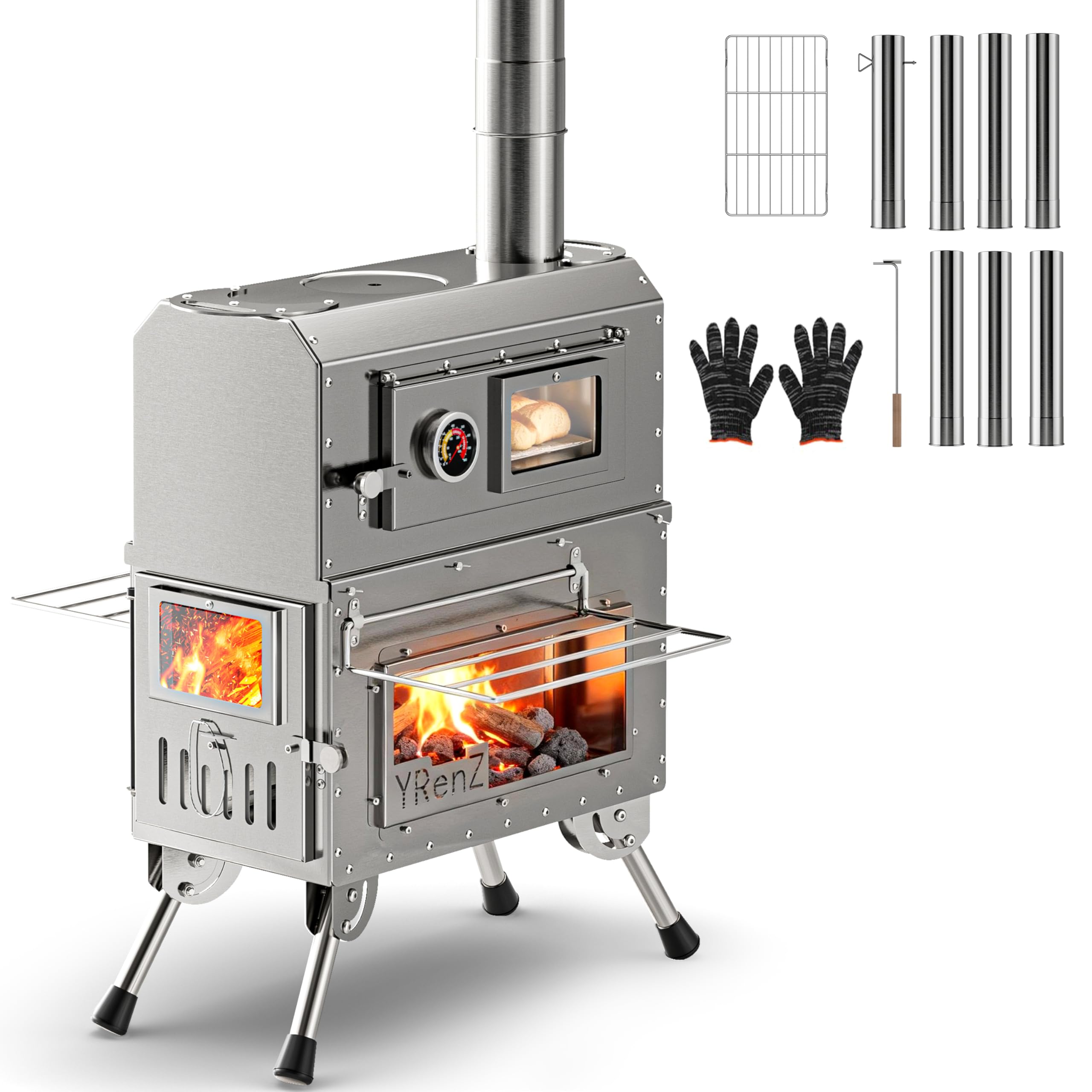
If you want a stove that can genuinely heat a small space and give you an oven chamber for baking, the YRenZ hits a sweet spot: it’s compact, thoughtfully designed, and it doesn’t feel like a flimsy “novelty box.” Owners describe being surprised by how sturdy it feels, and that matters because thin metal stoves can become annoying once they heat-cycle a few times.
The feature I like most here is the “control story.” You get multiple secondary air inlets designed to help combustion stay efficient, plus a temperature gauge that helps you understand trends. Is it perfect precision? No—no built-in gauge is. But it gives you a repeatable reference point, which is how you actually learn wood-fire cooking. You’re not guessing; you’re tracking.
A smart detail owners mention: the top cooking surface can be used as a true stove top, and on some sessions you can treat the oven section as a bonus, not the whole purpose. That flexibility is huge for off-grid cooking because your menu changes based on conditions. Some nights you’re simmering soup and drying gloves. Other nights you’re baking something that makes the whole campsite smell like a bakery.
Real-life friction points show up too—and they’re exactly the kind of things a good buyer guide should say out loud. One owner loves the design but notes the legs don’t “lock out,” meaning if you bump or move the unit, you’ll want to re-check stability. That’s not a dealbreaker; it’s a workflow note. The fix is simple: set it on a stable, level fire mat, avoid dragging it while hot, and treat leg position like part of your setup checklist.
How this stove-oven bakes best (the “easy win” method)
If you want baking results that feel unfairly good, don’t rely on the oven chamber alone—add thermal buffering. Place a small pizza stone, a thin steel plate, or a cast-iron griddle inside the oven chamber to act as a heat stabilizer. That “extra mass” reduces temperature swings when you add wood, and it helps prevent the classic wood-stove problem: hot roof + cool floor.
- Preheat longer than you think: For baking, you want the oven walls heat-soaked, not just “air hot.”
- Rotate once mid-bake: Wood-fired ovens often run hotter near the flue side.
- Use the damper like a thermostat: Small changes matter—don’t swing it wildly.
Why you’ll like it
- True dual-use design – Feels genuinely practical for cooking and heating, not just one or the other.
- Combustion control features – Secondary air inlets help you chase clean burns and stable heat.
- Fast setup – Owners regularly mention it goes together quickly and feels intuitive.
- Compact footprint – Great if you want real function without hauling a massive unit.
Good to know
- Leg stability is something to respect—set it up deliberately and avoid shifting it mid-session.
- Gloves included with many kits are often “starter gloves”; serious cooks usually upgrade their heat gloves.
- For tent use, many campers prefer adding an insulated pipe section near the stove jack for comfort and clearance management.
Ideal for: campers and off-grid cooks who want a compact stove-and-oven combo that feels sturdy, controllable, and practical for real winter cooking.
2. CAMPJOURNEY Hot Tent Stove with Oven – Built for Long Burns, Bigger Meals, and Winter Comfort
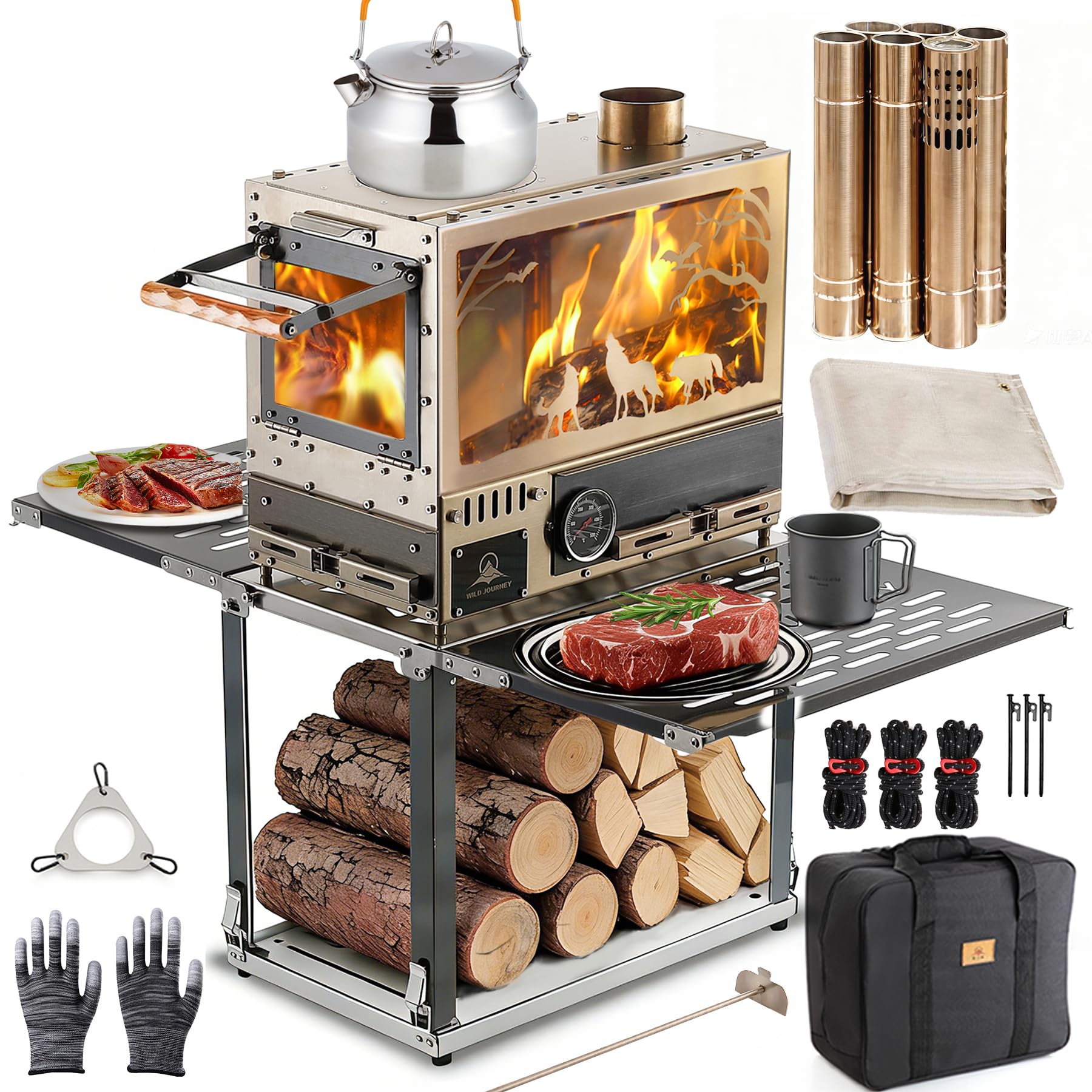
This is the “serious stove” choice in the lineup—the kind of unit people buy when they’re not just doing a cute fall camp weekend, but planning for cold-weather trips where the stove becomes the center of the whole shelter ecosystem. Owners talk about thick stainless construction, rolled edges (so you’re not slicing fingers during setup), and a smoke-tight feel once assembled. That’s exactly what you want in a hot tent: warmth you can trust and a burn you can control.
Where this model separates itself is the combination of a large firebox plus a wide chimney. In real use, that “bigger draft lane” can make it easier to get a clean pull—especially helpful during the smoky startup phase. Once you have a clean flame, the stove becomes calmer: less smoke, more stable heat, and an oven chamber that’s easier to use for baking because you’re feeding it consistent energy instead of fighting a smolder.
The drawer-style oven is not just a gimmick. It changes how you cook. Instead of hovering a pot over direct flame all night, you can bake or warm food with less babysitting. One owner mentioned making fresh cookies in the oven—those kinds of wins are why people buy stove-oven combos in the first place.
There’s also real-world honesty in the reviews: heavy shipments can arrive with cosmetic issues, and one buyer reported broken glass on arrival. The important part is what happened next: customer service shipped a replacement quickly. That’s worth paying attention to because with heavier gear, shipping happens—your goal is to buy from brands that respond well when it does.
The “long-burn” reality (what to expect, what to do)
A big firebox doesn’t automatically mean “set it and sleep.” It means you can run a steadier, less frantic cycle. To get the most out of that advantage:
- Run a clean burn before you cook: Let initial smoke clear so your oven chamber stays cleaner.
- Stage fuel instead of tossing it: Adding wood gently reduces ash blow-up that can drift toward the oven area.
- Use the ash drawer proactively: A buildup of ash can choke airflow; clean airflow = clean flavor.
Why it stands out
- Big, confidence-building build – Owners describe it as sturdy, thick, and “worth it” once set up.
- Wide chimney draft advantage – Helps clear smoke and supports efficient combustion.
- Oven + cooktop flexibility – Bake in the drawer oven while still using the top for boiling or searing.
- Cleanup-friendly design – Ash drawer and tool storage reduce post-cook annoyance.
Good to know
- It’s a heavier, more serious piece of gear—plan your transport and setup routine.
- Shipping can be rough on heavy metal products; inspect on arrival and keep packaging until you’re satisfied.
- If you camp in tents, factor in stove-jack clearance and pipe management; “bigger” needs thoughtful spacing.
Ideal for: winter campers and hot-tent cooks who want a powerful stove-oven with a big firebox, strong draft potential, and real baking capability.
3. Gozney Roccbox – The “Restaurant Results” Oven That Teaches You Fast

The Roccbox has a reputation for one reason: it makes great pizza feel repeatable. A lot of portable ovens can get hot. Fewer ovens stay stable enough to cook pizza after pizza without feeling like you’re wrestling the flame. Owners who compare it against other popular brands often land on the same conclusion: propane makes temperature control easier, and once you learn the timing, results come fast.
Here’s the thing most listings won’t tell you: the Roccbox doesn’t just cook fast—it exposes your technique. At these temperatures, dough thickness, hydration, topping load, and launch technique become the difference between “perfect” and “pizza tragedy.” That’s not a flaw; it’s a feature. It teaches you quickly because the feedback loop is immediate. One owner described learning that thick dough needs a cooler stone and a longer cook, while thin dough can be done in around a minute. That’s exactly how real pizza ovens work.
Build quality is also a real-world advantage. Owners call it heavy-duty, with materials that feel professional. One practical detail people love: the exterior design reduces “accidental burn panic” compared to exposed-metal ovens. That doesn’t mean it’s cool to the touch—but it changes how comfortable you feel cooking around it.
And the customer service reputation matters. One buyer reported a burner issue, contacted support, and received a replacement burner that solved it. When you’re buying a premium oven, responsiveness is part of the value—because you’re not buying a disposable toy.
The “no-stress Roccbox session” workflow
- Preheat until the stone is ready, not just the air: Stone heat is crust. Air heat is vibes.
- Start with simpler pizzas: Light sauce, fewer toppings, and a thinner center help you learn turning rhythm.
- Turn early, then finish calmly: The first turn prevents the “one-side incineration” moment.
- Self-clean at the end: Run it hot briefly after cooking to burn off bits, then brush out once cool.
Why it earns loyalty
- Repeatable high performance – Consistency is the real luxury when you cook for people.
- Gas control is beginner-friendly – Easier to learn heat management compared to pure wood-only ovens.
- Built to travel – Many owners buy it specifically for portability: tailgates, trips, parties.
- Teaches real pizza technique – Fast feedback makes you better quickly.
Good to know
- High heat has a learning curve—your first session should be practice, not a big party.
- You’ll eventually want a turning peel and an infrared thermometer if you chase perfect repeatability.
- Expect some soot on the front area over time, especially with frequent high-heat cooks—normal for real fire cooking.
Ideal for: anyone who wants restaurant-style pizza at home with a repeatable workflow and a build quality that feels like a long-term tool.
4. BIG HORN OUTDOORS Multi‑Fuel (Pellet + Gas) – Flexibility Without the “Fussy” Feel
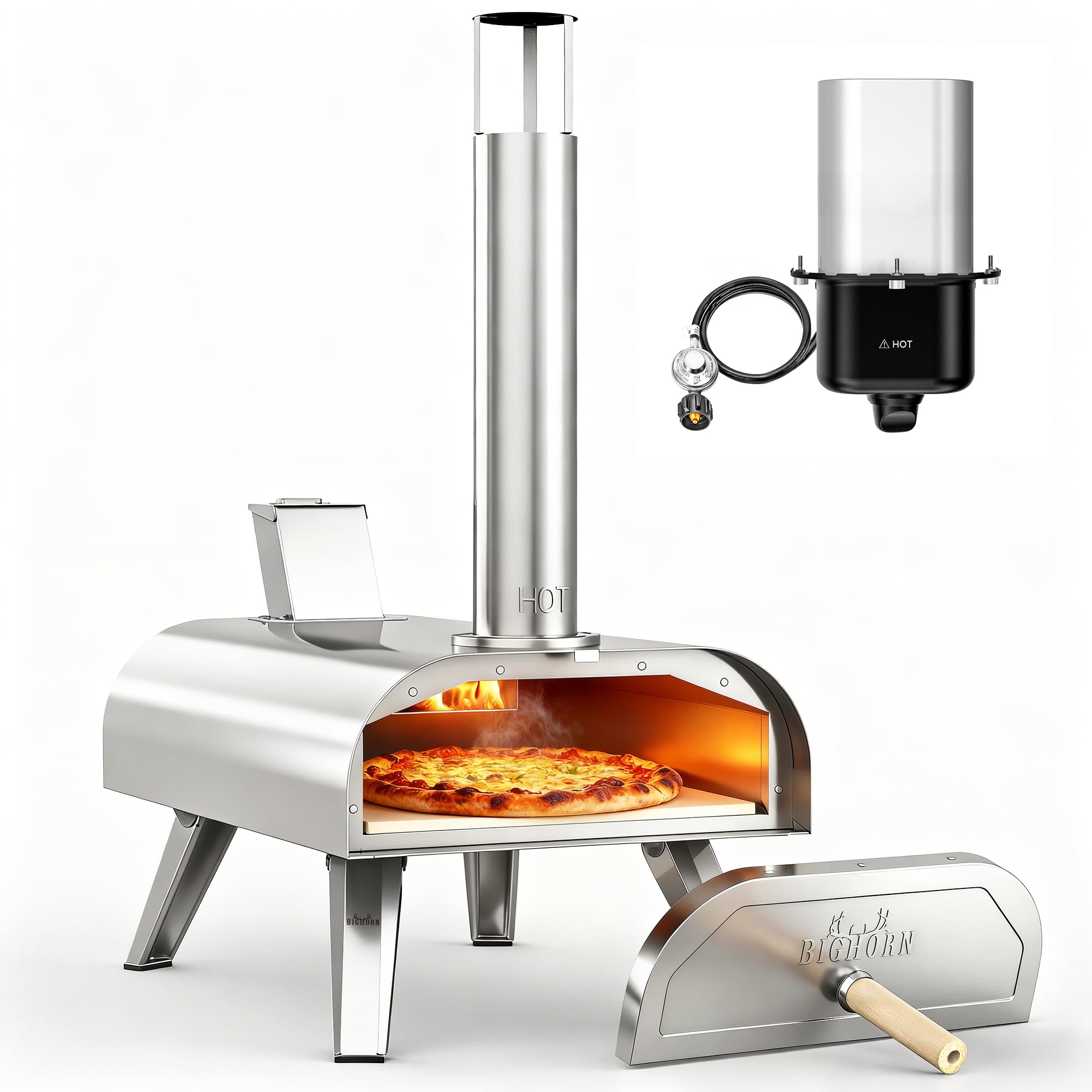
This oven is for a very specific kind of buyer: someone who loves the idea of wood-fire cooking, but also wants the “easy mode” switch when they’re cooking for friends or learning technique. Multi-fuel isn’t just a spec—it’s a stress reducer. Gas gives you control. Pellets give you ritual and flavor vibe. And the ability to switch without tools is a big deal because it means you’ll actually use both.
In the real world, pellet ovens reward steady habits. Pellets burn fast. They like consistent feeding. They hate moisture. Gas, on the other hand, is the most forgiving teacher: you can lower flame to let toppings finish, or raise it to recover stone heat faster. That’s why many owners end up with a “hybrid routine”: they use gas to preheat and stabilize, then run pellets when they want the full wood-fire feel.
Design details matter too. A better pellet hopper design doesn’t just look nice—it changes your session because refueling becomes smoother and less messy. Owners who love pellet ovens often mention the same three “make it easy” moves: keep pellets dry, feed little and often, and always give the oven time to recover between pizzas.
The multi-fuel strategy that makes this oven shine
- Start on gas to learn: You’ll master turning, launching, and timing faster with stable heat.
- Switch to pellets when you’re comfortable: Use pellets for the “event cooking” experience—smell, crackle, vibe.
- Choose your session goal: Speed and volume? Gas. Ritual and flavor romance? Pellets. A bit of both? Hybrid.
Why it’s a smart buy
- Fuel flexibility – Gas for consistency, pellets for wood-fire personality.
- Beginner-friendly pathway – Easier learning curve than pellet-only ovens for many cooks.
- Portable build – Foldable legs and manageable size make it realistic for trips and tailgates.
- More than pizza – Great for quick sears and roasted vegetables once you learn the heat zones.
Good to know
- Pellet sessions still require attention—this isn’t “walk away” cooking.
- Stone temperature control is still the real skill; a built-in gauge won’t tell you the full story.
- If you only want wood-only romance, a dedicated wood oven can feel simpler—but less consistent for parties.
Ideal for: cooks who want a flexible, travel-ready oven that can be easy on weeknights and wood-fired on weekends.
5. EDOSTORY 12" Multi‑Fuel Pizza Oven – The Kit That Gets You Cooking Fast (With a Real Learning Curve)

EDOSTORY’s biggest advantage is simple: it feels like a complete “pizza night starter kit.” Stone, peel, brush, gloves, cutter, cover—owners regularly mention the satisfaction of opening one box and having most of what they need to start. That’s not a small thing, because a lot of people buy a pizza oven and then realize they still need three extra tools before it’s actually enjoyable.
Performance-wise, owner feedback is consistent with the realities of compact pizza ovens: it heats fast and cooks quickly, but you have to learn the balance between floor heat and top heat. Several users mention a common beginner issue—burnt bottoms—especially once the stone gets fully heat-soaked. The most reliable fix, echoed across the broader pizza-oven world, is adding more thermal buffering: a second stone, a thicker stone, or a heat-diffusing layer. This doesn’t “make it weaker.” It makes it more controllable.
Another honest point: assembly can be a little fiddly because sheet metal products at this size aren’t always perfectly aligned. Owners tend to forgive it because the cooking results are strong once it’s dialed in. And if you plan to use propane often, expect some soot in the roof/chimney area over time—normal for high heat and real combustion. The key is maintenance: brush, wipe, and treat soot as “patina,” not a crisis.
The EDOSTORY approach that avoids burnt bottoms
- Heat slowly the first time: Gradual preheat helps stones last longer and reduces the odds of cracking.
- Wait for clean heat: If you’re using wood, cook when smoke is cleared and flame is clean, not when it’s billowing.
- Use the included metal peel wisely: Many cooks find metal peels better for turning and retrieving than launching. A wooden peel often launches cleaner.
- Cook in “waves”: Pizza, then a short recovery period, then the next pizza. Your stone needs time to reset.
Why people buy it
- Everything-in-one bundle – Great for first-time buyers who want a clean start.
- Fast, fun cooking – Once hot, it turns pizza night into a real event.
- Multi-fuel flexibility – Gas for control, wood for vibe and aroma.
- Good “value feel” – Owners often describe it as more capable than expected for the category.
Good to know
- Stone thickness is a key factor—many owners prefer adding a second stone for better heat management.
- Assembly tolerances can be imperfect; take your time and don’t overtighten early.
- Cooking for a large group requires a plan—small pizza ovens are fast, but they’re still one-pie-at-a-time machines.
Ideal for: first-time pizza-oven buyers who want a complete bundle, fast results, and don’t mind learning the heat balance to get truly great pies.
6. Polar Aurora 15" Wood‑Fired Pizza Oven – Big-Pie Energy on a Compact Budget (With a Few DIY-Smart Tweaks)

If your priority is simply “make bigger pizzas,” the 15-inch format changes the whole vibe. This Polar Aurora oven is a crowd-night machine: it can feed more people with fewer rounds, and it’s big enough to feel like a real outdoor oven, not a tiny novelty. Owners love how quickly it heats and how fast pizzas cook once you learn the timing. One reviewer basically said, “It gets hot faster than you think”—and that’s the truth with compact wood-fired ovens.
This model also shows something important about this entire category: the best experience often comes from a couple of smart, low-effort tweaks. Multiple owners recommend doubling up the pizza stone or adding a slab beneath it to reduce bottom scorching. That’s not “fixing a broken oven.” That’s tuning thermal mass—exactly what pros do even in expensive ovens.
Real-world critiques are worth listening to here. Some owners mention door behavior when hot (thin metal can become harder to close), and some mention hinge geometry—doors that don’t open wide can make loading feel tight. None of those are dealbreakers if you cook with intention: use plenty of flour on your peel, keep launches smooth, and set your oven height/position so you’re not fighting the chimney in your face. One reviewer even noted the chimney can be right in the cook’s face because the oven is low—so the simple fix is positioning and stance: set it on a stable table/cart, or angle the oven so the chimney isn’t in your “breathing lane.”
And here’s a pro move from experienced users: do an initial burn before cooking food. Coatings and manufacturing residues can smell during first use. A burn-off session also teaches you how the oven drafts in your yard and how wind affects it—before you’re trying to serve people.
The “big pie, clean cook” checklist
- Double-stone for control: A second stone slows down bottom browning so the top can catch up.
- Use mild smoke wood: Strong woods can overpower a quick cook; subtle woods often taste better in fast ovens.
- Cook after smoke clears: If you cook during heavy smoke, you invite soot on toppings.
- Turn more than you think: Bigger pizzas catch uneven flame zones—turning is your friend.
Why it’s fun
- 15-inch capacity – Fewer rounds, more food, better party flow.
- Heats quickly – Great for spontaneous pizza nights once you know the routine.
- Portable footprint – Foldable legs help with storage and transport.
- DIY-friendly platform – Responds well to simple thermal-mass upgrades (extra stone, diffuser layer).
Good to know
- Door and hinge behavior can feel tighter once hot—smooth launching technique matters.
- The included stone is often described as thinner; a second stone can dramatically improve control.
- Wood-fired cooking is sensitive to wind; a simple windbreak makes a noticeable difference.
Ideal for: backyard cooks who want bigger pizzas and fast heat, and who don’t mind adding a simple second-stone upgrade for smoother results.
7. BIG HORN OUTDOORS 3‑in‑1 Pellet Oven – The Portable Starter That Rewards Good Habits

This is one of the most popular “starter” pellet ovens because it hits the classic portable pizza-oven promise: small footprint, fast pizzas, and that real wood-fired aroma—without requiring a permanent backyard installation. Owners often describe it as straightforward to set up, fun to use, and genuinely capable once you learn the pellet rhythm.
But pellet ovens have a personality, and you should respect it. The heat is excellent, but pellets burn quickly. That means temperature control is less like turning a dial and more like managing a small, efficient fire. This is why you see a consistent theme in owner feedback across the pellet-oven world: there’s a learning curve. Once you cross it, it’s incredibly rewarding. Before you cross it, it can feel like you’re chasing heat.
The most important “secret” with pellet ovens is boring—and that’s why it matters: pellet storage. If pellets absorb moisture, burn quality drops. The fire becomes weaker and smokier, and your session becomes frustrating. People who love their pellet ovens tend to have one habit in common: they store pellets sealed and dry, and they only bring what they need for the session.
A second common theme: door and stone behavior. Some users wish for a thicker stone or a smoother door workflow. Those complaints are often solved the same way they are in other compact ovens: a bit more thermal buffering, good turning technique, and a calm “recover between pizzas” rhythm. Think of it like a small sports car—you don’t drive it like a truck.
The pellet routine that makes this oven feel “easy”
- Keep pellets dry and sealed: Your best pizza starts in your storage bin, not your oven.
- Preheat fully: Pellet ovens reward patience—let the stone soak.
- Cook in small batches: Two pizzas, short recovery, then two more. This keeps results consistent.
- Turn early: Pellet flame patterns can be directional; turning prevents “one-side scorch.”
Why it’s a great starter
- Portable and packable – Easy to bring camping, tailgating, or to a friend’s backyard.
- Real wood-fired experience – Pellets deliver that classic aroma and fast heat.
- Simple build concept – Many owners find it straightforward once they learn the routine.
- Upgradeable path – Optional burner add-ons can expand flexibility for certain setups.
Good to know
- Pellets burn fast; you’ll manage fuel more actively than with gas.
- Moisture is the enemy—storage discipline is part of owning a pellet oven.
- If you want “dial-a-temp” simplicity, multi-fuel ovens (or gas-first ovens) can feel easier for large groups.
Ideal for: buyers who want an approachable pellet-fired pizza oven that travels well and delivers great results once you build consistent habits.
How Wood‑Fire Ovens Actually Work (and Why Draft + Thermal Mass Matter)
Most frustration with wood-fired cooking comes from one misunderstanding: people chase a single number on a thermometer instead of managing the two forces that actually control results—draft and thermal mass. When you understand these two, you can make almost any decent oven cook beautifully.
Draft: clean burn, less soot, steadier heat
- Clean fire = clean flavor – If the fire is smoky, you’re basically seasoning your food with soot. Wait for the smoke to clear.
- Airflow controls are not optional – Door vents and dampers aren’t “accessories.” They’re your heat steering wheel.
- Chimney heat drives chimney pull – Draft improves as the chimney heats; the startup phase is always the smokiest phase.
- Wind changes everything – Wind can steal heat and disrupt combustion. A simple windbreak can make your oven feel twice as stable.
If you remember one draft lesson, remember this: cook on flame, not smoke. Many owners describe their “aha” moment as learning to wait until the fire is clean and the oven is heat-soaked—then pizza night becomes easy.
Thermal mass: the secret to control (and less burnt crust)
- Stone temperature is crust – A hot stone bakes crisp. An overheated stone burns bottoms.
- More mass = more stability – Doubling stones or adding a diffuser layer smooths temperature swings.
- Heat slowly, cool slowly – Sudden temperature changes can crack stones. Start from cold, warm up gradually.
- Recover between pizzas – Back-to-back cooks change stone temperature. A short reset period makes results more consistent.
This is why so many owners recommend “double stone” upgrades on budget ovens: it’s not about making the oven hotter. It’s about making it controllable. Control is what makes you feel like a pro.
FAQ: Wood‑Fire Cooking Without the Confusion
What’s the biggest difference between a tent stove-oven and a pizza oven?
Do I need to do a “burn off” before cooking food?
Why do some pizzas come out with soot or a bitter smoke taste?
My crust burns before the top finishes. How do I fix that?
How do I prevent a pizza stone from cracking?
Can I bake bread or cookies in these outdoor ovens?
Final Thoughts: Pick the Wood Fired Stove Oven That Matches Your Real Life
A great wood-fire setup isn’t the one with the flashiest marketing. It’s the one that makes you think, halfway through the session: “Wait… this is actually working.”
Here’s the simplest way to translate this guide into the right purchase:
- Want the most balanced stove-oven for real off-grid cooking? Start with the YRenZ Tent Stove with Oven. It’s compact, sturdy, and built around controllable combustion—exactly what makes wood-fire cooking enjoyable.
- Want a bigger, more “winter camp serious” stove with oven baking potential? Look at the CAMPJOURNEY Hot Tent Stove with Oven. The bigger firebox and wide chimney style can make clean-burning warmth feel easier once you learn your routine.
- Want the most repeatable, restaurant-style pizza results? Choose the Gozney Roccbox. It’s the “teach you fast” oven that rewards technique and delivers consistent performance for real pizza nights.
- Want multi-fuel flexibility without fuss? Consider the BIG HORN OUTDOORS Multi‑Fuel (Pellet + Gas). Use gas to learn and stabilize, then switch to pellets when you want the full wood-fired vibe.
- Want an all-in bundle that gets you cooking fast? The EDOSTORY 12" Multi‑Fuel Pizza Oven is a great “one box, most tools included” option—especially if you’re willing to add a second stone for better control.
- Want bigger pizzas for parties? Go with the Polar Aurora 15" Wood‑Fired Pizza Oven. It shines when you treat it like a platform: double stone, clean-burn timing, and a steady turning rhythm.
- Want a portable pellet-first starter that travels well? The BIG HORN OUTDOORS 3‑in‑1 Pellet Oven is a fun, capable entry point—especially if you commit to keeping pellets dry and cooking in consistent batches.
Your best results won’t come from chasing the highest number on a thermometer. They’ll come from choosing the right tool for your mission, then learning the two levers that actually matter: clean draft and stable thermal mass. Pick the wood fired stove oven that matches how you cook— winter camp warmth, backyard pizza parties, or multi-fuel flexibility—and you’ll get the kind of repeatable results that make wood-fire cooking addictive.
