
Let’s talk about the most chaotic part of most kitchens: the container drawer. You know the one. It’s a loud plastic avalanche of mismatched lids, stained tubs, and that one mystery container that smells faintly like garlic no matter how many times you wash it. And every time you meal prep, pack lunch, or store leftovers, the drawer reminds you who’s really in charge.
The fix isn’t “buy another random set.” The fix is choosing the right silicone containers for food based on how you actually eat: freezer portions, work lunches, RV travel, baby purées, or “I cook once and eat four times.” Silicone can be an absolute game-changer… but only when the lid system, thickness, and shape match the job.
Here’s what most guides miss: silicone containers aren’t one category. They’re multiple tools pretending to be one product type. A freezer tray (perfect portions) behaves nothing like a collapsible lunch box (space saver), which behaves nothing like a vacuum-sealed storage system (freshness extender). You don’t want “the best container.” You want the best container for your routine.
This guide pulls apart 14 real-world picks using the details that actually decide your happiness after week two: whether lids stay on when the container flexes, how odors and tomato stains show up over time, which designs collapse in your hands, and what owners repeatedly praise (or warn about). If you want a crystal-clear decision and a kitchen that feels calmer every time you open the fridge, you’re in the right place.
How to Choose Silicone Containers For Food That Match Your Real Life
If you want to buy once and feel smug every time you open the fridge, don’t start with “set size” or “how many pieces.” Start with your use-case. The best silicone containers for food are the ones that reduce friction in your routine: less mess, fewer leaks, less freezer chaos, and a cleaner mental load.
1. Identify your container “job” before you shop
Most buyers get disappointed because they buy one type and expect it to do every job. Here’s the reality:
- Fridge leftovers: You want fast open/close, easy stacking, and a seal that’s “fresh” (not necessarily “toss it in a backpack”).
- Work lunches: You want leak resistance + structure. The container will be squeezed in a bag. Flex matters.
- Freezer portions: You want minimal air contact, stable freezing, easy release, and repeatable portions.
- Bulk storage & marinades: You want volume, a closure that stays closed when the bag is heavy, and easy cleaning of corners/seams.
- Baby food: You want accurate portion markings, reliable lids, and reheating that doesn’t create a pressure explosion.
- RV/camping: You want light weight, space-saving nesting, and lids you can operate without a counter full of room.
2. The lid is the product: closure styles that actually matter
Silicone gets all the attention, but the lid design decides 80% of your satisfaction. These are the main systems you’ll see in this guide:
- Pinch-loc / pinch seal (bag-style): Quick, reliable, great for liquids when sealed correctly. Cleaning is the “tax.”
- Zip-lock silicone bags: Excellent for bulk items and freezing flat. The seal is only as good as its cleanliness (crumbs = leaks).
- Snap lids (rigid container): Convenient and often airtight. The weak point is drop-impact and flex (a tight lid can pop if the container body squishes).
- 4-buckle lids + silicone ring: This looks ultra-secure, but quality varies. Great when engineered well; frustrating when lids warp or rings slip in the dishwasher.
- Vented lids: Brilliant for microwaving (steam escape), but vents can limit “throw it in a bag” confidence.
- Vacuum-assisted lids: Not a gimmick if you waste food. Removing air slows staling and moisture loss. The tradeoff is “another system to maintain.”
3. Structure and thickness: why “floppy” containers feel cheap
Owners don’t just complain about poor quality. They complain about annoying quality. The difference is usually structure:
- Steel-reinforced rims (tray style): These are confidence builders. They don’t collapse when you carry them to the freezer, and they stack cleanly.
- Hard-shell silicone containers: Thicker walls keep their shape, making them easier to fill, easier to close, and less likely to “burp” the lid when squeezed.
- Collapsible containers: Fantastic for storage space, but they can be tricky to close if you press down on the lid instead of locking from the sides.
- Bowls: Bowls tend to be the most enjoyable “heat-and-eat” option, but they aren’t always backpack-friendly if the lid has a vent hole.
4. Odors and stains: the honest truth (and how to win anyway)
If you store curry, onion-rich broth, garlic marinades, or tomato sauce, you’re going to meet the two villains: odor retention and staining. High-quality silicone can still hold smells if food sits for weeks, especially when sealed and chilled. That’s not you doing it wrong; that’s how silicone behaves as a material.
- Odor strategy: Don’t “marinate” your container for a month. Empty quickly. Wash promptly. Air dry completely.
- Deep clean reset: A long hot-water soak, a baking-soda slurry scrub, or a careful boil (when manufacturer-approved) can help reduce lingering funk.
- Stain strategy: Tomato and turmeric are famous. If you hate stains, favor darker colors, glass-bodied options, or containers that are easier to rotate through quickly.
5. Microwave and oven rules that prevent container disasters
Most “leak-proof” problems happen during heating, not storage. Heat expands air and creates pressure. If you microwave an airtight container with the lid fully sealed, it may:
- Warp the lid (especially if it contains plastic components).
- Pop the lid off (messy and dangerous).
- Force steam and liquid toward vent holes or weak spots.
The fix is simple: vent it. Use a vent valve if the lid has one, crack the lid, or remove the lid for reheating when recommended. This guide calls out which products are naturally “microwave friendly” and which should be treated more carefully.
6. Storage and labeling: the overlooked quality-of-life upgrade
The best container set is the one you can keep organized. Here’s what matters:
- Nesting (empty): The set stores neatly, and you don’t dread putting containers away.
- Stacking (full): Your fridge stays stable instead of turning into a teetering leftovers tower.
- Visibility: Opaque containers are great for hiding stains, but they make “mystery food” more common.
- Labeling reality: Many markers don’t stick well to silicone. If you meal prep heavily, consider sets with built-in labels, measurement markings, or color-coding.
Quick Comparison: 14 Silicone Containers For Food That Actually Earn Their Space
This table is organized by real-world usefulness: everyday versatility first, then specialized winners (freezer portioning, RV space saving, baby food, vacuum freshness, and a plastic-free glass upgrade).
On smaller screens, swipe or scroll sideways to see the full table.
| Model | Category | Best For | Signature Strength | Amazon |
|---|---|---|---|---|
| Stasher 6‑Pack (Clear) | Silicone Bags | All‑around daily use | Pinch‑Loc seal + multi-size variety | Amazon |
| ISSEVE 12‑Piece Nesting Set | Container Set | Meal prep & leftovers | Thick, airtight set in multiple sizes | Amazon |
| Souper Cubes 1‑Cup Trays (2‑Pack) | Freezer Trays | Portion freezing | Steel-reinforced rim + fill lines | Amazon |
| Nuogo 2‑Cup Trays (8‑Pc) | Freezer Trays | Batch soups & stews | Big blocks + easy pop‑out release | Amazon |
| Lunememo 16‑Pack Collapsible Set (Blue) | Collapsible | RV/camper storage | Space-saving + vented lids | Amazon |
| K HOME VT Collapsible Set of 8 (Indigo) | Collapsible | Travel lunches | Leak-resistant, sturdy pop‑up walls | Amazon |
| Annaklin 16‑Pack Collapsible Set (4‑Color) | Collapsible | Color‑coded meals | Round + rectangular variety with buckles | Amazon |
| Sustainable Containables Premium 3‑Pack | Premium | Plastic-free lunches | Platinum silicone + leakproof lids | Amazon |
| Annaklin XL Silicone Bags (4‑Pack) | Silicone Bags | Bulk storage | Stand‑up zip + extra‑large capacity | Amazon |
| Beso Vida Silicone Bowl Set (3‑Pc) | Bowls | Heat‑and‑eat meals | Leak-proof lids + ergonomic bowl shape | Amazon |
| Moonkie Baby Food Containers | Baby | Daycare & purées | Double‑seal lids + measurement markings | Amazon |
| Brivara Ceramic‑Coated Glass Set (6‑Pc) | Glass + Seal | Plastic‑free upgrade | Ceramic-coated glass + silicone seals | Amazon |
| VAKUEN 8‑Piece Set (Mercury) + Sealer | Vacuum | Max freshness | One‑click seal + vacuum pump system | Amazon |
| VAKUEN Mini 9‑Piece Set + Sealer | Vacuum | Snacks & herbs | Compact vacuum storage for small portions | Amazon |
In‑Depth Reviews: 14 Food Storage Picks Built for Real Kitchens
Below, I’ve ranked these by “real-world usefulness.” Not marketing. Not just materials. We’re talking about the stuff you only learn after weeks of use: lid behavior, flex, leaks, stains, smells, freezer performance, and whether the set makes your routine easier or harder.
1. Stasher Silicone Reusable Storage Bags (6‑Pack) – The “Grab One and Go” System
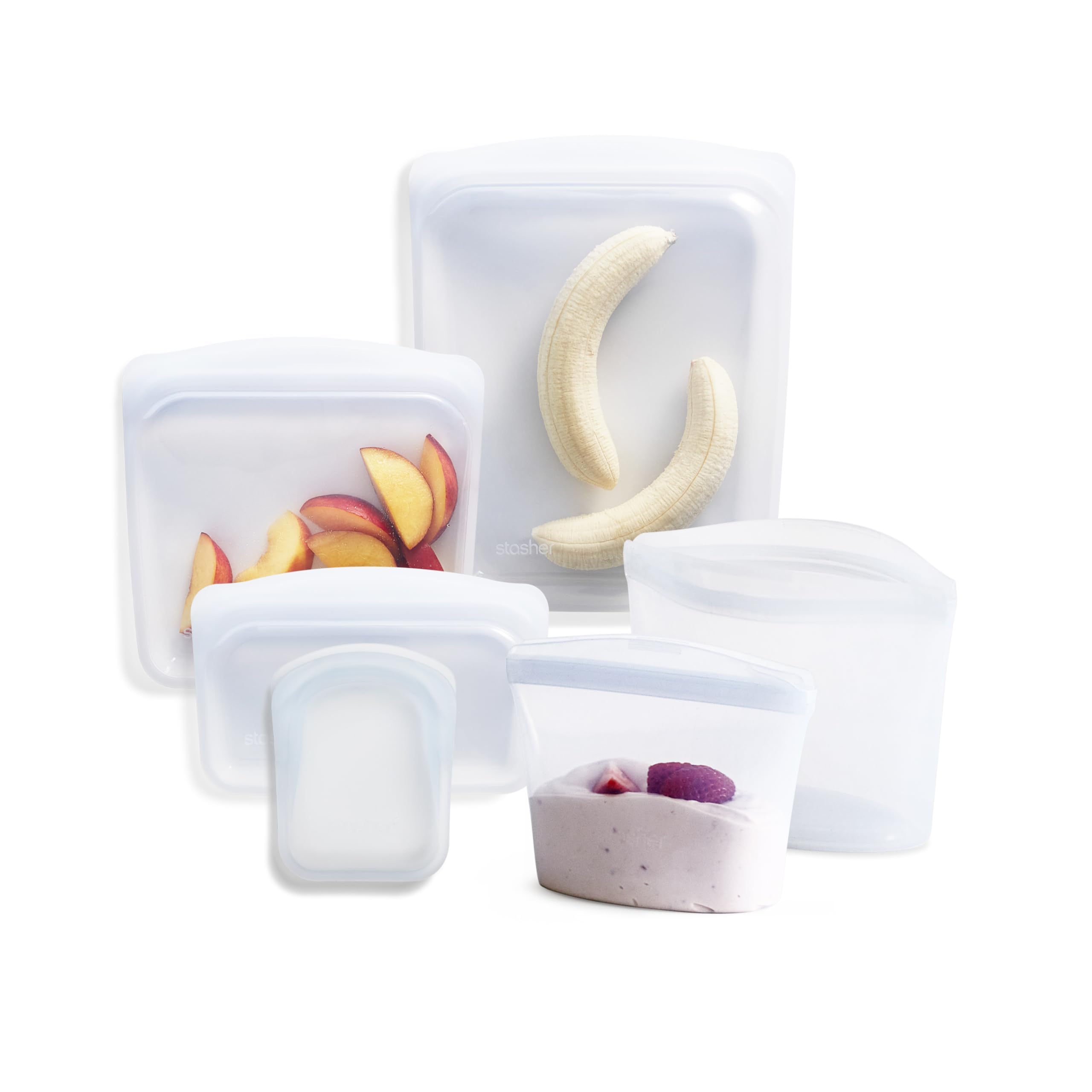
If you want one purchase that immediately upgrades multiple parts of your routine, this is it. The Stasher multi-pack works because it isn’t trying to be a “container set.” It’s a flexible system: snack, sandwich, pocket, half-gallon, plus two bowls that act like mini meal-prep tubs. That variety is exactly what reduces kitchen friction: the right size is always available, so you stop forcing leftovers into the wrong container.
Owners consistently praise the seal feeling “secure” once you get the hang of it. Here’s the expert trick: don’t pinch randomly. Start at one corner, run your fingers across the seal, and finish at the other corner like you’re zipping a jacket. For liquids, fill below the seal line and press out extra air before closing. For freezer use, lay bags flat so they freeze faster and stack like files—this is the most underrated organization win in the entire list.
The one tradeoff is cleaning: silicone bags are famously annoying to scrub by hand, especially the corners. The move is to use the dishwasher and prop the bag open so water can circulate inside. Once you do that, the “cleaning tax” mostly disappears.
Why it earns Best Overall
- Most versatile: Replaces a pile of random bags, bowls, and small containers.
- Seal reliability: Pinch-loc style closure is confidence-building when used correctly.
- Freezer organization: Freezes flat and stacks like a neat system, not a mess.
- Everyday-friendly: Great for lunches, snacks, leftovers, and prep ingredients.
Good to know
- Hand-washing corners takes effort; dishwasher is the easiest path.
- Avoid sharp, pokey snacks without a little caution (think rigid chips pressing hard).
Ideal for: Anyone who wants one “best overall” buy that improves meal prep, snacks, freezer storage, and daily leftovers in one hit.
2. ISSEVE 12‑Piece Nesting Silicone Container Set – The Shift‑Worker Workhorse
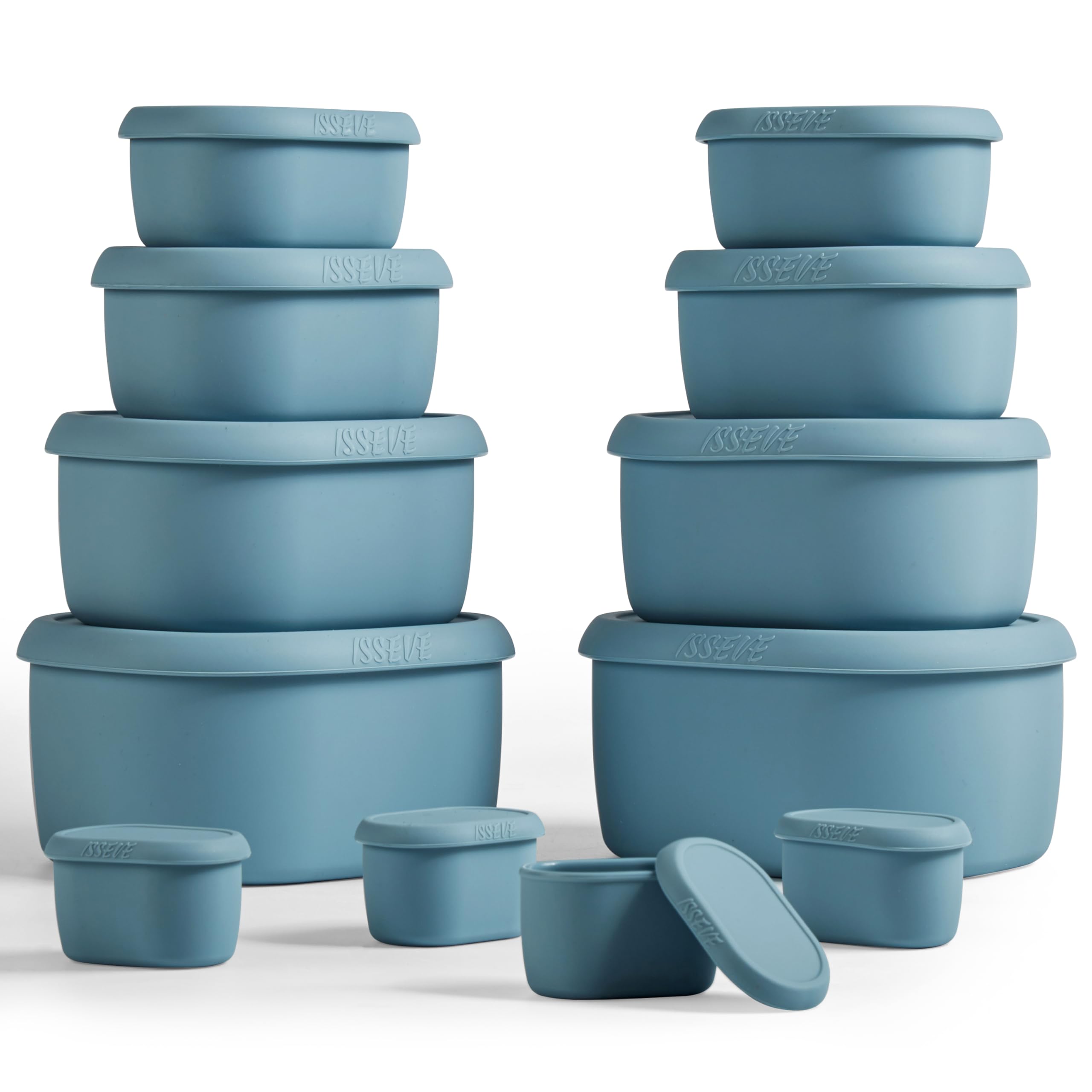
This is the set you buy when you’re done playing games with leftovers. The key value isn’t just “12 pieces.” It’s the spread of sizes: large for meal prep portions, medium for leftovers, smaller for snacks, and tiny for sauces. People who work long shifts love these because the set supports an actual routine: prep, pack, store, repeat—without using disposable bags or juggling mismatched tubs.
Real owner feedback highlights what matters: the containers feel thick, they seal well, and they nest cleanly so storage doesn’t become its own headache. Here’s the nuance: these are opaque, which is great for hiding stains but can create “What’s in that one?” moments in the fridge. If you’re a heavy meal prepper, solve it with a simple system: keep one shelf for “ready meals,” one shelf for “ingredients,” and use the smaller cups for sauces so they don’t slosh around.
A practical note from long-term users: tomato products can leave faint staining over time. That’s normal. The good news is that many users notice it fades gradually with regular use and washes, especially if you’re rotating containers instead of letting one become “the red sauce container forever.”
Why it’s a meal-prep favorite
- Size variety: One set handles lunches, leftovers, snacks, and sauces.
- Solid feel: Thick silicone makes filling and closing easier.
- Nests well: Storage stays tidy instead of turning into clutter.
- Heat friendly: Designed to tolerate kitchen temps better than typical plastics.
Good to know
- Opaque design makes it harder to see contents at a glance.
- Labeling silicone can be tricky; plan a simple shelf or color system.
Ideal for: Meal preppers, families packing school lunches, and anyone who wants one matching set that actually stays organized.
3. Souper Cubes 1‑Cup Freezer Molds (2‑Pack) – The “Perfect Portions” Fix
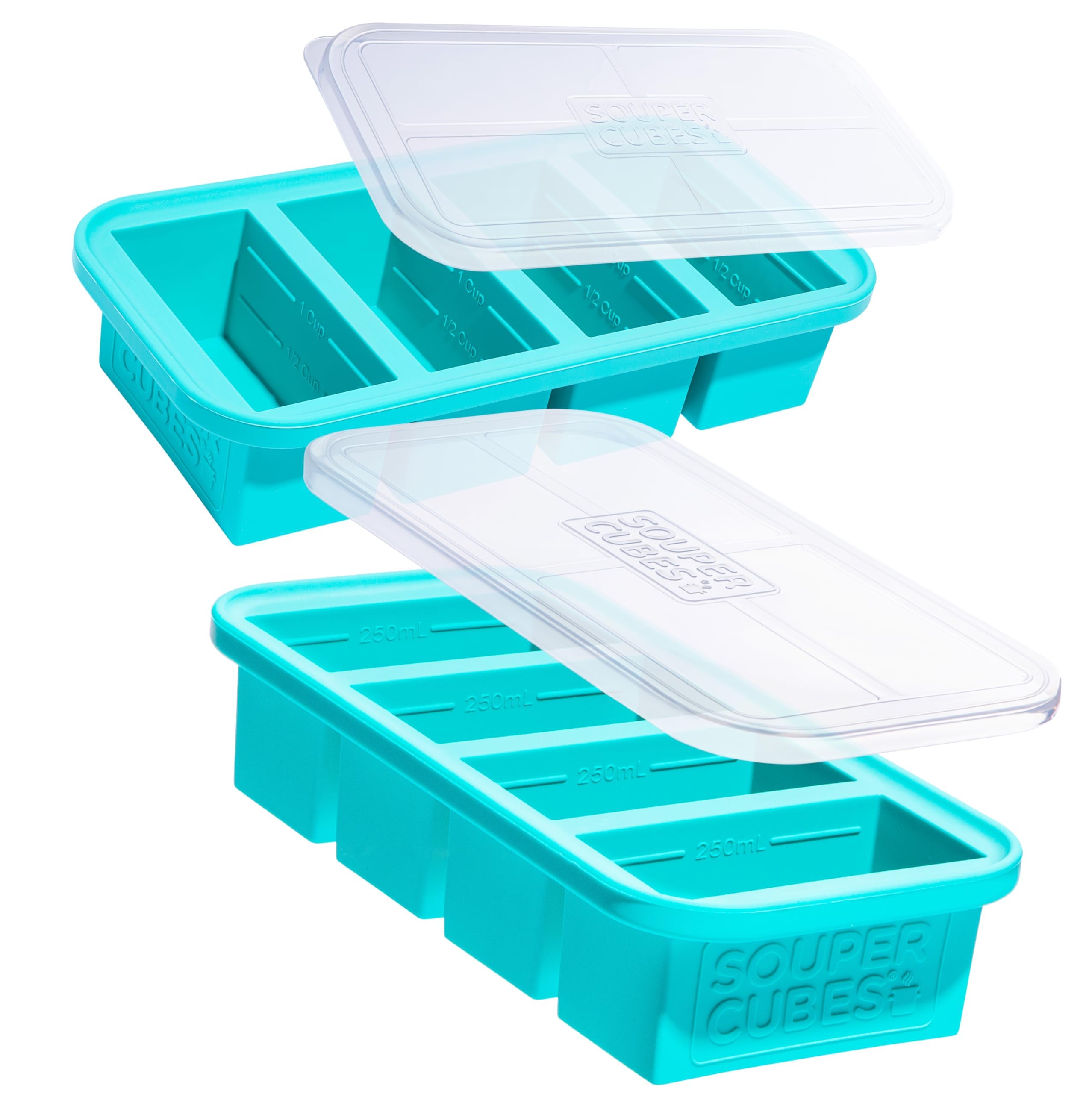
Souper Cubes are famous for a reason: they solve freezer chaos by making portions consistent. That sounds simple, but it’s powerful. When every frozen portion is the same size, your freezer becomes a system instead of a pile. People who cook in double batches rave about popping out perfectly portioned blocks and moving them into a chest freezer for long-term storage.
The steel-reinforced rim is the “detail that changes everything.” Cheap silicone trays flop, twist, and spill as you carry them to the freezer—so you end up placing them on baking sheets, wasting space, and resenting the whole process. These are built to hold shape, and owners repeatedly mention that they stack well without collapsing. They’re also surprisingly versatile: broth, rice, sauces, oatmeal, and even single-serving “bake later” portions.
One honest drawback shows up in long-term use: odor retention can happen if strong foods sit sealed for a long time (think onion-rich beef broth parked for weeks). The fix isn’t throwing the tray out; it’s changing the workflow. Freeze, pop out, transfer, and wash. If you do get lingering smell, a deep clean and an air-out period can help.
Why it’s a freezer game-changer
- Repeatable portions: Makes meal prep predictable and easy to reheat.
- Stability: Reinforced rim prevents the “floppy tray” frustration.
- Stackable: Lids help with clean stacking and freezer organization.
- Easy release: Frozen blocks pop out with less wrestling.
Good to know
- Strong odors can linger if food sits sealed for a long time.
- Best results come from freezing, popping out, then transferring for storage.
Ideal for: Soup people, batch cookers, postpartum meal-prep, and anyone who wants their freezer to feel “organized” instead of “random.”
4. Nuogo 2‑Cup Freezer Trays (8‑Piece) – When 1 Cup Isn’t Enough
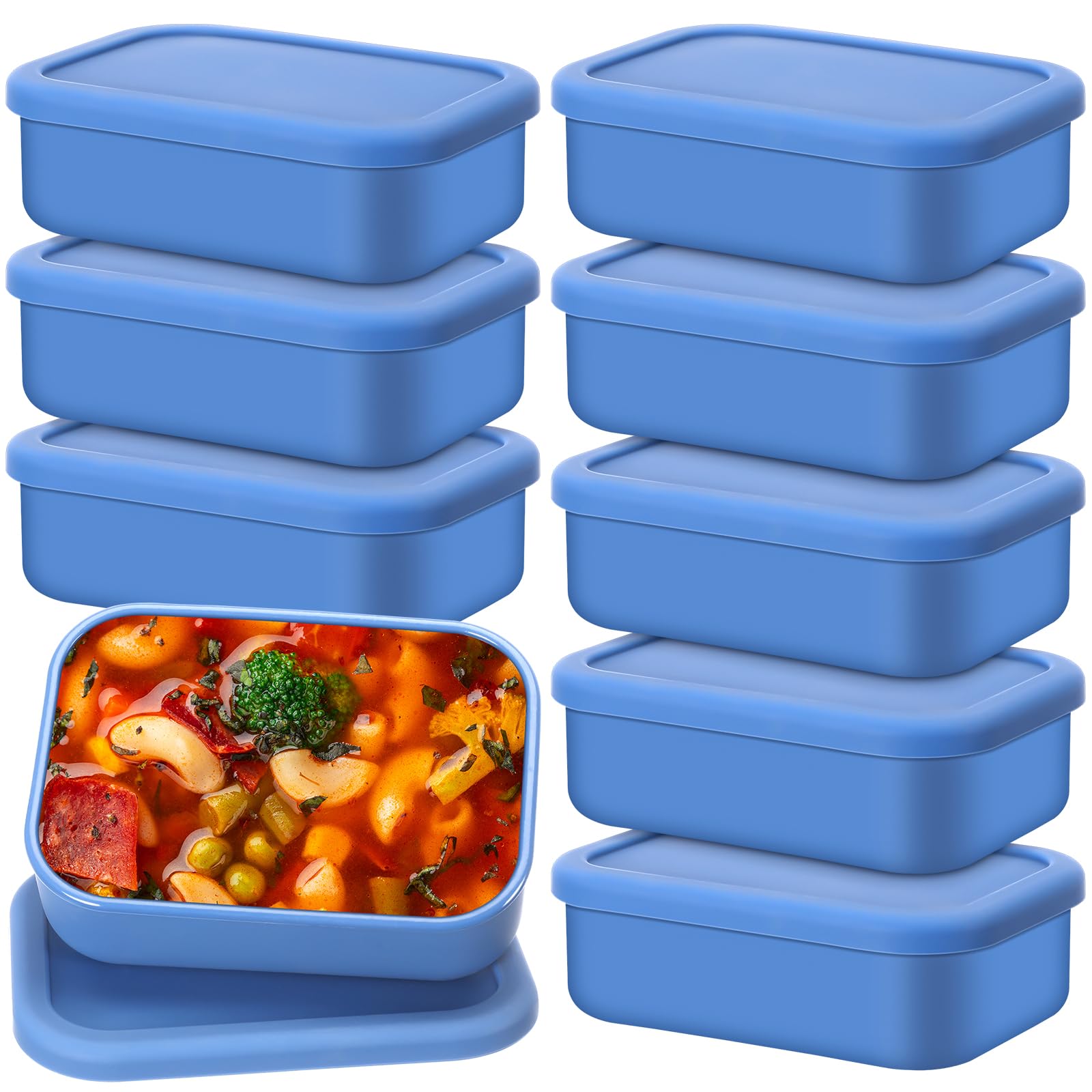
If Souper Cubes are the “portion control” hero, these are the “I need a real serving” option. Two-cup blocks are perfect for bigger appetites, larger stew portions, and anyone freezing food for two people at a time. Owners also use them in creative ways (including homemade pet food and weekly prep portions) because the size lands in that sweet spot: not tiny, not ridiculous.
The flexible silicone makes release straightforward: press and the block slides out. That matters because freezer trays fail when they become a wrestling match. These trays also play nicely with microwave reheating (lid removed for heating), which real users repeatedly appreciate for work lunches.
Here’s the expert-level reality check: no container magically “stops freezer burn.” Freezer burn is about moisture loss and air exposure over time. If you freeze for long storage, your best workflow is: freeze the blocks, then transfer blocks to a tighter long-term container or bag (or vacuum storage) once solid. That’s how you get “clean portions” and long-term quality.
Why people love it
- Generous portions: Better for stews, chili, and bigger servings.
- Easy release: Flexible silicone makes pop-out simple.
- Meal-prep friendly: Works well for freezer-to-microwave routines.
- Quantity: Multiple trays make batch cooking easier.
Good to know
- For long-term freezing, transfer after freezing to reduce air exposure.
- Lids help with freshness, but workflow matters more than claims.
Ideal for: Big-batch cooks, soup-and-stew fans, and anyone freezing larger portions for real meals.
5. Lunememo 16‑Pack Collapsible Set – The Space Saver That Feels Like a Reset
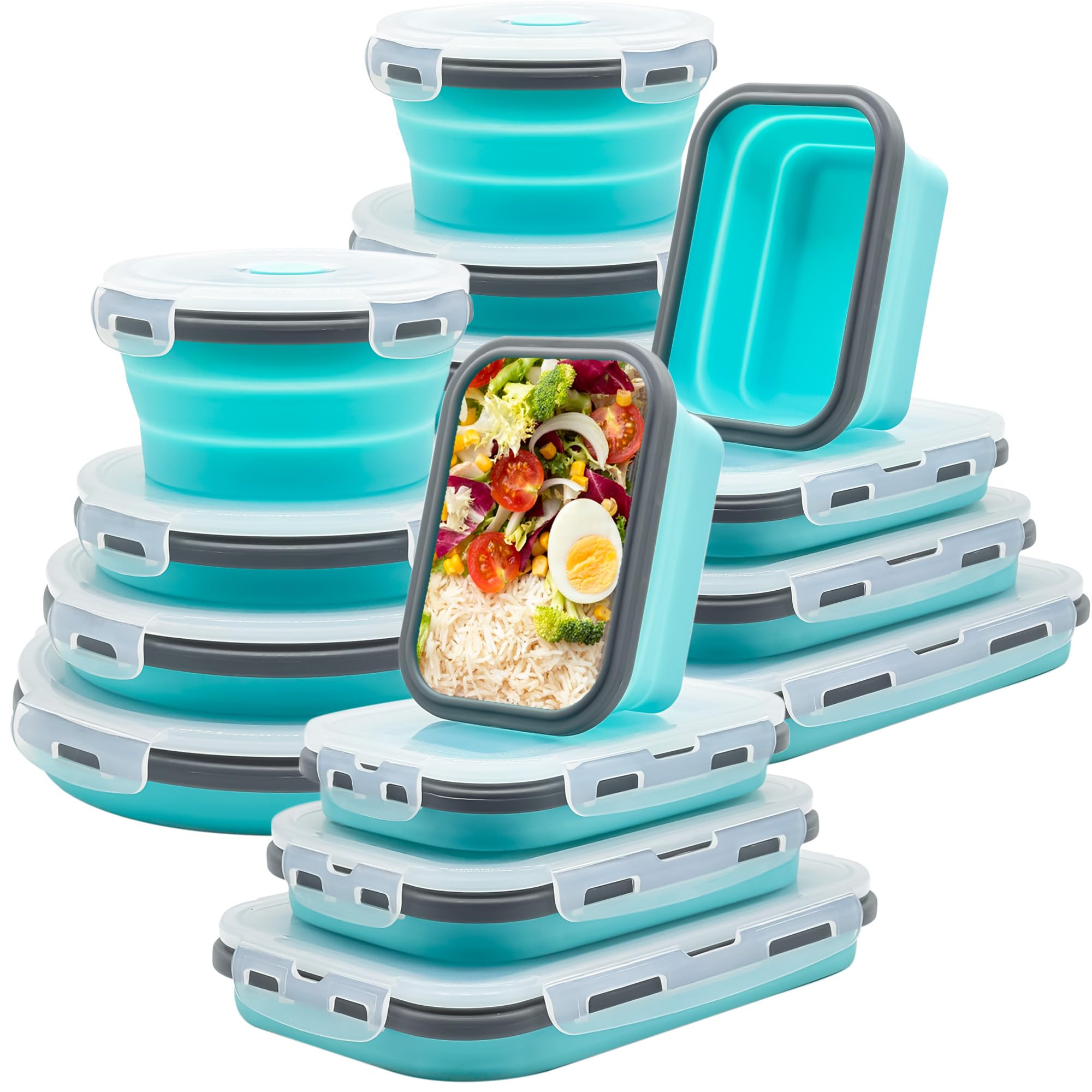
This is the kind of set that makes people do a dramatic kitchen purge. Real owners describe throwing out piles of old plastic because these collapse flat, store neatly, and keep a drawer from becoming a nightmare. If your kitchen is small—or you’re outfitting a camper, RV, or travel setup—collapsible containers feel like free storage space.
The key advantage is not just that they fold. It’s that they keep daily use practical: lids that seal well, containers that pop up and hold shape, and a size range that covers lunches and snacks. One of the most useful owner insights is how lightweight these are—if your hands hurt, or you just hate heavy glass on the go, this matters more than people admit.
Expert tip: collapsible sets work best when you treat them like “transport containers,” not “long-term freezer containers.” Use them to pack meals, store leftovers short-term, and keep your space tidy. For multi-month freezer storage, pair them with portion trays or bag-style storage to reduce air space and improve stacking.
Why it wins for small spaces
- Massive space savings: Collapses flat when empty.
- Daily usability: Useful size range for lunches and leftovers.
- Lightweight: Comfortable for travel, campers, and everyday carry.
- Fridge organization: Square/rectangular shapes stack efficiently.
Good to know
- Some lids are better treated gently (especially during dishwasher cycles).
- For truly leakproof backpack use, keep soups more upright and avoid heavy squeezing.
Ideal for: RV life, small kitchens, travel meals, and anyone who wants containers to store neatly instead of taking over a cabinet.
6. K HOME VT Collapsible Set (8‑Piece) – The Road‑Trip Favorite
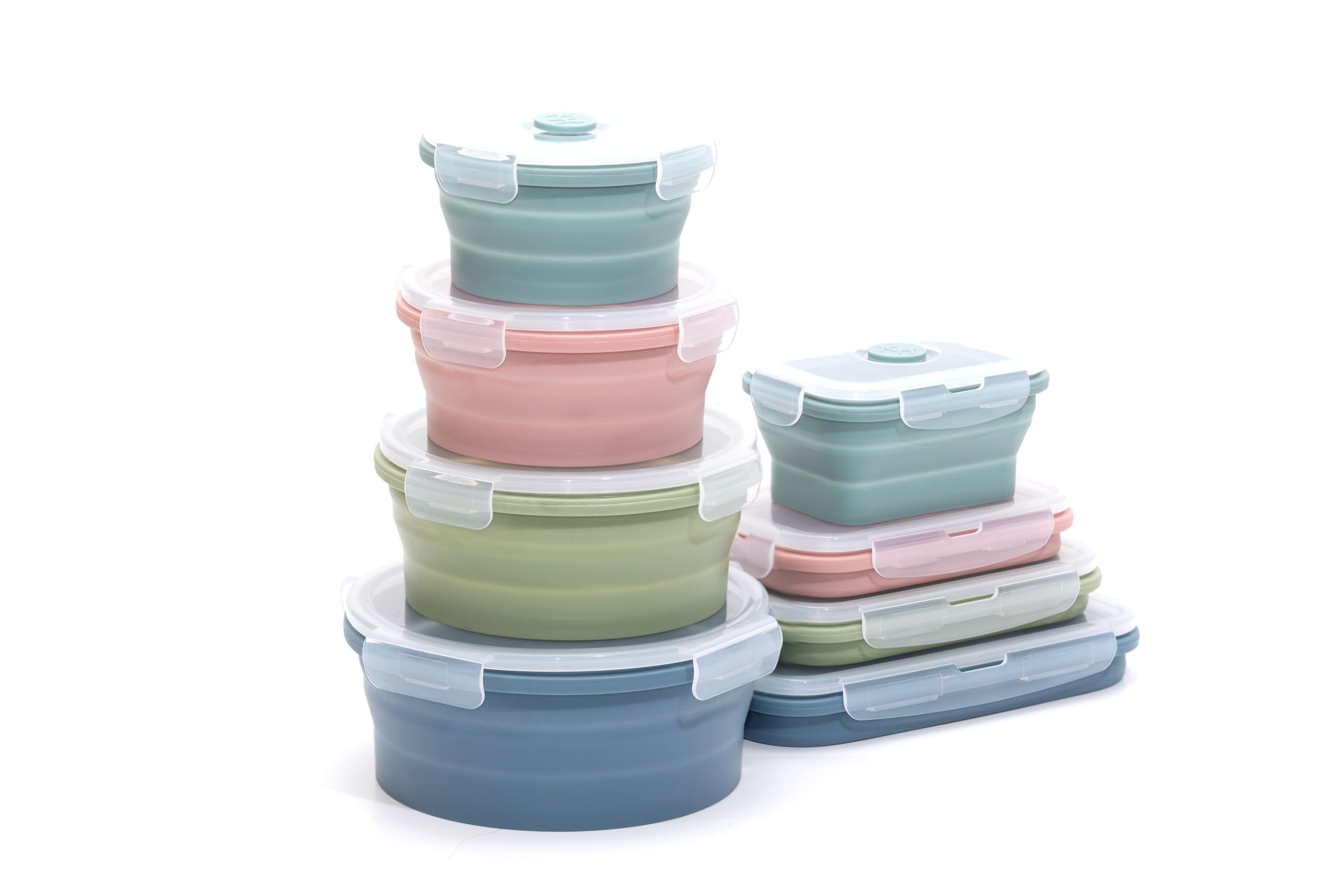
Owners who travel a lot tend to be brutally honest because a leak in a cooler or backpack is a true disaster. That’s why this set stands out: people use it constantly and praise it for being easy to clean, easy to store, and genuinely practical in tight spaces. The containers collapse down to solve the “where do we put all this?” problem without becoming flimsy junk.
Here’s what makes a collapsible container feel trustworthy: it has enough structural integrity to stand open while you fill it, and the lid system locks in a way that feels deliberate. Many users compare the lid feel to more rigid “locking” container systems, which is a compliment in collapsible-land.
Expert workflow: use these as your “daily drivers” for lunches, leftovers, and snack storage. When you’re done, collapse and stack. That last step is what keeps kitchens (and RV setups) from slowly filling with container clutter again.
Why travelers love it
- Space saving: Collapses for storage without feeling flimsy.
- Solid lids: Many owners report confidence in the seal.
- Easy cleanup: Designed for everyday use, not precious handling.
- Good “carry feel”: Pops open and stays standing while you fill it.
Good to know
- Like all collapsibles, avoid pressing down on the lid while closing; lock from the edges.
- For soups in a backpack, keep upright when possible.
Ideal for: Road trips, camping, RV kitchens, and anyone who wants collapsible containers that don’t feel like a compromise.
7. Annaklin 16‑Pack Collapsible Set – Color‑Coded Convenience (With a Learning Curve)
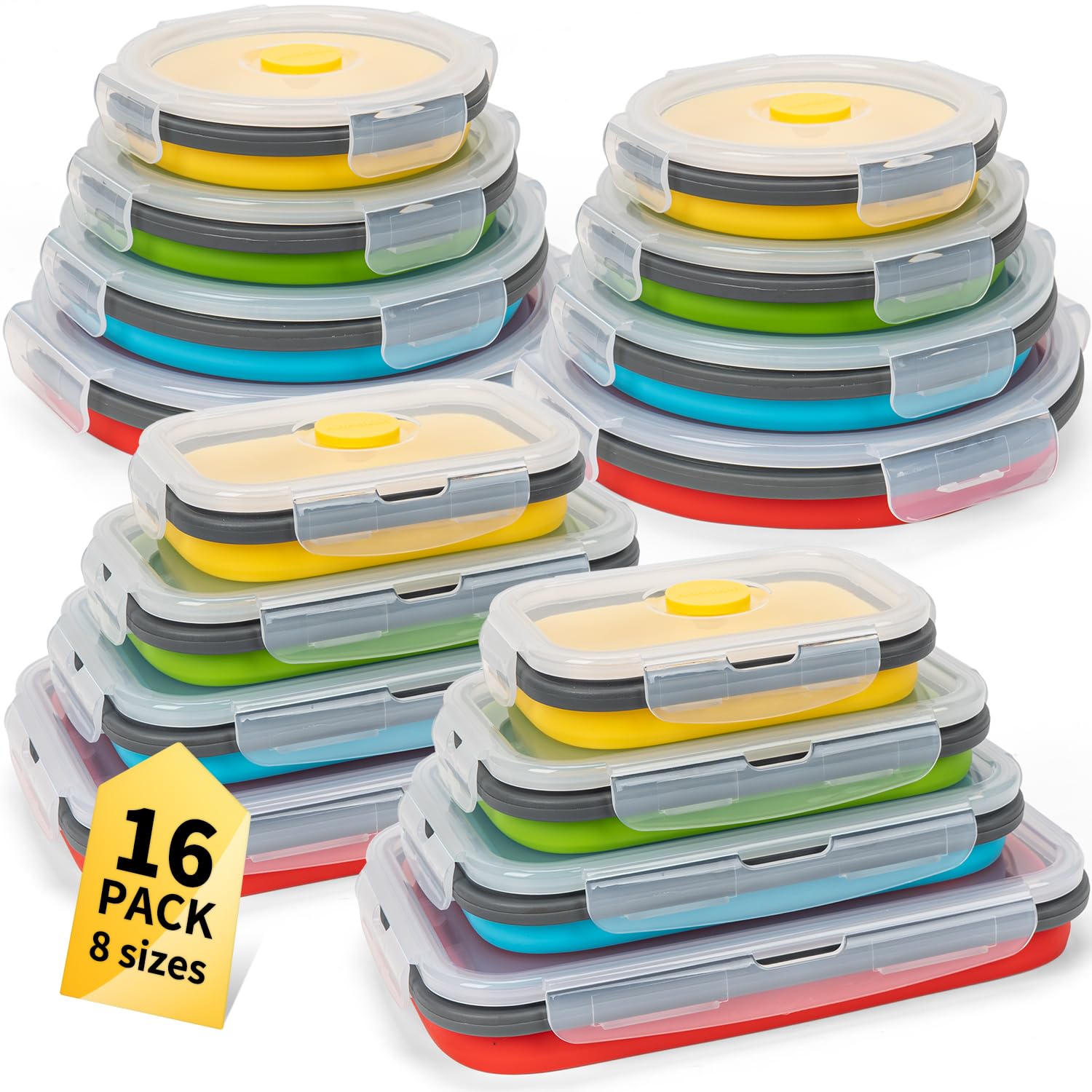
This set nails one thing better than almost anything else: variety. Different shapes, multiple sizes, and four colors means you can run a surprisingly organized system—yellow for snacks, blue for lunches, green for ingredients, red for leftovers. That sounds small, but color-coding is an underrated way to reduce decision fatigue when you’re packing meals daily.
Now for the honest part: owner experiences are mixed. Some report water-tight performance and easy cleaning. Others warn that certain sizes can leak, that strong-smelling foods can perfume the fridge, and that seal rings may not love the dishwasher long-term. None of that makes the set useless—it just means you should use it intelligently.
Expert tip that matters: when attaching the lid, press the side tabs and snap buckles without pressing down on the center of the lid. Pressing down can collapse the container body and pop the seal before it’s fully latched, which is exactly how spills happen. Use these as great everyday containers, and reserve super-liquidy transport for your most confidence-inspiring pieces.
Why it’s worth considering
- True variety: Multiple sizes and shapes for different meals.
- Color-coding: Makes meal prep feel organized, not chaotic.
- Space saving: Collapsible bodies store compactly.
- Good durability reports: Many users use them daily without damage.
Good to know
- Leakproof performance can vary by size and how you close it.
- Some users prefer hand washing to avoid seal-ring issues.
Ideal for: People who want a color-coded system and don’t mind learning the best “closing technique” for collapsible sets.
8. Sustainable Containables Premium Collapsible 3‑Pack – The “Grown‑Up” Lunch Upgrade

This set feels like it was designed for people who are picky—in a good way. Owners who’ve tried cheaper collapsibles often say the same thing when they love these: the body is thick enough to feel stable, the lid design is easier to seal than many competitors, and the overall build feels “incomparable” to bargain options. If you’ve ever fought a lid so hard you wanted to give up meal prepping, you understand why this matters.
The see-through silicone body is a sneaky advantage: you can actually recognize leftovers without opening everything. That saves time and reduces food waste. And because the lid is a one-piece style (no separate gasket to lose), long-term maintenance can be simpler—no mystery seal ring falling off mid-dishwasher cycle.
The most common warning from unhappy buyers is about initial silicone smell and the container collapsing while trying to close it. That’s a technique problem as much as a product reality: support the container from the base, align the lid, and seal along the rim rather than pressing down in the center. If you treat it like a structured container—not like a flimsy bowl—it behaves much better.
Why it feels premium
- Thicker build: Less “floppy” than many collapsibles.
- See-through: Easier leftover identification and fridge organization.
- Leakproof lid style: Secure closure without a separate gasket piece.
- Heat versatility: Designed for freezer, microwave, and kitchen heat.
Good to know
- Some users report initial odor; washing/soaking routines can help.
- Closing works best when you seal along the rim, not by pressing down.
Ideal for: People who want a premium lunch container feel and are done with cheap lids that don’t cooperate.
9. Annaklin Extra‑Large Reusable Silicone Bags (4‑Pack) – The Bulk Freezer & Marinade Beast
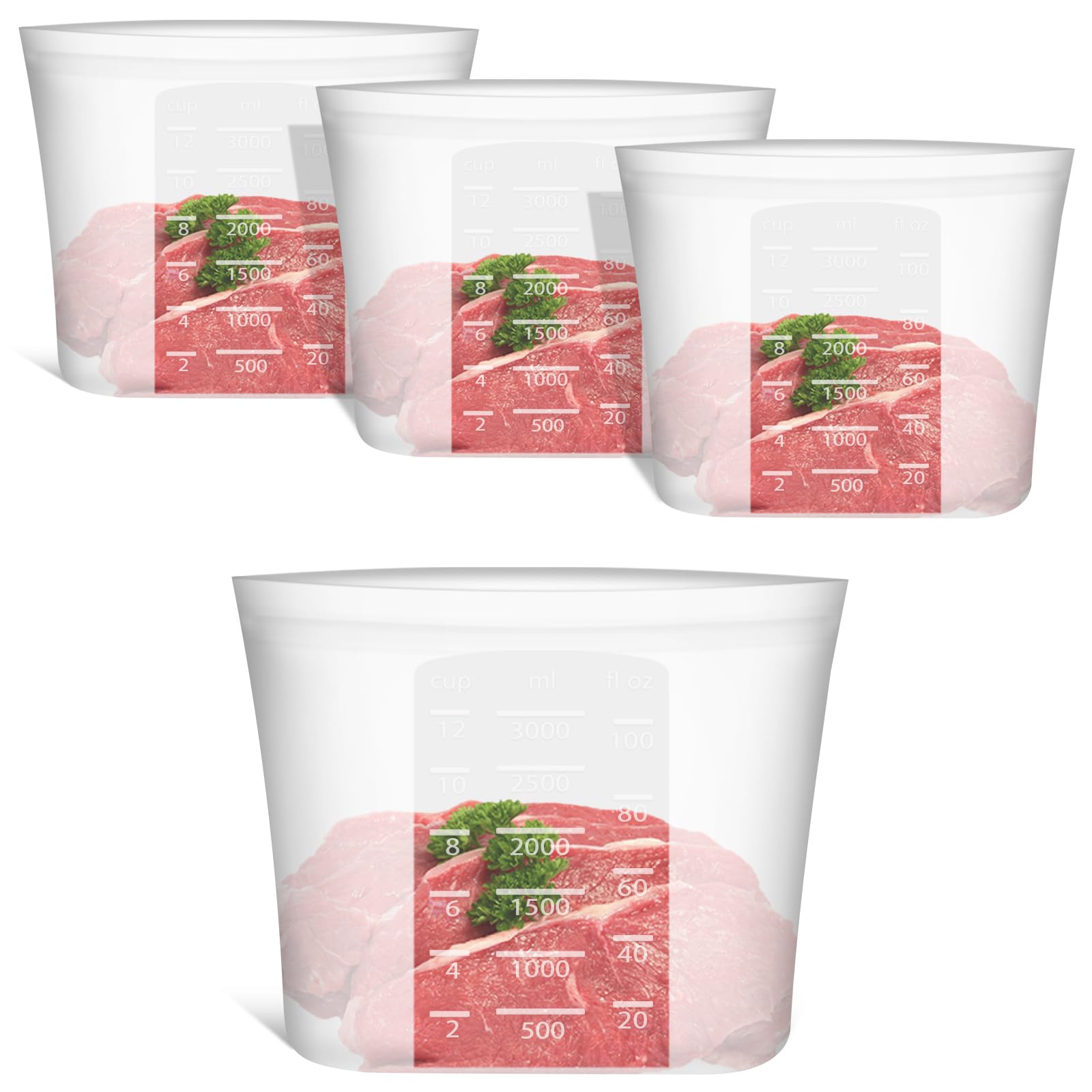
If you buy big (Costco lifestyle, family packs, bulk produce) you need a different kind of storage tool. Extra-large silicone bags are a serious upgrade because they replace the flimsy “double bag it and hope” routine. Owners rave about the thick silicone feel and the zipper seal being easy on the hands. The stand-up base is also a quiet hero: it frees one hand while you load food.
But here’s the expert truth about large silicone bags: they’re only as good as your sealing habits. The number one failure mode is a dirty seal—one grain of rice or a breadcrumb can interrupt the closure. The fix is simple: keep the top edge clean and dry, and press along the entire zipper path.
For liquids and soups, you need realistic expectations. These bags can hold liquids, but if a heavy bag gets tipped or squeezed, corners may seep. The smartest workflow is to freeze liquids flat (or upright in a supportive cup/container), then store once frozen. Owners also note that labeling can be hard on silicone surfaces; if you’re freezing multiple meals, use a simple basket system or a reusable tag.
Why it’s excellent for bulk
- Big capacity: Handles large items, bulk meals, and big portions.
- Thick material: Feels durable compared to flimsy reusable bags.
- Stand-up design: Easier loading and less mess.
- Freezer friendly: Great for freezing flat to save space.
Good to know
- Keep seals clean for reliable closure.
- For liquids, store upright or freeze flat first to reduce leak risk.
Ideal for: Bulk shoppers, freezer planners, and anyone replacing disposable freezer bags with something tougher.
10. Beso Vida Silicone Bowl Set of 3 – The Best “Eat Out of the Container” Experience

Some people don’t want “containers.” They want bowls that store, reheat, serve, and clean up beautifully—without feeling like eating out of plastic. That’s where Beso Vida shines. Owners who live solo (or just like simple routines) describe using these nightly: fridge to microwave or oven, then eat, then dishwasher. That’s the dream loop.
The bowl shape matters more than it sounds. The ergonomic curve helps reduce spill risk while carrying, and it simply feels better in hand. Multiple reviewers highlight that the bowls don’t get scorching hot in the microwave the way some materials do, which makes them more pleasant for everyday meals.
Now, the important nuance: lids include a small vent hole. That’s great for steam release and baking, but it means these are not the “throw it in a handbag and forget it” solution. One reviewer put water inside, squeezed, and it leaked through the vent. That doesn’t ruin the product—it just defines the use-case. Use these for at-home meals, fridge storage, and careful transport in an upright bag or basket.
Why it’s a lifestyle upgrade
- Best eating experience: Feels like using real bowls, not storage tubs.
- Heat versatility: Practical for reheating and serving.
- Nesting: Stores neatly, great for small kitchens or campers.
- Leak-resistant feel: Many users report strong lid fit for normal use.
Good to know
- Vent hole means it’s not ideal for upside-down transport.
- If you squeeze the bowl hard, lids can pop (common with flexible containers).
Ideal for: At-home meals, small households, and anyone who wants one set that stores and serves without looking like “meal prep prison.”
11. Moonkie Silicone Baby Food Containers – Daycare‑Ready, Parent‑Approved

Baby food storage has different rules than adult leftovers. You’re dealing with smaller portions, more labeling, and a higher penalty for leaks. Moonkie stands out because it’s designed like a parent tool: measurement markings for portioning, daycare labels for sanity, and lids that are meant to keep things airtight without constant paranoia.
Owners repeatedly mention the quality “feel” being sturdy and not flimsy. That’s important when containers get washed constantly, tossed in diaper bags, and handled by daycare staff. The steam-vent approach is also smart: instead of removing the whole lid to reheat, you can vent for microwaving to reduce splatter and pressure buildup.
Expert tip: with baby containers, your routine is everything. Batch prep, fill to consistent levels, label immediately, and store in one dedicated fridge bin. That single “bin system” prevents the classic baby-food problem: a week of tiny containers scattered everywhere like kitchen confetti.
Why parents love it
- Daycare-friendly: Labels + portion markings remove guesswork.
- Lid design: Double-seal approach supports freshness and spill control.
- Built to survive: Designed for repeated washing and daily handling.
- Grows with your child: Works for purées now, snacks later.
Good to know
- Secure lids firmly before tossing into a bag—tight fit matters for leak prevention.
- Smaller sizes are ideal for portions, not for bulk storage.
Ideal for: Parents prepping purées, daycare meals, toddler snacks, and anyone who wants baby storage that’s actually designed for the job.
12. The Freezer “Two‑Step” Trick – How Trays and Bags Work Together
This isn’t a product—this is the technique that makes freezer containers feel elite.
If you freeze soups, sauces, stews, rice, or baby food regularly, the best long-term setup is often a two-step workflow:
- Step 1: Freeze consistent portions using a tray system (like the 1‑cup or 2‑cup molds).
- Step 2: Once solid, transfer those blocks into a bag or airtight container for longer storage and tighter stacking.
Why it works: trays give you perfect portions and easy release. Bags or sealed containers reduce air exposure and maximize freezer space. You get the best of both worlds—and you stop wasting containers on long-term freezer duty when they’re better used as “portion makers.”
This strategy is exactly why many batch cooks say portion trays are their most-used prep tool: they turn “leftovers” into an intentional freezer system.
13. Brivara Ceramic‑Coated Glass Set (6‑Piece) – Beautiful, Non‑Plastic Storage (Inspect First)
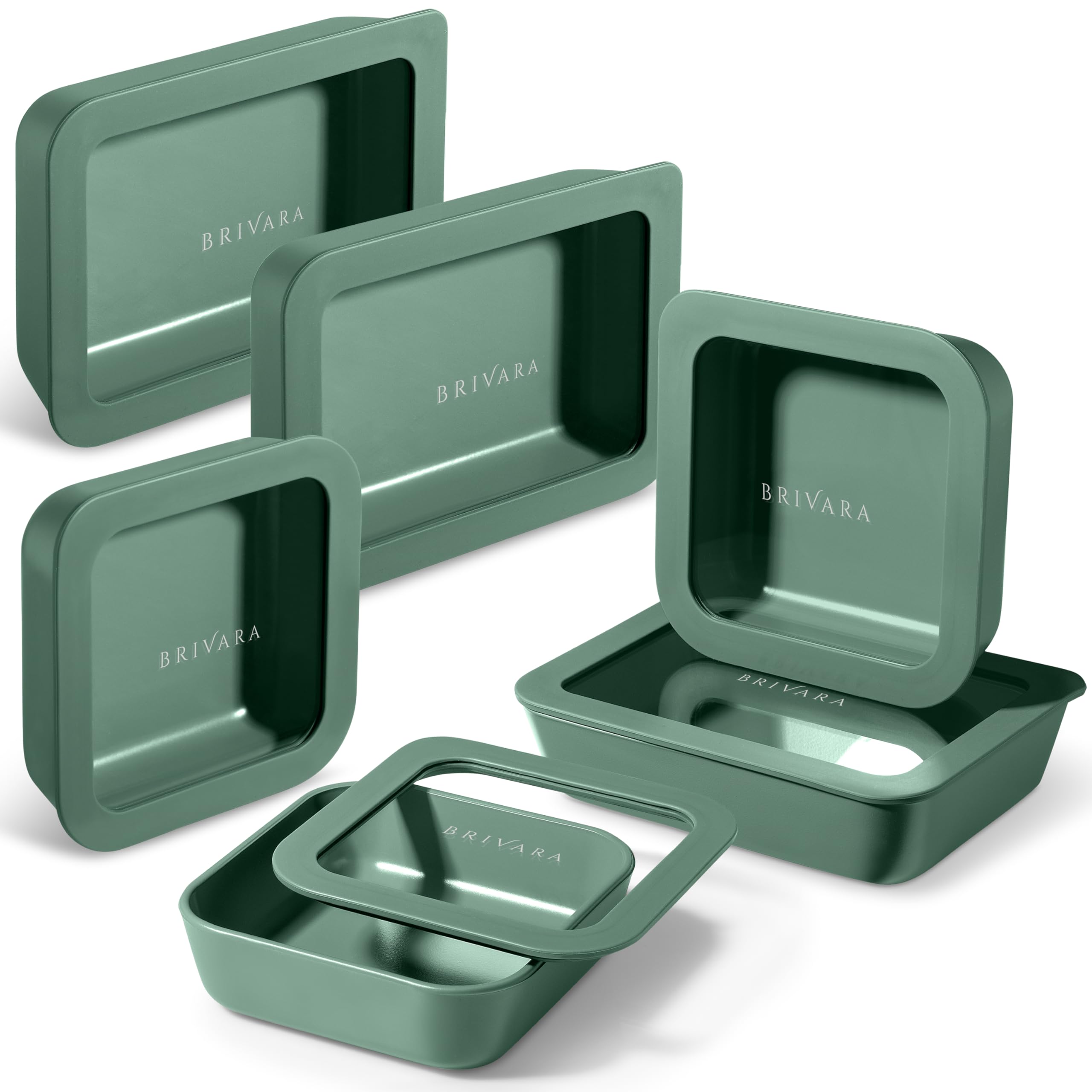
Not everyone wants “all silicone everything.” Some people want the clean feel of glass—especially for stain-prone foods—while still getting airtight performance through silicone seals. That’s exactly where this set fits: a modern, plastic-free approach (glass bodies + glass lids + silicone sealing system) meant to reduce odor and stain headaches while still being practical for daily use.
Many owners love the aesthetic and describe these as a real upgrade from typical storage tubs. The nesting design helps, and glass is excellent for foods that tend to stain silicone (tomato, curry, turmeric). Also: glass feels more “neutral” for smell over time, which is why so many people go this direction after fighting container funk.
However, owner feedback also includes quality concerns like coating issues or lids not sealing as expected in some cases. The expert move is simple: when you receive them, inspect the coating and test the seal with water over the sink before committing them to daily use. This isn’t “being picky”—it’s how you protect your own time and avoid frustration later.
Why it’s worth a look
- Great for stains: Glass body handles tomato and spice-heavy foods well.
- Plastic-free feel: Appeals to people avoiding typical plastic containers.
- Nesting: Stores neatly compared to random glass pieces.
- Daily use ready: Works for meal prep and leftovers without “container fatigue.”
Good to know
- Inspect coatings and lids on arrival; seal consistency matters.
- Glass is heavier and breakable—great at home, less ideal for rough travel.
Ideal for: Anyone who wants a premium, plastic-free-feeling setup and prefers glass for stain-prone foods.
14. VAKUEN Premium Airtight Set + Vacuum Sealer – The Anti‑Waste Power Move

If you regularly throw away produce, chips, nuts, or herbs because they go stale or limp too fast, a vacuum storage system isn’t overkill—it’s a strategy. VAKUEN’s big advantage is the combination of an easy one-click lid and a vacuum sealer that removes air. Less air = slower staling, less dehydration, and better texture over time. People who live alone (or shop in bulk) often describe vacuum containers as the first thing that truly reduced waste.
Owner feedback repeatedly highlights the “premium feel” compared to cheap containers and the vacuum system actually doing what it promises in everyday life: fresher vegetables, fewer stale snacks, and a fridge that stays organized because the containers stack cleanly. There are also highly practical user tips that matter: for veggies, add paper towel layers to manage moisture; for sealing, press down on the lid top to ensure a perfect seal before vacuuming.
The one caution is liquids. If you overfill something soup-like, vacuum systems can pull liquid into the sealer mechanism (messy and annoying). The expert solution is to keep liquids below the safe line and vacuum only when the contents are thick enough to behave—or store liquids without vacuuming and use vacuum mode for produce and snacks where it shines.
Why it’s a true upgrade
- Freshness advantage: Vacuum storage can meaningfully reduce food waste.
- Easy lid design: One-click close/open lowers daily friction.
- Great for produce: Helps keep veggies and herbs crisp longer.
- Snack saver: Chips and nuts stay fresh instead of going stale.
Good to know
- Be careful vacuuming thin liquids; avoid overfilling.
- It’s a system—best for people who will actually use vacuum mode regularly.
Ideal for: Bulk shoppers, small households, and anyone serious about extending freshness and cutting waste.
15. VAKUEN Mini 9‑Piece Set + Sealer – Small Portions, Big Freshness Impact

If the big VAKUEN set is for “full fridge strategy,” the mini set is for precision living: sprouts, herbs, chopped fruit, snack portions, yogurt, berries, and pre-portioned leftovers. People who meal prep small servings love these because they reduce fridge sprawl. Instead of one deep container hogging space, you get compact units you can finish one at a time.
The vacuum function matters even more in small containers because smaller portions tend to degrade faster (more surface exposure, more frequent opening). With vacuum storage, your “day 4 berries” can look more like “day 2 berries,” and your herbs don’t wilt as quickly. Owners also like that the containers tuck into the fridge without playing Tetris.
Expert tip: these are perfect for creating a snack system. Pre-portion the stuff you actually reach for (berries, chopped veggies, nuts), vacuum seal, and place them at eye level. This makes healthier snacking feel automatic, and it helps you use what you buy.
Why minis matter
- Space efficiency: Compact containers keep the fridge tidy.
- Great for snacks: Easy grab-and-go portions reduce waste.
- Freshness boost: Vacuum mode shines with small, delicate items.
- Organization: Helps create a “prepped snack” system that sticks.
Good to know
- Not designed for large leftovers; it’s a small-portion specialist.
- Best value comes from consistent use of the vacuum feature.
Ideal for: Small households, snack preppers, herb growers, and anyone who wants vacuum freshness without large containers taking over the fridge.
Material Guide: How Food Storage Containers Behave in Real Life
The fastest way to make a confident choice is to understand the “why” behind the complaints you see in reviews. Most problems come down to material behavior and lid geometry—not the marketing claims.
Silicone reality: smell, stains, and stiffness
Silicone is flexible and heat-tolerant, which is why it’s loved for modern kitchens. But flexibility is a double-edged sword: if you squeeze the body, the lid can pop or vents can leak. Strong foods can leave lingering smells if they sit sealed for weeks, and tomato/spice stains can happen over time. High-quality, thicker silicone usually feels better in hand and is easier to fill and seal because it holds shape.
Lids, vents, and vacuum: what “fresh” really means
“Airtight” and “leak-proof” aren’t identical. Airtight keeps food fresher in the fridge. Leak-proof survives travel and squeezing. Vents make microwaving safer but reduce bag confidence. Vacuum systems remove air and can extend freshness significantly, especially for produce and snacks—but only if you’ll actually use them regularly. In practice, the best kitchens use two or three closure styles for different jobs.
FAQ: Food Storage Containers
Why do some “leak-proof” containers still leak in a bag?
Do silicone containers absorb odors, and can I fix it?
How do I reduce freezer burn without obsessing?
Can I microwave containers with lids on?
Final Thoughts: The Verdict
If you want the most useful “one buy” solution, the Stasher 6‑Pack is the best overall system because it covers snacks, meals, and freezer organization in one cohesive set. For meal preppers who want matching containers in multiple sizes, go with the ISSEVE 12‑Piece Nesting Set. And if freezer portions are your life, the Souper Cubes 1‑Cup Trays are the cleanest path to a freezer that feels like a plan.
