
A warehouse doesn’t get “organized” by buying a random shelf and stacking boxes. It gets organized when storage stops fighting your workflow: receiving on Monday, replenishment midweek, picking all day, and that one urgent order that forces everyone to move fast. When the storage is wrong, you feel it everywhere—wasted aisle space, sagging shelves, bins that don’t fit, wobble that makes your team nervous, and the constant mess that comes from “we’ll fix it later.”
If you’re shopping for a rack for warehouse use, here’s the truth most buyers guides skip: load capacity numbers are only the beginning. The real difference between a rack you love and a rack you regret comes down to structure (how it resists sway), decking (how it handles point loads), hardware (how it locks together), and setup reality (how it behaves after shipping, assembly, and weeks of daily use).
This guide is built like a warehouse decision, not a shopping list. I’m looking at the friction points that show up in real owner feedback: missing center support that makes shelves bow, “toy” mallets that don’t seat beams correctly, confusing locking pins, dented parts from shipping, and the quiet truth about wheels—mobility is amazing, but it changes how you should load the unit.
Below you’ll find 15 serious storage solutions: extra-wide boltless steel racks for bulk totes, massive industrial frames built for heavy gear, rolling wire systems for pick/pack flexibility, and a bin-rack organizer that’s basically a small-parts command center. If you want one guide that makes the decision crystal clear, you’re in the right place.
In this article
How to Choose the Right Rack For Warehouse Storage
A good rack isn’t “good” because the listing says it’s heavy-duty. It’s good because it stays stable under real loading patterns, keeps your inventory accessible, and makes your floor feel bigger. Here’s the exact decision framework I use when I want storage that holds up under daily movement—not just a pretty photo.
1. Start with your workflow, not your square footage
Warehouse storage fails when we choose shelves based on size alone. Instead, choose based on the job the rack will do most days:
- Bulk storage & overflow: You need width, depth, and structure that stays square when loaded with heavy totes, parts, or boxes.
- Pick/pack zones: You need visibility, quick reach, and often mobility—wire shelving and bins shine here.
- Receiving & staging: You need stability and open access. Rolling racks can be great if you load them like rolling racks (more on that soon).
- Garage-meets-warehouse spaces: You need “industrial enough,” but also easy assembly and flexibility for changing needs.
2. Decode capacity the way experienced warehouse people do
Capacity claims can be real and still mislead you—because the details matter:
- Total capacity is usually the sum of evenly distributed loads across all shelves.
- Per-shelf capacity is only meaningful if your load is spread across the full surface (not two small contact points).
- Point loads (like a motor, a compressor, stacks of books, or a single heavy tote) stress a shelf differently than “evenly distributed.”
- Wheels change the game because dynamic forces (rolling, stopping, turning) add stress that static feet don’t.
If you want a rack that feels “unbreakable,” don’t just chase the biggest number. Look for reinforcement under each shelf, rigid upright construction, and bracing that resists sway. Many negative reviews online are not about the “metal being weak.” They’re about how the rack is loaded and how well it’s seated and squared during assembly.
3. Choose your shelf surface like it’s a tool choice
Shelf surface is where real-life satisfaction happens. Here’s the honest breakdown:
- Solid steel panels: Great for mixed inventory, small parts in boxes, and anything that might tip or snag on wire.
- Wire shelves: Amazing visibility and airflow, easy cleaning, and great for bins—but they can “dish” in the middle if there’s no center support and you load heavy in one spot.
- MDF/board shelves: Quiet, smooth surface for boxes and cartons, but the long-term winner is the frame beneath it. If the frame is thin, board won’t save it.
- Modular panels: Best when you need to store odd-shaped equipment or want to remove a panel to create a “tall bay.”
4. Stability is a design decision (and a setup decision)
Wobble is rarely one “bad part.” It’s usually one of these:
- Sway from insufficient bracing (diagonal braces, side bars, or reinforcement ribs).
- Racking out of square during assembly (a tiny twist becomes a big wobble once loaded).
- Uneven floor that makes one leg float, especially on slick concrete.
- Under-seated beams because a light mallet doesn’t fully lock the tabs into the slots.
The best racks in this guide either include bracing that fights sway or include enough rigidity in the uprights and shelf ribs that sway is naturally reduced. Your job is to assemble them like you’re building equipment, not furniture.
5. Wheels are not “free.” They’re a trade
Rolling racks are incredible when you use them the way they’re meant to be used:
- Load low and balanced: keep dense items on lower shelves to reduce tipping forces.
- Move slowly: casters love smooth floors; aggressive turns plus heavy top loads is how you get wobble and stress.
- Lock smart: lock wheels when parked, and treat the rack like a fixed shelf while it’s locked.
If you need mobility for staging, pick/pack, or flexible layouts, wheels are a superpower. If you want the “most stable possible” bulk storage, choose leveling feet and braced steel frames.
6. Assembly speed matters, but “assembly quality” matters more
A rack that assembles quickly can still fail if it’s assembled loosely. Here are the pro-level habits:
- Seat every beam fully: a soft mallet plus a wood block prevents bending thin struts while still locking the tabs deep.
- Square the frame before loading: measure diagonals or use the “push-corner” test—if it rocks, it’s not square yet.
- Add a shelf liner when needed: plywood or a rigid panel on wire shelves spreads point loads and prevents small items from wobbling or snagging.
- Re-check after moving: if you relocate a rack, re-check beam seating. A bump can unseat a poorly seated tab.
Quick Comparison: 15 Rack For Warehouse Picks
Use this table to match your needs fast, then jump to the full reviews for the “warehouse reality” details—like which racks resist sway best, which ones roll smoothly without drama, and which shelves benefit most from a simple liner to prevent sag.
On smaller screens, swipe or scroll sideways to see the full table.
| Model | Rack type | Standout strength | Best match | Amazon |
|---|---|---|---|---|
| WORKPRO 68″ x 24″ Heavy Duty Rack | Boltless steel | Wide footprint + high load rating + strong frame geometry | Most warehouses needing one “do-it-all” bulk rack | Amazon |
| Ironton 77″ x 24″ Industrial Steel Shelving | Mega capacity | Huge load rating and wide shelf bays for dense storage | Heavy gear, shop inventory, and serious bulk loads | Amazon |
| AFAIF 79″ x 24″ x 79″ 7000-lb Rack | Modular panels | Detachable shelf panels + reinforced side bracing | Large bays, odd-sized equipment, scalable layouts | Amazon |
| 79″ Wide 7000-lb Garage/Warehouse Rack | Connectable | Interconnectivity feature for multi-unit “wall of storage” | Warehouses expanding storage row by row | Amazon |
| Seville Classics 7-Tier Bin Rack (21 bins) | Bin system | Small-parts organization with slide-out bins + labels | Pick/pack, maintenance parts, tools, supplies | Amazon |
| REIBII 60″ Wire Shelving w/ Wheels (5-tier) | Wire + wheels | Wide rolling rack + leveling feet option + quick access | Flexible staging, overflow, pantry-style storage | Amazon |
| PrimeZone 55.5″ x 24″ Rolling Wire Rack | Tall mobile | Extra height + hooks + larger wheels for smooth moves | Garage/warehouse crossover with frequent layout changes | Amazon |
| REIBII 60″ x 24″ 5-Tier 3000-lb Rack | Boltless steel | Fast assembly + adjustable bays + anti-tip accessories | General warehouse/garage storage with mixed inventory | Amazon |
| BYNSOE 71″ Wide 5000-lb Steel Rack | Wide frame | Large width + reinforcement ribs for sway control | Bulk totes and large boxes across fewer shelves | Amazon |
| RAVIGIN 71″ Wide 5000-lb Rack | Wide bays | Room between shelves for tall totes and bulky seasonal stock | Storage rooms that need “big bay” spacing | Amazon |
| AFAIF 71″ Wide 5000-lb Modular Rack | Panel-flex | Detachable metal panels to create custom bays | Odd-shaped equipment and tall-item storage | Amazon |
| PMKES 65″ Wide 6-Tier Tall Rack | 6-tier | More shelves in the same footprint (vertical density) | High-shelf-count storage for mixed small/medium inventory | Amazon |
| LI JIU HOME 62″ Wide 5-Tier Metal Rack | 5-tier | Good space + adjustable connectors + anti-tip kit | Overflow storage when loads are moderate and well distributed | Amazon |
| WORKPRO 48″ x 24″ 5-Tier Split-Into-Two Rack | Configurable | Can become two shorter units (or a workbench setup) | Workshops needing flexible zones, not one tall tower | Amazon |
| REIBII 2-Pack 35.55″ Wide 5-Tier Racks | 2-pack value | Two units for multi-zone storage + easy DIY combinations | Small aisles, closets, backrooms, and distributed storage points | Amazon |
In‑Depth Reviews: 15 Warehouse Racks That Stay Useful After the “New Shelf Excitement” Wears Off
Now we go rack by rack. I’m going to talk like a warehouse operator, not a catalog: how the frame behaves when loaded, what the shelves feel like under real weight, what owners praise after weeks of use, and what you should do during setup to avoid the common failure points.
1. WORKPRO 68″ W x 24″ D Heavy-Duty Rack – The “Wide, Strong, No-Regrets” Workhorse
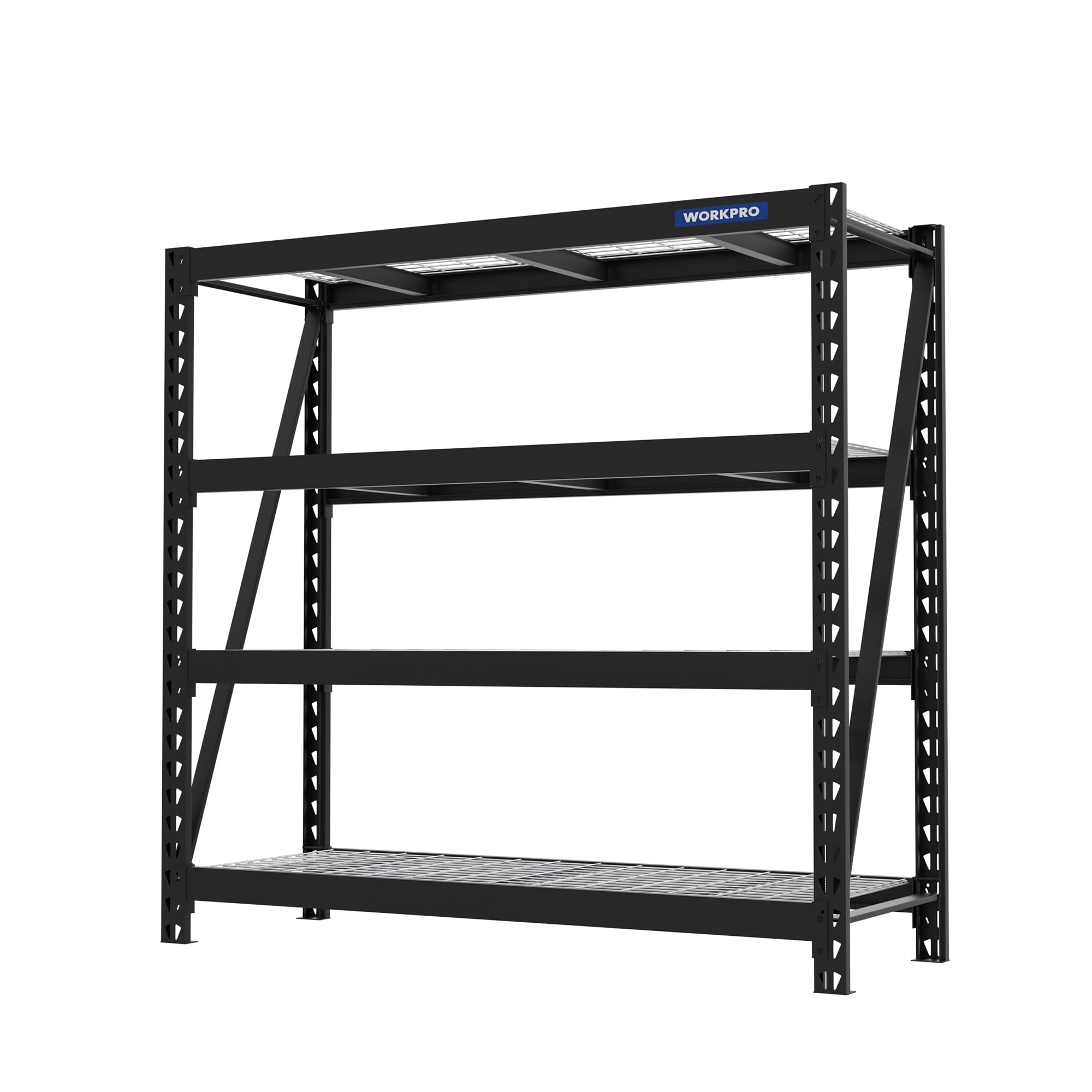
If you want one rack that fits the “real warehouse middle ground”—wide enough for bulky totes, strong enough for dense boxes, and simple enough that your team won’t hate assembling it—this WORKPRO unit is a smart anchor choice. It’s not trying to be a boutique racking system with confusing add-ons. It’s trying to be a big, stable platform that you can load confidently.
What makes it feel “warehouse-right” is the combination of beam width, tier spacing flexibility, and the way the frame locks together. The teardrop-style slots and locking pins (as described in the listing) matter because they reduce the chance of a shelf “walking” out of its seat over time. That’s one of those small details you only appreciate after you’ve used cheaper racks that slowly loosen.
Real owner feedback points to two useful truths. First: assembly is straightforward (especially with a rubber mallet), and even when a small part is missing, the seller response has been described as helpful—an underrated factor when you’re building out multiple racks and can’t afford downtime. Second: the shelves themselves can benefit from smarter loading. One user noted that without a center brace, heavier loads in the middle can cause the shelf to bow or drop if weight isn’t distributed well. That doesn’t mean the rack is “bad.” It means you should treat the shelf surface like a platform: spread heavy loads, put dense items over supports, and consider adding a rigid liner if you store point-heavy items (like stacked books or compact machinery).
Here’s the expert move: if this rack will hold mixed inventory (cartons, totes, parts, tools), set your lowest shelf slightly higher than floor level. That gives you a “sweep zone” to clean debris and reduces moisture exposure from wet floors. Then place your heaviest items on the bottom shelf, second-heaviest on the second shelf, and keep light/awkward items up top. You get better stability, less sway, and a rack that feels calm even when fully loaded.
Why it’s a top “first rack” choice
- Wide bays feel immediately useful – Great for large totes, bulky cartons, and mixed warehouse inventory.
- Locks together with confidence – Slot design and locking pins reduce long-term loosening when used correctly.
- Adjustability that matters – You can set shelf spacing based on tote height instead of “whatever the manual shows.”
- Support experience matters – Owners have reported responsive help when a part is missing (critical for multi-rack builds).
Good to know before you buy
- If you plan to load very dense weight in the center of shelves, add a rigid liner or distribute loads to avoid mid-span stress.
- Expect to use real tools: mallet, driver, and at least one helper if you’re building several units quickly.
- For tight spaces, the width is a feature and a limitation—measure doorways and turning space before delivery day.
Ideal for: most warehouses, storage rooms, and garage-to-warehouse setups that need a wide, stable bulk rack without complicated “system” commitments.
2. Ironton 4‑Tier Industrial Steel Shelving – When You Want “Overbuilt Energy” for Heavy Gear
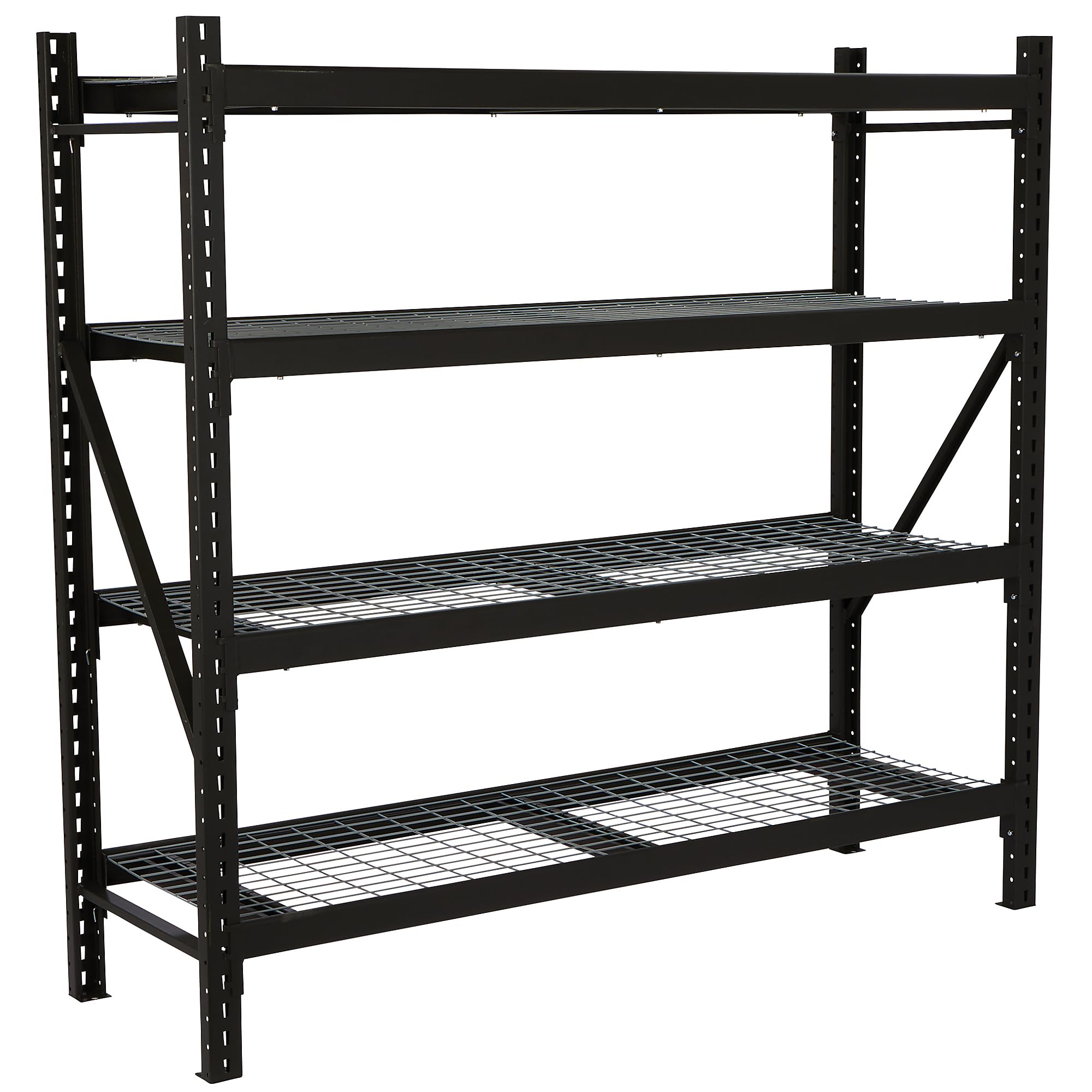
The Ironton is the rack you look at when the word “shelf” feels too small. This is a wide, industrial-style frame designed for heavy items: generators, compressors, dense tool cases, multiple loaded totes per shelf, and the kind of bulk storage that makes lighter racks feel like a gamble. When it’s assembled well and arrives in good shape, owners describe it as extremely sturdy—“survive an earthquake” sturdy. That’s exactly the emotional result you want from a heavy rack: calm confidence.
But here’s the expert read: this rack has polarized feedback, and you should treat that as actionable intelligence—not noise. Most positive experiences focus on weight-handling and stability once assembled. The negative experiences focus on shipping/quality issues: bent load-bearing parts, missing hardware packaging, and concerns about spot-weld strength. In other words, the “design” can be strong, but the execution you receive matters.
So if you choose Ironton, do what warehouse pros do with any heavy rack: inspect before you commit. Lay out uprights, check weld points visually, confirm cross-members are straight, and make sure the hardware pack is complete. If something arrives bent, don’t “force fit” it and hope. A forced assembly can bake a twist into the frame, and twist is where wobble starts. The smart move is to replace compromised parts so the rack can be squared and loaded evenly.
One more practical insight: some owners dislike wire-style shelf decking for certain storage types because smaller items can wobble or fall through. The simplest fix is also the best fix: add rigid shelf liners (wood panels cut to size) when you store small cartons, loose parts boxes, or anything that needs a stable surface. That turns this into a true “platform rack” while keeping the industrial strength of the frame.
Why it’s a beast
- Wide shelves swallow inventory – Great for long items, multiple totes, and dense bulk storage.
- Industrial feel – When assembled correctly, owners describe a strong, stable structure with minimal wobble.
- Adjustable shelf heights – Lets you build bays around your largest items instead of wasting vertical space.
- Great for “heavy corner” zones – Ideal for the area where the truly heavy stuff lives (tools, parts, machinery accessories).
Good to know
- Quality consistency matters: inspect parts for bends or weak welds before loading heavy inventory.
- The unit is very heavy—plan the assembly location so you don’t have to drag the full rack across the floor.
- If you dislike wire decking, plan to add shelf liners for a smooth, solid surface.
Ideal for: warehouses and workshops that store genuinely heavy items and want a wide, industrial rack—especially when you’re willing to inspect parts and set it up like equipment.
3. AFAIF 79″ Wide 7000‑lb Rack – Detachable Panels for Weird, Tall, and Oversized Inventory
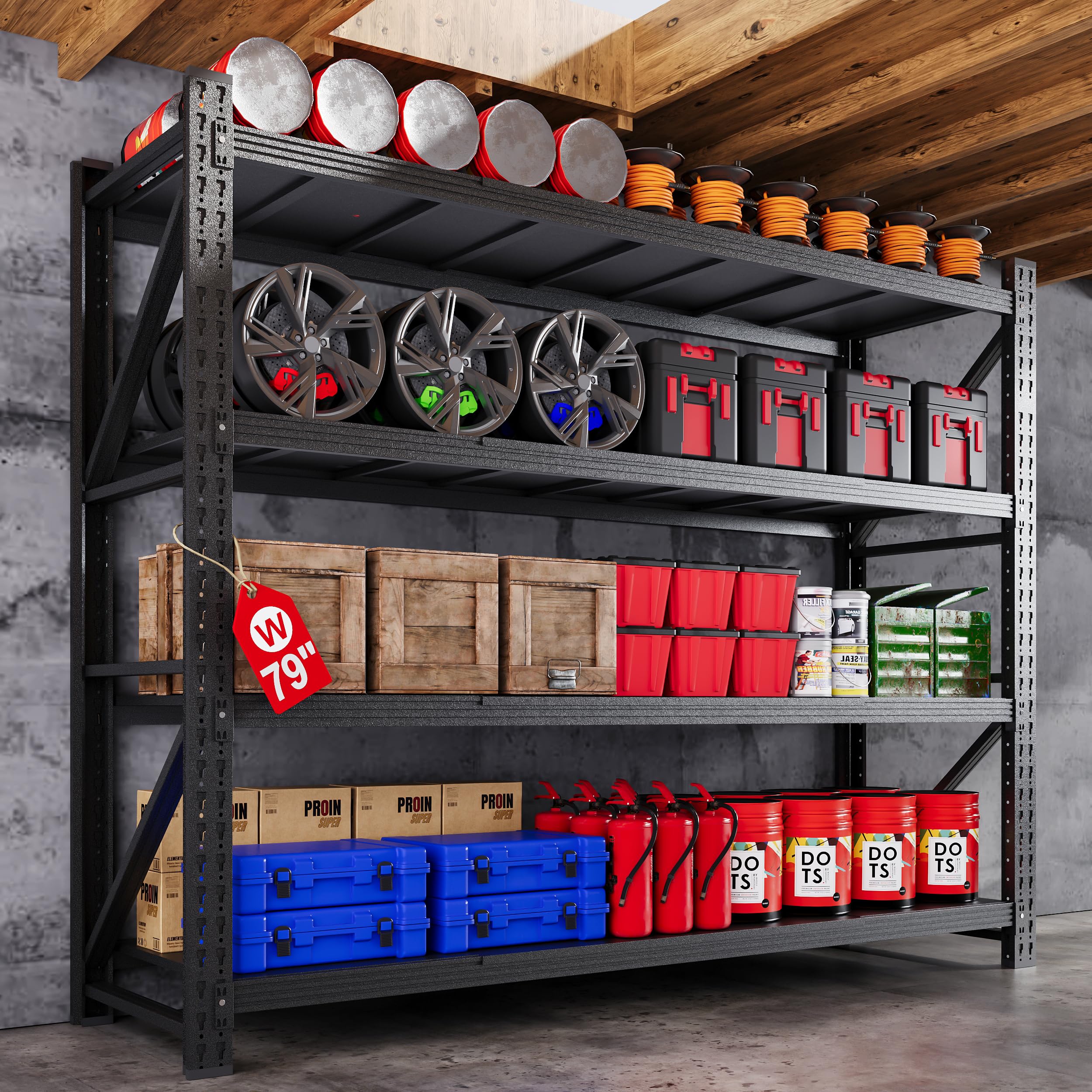
This is the kind of rack that makes sense when your inventory isn’t polite. If you store tall equipment cases, bulky seasonal cartons, odd-shaped supplies, or anything that doesn’t fit neatly into “equal shelf spacing,” the detachable panel concept is a real advantage. Instead of being trapped by fixed shelf surfaces, you can remove a panel to create clearance for a tall item while still keeping other panels in place. That’s a warehouse-friendly idea: flexibility without losing structure.
Owners who love this style of rack describe it as “beast mode” storage with huge usable shelf area, and they often highlight a key detail: once assembled correctly, the unit is square and stable. That’s not accidental—triangular bracing and lateral bars (as described) distribute forces and resist twisting, which is exactly what large wide racks need to avoid the dreaded “sway shimmy.”
However, wide heavy racks are unforgiving if you assemble them loosely. If the unit is even slightly out of square, you’ll feel it. So here’s the pro setup method: build the outer frame first (uprights, side bars, diagonals), then set it upright and push the top corners gently until it sits square. Only after the frame is square do you fully seat and lock shelf beams. That sequence prevents you from locking a twist into the structure. Once your shelves are in, add the locking pins and do a final “shake test.” A good rack won’t dance.
This rack also shines in expansion scenarios. If you’re building a long storage run, a wide rack like this can be used as the “heavy bay” for the densest inventory, while lighter wire racks handle faster-moving items nearby. It’s a smart split: stable heavy storage stays stable, and your flexible storage stays flexible.
Why it’s different (in a good way)
- Detachable shelf panels – Create custom bays for tall or awkward equipment without abandoning a whole shelf.
- Wide footprint – Big shelf area reduces the “pile it on the floor” habit by making storage easy.
- Bracing that fights twist – Side bars/diagonals increase rigidity when assembled correctly.
- Great for long-term layouts – Works well as the “heavy anchor bay” in a larger storage buildout.
Good to know
- Assembly is easier with two people—wide racks are awkward to square alone.
- Follow spacing instructions carefully for side bracing; incorrect placement can reduce stability.
- Because it’s so wide, plan aisle clearance so you can actually access and load it efficiently.
Ideal for: warehouses with oversized or awkward inventory that benefits from detachable panels and a wide “big bay” layout.
4. 79″ Wide 7000‑lb Steel Rack – Built for “Add One More Unit” Warehouse Growth
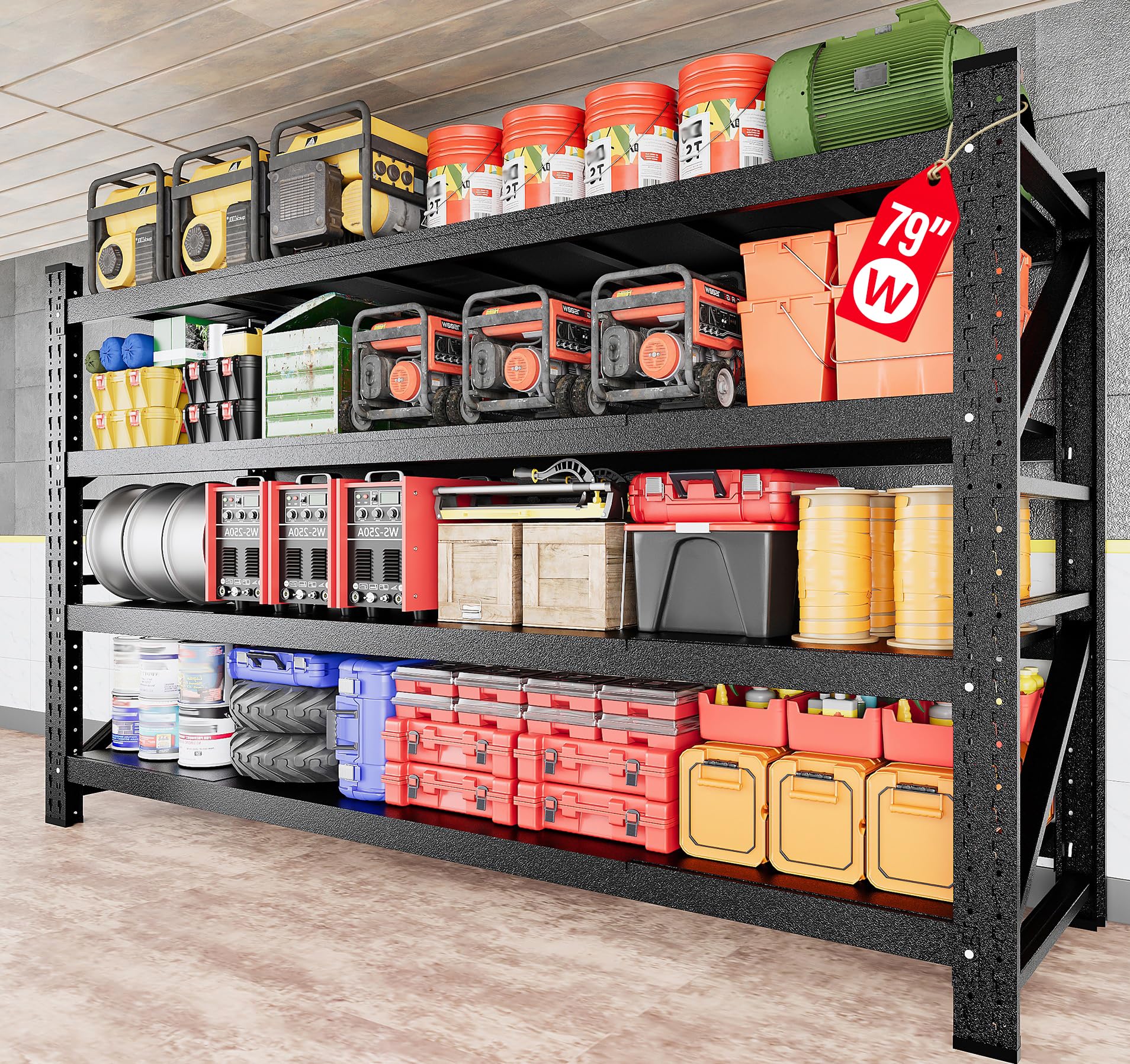
If you’re building storage in phases—one rack now, another rack next month, then a full row later—this style of rack is designed for that reality. The interconnectivity feature matters because it turns “separate shelves” into a more unified storage line. That’s helpful for two reasons: it improves perceived stability (a connected row moves less than isolated towers), and it improves workflow (one long line is easier to label, map, and maintain than scattered standalone racks).
Owners often describe this unit as stable and practical for garage or warehouse storage, with solid shelf surfaces that are more forgiving than wire when you store smaller boxes. That’s a big deal for warehouses: a solid shelf surface reduces “micro friction” (boxes snagging, corners tipping, small cartons wobbling) and keeps pick/pack zones calmer.
The honest reality from user feedback is that not everyone experiences it as “true industrial pallet racking,” and that’s fair. This is still an assemble-at-home style unit, not a forklift-rated pallet rack system. But for storage of tools, inventory bins, cartons, and supplies, it can be a very strong middle solution—especially when you assemble it carefully and avoid building in a twist.
My favorite practical tip with racks like this: treat the first unit as your “master unit.” Assemble it slowly, get it perfectly square, and set your shelf spacing exactly how you want your workflow to work (heavy bottom, pickable middle, light top). Then, when you add additional units, copy the same shelf spacing so the whole line is consistent. Consistency makes labeling easier, and it makes your warehouse feel professional instead of improvised.
Why warehouses like it
- Connectable design – Builds a scalable row of storage instead of isolated towers.
- Solid shelf surfaces – Better for small cartons and mixed inventory than wire-only surfaces.
- Adjustable shelf heights – Lets you plan storage bays around your tote sizes and pick workflow.
- Coated finish – Helps resist surface wear in busy storage environments.
Good to know
- Some users note minor shipping damage on rails; inspect and straighten before assembling for best squareness.
- Instructions can be improved—go slow on the first rack, then speed up once you understand the system.
- For ultra-dense loads, prioritize racks with thicker uprights and heavy under-shelf ribs.
Ideal for: warehouses and backrooms expanding storage over time who want a connectable system with solid shelf surfaces for mixed inventory.
5. Seville Classics 7‑Tier Bin Rack (21 Bins) – The “Pick/Pack Command Center”

Most warehouses have two storage worlds that don’t mix well: bulk storage (big totes, cartons, heavy items) and small parts (hardware, connectors, maintenance supplies, labels, fittings, components). Bulk storage wants wide shelves. Small parts want a system that makes “grab the right thing” fast and mistake-proof. That’s where a bin rack like this becomes a productivity tool, not just storage furniture.
What owners consistently love about this Seville system is the way the bins interface with the shelf rails: bins slide out to access contents, and the design keeps them from simply falling off the rack like generic bins on a flat shelf. That matters when you’re moving quickly. The included labels are also a big win for real organization—because the fastest warehouse is the one where anyone can find the right part without asking.
The “warehouse truth” here is that bin racks live and die by setup accuracy. Some people get confused by the plastic bracket system common to wire shelving. Owners who succeed emphasize one key detail: align bracket grooves correctly with the pole notches, then build from bottom to top. Once you understand the bracket orientation, assembly is fast and doesn’t require counting tiny rings like older wire racks.
A small but important insight from real feedback: packaging can be a weak spot, and bins can be vulnerable if shelves shift in the box during shipping. So do a quick inventory check on arrival. If everything is intact, this is an excellent “set it and forget it” organizer. And if you want to level it up for a real warehouse: assign bins by SKU family, add a printed label system, and make the top surface a staging spot for pick tickets or outbound cartons. Suddenly it’s not just storage—it’s a workflow station.
Why it’s a warehouse cheat code
- Fast access to small parts – Slide-out bins make picking quicker than digging through boxes on shelves.
- Bins fit the rack properly – Reduces wasted space and prevents “bins tipping forward” frustration.
- Labels included – Organization becomes repeatable, not dependent on one person’s memory.
- Mobility when needed – Casters make it easy to reposition for a new layout or cleaning day.
Good to know
- It’s not a tall bulk rack; it’s a small-parts system—use it where speed and accuracy matter.
- Bracket orientation can confuse first-time builders; go slow on the first shelf and it becomes easy.
- For extra stability in busy areas, park it in a low-traffic zone and lock the casters.
Ideal for: warehouses, shops, and maintenance areas that need fast small-part access with clear labeling and a clean pick/pack workflow.
6. REIBII 60″ Wire Shelving with Wheels – Mobility + Capacity Without the “Flimsy Cart” Feel

Rolling wire shelving is one of the most useful “warehouse utility tools” when you choose the right build. It’s perfect for staging outbound orders, creating a mobile replenishment cart, or organizing bulky inventory that you want to see at a glance. This REIBII rack stands out because it’s wide enough to feel like true storage, not a narrow cart, and it gives you two modes: leveling feet for stability or casters for movement.
Real users highlight exactly what matters: it goes together cleanly, feels sturdy once assembled, and the wheels roll well—even on rougher concrete. That’s a big deal because many wire racks have wheels that look fine until you load them. Here, the option for lockable wheels and the ability to use leveling feet lets you choose your stability level based on how the rack will live day to day.
The most important “expert tip” with any wire rack is to load it intelligently. Wire shelves handle distributed loads beautifully, but point-heavy items can create the illusion of “sag” if placed in the middle without support. If you store heavy totes, put them on lower shelves and center them so weight spreads. If you store smaller cartons, consider adding a thin rigid liner (even a cut-to-size panel) to create a flatter surface and reduce vibration when you roll the rack.
Owners also point out a realistic shipping truth: boxes can arrive beat up, and occasionally a shelf can be bent. The good news is that wire racks often tolerate minor imperfections because they’re tensioned by the assembled structure. Still, inspect before you build. If a shelf lip is badly deformed, it’s better to replace it than to “force it flat” and compromise the shelf’s rail engagement.
Why it’s a warehouse favorite
- Mobility on demand – Wheels make staging and re-layout easy; leveling feet make it stable when parked.
- Wide, usable shelf area – Holds big bins without the “hanging off the edge” danger that narrow racks create.
- Fast access – Open-wire design keeps inventory visible and easy to grab.
- Assembly is approachable – Many users report it’s doable solo, with a helper only needed for speed or top shelves.
Good to know
- Like all rolling racks, load lower and lock casters when stationary to reduce sway and stress.
- Consider liners if you store small boxes or anything that can wobble on wire.
- Minor shipping bends happen sometimes; check shelf lips and rails before assembly.
Ideal for: warehouses that need a wide rolling rack for staging, overflow, or flexible storage zones—especially on smooth concrete floors.
7. PrimeZone 55.5″ x 24″ Rolling Wire Rack – Tall Storage with Wheels You’ll Actually Use
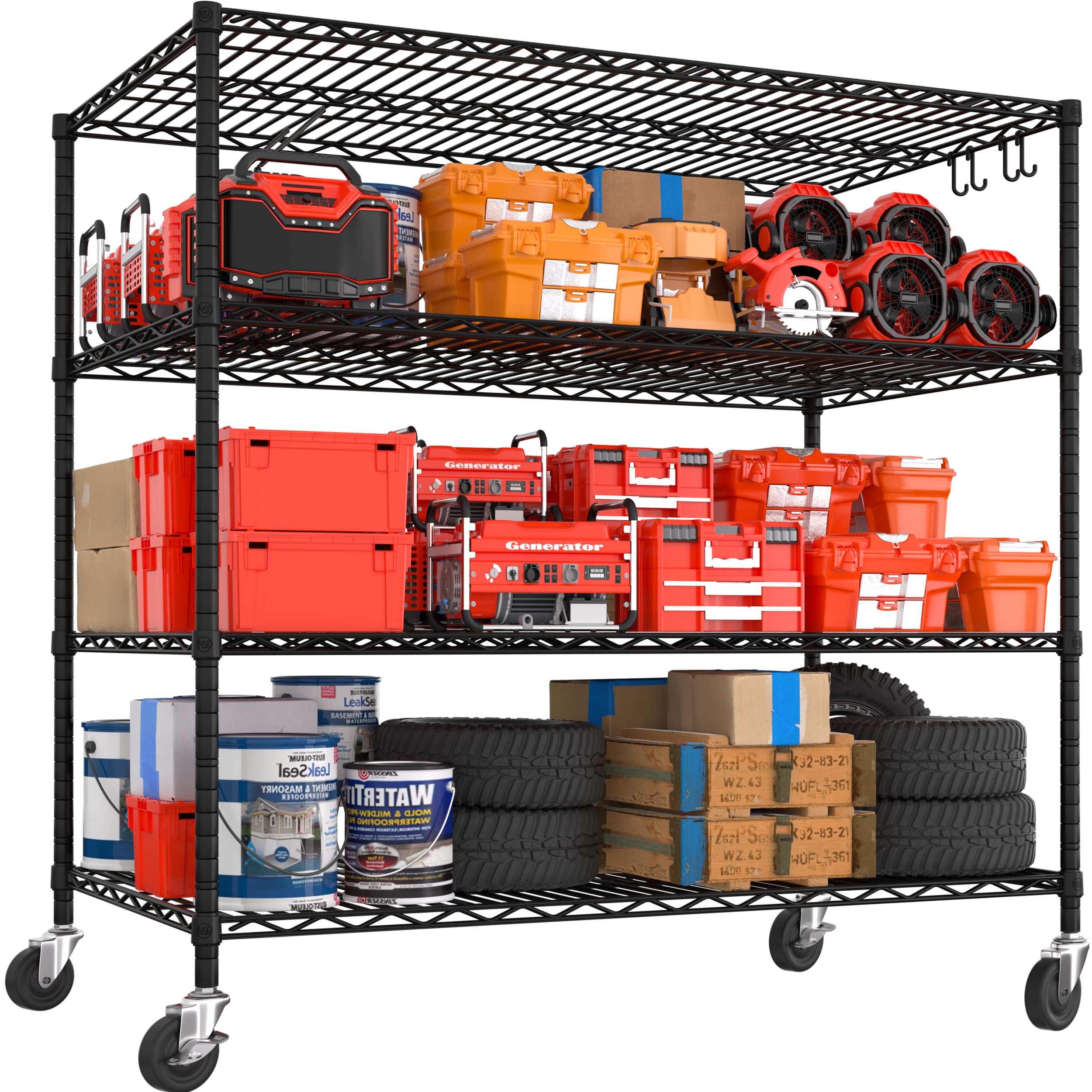
This PrimeZone rack is a smart choice when you want vertical storage and the freedom to move it—without stepping into “industrial pallet rack” territory. The height is the headline feature: it gives you more storage per square foot, which is gold in tight stockrooms, garages, and warehouse corners. And the 24-inch depth means you’re not stuck with shallow shelves that force boxes to hang off the edge.
What owners appreciate most is that it’s straightforward and functional: assemble it, load it with sensible items, and it does the job. One detailed reviewer made a great point about wheels: wheels “make all the difference” because you can move racks to insulate a garage area, rearrange a space, or simply clean behind storage. That’s exactly the warehouse benefit too—mobility allows layout changes without re-building your storage.
But let’s be precise: this is wire shelving. It’s fantastic for cases of supplies, paper goods, tools, and staged items, but it may not feel like a thick-gauge, forklift-adjacent rack. Another reviewer described it as lighter gauge wire—perfect for garage storage and fishing equipment, not ideal for extreme point loads. So the expert approach is simple: use it for the inventory type it’s best at (bulk but not “single heavy lump”), and if you store dense items, place them on lower shelves and spread them out.
The included hooks are a small feature with real value: hanging items (straps, cords, tote bags, small tools) keeps the shelf surface free for boxes. In busy spaces, that reduces clutter and makes workflows smoother. Add a few bins and this rack becomes a flexible “general purpose storage station.”
Why it’s worth considering
- Extra height adds real capacity – Great for maximizing vertical space in tight stockrooms.
- Wheels and leveling feet – Choose stability or mobility depending on how you use the rack.
- 24-inch depth – Better support for boxes and cases than shallow wire racks.
- Hooks reduce clutter – Frees shelf space and keeps frequently used items accessible.
Good to know
- Wire gauge can feel lighter than “industrial steel racks” — treat it as a storage rack, not pallet racking.
- When using wheels, keep heavier loads low and avoid aggressive rolling over rough thresholds.
- If you store small loose items, add a liner or bins to prevent wobble on wire.
Ideal for: warehouses and stockrooms that want tall rolling storage for supplies, cases, and tools—especially when layout flexibility matters.
8. REIBII 60″ W 5‑Tier Steel Rack – Fast Assembly, Solid Feel, and Storage That Scales

This REIBII unit hits a practical sweet spot: wide enough to feel like real storage, five tiers for better vertical density, and boltless assembly that doesn’t require a hardware marathon. In warehouse terms, this is the rack that makes sense when you need “more places for things” without turning your storage project into a construction job.
What stands out in owner feedback is the assembly experience. People repeatedly describe it as “super easy” and “fast,” even when working solo. That’s not just convenience—it’s a risk reducer. When assembly is intuitive, you’re more likely to seat beams correctly, keep the rack square, and end up with a strong structure. When assembly is confusing, people force parts, skip steps, and accidentally build in wobble.
The second big real-life theme is shipping condition. Some users mention dented shelves or beat-up boxes, but also note that the unit still assembled well. Here’s the warehouse insight: a rack can tolerate cosmetic dents, but structural bends at connection points matter. So when you unpack, look at the edges where shelves rest on beams, and look at the upright slot areas. If those are clean, you’re usually fine. If those are distorted, replace the affected part—because that’s where load transfers into the frame.
One detail I love for warehouse safety: the inclusion of anti-tipping accessories. You may not always need them, but in mixed environments (where the rack might be bumped, or where heavier items might shift), anti-tip straps are cheap insurance. Even better: you can use the rack in multiple forms. Many boltless units allow you to split the structure into two shorter racks or a shelf plus bench setup, which is ideal if you’re building a work zone next to your storage zone.
Why it works in real spaces
- Five tiers = more usable zones – Great for separating SKUs by category or frequency of use.
- Fast boltless assembly – Less friction means fewer assembly mistakes and faster organization wins.
- Adjustable shelf spacing – Lets you optimize for tote heights and reduce wasted vertical space.
- Anti-tip accessories included – Useful in busier areas or where heavier loads might shift.
Good to know
- This is “strong storage,” not forklift pallet racking—use sensible load distribution and avoid extreme point loads.
- If shelves arrive dented, check the resting edges and slot areas; cosmetic dents are fine, distorted connection points are not.
- Use a real mallet (and a wood block) for cleaner seating without bending thin struts.
Ideal for: warehouses, basements, and backrooms that want fast-to-build, adjustable shelving with enough tiers to truly organize mixed inventory.
9. BYNSOE 71″ Wide Steel Rack – Big Bays for Big Boxes (Without a Complicated Build)
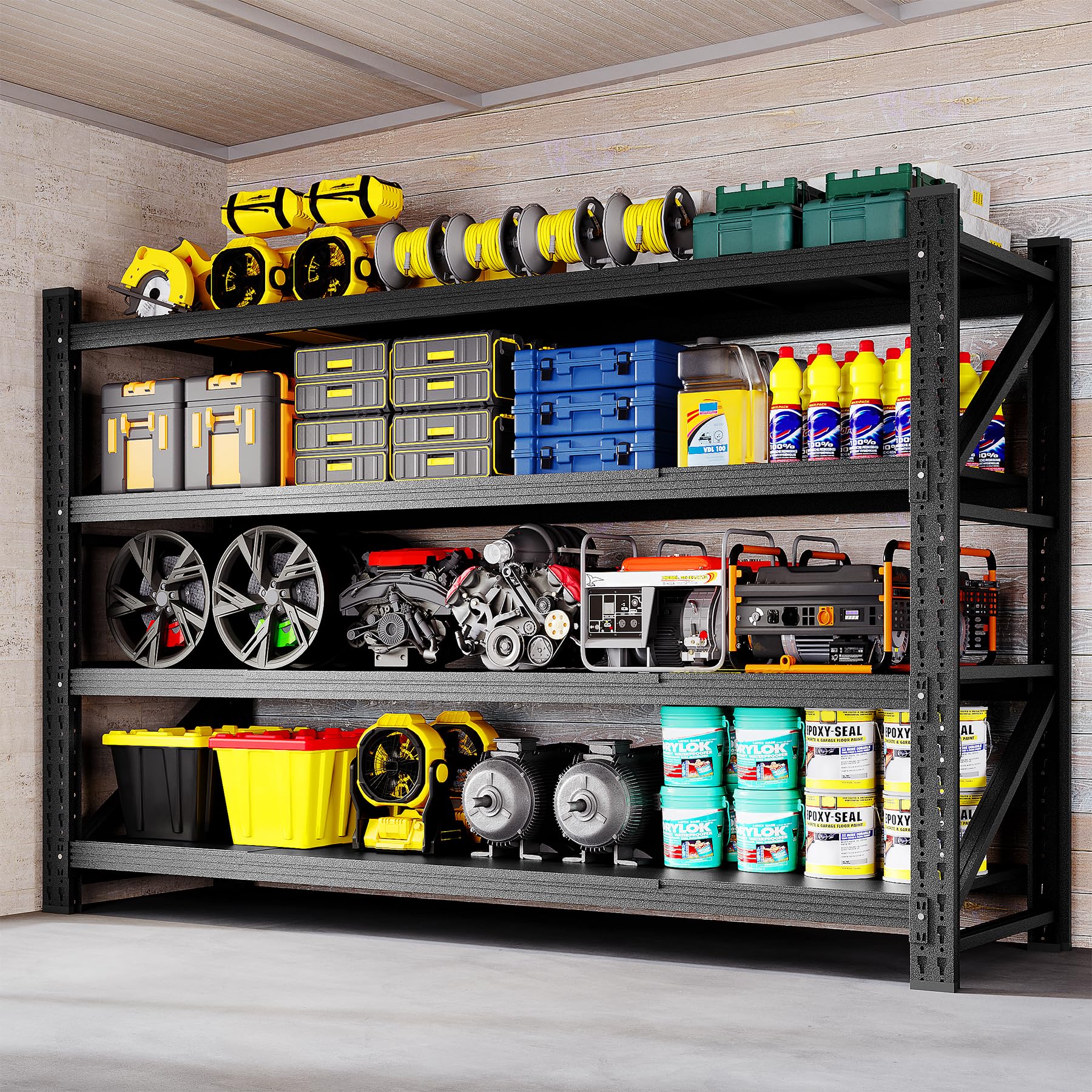
This BYNSOE rack is built for a simple warehouse truth: big inventory is easier to store on big shelves. The wide footprint is the story here—especially if you use large totes, long boxes, or bulky items that don’t fit comfortably on narrower shelves. When you can store more per shelf, you reduce “floor piles,” which is one of the fastest ways to make a space safer and easier to work in.
Owner feedback is refreshingly practical. People describe it as better quality than expected and easy to assemble. They also note something important: parts may not feel “premium thick,” and some beams can be hollow. That’s not automatically a problem. Hollow formed beams can still be strong when designed well—but the feeling can surprise buyers who expect solid bar stock. The key is how the rack behaves under load. Reviews suggest it holds typical garage/warehouse loads without bending or warping when used sensibly.
Here’s where it shines: adjustable shelf levels without a full teardown. In a warehouse, shelf spacing is not a one-time decision. You change what you stock. You change how you tote. You learn what fits. A rack that lets you adapt shelf heights without a rebuild is the difference between “we’ll reorganize someday” and “we reorganized this weekend.”
My setup advice: treat the lowest shelf as your “heavy shelf,” then leave enough headroom above it for the tallest, densest tote you own. Use the upper shelves for lighter cartons and overflow supplies. That single choice improves stability and reduces the temptation to stack heavy items high. If you store smaller items, consider a solid liner to make the shelf surface more box-friendly and reduce vibration when you load/unload quickly.
Why it fits warehouse reality
- Wide shelf bays – Great for large totes and bulky cartons that overwhelm narrow shelves.
- Adjustable shelves – Makes reorganizing easier when inventory changes over time.
- Stable enough for typical use – Reviews suggest it handles common loads without major bending.
- Easy assembly experience – Helpful when you’re building multiple units and want predictable setup time.
Good to know
- Don’t expect “premium thick steel” feel; it’s designed to be practical and strong, not overbuilt art.
- If you need a perfectly solid shelf surface, add liners—especially for small cartons and parts boxes.
- Measure your doorway and assembly area; wide racks are awkward to move fully assembled.
Ideal for: wide-bay storage of totes and bulky inventory when you want easy adjustability and a straightforward assembly experience.
10. RAVIGIN 71″ Wide Rack – The “Four Totes Per Shelf” Style Storage Upgrade

When warehouses get messy, it’s often because storage only fits one tote per shelf, so everything else gets stacked in dangerous towers or spilled onto the floor. Wide racks solve that. RAVIGIN’s 71-inch class rack is designed for the “multiple totes per level” reality, and owners specifically mention being able to hold several totes per shelf—a meaningful upgrade from narrower units.
The best feedback highlights what you want to hear: sturdy feel once loaded, good shelf spacing for larger bins, and easier assembly than expected. That combination matters because wide racks can become frustrating if the pin system is confusing or if the shelf panels aren’t secure. A rack that “feels solid” after loading is a strong indicator that the frame is staying square and the connections are holding.
That said, there is also critical feedback worth respecting. Some users report confusing “J pins,” vague instructions, and shelf panels that feel light or unsecured. Here’s the expert takeaway: with racks that rely on pins or quick-lock connectors, the connection method must be understood and executed correctly. If pins are inserted incorrectly—or if beams are not fully seated— the rack can feel flimsy even if the design is capable.
If you choose this rack, do two things that dramatically improve results: (1) assemble on a flat surface and confirm the frame is square before locking shelf panels in place, and (2) do a light “test load” on each shelf before you load it fully. That test load is not about “proving the rating.” It’s about confirming the shelf is seated correctly and weight transfers into the uprights the way it should. If a shelf shifts under light load, fix it now—because heavy load will turn a small mistake into a big problem.
Why it’s a strong storage style
- Wide shelves reduce clutter – More totes per level means fewer floor piles and safer aisles.
- Good shelf spacing potential – Works well for taller bins and bulky seasonal stock when adjusted smartly.
- Stable when assembled correctly – Positive reviews emphasize a solid feel once loaded.
- Great for “storage room overhaul” projects – A wide rack changes a space fast.
Good to know
- Assembly clarity varies; take your time learning the pin/lock method before rushing through multiple shelves.
- Some users describe panels as light; treat shelves as platforms and distribute load rather than point-loading.
- If you want absolute “locked-in” shelf decking, look for racks with solid shelves or thicker under-shelf ribs.
Ideal for: wide tote-based storage where maximizing usable shelf area matters more than having lots of vertical tiers.
11. AFAIF 71″ Wide 5000‑lb Rack – Modular Panels That Let You Build Around Your Inventory
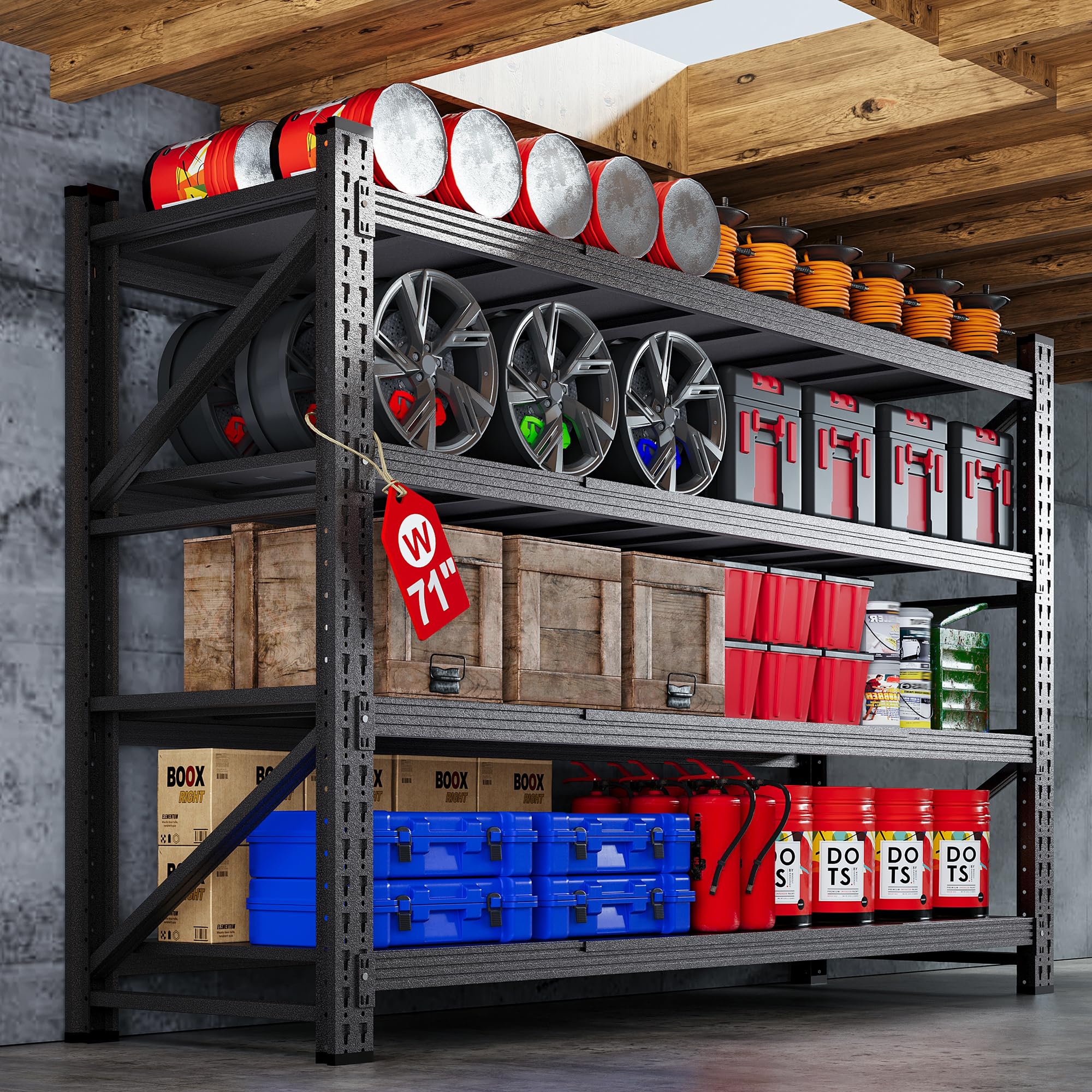
This rack earns a place on this list for one reason: it’s designed to be customized in a way most racks aren’t. The detachable modular panel idea solves a real warehouse problem—tall items that don’t deserve an entire empty shelf above them. Instead of sacrificing a whole tier, you can create a taller “bay” by removing a panel where needed while keeping the rest of the shelf functional. That’s the difference between storage that looks good and storage that actually fits your inventory mix.
Owners who love this rack describe it as stable and strong when assembled correctly, and they highlight the importance of getting the side bracing spacing right. That’s not nitpicking. On wide racks, side braces are what stop the frame from twisting under load. If they’re mis-positioned, the rack can feel off. If they’re correct, the rack feels “plumb” and confident.
There’s also some extremely negative feedback about similar racks in this size class, usually centered around difficult assembly, thin-feeling metal, or frustrating instructions. Treat that as a reminder: a rack’s success is partly the product, partly the build. So do what experienced builders do: lay out the parts, identify the pattern of braces, and assemble the outer frame slowly. Once the outer frame is square and stable, shelves go in smoothly. If you rush and build a twist into the frame, everything becomes harder.
If you want a rack that becomes a long-term storage tool (not a temporary fix), consider using the modular feature deliberately: keep lower shelves fully paneled for dense boxes, and reserve modular removals for upper shelves where you store tall odd items. That preserves strength where it matters while giving you flexibility where it helps.
Why it’s a smart “inventory-first” rack
- Modular panels create custom bays – Store tall items without sacrificing entire shelf levels.
- Wide footprint – Good shelf area for warehouse totes and cartons.
- Expandable mindset – Designed to scale with more units if you build a storage row.
- Protective features – Coated finish and locking pins aim to keep connections tight over time.
Good to know
- Assembly rewards patience; wide racks feel much better when squared before fully locking shelves.
- If you want a “quick build,” smaller racks may feel easier; this is a bigger structure with more bracing.
- Use the modular panel feature strategically so you keep strength where heavy loads live.
Ideal for: warehouses with mixed inventory sizes that need custom bays and prefer a flexible, expandable wide rack design.
12. PMKES 6‑Tier 84″ Tall Rack – When You Want More Shelves, Not More Floor Space

Sometimes the best warehouse upgrade is not a wider rack—it’s more shelves in the same footprint. That’s exactly what this 6-tier design offers: more “homes” for smaller categories of inventory, which reduces the tendency to mix unrelated items on one shelf. In practice, that means faster picking, easier counts, and less “where did we put that?” stress.
Owners who were skeptical often report being impressed once assembled: solid structure, functional design, and shelf heights that are truly usable. A detail from real feedback that matters: even when the rack uses two-piece columns, the connector can be stable when the load transfers correctly and the unit is strapped or stabilized as needed. The included anti-tilt kit is a smart add in busy areas, even if the rack “feels fine” without it.
Here’s the deep practical reality: wire shelves are fantastic for big items, but small items can be annoying on wire. Multiple owners solve this the same way—adding thin wood pieces on top of wire shelves. That’s not a hack; it’s a pro move. It turns a wire shelf into a stable platform while keeping the rack’s structure and airflow benefits. If your warehouse stores boxed parts, small cartons, or loose packaged items, plan for liners from day one.
Another user comment worth internalizing: the included hammer and gloves can be “joke-level,” and that’s normal in this category. Don’t build warehouse storage with toy tools. Use a rubber mallet and take the time to seat every beam. A tall rack amplifies small errors. If it’s slightly out of square at the bottom, it’ll feel “off” at the top. So square it early, then lock it in.
Why it’s useful in tight warehouses
- Six shelves = better organization – Great for splitting SKUs into smaller categories with less mixing.
- Adjustable heights – Helps you build around the actual size of your inventory bins and cartons.
- Good “home storage” feel – Owners describe a solid build for garage and light industrial use.
- Protective touches – Floor pads and edge covers reduce scratches and small injuries during loading.
Good to know
- Wire shelves may need liners for small items or point-heavy loads.
- Tall racks demand squareness; take your time aligning the frame before fully seating shelves.
- Don’t rely on included tools—use a proper mallet for best results.
Ideal for: warehouses and storage rooms that want more shelf tiers in the same footprint—especially for mixed small/medium inventory categories.
13. LI JIU HOME 62″ Wide 5‑Tier Rack – Good Space, But Load It Like a Pro
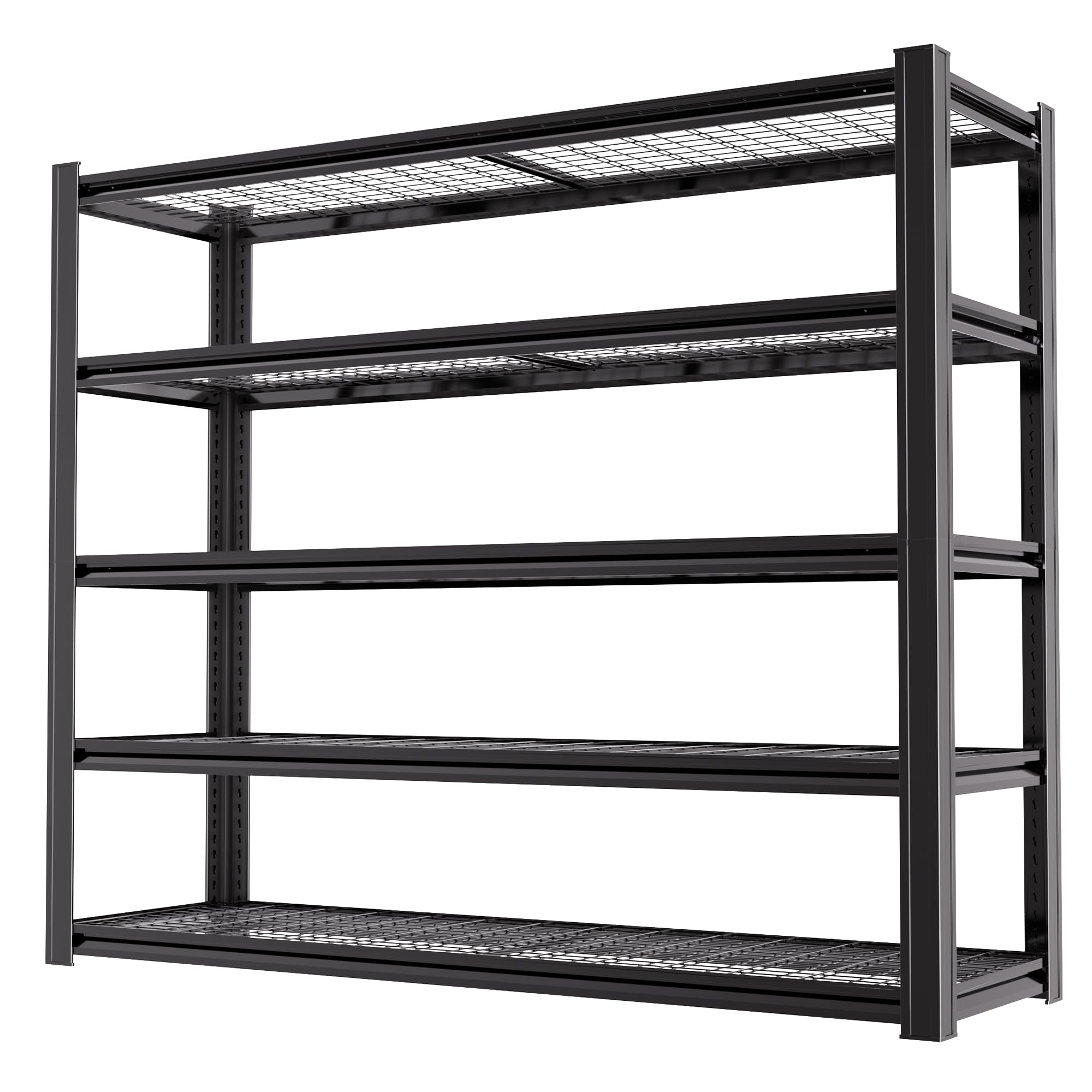
This rack offers a useful footprint and a 5-tier layout, which is often the sweet spot for “organize the chaos” projects in basements, backrooms, and light warehouse storage areas. Owners who like it describe a solid feel after assembly and appreciate the ability to adjust shelf heights. That flexibility matters because the best shelf spacing is not “even.” It’s tailored to your inventory.
But the feedback also includes a serious warning: at least one reviewer reported shelf collapse under load and described the material as flexible. That tells you something important: this rack may be best treated as a moderate-load solution rather than a “maximum density” heavy bay. In warehouse terms, this is a rack you assign to lighter categories: boxed goods, supplies, moderately loaded totes, and items that spread their weight.
If you want to use this rack successfully, here’s the expert loading strategy:
- Use the bottom shelf for the densest items (but still spread them—avoid a single heavy point in the center).
- Place heavier loads over support ribs rather than between them.
- Don’t treat wire decking like solid decking—if you store small cartons or “hard points,” add a liner to spread weight.
- Use the anti-tip kit if the rack lives in a traffic area where bumps happen.
Assembly experience also matters here. Some users mention unclear instructions. If you’ve built boltless racks before, that’s manageable. If you haven’t, go slowly, confirm orientation of each component, and make sure all shelf beams are fully seated. A rack that isn’t fully seated can appear fine empty, then fail once you load it.
Where it fits best
- Good usable footprint – Wide enough for totes and boxes without feeling cramped.
- Five tiers – Helpful for organizing categories instead of stacking everything on fewer shelves.
- Adjustable layout – Can be configured into different shelf heights and even split into alternate setups.
- Anti-tip accessories – Useful in mixed-use spaces and busier storage rooms.
Good to know
- Feedback suggests it may not be ideal for extreme heavy point loads—use liners and smart distribution.
- Instruction clarity varies; take your time and confirm correct seating before loading.
- If you need “load it and forget it” heavy bays, choose thicker-framed racks higher on this list.
Ideal for: overflow and moderate-load storage where footprint and adjustability matter, and where you’ll load thoughtfully instead of maxing out density.
14. WORKPRO 48″ x 24″ 5‑Tier Rack – Flexible Setup for Warehouses That Need Zones
This is a great rack for warehouses that operate like workshops: you don’t just store items—you also build, pack, repair, label, and stage. The standout feature is configurability. You can run it as a full-height 5-tier unit, or split it into two shorter units. That matters because short racks often make better work zones: one can become a bench-height surface, and the other becomes near-hand storage.
Owners generally describe it as sturdy enough for real use and praise the adjustable shelves. Some also point out that “heavy duty” can be relative—the metal may be lighter gauge than premium warehouse systems. That’s not a failure; it’s a category reality. The rack is a strong value when you use it as intended: organized storage of tools, supplies, cartons, and bins with sensible load distribution.
Here’s the expert way to use this rack for maximum warehouse value:
- Split it into two units if you have a packing station—one unit holds shipping supplies, the other becomes your “in-process” shelf.
- Keep the heaviest items low and reserve upper shelves for bulky but light items (foam, empty cartons, packaging).
- Use rubber footpads on smooth floors to reduce micro-sliding when you load/unload quickly.
- Label shelf edges so restocking is repeatable and inventory doesn’t drift into “random piles.”
One review notes the rack can be a “pain to put together” alone but ends up sturdy with help. That’s common for boltless systems: it’s easy once you learn the seating method, but it’s awkward when you’re holding beams, aligning slots, and keeping the frame square. Two people turns it from a puzzle into a smooth assembly.
Why it’s a smart zone-builder
- Split into two units – Perfect for creating a packing/workbench zone and a storage zone.
- Adjustable shelf heights – Optimize for bins, tools, cartons, or mixed inventory.
- Warehouse-friendly footprint – Deep enough for real storage, not just “closet shelves.”
- Durable finish – Powder coating helps resist everyday scuffs and wear.
Good to know
- Some users describe the metal as lighter gauge; it’s best for storage, not extreme point-load industrial gear.
- Assembly is easier with two people—especially if you’re splitting units and aligning shelf heights.
- If you want ultra-wide bays for multiple totes per shelf, choose a 60–79 inch wide rack earlier in this guide.
Ideal for: warehouse-workshop environments where flexible zones matter—packing stations, maintenance corners, and mixed storage areas.
15. REIBII 2‑Pack 5‑Tier Racks – The “Spread Storage Across the Building” Solution
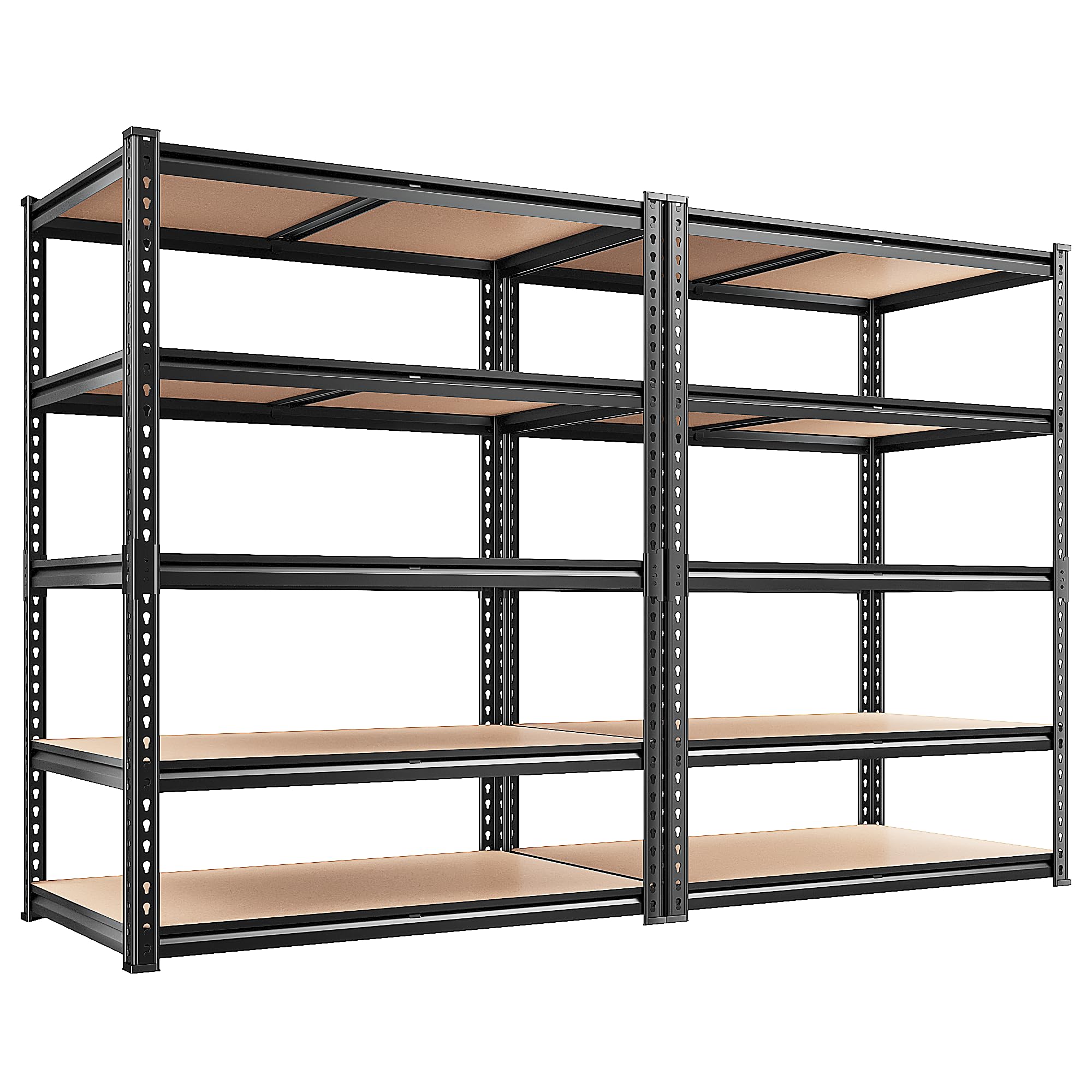
Not every warehouse needs one massive rack. Many warehouses need multiple storage “touch points”: one near receiving, one near packing, one near a maintenance corner, and one near overflow inventory. That’s where a 2-pack strategy becomes powerful. Instead of building one towering storage area that everyone has to walk to, you place smaller racks where the work happens.
Owners who buy multiple sets often talk about an important surprise: the parts can look thin out of the box, but once the rack is fully assembled, it becomes much sturdier because the structure distributes force across the frame. That’s common with boltless racks. Strength comes from full engagement and squareness, not from any single thin piece.
The most valuable “hidden gem” insight from real feedback is about assembly technique. The included plastic mallet is often described as useless. The pro solution is perfect: use a rubber mallet and a small scrap wood block to spread impact and avoid bending thin struts. Seat beams fully into the keyhole slots for maximum strength, and re-check engagement after moving the unit. This is exactly how you prevent racks from loosening over time.
This 2-pack also supports creative warehouse setups: people assemble the racks in half-height sections, then stack them, or split them into separate shorter units, or even use “extra shelf panels” as bridging surfaces between adjacent racks. That kind of flexibility is valuable in warehouses where space and needs change quickly. Just keep the safety mindset: if you create a custom setup, make sure it’s stable, level, and loaded responsibly.
Why multi-pack racks are underrated
- Two racks = more zones – Place storage where work happens instead of walking across the building.
- Adjustable shelves – Tune spacing for bins, supplies, cartons, or tools.
- DIY flexibility – Split into shorter shelves or combine creatively for custom layouts.
- Fast “organization wins” – Multiple units can transform cluttered areas quickly.
Good to know
- Use a real mallet (and a wood block) for clean seating; poor seating is the #1 cause of wobble in this category.
- Thin struts can bend if struck directly—assembly technique matters as much as materials.
- For extreme heavy gear storage, choose thicker, wider industrial racks earlier in the guide.
Ideal for: warehouses that want distributed storage points across multiple zones—especially when flexibility and quick setup matter.
How Warehouse Racks Fail in Real Life (and the Fixes That Prevent It)
Most rack “failures” don’t happen because someone woke up to a snapped shelf. They happen as a slow decline: a little sag becomes a lot of sag, a little wobble becomes “don’t put heavy stuff up there,” and soon the floor becomes storage again. Here’s what actually causes that—and how to prevent it.
The 5 failure patterns that show up again and again
- Point-load abuse: placing a dense item in the middle of a shelf without spreading the load (common with motors, stacked books, single heavy totes).
- Under-seated beams: beams not fully locked into the slots because the builder used a light tool or rushed the seating step.
- Out-of-square frames: a twisted rectangle becomes sway once weight is added; wide racks magnify this problem fast.
- Wheel misuse: a rolling rack loaded top-heavy or rolled aggressively over thresholds creates stress it wasn’t designed to absorb.
- Ignored damage: bent uprights, warped shelf edges, or distorted connection points from shipping that get “forced” into place.
The fix is not complicated, but it is disciplined: assemble on a flat surface, square the frame, seat beams fully, and load heavy items low and spread out. If you do that, even “value” racks perform dramatically better.
The pro setup habits that make racks feel rock-solid
- Use a mallet + wood block: seat parts without bending thin struts; full engagement is strength.
- Build heavy-bottom logic: heaviest items on bottom shelves, medium in the middle, light and bulky up top.
- Add shelf liners when needed: rigid panels spread loads and stabilize small cartons on wire shelves.
- Lock and level: use leveling feet or lockable casters; a rack that rocks on one leg will always feel unstable.
- Inspect quarterly: check for loosened pins, shelf drift, and signs of bending—small fixes prevent big failures.
If your goal is a warehouse that stays organized, your rack setup must be treated as infrastructure—because that’s what it is.
FAQ: Warehouse Shelving Choices (Without the Guesswork)
Wire shelves or solid shelves: which is better for warehouse use?
Do I need to secure a rack to the wall or floor?
How should I load heavy inventory so shelves don’t sag?
Are wheels worth it in a warehouse?
What should I do if parts arrive bent or hardware is missing?
How do I plan shelf spacing so I don’t waste vertical space?
Final Thoughts: Choose Storage That Makes the Whole Warehouse Feel Easier
The right rack doesn’t just “hold stuff.” It changes how your space behaves: less searching, less floor clutter, fewer awkward stacks, and fewer moments where someone says, “Where do we even put this?”
Here’s the simplest way to turn this guide into the right purchase:
- Want the best overall balance of width, strength, and real usability? Start with the WORKPRO 68″ heavy-duty rack. It’s a strong “bulk storage foundation” choice for most warehouses.
- Need maximum “industrial feel” for heavy gear? Consider the Ironton 4-tier industrial rack and plan to add shelf liners if wire decking isn’t ideal for your inventory mix.
- Want wide bays with modular flexibility for tall and awkward items? Look at the AFAIF 79″ modular-panel rack or the AFAIF 71″ modular-panel rack for custom bays that fit real inventory.
- Building storage in phases and want a connectable line? The 79″ wide connectable rack is designed for the “add one more unit” warehouse reality.
- Need fast small-parts organization with labels and bins? Choose the Seville Classics 21-bin rack and turn it into a pick/pack command center.
- Want mobility for staging and flexible layouts? Pick a rolling wire option like the REIBII wire rack with wheels or the tall PrimeZone rolling wire rack and load them low and balanced for best performance.
- Prefer smaller racks spread across multiple zones? The REIBII 2-pack is a practical way to put storage where work actually happens.
The best choice is the one that matches your workflow and stays stable under real loading habits. Pick the rack for warehouse use that fits how your space actually moves—bulk or pick/pack, fixed or mobile, one heavy bay or many small zones— and you’ll get a cleaner warehouse with less daily friction and fewer “we need to reorganize” emergencies.
