
A portable cooker looks simple on the outside… until you try to use it in real life. Suddenly you’re dealing with a short outlet cord in a hotel, a dorm’s power limits, a lid that rattles when it boils, steam that fogs your desk area, and the biggest truth of all: the easiest pot to cook in is not always the easiest pot to clean.
If you’re shopping for a Portable Electric Pot, you’re not just buying a small appliance. You’re buying a fallback plan for the days when you’re sick of takeout, you don’t have a full kitchen, or you want a warm meal at work without waiting for a microwave. And here’s what most guides won’t tell you: the “best” choice isn’t about the biggest wattage or the longest feature list. It’s about how the pot behaves when you’re tired, hungry, and moving fast—because that’s when people scorch soup, boil over ramen, or swear off the gadget forever.
This guide is built from the details that actually decide whether you’ll love your pot (or regret it): how stable it feels when the cord is plugged in, whether the heat cycles gently or aggressively, how the lid vent handles foam-heavy noodles, and what cleaning looks like when you can’t (or shouldn’t) dunk the whole thing in a sink. I’m also going to call out “quiet deal-breakers” you’ll only see in real owner feedback—like interior discoloration on stainless, weak-feeling lids, hard-to-open meal container latches, or the kind of heat that’s so fast it surprises you the first week.
Below you’ll find 15 hand-picked options: compact ramen cookers for dorms, lunch warmers built for the office, removable-pot hot pots for dinner parties, and multi-cookers that can genuinely replace a stovetop when you don’t have one.
In this article
- How to choose the right pot for your real life (not the product page).
- Quick comparison table of 15 standout models.
- In-depth reviews of each pick, with practical pros and cons.
- How these pots actually heat (and what “good heat control” means).
- FAQ + final buying tips so you can choose once and be done.
How to Choose the Right Portable Electric Pot
You can tell a lot about a cooker by how people talk about it after the honeymoon phase. Not “it looks cute,” but: “it boils fast without splashing,” “it doesn’t stink up my space,” “cleanup takes 30 seconds,” or “the cord and base design is smarter than it should be.” That’s the lens I’m using here—because the best pot is the one you’ll keep using.
1. First, pick your “primary mission” (this prevents buyer’s remorse)
Most shoppers don’t choose the wrong pot because they’re careless. They choose the wrong pot because they don’t decide what the pot’s job is. Pick your primary mission first, then let everything else support it:
- Solo dorm / motel cooking: You want fast boiling, decent sauté ability, and a size that feels normal for one person.
- Office or jobsite lunches: You want safe, slow warming, great sealing, and easy cleaning—more “meal warmer” than “mini stove.”
- Couple cooking / small apartment: You want enough capacity for two servings, and heat control gentle enough for soups and grains.
- Family hot pot nights: You want capacity, stable handles, and ideally a divider if people disagree on spicy vs mild.
- Table cooking + grilling: You want a party-friendly surface, predictable heat, and a cleanup plan that won’t ruin your mood.
2. Capacity isn’t about liters—it’s about how you actually eat
Capacity numbers are helpful, but they can trick you. The better question is: What do you want to cook without splitting it into two batches?
- 1.5–1.6L pots: Great for ramen, dumplings, oatmeal, quick soups, and simple one-person meals (often perfect for dorm life). They can cook for two in a pinch, but it’s “two small bowls,” not a family dinner.
- 2.5–3L pots: This is the “sweet spot” for most small households: enough room to stir-fry without crowding and enough depth for soup without sloshing.
- 4–4.5L pots: Excellent for meal prep, larger soups, and group meals where you want real volume but still want something that stores reasonably well.
- 6L divided hot pots: Party and family territory. They shine when you’re feeding multiple people—or when you want two broths at once without arguments.
Expert tip: if you cook anything foam-heavy (ramen, pasta, starchy soups), depth matters more than the headline capacity. Shallow pans boil over faster. Deeper pots give you a buffer so you can step away for 30 seconds without creating a mess.
3. Don’t chase wattage—chase “controlled heat”
High power is useful. It gets water to a boil quickly and helps you sear or sauté. But the most important performance trait is how the pot behaves once it’s hot.
- Two-step power (low/high): Simple and effective. Low simmers. High boils. Perfect for dorms and travel because there’s less to fiddle with.
- Multi-step power (3 levels): A sweet middle ground. Lets you find a “gentle boil” without cycling too aggressively.
- Temperature dial / variable control: Best for people who cook more than noodles—think eggs, sautéed veggies, sauces, and grains.
A common real-life complaint (even on good products) is “it heats so fast it surprised me and burned my soup.” That’s not a dealbreaker. That’s a learning curve. The fix is buying the pot that matches your personality: if you want “set it and forget it,” prioritize stable low heat and keep-warm modes. If you like fast cooking and you stay nearby, higher power can be amazing.
4. Nonstick vs stainless: the real trade-off nobody explains clearly
This is where most “AI fluff” buyer guides fall apart, because they pretend one material is always better. It isn’t. It depends on what you cook and how you clean.
- Nonstick interior: Wins for low-oil cooking, eggs, cheesy foods, sticky sauces, and easy cleanup. If you hate scrubbing, nonstick is pure peace. The trade-off is that you must treat it like a nonstick pan: avoid metal utensils, avoid “dry heating” on high, and accept that any coating has a lifespan if you abuse it.
- Stainless steel interior: Wins for people who want “no coating” peace of mind and are mostly boiling or making soups, noodles, oatmeal, or dumplings. Stainless is durable, but it can stain or discolor with heat and minerals, and it’s less forgiving for eggs or thick sauces unless you use fat and lower heat.
Here’s the honest expert answer: if you primarily cook noodles, soup, and oats, stainless can be fantastic. If you want to sauté chicken, crisp rice, melt cheese, or cook eggs regularly, a good nonstick pot will make you happier.
5. The lid is not an accessory—it’s a performance part
Lids decide three things: boil-over behavior, steam control, and mess control. In real-world feedback, “lid problems” show up as:
- A lid that feels weak or flimsy: not always dangerous, but it’s annoying, especially if you travel with it.
- Vent design that’s too aggressive: steam jets that fog your workspace or drip condensation onto surfaces.
- No vent (or poor vent): foam builds up and suddenly you have a starchy volcano.
For desk/office use, sealed meal warmers are king because they keep smells contained. For active cooking, a tempered glass lid with a steam vent is usually the most user-friendly.
6. Cleaning workflow is the make-or-break detail
Most portable cookers fail in kitchens because of cleaning friction, not because they can’t heat food. These are the workflows that actually matter:
- Removable pot design: The best cleaning experience for larger hot pots. You lift the pot out and wash it like normal cookware, without risking water getting into the electrical base.
- Fully immersible after removing the controller: Common with electric skillets. Remove the temperature probe, then wash the pan. Simple… as long as you remember to remove the control first.
- Fixed base cooking pots: Most small ramen cookers. You can’t submerge them, so you clean with a sponge and careful rinsing. A good design has a rim and shape that makes this easy without water creeping toward the plug area.
If you know you’ll hate “careful cleaning,” prefer removable pots or dishwasher-safe inserts (especially for lunch warmers). That single choice can make the difference between using your pot daily and abandoning it in a cabinet.
Quick Comparison: 15 Portable Electric Pot Picks
Use this table to find your “type” fast—then jump to the deep reviews where I break down the details that actually matter: heat behavior, cleaning reality, lid performance, portability quirks, and what experienced owners love (or nitpick) after weeks of use.
On smaller screens, swipe or scroll sideways to see the full table.
| Model | Pot type | Best for | Standout strength | Amazon |
|---|---|---|---|---|
| AUTUCU 3L Electric Hot Pot & Wok (with Steamer) | Multi-cooker | Most households, dorm + home crossover | Real sauté ability + multi power levels + steamer versatility | Amazon |
| Starfrit The Rock Electric Multi Pot (4.5L) | Multi pot | Meal prep, soups, weeknight one-pot cooking | Thick base + strong heat + easy “clean without soaking base” design | Amazon |
| DEZIN 4L Electric Shabu Shabu Pot (Removable Pot) | Family pot | Couples + families who want easy cleaning | Removable pot convenience + even, annular-style heating | Amazon |
| Topwit 2-in-1 Hot Pot + Grill | Grill combo | Korean BBQ + hot pot nights, travel meals | Dual temperature control = cook soup + grill at once | Amazon |
| Aroma “Whatever Pot” 2.5L (Hot Pot + Grill Pan) | Grill combo | Small apartments, fun table cooking | Swappable pot + grill pan + dishwasher-safe pot | Amazon |
| DEZIN 6L Hot Pot with Divider (Removable) | Dual flavor | Family hot pot nights + parties | S-shaped divider reduces mixing + big capacity + high power | Amazon |
| FGJ 6L Dual-Sided Hot Pot (5 temp control) | Dual flavor | Two-broth hot pot for groups | Fast heating + simple dial control + easy nonstick cleanup | Amazon |
| Food Party 6L Dual-Sided Hot Pot | Dual flavor | Value-minded hot pot fans | Two-broth flexibility + wide table-friendly shape | Amazon |
| Crock-Pot GO 28-oz Electric Lunch Box | Lunch warmer | Office meals, jobsite lunch, travel | Insulated body + bigger capacity + stainless insert | Amazon |
| Crock-Pot 20-oz Electric Lunch Box | Lunch warmer | Portion control + gentle warming | Spill-resistant lid + dishwasher-safe insert + travel-friendly handle | Amazon |
| Dezin 1.5L Nonstick Hot Pot (Sauté Pan) | Mini sauté | Dorm cooking, motel cooking, simple stir-fry | Fast boil + usable sauté surface + easy wipe-clean | Amazon |
| Topwit 1.6L Electric Pot with Steamer | Mini steamer | Steam + boil meals in one go | 304 stainless steamer + compact size + double-wall exterior | Amazon |
| Dezin 1.6L Stainless Electric Pot (Keep Warm) | Stainless mini | Office soups, oats, simple boiling | No-coating stainless interior + keep-warm mode + detachable cord | Amazon |
| Stariver 1.5L Dual-Power Mini Hot Pot | Budget mini | Quick meals with safety features | Even heating + boil-dry protection + clean nonstick surface | Amazon |
| Elite Gourmet 8"x8" Electric Skillet | Travel skillet | Hotel cooking, simple pan meals | Removable temp control = easier washing + lid helps contain splatter | Amazon |
In-Depth Reviews: 15 Portable Electric Pot Picks That Earn Their Spot on Your Counter
Now we go model by model. I’m not going to do the usual “it has a lid and a wattage” routine. Instead, I’m going to explain what these cookers feel like in real life: how fast they heat, how forgiving they are when you’re distracted, what the cleaning experience is actually like, and which buyer profile each one fits best.
1. AUTUCU 3L Electric Hot Pot & Wok (with Steamer) – The Most “Real Cooking” in a Portable Format

This is the kind of cooker people buy expecting “a convenient pot,” then end up calling it the most used appliance in the house. And I get why: it’s sized like something you can actually cook in (not just reheat), but still small enough to feel truly portable. The 3L footprint is a sweet spot—big enough to do a proper stir-fry or a satisfying pot of noodles, but not so huge that it feels like a party-only appliance.
The real advantage here is versatility that doesn’t feel like marketing. You can boil fast when you need to, then shift down to a gentler setting so you’re not fighting violent bubbling or scorching on the bottom. That’s the difference between “I can technically cook in it” and “I actually enjoy cooking in it.” Owners regularly describe it as sturdy and surprisingly well-built (the opposite of flimsy dorm gadgets), and the steamer accessory isn’t a throw-in—it expands the way you eat. Steam dumplings or veggies while soup simmers below, or use steam to “rescue” leftovers that dry out when reheated.
One detail I love for real life: the indicator behavior encourages smarter cooking habits. Fast heat is great, but the best meals come from cooking when the surface is ready, not when you’re impatient. It’s the subtle kind of design that reduces smoke, reduces sticking, and makes the nonstick coating last longer. The included silicone spatula is also a signal: this pot wants you to treat the surface kindly—no metal scraping, no harsh abuse—so the easy-clean promise stays true.
There is one honest quirk to know: because it’s a true portable appliance with a cord connection point, stability can depend on how the cord sits on your counter. A few owners mention needing to position it thoughtfully so the plugged-in cord doesn’t create a tipping leverage. That’s not a dealbreaker; it’s simply the reality of compact countertop appliances. The win is that once you find your “spot,” it becomes a daily driver.
Why you’ll love it
- Feels like real cooking – Not just “boil water,” but sauté, fry, steam, and stew with control.
- Versatility that matters – Multiple power levels help you avoid boil-overs and scorching.
- Smart accessory bundle – Steamer + silicone spatula expand your meal options immediately.
- Built to feel sturdy – Owners consistently describe it as solid and durable for the category.
Good to know
- If your outlet placement is awkward, plan your counter setup so the cord doesn’t tug the unit.
- Nonstick longevity depends on soft utensils and avoiding extreme dry heating.
- It’s portable, but it’s not “tiny”—if you want ultra-compact desk cooking, look at the 1.5–1.6L class.
Ideal for: anyone who wants one portable cooker that can replace a stovetop for a surprising amount of everyday cooking.
2. Starfrit The Rock Electric Multi Pot (4.5L) – The Weeknight Workhorse That Feels Built for Years

Some electric pots are designed as “small kitchen helpers.” This one is designed like a serious piece of cookware that happens to be electric. It’s the kind of unit people keep for years because it does the boring stuff well: soups don’t burn easily when you use it right, stir-fries come together quickly, and the base distributes heat like it’s actually trying to prevent hot spots.
The biggest real-life win is how people naturally clean it. Owners mention washing it by placing it on its side at the sink edge so they can rinse and wipe without flooding the electrical area. That’s an experienced-user behavior—and it tells you the design has the right “lip shape” and geometry to make careful cleaning feel easy instead of stressful. If you’ve ever owned a countertop cooker that felt impossible to clean without risking water creeping into seams, you’ll appreciate that immediately.
Heat performance is another reason this one earns loyalty. It ramps up quickly, and with variable temperature control you can tailor the heat to the food. That matters because different foods punish different mistakes. Rice wants steady heat and patience. Soups want a controlled simmer. Stir-fry wants quick high heat, then a faster finish. A good dial lets you do those transitions without guessing which wattage mode you’re in.
One thing I’d emphasize from an “expert buyer” perspective: this pot rewards a simple habit—preheating with intention. Let it warm for a minute, add a little oil if you’re sautéing, then cook. That tiny routine improves browning, reduces sticking, and preserves the nonstick surface. It’s a small investment that pays you back for years.
There is one caveat to be aware of: as with any higher-power electric pot, it can cook fast enough that you don’t want to walk away for long on high. If you’re heating something thick (tomato soup, sauces, oatmeal), start lower than you think, stir once, then adjust. That’s not a flaw—it’s a sign the appliance has real heat muscle.
Why it’s a standout
- Feels durable – Many owners report using it for years with consistent results.
- Variable control is genuinely useful – Better for real cooking than simple low/high toggles.
- Cleaning strategy-friendly – Shape makes careful rinsing and wiping much less annoying.
- Great capacity without party-only bulk – Big enough for meal prep, still manageable to store.
Good to know
- High heat is powerful—thick foods need attention so they don’t scorch.
- Some shoppers report occasional shipping/condition issues when buying used; buying new reduces that risk.
- If you need ultra-light portability for travel, the 1.5–1.6L class packs easier.
Ideal for: anyone who wants one pot that can handle weeknight cooking, soups, meal prep, and “keep it warm for guests” without feeling delicate.
3. DEZIN 4L Electric Shabu Shabu Pot (Removable Pot) – The “Clean Like Normal Cookware” Advantage

If you’ve ever owned a countertop pot that made you nervous to clean, a removable pot design feels like freedom. This DEZIN model’s “split design” (removable insert) is not a gimmick—it’s the exact engineering choice that makes people actually use a hot pot regularly. Instead of wiping around a base and hoping water doesn’t sneak into seams, you lift the pot out and wash it like any normal piece of cookware. That reduces cleanup stress so much that it changes your cooking habits.
Performance-wise, the pot is built to heat quickly and distribute heat well across the bottom, which matters for hot pot and stir-fry style cooking. Owners consistently describe it as fast once it gets going, with temperature behavior that feels stable: it reaches a boil, then holds a working simmer/boil without you constantly “chasing” the heat. That steady behavior is what prevents overcooked meat, mushy vegetables, and the weird “boil-stop-boil-stop” rhythm that some cheaper cookers develop.
What makes this one especially versatile is that it can be more than a hot pot. People use it for quick meals after work—eggs, steaks, soups—because the pot shape is wide enough to cook multiple items without stacking everything. The included utensils (spoon and spatula) are small conveniences, but they’re also a signal: this is intended to be a self-contained cooking station, not just a “hot broth tub.”
A reality check: larger capacity pots ask you to be intentional about where you store them and how you bring them out. This is not a tiny dorm cooker. It’s a “small family appliance.” If you live in a small space, the removable design helps because it stacks and stores more neatly than many one-piece cookers.
Why people keep using it
- Removable pot = easier cleaning – This alone can be the reason you actually stick with hot pot nights.
- Size is genuinely usable – Big enough for two to several servings without feeling enormous.
- Heat holds well once boiling – Less fiddling, more eating.
- Good “quick meal after work” tool – Wide enough to cook multiple items without crowding.
Good to know
- Some owners note initial heat-up can feel slower, then it becomes strong—plan for a short preheat.
- Because it’s a bigger unit, you’ll want a stable counter or table space.
- If you mainly want ramen for one, you’ll get more convenience from a smaller pot.
Ideal for: couples and families who want an electric pot they’ll actually clean and use often—especially for hot pot nights and easy group meals.
4. Topwit 2-in-1 Hot Pot + Grill – The “Soup + Sizzle at the Same Time” Crowd-Pleaser

This is the product you buy when you want your meal to feel like an event. Hot pot is already social, but the moment you add a grill surface, you unlock a very specific vibe: someone’s searing meat while someone else cooks noodles, vegetables, or dumplings in broth—at the same time—without hopping between pans and burners. That “simultaneous cooking” is what makes this combo worth considering, because it compresses time and turns dinner into a fun table ritual.
The key feature is independent control. A lot of combo appliances fail because one side steals power from the other, so you end up with a weak simmer and a sad grill. This design is built around letting you manage each side, which matters in real life: broth wants steady heat, grill wants quick bursts, and your food tastes better when both surfaces perform their jobs. Owners talk about it being great for family meals, gatherings, travel, and even semi-truck or hotel life because it replaces multiple appliances in one footprint.
Now for the expert-level honesty: the main trade-off is cleaning. Any time you have a fixed, non-removable grill surface with built-in electronics, you can’t just soak it like a pan. You clean it like a countertop grill—warm wipe, gentle sponge, careful attention around edges. Some users call that “annoying,” and that’s valid. The reason people still love it is because the cooking experience is unique. If you know you’ll resent cleanup, choose a removable pot design instead. If you love the idea of hot pot + Korean BBQ-style cooking at home, this is one of the more affordable ways to get that experience.
One more practical point: smoke management. Nonstick coatings and indoor grills generally produce less smoke than a charcoal grill, but searing fatty meats can still create steam/smoke and food aromas. If you’re in a small apartment, open a window or run a fan. People who do this once tend to keep using the appliance happily. People who don’t… sometimes blame the appliance for what is really “physics + delicious meat.”
Why it’s fun and useful
- Cook two ways at once – Grill + hot pot together creates a fast, social meal flow.
- Independent control matters – Better results than combo units that share one weak heater.
- Travel-friendly for long stays – Great for hotels, work travel, and compact living.
- Nonstick makes cooking easier – Less sticking, less oil, less fuss.
Good to know
- Cleanup is more involved than removable-pot hot pots.
- If you want deep-frying temperatures, this style may not reach what dedicated fryers do.
- Plan ventilation if you grill fatty foods indoors.
Ideal for: people who want a hot pot + BBQ experience at home (or while traveling) and are willing to trade a bit of cleaning effort for a lot of meal joy.
5. Aroma “Whatever Pot” (2.5L) – Smart Design for People Who Want Options Without Clutter

The “Whatever Pot” name is a little goofy, but the concept is genuinely smart: one heat base, multiple cooking surfaces. That design decision is what keeps small kitchens from becoming appliance graveyards. Instead of buying a separate grill, separate hot pot, and separate multi-cooker, you get one base and swap the top. For a small apartment or dorm-style setup, that’s the difference between “I can store this” and “this is always in the way.”
Real-life hot pot fans tend to care about three things: does it boil reliably, does it splatter, and can I clean it without hating my life. This one scores well on all three, especially because the stainless cooking pot is dishwasher safe. That’s a big deal if you plan to do hot pot nights often, because the biggest friction point isn’t cooking—it’s cleanup and leftovers. Being able to wash the pot easily (and not baby it) makes you more likely to keep the habit.
An underrated design detail here is the shape. Some divided hot pots have straight dividers that force awkward stirring and splashing. This pot’s round shape and compartment style can feel easier to work around a table, especially for 2–3 people, because everyone can reach without elbow gymnastics. If you regularly entertain four people, you may want a larger 6L unit. For everyday “small group” hot pot, this is a sweet, manageable size.
Now, let’s talk safety and “real household behavior.” These table cookers can get genuinely hot. A few owners mention using a board or heat-safe mat underneath to protect table surfaces. That’s not a flaw—it’s a normal step for any hot cooking appliance on a table. The important thing is that the handles stay usable and the pot feels stable. This one’s bamboo handle + intuitive dial design makes it feel less like a lab device and more like a friendly kitchen tool.
One quick technical note: always ensure the version you’re buying matches your outlet voltage for your country. Most households in the U.S. use standard outlets, and you want your appliance to match that reality so heating behavior is correct.
Why it’s cleverly practical
- One base, multiple tops – Saves space and reduces appliance clutter.
- Dishwasher-safe cooking pot – Huge quality-of-life improvement for frequent use.
- Table-friendly shape – Easy access for small groups without splashy awkward stirring.
- Good for routine hot pot habits – Encourages healthier “cook veggies, eat together” dinners.
Good to know
- Not as large as 6L party pots—best for 1–3 people (or 4 with multiple rounds).
- Grill insert still requires careful cleaning (like most grill surfaces).
- Use a heat-safe mat/board on delicate tables, because this can get very hot.
Ideal for: small-space cooks who want one system that can do hot pot, grilling, and everyday boiling without filling cabinets with separate gadgets.
6. DEZIN 6L Hot Pot with Divider (Removable) – The “Two Broths, No Arguments” Party Upgrade

If you’ve ever hosted hot pot night, you know the universal truth: someone wants spicy, someone wants mild, and nobody wants to compromise. This pot is designed to solve that problem cleanly. The divider shape matters more than people realize—because the wrong divider can leak, mix flavors, or create a weird boiling imbalance where one side is furious and the other is sleepy. A well-designed divider keeps two broths separate without drama, and that’s exactly why owners rave about “no leakage” and easy separation.
The second reason this is a premium pick is the overall “use experience.” The pot is removable, so cleaning is straightforward—lift, wash, done. Nonstick coating reduces cleanup further, which is critical in party cooking because you’re already cleaning plates, dipping bowls, and a mountain of vegetables. If the main pot is hard to clean, hot pot becomes a “special occasion only” meal. If the pot cleans easily, it becomes a weekly tradition.
Heat performance is also party-critical. In a group, you don’t want to wait forever for the broth to return to a boil every time someone adds a handful of cold ingredients. Higher power and efficient heating tubes help you keep momentum. That momentum is what makes hot pot feel fun instead of slow: people cook, eat, laugh, cook again—without the pot constantly falling behind.
A subtle but important usability detail: depth. A deeper pot reduces splashing and gives you room to stir noodles without sloshing broth over the edge. This matters at a crowded table where one spill can turn into a cleanup event. Owners also like that the unit looks good—because a table cooker is part of the “table aesthetic,” not just a hidden appliance.
If you’re buying one “serious” hot pot for your household, this is the kind of purchase that can make you stop going to hot pot restaurants as often. Not because restaurants aren’t great, but because the home experience becomes easy, consistent, and tailored exactly to your preferences.
Why it’s worth upgrading
- Divider design reduces mixing – The S-shape concept helps keep broths separated.
- Removable pot for easy washing – A true quality-of-life feature for frequent hot pot nights.
- Fast heat recovery – Better group experience when adding cold ingredients repeatedly.
- Nonstick simplifies the “after party” – Less scrubbing, more relaxing.
Good to know
- Large pots need storage space—plan where it will live.
- Nonstick still prefers gentle utensils (silicone/wood) for longevity.
- If you only cook for one or two, a 4–4.5L pot may feel more everyday-friendly.
Ideal for: families and entertainers who want a premium two-broth setup that feels stable, easy to clean, and fast enough to keep a group meal flowing.
7. FGJ 6L Dual-Sided Hot Pot – Fast Heating, Simple Control, Great Two-Flavor Nights

This is a strong choice for people who want a classic dual-broth hot pot experience with minimal learning curve. The control is straightforward: enough temperature ranges to keep broth where you want it, without making you feel like you’re operating a complicated appliance. That matters because hot pot is supposed to be fun, not fussy.
Owners consistently emphasize three practical wins: (1) it heats quickly, (2) it holds a steady temperature once set, and (3) the nonstick interior makes cleanup dramatically easier. That third point is underappreciated. Hot pot leaves behind broth residue, spice oils, and sometimes starchy noodle film. A surface that releases easily makes the difference between “quick wash” and “scrub session.”
I also like the “table presence” factor here. People mention enjoying the look (color/aesthetic) and feeling like it’s well made. That matters more than it seems, because table cookers aren’t hidden. When an appliance looks inviting, families use it more. And the more you use it, the more value you get—especially if it leads to more shared dinners at home.
Now for the realistic caution: glass lids can be fragile in shipping or if handled roughly. Some buyers report receiving a damaged lid or needing a replacement after overtightening a handle assembly. That’s not unique to this brand—glass is glass—but it’s a reminder to treat the lid as a precision part, not a pot lid you toss around. The upside is that many companies and sellers handle replacements well when issues happen.
From a cooking standpoint, this pot shines with the “two broths, same heat” approach. It brings both sides to a working boil and keeps them there reliably. If you want an appliance that makes you feel like you brought the hot pot restaurant home, this is a solid pick.
Why it works so well
- Fast heating – Better hot pot flow for groups.
- Simple temperature control – Easy to maintain a steady simmer or boil.
- Nonstick makes cleanup easy – A real advantage for broth-based cooking.
- Two flavors, no compromise – Great for mixed spice preferences.
Good to know
- Be gentle with the lid—shipping and handling are the risk points for glass.
- This is sized for gatherings; it’s bigger than daily “ramen cooker” needs.
- Always place on a stable surface and keep cords out of traffic paths at the table.
Ideal for: hot pot fans who want a big two-broth pot with easy control and easy cleaning, without paying for extra complexity.
8. Food Party 6L Dual-Sided Hot Pot – A Budget-Friendly Way to Host Great Hot Pot Nights
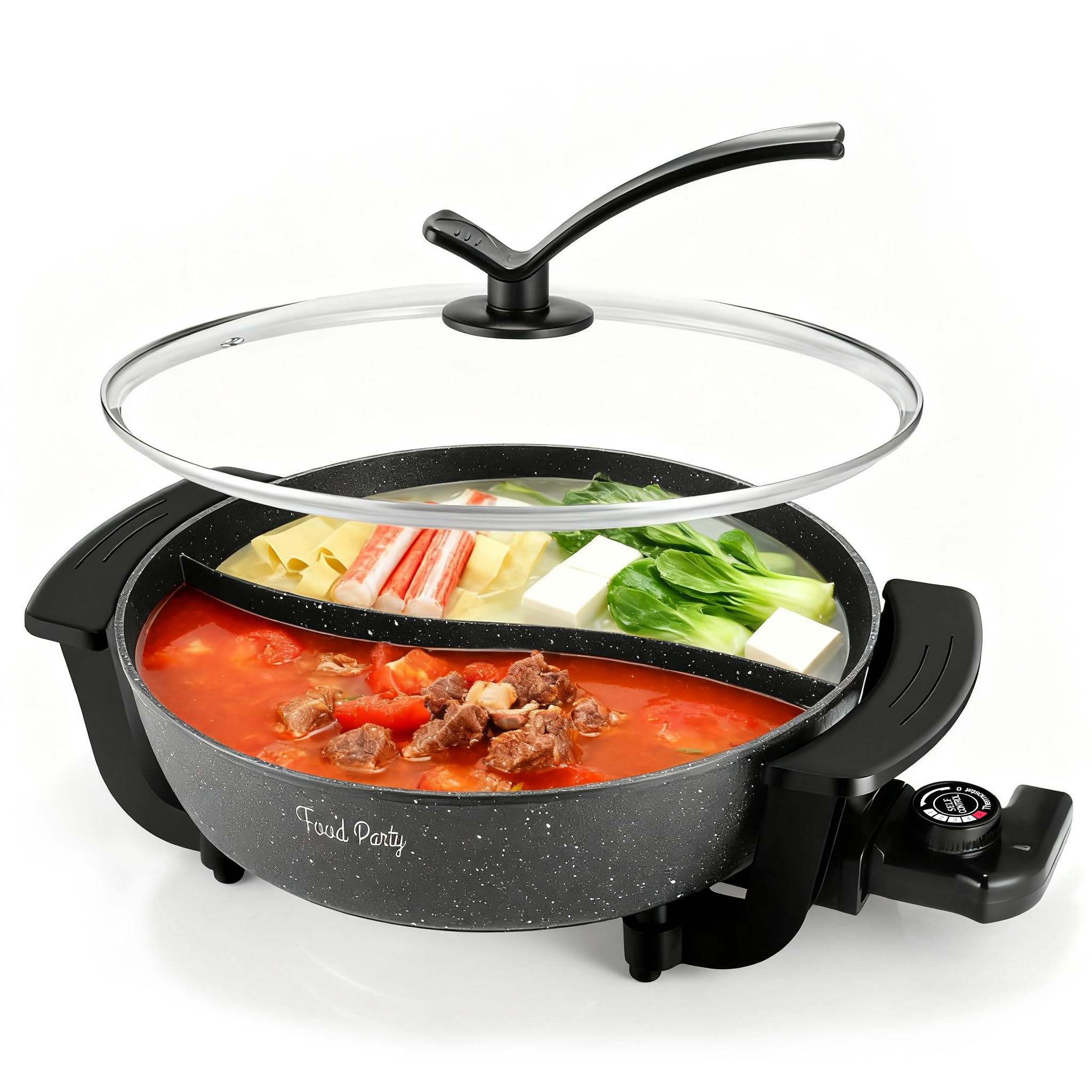
If you want the dual-broth hot pot experience without overthinking it, this is a strong contender. Owners consistently describe it as easy to use, easy to clean, and big enough for small gatherings. The practicality here is the real sell: you can run two broths, customize your side (more garlic, more spice, more herbs), and keep everyone happy without making two separate pots.
What I like about the feedback around this pot is that it’s “normal people cooking.” Not “I’m a chef.” More like: “we used two broth packets,” “each side holds enough water,” “it stays boiling,” “nothing sticks.” That’s the kind of real-life confirmation you want when you’re buying a communal cooker. Hot pot is a meal format that rewards reliability: broth needs to boil, ingredients need to cook consistently, and cleanup needs to be easy or the tradition dies. This pot supports the tradition.
Nonstick interior matters a lot here, because hot pot broth can be oily and spice-heavy. A coating that releases well lets you rinse and wipe quickly instead of scrubbing seasoning residue. For households that do hot pot frequently, that time savings adds up fast. The glass lid is also a nice usability feature: you can monitor boil and reduce evaporation without lifting constantly.
One realistic note: some users mention that temperature control could be more precise. That’s common in value-priced hot pots—the dial often functions more like “low/medium/high ranges” than exact degrees. If you’re the kind of cook who needs perfect precision, step up to models with more refined control. If your goal is fun family meals, this does the job well.
Bonus: a recipe booklet can actually be useful if you’re new to hot pot. Not because you need a recipe to boil broth, but because it sparks ideas (dipping sauces, ingredient combos, broth balancing) that make your first hot pot nights feel more successful.
Why it’s such good value
- Dual-broth flexibility – Two flavors at once without extra cooking equipment.
- Easy cleanup – Nonstick surface reduces scrubbing after spice-heavy meals.
- Heats quickly and stays hot – The core requirement for hot pot nights.
- Friendly for beginners – Simple to operate, and recipe inspiration helps new hot pot cooks.
Good to know
- Temperature control is more “range” than “precision.”
- Large size means you’ll want storage space.
- Like any hot pot, indoor cooking can create lingering aromas—ventilation helps.
Ideal for: anyone who wants a reliable, budget-friendly dual-broth pot that makes home hot pot nights easy and repeatable.
9. Crock-Pot GO 28-oz Electric Lunch Box – The “Steaming Hot Lunch” Upgrade for Workdays

This is a different category than “electric cooking pot,” and it’s important to treat it that way. A lunch warmer is not trying to sear a steak; it’s trying to make your meal taste like it came from a kitchen, not a microwave. That difference is exactly why people fall in love with these—because reheated food can be genuinely better when it warms slowly and evenly. Less rubbery protein, less weird “hot edges, cold center” behavior, and less of that microwave smell that sticks to office kitchens.
Owners love the routine: plug it in when you arrive, forget about it, and lunch is ready when you are. That’s real convenience. The stainless insert is also a major quality-of-life feature because it cleans well, doesn’t hold odors as easily as plastic, and feels durable for daily use. Many users specifically praise that the lid seals tightly and the unit doesn’t leak—because if you commute, that’s the first requirement. A “warm lunch box” that spills in a backpack is not a product; it’s a problem.
Now the “expert” part: the inner container design is the only place where picky buyers may hesitate. Some users mention the inner latches can be stubborn, especially when cold. That’s not a universal issue, but it’s the kind of detail that matters if you have limited grip strength or you want everything to be effortless. The good news: people often report it becomes easier with use and with warmth. And the overall product experience remains positive enough that many buyers say they’d buy it again (which is the highest compliment in this category).
Here’s how to get the best results from a warmer like this: add a small splash of water to rice or grains so they don’t dry out, stir once mid-warm if you can, and treat it as a reheater for cooked meals. If you do that, the results are shockingly satisfying—especially for soups, stews, pasta, chili, and casseroles.
Why it’s a workday game-changer
- Even, gentle heating – Better texture than microwaving for many foods.
- Leak-resistant travel design – Built for commuting and jobsite lunch life.
- Stainless insert – Easy cleaning and more “grown-up durable” feel.
- Simple routine – Plug in, work, eat. No waiting in microwave lines.
Good to know
- Inner container latches can feel stiff for some users, especially when cold.
- This is primarily a warmer, not a high-heat cooking pot.
- If you want tiny portion control, the 20-oz version may fit your routine better.
Ideal for: office workers, travelers, and anyone who wants hot lunches without relying on a microwave (or without compromising texture).
10. Crock-Pot 20-oz Electric Lunch Box – Small, Cute, and Shockingly Practical

This is the lunch warmer for people who want “just enough.” It’s sized for soups, chili, small pasta servings, or leftovers that you’re intentionally keeping reasonable. And because it’s small, it’s also less intimidating: it fits on desks, small counters, and lunchroom tables without taking over the space. That matters in real life—especially in offices where counter space is always weirdly scarce.
What owners consistently praise is the warming style: it heats food to a satisfying temperature without turning it into molten lava. That’s exactly what most people want at work. You don’t want to burn your tongue; you want a comfortable, hot meal that feels like a break. People also love the travel design details: handle, cord storage, and the seal. A tight lid that prevents spills turns this from “cute gadget” into “daily habit.”
Here’s an expert angle that’s easy to miss: the best lunch warmers reduce friction before lunch. If the pot is easy to pack, easy to carry, and easy to clean, you’re more likely to bring home food. And bringing home food is not just cost-saving—it usually means you’re eating what you actually like. That’s why this category of product has such loyal fans.
The main nitpick you’ll see in real feedback is that the cord can be short. That’s not unique to this model—many small warmers assume you’re plugging in close to an outlet. If your workspace outlets are inconvenient, a short extension cord (used safely) can make the whole experience smoother. The other wish many owners have is temperature control. But for a lunch warmer, simplicity is often the point: one job, done well.
Why people adore it
- Perfect “work lunch” heat level – Warm and satisfying without overcooking most foods.
- Spill-resistant design – Great for commuting and packing in bags.
- Easy cleanup – Dishwasher-safe components reduce daily friction.
- Small footprint – Fits desk life and small spaces easily.
Good to know
- Not designed for high-heat cooking; best as a warmer.
- Short cord can be inconvenient depending on outlet placement.
- No temperature control—simple operation by design.
Ideal for: anyone who wants warm lunches on the go, prefers smaller portions, and values simple daily usability over “extra features.”
11. Dezin 1.5L Nonstick Hot Pot (Sauté Pan) – Fast Boil + Real Sauté for No-Kitchen Living

This is one of the most practical “no stove” solutions in the entire list. It’s compact enough for dorms and motel living, but it’s designed to do more than boil water. That matters because the moment you can sauté, you unlock real meals: sear chicken, sauté vegetables, toast spices, then add broth and noodles. That simple workflow is how you go from “instant ramen” to “actual dinner.”
Owners consistently report that it heats faster than expected—often faster than their home stove for small volumes—which is exactly what you want in a portable cooker. Fast boiling means you can cook between classes, between meetings, or after a long day of travel without feeling like you’re waiting forever. The nonstick interior is also a huge win for real life: eggs release more easily, cheesy foods don’t become a scrubbing nightmare, and cleanup is usually a quick wipe. That’s important because the people who need this appliance most (students, travelers, busy professionals) usually don’t want a complicated cleanup routine.
The two power settings are simple but effective: lower for gentle heating, higher for boiling or quicker cooking. A common owner pattern is “boil on high, then drop down once ingredients go in.” That’s the exact behavior you want—it prevents boil-overs and improves texture. The pot’s size is also “honestly usable” for one person and workable for two if you’re not making giant bowls.
Now for the one real-world weakness: some users feel the lid can be a bit delicate, and as with many compact cookers, the sides can get warm (not usually dangerously hot, but warm enough to remind you that this is a cooking appliance). The good news is that many owners describe the exterior as safe to handle with normal care, and the portability is excellent: the cord stores neatly inside and the unit is light enough to travel with without feeling ridiculous.
If you are the kind of buyer who wants one small cooker to cover “boil, sauté, and reheat,” this is one of the best fits. It’s not a party hot pot. It’s a personal kitchen in a small footprint.
Why it’s a dorm favorite
- Fast boiling – Great for quick meals and busy schedules.
- Actually sauté-capable – The feature that turns “snack cooking” into real cooking.
- Nonstick = easy cleanup – Reduces friction so you keep using it.
- Portable design – Compact, lightweight, and easy to store.
Good to know
- Two settings are simple—not precision cooking control.
- Lid can feel a little light; treat it gently for travel.
- Best for 1–2 people; not meant for group hot pot nights.
Ideal for: dorm residents, motel living, travel-heavy workers, and anyone who wants a small cooker that can both boil and sauté.
12. Topwit 1.6L Electric Pot with Steamer – The Tiny Two-Level Cooking Trick

A steamer basket changes how you use a mini pot. It’s not just “nice to have.” It turns a single cooking chamber into a two-level meal system: boil noodles below while steaming dumplings above, or simmer soup while steaming vegetables so your meal feels more balanced without adding extra cookware. For dorms and small apartments, that’s a real advantage because it reduces both countertop clutter and dishwashing.
This Topwit model leans into “health + safety” design: stainless steel in the steamer and inner components, a double-wall exterior that feels safer to handle, and protection systems for overheating and boil-dry situations. Those safety features matter in the exact moments people buy portable cookers for: late-night ramen when you’re tired, office soup when you get distracted, or travel cooking when your setup isn’t “normal kitchen conditions.”
Performance-wise, dual power settings are a strong fit for this size class. Low mode lets you warm and simmer without aggressive bubbling. High mode boils faster for noodles, dumplings, and quick soups. Owners often mention being pleasantly surprised that it can sauté chicken and vegetables before adding broth—a sign the heat is real enough to brown, not just warm. That’s the difference between “portable kettle” behavior and “portable pan” behavior.
From an expert usability standpoint, I also like the lid and vent behavior on this style of pot. Steam vents reduce the “pressure bubble foam volcano” that makes ramen cookers messy. And because you can see through the glass lid, you learn the pot quickly: you’ll know exactly when it’s at a rolling boil and when it’s time to drop to low. That makes cooking more consistent and reduces boil-over risk dramatically.
The trade-off is simple: it’s compact, so it’s not for feeding a crowd. But for one person (and sometimes two), this can feel like a mini meal-prep station that encourages healthier eating without extra effort.
Why it’s uniquely useful
- Steam above + cook below – Makes balanced meals easier in tiny kitchens.
- Dual power control – Practical for simmer vs boil behavior.
- Stainless steamer – More durable and “clean-feeling” than flimsy plastic steamers.
- Safety protections – Helpful for dorm, office, and travel setups.
Good to know
- Compact size is best for 1–2 servings, not group meals.
- Stainless surfaces can show marks; gentle cleaning keeps it looking good.
- If you never steam, a simpler pot may be enough (and cheaper).
Ideal for: anyone who wants a small pot that can create a full meal by steaming and boiling at once—especially dorm residents and office cooks.
13. Dezin 1.6L Stainless Electric Pot (Keep Warm) – For People Who Want Clean, Simple, and Surprisingly Fast Boil

If your number-one priority is “no nonstick coating,” this style of stainless mini pot is the sweet spot. It’s designed for boiling, soups, dumplings, oatmeal, and quick office meals—exactly the foods that don’t require slick nonstick release. And because it’s stainless, it handles high temperatures without the same surface-wear concerns you’d have with a coating.
Owners often describe it with the same surprised tone: “this thing gets hot fast.” That’s common with compact electric pots—small volume plus efficient heating means water reaches boil quickly. But what makes this one particularly practical is the control behavior: two power levels plus a keep-warm function lets you stabilize the temperature when you don’t want constant boiling. That’s huge for oatmeal, soups, and any food where you want gentle heat without splashing or reducing liquid too fast.
There’s also a small engineering detail that tells me the designers understand real life: detachable cord. If you travel, if you store it frequently, or if you have pets, detachable cords are underrated. They reduce clutter, make storage easier, and they can reduce “cord damage disaster” risk. Owners specifically appreciate that if a cord ever gets damaged, replacement is simpler than replacing the whole pot. That’s a very practical kind of durability.
Now, the stainless reality check: stainless can discolor. Some users report the bottom darkening after boiling water, even with careful use. That’s not necessarily damage; it’s normal heat + mineral behavior in stainless cookware. If aesthetics matter to you, a gentle cleaner can often restore shine. If function matters more, you may never care. The bigger behavior concern is thick foods: because it can heat fast, thick soups or sugary sauces can scorch if left unattended—even on lower settings. The solution is simple: use lower heat for thick foods and stir occasionally.
The best way to think about this pot is: “fast boiler + warm holder,” not “mini frying pan.” You can experiment, but it truly shines in the foods it was designed for.
Why it’s a smart choice
- Stainless interior – Great for buyers who prefer no coating.
- Keep-warm function – More useful than it sounds for oats, soup, and office meals.
- Detachable cord – Easier storage, easier replacement, less clutter.
- Boils very fast – Excellent for noodles and quick meals.
Good to know
- Stainless can discolor or show marks; that’s normal but surprises some buyers.
- Thick foods can scorch if you use high heat without stirring.
- If you mainly want eggs/cheese, nonstick is usually easier.
Ideal for: office cooks, dorm cooks, and minimalists who want a stainless interior and a keep-warm mode for soups, oats, noodles, and dumplings.
14. Stariver 1.5L Dual-Power Mini Hot Pot – A Simple, Modern Ramen Cooker That Feels Thoughtful
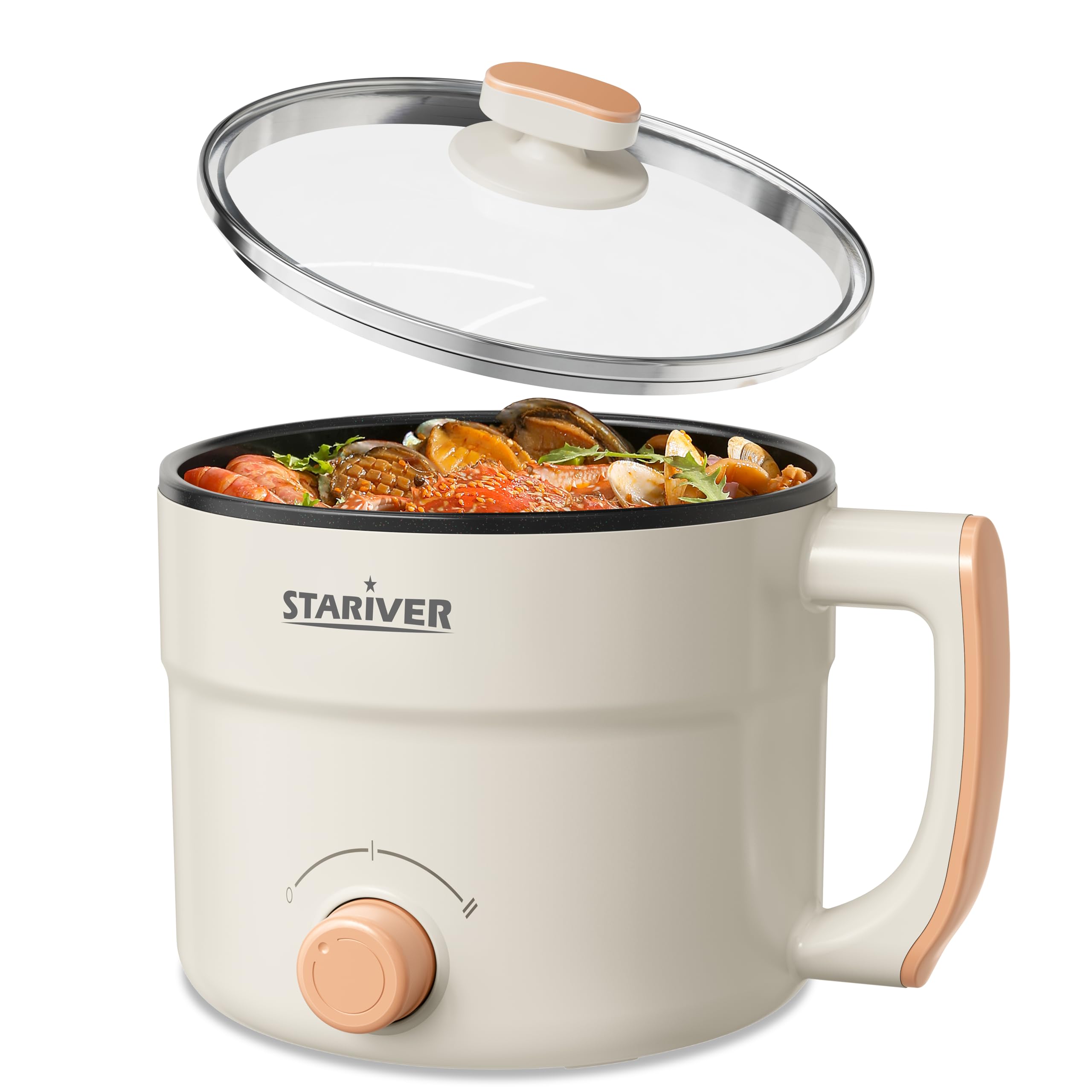
This is a great example of a budget-friendly pot that still feels like someone thought about the user experience. It’s compact, cute enough to leave out, and built around the exact meals people cook in this category: ramen, pasta, soup, oatmeal, eggs. The dual power settings are the right kind of simple—low for simmering, high for boiling—so you can cook without overthinking.
Where this pot stands out is safety confidence. Overheat and boil-dry protection aren’t “exciting,” but they are comforting for dorms, offices, RVs, and travel. If you’ve ever been halfway through cooking and suddenly thought, “Wait… did I leave that on?” you already understand the value. These protection features don’t replace common sense, but they reduce worst-case outcomes and make the appliance friendlier for busy, distracted life.
Owners often describe it as heating quickly and distributing heat evenly, which is exactly what prevents the most annoying mini pot problem: hot spots that scorch food in one area while the rest is barely simmering. Even heat makes cooking more predictable, and predictability is what turns a gadget into a habit. When you know your noodles won’t stick or burn if you set it right, you use it more often.
Cleaning is another reason this one earns praise. A good nonstick coating on a small pot is a cheat code for lazy-but-smart meal routines: cook, rinse, wipe, done. And because it’s lightweight, it travels easily. Some owners buy it specifically to cook on scenic drives or outdoor adventures (with proper stable setup), because it helps them avoid expensive restaurants and eat food that matches their diet. That’s a powerful kind of “portability value” that doesn’t show up in specs.
If you want a compact, reliable mini pot that doesn’t try to be fancy, this is the vibe: simple, safe, and surprisingly useful.
Why it’s a smart budget pick
- Dual power simplicity – Easy simmer/boil control without a learning curve.
- Safety protections – Reassuring for dorms, offices, and travel use.
- Easy cleanup – Nonstick interior makes daily use more realistic.
- Portable and lightweight – Easy to store, easy to bring along.
Good to know
- Not meant for large meals or group cooking.
- Nonstick needs gentle utensils for longevity.
- If you want a removable pot insert for washing, step up to larger hot pot designs.
Ideal for: students, travelers, and small-space cooks who want a simple mini cooker with safety features and easy cleanup.
15. Elite Gourmet 8"x8" Electric Skillet – The “I Cook in Hotels” Secret Weapon
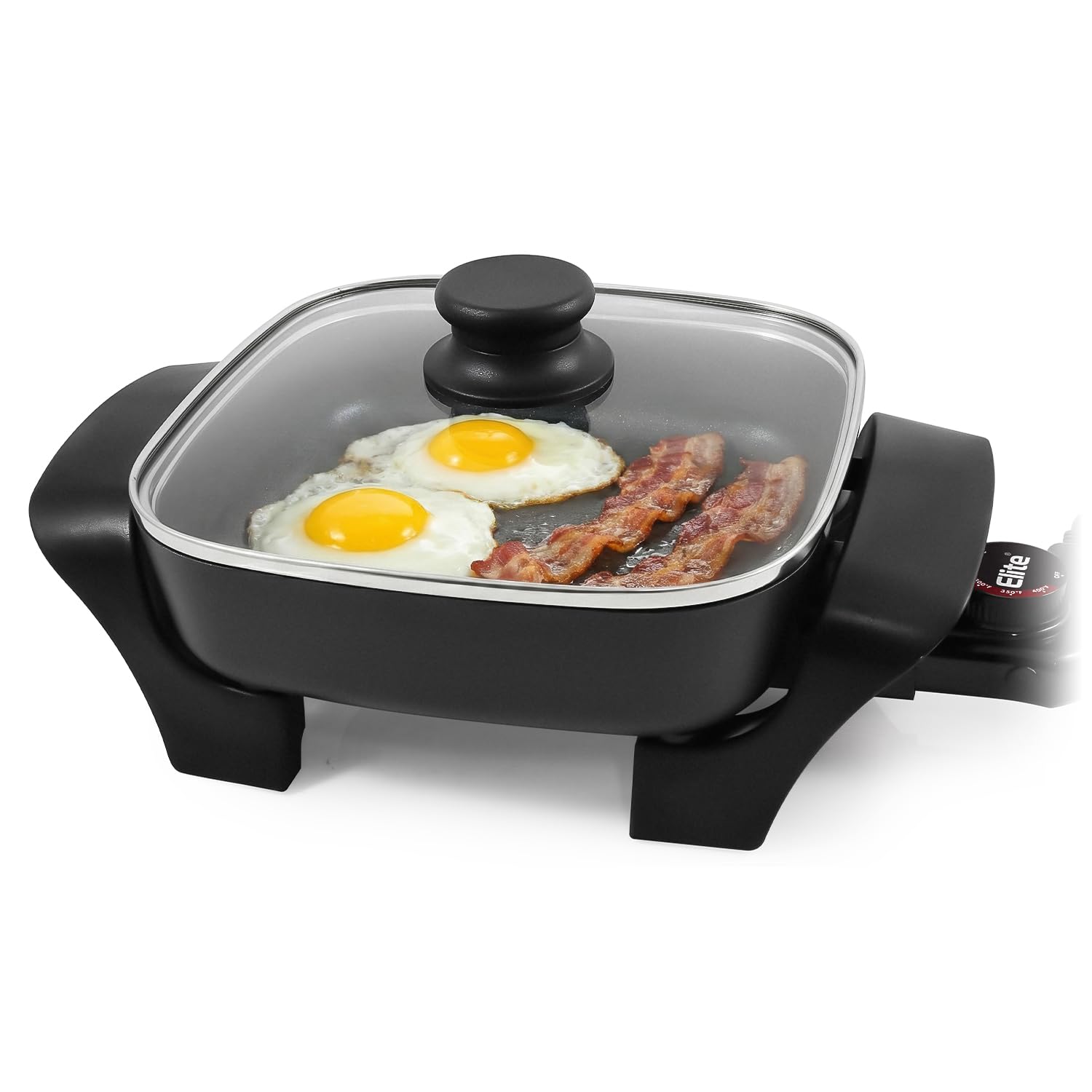
Electric skillets are the underrated travel category. When you’re in a hotel without a microwave or kitchen, a skillet gives you something a mini pot can’t always do well: pan-style cooking. Eggs, sausage, grilled sandwiches, sautéed veggies, even a quick fish fillet—this format feels familiar if you already cook at home. And the lid helps contain splatter while still letting you watch your food.
What owners consistently like is how fast it heats and how evenly it cooks for the size. That’s important, because uneven heat is the fastest route to disappointment in small electric pans. People use it for one or two servings, and many mention it packing surprisingly well for travel. It’s the kind of thing you throw in a suitcase with a small utensil kit and suddenly you’re not trapped eating fast food on long trips.
Now, here’s the expert detail that separates “good skillet experience” from “why did I buy this?” Cord length. Many travel users mention short cords on compact appliances, and this skillet is no exception. If you want this to be a travel solution, plan for outlet reality: hotel outlets are often behind furniture or awkwardly placed. Once you solve that, the skillet becomes a reliable little kitchen.
One more honest point: temperature dials can vary in real-world accuracy on budget skillets. If you need precise frying temperatures, you may find you’re cooking by results rather than by dial number. For most everyday foods, that’s fine—you learn your skillet quickly. But if your goal is deep frying at exact temps, this is not the specialized tool for that. It’s a quick-meal, flexible skillet.
The cleaning workflow is also better than many small cookers: remove the temperature control unit, then wash the pan. This feels more “normal cookware” than sponge-wiping around an attached base. If you hate careful cleaning, this style is your friend.
Why travelers love it
- Skillet format = real meals – Eggs, sandwiches, sauté, and quick proteins are easy.
- Removable controller – Makes cleaning much more practical.
- Fast heat-up – Great for busy mornings and quick dinners.
- Packs well – Useful for long hotel stays and travel routines.
Good to know
- Short cord can be a limitation depending on outlet placement.
- Temperature accuracy may vary—learn by results, not just dial numbers.
- Not a dedicated deep fryer; best for skillet-style cooking.
Ideal for: travelers, hotel-livers, and small-space cooks who want a portable pan-style cooker with easier cleanup than typical fixed-base pots.
How These Pots Actually Heat (and Why “Good Control” Beats Raw Power)
Most people think portable cookers are simple: plug in, heat happens. But there are different heating behaviors, and knowing them helps you choose a pot you’ll actually enjoy using.
What “good heat” looks like in everyday use
- Fast ramp-up, calm holding – Boil quickly, then maintain a steady simmer without violent cycling.
- Even distribution – Less scorching, fewer hot spots, more predictable results.
- Responsive adjustment – When you drop to low, it actually calms down instead of boiling like crazy anyway.
- Enough power for your mission – Lunch warmers need gentle heat; hot pot party pots need heat recovery.
This is why two-level pots and simple dial controls can outperform “higher wattage” pots that don’t manage heat well. The goal isn’t maximum heat; the goal is usable heat.
The 5 mistakes that ruin the experience (and how to avoid them)
- Cooking thick foods on high – Tomato soup, oatmeal, sauces: start low, stir once, then adjust up if needed.
- Overfilling foam-heavy foods – Ramen and pasta foam. Leave headroom or use the lid slightly vented.
- Using metal on nonstick – It works once… then the surface pays you back later. Use silicone/wood.
- Cleaning with too much water near the base – If it’s not a removable pot or detachable controller, wipe-clean with care.
- Ignoring outlet reality – Short cords are common. Plan your counter/table setup so the cord doesn’t tug or trip you.
When you match the appliance to your environment, these products stop feeling like gimmicks and start feeling like genuinely useful tools.
FAQ: Portable Electric Pots (Answered Like a Real Person)
What’s the difference between a “hot pot,” a “mini cooker,” and a lunch warmer?
Nonstick or stainless—what’s better for daily use?
Why do some small pots boil so fast that people burn food?
Are divider hot pots really worth it?
Which style is easiest to clean?
What should I buy if I want ONE device that replaces a stovetop?
Final Thoughts: Buy the Pot That Matches Your Life (and You’ll Use It Constantly)
Here’s the truth: the “best” product is the one you actually use. That comes down to heat behavior, cleaning reality, and whether the size fits your daily meals.
If you want the simplest path to the right purchase, use this quick-match shortlist:
- Want the best overall do-it-all cooker? Start with the AUTUCU 3L Electric Hot Pot & Wok. It’s the most balanced blend of real cooking, usable capacity, and everyday convenience.
- Want a “cook anything” workhorse for soups, meal prep, and weeknights? Choose the Starfrit The Rock Electric Multi Pot. It’s the “buy it once and keep using it” style of pot.
- Want easy cleaning in a bigger family-friendly pot? Go with the DEZIN 4L Removable Shabu Shabu Pot. The removable insert is a daily life upgrade.
- Want the most fun dinner setup at home? The Topwit 2-in-1 Hot Pot + Grill turns meals into an event: soup + sizzle at the same time.
- Want a premium two-broth party hot pot? Choose the DEZIN 6L Divider Hot Pot for big capacity, fast heat recovery, and easy washing.
- Want hot lunches without a microwave? Pick the Crock-Pot GO 28-oz Lunch Warmer (or the 20-oz version for smaller portions).
- Want a simple dorm mini-cooker with real sauté ability? Try the Dezin 1.5L Nonstick Mini Hot Pot. It’s one of the best “tiny kitchen replacement” tools for solo living.
Pick the portable electric pot that matches how you actually eat—solo ramen nights, office meal warming, couple cooking, or family hot pot gatherings—and you’ll end up with the best outcome possible: a warm meal, less stress, and a purchase you don’t second-guess.
