
17 Café‑Grade Espresso Machines That Feel Commercial
This is a buyer’s guide for people who care about the stuff that actually changes your cup: temperature stability, steaming power, workflow speed, clean‑up reality, and whether the machine stays consistent when you pull back‑to‑back drinks.
Here’s the truth: if you’re shopping for industrial espresso coffee machines, you’re not looking for a “cute countertop gadget.” You’re looking for repeatable extractions, real microfoam, and a setup that doesn’t fall apart the moment you start making coffee daily.
Below, I break down 17 popular machines (and one high‑volume batch brewer) using the details most guides skip: how forgiving the workflow is, what owners love after the honeymoon period, what maintenance looks like in real life, and who each model truly fits.
What you’ll walk away with
- A clear “best fit” pick based on your drink habits (espresso only vs milk drinks vs volume serving).
- How to choose the right heating system (single boiler, heat exchanger, dual boiler, thermoblock) without getting lost.
- Consistency checkpoints that matter more than shiny spec sheets.
- Practical ownership tips (water, cleaning, dial‑in strategy) that prevent wasted beans and weak shots.
- Dual‑boiler & HX power
- Touchscreen & guided workflow
- E61 ritual machines
- Office‑friendly super‑autos
- High‑volume drip option
In this article
Fast buyer shortcut
- Want the easiest café workflow? Choose a guided touch machine or a strong super‑automatic.
- Want maximum shot control? Choose dual boiler or an E61 heat exchanger (and plan for warm‑up).
- Serving lots of people fast? Consider batch brew for drip coffee alongside espresso.
How to Choose Industrial Espresso Coffee Machines That Actually Fit Your Life
Most espresso shopping mistakes aren’t caused by “buying a bad machine.” They’re caused by buying the wrong workflow. A machine can be brilliant on paper—and still annoy you every single morning. So instead of starting with specs, start with the questions that control your day‑to‑day experience.
1) Decide what you’re really making 80% of the time
- Straight espresso / Americanos: prioritize temperature stability, a solid grinder (or pairing with one), and repeatable shot control.
- Milk drinks (lattes, cappuccinos, flat whites): steaming power, steam consistency, and a milk workflow you won’t hate matter more than extra buttons.
- Entertaining or office use: speed, back‑to‑back capability, and low‑drama cleanup matter more than “ultimate control.”
Be honest: if you only steam milk once a week, you don’t need a machine built around “steam dominance.” But if you make multiple milk drinks daily, your steam system is your real engine—and you’ll feel it instantly.
2) Pick the heating system based on your pace
- Single boiler (dual‑use) machines can make excellent espresso, but you “switch modes” between brewing and steaming. Great for one or two drinks at a time.
- Heat exchanger (HX) designs let you brew and steam without waiting—fantastic for entertaining—while still keeping the mechanical simplicity many owners love.
- Dual boiler is the “no excuses” setup: one boiler for brewing, one for steam. It’s built for consistency and for repeated milk drinks.
- Thermoblock / ThermoJet designs heat fast and can feel effortless. The best ones are shockingly capable—especially if you value speed and modern guided interfaces.
3) The grinder isn’t an accessory—it’s half the espresso machine
Espresso is picky. Tiny grind changes can move your shot from “sweet and syrupy” to “sour and thin” or “bitter and harsh.” That’s why integrated grinders can be a blessing (one cohesive station) or a limitation (if it’s hard to dial in or clogs with oily beans).
- If you crave convenience, integrated grinders plus guided dosing/tamping are a big win—especially early on.
- If you crave absolute control, you’ll appreciate machines that pair cleanly with a dedicated grinder and a 58mm basket ecosystem.
4) Don’t underestimate “puck prep” friction
- Some machines make dosing and tamping nearly automatic; others demand you develop repeatable technique.
- If you dislike mess, prioritize models with tidy grinding, better baskets, and thoughtful drip‑tray design.
- If you enjoy the craft, choose a machine that rewards precision rather than “fighting” you with inconsistent dosing.
5) Water and maintenance decide your long‑term happiness
Hard water scale is the slow, quiet killer of espresso machines. Even if your machine pulls gorgeous shots, it can’t fight chemistry forever. Use filtered water, follow cleaning cycles, and treat maintenance like brushing your teeth—small, consistent, non‑negotiable.
- Fast daily habits: wipe the steam wand immediately, purge steam, empty drip tray before it becomes a swamp.
- Weekly habits: backflush (if supported), clean baskets, wipe gaskets, remove coffee oils.
- Monthly/quarterly: descale as needed for your water hardness and your machine’s guidance.
If you want the “least regret” choice, aim for a machine that matches your pace, not your ego: a model you’ll use happily every day beats a masterpiece you avoid because it feels like work.
Quick Comparison: 17 Industrial Espresso Coffee Machines at a Glance
Use this table to narrow your shortlist fast. Then jump into the reviews to see the real‑world workflow details that specs don’t show.
On smaller screens, swipe or scroll sideways to see the full table.
| Model | Style | Heating / Build Focus | Best match | Amazon |
|---|---|---|---|---|
| Breville Barista Touch Impress (BES881BSS) | Guided semi‑auto | ThermoJet speed + assisted puck + auto microfoam | Most people who want café drinks without barista stress | Amazon |
| Breville Dynamic Duo Dual Boiler + Smart Grinder Pro | Prosumer | Dual boiler stability + separate grinder workflow | Home baristas chasing repeatable shots & milk drinks | Amazon |
| Rocket Appartamento Nera (E61 HX) | Manual | Classic E61 heat‑exchanger ritual, repairable build | People who love hands‑on espresso and hosting | Amazon |
| Ascaso Steel DUO PID (Dual Thermoblock) | Modern pro‑style | PID + fast warm‑up + strong steam, sleek design | Design lovers who want speed and serious steaming | Amazon |
| Breville Oracle (BES980XL) | Auto‑assist | Dual boiler + auto grind/dose/tamp + auto milk | Premium convenience with real espresso feel | Amazon |
| Diletta Bello (E61 HX) | Manual | Italian HX workflow, classic controls, big reservoir | Milk‑drink households who want an E61 experience | Amazon |
| Bosch 800 Series Fully Automatic (TQU60307) | Super‑auto | Touchscreen + app drinks + auto clean routines | Busy homes & offices that want one‑touch variety | Amazon |
| De’Longhi La Specialista Touch | Guided semi‑auto | Bean guidance + auto froth + cold extraction mode | Newer users who want confidence + iced options | Amazon |
| Breville Barista Touch (BES880BSS) – Stainless | Touchscreen | ThermoJet fast heat + auto milk + saved drinks | People who want café drinks in a few taps | Amazon |
| Breville Barista Touch (BES880BTR) – Black Truffle | Touchscreen | Same workflow, different finish—fast and friendly | Same “touch” ease, bolder aesthetic | Amazon |
| Rancilio Silvia | Classic semi‑auto | Commercial lineage, long‑term serviceable platform | Hands‑on learners who value durability | Amazon |
| Breville Barista Pro | Semi‑auto | Fast heat + manual wand + integrated grinder | People who want speed but still want to learn | Amazon |
| Breville Barista Express Impress | Assisted manual | Smart dosing + assisted tamping, classic “barista” feel | People who want guidance but still want hands‑on control | Amazon |
| Breville Barista Express (BES870XL) – Stainless | Value | All‑in‑one classic, huge community knowledge base | First serious espresso setup without overwhelm | Amazon |
| Breville Barista Express (BES870BSXL) – Black Sesame | Style | Same proven platform, darker modern look | Barista Express fans who want a different finish | Amazon |
| Gaggia Classic Evo Pro (RI9380/51) | Mod‑friendly | Italian classic, serviceable parts, 58mm workflow | Tinkerers who want a long‑term platform | Amazon |
| Dual Drip Commercial Coffee Maker (200 cups/hr) | Batch brew | High‑volume pour‑over + warmers (not espresso) | Church, events, offices serving lots of drip coffee | Amazon |
In‑Depth Reviews: The Machines (and Workflows) That Actually Make Sense
Below is where the “real buyer guide” lives: what it feels like to own each machine, what your routine looks like, and how to avoid the common frustrations.
1. Breville Barista Touch Impress (BES881BSS) – The easiest path to café‑level drinks

If you want café drinks at home but you don’t want your counter to become a science lab, this is the sweet spot. The “Impress” system is basically a training‑wheels‑done‑right approach: it helps with dosing and tamping consistency (where most beginners lose shots), then guides you through extraction and finishes with hands‑free microfoam that’s actually latte‑art capable.
Where it shines is workflow stability. Owners often describe the “first 10 minutes” as surprisingly successful: once the grind is close, the machine’s guidance nudges you toward repeatable results instead of the classic beginner spiral of “change five variables and hope.”
The flip side is that very fresh beans naturally change day to day, and some perfection‑minded users report they still need small adjustments. That’s not a flaw—it’s espresso reality—but it’s worth knowing if you expect push‑button perfection from a semi‑automatic platform.
Why you’ll like it
- Fast daily routine: quick heat‑up and a guided flow that keeps mornings calm.
- Better puck consistency: assisted dosing/tamping reduces channeling and sour shots.
- Great milk with less effort: auto steaming makes “good milk” more repeatable for normal humans.
- Friendly learning curve: you can grow your skills without fighting the machine.
Good to know
- Fresh beans vary: expect occasional micro‑adjustments if you chase perfection.
- Keep it clean: the more automated the workflow, the more you should respect its cleaning prompts.
- Milk temp preferences differ: experiment—your “perfect hot” might not be the default.
Ideal for: anyone who wants café drinks daily, values speed and guidance, and still wants “real espresso” control instead of capsule coffee.
2. Breville Dynamic Duo Dual Boiler + Smart Grinder Pro (BEP920BSS) – The consistency workhorse

If you care most about repeatability—the same shot quality today, tomorrow, and during a weekend brunch run—dual boiler setups earn their keep. This package gives you a dual boiler espresso machine plus a dedicated grinder, which is the kind of separation that serious espresso people end up wanting anyway.
In real ownership terms, it’s the opposite of fussy: once you dial in your bean, you can pull shot after shot and steam milk at the same time without the “wait for pressure to rebuild” annoyance that happens on weaker or single‑boiler designs. Multiple owners describe it as “bulletproof” and “consistent,” with the kind of stability that makes you stop thinking about the machine and start thinking about taste.
The grinder included is capable and convenient, but the bigger story is workflow: this setup supports scales, precise baskets, and the kind of repeatable routine that makes espresso feel calm instead of chaotic.
Why you’ll like it
- Dual boiler confidence: brew and steam at the same time, even during back‑to‑back drinks.
- 58mm ecosystem: easier to grow into precision baskets and barista accessories.
- Stable temperature control: fewer “mystery sour” shots once dialed in.
- Great for entertaining: you’re not stuck waiting between steps.
Good to know
- More counter footprint: separate grinder means a bigger station (but cleaner control).
- Skill required: you do your own puck prep—rewarding, but not push‑button.
- Maintenance matters: treat it like a tool, not a toaster, and it’ll treat you well.
Ideal for: people who want a serious, repeatable espresso setup and don’t mind doing barista steps (grind, dose, prep) for better results.
3. Rocket Espresso Appartamento Nera – For people who want the E61 experience

This is the machine for people who don’t want espresso to be “a feature”—they want it to be a ritual. E61 heat‑exchanger machines have a reputation for longevity and repairability, and owners often talk about them like they’re buying a long‑term tool, not a disposable appliance.
The big daily benefit is simultaneous brewing and steaming, which matters when you’re making multiple cappuccinos or lattes. It’s also the kind of platform many enthusiasts enjoy upgrading over time (flow control, pressure tuning, temperature routines). But you don’t have to mod anything to enjoy it—you just need patience and a good grinder.
Real‑world owner notes tend to converge on the same truths: warm‑up time is part of the deal, maintenance is non‑negotiable, and once you learn the rhythm, it’s deeply satisfying. If you want a machine that feels “mechanical” in the best way, this is that vibe.
Why you’ll like it
- Espresso + steam together: great for milk drinks and guests.
- Repairable mindset: simple mechanical controls, fewer “mystery electronics.”
- Café aesthetics: looks and feels like a serious espresso machine.
- Skill‑rewarding: your technique translates directly into taste improvements.
Good to know
- Warm‑up is real: plan ahead (many owners use timers/smart plugs responsibly).
- Needs a quality grinder: don’t pair it with a bargain grinder and expect magic.
- Routine cleaning: think weekly backflushing and consistent water care.
Ideal for: espresso enthusiasts who want a classic, hands‑on machine for years of ownership—and who enjoy learning the craft.
4. Ascaso Steel DUO PID – Fast warm‑up, confident steam, modern controls

Ascaso’s Steel DUO PID hits a specific buyer profile: you want something that looks architectural on the counter, heats up quickly, and still feels like a serious espresso platform. Owners often rave about the steam performance and the “back‑to‑back” capability that makes latte routines smoother.
This machine also attracts detail‑oriented people (designers, tinkerers, espresso nerds) because the PID and pressure behavior invite controlled dialing‑in. Done right, you can get café‑level espresso clarity and milk texture that makes latte art easier.
The trade‑off? It’s not a “complete kit” out of the box for everyone. Some owners wish for better included accessories, and a few call out bright LEDs or documentation that assumes you already speak espresso. If you’re comfortable learning and tweaking, that’s not a problem—it’s part of the appeal.
Why you’ll like it
- Fast start: great for people who don’t want long warm‑ups.
- Serious steam: strong performance for milk drinks and latte art practice.
- Dial‑in control: PID + pressure awareness helps you chase repeatable shots.
- High-end feel: robust materials and standout counter presence.
Good to know
- Check your kitchen power: confirm your outlet/circuit situation before buying.
- Accessory expectations: you may want to add a preferred tamper/jug/basket setup.
- Learning curve: the interface rewards patience and experimentation.
Ideal for: people who want modern design, fast warm‑up, and “serious espresso” performance with hands‑on control.
5. Breville Oracle (BES980XL) – Automation with a real barista feel

The Oracle is for people who want espresso to feel authentic (portafilter workflow, real extraction, real steaming) but want the machine to handle the fiddliest parts—especially dosing and tamping consistency. Owners often describe a “wow” moment: espresso that makes their old machines taste flat once they hear what properly controlled extraction can do.
The dual boiler setup gives you the ability to brew and steam at the same time, and the automatic milk texturing is one of the Oracle’s biggest daily wins. It lets you build a café workflow without constantly juggling: espresso pulls while milk steams, and cleanup is streamlined with purging routines.
A very honest owner reality check shows up repeatedly: it’s not a “walk away and multitask” super‑auto. You still move the portafilter between grinding/tamping and brewing, you still knock out pucks, and you still rinse. The upside is that you get the best part of manual espresso (control and taste) with fewer opportunities to mess up the puck.
Why you’ll like it
- Dual boiler workflow: espresso and milk at the same time, consistently.
- Auto tamping confidence: reduced puck‑prep variability for sweeter shots.
- Excellent microfoam: hands‑free milk with barista‑style texture.
- Still “real espresso”: you can tweak parameters and learn as you go.
Good to know
- You still do steps: it’s assisted, not a full super‑automatic.
- Cleaning discipline: wipe the wand and keep milk residue from building up.
- Basket workflow quirks: understand how single vs “longer pull” behaves on a fixed setup.
Ideal for: people who want premium convenience but still want espresso that feels and tastes “barista made.”
6. Diletta Bello – Handcrafted E61‑style hosting machine

The Bello appeals to people who want an E61‑style presence and a satisfying manual workflow—without stepping into the deepest end of “espresso tinkering.” Owners tend to highlight how enjoyable it is once you learn the rhythm: pulling shots, steaming milk, and building café drinks without pausing for pressure recovery.
The heat‑exchanger design is a practical host machine: you can keep pace while making multiple drinks, and you don’t feel like you’re waiting on the machine to “catch up.” This is where HX machines shine: entertaining becomes smoother, and milk drinks stop feeling like a chore.
The key to loving it is committing to technique: consistent dosing, learning your steam wand rhythm, and giving the machine the warm‑up time it deserves. If you like the idea of a “serious machine” that rewards skill, this fits that personality.
Why you’ll like it
- Great for milk drinks: brew and steam in one flow without waiting.
- Manual control feel: satisfying levers/valves and a classic espresso experience.
- Entertaining friendly: keeps pace better than single‑boiler setups.
- Looks the part: polished, café‑style counter presence.
Good to know
- Warm‑up required: HX machines reward patience with better stability.
- Technique matters: it won’t “auto‑fix” your puck prep like guided systems.
- Plan a maintenance rhythm: keep water and cleaning consistent for long life.
Ideal for: milk‑drink households and hosts who want a classic manual espresso machine that can keep up when guests show up.
7. Bosch 800 Series Fully Automatic (TQU60307) – Big drink menu, low daily effort

If your #1 priority is “great coffee without turning espresso into a hobby,” this is the lane. Fully automatic machines win on one thing: reliable convenience. You press a drink, the machine handles grinding, dosing, brewing, and milk routines with minimal input. That makes it a strong fit for families, offices, and households where multiple people want coffee without learning barista technique.
Owners who love this model often highlight three things: the range of drinks, the customization options, and the fact that the machine actively guides cleaning and maintenance so you don’t forget (and then wonder why coffee tastes off). Some also praise responsive support when setup hiccups happen—especially around milk system assembly.
The caution side is also real: super‑autos can be sensitive to setup and cleaning. If milk components aren’t seated correctly or if internal grounds accumulate, drinks can taste weaker than expected. The path to loving it is committing to its simple routines and dialing strength/ratio to your preference.
Why you’ll like it
- True one‑touch convenience: espresso and milk drinks without manual puck prep.
- Great for multiple users: easier consistency across a family or office.
- Customization menu: tune strength and ratios to match your taste.
- Guided cleaning: less “mystery maintenance” over time.
Good to know
- Cleanliness is flavor: super‑autos demand routine cleaning for best results.
- Milk system setup matters: small assembly errors can affect performance.
- Espresso purists: semi‑autos can still win on ultimate shot nuance if you love the craft.
Ideal for: busy households or offices that want a wide drink menu and consistent coffee without learning barista technique.
8. De’Longhi La Specialista Touch – Guided confidence with cold extraction
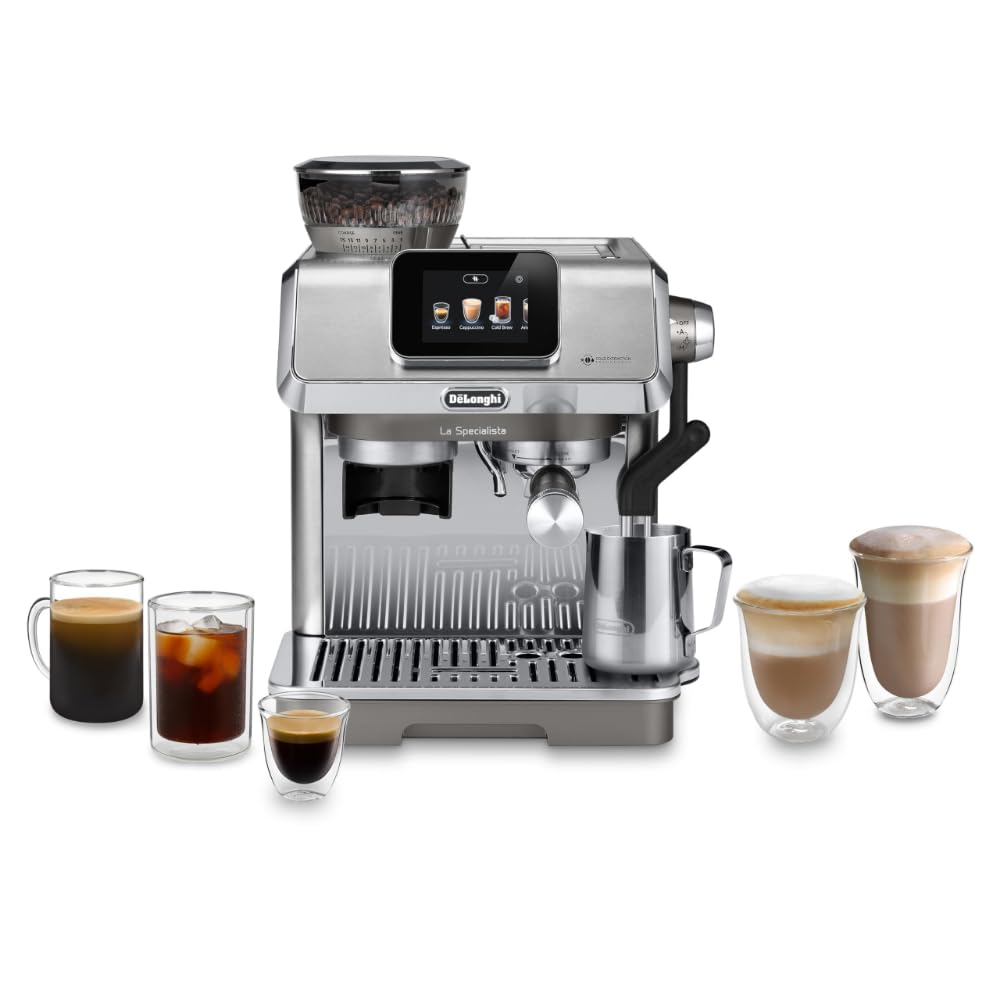
This machine’s superpower is confidence building. Instead of guessing grind/dose/temperature relationships, you get a guided interface designed to help you dial in without feeling lost. Owners who love it often mention that it’s not intimidating: you can be hands‑on, but the machine is coaching you through the steps.
The cold extraction feature is also a strong differentiator for people who actually drink iced coffee regularly. Rather than “espresso over ice” being your only option, you get a workflow aimed at smoother cold drinks without waiting all day. Combine that with automatic milk frothing and it becomes a very “modern home café” machine.
The caution? Like any machine with an integrated grinder and guidance systems, consistency depends on the grinder doing what it says. A few owners report defective grinder behavior (settings not changing grind), which is the kind of issue you’ll want to catch early during setup. When it’s working correctly, the learning experience is the appeal.
Why you’ll like it
- Guided dial‑in: great for people who want help understanding espresso variables.
- Cold drink focus: better suited for iced routines than many traditional machines.
- Milk temperature awareness: auto froth can prevent overheated, scorched‑tasting milk.
- Hands‑on, but not scary: you stay involved without drowning in guesswork.
Good to know
- Test the grinder early: make sure grind settings actually change your results.
- Dial‑in takes beans: buy a practice bag and expect a short learning curve.
- Keep water in view: running low mid‑brew is a headache on any machine.
Ideal for: iced‑coffee fans and newer espresso users who want guided help without giving up hands‑on control.
9. Breville Barista Touch (BES880BSS) – Quick, repeatable café drinks in a few taps

The Barista Touch has a very specific superpower: it makes espresso feel approachable and repeatable without turning you into a full‑time barista. Owners routinely describe it as “always the same once you save your settings,” which is exactly what many people want after being burned by inconsistent café drinks.
The touchscreen flow—grind, brew, milk—keeps your routine clean. You can tune strength, milk texture, and temperature, then save drinks so the machine behaves like your personal mini café. And the ThermoJet speed means you’re not waiting forever just to start the morning.
Two real‑world quirks show up often: switching beans can be annoying when the hopper is full, and the auto‑purge after frothing may splash depending on alignment and how you handle cleanup. Neither is a deal‑breaker, but they’re the kind of “daily friction” details that matter more than marketing bullet points.
Why you’ll like it
- Fast and friendly: great for daily lattes without complicated routines.
- Saved drinks: consistency once you dial in your favorites.
- Auto milk helps: easier microfoam without mastering wand technique day one.
- Compact station: integrated grinder reduces extra equipment clutter.
Good to know
- Bean swapping can be messy: plan ahead when changing roasts.
- Drip tray management: purge routines mean you empty it more often.
- Integrated grinder limits upgrades: great for simplicity, less ideal for “separate grinder” purists.
Ideal for: people who want café‑style espresso drinks quickly, with a clean touchscreen workflow and minimal fuss.
10. Breville Barista Touch (BES880BTR) – Same workflow, bolder look

Functionally, this is the same Barista Touch experience, but it earns its own spot because a lot of buyers care about aesthetics (and it’s your counter—you should). If you’re building a coffee corner with darker appliances, this finish tends to look more “designed” than many stainless machines.
Owners who love it usually talk about two things: the ease of getting great coffee at home and the fact that once settings are dialed in, it delivers repeatable drinks that make café stops feel unnecessary. The auto milk system is often described as “surprisingly good,” especially for people who don’t want to hover with a thermometer.
Real‑world notes are similar: keep the grinder clean, accept that changing beans mid‑hopper takes effort, and understand that the best results come from good beans plus a short dial‑in period.
Why you’ll like it
- Same easy workflow: tap‑guided routine that’s hard to mess up.
- Looks sharp: a finish that fits modern dark‑tone kitchens.
- Great daily coffee: many owners say it beats their local chain drinks.
- Adjustable experience: customize strength, milk, and temperature preferences.
Good to know
- Integrated grinders need care: oily beans and neglect are a bad combo.
- Expect some dialing‑in: espresso isn’t “perfect instantly” with every bean.
- Purging can splash: learn a cleanup routine you like.
Ideal for: Barista Touch shoppers who want the same friendly experience in a darker, more modern finish.
11. Rancilio Silvia – A long‑running platform built for people who learn

Silvia is a “commitment machine.” Not because it’s hard, but because it expects you to care. Owners love it for the same reason people love classic tools: it’s a stable platform with a long history, abundant community knowledge, and a reputation for lasting years when maintained properly.
Single‑boiler dual‑use designs mean you’ll manage brew and steam transitions. That’s completely fine for one or two drinks at a time, and many people genuinely enjoy the rhythm. It also teaches you the fundamentals: puck prep, timing, and how temperature behavior changes taste.
If you’re upgrading from entry machines because you feel “limited,” Silvia often feels like a more serious step. But it rewards pairing with a capable grinder and giving it proper warm‑up time. Think of it as buying a platform you can grow into, rather than a shortcut.
Why you’ll like it
- Built to last: many owners talk in “years,” not “seasons.”
- Great espresso ceiling: technique improvements show up clearly in the cup.
- Serviceable ecosystem: parts and knowledge are widely available.
- Compact but serious: feels more “machine” than appliance.
Good to know
- Not instant steam: single boiler means switching modes takes time.
- Warm‑up matters: don’t rush the machine if you want stability.
- Grinder quality matters: Silvia exposes grind problems quickly.
Ideal for: people who want a durable espresso platform, enjoy learning technique, and don’t mind a more manual routine.
12. Breville Barista Pro – Speedy warm‑up with hands‑on control

The Barista Pro is for people who want a serious espresso station that doesn’t demand a long warm‑up ritual. Owners often praise how quickly it gets into action, which makes it feel “weekday friendly” compared to heavier traditional boiler machines.
It’s also a great “skill builder” because it gives you real control without burying you in menus. If you like tweaking grind, dose, and shot time—and learning how those translate into taste—this machine supports that learning. At the same time, it’s not so complicated that you can’t make coffee half asleep.
Long‑term owners often mention that maintenance and basic grinder cleanliness matter a lot, and some highlight good customer support experiences when issues arise. That combination—capable machine plus helpful support—is a big deal for buyers who don’t want to do DIY repairs.
Why you’ll like it
- Fast warm‑up: ideal if you hate waiting for morning coffee.
- Great espresso potential: rewards dialing in and consistent puck prep.
- Hands‑on milk: manual steaming builds real latte skills over time.
- Integrated station: grinder + espresso in one footprint.
Good to know
- Manual steaming takes practice: your first microfoam won’t be perfect.
- Integrated grinder is convenient: but a separate grinder offers more upgrade flexibility.
- Follow cleaning prompts: coffee oils build up faster than you think.
Ideal for: people who want fast heat‑up and real barista control, with an integrated grinder for a simple station.
13. Breville Barista Express Impress (BES876BSS) – The “training wheels” that still feel real

This is a smart choice for people who want to make great espresso—but don’t want to wonder if they tamped too hard, too soft, crooked, or uneven. Assisted tamping and dosing help you build a more consistent puck, which directly improves extraction and reduces “why did this shot taste weird?” moments.
Owners who stick with it often say the same thing: it can make excellent coffee, but it wants you to learn. Bean choice matters, grind matters, and you’ll still benefit from understanding basics like shot time and taste balance. In other words, it teaches without coddling.
Real‑world ownership notes are valuable here: some people report beans occasionally sticking in the hopper/grinder area, and there’s also feedback that running the machine dry is easier than it should be if you aren’t watching the water level. Those are the kinds of “daily habits” you’ll want to build early to keep your routine smooth.
Why you’ll like it
- More consistent pucks: assisted tamping helps reduce channeling and sour shots.
- Great learning balance: you still control espresso, but with fewer “beginner traps.”
- Strong everyday workflow: feels like “real espresso” without full manual chaos.
- Hands‑on milk: manual steam wand supports latte art practice.
Good to know
- Watch your water level: avoid running the pump dry during a session.
- Hopper behavior varies by bean: oily beans can increase sticking or inconsistency.
- Clean regularly: these systems work best when coffee oils aren’t building up.
Ideal for: people who want help with the hardest parts of puck prep but still want to learn real espresso technique.
14. Breville Barista Express (BES870XL) – The classic that teaches you espresso

The Barista Express is one of the most common “first serious espresso machines” for a reason: it’s capable, widely understood, and it pushes you to learn the fundamentals without being a fragile diva. Many owners report a familiar storyline: the first week has a learning curve, then suddenly café coffee stops tasting impressive.
Where it wins is the combination of an integrated grinder, manual control, and a workflow that is straightforward once you establish habits: warm the machine, grind consistently, distribute and tamp evenly, pull a timed shot, purge and wipe the wand, repeat. It’s the foundation of real espresso muscle memory.
And real‑world feedback is refreshingly honest: steaming can be loud, water and drip tray fill faster than you expect (because the machine purges), and bean choice can affect grinder behavior. If you accept those realities and treat it like a tool, it’s an incredibly satisfying long‑term machine.
Why you’ll like it
- Huge community knowledge: dialing‑in help is everywhere.
- Real espresso results: once tuned, shots can be sweet and crema‑rich.
- All‑in‑one station: grinder and espresso in one footprint.
- Skill builder: teaches puck prep and extraction fundamentals.
Good to know
- Expect a learning curve: espresso always costs a little “practice coffee.”
- Noise is real: steaming can be loud compared to some machines.
- Routine cleaning matters: the better your cleaning habits, the better it ages.
Ideal for: first‑time serious espresso buyers who want to learn, tweak, and build reliable at‑home café skills.
15. Breville Barista Express (BES870BSXL) – The same classic platform in a darker finish
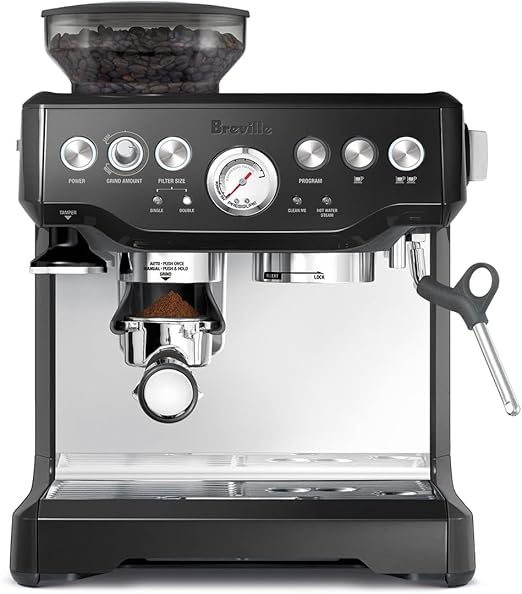
If you want the Barista Express workflow but prefer a darker, more modern look, this version is the aesthetic win. Functionally, it’s the same “learn espresso properly” platform: integrated grinder, manual control, and a routine that rewards consistency.
Owners’ experiences mirror the stainless model closely: once dialed in, it can make better coffee than many cafés, but the machine expects you to be present—especially during puck prep and steaming. It’s the kind of machine that makes your skills the “upgrade,” not extra features.
Treat it like a daily tool: keep the grinder tidy, use good water, and develop a quick steam wand cleanup habit. Do that, and it becomes the kind of machine you lean on for years.
Why you’ll like it
- Same proven platform: classic Barista Express workflow and results.
- Better match for dark kitchens: style matters when it lives on your counter.
- Great espresso learning: the machine doesn’t hide the craft from you.
- Strong value feel: capable without feeling like a toy.
Good to know
- Learning curve still applies: it’s espresso—expect dialing‑in time.
- Manual milk skills: latte art improves with practice, not settings.
- Maintenance is taste: coffee oils and scale will eventually show up in flavor.
Ideal for: Barista Express buyers who want the same capabilities with a darker, more modern visual style.
16. Gaggia Classic Evo Pro – A repairable, mod‑friendly classic with real café DNA

The Gaggia Classic lineage is famous for one thing: it’s a real espresso platform that people keep alive for years. Owners often describe it as “the best choice in its bracket” because it’s serviceable, widely understood, and backed by a massive mod/repair ecosystem. If you like the idea of owning one machine for a long time—and you’re okay learning how it works—this is a strong pick.
It’s a single‑boiler dual‑use design, which means you’ll develop a rhythm for brewing and steaming. That doesn’t prevent great cappuccinos. It just means you’re the workflow manager. For many people, that’s the point: it’s hands‑on, mechanical, and satisfying when you nail it.
Real owners also highlight the unglamorous truths: descaling schedule matters, vigilance against water sitting in places it shouldn’t helps prevent corrosion, and a little maintenance knowledge goes a long way. If you want something that feels more “tool” than “appliance,” the Gaggia personality fits.
Why you’ll like it
- 58mm workflow: closer to commercial basket feel than many entry machines.
- Repairable mindset: parts and tutorials are widely available.
- Mod potential: grows with you if you later want more control.
- Real café texture: capable shots and microfoam with good technique.
Good to know
- Single boiler rhythm: not ideal if you want to slam out many milk drinks fast.
- Water care is essential: descale on schedule and use water appropriate for espresso machines.
- Keep it dry inside: be mindful about spills and standing water around the case base.
Ideal for: tinkerers, long‑term owners, and espresso learners who value serviceability and a real 58mm espresso workflow.
17. Dual Drip Commercial Coffee Maker (200 cups/hr) – When espresso isn’t the only job
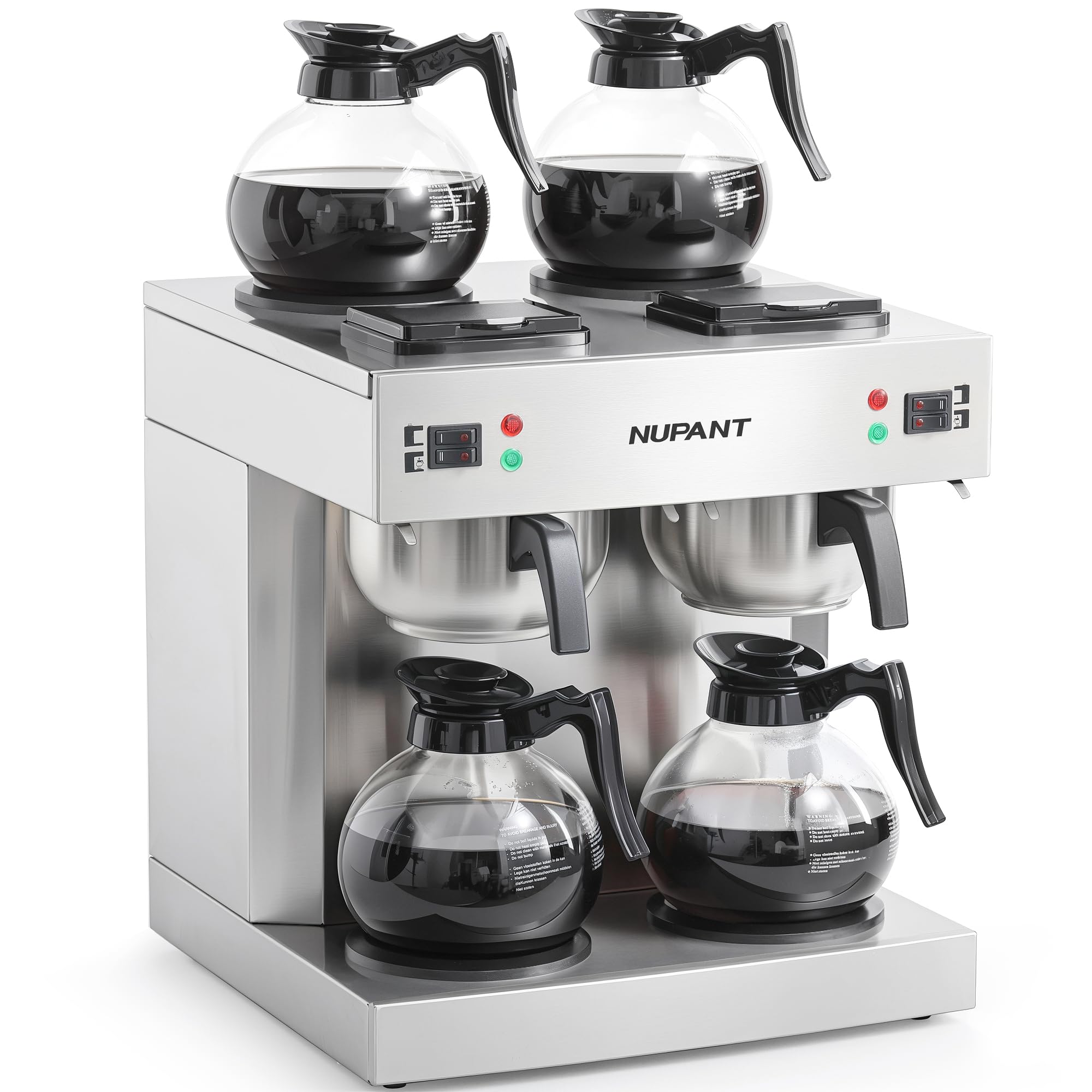
Let’s be blunt: this one isn’t an espresso machine. And that’s exactly why it belongs here. A lot of “industrial‑style coffee setups” fail because people try to force espresso to handle every coffee need—even when serving crowds. Batch brew exists for a reason: it’s fast, predictable, and keeps coffee available for many people without turning you into a full‑time barista.
Owners using this type of brewer in churches, organizations, and gatherings often highlight speed and the simple pour‑over workflow: fill with cold water, brew, and keep multiple pots warm. It’s the kind of machine that helps you look organized when you’re serving lots of coffee.
The real‑world watch‑out is reliability and support experience. Some users report excellent customer service and replacements when issues arise. Others report frustration when a unit fails and support is hard to reach. If you need guaranteed uptime, consider buying with the mindset that maintenance and support responsiveness matter as much as the brew speed.
Why you’ll like it
- High output: designed for lots of cups per hour in real settings.
- Always‑ready pots: multiple warmers keep coffee available during events.
- Simple operation: fewer moving parts than complicated office coffee systems.
- Great companion to espresso: covers the “crowd coffee” gap espresso can’t fill.
Good to know
- Not espresso: it’s batch drip coffee, not pressure extraction.
- Reliability varies: read current feedback and keep receipts/warranty details handy.
- Plan your filter routine: paper filters and cleanup are part of the workflow.
Ideal for: churches, events, offices, and anyone who needs a fast, high‑volume drip brewer alongside (or instead of) espresso service.
How Espresso Machines Actually Win on Flavor (and Why Consistency Is Everything)
A lot of buying guides treat espresso like a “feature checklist.” In reality, espresso is a tight physics problem: you’re pushing hot water through a compact puck of coffee, under pressure, and asking it to taste sweet instead of sour or bitter. That’s why two machines with similar specs can taste completely different in your cup.
What matters most for espresso quality
- Grind consistency – uneven grind = uneven flow = channeling = harsh, thin shots.
- Temperature stability – swings can turn balanced beans into sour or bitter confusion.
- Pressure behavior – too aggressive can taste harsh; too weak can taste flat and under‑extracted.
- Puck prep – distribution and tamping decide whether water flows evenly or finds weak spots.
- Fresh water quality – scale affects performance; bad water affects flavor immediately.
This is why machines with dual boilers, good PID control, or truly well‑implemented fast‑heat designs often “feel easier” to dial in: they remove variables that would otherwise change shot to shot.
Why your workflow changes your results
- If you rush warm‑up, the group head and portafilter stay cold, and shots taste thin or sharp.
- If you steam first on some machines, you may need a flush or routine to stabilize brew temperature afterward.
- If you don’t purge and wipe the wand, milk residue ruins steam performance and adds off flavors.
The best setups aren’t the ones with the most features—they’re the ones with a routine you can repeat reliably. Consistency is what makes espresso feel “effortless.”
Simple tips that instantly level up most machines
- Use a scale and timer – even basic measurements stop guesswork and prevent wasted beans.
- Preheat your tools – warm portafilter and cup = better texture and temperature in the cup.
- Buy beans that match your machine – very light roasts can demand more precise control and excellent grinders.
- Keep the grinder clean – old oils and fines build up and change your grind behavior.
- Respect water hardness – the right water protects the machine and improves taste.
Once you establish these habits, your machine’s “ceiling” rises dramatically—sometimes more than any upgrade would. It’s also the fastest way to make your daily espresso taste like a café upgrade.
One honest reality check
Even the best machines can’t fix stale beans or wildly inconsistent puck prep. But the right machine can reduce how often you lose a shot. That’s the difference between espresso feeling like a hobby and espresso feeling like a reliable daily pleasure.
FAQ: Espresso Machines, Answered Like a Real Buyer Guide
What does “industrial” really mean for a countertop espresso machine?
Do I need a dual boiler if I mostly drink lattes?
Is a fully automatic machine “as good” as semi‑automatic espresso?
Why do people obsess over 58mm portafilters?
How do I avoid sour or bitter shots when I’m new?
What’s the one maintenance habit that prevents most problems?
Final Thoughts: Industrial Espresso Coffee Machines You’ll Actually Enjoy Owning
A great espresso machine doesn’t just make coffee—it changes how your mornings feel. The right setup makes “better than café” the normal outcome, not a lucky accident.
Here’s the quickest way to turn this entire guide into a confident buy:
- Want the best all‑around choice for most people? Start with the Breville Barista Touch Impress for guided puck prep, fast heat‑up, and consistently great milk drinks.
- Want a serious “home barista” setup with dual boiler stability? Go with the Breville Dynamic Duo Dual Boiler for repeatable shots and simultaneous steaming.
- Want classic café ritual and long‑term ownership vibes? Choose an E61‑style machine like the Rocket Appartamento Nera (or the Diletta Bello) if you love hands‑on control and hosting.
- Want premium automation without going full super‑automatic? The Breville Oracle is a standout for auto dosing/tamping and hands‑free microfoam with real espresso character.
- Want one‑touch variety for a busy household or office? Look at the Bosch 800 Series for a big drink menu with minimal daily effort.
- Need to serve lots of people fast (and espresso isn’t the only drink)? Add a batch brewer like the Dual Drip Commercial Coffee Maker to cover high‑volume drip coffee alongside espresso.
At the end of the day, the best industrial espresso coffee machines aren’t the ones with the flashiest spec sheet—they’re the ones that match your pace, your drink style, and the amount of “hands‑on” you actually enjoy. Pick the workflow you’ll repeat happily, and the coffee will take care of itself.
