
Buying a freezer for a real home isn’t a “specs” decision. It’s a daily-life decision. It’s the difference between: “We can actually stock up this week” and “Why is my main freezer always full?”
If you’re shopping for a compact upright freezer, you already know the usual pain points: boxes that don’t stack, mystery frost that steals space, a door that swings the wrong way in a tight corner, and that one late-night moment when you just want ice cream… but you have to excavate a frozen mountain to find it.
Here’s the part most buying guides miss: mini freezers don’t fail you because they’re “small.” They fail you because the details don’t match how you actually use them: where the thermostat dial is located, how stable the unit feels on uneven floors, whether the shelves help you stay organized (or force you into risky stacking), and how the compressor noise behaves at 2 a.m. in a bedroom or office.
So this guide is built like a real-world field test. I’m not just comparing capacity. I’m looking at the friction points that show up again and again in owner feedback: shipping dents, “growling” compressors, thermostat quirks, frost patterns, door reversal headaches, shelf usefulness, and how these freezers perform when they’re packed with meat, meal prep, garden produce, ice, or “sale items” that would otherwise vanish into the back of your fridge freezer.
Below you’ll find 18 standout models (mostly upright, plus one excellent chest-style alternative for bulk storage). The goal is simple: by the end, you’ll know exactly which freezer matches your space, your noise tolerance, your organization style, and your weekly shopping rhythm.
How to Choose the Right Compact Upright Freezer
A small freezer is “good” when it makes your week easier: fewer grocery trips, less waste, faster meals, and no more squeezing bags into a jammed fridge freezer. But the best model for you depends on one thing: how you actually freeze food. Use this decision framework and you’ll avoid the most common “I wish I knew that” mistakes.
1. Start with your freezer personality (yes, this matters)
Most buyers fit one of these patterns. Choose your category first, then the model becomes obvious.
- The Bulk Buyer: You stock up on meat, frozen veggies, or warehouse-store deals. You need stability, usable shelves, and space you won’t lose to frost.
- The Meal-Prep Machine: You freeze containers, soups, ready-to-go meals. You need flat, predictable shelf surfaces and easy “grab-and-go” access.
- The Ice + Drinks Person: You mainly want ice, frozen treats, and quick snacks. You need fast access, quick cooling recovery, and a layout that doesn’t crush small items.
- The Space Optimizer: Apartment, dorm, office, or tiny home—your #1 need is fitting the freezer neatly into a corner with the door swinging the right way.
- The Recovery / Medical / Ice Pack Use: You want a freezer near your bed or desk for ice packs. Quiet operation and small footprint matter more than capacity.
- The RV / Travel Trailer Owner: You need reliable cold, a manageable footprint, and a setup you can level easily on imperfect floors.
2. Capacity is only half the story (shelf design is the other half)
Two freezers can have the same cubic-foot rating and feel totally different in real life. Here’s why: the “usable space” comes from shelves, spacing, and how safely you can stack items.
- Wire shelves: Usually help airflow and freeze evenly, but small items can tip and bags can snag. Great if you use bins.
- Glass shelves: Feel stable and clean, and they’re excellent for meal-prep containers. But you want good airflow and you need to keep frost under control.
- Fixed shelves with cooling coils: Some compact freezers use shelves that are part of the cooling system, which can freeze fast—but they’re often not adjustable.
- Bottom basket or bin: A basket is underrated. It’s the “drop zone” for odd shapes (ice bags, bulky meat, frozen fruit bags).
If you already know you hate “freezer Tetris,” prioritize models with shelves that fit your food style. It’s the most overlooked choice—and the one you feel every day.
3. Thermostat placement sounds boring… until you live with it
This is a big one. Some freezers put the temperature dial inside the unit. Others place it on the back. Both can work, but they change the experience:
- Back-mounted dials: Fine if you set it once and never touch it again. Annoying if you like to tweak temperatures (and you’ll need clearance behind the freezer).
- Inside dials: Easier to access—especially in tight nooks. But you don’t want it in a spot you constantly bump when the freezer is fully loaded.
- Front-access controls: The most convenient in daily life. If you’re placing the unit under a desk or in a tight cabinet area, this can be a big quality-of-life upgrade.
Pro move: whichever model you buy, use a simple freezer thermometer for the first week. It turns “I think it’s cold enough” into “I know it’s stable,” and it helps you dial in the best setting for ice cream texture vs. deep-freeze firmness.
4. Manual defrost isn’t a deal-breaker—if you plan for it
Most compact models in this size category are manual defrost. That’s not “bad.” It’s just a reality of small, efficient freezers at this footprint. What matters is how fast frost builds and how easy it is to reset.
Here’s what reduces frost headaches dramatically:
- Stable door seal + gentle door habits: Don’t hold the door open while you decide. “Browse quickly” matters.
- Cool food before freezing: Warm containers add moisture. Moisture becomes frost. Frost steals volume.
- Use bins and zones: If you keep similar items together, the door stays open for seconds, not minutes.
- Defrost early, not late: Defrosting is easy when frost is thin. It’s miserable when you waited until the shelves look furry.
If you want a freezer you rarely think about, pick a model with good sealing, consistent temperature control, and shelves that remain usable even with light frost.
5. Noise: it’s not just “loud vs quiet”
Most owners who complain about noise aren’t talking about constant loudness. They’re talking about specific sounds: a hum that resonates through a wall, a “click” when the compressor cycles, or a vibration on a hard floor.
- If this is going in a bedroom or office: prioritize models repeatedly described as quiet, and place it on a firm, level surface.
- If you’re placing it in a garage: noise matters less, but stability and airflow clearance matter more.
- Small trick that works: a thin rubber mat under the feet can reduce vibration noise dramatically (especially on tile or wood).
6. Shipping reality: dents happen—here’s what to do
A huge percentage of negative reviews across many compact appliances boil down to one problem: shipping damage. A cosmetic dent doesn’t always affect performance, but you want to inspect properly on day one:
- Check door alignment and make sure it closes evenly on all sides.
- Look at the bottom frame—if it’s twisted, the unit may wobble or seal poorly.
- After letting it stand upright (usually a full day is a safe practice), run it empty and confirm it cycles normally.
- If something smells like burning plastic or the compressor sounds truly harsh, don’t “hope it fixes itself.” Test immediately while your return window is wide open.
When you buy smart, these little freezers become one of the most satisfying “why didn’t I do this sooner” upgrades you can make. Now let’s get specific.
Quick Comparison: 18 Compact Upright Freezer Picks
Use this table to shortlist the models that match your space and habits, then jump to the reviews for the real-world details— like shelf usefulness, thermostat convenience, noise quirks, and what owners keep repeating after a few months of use.
On smaller screens, swipe or scroll sideways to see the full table.
| Model | Freezer style | Everyday strength | Best match | Amazon |
|---|---|---|---|---|
| Midea MRU03M2ABB (3.0 cu ft) | Upright | Stable cooling + widely proven “set it and forget it” daily usability | Most households who want a dependable overflow freezer | Amazon |
| Midea WHS-109FW1 (3.0 cu ft) | Upright | Same practical layout with a clean, simple footprint for small rooms | Anyone who wants a bright, neutral freezer that blends in | Amazon |
| Magic Chef MCUF3S2 (3.0 cu ft) | Upright | Stainless door look + compact, classic freezer format | Buyers who want the stainless aesthetic in a small footprint | Amazon |
| Maine Mini Upright (3.6 cu ft) | Large upright | More capacity without jumping to a full-size freezer | Garage, busy kitchens, or families who buy meat in bulk | Amazon |
| OOTDAY Upright (3.5 cu ft) | Large upright | Tall, slim storage with simple shelves for “extra freezer items” | Small kitchens that need more frozen storage, fast | Amazon |
| Electactic Upright (3.2 cu ft) | Upright | Glass shelves + easy visibility so you don’t “lose” food | Meal-prep and organized-storage people | Amazon |
| EUHOMY Upright (3.0 cu ft) – UF001-30 | Upright | Compact, quiet-feeling “office-friendly” freezer footprint | Under-desk, home office, break room, or small apartment corner | Amazon |
| EUHOMY Upright (3.0 cu ft) – Compact Mini Freezer | Upright | Popular “fits under counter” pick with simple, quiet daily use | Kitchen/laundry under-counter freezer setups | Amazon |
| Antarctic Star Upright (3.0 cu ft) | Upright | Compact storage with a “quiet enough for small rooms” vibe | Dorms, offices, travel trailers, and secondary freezer roles | Amazon |
| Upstreman UP30 Upright (3.0 cu ft) | Upright | Reversible door + smooth interior + includes basic defrost tools | Apartment dwellers who want simple freezer overflow space | Amazon |
| COWSAR Upright (3.0 cu ft) | Upright | Modern design details + removable shelves + flexible placement | Office, dorm, or apartment buyers who want easy daily access | Amazon |
| Electactic Upright (3.0 cu ft) | Upright | Quick freezing feel + compact footprint that works well in RVs | RV owners and small-space households who want dependable freezing | Amazon |
| Feelfunn Upright (3.0 cu ft) | Upright | Strong “helpful support” reputation + compact modern footprint | Buyers who care about responsive customer service | Amazon |
| EUHOMY Chest Freezer (3.5 cu ft) | Chest | Bulk-friendly space efficiency + baskets + easy “deep freeze” control | People who prioritize capacity per footprint over shelf visibility | Amazon |
| BLACK+DECKER Compact Upright (1.2 cu ft) | Mini upright | Snack-station size with a simple shelf layout | Bedroom, office, small-space ice cream + frozen snack use | Amazon |
| BANGSON Upright (2.1 cu ft) | Mini upright | Quiet, good insulation feel + compact black look | Small households, pet food, meal components, or ice pack storage | Amazon |
| Electactic Upright (2.1 cu ft) | Mini upright | Small footprint with shelves and simple temperature control | Apartment/dorm “extra freezer space” without the bulk | Amazon |
| Electactic Upright (1.1 cu ft) | Ultra-compact | Tiny footprint that’s genuinely useful for ice packs + essentials | Bedside recovery setups, offices, or very tight dorm spaces | Amazon |
In‑Depth Reviews: 18 Compact Upright Freezer Models That People Actually Keep
Now we’ll go model by model. I’m going to talk like an owner, not a spec sheet: what feels easy daily, what becomes annoying over time, and which small details decide whether you love your freezer—or quietly resent it.
1. Midea MRU03M2ABB (Black) – The “Most People Will Be Happy” Upright

If you want a freezer that feels like it was built for real households—bulk meat packs, frozen vegetables, meal prep, and “we found a good sale” days—this Midea is the easy starting point. It’s one of those rare small appliances that people often describe with the most comforting phrase in the world: “It just works.”
The reason it earns “best overall” is not one flashy feature. It’s a stack of practical wins: it’s an upright (so you can actually see your food), it has a simple shelf-and-basket rhythm (so you can build a repeatable organization system), and it tends to feel stable and predictable once you dial in the temperature. In day-to-day use, that predictability is everything—because the freezer is doing its job quietly in the background while you do yours.
Real-life owners often mention three things that matter more than they expected: (1) how easy it is to access food compared with chest designs, (2) how useful the bottom basket is for awkward items (ice bags, bulky frozen fruit, odd-shaped packages), and (3) how little drama it brings to the kitchen workflow when your main freezer is packed.
One honest note: like many compact uprights, temperature control placement can be less convenient than you’d expect. So this is the model you set up carefully, level properly, choose your temperature, and then leave alone. That’s not a flaw—it’s the “set it and forget it” personality.
Why you’ll like it
- Excellent daily usability – Upright access helps you stop losing food to the “back of the freezer” problem.
- Organizes well – Shelves + a bottom basket make it easy to keep zones (meat / veg / treats).
- Great for overflow – Handles bulk buys and sale items without forcing you to reshuffle your main fridge freezer.
- Simple to own – Once dialed in, it becomes a quiet, dependable “extra storage engine.”
Good to know
- Manual defrost means you’ll eventually do a quick reset—plan for it before frost steals space.
- Temperature controls may not be in the most convenient spot, so plan your placement with access in mind.
- Shipping dents can happen across many compact appliances—inspect early so you keep the unit you deserve.
Ideal for: households that want a dependable overflow freezer for weekly life—bulk buys, meal prep, and reducing grocery stress.
2. Midea WHS-109FW1 (White) – The Clean, Neutral Freezer That Fits Anywhere

This is the sibling pick to the black model above—but for buyers who want a freezer that visually disappears. If you’re placing your freezer in a dining area, laundry space, office nook, or a small apartment where every appliance is “in view,” the white finish feels lighter and cleaner.
In everyday use, it delivers the same kind of satisfaction people buy compact uprights for: you open a door, you see your food, you grab what you need, you close it. No digging. No excavation. That sounds basic, but it’s exactly why so many owners say the upright style changes how they shop and cook. When you can see what you have, you waste less.
The most useful way to think about this freezer is as a second-stage support system: it’s where you put meat you bought on sale, extra frozen vegetables, bulk bread, backup meal-prep containers, and “future you will be thankful” items. Because it’s upright, you can create zones fast: top shelf for treats, middle shelves for meal components, bottom for heavy items.
The main “buying intelligence” detail: plan your placement so you don’t need to constantly access the temperature dial. Owners who love these units tend to do one careful setup day—level it, let it settle upright before turning on, freeze a few test items, then load it properly. After that, it becomes wonderfully boring. That’s the goal.
Why it works so well
- Neutral, space-friendly look – Especially helpful in small apartments and multipurpose rooms.
- Upright convenience – Faster access, less food “lost” behind other food.
- Great support freezer – Ideal as an overflow solution for bulk buys and meal prep.
- Easy daily rhythm – Shelves and basket style organization is simple to maintain.
Good to know
- Manual defrost is normal at this size—build a simple maintenance routine and you’ll be fine.
- Temperature dial convenience depends on how you place it; don’t wedge it into a spot where you can’t access controls.
- If you want more capacity but still compact, jump to the 3.5–3.6 cu ft uprights below.
Ideal for: anyone who wants a compact upright that blends into small spaces while reliably handling everyday overflow storage.
3. Magic Chef MCUF3S2 – Stainless Door Style in a Compact Footprint
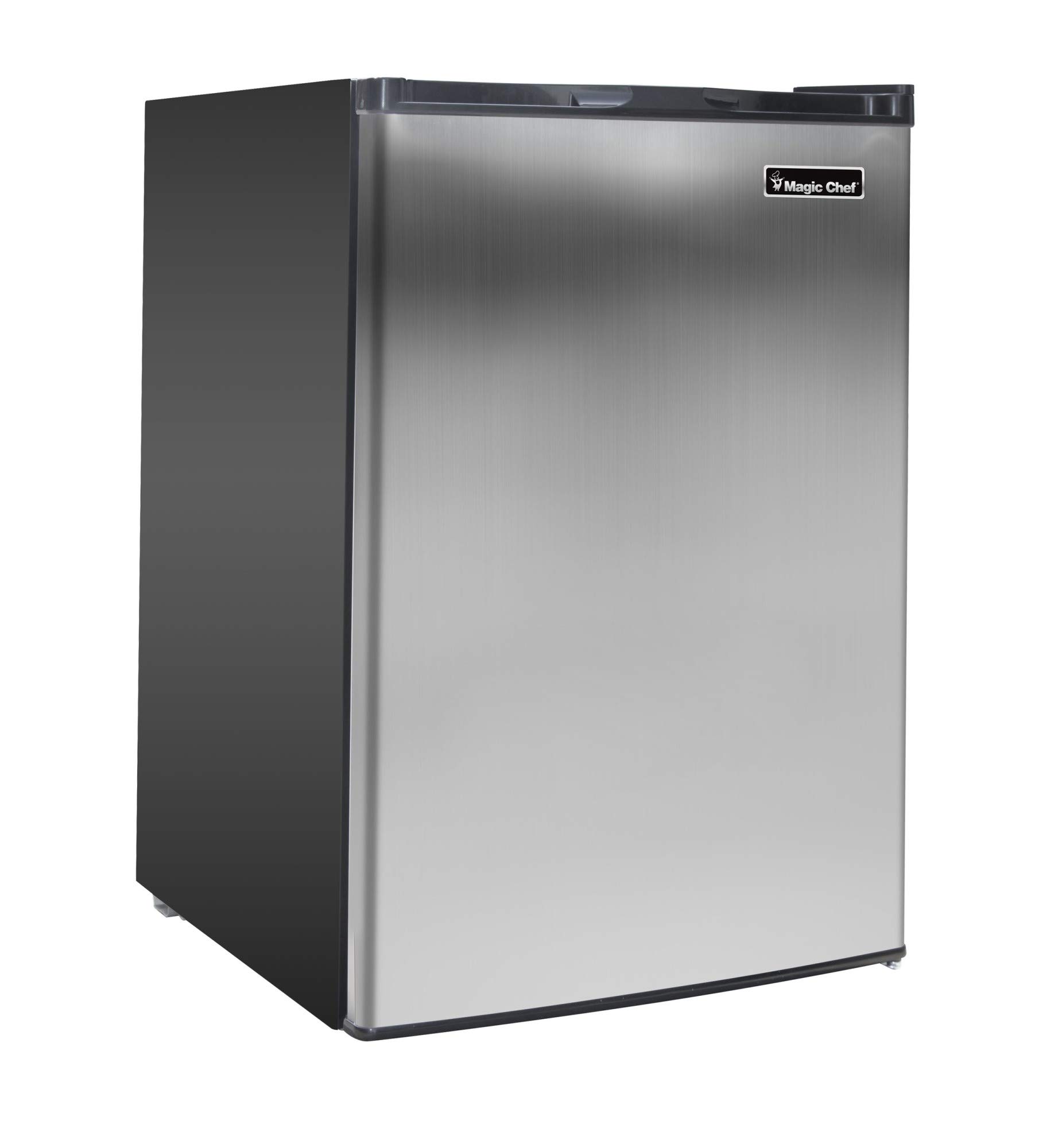
Let’s talk about why people buy this one: the stainless door aesthetic. If your kitchen is built around stainless finishes, a white mini freezer can look like a random dorm appliance in the corner. This model solves that problem: it looks intentional, like it belongs.
But “looking good” only matters if the experience holds up—and here’s the real-world truth: the MCUF3S2 can be an excellent small freezer when you get a good unit and you set it up correctly, but it also has a more mixed reputation for shipping dents and noise variability than the most boringly reliable picks. That doesn’t make it a bad buy. It just means you should be a smart buyer: inspect it early, let it sit upright before plugging in, run it empty to confirm normal cycling, then commit.
Here’s the key usability detail many people only learn after purchase: some compact freezers have shelves that aren’t meant to be freely adjusted (because the cooling elements may be integrated). That can mean “fast freezing feel,” but it also means your organization strategy matters. If you freeze lots of tall containers, you want to confirm your shelf spacing works for your most common items.
If you’re using this as a garage overflow freezer, a cosmetic dent won’t ruin your life. If it’s going in a visible kitchen area, the stainless look is the whole point—so you’ll want it clean, aligned, and not visibly damaged. That’s the difference between “this looks premium” and “this looks unlucky.”
Why people choose it
- Stainless door look – Makes the freezer feel like a real kitchen appliance, not a dorm add-on.
- Compact upright access – Easy grab-and-go compared with chest designs.
- Simple controls – Straightforward temperature adjustment once you set your preference.
- Great “extra freezer” role – Perfect for overflow items, frozen dinners, ice, and snacks.
Good to know
- Shipping dents are a recurring theme in owner feedback—inspect immediately and keep your documentation.
- Noise experiences can vary; if you’re noise-sensitive, consider bedroom-proven picks below.
- Manual defrost is part of the deal—plan for occasional maintenance.
Ideal for: buyers who want the stainless aesthetic in a compact freezer and are willing to do a careful “day-one inspection + setup.”
4. Maine Mini Upright (3.6 cu ft) – More Room Without Going Full-Size

If you’ve looked at 3.0-ish cu ft freezers and thought, “This is good… but I need just a bit more,” the 3.6 class is the sweet spot. It’s often the difference between storing “extra items” and storing “a real weekly bulk haul.”
Owners who buy this size usually have a clear mission: meat storage, vegetable storage, or both. And the best part is that a slightly larger upright can actually feel easier to keep organized than a smaller one. Why? You’re not forced into tight stacking. You can give items breathing room and keep zones clean. That means faster door closures, less warm air intrusion, and (in many cases) less annoying frost drama over time.
This model’s everyday value is how it supports a household rhythm: buy in bulk, portion once, freeze neatly, and stop paying the “small freezer tax” of constant rearranging. It’s also a strong garage supplement because it “fits anywhere” while giving you a meaningful bump in storage.
A detail owners appreciate: smaller internal bins/levels can make it easier to find food. That sounds minor, but it’s the difference between “I can see everything” and “Why do I keep rebuying frozen items I already have?”
Why it’s worth considering
- More breathing room – Easier organization and less risky stacking.
- Bulk-friendly – Great for meat storage and frozen vegetables without cramming.
- Still compact – Big upgrade without jumping to a full-size chest or tall freezer.
- Flexible placement – Reversible door and leveling help it work in real homes.
Good to know
- Make sure the door swing works in your space—bigger capacity often means a slightly taller profile.
- Noise is usually reasonable, but placement (wall resonance) matters more with larger compressors.
- Manual defrost still applies—plan a simple routine and it stays easy.
Ideal for: families, bulk buyers, or garage overflow setups that want noticeably more capacity without upgrading to a large freezer.
5. OOTDAY Upright (3.5 cu ft) – Simple, Slim, and Surprisingly Useful

This is the kind of freezer people buy when they’re not trying to build a “freezer wall.” They just want a reliable extra box that freezes well, holds more than expected, and fits the space they have. In that sense, it’s a very honest product: a practical upright for practical storage.
Owner feedback tends to cluster around two experiences: many people say it freezes well and holds “a lot of stuff” for the footprint, while a smaller subset report early issues like unexpected noise or a unit that didn’t power on. That’s not unique to this model—it’s a common story in compact appliances across multiple brands. The smart response is the same: test it early, confirm normal cycling, and don’t ignore warning signs like harsh mechanical sounds.
The reason this model can be a good pick is the layout math. A 3.5-ish cu ft upright often hits the point where you can store: a few pizza boxes, multiple bags of frozen vegetables, frozen fruit, and meat portions—without turning the interior into a teetering tower. It becomes a real “second freezer,” not just a mini supplement.
If you’re on a tight budget but still want an upright that feels like a meaningful upgrade, this size class delivers. The key is to treat day-one setup like an audition: level it, run it empty, then load gradually and see how it behaves.
Why it makes sense
- Useful capacity – Holds more than “tiny” models, so it genuinely changes your weekly routine.
- Simple daily access – Upright style makes organization and retrieval easier.
- Space-friendly form – Works well in small kitchens, offices, or corners.
- Good for budget bulk buying – Supports sale shopping and meal prep without cramming.
Good to know
- Some owners report early noise changes—test and observe during the first days.
- Shipping dents can happen; inspect door alignment and stability immediately.
- If you want a more “proven long-term reputation,” Midea is the safer mainstream anchor pick.
Ideal for: buyers who want an upright that’s bigger than the typical mini freezer, without taking over the room.
6. Electactic Upright (3.2 cu ft) – The “I Can See Everything” Meal-Prep Pick
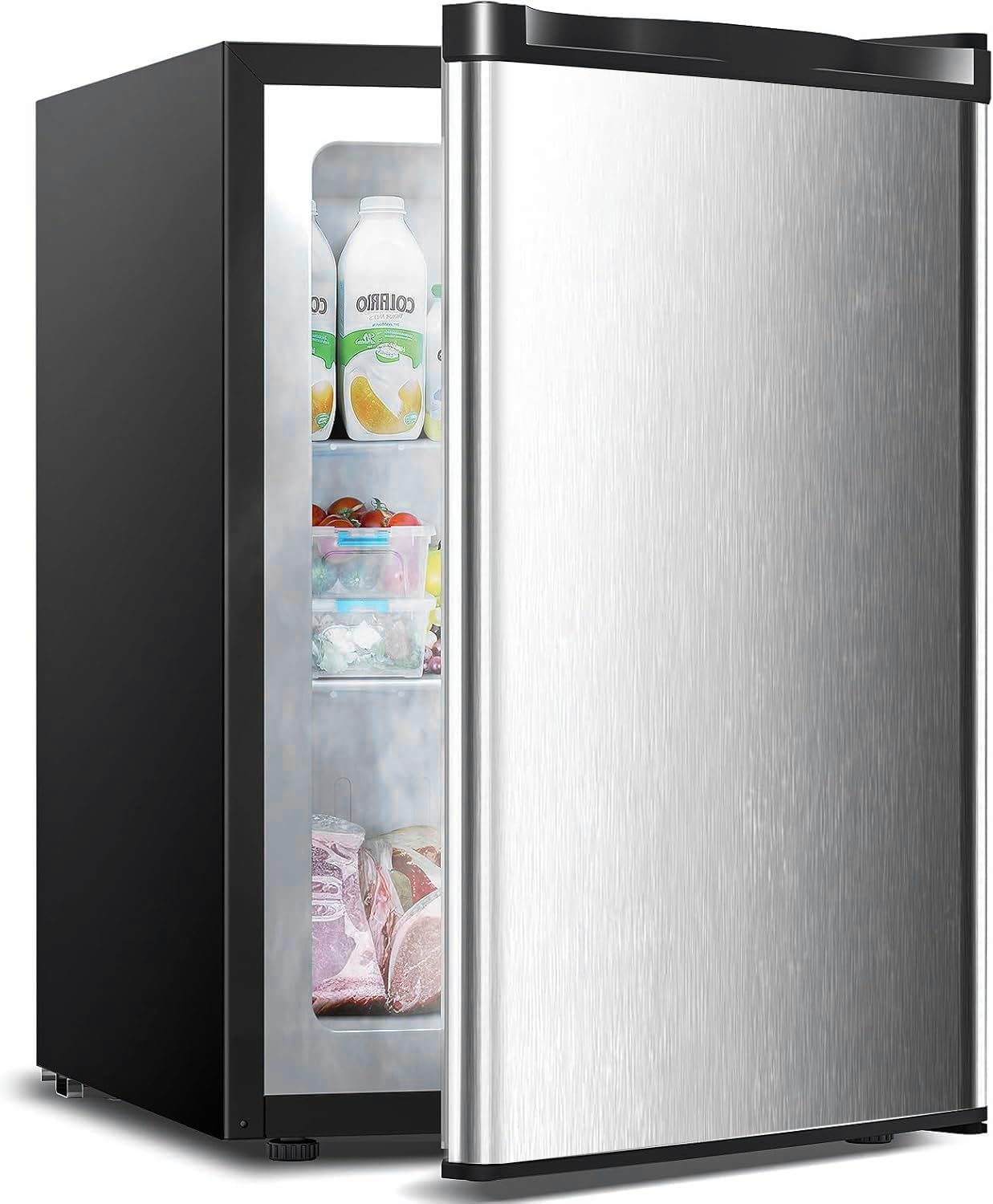
This is a strong pick for one specific type of buyer: the person who hates digging. The person who wants to open the door and immediately understand what’s inside. That’s why the shelf experience matters—especially if you freeze meal-prep containers, portioned proteins, frozen vegetables, or neatly stacked boxes.
A repeated real-world compliment for this freezer style is that shelves stop the “pile problem.” When you have flat levels, you can create categories: top = quick snacks, middle = meal components, bottom = heavy items. It also makes “inventory checking” effortless. And that one habit—checking what you already have before buying more— is how people save real money with a small freezer.
The biggest friction point owners mention is not freezing performance. It’s instructions and small setup details— especially when reversing a door. This is common across many compact appliances: the product can be great, but the manual is thin. If you’re comfortable with basic DIY (careful tipping, moving hinge hardware, making sure the unit stays stable), you’ll be fine. If you hate any setup complexity, choose a model with clearer door reversal documentation.
Another smart-use detail: some models place controls in a spot that becomes hard to access once the freezer is fully loaded. So on setup day, decide your temperature strategy, mark it, and avoid frequent adjustments. Consistency beats constant tweaking.
Why it’s great for daily use
- Organization-first layout – Shelves make it hard to “lose” food in the back.
- Excellent for meal prep – Flat surfaces make containers and boxes safer to store.
- Compact but meaningful – Enough space to change your weekly routine.
- Works well as a replacement freezer – Many buyers use it as a practical swap-in for a failed small unit.
Good to know
- Door reversal instructions can be light; plan patience and a careful setup process.
- Manual defrost means you should avoid letting frost become “thick.” Defrost early, not late.
- If you want a bigger capacity jump, look at the 3.5–3.6 cu ft uprights above.
Ideal for: meal-prep households and organized-storage people who want easy visibility and easy “grab the right thing” access.
7. EUHOMY Upright (3.0 cu ft) – The Under-Desk “Snack & Lunch” Problem Solver

This is a freezer that makes a ton of sense for one modern scenario: the home office (or workplace desk area) where the break room freezer is nonexistent or always full. Owners often describe it as the “I can finally store my frozen lunches and snacks” fix—especially when a microwave is available but freezer storage isn’t.
What separates a good office freezer from an annoying one is sound behavior and footprint practicality. You don’t just want “quiet.” You want “quiet enough that you forget it’s there.” In real feedback, people frequently describe a soft low hum that’s not intrusive—exactly what you want if you’re sitting nearby.
The second big advantage is the multi-shelf structure. With two main shelves, you can store a surprisingly wide mix: frozen meal boxes, ice cream, frozen breakfast items, protein portions, and frozen fruit. And because it’s upright, you can actually see what you’re grabbing—no wasting time, no leaving the door open while you dig. That directly reduces frost buildup risk.
The biggest usability “watch-out” is a common one: temperature controls and lighting. Some compact uprights don’t include an internal light, and some place the thermostat dial in an inconvenient spot. Neither is a dealbreaker if you plan for it: put the unit where ambient lighting is decent and treat temperature as a “set once” decision, not a daily hobby.
Why it’s a strong daily pick
- Excellent under-desk footprint – Works well in offices, apartments, and break-room corners.
- Quiet-feeling operation – Owners often describe it as unobtrusive when placed nearby.
- Solid shelf layout – Easy to store frozen boxes and avoid “pile chaos.”
- Good odor management – Many buyers mention food stays clean-tasting with proper organization.
Good to know
- No internal light on many small models—plan placement accordingly.
- Temperature knob placement can be inconvenient; set it and avoid frequent adjusting.
- As with many compact appliances, inspect for shipping damage immediately.
Ideal for: office, under-desk, apartment, and “I need frozen lunch storage” buyers who want a compact footprint and calm daily operation.
8. EUHOMY Upright (3.0 cu ft) – The “Slides Under a Counter” Favorite

This model is popular for one very specific reason: under-counter and “tight nook” placements. A lot of households don’t want a freezer that becomes a new furniture problem. They want something that fits neatly into an existing layout—kitchen, laundry room, pantry corner—without turning the space into an obstacle course.
Owners who love it tend to describe the same experience: quiet enough that you barely notice it, enough room inside to stop losing items (a big deal compared with cramped fridge freezers), and shelves that make it easier to categorize food instead of stacking it in a risky tower. That last part matters more than people expect. Stacking is the fast path to crushed boxes, torn bags, and frost-prone “door open too long” browsing.
If you’re building a “system,” this freezer shines as the dedicated overflow unit: it holds the frozen things you buy often (veg, meat portions, snacks), while your main freezer holds everyday essentials. That split reduces the constant rearranging that makes people feel like their kitchen is always full.
The main buyer advice is simple: commit to an organization method from day one. Label zones (even mentally). Use a bottom area for heavy items. Keep your “quick grab” items at eye level. When you do that, compact uprights feel much bigger than they are.
Why it’s so practical
- Great for under-counter setups – Fits into kitchen and laundry layouts without dominating the room.
- Quiet enough for daily life – Many owners say it doesn’t demand attention.
- Easy to stay organized – Upright shelves help prevent food from disappearing.
- Strong “second freezer” value – A simple, supportive upgrade for busy households.
Good to know
- Like most compact models, it’s manual defrost—plan a quick routine before frost grows.
- Temperature dialing sometimes takes a little experimentation; test for a week, then leave it alone.
- If you need maximum capacity, jump to a 3.5–3.6 cu ft upright instead.
Ideal for: under-counter buyers and small homes who want an upright freezer that fits neatly into existing rooms and stays out of the way.
9. Antarctic Star Upright (3.0 cu ft) – Small Footprint, Big Convenience
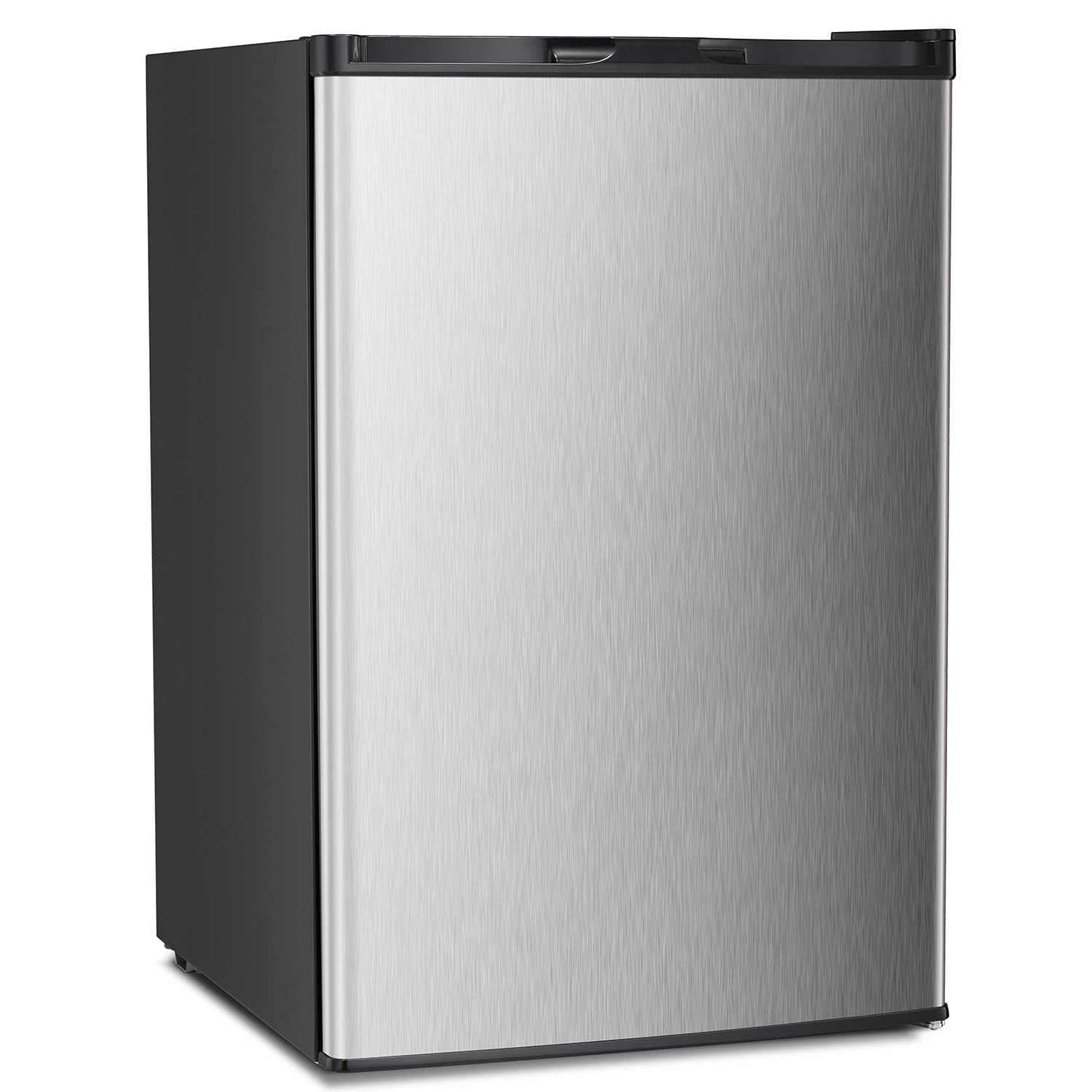
The appeal here is straightforward: compact footprint, upright convenience, and a general reputation for being quiet enough in small living spaces. This is the kind of freezer that works as a dorm upgrade, an office “extra storage” unit, or a travel trailer helper when you want a bit more frozen flexibility.
In real-world use, the “3.0-ish cu ft upright” category is often the best balance: big enough to store meaningful amounts of food, small enough to fit almost anywhere. This model fits that identity well: it’s designed to provide shelf-based organization without forcing you into digging.
The one nuance to consider is noise perception. Some owners describe it as quiet overall, but still noticeable when the compressor kicks on (especially if you’re sitting nearby and concentrating). That doesn’t mean it’s loud; it means it has a “presence.” If you’re extremely noise-sensitive, consider placing it farther from your primary seating area or adding a vibration-reducing pad.
If you want a compact upright for ice cream, quick meals, and “overflow from the main freezer,” this is a strong contender. Just commit to a simple organization plan and keep door-open time short to reduce frost.
Why it’s a good fit
- Small-space friendly – Great for dorms, offices, and apartments.
- Upright organization – Shelves make it easier to keep track of what you have.
- Quiet enough for many rooms – Often described as unobtrusive in daily life.
- Good for “ice cream + overflow” – Works well as a secondary freezer role.
Good to know
- Compressor cycling can be noticeable in ultra-quiet rooms; placement matters.
- Manual defrost is typical—stay ahead of frost for maximum usable space.
- If you want a more “mass-market proven” pick, Midea is the safer baseline.
Ideal for: small-space buyers who want upright convenience for ice cream, frozen meals, and general overflow storage.
10. Upstreman UP30 (3.0 cu ft) – Simple, Compact, and Easy to Live With
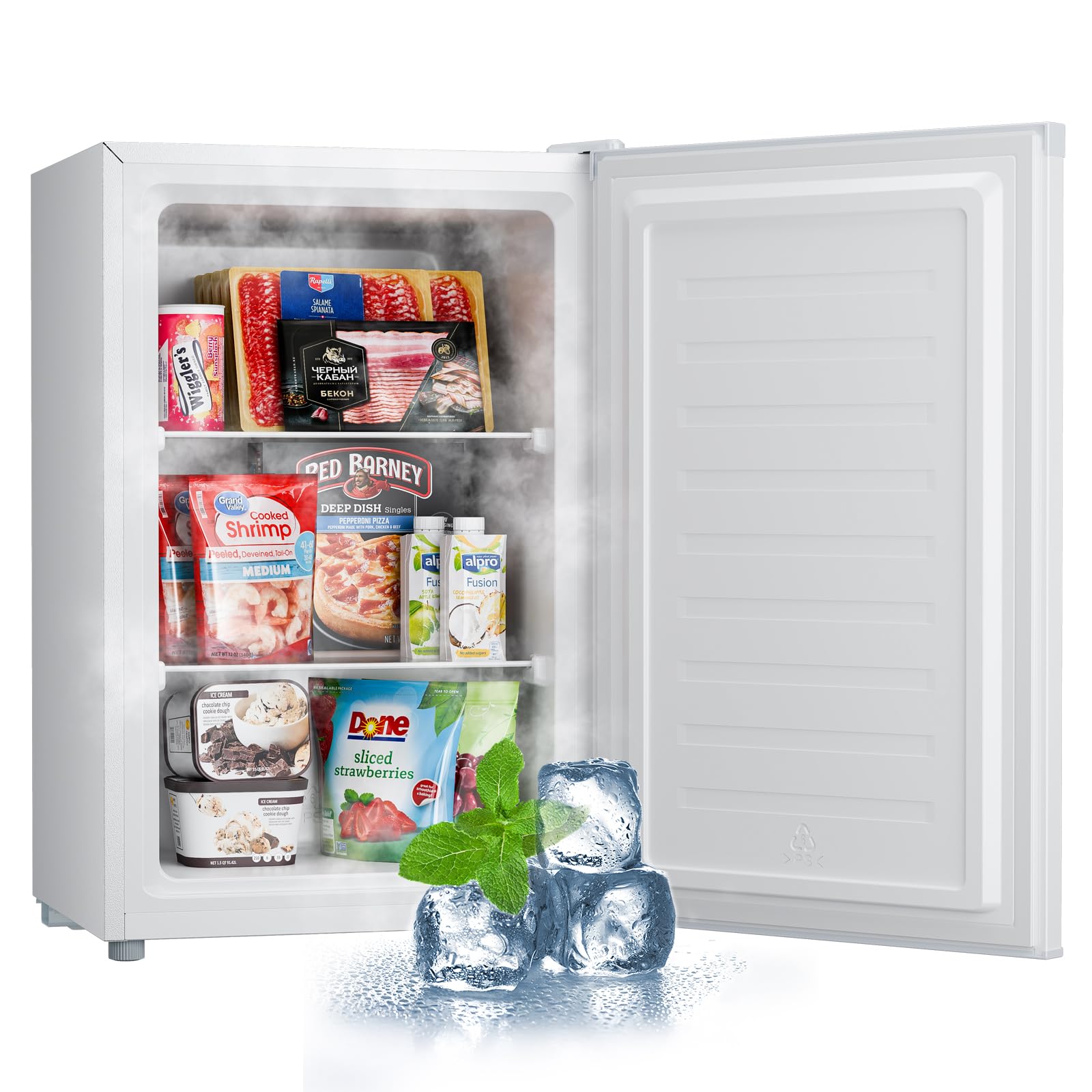
This is a classic “small apartment overflow freezer” idea done in a clean, compact way. What owners like most is the practicality: it fits in tight spaces, the door can be reversed for your layout, and it’s meant to be a low-maintenance support unit.
One of the most underrated strengths in this category is the interior surface and shelf usability. Smooth interior surfaces are easier to wipe down (important in a freezer where frost and small spills happen), and removable shelves let you adapt to real food shapes instead of forcing everything into “one-size-fits-all” stacking. If you freeze pizza boxes, meal prep containers, and mixed items, shelf flexibility matters.
Owner feedback also highlights a realistic truth: thermostat behavior is worth testing early. A small subset of buyers experience “this dial doesn’t behave normally” scenarios, and the best move is to test temperature stability before you trust it with expensive food. That doesn’t mean the freezer is risky. It means you should treat any compact freezer like a new tool: calibrate it, then rely on it.
If you want a freezer that feels straightforward, compact, and easy to place, this one earns its spot. Just plan your layout, set your temperature, and keep door-open time short to minimize frost.
What’s great about it
- Compact footprint – Great for apartments, dorms, and offices.
- Reversible door – Helps it fit into awkward room layouts.
- Easy daily access – Upright shelves reduce digging and food loss.
- Includes simple defrost tools – Small details that make maintenance easier.
Good to know
- Temperature dial placement can be inconvenient depending on your setup; plan your placement thoughtfully.
- Manual defrost is normal—make defrost a quick habit, not a once-a-year nightmare.
- As with many compact appliances, test and confirm stable cycling early.
Ideal for: apartment and dorm buyers who want a simple, compact upright freezer for everyday overflow and frozen meal storage.
11. COWSAR Upright (3.0 cu ft) – Designed for Convenience, Not Just Cold
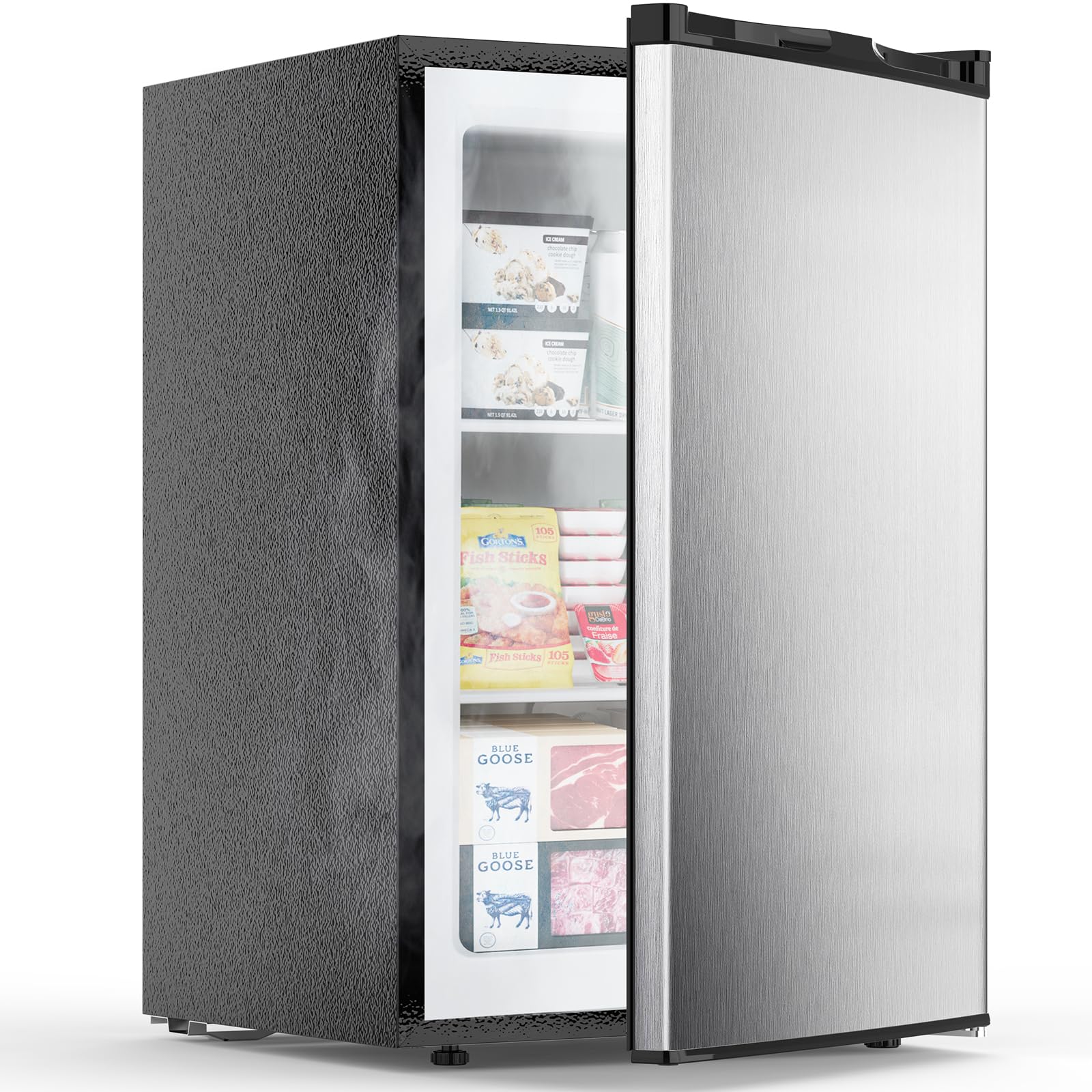
A lot of compact freezers feel like “a cold box with a door.” This one aims to feel like a small appliance built for humans: reversible door, adjustable feet, a handle position designed for easy access, and shelf flexibility so you can adapt to what you freeze.
This matters because convenience is what determines whether you keep using your freezer well. A freezer that’s annoying becomes a freezer you overstuff. An overstuffed freezer becomes a freezer you browse too long. Browsing too long becomes warm air intrusion. Warm air intrusion becomes frost. Frost becomes lost space. Lost space becomes regret. So yes—details like door swing and shelf usability are not cosmetic. They’re performance features in disguise.
Owners commonly use this type of freezer for garden produce, bulk shopping, and daily overflow. That’s exactly the right use-case: it’s not trying to be a commercial deep freezer, it’s trying to be a compact household support system that keeps frozen food accessible.
If you’re placing it in a bedroom or office, the low-noise claim is attractive—but remember: quiet is also about placement. Level it carefully, avoid letting it touch a wall that amplifies vibrations, and you’ll get the best experience.
Why it’s easy to live with
- User-first design – Handles, door reversal, and shelf flexibility matter daily.
- Removable shelves – Makes tall items and odd shapes easier to store safely.
- Compact but capable – Great for overflow, produce, soups, and bulk meat portions.
- Good for small rooms – Works well in offices, dorms, and apartments with careful placement.
Good to know
- Manual defrost means frost management is part of ownership; plan a simple routine.
- If you want a longer-established reputation, mainstream models like Midea can feel safer.
- As always: inspect shipping condition early and test temperature stability before loading expensive food.
Ideal for: buyers who want a compact upright that feels thoughtfully designed for daily convenience, not just basic freezing.
12. Electactic Upright (3.0 cu ft) – A Strong RV and Small-Home Workhorse

If you need a freezer that fits an RV lifestyle (or a small-home layout where every inch matters), this style makes sense: compact footprint, upright convenience, and enough capacity to store real essentials without turning your main fridge freezer into a constant jam session.
Owners who use compact uprights in RVs usually have one primary success metric: does it keep ice cream frozen? It’s a funny benchmark, but it’s real—because ice cream is brutally honest about temperature stability. If a freezer can keep frozen treats solid, it’s generally doing its job. This model tends to get positive “freezes fast, stays cold” feedback, which is exactly what RV buyers need.
The biggest day-to-day nuance is temperature control clarity. Some owners mention the dial can be confusing (which direction is colder? what does each level really mean?). That’s not unusual for compact freezers with mechanical thermostats. The fix is simple: do a one-week calibration period with a thermometer, find your sweet spot, and then stop touching the dial. Once you do that, these freezers feel stable.
Also worth noting: finish quality perception varies. Some buyers love the look, others describe certain finishes as “cheap-looking.” If appearance matters a lot in your space, choose a model with a finish you’ll enjoy seeing every day. If function matters most (garage/RV), focus on stability and cooling.
Why RV owners like it
- Compact footprint – Fits RVs, small kitchens, and tight layouts.
- Freezes quickly – Great for ice, frozen treats, and bulk food portions.
- Upright access – Easier than chest digging when space is limited.
- Good “overflow freezer” role – Keeps your main fridge freezer from being permanently overstuffed.
Good to know
- Dial labeling can be confusing; calibrate once, then leave it alone.
- Manual defrost means you should plan quick maintenance when frost is still thin.
- If you want a more premium look, stainless-door models may feel more “kitchen matched.”
Ideal for: RV owners and small-space households who want dependable freezing in a compact upright format.
13. Feelfunn Upright (3.0 cu ft) – The “Service Matters” Choice
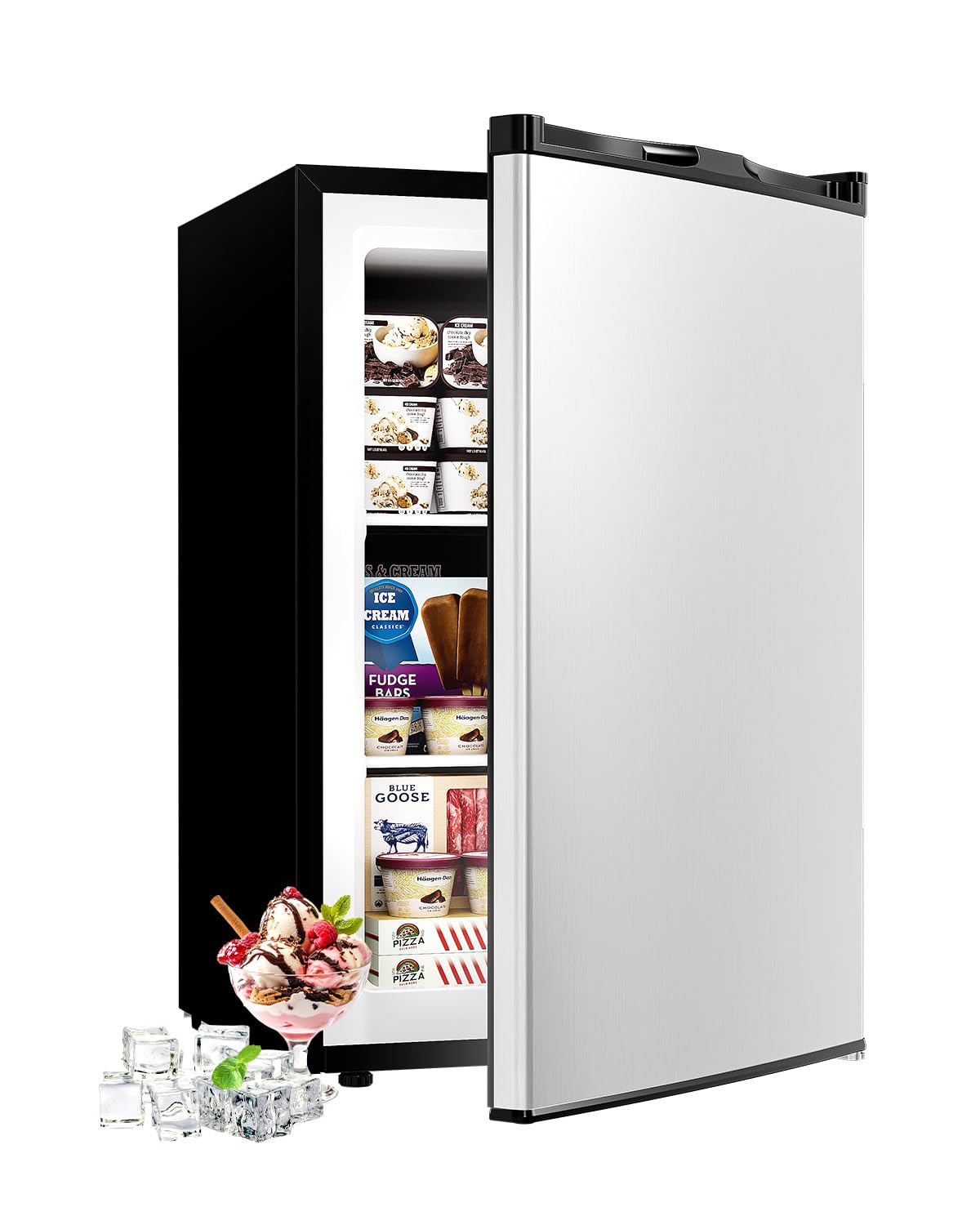
Most buyers only think about customer service after something goes wrong. But with large items that ship by courier and can arrive dented or mishandled, service is part of the product experience. That’s where Feelfunn stands out: multiple buyers highlight unusually responsive support during returns and logistics.
Now let’s talk about the freezer itself. This model fits the core “3.0 cu ft upright” promise: enough space for overflow, ice, meal components, and frozen treats—without taking up the room. Owners mention good packaging protection, a quiet-running impression, and usable interior space that feels bigger than expected. That “more room than expected” feeling typically comes from shelves that let you stack neatly without wasted voids.
If you’re putting this in an RV, office, or small apartment, the low-noise profile is a major benefit. But the bigger reason to consider it is peace of mind: if you’re the kind of buyer who hates return friction, service reputation matters. It changes the emotional experience of buying a bulky appliance online.
This is also a strong fit for buyers who are careful and methodical: you want to calibrate your temperature once, load it thoughtfully, and keep it organized. That approach reduces frost buildup and keeps the freezer feeling “new” longer.
Why it’s a smart buy
- Strong service reputation – Support can matter with large shipped appliances.
- Good small-space footprint – Works in apartments, offices, RVs, and dorm corners.
- Quiet enough for many rooms – Owners often describe it as unobtrusive.
- Easy organization – Upright shelves support a simple “zones” system.
Good to know
- Manual defrost is still a reality; keep frost thin and maintenance stays easy.
- If you want the most established mass-market track record, Midea remains the safest baseline.
- Temperature dials on compact freezers are often “approximate”—calibrate once for confidence.
Ideal for: buyers who value responsive customer support and want a compact upright freezer for small-space daily use.
14. EUHOMY Chest Freezer (3.5 cu ft) – The Bulk Storage “Small Footprint” Cheat Code
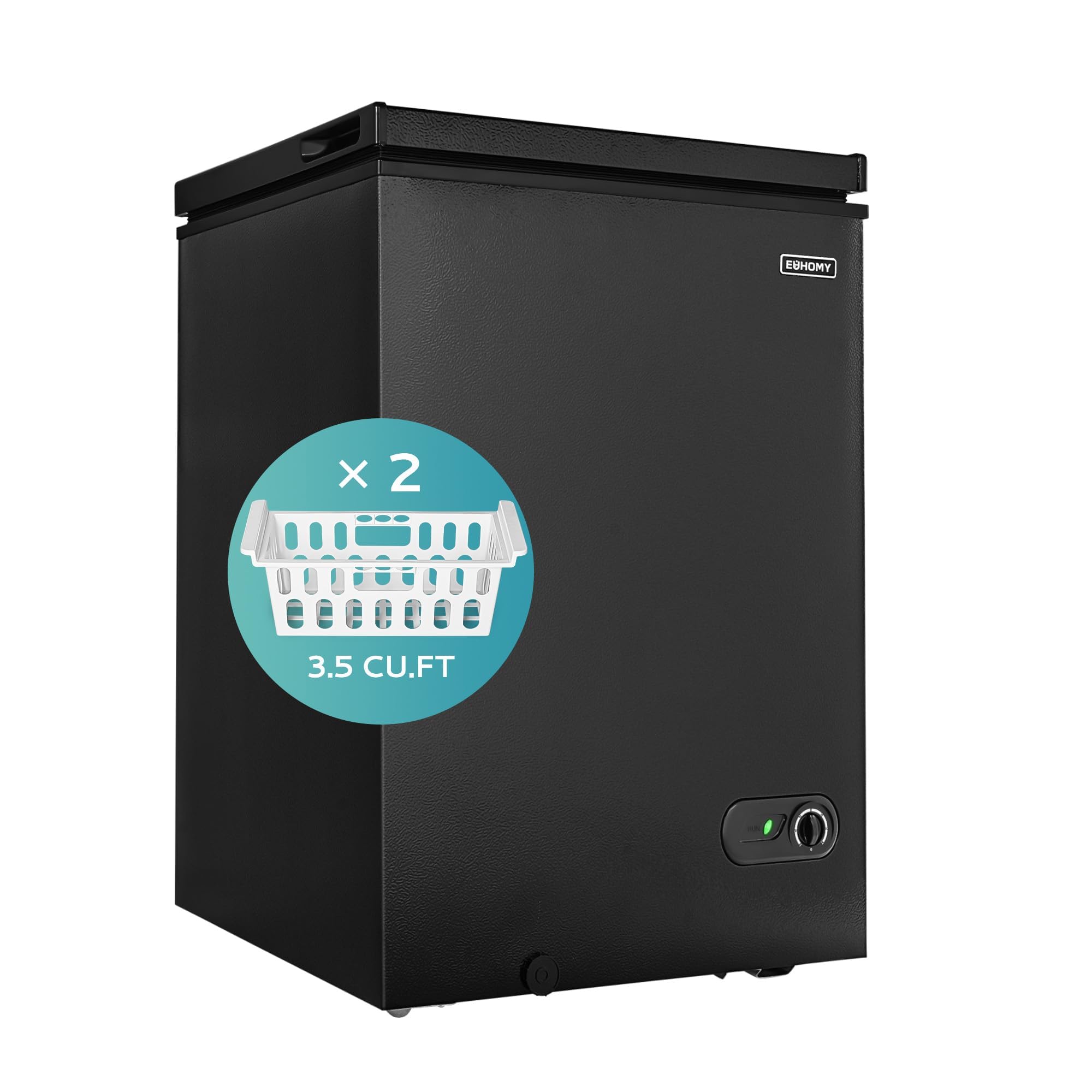
This guide is mostly about uprights, but I’m including this chest freezer for a reason: if your priority is capacity per footprint, chest freezers can feel like a cheat code. They’re often more space-efficient internally, and they can be fantastic for meat storage, bulk frozen vegetables, and large purchases.
What makes this particular chest model compelling is the combination of compact footprint and “thoughtful usability.” The removable baskets are the difference between “chest freezer chaos” and “chest freezer system.” Use the baskets for small, high-frequency items (ice cream bars, frozen fruit, breakfast items), and use the main cavity for bulk proteins and big bags. That approach solves the classic chest problem: digging.
Owners commonly praise the size as “perfect” for apartments, small kitchens, or garages—big enough to matter, small enough to place. Many also describe it as quiet overall, with a gentle hum when the compressor cycles. That’s exactly what you want if it’s near living space.
Chest freezers also have one practical advantage in some homes: they can hold temperature well during short power interruptions because the cold air doesn’t spill out the way it does with an upright door. If you live in an area with occasional outages, that can be a meaningful peace-of-mind bonus.
Why chest makes sense
- Excellent bulk storage – Great for meat, seafood, and large frozen buys.
- Baskets improve usability – Makes small items easy to access without digging.
- Compact footprint – Fits corners and small spaces while still holding a lot.
- Great “second freezer” value – Many owners say it becomes their primary overflow solution quickly.
Good to know
- It’s not upright—organization requires a basket/bin system to stay sane.
- Manual defrost still applies, though many chest owners find frost manageable with good habits.
- If quick visual access matters most, stick with upright models.
Ideal for: bulk buyers who want maximum usable storage without a large footprint and who don’t mind using baskets to stay organized.
15. BLACK+DECKER (1.2 cu ft) – Tiny Freezer, Big Convenience

A 1.2 cu ft freezer is not trying to store your entire Costco haul. It’s trying to solve a smaller, very real problem: keeping frozen snacks, a few meals, ice, or specialty items close by. That’s why people love this size in bedrooms, offices, garages, and small apartments. It’s a “grab a frozen meal without walking across the house” kind of upgrade.
The biggest advantage is simplicity. A shelf helps you separate categories, and the footprint is small enough to tuck into places where a 3.0 cu ft unit would be visually or physically annoying. If you’re using it for sportfishing bait, meal prep overflow, or quick frozen dinners, it’s a very practical tool.
Here’s the honest reality: shipping experiences can be rough for some buyers. Dents, bent frames, and occasional “this unit arrived not working” stories show up in feedback. That doesn’t mean you shouldn’t buy it—it means you should treat delivery day like inspection day. Let it stand upright before plugging in, run it empty, listen for normal cycling, and confirm stable freezing before loading valuable food.
If you do that, this size class can be one of the highest “convenience per square inch” upgrades you can add to a home. It’s tiny, but it changes habits.
Why it’s useful
- Perfect snack-station size – Great for offices, bedrooms, and small spaces.
- Simple shelf organization – Easy to keep quick meals separate from treats.
- Fast convenience – Less reliance on your main fridge freezer.
- Easy placement – Fits nearly anywhere with minimal disruption.
Good to know
- Shipping damage complaints exist; inspect immediately and test early.
- This size is intentionally small—great for snacks and overflow, not bulk storage.
- Manual defrost still applies; tiny freezers can frost if browsed too long.
Ideal for: snack stations, offices, bedrooms, and anyone who wants a small freezer for essentials rather than bulk storage.
16. BANGSON Upright (2.1 cu ft) – Small, Quiet, and Surprisingly Well-Built

The 2.1 cu ft category is a sweet spot for buyers who want more than a tiny snack freezer, but don’t want a full 3.0 cu ft box in the room. This model is often used for very practical “household support” missions: pet food storage, meal components, ice packs, or backup frozen items that don’t fit in your main freezer.
One of the most interesting patterns in owner feedback is the attention to build quality. Some buyers describe it as surprisingly well engineered for the size, with good insulation feel and quiet operation. They also point out a realistic manual-defrost truth: you’ll eventually deal with frost, because there’s no frost-free cycle here. But if you keep door-open time short and don’t load warm, moisture-heavy items, frost stays manageable for much longer.
Noise-wise, what matters in a small freezer isn’t only the hum—it’s the cycling sounds. Some people notice a relay click or a quick “dink” sound when it switches on and off. That’s normal for many compact compressor appliances, but it’s something bedroom buyers should know. If you’re sensitive, place it on a mat and avoid pushing it tightly against a wall that amplifies vibrations.
If you want a compact black mini freezer that does the job without taking over your space, this one is a strong option. Just remember: interior room is finite—store bulky items thoughtfully, and use the shelf strategy that fits your food shapes.
Why it’s a good mini
- Great size balance – More usable than tiny 1.1–1.2 cu ft models without being bulky.
- Quiet overall – Often described as calm in daily life when placed well.
- Looks good – The black finish works nicely in modern rooms and offices.
- Versatile use cases – Pet food, meal components, ice packs, or overflow snacks.
Good to know
- Manual defrost means you’ll eventually do maintenance—stay ahead of frost and it stays easy.
- Interior size is compact; large boxes may require shelf removal or creative stacking.
- Small compressor cycle sounds can be noticeable in ultra-quiet rooms.
Ideal for: small households and secondary storage needs where you want a compact freezer that still feels genuinely useful.
17. Electactic Upright (2.1 cu ft) – The “Just Enough Extra Space” Freezer

This is the “I don’t need a big freezer, I just need more freezer” option. For apartments and dorms, 2.1 cu ft can be the perfect middle ground: big enough to hold meaningful overflow, small enough to fit in corners without dominating the room.
The biggest win with this size class is how it changes shopping behavior. You can finally store frozen vegetables without crushing them into your fridge freezer. You can keep a few frozen meals on hand. You can store ice packs or frozen treats without competing with your main household storage. It’s a small upgrade that quietly improves daily life.
The main limitation is the same one every compact freezer shares: frost. If you’re the kind of person who stands with the door open deciding what to eat, frost will build faster. If you treat the freezer like a quick-access tool—open, grab, close—you’ll keep it clean longer. That’s the real “secret” to enjoying manual-defrost freezers.
If you want a practical, compact, small-footprint freezer for overflow and quick meals, this category is where the value often lives.
Why it’s a solid choice
- Great size for small homes – Enough space to matter, small enough to place easily.
- Helps you shop smarter – Supports frozen vegetables, meal prep, and quick meals.
- Upright visibility – Easier to track what you have compared with chest storage.
- Simple daily routine – Works best with a quick “open/grab/close” habit.
Good to know
- Manual defrost means frost management is part of ownership.
- Capacity is limited; this is overflow support, not bulk meat storage.
- Door reversal and leveling matter—do a careful setup for best sealing and stability.
Ideal for: apartments and dorms where you want “just enough” extra frozen storage without a large appliance footprint.
18. Electactic Upright (1.1 cu ft) – The Bedside Ice Pack Hero
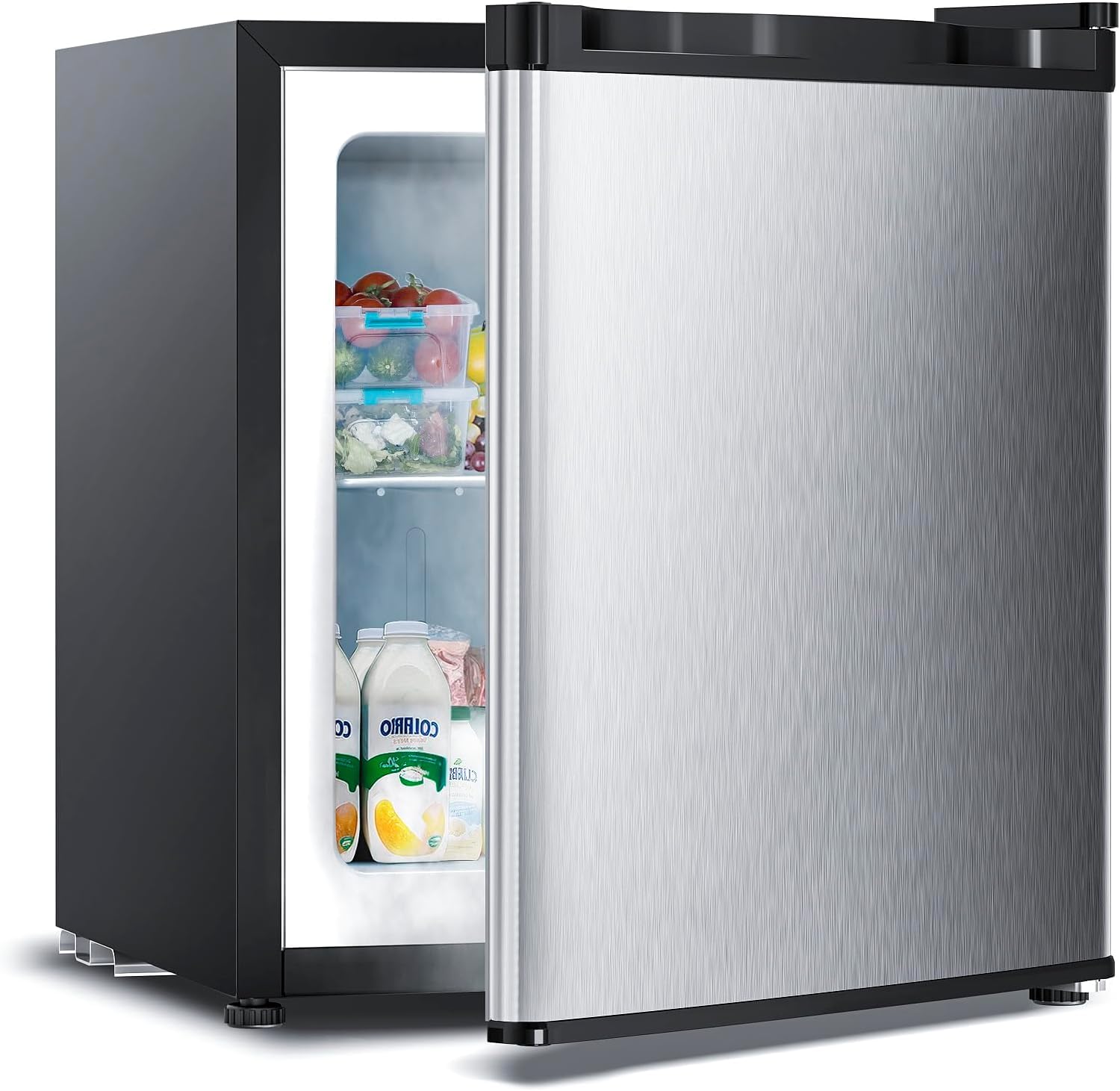
This is the freezer you buy when your priority is not “frozen food storage.” It’s accessibility. It’s ice packs for recovery. It’s migraine tools. It’s keeping a few essentials near your bed or desk so you don’t have to do stairs or long walks. In that role, ultra-compact freezers are genuinely life-improving.
Owners often describe it as “perfect for recovery” because it’s small enough to sit nearby without getting in the way. That’s exactly the right mindset: this is not a kitchen bulk freezer, this is a personal convenience freezer. If you use it for ice packs, small frozen snacks, or a limited set of items you want close-by, it shines.
The trade-off is frost maintenance. Tiny freezers can show frost faster because there’s less thermal mass and less interior volume. But if you keep door-open time short and you don’t overload it with warm items, maintenance stays simple. And here’s a smart habit many owners mention: letting the unit stand upright before plugging it in. That one step can reduce compressor stress and improve early performance.
If you want the smallest freezer that still does the job, this is the category—and this model is a strong representative of it.
Why it’s worth it
- Tiny footprint – Works near beds, desks, dorm rooms, or tight apartments.
- Perfect for ice packs – A real quality-of-life upgrade during recovery periods.
- Quick-access convenience – Keeps essentials close without relying on the main freezer.
- Simple controls – Easy to set up and use when your needs are straightforward.
Good to know
- Frost can build faster in ultra-small units; plan light maintenance.
- Capacity is intentionally limited—don’t expect bulk storage.
- Placement and leveling matter for noise and door seal; set it up carefully.
Ideal for: bedside recovery setups, offices, dorm rooms, and anyone who needs ice packs or a small set of frozen essentials close by.
How Compact Freezers Actually Hold Temperature (and Why Frost Shows Up)
A freezer isn’t “cold all the time.” It’s a cycle: the compressor runs, the interior drops to a target range, the compressor rests, and temperature slowly rises until it kicks on again. Understanding that cycle makes you a smarter buyer—and a happier owner—because you’ll know what behaviors create frost, noise, and temperature swings.
What makes a small freezer feel “stable” in real life
- Good door sealing – Warm air is the enemy. A tight seal reduces frost and keeps temperature recovery fast.
- Smart shelving – Shelves that let you organize quickly reduce door-open time, which reduces moisture intrusion.
- Thermal mass helps – A mostly empty freezer warms faster. A freezer with frozen items (or even a few frozen water bottles) stays stable longer.
- Airflow space – Overstuffing can block airflow, forcing longer run times and creating uneven freezing zones.
- Leveling matters – A freezer that’s slightly off-level may not seal evenly, and it can vibrate more.
That’s why the “best owners” have a simple routine: set it up carefully, load it thoughtfully, and avoid constant temperature fiddling. The freezer becomes predictable—and predictable is what you want.
How to reduce frost without making your life complicated
- Don’t browse – Decide what you want before you open the door. Keep it open for seconds, not minutes.
- Cool first, freeze second – Let hot soups and warm containers cool before freezing to reduce moisture.
- Use zones – Create “meat,” “veg,” “meals,” and “treats” zones. The fastest grab is the least frost.
- Defrost early – When frost is thin, defrosting is fast and easy. Waiting turns it into a project.
- Placement wins – Leave breathing room around the unit so it can release heat efficiently and avoid long run times.
If you do these five things, manual-defrost freezers stop feeling like “work.” They feel like the most convenient storage upgrade you’ve made in years.
FAQ: Buying and Using a Compact Freezer Without Regret
Should I choose an upright or a chest freezer?
How long should I wait before plugging it in after delivery?
What’s the biggest mistake people make with compact freezers?
Is manual defrost a deal-breaker?
Can I put a compact freezer in a bedroom or office?
Which size should I buy: 1.1, 2.1, 3.0, or 3.6?
Final Thoughts: Choose the Freezer That Fits Your Life (Not Just Your Space)
The right freezer is the one that makes you feel, two weeks after it arrives: “Wow… my kitchen is finally under control.”
Here’s how to translate this guide into a confident decision:
- Want the safest “most people will love it” choice? Start with the Midea MRU03M2ABB. It’s a dependable upright format that supports real household routines—bulk buys, meal prep, and overflow storage.
- Prefer the same practical approach in a clean neutral finish? Go with the Midea WHS-109FW1. It’s a great “fits anywhere” small-room freezer.
- Care a lot about a stainless door look? Consider the Magic Chef MCUF3S2. Just do a careful day-one inspection and test run before loading pricey food.
- Need more room without going full-size? Look at the Maine 3.6 cu ft upright or the OOTDAY 3.5 cu ft upright for a real capacity upgrade that still fits compact spaces.
- Want the easiest “organized shelves” experience? The Electactic 3.2 cu ft upright is a great “I can see everything” meal-prep-friendly layout.
- Buying for a home office or under-desk freezer need? The EUHOMY 3.0 cu ft upright (UF001-30) is a strong “quiet-feeling small footprint” option.
- Want the best chest-style alternative for bulk storage? The EUHOMY 3.5 cu ft chest freezer is a great option when capacity-per-footprint matters more than shelf visibility.
- Need a tiny freezer for ice packs or a small snack station? Choose the Electactic 1.1 cu ft upright or the BLACK+DECKER 1.2 cu ft for compact convenience in bedrooms and offices.
Pick the compact upright freezer that matches how you actually live—bulk buyer or snack station, under-counter or garage, office quiet or family overflow— and you’ll end up with the kind of purchase that feels satisfying every single week you use it.
