
A great griddle turns a normal gas stove into a short‑order line: crisp edges on smash burgers, diner‑style pancakes with lacy rims, and a whole breakfast done in one pass instead of five tiny batches. But here’s what most “buying guides” get wrong: a griddle isn’t a product category — it’s a heat-management tool. If you don’t match the metal, the surface finish, and the size to how your burners actually behave, you’ll end up with smoke, sticking, or a hot spot that bullies every egg into overcooking.
If you’re shopping for a cast iron griddle for gas stove, you’re not just choosing a pan. You’re choosing: how quickly heat moves, how stable that heat stays when cold food hits, and how much effort cleanup takes when you’re done. This guide is built around the real friction points that decide whether a griddle becomes your favorite tool or your “once-a-month” regret — burner spacing, warping resistance, grease control, handle comfort, seasoning reality, and storage sanity.
I’m also going to be blunt about something: “nonstick” on big, high-heat griddles can mean wildly different things. Sometimes it’s a durable enamel-style surface that behaves beautifully if you cook smart. Sometimes it’s a coating that needs medium heat and gentle utensils. And sometimes it’s just marketing. So in each pick below, I’ll explain the correct way to use that specific surface so you get the best results (and avoid the most common mistakes that show up in owner feedback).
You’ll find 15 standout options in this guide — from classic raw cast iron workhorses, to premium enamel and ceramic surfaces, to purpose-built center griddles for GE ranges, and even one portable tabletop unit for anyone who wants “real flattop” power outdoors.
In this article
- How to choose the right griddle for your stove, cooking style, and cleanup tolerance.
- Quick comparison table of 15 standout picks.
- In‑depth reviews of each griddle, with pros and cons.
- How gas-stove griddle cooking actually works (and why “heat mapping” beats guesswork).
- Answers to common questions, plus final buying tips.
How to Choose the Right Cast Iron Griddle For Gas Stove
Buying the “best” griddle is easy if you only read spec sheets. Buying the right griddle is harder — because gas stoves don’t behave like lab equipment. Flames create hot cores, cooler edges, and temperature swing when you add food. The winner isn’t the griddle with the most hype. It’s the one that matches your stove geometry and your cooking habits so well that it feels effortless. Here’s the framework I use to get people to a confident, no-regrets pick.
1. Start with your stove: burner spacing and grate style
Your stove decides what “fits” and what “cooks evenly.” Before you fall in love with a griddle, do this quick check:
- Measure burner center-to-center spacing: Double‑burner griddles work best when the burners sit under the main cooking zones, not under the handles.
- Look at your grates: Some grates are flat and stable; others have ridges or curved rails that can make a big plate wobble.
- Check the “bridge burner” situation: If you have a long center burner, you can run larger griddles more evenly and keep side burners open.
- Think about front-to-back depth: Some large plates overhang the front control area; that can feel cramped on busy cooks.
2. Choose the surface type first (it changes everything)
Here’s the truth: most “bad griddle experiences” are surface mismatch, not user failure. Pick the surface based on your cooking reality.
A) Raw cast iron (seasoned)
This is the classic. When it’s seasoned well, you get great browning, heat retention, and durability. But the surface is a relationship: it improves with use, and it punishes long soaks, dishwasher cycles, and “I’ll deal with it later” neglect. The payoff is huge if you cook often and want real sear power.
B) Enameled cast iron / porcelain enamel
Enameled surfaces are the “rust anxiety” solution. They’re easier to wipe clean, and they remove a lot of the seasoning maintenance. However, they reward medium heat more than extreme heat, and they prefer softer utensils to keep the surface pristine long term. If your dream is “big cooking surface, low hassle,” enamel is a strong direction.
C) Ceramic nonstick
Ceramic is for people who want slick release and easy cleanup — and who are willing to cook smarter (low-to-medium heat, let the pan preheat gently, and don’t scrape it like a steel shovel). On a gas stove, that “cook smarter” part matters. Ceramic can be incredible when used in its comfort zone.
D) Nitrided / treated surfaces (common on range replacement griddles)
Some replacement plates use a treated surface that aims to reduce sticking without frequent seasoning. The big advantage is speed: breakfast goes faster when eggs release and cleanup is a quick wipe. The key is fit: these are designed for specific stove models, so sizing and compatibility is the whole game.
E) “Not cast iron” but still relevant
Some picks in this list are aluminum or carbon steel. They’re here because they solve real problems: weight, responsiveness, and easy cleanup. If you want the griddle function without the cast iron heft, these options matter.
3. Thickness isn’t a flex — it’s a heat stabilizer
A griddle plate is basically a thermal battery. Thicker plates hold temperature when you drop cold food onto them. Thinner plates respond faster, but they can lose heat quickly and develop more dramatic hot spots. On gas stoves, thickness also helps resist warping (especially on larger plates that span multiple burners).
- If you cook smash burgers, bacon, or steak: prioritize mass and heat retention.
- If you cook eggs, pancakes, and grilled sandwiches: a balanced plate (or a good nonstick surface) can feel more enjoyable day-to-day.
- If you want high-heat control: carbon steel can be a sweet spot — quick to respond, still great at searing when seasoned.
4. Grease management is the hidden “quality of life” feature
If grease has nowhere to go, it turns into smoke and splatter. The best griddles do one of two things:
- They include a trough or channel: bacon grease drains away from the food and you can manage it mid-cook.
- They give you sidewalls: oils stay contained, and you can scrape food without launching it off the edge.
If you cook a lot of high-fat foods, favor troughs and walls. If you cook mostly pancakes, eggs, and toasted sandwiches, a simple lip can be enough.
5. Handles, storage, and “will I actually use this?” math
A griddle can be amazing and still become a kitchen orphan if it’s annoying to store or too heavy for your normal routine. Be honest about these:
- Weight tolerance: Some plates are “two-hand and focus” heavy. That’s fine — if you’re okay with it.
- Storage plan: Oversized griddles often live in the oven, a pantry shelf, or a dedicated cabinet slot.
- Cleanup reality: Raw cast iron rewards a simple ritual. Nonstick and enamel reward quick wipes. Choose your personality match.
6. The “two-minute test” that predicts satisfaction
Before you cook anything, do this the first time you place your griddle on the stove:
- Put the griddle on the grates and press lightly on all corners. No wobble is the goal.
- Turn on the burners to medium and let it warm for a few minutes. Feel the air above the surface with your palm hovering. You’ll sense the heat zones.
- Flick a few drops of water across the surface. You’re not looking for fireworks — you’re looking for consistent behavior across your cooking zones.
If that test feels calm and predictable, you’re about to love your griddle.
Quick Comparison: 15 Cast Iron Griddle For Gas Stove Picks
Use this table to spot the models that match your stove and cooking habits, then jump to the reviews for the “real life” details — like how each surface behaves, how messy it gets, and whether owners say it’s genuinely easy to keep clean.
On smaller screens, swipe or scroll sideways to see the full table.
| Model | Surface / material | Best for | What it does differently | Amazon |
|---|---|---|---|---|
| Victoria 20×14 Rectangular Reversible Griddle | Raw cast iron | Most households: big breakfasts, burgers, everyday sear | Large, reversible, flaxseed‑seasoned feel with smart drip groove | Amazon |
| Lodge Pro‑Grid 20×10.44 Reversible Grill/Griddle | Raw cast iron | Best value “do-it-all” classic | Two‑burner staple with a grill side that actually works | Amazon |
| KVZKVZ WB31X24738 Griddle Replacement (GE) | Treated nonstick | GE range owners who want easy-release breakfast | Nitrided-style surface aims for wipe-clean convenience | Amazon |
| KIMSOFUNNY WB31X24738 Heavy‑Duty (GE) | Cast iron plate | Replacing a worn GE center griddle on a budget | Big cooking zone, traditional cast iron feel after seasoning | Amazon |
| Vayepro 2‑Burner Griddle Pan + Glass Lid | Nonstick aluminum | Low-mess breakfasts and easy cleanup | Glass lid controls splatter; lightweight for daily use | Amazon |
| Camp Chef 16×24 Reversible Cast Iron Griddle | Raw cast iron | Big families, meal prep, “restaurant griddle” vibe | Massive surface + full-width grease tray approach | Amazon |
| QuliMetal 23×16 Matte Porcelain Enamel Griddle | Porcelain enamel | Grill-to-stove crossover; easy wipe-down surface | Sidewalls + enamel feel reduce sticking drama | Amazon |
| Utheer 25×16 Pre‑Seasoned Nonstick Griddle | Coated cast iron | Parties, big cooks, tailgates | Reinforced ridges + grease groove + detachable handles | Amazon |
| Viking Nonstick Double Burner Griddle (19×11) | Hard-anodized | Fast weekday breakfasts, light handling | Triple-layer nonstick + quick heat for pancakes/eggs | Amazon |
| BBQ Future 23×16 Universal Cast Iron Griddle + Spatulas | Raw cast iron | Big surface searing + outdoor grill conversion | Thick plate with walls; includes sturdy spatula kit | Amazon |
| Utheer 23×16 Enameled Cast Iron Griddle | Enameled | Rust-resistance + quick cleanup on a big plate | Enameled surface aims for “cast iron power, less fuss” | Amazon |
| Made In Carbon Steel Griddle (Sweden) | Carbon steel | Chefs who want fast response + high heat | Cast-iron-like sear with quicker control and lower heft | Amazon |
| Le Creuset Signature Square Skillet Grill (10.25) | Enameled grill pan | Indoor “grill marks” + easy cleaning | No seasoning lifestyle; premium enamel performance | Amazon |
| Blackstone 22” Tabletop Griddle + Hood | Outdoor flattop | True flattop power for patios, camping, tailgates | Two heat zones + grease management system | Amazon |
| Caraway Double Burner Griddle (19×12) | Ceramic nonstick | Low-to-medium heat cooks + easy cleanup | Induction-friendly ceramic slickness with premium design | Amazon |
In‑Depth Reviews: 15 Griddles That Make Gas-Stove Cooking Feel Effortless
Now we’ll go pick by pick. I’m going to talk like someone who actually cooks on these surfaces: where the hot spots show up, what “nonstick” really means on that finish, what the cleanup feels like, and which type of cook will love (or hate) each one.
1. Victoria 20×14 Reversible Cast Iron Griddle – The Sweet Spot of Size, Sear, and Everyday Use

This Victoria griddle lands in a “most kitchens, most meals” sweet spot. It’s big enough to finally cook breakfast like you mean it (pancakes and bacon and eggs in one run), but not so gigantic that it turns into a storage nightmare or a two-person lifting requirement. And because it’s reversible, it doubles as an indoor grill for those nights you want char lines on chicken or vegetables without firing up an outdoor setup.
Here’s the expert reason it works so well on gas: the plate geometry gives you usable zones. On most stoves, the centers over the burners run hotter, while the edges create a natural hold area. That’s not a flaw — it’s a feature — because it lets you cook and stage food without a second pan. Owners who use their griddle multiple times a week often end up developing a rhythm: hot zone for searing, edge zone for warming, and a quick scrape into the drip channel between rounds.
The surface feel is “real cast iron,” which means it rewards a simple habit: heat it slowly, cook with a little fat, and clean while it’s still warm. If you do that, the release gets better over time and the plate becomes that rare tool that’s both utilitarian and satisfying. And if you’re the kind of person who hates babying cookware, this is the kind of iron that can handle real life.
Why it’s the best overall
- Practical size for real meals – Big enough to batch cook, but still manageable for most home stoves and storage setups.
- Zone-friendly on gas – Natural hot/cool areas make breakfast and smash burgers easier, not harder.
- Reversible utility – Flat side for pancakes/eggs; ridged side for grill-mark vegetables and proteins.
- Seasoning improves fast – With consistent use, many users report it becomes easier and easier to clean and cook on.
Good to know
- Like most cast iron, it’s heavy enough that you’ll want two hands and a confident grip when moving it.
- It prefers patient preheating; cranking the flame immediately can create hotter hot spots than you want.
- If you rarely cook big batches, a narrower two-burner plate may feel more convenient day-to-day.
Ideal for: the household that wants one reliable griddle that can do weekday eggs, weekend pancakes, and serious searing without turning maintenance into a hobby.
2. Lodge Pro‑Grid Reversible Grill/Griddle – The Classic That Earns Its Reputation

The Lodge Pro‑Grid is the griddle a lot of cooks start with — and the one many of them keep forever. Not because it’s fancy, but because it’s dependable in the ways that matter: heat retention, durability, and a surface that gets better with use. Owners who’ve cooked on cast iron for years often describe Lodge as one of the best “value-to-performance” deals in cookware because it does the fundamentals extremely well.
On gas stoves, the Pro‑Grid shines when you treat it like a plate that needs a warm-up. Bring it up slowly, give both burners time to heat the mass, and you’ll get a surprisingly even cooking surface for a two‑burner tool. This is where a lot of newer users accidentally sabotage themselves: they blast one burner, the center overheats, and the food sticks. When you preheat like a pro, the griddle stops feeling temperamental and starts feeling like a restaurant tool.
The reversible design is also more useful than people expect. The flat side becomes a breakfast machine. The ridged side isn’t a gimmick — it gives you true grill marks and drains fat away via channels and a grease gutter. That makes it a smart choice for burgers, sausages, and vegetables where you want color without the “fried in grease” feel.
Why it’s a legendary value
- Predictable performance – Great heat retention and steady cooking once properly preheated.
- True two-in-one utility – Flat griddle side and ridged grill side are both genuinely useful.
- Seasoning-friendly – Many users report it feels “ready to cook” quickly and improves fast with regular use.
- Tough enough for real tools – Metal spatulas and aggressive scraping are part of the cast-iron lifestyle, and this plate can take it.
Good to know
- It’s heavy; moving it one-handed is not the vibe (and storage takes planning).
- On smaller stoves, the length can crowd neighboring burners — measure your workspace.
- Cleaning the grill ridges takes longer than the flat side; a brush that fits the grooves makes it much easier.
Ideal for: anyone who wants a proven cast iron griddle that will outlast trends, handle real cooking, and deliver excellent results once you learn its heat rhythm.
3. KVZKVZ WB31X24738 (GE) – The “Wipe-Clean Breakfast” Replacement Plate

If you own a GE range with a center griddle slot, this kind of purpose-built replacement can feel like upgrading your stove without replacing your stove. The KVZKVZ version stands out because it’s designed around an easy-release, easy-cleaning experience: owners frequently describe eggs sliding, residue wiping away, and the plate heating evenly enough to cook “steak and eggs at the same time” without obvious dead zones.
Here’s the deeper advantage of a center-plate design: it forces the griddle to live where the stove wants it to live. You’re not balancing a giant rectangle across uneven grates or fighting for stability. The plate becomes part of the appliance workflow. That means you’re more likely to use it on a normal Tuesday, which is the highest compliment you can give any cooking tool.
The treated surface can also reduce the “seasoning anxiety” that keeps many people from loving cast iron. Instead of doing the full seasoning ritual, many users can get great results with sensible preheating and a thin film of fat. That makes this a strong pick for households who want the griddle lifestyle but don’t want maintenance to become a hobby.
Why GE owners love it
- Fits the stove’s workflow – Center placement creates stability and makes daily use feel natural.
- Easy-release cooking – Users often highlight eggs and pancakes releasing cleanly and wiping down fast.
- Even enough for multi-item meals – Great for “breakfast line” cooking: bacon, eggs, toast, all in one place.
- Low-fuss cleanup – Paper towel wipe-down is often all you need when you clean while warm.
Good to know
- This is a compatibility-first purchase; it shines when it matches your stove model exactly.
- To keep the surface happy long-term, gentler utensils tend to preserve the finish better than aggressive scraping.
- If you want a reversible grill side, this style is about flat-top convenience, not grill marks.
Ideal for: GE range owners who want a center griddle that feels built-in, cooks cleanly, and makes weekday breakfasts faster and less messy.
4. KIMSOFUNNY WB31X24738 (GE) – Big Surface, Old‑School Cast Iron Feel (After You Season It)
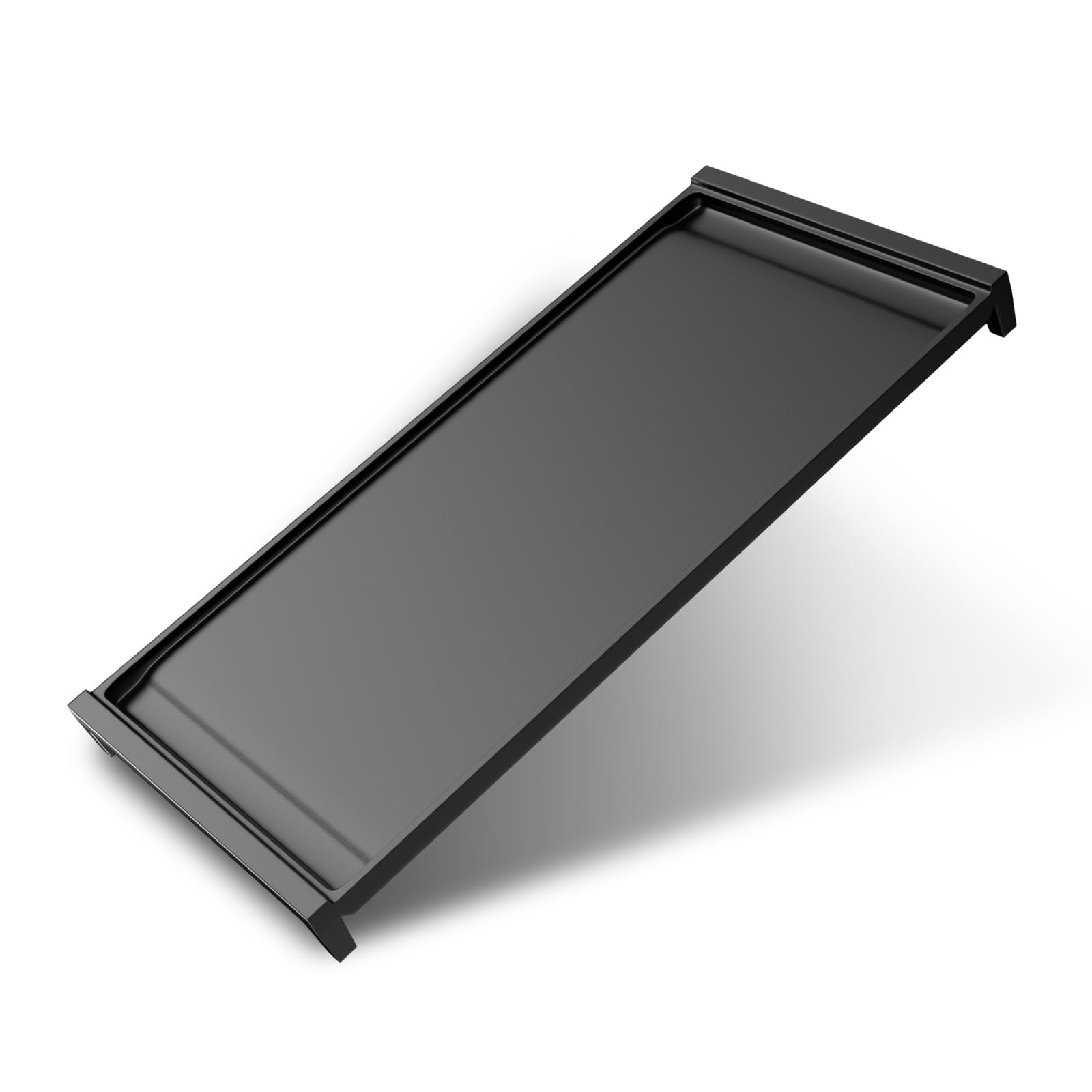
This is the “save the stove” kind of purchase. If your GE center griddle is torn up, rusted, or permanently sticky, swapping it out can make the whole range feel new. Owners who had a damaged original plate often describe the same experience: the replacement fits perfectly, seasons up, and suddenly the griddle becomes something they actually use for eggs, grilled cheese, chicken, and steaks.
The important nuance here is surface preparation. Some feedback suggests the plate may arrive with a rougher texture than premium cast iron cookware. That doesn’t automatically mean it cooks poorly — it means you’ll get the best results by doing a short seasoning routine to fill in micro-texture and build a slicker working layer. Once the surface is conditioned, you can treat it like traditional cast iron: preheat, cook, scrape while warm, wipe, and lightly oil.
Where this style can frustrate new users is expectations. If you want “nonstick skillet slick,” you’ll be disappointed. If you want “cast iron griddle that gets better with use,” you’ll likely be happy — especially because the griddle footprint is large enough to cook a full breakfast in one session.
Why it’s worth considering
- Great stove revival tool – Replaces a worn center plate without replacing the whole range.
- Large cooking zone – Enough space for multiple grilled cheeses or a full bacon-and-egg run.
- Traditional cast iron results – Once seasoned, it can deliver the browning and heat hold people expect.
- Value-focused – A practical way to get back to daily griddle cooking.
Good to know
- Surface texture can feel rougher out of the box; seasoning usually improves the experience.
- Some users report quality variability, so inspect and clean it well before the first cook.
- Maintenance is still “cast iron maintenance” — dry well and keep it lightly oiled after cleaning.
Ideal for: GE owners who want an affordable replacement plate and are comfortable doing basic cast iron seasoning to unlock the best performance.
5. Vayepro 2‑Burner Griddle + Glass Lid – The Weekday Breakfast Hack for Clean Counters

Not everyone wants cast iron as a lifestyle choice. Some people want breakfast to be fast, low-mess, and easy to clean — and that’s where the Vayepro setup shines. The glass lid is the star. It changes the entire experience of cooking bacon or sausages on a stovetop griddle because it reduces splatter dramatically and keeps heat more consistent. Owners who bought it specifically for the lid often say the same thing: it keeps the area cleaner and makes the griddle feel more “controlled.”
Because it’s aluminum, it heats quickly, which is great for weekday speed. The tradeoff is that heat distribution depends heavily on burner alignment. If your two burners are different sizes or sit wide apart, you may notice one side runs hotter. The smart way to use this griddle is to treat it like two zones: hot side for browning, cooler side for finishing or holding. Many people end up liking that behavior once they stop expecting perfect uniformity.
If you’re coming from a George Foreman-style grill or a small skillet routine, this feels like a major upgrade: more surface area, easier release, and cleanup that’s often a wipe and rinse. Just remember that nonstick coatings reward medium heat and gentler tools; cook like you want the surface to last.
Why it’s so practical
- Glass lid reduces chaos – Less splatter, cleaner stovetop, and more consistent heat for sausages and bacon.
- Fast heat-up – Aluminum responds quickly, which is perfect for weekday meals.
- Easy release + easy cleanup – Pancakes and eggs slide well; cleanup is usually minimal.
- Lightweight – Easy to lift, wash, and store compared with heavy iron plates.
Good to know
- Not compatible with induction and less ideal for very high-heat searing compared with iron.
- Heat can vary based on burner spacing; using it as a two-zone griddle works best.
- Handles may require assembly; once installed, most users find it sturdy and convenient.
Ideal for: people who prioritize easy cleanup, splatter control, and lightweight handling over maximum searing power.
6. Camp Chef 16×24 Reversible Griddle – The “Restaurant Slab” for Big-Batch Cooking
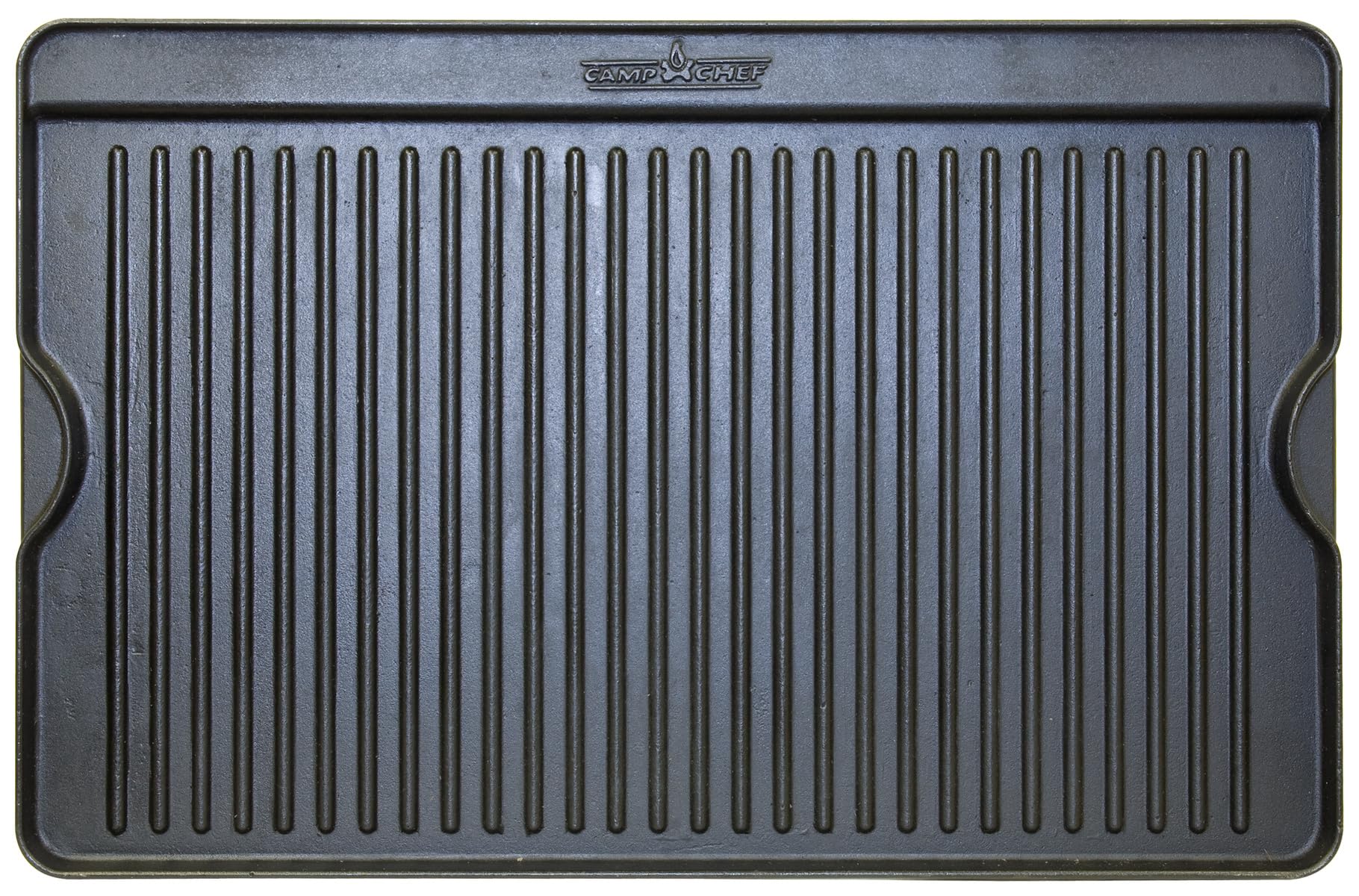
This is not a “cute kitchen accessory.” The Camp Chef reversible griddle is a cast iron slab built for volume. People buy it when they’re tired of doing breakfast in batches — when they want pancakes for the whole family at once, grilled sandwiches for a crowd, or a hibachi-style meal without juggling multiple pans. And when it’s preheated properly, it genuinely delivers that restaurant griddle feel: steady heat, strong browning, and the ability to run cooking zones across one surface.
The owner feedback around this plate tends to split into two honest camps. Camp A: “This cooks unbelievably well, I’m obsessed.” Camp B: “This is a pain to move, wash, store, and season.” Both groups are right. This griddle is heavy enough that it demands a plan: where it lives, how you lift it, and how you clean it without making your sink feel like a construction site. Once you accept that, the payoff is huge.
On a gas stove, the biggest skill is heat management. Instead of blasting it, you warm it slowly, then “steer” heat with burner control. Many cooks use three burners on a large range to reduce cooler gaps, while others lean into the gaps as holding zones. Either way, the best results come from patience: give the iron time to saturate. This is a plate that rewards a grown-up approach.
Why it’s a beast (in a good way)
- Huge cooking capacity – Perfect for big breakfasts, meal prep, and family cooks.
- Excellent heat retention – Once hot, it stays stable and browns consistently.
- Zone cooking – You can run hot and warm areas on one surface without swapping pans.
- Reversible utility – Flat side for breakfast; ridged side for steaks, chops, and vegetables.
Good to know
- It’s very heavy; moving it can be the hardest part of owning it.
- Storage is a real consideration — many owners keep large griddles in the oven or on a dedicated shelf.
- Seasoning can be smoky if done aggressively; many users build seasoning naturally through cooking instead.
Ideal for: big families, entertainers, and serious home cooks who want a true high-capacity griddle and don’t mind the weight tradeoff.
7. QuliMetal 23×16 Porcelain Enamel Griddle – Big Plate Convenience with Less Sticking Drama

If your dream is “big griddle surface, easier cleanup,” enamel-coated plates are worth a serious look. This QuliMetal-style plate is built like a grill insert, but the reasons people like it translate well to gas-stove cooking too: high sidewalls that keep food contained, a surface that aims to release with less oil, and a finish that doesn’t demand constant seasoning rituals to avoid rust.
Here’s the expert reality of enamel on a gas flame: it’s happiest in a controlled temperature range. You can absolutely get great browning, but you don’t need to torch it on max flame. Preheat on medium, let the plate warm evenly, then cook. The benefit is that cleanup becomes simpler — a warm wipe-down often does most of the work — and sticky sugar-based messes (like glazed onions or marinades) tend to release more easily than they do on newer, not-yet-seasoned raw iron.
This plate’s size is also a superpower and a responsibility. It can cover multiple burners and cook for a crowd. But large plates are only “even” if your heat sources support them. If your stove has widely spaced burners, you’ll naturally create hotter bands over the flames. The right mindset is to use those bands as zones: sear in the heat lanes, finish toward the edges. Once you do that, you get the best of both worlds: volume and control.
Why enamel fans choose it
- Easy-release behavior – Often needs less oil for clean pancakes and eggs compared with new raw iron.
- Sidewalls control the cook – Better scraping, less food escape, and less splatter.
- Lower rust worry – Enamel reduces the “did I dry this enough?” stress that scares people away from iron.
- Party-size capacity – Great for burgers, fajitas, and batch breakfast cooks.
Good to know
- It’s still heavy — enamel doesn’t make it lightweight.
- It prefers medium heat more than extreme heat for best long-term surface behavior.
- Because it’s large, storage and handling should be planned before it arrives.
Ideal for: cooks who want a large cooking surface with easier cleanup than raw cast iron — and who are happy using medium heat and cooking zones for best results.
8. Utheer 25×16 Pre‑Seasoned Griddle – Big-Crowd Cooking with Walls and a Grease Groove

This Utheer plate is built for scale. It’s the kind of griddle that lets you cook like you’re feeding people, not just making a snack: smash burgers for a group, breakfast spreads, or fajita mountains without constantly clearing space. The details that matter are the walls and the grease system — you can scrape aggressively, keep food contained, and manage grease instead of letting it puddle and smoke.
Owners who love big griddle plates often mention the same reality: evenness isn’t a magical property, it’s a technique. Large plates will always reflect burner placement. The smart play is to treat the plate like a kitchen with stations: hot center lanes for searing, side zones for finishing, and corners for holding. Once you embrace that, big plates become fun rather than fussy.
The reinforced structure and overall heft help reduce the “warp anxiety” that can come with thinner metal griddles. And detachable handles are a small feature with a big real-world payoff: they make it easier to store the plate flat and reduce the awkwardness of washing something so wide. If you’ve ever tried to rinse a huge plate in a normal sink, you already understand why this matters.
Why it’s great for crowds
- Big surface + sidewalls – Lets you scrape, flip, and move food without losing it off the edge.
- Grease control – A trough makes bacon and burgers cleaner and reduces smoke buildup.
- Sturdy feel – Thick build and reinforcements help it stay stable under heat.
- Detachable handles – Easier storage and less awkward washing compared with fixed-handle plates.
Good to know
- It’s big enough that storage needs planning (and it’s not a “quick rinse” item in small sinks).
- Large plates demand burner strategy; expect heat bands and use them intentionally.
- If you use delicate coatings, gentler utensils preserve the surface longer than sharp metal edges.
Ideal for: entertainers and meal-prep cooks who want a large, contained griddle surface and don’t mind learning their stove’s heat pattern.
9. Viking Nonstick Double Burner Griddle – The “Weekday Fast” Option That Still Feels Premium

This Viking griddle exists for a specific kind of cook: the person who wants griddle food often, but doesn’t want griddle maintenance. It’s light compared with cast iron, heats quickly, and gives you true nonstick release for eggs, pancakes, grilled sandwiches, and quick dinners. Owners who love it tend to rave about the same trio: even heating across the cooking area (once aligned well on two burners), easy food release, and quick cleanup.
Here’s what makes it feel “premium” in real life: it’s a griddle you’ll actually pull out on a Tuesday. Cast iron is unbeatable for searing, but it’s not always the easiest daily tool — especially if you’re juggling kids, work, or a tight morning schedule. This Viking plate makes the griddle lifestyle feel doable because the cleanup is usually a gentle wash and you’re done.
The key with this style is heat discipline. On a gas stove, you don’t need high flames. Medium heat gives you better control and keeps the surface happy. If you want hard sear crusts, iron wins. If you want reliable eggs and pancakes with minimal friction, this is the kind of tool that earns its keep.
Why it’s a weekday favorite
- Truly easy release – Eggs and pancakes come up cleanly with less oil.
- Lightweight handling – Easier to lift, wash, and store than heavy cast iron slabs.
- Quick heating – Great for fast breakfasts and grilled sandwich nights.
- Easy cleanup – Many owners describe it as “wipe, wash, done.”
Good to know
- Handles can heat up during long cooks, so you’ll want to treat them like stove handles (hot).
- Nonstick surfaces prefer medium heat and kinder utensils for the longest lifespan.
- If your main goal is steakhouse searing, this won’t match raw iron’s crust potential.
Ideal for: busy households who prioritize easy release and easy cleaning, and want griddle meals frequently without committing to cast iron maintenance.
10. BBQ Future 23×16 Cast Iron Griddle + Spatula Set – A Thick Plate That Turns Anything into a Flattop
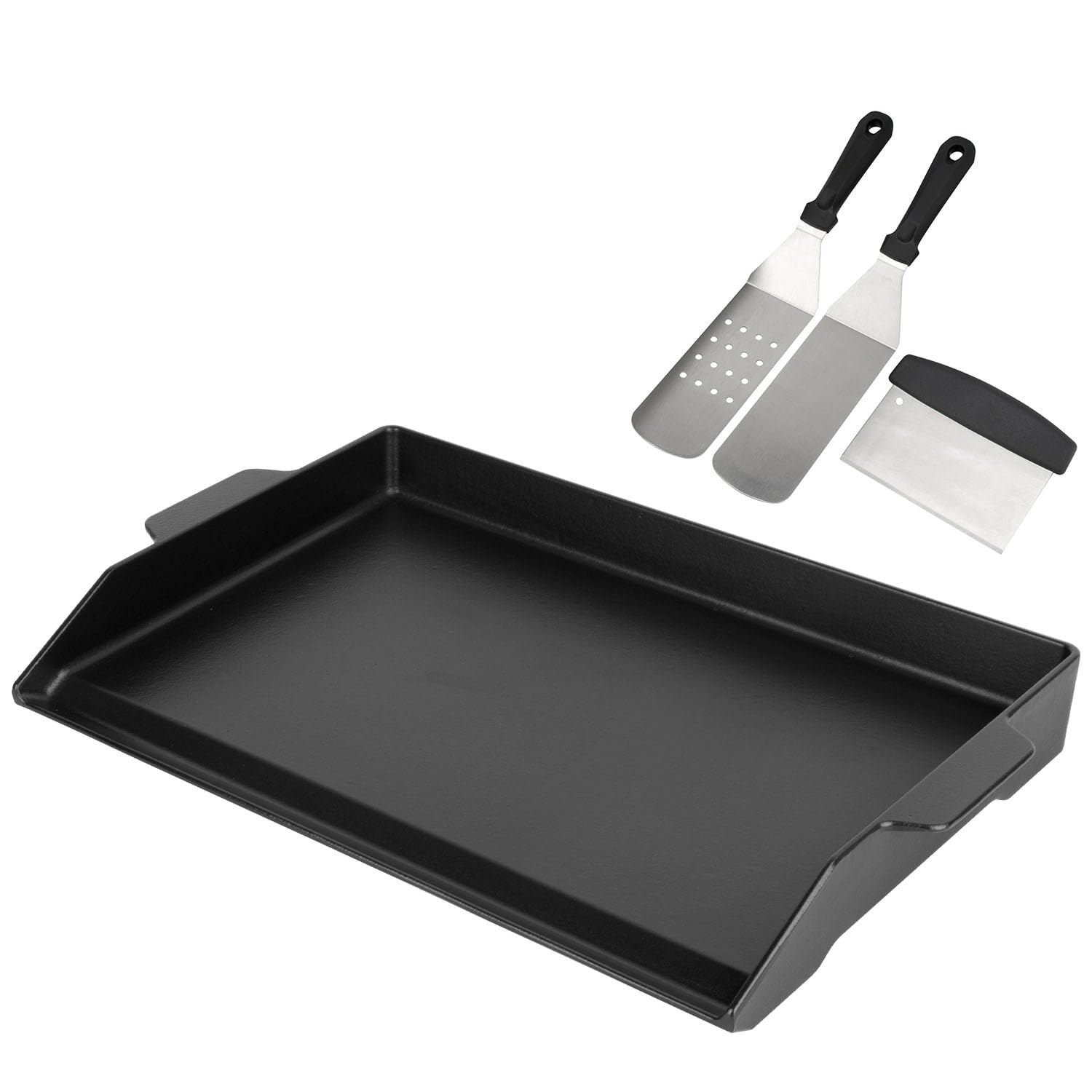
This is the “I want a flattop, but I don’t want another appliance” answer. A thick cast iron plate with walls can transform a grill, an outdoor burner, or a large stove into a smash burger machine. Owners often describe the same initial impression: it’s heavy, thick, and built like a piece of real equipment — not a flimsy accessory. That mass matters because it stabilizes temperature when you’re doing high-energy cooking like burgers, chopped cheesesteaks, or stir-fry-style meals.
One of the most interesting real-world uses people mention is treating it like a multipurpose slab: stovetop griddle, grill top, and even a “pizza/bread stone” stand-in. That only works if your oven and storage can handle the size, but it speaks to the core strength: a big, stable surface expands what you can do without juggling cookware. The included spatulas also matter more than you think. On a real griddle, your spatula is your steering wheel. When the spatula is sturdy, scraping and flipping feels controlled rather than chaotic.
The main limitation is grease management under heavy loads. Some owners note that extra juicy cooks can fill troughs quickly. The solution is simple: treat the trough like a container you manage mid-cook. Scrape, wipe, keep going. If you’re the kind of cook who likes the “sizzle and scrape” rhythm, this plate is extremely satisfying.
Why it’s a powerhouse
- Thick and heat-stable – Great for high-energy cooks like smash burgers and searing proteins.
- Sidewalls help control food – Easier scraping, less mess, and better “flattop workflow.”
- Spatula kit adds real value – Sturdy tools make big-plate cooking feel much more professional.
- Versatile placement – Works across grills, outdoor burners, and large stove setups when sized appropriately.
Good to know
- Storage can be challenging; big plates need a home.
- Grease troughs can fill during very fatty cooks; plan a quick wipe routine mid-session.
- Large plates can cover multiple burners and change your stove workflow — great when intentional, annoying when unplanned.
Ideal for: cooks who want true flattop-style cooking on an existing grill or large gas range and appreciate having a ready-to-go spatula setup.
11. Utheer 23×16 Enameled Cast Iron Griddle – Big Iron Capacity with Faster Cleanup

Enameled cast iron griddles are for people who love the idea of a big iron plate but don’t love the idea of constant seasoning maintenance. The Utheer enameled plate aims for a specific vibe: strong heat retention, reduced rust worry, and a surface that releases food with less drama. Owners who praise enamel griddles often mention the same wins: even heating corner-to-corner once preheated, minimal sticking with modest oil, and cleanup that feels more like wiping a baking sheet than scrubbing raw iron.
The reinforcement design matters too. Bigger plates are more prone to warping if they’re thin or unevenly heated. Reinforced structure helps the plate stay stable, especially when you’re doing long cooks (like batches of burgers) or using multi-burner setups. That stability is what makes a large plate feel “professional” instead of “fussy.”
If you’re an aggressive high-heat cook, enamel plates do best when you respect preheating. Instead of spiking heat instantly, you bring the plate up gradually, then cook. That approach reduces sticking and keeps the surface looking good long-term. If you treat enamel like a smart surface rather than an indestructible slab, it’s one of the easiest ways to get big-griddle output with less maintenance.
Why enamel fans love it
- Less rust stress – Enamel reduces the “did I dry this enough?” worry that discourages frequent use.
- Easy cleanup – Many cooks find the surface wipes down quickly after a warm scrape.
- Stable structure – Reinforcement helps big plates hold shape during high-use cooking sessions.
- Large capacity – Great for breakfasts, burgers, veggies, and batch cooking.
Good to know
- Still heavy — large enameled plates are not “quick wash” items in a small sink.
- Best performance comes from medium heat and patient preheating, not max-flame blasting.
- Soft utensils keep the enamel looking nicer longer (and make cleanup gentler).
Ideal for: cooks who want a big griddle surface with easier cleanup and less seasoning upkeep than raw cast iron.
12. Made In Carbon Steel Griddle – Cast‑Iron‑Style Sear with Faster Temperature Control

Carbon steel is the “chef cousin” of cast iron. It can develop a naturally slick patina with seasoning, it sears beautifully, and it’s generally more responsive to temperature changes. The Made In griddle is designed for cooks who want that responsiveness: sear hard, then back off heat quickly; keep a steady sizzle without overshooting into smoke territory; and move between burners with control. If you’ve ever felt like cast iron is a little slow to react, carbon steel can feel like upgrading your steering wheel.
Owner feedback often highlights the fun factor: it heats fast, holds heat well enough to sear thick steaks, and responds quickly when you lower the flame. That combo is the secret to better cooking. It’s not just “hot.” It’s controllable hot — which is how you get crust without burning, and browning without dryness. And once seasoned, it can feel surprisingly nonstick for eggs and pancakes as long as you cook with a little fat.
There are two realities to respect. First: it still needs seasoning, and it still improves with use. Second: the handles and edges can feel “serious tool” rather than “softly finished luxury.” Some cooks love that; others want a more refined feel at this tier. If you want performance-first cookware that feels like it belongs in a pro kitchen, this is exactly that.
Why chefs lean carbon steel
- Fast response – Adjustments on a gas flame show up quickly, which helps you cook with precision.
- Excellent searing – Great crust potential on burgers, steaks, and vegetables.
- Patina becomes naturally slick – With seasoning and regular use, release improves dramatically.
- Versatile heat tolerance – Built for very high heat cooking when used with good technique.
Good to know
- It still needs seasoning; it’s not a “zero maintenance” surface.
- Large plates may not fit every oven comfortably, and storage requires planning.
- Handles can get hot; treat it like professional cookware and use a grip when moving.
Ideal for: cooks who want cast-iron-style browning with more precise control — especially helpful on gas stoves where flame changes are fast and responsive.
13. Le Creuset Signature Square Skillet Grill – Premium Indoor Grilling Without Seasoning Work

This is a “griddle-adjacent” pick — a grill pan, not a flat griddle — but it earns a spot because many people shopping griddles are really chasing one thing: the flavor and texture of grill-style searing indoors. The Le Creuset square grill pan delivers that with a different workflow: raised ridges create grill marks, fat drains away from the food, and the enamel finish removes the seasoning burden that scares some people off raw iron.
Owners tend to describe it with the kind of affection that comes from long-term use: heavy enough to retain heat, but not so unwieldy that it feels impossible to handle. They also mention an important technique detail: preheat, then lower heat to medium after the pan is hot. That’s how you get clean grill marks without burning, and it’s how you reduce sticking on enamel ridges. Once you dial that in, you can grill chicken, steak, vegetables, and even sandwiches with a satisfying “grill” feel.
The biggest hidden advantage is cleanup behavior. Enamel doesn’t require the same seasoning upkeep as raw cast iron. If you want an iron-like sear tool without the “wipe and oil” ritual, this style can be a great compromise. Just understand the trade: you’re getting ridges, not a flat pancake surface. If pancakes are your main goal, this isn’t your tool. If grilled proteins are your main goal, it’s a joy.
Why it’s a premium indoor win
- Grill marks indoors – Ridges deliver the visual and texture experience people want from grilling.
- No seasoning requirement – Enamel removes the most intimidating part of traditional cast iron ownership.
- Excellent heat retention – Once hot, it sears beautifully on gas and holds steady.
- Built to last – Many owners treat it like heirloom cookware and use it for years.
Good to know
- This is a grill pan, not a flat griddle — it’s not designed for pancakes or eggs.
- Ridges take a little more effort to clean than a flat surface; warm soaking and a good brush help.
- It’s still cast iron weight; it’s manageable, but you’ll feel it.
Ideal for: cooks who want indoor grill results with premium build quality and minimal maintenance — and who don’t need a flat pancake-style surface.
14. Blackstone 22” Tabletop Griddle – When You Want True Flattop Power, Not Just a Pan

Sometimes the honest answer is: you don’t want a stovetop griddle — you want a flattop. Blackstone is popular for a reason: it turns cooking into a high-capacity, high-control outdoor experience with real zones and a purpose-built grease system. People who camp, tailgate, or cook outside regularly often describe it as one of the best gear upgrades they’ve ever made because it’s designed for volume and speed.
The 22” size is a sweet spot for portability. It’s compact enough to travel, but spacious enough to cook for a small group without feeling cramped. Owners often highlight how quickly it heats and how easy it is to clean when you use the built-in grease management approach: scrape toward the drain, wipe the surface while warm, and you’re ready for the next cook. That workflow is why flattop cooking can feel so satisfying — it’s designed around motion and momentum.
The real-world nuance is heat behavior. With two burners, you can build two strong zones, but some users notice the center can run differently than the edges. That’s not a dealbreaker — it’s just part of learning your griddle’s map. Once you do, you can run hot for searing on one side and lower for warming or finishing on the other, which is exactly what makes a flattop feel like a mini restaurant.
Why people swear by it
- True flattop workflow – Designed for scraping, flipping, and zone cooking at speed.
- Two heat zones – Lets you cook different foods at different temps without juggling pans.
- Grease management – Makes cleanup faster and keeps the cooking surface from becoming a grease swamp.
- Portable power – Great for camping, tailgating, patios, and small outdoor cooking setups.
Good to know
- This isn’t a stovetop tool — it’s an outdoor tabletop unit with its own footprint and setup.
- Heat patterns vary; learning your zones is part of loving it.
- Like any flattop, it rewards a simple maintenance routine to keep the surface cooking well over time.
Ideal for: anyone who wants the full flattop experience for outdoor cooking, capacity, and speed — especially for camping, tailgates, and patio meals.
15. Caraway Double Burner Griddle – The “Clean, Slick, Beautiful” Ceramic Option
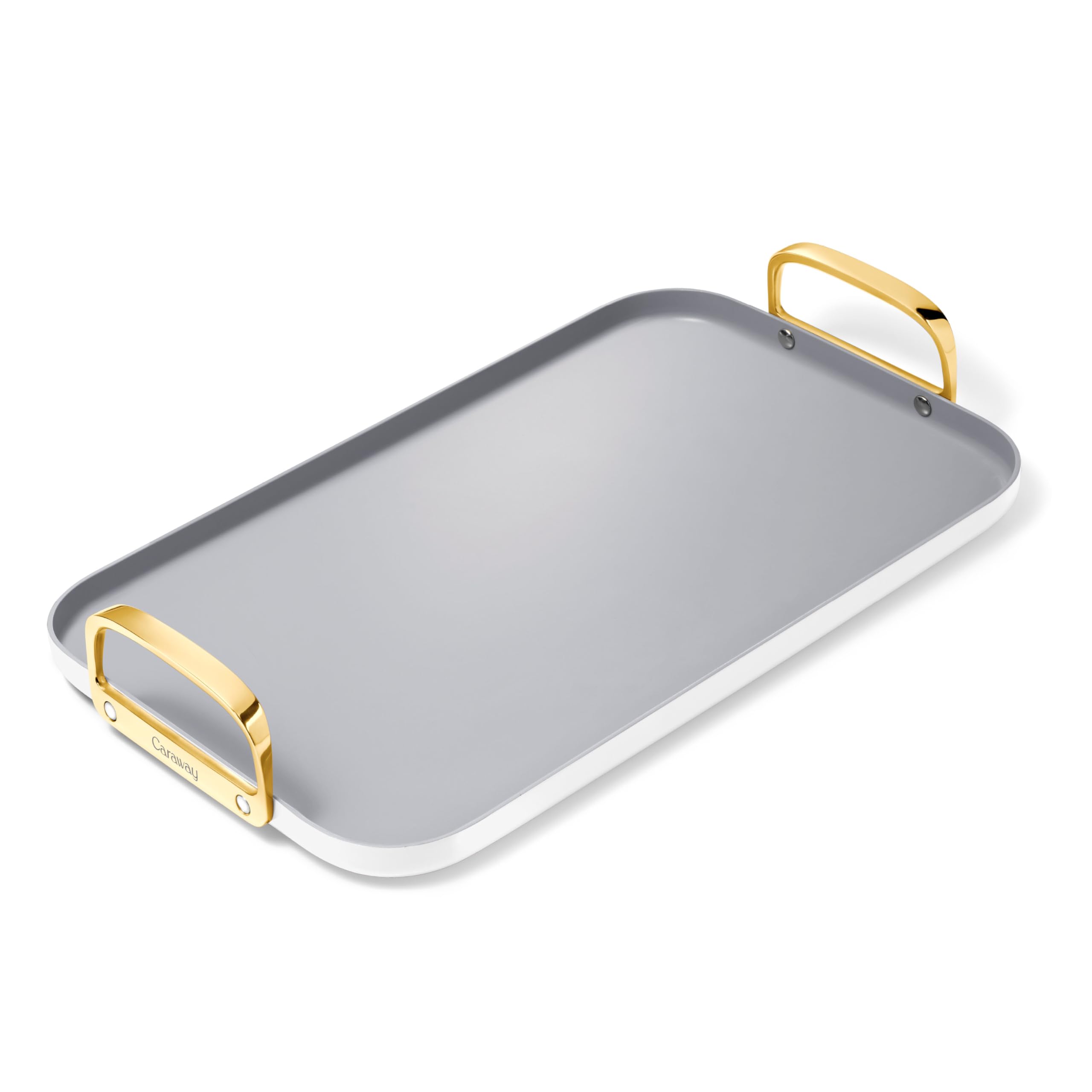
Caraway sits in a “Goldilocks” lane for a lot of households: not flimsy, not brutally heavy, and designed for people who care about both performance and aesthetics. The ceramic-coated surface is built for easy release and quick cleanup — the kind of griddle you can use for grilled cheeses, pancakes, eggs, and batch cooking without feeling like you’re starting a cleaning project afterwards. Owners often describe it as “the best griddle they’ve owned” because it makes big-batch cooking feel simple.
The expert key is heat style. Ceramic likes low-to-medium heat for the best performance and longest surface life. On a gas stove, that’s actually an advantage if you’re a controlled cook: you get consistent browning without smoke, and food glides with very little oil. If you’re a max-flame searer who wants steakhouse crust, raw iron or carbon steel will make you happier. If your life is pancakes, eggs, grilled sandwiches, and clean counters, ceramic feels luxurious.
People also mention design details that matter in real kitchens: it has enough depth to contain food and drips, it feels sturdy in hand, and it looks good enough that you don’t mind leaving it out. That might sound superficial — but the cookware you enjoy seeing is cookware you use. And the cookware you use is the cookware that improves your everyday cooking.
Why it feels like a luxury upgrade
- Slick, easy cooking – Great release for eggs, pancakes, and grilled sandwiches with minimal oil.
- Easy cleanup – Often a gentle scrub or wipe is all it needs.
- Balanced weight – Substantial, but not cast-iron heavy for most people.
- High-end design – Looks great and feels like a premium kitchen tool.
Good to know
- Ceramic performs best on low-to-medium heat; it’s not the best match for aggressive max-flame searing.
- Gentler utensils and cleaning keep the surface feeling slick longer.
- If you want classic cast iron patina and “forever tool” vibes, raw iron plates may feel more satisfying.
Ideal for: cooks who want a premium, easy-clean, low-mess griddle for daily meals and don’t need extreme high-heat searing as their primary use case.
How Gas‑Stove Griddle Cooking Actually Works (and Why Heat Mapping Beats Guesswork)
If you learn one thing from this guide, let it be this: gas-stove griddle cooking is not about “even heat.” It’s about controlled zones. Flames create heat lanes, and your job is to build a repeatable map — a hot zone for browning, a medium zone for cooking through, and a gentle zone for holding and melting. Once you stop chasing perfect uniformity, your food gets better and cooking feels calmer.
The griddle “heat map” you can use on almost any stove
- Hot core zones: The area directly above each burner is where searing happens. Use it for smash burgers, bacon start, steak browning, and tortilla charring.
- Transition band: Just outside the burner core is where you cook through without burning. Perfect for pancakes after you set the batter, and for finishing burgers.
- Edge hold zones: The outer perimeter is your warm shelf. Park pancakes, toast buns, melt cheese, or keep cooked bacon crisp without turning it into carbon.
When people say “my griddle cooks unevenly,” what they usually mean is they didn’t build a plan for zones. A griddle plate isn’t a skillet. It’s a cooking surface with stations. Treat it like a restaurant line and it becomes effortless.
Why thickness changes your results
- Thicker plates hold temperature when cold food hits. That’s why thick iron feels “professional.”
- Thinner plates respond faster when you adjust heat, but they can lose temperature quickly during batch cooks.
- Large plates need structure to resist warping — reinforcements and mass help.
A common mistake is turning heat up to compensate for heat loss. Instead, preheat longer and cook in a rhythm: sear, move, hold, repeat.
Preheating: the difference between sticking and gliding
- Start on medium and give the plate time to absorb heat. Most problems come from rushing this step.
- Preheat both burners (even if you only plan to cook on one side). This reduces uneven expansion and stabilizes the surface.
- Test with water — not for “screaming hot,” but for consistent behavior across the zones you plan to use.
Preheating is especially important for eggs. On iron and carbon steel, eggs need a warmed surface and a little fat. On ceramic and nonstick, eggs need medium heat and patience. Different surfaces, different rules.
Smoke control: your kitchen will thank you
- Manage grease by scraping into a trough or wiping between batches.
- Lower heat after searing — many people keep the flame too high after the first crust forms.
- Use a fan strategy — range hood on early, not after the smoke starts.
Grease isn’t the enemy — unmanaged grease is. The best griddle cooks treat grease like something you steer, not something you ignore.
FAQ: Griddle Cooking on a Gas Stove (Without the Confusion)
Why do my pancakes brown too fast in the middle and stay pale on the edges?
What’s the fastest way to make cast iron feel nonstick for eggs?
Do I need to season a griddle that says “pre-seasoned”?
How do I prevent warping on a large griddle plate?
What’s the best cleanup routine that doesn’t feel like work?
Which surface is best if I hate maintenance?
Final Thoughts: Pick the Griddle That Matches Your Stove (and Your Personality)
A griddle is one of those tools that changes your whole cooking rhythm — but only if it fits your real life. The right one makes you feel capable and fast. The wrong one makes you feel like you’re managing a science project. Use this guide as your shortcut to a confident, happy buy.
Here’s the simplest way to choose:
- Want the most balanced, do-everything pick? Start with the Victoria 20×14 reversible griddle. It’s the “right size, right performance” option for most kitchens.
- Want the best value classic that still performs like a champ? Grab the Lodge Pro‑Grid for a proven two-burner workhorse that gets better with use.
- Own a GE range with a center griddle slot? Choose a purpose-fit replacement like KVZKVZ WB31X24738 or a value-friendly swap like KIMSOFUNNY WB31X24738 to make the griddle feel built-in again.
- Want easy cleanup and low-mess weekday cooking? The Viking nonstick double burner griddle or the Vayepro griddle with lid keeps the workflow fast and the cleanup simple.
- Cooking for a crowd and want serious capacity? Go big with Camp Chef 16×24 or a high-wall plate like BBQ Future 23×16 for true flattop-style volume.
- Want “big plate, easier cleanup” in an enamel-style surface? Try Utheer’s enameled griddle or QuliMetal’s porcelain enamel plate if you want less “seasoning management” vibes.
- Want chef-grade control and fast response? The Made In carbon steel griddle is built for cooks who love precision.
- Want true flattop power outdoors? The Blackstone 22” tabletop is the move for patios, camping, and tailgates.
A confident purchase comes down to one thing: choosing the surface and size that matches how you actually cook. Pick the cast iron griddle for gas stove that fits your burners, your cleanup style, and your favorite meals, and you’ll get the kind of cooking upgrade that makes breakfast feel like a small victory.
