
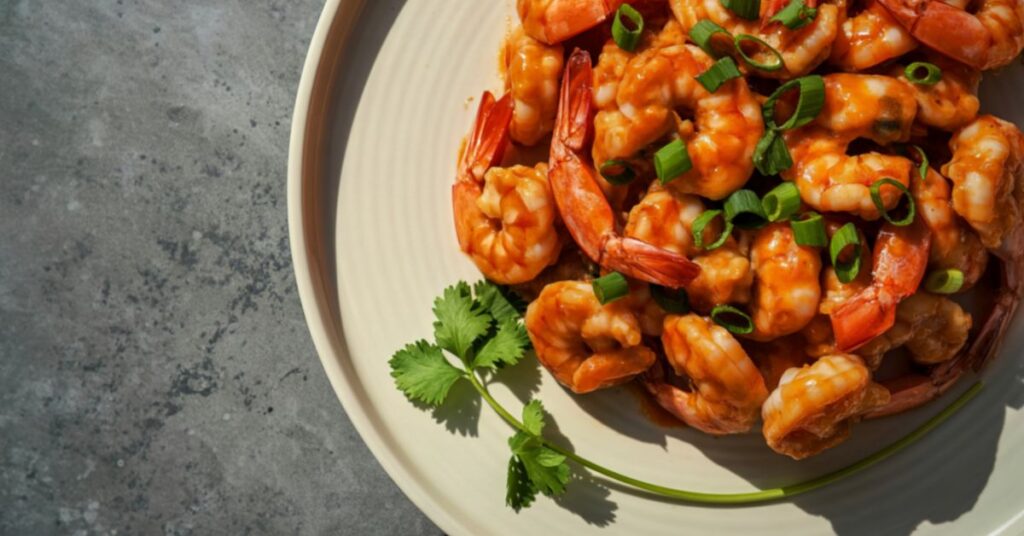
No, cooked shrimp left out overnight isn’t safe to eat, since bacteria can multiply fast at room temperature.
Cooked shrimp is easy to snack on. It’s ready-to-eat, it chills well, and leftovers feel like a win. The catch is time. If shrimp sits out too long, the risk can rise long before it looks “bad.”
If your shrimp stayed on the counter overnight, toss it. This article shows you why the rule is strict, how the common time limits work, and what to do next time so you keep the flavor and skip the regret.
Why Cooked Shrimp Left Out Overnight Is A Bad Bet
Shrimp is moist, tender, and packed with protein. Those traits make it tasty. They also make it a good place for bacteria to grow when it sits warm.
Once cooked shrimp drifts into the temperature range where bacteria grow well, germs can multiply while the shrimp still smells fine. Some bacteria can leave toxins behind, and heat later on doesn’t always wipe those out.
There’s another problem: shrimp can be re-contaminated after cooking. Serving tongs, hands, cutting boards, or a shared sauce bowl can add bacteria back onto the food. So “it was fully cooked” doesn’t cover what happened after it hit the plate.
Quick Decision Table For Shrimp Left Out
If you don’t want to play food-safety roulette, use this chart. It’s meant for cooked shrimp, plain or in a dish.
On smaller screens, swipe or scroll sideways to see the full table.
| How Long The Cooked Shrimp Sat Out | What To Do | Why That Call Makes Sense |
|---|---|---|
| Under 1 hour | Refrigerate fast or eat it soon | Short exposure if it stayed cool |
| 1–2 hours | Chill right away; eat within a few days | Risk climbs as the shrimp warms up |
| Over 2 hours | Toss it | Too much time for fast growth |
| Over 1 hour in heat (90°F / 32°C+) | Toss it | Heat speeds up growth |
| Overnight on the counter | Toss it, no reheating “fix” | Time is far past the safety limit |
| Shrimp mixed with mayo, cream, or cheese | Follow the same time limits | Other ingredients spoil too |
| Served on ice the whole time | Only keep it if it stayed cold | Ice helps only when it keeps shrimp cold |
| In a closed car or warm bag | Toss it | Temps can rise quickly |
Eating Cooked Shrimp Left Out Overnight: The Real Rule
Food safety agencies use a clean cutoff for perishable foods: don’t leave them out longer than 2 hours at room temperature, and cut that to 1 hour when it’s hot. The USDA explains this timing in its 2-hour rule guidance.
This isn’t a “worst case” scare line. It’s built for real kitchens where the exact room temperature is unknown, plates sit near warm ovens, and people graze with the same fork. When the timing is fuzzy, the safest call is the simplest one.
Why Smell And Looks Don’t Set The Rules
Shrimp can turn risky with no strong warning. A sniff test can miss bacteria that don’t create a loud odor early on. Texture can stay normal too. So “it seems fine” isn’t a safety check.
Why Reheating Doesn’t Make Overnight Shrimp Safe
Heat can kill many bacteria. It can’t always remove toxins that were created while the shrimp sat out. That’s why reheating is not a reset button after hours on the counter.
What To Do If You Already Ate Some
Most people who get sick from spoiled seafood feel it in the gut first: nausea, vomiting, cramps, diarrhea, fever, or chills. The timing can vary, and mild cases can pass with rest and fluids.
Call a clinician right away if symptoms are severe, dehydration starts, blood shows up in stool, or the person is older, pregnant, or has a weakened immune system. If you want a solid refresher on quick chilling and safe storage, the FDA safe food handling guide lays out the basics in plain language.
How To Store Cooked Shrimp The Right Way
Storage starts right after cooking. Let the shrimp stop steaming, then move it into the fridge in a shallow container. Shallow containers cool faster, so the shrimp spends less time warm.
Set a timer when shrimp hits the table. When it rings, pack leftovers or toss them. If you’re hosting, keep a smaller serving bowl out and refill it from the fridge as needed. That keeps the shrimp cold longer, and you’re not racing the clock with the whole batch at once.
Seal it tight. Air-tight containers or zipper bags slow drying and keep fridge smells out. If you cooked a big batch, split it into smaller containers so the center cools quickly.
Where To Put It In The Fridge
Place cooked shrimp on a middle shelf toward the back. The door swings warmer each time it opens. The back stays colder and steadier.
Cooked Shrimp Storage And Reheating Table
Use this as your leftover cheat sheet. Labeling with a date takes five seconds and saves a lot of guessing later.
On smaller screens, swipe or scroll sideways to see the full table.
| Situation | Time Window | What Works Well |
|---|---|---|
| Cooked shrimp in the fridge | 3–4 days | Store sealed; label the date |
| Cooked shrimp in the freezer | Up to 3 months for good quality | Freeze flat; press out air |
| Shrimp salad (mayo-based) in the fridge | 3–4 days | Keep it cold; don’t leave it on the table |
| Reheating cooked shrimp | Reheat once, then eat | Warm to 165°F; stop once hot |
| Thawing frozen cooked shrimp | Overnight in the fridge | Cover it; catch drips in a bowl |
| Cooked shrimp packed for lunch | 2 hours max at room temp | Use an insulated bag with ice packs |
How To Reheat Shrimp Without Ruining The Texture
Shrimp turns rubbery when it gets too hot for too long. Reheat it gently, just until it’s steaming.
On the stove, use a skillet on medium heat with a small splash of water or broth. Cover the pan for a minute, flip the shrimp, then stop. You want heat, not another full cook.
In the microwave, use short bursts and stir or flip between rounds. Cover the dish so the shrimp warms evenly. If it curls into tight little “O” shapes, it’s overdone.
Common Situations That Cause Confusion
Shrimp Left Out In The Shell
The shell doesn’t make room-temperature shrimp safer. Treat it the same as peeled shrimp. Time still runs the show.
Shrimp On Ice At A Party
Ice can keep shrimp cold when the tray is well packed and refreshed. If the ice melted and the shrimp sat in lukewarm water, the food has been warm for a while. When you can’t confirm it stayed cold, toss it.
Shrimp In A Takeout Bag
Takeout bags trap warmth, then cool slowly. If shrimp sat in a bag for hours, treat it like counter time. Next time, move it into the fridge soon after eating.
A Simple Rule To Stick With
For cooked shrimp, cold is your friend and the clock matters. If it sat out longer than 2 hours, or longer than 1 hour in heat, toss it. That one habit prevents a lot of stomach trouble.
