
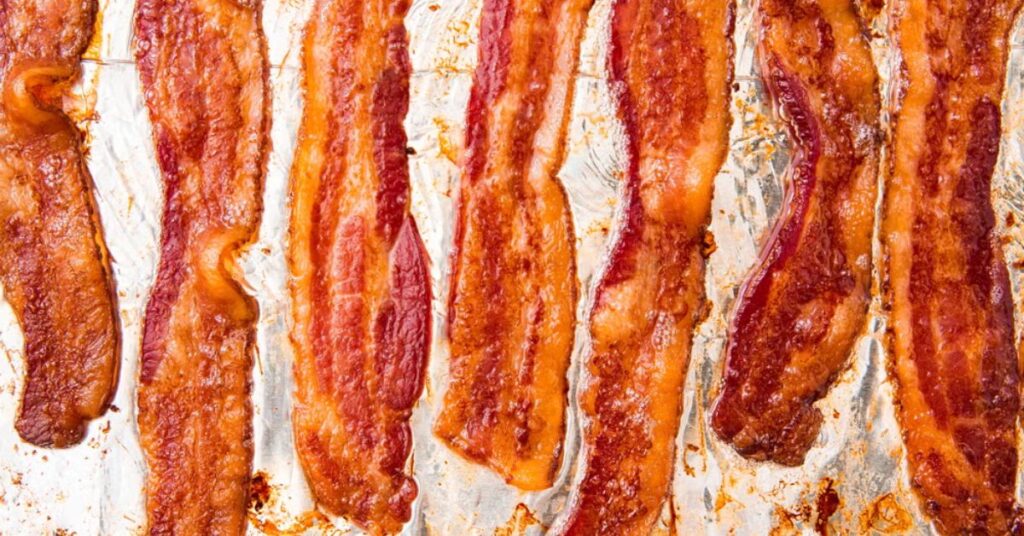
No, cooked bacon left out overnight isn’t safe to eat; toss it, then chill leftovers within 2 hours next time.
You wake up, spot the skillet on the stove, and there it is: yesterday’s cooked bacon. It still smells like bacon. It still looks fine. The question feels small, but the stakes aren’t.
Cooked bacon is a meat product with fat and protein, so it sits right in the zone where germs can multiply when it stays warm too long. Once it’s been on the counter all night, the safest call is simple: throw it away.
Quick calls for cooked bacon that sat out
Use this table like a fast filter. It won’t turn unsafe bacon into safe bacon, but it will stop the “maybe it’s fine” spiral.
| Situation | What it suggests | Best move |
|---|---|---|
| Still hot or warm after sitting out | Time in the danger zone is longer than you think | Trash it |
| Sat out under 2 hours at room temp | Fits standard chill window | Refrigerate fast in a sealed container |
| Sat out 2–4 hours | Safety line is already crossed | Trash it |
| Sat out overnight | Enough time for rapid growth | Trash it, no “reheat to fix” |
| Kitchen felt warm (summer, heater, oven nearby) | Faster growth at higher temps | Trash it sooner than you’d like |
| Bacon was in a covered pan | Cover blocks dust, not bacteria | Follow the clock, not the lid |
| Bacon was on paper towels | Soaks grease, not germs | Time rules still apply |
| You’re feeding kids, pregnant people, older adults | Lower margin for error | Be strict with time limits |
Cooked bacon left out overnight: is it safe?
Food-safety agencies keep the rule plain: refrigerate cooked meat fast. The FDA’s guidance says to chill perishables within 2 hours of cooking (or buying), and within 1 hour when the air is hot. That applies to cooked bacon, too.
Once bacon has spent the night at room temperature, it’s past that window by a mile. At that point, tossing it isn’t “being picky.” It’s the straightforward way to avoid a bad day.
If you want the official wording, read FDA safe food handling and treat it as your baseline.
Why cooked bacon goes bad faster than it looks
Bacon feels tough and salty, so it’s easy to think it can take a beating. Salt and curing slow some growth, but they don’t stop it once the bacon is cooked and cooling on the counter.
Two things make counter bacon tricky. One: the surface cools while the middle can stay warm longer, especially in a pile. Two: some bacteria can leave toxins behind. Heat can kill live bacteria, yet toxins can stick around.
That’s why “I’ll just fry it again” isn’t a reset button after an overnight sit.
Smell and looks aren’t a safety test
People trust their nose. It’s normal. Still, many foodborne germs don’t change smell, color, or taste in a way you can catch early.
A slice can look crisp, smell smoky, and still carry enough germs to make you sick. You also can’t spot the danger by how dry it feels, how much salt it has, or how browned it is.
If the only reason you’re leaning toward eating it is “it seems fine,” that’s the sign to stop.
If you already ate some, what now?
Most people who eat risky leftovers don’t get sick every time. Still, it’s smart to watch your body for the next day or two.
Common foodborne illness signs include stomach cramps, nausea, vomiting, diarrhea, and fever. If you have severe symptoms, dehydration, blood in stool, a high fever, or symptoms that don’t let up, get medical care quickly.
Kids, pregnant people, older adults, and anyone with a weakened immune system should be extra cautious. If you’re in one of those groups and you feel unwell after eating bacon that sat out, don’t wait it out.
The CDC’s prevention page also sums up the time limits and the “danger zone” in plain language: Preventing food poisoning.
How to store cooked bacon so it stays safe and good
You can keep cooked bacon on hand without playing roulette. The trick is speed, shallow storage, and steady cold.
Step 1: Cool it fast, then cover it
Don’t leave the whole pan on the stove “to cool.” Move bacon to a plate for a few minutes, then pack it up. If you cooked a lot, spread slices out so heat can escape, then stack once it’s no longer steaming.
Lay strips in a single layer so heat drops in minutes.
Use a sealed container or zip-top bag. Press out extra air if you can. That keeps odors down and texture better.
Step 2: Make your fridge do its job
A fridge that runs at 40°F (4°C) or below slows growth. If your fridge is packed, cooling is slower, so store bacon in the coldest main area, not in the door.
Label it with the date. It sounds nerdy, yet it saves guesswork when you’re hungry.
Step 3: Reheat the smart way
Cooked bacon is often eaten cold or at room temp when it’s been stored right. If you want it hot and crisp, reheat in a skillet, oven, or air fryer until it’s steaming. A microwave works, but it can turn bacon rubbery.
Reheating is for taste and convenience. It does not make “sat out overnight” bacon safe.
Storage and reheat guide for cooked bacon
Use this table as a fridge-door cheat sheet. It’s built around the same time-and-temp ideas used by food-safety agencies.
| Where it sits | Time limit | How to handle it |
|---|---|---|
| Counter (room temp) | Up to 2 hours | Pack and refrigerate fast; 1 hour if the room is hot |
| Fridge (≤40°F / 4°C) | 3–4 days | Seal well; write the date; keep away from the door |
| Freezer (0°F / −18°C) | 1–2 months for best quality | Freeze in small stacks with parchment between slices |
| Lunch bag or car | Short window | Use an ice pack; treat it like the counter rule |
| Warm holding tray | Short window | Keep it hot while serving; chill leftovers fast |
Common scenarios that trip people up
“It was cured, so it lasts longer”
Curing helps with shelf life in the package. Once it’s cooked and sitting out, the clock is still the clock.
“It was covered, so it’s fine”
A lid keeps out flies and dust. It doesn’t stop growth that’s already happening at room temperature.
“My house was cool overnight”
Cool feels comforting, but “cool” still isn’t refrigerator-cold. Unless the bacon stayed below 40°F the whole time, treat it as left out.
“Can I feed it to my dog?”
Skip it. Dogs can get sick from spoiled meat, and bacon’s salt and fat can be rough on them even when it’s fresh.
A simple rule that ends the debate
If cooked bacon sat out overnight, don’t eat it. Don’t reheat it. Don’t try to scrape off the “top layer.” Toss it, wash the pan, and move on.
Next time, set a phone timer when you start cooking. When the timer hits 90 minutes, pack leftovers. It’s a small habit that keeps breakfast fun instead of risky.
