
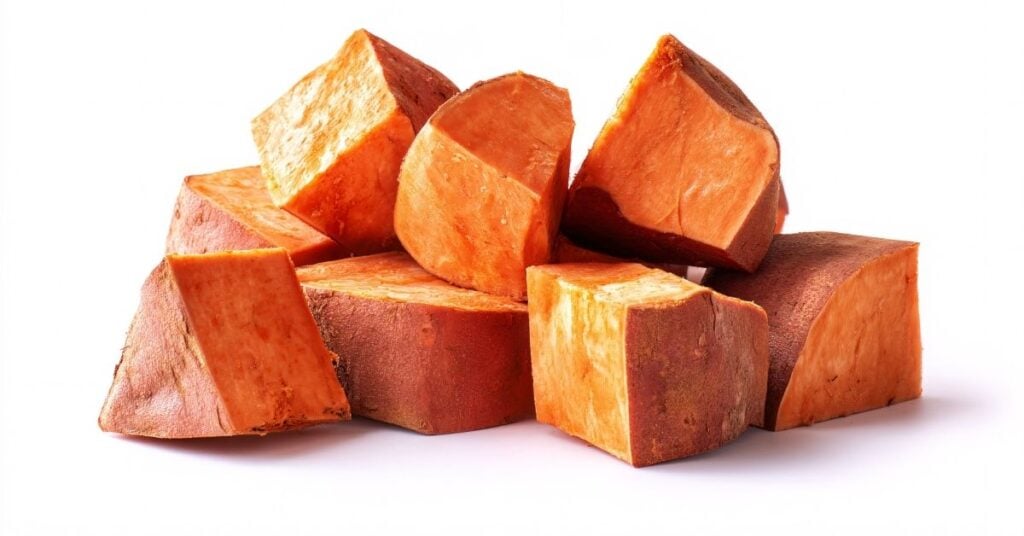
Yes, you can microwave sweet potatoes safely by piercing the skin several times to vent steam and cooking on high for 5–7 minutes until tender.
You need a quick side dish, but the oven takes an hour. The microwave offers a fast solution. This method steams the potato from the inside out, preserving moisture and sweetness when done correctly. However, skipping safety steps like piercing the skin can cause messes or uneven cooking. This guide details the exact steps, safety rules, and timing to get a perfect result every time.
Can I Microwave Sweet Potatoes?
The short answer is yes. You can cook raw sweet potatoes in the microwave effectively. It is the fastest way to soften the flesh for eating whole, mashing, or using in other recipes. Unlike boiling, which can leach out water-soluble nutrients, microwaving requires very little water and retains vitamins.
Many home cooks hesitate because they worry about texture. While an oven-baked potato has a crispy skin and caramelized interior, a microwaved potato stays softer and steamier. You can fix this by microwaving the potato to cook the inside and then finishing it in a toaster oven or air fryer for five minutes to crisp the skin. This hybrid method saves forty minutes compared to baking alone.
You must follow specific preparation rules. A raw sweet potato contains water. As the microwave heats the water molecules, they turn to steam. If that steam has nowhere to go, pressure builds up under the skin. This often leads to the potato bursting, leaving you with a difficult cleaning job. Piercing the skin allows the steam to escape safely.
Preparation Steps Before You Start
A great result starts at the sink. Sweet potatoes grow underground, and their skin often holds dirt or grit. Scrub the skin thoroughly under cold running water using a vegetable brush. Even if you plan to peel the potato later, you should wash it now so the knife does not drag dirt into the flesh.
Pat the potato dry with a paper towel. If you cook it while dripping wet, the skin may become slimy rather than tender. Once dry, inspect the potato. Cut off any woody ends or bruised spots with a paring knife. These spots do not soften well and can ruin the texture of the finished dish.
Grab a fork. Poke holes all over the sweet potato. Aim for six to eight deep punctures evenly spaced around the tuber. You want the fork tines to penetrate about half an inch deep. This action creates the necessary vents for internal steam.
The Wet Paper Towel Technique
Texture complaints often arise because the microwave dries out the skin. You can prevent this with a simple trick. Wrap the sweet potato in a damp paper towel before placing it on the microwave-safe plate. The damp towel creates a steam pocket around the potato.
This trapped steam keeps the skin soft and helps the flesh cook evenly. It also catches any sugary syrup that might ooze out during cooking, keeping your microwave turntable clean. If you prefer a drier skin, you can skip the towel, but the outer layer might become tough or chewy.
Cook Time Based On Size And Wattage
Timing varies heavily based on the size of your potato and the power of your appliance. A small yam might finish in four minutes, while a jumbo sweet potato could take ten. Microwaves range from 700 watts to 1200 watts. Higher wattage cooks faster.
Start with a conservative time estimate. You can always add minutes, but you cannot un-burn a dried-out potato. The table below outlines starting times based on the quantity and size of the potatoes for a standard 1000-watt microwave.
| Potato Size / Quantity | Initial Cook Time (High) | Check Point Status |
|---|---|---|
| 1 Small (Under 6 oz) | 3–4 Minutes | Soft to squeeze |
| 1 Medium (6–8 oz) | 5 Minutes | Fork slides in easily |
| 1 Large (8–12 oz) | 6–7 Minutes | Center gives slightly |
| 1 Jumbo (Over 12 oz) | 8–9 Minutes | Requires flip halfway |
| 2 Medium Potatoes | 9–10 Minutes | Rotate positions once |
| 3 Medium Potatoes | 13–15 Minutes | Flip and rotate |
| 4 Medium Potatoes | 16–18 Minutes | Rotate often |
The Flipping And Resting Phase
Heat distribution in a microwave is rarely perfect. Even with a rotating turntable, hot spots occur. Cooking the potato on one side for the full duration often results in one half being mushy while the other remains hard.
Pause the microwave halfway through the cooking time. Open the door and use tongs or an oven mitt to flip the potato over. If you are cooking multiple potatoes, rotate their positions on the plate. Move the ones from the center to the edge and vice versa. This ensures every potato receives equal heat energy.
Resting is the final step. When the timer beeps, the water molecules inside are still vibrating rapidly. The cooking process continues even after the power cuts. Let the potato sit in the microwave (or on the counter) for two to three minutes before cutting it open. This allows the heat to equalize, finishing the center without overcooking the ends.
Safety And Health Considerations
Some people ask, “can i microwave sweet potatoes safely regarding radiation?” The microwave uses non-ionizing radiation, which simply agitates water molecules to create heat. It does not make the food radioactive or dangerous. In fact, the shorter cooking time often preserves more heat-sensitive nutrients like Vitamin C compared to boiling or roasting.
According to Harvard T.H. Chan School of Public Health, sweet potatoes are rich in beta-carotene. Because beta-carotene is fat-soluble, adding a small amount of butter or oil after microwaving helps your body absorb this nutrient efficiently.
Be careful with steam burns. When you slice open a microwaved potato, pressurized steam escapes instantly. Keep your face away from the potato and use a knife to slit the skin before using your fingers. The interior pulp holds heat much longer than the skin suggests.
Texture Differences Vs Oven Baking
You will notice a clear difference in mouthfeel between microwaved and baked sweet potatoes. The oven draws moisture out, condensing the natural sugars. This creates a fluffy, slightly stringy texture with intense sweetness. The skin becomes crisp and separates from the flesh easily.
Microwaving steams the potato in its own juices. The flesh turns out creamy, moist, and dense. It resembles a boiled potato but with more flavor. The skin remains soft and pliable. If you plan to mash the potatoes or puree them for a soup or pie, microwaving creates a superior texture because the added moisture helps with blending.
If you crave the oven flavor but lack time, use the “microwaved-baked” hybrid. Cook the potato in the microwave until it is almost tender (about 90% done). Rub the skin with olive oil and salt. Place it directly on the rack of a preheated 400°F oven or air fryer for 10 minutes. The skin will crisp up, and the sugars will develop that roasted depth.
Cooking Cubes And Slices
You do not always have to cook the potato whole. Microwaving cubes is excellent for quick hash browns, salad toppings, or meal prep bowls. This method is much faster than roasting chunks.
Peel the sweet potato and cut it into uniform one-inch cubes. Place the cubes in a microwave-safe glass bowl. Add one tablespoon of water to the bottom of the bowl. Cover the bowl with a microwave-safe lid or a plate, leaving a small gap for steam to vent. If using plastic wrap, poke a few holes in it.
Microwave on high for three to five minutes. Pause halfway to shake the bowl. This redistributes the cubes so they cook evenly. Check for doneness with a fork. Drain any excess water immediately to prevent the cubes from becoming waterlogged. Toss with seasonings like paprika, cumin, or cinnamon right while they are hot.
Using Microwaved Potatoes In Recipes
A microwaved sweet potato is a blank canvas. Because the flavor is neutral and the texture is soft, it works well as a thickener. You can scoop the flesh out and stir it into chili or curry. It dissolves slightly, adding body and sweetness to the sauce.
For a quick breakfast, many athletes microwave a sweet potato and top it with almond butter, banana slices, and chia seeds. The complex carbohydrates provide sustained energy. The moist texture of the microwaved potato mimics a warm pudding bowl.
Troubleshooting Common Issues
Sometimes the result is not perfect. You might end up with a shriveled mess or hard spots. Understanding why these happen helps you adjust your technique. Most errors stem from timing or moisture control.
If your potato is hard in the middle but soft on the ends, you likely didn’t flip it or let it rest. The center is the last place to get hot. The resting period is mandatory for heat to travel to the core. If the ends are dry and tough, you overcooked it. Next time, reduce the power level to 80% and cook for slightly longer. This gentler heat prevents the thin ends from dehydrating before the center cooks.
See the table below for quick fixes to common microwave problems.
| Problem Description | Likely Cause | Corrective Action |
|---|---|---|
| Skin is wrinkled/shriveled | Overcooked or old potato | Reduce time by 1 minute next time |
| Potato exploded | Steam could not escape | Poke deeper/more holes before cooking |
| Hard white spots inside | Undercooked center | Microwave in 30-second bursts |
| Texture is gummy | Trapped moisture | Remove plastic wrap immediately |
| Soggy bottom | Sitting in liquid | Use a paper towel underneath |
Can I Microwave Sweet Potatoes For Baby Food?
Parents often need to make small portions of fresh food quickly. You can absolutely use this method for infants. The steaming effect makes the flesh incredibly soft and easy to mash. It is also safer than boiling because you lose fewer nutrients to the cooking water.
For baby food, wash and peel the potato first. Cut it into chunks and place them in a bowl with a splash of water. Cover and cook until the chunks fall apart when pressed with a spoon. Transfer the cooked sweet potato to a blender or mash it thoroughly with a fork. Add breast milk or formula to reach the desired consistency.
Always test the temperature. Microwaving creates hot pockets. Stir the mashed potato very well and touch it to your wrist before serving. Let it cool for at least five minutes to ensure no hidden steam burns the baby’s mouth.
Storage And Reheating Tips
Meal prepping sweet potatoes saves time during the week. You can microwave several at once on Sunday and store them. Let the cooked potatoes cool completely on a wire rack. If you store them hot, condensation will form in the container, leading to spoilage or slimy skin.
Place the cooled potatoes in an airtight container. They last in the refrigerator for up to four days. Do not wrap them in foil for fridge storage, as this can trap bacteria. Use a glass or plastic container with a tight lid.
To reheat, slice the potato in half lengthwise. Place it cut-side up on a plate. Cover it with a damp paper towel to reintroduce moisture. Microwave on high for 60 to 90 seconds. If you want to use the leftovers for hash browns, cube the cold potato and fry it in a skillet with oil. The precooked starch crisps up faster than raw potato.
Final Thoughts On This Method
Microwaving is a legitimate and efficient way to prepare this root vegetable. It saves energy and keeps the kitchen cool. While you sacrifice the crispy skin of a baked yam, you gain speed and convenience. By following the steps to poke holes, wrap in a damp towel, and rotate during cooking, you ensure a fluffy, evenly cooked result.
So, the next time you find yourself wondering “can i microwave sweet potatoes” for a quick dinner side, remember that it is not just possible—it is often the smartest choice for a busy schedule.
