
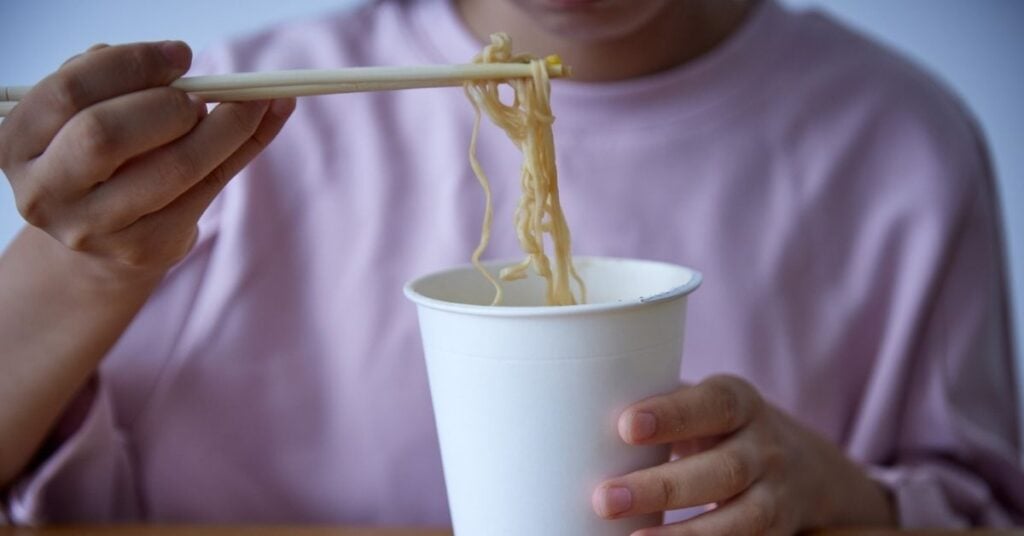
No, you generally cannot microwave cup noodles in their original packaging because the styrofoam or coated paper often melts and releases chemicals.
Hunger strikes late at night. You grab a styrofoam cup of instant ramen from the pantry. The instructions usually say to add boiling water, but using the microwave seems faster. You pause and wonder if the cup will survive the heat.
Most manufacturers design these cups for holding hot water, not for active cooking in a microwave. Putting them in the microwave can ruin your lunch and potentially damage your health.
Why You Should Not Microwave The Cup
The primary reason you should avoid nuking that cup lies in the materials. Manufacturers use expanded polystyrene (EPS) for most inexpensive instant noodle cups. This material is excellent for insulation but terrible for high heat.
Microwaves heat water molecules rapidly. When the water inside the cup boils, it can exceed the melting point of the styrofoam container. The cup may warp, lose its structural integrity, and leak boiling soup all over your microwave turntable.
Safety is the other major concern. When styrofoam heats up, it can release styrene. This compound is a probable human carcinogen. You do not want this leaching into your broth.
Can I Microwave Cup Noodles?
Technically, the machine will run if you put the cup inside. However, just because you can does not mean you should. When you ask yourself, “can i microwave cup noodles?” the answer is almost always a strict no for the original packaging.
The only exception involves containers specifically labeled “Microwave Safe.” Some premium brands use polypropylene bowls that withstand microwave temperatures. Always look for a square symbol with wavy lines or explicit text on the side of the bowl. If you do not see it, assume the container is unsafe.
Identifying Safe vs. Unsafe Materials
Understanding what your noodle cup is made of helps you make the right decision. Not all plastics react the same way to microwave radiation.
Below is a breakdown of common materials you might encounter when dealing with instant foods. This data helps you assess the risk before you press the start button.
| Material Type | Microwave Safe? | Primary Risk |
|---|---|---|
| Expanded Polystyrene (Styrofoam) | No | Melting and chemical leaching |
| Poly-Coated Paper | Rarely | Glue separation and leaks |
| Polypropylene (Plastic #5) | Yes | Safe if labeled “Microwave Safe” |
| Aluminum Foil Lids | No | Arcing and fire hazard |
| Ceramic Bowl (Transfer) | Yes | Container becomes hot |
| Glass Container (Transfer) | Yes | Breakage if not heat-tempered |
| Plastic #6 (Polystyrene) | No | Releases toxins when heated |
| Unmarked Plastics | No | Unknown chemical stability |
The Proper Way To Prepare Cup Noodles
You have two main options to prepare your meal safely. Both methods ensure the noodles cook through without melting the cup.
Option 1: The Boiling Water Method
This is the method printed on the back of the cup. It requires a separate source of hot water.
1. Boil water in a kettle or a pot on the stove.
2. Peel back the lid of the noodle cup halfway.
3. Pour the boiling water up to the fill line inside the cup.
4. Close the lid and secure it (a fork or a small plate works well).
5. Wait three minutes (or the time specified on the package).
6. Stir well and eat.
This method keeps the water temperature high enough to cook the noodles but stops the styrofoam from receiving direct microwave energy.
Option 2: The Transfer Method
If you lack a kettle or stove and only have a microwave, you must change containers. This adds a step but guarantees safety.
1. Open the noodle cup and dump the dry block of noodles and seasoning into a microwave-safe ceramic or glass bowl.
2. Break the noodle block if it does not fit the bowl perfectly.
3. Add water to the bowl to cover the noodles.
4. Microwave the bowl for 2 to 3 minutes.
5. Let the bowl sit for one minute to finish cooking and cool down.
6. Stir and enjoy.
Health Risks Of Microwaving Styrofoam
We touched on styrene earlier, but the health implications deserve attention. Styrofoam is a trade name for expanded polystyrene foam.
The National Toxicology Program lists styrene as a “reasonably anticipated human carcinogen.” While a cold styrofoam cup is stable, heat changes the equation.
When you microwave the cup, the material breaks down. You might see physical pitting or melting inside the cup after heating. That missing foam did not disappear; it likely migrated into the fatty oils of the soup.
Ingesting small amounts of styrene once might not cause immediate illness, but repeated exposure adds up. Since instant noodles are a frequent meal for students and busy workers, the cumulative risk matters.
The Superheating Danger
Chemicals are not the only threat. Physics plays a role too. Microwaving water in a smooth container—like a ceramic mug or even a noodle cup—can lead to superheating.
Superheating occurs when water heats past its boiling point without physically bubbling. The surface tension prevents the bubbles from breaking.
When you disturb this superheated water by adding a spoon, seasoning powder, or noodles, it can flash-boil. The liquid explodes upward violently. This can cause severe burns to your face and hands.
Always place a wooden stir stick or a non-metal object in the water if you are microwaving it alone in a smooth cup. This gives bubbles a nucleation point to form safely.
Understanding The Manufacturer Labels
Companies print warnings on these cups for legal and safety reasons. They know the materials cannot withstand microwave radiation.
The font is often tiny. You might miss the “Do Not Microwave” text located near the nutrition facts or under the lid instructions.
If you ignore these warnings and the cup melts, the company is not liable for the damage to your appliance. A ruined microwave costs much more than a kettle.
It is wise to check the specific instructions for your favorite brand. While most follow the standard “add hot water” rule, some newer bowl-style products differ.
Comparing Brand Instructions
Different brands use different packaging technologies. While the standard styrofoam cup remains common, some premium lines use rigid plastics.
This table compares common instant noodle products and their official stance on microwave usage.
| Brand & Product | Container Material | Official Instruction |
|---|---|---|
| Nissin Cup Noodles (Standard) | Styrofoam / Paper | Do Not Microwave |
| Maruchan Instant Lunch | Styrofoam | Do Not Microwave |
| Nongshim Bowl Noodle | Styrofoam / Plastic | Do Not Microwave |
| Annie Chun’s Noodle Bowls | Polypropylene (Plastic) | Microwave Safe (follow steps) |
| Nissin Cup Noodles Stir Fry | Special Paper Cup | Microwave Safe (check label) |
Common Mistakes To Avoid
Even if you know you shouldn’t microwave the cup, people make other errors when trying to hack the process.
Leaving The Lid Foil On
If you decide to microwave a cup that claims to be safe, you must remove the lid entirely. The lid usually contains aluminum foil.
Metal reflects microwave energy. This causes arcing—sparks that fly inside the oven. This can burn the paper cup, start a fire, or destroy the magnetron in your microwave.
Using Cold Water
Some people pour cold water into the cup and let it sit, hoping the noodles will soften. This rarely works well. Instant noodles need heat to rehydrate properly. Without heat, the texture remains rubbery and the seasoning clumps together.
Reusing The Cup
Once you finish your noodles, throw the cup away. Do not wash and reuse styrofoam cups for hot beverages. The material degrades with each heat cycle. It becomes porous and traps bacteria, making it unsafe for future use.
Better Alternatives For Fast Cooking
If you need speed and convenience, invest in tools that help you follow the rules without wasting time.
An electric kettle boils water in under two minutes. It is faster than a stovetop and safer than a microwave for this specific task. Keep one in your dorm room or office.
If you only have a microwave, keep a designated “noodle bowl” nearby. A heavy glass measuring cup also works perfectly. It allows you to boil the water safely in the microwave, which you can then pour into your styrofoam cup.
Why Do People Still Do It?
Habit drives behavior. We see the cup, we see the microwave, and we connect the dots. It feels counterintuitive that a food product sold in a cup requires a separate appliance to cook.
Manufacturers balance cost against convenience. Styrofoam is cheap and lightweight. Switching every unit to microwave-safe plastic would raise the price of the product significantly. Since instant noodles compete on low price, the styrofoam cup stays.
Environmental Impact Of Noodle Cups
While discussing materials, we should note the disposal aspect. Styrofoam is difficult to recycle. Microwaving it often renders it even less recyclable because of food residue fused into the melted foam.
Paper-based cups are appearing more often. These are better for the planet but often still rely on plastic linings to hold liquid. Even these paper cups usually fail the microwave test because the glue holding the seams together dissolves under high heat.
Summary Of Safety Guidelines
Always read the back of the package. If the text says “Do Not Microwave,” believe it. The risks of burns, chemical ingestion, and fire outweigh the two minutes you save.
Transfer the food to a real bowl. It tastes better, it is safer, and you can add your own toppings like an egg or green onions without worrying about the container collapsing.
Next time you find yourself staring at the microwave with a cup in hand, remember the science. Keep the styrofoam cool and heat the water separately.
So, can i microwave cup noodles? No. Stick to the kettle or a safe ceramic bowl to enjoy your meal without the side order of melted plastic.
