
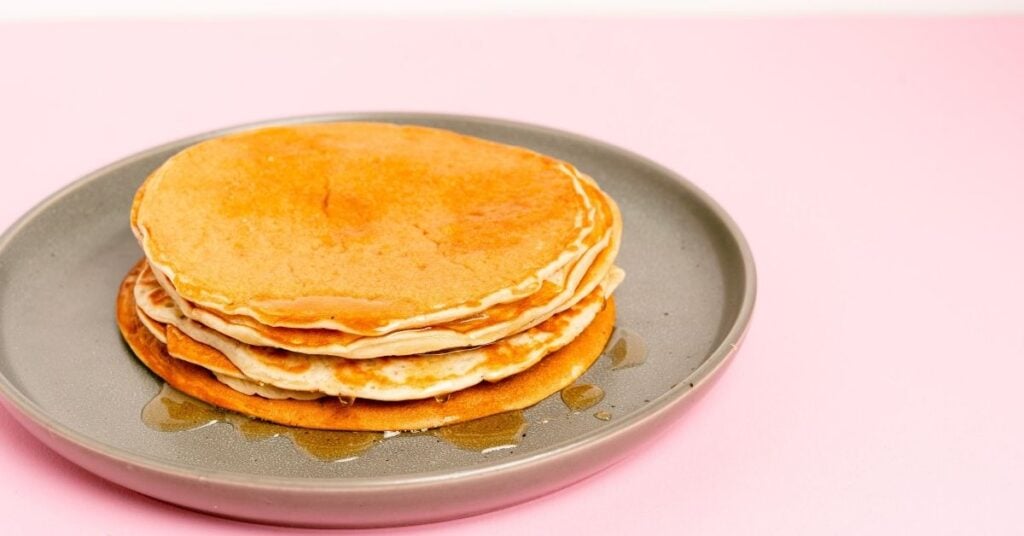
Yes, you can make pancakes with bread flour, but you’ll get chewier results unless you tweak the liquid and mix the batter gently.
You reach for the flour bin, pull out the bag, and only then notice it’s bread flour, not the usual all-purpose. The question pops up at once: can I make pancakes with bread flour? You can, and they can taste great, as long as you understand what that swap does to the batter and how to adjust the recipe.
Bread flour has more protein than all-purpose flour, which means more gluten and more chew. That extra strength works wonders for dough, but it can turn pancakes dense if you treat the batter the same way. This guide walks through what changes, how to fix common issues, and when bread flour pancakes make sense.
Can I Make Pancakes With Bread Flour? Texture And Taste Overview
Bread flour usually carries about 12–14% protein, while standard all-purpose flour sits closer to 9–12%. That extra protein builds a stronger gluten network once flour meets liquid, which brings more structure and a firmer bite to cooked batter. In a skillet, that can give pancakes more chew and a little less tenderness than you might want for a soft stack.
With the right tweaks, bread flour pancakes can still be light enough for breakfast and sturdy enough to hold syrup, fruit, and other toppings. Expect a pancake that browns nicely, holds its shape well, and feels a bit heartier than one made with all-purpose flour alone.
How Bread Flour And All-Purpose Flour Compare For Pancakes
Before changing a recipe, it helps to see how the two flours behave side by side. The table below sums up the main differences that matter when you pour batter onto a hot pan.
| Factor | Bread Flour | All-Purpose Flour |
|---|---|---|
| Protein Level | Higher, around 12–14% | Moderate, around 9–12% |
| Gluten Strength | Strong, firm network forms quickly | Milder, easier to keep tender |
| Pancake Texture | Chewier, sturdy, less delicate | Softer, more tender crumb |
| Browning | Deep color, crisp edges easier | Even color, softer edges |
| Liquid Absorption | Soaks up more liquid | Needs slightly less liquid |
| Best Uses | Bread, pizza, bagels, chewy pancakes | Pancakes, muffins, cookies, mixed-use |
| Handling | Needs gentle mixing for batter | More forgiving, less risk of toughness |
Bakers often point to protein percentage as the main reason bread flour behaves differently. Higher protein allows more gluten to form, which gives bread its stretch and chew. That same science applies to flapjacks in your skillet, so it helps to treat bread flour pancakes more like a fragile dough than a loose, carefree batter.
Bread Flour Vs All-Purpose Flour For Pancake Batter
When you ask “can i make pancakes with bread flour?” you are really asking how much chew you are willing to accept and how much effort you want to put into adjustments. Standard pancake recipes are written with all-purpose flour in mind, since it gives a soft bite with minimal fuss and works for most home cooks.
Bread flour leans toward strong gluten development. That suits bread dough that gets kneaded and stretched, but a loose batter does not need that much strength. If you stir it hard or too long, the gluten tightens up and pancakes turn tough. Gentler mixing and a little extra moisture help keep that from happening.
What Changes When You Swap To Bread Flour
A straight one-to-one swap of bread flour for all-purpose flour usually leads to thicker batter and denser cakes. The batter may sit in the bowl like soft mud instead of pouring in a smooth ribbon. On the plate, the stack can feel bready and heavy, with smaller air bubbles.
By contrast, adding a bit more milk and handling the batter with care lets the gas from baking powder or baking soda expand more freely. The goal is a middle ground: pancakes that hold together well but still feel soft when you cut into them with a fork.
When Bread Flour Is A Good Match For Pancakes
Bread flour works well when you like thick, diner-style pancakes that stand tall and carry many toppings. It also helps when you want extra structure for mix-ins like blueberries, chocolate chips, or nuts so they do not sink straight to the pan.
If you often make sourdough pancakes or batter with extra egg whites, bread flour can help keep all that extra liquid and gas under control. The higher protein content gives you a little more room before the batter turns floppy or fragile. Guides on bread flour vs all-purpose flour explain how protein level changes structure in many recipes, and the same pattern shows up in pancakes.
Making Pancakes With Bread Flour The Smart Way
You do not need a brand-new recipe just to use bread flour. A few steady changes in hydration, mixing, and resting time are enough for a solid stack. This section outlines the main levers you can pull to keep pancakes from turning rubbery or dry.
Adjust The Liquid And Fat
Bread flour absorbs more liquid, so your first move is to bump up the milk or buttermilk slightly. A good starting point is an extra one to two tablespoons of liquid for every cup of flour. Stir the batter and look at the flow: it should pour in a thick stream, not plop in clumps.
A touch more fat also helps soften the crumb. You can add an extra teaspoon of melted butter or oil per cup of bread flour. This coats some of the flour particles and keeps gluten strands from tightening too much as the pancakes cook.
Mix Wet And Dry Ingredients Gently
With bread flour, the mixing step matters a lot. Once you pour the wet ingredients into the bowl of dry ingredients, stir only until you see no dry pockets. A few small lumps are fine. They usually smooth out as the batter rests and spreads on the pan.
Overmixing is the fastest way to tough pancakes. Each extra turn of the spoon gives gluten more time to link up. Use a whisk or spatula instead of a stand mixer, and think in terms of strokes, not minutes: fifteen to twenty light turns in the bowl are often enough.
Let The Batter Rest
A short rest gives starch time to hydrate fully and lets the bubbles from baking powder settle into a stable structure. Ten to fifteen minutes on the counter works well. The batter often thickens a bit during this pause; if it turns sluggish, you can stir in another tablespoon of milk before cooking.
During this rest, gluten strands relax slightly, which helps the pancakes rise in the pan without resistance. Research on protein percentage in flour backs up the idea that higher protein flours form stronger networks, so any small step that relaxes those networks pays off in tenderness.
Step-By-Step Pancake Method Using Bread Flour
Here is a clear path to turn bread flour into a breakfast stack without mystery. Feel free to plug in your favorite flavorings, as the basic method stays the same.
Recipe Overview
Yield: 2 Servings (Approx. 6–8 pancakes)
Prep Time: 5 minutes
Rest Time: 10 minutes
Cook Time: 15 minutes
Total Time: 30 minutes
1. Measure Ingredients
- 1 cup bread flour
- 1 tablespoon sugar
- 1 teaspoon baking powder
- 1/4 teaspoon baking soda (use only if using buttermilk)
- 1/4 teaspoon fine salt
- 1 large egg
- 3/4 cup to 1 cup milk or buttermilk
- 2 tablespoons melted butter or neutral oil, plus more for the pan
- Optional: Vanilla extract or spices (cinnamon/nutmeg)
2. Combine Dry Ingredients
In a medium bowl, whisk together bread flour, sugar, baking powder, baking soda if using, and salt. This spreads leavening and salt evenly so you do not end up with random pockets of bitterness or bland bites.
3. Mix Wet Ingredients
In a second bowl or jug, beat the egg, then stir in 3/4 cup of the milk and the melted butter. Hold back the last quarter cup of milk so you can adjust thickness later, based on how your particular bread flour behaves.
4. Bring Batter Together
Pour the wet mix into the dry ingredients. Stir gently with a spatula or wooden spoon until no dry patches remain. If the batter looks stiff or sits in heavy clumps, add some of the reserved milk and stir just enough to blend it in.
5. Rest And Preheat The Pan
Let the batter rest for ten minutes while you heat a nonstick skillet or griddle over medium heat. A small knob of butter or a thin film of oil on the surface is enough. You want the pan hot enough that a drop of batter sizzles, but not so hot that it smokes.
6. Cook The Pancakes
Scoop about 1/4 cup of batter for each pancake. Pour onto the pan and let it spread on its own. When bubbles appear across the surface and the edges look set, flip once with a wide spatula. Cook the other side until golden brown, then move to a warm plate.
7. Serve And Taste For Adjustments
Stack the pancakes and taste the first one plain. If the texture feels tough, next time reduce mixing or add a tiny bit more fat. If the pancakes feel too dry, add more milk. Small adjustments from one batch to the next answer the question “can i make pancakes with bread flour?” with more and more confidence.
Common Problems With Bread Flour Pancakes
Bread flour pancakes behave slightly differently than classic all-purpose versions. The table below lists typical issues you might see and simple ways to steer back toward a light, pleasant texture.
| Problem | Likely Cause | Quick Fix |
|---|---|---|
| Tough, Bready Texture | Overmixing batter, too little fat | Stir less, add a bit more butter or oil |
| Dry Pancakes | Too much flour, not enough milk | Increase liquid next batch, measure flour by weight or spoon-and-level |
| Dense, Low Rise | Old baking powder or thick batter | Use fresh leavening, thin batter with extra milk |
| Gummy Center | Pan too hot, flipped too soon | Lower heat, give first side more time before flipping |
| Uneven Browning | Hot spots on pan, irregular batter spread | Rotate pan, adjust heat, use consistent scoop size |
| Mix-Ins Falling To Bottom | Thin batter, heavy add-ins | Fold mix-ins in at the end, use slightly thicker batter |
Many of these problems stem from the same root: strong gluten from bread flour that does not get balanced with enough moisture, fat, or gentle handling. Once you know that pattern, fixes become straightforward and repeatable.
When To Use Bread Flour For Pancakes And When To Skip It
Bread flour is handy when you bake often and always keep it in the pantry, or when you prefer hearty pancakes that feel closer to thick griddle cakes. It also helps in recipes that include extra liquid from yogurt, mashed fruit, or sourdough discard.
If you want soft, cloudlike pancakes with as little effort as possible, all-purpose flour still gives the most forgiving result. You can also mix the two flours: half bread flour and half all-purpose often lands in a sweet spot between tenderness and structure, especially for big brunch batches.
Quick Reference: Can I Make Pancakes With Bread Flour? Key Takeaways
The short answer to “can I make pancakes with bread flour?” is yes, as long as you treat the flour on its own terms. Bread flour brings more protein, more gluten, and more chew, so the rest of the recipe has to counterbalance that strength.
- Use more liquid than you would with all-purpose flour so the batter can spread and rise.
- Add a bit more fat for softness and flavor.
- Stir the batter briefly and gently to avoid tough gluten strands.
- Let the batter rest so starch hydrates and gluten relaxes.
- Watch the pan heat to keep pancakes fluffy inside and golden outside.
When those points fall into place, bread flour stops being a problem ingredient and turns into a handy option. Your stack may lean a little chewier and heartier than usual, yet it will still taste like classic pancakes, ready for syrup and whatever else you like on top.
