
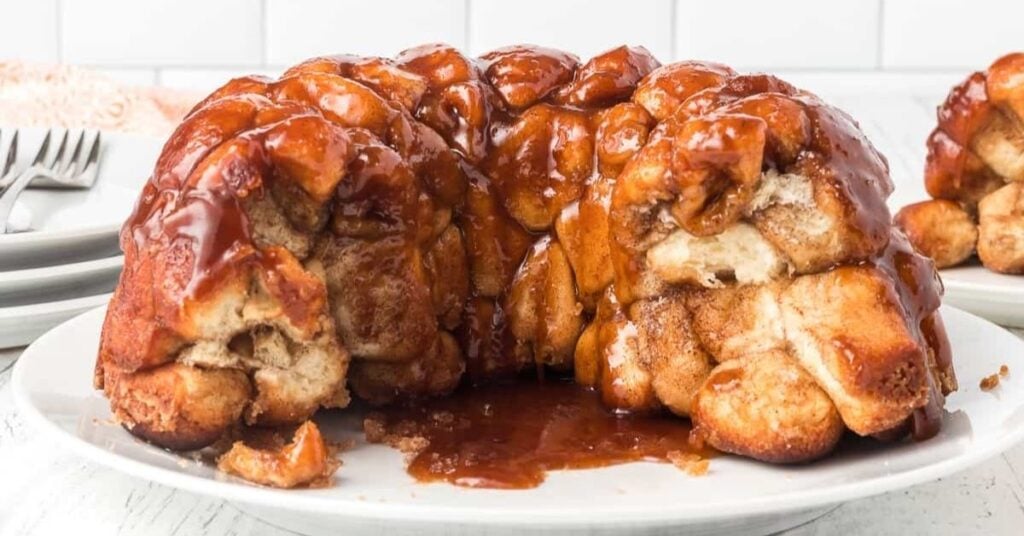
Yes, you can make monkey bread without a bundt pan by using loaf pans, cake pans, skillets, or muffin tins and adjusting bake time and layering.
If you typed “can i make monkey bread without a bundt pan?” into a search box, you are not alone. Many home bakers have dough ready, cinnamon sugar mixed, butter melted, and then realize the kitchen holds no bundt pan.
The good news is that monkey bread cares more about dough, coating, and oven time than about one specific pan. With a few simple checks on volume, depth, and bake time, you can use the pans you already own and still get sticky pull apart pieces.
Can I Make Monkey Bread Without A Bundt Pan? Clear Answer And Overview
Yes, you can bake monkey bread in loaf pans, regular cake pans, muffin tins, cast iron skillets, or a simple casserole dish. The dough bakes as many small pieces pressed together, so any pan that holds them snugly and bakes evenly will do the job.
The main trade offs are shape, crust texture, and baking time. A tall, round pan gives that classic ring. A shallower or rectangular pan leads to more crusty edges and faster baking. Once you know what to expect from each pan, you can match the dish to your gathering.
Monkey Bread Without A Bundt Pan: Best Bakeware Swaps
Every kitchen stash is different, so start by checking what you already own. Look for pans that are oven safe, at least 2 inches deep, and able to hold about the same volume as a 10 to 12 cup bundt pan. Then pick the shape that fits how you want to serve the bread.
| Pan Type | What Works Well | Notes On Batch Size |
|---|---|---|
| Standard Bundt Or Tube Pan | Classic tall ring, even heat around center tube. | Holds full batch of dough, usually 10–12 cup volume. |
| 9×5 Inch Loaf Pan | Neat slices once cooled, deep pull apart layers. | Use about half to two thirds of a bundt pan recipe. |
| 8 Or 9 Inch Round Cake Pan | Low, shareable pull apart round, easy to serve at the table. | Fits half batch or a smaller recipe, dough should sit just below rim before proofing. |
| 8×8 Or 9×13 Inch Rectangular Pan | Great for brunch buffets, plenty of crusty edges. | Use about half batch for 8×8, full batch for 9×13 with deeper sides. |
| Cast Iron Skillet | Strong browning and caramelized edges, rustic style. | Choose 10–12 inch skillet and keep dough under two thirds of its depth. |
| Muffin Tin | Individual servings, easy portion control for kids and guests. | Place three to five dough balls per cup and check early, as they bake faster. |
| Casserole Dish Or Glass Baking Dish | Nice for serving straight to the table, works with frozen dough shortcuts. | Use about the same volume as a cake pan and avoid filling higher than two thirds. |
| Sheet Pan | Thinner pull apart layer with extra crisp edges. | Spread dough balls in a single layer and reduce bake time. |
How To Match Monkey Bread Dough To Any Pan
Monkey bread recipes vary, but most use enriched yeast dough or canned biscuit dough shaped into small balls. That means the recipe itself usually works just fine with different pans, as long as the dough is not packed in so tightly that steam cannot escape and the center cannot bake through.
A standard bundt pan holds between 10 and 12 cups of batter. A 9×5 loaf pan holds 8 to 9 cups, while an 8 inch square dish holds around 6 cups. Matching dough to pan volume keeps the bread from overflowing or turning dense and gummy in the center. Resources such as the King Arthur Baking monkey bread recipe show a typical dough and classic method that you can scale up or down for different pans.
Check Pan Volume With Water
If you are not sure how much your pan holds, a quick water test helps. Fill a large measuring jug with water, pour it into the empty pan until the pan is nearly full, then measure how much water you used. That measurement tells you how much dough or batter the pan can handle.
For monkey bread, aim to fill a pan to about halfway with dough balls before the final rise. After proofing, the dough should sit at about two thirds of the pan height. This gives headroom for oven spring without overflow.
Greasing, Lining, And Sugar Coating
Monkey bread is rich in butter and sugar, which means sticking can be a real headache in pans without a removable base. Grease every corner with soft butter or neutral oil, including the center tube if your pan has one. In metal pans, you can sprinkle extra cinnamon sugar over the greased surface for a crunchy crust.
In glass or ceramic dishes, a light layer of parchment on the base makes release easier. Cut a circle or rectangle to match the bottom, then grease both sides. The sides still need butter or oil so the caramel sauce slides rather than burns.
Bake Time And Temperature When You Skip The Bundt
Most monkey bread recipes bake at 350 to 375°F. Pans that keep the dough in a deep stack, such as loaf pans and casseroles, need closer to the longer end of the time range. Shallow pans and muffin tins bake faster, since heat reaches the center of each dough ball more quickly.
Since yeasted dough can look browned on top while still doughy inside, a thermometer is a handy tool. Many bakers look for an internal temperature around 190 to 200°F for enriched breads. Resources such as the FoodSafety.gov safe internal temperature chart explain how to use a thermometer correctly for home cooking, while their chart itself focuses mainly on meat and casseroles.
Visual Clues That Monkey Bread Is Done
If you do not own a thermometer, rely on sight, smell, and a small test piece. The top should be a deep golden brown and the caramel sauce bubbling at the edges. When you gently pull two pieces apart near the center, you should see fully cooked, stretchy crumb with no raw dough.
In a loaf pan, the edges sometimes brown before the center. Tent the top with foil in the last ten to fifteen minutes to protect the crust while the middle finishes baking.
Pan By Pan: How Your Monkey Bread Will Turn Out
At this point the real question is what trade offs you will see when you switch pans. Shape, crust, and serving style all shift with the pan you pick.
Loaf Pan Monkey Bread
A 9×5 loaf pan turns monkey bread into sliceable pull apart bread. Once the loaf cools for fifteen minutes, you can invert it, peel off the parchment, then slice thick pieces that still pull into bites.
This format travels well, so it works for bake sales and potlucks. Just grease the pan carefully, give the dough plenty of rise time, and check the center with a skewer or thermometer before you pull the loaf from the oven.
Cake Pan Or Casserole Monkey Bread
Round or rectangular pans create a wider, lower layer, almost like sticky buns baked snugly together. That gives more surface area for caramel and makes the bread easy to scoop or cut into squares.
A heavy metal pan helps prevent overbrowning on the edges. Glass runs hotter on the sides, so reduce the oven temperature by about 25°F and watch closely near the end of baking.
Skillet Monkey Bread
Cast iron skillets hold heat well and create deep color on the bottom crust. Grease thoroughly, including up the sides. Arrange dough balls so they sit no more than two layers deep.
Skillet monkey bread tends to hit the table straight from the oven. Let the bread rest for at least ten minutes so the caramel thickens slightly. Then bring the whole pan to the table with plates and small forks.
Muffin Tin Monkey Bread Bites
Muffin tins give tidy individual monkey bread servings. Spray or grease each cup, add a spoonful of sauce to the base, then drop in three to five dough balls. A little extra space around them helps the edges crisp.
Check at the ten minute mark and then in short intervals. Since the pieces are small, they can go from gooey to dry before you expect it. A light golden color on top and bubbling sauce around the edges usually means the centers are done.
Approximate Pan Volumes And Bake Times
Once you know the pan options, a simple chart makes planning easier. These ranges assume enriched yeast dough made from about 3 to 4 cups of flour set to bake at 350°F. Your oven, dough, and pan material can shift the numbers, so use them as starting points, not strict rules.
| Pan Type | Approximate Dough Amount | Typical Bake Time |
|---|---|---|
| 10–12 Cup Bundt Or Tube Pan | All dough from a standard full recipe | 30–40 minutes |
| 9×5 Inch Loaf Pan | Half to two thirds of full dough | 35–45 minutes |
| Two 8×4 Inch Loaf Pans | Split full recipe across both pans | 28–35 minutes |
| 8 Or 9 Inch Round Cake Pan | About half of full dough | 25–35 minutes |
| 9×13 Inch Rectangular Pan | Full recipe spread in wider layer | 25–30 minutes |
| 10–12 Inch Cast Iron Skillet | Half to three quarters of full dough | 25–35 minutes |
| Standard 12 Cup Muffin Tin | Three to five dough balls per cup | 10–18 minutes |
Step By Step: Adapting A Favorite Recipe
You do not need a new recipe just because the pan changed. Use your normal monkey bread dough and sauce, then adjust how you shape, portion, and bake it to match the bakeware you picked.
1. Prepare The Dough And Coating
Mix or thaw the dough, then cut it into small, even pieces. Pieces about the size of large grapes bake evenly and soak up plenty of cinnamon sugar and butter.
Stir together granulated sugar, brown sugar, and cinnamon in a bowl. Melt the butter in a small saucepan or heatproof jug. Dip each dough piece in butter, roll it through the sugar mix, and drop it into your greased pan.
2. Layer Dough Balls In The Pan
In deep pans, such as loaf pans and bundt style pans, layer dough balls up to about two thirds of the depth. In shallow pans, stay closer to a single layer, with only a second layer in the center.
At this stage you can add chopped nuts, small pieces of apple, or a handful of raisins between layers. They tuck into the gaps and bake in along with the dough.
3. Proof Until Puffy
Cover the pan loosely with greased plastic wrap or a clean towel. Let the dough rise in a warm spot until the pieces look puffy and fill the pan more fully. In a draft free kitchen, this usually takes 30 to 45 minutes, longer if the room is cool.
If you started with canned biscuit dough, follow the timing in the recipe, since that dough often needs less proofing. The dough should look soft and expanded but still hold clear shape.
4. Bake, Test, And Cool
Bake on the middle oven rack so the base does not scorch. Start checking early based on the table above. Look for deep color on top and bubbling sauce.
When the center is done, let the pan rest on a rack for ten minutes. Run a thin knife around the edges and center, then invert onto a plate or board. If any pieces stick, nudge them out and press them back into place while the caramel is still warm.
Make Ahead And Reheating Tips
You can assemble monkey bread the night before in almost any pan. Cover the pan well, chill it, then let the dough sit at room temperature until puffy before baking in the morning.
Leftover monkey bread keeps best when wrapped and held at room temperature for a day. Warm slices or portions in a low oven or microwave until the caramel softens and the center feels fluffy again.
So, Can I Make Monkey Bread Without A Bundt Pan?
By now, the question “can i make monkey bread without a bundt pan?” should feel settled. The answer is yes, and you have several workable pan choices already in your cupboard.
Pick a pan with enough depth, grease every corner, give the dough room to rise, and watch the center for doneness. With those basics in place, you can bake monkey bread for brunch, holidays, or weeknight desserts even when the classic bundt pan sits on a store shelf instead of in your cabinet.
Quick Reference: Standard Monkey Bread Recipe Template
Use these standard measurements when adapting to different pans. This recipe yields enough for one standard Bundt pan or two loaf pans.
Yield: 10–12 Servings
Prep Time: 20 minutes
Cook Time: 30–45 minutes (depending on pan)
Ingredients
- Dough: 3 cans (16.3 oz each) refrigerated biscuit dough OR 2 lbs homemade enriched yeast dough
- Sugar Coating: 1 cup granulated sugar
- Spice: 2–3 teaspoons ground cinnamon
- Sauce: 1 cup (2 sticks) unsalted butter, melted
- Brown Sugar: 1 cup packed brown sugar (mixed with melted butter or sprinkled between layers)
- Optional: ½ cup chopped pecans, walnuts, or raisins
Instructions Summary
- Preheat oven to 350°F (175°C). Grease your chosen pan(s) thoroughly with butter or non-stick spray.
- Prep Dough: Cut dough into quarters or small bite-sized pieces.
- Coat: Mix granulated sugar and cinnamon in a large bag or bowl. Toss dough pieces in the mixture to coat evenly.
- Layer: Arrange coated dough pieces in the prepared pan. If using nuts or fruit, scatter them between layers.
- Sauce: Whisk melted butter with brown sugar (if using a caramel style) or simply pour melted butter over the layers.
- Bake: Bake according to the pan chart above (approx 30-45 mins) until golden brown and center is cooked through (190°F internal temp).
- Cool: Let sit for 10 minutes before inverting onto a serving platter.
