
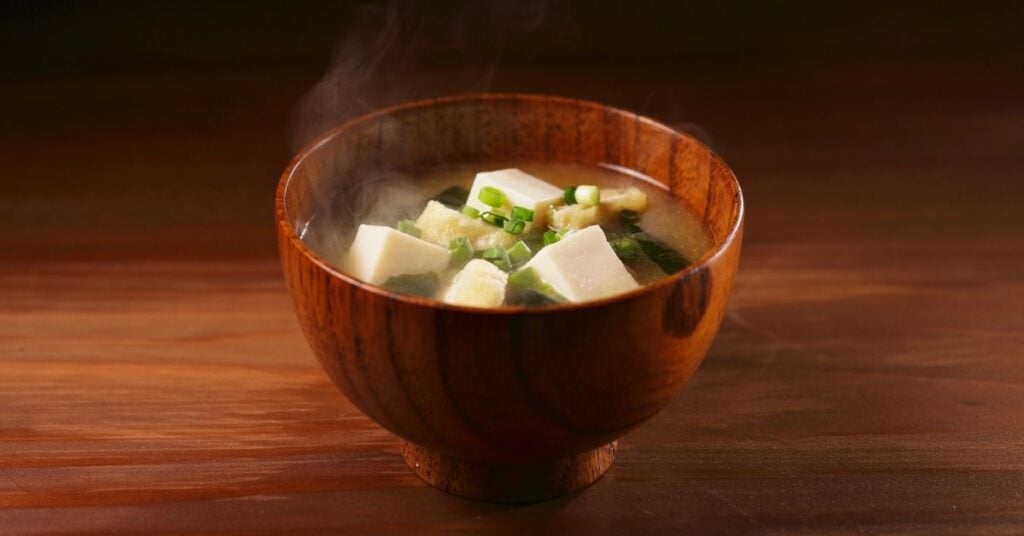
Yes, you can make miso soup with just miso paste and water, but stock or extra ingredients give better depth, aroma, and balance.
Miso soup looks simple, yet that small bowl carries a lot of flavor rules. When you stand over the stove with only miso paste in the fridge, the big question pops up: can this one ingredient carry the whole soup?
The short answer is yes, a paste-only miso soup is possible and can taste pleasant. Still, classic miso soup usually relies on a light stock under the paste, plus a few add-ins. Knowing what changes when you skip those pieces helps you decide which route works for your meal, your schedule, and your salt intake.
Can I Make Miso Soup With Just Miso Paste?
Traditional miso soup pairs miso paste with dashi, a clear stock made from kombu (dried kelp) and dried fish flakes. The stock supplies gentle umami and aroma, while the paste brings body, soy depth, and salt. When you only combine miso paste with hot water, you skip that base layer.
Even so, a bowl made with just paste and water still tastes like miso soup. The fermented paste itself is a strong seasoning. Miso is a thick soybean paste aged with salt and koji mold and often rice or barley. That process creates deep savory notes along with protein, minerals, and a lot of salt. A spoonful stirred into hot water already gives color, aroma, and flavor that feels familiar.
The trade-off is complexity. Paste-only miso soup tends to taste flatter, with less fragrance and less subtle sweetness. You may notice the salt more, since there’s no gentle stock underneath it. Some eaters enjoy this strong, direct flavor; others find it a bit one-note. If you accept that change and season with care, you can drink a simple miso bowl made with only paste day after day.
What You Get From Paste-Only Miso Soup
Miso paste contains soy protein, carbohydrates, small amounts of fat, and a range of vitamins and minerals created and preserved through fermentation. It also brings live microbes when the paste is unpasteurized and not boiled to death. That means even a very basic miso soup can feel nourishing and satisfying, especially alongside rice and vegetables.
The catch is sodium. A single tablespoon of miso paste can deliver around 600 milligrams of sodium or more, depending on the brand and style. That is a large slice of a day’s suggested limit, so paste-only miso soup should use measured portions and a high water ratio, especially if you drink it often or have blood pressure concerns.
Miso Types And Paste-Only Flavor
Different miso styles change how successful a paste-only miso soup feels. Some are mild and sweet, others are bold and salty. When you skip stock, the type of paste matters even more. The table below gives a quick view of popular miso categories and how they behave when you make miso soup with only paste and water.
| Miso Type | Flavor And Color | Paste-Only Soup Result |
|---|---|---|
| White (Shiro) | Pale, mild, slightly sweet | Soft, gentle soup; easy to sip plain |
| Yellow | Light tan, balanced salt and sweetness | Good all-round paste-only choice |
| Red (Aka) | Dark, strong, salty, aged longer | Very bold; use less paste per cup |
| Mixed (Awase) | Blend of white and red | Nice depth even without stock |
| Barley (Mugi) | Rich, sometimes earthy, darker | Hearty, rustic bowl; strong flavor |
| Soy Only (Mame) | Dense, intense soy taste | Needs plenty of water, small spoonfuls |
| Low-Salt Or “Reduced Salt” | Milder salt punch, often lighter | Safer for frequent paste-only bowls |
If you only have one tub of miso paste in the fridge, treat your first paste-only soup as a test. Start with a small spoon of paste in a full cup of hot water. Taste, then add more paste in tiny amounts. Over time you’ll learn how far that particular paste can go before the salt feels harsh.
Making Miso Soup With Just Miso Paste At Home
The method for a paste-only bowl is short and friendly. You only need miso paste, water, and a heat source. A small whisk, chopsticks, or even a spoon works as your mixing tool.
Simple Ingredient List For One Bowl
- 1 to 1¼ cups water
- 1 to 2 teaspoons miso paste (white or mixed miso suits most people)
- Optional: a few slices of green onion or a sprinkle of sesame seeds
Step-By-Step Paste-Only Miso Soup
- Heat the water. Warm it in a small pot until steam rises. Keep it just below a hard boil so the miso aroma stays fresh.
- Add a little water to a bowl. Pour a small splash of the hot water into your serving bowl. This makes it easier to dissolve the paste.
- Stir in the miso paste. Add 1 teaspoon of miso paste to the bowl and grind it into the water with chopsticks, a spoon, or a tiny whisk until no lumps remain.
- Blend and taste. Pour the rest of the hot water into the bowl while stirring. Taste. If the soup feels weak, add another half teaspoon of paste, dissolve fully, then taste again.
- Adjust and serve. When the balance suits you, add any simple garnish and serve right away while the scent is bright.
This method keeps the paste away from a rolling boil, which helps preserve flavor and some of the live microbes found in unpasteurized miso. That gentle handling matches how many home cooks in Japan treat miso soup using stock as well.
Water Versus Dashi In Miso Soup
Classic miso soup uses dashi made from ingredients such as kombu kelp, dried bonito flakes, or dried anchovies. The stock brings glutamates and other compounds that deepen umami. When you skip it and lean only on miso paste, the soup leans more on salt and soy notes and less on layered sea flavor.
If you enjoy the direct taste of miso, this simpler bowl may be perfect on busy mornings. On nights when you want a gentler, more rounded bowl, even a quick dashi cube, instant granules, or a kombu strip simmered in water can give your miso paste more to stand on. That way you still move fast, yet the soup feels closer to traditional miso served with rice and side dishes.
Nutrition And Sodium In Paste-Only Miso Soup
Miso paste carries more than flavor. Nutrition databases and research summaries describe miso as a fermented soybean paste that supplies protein, B vitamins, minerals, and small amounts of fat along with carbohydrates and fiber. It is dense food, so a spoonful adds a lot of nutrients at once.
One tablespoon of miso paste sits around the 30 to 35 calorie mark and can bring roughly 2 grams of protein, small amounts of iron and calcium, and many other trace nutrients, according to data derived from USDA FoodData Central. That is why a small quantity of miso can make a bowl of hot liquid feel filling and satisfying even when there are no noodles or chunks in sight.
The main concern is salt. Many miso products contain more than 600 milligrams of sodium per tablespoon. Health organizations such as the American Heart Association sodium guidance suggest adults stay under 2,300 milligrams of sodium per day and aim lower for better heart health. A few large spoonfuls of miso paste in one small pot can meet or even exceed that daily target.
Balancing Flavor And Salt In Paste-Only Soup
When you make miso soup with only paste and water, pay close attention to the ratio. Stock dilutes salt while adding flavor; water just dilutes. That means you often want less paste than a recipe that includes dashi.
- For white or mixed miso, start with 1 teaspoon paste per 1 cup water.
- For red or darker miso, start with ½ teaspoon per cup and build slowly.
- If you add salty ingredients later (soy sauce, salted fish, pickles), stay on the low side with miso.
People with high blood pressure or kidney concerns should be especially careful. Small bowls, weaker soups, and low-salt miso styles are safer options. When in doubt, speak with a healthcare professional before drinking salty broths every day.
Does Heat Destroy Fermented Benefits?
Miso paste is fermented, so many people hope their soup will carry live microbes. High heat can reduce that benefit. If you use paste that still contains active cultures, keep the water just under boiling, and avoid reheating miso soup to a hard boil. That method improves the chance that some microbes stay alive until you drink the bowl, though exact numbers are hard to predict.
When Can I Make Miso Soup With Just Miso Paste Work Well?
A bare-bones miso bowl shines in certain spots. When you understand where it fits, you can save time without feeling like you cut corners.
Busy Mornings And Late-Night Snacks
Paste-only miso soup is ideal when you want warmth and salt but do not want to cook a full meal. Boil water for tea, borrow a cup for miso, stir in paste, and you have a drink and light snack in minutes. That works before work, after a long shift, or when you crave something gentle before bed.
Side Dish For Simple Rice Meals
If your main plate already carries strong flavors, such as grilled fish with lemon or soy, a mild paste-only miso bowl can sit in the background without fighting for attention. In that case, you can even keep the soup weaker and drink more water per spoon of paste. The bowl still ties the meal together without feeling heavy.
Trying New Miso Brands
When you open a new tub of miso paste, a plain soup made only with water acts like a taste test. You can sense how sweet, salty, or funky that paste is on its own before you hide it behind stock and toppings. Later, when a friend asks, “can i make miso soup with just miso paste?”, you can answer from your own spoon experience, not only from recipes.
Easy Upgrades Beyond Just Miso Paste
Once you feel confident making a paste-only bowl, it becomes simple to dress it up. Small changes add texture, aroma, and nutrients without taking away the speed that drew you to miso soup in the first place.
Classic Add-Ins That Still Keep Things Simple
You do not need a long ingredient list. A few fridge staples turn a plain miso broth into something closer to the bowl you get with a Japanese set meal. The table below shows easy options and when to add them.
| Ingredient | What It Adds | When To Add |
|---|---|---|
| Soft Tofu Cubes | Protein and gentle texture | Simmer a minute before stirring in miso |
| Dried Wakame | Sea aroma and minerals | Soak briefly, add just before serving |
| Green Onion | Fresh bite and color | Sprinkle on top in the bowl |
| Grated Ginger | Warmth and spice | Stir a small pinch in with the paste |
| Sesame Seeds Or Oil | Nutty aroma and richness | Finish with a light sprinkle or drop |
| Leftover Cooked Vegetables | Fiber and extra nutrients | Warm in the hot water before adding paste |
| Instant Dashi Granules | Classic stock taste with no effort | Dissolve with the water, then add miso |
Even with these add-ins, you can stay close to the core idea of can i make miso soup with just miso paste? The paste still carries the main flavor, while the extra pieces float through the bowl and make each sip a little more interesting.
Adjusting Thickness And Strength
Some people like miso soup almost see-through, others prefer a cloudy, thick bowl. With paste-only soup, that choice comes down to how much miso you stir in and how fully you dissolve it. If you want more body without pushing the salt too far, whisk a small spoon of miso with a bit of water into a smooth cream first, then stretch that with more hot water. This keeps the texture plush while spreading the salt over a larger volume.
Common Mistakes With Paste-Only Miso Soup
Simple recipes often hide easy mistakes. Paste-only miso soup is the same. A few habits make the difference between a flat, harsh bowl and something you look forward to drinking.
Using Boiling Water Directly On The Paste
Pouring a full rolling boil straight onto miso paste can dull aroma. Try letting the water cool for a minute off the heat or mix the paste with a small amount first, then top up with the rest.
Packing In Too Much Paste
It is tempting to keep adding spoons until the soup looks very cloudy. That often leads to an overly salty, tiring bowl. Add paste in small steps, sip, and stop just before it tastes strong. Your body and your blood pressure will thank you.
Skipping A Quick Stir Before Serving
Miso paste can settle at the bottom of the bowl. Give the soup a fast stir just before serving so every sip tastes balanced. If you carry your bowl to the table, a small swirl with chopsticks or a spoon at the last second fixes this.
So yes, you can make miso soup with just miso paste and water, and many people do that daily. Start light, respect the salt, treat the paste gently with heat, and add simple toppings when you have them. With those habits, that one tub of miso in your fridge can give you quick, soothing bowls whenever you need them.
Simple Miso Soup (Paste Only)
A quick, soothing bowl of miso soup made using only miso paste and water. No stock required.
2 mins
3 mins
5 mins
1 Bowl
Ingredients
- 1 to 1¼ cups Water (Hot)
- 1 to 2 teaspoons Miso Paste (White or mixed)
- Optional: Green onion slices, Sesame seeds
Instructions
- Heat Water: Warm the water in a small pot or kettle until steam rises (just below boiling).
- Prep Bowl: Pour a small splash of the hot water into your serving bowl.
- Dissolve Paste: Add 1 teaspoon of miso paste to the splash of water. Whisk or stir until smooth and no lumps remain.
- Combine: Pour the remaining hot water into the bowl while stirring.
- Taste & Adjust: Taste the broth. If it is too weak, add more paste in small ½ teaspoon increments. If too strong, add a splash more hot water.
- Serve: Add garnishes if using and enjoy immediately.
