
A roasting pan seems like a “once-a-year” purchase… until you’ve lived through the moment that changes everything: a heavy bird, a flimsy pan, a rack that wobbles, and hot drippings that scorch into a black, gluey layer while you’re trying to keep dinner on schedule. That’s when you realize a roaster isn’t just cookware—it’s a stress-management tool.
If you’re hunting for the best stainless steel roasting pan, you’re already thinking like an experienced home cook: you want something that doesn’t warp when the oven runs hot, won’t chip like coated pans, and can handle real holiday weight without feeling like a disposable tray in disguise. But here’s what most buying guides miss: roasting pans don’t “win” on a spec sheet. They win in the small, real-life moments—when you lift the rack, when you pour drippings without spilling, when you deglaze without hot spots, and when cleanup doesn’t feel like punishment.
This guide is built around those moments. I’m not going to waste your time with generic bullet lists like “stainless steel is durable.” Instead, I’ll show you how to read a roaster like a chef does: sidewall height (airflow vs. containment), construction (fully clad vs. bonded base), rack geometry (V-rack vs. flat rack, lift handles vs. none), handle shape (oven-fit reality), and the “gravy factor” (how easily you can build a sauce without burning the fond).
Below are 15 standout stainless roasters—from premium, broiler-ready workhorses to clever multi-use designs with lids that double as griddles, plus compact picks for smaller ovens and weeknight roasting. The goal is simple: by the end, you’ll know exactly which roaster matches your cooking style—and why.
How to Choose the Best Stainless Steel Roasting Pan
A roaster isn’t “good” because the listing says it’s heavy duty. It’s good because it behaves predictably in your kitchen: it fits your oven, browns evenly, keeps drippings usable (not scorched), and doesn’t turn cleanup into a second job. Here’s the decision framework I use when I’m helping people pick a pan they’ll still love after the third big meal.
1. Start with your oven, not the turkey
The most common roasting pan regret is painfully simple: the handles make the pan longer than the “advertised” size, and suddenly it won’t sit flat on your oven rack—or it blocks the door from closing comfortably. Before you buy, think in three dimensions:
- Rack footprint: Can the base sit fully on the rack without teetering?
- Handle clearance: Are the handles upright (space-saving) or do they extend outward (space-hungry)?
- Vertical clearance: Will a tall bird (or a domed lid) fit without touching the top element?
2. Pick your roasting personality (this matters more than brand)
Most home cooks fall into one of these patterns. Identify yours first—then choose a pan that was built for it.
- The holiday host: Big birds, big roasts, lots of drippings, and you need safe handles + a rack you trust.
- The gravy person: You want drippings that don’t burn, and a pan you can confidently deglaze in.
- The crispy-browning chaser: You’d trade extra depth for better airflow and deeper browning.
- The “multi-use” cook: You want one piece that roasts, bakes, sears, and maybe even doubles as a second pan.
- The weeknight roaster: Chickens, vegetables, smaller cuts—easy handling and fast cleanup matter more than maximum capacity.
3. Construction is the hidden difference between “okay” and “chef-level”
Stainless steel itself is not a great heat conductor—what matters is what’s underneath it. That’s why two stainless roasting pans can behave wildly differently. Most pans fall into one of these buckets:
- Fully clad / multi-ply: These pans sandwich heat-conductive material between layers of stainless. They tend to heat more evenly and respond more predictably—especially useful if you build pan gravy or sauces from drippings.
- Bonded or encapsulated base: These pans use a heat-spreading “disc” on the bottom (sometimes very good, sometimes just adequate), while the sidewalls remain thinner. They can roast beautifully, but the gravy game can be more sensitive to hot spots.
- Deep, multi-use vessels: Some “roasters” are more like hybrid pots, with depth and mass that make them versatile beyond roasting. Great for braises and big gatherings—but the depth can shift airflow and browning unless you use the rack thoughtfully.
4. Sidewall height is not a detail—it’s a cooking decision
This is where experienced cooks make smart trade-offs.
- Lower sidewalls encourage airflow and browning. They’re fantastic for spatchcocked poultry, sheet-pan-style vegetables, and crisp skin.
- Taller sidewalls reduce splatter and hold more drippings and vegetables. They’re great for big birds and deep roast setups.
- Very tall sides + lid can lean toward braising behavior (moist heat), which is wonderful for certain cuts—but not always what you want for crispy skin.
If you’ve ever wondered why one turkey browned like a magazine photo and another looked pale until the last 20 minutes, pan geometry is often part of the story.
5. The rack is where good roasting pans earn their reputation
A rack isn’t just “a rack.” It changes airflow, fat drainage, and how safe it feels to lift a heavy roast. In real-world use, these details matter:
- V-shaped racks cradle birds and roasts securely and encourage airflow around the sides.
- Flat racks can be easier for vegetables, whole fish, or flatter cuts—but they can be awkward for round roasts if the fit isn’t right.
- Lift handles are underrated. The best holiday moment is lifting a roast cleanly without it sliding, sagging, or forcing you to grab with forks.
- Rack height affects drippings. If the rack sits low, food can end up closer to the liquid, which can soften the bottom surface.
6. Cleaning reality: polished vs. brushed, and what “dishwasher safe” feels like
Stainless is resilient—but it can still show its life. A polished finish looks stunning and serves beautifully at the table, but it can show scratches and heat tint more easily than brushed finishes. The good news is that stainless responds well to simple routines: deglaze after roasting, soak while you eat, and use the right scrubber for the job.
Also: dishwasher-safe doesn’t always mean “dishwasher-best.” Some pans will stay gorgeous through machine cycles; others may lose shine over time. If you know you’ll always hand-wash, choose the pan you love. If you know you’ll always dishwash, prioritize rolled rims, sturdy handles, and a rack that won’t trap grease.
Quick Comparison: 15 Best Stainless Steel Roasting Pan Picks
Use this table to find the models that match your cooking style, then jump to the full reviews for the real-life details— like which racks feel safest, which handles make oven-fit easy, and which pans are most satisfying for gravy and cleanup.
On smaller screens, swipe or scroll sideways to see the full table.
| Model | Pan style | Standout strength | Best match | Amazon |
|---|---|---|---|---|
| All-Clad Specialty 16×13 Roaster + Rack | Premium classic | Broiler-ready performance, safe upright handles, and a rack owners trust for heavy roasts | Holiday hosts who want one “forever” roaster for big birds and big meals | Amazon |
| Made In Stainless Clad Roasting Pan | Pro-style clad | Vertical handles for oven fit + sturdy rack + even roasting without fuss | Cooks who want a lighter, professional-feeling roaster that still handles large birds | Amazon |
| Viking 3-Ply Roaster + Rack (with Thermometer) | Induction-ready | Heavy-duty 3-ply build plus a doneness shortcut for stress-free roasts | “I want it perfect” cooks who like tools that remove guesswork | Amazon |
| GreenPan Reserve Tri-Ply Roaster + Rack | Style upgrade | Tri-ply response with a “serve-it-proudly” look and easy cleanup | Modern kitchens that want performance and presentation in one pan | Amazon |
| All-Clad Covered Oval Roaster (3-Piece) | Covered roaster | Domed lid + rack makes it a true “roast & braise” workhorse | Families who want a lid for moisture control and less foil improvisation | Amazon |
| Cuisinart MultiClad Pro 16″ Roaster + Rack | All-around clad | Triple-ply heat distribution that supports great roasting and confident gravy-making | Cooks who want “even heat” behavior without stepping into ultra-premium pricing | Amazon |
| Concord Premium 12-Qt Roaster + Griddle Lid | Multi-use | Two pans in one: deep roaster plus a lid that flips into a griddle-style pan | Big-meal cooks who want versatility beyond turkey day | Amazon |
| Misen 5-Ply Roasting Pan (13″) | Browning-first | Low walls + thick 5-ply build for crisp edges and “sheet pan roasting” energy | Cooks who prioritize browning, searing, and fast roasting results | Amazon |
| Viking 3-Ply Roaster + Rack (Standard) | Induction-ready | Robust 3-ply build with a nonstick rack for classic turkey-and-roast duty | Induction households who want a serious roaster without extra accessories | Amazon |
| All-Clad Specialty 11×14 Roaster + Rack | Compact premium | High-end build in a smaller footprint—ideal when you don’t need a “turkey tray” daily | Weeknight roasters, smaller ovens, and cooks who still want premium feel | Amazon |
| Cuisinart Chef’s Classic 16″ Roaster + Rack | Everyday staple | Simple, widely-loved roasting setup that cleans easily and serves well | Most households who want a straightforward, familiar-style roaster | Amazon |
| Farberware Classic Traditions Roaster + Rack | Simple & shiny | Light handling with a table-ready mirror finish and dependable roasting basics | Occasional hosts who want a good-looking pan that does the job | Amazon |
| Amazon Basics 16″ Roaster + V-Rack | Value pick | Surprisingly sturdy stainless roasting setup that feels like a real upgrade from disposable pans | Budget-focused cooks who still want durable stainless results | Amazon |
| JY COOKMENT 22″ Oval Roaster + Rack + Lid | Extra large | Big oval capacity with a lid for moisture control and mega-family meals | Large birds, briskets, and gatherings where size is the main requirement | Amazon |
| Cuisinart 14″ Lasagna Pan + Roasting Rack | Compact multitasker | Smaller footprint that doubles as a bake-and-roast pan for everyday ovens | Small households and cooks who want one pan for lasagna, roasts, and baked sides | Amazon |
In‑Depth Reviews: 15 Stainless Roasters That Cooks Actually Love Using
Now we go pan by pan. I’m going to talk like someone who has roasted real food for real people: what feels sturdy, what feels fiddly, what makes gravy easy, what makes cleanup painless, and what you should know before you commit.
1. All-Clad Specialty 16×13 Roaster + Nonstick Rack – The “Forever Pan” That Feels Like Control
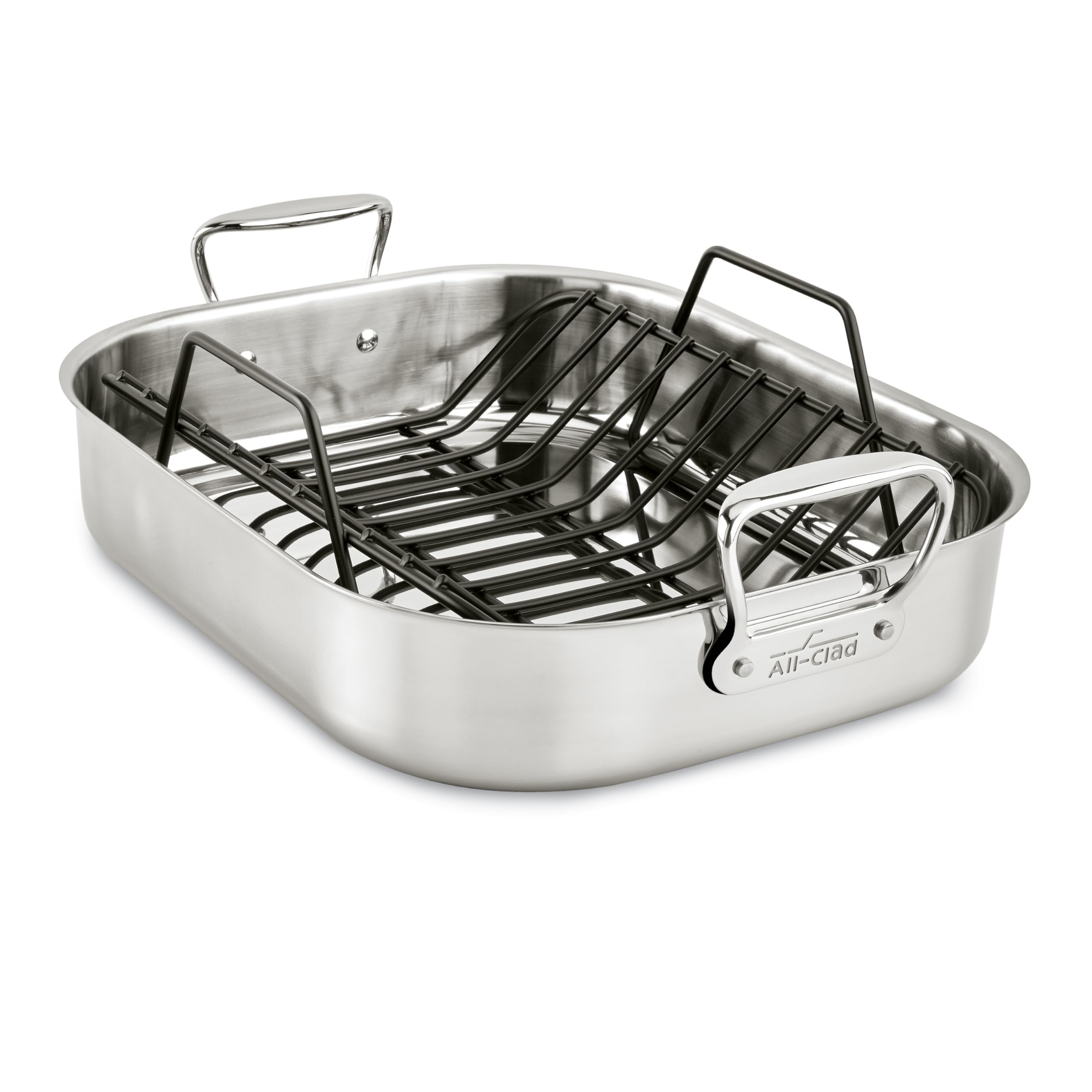
If you’re the kind of cook who wants one roaster that can handle “big holiday energy” without drama, this All-Clad is the easy answer. It’s the pan you buy when you’re done gambling on thin metal and mystery racks—because you want a stable base, confident handles, and a rack that doesn’t feel like it might buckle.
Here’s the real-life advantage: this pan is built around the moment that matters most—taking something heavy out of a hot oven without panic. The upright handles are space-smart (they don’t steal oven real estate the way long side handles can), and they give you a comfortable grip even when your mitts are bulky. That sounds small, but on a big day it’s the difference between “I’ve got this” and “why did I do this to myself.”
The included V-rack is a huge part of the value. A lot of roaster racks are fine for a chicken but feel questionable with a big bird. Owners routinely describe this rack as sturdy and reliable, and that’s exactly what you want: lift, drain, move, done. The nonstick rack finish is also a quiet win when you’ve roasted something sticky or sugary—because scrubbing a rack is the least fun part of roasting.
For results, you get the kind of even roasting behavior that makes your drippings usable. That matters because drippings are not “waste”— they’re your gravy, your pan sauce, your roasted-vegetable flavor bomb. When a pan scorches drippings, it robs you of that. A roaster like this is built to help you keep those juices clean and golden, not burnt and bitter.
Why you’ll like it
- Confidence-first handling – The upright handles feel safer and more stable during heavy lifts.
- Rack you actually trust – Sturdy build that supports big roasts without sagging or feeling flimsy.
- Great “drippings behavior” – Helps you keep fond and juices usable for gravy, not scorched into bitterness.
- Multi-role pan – Remove the rack and it becomes a serious baking/roasting vessel for vegetables and sides.
Good to know
- The rack is nonstick and tends to clean best with a quick soak; don’t let it dry with sticky residue.
- Polished stainless looks gorgeous, but it will show “life marks” (light scratches, heat tint) if you use it often—performance stays strong.
- If your home is induction-only, note that this style is not typically the induction-first choice; it shines as an oven/broiler workhorse.
Ideal for: serious holiday hosts and roast lovers who want one premium pan that feels dependable, safe, and satisfying year after year.
2. Made In Stainless Clad Roasting Pan – The “Chef’s Handle” Design That Fits Real Ovens
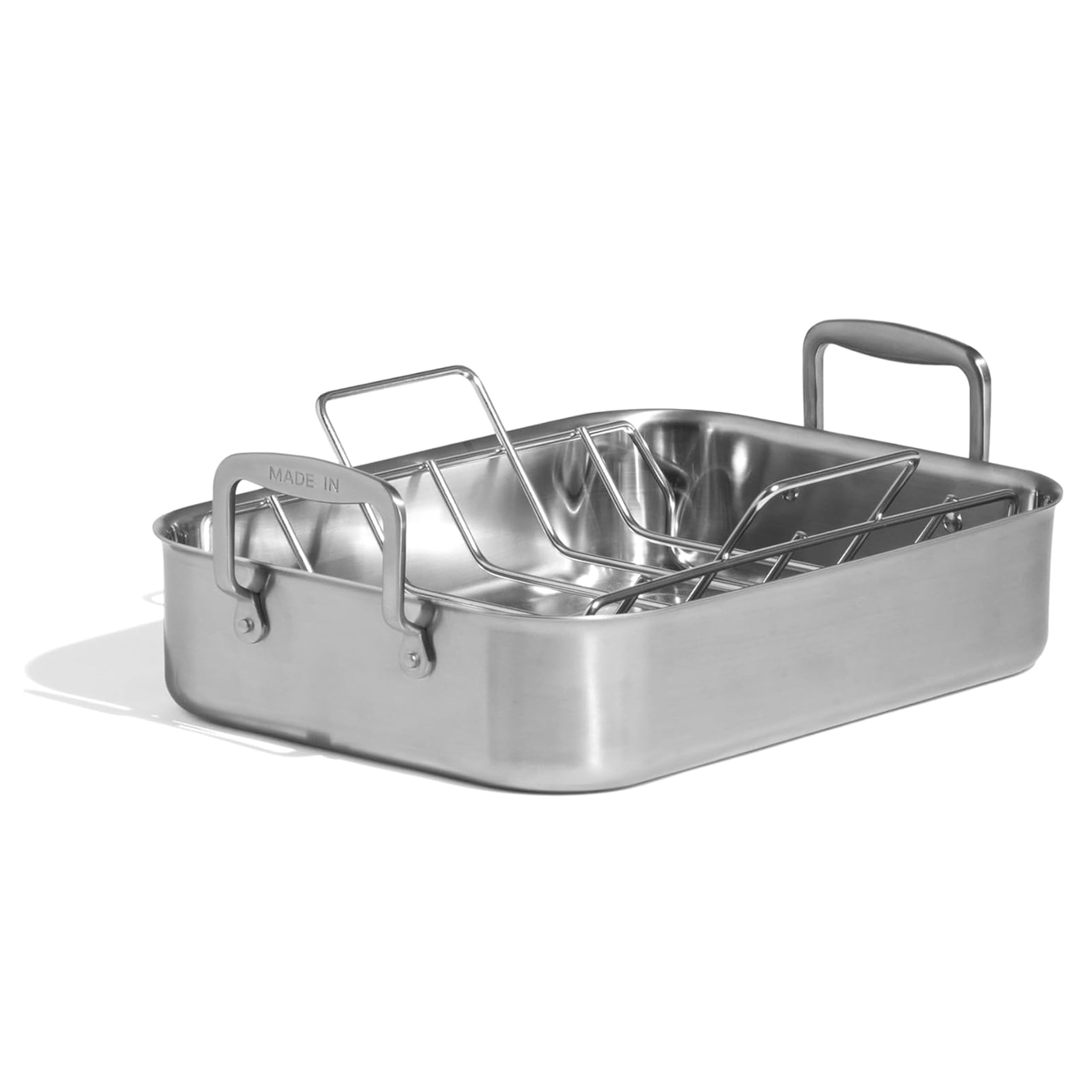
This is the roaster you choose when you want a professional-feeling tool that still works in a normal home kitchen. Made In designed this pan around two pain points home cooks quietly deal with: awkward oven fit and awkward movement. The vertical handle approach is the kind of detail that feels “small” until you live with it—then it feels obvious.
In practical terms, vertical handles mean you can often position the pan more comfortably on an oven rack without the handles bumping side walls or fighting the door. If you’ve ever tried to slide a long-handled roaster into a smaller oven while balancing a heavy bird, you already understand why this is a big deal. It’s also a gift when you need to cover the pan with foil—because you can seal the top cleanly without handles interrupting your wrap job.
What I love here is the balance of “serious build” and “movable.” Some roasters are so heavy that they feel like gym equipment. This pan is designed to be durable, but it’s also meant to be manageable when it’s full. That matters on the real day: when the bird is done, your oven is hot, your kitchen is crowded, and you need smooth movement without sloshing drippings everywhere.
The rack design also gets real love from owners. A good rack should do three things: keep the roast stable, keep airflow consistent, and lift cleanly without flexing. That’s especially important if you dry brine or air-dry poultry—because your crispy skin plan depends on steady airflow and a confident lift.
Why it stands out
- Oven-fit friendly handles – Vertical handles reduce “this pan is bigger than my oven” frustration.
- Built for real roasting workflows – Great for foil tenting, resting, moving, and deglazing without panic.
- Sturdy rack feel – Supports large roasts while keeping airflow consistent for browning.
- Non-reactive cooking surface – Useful when you build pan sauces with wine, citrus, or vinegar.
Good to know
- If you’re a “dishwasher every time” household, this one is better treated as a hand-wash pan for keeping it looking its best.
- The tall profile and professional geometry can take up storage space—plan where it will live.
- If you want a lid included, this is an open-roaster style; you’ll foil or choose a covered roaster instead.
Ideal for: cooks who want a pro-style roaster that fits real ovens and feels smart during the busiest parts of roasting day.
3. Viking 3-Ply Roaster (with Probe Thermometer) – The Shortcut to Calm, Accurate Doneness

If you’ve ever overcooked a roast because you were juggling sides, guests, and timing, you already know the truth: the hardest part of roasting isn’t seasoning—it’s hitting the finish line perfectly while everything else is happening. That’s what makes this Viking bundle so appealing: it pairs a serious 3-ply roasting pan with a built-in “confidence tool.”
The pan itself is designed like a classic, heavy-duty roaster: roomy, stable, and built to distribute heat evenly along the base and sides. That consistent heat matters for browning, but it also matters for drippings—because drippings that burn too quickly force you into rescue-mode gravy (adding liquid early, scraping aggressively, hoping bitterness doesn’t sneak in). A well-behaved pan lets you roast, then deglaze, then build sauce with control.
The nonstick rack is a practical win in real kitchens. People love stainless racks until they’ve scrubbed one for 15 minutes after a sticky roast. A nonstick rack reduces that pain, and the V shape supports birds and roasts in a stable way that encourages airflow. The result is not just better browning—it’s more predictable browning. Your skin crisps where it should; your underside doesn’t stew in liquid.
Now, the thermometer: think of it as an anxiety reducer. It helps you stop “panic-checking” the oven every five minutes. And that matters because every door-open moment drops heat and slows roasting. The calmer you are, the less you open the oven, and the more consistent your cook becomes.
Why you’ll love it
- Doneness confidence – The thermometer helps you stop guessing and start timing with calm.
- Strong, steady roasting behavior – 3-ply construction supports even browning and reliable drippings.
- Nonstick V-rack practicality – Helps with airflow and reduces rack-scrub misery after sticky roasts.
- Induction-capable versatility – Great if you like finishing gravy or sauce steps on the cooktop.
Good to know
- Some buyers report occasional shipping dents with heavyweight cookware—inspect on arrival and exchange if needed.
- Nonstick racks last longer when treated gently (avoid aggressive metal scraping on the rack surface).
- If you already own a fast, accurate thermometer, you may prefer the standard Viking roaster and keep your toolkit simple.
Ideal for: cooks who want a serious roaster and a smoother path to perfectly cooked turkey, prime rib, or pork roast—without second-guessing.
4. GreenPan Reserve Tri-Ply Roaster + Rack – Modern Looks, Real Performance, Easy Cleanup
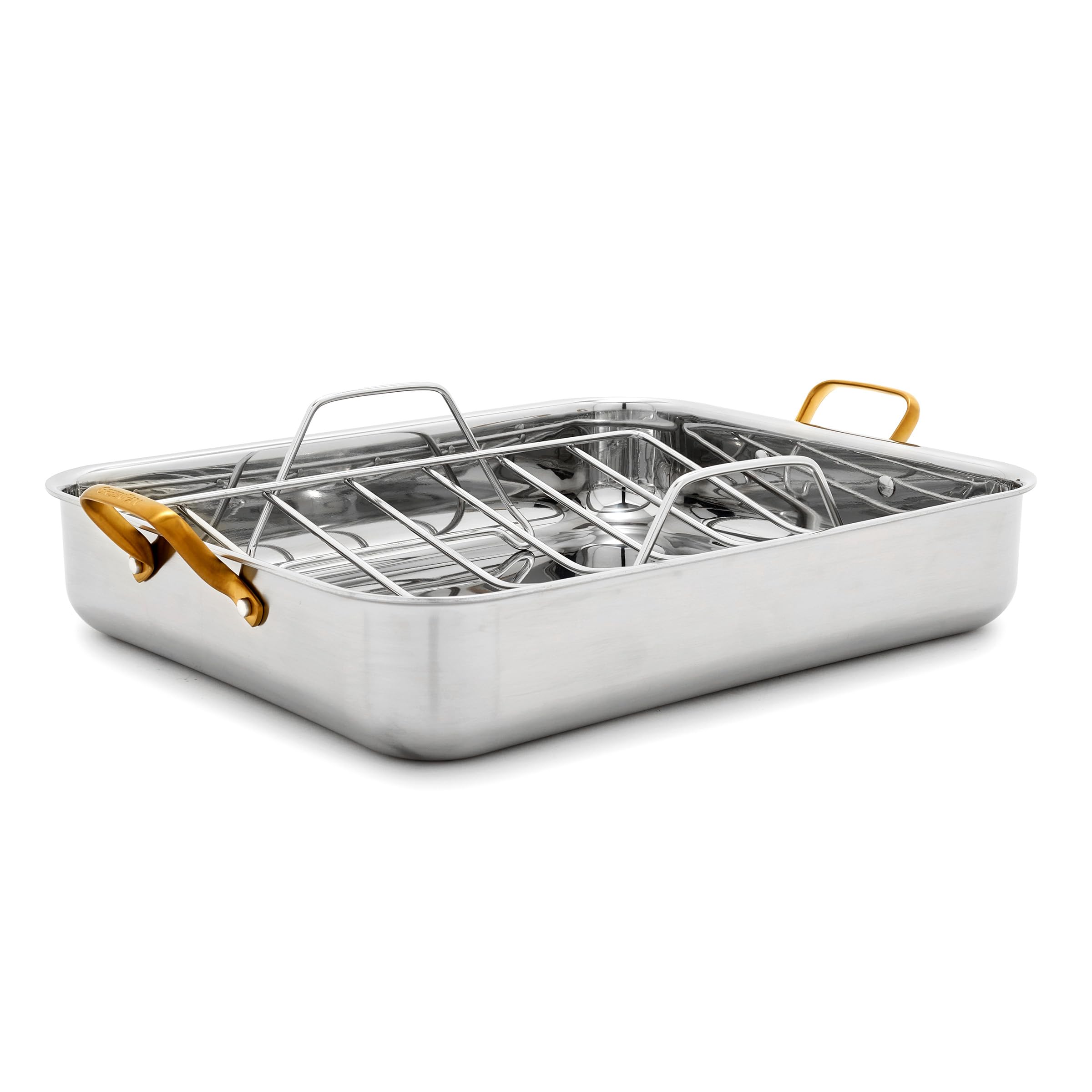
Some roasting pans are purely functional. Others feel like something you’d actually be proud to carry to the table. The GreenPan Reserve roaster lives in that sweet spot: it’s designed for performance (tri-ply heat response, high heat tolerance), but it also has a “modern kitchen” look that makes serving feel intentional, not improvised.
In real-world owner feedback, two themes show up again and again: it roasts well, and it cleans well. That second point matters more than people admit. A roaster can be amazing in the oven and still be a bad purchase if you dread washing it. This pan’s stainless build is made for the kind of cleanup that feels fair: soak, wipe, light scrub, done. And because the rack is stainless, you can treat it like a real tool—not something you’re afraid to ruin.
Performance-wise, tri-ply pans tend to behave predictably when you build sauce. That doesn’t mean you’re automatically making Michelin gravy—but it means you can deglaze without chasing burnt patches. That’s a huge advantage when you’re using wine, stock, or aromatics to build flavor right in the pan after roasting.
One honest note from owners: handle heat can vary depending on oven time and pan load. That’s not a dealbreaker—mitts exist—but it’s worth knowing so you don’t grab confidently like it’s a cool-touch skillet. If you treat the handles like “always hot,” you’ll never be surprised.
Why it’s a favorite
- Serve-worthy design – Looks great on the table, not just in the oven.
- Tri-ply response – Helps with even browning and smoother deglazing for gravy or pan sauce.
- Cleanup that feels fair – Owners consistently praise how easily it washes up with a simple soak.
- Sturdy rack included – Promotes airflow and lifts food out of drippings for better texture.
Good to know
- Plan on mitts—handles can run hot depending on use.
- Gold-tone hardware is beautiful but can show fingerprints; it’s a cosmetic trade-off for style.
- If you want a lid for braising-style roasts, choose a covered oval roaster instead of an open pan.
Ideal for: cooks who want a modern-looking roaster that performs like a serious piece of cookware and still cleans up without drama.
5. All-Clad Covered Oval Roaster (3-Piece) – The Lid Changes Everything (In a Good Way)

If you’ve ever built a foil “hat” over a roast because your pan didn’t come with a lid, you understand the appeal here. A covered roaster isn’t just about convenience—it changes the range of recipes you can do well. You can roast, you can hold moisture, and you can braise without having to switch cookware mid-recipe.
This All-Clad oval is built around that flexibility. The domed lid gives you vertical space for taller birds and roasts, and the rack helps keep food elevated so you still get airflow around the sides. Owners love that the lid isn’t an afterthought—it feels like part of the system, not a loose accessory that rattles.
Here’s the chef-style insight: a lid is best used as a tool, not a default. Covered roasting retains moisture and reduces splatter, which is fantastic for certain cuts (think ham, brisket, braise-leaning roasts). But if your goal is crackly, deeply browned skin, you’ll often roast uncovered for browning and only cover for part of the cook—or rest covered. This pan makes that kind of intentional control easy.
The other win is drippings management. Covered roasters often hold heat beautifully and help keep drippings from reducing too aggressively. That can protect you from bitter, burnt fond—especially if your oven runs hot or you roast low-and-slow for a long time.
Why it’s worth it
- Lid = more recipes – Roast, hold moisture, braise, and rest without foil engineering.
- Domed space – Helps with taller birds and big roasts while keeping heat circulation smooth.
- Solid rack system – Elevates food for airflow and cleaner drippings.
- Great for drippings – Helps keep juices usable for gravy and sauces.
Good to know
- Covered roasting can soften crisp skin if you stay covered too long—use the lid strategically.
- Oval pans store differently than rectangular ones; measure your cabinet space.
- If you mainly roast vegetables and want maximum browning, a lower-wall open roaster may suit you better.
Ideal for: cooks who want a lid for moisture control and versatility—especially for braise-friendly roasts and big holiday birds.
6. Cuisinart MultiClad Pro 16″ Roaster + Rack – Triple-Ply Heat That Makes Sauce Feel Easy

If your roasting day is secretly “gravy day,” this is the kind of pan that makes you feel capable. Fully clad / multi-ply style roasting pans are loved for a reason: they tend to heat more evenly and respond more predictably when you deglaze, reduce, and build sauce right in the pan.
That matters because gravy isn’t just drippings + flour. Great gravy is timing and heat control: you want to dissolve the browned bits (fond) into your liquid without scorching them. A pan with more even heat behavior gives you a better chance of staying in the “toasty, flavorful” zone instead of slipping into “burnt, bitter” territory. Even if you don’t make gravy every time, this matters for pan sauces, mushroom gravies, wine reductions, and finishing drippings into something glossy.
The included rack gives you that classic roasting setup: meat elevated, fat draining, air circulating. Owners also tend to appreciate the “no drama” maintenance: this is a stainless setup you can use hard and still clean without babying it. If you want a pan that feels like it belongs in regular rotation—not just holidays—this is one of the more convincing candidates.
Another practical win: this style of roaster often transitions well from oven to cooktop for quick finishing steps. If you deglaze immediately after roasting (before the drippings cool and glue themselves to the bottom), you’ll find cleanup becomes dramatically easier. It’s not a hack—it’s a workflow.
Why it’s a smart buy
- Gravy-friendly behavior – More even heat response helps you deglaze and reduce with control.
- Rack supports classic roasting – Promotes airflow and clean fat drainage for better texture.
- Great for regular use – Feels like a “real cookware piece,” not a once-a-year tray.
- Easy maintenance mindset – Built to clean up well with soaking and sensible scrubbing.
Good to know
- As with any roaster, measure handle-to-handle length so oven fit isn’t a surprise.
- If you want a lid included, this is an open pan; you’ll foil or choose a covered oval roaster.
- Like most stainless, it rewards good technique—deglaze, soak early, and it stays satisfying.
Ideal for: cooks who care about even roasting and gravy-making, and want a pan that feels like a long-term kitchen tool.
7. Concord Premium 12-Qt Roaster + Griddle Lid – Two Serious Pans, One Smart Purchase

This is the pan for the person who wants their cookware to earn its storage space. Yes, it’s a roaster—but it’s also a second pan, because the “lid” is not a flimsy cover. It’s a real shallow pan you can flip and use as a griddle-style cooker. In other words: you’re not buying one piece. You’re building a mini-system.
Owners talk about this roaster like it’s a “showpiece,” and that matches the experience. It’s shiny, substantial, and looks like something you’d bring to the table without apology. But what matters more is how it behaves when loaded: it holds large birds comfortably, the rack feels strong, and the depth makes it feel like it can handle ambitious meals without threatening to overflow.
Here’s the expert lens: deep roasters can either be a blessing or a browning blocker. Depth is fantastic for drippings, vegetables, and splatter control. But depth can also reduce airflow around the food if you crowd the pan. The solution is simple and very “chef”: keep the roast elevated on the rack, avoid overfilling with wet vegetables early, and if you want ultra-crisp skin, don’t be afraid to roast uncovered for browning and add liquid/veg later. This pan supports that strategy beautifully because it gives you so much room to work.
The flip-lid griddle function is the bonus that makes this feel like a smart value purchase—especially if you love multi-tasking: sear, pan fry, bake, roast, and even use it like a wide casserole vessel. Just remember: this is a big, heavy set. That heft is part of the quality, but it also means you should plan where you’ll store it.
Why it’s fun (and useful)
- Two-pan versatility – The lid is a usable pan, not just a cover.
- Big capacity confidence – Handles large roasts with room for vegetables and drippings.
- Strong rack feel – Helps keep food elevated and lift-out safer.
- Presentation factor – Looks like “heirloom cookware” on the table.
Good to know
- It’s large and heavy—great for performance, but it needs real storage space.
- Deep sides can encourage steaming if you overcrowd; use the rack and space food for airflow.
- Cleaning is easiest if you soak soon after cooking, especially around the rack and corners.
Ideal for: cooks who want a roaster that’s also a multi-use workhorse—especially if you like cookware that can do more than one job.
8. Misen 5-Ply Roasting Pan (13″) – Low Walls, Fast Browning, and “Sheet Pan Roasting” Done Right
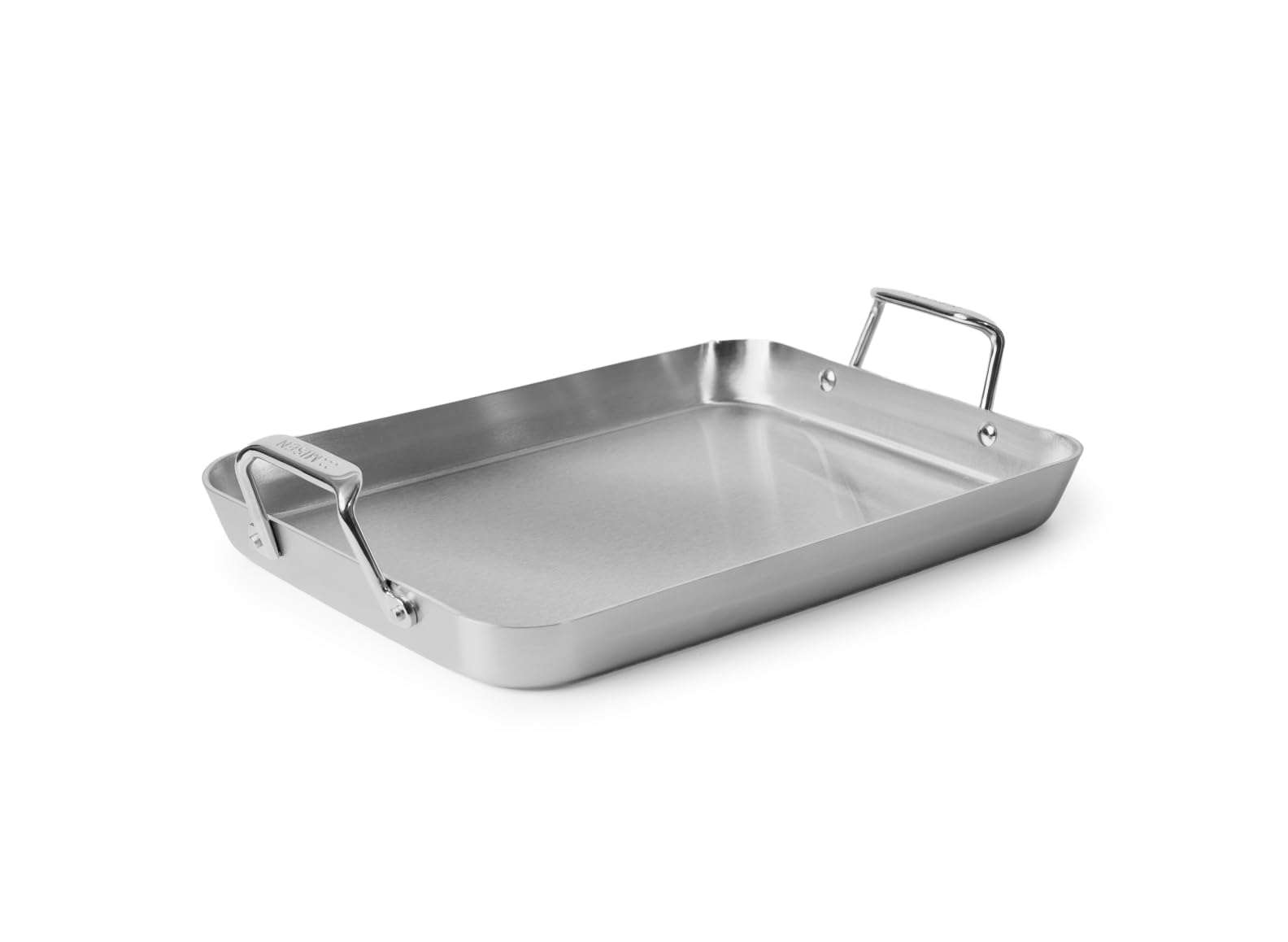
If your favorite roast results look like this—deep color, crisp edges, and vegetables that actually brown instead of steaming—this is your lane. The Misen roasting pan is designed with intentionally lower sidewalls, which encourages airflow in the oven. That airflow is the underrated key to browning. It’s why a shallow roasting setup often delivers more “restaurant-style” texture.
Owners love that this pan feels solid and well-built, and that it behaves more like high-end multi-ply cookware than a typical roasting tray. That matters because thick, multi-ply construction helps smooth out temperature swings and reduces “hot ring” behavior you can get with thinner metal. When you’re roasting at higher heat (or finishing hot for crisping), that stability helps your food brown more evenly.
This pan is also a joy for weeknight roasting. A whole chicken, thighs, vegetables, sausages, potatoes—this shape supports the kind of “one pan dinner” that makes you feel like you have your life together. And because the walls are low, you can turn vegetables, flip food, and stir drippings without reaching down into a deep well. It’s a small ergonomic difference that makes the pan feel fast and friendly.
The one trade-off is obvious: low walls mean less containment. If you roast something extremely fatty or you baste aggressively, splatter control is lower than in tall-sided roasters. And if you want huge volumes of gravy drippings, you may prefer a deeper pan. This is a browning-first roaster, not a “giant drippings bathtub.”
Why cooks love it
- Airflow for browning – Low walls help you get crisp edges and better roasting texture.
- Thick multi-ply feel – More stable heat behavior than thin trays.
- Weeknight friendly – Easy to turn vegetables and manage food without deep-pan awkwardness.
- Easy-grip handles – Designed to be grabbed confidently with mitts.
Good to know
- Low walls mean less splatter containment—especially with very fatty roasts.
- Some users note it isn’t perfectly flat for certain glass-top/induction situations; it’s an oven-first star.
- If you want a rack included, this is a pan-first design; pair with your preferred rack style if needed.
Ideal for: browning lovers, weeknight roasters, and cooks who want crisp results with a pan that feels like premium cookware.
9. Viking 3-Ply Roaster (Standard) – The “Serious Pan” for Big Birds and Big Heat

This is the Viking roaster for people who want one message from their cookware: “I can handle it.” It’s designed for large birds, high heat, and the kind of heavy roasting days where you don’t want to worry about stability. If you roast frequently and you like sturdy 3-ply cookware, this pan is meant to feel familiar and dependable.
The 3-ply construction is the star, because it supports even roasting and helps drippings behave. When drippings behave, gravy becomes easier, because you’re not scraping burnt sugar and fat off the bottom like you’re sanding a deck. Instead, you’re dissolving browned flavor into stock with control. That’s the difference between “gravy as a rescue mission” and “gravy as a victory lap.”
The nonstick rack keeps the workflow simple: elevate the roast, let fat drain, lift cleanly at the end. For a lot of home cooks, that’s the perfect rack strategy—especially if you roast sticky glazes, honeyed ham, or spice-heavy rubs. The rack is your “cleanup insurance.”
One thing I like about Viking’s handle approach is that it’s designed for grip and safe movement. That matters when the pan is full and the drippings are hot. If you’ve ever had a roaster feel slippery or awkward, you understand how much peace of mind a solid handle gives.
Why it earns loyalty
- True workhorse feel – Built for heavy roasting without wobble energy.
- Even roasting behavior – 3-ply construction supports consistent browning and usable drippings.
- Nonstick rack convenience – Less sticking, easier lift-out, faster cleanup.
- Stovetop-compatible versatility – Handy if you like finishing gravy in the pan.
Good to know
- Heavy-duty pans can occasionally arrive with cosmetic dings from shipping—inspect and exchange if needed.
- Nonstick racks prefer gentler tools; avoid aggressive scraping on the rack coating.
- If you want the thermometer included, the Viking “with thermometer” bundle may suit your style better.
Ideal for: induction households and frequent roasters who want a sturdy, high-heat pan with a straightforward rack system.
10. All-Clad Specialty 11×14 Roaster + Nonstick Rack – The Everyday Size That Still Feels Elite

Not everyone needs a “turkey trough” every day. In fact, a lot of people buy an oversized roaster and then avoid using it because it feels awkward for normal cooking. That’s exactly why this smaller All-Clad makes sense: it keeps the premium feel, the sturdy build, and the safe-handling design—without forcing you into maximum size.
For real life, this size is perfect for the things you roast most often: chickens, ducks, smaller turkeys, prime rib for a smaller gathering, pork loin, leg of lamb, and big trays of vegetables. The higher sides also help with splatter control and give you enough depth for drippings and aromatics. If you like roasting potatoes or carrots around a chicken, this shape feels practical.
The nonstick rack is a double-edged sword in the best way. On the upside, it reduces sticking and makes lift-out cleaner. On the “be aware” side, some cooks prefer fully stainless racks because they like scrubbing aggressively with steel tools when food is burnt on. If you’re gentle (soak, wipe, light scrub), nonstick racks are easy. If you’re the “attack it with a metal scraper” type, stainless-only racks match your personality better.
This pan also tends to reward good roasting workflow: preheat properly when needed, use the rack for airflow, and deglaze before everything cools into glue. Do that, and you’ll understand why people call a premium roaster “life-changing.” Not because it’s fancy—because it makes cooking feel smoother.
Why it’s so useful
- Perfect everyday footprint – Big enough for real meals, small enough to use often.
- High sides = control – Better splatter containment and more room for drippings and vegetables.
- Premium build quality – Designed to last and stay stable under heat.
- Rack included – A complete roasting setup without extra shopping.
Good to know
- The rack is nonstick; it cleans best with soaking rather than aggressive scraping.
- Polished stainless can show scratches over time—function remains excellent.
- If you routinely roast very large birds, you’ll want the larger All-Clad or a deep oval option instead.
Ideal for: cooks who want premium roasting behavior in a size that fits everyday life and smaller ovens comfortably.
11. Cuisinart Chef’s Classic 16″ Roaster + Rack – Simple, Familiar, and Surprisingly Capable

This is the type of roaster many households are looking for: the classic rectangular stainless pan with a sturdy rack and comfortable handles. It’s familiar, easy to understand, and it does exactly what most people need—roast a big bird, lift it cleanly, collect drippings, and clean up without drama.
Real owner feedback tends to cluster into two camps, and both are useful. One camp loves it for being sturdy enough for big holiday cooks, easy to pick up, and extremely easy to clean—especially because it’s dishwasher friendly. The other camp points out that oven fit can be tricky if you don’t account for handle-to-handle length, and some people expect a heavier, thicker feel. That’s the key: expectations. If you’re upgrading from disposable foil pans or a thin enamel roaster, this feels like a big improvement. If you’re expecting premium, “professional weight” stainless, you might want a clad or higher-end pan.
What I like about this pan is that it nails the basic workflow: the rack elevates meat, fat drains into the bottom, and you have the space to roast vegetables alongside. And because the pan is simple, it’s easier to learn. That matters for cooking results. The easiest pan to use is often the one that produces the best food—because you’re not fighting it.
If you choose this one, do one smart thing before the big day: test fit it in your oven. Slide it in, close the door, and make sure it sits comfortably. That single rehearsal prevents the worst roasting panic: discovering a “handle problem” when the bird is already seasoned and waiting.
Why it works for most people
- Classic roasting workflow – Straightforward pan + rack setup that’s easy to master.
- Easy cleanup – Dishwasher-friendly design reduces post-meal stress.
- Comfortable handles – Makes moving the pan feel safer (especially with a heavy roast).
- Great upgrade from disposable – A big step up in stability and presentation.
Good to know
- Measure handle-to-handle length; some ovens struggle with long handles.
- If you demand “premium weight,” consider a clad or higher-end roaster instead.
- As with all stainless, a quick soak after roasting makes cleanup dramatically easier.
Ideal for: households that want a simple, dependable stainless roaster that fits the classic “turkey + gravy + vegetables” routine.
12. Farberware Classic Traditions Roaster + Rack – Shiny, Straightforward, and Easy to Live With

If you want a straightforward roasting pan that looks good, handles big meals, and doesn’t demand a complicated learning curve, Farberware’s Classic Traditions roaster is a satisfying choice. Owners frequently describe it with words like “sturdy,” “durable,” and “easy to clean,” which is exactly what you want for a holiday tool.
The mirror-polished exterior is a vibe. It gives you that “serve it in the pan” confidence, especially when you’re doing a ham, a roast, or a bird for family. And the wide handles matter—because roasting pans rarely leave the oven empty. They leave the oven loaded with weight, hot liquid, and food that you care about. A handle you can grip confidently is safety.
Now, here’s the honest, cook-to-cook note: rack height matters. Some owners mention that the rack isn’t elevated extremely high. That’s not automatically bad—it can actually be helpful if you want the roast closer to aromatics or you’re roasting vegetables in drippings. But if your goal is maximum airflow under the bird for crisping, a higher V-rack tends to give stronger bottom-side browning. This is a “classic rack” approach, not an extreme lift.
In day-to-day use, this pan is most satisfying for people who want a dependable roaster without paying for premium engineering. You can roast a big meal, make drippings, soak while you eat, and clean up without feeling like you need special tools or special patience. That’s a win.
Why it’s a good pick
- Simple, dependable roasting – Does the job without fussy features.
- Nice presentation – Mirror finish looks great for serving.
- Comfortable wide handles – Easy to lift and move with mitts.
- Easy cleanup – Built for practical cleaning routines.
Good to know
- Rack elevation is moderate; if you want maximum lift and airflow, choose a V-rack-focused roaster.
- Polished finishes show scratches over time; that’s normal for stainless.
- If you roast extremely heavy birds often, you may prefer a heavier premium pan for extra “tank” feel.
Ideal for: occasional hosts and families who want a good-looking stainless roaster that’s easy to use, easy to clean, and dependable for holiday meals.
13. Amazon Basics 16″ Roaster + V-Rack – The “Wait… This Is Actually Solid” Upgrade

Here’s what makes this pan interesting: a lot of owners buy it with low expectations… and then get genuinely impressed. That kind of feedback matters, because it tells you the pan isn’t just “fine for the price”—it’s actually satisfying to use. People regularly describe it as thicker and sturdier than they expected, with handles that feel secure and a rack that supports real roasting.
For practical roasting, it checks the boxes most households care about: you get a large rectangular pan, a V-rack for airflow and fat drainage, and a stainless setup that can be cleaned without fear of chipping. If your current “roaster” is a disposable foil tray or a thin old pan that flexes when you lift it, this feels like an immediate quality-of-life upgrade.
The V-rack changes results. It keeps the roast elevated, which improves heat circulation and keeps the underside from stewing in drippings. That means better texture and cleaner drippings—drippings you can actually use for gravy without tasting bitterness. And because it’s stainless, you can soak and scrub as needed without feeling like you’re destroying a coating.
This is also a great “first real roaster” because it teaches good habits. When a pan is simple and functional, you focus on technique: salt, airflow, timing, resting, deglazing. That’s where great roasting comes from. And a pan like this doesn’t get in the way of learning.
Why it’s a steal (in practice)
- Sturdy feel for a value pick – Owners frequently mention it’s heavier-duty than expected.
- V-rack included – Improves airflow and keeps the underside from stewing in juices.
- Easy-to-clean stainless workflow – Soak + scrub without worrying about chipping coatings.
- Big roasting capacity – Handles standard holiday roasting needs comfortably.
Good to know
- Like many stainless pans, it benefits from a soak soon after roasting—dried drippings are harder on any pan.
- It’s a straightforward roaster, not a “system” with a lid or extra accessories.
- If you want premium-level handle ergonomics, the higher-end pans feel more refined in the hand.
Ideal for: cooks who want a durable stainless roaster without paying premium-tier prices—especially as a serious upgrade from disposable pans.
14. JY COOKMENT 22″ Oval Roaster + Rack + Lid – Big Capacity for Big Family Meals
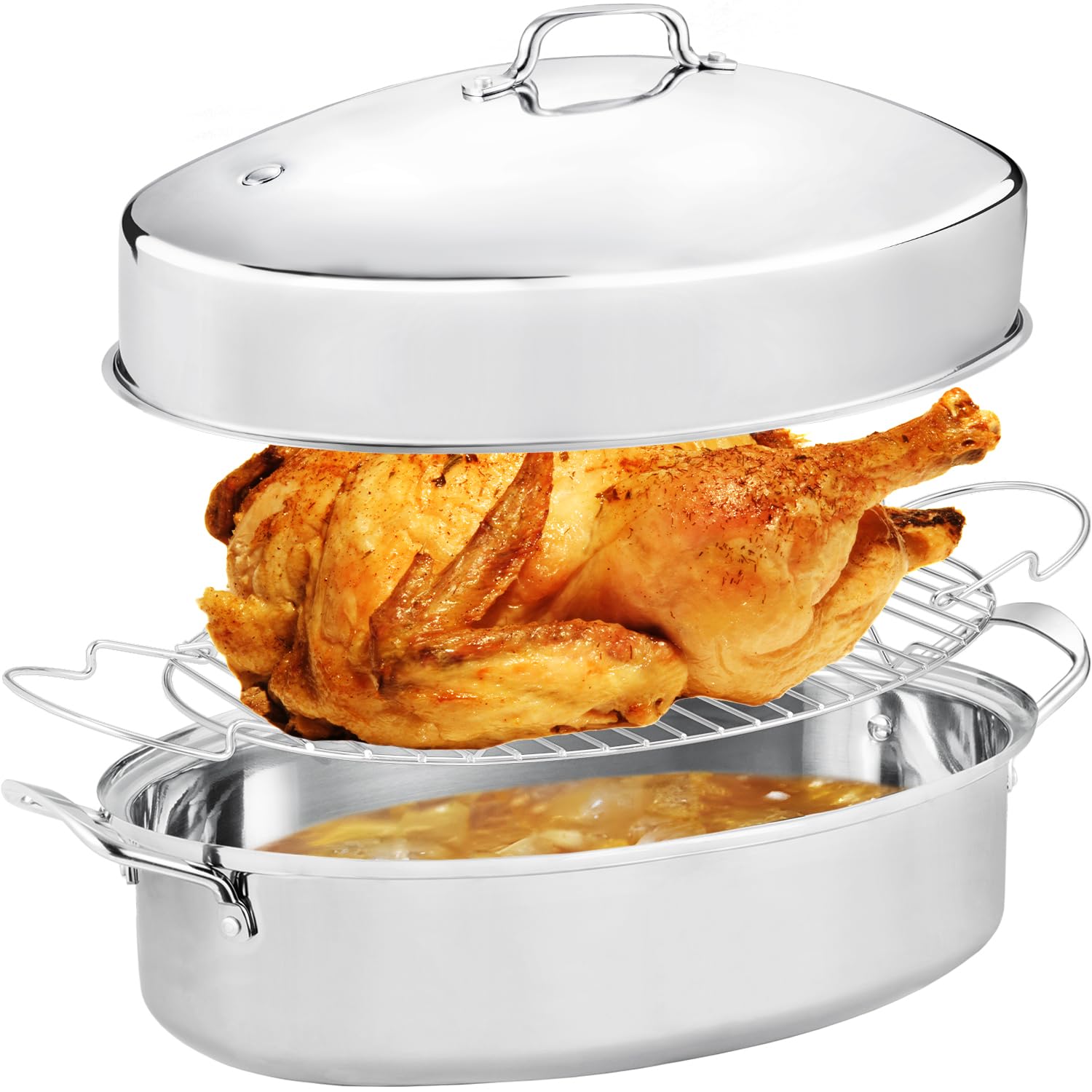
This is the roaster you consider when your main problem is not “how do I roast,” but “how do I fit the food.” If you routinely cook for a large group—or you buy larger birds and big briskets—an extra-large oval shape can be a lifesaver. The oval footprint can also be surprisingly oven-friendly because it uses space efficiently compared with some oversized rectangles.
The included lid changes the cooking options. You can hold moisture, reduce splatter, and use the roaster for braise-leaning cooks without building a foil tent. If you’ve ever wanted to start a roast covered for tenderness and then uncover for browning, a lid makes that workflow feel clean. And the rack helps keep food elevated so drippings can collect below rather than turning the underside soggy.
Now the honest part: extra-large pans can vary in “feel” depending on thickness and finishing. Some owners love the size and shine and feel it’s exactly what they needed; a few mention concerns like a thinner feel or a lid fit that isn’t perfectly tight. That doesn’t automatically mean it won’t perform, but it does mean you should treat it like a practical, size-first tool rather than a luxury heirloom pan. If you want the most “tank-like” build, premium brands tend to feel more overbuilt.
If you buy this one, the best way to use it is strategic: use the lid for moisture control, but don’t forget the browning step. Finish uncovered when you want crisp skin or a deeply browned exterior. And give yourself time for resting, because large roasts hold heat and keep cooking even after they leave the oven.
Why it’s useful
- Extra-large oval capacity – Built for big birds, briskets, and large family meals.
- Lid included – Supports covered roasting, resting, and braise-style cooking without foil.
- Rack included – Elevates food for better texture and cleaner drippings.
- Good “one-pan holiday” potential – Space for vegetables and drippings around a large roast.
Good to know
- Extra-large pans need storage space; plan where it will live.
- Some users report the lid fit can be less precise than premium covered roasters.
- If you want maximum browning, finish uncovered—covered roasting can soften crisp skin if used too long.
Ideal for: big families and big gatherings where capacity and a lid matter more than premium-brand refinement.
15. Cuisinart 14″ Lasagna Pan + Roasting Rack – The “One Pan, Many Meals” Workhorse

This is not the pan you buy for a huge turkey. It’s the pan you buy because you actually cook—and you want a piece that earns its keep weekly. It’s designed as a lasagna pan, but the included roasting rack turns it into a compact roaster for smaller cuts and everyday meals. For many kitchens, that’s more valuable than a giant once-a-year roaster.
Owners love this pan for two reasons: it feels sturdy and it cleans up well. That’s the whole game for a multi-purpose bake-and-roast pan. If it warps or stains badly, you’ll stop using it. If it stays solid and washes up easily, it becomes a default. This one tends to be the “default” pan for baked pasta, roasted vegetables, smaller roasts, and even kitchen experiments that would ruin flimsy bakeware.
The roasting rack is useful, but it’s important to set expectations. Because the pan is designed to be versatile and compact, rack height isn’t extreme. If you want a big lift and lots of clearance under a bird, a full-size roaster with a tall V-rack is better. But for chicken pieces, smaller roasts, fish, or elevating food slightly to keep it out of pooled fat, this rack does the job.
This is also a fantastic “small oven” solution. If you live in an apartment, have a compact wall oven, or just don’t want to store a huge pan, this size hits a sweet spot. You can still roast, still collect drippings, still get good results—without giving up half a cabinet to one piece of cookware.
Why it’s so practical
- True multi-use value – Lasagna, bakes, roasts, vegetables, and more in one sturdy pan.
- Compact footprint – Great for small ovens and kitchens with limited storage.
- Easy cleanup – Built for real-life washing without drama.
- Rack included – Lets you roast smaller cuts while keeping food elevated.
Good to know
- Not a “big turkey” pan—think everyday roasts and smaller gatherings.
- Rack height is moderate; it elevates, but it’s not a tall V-rack system.
- Mirror finish looks great, but like all polished stainless it can show scratches over time.
Ideal for: small households, smaller ovens, and anyone who wants one pan that can roast, bake, and serve without feeling like a single-purpose holiday tool.
Why Roasting Pan Design Changes Your Results (and Your Gravy)
Roasting isn’t complicated, but it is physics: heat movement, airflow, and moisture management. A great roaster helps you control those forces without thinking about them. A mediocre roaster forces you to compensate—by rotating constantly, adjusting heat, adding liquid too early, or scrubbing burnt drippings after.
What makes a roaster feel “chef-level” in real life
- Predictable heat behavior – Even heating reduces scorching and improves browning consistency.
- Airflow that matches your goal – Lower sides boost browning; higher sides boost containment and drippings volume.
- Rack stability – A rack that doesn’t flex makes the lift-out moment safe and confident.
- Handle ergonomics – Upright handles can make oven fit easier; wide handles make lifting safer with mitts.
- Drippings you can use – When drippings stay golden and the fond stays “toasty,” gravy becomes a joy.
If you’ve ever had drippings burn black, you know how it ruins the whole gravy plan. Better pans don’t magically cook for you—but they remove the common failure points so your technique actually gets rewarded.
Roasting workflow tips that make any good pan feel great
- Use the rack intentionally – Elevation = airflow = better texture. This is why V-racks are beloved for poultry.
- Don’t crowd wet vegetables early – Overcrowding turns your pan into a steam chamber. Add veg later if crisping matters.
- Deglaze while the pan is still warm – Warm drippings release more easily. It’s the easiest cleanup “hack” that’s actually technique.
- Rest like you mean it – Resting isn’t optional. It’s what keeps juices in the meat instead of on your cutting board.
- Soak while you eat – Hot water + soap in the pan while you’re at the table saves you from hardened drippings later.
Do these five things and you’ll feel like your roasting pan got “better.” It didn’t. You did. And the right pan makes that improvement obvious.
FAQ: Roasting Pans (Without the Confusing Stuff)
What size roasting pan do I actually need?
Do I need a rack, or can I roast without one?
Why do some roasting pans burn drippings?
Are covered roasters better than open roasters?
How do I clean stainless roasting pans without hating my life?
Polished vs. brushed stainless: does it matter?
What’s the biggest mistake people make when buying a roasting pan?
Final Thoughts: Buy the Roaster That Matches Your Real Cooking Life
A great roaster doesn’t just cook food. It makes you feel calm: the rack lifts cleanly, the handles feel safe, the drippings stay usable, and cleanup feels manageable. That’s the difference between “I survived the holiday” and “I actually enjoyed cooking.”
Here’s the simplest way to translate this guide into the right purchase:
- Want the best all-around premium roaster for big meals? Start with the All-Clad Specialty 16×13 Roaster + Rack. It’s the most balanced blend of safe handling, sturdy rack performance, and long-term reliability.
- Prefer a pro-style design that fits ovens cleanly? Choose the Made In Stainless Clad Roasting Pan for the vertical handles and professional workflow-friendly shape.
- Want “perfect doneness” confidence baked into your setup? Go with the Viking 3-Ply Roaster (with thermometer) to reduce guesswork on big roasting days.
- Need a lid for moisture control and braise-style flexibility? Pick the All-Clad Covered Oval Roaster so you can roast, rest, and braise without foil improvisation.
- Chasing maximum browning for weeknight roasts and vegetables? Look at the Misen 5-Ply Roasting Pan for the low-wall airflow that helps food crisp instead of steam.
- Want a dependable, classic stainless roaster without premium pricing? Consider the Cuisinart Chef’s Classic 16″ Roaster or the Farberware Classic Traditions Roaster for straightforward roasting that’s easy to live with.
- Need a budget-friendly stainless upgrade that still feels sturdy? The Amazon Basics 16″ Roaster + V-Rack is the “surprisingly solid” pick many owners end up loving.
- Want a compact pan that multitasks beyond roasting? The Cuisinart 14″ Lasagna Pan + Rack is a small-oven winner that roasts, bakes, and serves beautifully.
The best purchase is the one that makes your next roast feel calmer, safer, and more predictable. Choose the best stainless steel roasting pan for your real cooking life—your oven size, your gravy habits, your cleanup tolerance, and your hosting style—and you’ll feel the payoff every single time you open the oven door.
