
A carbon steel skillet can feel like a “secret level” of cooking… until the first time your eggs stick, your pan turns blotchy, and you start wondering if you just bought an expensive piece of stress.
If you’re here for the best carbon steel skillets, you don’t need another shallow list that repeats the same buzzwords (“heats fast,” “great sear,” “needs seasoning”) and calls it a day. You need the real stuff: what actually makes carbon steel feel effortless, what makes it feel fussy, and how to pick a pan that matches your stove, your habits, and your tolerance for maintenance.
This guide is built from the patterns that show up again and again in real owner feedback: the pans that “wipe clean” (and why), the ones that warp on glass-top stoves (and how to prevent it), the handles people love (or hate) after a month, and the little technique shifts that make carbon steel go from “all-stick pan” to “why did I ever buy nonstick?”
Below are 14 standout picks—classic skillets, high-sided “country” pans that behave like a half-wok, a two-pan set for building a kit, and one griddle + press combo for anyone who wants big, diner-style batches without a full outdoor flat-top.
In this article
- How to choose the right carbon steel pan for your stove and cooking style.
- Quick comparison table of 14 standout options.
- In-depth reviews of each pan, with pros and cons.
- How carbon steel “nonstick” really works (and the heat rule most people miss).
- FAQ: seasoning, cleaning, warping, acidic food, and daily use.
How to Choose the Best Carbon Steel Skillets for Your Cooking Style
Carbon steel isn’t magic cookware. It’s cookware that rewards good habits and punishes a few common ones. If you understand what the material wants—steady preheat, thin oil, dry storage—you’ll get a pan that sears like cast iron, responds like stainless, and gets more nonstick the longer you own it.
1. First, pick your “primary job” (this matters more than diameter)
Most regrets come from buying the wrong shape, not the wrong brand. Identify your main use case first:
- Weeknight searing & sauté: a classic 10–12 inch skillet with moderate sides is the easiest daily driver.
- Eggs + delicate breakfast rotation: a smaller, lighter pan (often 8–10 inch) is easier to heat gently and control.
- Stir-fry, shallow frying, splatter control: a high-sided “country” pan behaves like a skillet-wok hybrid.
- Big-batch family cooking: a 14–15 inch pan is glorious… if your burner can actually heat it evenly.
- Pancakes, smash burgers, bacon lines: a griddle shines when you want flat, wide, consistent contact.
2. Thickness is your warping insurance policy (especially on glass-top and induction)
Carbon steel heats fast. That’s the joy—and the trap. If the center of the pan gets hot while the edges lag behind (common on electric coils and some induction setups), the metal expands unevenly and can warp. Thin pans are more likely to do this, but thick pans aren’t invincible either if you shock them.
- If you cook on gas: you can “get away with” more. Flame wraps the pan and reduces the extreme center-hotspot effect.
- If you cook on electric glass-top: preheat slowly. Avoid blasting heat from cold. Avoid cold water in a ripping-hot pan.
- If you cook on induction: prioritize flatness and controlled heat ramps. Induction can jump to high output instantly—great for searing, risky for warping.
A simple test of a good buy is not “how nonstick is it on day one,” but “how stable is the base after a month of real life.” That’s why some “budget hero” pans earn loyal fans… and also earn one-star reviews from people who heat them like a race car.
3. Handle design decides whether you’ll actually use the pan daily
People obsess over steel thickness and ignore the part you touch. In real kitchens, the handle can be the difference between “I reach for this every day” and “this lives in the back.”
- Coated handles: often more comfortable, sometimes limited in oven use. Great for stovetop-first cooking.
- Stainless or welded steel handles: can go from stovetop to oven confidently, but often get hot and may need a grip.
- Wood handles: stay cooler, feel ergonomic, and can be a joy on the stove—usually not oven-friendly.
- Helper handles: a huge win on heavy, high-sided pans. If you’ve ever tried to pour pan sauce with one hand and regretted it, you understand why.
- Detachable handles: amazing for storage and camping, but you must be okay with a different “feel” (and you should inspect and care for the mechanism).
4. “Pre-seasoned” isn’t a guarantee—it’s a starting line
Some pre-seasoned pans arrive genuinely ready to cook. Others arrive with a factory layer that performs well for a week, then fades as you cook and clean. That doesn’t mean the pan is bad. It means you need the right expectations: carbon steel becomes truly “yours” once you build a thin, even patina through use.
Also: many carbon steel pans ship with a protective coating (wax or oil) to prevent rust. If you don’t remove it correctly, you can get flaking, stickiness, or weird patchy performance. The best move is to follow the manufacturer’s first-clean instructions, then do one solid seasoning cycle before you judge anything.
5. Heat control is the real nonstick “feature”
Carbon steel hates one thing more than anything: being treated like disposable nonstick. If you put food into a barely-warm pan, it clings. If you crank heat too high and scorch protein before it releases, it clings. If you let cooked-on residue build into a thin varnish layer, it clings.
But when you preheat patiently and cook at the right temperature, the pan becomes shockingly easy: a paper-towel wipe, maybe a quick hot-water rinse, dry on the burner, and a thin swipe of oil. That’s it.
6. Decide your “maintenance personality” honestly
There’s no shame in wanting easy. The trick is buying the kind of “easy” you’ll actually do.
- Minimalists: choose a pan that resists rust well, feels forgiving, and doesn’t demand perfect seasoning artistry.
- Food-obsessed cooks: choose a heavier, more “pro” pan that rewards you with incredible crust and control, even if it asks for more care.
- Household cooks: choose a pan that survives other people. (This is a real category.) In multi-person kitchens, simple routines win.
Quick Comparison: 14 Best Carbon Steel Skillets Worth Building Around
Use this table to shortlist the pans that match your stove and your habits, then jump to the in-depth reviews for the details you won’t get from a spec sheet—like which pans people call “effortless,” which ones demand slow preheat, and which handles become love-or-hate fast.
On smaller screens, swipe or scroll sideways to see the full table.
| Model | Pan style | Signature strength | Best match | Amazon |
|---|---|---|---|---|
| de Buyer MINERAL B Carbon Steel Fry Pan (12.25″) | Classic skillet | Iconic seasoning payoff + crisp sears with a huge community of tips and techniques | Most home cooks who want one “lifetime pan” to learn and love | Amazon |
| Made In Seasoned 10″ Blue Carbon Steel Frying Pan | Classic skillet | High-heat confidence + fast response for restaurant-style browning | Steak-and-veg cooks who want speed, control, and serious heat tolerance | Amazon |
| Viking Blue Carbon Steel Fry Pan Set (10″ & 12″) | 2-pan set | Build-your-kit value: small pan + big pan, same learning curve, more flexibility | Anyone who wants a smarter “starter set” instead of one pan that tries to do everything | Amazon |
| de Buyer MINERAL B Country Fry Pan (12.5″) | High-sided | Skillet-wok hybrid walls for stir-fry, shallow fry, and less stovetop splatter | Families who cook bigger, messier meals and want control without a full wok setup | Amazon |
| Matfer Bourgeat Black Carbon Steel Frying Pan (14″) | Pro workhorse | Rivetless, welded handle hygiene + big, serious searing surface | Confident cooks who want a restaurant-style pan that earns permanent stove space | Amazon |
| de Buyer MINERAL B Pro Country Fry Pan (12.5″) + Helper Handle | Oven-friendly | Deep walls + helper handle for confident lifting and oven-finishing | Serious home cooks who want one-pan meals, sear-to-oven workflow, and stability | Amazon |
| Misen Carbon Nonstick™ Frying Pan (8″) | Nitrided | Lower-maintenance “slick feel” without a coating—polarizing, but brilliant when matched well | Egg people and minimalists who want easier care than classic carbon steel | Amazon |
| Made In Carbon Steel Griddle + Grill Press | Griddle | Big-batch browning + smash-friendly surface for pancakes, burgers, and bacon lines | Weekend cooks with larger burners (or a bridge induction zone) who want “diner output” | Amazon |
| Lodge Pre-Seasoned Carbon Steel Skillet (15″) | Extra large | Huge cooking surface + outdoor versatility; legendary for hash, pancakes, and crowd meals | Gas-stove and grill owners who want one pan that can feed a group | Amazon |
| OXO Outdoor Pre-Seasoned Carbon Steel Frying Pan (12″) | Outdoor-ready | Detachable handle for packing + open-flame flexibility | Campers, grillers, small-storage kitchens that still want carbon steel performance | Amazon |
| Armorbear Nitrided Carbon Steel Frying Pan (12″) with Wooden Handle | Cool handle | Rust-resistant treatment + wood handle comfort for longer stovetop sessions | People who hate hot handles and want a forgiving, everyday skillet feel | Amazon |
| Lodge Pre-Seasoned Carbon Steel Skillet (10″) | Starter classic | Reliable, forgiving performance that improves fast with use | First-time carbon steel buyers who want a simple pan that “just works” | Amazon |
| Merten & Storck Pre-Seasoned Carbon Steel Frying Pan (12″) | Budget pick | Light, fast heating, and genuinely useful—best when you preheat patiently | Value shoppers who want a big pan and are willing to learn the heat routine | Amazon |
| Merten & Storck Pre-Seasoned Carbon Steel Frying Pan (10″) | Budget pick | Same easy entry point as the 12″, but easier to heat evenly and control | Small kitchens and everyday cooks who want carbon steel without the “big pan drama” | Amazon |
In‑Depth Reviews: 14 Carbon Steel Picks That Earn Their Place on the Stove
Now we go pan by pan. I’ll talk like a real cook with a real kitchen: what makes the pan feel easy, what makes it feel annoying, what patterns show up across owner feedback, and how to choose the one that matches your habits so you don’t end up “owning” a pan you never reach for.
1. de Buyer MINERAL B Carbon Steel Fry Pan (12.25″) – The Lifetime Classic That Teaches You the Right Habits

This is the pan that creates carbon steel converts. Not because it’s “perfect out of the box,” but because its payoff curve is incredibly satisfying: season it correctly, cook with smart heat, and you get a pan that browns meat like a steakhouse and releases eggs like a seasoned cast iron—without the cast iron lag. It’s the kind of skillet that makes you feel like your stove suddenly upgraded.
Here’s what experienced owners tend to love: the pan heats quickly, changes temperature faster than cast iron, and builds a natural nonstick patina that becomes more reliable the more you cook. People also repeatedly mention that cleanup feels almost suspicious once the patina is established—wipe, rinse, dry, tiny oil, done. The “maintenance” becomes less like a chore and more like a 30‑second closing ritual.
The trade-offs are honest and important. First: it will not look “pretty” in a stainless-steel way. Carbon steel goes from silver to brown to mottled to nearly black, and that is success, not failure. Second: if you’re the type who cooks tomato sauce in everything, this is not the pan for that job (acid can weaken seasoning). And third: if you treat it like disposable nonstick—high heat, cold food, metal scraping without technique—you’ll think it “doesn’t work.” It does work. It just demands a different rhythm.
Expert tip that saves people: don’t chase a thick, glossy seasoning layer. Chasing thick seasoning is how you get sticky spots. You want thin, repeated layers that build over time. Think “patina,” not “shellac.” Once you accept that, this pan becomes one of the easiest things you own.
Why it’s the best overall
- Massive learning payoff – once you “get it,” the pan gets easier every week instead of harder.
- Beautiful browning control – excellent crust development without the sluggishness of heavy cast iron.
- Community-proven – there are endless owner tips, routines, and troubleshooting tricks for this exact pan family.
- Versatile daily driver – sear, sauté, fry, and reheat with one tool that doesn’t feel fragile.
Good to know
- It’s not for simmering acidic sauces; keep stainless or enameled cookware for that.
- The appearance will change quickly—blotchy and dark is normal (and desirable).
- It rewards controlled preheat; rushing heat is how most “carbon steel is sticky” complaints are created.
Ideal for: home cooks who want one primary skillet that improves over time and delivers professional-style browning with natural nonstick performance.
2. Made In Seasoned 10″ Blue Carbon Steel Frying Pan – Fast, Precise, and Built for Serious Heat
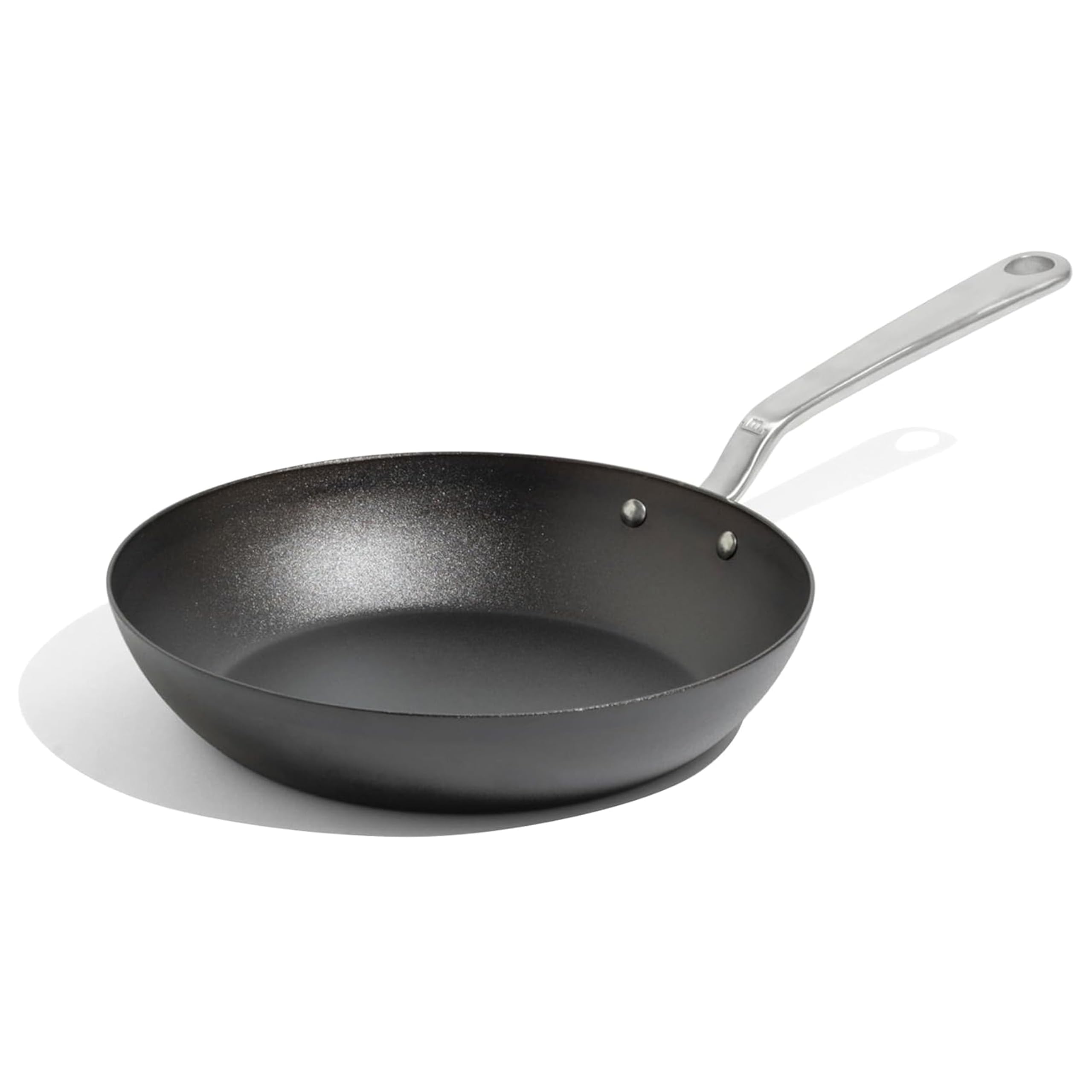
If your cooking style is “hot pan, fast food, big flavor,” this is a sharp tool. Made In’s blue carbon steel is built for responsive heat control, so you can ride the line between a hard sear and a gentle sauté without the pan feeling sluggish. Owners who love it talk about restaurant-style crusts, quick browning on proteins, and a surface that becomes dramatically slicker once you stop fighting it and start cooking with the right heat level.
The most valuable real-world detail from reviews isn’t about the metal—it’s about expectations. Several owners describe a “rocky start,” especially with eggs. That’s not a defect; it’s carbon steel being carbon steel. If your heat is too high on a gas burner, eggs weld themselves on. When owners dial the heat down to medium-low and use enough fat (butter + oil is a common combo), the pan can go from “scrub city” to “wipes clean with a paper towel.” That’s the moment carbon steel clicks.
One theme that shows up: pre-seasoned can be convenient, but it’s not a shortcut around technique. Some people adore the ready-to-cook feel. Others report the factory seasoning feels rough or uneven and needs time—or even a full reset if you want a smoother, more traditional patina. If you’re the kind of cook who wants the pan to feel perfect on day one, you might get impatient. If you’re willing to give it two weeks of smart cooking and light maintenance, this becomes a genuinely rewarding skillet.
Where it shines most: quick searing steaks (even small ribeyes), crisping vegetables, browning chicken, and building pan sauces quickly (as long as you don’t simmer acidic liquids forever). It’s a “do more with less time” pan, which is exactly why chefs love carbon steel.
Why cooks love it
- Speed + control – responds quickly to burner changes, making it easier to avoid scorching once you learn the pan.
- Serious sear performance – owners repeatedly praise crust quality on proteins and browning on vegetables.
- Comfort-forward handling – a 10″ size that stays agile, not “two-hands required” for most people.
- Long-term durability – designed to take heat and keep going; this is not a delicate pan.
Good to know
- Egg success depends heavily on heat discipline; “too hot” is the #1 early mistake.
- Some owners dislike the feel of the factory seasoning and prefer building their own patina.
- Cleaning is different: wipe, hot water, salt scrub if needed—soaking and “sink life” are not the vibe.
Ideal for: cooks who want fast, high-heat capability and are willing to learn the carbon steel rhythm for maximum payoff.
3. Viking Blue Carbon Steel Set (10″ & 12″) – The Smart Way to Build a Carbon Steel “Kit”
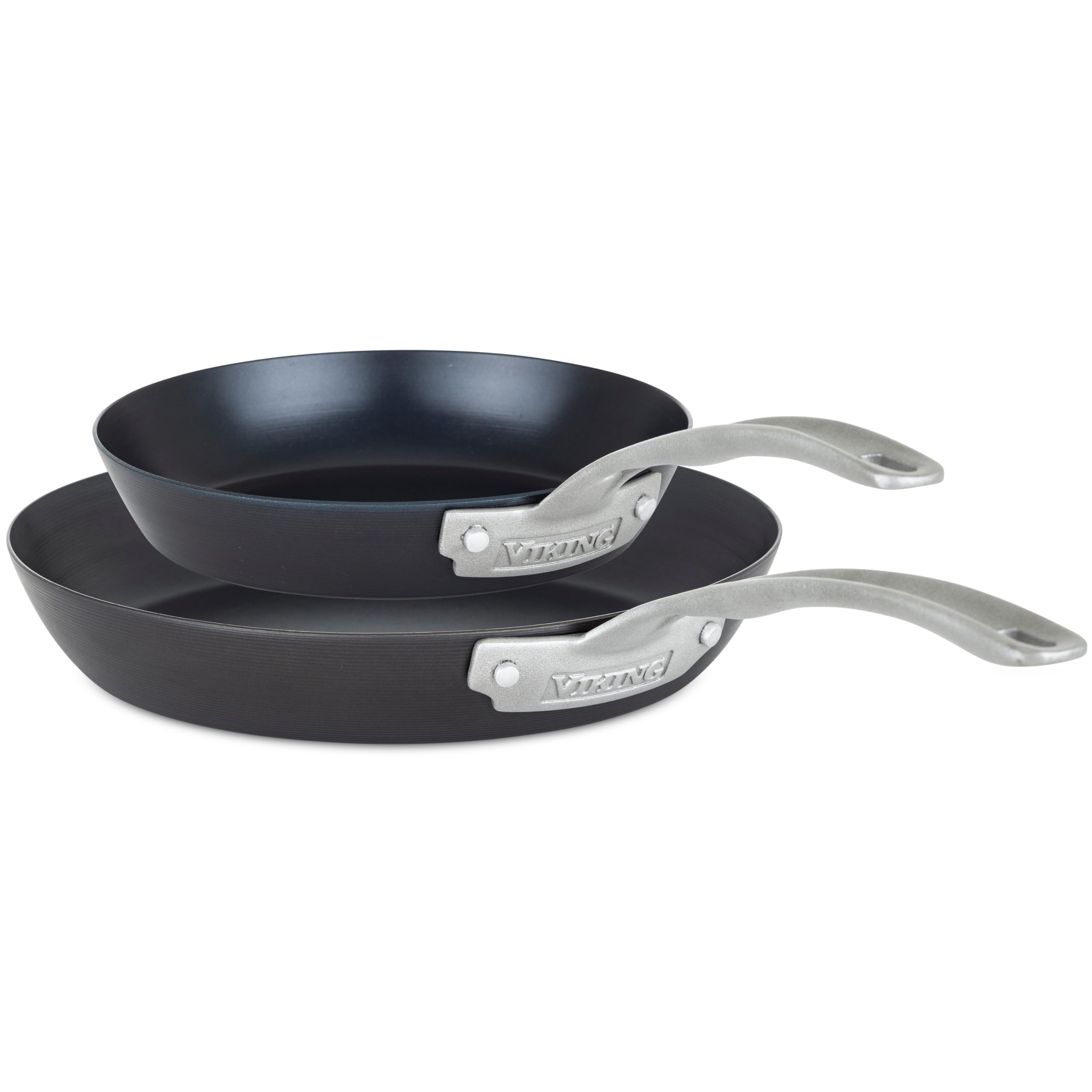
Here’s a simple truth that most buying guides skip: most people don’t need one “perfect” skillet. They need two skillets that make life easier—one smaller pan that heats evenly for breakfast and quick sautés, and one larger pan that can handle dinner without crowding.
That’s why this Viking set is so practical. A 10-inch pan is easier to control and less likely to develop uneven hot zones, especially if you’re still learning carbon steel. A 12-inch pan gives you space to sear multiple pieces of protein or caramelize onions without steaming them. When you own both, you stop forcing one pan into every job—and carbon steel suddenly feels “easy” because you’re using the right size tool.
Real-world feedback tends to split into two camps: cooks who treat these like cast iron (wash, dry thoroughly, micro-oil) love them and describe eggs, vegetables, grilled cheese, and quick proteins cooking beautifully. The frustrated camp often describes discoloration or rust—usually after air-drying or leaving moisture on the pan. That’s not a Viking-specific flaw; it’s carbon steel’s one hard rule: dry means dry. If you make drying a non-negotiable step (stove-dry is best), these pans behave.
One subtle advantage of a set is seasoning consistency. When you use the same oil, the same heat habits, and the same cleaning routine on two pans, you get predictable results. It’s easier to build muscle memory and easier to troubleshoot when something goes wrong.
Why this set works
- Two sizes, one learning curve – breakfast pan + dinner pan is a real-life upgrade, not a luxury.
- Fast, even heating when used right – owners often highlight how quickly the pans respond to heat changes.
- Great for induction setups – many users specifically mention enjoying them on induction burners.
- Encourages better technique – the smaller pan is more forgiving while you build seasoning confidence.
Good to know
- If you air-dry carbon steel, you’re inviting rust—stove-dry and oil lightly.
- Like all carbon steel, it won’t stay “pretty silver.” Patina is the goal.
- If you want zero maintenance, carbon steel may not be your material (but this set is still one of the easiest ways in).
Ideal for: anyone who wants a practical, everyday carbon steel setup with two useful sizes instead of one compromise pan.
4. de Buyer MINERAL B Country Fry Pan (12.5″) – The “Skillet-Wok” That Keeps Oil Where It Belongs

If classic skillets feel messy in your kitchen—oil pops, steam clouds, food piles up—this high-sided “country” shape can be a game changer. Think of it as the pan for people who love stir-fry, shallow frying, dumplings, chicken cutlets, potatoes, and anything that tends to splatter. The tall walls give you room to toss and turn without launching oil across your stovetop.
Owners who love this pan tend to describe the same transformation: it becomes the pan that lives on the stove. They use it for frying, sautéing larger volumes, and cooking water-heavy ingredients that would overwhelm a low-sided skillet. The walls also help with heat management because you can move food up the sides briefly if the base is running hot. That’s a small technique detail that matters a lot when you’re cooking for a family and juggling multiple components.
The most important honesty point: it’s a serious-cook pan. It rewards seasoning and routine. When treated well, it gets blacker and slicker and becomes ridiculously satisfying to cook with. When treated casually (wet storage, harsh scrubbing, long acidic simmers), the seasoning gets stripped and you’re back to “why is this sticking?” Also note: the long handle can feel like a lot, especially if you’re smaller or have limited wrist strength. It’s manageable, but it’s not dainty.
This pan is also a great “wok alternative” for people who want wok-like behavior without a round bottom. You get a stable flat base, easy induction compatibility, and high sides—all while still being able to do classic skillet work.
Why it’s special
- High walls reduce mess – less splatter, more control, easier bigger-batch cooking.
- Great for water-heavy foods – mushrooms, onions, frozen dumplings, stir-fry vegetables, and pan-fried proteins.
- Becomes deeply nonstick over time – owners love how the patina develops with frequent use.
- Heat management flexibility – the sides create a “cooler zone” you can use strategically mid-cook.
Good to know
- It’s heavy and long-handled; not everyone loves the leverage.
- Not the best fit for long acidic simmering; carbon steel prefers short contact with acids.
- Because of the depth, it’s not the quickest “flip an egg” breakfast pan for most people.
Ideal for: households that cook “big, messy, delicious” meals and want a pan that keeps splatter down while still delivering carbon steel browning.
5. Matfer Bourgeat Black Carbon Steel (14″) – The Rivetless Restaurant Workhorse for Big Searing Jobs

This is one of those pans that feels like it belongs in a professional kitchen—because it basically does. The defining feature is the welded handle (no rivets). That sounds like a small thing until you’ve owned carbon steel for a while: rivet areas can trap grime, and they’re the spots that stay annoyingly sticky if you don’t scrub carefully. A rivetless interior is simpler, cleaner, and more “wipe-and-go.”
Owners who love Matfer often describe it as taking seasoning “like a champion” and becoming impressively nonstick—sometimes even compared to coated nonstick. That kind of feedback usually comes from people who seasoned properly and cook with confidence: they preheat, they use thin oil layers, and they let protein release naturally. When you do that, carbon steel creates crust first, then releases. If you flip too early, it sticks. If you wait, it lets go. Matfer rewards that patience.
Now the honest part: a 14-inch carbon steel pan is not “light.” It’s typically lighter than the same-size cast iron beast, but it is still a serious slab of metal. If you’re leaving cast iron because you can’t lift it anymore, don’t assume this solves that problem. Many owners end up adding a silicone handle cover or using a towel grip because the handle will get hot during longer sessions. That’s not a flaw—it’s the reality of a professional-style steel handle.
What this pan does better than almost anything is space. When you don’t crowd food, you get browning instead of steaming. A big pan lets you sear multiple proteins, crisp potatoes properly, and caramelize onions faster because moisture can evaporate efficiently. If you cook for a family (or you meal prep), this matters more than brand name.
Why it’s a pro favorite
- Welded handle (no rivets) – cleaner cooking surface and easier “true wipe-clean” maintenance.
- Big-batch browning – the pan earns its size by preventing crowding and improving crust quality.
- Seasoning payoff is huge – many owners report excellent nonstick once the patina builds.
- High heat compatibility – great for searing, grilling, and oven finishing (when your setup allows it).
Good to know
- It’s heavy; you’re not one-hand flipping this pan unless you’re comfortable with the weight.
- Handles get hot; plan a grip or towel routine.
- The cooking surface can feel smaller than the rim diameter—measure your real “flat base” needs if burner size is limited.
Ideal for: confident cooks who want restaurant-style browning in bigger batches and prefer a rivetless pan interior for easier cleanup.
6. de Buyer MINERAL B Pro Country + Helper Handle – Deep, Heavy, and Built for One-Pan Meals

This is the “serious kitchen” version of the high-sided country pan. The helper handle changes everything on a deep, heavy skillet: you can lift confidently, pour without panic, and move from stove to oven without feeling like you’re wrestling a cannonball. If you’ve ever tried to pour pan juices from a heavy skillet and watched your wrist beg for mercy, the helper handle is not optional—it’s sanity.
Owners who love this pan talk about it like a lifetime tool. After a couple oven-seasoning cycles, it develops strong nonstick behavior and becomes a go-to for fried eggs, steaks, hash browns, and roasted vegetables. The high sides make it excellent for sautéing onions and peppers without losing pieces over the edge, and for “wet-ish” cooking where steam and splatter are part of the process. It’s also a fantastic pan for shallow frying because the walls help contain oil movement.
But there’s a detail that shows up in real feedback that you should take seriously: flatness matters, especially on induction. A pan that isn’t perfectly flat can cause oil to run to the edge, which makes seasoning the center more difficult and can create sticking in the hottest zone. That doesn’t mean you shouldn’t buy it—it means you should treat your setup honestly. If your induction cooktop is picky about contact, you want to heat gradually and avoid sudden maximum-power blasts. If you’re on gas, you’ll typically have fewer problems.
This pan is the right choice when you want a “do it all” deep skillet that can handle aggressive sears, then finish in the oven, then get wiped clean and stored. It’s not the right choice if your top priority is lightweight flipping or quick, casual breakfasts.
Why it’s worth it
- Helper handle control – safer lifting, easier pouring, and less wrist strain in real daily cooking.
- Deep walls for real meals – stir-fry, shallow fry, braise-adjacent cooking, and bigger volumes.
- Excellent sear-to-oven workflow – built for the classic “stove crust, oven finish” style.
- Built like a tank – long-term durability is a recurring owner theme.
Good to know
- It’s heavy—heavier than many people expect even if they’ve owned carbon steel before.
- Flatness and heat ramp matter more on induction; use gradual preheat to avoid frustration.
- Not a “quick rinse and forget” pan; it rewards a simple, consistent dry-and-oil habit.
Ideal for: serious home cooks who want one deep carbon steel pan that can go from stovetop to oven confidently and handle bigger, messier meals.
7. Misen Carbon Nonstick™ (8″) – The Polarizing “Easy Mode” Carbon Steel for Egg People
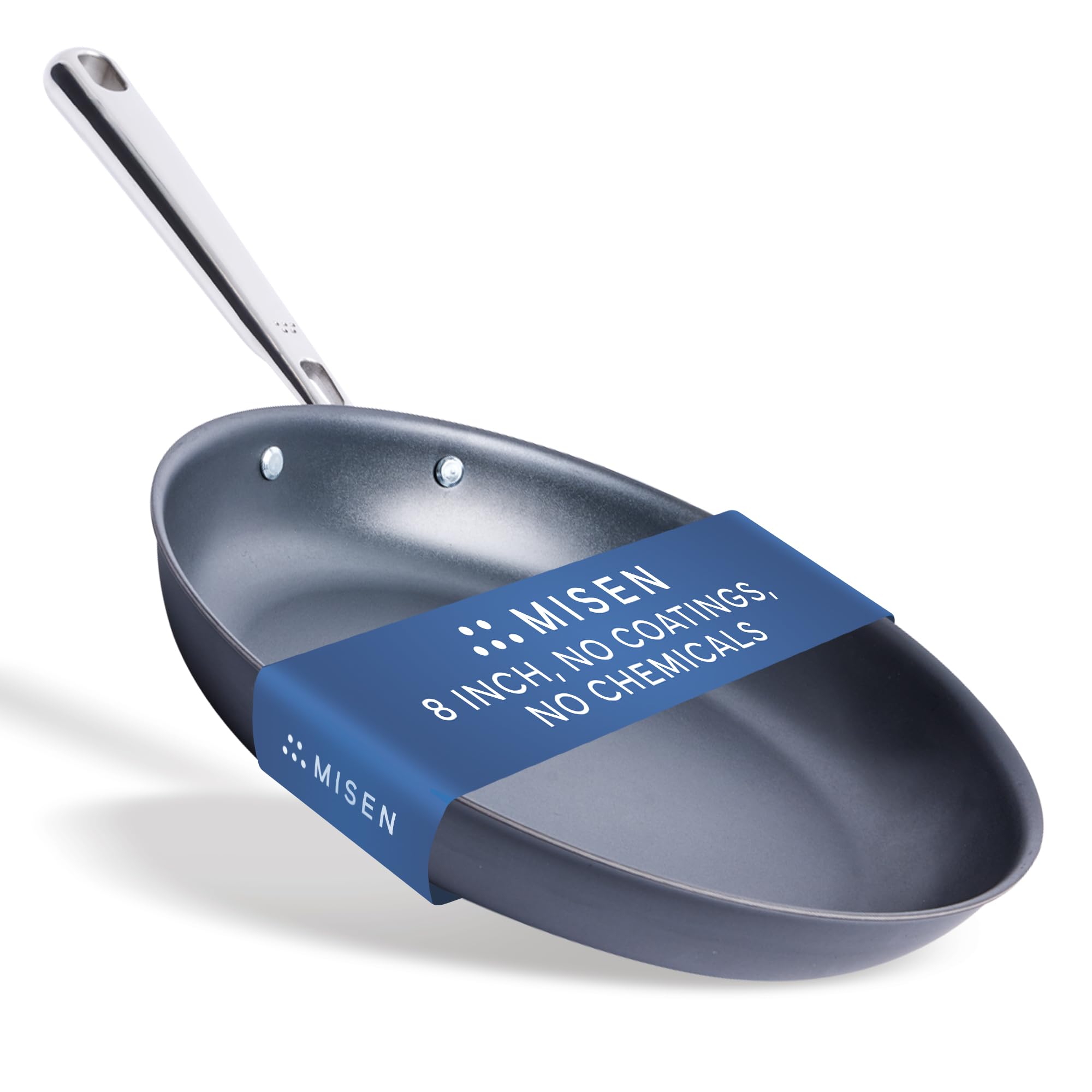
This is the pan for a very specific person: someone who wants the “no toxic coating” vibe of carbon steel, but doesn’t want to become a seasoning hobbyist. Misen’s Carbon Nonstick approach (nitrided carbon steel) is designed to feel slick sooner and resist rust more easily than classic carbon steel. When it works for someone, it becomes their “breakfast pan” immediately.
And you should know this up front: owner feedback is polarized. Some people are genuinely shocked by how nonstick it feels right out of the box. They describe food sliding out, easy cleanup with mild soap, and zero anxiety about rust. Others report the opposite—egg sticking, stubborn residue that never feels “fully clean,” and disappointment versus the marketing promise. That gap usually comes down to two things: heat and expectations.
Nitrided doesn’t mean “no oil.” It means “less fussy about seasoning.” If you cook eggs dry in a cold pan, you’ll still stick. If you overheat and scorch, you’ll still stick. But if you preheat on low-to-medium, add a small amount of fat, and let the protein set before moving it, this pan can be delightfully simple. The 8-inch size also matters: smaller pans heat more evenly and are easier to control, which is why so many people love them for eggs.
One expert detail that helps: don’t chase “screaming hot” with this pan for delicate foods. Save high heat for quick sears, and treat your egg-and-butter moments like gentle cooking. The pan will reward you with easy release and fast cleanup.
Why people buy it
- Lower maintenance than classic carbon steel – less rust anxiety and easier day-to-day cleanup when used correctly.
- Great “egg size” – 8″ is naturally easier to heat evenly, which helps nonstick performance.
- Feels slick early – many owners report impressive release without months of seasoning buildup.
- Built for real kitchens – a good choice if multiple people cook and you want fewer “rules.”
Good to know
- It’s polarizing; if you expect true Teflon-style behavior with no technique, you may be disappointed.
- Handle shape comfort is subjective; some owners wish for more grip texture.
- Still not dishwasher cookware; treat it as “easy hand wash” and it behaves better long-term.
Ideal for: egg lovers and minimalists who want carbon steel performance with a lower-maintenance feel and a smaller, easier-to-control pan size.
8. Made In Carbon Steel Griddle + Grill Press – When You Want Diner Output at Home
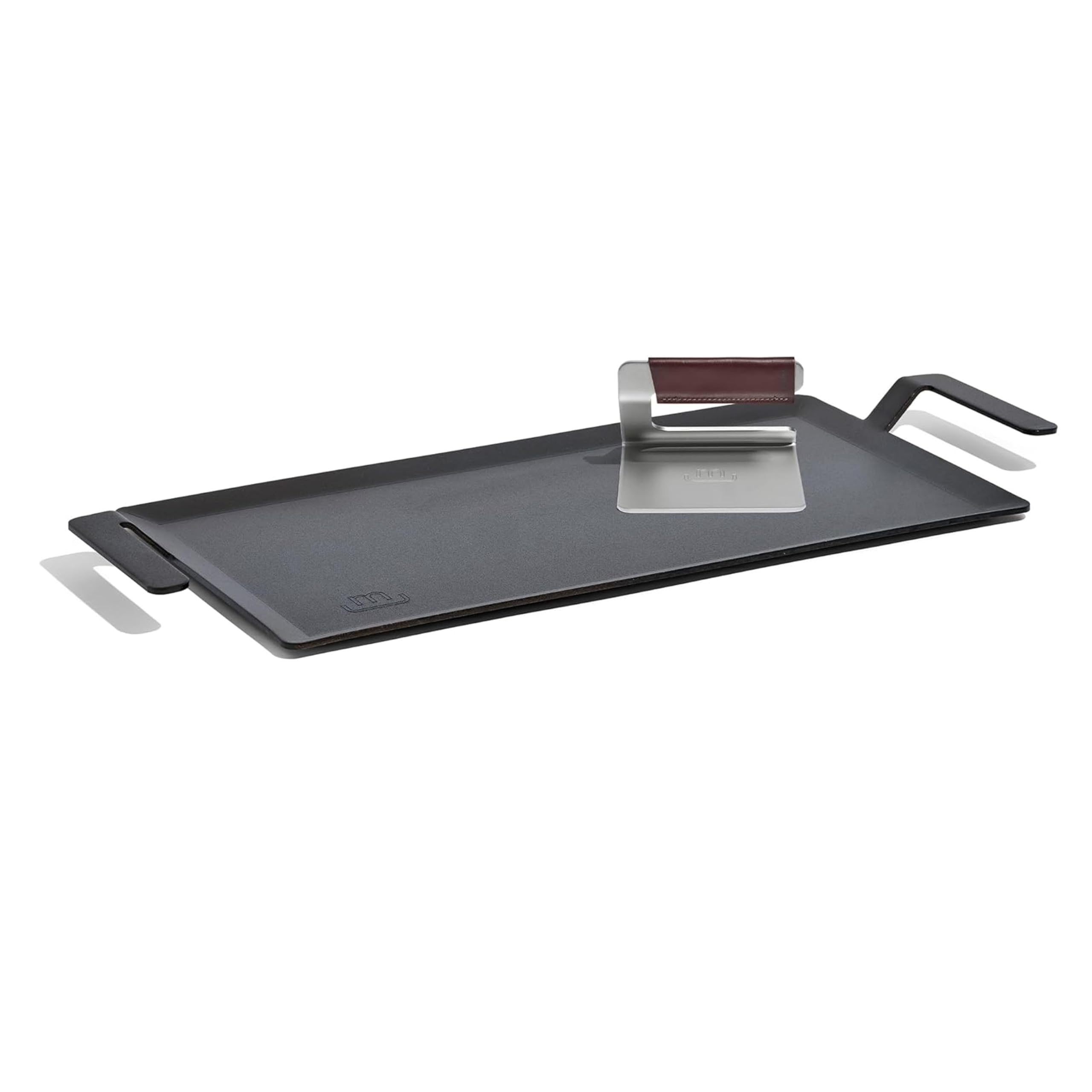
This one isn’t a skillet in the classic sense, but it belongs in this guide because it solves a very real problem: you want to cook a lot at once, and skillets bottleneck your output. If you’ve ever made pancakes in sad little batches, or tried to smash burgers in a pan that’s too small, you already understand the appeal of a griddle.
Owners who love this combo talk about it like an everyday staple: pancakes “en masse,” bacon lines, French toast, searing steaks, browning meat for big recipes, and even grill use. The press adds a different kind of value—more contact, better crust, faster browning, and less curling on proteins. If you cook smash burgers or want consistent bacon browning, a press changes the game.
The real-life caveat is your heat source. A large, flat slab of metal wants a large, even heat zone. If you have a big gas range with long burners, this can be glorious. If you have induction with a bridge function, it can still work very well. But if your induction coils create distinct hot zones, you may notice pattern heating. That’s not “bad,” it just means you’ll learn to rotate food positions like a short-order cook.
Also: it’s shallow. That’s perfect for pancakes, burgers, and bacon. It’s not perfect for grease-heavy batches if you’re careless, because grease can run and spill if you push food around aggressively. If you treat it like a griddle and not a roasting tray, it’s one of the most satisfying “make breakfast feel easy” upgrades you can buy.
Why it’s a powerhouse
- Massive capacity – reduces batch cooking and makes weekend breakfast dramatically faster.
- Press improves crust – better browning, better contact, better smash-burger results.
- Indoor + outdoor flexibility – works on stovetop and can be used on grills depending on your setup.
- Carbon steel patina payoff – becomes easier to clean and more nonstick the more you use it.
Good to know
- Performs best on larger heat sources; small burners can create hot spots.
- Shallow walls require mindful grease management on bacon-heavy sessions.
- Handles can feel “in the way” on some stoves depending on spacing and cookware layout.
Ideal for: high-output home cooks who want a griddle for pancakes, smash burgers, bacon, and big browning jobs—especially if your stove can heat it evenly.
9. Lodge Carbon Steel Skillet (15″) – The Crowd Cooker (Best on Gas and Grills)

A 15-inch carbon steel skillet is not subtle—and that’s the point. This is the pan for people who cook breakfast like a sport: hash browns + eggs in one pan, pancakes in proper batches, big fried rice, paella-style oven dishes, and “feed everyone now” cooking. Owners who love it talk about better flavor than coated nonstick and shockingly easy cleanup once the pan starts building seasoning.
The most important real-life factor is burner compatibility. Multiple owners describe the same pattern on glass-top stoves: the center gets hot, the edges lag behind, and you end up managing temperature zones manually. Some people love that (it’s like having a built-in warm zone). Others hate it because they want even heat across the entire surface. On gas stoves and grills, the pan tends to shine because the heat source is more forgiving and the skillet can heat more evenly.
Warping concerns show up in big pans more than small ones because big metal expands more. The solution is boring but effective: preheat on lower heat longer. Carbon steel doesn’t need high heat to “get going.” It needs consistent heat to avoid stress. If you treat it like a slow warm-up, this pan becomes extremely satisfying. If you treat it like “max power from cold,” you’re more likely to fight it.
This is also one of those pans that rewards outdoor cooking. Grill tops and camp setups often heat more broadly, and the pan becomes a portable flat-ish cook surface that can take abuse. If you’re a griller, this is a strong buy.
Why it’s beloved
- Massive capacity – cook entire meals in one pan without crowding.
- Great flavor – owners repeatedly mention better browning and taste than coated nonstick.
- Pre-seasoned entry – easier to start than raw carbon steel for many people.
- Outdoor versatility – excellent on grills and high-heat outdoor setups.
Good to know
- Needs a large burner (or patient heat management) to heat evenly across the full surface.
- Big pans can warp if heated aggressively; slow preheat is your friend.
- Not a “quick flip” pan; this is a two-hand tool for most people.
Ideal for: families, entertainers, and outdoor cooks who want one huge pan for breakfast spreads and big-batch browning—especially on gas or grills.
10. OXO Outdoor Carbon Steel (12″) – Detachable Handle Convenience for Packs, Cabinets, and Coals
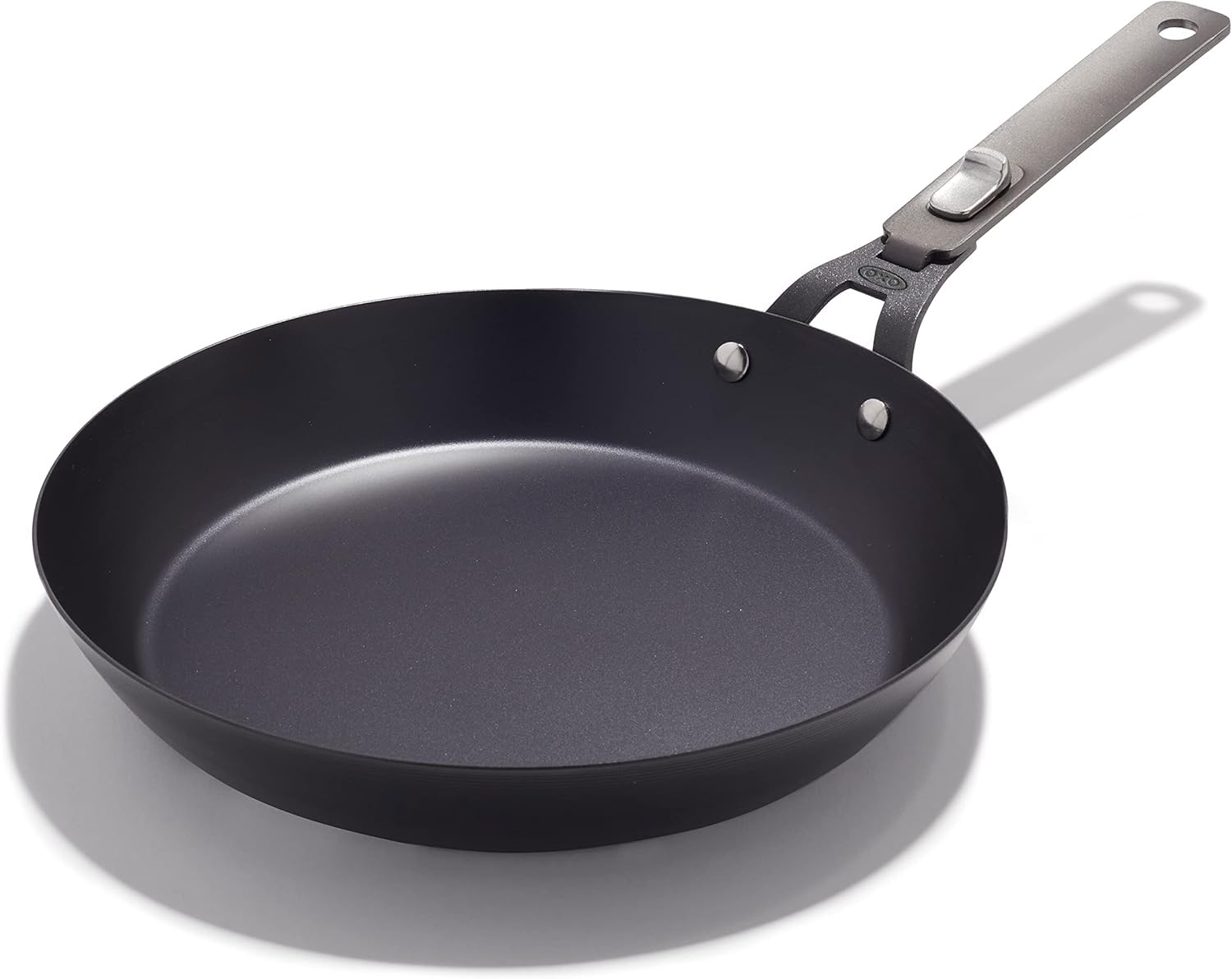
This pan is designed for a specific lifestyle: cooking where storage, packing, and open flame are part of the plan. The detachable handle is not a gimmick—when you’re packing a camp bin, a small car, a college kitchen, or a tiny apartment cabinet, a full-length handle is often the reason a pan becomes annoying to store.
Owners who love it praise the same combination: fast heating, surprisingly strong early nonstick performance, and easy cleanup without chemical coatings. A lot of carbon steel fans also mention that thin carbon steel makes sense for outdoor cooking: it responds quickly, it’s lighter than cast iron, and it can handle direct heat. If you’ve cooked over coals, you know why that matters—control is different outside, and responsive metal helps.
Now the honest reality: detachable handles feel different than welded or riveted handles. Some users call the handle “a little wobbly,” which is expected in many clip-on designs. Others report durability problems (springs or parts failing). That doesn’t mean everyone will have issues, but it does mean you should evaluate it based on your needs: if you require a rock-solid handle for grip-strength reasons or mobility limitations, a fixed handle may be safer and less frustrating. If you plan to cook without the handle attached (common for grill and open-flame use), the removable system becomes a big advantage.
For indoor use, this pan can absolutely work, but it’s best for people who value storage convenience and occasional outdoor cooking more than “perfectly traditional skillet feel.” If you love the concept, it’s a clever and genuinely useful design.
Why it’s a great niche pick
- Detachable handle storage – packs and stores dramatically easier than most 12″ skillets.
- Outdoor-friendly performance – carbon steel is a natural match for grills and camp cooking.
- Fast heating – excellent for quick sears, bacon, and outdoor breakfast cooking.
- Nonstick without coatings – owners love the “slick enough” feel once the patina builds.
Good to know
- Detachable handles can feel slightly loose compared to fixed handles; that’s the design trade-off.
- Some users report handle mechanism failures—inspect and maintain the handle system as part of ownership.
- Not the best choice if you want a “forever fixed-handle skillet” experience.
Ideal for: campers, small-space kitchens, and anyone who wants carbon steel performance with easy packing and storage.
11. Armorbear Nitrided Carbon Steel (12″) – Rust Defense + A Handle That Stays Comfortable
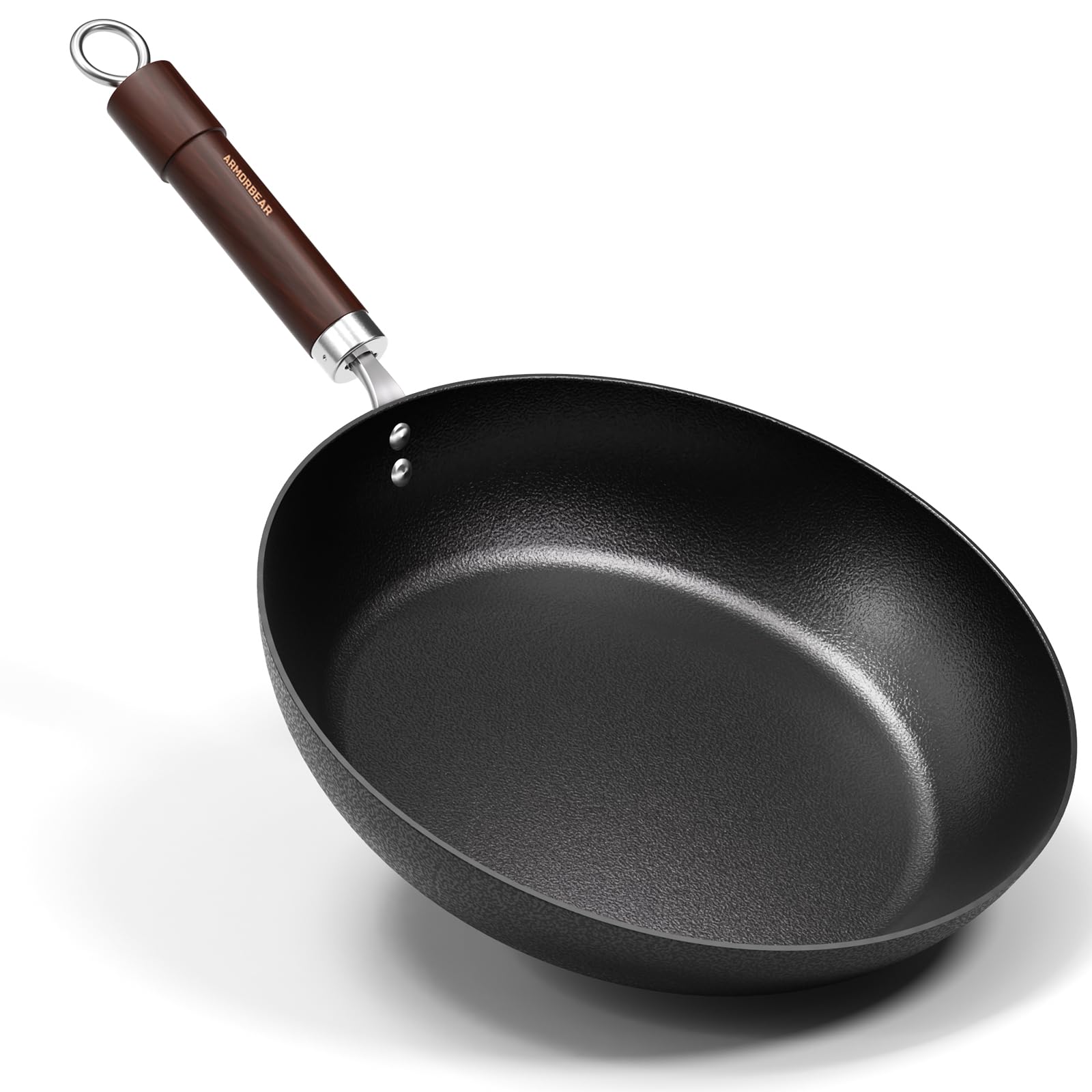
This pan is appealing for a very practical reason: many people love carbon steel performance but hate hot handles. A wood handle changes the daily experience. You can cook longer without constantly reaching for a mitt, and you get more confidence moving food around because your grip feels natural and comfortable.
Owners describe it as solid but lighter than cast iron, with early nonstick performance that improves as you cook. The nitrided treatment is a big part of the pitch: it’s designed to create a tougher, more rust-resistant surface so the pan feels less fragile. For many households, that’s exactly what they need—carbon steel benefits without the constant “did I dry it enough?” anxiety. Several reviews also highlight that it arrives ready to cook with clear instructions, which matters because carbon steel confusion is real.
The main trade-off is straightforward: wood handles are typically stovetop-first tools. If your style is “sear then roast,” you’ll likely prefer a stainless handle pan for full oven flexibility. But if your style is “stovetop meals all week”—eggs, chicken, vegetables, quick stir-fries—this is a comfortable daily driver.
One expert detail: treat this pan like a long-term relationship, not a first date. The first few cooks are where you build your base layer. Use medium heat, use enough fat, and clean with hot water + gentle scrub, then dry and wipe a thin oil layer. Do that, and the pan gets slicker and more forgiving.
Why it’s a smart buy
- Comfort-first handle – wood stays cooler and reduces “mitt dependency” in daily cooking.
- Rust resistance mindset – nitrided treatment can feel more forgiving for new carbon steel owners.
- Great everyday size – 12″ is a sweet spot for dinner without the “giant pan” heating issues.
- Clear onboarding – owners praise simple instructions and early cooking success.
Good to know
- Wood handles typically limit oven use; choose stainless handle models if oven-finishing is your routine.
- Still hand-wash and dry—nitrided helps, but moisture neglect can still cause problems long-term.
- “Nonstick” improves with use; don’t judge it based on one egg in week one.
Ideal for: stovetop-heavy cooks who want a comfortable, cooler-grip experience and a more forgiving approach to carbon steel care.
12. Lodge Carbon Steel Skillet (10″) – The “It Just Works” Starter That Builds Confidence Fast

For many households, the best carbon steel pan is the one that gets used constantly—because constant use is how carbon steel becomes nonstick. That’s what makes this Lodge 10-inch such a strong “starter” pick. Owners rave about reliability: season it, cook with it, wipe it down, and it keeps doing its job without drama.
The real-life stories are exactly what you want from your first carbon steel: people talk about ditching scratched nonstick, loving that they can use metal utensils without fear, and appreciating that overheating isn’t a chemical-fume emergency the way it can be with coated nonstick. They also describe the “carbon steel victory” moment: you accidentally overheat, the pan smokes, you oil-wipe, and you’re back in business. That resilience builds confidence, and confidence builds correct technique.
This pan also teaches the best carbon steel habit: preheat slowly. Owners who take five minutes to warm the pan gently report better nonstick behavior and fewer issues with sticking. People who treat it like a thin nonstick skillet (cold pan + food + high heat) are the ones who get frustrated. Once you learn the right heat rhythm, eggs become easy, onions caramelize beautifully, and cleanup becomes almost laughably simple.
A 10-inch size is also easier to heat evenly across stove types. If you cook on electric or induction and want to avoid the warping risks of larger pans, starting with 10 inches is a smart, low-stress move.
Why it’s a classic
- Forgiving entry point – pre-seasoned and easy to learn without feeling “precious.”
- Great for eggs and daily cooking – owners consistently report reliable release once the pan is broken in.
- Durable and resilient – handles heat and metal tools without the fragility of coated nonstick.
- Size is practical – 10″ is easier to heat evenly and easier to store than giant skillets.
Good to know
- Carbon steel needs dry storage; don’t leave it wet or air-dry if rust scares you.
- Acidic cooking is not its main strength; keep stainless for tomato-heavy meals.
- Like all carbon steel, it will darken and change—don’t chase “new pan looks.”
Ideal for: first-time carbon steel buyers who want an easy, confidence-building pan that becomes a true daily driver.
13. Merten & Storck Pre-Seasoned (12″) – Lightweight Speed with a Real Learning Curve (in a Good Way)

This pan has a loyal fanbase because it hits the “why people want carbon steel” benefits without demanding a luxury budget: it’s lighter than cast iron, heats quickly, and can develop excellent natural nonstick behavior when cared for properly. Owners who know cast iron often describe carbon steel as the easier daily driver—and this pan is a common entry point into that world.
The most helpful owner insights are all about technique. First: many people emphasize cleaning off the protective layer correctly before first use. If you skip that step, you can get flaking or confusing performance that feels like “the pan is falling apart.” Second: people discover (sometimes the hard way) that acidic cooking can strip seasoning. That’s not a disaster—it just means you reseason. Third: heat control matters more on lighter pans. They respond fast, which is great, but they also punish sudden high heat more than thicker pans.
One of the smartest “real kitchen” tips that shows up in feedback is a cleaning and performance reset routine: when the pan starts feeling sticky, do a vigorous hot-water deglaze right after cooking while the pan is still hot (think: splash of hot water, quick boil, loosen residue), then wipe clean, dry on heat, and oil lightly. This removes thin invisible residue layers that normal scrubbing can miss. Many owners report that doing this makes the pan feel dramatically more nonstick at the next cook—like you “seasoned it again” without a full seasoning session.
The honest trade-off: lighter pans can warp more easily, especially on glass-top stoves. If your cooking surface is flat electric, heat gradually. If you’re on gas, you’ll likely love how quickly it responds.
Why it’s a great value
- Lightweight agility – easier handling than cast iron while still delivering strong browning.
- Fast heat response – great for quick meals and fast temperature adjustments.
- Nonstick improves with use – owners often report impressive patina development with consistent care.
- Versatile cooking – works for searing, frying, and outdoor cooking when you treat it right.
Good to know
- Lighter steel can warp if heated aggressively; slow preheat is important on glass-top stoves.
- Acidic foods can strip seasoning—plan to use stainless for long tomato or vinegar cooking.
- Requires dry storage and light oiling habits for best results.
Ideal for: value shoppers who want a lightweight 12″ carbon steel pan and are willing to learn the simple routine that makes it shine.
14. Merten & Storck Pre-Seasoned (10″) – The Easiest Size to Heat Evenly (and Love Daily)
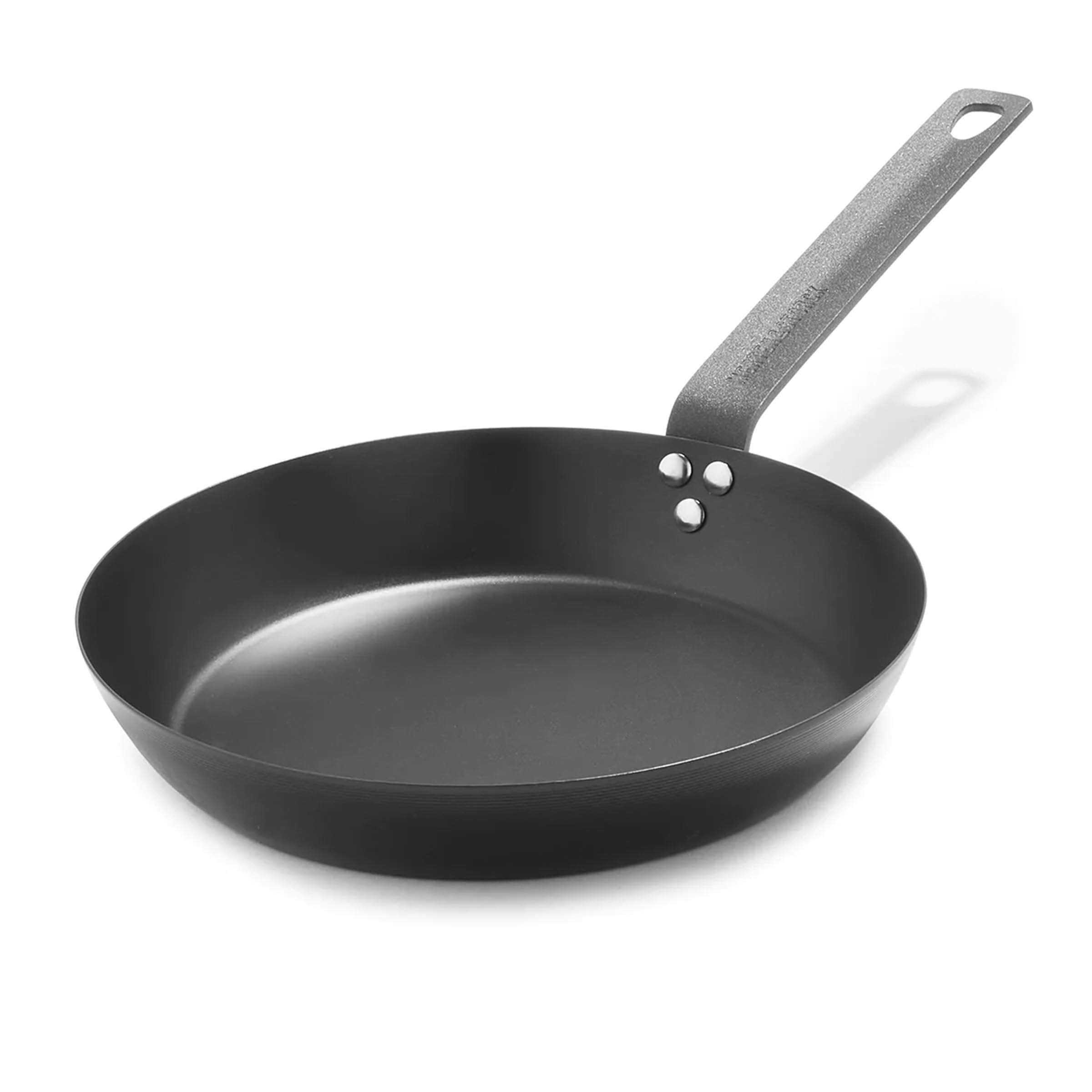
If you want the simplest way to enjoy carbon steel without fighting your stove, the 10-inch size is a smart move. Smaller pans heat more evenly, especially on electric and induction, and that one factor reduces the most common carbon steel frustrations: hot spots, sticking, and warping drama.
Because it’s pre-seasoned, many owners report strong early results—especially for vegetables, fish, and quick proteins. And because it’s lighter, it encourages the kind of daily use that builds patina fast. The more frequently you cook, the better carbon steel behaves. A 10-inch pan is also the one you’ll reach for when you’re cooking “just enough” and don’t want to haul out a big skillet. That convenience is how you build seasoning naturally: repetition.
The same key rules apply: remove any protective coating correctly at first, use medium heat more than you think you need, and dry thoroughly. If you do those things, you can get a pan that feels far more expensive than its category suggests. If you don’t, you’ll think carbon steel is overrated. This pan is proof that carbon steel isn’t about brand prestige—it’s about matching the pan size and thickness to your stove and habits.
If you’re choosing between the 10 and the 12, here’s the simple guidance: choose the 10 for consistency and ease; choose the 12 for capacity and bigger meals. A lot of happy owners eventually own both, because each size solves different problems.
Why it’s an easy win
- Easier even heat – 10″ is more forgiving across stove types, especially electric and induction.
- Great for daily cooking – the size encourages frequent use, which builds patina faster.
- Lightweight handling – easier flipping and movement for most cooks.
- Strong entry value – delivers real carbon steel benefits without demanding premium budgets.
Good to know
- Like all carbon steel, it needs dry storage and light oiling to stay rust-free.
- Pre-seasoning is a start, not a forever finish—performance improves with good habits.
- If you cook for groups often, you may want the 12″ for capacity.
Ideal for: anyone who wants a budget-friendly carbon steel pan in the easiest, most forgiving size to heat evenly and use every day.
How Carbon Steel “Nonstick” Actually Works (and Why Heat Discipline Beats More Seasoning)
Most carbon steel frustration comes from a myth: that nonstick is something you “buy” in a pan. With carbon steel, nonstick is something you build—and it’s built from three layers working together: (1) the pan’s developing patina, (2) the thin film of oil you cook with, and (3) correct surface temperature.
What makes carbon steel feel effortless in real life
- Thin seasoning layers – repeated light seasoning beats one thick, sticky coat every time.
- Proper preheat – the pan should be evenly warm before food hits it, especially for eggs and fish.
- Enough fat at the right moment – oil/butter should shimmer; then food goes in. Not the other way around.
- Let proteins release – if chicken or steak sticks, it often means “not ready yet,” not “the pan is bad.”
- Residue control – invisible varnish layers from cooked-on food create stickiness; quick hot-water deglazing can reset the surface.
When you pair those habits with a pan that matches your stove, carbon steel becomes the most satisfying “low drama” cookware you own. That’s the secret behind the best carbon steel skillets: they’re not just good metal—they’re good metal that makes good habits easier.
The simplest routine that keeps your pan slick
- Right after cooking: wipe out oil and bits. If there’s stuck residue, add a splash of hot water and let it boil briefly to lift debris.
- Gentle scrub: use a soft brush or non-abrasive sponge. Salt + oil scrub works when you need extra bite.
- Stove-dry: put the pan back on low heat until it’s fully dry. This prevents surprise rust.
- Micro-oil: wipe a tiny amount of oil on the cooking surface and buff until it looks almost dry.
- Store smart: avoid stacking wet pans. If stacking, place a towel/paper between pans to protect patina and absorb moisture.
If you do that, your pan doesn’t require “babying.” It becomes a reliable tool. And when you mess up—rust spot, seasoning patch, sticky area—you’re not doomed. You clean, you heat, you oil, you keep cooking. That’s the real superpower of carbon steel: it’s fixable.
FAQ: Carbon Steel Skillets, Seasoning, Cleaning, and Real-World Use
Why does food stick in carbon steel when people say it’s “nonstick”?
Can I use soap on carbon steel?
What’s the fastest way to improve nonstick performance?
Can I cook tomato sauce or vinegar-based foods in carbon steel?
How do I prevent warping on glass-top or induction stoves?
My pan rusted. Did I ruin it?
Should I buy one pan or a set?
Final Thoughts: Pick the Pan That Fits Your Stove, Not Just Your Wishlist
Carbon steel is a long game—and that’s the good news. You’re not buying a coating that wears out. You’re buying a tool that grows into its best version as you cook.
Here’s the fastest way to translate everything you just read into a confident purchase:
- Want the best all-around “lifetime skillet” for most kitchens? Start with the de Buyer MINERAL B Carbon Steel Fry Pan. It’s the cleanest blend of payoff, versatility, and community-proven success.
- Want high-heat searing speed in a nimble, everyday size? Go for the Made In Seasoned 10″ Blue Carbon Steel Frying Pan. It’s built for cooks who value fast response and serious browning.
- Want the smartest “two-pan life” setup? Choose the Viking Blue Carbon Steel Set (10″ & 12″) so you can stop forcing one pan to do everything.
- Cook big, messy, splatter-prone meals and want more control? The high walls on the de Buyer MINERAL B Country Fry Pan make it a go-to for stir-fry, shallow frying, and big sautés.
- Want restaurant-style capacity with a rivetless interior? Look at the Matfer Bourgeat Black Carbon Steel Pan for big sears and easier wipe-clean maintenance.
- Want a deep pan you can lift confidently (and often oven-finish in)? Pick the de Buyer MINERAL B Pro Country Pan + Helper Handle for one-pan meals and stable control.
- Want a lower-maintenance “slick feel” pan for eggs? Try the Misen Carbon Nonstick™ (8″), especially if you prefer smaller pans for temperature control.
- Want big-batch weekend cooking? The Made In Griddle + Grill Press and the Lodge 15″ Carbon Steel Skillet are your “feed everyone faster” tools (best when your stove can heat them well).
- Want outdoor and storage convenience? The OXO Outdoor 12″ is built for packing, grills, and compact kitchens.
- Want a comfortable cool-grip handle in a practical size? The Armorbear 12″ with Wooden Handle is a strong stovetop-first pick for comfort-driven cooks.
- Want the easiest, most forgiving first step? Start with the Lodge 10″ or the Merten & Storck 10″ to build confidence and develop the habits that make carbon steel feel effortless.
The real win is not buying the “most famous” pan. It’s buying the one you’ll use often enough to build a great patina. Pick the best carbon steel skillets for your stove, your cooking rhythm, and your tolerance for maintenance—and you’ll end up with cookware that gets better every year instead of worse.
