
Buying a blender sounds simple… until you actually live with one. Not the “unboxing day” experience. The Tuesday morning experience—ice that won’t pull down, a lid that leaks when you swirl, a jar that keeps yesterday’s garlic smell, or a motor that smells hot after 40 seconds because you dared to make a thick smoothie.
If you’re here for a Best Stainless Steel Blender, you probably want one (or more) of these wins: a sturdier build that feels less disposable, blades that stay sharp, jars that don’t stain or absorb odors, and a blender that can power through real ingredients without turning every recipe into a “stop, stir, repeat” ritual.
Here’s the truth most guides won’t tell you: what separates a “fine blender” from a blender you’ll still love next year is rarely the advertised wattage alone. It’s flow + friction—how the jar shape feeds the blades, how the coupling transfers torque, how the lid seals under vibration, and how easy it is to clean the parts you actually touch every day.
This guide is built around those real-world friction points. I’m using the patterns that show up repeatedly in owner feedback: burning smells under load, couplers wearing out, gaskets popping loose, lids that are too loose or too tight, sticker labels peeling, and “it’s powerful… but only for five seconds” complaints that usually come down to ingredient order, jar geometry, or thermal protection.
Below are 16 standout picks—ranging from stainless-steel-container bar blenders built like tanks, to glass-jar classics, to personal systems with stainless cups. The goal is simple: you finish this article with one clear choice and the confidence to use it like a pro.
And yes—if you’re looking for the best stainless steel blender for your exact habits, you’ll find a match here.
In this article
How to Choose the Best Stainless Steel Blender (Without Getting Tricked by Specs)
A blender isn’t “good” because it has more buttons. It’s good because it gives you the texture you want—consistently—without making you fight it. The right pick depends on what you blend, how thick you go, and how much you care about stainless steel where it matters (jar, blades, drive, housing).
1. First: decide what “stainless steel” means for you
People search “stainless steel blender” for different reasons. Identify yours, because the best match changes.
- Stainless steel container priority: You want a metal jar (odor resistance, durability, no fogging), even if you can’t see the blend.
- Stainless steel blades + drive priority: You care about long-term performance—sharp blades, strong couplers, less slop over time.
- Low-plastic workflow priority: You want to minimize plastic contact (glass jars, stainless cups, or metal containers where possible).
- Commercial feel priority: You want that “bar blender” torque and simplicity—switches, stainless jars, serviceable parts.
2. Understand the 3 textures that expose a blender’s weaknesses
Most blenders can handle thin smoothies. The problems show up in three situations:
- Thick blends (smoothie bowls, nut butters): This exposes torque limits, jar geometry, and whether you need a tamper.
- Dry-ish grinding (spices, seeds, coffee): This exposes blade design, container fit, and whether the machine “floats” ingredients above the blades.
- Ice + frozen fruit: This exposes startup strength, coupling durability, and how well the jar funnels food into the vortex.
If you can predict which of these you do weekly, you can avoid 90% of buyer’s remorse.
3. Power isn’t just watts—watch for torque and “feed”
Here’s the expert trick: many “powerful” blenders fail because ingredients don’t reach the blades. A blender that creates a strong vortex and constantly feeds the cutting zone will feel stronger than a higher-watt machine that leaves food stuck to the walls.
- Wide, flat jars can be great for salsa and dips, but may need more liquid to keep things moving.
- Narrower bases often pull ingredients down easier—great for smoothies and frozen blends.
- Tamper systems (built-in or included) matter when you blend thick—because physics, not effort, wins.
4. Your cleaning tolerance decides your happiness
Most people don’t hate blending—they hate cleaning. So pick based on your real life:
- Fast daily rinse person: Choose a jar that’s easy to reach into and a lid that doesn’t trap gunk.
- Dishwasher person: Prioritize dishwasher-safe jars/lids/blade assemblies (and simple gaskets).
- “I procrastinate cleaning” person: Choose systems with a good self-clean cycle and fewer crevices.
Stainless steel containers shine here: they resist staining and odors, and many are built for quick rinse-and-go. Glass jars win for “clean feeling” and clarity, but the seals and blade bases still matter.
5. Spot the hidden failure points (and shop around them)
If you read enough real-world feedback, the same weak links show up. Here’s what to watch:
- Drive coupler wear: A strong motor is useless if the coupling fails. Commercial units often have more serviceable designs.
- Gasket drift: Some personal blenders have gaskets that pop loose under vibration—messy and frustrating.
- Lid frustration: Too loose = leaks. Too tight = daily annoyance. The sweet spot matters more than aesthetics.
- Thermal cutoffs: Some blenders protect themselves by stopping when overheated—good for safety, bad if your blender overheats too easily.
6. Match the blender to your “batch style”
- Single-serve daily shakes: Look for personal systems with reliable seals and easy cups (stainless cups are a bonus).
- Family smoothies + soups: Bigger jars matter, but so does vortex efficiency so you aren’t constantly adding liquid.
- Salsa, dips, and food prep: Jar shape + pulse control matter more than raw power.
- Spice grinding + chutneys: You want grinder-style design (square jars, tight circulation, strong torque).
Quick Comparison: 16 Best Stainless Steel Blender Picks
Use this table to shortlist 2–3 models that match your routine, then jump to the full reviews for the real-life details— like how thick blends behave, what cleaning feels like, and which machines have the most consistent durability feedback.
On smaller screens, swipe or scroll sideways to see the full table.
| Model | Build focus | Sweet spot | Best match | Amazon |
|---|---|---|---|---|
| Waring Commercial BB900S (32 oz stainless) | Stainless container | Home-friendly commercial torque + simple toggle workflow | People who want “bar blender feel” with a stainless jar | Amazon |
| Hamilton Beach Professional 4-in-1 (58770) | Stainless jars | Grinding + blending + Indian cooking textures (chutneys, batters) | Anyone making spice blends, pastes, and thick gravies often | Amazon |
| Waring Commercial BB320S (48 oz stainless) | Stainless container | Touchpad + timer convenience with bar-grade build | High-volume smoothies, sauces, and café-style routines | Amazon |
| Waring Commercial BB300S (48 oz) | Stainless container | Toggle simplicity + serviceability vibes | People who prefer switches over digital pads | Amazon |
| Hamilton Beach Commercial Rio (HBB255S) | Stainless container | Compact commercial unit with metal coupling | Small-batch shakes, cocktails, café drinks at home | Amazon |
| Breville Fresh & Furious (BBL620) | Surgical steel blades | Programs + smooth blending geometry + easy cleaning cycle | People who want “push button, walk away” blending | Amazon |
| Ninja SS151 TWISTi Blender DUO | Stainless build + tamper | Thick bowls + spreads without “stall & shake” drama | Frozen smoothie bowl fans and thick-blend people | Amazon |
| Ninja Compact Kitchen System (AMZ493BRN) | Multi-system | Blender + processor + single-serve in one footprint | Meal-prep households that want fewer appliances | Amazon |
| NutriBullet PRIME 1000W (stainless cup kit) | Stainless cup | Fast personal smoothies with auto shutoff | Daily shake drinkers who want a metal cup option | Amazon |
| Cuisinart Smart Power Duet (BFP-703BC) | Glass jar + add-on | Everyday blending plus a small processor attachment | Small kitchens that want “two tools, one base” | Amazon |
| Countertop Blender 2000W (68 oz) | Big jar bargain | Large batches + variable speed + included tamper | Families who want capacity and control for less | Amazon |
| Oster Pro 1200 (glass jar + to-go) | Glass jar | Preset convenience + dual direction blade action | People who want glass and “set-it” programs | Amazon |
| Oster Classic Heritage (6-cup glass) | Glass jar | Simple toggle + durability mindset + replaceable parts | “No-fuss” users who want long-term serviceability | Amazon |
| Hamilton Beach 56208 (Auto Smoothie) | Glass jar | One-touch smoothie cycle + compact under-cabinet build | Busy mornings, “push button, pack lunch” people | Amazon |
| BLACK+DECKER PowerCrush (6-cup glass) | Glass jar | Good vortex for basics + easy pour + simple buttons | Everyday smoothies, sauces, and light prep | Amazon |
| Hamilton Beach Power Elite (58148A) | Glass jar | Budget-friendly Wave Action circulation | Occasional smoothies and easy frozen drinks | Amazon |
In‑Depth Reviews: 16 Blenders That Feel Better Than Their Spec Sheets
Now we go model by model. I’m going to talk like someone who actually uses a blender—what feels effortless, what feels fiddly, what breaks first in real life, and how to get the best results without turning blending into a workout.
1. Waring Commercial BB900S – The Stainless Jar “Bar Blender” That Makes Home Blending Feel Serious

This is the blender you buy when you’re tired of “consumer appliance vibes.” The BB900S is built around a stainless steel container and a simple, serviceable mindset: flip the switch, blend, rinse, repeat. No maze of presets. No delicate screen. Just a classic bar-blender workflow that tends to age better than trendy features.
Here’s why it earns the “best overall” slot in a stainless-focused guide: it solves two long-term annoyances at once. First, the stainless container is naturally resistant to staining and odor memory—so yesterday’s garlic doesn’t haunt today’s mango smoothie. Second, the build feels mechanically confident: owners often describe it as solid, stable, and “made for real use,” not just occasional weekend blending.
The trade-off is visibility and batch size. A stainless jar means you can’t watch the vortex. That’s not a problem once you learn the sound and timing of your recipes—but it does require a tiny learning curve. And at 32 oz, this isn’t a family gallon pitcher; it’s a high-quality, repeatable small-batch machine. Many people actually prefer that because it prevents “too big, too thick, can’t circulate” failures.
If you want to make thick shakes, here’s the trick that turns this into a monster: start with liquid, then soft items, then frozen pieces last—and don’t overpack. Bar blenders thrive on circulation. Give the blades space to throw ingredients downward, and you’ll get that fast, creamy texture that cheaper machines chase but rarely nail.
Why you’ll love it
- Stainless jar advantages – Less staining, less odor absorption, and a tougher day-to-day feel.
- Simple toggle control – Easy to use when you’re half-awake; fewer parts that feel “fragile” over time.
- Stable, compact footprint – Fits under many cabinets and stays planted during blending.
- Small-batch consistency – Great for shakes, sauces, and drinks without needing massive volumes.
Good to know
- You can’t see the blend—listen for pitch changes and learn your timing.
- Not ideal for giant family batches; it’s best as a repeatable “two drinks at a time” system.
- Like most commercial-style units, it’s not whisper-quiet—fast results help keep runtime short.
Ideal for: anyone who wants a stainless container, a commercial feel, and a blender that turns daily smoothies into a low-drama routine.
2. Hamilton Beach Professional 4-in-1 (58770) – The Stainless Jar System Built for Real Spice and Paste Work
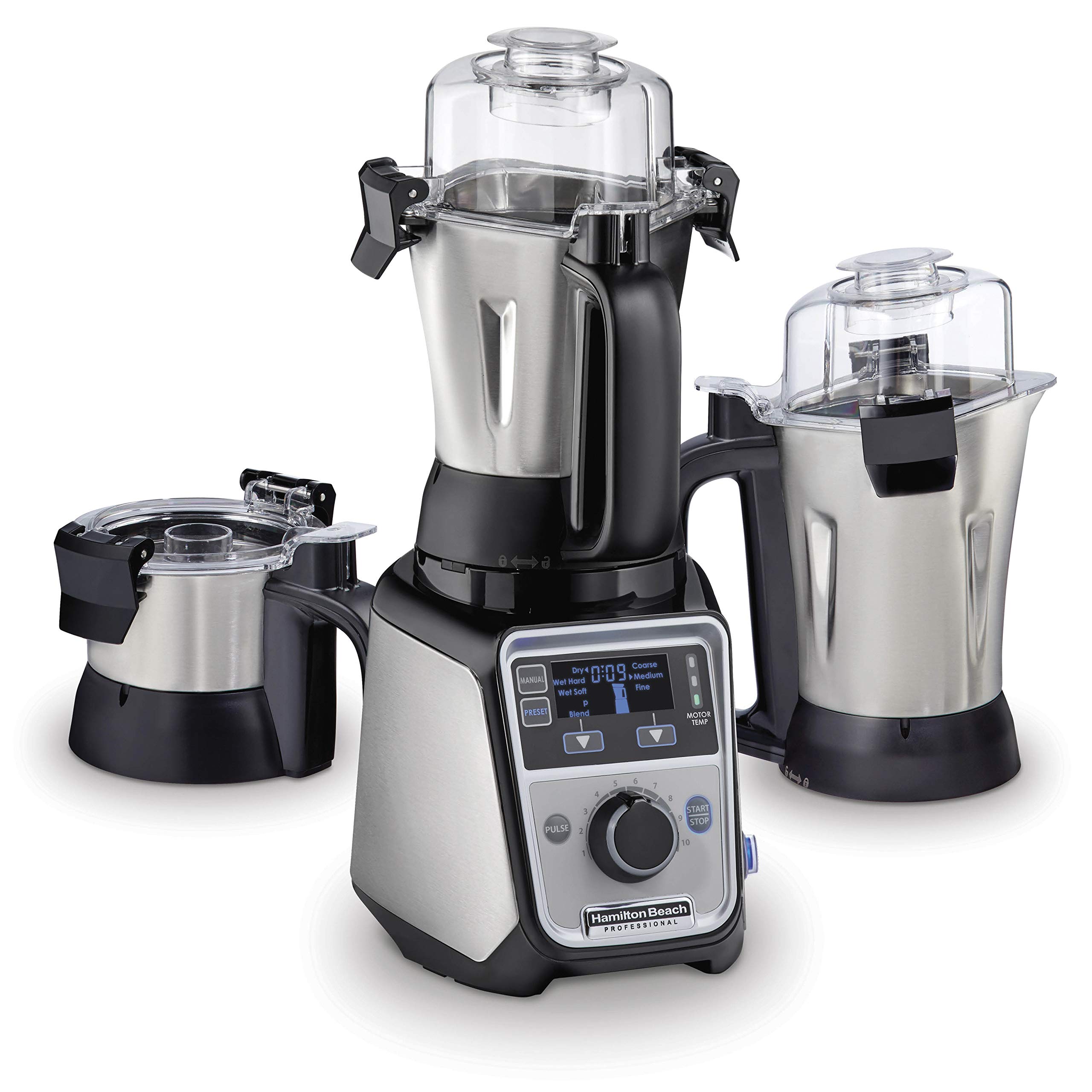
If your idea of blending includes chutneys, masalas, coconut, soaked lentils, thick gravies, or turmeric roots, you’re playing a different game. Most “smoothie blenders” are not designed for that texture range. This machine is.
Think of the 58770 as a purpose-built stainless jar system for cuisines that demand fine particle size with minimal water. That’s the hard part: thick blends that are not liquid enough to self-circulate. When owners love this unit, it’s usually because it behaves more like a grinder: it can turn tough ingredients into smooth pastes, and it can create a texture that feels closer to restaurant-style sauces than “home blender chunky.”
The real-world caution is also clear: when you push any grinder system into semi-dry work with tiny amounts, it can heat up quickly. That’s not always “bad quality”—it’s physics plus safety protection. The trick is to respect batch size and use the right jar for the job. For example: tiny batches of dry spices often do better with short pulses, jar tapping, and brief pauses. Thick chutneys often need just enough liquid to move, but not so much that you lose the texture you want. Your technique matters here more than on a basic smoothie blender.
What I love for the right buyer: the stainless jars, the “no nonsense” feel, and how it unlocks recipes people often skip because their blender can’t do them. If your kitchen is spice-forward, this can become a daily driver—not just for smoothies, but for prep that normally requires multiple gadgets.
Why it’s special
- Stainless jar workflow – Great for pungent ingredients and frequent grinding without lingering smells.
- Texture control for pastes – Better suited for chutneys, batters, and thick gravies than typical smoothie units.
- Versatility across wet and dry – Handles spice blends, ginger-garlic pastes, and blended sauces with confidence.
- Kitchen “unlock” effect – Helps you cook foods you might avoid if your blender struggles with them.
Good to know
- Very small, semi-dry batches can be finicky—pulse, pause, and don’t force long runs.
- Jar alignment and safety detection can frustrate some users; learn the lock-in feel early.
- It’s a specialist tool masquerading as a blender—amazing for the right cook, overkill for basic smoothies only.
Ideal for: anyone who makes spice blends, pastes, chutneys, batters, or thick gravies regularly and wants stainless jars that don’t hold odors.
3. Waring Commercial BB320S – Stainless Container Power with Timer Convenience
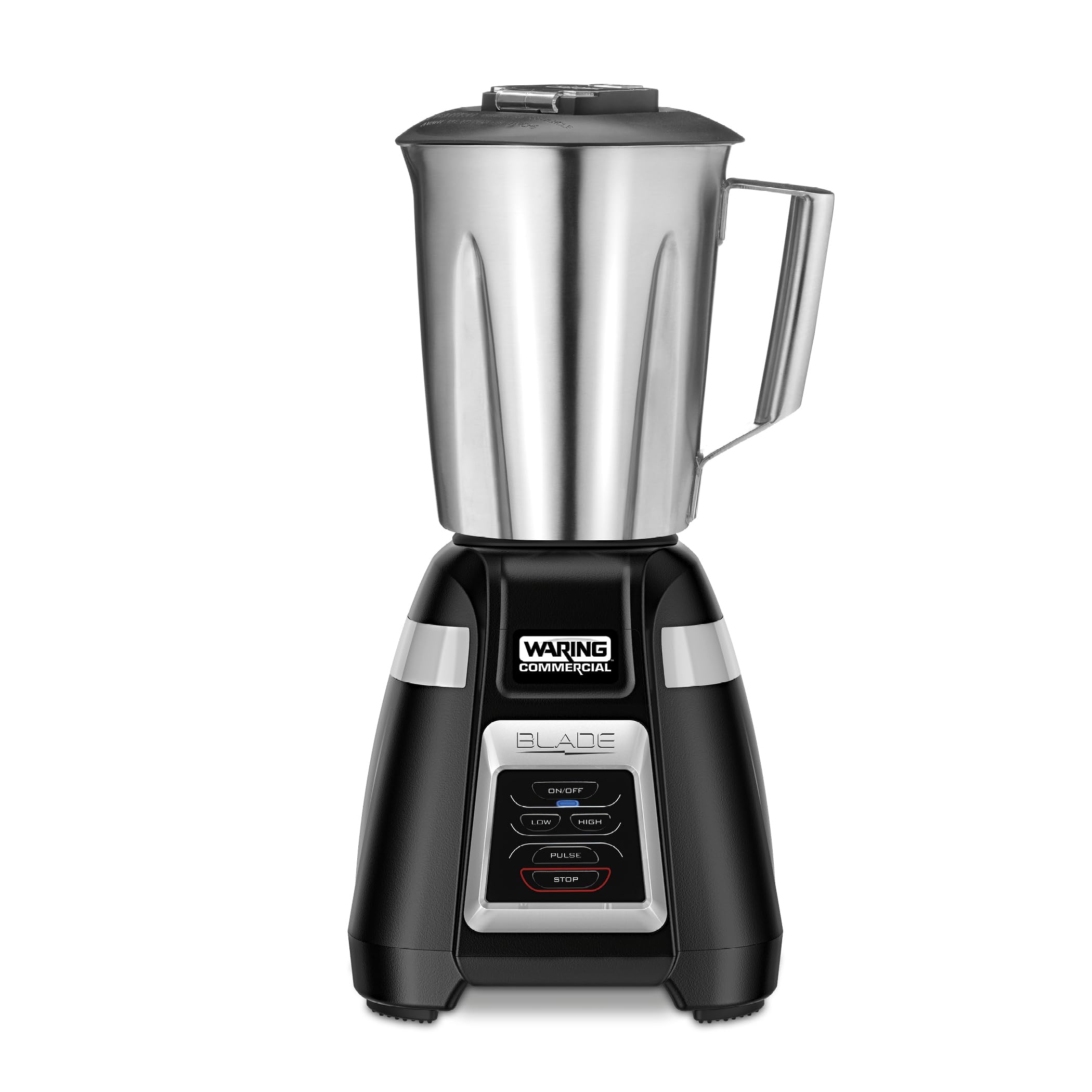
The BB320S is for people who want commercial torque but prefer a slightly more modern workflow: touch controls, a countdown timer, and a stainless steel container that can handle a lot of daily use.
When this blender shines, it shines in the “repeatability” category. In a home setting, that matters more than you think. If you make smoothies daily, the timer can prevent overblending (which can heat your drink and thin out texture). It also makes you consistent: you stop guessing, and your smoothie stops changing day to day.
Now the honest part: commercial blenders aren’t magic. Some owners report that extremely frozen, low-liquid mixes can cause a stall-like behavior where it seems to stop spinning well. That usually comes down to either (1) overpacking, (2) not enough liquid to create movement, or (3) starting at the wrong speed for the load. The fix is surprisingly simple: start low with enough liquid to establish circulation, then go high once the vortex forms. Stainless jars can be unforgiving if you treat them like a wide plastic pitcher and dump everything in dry.
If you want a stainless container blender that feels like it belongs behind a bar—fast, tough, rinse-friendly—and you like the idea of a timer to keep your routine tidy, this is a strong pick.
Why it’s a powerhouse
- Stainless jar durability – Built for frequent use and quick cleanup.
- Touchpad + timer – Helps you stop overblending and makes results more repeatable.
- Commercial stability – A planted base and confident feel under load.
- Great for drinks and sauces – Especially when you keep your liquid-to-solid ratio realistic.
Good to know
- Very thick, low-liquid frozen blends can stall—learn the “start low, then high” method.
- Commercial sound is real—short runtimes help, but it’s not a silent blender.
- Stainless jars hide the blend; technique and timing matter more than watching it happen.
Ideal for: people who want stainless container durability plus timer convenience for a high-repetition smoothie or bar-drink routine.
4. Waring Commercial BB300S – The Switch-First Stainless Blender for People Who Hate Fragile Controls

Some people don’t want a blender with “modes.” They want a blender with a switch. If that’s you, the BB300S is your kind of machine: straightforward controls, stainless container, and a vibe that says, “If something wears out, I’d rather replace a part than replace the whole blender.”
The best owner feedback around this style is almost always the same: built like a tank, fast blends, easy cleaning, and a satisfying simplicity that feels more reliable than touch panels. People who use it daily for smoothies tend to love how quickly it gets to a smooth texture—because speed matters when you’re blending frozen fruit every day.
The caution from some users is equally instructive: if your motor smells hot or you see signs of stress early, don’t “baby it and hope.” A blender should not throw sparks or leave residue under normal use. If you experience anything like that, treat it as a quality-control issue—not a technique issue. A good stainless blender should feel confident from day one.
When it behaves as intended, this model is a classic “buy once, use hard” bar blender. The key is to blend like a bar: enough liquid to move, frozen pieces not jammed against the blades, and short cycles instead of long punishment runs.
Why people choose it
- Toggle durability mindset – Many users prefer switches over digital pads for long-term peace of mind.
- Stainless container benefits – Odor resistance and rugged daily use feel.
- Fast, simple operation – Great for repeated smoothies without fiddly settings.
- Easy wipe-and-rinse workflow – The stainless jar and simple design are made for quick cleanup.
Good to know
- Like any high-power unit, it’s not whisper-quiet—short runs keep it tolerable.
- Extremely thick blends still need enough liquid to circulate.
- If you ever notice abnormal smells or stress early on, don’t ignore it—address it immediately.
Ideal for: anyone who wants stainless jar durability and simple switch control—especially daily smoothie drinkers who don’t want digital complexity.
5. Hamilton Beach Commercial Rio (HBB255S) – Stainless Container Café Energy in a Home-Friendly Size

The Rio is built for a specific sweet spot: drinks and café-style blends where you want stainless durability, a sturdy coupling, and simple controls—but you don’t necessarily need a giant 64–72 oz pitcher. If your kitchen routine includes protein shakes, frozen coffee drinks, cocktails, or smaller smoothie batches, this style can feel more “right-sized” than huge consumer blenders.
Where stainless container blenders win: quick rinse, less staining, less odor memory, and a tougher feel when you’re using it daily. The Rio also leans into a commercial design philosophy—sealed switches and a protective brow to help keep moisture out of controls. That’s not a gimmick; it’s a long-term reliability mindset.
Now the reality check: some users expect every commercial unit to annihilate frozen bananas without any technique. But even powerful blenders can struggle if you load them wrong—especially with a smaller jar and a heavy frozen mass. The fix is the same as with bar blenders: start with enough liquid, use pulse to break the load, then run high. If your recipe is “all frozen, barely any liquid,” you’re asking the motor to do what a tamper system would do on a thick-blend machine.
For the right person, this is a classy, durable stainless blender that fits on a counter like it belongs in a café. For the wrong person (someone who wants thick smoothie bowls with almost no liquid), a tamper-based blender is the better match.
Why it’s worth considering
- Stainless container practicality – Easy rinsing and less lingering odor over time.
- Commercial control protection – Sealed switches reduce moisture-related issues.
- Small-batch efficiency – Great for drinks and shakes without oversized pitchers.
- Simple two-speed workflow – Easy to use; pulse gives control for ice and frozen ingredients.
Good to know
- Thick, low-liquid blends need technique (pulse + enough liquid) or a different style of blender.
- Stainless jars mean you can’t visually monitor the blend—listen for texture changes.
- If you truly want “everything, no matter what,” step up to a thick-blend tamper system or a more heavy-duty high-torque model.
Ideal for: people who make drinks, shakes, and smaller smoothies and want a stainless container with a café-grade vibe.
6. Breville Fresh and Furious (BBL620) – The “Push a Program and Walk Away” Blender That Still Feels Serious

This is the blender for people who want a premium “daily rhythm” experience: press smoothie, press green smoothie, press ice crush, and stop thinking. It’s not trying to be a bar blender. It’s trying to be the best version of an everyday home blender—one that makes smooth textures without requiring you to babysit the jar.
The real-life magic here is efficiency. Owners who love it often mention two things: it does the job quickly (so you aren’t running a loud motor forever), and the cleaning workflow is less painful than most. A cleaning cycle sounds like a gimmick until you realize how much time it saves if you blend daily. Fill with water, add a drop of soap, run the cycle, quick rinse—done.
There are two “expert notes” worth knowing. First: Breville’s blending performance tends to be strong because the jar and blade system are designed to keep ingredients circulating—so you get fewer dead zones. Second: treat the lid as a performance part. A lid that seals firmly prevents micro-leaks during high speed, but it can also feel stubborn to remove. That’s the trade: tight seal = less mess, but you learn a removal technique.
If you want a polished blender that feels like it was engineered for real kitchens—not just spec sheets—this is one of the easiest machines to live with day after day.
Why it feels premium
- Programmed consistency – Great for people who want repeatable results without fiddling.
- Efficient blending – Fast results reduce runtime, which makes noise less annoying.
- Cleaning workflow win – A real quality-of-life upgrade for daily smoothie routines.
- Strong circulation design – Fewer “stuck walls” moments than many basic pitchers.
Good to know
- Premium doesn’t mean silent—just “loud for less time.”
- Tight-sealing lids can require technique to remove; you’ll get used to it quickly.
- If your priority is a stainless container, jump to the Waring or Hamilton Beach commercial picks above.
Ideal for: daily smoothie and sauce makers who want a refined experience—easy programs, strong circulation, and faster cleanup.
7. Ninja SS151 TWISTi – The Built-In Tamper Blender That Makes Smoothie Bowls Actually Easy

If you’ve ever tried to make a smoothie bowl and ended up with a blender that just spins air, you already understand why tampers exist. Thick blends don’t “fall” into the blades. They sit. The TWISTi fixes that with a built-in twist tamper that pushes ingredients into the cutting zone without you taking the lid off, jabbing a spoon in, or performing the dreaded “shake the blender” dance.
Owner feedback tends to be glowing for the exact use-case it’s designed for: frozen fruit bowls that come out like soft serve, and thick spreads where other blenders stall. People also love the speed: it can get silky textures quickly, which matters because thick blends can heat up if you run them too long (and heat makes bowls go from “ice cream thick” to “melty smoothie” fast).
Here’s the expert angle: this isn’t just about raw power—it’s about control under heavy load. A tamper system lets the motor do useful work instead of wasted spinning. That means better texture, less frustration, and usually fewer “stop and scrape” moments. If you make bowls weekly, the convenience is huge.
Two honest notes: it can be noisy (most powerful blenders are), and it’s optimized for smoothies, bowls, and drinkables—less so for delicate culinary tasks where you want gentle folding or ultra-precise micro-chopping. If you want more food-prep versatility, the Ninja Kitchen System below can be a better “all-in-one.”
Why bowl people love it
- Built-in tamper = thick blend sanity – No stalling, no shaking, no constant stirring.
- Smooth textures fast – Great for frozen fruit bowls and thick smoothies.
- Versatile containers – Pitcher plus to-go cups covers daily routines.
- Great for nuts/seeds – Better breakdown for smoother drinkables when used correctly.
Good to know
- Noise is normal for thick-blend power—short runtimes help.
- It’s a thick-texture specialist; for heavy food prep, a processor bowl system can be more practical.
- Like any strong blade system, treat it with respect—blades are aggressive and sharp.
Ideal for: smoothie bowl fans, thick smoothie makers, and anyone who wants tamper control without buying a separate tamper tool.
8. Ninja Compact Kitchen System (AMZ493BRN) – The “One Base, Three Machines” Setup That Actually Gets Used

The reason systems like this succeed is simple: convenience changes behavior. When your blender base also handles a processor bowl and a to-go cup, you stop “saving tasks for later” because the tool is already there. That’s why owners often say they use it more than expected—it becomes part of daily cooking, not a special-occasion appliance.
Performance-wise, the biggest win is how evenly it can process in the bowl. A lot of combo units have a “processor” that’s really just a blender jar with a different lid. This one tends to do more consistent chopping and mixing, which matters for salsa, dips, dough, and meal prep. The pitcher is great for smoothies and frozen drinks, and the single-serve cup is your fast breakfast option.
Here’s the expert angle: if you want a household blender that reduces clutter, a system is often the best choice—not because each part is “perfect,” but because the overall workflow is frictionless. You’re more likely to use a tool you don’t have to assemble into a complicated puzzle. And if you actually use it, it pays off quickly in real life.
The trade-off is footprint and parts. You’re storing multiple containers. If you hate cabinets full of accessories, you may prefer a single stainless jar blender or a one-pitcher premium unit. But if you like the idea of “smoothie today, salsa tomorrow, dough on Friday,” this is the kind of appliance that earns its counter space.
Why it’s so practical
- True multi-function value – Pitcher, processor bowl, and single-serve cover most kitchen needs.
- Good processing performance – More consistent chopping than many combo units.
- Auto-iQ convenience – Programs reduce guesswork for common blends.
- Encourages daily use – The easiest appliance is the one you actually reach for.
Good to know
- More parts to store and clean than a single-jar blender.
- If you only do smoothies, a dedicated thick-blend tamper blender or stainless jar bar blender may feel simpler.
- Like most high-performance systems, it’s not silent—use short programs instead of long runs.
Ideal for: busy kitchens that want one appliance for smoothies, sauces, chopping, and occasional dough—without buying separate machines.
9. NutriBullet PRIME 1000W – The Personal Blender for People Who Want a Stainless Cup Option

Personal blenders live or die by two things: seal reliability and daily convenience. The PRIME gets points for both, especially if you like the idea of a stainless cup for a lower-plastic routine or better durability in your bag.
Owners who love it often highlight the “walk away” factor: click in, it runs its cycle, it stops automatically. That matters because personal blenders can be painfully loud—so shorter, controlled runtimes are a real quality-of-life win. Many people also notice that it feels more controlled than older models: instead of instantly slamming to full speed, it ramps more smoothly, which can reduce the violent “jerk” that sometimes loosens lids on other units.
Now let’s talk about the real-world frustration that shows up in feedback: gasket issues. Some users report the rubber gasket in the blade assembly can come loose, causing mess and making the lid hard to remove if you overtighten. Here’s the expert takeaway: personal blenders demand a routine. Check the gasket before each use (takes two seconds), don’t cross-thread the blade cap, and don’t overtighten like you’re sealing a submarine hatch. A snug seal is enough—over-tightening can make removal miserable.
If your lifestyle is one smoothie a day, this is a strong pick because it’s fast, compact, and has a stainless cup option that many people struggle to find.
Why it’s a daily favorite
- Stainless cup option – Great for portability and reducing plastic contact in your routine.
- Auto shutoff – Helps with consistency and reduces “overblend heat” risk.
- Strong for ice and frozen fruit – Good breakdown for daily smoothies when loaded correctly.
- Easy cleanup workflow – Cups and blade assembly are typically simple to rinse and wash.
Good to know
- Gasket management matters—check seating and avoid extreme overtightening.
- You lose visibility with the stainless cup; you’ll learn timing by sound and feel.
- If you want big-batch blending, move up to a pitcher system or stainless container bar blender.
Ideal for: daily smoothie drinkers who want a personal blender with a stainless cup option and a convenient auto-cycle routine.
10. Cuisinart Smart Power Duet (BFP-703BC) – Glass Jar Blending + Small Processor, When You Want Versatility in One Spot

This is for the small-kitchen realist who wants one base to do two jobs: blend and quick-prep. The glass jar is the headline feature—people who prefer glass often do so because it feels cleaner, doesn’t hold odors like some plastics, and stays visually “new” longer. The bonus is the small processor bowl for chopping and light slicing/shredding.
The expert reality: the processor is 3 cups. That’s not a “real food processor replacement.” It’s a convenience tool. If you accept it for what it is—a small-batch chopper and occasional helper—it can be genuinely useful (nuts, herbs, quick crumb blends, small prep tasks). If you buy it expecting full-size processor performance, you’ll be disappointed. The strongest negative feedback usually comes from that mismatch: people expecting bigger capacity and more stable slicing behavior.
Where the blender side can be surprisingly satisfying is everyday recipes: smoothies, purees, sauces, and even thicker items if you learn the trick: add enough liquid to establish movement, then use pulse to pull ingredients into the blade zone. Some owners mention the motor can sound rough and struggle over time, while others report good warranty support and replacements. So think of this as a “great daily tool” with a realistic load expectation: it’s not a commercial torque monster, but it can be a solid household blender when used within its lane.
If you’re trying to reduce kitchen clutter and you like glass blending, the Duet makes sense—especially if your food processor needs are truly small-batch.
Why it works for the right buyer
- Glass jar blending – Clean feel, odor resistance, and easy maintenance for daily use.
- Two functions, one base – Saves counter space and reduces appliance clutter.
- Simple touch controls – Easy to use and quick to learn.
- Useful small-batch processor – Great for quick chops, nuts, and light prep tasks.
Good to know
- The processor is truly small; treat it like a chopper, not a full-size processor.
- Slicing/shredding can be finicky with tall veggies—load and technique matter.
- For heavy frozen blending every day, commercial stainless container units may feel more confident.
Ideal for: small kitchens that want glass blending and occasional small-batch chopping without buying a separate full-size processor.
11. Countertop Blender 2000W (68 oz) – Big Batch Power with Variable Control (and a Simple Self-Clean Routine)
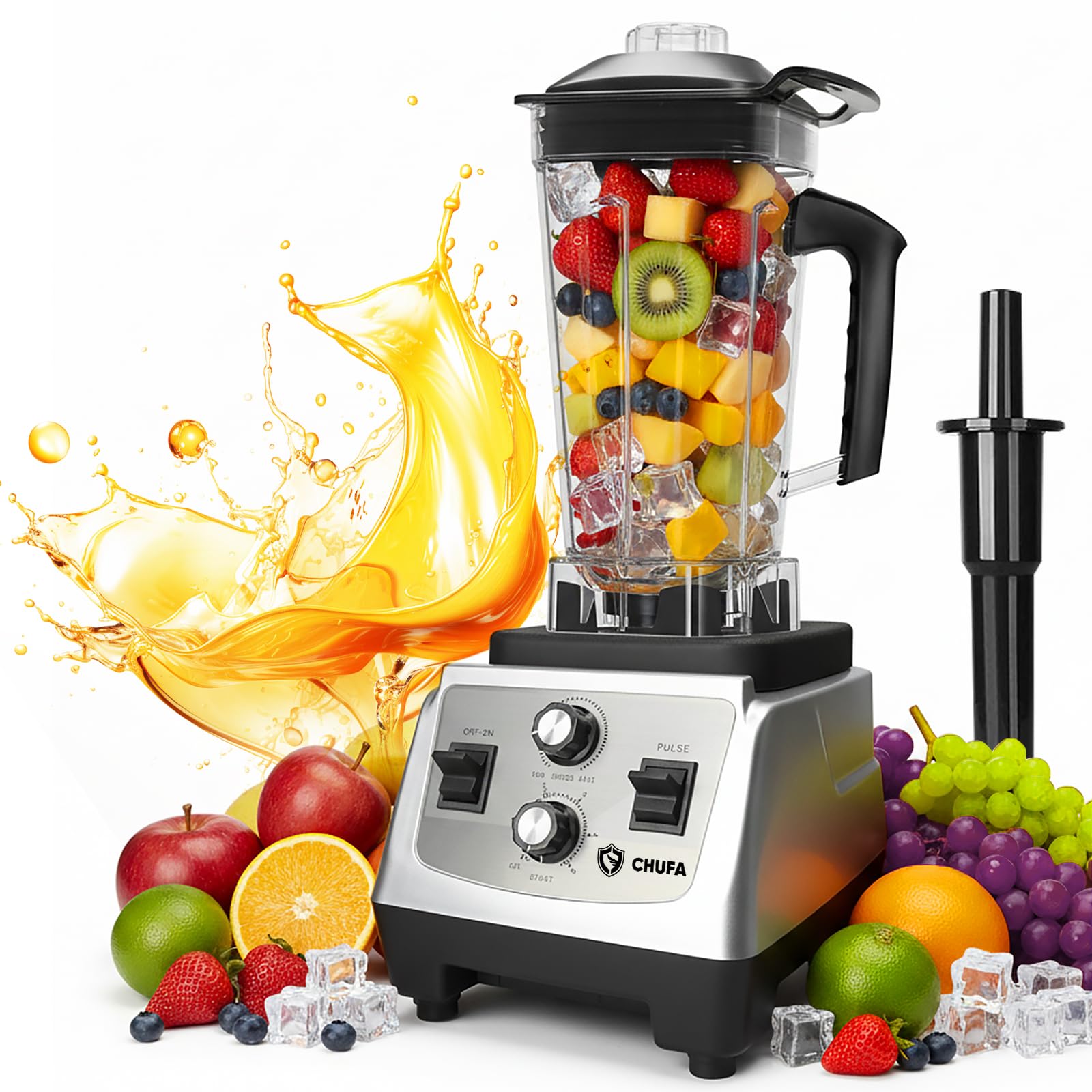
If your priority is capacity and control without paying premium-brand prices, this style of high-power countertop blender is appealing. A 68 oz jar is a real “family batch” size, and variable speed plus pulse lets you dial texture instead of relying on fixed programs. The included tamper is the quiet hero: it helps thick blends behave without you constantly adding liquid.
The best owner feedback on machines in this category is usually about brute performance: frozen fruit, ice, creamy smoothies, quick sauces. And that makes sense—when you combine high peak power with an 8-blade system and a big jar, you can move a lot of ingredients fast. The big-jar advantage is also a big-jar risk: it’s easy to overfill and kill circulation. If you want truly smooth results, avoid packing the jar like a salad bowl. Use the tamper and leave room for movement.
Here’s the expert caution: big jars can make small batches worse. If you only make one smoothie at a time, you may find a smaller personal blender or compact pitcher more convenient. But if you do soups, large smoothie batches, or meal prep blends, big jars are addictive.
The self-clean routine is a practical perk: a quick soap-and-water spin helps loosen residue so you can rinse fast. That’s the difference between “I’ll use it daily” and “I only use it when I feel like washing a sink full of parts.”
Why it’s a strong value
- Big-batch capacity – Great for families and meal prep smoothies.
- Variable control – Dial texture from chunky salsa to smooth puree.
- Tamper included – Helps thick blends without forcing extra liquid.
- Easy quick-clean workflow – Encourages more frequent use.
Good to know
- Large jars can be awkward for small single servings.
- To avoid “stuck walls,” don’t overpack—circulation needs space.
- If your goal is stainless containers specifically, look at the Waring or Hamilton Beach commercial picks.
Ideal for: big-batch smoothie households, soup makers, and anyone who wants variable control and a tamper without paying premium-brand prices.
12. Oster Pro 1200 – Dual Direction Blending That’s Surprisingly Good at Pulling Ingredients Down

The Pro 1200 has a feature that matters more than it sounds: dual direction blade action. That back-and-forth motion can improve circulation in the jar, especially when ingredients want to “float” above the blades. Owners who love it often say the blade configuration and reversing action make smoothies noticeably smoother than basic blenders in this tier.
If you’re choosing glass for a cleaner feel and you still want decent power, this is a strong compromise. You get presets for common tasks (smoothie, salsa, milkshake style programs), plus manual control when you want to pulse your way to a chunkier texture. It’s the kind of blender that can make you feel like you upgraded, without stepping into commercial stainless jar territory.
The real-world feedback you should take seriously: noise and longevity patterns. Many people accept that powerful blenders are loud—but they love this one because it gets the job done quickly. Some mention replacing units after a couple of years, while others happily buy the same model again because the performance-to-effort ratio is so good. That tells you what it is: a high-utility daily blender, not a forever commercial tank.
Expert usage tip: if you blend frozen fruit, don’t start with frozen chunks sitting directly on the blades with zero liquid. Load liquids first, then greens or soft items, then frozen last. You’ll get smoother starts and less motor stress.
Why it’s popular
- Dual direction blending – Helps pull ingredients down and improves smoothness.
- Glass jar feel – Clean, sturdy, and easy to maintain visually.
- Preset convenience – Great for busy routines and consistent results.
- Good for smoothies and ice – Performs well when loaded correctly.
Good to know
- It’s loud—like most powerful blenders.
- Not a stainless container machine; if you want odor resistance above all, go stainless jar.
- Some long-term durability feedback is mixed; treat it as a high-value workhorse, not a forever commercial unit.
Ideal for: people who want a glass jar blender with presets and strong circulation, especially for smoothies and frozen drinkables.
13. Oster Classic Series Heritage – The Simple Glass-Jar Blender People Keep Rebuying Because It Just Works

There’s a reason classic Oster blenders have a reputation: they keep the formula simple. A sturdy glass jar, a basic toggle, and a drive system that people can understand and maintain. Owners who love these models often talk about longevity, easy part replacement, and a “no weird gadgets” approach that ages well.
What you gain with this style is reliability through simplicity. Fewer features can actually mean fewer annoyances. You don’t have to wonder which preset to use. You don’t get lost in modes. You pulse, you blend, you stop. That’s a very underrated benefit if you want a blender that feels easy in daily life.
The expert perspective: it’s not trying to be a thick smoothie bowl machine or a commercial stainless jar unit. It’s an honest blender designed for everyday smoothies, soups, and basic crushing—especially when you use the right ingredient order. If your recipes are “normal blender recipes,” this can be a ridiculously satisfying pick because it doesn’t overpromise.
And one more practical win people don’t talk about enough: replacement containers and parts tend to be more accessible for classic designs. That matters if you ever crack a jar or wear out a seal—you can often fix instead of replace the whole blender.
Why it’s a long-term favorite
- Simple, durable workflow – A classic design that doesn’t rely on fragile complexity.
- Glass jar benefits – No odor memory and a clean feel with daily use.
- Easy to maintain – Classic parts mindset can reduce long-term replacement stress.
- Great for everyday recipes – Smoothies, soups, and basic ice crushing when loaded correctly.
Good to know
- Fewer features means you provide the “program” (pulse then blend) yourself.
- Not designed for ultra-thick bowls without added liquid or a tamper system.
- Some users describe it as “middle of the road” compared to premium machines—because it’s a classic, not a luxury tool.
Ideal for: anyone who wants a straightforward glass-jar blender with a classic durability reputation and minimal feature clutter.
14. Hamilton Beach 56208 – The Auto Smoothie Cycle That Makes Busy Mornings Easier

This blender’s superpower is not “ultimate power.” It’s automatic rhythm. If your morning routine is: throw ingredients in, press a button, make lunch, and come back to a ready smoothie—this is the kind of machine that fits your life. The auto smoothie cycle matters because it combines pulsing and speed changes in a way that helps ice break down without you babysitting.
Owners who love it often describe it as perfect for daily protein shakes, ice, and basic fruit smoothies—fast and consistent. And the compact, low-profile design is a legit perk: many people keep their blender under cabinets, and tall blenders become “closet appliances” that don’t get used because they’re annoying to pull out.
Now the honest caution from real-life feedback: durability can vary, and some people report failures after short periods. When that happens, it often points to stress at the blade-drive connection—especially if you run thick veggie smoothies daily with minimal liquid. If you want this to last, blend like the machine expects: enough liquid, don’t overload, and let the cycle do its job instead of forcing ultra-thick blends.
If you want a blender that behaves like a small appliance assistant, this is one of the better “press start and move on” budget-friendly picks.
Why it fits real life
- Auto smoothie cycle – Convenient, consistent, and beginner-friendly.
- Low-profile design – Easier to leave on the counter and use daily.
- Easy cleaning workflow – Glass jar and straightforward parts simplify maintenance.
- Great for shakes – Especially protein powder + milk + ice style routines.
Good to know
- Not designed for ultra-thick blends without enough liquid.
- Some durability feedback is mixed—use good technique to reduce stress.
- If you want stainless containers or commercial durability, look higher up the list.
Ideal for: busy mornings and daily shakes—people who want an auto cycle and compact design more than advanced culinary versatility.
15. BLACK+DECKER PowerCrush – A Solid Glass-Jar Blender That Gets the Basics Right

Not everyone needs a blender that can pulverize a coconut. Sometimes you need a blender that makes smoothies, sauces, dips, and frozen drinks without drama—and is easy to clean after. That’s where the PowerCrush fits: a glass jar, simple controls, and a blade/jar shape designed to keep ingredients moving.
The best owner feedback highlights exactly what matters at this level: it feels solid, it blends frozen fruit reasonably well, and the jar and lid don’t feel flimsy. People also appreciate the pour spout design and the fact that it’s easy to assemble and disassemble. Those aren’t “minor” details—those are the daily friction points that decide whether you enjoy owning the blender.
The expert caution is also clear: don’t expect specialty performance. Dates may not fully break down in a basic blender without enough liquid. Very thick blends can trap food around the blade base. Some users mention small design quirks that require a little extra cleaning attention. But the overall theme is: it’s effective for typical tasks and better than “cheapest possible” options, without pretending to be a premium machine.
If you want a dependable everyday blender—and you’re okay with basic limitations—this is a genuinely practical choice.
Why it’s a good pick
- Solid basic performance – Smoothies, sauces, and frozen drinks are its comfort zone.
- Glass jar feel – Sturdy and easy to maintain compared to cheap plastic pitchers.
- Easy to clean – Dishwasher-safe parts reduce daily hassle.
- Good value for typical tasks – A smart “basic blender” that doesn’t feel toy-like.
Good to know
- Not a nut-butter or ultra-thick bowl machine.
- Sticky ingredients (like dates) may need extra liquid or pre-soak for smoother results.
- Some residue can hide around blade areas—clean with intention, not just a quick rinse.
Ideal for: people who want a solid glass-jar blender for everyday smoothies and sauces without paying for premium features.
16. Hamilton Beach Power Elite (58148A) – The Low-Cost Blender That’s Surprisingly Useful When You Blend Smart

If you need a blender that works today, fits a tight budget, and still gives you a glass jar, this is the classic “starter” pick. Hamilton Beach’s Wave Action concept is designed to keep ingredients moving down into the blades, which helps compensate for lower-end power. That circulation approach is why many people feel it performs better than expected for smoothies and ice—as long as you use enough liquid.
The real-life reviews line up with what experts expect at this level: it’s great for everyday smoothies and protein shakes, it can handle ice reasonably well, and it’s easy to clean. The complaints usually show up with thick blends or hard ingredients: if you try to make a super thick smoothie with barely any liquid, it will struggle. That’s not a surprise—it’s a physics mismatch.
Here’s the practical advice that makes this blender feel much better: use at least a cup of liquid for most blends, start on a lower speed to break the load, then finish higher to smooth it out. If the blend stalls, don’t punish the motor—add a splash of liquid or pulse to free the blades. That single habit extends blender life and improves texture.
If you want the cheapest reliable entry into glass-jar smoothies, this is a reasonable choice—just don’t ask it to do jobs meant for commercial stainless container machines.
Why it’s worth it
- Affordable and functional – Great for basic smoothies and shakes.
- Glass jar – Easy to clean and doesn’t hold odors like some plastics.
- Wave Action circulation – Helps pull ingredients down for smoother results.
- Simple controls – Easy to use and easy to maintain.
Good to know
- Thick blends need more liquid or manual pulsing—don’t expect premium performance.
- Not ideal for hard culinary tasks like nut butters or dry grinding.
- It’s a budget tool; if you blend daily and hate limitations, upgrade to a higher tier.
Ideal for: budget shoppers who want a glass jar blender for smoothies and shakes and are willing to blend smart (enough liquid, sensible loads).
How Blending Actually Works (and Why Jar Shape Can Beat Raw Wattage)
Most blender frustration comes from one mismatch: you’re asking a motor to solve a flow problem. The blades can only cut what reaches them. So the real question is: does your blender create a circulation pattern that feeds the blades continuously?
The 5 “physics wins” that make a blender feel effortless
- Vortex-friendly jar geometry – Ingredients should slide down the walls instead of sticking and riding up.
- Blade zone accessibility – Narrower bases often improve pull-down for smoothies and frozen fruit.
- Pulse that actually helps – Good pulse breaks the load, then high speed finishes the texture.
- Torque transfer (coupler quality) – Strong motors still fail if couplers slip or wear early.
- Heat management – Long blends can warm textures and stress motors; fast performance matters.
This is why stainless container bar blenders can feel so satisfying for drinks: they’re built for fast circulation and quick cycles. And it’s why tamper systems (like Ninja TWISTi) dominate thick bowls—because thick blends don’t move unless you force them into the blade zone.
The 7 small habits that make any blender work better
- Load liquids first – Always. It lubricates the blades and starts circulation.
- Frozen last – Don’t jam frozen fruit directly onto dry blades.
- Start low, then go high – Especially for ice and frozen blends.
- Use pulse as a tool – Pulse to break, then blend to smooth.
- Don’t overfill – More ingredients can mean worse blending if circulation collapses.
- Clean immediately when possible – A 30-second rinse beats a 10-minute scrub.
- Respect thick textures – If it’s not moving, add a splash of liquid or use a tamper system.
If you learn these habits once, your blender lasts longer, blends smoother, and becomes a tool you enjoy using instead of tolerating.
FAQ: Stainless, Glass, Plastic—What Actually Matters When You Buy?
Is a stainless steel container better than glass?
Why does my blender “stall” on frozen fruit?
Do more watts always mean better blending?
What’s the easiest way to keep a blender clean?
I want thick smoothie bowls. Which style should I pick?
How do I choose between a system blender and a single-jar blender?
Final Thoughts: Picking Your Best Stainless Steel Blender Match (and Loving It Later)
A great blender isn’t the one with the most marketing. It’s the one that makes you feel, halfway through your week, “Nice… that was easy.”
Here’s the simplest way to choose from this list:
- Want the most “stainless jar, bar blender” confidence for home? Start with the Waring Commercial BB900S. It’s the best blend of stainless container practicality, simple controls, and daily repeatability.
- Cooking spice-forward foods and want real chutney/paste performance? Choose the Hamilton Beach Professional 58770. It’s built for textures that break typical smoothie blenders.
- Want bar-grade stainless blending with touchpad convenience? Look at the Waring BB320S or the switch-first Waring BB300S. They’re built for repeat use and quick cleanup.
- Want the most polished “push a program and go” home experience? Pick the Breville Fresh & Furious. It’s a great daily driver for people who value convenience and consistent texture.
- Making thick smoothie bowls weekly? Go straight to the Ninja SS151 TWISTi. The built-in tamper is the difference between “ice cream thick” and “why is this spinning air?”
- Want one appliance for smoothies + food prep? The Ninja Compact Kitchen System is the most practical “do a lot” setup in this list.
The best purchase is the one that matches how you actually blend. If your priority is stainless containers and a tougher daily feel, choose a bar-blender style. If your priority is thick textures, choose a tamper system. If your priority is daily ease, choose a program-driven blender with a clean workflow. Pick the best stainless steel blender for your habits, and your kitchen gets easier immediately—not someday.
