
Roast chicken is one of the most “simple” dinners that somehow becomes a full-contact sport in real kitchens. One night the skin is glassy and crisp, the potatoes underneath are caramelized in drippings, and your pan sauce tastes like it came from a bistro. The next night the chicken sticks, the drippings scorch, smoke alarms start singing, and cleanup feels personal.
If you’re here looking for the best roasting pan for chicken, you’re not actually shopping for metal. You’re shopping for control—control over browning, control over drippings, control over whether you get a silky pan sauce or a burnt mess, and (yes) control over whether you need to soak a pan overnight just to get your life back.
Here’s the honest truth most buying guides skip: a roasting pan isn’t “good” because it’s huge or shiny. It’s good because its shape, material, rack design, and handles match the way you cook chicken. A pan that makes a Thanksgiving turkey feel effortless can feel clumsy for weeknight spatchcock chicken. A pan that’s easy to carry can be a pain to deglaze if the base is thin. A pan that looks gorgeous on the table can be the wrong tool if you live for aggressive stovetop gravy.
This guide is built around real-life friction points that show up again and again in owner feedback: warping after a few high-heat roasts, racks that sit too low (so the chicken steams in its own fat), handles that don’t fit your oven or your sink, polished interiors that show every scuff, and nonstick surfaces that are dreamy… until you overheat them. You’ll see all of that addressed clearly, with practical “what to do about it” tips—not just a list of features you could read on the box.
Below, you’ll find 16 standout pans that cover every chicken style—from crisp-skin purists who want stainless and fond, to easy-clean fans who want a slick ceramic surface, to braise-and-roast cooks who want a lid so they can start moist and finish crisp.
How to Choose the Best Roasting Pan For Chicken
A roasting pan isn’t just a container. It’s a heat-management tool. It decides how fast the oven’s energy reaches your chicken, what happens to rendered fat and juices, and whether those drippings turn into a clean, flavorful sauce or a bitter, scorched layer you’re scraping off with regret. Here’s the decision framework I use when I want someone to buy one pan they’ll still love after the tenth roast.
1. Start with your chicken style (because “roast chicken” isn’t one thing)
Before you think about brands, decide how you cook chicken most often. Your “default method” tells you what pan shape works best.
- The whole-bird classic: You roast a whole chicken (often on a rack) and want drippings for gravy or pan sauce.
- The spatchcock speed-run: You flatten the chicken for faster, crispier cooking and need low-ish sides for better airflow and easier turning.
- The parts-and-veg weeknight: Thighs/drumsticks/wings with potatoes or root veg underneath (drippings are part of the plan).
- The glaze lover: BBQ, honey, harissa, gochujang, citrus—anything sticky that can burn if the pan overheats.
- The braise-to-crisp cook: You start covered to stay juicy, then uncover at the end to crisp skin (a lid becomes a power move).
2. Pick the material based on the kind of flavor you want
This is where most people get misled. “Stainless” and “nonstick” aren’t just cleanup preferences—they’re flavor and technique preferences.
Stainless steel (especially heavier bases) = fond and pan sauce potential
If you love pan gravy, stainless is your friend. When drippings hit hot metal and brown, you create fond—the concentrated flavor that turns into sauce when you deglaze with stock, wine, cider, or even just water. The key is thickness and heat distribution: a sturdier base browns more evenly and reduces the chance of one scorched hotspot.
- Best for: deep flavor, gravy lovers, “I want restaurant drippings.”
- Trade-off: you’ll do a bit more cleaning (but the right cleaning habits make it easy).
Ceramic-coated and nonstick surfaces = low-friction cooking and fast cleanup
If you want chicken that releases cleanly—especially when you’re roasting saucy or sticky recipes—coated pans can feel like a cheat code. But coatings come with rules: avoid overheating, avoid aggressive metal tools, and don’t expect the same “fond development” you get from bare stainless. You can still make sauce, but it’s often a lighter, cleaner drippings sauce rather than deep, browned fond.
- Best for: sticky glazes, low-drama cleanup, people who roast often and don’t want to soak pans.
- Trade-off: treat the coating like a performance surface; it rewards care.
Enamel-coated cast iron = heat retention and steady roasting (with weight)
Cast iron holds heat like a small furnace. That can produce beautifully even roasting and helps maintain temperature when you add cold vegetables or open the oven door. Enamel also cleans well. But cast iron is heavy—and for some kitchens, that alone decides the purchase.
- Best for: steady roasting, one-pan meals, “I want this to last forever.”
- Trade-off: weight and storage space (and you’ll want good mitts).
Aluminum roasters = fast heat response, great for braises and big batches
Aluminum heats quickly and evenly, which is why some regional cooking traditions love it for “rice and gravy” and roasts that start on the stovetop. But aluminum isn’t naturally induction compatible, and some aluminum roasters prioritize capacity over finesse. Think of it as a workhorse category.
- Best for: big-batch cooking, covered roasts, traditions, and cooks who want a true “pot-roaster” feel.
- Trade-off: not always dishwasher-friendly; stovetop compatibility depends on your cooktop type.
3. Rack design is the difference between crisp skin and “why is this soggy?”
A rack isn’t just an accessory. It’s an airflow system. For chicken, your goal is to let hot air circulate and let fat drip away. Here’s what matters:
- Rack height: If the rack sits too low, the chicken can steam in drippings. Too high and it may cook unevenly or sit awkwardly.
- Rack shape: V-shaped racks cradle birds and keep them centered. Flat racks are more flexible for parts and vegetables.
- Rack cleanability: Crossbars and tight corners trap cooked-on protein. A simpler wire pattern often cleans faster.
- Rack handles: Little handles can save your hands when you’re lifting a hot bird (especially when it’s heavy with juices).
If your pan doesn’t come with a rack—or the rack is frustrating—there’s a practical workaround: use vegetables (celery, onions, carrots, potatoes) as a “natural rack.” This lifts the chicken slightly, flavors your sides, and turns drippings into a built-in glaze for the veg. It’s not identical to a true rack, but it’s surprisingly effective for weeknight roasts.
4. Pan geometry: depth, sides, corners, and handles
This is where “good on paper” becomes “good in your oven.”
- Depth: Deeper pans contain splatter (great) but can reduce airflow around a spatchcock chicken (not great). If you roast whole birds and want gravy, depth helps. If you roast flat birds or wings, lower sides feel crisper.
- Straight sides: Better for containing drippings and vegetables without spills, and often better for making sauce.
- Rounded corners: Easier to clean. Sharp corners can trap browned bits (which is great for flavor, not great for scrubbing).
- Handles that fit your oven: Oversized handles can make a “16-inch pan” suddenly not fit. This shows up constantly in reviews. Always consider “pan + handles,” not just the body.
5. The stovetop gravy question (especially for induction users)
If you make gravy in the roasting pan (instead of transferring drippings), then stovetop compatibility matters—a lot. A pan with a sturdier base behaves better during deglazing and reduction. And if you cook on induction, you need a pan that’s specifically designed to play nicely with it.
Even if you don’t make gravy in the pan now, it’s worth thinking about your “future self.” Once you own a pan that reduces sauce cleanly on the stovetop, you’ll use that ability more often—because it’s faster and more flavorful.
6. Cleaning reality: what you’ll do when you’re tired
Most people don’t hate cleanup. They hate cleanup when they’re exhausted. So choose a pan whose cleanup style matches you:
- If you will soak: Stainless pans become easy with a quick soak + gentle scrub.
- If you will not soak: A slick surface (ceramic/nonstick) makes sense.
- If you will scrub aggressively: Be cautious with coatings; choose stainless or enamel.
- If you want dishwasher life: Confirm that both the pan and rack can handle it—and that they actually fit in your dishwasher.
7. Storage matters more than you think
This sounds boring until it isn’t. A roasting pan that doesn’t store easily becomes the pan you “use only on holidays,” even if it’s capable of more. If you want weekly roast chicken, aim for one of these:
- A pan that fits in your sink and stores without playing kitchen Tetris.
- A pan whose lid nests or flips for storage (when available).
- A pan that is “everyday sized” for chicken, not only turkey sized for once-a-year feasts.
Quick Comparison: 16 Best Roasting Pan For Chicken Picks
Use this table to spot the pans that match your cooking style, then jump to the full reviews for the real-life details— like rack height, handle comfort, oven fit, drippings behavior, and what owners praise (or complain about) after months of use.
On smaller screens, swipe or scroll sideways to see the full table.
| Model | Pan style | Chicken strength | Best match | Amazon |
|---|---|---|---|---|
| Viking 3-Ply Stainless Steel Roasting Pan (16×13) + Nonstick Rack | 3-ply stainless | Even roasting + strong stovetop sauce potential (especially for gravy makers) | “One pan for years” cooks who roast chicken often | Amazon |
| Caraway Roasting Pan (16×13) + Rack | Ceramic coated | Low-friction roasting + fast cleanup for sticky glazes and weeknights | People who roast frequently and hate soaking pans | Amazon |
| All-Clad Stainless Steel Roaster (16x13x5) + Nonstick Rack | Stainless classic | High-heat roasting + broiler-safe finishing for crisp skin | Crisp-skin purists and “fond lovers” | Amazon |
| Viking 3-Ply Oval Roaster (8.5 qt) + Lid + Rack | With lid | Start covered, finish uncovered: juicy meat + crisp finish | Braise-to-roast cooks and “one pot, many jobs” kitchens | Amazon |
| All-Clad Covered Oval Roaster (3-piece) + Rack | With lid | Moisture control + big-batch roasting with sturdy handles | Holiday hosts who still want it useful for chicken nights | Amazon |
| Le Creuset Signature Rectangular Roaster (5.25 qt) | Enameled cast iron | Steady heat + beautiful oven-to-table roasting | Heirloom buyers who want “lifetime cookware” energy | Amazon |
| McWare Cajun Classic 18″ Aluminum Oval Roaster (Covered) | Covered roaster | Big, traditional, stovetop-friendly roasting pot style | Big-batch cooks and gravy-heavy Southern/Cajun kitchens | Amazon |
| All-Clad Nonstick Large Roaster (13×16) + Rack | Nonstick interior | Easy release for sticky, sugary, or buttery roasting jobs | Glaze lovers who want fast cleanup and less scrubbing | Amazon |
| All-Clad Small Roaster (11×14) + Nonstick Rack | Compact stainless | Everyday chicken size that fits more ovens and sinks | Small kitchens and “I roast weekly” households | Amazon |
| Cuisinart Chef’s Classic Rectangular Roaster (16″) + Rack | Stainless value | Solid roasting capacity with a simple, familiar workflow | Families who want a classic pan without “fussy” features | Amazon |
| Cooks Standard Stainless Roaster + V-Rack | Compact pro feel | V-rack airflow + oven-friendly handle design that wastes less space | Smaller ovens and “I want it to fit” shoppers | Amazon |
| Farberware Classic Traditions Stainless Roaster + Rack | Everyday stainless | Durable roasting with simple cleanup and easy handling | Budget-minded cooks who still want stainless reliability | Amazon |
| DIMESHY Oval Roaster (22″) + Lid + Rack | Oversize oval | Big capacity for crowd cooking and “everything in one pan” roasts | Large-bird cooks and big-batch meal prep kitchens | Amazon |
| Amazon Basics Stainless Roasting Pan (16″) + Rack | Budget stainless | Surprisingly sturdy roasting with easy-to-learn stainless behavior | Value hunters who still want a “real stainless” feel | Amazon |
| Cuisinart 14″ Lasagna Pan + Stainless Roasting Rack | Small multi-use | Chicken + sides in a smaller footprint (and doubles as a serving pan) | Apartment ovens and “I want one pan to do more” | Amazon |
| Farberware Nonstick Steel Roaster (11×15) + Flat Rack | Nonstick budget | Easy release for weeknight roasting, wings, and oven-fried chicken | Simple cooks who prioritize fast cleanup over fond | Amazon |
In-Depth Reviews: 16 Roasting Pans That Make Chicken Nights Easier
Now we’ll go model by model. I’m going to talk like a cook who actually roasts chicken—not like a spec sheet: how the pan behaves when fat renders, how the rack affects crispness, what cleanup feels like when you’re tired, and which kitchens each pan fits best.
1. Viking 3-Ply Stainless Steel Roasting Pan (16×13) + Nonstick Rack — The “Roast Chicken for Years” Workhorse

If you roast chicken often—and you want one pan that feels “serious” without being precious—this Viking is the kind of purchase that quietly upgrades your whole routine. The reason is simple: good roasting is about stable heat, and stable heat is about construction. A sturdier, multi-layer-style pan tends to brown drippings more evenly, and that gives you two wins at once: better flavor on the bird and a cleaner path to sauce.
Where this pan really earns its keep is the combination of space and control. You can roast a whole chicken on the rack with airflow under it (crisp skin potential), while still having room for onions, lemons, garlic, or potatoes to sit in drippings. And because the pan isn’t flimsy, you’re less likely to fight “wavy drippings” (scorching in one area, pale in another). That’s the hidden difference between a pan you tolerate and a pan you trust.
A nonstick rack is also a surprisingly big quality-of-life detail: chicken skin can be delicate when it’s perfectly crisp, and a rack that releases cleanly reduces the chance you tear the skin when lifting or repositioning. That means better presentation, sure—but more importantly, less frustration.
Why you’ll like it
- Even roasting behavior – Helps drippings brown more consistently, which improves flavor and reduces “burnt patch” cleanup.
- Rack + pan spacing works well – Great airflow for crisping while leaving room for vegetables and aromatics underneath.
- Feels secure when loaded – A full chicken plus sides is heavy; sturdy handles matter more than people expect.
- Long-term kitchen value – This is the kind of pan that becomes your default for chicken, roasts, and holiday meals.
Good to know
- It’s not the smallest footprint; if your oven is tight, measure your rack width and account for handles.
- Stainless requires a simple cleaning rhythm (deglaze or soak). The payoff is better sauce potential.
- If you only roast a small bird for two people, you might prefer a compact roaster for easier storage.
Ideal for: cooks who want one primary roasting pan that handles weekly chicken, pan sauce, and occasional big meals without drama.
2. Caraway Roasting Pan (16×13) + Rack — The “Wipe It Clean” Upgrade for Busy Chicken Nights

Some people love stainless because it feels “pro.” Other people love cookware that respects their time. If you’re in the second camp—especially if you roast sticky, saucy, or butter-heavy chicken—Caraway is a smart, modern answer. The ceramic-coated surface is designed to reduce sticking and make cleanup feel almost unfair: less scraping, less soaking, less “why is this welded on?”
What makes this pan work for chicken (beyond the coating) is that it’s designed as a true roasting setup, not just a pretty bakeware tray. The included rack gives you elevation for airflow, which is the real crisp-skin lever. If you’ve ever roasted chicken directly in a pan and wondered why the underside is pale, a rack changes that story by letting hot air do its job.
There’s one key to loving ceramic-coated pans long-term: treat heat like a dial, not an on/off switch. You don’t need to blast this pan to get good roasting—especially if you preheat the oven properly and start with a dry, salted bird. Use medium heat on the stovetop if you’re warming drippings or building a quick sauce, and you’ll keep the surface performing like new for longer.
Why it’s a weeknight hero
- Fast cleanup – The coating is built for easy release, which matters when you roast often.
- Great for sticky chicken – Honey, BBQ, citrus glazes: less fear of “burnt sugar cement.”
- Rack included – Elevation improves airflow and crispness (and helps drippings flavor vegetables underneath).
- Oven-to-table vibe – It looks good enough to serve in, which is a nice bonus when guests show up.
Good to know
- Coated cookware rewards gentle tools; avoid aggressive metal scraping if you want it to stay pristine.
- For ultra-dark fond and classic gravy, bare stainless usually develops deeper browning.
- Think “controlled heat” rather than “max heat”—especially if you’re reducing sauce on the stovetop.
Ideal for: frequent chicken roasters who want an easy-clean pan that still supports crisping via a rack.
3. All-Clad Stainless Steel Roaster (16x13x5) + Nonstick Rack — Built for Crisp Skin and Strong Drippings
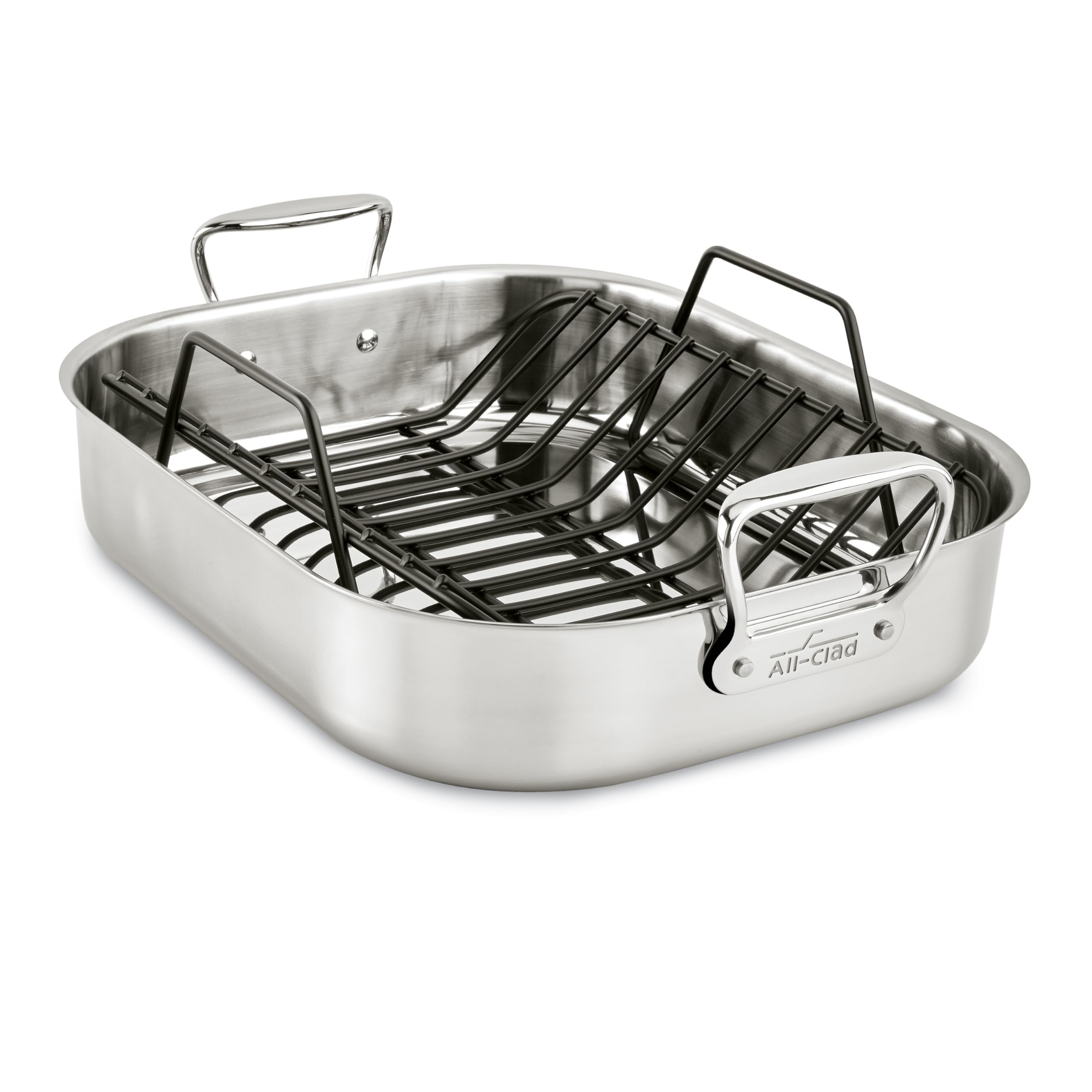
All-Clad roasters have a reputation that’s earned the boring way: they show up, they perform, and they clean up without falling apart. For chicken, this particular style shines when you like to push the finish—high heat at the end, or even a quick broiler moment to tighten and blister the skin. That’s a real-world advantage because roast chicken is often “done” before it’s “beautiful.” A pan that supports a confident finish helps you nail both doneness and appearance.
Owners constantly mention two things that matter for chicken: even heating and cleanup that doesn’t feel like punishment. Part of that is the stainless surface itself: it’s not a fragile coating, so you can deglaze, scrub responsibly, and actually use the pan like a tool. The other part is the rack—sturdy enough to support heavy roasts, and shaped to encourage airflow and drip management.
Here’s how to get restaurant-level results in this pan: roast the chicken on the rack until nearly done, then drop it directly onto the pan (no rack) for the last few minutes to let the bottom crisp in hot fat. You get the airflow benefits early, and the “shallow fry” effect at the end—without changing pans. This is the kind of “small technique” that a good roaster makes easy.
Why it’s a crisp-skin favorite
- High-heat confidence – Great for finishing skin without babying the pan.
- Stainless drippings behavior – Better chance of flavorful fond for pan sauce.
- Deep sides reduce splatter – Especially helpful with high-fat chicken parts and vegetables underneath.
- Sturdy, practical handling – Riveted handles and a stable feel when moving a heavy roast.
Good to know
- If you roast only small birds, the pan can feel larger than necessary for daily storage.
- The included rack has a coating; racks clean easiest with a quick soak after roasting.
- Polished stainless shows scuffs—performance stays strong, but “perfect shine” doesn’t last forever in real kitchens.
Ideal for: cooks who want stainless performance and love finishing chicken skin aggressively for that crackly top.
4. Viking 3-Ply Oval Roaster (8.5 qt) + Lid + Rack — The Moisture-Control “Chicken + Gravy” Machine

A lidded roaster changes your chicken options. It’s not just for “bigger birds.” It’s for cooks who want to control moisture like a pro: start covered to keep the breast juicy, then uncover to crisp the skin and concentrate drippings. That two-phase approach is how you get chicken that’s both tender and beautifully finished—without constantly basting or babysitting.
This Viking is built like a multi-job vessel: roast, braise, covered cook, and even serve. The lid is not an afterthought; it’s part of the cooking system. That matters because a good lid traps heat and moisture early (which can help the breast stay forgiving), then steps aside when you’re ready for browning. Owners often love that the lid can pull double duty, and that the overall set feels durable rather than decorative.
For chicken nights, here’s the move: put onions, garlic, and a splash of stock in the bottom, add a rack if you want the chicken elevated, cover for the first phase, then uncover and raise the heat to finish. You’ll end with drippings that are already halfway to gravy—especially if you reduce them in the pan or in a small saucepan. That’s why lidded roasters feel like “cheat tools” for people who value juiciness.
Why it’s a moisture-control win
- Lid unlocks two-phase cooking – Start juicy, finish crisp. It’s a powerful chicken workflow.
- Oval shape fits classic birds – Great for whole chicken, roasts, and big-batch sides.
- Durable feel – Owners often describe it as sturdy and “worth keeping for years.”
- Versatile beyond chicken – Covered braises, pot-roasts, and stock-type cooking are all on the menu.
Good to know
- Lidded roasters take more storage space; consider where the lid will live between uses.
- Oval pans are fantastic for whole birds, but spatchcock chicken often fits better in a rectangle.
- Heavier pieces are wonderful in the oven but can be awkward in smaller sinks.
Ideal for: cooks who love juicy chicken and want a lid for braising, gravy, and “covered start, uncovered finish” roasting.
5. All-Clad Covered Oval Roaster (3-piece) + Rack — The “Holiday-Ready, Still Weeknight Useful” Upgrade

This is the kind of roaster you buy when you want a single piece of cookware that can carry a whole season: Sunday roast chicken, weeknight braises, and the big holiday bird—without feeling like “special occasion only” gear. The lid is the headline, but the deeper value is how the set behaves when you’re cooking with a lot of drippings and a lot of heat.
In real owner feedback, the themes are consistent: sturdy handles, a confident “secure” feel when lifting heavy meat, and drippings that don’t scorch as easily when you treat the heat correctly. A covered roaster also gives you a stronger path to gravy because you can cook aromatics and juices under the lid, then uncover and concentrate flavor at the end. That means less basting and more “set it up, let it work.”
For chicken specifically, it’s a brilliant tool for “crowd chicken”—two birds, lots of onions, and enough space to keep the oven moist early. Then you uncover and let the skin finish in dry heat. The result is chicken that stays tender without tasting steamed. The rack is also helpful when you want the bird lifted (airflow) but still want liquid in the bottom for sauce.
Why it feels premium
- Lid makes it a multi-tool – Roast, braise, covered cook, and hold heat more effectively.
- Sturdy handling – Large loop handles matter when the roaster is heavy and hot.
- Great for gravy setups – Liquid and aromatics behave better when you can control evaporation.
- Designed for longevity – A “buy it once” vibe for cooks who host or roast often.
Good to know
- The footprint is significant; it’s not the easiest to store in compact kitchens.
- The rack style is practical, but some cooks prefer a higher rack for maximum airflow under chicken.
- If you never use a lid, you may be happier with a simpler open roaster.
Ideal for: hosts and serious home cooks who want a premium covered roaster that still earns weekly use with chicken.
6. Le Creuset Signature Rectangular Roaster (5.25 qt) — The Heat-Retention “Oven-to-Table” Beauty
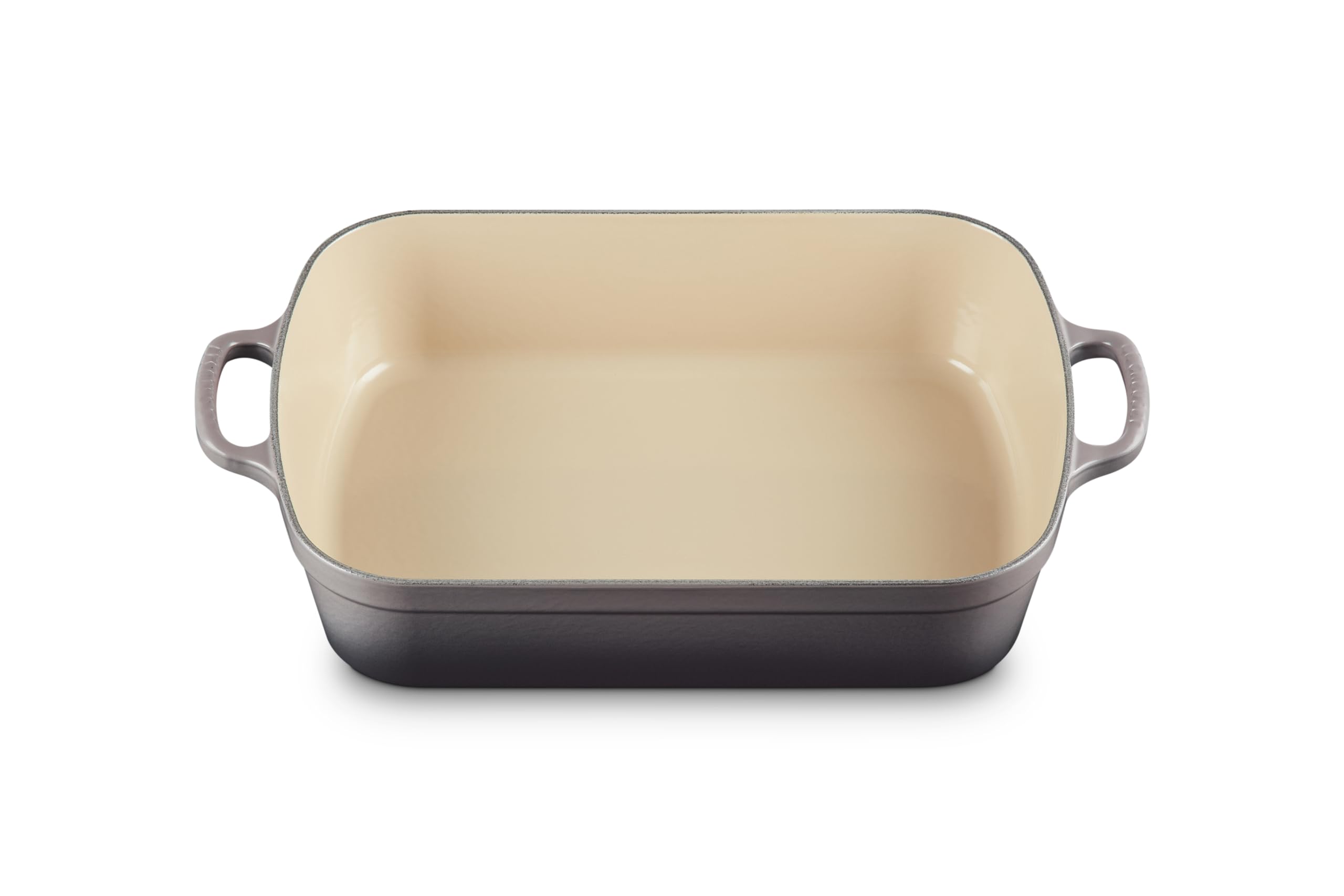
Le Creuset is the “yes, it’s heavy—yes, it’s worth it (for the right person)” category. Enameled cast iron brings a specific advantage to roast chicken: it holds heat steadily, which can help you get more consistent roasting even when you add cold vegetables or open the oven door to check doneness. It’s also the kind of pan you can carry to the table and serve from without apologizing for how it looks.
Owners often describe the cleanup experience as surprisingly friendly for something that cooks so intensely: the enamel tends to release more easily than bare cast iron, and a short soak often does the job. The trade-off is weight—this pan is not “grab with one hand.” It’s “two mitts, deliberate movement.” If you’re comfortable with that, the performance payoff is real.
For chicken, this pan shines with parts and vegetables, or with a smaller whole bird. It’s also excellent for “roast, then rest in the same pan” because the heat retention keeps the environment stable without blasting carryover cooking. If you like calm, steady roasting and you want cookware that looks like it belongs in a lifetime kitchen, this is that vibe.
Why cast iron fans swear by it
- Steady heat retention – Great for consistent roasting and one-pan chicken meals.
- Enamel cleanup is approachable – Often easier than people expect after roasting.
- Oven-to-table presentation – Doubles as a serving dish that looks genuinely premium.
- Longevity – This is the “keep it forever” style of cookware.
Good to know
- It’s heavy. If lifting and washing heavy cookware is a pain point, choose stainless or coated steel instead.
- Capacity is more “everyday roast” than “giant holiday bird.” It’s great for chicken, less about massive turkeys.
- Enamel rewards gentle tools and reasonable thermal changes (avoid extreme temperature shocks).
Ideal for: cooks who want steady heat, easy-enough enamel cleanup, and an oven-to-table pan that feels like a permanent upgrade.
7. McWare Cajun Classic 18″ Aluminum Oval Roaster — The Big-Batch, Gravy-Forward Tradition Pan

This is not the “minimalist stainless roasting pan” vibe. This is the “feed people and make gravy” vibe. McWare roasters show up in kitchens where big pots are normal and flavor builds happen on purpose. For chicken, this style makes sense if you do a lot of covered cooking: smothered chicken, chicken-and-gravy, or roasts that start on the stovetop and finish in the oven with a lid keeping everything moist.
What owners often love is the authenticity and the heft—this is the kind of roaster people buy because it reminds them of family cooking, or because it works the way a real “kitchen pot” should. Aluminum heats quickly and tends to distribute heat well, which can be excellent for building sauces and cooking large batches without constant stirring.
For roast chicken specifically, the best move is “covered early, uncovered late.” Start the chicken with aromatics and a splash of liquid to keep the environment moist, then remove the lid and increase heat to crisp the skin. You’ll end with drippings that are already rich and easy to turn into gravy. If your kitchen identity is “gravy happens here,” this pan fits.
Why it’s a gravy-maker’s friend
- Covered roaster format – Great for moisture retention and big-batch cooking.
- Fast, responsive heating – Aluminum heats quickly, which helps when building sauces and cooking large quantities.
- Tradition-friendly – A true “cook like home” vessel for people who grew up with this style.
- Big capacity – Useful for more than chicken: roasts, stocks, and large family meals.
Good to know
- Not all aluminum cookware is induction compatible; plan based on your cooktop.
- This is a large piece—storage and sink space matter.
- It’s more of a covered roaster/pot style than a rack-and-airflow crisping specialist.
Ideal for: big-batch cooks and gravy-forward kitchens that want a covered roaster with tradition and capacity.
8. All-Clad Nonstick Large Roaster (13×16) + Rack — The “Glaze Without Fear” Roaster

This is the All-Clad for people who want All-Clad build quality but don’t want to wage war with burnt-on drippings. The nonstick interior is especially useful for chicken recipes that would otherwise become cleanup nightmares: honey mustard, brown sugar rubs, barbecue glazes, or any roast that throws sugary drippings into a hot pan. If you roast with “sticky flavor,” this pan makes that style feel less risky.
The included rack matters because it keeps the chicken elevated and encourages crispness even though the pan surface is nonstick. That’s a key detail: nonstick doesn’t automatically mean “better roast.” Airflow is still king for crisp skin, and a rack gives you that airflow while the nonstick surface protects you from the worst cleanup.
One technique note: if you want a darker, richer sauce, you may need to build it intentionally elsewhere (or add a browned aromatics base), because nonstick doesn’t develop fond the same way stainless does. But for many chicken nights, the trade is worth it: cleaner release, faster cleanup, and less stress when you’re cooking something sweet and sticky.
Why glaze lovers pick it
- Nonstick interior reduces drama – Great for sticky drippings and quick cleanup.
- Large capacity – Plenty of room for chicken plus vegetables without crowding.
- All-Clad build feel – Sturdy handles and a “serious cookware” vibe.
- Rack helps crisping – Elevation supports airflow even in a nonstick setup.
Good to know
- Nonstick surfaces are happiest with controlled heat; avoid extreme overheating and harsh tools.
- Less fond development than stainless; your sauce will be more “drippings-forward” than deeply browned.
- Large size can be more than you need if you only roast a small chicken for two.
Ideal for: cooks who roast sticky chicken recipes and want premium build with easier cleanup than bare stainless.
9. All-Clad Small Roaster (11×14) + Nonstick Rack — The Everyday Chicken Size That Fits More Kitchens

The secret to roasting more chicken at home is owning a pan that doesn’t feel like a holiday commitment. That’s what this smaller All-Clad gets right: it’s sized for normal life. A chicken for two to four people, a tray of potatoes, maybe some carrots—done. You don’t need a massive roaster that takes over your sink and your storage to roast beautifully.
Owners often describe this as the “perfect everyday pan” because it’s sturdy, has high sides for splatter control, and cleans up more easily than cheaper pans that warp or discolor aggressively. It also doubles as a baking dish for lasagna or potatoes, which is a big deal: multi-use pans get used more, and used pans earn their keep.
A practical tip: if you’re roasting a spatchcock chicken, this size is often a sweet spot. You get enough space for the flattened bird to cook evenly, but the pan is still compact enough to maneuver easily. And the rack gives you options: elevated roasting for crispness, or rack removed for a more “pan roast” finish.
Why it’s a kitchen staple
- Everyday size – Fits more ovens, sinks, and storage setups than giant roasters.
- High sides – Helps contain splatter and supports sauce-making and vegetable roasting.
- Sturdy build – Owners often praise longevity and consistent cooking performance.
- Multi-use flexibility – Great for chicken, lasagna, scalloped potatoes, and more.
Good to know
- The rack coating benefits from a quick soak after roasting for easy cleanup.
- Polished stainless can show marks; this is normal “real cookware life.”
- If you routinely roast two chickens at once, you’ll want a larger pan.
Ideal for: small-to-medium households who roast chicken regularly and want premium performance in a manageable footprint.
10. Cuisinart Chef’s Classic 16″ Roaster + Rack — The Straightforward “Does the Job” Stainless Option

Cuisinart’s 16-inch roaster is a classic “family dinner” tool: big enough for a whole bird with vegetables, simple enough that you don’t need a learning curve, and familiar in the way it handles. A lot of owners love it precisely because it doesn’t try to be clever. It’s a pan, it’s a rack, it goes in the oven, it comes out, and you can clean it. That sounds basic—until you’ve owned a pan that flexes, warps, or feels awkward to lift.
The most important real-world note from reviews is that experiences vary: many people report it feeling sturdy and performing beautifully, while some buyers complain about lighter gauge feel or flex. Here’s the expert way to handle that: when it arrives, test it like a cook. Set it on a flat surface and press gently at the center. Check the rack fit. Look at the rivets and handles. If yours feels solid, it will likely roast chicken just fine for years. If yours feels unusually thin or uneven, that’s a quality-control issue—not a “roasting pan normal” issue.
When this pan shines for chicken is in the “one-pan family roast” setup: chicken on the rack, vegetables around it, and drippings collected below for gravy. Keep heat sensible, use a little liquid (stock or water) if you’re roasting at high heat for a long time, and you’ll reduce the chance of burnt drippings that make stainless feel difficult.
Why families like it
- Simple, classic roasting setup – Easy to understand and easy to use.
- Good capacity – Handles whole chicken with room for sides.
- Dishwasher-friendly – Helpful for busy households (if it fits your dishwasher).
- Comfortable handles – Owners often mention easy lifting and safe handling.
Good to know
- Handle-to-handle size can surprise some ovens; measure oven rack width before committing.
- Some buyers report lighter feel; inspect the pan on arrival so you know what you’re working with.
- For aggressive stovetop gravy reduction, a heavier-base pan may feel more controlled.
Ideal for: families who want a traditional stainless roaster that’s easy to use for chicken, vegetables, and drippings.
11. Cooks Standard Stainless Roaster + V-Rack — Compact Size, Surprisingly “Chef-Like” Results

If you’ve ever bought a “great” roasting pan and then realized it doesn’t fit your oven comfortably, you already understand why this Cooks Standard gets so much love. The compact footprint and vertical-style handle orientation are the kind of design choices that matter more than marketing words. They give you more usable space inside the oven—especially in smaller ovens where wide handles steal real estate.
The V-rack is a real advantage for chicken because it supports airflow and encourages more even browning around the bird. It also gives you room underneath for vegetables and aromatics, which means you can build a full meal in one pan without crowding. Owners often describe this pan as “quality that looks more expensive,” and that fits: it has the visual and functional feel of a serious roaster without demanding a huge kitchen.
One underrated detail from user feedback: racks that have simpler layouts can be easier to clean. This model’s rack design avoids some of the worst “intersection traps” that collect protein gunk. You still want to soak after roasting (that’s just good practice), but it’s less of a scrubbing festival than some racks.
Why it earns loyalty
- Fits smaller ovens – Handle design and footprint waste less space.
- V-rack supports crisping – Better airflow for chicken browning and drip control.
- Sturdy feel for the category – Many owners describe it as durable and “not flimsy.”
- Great value function – Performs like a more premium roaster when used correctly.
Good to know
- If you roast very large birds, you may want a larger roasting footprint.
- Not everyone loves V-racks for vegetables; if you roast lots of veg, you may prefer a flat rack or no rack.
- As with all stainless, a quick deglaze or soak keeps cleanup easy.
Ideal for: smaller ovens, apartment kitchens, and cooks who want a compact roaster that still produces crisp, even chicken.
12. Farberware Classic Traditions Stainless Roaster + Rack — Simple, Durable Roasting Without Fuss

Farberware’s strength has always been “reliable and approachable,” and this roaster fits that identity. It’s a straightforward stainless pan with a rack, wide handles, and a mirror finish that looks nice at the table. For chicken, that simplicity is a feature: you can roast a bird, catch drippings, make gravy the way you already know how, and get on with your night.
Owner feedback tends to cluster around durability and practicality: people like that it feels sturdy enough for heavy roasts, that the handles are easy to grip, and that cleanup is reasonable (especially if you don’t let drippings dry into cement). Some users mention that the rack isn’t elevated super high. Here’s the practical fix: use a bed of aromatics (onion halves, celery, carrot chunks) under the rack to lift and flavor. You’ll get better airflow and tastier drippings, with almost no effort.
This pan is also a strong “utility” piece. It’s big enough for chicken plus sides, but not so precious you’re afraid to use it. That’s important, because the best roasting pan is the one you’ll actually pull out on a Tuesday.
Why it’s a solid buy
- Practical stainless roasting – A classic setup that works for chicken and vegetables.
- Comfortable handles – Easy to lift safely, especially when the pan is heavy.
- Simple cleanup routine – Dishwasher-friendly and straightforward to hand wash after a soak.
- Good “use it often” vibe – Not too precious, not too fussy—easy to make part of weekly cooking.
Good to know
- Mirror finishes can show scratches; performance stays strong even if the look changes over time.
- If you want extra-high rack elevation, you may prefer a different rack design or a dedicated roasting rack.
- For very aggressive high-heat roasting, heavier pans can feel more stable.
Ideal for: budget-minded cooks who want stainless roasting reliability for chicken, hams, and holiday meals.
13. DIMESHY Oval Roasting Pan (22″) + Lid + Rack — Big, Covered, Crowd-Cooking Energy
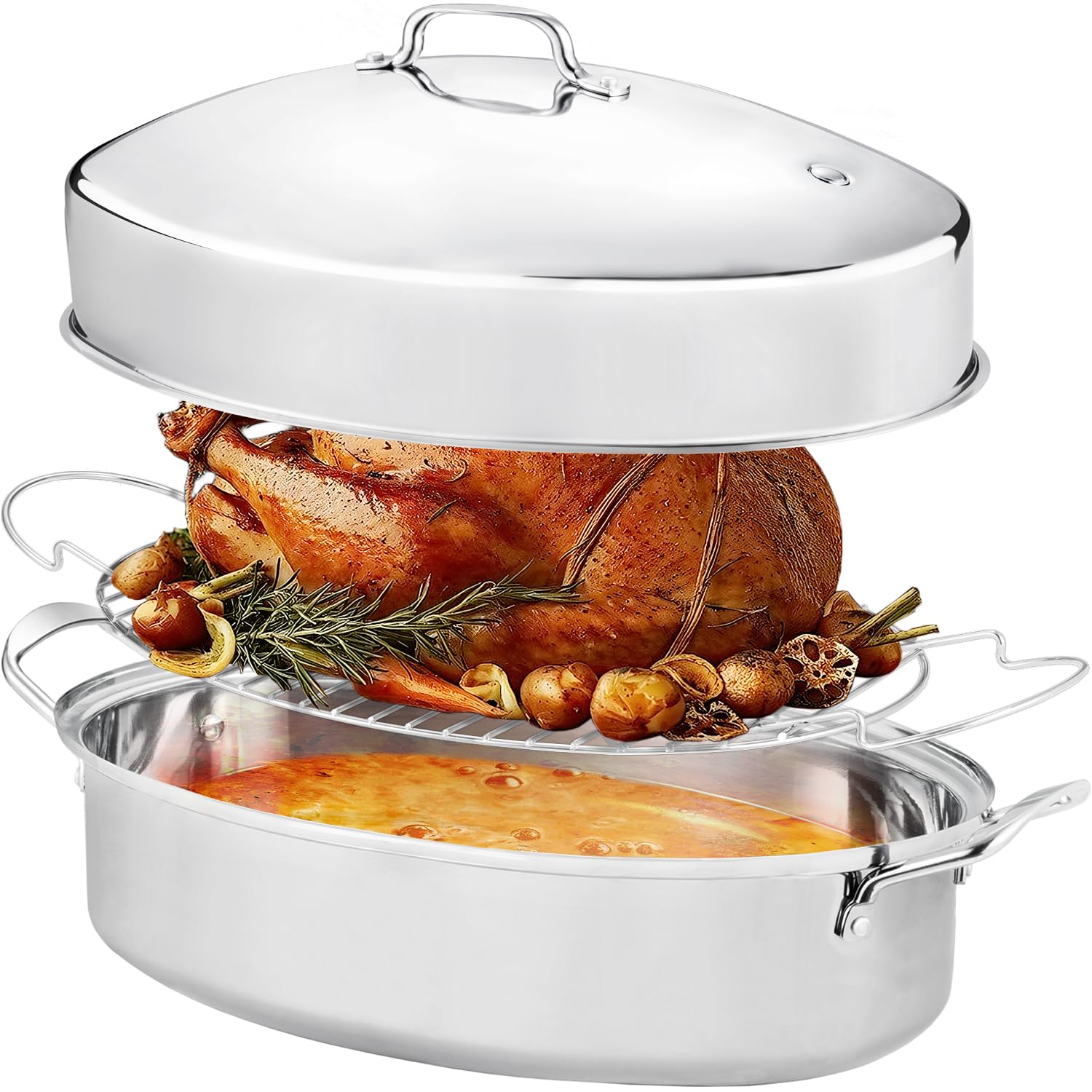
This is the “big oval roaster with a lid” category that people buy for one main reason: capacity. If your roasting reality is large birds, big batches, or “I want everything in one pan,” a 22-inch oval is a statement tool. For chicken, it’s less about a single bird and more about volume cooking: two chickens, a mountain of vegetables, or chicken plus sides for a crowd.
Reviews show a split that’s worth respecting. Many owners love the size and find it solid for oven roasting. But at least one strong complaint points to an important reality: not every large “stainless” roaster is built for stovetop cooking. Here’s the expert advice: treat this pan as an oven-first roaster. Use it for roasting and covered cooking. If you want to reduce gravy on the stovetop, do that in a smaller saucepan unless you know your roaster can handle direct burner heat without scorching. Big, thin surfaces on burners can burn quickly because the heat source is concentrated.
In the oven, though, a large lidded roaster can be excellent: the lid traps moisture early, and the rack helps lift meat for better air circulation. If your goal is “big bird, tender meat, easy covered cooking,” this style can be a practical seasonal tool—especially when your oven is large enough to handle it.
Why big-kitchen cooks like it
- Oversize capacity – Great for crowd meals and big-batch roasting.
- Lid included – Useful for moisture control and covered cooking.
- Rack supports elevation – Helps air circulate and keeps meat out of pooled fat.
- Storage-friendly trick – Many cooks store it by inverting the lid to save space.
Good to know
- Large pans can be awkward in smaller ovens; measure your oven interior and rack width first.
- Treat it as oven-first unless you’re confident in its stovetop performance.
- Very large pans are also very large to wash—sink and counter space matter.
Ideal for: crowd cooks who want a large, lidded roaster for oven use and big-batch chicken + sides meals.
14. Amazon Basics Stainless Roasting Pan (16″) + Rack — The “Wait, This Is Actually Solid” Value Pick

Every once in a while, a “budget” item surprises people because it feels like a real tool. That’s the theme in owner feedback for this Amazon Basics stainless roaster: people expect something flimsy, and instead they get a pan that feels thick enough to roast without warping and sturdy enough to handle real meat weight. For chicken, that stability matters because drippings behave better when the pan stays flat and heats evenly.
Stainless also teaches good roasting habits. When people switch from disposable aluminum or fragile nonstick to stainless, they often discover the technique side of roasting: lower heat can cook more evenly, a quick soak makes cleanup easy, and deglazing turns “stuck bits” into sauce. This pan fits that learning curve well because it gives you stainless benefits without demanding a premium commitment.
For chicken, the included rack gives you the crispness option right away. You can roast the bird elevated, catch drippings underneath, and use those drippings to flavor potatoes or build a simple sauce. It’s a very “honest” roasting setup—and that’s why it works.
Why it’s a smart value
- Surprisingly sturdy – Owners often describe it as thicker and heavier than expected.
- Stainless is durable – No coating to baby; you can use it like a real kitchen tool.
- Rack included – Elevation improves chicken crispness and drip control.
- Great “first real roaster” – Ideal for cooks upgrading from disposable pans.
Good to know
- Stainless still needs basic care (soak or deglaze) for easy cleanup.
- Dishwasher cleaning is possible, but hand washing often preserves shine and removes browned bits faster.
- If you want a luxury finish and ultra-polished feel, premium brands still win on refinement.
Ideal for: value-focused cooks who want a stainless roaster that feels more durable than its category suggests.
15. Cuisinart 14″ Lasagna Pan + Roasting Rack — The Compact “Chicken + Sides” Pan That Also Serves

This is a sneaky-smart pick for chicken because it’s not trying to be a “giant roaster.” It’s trying to be useful. The footprint is friendly for smaller ovens and smaller households, and the pan doubles as a lasagna dish, casserole pan, and serving piece. That means it actually gets pulled out on weeknights—exactly when most roasting pans sit in cabinets.
For chicken, this pan shines with spatchcock birds, chicken parts, or “chicken + vegetables” meals where you want everything tight and efficient. The rack gives you elevation for airflow, but some owners wish it sat a bit higher. That’s a fair critique. Here’s the workaround: place thick onion slices or halved lemons under the rack to lift it slightly and add flavor. You’ll improve airflow and get more aromatic drippings at the same time.
Another advantage: this pan can feel easier to clean than huge roasters because it fits in the sink and is easier to maneuver. When you’re making roast chicken frequently, “fits my sink” is not a small feature. It’s a lifestyle feature.
Why it’s a practical choice
- Multi-use value – Roasts chicken, bakes lasagna, serves at the table.
- Smaller footprint – Great for apartment ovens and compact kitchens.
- Stainless durability – Holds up to real cooking and cleans well with a soak.
- Great for chicken parts – Wings, thighs, drumsticks, and veg roast beautifully in this size.
Good to know
- Some cooks prefer a higher rack for maximum airflow under chicken.
- If you roast for a crowd, you’ll want a larger pan.
- As with many polished stainless pans, it will show use over time—performance remains strong.
Ideal for: smaller kitchens and everyday cooks who want a compact pan that roasts chicken well and also earns its keep as bakeware.
16. Farberware Nonstick Steel Roaster (11×15) + Flat Rack — The Easy Weeknight Roaster for Wings, Parts, and “Oven-Fried” Chicken

This Farberware is built for the kind of chicken cooking that happens most often in real homes: wings, thighs, drumsticks, and quick roasts where you want easy release and fast cleanup. The nonstick inside-and-out design is the main selling point—food releases easily, and cleanup is usually quick. If your goal is “make chicken, eat chicken, move on,” this style makes sense.
The flat rack is especially helpful for oven-fried chicken and wings because it promotes airflow under the food. That airflow is how you get that drier, crispier exterior without deep frying. For parts, you can line the pan with onions or potatoes under the rack to catch drippings and roast a side at the same time. It’s a simple system that works well for weeknights.
The trade-off with coated steel roasters is heat limits and longevity habits. Avoid extreme high-heat abuse, avoid metal scraping, and you’ll get much better life out of it. Used within its comfort zone, this is a very practical “chicken pan” that’s easy to like.
Why weeknight cooks like it
- Easy release – Great for sticky drippings and fast cleanup.
- Flat rack supports crisping – Excellent for wings and oven-fried chicken style cooking.
- Comfortable handles – Easy to move in and out of the oven.
- Practical size – The 11×15 footprint fits many ovens and feels manageable in the sink.
Good to know
- Nonstick-coated steel should not be treated like stainless; avoid harsh tools and extreme overheating.
- Less fond development than stainless, so sauces will be more “drippings-based” than deeply browned.
- If you want a single “forever pan,” stainless or enamel usually wins long-term.
Ideal for: budget-minded cooks who roast chicken parts often and want easy release and quick cleanup more than fond-heavy gravy potential.
How Roast Chicken Success Actually Works (and Why Pan Geometry Matters)
Most roast chicken disappointments come from one mismatch: the chicken is doing what chicken does (releasing fat, shedding moisture, changing shape), but the pan setup doesn’t manage that reality. Great roast chicken is not mysterious. It’s a system: heat + airflow + fat management + timing. Your roasting pan is the platform that makes that system easy or frustrating.
What makes a pan “chicken friendly” in real life
- Airflow support – A rack (or an elevated setup) allows heat to circulate under the bird so the underside doesn’t steam.
- Stable heat – A sturdier base browns drippings more evenly, reducing burnt patches and improving sauce potential.
- Enough space (without crowding) – Crowding traps steam. Steam is the enemy of crisp skin.
- Side height that matches your style – Higher sides contain splatter and hold vegetables; lower sides encourage airflow and browning.
- Handles you can trust – When chicken is hot and heavy, handle comfort becomes a safety feature.
This is why the same chicken recipe can look totally different in two pans. A flimsier pan can create uneven hot spots (burnt drippings in one corner), while a sturdier pan gives you more consistent browning and a cleaner path to gravy. And a rack that’s too low can make a chicken taste “roasty” but look pale underneath—because it steamed.
Roast-chicken techniques that instantly improve results
- Dry the skin aggressively – Pat dry, salt early if you can, and let the skin dehydrate slightly. Crispness starts before the oven.
- Use the rack strategically – Roast elevated for airflow, then finish lower (or directly in the pan) if you want extra crisping on the bottom.
- Control drippings – If drippings start to scorch, add a small splash of water or stock to the bottom of the pan. You’re protecting flavor.
- Don’t drown vegetables – Vegetables should roast, not boil. Leave space so steam can escape.
- Rest smarter – Rest the chicken on a rack (even a cooling rack) so the underside stays crisp instead of softening in pooled juices.
The goal is not perfection. The goal is repeatability: a setup that makes “good roast chicken” your default, even when you’re busy, tired, and cooking on autopilot.
FAQ: Roasting Chicken Without the Confusion
Do I actually need a rack for roast chicken?
What pan size is best for chicken?
Stainless vs nonstick vs ceramic: what’s best for chicken?
Why do my drippings burn and smoke?
Can I make gravy directly in the roasting pan?
What’s the fastest way to clean a roasting pan?
Final Thoughts: Pick the Pan That Makes Chicken Nights Feel Effortless
A great roasting pan doesn’t just make chicken taste better. It makes your whole workflow calmer: less sticking, better browning, fewer “why is this burning?” moments, and a cleaner path to drippings you actually want to turn into sauce.
Here’s the fastest way to choose confidently:
- Want the best all-around “one pan” answer for frequent chicken roasting? Start with the Viking 3-Ply Stainless Steel Roasting Pan (16×13) + Nonstick Rack. It’s the strongest blend of even roasting, sturdy handling, and long-term usability.
- Want fast cleanup and easy release—especially for sticky glazes? Choose the Caraway Roasting Pan + Rack or the All-Clad Nonstick Large Roaster + Rack. These are the “less soaking, more living” picks.
- Want stainless performance with a high-heat finish path for crispy skin? Go for the All-Clad Stainless Steel Roaster (16x13x5) + Rack. It’s made for cooks who like bold roasting.
- Want a lid for braise-to-crisp chicken and gravy-forward cooking? Look at the Viking 3-Ply Oval Roaster + Lid + Rack or the All-Clad Covered Oval Roaster. If you love juicy chicken, lids are underrated.
- Want an heirloom oven-to-table roaster with steady heat? The Le Creuset Signature Rectangular Roaster is heavy, beautiful, and built for the long game.
- Want great value with a surprisingly sturdy stainless feel? The Amazon Basics Stainless Roasting Pan + Rack is a strong “first real roaster” upgrade.
Choose the best roasting pan for chicken that matches how you actually cook—whole bird or parts, rack or no rack, sauce lover or cleanup-first— and roast chicken stops being a gamble. It becomes the dinner you can count on.
