
A small slow cooker can be the most “quietly powerful” appliance in your kitchen. Not because it’s fancy… but because it turns chaotic days into automatic dinners. Put ingredients in before work, come back to a home that smells like you’ve been cooking for hours, and suddenly your week feels less like survival mode.
But here’s the part most buying guides miss: small slow cookers are their own category with their own quirks. Less volume means less thermal mass. That can change how quickly sauces reduce, how easily chicken dries out, and how sensitive the cooker is to lid-fit, headspace, and even the shape of your roast. Choosing the best rated small slow cooker is less about “which one has the most buttons” and more about which one behaves predictably in your life.
So I built this guide the way real people shop: by friction points. I read through real-world owner feedback and looked for the same patterns that show up again and again—pots that are too heavy to want to wash on a weeknight, lids that don’t seal the way you expect, digital timers that are brilliant for 10-hour workdays, and “slow cook” modes on multi-cookers that don’t feel identical to classic crock-style cooking unless you know the trick.
Below you’ll find 16 standout picks across the entire “small-kitchen” spectrum: reliable programmable classics, non-toxic ceramic options that clean up fast, casserole-style cookers that double as bakeware, tiny 1.5-quart party heroes for dips, and multi-cookers that can slow cook and pressure cook when you want speed.
How to Choose the Best Rated Small Slow Cooker
A slow cooker shouldn’t be “good on paper.” It should be good at 6:45 PM when you’re hungry, tired, and you just want the meal to taste like you meant to do it. The best small slow cookers are the ones you actually use—because they fit your portions, your cleaning tolerance, and your day-to-day rhythm. Here’s the decision framework I use when I’m picking a small unit that still cooks like a serious tool.
1. Start with your real portions (not the quart number)
“3.5 quarts” doesn’t feel like anything until you picture what you cook. Think in use cases:
- 1–2 people (plus leftovers): soups, chili, shredded chicken, taco meat, meat sauce, overnight beans. A 3–4 quart is the sweet spot.
- Potlucks + dips + sides: meatballs, queso, spinach dip, hot chocolate, warm cider. A 2–4 quart shines because it’s easy to carry and easy to store.
- “I want tiny and adorable” cooking: single-serving meals, sauces, queso for movie night. 1.5 quarts is perfect (and surprisingly useful).
- Meal prep / batch people: if you routinely want a week of portions, a “small” multi-cooker might actually be your best move—even if it’s taller and heavier.
2. Shape matters more than most people realize
Small slow cookers can be oval, round, rectangular, or casserole-style shallow. The shape changes everything:
- Oval (classic): best for small roasts, chicken pieces, sausages, and “set-and-forget” dinner shapes.
- Round (taller): great for soups, beans, sauces, and anything you stir.
- Shallow casserole/square: the secret weapon for lasagna, cabbage rolls, bread pudding, and layered bakes—foods that hate deep crocks.
- Dual-pot: ideal when your reality is “main + side” or “two different diets in one home.”
If you’ve ever had a roast turn dry in a big crock, shape is often why. A smaller oval that “hugs” the meat reduces exposed surface area and helps the liquid level stay supportive. A shallow casserole dish is the opposite: it’s designed to spread heat across a larger surface so casseroles don’t become a soggy tower.
3. Decide if you’re a dial person or a timer person
This is a bigger deal than it sounds.
- Dial cookers are simple, fast, and low-drama. If you want “Low / High / Warm” and nothing else, dial cookers win.
- Programmable cookers shine when you’re gone all day. They finish cooking, then automatically hold warm. That one feature can save meals (and your sanity).
- Multi-cookers are for people who want options: pressure cook when you’re late, slow cook when you’re ahead, sauté when you want flavor build-up.
The key is honesty: if you love tech, a timer feels empowering. If you hate menus, a dial feels like freedom.
4. Pot material is your “cleanup personality” in disguise
Small slow cookers come in three common pot styles. Each has a personality:
- Traditional ceramic stoneware: holds heat beautifully, cooks gently, feels classic—but can be heavy, and stuck-on edges happen.
- Ceramic nonstick (PFAS-free styles): the easiest cleanup, often lighter to lift, and great for sauces—just treat it gently (no metal utensils, no harsh scrubbers).
- Stainless steel (usually multi-cookers): incredibly durable, great for sauté/sear, but less “slow-cooker cozy” unless you manage liquid and preheat well.
If you’ve ever avoided using your slow cooker because you dreaded washing a heavy crock, that’s not laziness—it’s product mismatch. Choose a pot you’re willing to lift, wash, and store on a regular Tuesday.
5. The small-cooker trap: evaporation and “running hot”
Small cookers can over-reduce sauces if you treat them like big ones. Here’s why: less food + more headspace (or a lid that vents more than you expect) can mean faster moisture loss. Your meal isn’t “ruined,” but it can go from saucy to dry faster than you planned.
Use these expert habits and you’ll get consistently better food:
- Fill smarter: aim for roughly half to two-thirds full for most meals so heat distributes evenly without over-reducing.
- Pre-warm the ingredients: if your cooker tends to run “hot,” start with room-temp ingredients; if it tends to run “cool,” start with warm broth.
- Respect the lid: every time you lift it, you dump heat. That can extend cook time and mess with texture. Use a glass lid to peek instead.
- Do the “water reality check” once: on a weekend, fill halfway with water, set to Low, and watch what it does after a few hours. If it boils hard, your Low is aggressive—plan accordingly.
6. Portability is more than a lid latch
Potlucks, parties, office lunches—small slow cookers are the MVPs of food sharing. But portability isn’t only “does it have a latch?” It’s also:
- Handles you trust (full-grip beats tiny side tabs).
- A pot shape that won’t slosh (shallow casseroles travel differently than deep crocks).
- A base that’s easy to wipe (because something always drips).
- A cord that fits your counter reality (short cords are common; plan your outlet placement).
7. Dedicated slow cooker vs multi-cooker: the honest trade
A classic slow cooker is designed to do one job: low, steady heat for hours. A multi-cooker can do that job—and ten more—but it’s a different cooking ecosystem. Here’s the clean way to decide:
- Choose a classic slow cooker if you want predictable “low-and-slow” behavior, no learning curve, and classic crock-style results.
- Choose a multi-cooker if your life swings between “I have time” and “I have 45 minutes,” and you want one appliance that can do both.
If you go multi-cooker, you’ll get the best slow-cook results by treating slow cook as its own method: preheat, use enough liquid, and don’t expect the same exact temperature behavior as an old-school crock on Day 1. Once you learn your unit, it becomes wildly useful.
Quick Comparison: 16 Best Rated Small Slow Cooker Picks
Use this table to match a cooker to your lifestyle fast, then jump into the reviews to see the real-world details—like cleanup reality, portability, temperature personality, and which designs feel effortless after the honeymoon phase.
On smaller screens, swipe or scroll sideways to see the full table.
| Model | Cooker style | Signature strength | Best match | Amazon |
|---|---|---|---|---|
| Cuisinart PSC-350 3.5-Quart Programmable | Slow cooker | Reliable timer + auto-warm for long workdays without “overthinking” | Most people who want one dependable small cooker | Amazon |
| MAGNIFIQUE 4-Quart Programmable 8-in-1 (Olive) | Multi-cooker | Sear/braise/slow cook + oven-safe pot for “one-pot, no extra pans” flavor | Small kitchens that want maximum versatility | Amazon |
| Crock-Pot MultiMeal Dual-Pot Multicooker | Multi-cooker | Two dishes, two temps, one finish time (dual-pot rhythm changer) | Families who always cook a main + side | Amazon |
| West Bend Versatility Cooker 5-Quart | Multi-use | Oven/stovetop-safe vessel + griddle base + travel kit | Entertainers and potluck people who want flexibility | Amazon |
| Instant Pot 4QT RIO Mini 7-in-1 (Rosewater) | Multi-cooker | Wide cooking surface + fast pressure cooking when you need speed | Small-space cooks who want “one appliance, many meals” | Amazon |
| Instant Pot Duo Mini 3-Quart 7-in-1 | Multi-cooker | Compact, proven ecosystem + stainless pot for sear-to-simmer cooking | Singles/couples and side-dish specialists | Amazon |
| Instant Pot Duo 6-Quart 7-in-1 | Multi-cooker | Batch cooking power for meal prep + family portions | Meal preppers who still want slow-cook flexibility | Amazon |
| GreenLife 3.5QT Slow Cooker (White) | Slow cooker | PFAS-free ceramic nonstick + stovetop/oven-safe pot for flavor building | Non-toxic-minded cooks who hate scrubbing | Amazon |
| GreenLife 3.5QT Slow Cooker (Turquoise) | Slow cooker | Same easy-clean nonstick performance with a bold countertop look | Same as above—pick by color preference | Amazon |
| Hamilton Beach 4QT Programmable (33443) | Slow cooker | Flexible time + temp combos with auto-warm “set it and forget it” logic | Long workdays, meal plans, and predictable schedules | Amazon |
| Toastmaster 4QT Digital Slow Cooker (Locking Lid) | Slow cooker | Travel latch + digital timing for parties, dips, and meal prep | Potlucks and “bring-a-dish” households | Amazon |
| MAGNIFIQUE 4QT Casserole Slow Cooker (Manual) | Slow cooker | Shallow casserole baking dish feel (great for layered recipes) | Lasagna lovers and casserole households | Amazon |
| Crock-Pot 2.5QT Casserole (Cook & Carry) | Slow cooker | Compact, pretty, and made for dips/sides with easy transport | Small households + party food specialists | Amazon |
| Hamilton Beach 4QT Slow Cooker (33140G) | Slow cooker | No-frills reliability (the “just cook the food” option) | Budget buyers who want simple and dependable | Amazon |
| ICOOK 3.5QT Oval Slow Cooker | Slow cooker | Simple oval crock with surprisingly “moist roast” reputation | Small families who want basic and practical | Amazon |
| Elite Gourmet 1.5QT Mini Slow Cooker | Slow cooker | Tiny footprint for dips, sauces, and “cooking for one” wins | Singles, dorms, offices, and party spreads | Amazon |
In-Depth Reviews: 16 Small Cookers That Feel Great to Own
Now we’ll go model by model. I’m going to speak like someone who actually cooks on weeknights: what feels effortless, what feels annoying, what owners tend to praise after months of use, and the small “behavior details” that decide whether a cooker becomes a go-to—or a dusty shelf item.
1. Cuisinart PSC-350 3.5-Quart – The Programmable Classic That Feels Steady and Predictable

If you want one small slow cooker that feels like it “gets out of your way,” the Cuisinart PSC-350 is exactly that. The magic isn’t flashy— it’s the combination of a practical size, a simple touch interface, and the kind of dependable timing behavior that makes you comfortable leaving the house. When you’re gone 10–12 hours, that automatic shift into warm mode stops your dinner from turning into a dry, overcooked situation.
What I like most about this model for real life is the in-between capacity. A lot of people buy tiny cookers and then realize they can’t fit a modest roast or a “make once, eat twice” batch of soup. This 3.5-quart footprint is big enough for satisfying mains, but not so bulky that it feels silly for a couple or a small family. It’s also oval-shaped, which makes it more roast-friendly than many round small units.
Expert tip: treat this cooker like a “moisture-preserver.” Small cookers can over-reduce if you cook a sauce-heavy recipe too long. With the PSC-350, use the timer intentionally: set the cook time for the actual tenderization window, then let warm hold the food until you serve. That one habit alone improves texture and keeps chicken from turning stringy.
Why it works so well
- Programmable confidence – The timer + auto-warm combo is exactly what busy schedules need.
- Goldilocks size – Big enough for real dinners, small enough to store without resentment.
- Simple interface – You’re not menu-diving just to cook chili.
- Weeknight-friendly behavior – Predictable results when you keep the lid closed and trust the cycle.
Good to know
- Like many slow cookers, the power cord can be short—plan outlet placement early.
- Classic stoneware means classic weight; it’s sturdy, but not the lightest to wash.
- No latch: if potlucks are your whole personality, consider a travel-lid option too.
Ideal for: anyone who wants one reliable small slow cooker that handles workdays, meal plans, and “cook once, eat twice” life with minimal drama.
2. MAGNIFIQUE 4-Quart Programmable 8-in-1 – The “One Pot, Real Flavor” Space Saver
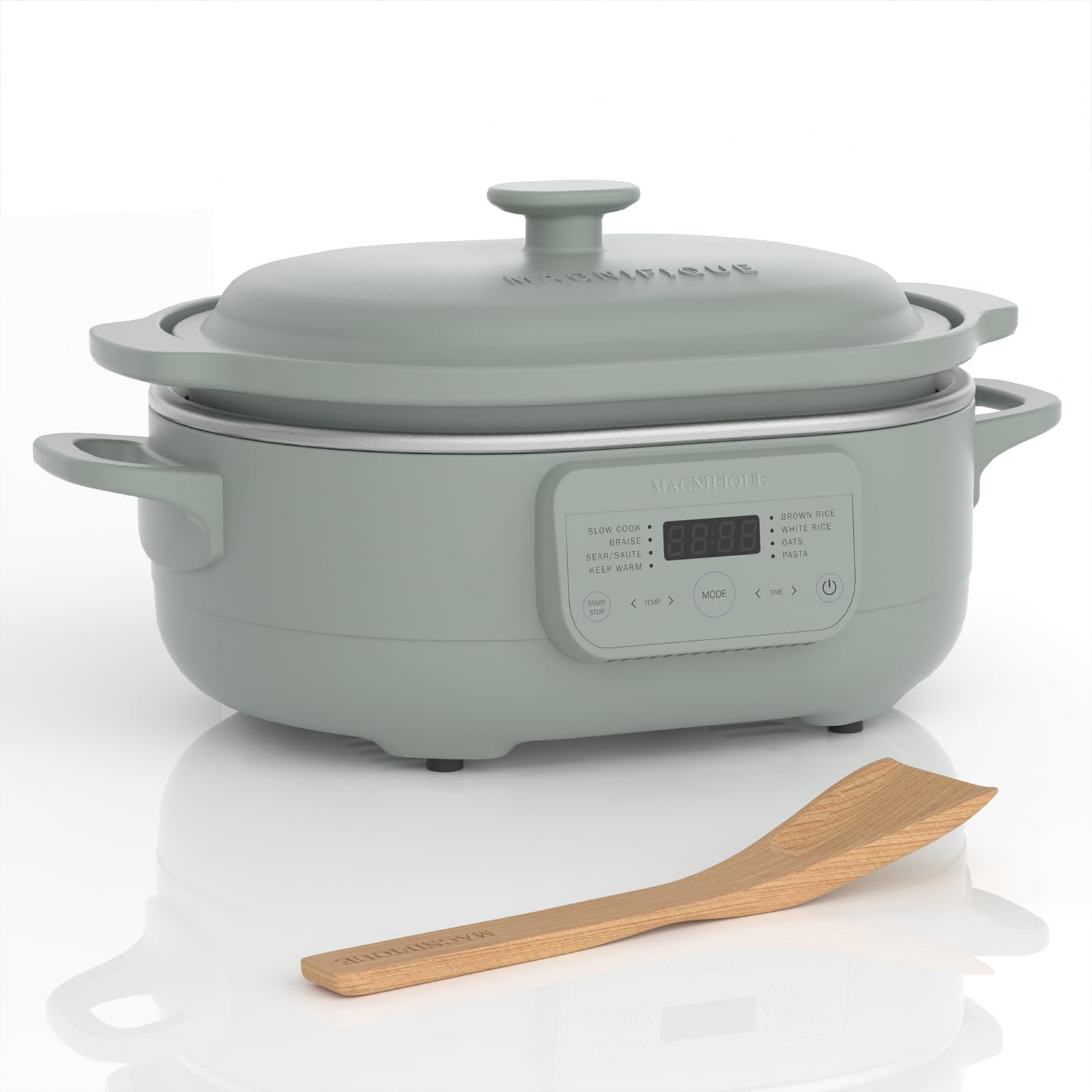
This is the kind of product you buy when you’re tired of “slow cooker food that tastes like slow cooker food.” The MAGNIFIQUE 8-in-1 is built around the biggest flavor upgrade most people never get from a traditional crock: you can sear and sauté in the same pot, then braise or slow cook without dirtying an extra pan. That’s how you get deeper stews, better taco meat, and chicken that tastes browned—not just steamed.
From an ownership standpoint, the removable pot being oven-safe is a sneaky superpower. It means you can finish a dish the way restaurants do: slow cook until tender, then slide the pot into the oven briefly to tighten sauce, brown cheese, or crisp the top. If you’ve ever wished your slow cooker could do the final 10% that makes food feel “complete,” this is that.
Where it shines most is small-space living: RVs, apartments, compact kitchens, and anyone who wants fewer appliances. It’s the “replace multiple tools” play without needing a giant footprint. Just accept that multi-function devices have a learning curve. Once you learn how your presets behave, it becomes a daily driver, not a novelty.
Why it’s worth upgrading
- Sear-to-slow in one pot – Massive real-world flavor payoff and fewer dishes.
- Preset convenience – Rice, oats, pasta, warm, braise: it covers real routines.
- Oven-safe finishing – The “crispy top” and sauce-tightening ability is a game changer.
- Countertop style – It looks like something you want to leave out (and that matters for usage).
Good to know
- Presets are great, but fine-tuning can feel less direct than a simple dial cooker.
- Multi-function control means you’ll want a few practice runs before a “guests are coming” meal.
- Like many small appliances, cord length can limit placement—plan your setup.
Ideal for: cooks who want real flavor-building, one-pot efficiency, and a multifunction tool that replaces multiple kitchen gadgets.
3. Crock-Pot MultiMeal – Dual Pots That Finally Make “Main + Side” Effortless

If you’ve ever thought, “I could slow cook… but I still need a side,” this is the appliance built for your brain. The Crock-Pot MultiMeal isn’t a gimmick—it’s a workflow fix. Two pots, two different temperatures, and a smart timing approach that aims to have both dishes finish together. That means you can do shredded chicken on one side and rice/steam veggies on the other, or keep sauce warm while the main finishes.
This is also one of the few options that genuinely helps households with mixed preferences: spicy on one side, mild on the other; beef on one side, vegetarian on the other; dinner now on one side, meal prep for tomorrow on the other. That flexibility is why owners tend to describe it as “the appliance I didn’t know I needed.”
Expert move: use one side as your “warm station.” Many people underestimate how useful it is to hold dips, gravy, or pulled meat at serving temperature without overcooking the second dish. This is the pot that turns entertaining from juggling into gliding.
Why it’s a kitchen rhythm changer
- Two meals, one appliance – Huge for families and hosts who want less chaos.
- Better timing – Dual finishing reduces the “main done, side not” problem.
- Flexible meal planning – Mixed diets and mixed cravings become easier.
- More than slow cook – Sear/sauté and other modes help build flavor before slow cooking.
Good to know
- It takes more counter space than a single-pot small slow cooker.
- More parts to clean (still manageable, but it’s not a “one crock, one lid” setup).
- Dual programming is powerful—plan one calm practice run before relying on it for a party.
Ideal for: families and hosts who cook a main and a side often, or anyone who wants two different dishes without running two appliances.
4. West Bend Versatility 5-Quart – The Multi-Use “Cook Anywhere” Workhorse

The West Bend Versatility Cooker is the “I don’t want a one-trick pony” choice. It’s not just a slow cooker—it’s a cooking vessel you can move between stovetop, oven, fridge/freezer, and the temperature base. That makes it feel less like a crock pot and more like a flexible kitchen system. And if you’re the kind of cook who loves being able to adjust the temperature with a knob (no menus, no guessing), it has a very satisfying old-school vibe.
Where it really earns its name is entertaining. The included travel lid and storage bag turn it into a potluck-ready setup. The griddle base is a bonus feature that sounds silly until you use it for pancakes, grilled cheese, or breakfast when you don’t want to pull out more pans. It’s the kind of appliance people keep because it fills random gaps in the kitchen.
One expert note: treat any coated vessel like a “gentle tool.” If you choose this style, commit to silicone or wood utensils, avoid high-heat abuse, and clean with soft sponges. Do that, and you’ll get a lot more happy years out of it.
Why it stands out
- True multi-use cooking – Move the vessel between appliances with ease.
- Adjustable temperature control – Great for people who like to “dial in” their cooking.
- Potluck-ready kit – Travel lid + insulated tote is legitimately useful.
- Griddle base bonus – Adds breakfast and quick meals to the toolbox.
Good to know
- A lack of a power indicator light can annoy some users (you learn to read it by heat).
- Coated surfaces require gentle utensil habits to stay pristine.
- It’s a bigger footprint than a compact 3–4 quart crock-style unit.
Ideal for: entertainers, multi-task cooks, and anyone who wants a flexible “cook/serve/store” vessel rather than a single-use crock.
5. Instant Pot 4QT RIO Mini – Small Counter Footprint, Big Meal Possibilities
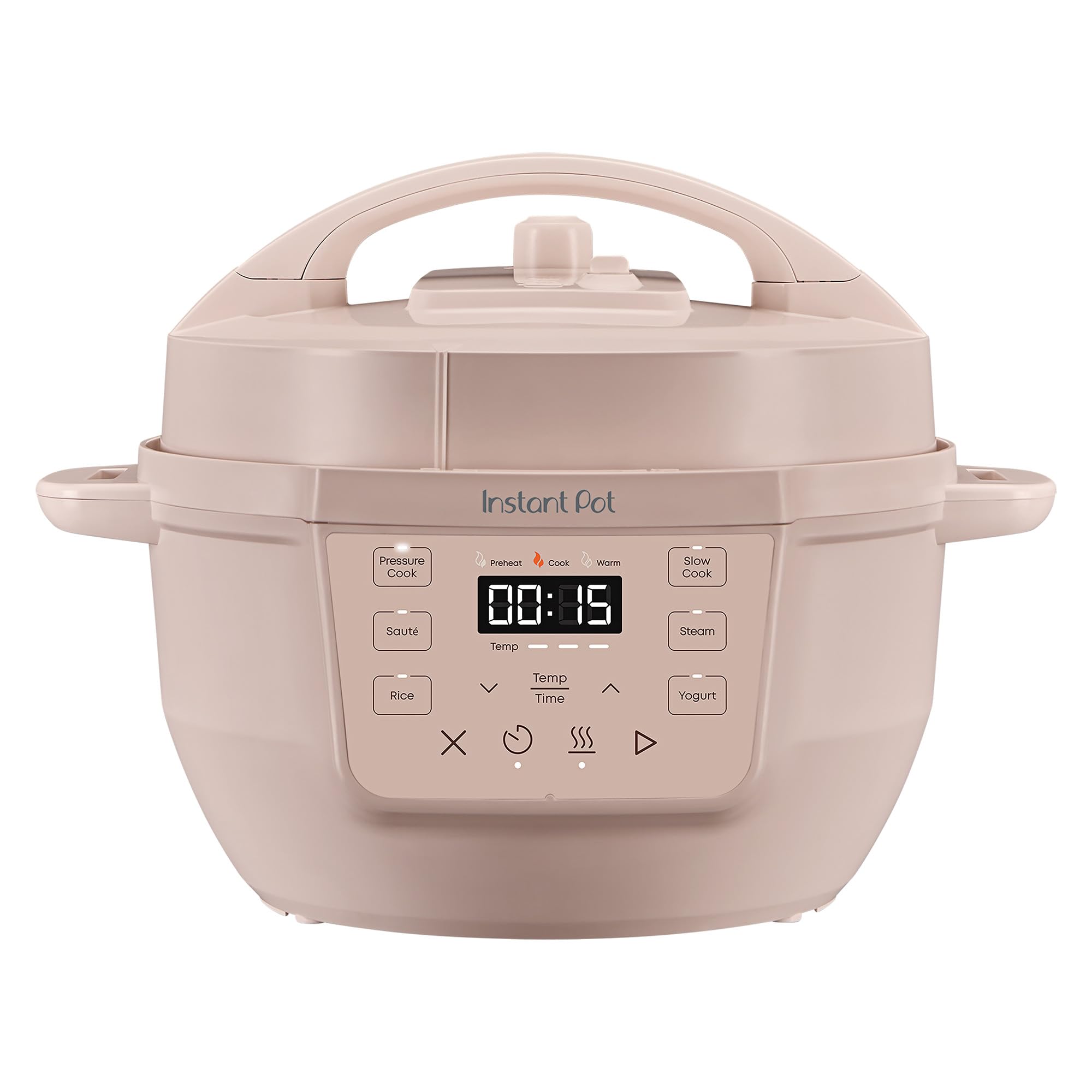
If your kitchen is short on space but you still want to cook like you have options, the RIO Mini is a strong move. It’s compact enough to live on the counter without taking over, but the wider shape gives you real sauté room—meaning you can actually brown onions, toast spices, and reduce sauces without feeling like you’re stirring in a narrow tube.
This style of multi-cooker shines in modern life because it adapts to your schedule. Slow cook when you’re ahead. Pressure cook when you’re late. Steam vegetables while rice cooks. Make yogurt if you’re into that. It’s a “few appliances in one” strategy that makes sense for apartments, students, and anyone who wants to simplify their kitchen footprint.
Expert tip for slow-cook mode on any multi-cooker: treat it like a different method than classic crock cooking. Start with warmed liquid, give it a preheat moment, and don’t be afraid to use the higher slow-cook setting for recipes that were written for a traditional slow cooker. Once you learn the rhythm, it becomes consistent—and very convenient.
Why people keep using it
- True multi-function flexibility – Pressure + slow + sauté means you can match your day.
- Wide pot geometry – Easier stirring, better browning, less “tall narrow pot” frustration.
- Easy cleanup – Stainless pot and lid are typically simple to wash and store.
- Small-kitchen friendly – Big capability without a giant footprint.
Good to know
- Multi-cookers are heavier than classic slow cookers because of the pressure lid + hardware.
- Some owners dislike non-detachable cords (storage preference thing).
- Slow-cook mode requires learning your unit’s settings to match traditional recipes well.
Ideal for: apartment kitchens, students, and anyone who wants one appliance that can slow cook on calm days and speed-cook on hectic ones.
6. Instant Pot Duo Mini 3-Quart – The Proven “Small But Mighty” Everyday Tool

The Instant Pot Duo Mini is popular for a simple reason: it’s one of the easiest ways to shrink your kitchen appliance collection while still upgrading what you can cook. In a 3-quart size, it’s perfect for rice, oatmeal, small batches of soup, steamed vegetables, quick shredded chicken, and side dishes that support a bigger meal. It’s the kind of appliance that makes a small kitchen feel “capable.”
The stainless steel inner pot is a big part of the appeal. It’s durable, it doesn’t rely on coatings, and it lets you sauté directly in the same pot you’ll pressure cook or slow cook in. That means fewer dishes and better flavor. People also love the recipe ecosystem—once you learn the basics, you can cook from muscle memory.
Real-life nuance: the silicone sealing ring is both a blessing (it seals!) and a personality trait (it can hold onto smells). If you plan to make strongly spiced foods and also want pristine plain rice, the pro strategy is to keep separate rings (savory and neutral). That tiny habit makes the whole experience feel cleaner.
Why it’s a classic
- Compact, proven design – A huge community of recipes and tips exists for this model style.
- Stainless durability – Great for people who want to avoid nonstick coatings.
- Fast when you need it – Pressure cooking turns “I forgot dinner” into “we’re fine.”
- Great for sides – Makes meals feel complete without extra pans.
Good to know
- Odor retention in the sealing ring is real—separate rings are the easiest fix.
- Slow-cook mode can require a different setting approach than traditional slow cookers.
- Capacity is perfect for 1–2 people; bigger households may want a larger size.
Ideal for: singles, couples, and side-dish lovers who want one compact tool that can pressure cook and slow cook without taking over the counter.
7. Instant Pot Duo 6-Quart – Bigger Capacity for Meal Prep Without Adding Extra Appliances

This one isn’t “tiny,” but it earns its place here because a lot of people searching for small slow cookers are really searching for something else: they want less effort, fewer dishes, and more meals ready in the fridge. The 6-quart Instant Pot Duo is the upgrade for meal prep, batch cooking, and families who want leftovers on purpose.
The practical value is speed and range. You can pressure cook beans, shredded meat, soups, and stews quickly, then still use slow cook when you want the gentler method. It’s also great for people who want one appliance that covers rice, steaming, yogurt, sauté, and warming without buying separate machines.
The honest trade-off is space and weight. This is a commitment appliance. But if you’re consistently cooking “tomorrow’s lunch” while making today’s dinner, it can feel like the most efficient footprint in the whole kitchen.
Why it’s worth the counter space
- Meal prep power – You can cook bigger batches without multiple pots.
- Fast weeknights – Pressure cooking saves you on busy days.
- Durable stainless inner pot – Built for real use and easy cleanup.
- All-in-one flexibility – Covers multiple cooking jobs with one tool.
Good to know
- Not truly “small”; it’s better described as a compact all-in-one kitchen engine.
- Like other models, the sealing ring can hold odors—separate rings are a smart upgrade.
- Slow-cook recipes may need setting adjustments compared with a traditional crock.
Ideal for: meal preppers and families who want one appliance that covers slow cooking and fast cooking without building a collection of gadgets.
8. GreenLife 3.5QT (White) – Light, Easy, and Built for “Cook + Clean Without Hate”
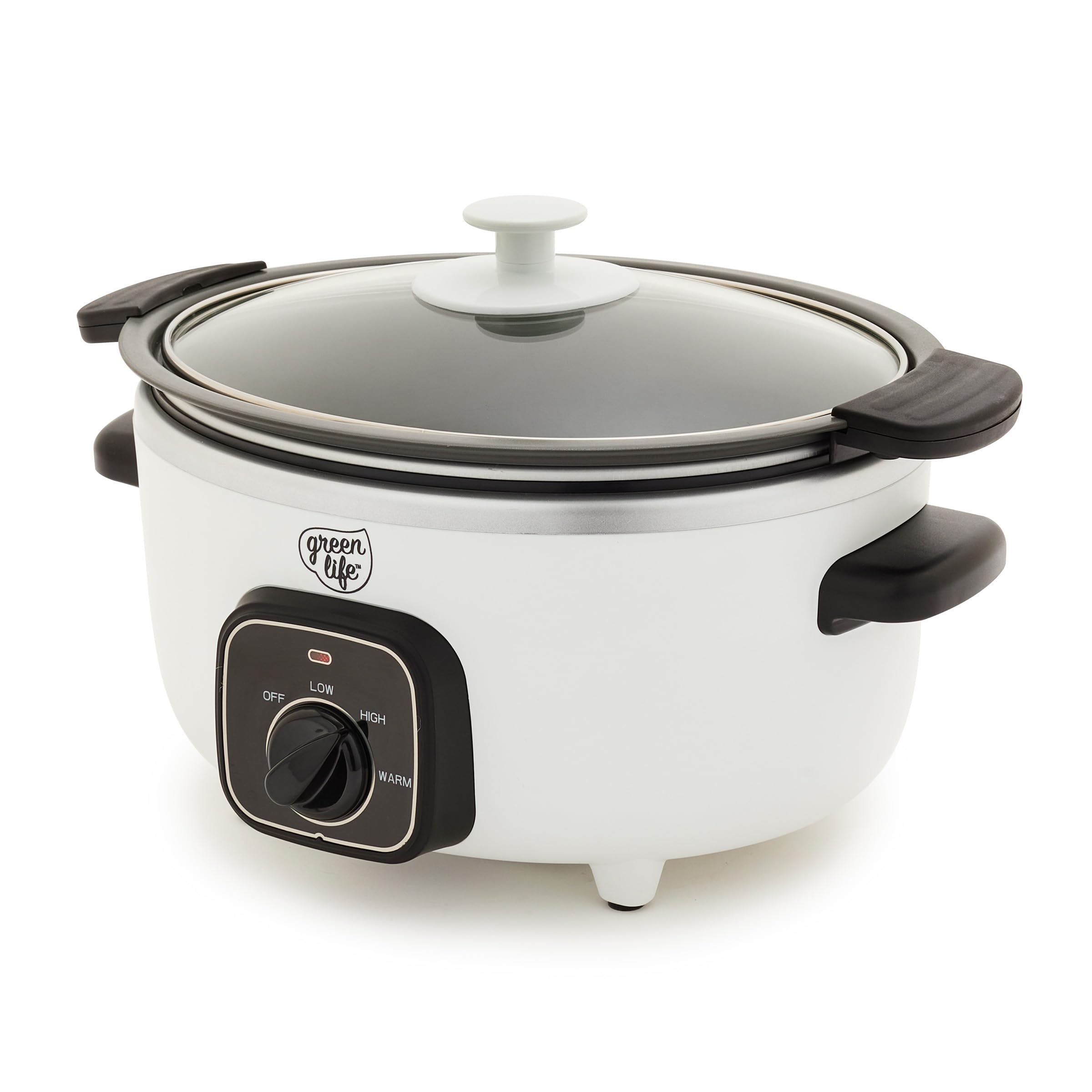
The GreenLife 3.5QT is the slow cooker for people who want two things at once: a healthier materials story and a cleanup experience that doesn’t feel like punishment. The ceramic nonstick interior is designed for easy release—meaning chili, sauce, and stew residue is far less likely to weld itself onto the edges the way it can on traditional crocks. And because the pot is removable and stovetop/oven-capable, you can build flavor early if you want to.
In real homes, this style tends to “win the week” because it’s lightweight. That matters more than most people admit. A cooker that’s easy to lift, wash, and put away is a cooker you’ll actually use. Many owners end up retiring heavier crocks once they realize how much nicer cooking feels when cleanup is quick and the pot isn’t a kettlebell.
Expert tip: to protect ceramic nonstick for years, treat it like a good frying pan. Use silicone utensils, avoid aggressive scouring, and let the pot cool before washing. If you do that, it stays slick, clean, and satisfying.
Why it’s a daily-use favorite
- Lightweight pot – Makes storage and washing dramatically easier.
- Easy cleanup – Ceramic nonstick is a real quality-of-life upgrade for sauces and stews.
- Stovetop/oven flexibility – Great for flavor-building before slow cooking.
- Simple controls – A dial that just works: Low / High / Warm.
Good to know
- Nonstick longevity depends on utensil habits—go silicone/wood only.
- If you prefer fully programmable timers, look at Cuisinart or Hamilton Beach programmable models.
- As with any small cooker, avoid overfilling to keep heat circulation consistent.
Ideal for: anyone who wants a small, clean-feeling slow cooker that’s easy to live with, easy to wash, and flexible enough for flavor-first cooking.
9. GreenLife 3.5QT (Turquoise) – Same Great Cooker, More “Happy Countertop” Energy
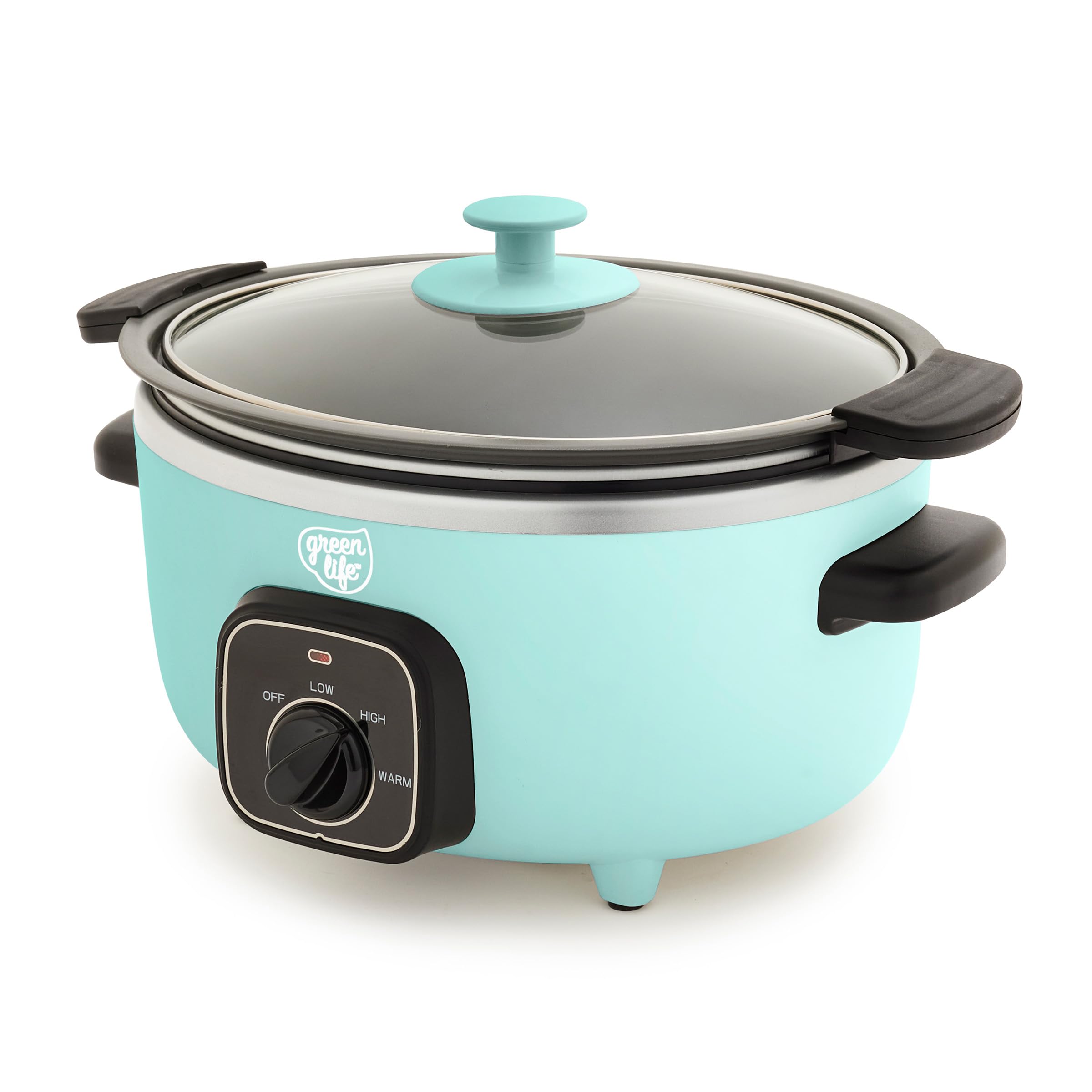
This is the same strong GreenLife formula—easy-clean ceramic nonstick, removable pot, simple dial control—just in a color that makes people smile. And that might sound superficial, but it matters: appliances you like looking at are appliances you’re more likely to keep accessible, which increases real-world use.
Performance-wise, this model shines for the same reasons as the white version: it’s a sweet-spot size for 1–2 people with leftovers, it works beautifully for soups and chili, and it’s light enough that you don’t dread lifting it into a cabinet. Owners also tend to appreciate the “start with a sear, finish slow” flexibility, especially if you cook roasts, stew meat, or anything that benefits from browned edges.
Expert move: if you make bone broth, this is a nice match because it’s easy to clean after long cooking. Just keep the temperature low and stable, and let it do its thing overnight without turning into a rolling boil.
Why it’s easy to love
- Same easy-clean performance – Ceramic nonstick makes daily cooking feel lighter.
- Lightweight and practical – Easy to move, wash, and store.
- Stovetop-ready pot – Great for flavor building before slow cooking.
- Looks great out on the counter – The kind of “pretty useful” you actually use more.
Good to know
- Nonstick = gentle utensils and cleaning for best long-term results.
- Dial control is intentionally simple; timer lovers may prefer a programmable model.
- 3.5QT is perfect for small households, not huge batch cooking.
Ideal for: cooks who want a small non-toxic-style slow cooker that’s easy to clean and genuinely pleasant to keep visible on the counter.
10. Hamilton Beach 4QT Programmable (33443) – Flexible Timing That Fits Real Workdays

This is a strong pick for people whose biggest problem isn’t cooking—it’s timing. The Hamilton Beach programmable approach lets you mix and match cooking time and heat level, then it automatically drops into Warm. That’s exactly what you want if you’re away from home long hours and you don’t want to gamble on a meal staying safe and pleasant.
In real use, the 4-quart size is a comfortable “small family” footprint: enough for a modest chicken, a pot of chili, a lasagna-like bake, or a stew with leftovers—without being so huge that it feels wasteful. Owners also tend to appreciate full-grip handles for carrying, which sounds minor until you’re moving hot food and you want a confident grip.
Expert habit: if you regularly cook lean meats, program your cook time around tenderness and then rely on Warm to hold it. Overcooking lean protein in a small cooker is one of the easiest ways to get dry results—even if the cooker itself is great. Programmable control helps you avoid that.
Why it’s so practical
- Timing flexibility – Multiple time and heat combos that match real schedules.
- Auto keep-warm – Helps avoid overcooking and “I got home late” disasters.
- Great everyday capacity – A strong size for 2–4 people with leftovers.
- Easy to clean – Removable crock and lid simplify cleanup.
Good to know
- Cord length can be short; plan your counter/outlet setup.
- No lid latch—if you travel with food often, consider a locking-lid option too.
- Digital controls are great, but dial lovers may prefer simpler models.
Ideal for: busy schedules, long workdays, and anyone who wants a programmable cooker that makes dinner timing feel effortless.
11. Toastmaster 4QT Digital (Locking Lid) – Party-Friendly Timing with Travel Confidence

The Toastmaster 4QT is a smart match for people who cook “to share.” The locking lid concept is aimed at transport, and the digital timing helps you dial in your cook window without guessing. It’s the kind of cooker that’s easy to love for soups, party dips, and “bring-a-dish” moments—especially when you want a smaller footprint than the giant family-sized crocks.
In real-life feedback patterns, you’ll see two themes: people love the size for two-person households and potluck use, and they like the digital controls because they feel modern without being complicated. The main learning curve is the latch itself. A latch is only useful if you trust it—so the pro move is simple: practice it once when the pot is empty, so you know the motion and it doesn’t feel fiddly when you’re in a hurry.
Expert tip: a travel-lid cooker becomes dramatically more useful when you plan for “warm mode life.” If you’re bringing food to a gathering, you often don’t need more cooking—you need stable holding. This model’s warm function is the feature that keeps dips and meatballs at their best once you arrive.
Why it’s party-ready
- Locking lid for transport – Helps reduce spills and anxiety on the way to events.
- Digital timing – More control than basic dial cookers.
- Perfect potluck capacity – Big enough to share, small enough to store.
- Warm mode usefulness – Great for keeping dips and party foods ready to serve.
Good to know
- Some users find the lid latch takes practice; test it once before travel day.
- As with most small slow cookers, cord length may influence placement.
- If you never transport food, a simpler non-latch cooker may feel easier.
Ideal for: potlucks, parties, and small households that want digital timing plus a transport-focused lid system.
12. MAGNIFIQUE 4QT Casserole Slow Cooker – The Lasagna-Friendly “Shallow Dish” Advantage

This is a very specific kind of slow cooker—and that’s a compliment. Casserole-style slow cookers are for people who hate the “deep crock” problem: layered dishes sink, get overly wet, and don’t cook like they do in a baking dish. A shallow casserole dish changes the geometry so heat spreads across a wider surface area, and casseroles behave more like casseroles.
That’s why these are loved for cabbage rolls, lasagna-style bakes, bread puddings, and even buffet warming. You’re not trying to fit the recipe into a tall oval crock; you’re using a dish that was built for that shape of cooking. Owners often highlight that it looks great on the counter and feels like serveware, not just a cooking insert.
Expert tip: when using a shallow cooker, be mindful of moisture. Because there’s more surface area, sauces can reduce faster than in a deep pot. That’s not a bad thing—it’s how you get tighter, richer results—just plan your liquid amounts accordingly.
Why casserole lovers adore it
- Shallow dish geometry – Better for layered recipes than deep crocks.
- Serve-and-store feel – The dish acts like bakeware, not just “a crock.”
- Manual simplicity – A straightforward dial can be a relief.
- Great for gatherings – Keeps casseroles and warm dishes at serving temp beautifully.
Good to know
- Shallow cooking can reduce liquids faster; adjust recipes thoughtfully.
- Ceramic dishes can be heavier; plan storage where lifting is easy.
- If you mostly cook soups and beans, a deeper oval might suit you better.
Ideal for: casserole households, potluck cooks, and anyone who wants slow-cooker ease for dishes that usually belong in a baking dish.
13. Crock-Pot 2.5QT Casserole – The Small, Pretty Cooker That’s Made to Leave the House

This is the small slow cooker that feels like it was designed for real humans—especially people who cook for one or two and don’t want a giant appliance dominating the kitchen. The 2.5-quart casserole shape is perfect for dips, meatballs, party sides, and smaller dinners where you still want leftovers without feeding an army. And yes: it’s genuinely “eye-catching” on the counter, which makes it more likely you’ll keep it accessible.
What makes it special is the casserole-style insert plus the carry-friendly lid system. If you’re the person who brings food to gatherings, this solves the most annoying part: transporting without panic. The other quiet win is serving. A casserole-shaped insert feels more natural at the table than a deep round crock—it looks like a dish, not a container.
Expert tip: use the locking lid for transport, not for the cooking phase. During cooking, you want the lid to sit normally so the cooker can vent the way it was designed. For potlucks, lock it, wrap the cord, and you’re ready to go.
Why it’s a small-household gem
- Perfect party size – Ideal for dips, meatballs, and small sides.
- Carry-friendly design – The locking lid system reduces transport stress.
- Serveware vibe – Casserole insert looks great at the table.
- Great for “smaller life” – A sweet match for downsizing kitchens and portions.
Good to know
- It’s intentionally compact, so it’s not meant for large family mains.
- Smaller units can take a bit longer to heat; pre-warming ingredients helps.
- If you live outside North America, always double-check plug/voltage details on the listing you purchase.
Ideal for: small households, potluck regulars, and anyone who wants a compact slow cooker that’s easy to serve from and easy to carry.
14. Hamilton Beach 4QT (33140G) – The “Analog, Reliable, Does the Job” Cooker

This is the slow cooker for people who don’t want an appliance with opinions. No apps. No menus. No learning curve. You load ingredients, turn the dial, and it cooks. That simplicity is why old-school dial slow cookers still have a loyal following: they’re hard to mess up, and they feel trustworthy.
The 4-quart size is also quietly perfect. It’s big enough to cook a real meal (think a small chicken, stew, or a pot of beans), but it’s still manageable for everyday use. Owners tend to describe this kind of cooker as “safe, clean, and versatile” because there’s no exposed flame and the process is steady. It’s the kind of unit you buy for a college student, an empty nester, or anyone who wants low-effort cooking without tech.
Expert tip: with very simple models, learn your Low setting early. If Low feels hotter than you expect, use Low for shorter windows and rely on Warm for holding. That one adjustment keeps food from boiling hard and helps preserve moisture.
Why it’s a smart basic buy
- Simple dial control – No programming required, easy for anyone to use.
- Good everyday capacity – Great for dinners and leftovers without being huge.
- Easy cleanup – Removable crock and lid simplify washing.
- Reliable “set and go” cooking – Great for busy people and students.
Good to know
- No latch system—transport carefully if taking it to events.
- Some owners wish for a power indicator light (the cooker is intentionally minimal).
- As with many cookers, cord length may influence where it can sit.
Ideal for: anyone who wants a classic slow cooker that’s easy, dependable, and built around simple “turn it on and cook” energy.
15. ICOOK 3.5QT Oval – The Quietly Practical “Moist Roast” Small Cooker

The ICOOK 3.5QT is the kind of slow cooker that wins people over by being… normal (in the best way). A simple oval ceramic crock, the three heat settings you actually need, and a size that works for small families or couples who want leftovers. It’s especially appealing if you’re replacing a larger cooker because your meals felt dry or overcooked in a pot that was too big for the portion.
One recurring real-world theme with this type of cooker is “better moisture.” That can happen when the pot size matches the roast better and the lid sits snugly enough to reduce unnecessary evaporation. It’s not magic—it’s geometry. If a roast fits the pot well, more surface stays protected by surrounding ingredients and liquid, and you get tender, juicy results with less babysitting.
Expert tip: if you notice recipes taking longer than expected, don’t panic—just start earlier. Some smaller cookers cook a touch gentler than aggressive high-heat units, and that’s actually great for texture. Cooking overnight for stews or roasts often produces the best results.
Why it’s a smart practical pick
- Great daily size – Perfect for dinners with leftovers.
- Simple controls – Low/High/Warm covers real cooking needs.
- Oval shape – More roast-friendly than many round small units.
- Easy to store – A nice replacement for oversized cookers in small kitchens.
Good to know
- Not a feature-heavy cooker; it’s designed for simplicity.
- Some users find it cooks a bit slower than certain recipes assume—start early.
- If you want a programmable timer, consider Cuisinart or Hamilton Beach programmable models.
Ideal for: small families and couples who want a straightforward oval slow cooker that produces tender, moist roasts without complicated controls.
16. Elite Gourmet 1.5QT – The Tiny MVP for Dips, Sauces, and Cooking for One

A 1.5-quart slow cooker sounds like a novelty until you own one—then it becomes the thing you pull out constantly. It’s perfect for queso, spinach dip, meatball sauces, warm chocolate, small batches of beans, or a “cook for one” meal that feels like real food without leftovers for days. If your big slow cooker feels ridiculous for your household, this little unit is pure relief.
The ownership experience here is all about convenience. It’s small enough to leave out, light enough to move easily, and simple enough that you’ll actually use it on a whim. The Warm setting is what makes it a party hero: you can keep something ready-to-serve without constantly reheating it.
Expert tip: tiny cookers can run closer to a simmer than you expect (because there’s not much food mass to absorb heat). If you’re cooking something delicate, use Low and give it time, or use Warm for holding once it’s hot. And if your lid fit feels a bit loose, it’s usually not a dealbreaker for dips and stews—but it’s good to learn your cooker’s personality early.
Why it’s surprisingly useful
- Perfect for dips and sauces – The most common real-world use case for mini cookers.
- Small footprint – Easy to store, easy to leave out, easy to use often.
- Simple controls – No learning curve; it’s “set and go.”
- Warm mode wins – Great for parties, snack spreads, and serving time flexibility.
Good to know
- Some tiny cookers feel less distinct between Low and High—learn yours with a simple test recipe first.
- Not built for big family mains; it’s a specialty tool in the best way.
- Glass lids on mini cookers can fit less tightly than premium models (usually fine for its use cases).
Ideal for: dip lovers, singles, office kitchens, dorms, and anyone who wants a tiny slow cooker that’s genuinely useful (not just cute).
How Small Slow Cookers Actually Cook (and How to Avoid Dry Results)
Small slow cookers are not “just smaller versions” of big ones. The physics changes. Less food mass can mean faster temperature swings, more noticeable evaporation, and quicker sauce reduction—especially in shallow casserole-style pots. Once you understand the mechanics, you can get consistently tender, flavorful results from any model you choose.
What makes a small cooker feel “predictable”
- Stable heat + steady moisture – Great slow cooking is gentle heat over time with enough liquid support.
- Right fill level – Too empty cooks unevenly; too full slows heat circulation and can cook inconsistently.
- A lid you don’t lift – Heat escapes fast. Peeking too often can add significant cook time and change texture.
- A pot that matches your food – Roasts do better in ovals; casseroles do better in shallow dishes; soups do great in deeper round pots.
- Smart use of Warm – Warm is the “save my dinner” setting. Use it to hold food, not to do the whole cook.
If you want to level up instantly: stop cooking lean meats “extra long” just because you’re busy. Cook until tender, then hold on Warm. That one behavior shift is the difference between juicy and dry in smaller pots.
Pro techniques that make your food taste better
- Start with flavor: when possible, brown meat or sauté onions before slow cooking (or choose a pot that lets you do it in the same vessel).
- Layer like a chef: dense vegetables on bottom, meat above, delicate vegetables later. This improves texture and prevents mush.
- Use a “liquid strategy”: add broth for moisture, but don’t drown everything. The goal is braise-like cooking, not boiling.
- Fix thin sauce without stress: remove the lid for the last 20–40 minutes on High to reduce, or finish briefly in the oven if your pot allows.
- Fix thick sauce gracefully: add warm broth a splash at a time, stir, and give it 10 minutes to settle.
The best slow cooker meals don’t come from “more time.” They come from the right time, the right moisture, and a pot that matches the recipe shape.
FAQ: Small Slow Cooker Questions (Answered Like a Real Human)
What size counts as a “small” slow cooker?
Why does my food boil on Low?
Is a programmable timer actually worth it?
Can I brown meat inside the slow cooker?
How do I keep chicken from drying out in a small slow cooker?
What’s the biggest mistake people make with small cookers?
Final Thoughts: Your Best Rated Small Slow Cooker Game Plan
Here’s the truth: most people don’t need the “most advanced” cooker. They need the one that matches their life so well that using it feels obvious. If you pick based on the right friction point—timing, cleanup, portability, or versatility—you’ll end up with an appliance you genuinely rely on.
Use this simple shortcut to choose confidently:
- Want the most balanced “buy once, use constantly” choice? Start with the Cuisinart PSC-350 3.5-Quart. It’s the dependable programmable classic that fits real portions and real schedules.
- Want the best “one pot, better flavor, fewer dishes” upgrade? Choose the MAGNIFIQUE 4-Quart Programmable 8-in-1 for sear-to-slow cooking and oven-safe finishing.
- Cook a main and a side constantly? The Crock-Pot MultiMeal is the dual-pot solution that makes your dinner workflow dramatically easier.
- Want a non-toxic-style, easy-clean daily cooker? Pick the GreenLife 3.5QT (White) or GreenLife 3.5QT (Turquoise) and enjoy the “I don’t dread washing this” lifestyle.
- Need party and potluck confidence? Go for a travel-forward option like the Toastmaster 4QT Digital (Locking Lid) or the compact carry-friendly Crock-Pot 2.5QT Casserole.
- Want “pure simplicity” with a dial? The Hamilton Beach 4QT (33140G) is the no-frills option that just cooks the food.
- Want a tiny, genuinely useful mini cooker? Grab the Elite Gourmet 1.5QT for dips, sauces, and small-batch wins.
If you remember one thing, make it this: your best purchase is the one you’ll happily use on a random Tuesday. Choose the best rated small slow cooker that matches your portions, your cleanup tolerance, and your schedule—and you’ll feel that “I finally nailed it” confidence every time you lift the lid.
