
An over-the-range microwave is not “just a microwave.” It’s your weeknight reheater, your quick breakfast station, your late-night snack saver… and also your cooktop light, your hood fan, and (for a lot of kitchens) the one appliance you touch more than any other.
So if you’re hunting for the best over the range microwaves, here’s the truth that saves people from buyer’s remorse: you’re choosing an everyday workflow. Not a wattage number. A microwave can heat fast and still annoy you daily if the door slams, the buttons don’t register, the cooktop light is dim, or the vent fan “sounds strong” but doesn’t actually pull steam off your stove.
This guide is built around the friction points people only discover after installation: the cabinet clearance mistake that forces a return, the template that’s “almost right,” the fan that’s loud on high, the stainless that shows fingerprints, the filter you can’t find easily, the control panel you can’t read at night, and the “smart features” that are either genuinely helpful… or just one more thing to babysit.
I’m going to walk you through the real decision-making that matters in a lived-in kitchen—then give you deep, no-fluff reviews of 15 strong options (including a rare 24-inch model for tight spaces, a slim low-profile pick for short cabinets, and several multi-function units that try to replace a countertop air fryer).
If you read this all the way through, you’ll know exactly what to buy for your cooking style—without falling for marketing.
In this article
- How to choose the right model for your kitchen layout and cooking style.
- Quick comparison table of 15 standout options.
- In-depth reviews of each microwave, with real pros and cons.
- How OTR ventilation really works (and why your duct run matters).
- FAQ: sizing, venting, filters, installation, and the “what I’d buy” wrap-up.
How to Choose the Best Over The Range Microwaves for Real Kitchens
Most buying guides treat over-the-range microwaves like a spreadsheet: capacity, wattage, “number of presets,” done. But a good OTR microwave is basically a small piece of kitchen infrastructure. It has to fit your cabinetry, vent your cooking, light your cooktop, and stay pleasant to use when you’re tired.
Here’s the framework I use to get people to the right choice quickly—and to keep them happy six months later.
1. Measure the three “gotcha” dimensions (not just width)
Yes, most over-the-range models are designed for a standard 30-inch space. But fit problems usually happen because of height, depth, and the door swing. Before you fall in love with a model, measure:
- Cabinet opening width: 30-inch is standard; 24-inch is a special case (and harder to shop).
- Cabinet drop / clearance: How low your cabinets hang compared to the bottom of the microwave. Low-profile models can be a lifesaver in tight setups.
- Depth to backsplash and front clearance: Some doors and handles stick out more than you expect, which matters in narrow galley kitchens.
2. Decide: ducted venting, recirculating, or “I’m not sure yet”
This is the most overlooked decision—because most people assume “the fan is the fan.” But how you vent determines what “good ventilation” even means.
- Ducted (external vent): Air leaves your home through a duct. This is the best setup for smoke, steam, and strong cooking smells.
- Recirculating (non-vented): Air passes through grease and charcoal filters and returns to the room. Better than nothing, but it’s not the same experience.
- Unsure: Choose a model that supports multiple venting orientations (top, rear, or recirculating) so you’re not boxed in.
Here’s the real-life nuance: a “300 CFM” fan can feel stronger than a “400 CFM” fan if your duct run is short and straight—while a powerful fan can feel weak if your duct is long, has tight bends, or leaks around connections. (We’ll go deeper on this in the venting section.)
3. Cooktop lighting can make you love—or hate—your kitchen
People obsess about microwave power and then live for years with a dim stove light. Don’t do that. If you cook at night, lighting is a daily quality-of-life feature.
- LED cooktop light: Usually brighter and cleaner-looking than old incandescent bulbs.
- Light placement: Two lights spaced well often feels better than one super bright spot.
- Control panel backlighting: Surprisingly rare on some sleek models. If you cook in low light, this matters.
4. The “button feel” test is real (and it predicts long-term happiness)
If you read real owner reviews, one theme shows up constantly: buttons. Not “programs.” Buttons. Some microwaves require a firm press to register. Some have labels that aren’t easy to see at night. Some have a glossy overlay that can wear or peel over time.
Ask yourself:
- Do you want a handle, or do you prefer a handle-free, push-to-open look?
- Will kids or guests use it? If so, avoid designs that are “too clever” without clear cues.
- Do you need a beep volume control (or at least a softer beep) for early mornings?
5. Choose the features that match how you actually eat
A feature is only “premium” if you’ll use it weekly. These are the ones that genuinely change daily life:
- Sensor reheat/cook: Great for people who reheat leftovers constantly and don’t want dry edges or cold centers.
- Turntable on/off: A big deal if you heat long casserole dishes, oversized plates, or rectangular cookware.
- Multi-stage cooking: Useful for “soften then heat” workflows (think: warming milk, melting butter, gentle defrosting).
- Low-profile design: Helps with tight cabinet drops and can make your cooktop feel less cramped.
- Convection/air fry modes: Amazing when engineered well; mediocre when treated like a checkbox. (I’ll tell you what to expect realistically.)
- Smart/app control: Helpful if you truly want notifications or voice control—unnecessary if you just want a good microwave.
6. Installation reality: plan for “two people and a surprise”
Even if you DIY, an over-the-range install is rarely “easy.” It’s usually “straightforward, but awkward.” Real owners most commonly mention:
- Templates that are close but not perfect: You may widen a hole slightly or measure manually instead of trusting paper.
- Cabinets that aren’t perfectly level: That tiny crooked cabinet can turn bolt alignment into a puzzle.
- Electrical surprises: Replacing a hardwired hood often means adding an outlet for the new microwave’s plug.
- Backplate alignment: You’re lifting, tilting, and hooking onto a bracket while trying not to scratch the backsplash.
If that sounds intense, don’t panic. It’s manageable. But it’s also why choosing the right model first matters so much: you don’t want to do this twice.
7. The long-term stuff that people forget to think about
These are the ownership details that don’t show up on marketing pages—but absolutely show up in real reviews:
- Fingerprint management: Some stainless finishes smear constantly. Handle-free designs can reduce smudging.
- Filter access and availability: Grease filters should be easy to remove and wash. Charcoal filters (for recirculating setups) should be easy to buy again.
- Door feel: A door can be “secure” and still sound like it’s slamming at 5 a.m. If noise bugs you, pay attention to this.
- Interior light brightness: A dim interior light can make the microwave feel cheaper than it is.
- Durability of the control overlay: Peeling labels and worn buttons are a top complaint on several budget brands.
Now let’s move to the quick table so you can shortlist the right style—then jump into the deep reviews.
Quick Comparison: 15 Best Over The Range Microwaves to Consider
Use this table to pick your top 2–3 based on your kitchen needs (venting, cabinet space, cooking style), then jump to the in-depth reviews for the real-life details that don’t show up on spec sheets.
On smaller screens, swipe or scroll sideways to see the full table.
| Model | Type | Standout strength | Best match | Amazon |
|---|---|---|---|---|
| GE PVM9005SJSS Profile | Premium flagship | Big capacity + sleek handle-free look + strong multi-speed ventilation | Homeowners who want a “feels expensive” daily upgrade | Amazon |
| Midea MMO12S3ASTZ Slim (1.2 cu. ft.) | Low-profile | Slim height frees cabinet space + smart app/voice + strong venting for its size | Tight cabinet drops and modern “open feel” kitchens | Amazon |
| BLACK+DECKER EC942K6CE-SS (Air Fry + Convection) | Multi-cook | “Second oven” energy: air fry, bake, roast, convection in one unit | Small kitchens, busy families, holiday helpers | Amazon |
| Commercial Chef CHMRC17GS (Convection + Air Fry) | Multi-mode | Big interior + convection/air fry versatility + hood fan built in | People who want features without buying separate appliances | Amazon |
| GE JVM6175SKSS (Sensor) | Reliable upgrade | Solid GE feel + practical presets + classic “replace the old one” fit | Most homes needing a simple, trustworthy replacement | Amazon |
| Frigidaire 1.8 Cu. Ft. OTR | Everyday ease | Zero-clearance door + bright lighting + roomy “Fits-More” interior | Kitchens with tight side walls and nightly cooking | Amazon |
| BLACK+DECKER EM044KB19 (1.9 cu. ft.) | High airflow | 400 CFM ventilation + turntable on/off for oversized dishes | Heavy cookers who want stronger venting without going pro | Amazon |
| Midea MOR17BSA-SS (Smart Touch Panel) | Clean UI | Simple menu layout + quiet operation vibes + strong everyday reheating | People who want “no fuss” with a modern look | Amazon |
| COSMO COS-2413ORM1SS (24-inch) | 24-inch fit | Rare 24-inch OTR option with vent fan + sensor modes | RVs, apartments, and tight cabinet openings | Amazon |
| GE JVM3160RFSS (1.6 cu. ft.) | Basic GE | Simple controls + dependable performance + common replacement choice | Landlords, rentals, and “keep it simple” households | Amazon |
| Galanz GLOMJA17S2B-10 (ECO Mode) | Budget stainless | Good capacity + eco mode + simple auto-cook set | Value shoppers who still want a stainless look | Amazon |
| Farberware 1.7 OTR (Black) | Value pick | Melt/soften + volume control + straightforward “daily driver” layout | Budget-focused kitchens that still want useful extras | Amazon |
| Farberware 1.7 OTR (White) | White option | Same practical feature set as black—just a cleaner white finish | White kitchens, rentals, and lighter appliance themes | Amazon |
| BLACK+DECKER EM044K6CE-SS (Stainless) | Simple stainless | One-touch menus + multi-stage cooking + straightforward vent setup | People who want basic features with a stainless look | Amazon |
| BLACK+DECKER EM044K6CF-BK (Black) | Simple black | Same feature layout as stainless—black finish hides smudges better | Black appliance sets and fingerprint-sensitive households | Amazon |
In‑Depth Reviews: 15 Over‑The‑Range Microwaves That Feel Good to Own
Now we go model-by-model. I’m going to focus on the details that make a microwave feel “easy” or “annoying” in real life: door feel, button response, vent behavior, lighting, cleaning, and the kind of quirks people only discover after weeks of use.
1. GE PVM9005SJSS Profile – The Premium Upgrade That Still Feels Practical

If you want an OTR microwave that feels like a true kitchen upgrade (not just a replacement), the GE Profile PVM9005SJSS hits the sweet spot. It’s roomy, looks clean and modern, and brings the kind of “daily ease” you notice immediately—especially if you’re coming from an older model with a loud door and a dim stove light.
The biggest lifestyle win is the handle-free design. In real kitchens, handles do two annoying things: they catch on pockets as you pass by, and they collect fingerprints. A sleek, flat front doesn’t just look modern—it stays looking cleaner with less effort. Multiple owners also mention that the overall design feels “built” rather than flimsy, which matters when the microwave is mounted at eye level and you’re opening it constantly.
Now the honest part: the “premium look” sometimes comes with “premium behavior.” Several users say the buttons can take a firmer press than they expected. That’s not a dealbreaker, but it’s absolutely something you want to know before you buy—especially if you like a light touch, or if kids and guests will use it. Once you learn the press style, it becomes normal. But it’s the kind of quirk that budget guides never mention and real owners always do.
Where this model earns its “best overall” placement is balance. It’s not trying to be five appliances at once. It’s trying to be an OTR microwave that feels high-end, vents well, fits real cookware, and looks sharp doing it. That is exactly what most kitchens actually need.
Why it stands out
- Premium, handle-free design – Cleaner look, fewer smudges, and no handle sticking out into your space.
- Roomy interior – Big enough to feel like an upgrade, not a “tight fit” compromise.
- Everyday usability – A model that owners consistently describe as a satisfying replacement from older microwaves.
- Strong “installed confidence” – Once mounted, it feels solid and stable—no cheap rattles vibe.
Good to know
- Some owners report the buttons need a firmer press than expected (you’ll adjust, but it’s real).
- Like most stainless models, it will show fingerprints—just less than a big protruding handle setup.
- If you want air fry/convection cooking, this isn’t that kind of microwave; it’s a “do the core job perfectly” pick.
Ideal for: homeowners who want a premium-looking microwave that feels practical every single day—especially as a confident, modern replacement.
2. Midea MMO12S3ASTZ Slim – The “More Cabinet Space” Microwave That Changes Your Whole Cooktop Feel
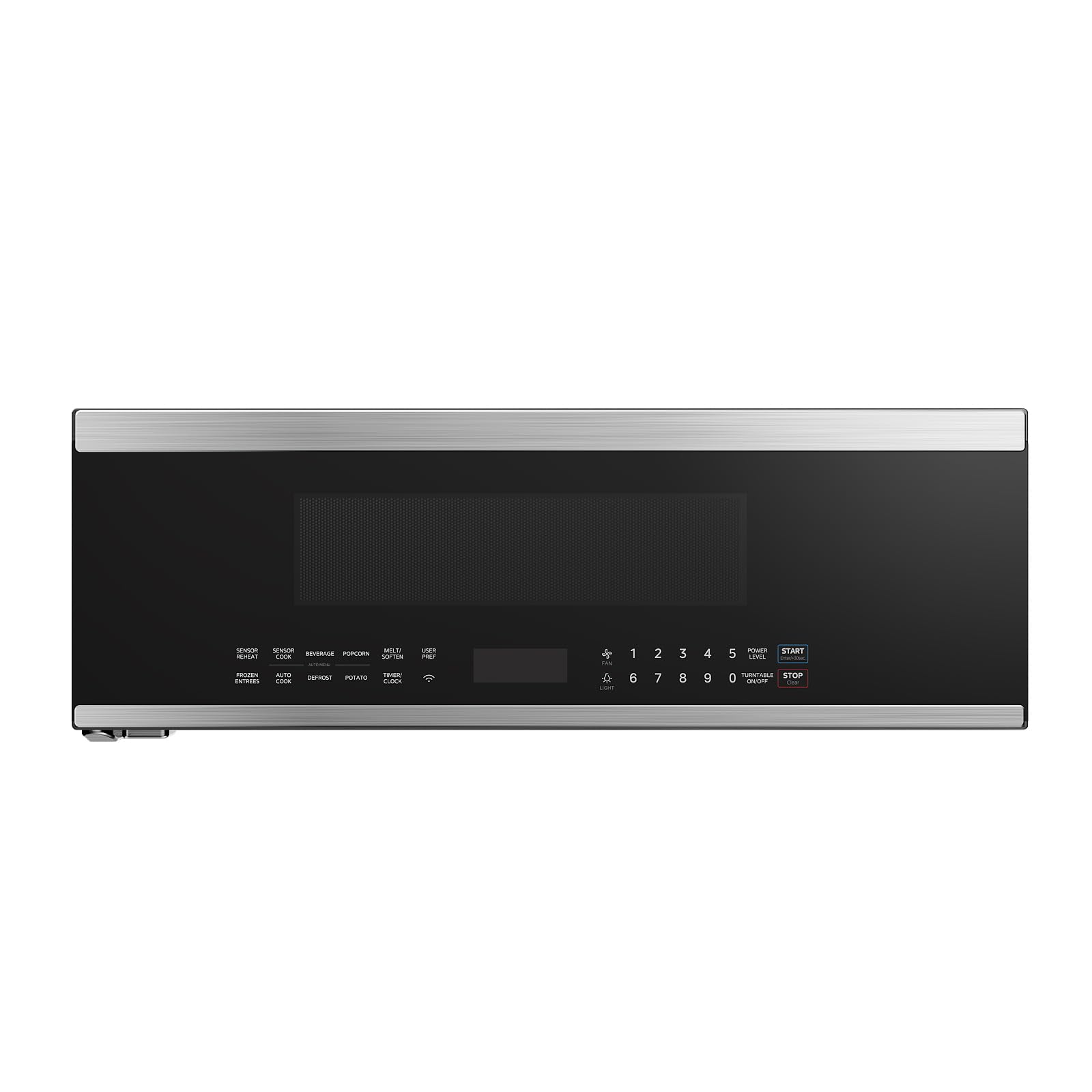
This is the pick for people who look at their current microwave and think: “Why does this thing feel like it’s sitting on top of my stove?” A slim over-the-range microwave changes your kitchen more than most people expect. It opens up visual space, gives you more overhead room, and can make cooking feel less cramped—especially if your cabinets sit low.
The Midea MMO12S3ASTZ is designed around that idea. Instead of forcing you into cabinet modifications, it aims to fit where many under-cabinet hoods live. That’s not just convenient; it’s the difference between a one-day swap and a “we need to rework the cabinet” project. Owners frequently mention that the design feels modern and that the microwave is quieter than older units—an underrated win if your kitchen is open to the living room.
Now let’s talk about the smart features. App control and voice control can be genuinely useful in the right household: starting the fan while your hands are covered in flour, getting a notification when something finishes, or adjusting the vent speed without reaching up. But smart features also add “one more system” to your kitchen. If you love tech, you’ll enjoy it. If you want minimal complexity, treat smart control as optional and focus on how good the microwave feels with normal buttons.
The common complaints are also very consistent: some users don’t love the visibility of the controls in low light, and a few mention early wear on certain buttons. That’s why I recommend this model for people who prioritize the slim form factor first—because the space payoff is huge—and who are willing to be a little intentional: good kitchen lighting, and a gentle touch instead of aggressive pounding on the panel.
Why it feels different
- Slim, space-opening design – Makes your cooktop area feel less boxed-in and visually lighter.
- Strong “modern kitchen” vibe – Clean lines, minimal branding feel, and a look that reads high-end.
- Smart control options – Helpful for busy cooks who multitask and want notifications or voice control.
- Quiet ownership pattern – Many owners describe it as less intrusive than older, louder microwaves.
Good to know
- Controls can be harder to see in the dark because the panel sits low; plan your lighting.
- Some owners report early button-label wear—treat the control panel gently and keep it clean.
- Because it’s slim, the interior is smaller than full-size 1.7–2.1 cu. ft. models (great for most plates, less ideal for bulky cookware).
Ideal for: kitchens with tight cabinet clearance, people who hate bulky visuals, and anyone who wants a slim OTR that feels like a renovation without the renovation.
3. BLACK+DECKER EC942K6CE-SS – The “One Appliance, Many Jobs” Choice (Air Fry, Convection, Bake)
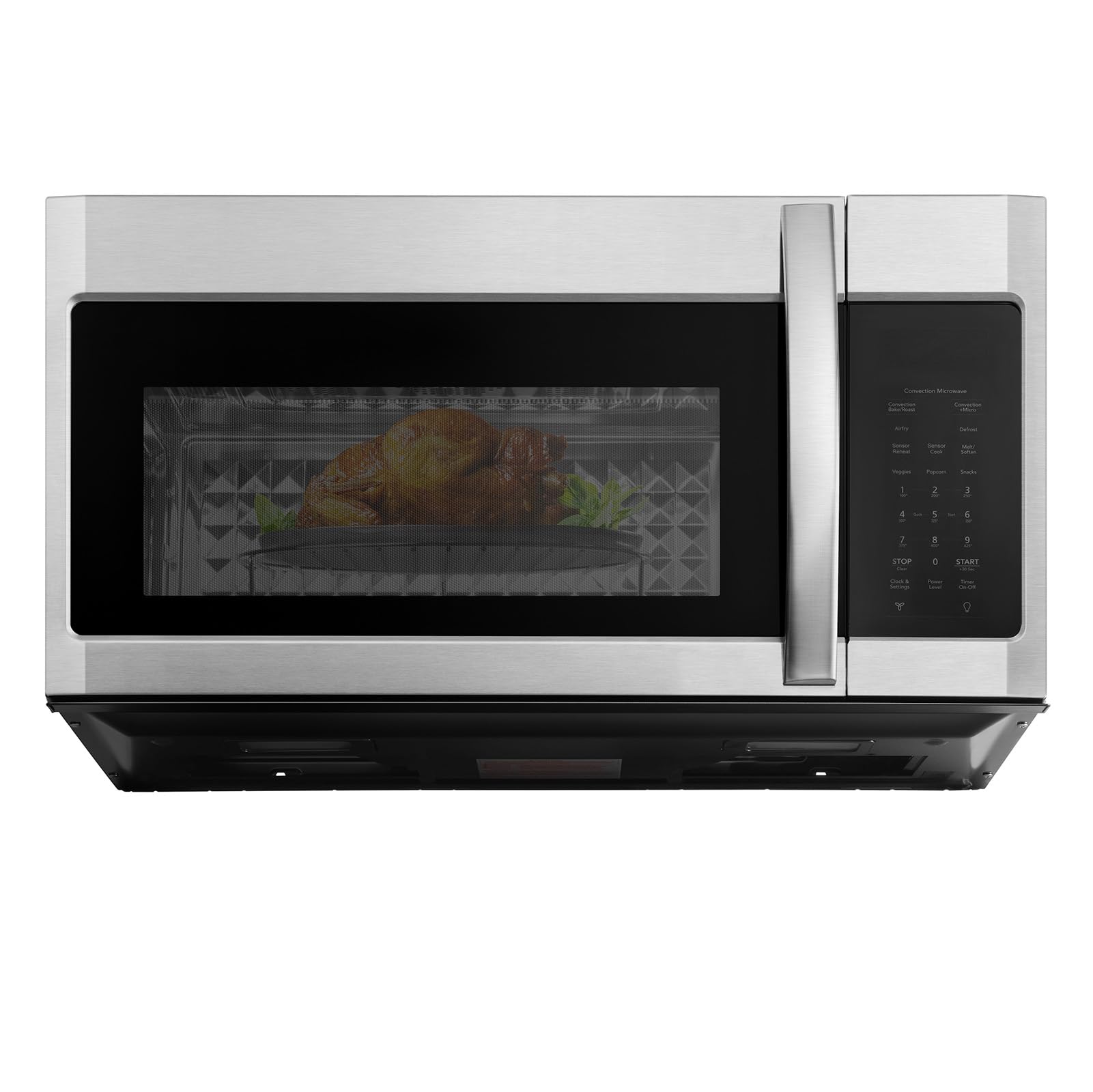
This microwave is for a specific kind of household: the one that’s outgrown “reheat and popcorn,” but doesn’t want more countertop appliances. If you’ve ever thought, “I want an air fryer, but I refuse to give up more space,” or “I need a second oven for holidays,” this is the style of product that solves it.
Here’s the honest expert take: multi-function OTR units are never going to beat a dedicated countertop air fryer at crisping. But that’s not the real comparison. The real comparison is: “Will I actually use this feature because it’s already installed?” And for a lot of people, the answer is yes. Owners routinely describe these combo units as the difference between cooking at home more often vs defaulting to takeout—because reheating, crisping, and baking can happen in one place.
In real-life feedback, one theme shows up: heat management. Because this appliance can bake and air fry, the top can get hot during those modes. That means you should not treat the top surface like storage (even if you’re tempted). It also means you’ll get best results when you use the oven mindset: preheat when needed, don’t overcrowd food, and flip or rotate items for even browning. You’re not “microwaving” fries—you’re cooking them.
If you’re the kind of cook who likes to experiment, this model feels fun. If you want one-button perfection with no learning curve, pick a simpler microwave. But if you want maximum utility from one installed appliance, this is one of the most compelling directions you can go.
Why it’s worth it
- Real versatility – Air fry, convection, bake, roast, and microwave modes cover most “extra appliance” cravings.
- Great for small kitchens – Saves counter space while still expanding what you can cook at home.
- Leftovers get better – Crisp reheats and quick baking can make leftovers feel fresh again.
- Useful hood fan + light – Still functions as your vent and cooktop lighting setup.
Good to know
- Air fry performance is typically “good for an OTR” rather than “beats a dedicated air fryer.”
- Top surfaces can get hot in bake/air fry modes—don’t store heat-sensitive items on top.
- Multi-mode cooking rewards a little practice (preheat, flip food, avoid overcrowding).
Ideal for: households that want more cooking options without more countertop clutter—and don’t mind a small learning curve for better results.
4. Commercial Chef CHMRC17GS – Convection + Air Fry Power, But You Need the Right Expectations
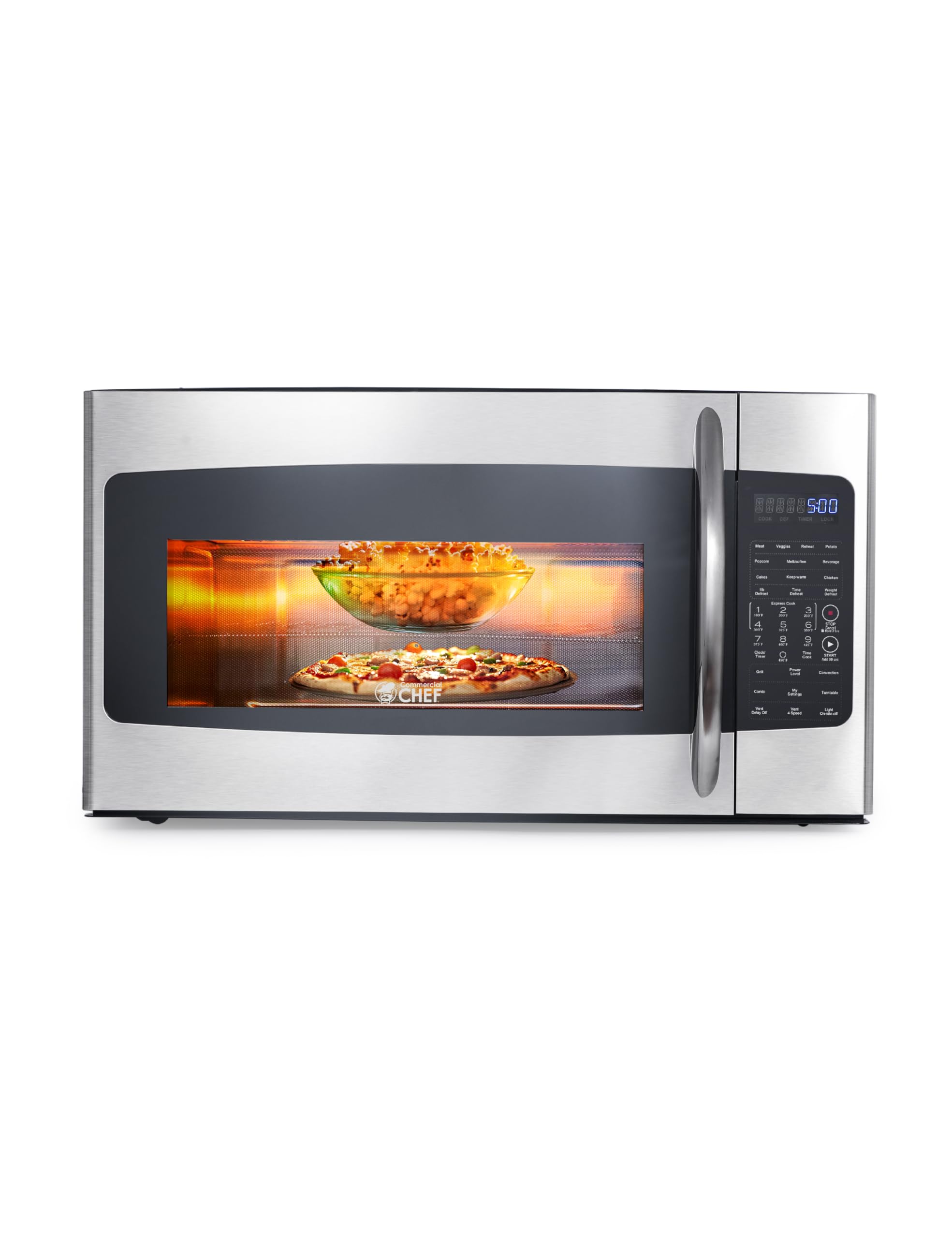
On paper, this is the “why buy more appliances?” microwave. You get microwave power, convection cooking, and an air fryer-style crisping mode in an over-the-range footprint—plus a hood fan to handle steam and odors. For people who cook often but hate clutter, that’s a tempting value proposition.
In real life, products like this live or die on two things: (1) how consistent the convection and air fryer modes are, and (2) whether the controls and manual make those modes easy to use. Owner feedback tends to split into two camps: people who love the versatility once they learn it, and people who are frustrated because they expected “standalone oven performance” from an OTR hybrid. The truth is in the middle: convection is powerful when you treat it like its own cooking mode (preheat, correct cookware, patience), but it can feel underwhelming if you expect instant browning without adjustment.
A few long-term complaints show up frequently with feature-packed models across brands: control panel overlays that show wear, fingerprints on stainless, and a learning curve that feels bigger because the “quick guide” doesn’t teach enough. If you’re the kind of person who enjoys dialing in a new appliance, you’ll get a lot of value. If you want perfect results with no tinkering, you’ll likely be happier with a simpler GE or Frigidaire.
Here’s the expert strategy if you buy a model like this: pick three things you’ll cook repeatedly (like nuggets, roasted vegetables, and reheated pizza), dial in your timing once, and then enjoy the convenience forever. Treat it like a “set your house style” tool, not a magic button.
Why people buy it
- Big versatility – Microwave + convection + air fryer style cooking in one installed appliance.
- Space-saving – Replaces multiple countertop tools for busy kitchens with limited space.
- Convenient presets – Useful for quick meals when you don’t want to think.
- Hood fan included – Helps manage steam and odors during everyday cooking.
Good to know
- Convection/air fry modes can require dialing in timing—don’t expect “perfect on day one” if you never use convection.
- Fingerprint management is real on stainless; keep a microfiber nearby if you like a spotless look.
- Control-panel durability complaints show up in owner reviews—avoid aggressive cleaning chemicals and hard pressing.
Ideal for: practical cooks who want one appliance to do more than reheating—and who are willing to learn the convection/air fry rhythm for better results.
5. GE JVM6175SKSS – The Safe, Satisfying Upgrade When You Just Want It to Work

Some people want a statement piece. Most people want a microwave that disappears into their life and never causes drama. That’s what the GE JVM6175SKSS represents: a solid, mainstream option from a brand many households already trust, often chosen specifically to replace an older GE with minimal cabinet surprises.
Real owners often describe this model in the most compliment-y way possible: “It functions flawlessly.” That’s not boring. That’s exactly what you want from something mounted above your stove. The quick-start buttons and straightforward presets matter more than you think when you’re cooking with one hand and holding a phone in the other. And the venting flexibility—ducted outside or recirculating—makes it a good fit for many kitchen layouts.
The two most common real-world issues show up across almost every OTR microwave, not just GE: shipping dents and install quirks. Many buyers mention receiving a dented unit but choosing to keep it because returning an OTR is a hassle. So if cosmetics matter to you, inspect immediately. If not, this is a “set it and forget it” kind of microwave once it’s mounted.
As an expert pick, I like this model when someone says: “I don’t need my microwave to be exciting. I need it to heat evenly, vent decently, and match stainless appliances.” It’s the steady choice that keeps you moving.
Why it works for most homes
- Reliable day-to-day performance – Owners commonly describe it as a smooth, functional upgrade.
- Easy-to-learn controls – Quick-start and basic presets reduce daily friction.
- Good replacement fit – Often chosen as a “swap the old one” model without cabinet chaos.
- Flexible venting setup – Works with ducted or recirculating installations depending on your kitchen.
Good to know
- Shipping dents happen in this category—inspect immediately if appearance matters.
- Like most OTR installs, it’s awkward; plan for two people even if you’re handy.
- If you want a handle-free look or smart tech, you’ll like the GE Profile line more.
Ideal for: households that want a dependable, easy-to-use microwave that feels like a safe upgrade—not a gamble.
6. Frigidaire 1.8 Cu. Ft. OTR – The “Thoughtful Details” Microwave (Zero-Clearance Door + Great Lighting)

Frigidaire tends to win people over with the “small things done right” approach—and this microwave is a great example. If your kitchen has an adjacent wall near the microwave, the zero-clearance door is not a gimmick. It’s the difference between a door that bangs into a wall and a door that opens cleanly without drama. That’s daily peace.
Lighting is another real-life win. Owners often mention that the cooktop lighting is bright and useful (not just decorative), and that the interior lighting makes it easier to see what’s happening without yanking the door open mid-cycle. If you cook a lot, you’ll feel that upgrade instantly—especially coming from older microwaves with dim, yellow-ish bulbs.
Installation feedback is also very “real kitchen”: the unit works great and fits well, but getting the top-bolt alignment perfect can be tricky if your cabinets are slightly off. This is true across brands. The difference here is that people generally describe it as doable with patience (and ideally a helper), rather than feeling like a nightmare.
The one downside that shows up repeatedly is stainless smearing. If you love spotless appliances, plan to wipe it down more often. If you don’t care, you’ll never think about it. Either way, the functional experience—door clearance, lighting, roomy interior—tends to make people happy long-term.
Why it’s a smart daily pick
- Zero-clearance door – Opens cleanly without hitting adjacent walls; huge for tight kitchens.
- Strong lighting experience – Cooktop visibility feels meaningfully better than many older OTR microwaves.
- Roomy interior – Comfortable for everyday dishes and larger cookware.
- Clear, practical controls – Good “easy programming” reputation among owners.
Good to know
- Stainless smudges easily; keep a microfiber cloth handy if you’re picky about appearance.
- Templates can be slightly off depending on cabinets—measure and adjust instead of forcing it.
- Like most installs, it’s awkward; a helper makes bracket alignment much easier.
Ideal for: kitchens with side-wall constraints, frequent cooks who value good lighting, and anyone who wants a functional upgrade that feels “thoughtful.”
7. BLACK+DECKER EM044KB19 – The “Big Dishes + Stronger Venting” Workhorse

If you cook a lot on your stove—especially anything that produces steam, smoke, or strong aromas—you eventually realize: your microwave’s fan isn’t “extra.” It’s your kitchen comfort system. That’s why this model earns a higher placement than many people expect. It’s designed around two daily needs: venting and space for real dishes.
The turntable on/off function is the feature that quietly makes you feel like you upgraded. If you’ve ever wedged a long casserole dish onto a spinning plate and listened to it bump around, you already know why this matters. With turntable off, you can heat bigger, awkward cookware more confidently. For many families, that means more leftovers heated successfully and fewer “just use the oven” moments.
The other big win is ventilation strength. In practice, that’s not just about CFM; it’s also about how the fan sounds and how it pulls air off the front burners. But as a “venting-forward” model, this is a strong direction if your old microwave never kept up with your cooking. Pair it with a ducted setup and a reasonable duct run, and you can get a noticeably better kitchen feel.
My advice with models like this: treat installation and venting as part of the purchase. If your duct path is long and twisty, fix that before you blame the microwave. If your vent is recirculating, keep your filters clean and replace charcoal filters on schedule. Vent performance is a system.
Why it’s a strong fit
- Turntable on/off – Makes heating large or rectangular cookware less annoying and more reliable.
- Ventilation-forward design – Better suited to real cooking than ultra-basic OTR microwaves.
- Roomy interior – A good “family sized” cavity without feeling bulky or weird to use.
- Useful auto menus – Helps with common tasks like popcorn, potatoes, and quick reheats.
Good to know
- Venting results depend heavily on your duct setup; short, straight runs perform best.
- Door and keypad feel vary by user preference—some people want ultra-soft controls, others don’t care.
- If you want a handle-free “designer” look, you’ll prefer the GE Profile aesthetic.
Ideal for: households that cook often, use oversized dishes, and want an OTR microwave that feels more capable than the bare-bones models.
8. Midea MOR17BSA-SS – The Clean Layout Pick for People Who Hate Complicated Keypads

Midea is one of those brands that surprises people. A lot of shoppers assume they “need a big name,” then they read real owner feedback and realize: what they actually need is even heating, simple controls, and a microwave that doesn’t feel like a noisy old machine. That’s where the MOR17BSA tends to land.
The most consistent praise is the “clean layout” experience. Some microwaves bury you in niche presets you never touch. This one leans more practical: the core functions are easy to find, and the keypad doesn’t feel like a cockpit. If you microwave daily but don’t want a tech headache, that’s a big deal.
Owners also frequently mention that it heats evenly and feels solidly built—exactly what you want if you’re replacing something older and rattlier. The most common complaint is lighting: the interior and hood lights can feel dim compared to what people expect from modern LED-heavy kitchens. Another subtle note some owners bring up is visibility through the door glass; the shielding pattern can make it look darker while running. It’s not “bad,” but it can surprise you if you’re used to seeing food clearly during cooking.
My expert take: this is a great choice when you value function and clean design over brand status. If you’re someone who cooks aggressively and wants maximum venting, look at the 400 CFM class. If you want a modern-feeling microwave that stays simple and does the basics very well, this is a strong buy.
Why it’s easy to live with
- Simple, readable control philosophy – Less cluttered than many “preset overload” keypads.
- Even heating reputation – Owners often praise consistent reheats and defrosting results.
- Modern look without fuss – Clean stainless feel that matches most kitchens easily.
- Good value behavior – Feels “more solid than expected” for many buyers.
Good to know
- Hood and interior lights may be dimmer than some competitors—important if you cook in low light.
- Door glass can look darker while operating, depending on your kitchen lighting and viewing angle.
- If you want smart app control, the slim Midea model is the more tech-forward choice.
Ideal for: people who want a modern OTR microwave with a clean keypad, solid heating performance, and minimal complexity.
9. COSMO COS-2413ORM1SS – The Rare 24-Inch OTR That Actually Feels Modern

If you have a 24-inch opening, you already know the struggle: most over-the-range microwaves assume a 30-inch space. That means your “choices” are usually either (1) compromise, (2) custom cabinetry work, or (3) hunt for a true 24-inch model. This Cosmo exists specifically to solve that problem—and it does it with a surprisingly sleek, modern look.
A lot of owners buy this for RVs, older cabinets, and compact kitchens—and the feedback is consistent: it looks great, feels like a real appliance upgrade, and doesn’t scream “tiny kitchen workaround.” The vent fan and lighting get praise, and people appreciate that the unit feels powerful enough for everyday cooking instead of feeling like a weak specialty model.
Here’s the most important expert note: with 24-inch units, depth and door clearance become extra critical. Some buyers mention needing to shim or space the unit forward if their cabinet cutout is unusually deep—because the wall bracket and top venting can interact with door swing. That’s not the microwave’s “fault”; it’s the reality of non-standard cabinets. The solution is usually simple (spacers), but you want to plan for it.
The biggest long-term annoyance owners mention is the control panel lighting: a lack of backlighting can be frustrating in low light, especially because this unit’s controls are positioned where you look down to use them. If you cook late at night or keep your kitchen dim, that’s the one “think hard” point. Otherwise, this is one of the best answers to a difficult sizing problem.
Why it’s a standout
- True 24-inch solution – One of the rarer sizes done in a modern, attractive way.
- Looks more premium than expected – Doesn’t feel like a “compromise appliance” once installed.
- Good everyday performance – Owners praise power and usability for daily cooking needs.
- Great for RVs and compact homes – A common “fits perfectly” success story when other models can’t.
Good to know
- Deep cabinet cutouts may require spacing/shimming so the door can open comfortably.
- Lack of control panel backlighting can be annoying at night.
- Because it’s smaller than 30-inch giants, it’s not the best choice for huge cookware—but it’s excellent for typical daily dishes.
Ideal for: 24-inch cabinet openings, RV kitchens, compact homes, and anyone who wants a clean look without redoing cabinetry.
10. GE JVM3160RFSS – The “Keep It Simple” Microwave That Still Feels Like an Upgrade
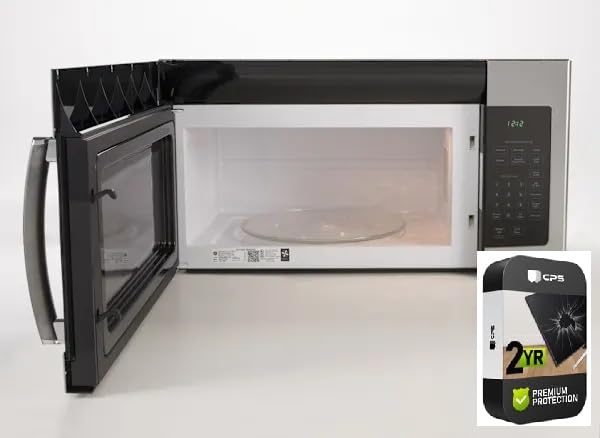
Not everyone wants a premium panel or fancy extra features. Some people want a microwave that does the basics well, fits standard spaces, and feels familiar. The GE JVM3160 is the kind of model that gets installed in rentals, starter homes, and “I just need a replacement that works” kitchens for a reason.
Owners generally describe it as clean-looking, easy to install (as OTR installs go), and capable of heating evenly. It’s the kind of unit where the screen is readable, the quick cook controls are straightforward, and you don’t need a tutorial to use it. That matters if guests, teenagers, or multiple family members will use the microwave daily.
The most common downsides are also very predictable: it can feel a bit “basic” in build quality compared to premium lines, and the door can be louder than people expect (especially if they’re used to soft-close feeling appliances). If you’re sensitive to noise, that’s worth noting. But if you’re shopping in the “reliable standard microwave” lane, this does exactly what it’s supposed to do.
Expert tip: a basic microwave becomes a better microwave when installed well. Tight bracket alignment, correct vent orientation, and making sure the unit sits level will reduce rattles, improve door feel, and make the whole thing feel more expensive than it is.
Why people keep choosing it
- Simple, familiar controls – Easy for anyone to use without “learning the microwave.”
- Solid basic performance – Heats evenly and does daily tasks reliably.
- Common replacement choice – Fits many standard cabinet situations without drama.
- Good for rentals – Practical, recognizable, and easy to maintain.
Good to know
- Door can feel loud or “clunky” compared to more premium models.
- It’s not a feature-flex model; if you want convection or air fry, choose a multi-cook unit.
- Shipping damage can happen; inspect immediately before installation.
Ideal for: rentals, budget-conscious households, and people who want a simple, reliable GE option without extra complexity.
11. Galanz GLOMJA17S2B-10 – A Value Pick with ECO Mode (But Pay Attention to Parts)

Galanz is a brand that attracts value shoppers who still want a stainless look and a “real OTR microwave” feel. And for many buyers, it does the job: decent capacity, useful auto-cook programs, an express 30-second function, and an ECO mode that reduces idle power behavior. In daily life, those are the features people actually touch.
Owner feedback tends to be polarizing. Some people are genuinely happy and say it heats quickly and looks great. Others report quality control frustrations—shipping dents, odd door behavior, or a general “this doesn’t feel as refined as premium brands” experience. That’s not unique to Galanz, but it’s more common in value-priced appliances across the board.
The big expert warning with this model is not the microwave performance; it’s parts and maintenance. Several users mention that certain replacement parts (especially vent filters) can be harder to find or more expensive than expected. That matters because filters aren’t optional: if you use the fan, grease filters need cleaning and occasional replacement. So if you buy this model, make sure you’re comfortable with the filter sourcing situation and keep track of the part numbers early.
If you want the most predictable ownership experience, GE or Frigidaire usually feels safer. If you want good features at a better value and you’re okay being slightly more hands-on with maintenance planning, Galanz can be a reasonable choice.
Why it’s attractive
- Good capacity for the category – Handles daily plates and bowls easily.
- ECO mode – Nice for people who prefer less always-on display behavior.
- Simple auto-cook programs – Covers common needs without a cluttered keypad.
- Stainless look on a budget – Gives a modern appearance without going premium.
Good to know
- Some owner reports mention quality-control quirks; inspect thoroughly before installation.
- Replacement filters/parts may be harder to source—plan ahead if you use the vent daily.
- Door feel can be less “smooth” than premium brands; it’s functional, not luxurious.
Ideal for: value shoppers who want stainless style and core features—and don’t mind being slightly proactive about maintenance parts.
12. Farberware 1.7 OTR (Black) – Practical Extras That Actually Matter (Melt/Soften + Volume Control)
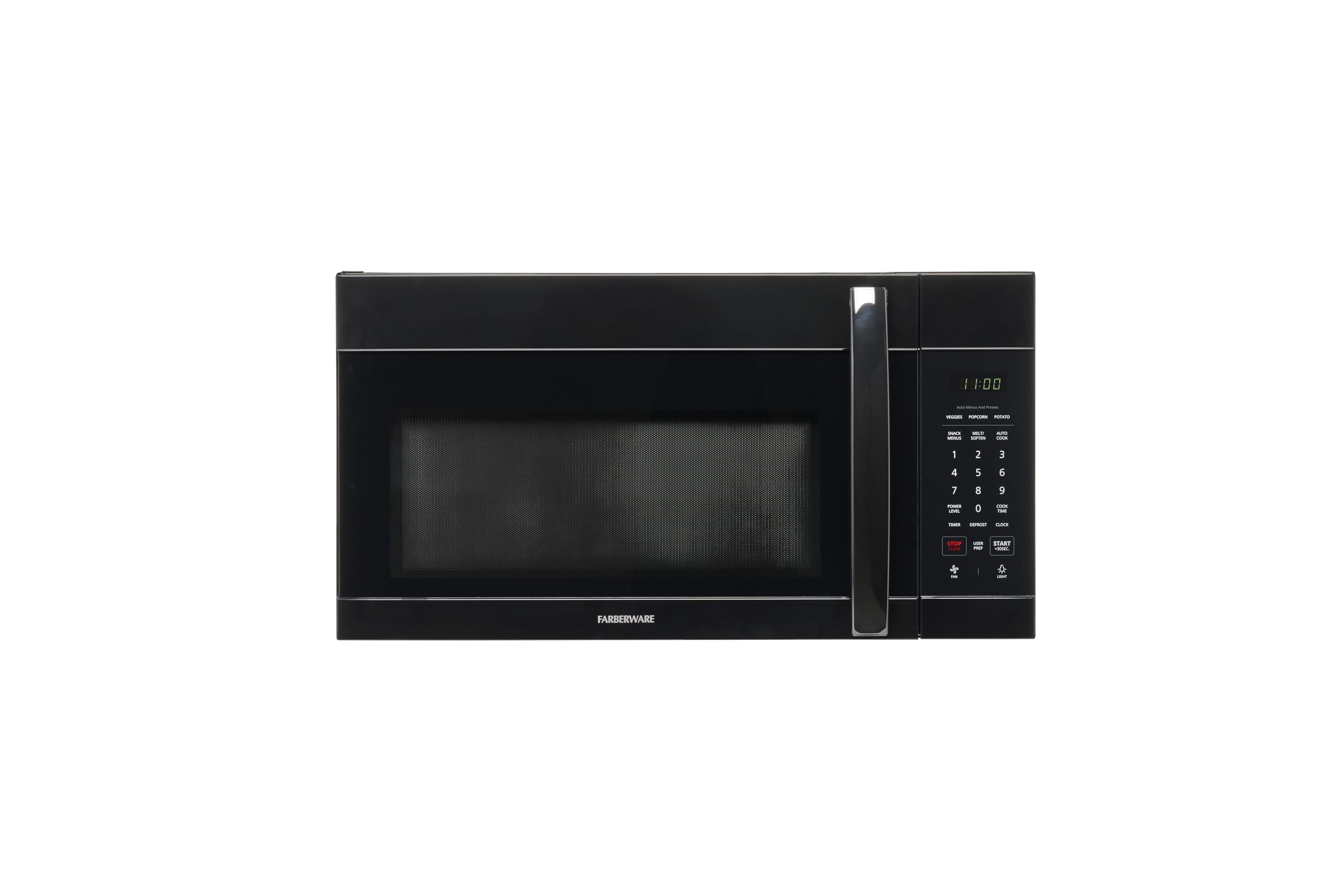
Farberware’s OTR microwaves are a great example of the “give people what they really use” philosophy. Instead of loading the panel with niche presets, it focuses on the everyday conveniences that make you feel faster in your kitchen: +30 seconds, defrost that’s easy to understand, melt/soften for butter and chocolate, and practical auto-cook options like potatoes and snacks.
One of the most underrated features here is volume control. If you’ve ever microwaved coffee at 5 a.m. and the beep sounded like an alarm, you understand why this matters. A microwave that lets you dial down alerts feels more “grown up” than many models in the value category. Owners also frequently mention that it heats evenly and feels like a good upgrade from older appliances.
Installation feedback tends to reflect real-world kitchens: most people can install it with patience and a helper, but there can be small annoyances like finicky filter placement or templates that are easier to ignore in favor of measuring manually. Some owners also mention that the buttons are not backlit, which can matter if your kitchen is dim at night. That’s not a dealbreaker—but it’s exactly the kind of everyday detail that determines satisfaction.
My expert advice with this model: buy it for the practical feature set and the black finish. Black tends to hide fingerprints better than stainless, and in a busy household, that can make your kitchen feel “cleaner” with less effort. If you want maximum cooktop light brightness or premium door feel, step up to Frigidaire or GE Profile. If you want a solid, useful, value-focused daily driver, this is a strong lane.
Why it’s a smart value buy
- Melt/soften presets – More useful than people think for real cooking and baking.
- Volume control – A quality-of-life feature that matters daily in busy homes.
- Good everyday capacity – 1.7 cu. ft. works well for most household dishware.
- Black finish practicality – Hides fingerprints and blends into darker appliance sets.
Good to know
- Control panel backlighting is limited; you may want good overhead light at night.
- Some installation quirks (filters, template alignment) are common—measure and don’t force it.
- If you want a “designer look,” handle-free premium lines will feel more upscale.
Ideal for: budget-conscious households that still want smart daily conveniences and a black finish that stays looking tidy.
13. Farberware 1.7 OTR (White) – The Same Practical Pick, Just Cleaner and Brighter Looking
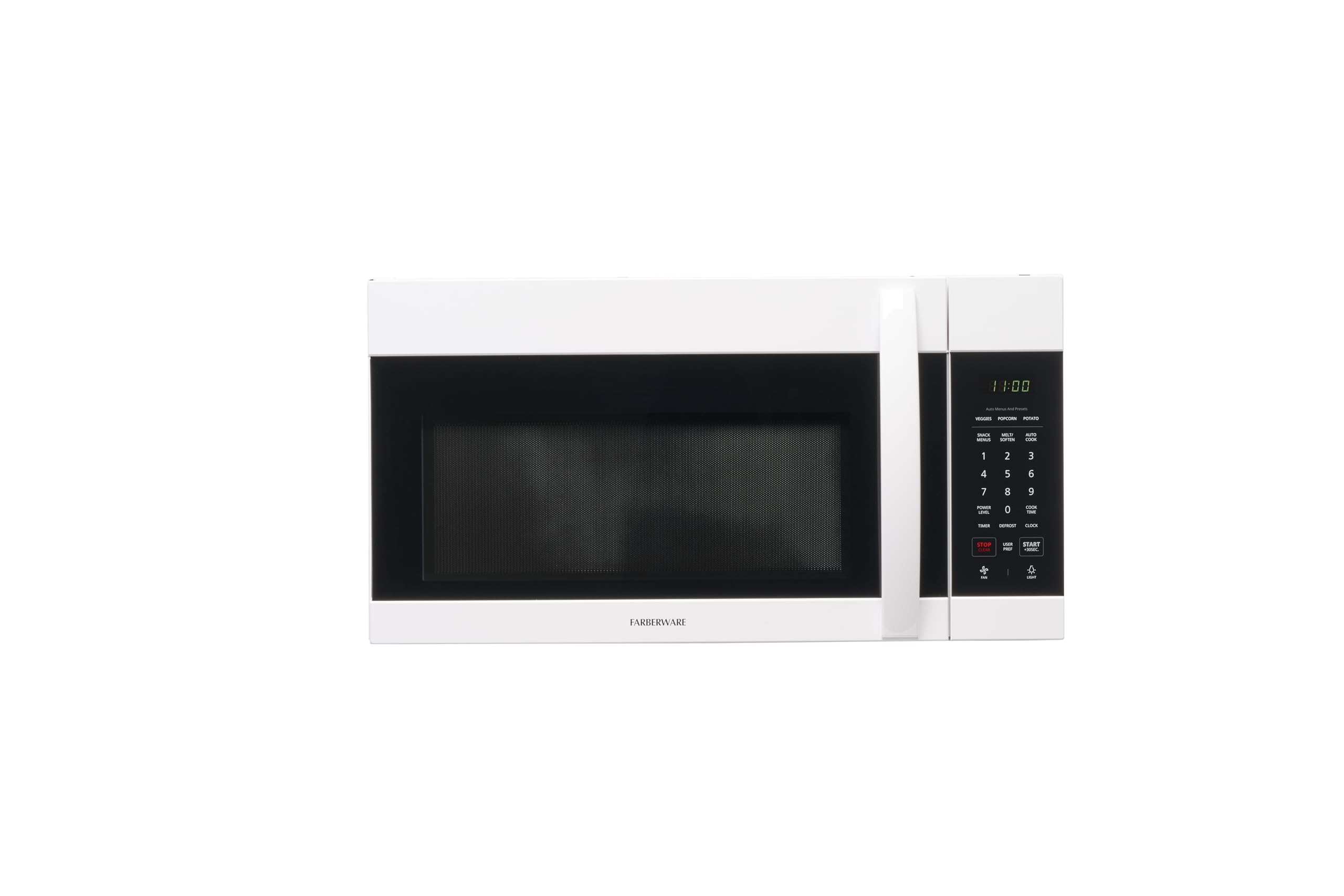
This is essentially the “same brain, different outfit” version of the Farberware value pick. If your kitchen is white, bright, or classic (or you’re matching older appliances), the white version can make the whole space feel lighter without forcing you into a stainless look you don’t love.
What you’re really buying is the daily usability package: quick cooking shortcuts, easy defrosting, melt/soften functions that actually come in handy, and a general “no confusion” control layout. In many households, the best microwave is the one people use correctly without thinking. That’s where value models with clear controls can beat “fancier” microwaves that nobody wants to learn.
White finishes also come with a real-life advantage: fingerprints show less obviously than on stainless. If you have kids, frequent cooking, or a lot of hands on the appliance, that can mean your kitchen stays looking “presentable” longer between wipes.
The trade-offs are the same as the black model: control visibility in low light can be a small annoyance, and OTR installation always has some awkwardness. But if your goal is simple, dependable, and visually matched to a white kitchen, this is a genuinely useful option—not just a “cheap fallback.”
Why it’s a good fit
- White finish matches classic kitchens – Great for rentals, older homes, or white appliance sets.
- Practical presets – Melt/soften, defrost, and quick-cook shortcuts cover real daily needs.
- Fingerprint-friendly look – White tends to show smudges less than stainless.
- Simple learning curve – Easier for families and guests to use correctly.
Good to know
- Control panel may not be the easiest to see at night without good kitchen lighting.
- OTR installs are awkward; plan for help lifting and aligning bracket/bolts.
- If you want premium lighting and door feel, higher-tier brands will feel more refined.
Ideal for: white kitchens and practical households that want a no-nonsense OTR microwave with genuinely useful daily features.
14. BLACK+DECKER EM044K6CE-SS – Straightforward Features, But Watch the “Long-Term Feel”

This model is built for people who want a simple feature set without paying for premium styling. You get a classic over-the-range layout, one-touch shortcuts for common foods, and multi-stage cooking that can be genuinely helpful if you do “defrost then heat” type routines. In the moment, it feels like a good deal: it’s straightforward and does what most families need.
The real-life experience is where you want to be thoughtful. Some owners love it and describe it as a strong performer for the money. Others report annoyance points that often show up in value models: louder door action, a child-lock behavior that can be inconvenient after power interruptions, and occasional durability complaints that make people wish they had stepped up a tier.
That doesn’t mean it’s a bad buy. It means it’s a “know yourself” buy. If you microwave a few times a day and mostly reheat coffee, leftovers, and quick meals, you can be perfectly happy with it. If you are the kind of household that runs the microwave constantly (large family, heavy cooking, lots of daily cycles), you’re more likely to appreciate the longer-term refinement of GE Profile, Frigidaire, or even the Midea models with stronger owner satisfaction patterns.
My expert tip: if you choose this model, treat installation quality as part of durability. A properly aligned bracket, level mounting, and correct vent orientation reduces stress on the door and helps the unit feel less “stressed” over time. Small install mistakes can amplify cheap-feeling behavior.
Why it can make sense
- Simple, familiar shortcuts – Easy one-touch menus for common tasks.
- Multi-stage cooking – Useful if you like “defrost then heat” routines without reprogramming.
- Stainless look – Matches modern kitchens without the premium price vibe.
- Good “basic replacement” energy – Works for many standard cabinet layouts.
Good to know
- Some owners report noise/durability annoyances; heavy daily use households may prefer a higher-tier model.
- Child lock behavior can be inconvenient if you don’t want to manage it after power events.
- If you want brighter lighting and a more refined door feel, GE/Frigidaire tend to win.
Ideal for: shoppers who want a straightforward stainless microwave and don’t need premium feel—especially for lighter-to-moderate daily use.
15. BLACK+DECKER EM044K6CF-BK – Same Practical Layout, Better Smudge Camouflage

This is the “same tool, different aesthetic” version of the stainless model above. The key reason to choose the black finish is simple: it hides fingerprints and smudges better than stainless in many kitchens. If you have kids, roommates, or a household where people don’t wipe handles and doors after every use, black can keep your kitchen looking calmer.
Functionally, you’re getting the same idea: one-touch shortcuts for common foods, a straightforward control scheme, and an over-the-range form factor that frees counter space. This is a great category for people who want an OTR microwave that “feels normal,” doesn’t ask you to learn weird features, and fits into an existing setup without drama.
The realistic expectations are also the same as the stainless version. If you are a heavy daily microwave household, you may appreciate the refinement, lighting, and “button feel” improvements that come with mid-tier and premium models. If your use is lighter to moderate, a straightforward Black+Decker can absolutely work well—especially if you choose it for the finish and the basic feature set.
Expert advice: if the door noise of your old microwave drove you crazy, pay attention to owner comments about door feel for any budget model. A microwave can be safe and still loud. If you’re sensitive to noise, you’ll be happier stepping up to a more refined line.
Why it’s appealing
- Black finish hides smudges – A real-life cleanliness win for busy households.
- Simple one-touch cooking – Easy shortcuts for daily use without overthinking.
- Good capacity for most homes – Handles common dishes and reheats easily.
- Works well in black appliance sets – Visually cohesive without upgrading everything.
Good to know
- Budget models can have more noise and durability complaints than premium lines; match it to your usage level.
- Child lock and button feel preferences vary—choose based on your household habits.
- If you want a major “kitchen upgrade feel,” you’ll prefer the GE Profile or Frigidaire picks earlier in this guide.
Ideal for: black appliance kitchens, fingerprint-sensitive households, and shoppers who want a straightforward OTR microwave for everyday reheats.
How the Best Over The Range Microwaves Actually Vent (and Why CFM Isn’t the Whole Story)
People love to shop venting by a single number (CFM). But vent performance is a system: your microwave, your filters, your duct path, and even how you cook all interact. That’s why two “same CFM” microwaves can feel wildly different in the same kitchen.
What makes venting feel strong in real life
- Ducted beats recirculating (for odors and steam) – If you can vent outside, you’ll feel a bigger improvement.
- Short, straight duct runs matter – Every bend adds resistance; long runs reduce real airflow.
- Correct duct sizing – Using the recommended duct size and avoiding crushed flexible ducts improves performance.
- Fan design and “boost” behavior – Some units have multiple speeds that are actually useful; others have “two speeds” that feel similar.
- Filter cleanliness – A greasy filter is basically a clogged lung. Clean filters = better airflow and less noise strain.
- Front-burner capture – If you cook on the front burners a lot, you’ll notice which microwaves pull steam effectively from that area.
In most everyday kitchens, a well-installed 300 CFM system can feel totally fine. But if you sear often, stir-fry, grill indoors, or cook with heavy steam, moving up to stronger venting options can make your kitchen feel calmer and cleaner.
A fast venting & maintenance playbook
- Wash the grease filters regularly – A quick rinse isn’t enough; degrease them so air can actually pass.
- Replace charcoal filters if recirculating – Charcoal filters don’t last forever; once saturated, they stop helping with odors.
- Check your damper – A stuck damper reduces airflow and can create rattling sounds.
- Run the fan early – Turn it on when you start cooking, not after smoke appears.
- Use the right speed – Low for simmering, high/boost for searing. Most people underuse their fan.
- Don’t ignore weird noises – Rattles often come from loose duct connections, not the microwave itself.
If you want the simplest takeaway: choose the vent strength that matches your cooking, and install it like it matters. A great microwave + poor vent setup = disappointment. A solid microwave + good vent setup = surprisingly satisfying kitchen upgrade.
FAQ: Over‑The‑Range Microwaves (Answered Like a Real Owner)
What size over-the-range microwave do most kitchens need?
Is sensor reheat actually useful or just marketing?
Do I need 400 CFM, or is 300 CFM enough?
Should I choose convection/air fry built-in, or buy a separate air fryer?
Why do so many OTR microwaves arrive dented? What should I do?
What’s the #1 mistake people make when buying an over-the-range microwave?
Final Thoughts: Buy the Microwave That Makes Weeknights Easier
A great over-the-range microwave should do three things well: heat evenly, vent decently, and stay pleasant to use. When any one of those fails, you feel it every day.
Here’s the simplest way to choose from this guide:
- Want the best balanced “upgrade feel” for most kitchens? Start with the GE Profile PVM9005SJSS. It’s the right blend of premium look, roomy use, and daily satisfaction.
- Need a slim, cabinet-friendly model that changes your cooktop space? Choose the Midea MMO12S3ASTZ Slim. It’s the “space feels bigger” pick that many kitchens benefit from immediately.
- Want extra cooking modes without adding countertop appliances? Go with the BLACK+DECKER EC942K6CE-SS (or the more feature-packed Commercial Chef CHMRC17GS if you’re okay with a learning curve).
- Want a simple, mainstream replacement with “no drama” energy? The GE JVM6175SKSS is a safe, satisfying upgrade that fits many kitchens well.
- Cook often and want a practical door + lighting experience? The Frigidaire 1.8 Cu. Ft. wins on thoughtful daily usability details, especially in tighter layouts.
- Need a true 24-inch over-the-range microwave? The Cosmo COS-2413ORM1SS is one of the most practical modern choices for RVs and compact cabinet openings.
- Shopping value-first, but still want real daily conveniences? Consider the Farberware 1.7 (Black) or Farberware 1.7 (White) for the “useful extras” package.
The goal isn’t to buy “the fanciest microwave.” The goal is to buy the best over the range microwaves for how you actually cook— so your kitchen feels easier, cleaner, and calmer every day after installation.
