
Specs are compiled from manufacturer listings and verified buyer reviews and can change over time — please confirm the key details on the product page before buying.
If you want one answer fast: buy the Goldfinger Dwarf from Bountiful Garden Nursery. It has the highest rating here at 4.3 stars, tolerates cold and wind, and tops out at 8 feet — big enough to fill a corner, small enough for a bright room. Everything below explains who should pick something else.
I’m Mohammad Maruf — the founder and writer behind KitchPrep. This guide is built by comparing the manufacturers’ published specifications and the patterns across verified customer reviews, so you get each pick’s real strengths and trade-offs instead of marketing spin.
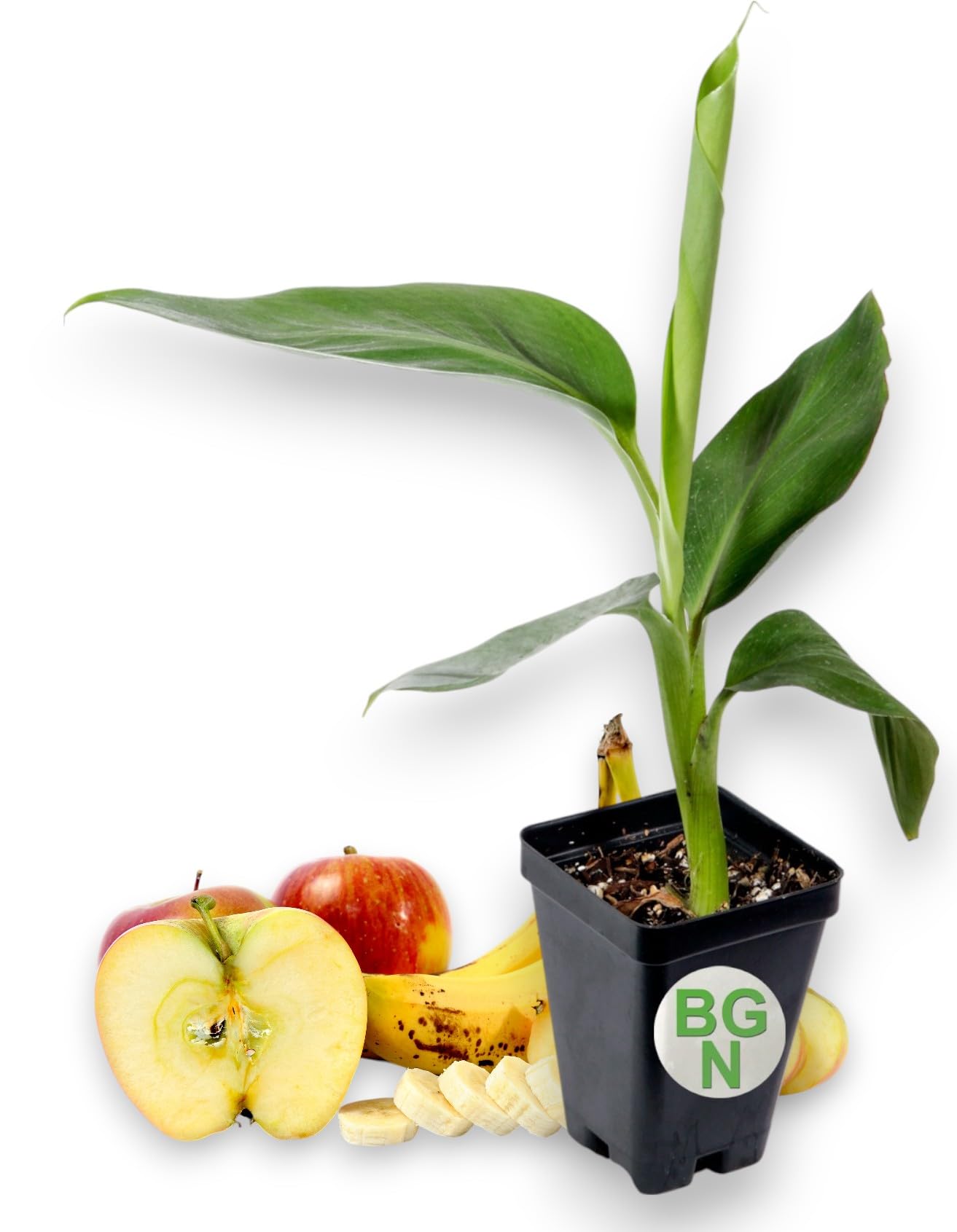
The tricky part with a live banana plant is that the listing photo rarely matches the plant in the box — most ship as 3-to-8-inch starts in 2-inch pots. This guide walks through what actually survives a mailbox, a cold snap, and a dim living room, so you can choose the right indoor banana plant the first time.
Our Picks at a Glance


How To Choose The Best Indoor Banana Plant
A banana plant is not a pothos: it grows from a thick underground corm, not a vining stem. It grows from a thick underground stem called a corm (a bulb-like base that stores energy), and it pushes out a new leaf from the center of the plant rather than from a vine tip. That single fact drives every decision you will make about light, water, and pot size.
Start With The Variety, Not The Photo
Dwarf Cavendish is the classic indoor choice because its pseudostem (the trunk-like stalk made of tightly wrapped leaf bases) stays manageable while the leaves still get huge. Musa basjoo is the cold-hardy option — it can handle winter temperatures that would kill a Cavendish outright, though it is usually grown outdoors in ground. Red Abyssinian is the one you buy for looks, with red and green foliage instead of plain green.
Read The Arrival Height Before You Order
Most live banana plants ship as small starts — commonly 3 to 8 inches tall in a 2-inch or 3-inch pot. A plant that arrives tiny is not a bad plant. It is a young one, and young bananas usually transplant with far less shock than a large one that has spent weeks in a box. What you are really shopping for is a healthy root system and a firm base, not height.
Light And Humidity Decide Everything Indoors
Indoors, your banana wants the brightest spot you have — ideally several hours of direct sun through a window, backed by humidity. Dry heated air is what browns the leaf edges, so a room with a humidifier or a bright bathroom window tends to outperform a dark corner. Musa basjoo can tolerate partial sun; most Cavendish varieties want full sun.
Quick Comparison
| Model | Best For | Arrival Height | Mature Height | Cold Zone | Amazon |
|---|---|---|---|---|---|
| Goldfinger Dwarf Banana Plant Tree★ Best Overall | Best overall indoor starter | 3″-8″ | 8 ft | Zone 8 | Amazon |
| Red Abyssinian Banana by Wellspring GardensBest Foliage Color | Colored foliage focal point | 3″-8″ | — | — | Amazon |
| Banana Plants Dwarf Cavendish (4-Pack)Budget Champion | Best value multi-pack | 3″-6″ | 5-8 ft | Zone 8 | Amazon |
| American Plant Exchange Dwarf Banana Plant | Buying size up front | 6 in pot | — | — | Amazon |
| Musa Basjoo Banana Tree | Cold rooms and cold climates | Over 12″ | 15 ft | Zones 3-7 | Amazon |
| Dwarf Cavendish (2-Pack) by Wellspring Gardens | Two shots at one plant | 3″-8″ | 8-10 ft | Zones 8-11 | Amazon |
| Banana Plants Double (Mahoi) (4-Pack) | Rare fruiting variety | 3″-6″ | 5-7 ft | Zones 9b-11 | Amazon |
| Greenwood Nursery Musa Basjoo (2X Pint Pots) | Bare-root cold hardy buy | — | 10-20 ft | Zones 5-10 | Amazon |
| Banana Tree by Wekiva Foliage (4 in pot) | Grower’s choice gamble | — | — | — | Amazon |
In‑Depth Reviews
1. Goldfinger Dwarf Banana Plant Tree – Fhia-01 – Goldfinger Desert Banana
Our pick — over 4★ from 60+ verified ratings; the strongest balance of quality and price.
The tough-little-dwarf that keeps growing in a Washington window
Goldfinger is the banana for someone who has killed a tropical plant before and wants to stop doing that. It is rated for USDA zone 8 (the government’s cold-hardiness map, where lower numbers mean colder winters), so it handles chilly nights that would set a Cavendish back. It reaches about 8 feet — tall enough to fill a corner, short enough that a standard ceiling still clears it. Your plant arrives between 3 and 8 inches tall in a 2-inch pot, which is genuinely small, so plan on a bright windowsill rather than a floor stand for the first few months.
The flavor is the surprise: a sweet-acid dessert banana growers compare to apple. This is a dessert banana with a sweet-acid bite that growers compare to apple — you are not growing the supermarket fruit. Deep watering fits its moderate moisture needs, and it wants sandy soil that drains fast, so standard cactus-style mix works better than heavy potting compost. These ship as single, well-developed plants rather than a bargain bundle — one plant, not four. For comparison, the same-money four-pack of Cavendish further down the page gives you four starts for roughly the price of this one, and that is the real trade you are making here: quantity versus a plant that already knows how to survive.
What wins people over is how hard it pushes: new growth is the thing owners talk about most, and it comes back even after the leaves turn brown. Heat and wind resistance are both real, so a sunny balcony or a bright south window suits it. The one honest caveat is leaf health — some plants sulk and drop foliage, usually after a cold or dry spell, and recovery depends on how quickly you correct the watering. Give it fast-draining sandy soil and steady warmth and it is not a fussy plant.
What Works In Its Favor
- Cold and wind resistant, so it tolerates chilly nights other bananas will not
- Reaches 8 feet — big enough to read as a jungle plant, small enough for a room
- Sweet-acid dessert fruit with an apple-like tang instead of the standard banana taste
- Returns after a browning, which makes it forgiving of a bad month
Where It Needs A Hand
- Ships as a single plant, so there is no backup if the first one struggles
- Arrives at just 3 to 8 inches in a 2-inch pot — small enough to need careful watering
- Leaves can brown and drop if the soil stays heavy or the air stays dry
The pick for you if: you want one reliable plant that keeps pushing new growth in a bright room and can take a cold snap.
Hold off if: you would rather hedge your bets with several starts at once — the four-plant Cavendish pack covers that need better.
2. Red Abyssinian Banana (1-Pack) Live Plant by Wellspring Gardens
The one you grow because the leaves are red, not because of the fruit
Buy this for the foliage. The Red Abyssinian pushes leaves in a mix of red and green, which is a very different look from the solid green every other plant on this page gives you. It arrives 3 to 8 inches tall in a 3-inch-deep pot and wants moderate watering in sandy, well-drained soil. The listing carries an indoor use tag alongside its outdoor description, so a bright indoor spot is fair game — but note that it is listed with full sun exposure, which indoors means your sunniest window and nothing less.
Wellspring Gardens clearly ships these with care: the packaging gets credit from buyers, and the plants commonly arrive healthy and ready to move up a pot size. A temperature indicator sometimes travels in the box, which matters because this is a warm-weather plant. On cold nights, keep it inside — it is not built for freezing air. Compare it to the Musa Basjoo pick below, which tolerates 10 °F rhizome temperatures; this one has no such protection, so cold tolerance is genuinely where the two split.
Plant quality is the strongest note here — the plants that arrive well look genuinely well. The catch is durability and value, which owners treat as a split verdict: some plants fade slowly after arrival, and the return window is short enough that a plant declining at the end of it is a real risk.
Color is the point: red-and-green foliage in a category that is otherwise all green makes this the one plant here that earns its place on looks alone.
Treat the first month as the test: plants that settle in and push new growth are fine; a plant that stalls past the return window is money you will not get back.
Reach for this if: you want a statement plant with colored leaves in your brightest window and you will order it in mild weather.
Think twice if: your room runs cold, or you want a plant that ships with cold-weather insurance built in.
3. Banana Plants Dwarf Cavendish Includes Four (4) Plants
Four Cavendish starts for the price of one, and they grow fast
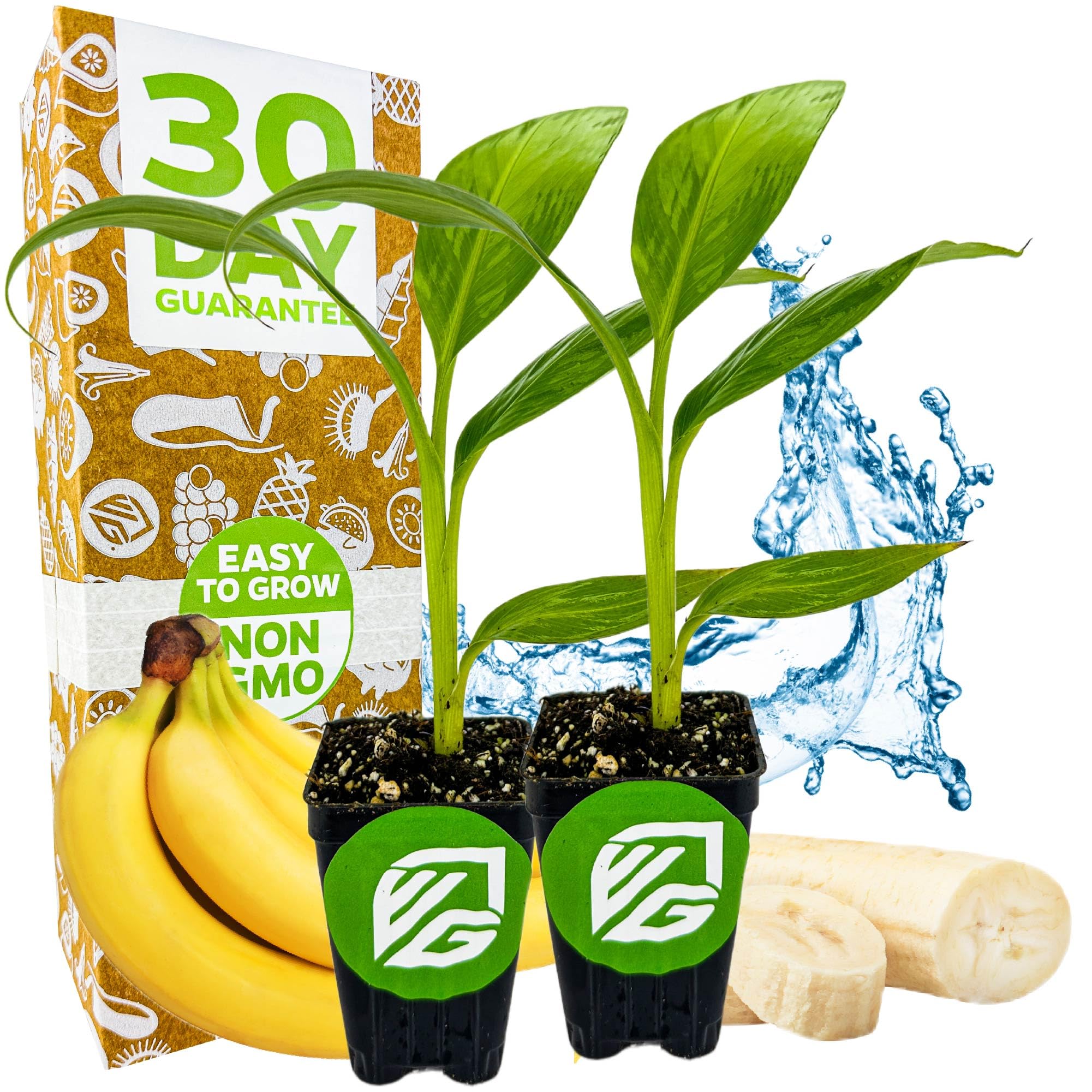
Here is the arithmetic that matters: this listing includes four Dwarf Cavendish plants, while the Goldfinger above ships as a single plant for about the same money. Four starts means four chances, and it means you can pot some, gift some, and experiment with placement without risking your whole investment on one plant. They ship as 2-inch rooted plants in 2-inch tray pots, standing 3 to 6 inches tall.
Yes, “dwarf” is about the pseudostem, not the fruit — the plant itself still gets 5 to 8 feet tall and produces the familiar Cavendish eating banana. If you want to know what a healthy start looks like, the pattern in the reviews is consistent: these arrive looking like they came straight off a greenhouse bench, bright green and sturdy. One buyer summed up the whole experience this way: four starts that grew well over five months, pushing a new leaf every 3 to 10 days, transplanted twice along the way.
The thing to plan around is the arrival box. A four-pack travels in a skinny, long package — often small enough to fit in a mailbox — so the plants are small by design and some arrive on the compact side. Root transplanting should happen right after unboxing, and starting each one in a 4-inch pot with organic potting soil gives them room without drowning the roots. Size and value are the two places opinions split, and both come down to expectations more than plant quality. What is not in dispute is how these perform over a season.
The Case For Four
- Four plants for roughly the money of a single-plant listing elsewhere
- Arrives bright green and greenhouse-fresh, with new leaves showing up every 3 to 10 days in the growing season
- Can reach three feet tall in about two months when given heat, sun, and humidity
- Four starts let you test two light positions and keep the winner
Plan Around This
- Plants arrive small — 3 to 6 inches in a 2-inch tray pot — and need immediate transplanting
- The weak link is the root ball, which is tiny on arrival, so handle it gently
- Not forgiving of a dark corner; this variety wants heat, sun, and humidity to move
Buy this one: if you want maximum plant for your money and you are happy to pot up four starts in an afternoon.
Look elsewhere: if you have exactly one good window and no room for four plants competing for it.
4. Banana Plants Double (Mahoi) Includes Four (4) Plants

A banana that fruits in pairs, and it still fits a living room
Mahoi means twins in Hawaiian, and this variety earns the name: it produces two heads of fruit on the same plant, and occasionally three. That is a genuinely unusual trait, and it is what separates this from the four-pack of standard Cavendish above — same seller, same four-plant count, different fruit behavior. It is a Dwarf Cavendish mutation rather than a genetically modified plant, if that distinction matters to you. Mature height lands between 5 and 7 feet, which is the shortest ceiling requirement of any pick on this page.
You get four starter plants shipped in 2-inch tray pots at 3 to 6 inches tall. Hello Organics recommends potting them first for four to seven weeks somewhere with half a day of partial sun and half a day of full sun, then moving them on. That staged approach matters, because these plants want normal soil in the 6.5 to 8 pH range and moderate watering — nothing exotic, but they do not want to be rushed into the ground.
The honest caveat sits in the leaf department: plant quality and growth are the strongest points, but leaf appearance and overall condition split owners, and a small number of four-plant sets lose a plant early even when cared for. The rootball is compact on arrival, and the cells are small, so give them a gentle start in a slightly bigger pot rather than a big jump.
Why growers chase it: a twin-fruiting dwarf is genuinely hard to find in a big-box store, and the fruit is described as very sweet.
The realistic caveat: you are buying a subtropical plant, so keep it warm indoors and expect at least one of the four to need extra attention early on.
Best matched to: a warm, bright room and a grower who wants the short 5-to-7-foot height plus a conversation-piece fruit habit.
Not the one for: cold rooms or anyone who wants a plant they can basically leave alone for a month.
5. Dwarf Cavendish Banana Tree (2-Pack) Live Plant by Wellspring Gardens
Two plants and an actual feeding schedule, spelled out for you
This is the only pick here that tells you exactly how to feed it. Wellspring Gardens specifies an N/P/K ratio (nitrogen, phosphorus, potassium — the three numbers on any fertilizer bag) of 3:1:6, and gives a dose size that changes with where the plant lives: a quarter teaspoon weekly for indoor pots, half a teaspoon for outdoor pots, and a full teaspoon for plants in the ground. It also flags the temperature to watch, warning against anything below 35°F.
You get two plants, not one, and they arrive 3 to 8 inches tall in 3-inch-deep pots. Mature height runs 8 to 10 feet, and the variety is rated for zones 8 through 11. That is a taller end point than the 4-pack Cavendish two picks up, which tops out at 5 to 8 feet — worth knowing if your ceiling is the constraint. Setting real expectations matters here, because the growth curve is slow at first: one plant sat at 2 to 3 inches for months before a move to a shaded porch with daily misting triggered a new leaf weekly.
What the plant does well is grow fast once it settles, and owners describe watching it daily. What it does badly is tolerate a rough repotting or a cold snap — a plant that drops eight leaves after being moved to a bigger pot is not unusual, and recovery is real but slow. Humidity around the base matters, though one grower found that heavy sphagnum moss on top of the soil turned musty, so sand works better for keeping standing water off the crown.
what separates it
- Two plants in the box, so a failed start is not a lost order
- Specific feeding instructions by pot type — quarter, half, and full teaspoon doses
- Grows fast once established, with new leaves appearing weekly under good light
- Warm-season windowsill to porch rotation works, and it comes back in after cold nights
Where It Tests Your Patience
- Can sit nearly dormant for months before taking off
- Repotting shock is real — losing several leaves at once is common
- Needs to be brought in well before 35°F, so cold rooms are out
Choose it if: you have the height for an 8-to-10-foot plant, you want two chances in one order, and you will actually follow the fertilizer numbers.
Pass if: you need a plant that looks full in the first month — this one earns its keep slowly.
6. Musa Basjoo Banana Tree – 1 Ft. Tall Cold Hardy Banana Plant
The cold-hardy banana that shrugs off winter and still looks tropical
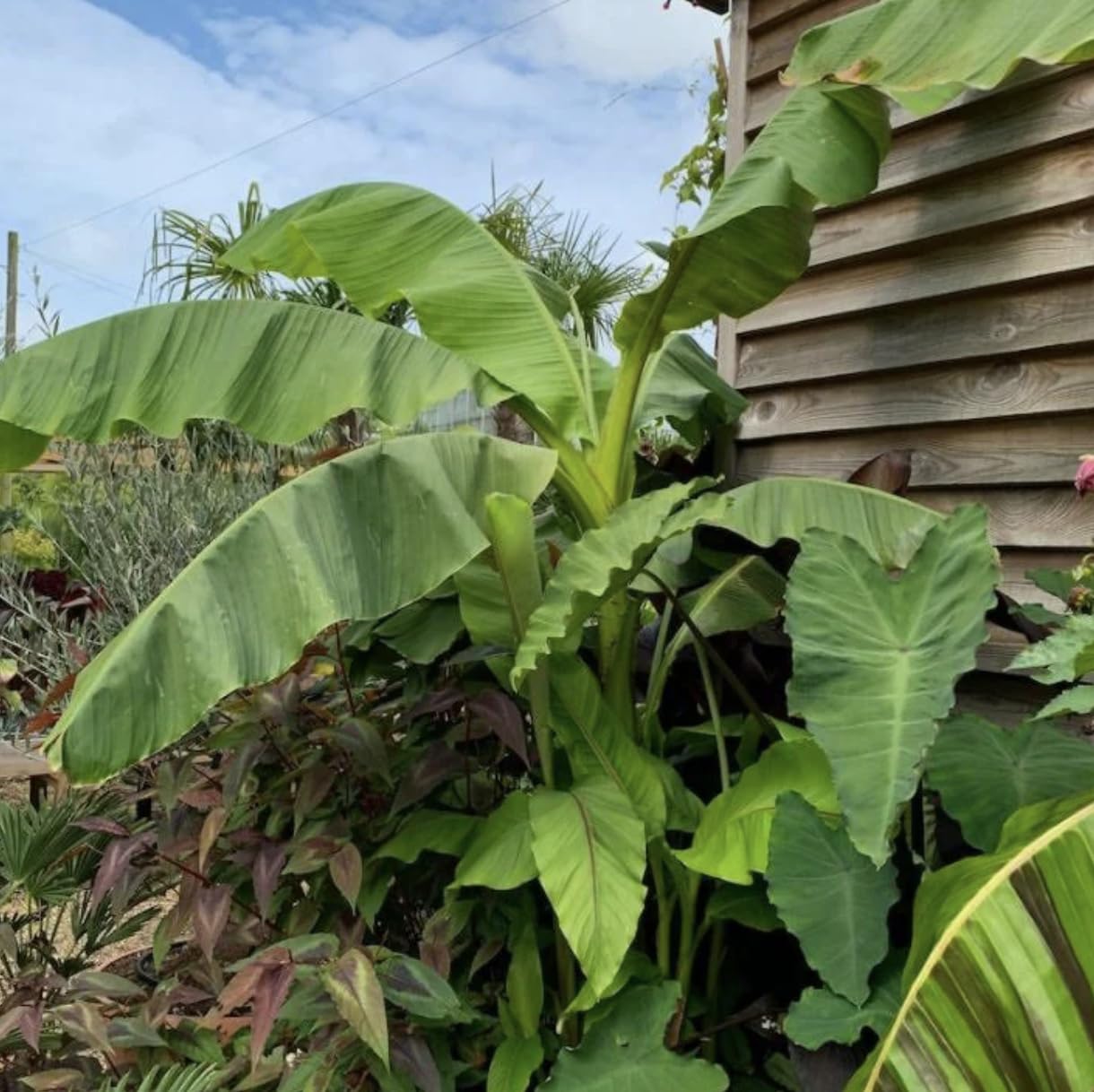
Musa basjoo is the answer for anyone whose cold room or cold climate has already killed a Cavendish. It is rated for USDA zones 3 to 7, which is far colder than anything else on this page — the Goldfinger, the Red Abyssinian, and the Mahoi all sit in warm zones by comparison. The rhizome (the thick underground stem that stores energy and survives winter) endures temperatures as low as 10 °F, and the roots stay hardy down to 14 °F. It ships at over 12 inches tall in a 2.5 x 2.5 x 3.5-inch cup, ready to plant.
It grows fast. If you are keeping it indoors, treat it as a seasonal guest in a very bright spot and get it back outside when the weather warms. There is one visual trade-off: this is the ornamental fiber banana, not an eating variety, so the yellow-orange flowers produce small fruits that are not edible.
Growth and overall plant health are the two strengths owners consistently land on. The honest note is size — several plants arrive smaller than the listing suggests, and a few never recover from the trip, which is common for any bare young banana shipped at this height. Potting it up and growing it on before putting it in the ground gives it the best chance; plants set straight into direct sun tend to get scorched and take weeks to pull through.
The cold-weather specialist: if you are in a zone where other bananas would not survive the winter, this is the only pick here built for that reality.
Size expectations: the plant in the box can be smaller than promised, so plan for an indoor grow-on period before it goes outside.
Pick it for: cold climates, outdoor garden planting, and anyone who wants a banana that survives a real winter in the ground.
Skip it for: a small indoor room — at 15 feet expected height, this is not a tabletop plant.
7. Greenwood Nursery: Live Perennial Plants – Musa Basjoo Cold Hardy Banana – [Qty: 2X Pint Pots]
Two cold-hardy bananas, packed with the care of a proper nursery
Greenwood Nursery ships two Musa basjoo plants in pint pots, and the packaging is the part that stands out. Every order gets inspected and watered before it leaves, then sleeved in craft paper to hold the foliage and soil in place, with the plants stabilized by crunched craft paper and air pillows inside a fitted corrugated box. That level of care shows up in condition on arrival, and it is the reason this nursery has built a following.
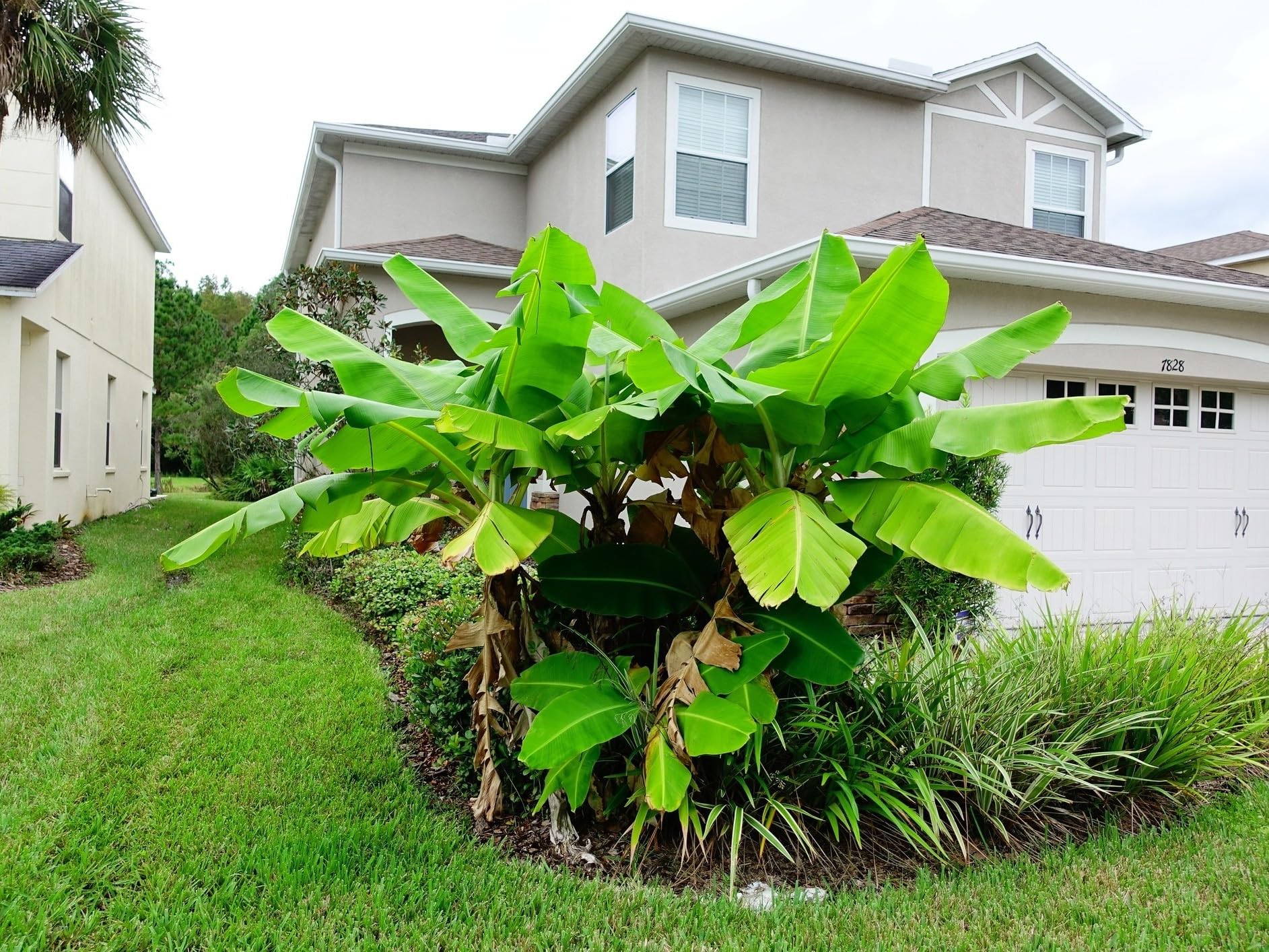
This is the same species as the pick above but a different size proposition. Mature height runs 10 to 20 feet, with container-grown plants generally reaching 8 to 10 feet, and it grows in zones 5 to 10 — so it overlaps but widens the cold range. Once temperatures drop below 32 degrees, you cut off the dieback and mulch heavily for winter protection if it is planted in the ground, and containers holding outdoor bananas should be insulated. Bloom season is summer, with yellow flowers and small ornamental fruits that are not edible.
The honest limit is size. Plants sometimes arrive far smaller than the container implies, and with this many orders going out, an occasional one arrives as little more than stems in a pot. The nursery backs every order with a 14-day guarantee and asks you to water and plant immediately on arrival — follow that and the odds improve sharply. It is a mail-order nursery experience rather than a gift-box presentation, so judge it on the plants six weeks out, not on day one.
Why The Nursery Earns Trust
- Two plants in pint pots, packaged with paper and air pillows to prevent movement
- Covers zones 5 to 10, one of the widest cold ranges in this lineup
- Fast-growing with a 10-to-20-foot mature height for real garden impact
- 14-day guarantee with clear unpacking and planting instructions
What To Expect
- Arrival size can disappoint — some orders arrive as little more than stems
- Bare-root and potted shipments both stress in transit, so fast planting is essential
- Gets large enough that a container-bound plant needs insulated roots through winter
The right order for: planting a cold-climate garden border with two hardy bananas and a nursery that stands behind the shipment.
Better avoided if: you need a substantial plant the day it lands — this one rewards the grow-on approach.
8. American Plant Exchange Dwarf Banana Plant – Live 6-Inch Potted Tropical Houseplant

The one that shows up already tall and in a real pot
Most banana plants on this page arrive as a 3-to-8-inch start in a 2-inch tray pot. This one ships in a 6-inch pot and it is listed as a “Super Dwarf” model, so you are buying size rather than a seedling to nurse. Size and value are exactly what buyers respond to — the plants commonly arrive taller than people expect and worth the outlay, which is a real advantage when you want something that looks like a plant on day one instead of in three months.
It is Dwarf Cavendish, it wants moderate watering with consistent moisture, and it will take anything from bright indirect light up to full sun. That flexibility is unusual for a banana and makes it one of the easier picks to place in a home — a sunny spare room, a bright balcony, or a sunroom all work. Bloom period is listed as fall and planting period as spring, and the foliage is broad and green rather than colored, so this is a classic look rather than a statement leaf.
Here is where you need to be careful, because the arrival quality genuinely swings. Some plants land healthy and push three new leaves within days; others arrive tall but distressed, with wilted, dark, crinkled foliage and dry dirt. Health and plant quality both split owners, and black or drooping leaves are a common enough report that this is not a plant to buy blind for a gift. Order it in mild weather, check the forecast before it ships, and be ready to give it a bright spot and consistent moisture straight from the start.
You are paying for height: a 6-inch pot and a “Super Dwarf” designation means the plant arrives looking established rather than like a seedling, which is the whole appeal.
The gamble to weigh: condition on arrival varies a lot between orders, so mild weather shipping and immediate care decide how this one turns out.
The right pick when: you want a sizeable banana plant now and you can give it bright light and steady moisture.
Better to look past if: you cannot order in mild weather, or you need guaranteed gift-ready condition.
9. Banana Tree – Live Plant in a 4 Inch Growers Pot – Grower’s Choice Based Availability

Grower’s choice means you are buying a surprise, and that is the risk
Read the listing carefully before ordering: this is grower’s choice based availability, so the exact banana variety you receive depends on what the nursery has ready on the day it ships. That is the defining fact of this purchase, and it is why it sits at the bottom of this list. You get a live banana plant in a 4-inch grower’s pot, expected to bloom in spring and planted in spring, with loam soil and full sun to partial shade.
The upside is flexibility. Because the variety varies, the plant can plausibly be grown either indoors or outdoors, and its size range is wide enough to suit a cozy corner or a larger space. It is listed for air purification and needs only regular watering, shelter from strong winds, and well-drained, slightly acidic soil. For a beginner with no strong preference on variety, it is a low-commitment way to get a banana growing.
Be honest about the odds before you buy. The dominant complaint about this listing is plants arriving dead or dying within a week, and condition on arrival is the single most-discussed issue by a wide margin. Some plants arrive fine — good condition, a solid root system, and transplanted without drama — but that is not the typical experience, and grower’s choice removes the ability to research a specific variety’s needs ahead of time. If you want a predictable outcome, buy a named variety instead.
Where it earns its place: a live banana in a 4-inch pot that takes bright indirect light to full sun, is listed for air purification, and needs only regular watering — a low-cost way to try the hobby.
The real risk: condition on arrival is the most-discussed issue here by a wide margin, with many plants not surviving their first week, so order only if you accept the gamble.
Best for: a low-commitment experiment where the exact variety does not matter and you are comfortable with an uncertain outcome.
Choose a named variety instead if: you want a predictable plant that survives its first month.
Understanding the Specs
USDA Hardiness Zones
This is the map that tells you how cold a plant survives. Lower numbers mean colder winters. A plant rated for zones 3 to 7 survives serious cold, while a zone 9b-11 plant needs warmth almost year-round. If you keep your banana indoors all winter, zone matters less — but it still tells you how much cold the plant tolerates in transit and on a chilly windowsill.
Arrival Height And Pot Size
Most live bananas ship as small starts, often 3 to 8 inches tall in a 2-inch or 3-inch pot. Smaller plants usually transplant with less shock, while larger plants cost more and travel harder. Check the arrival height in the listing before ordering, because a plant that looks tall in the photo is often a seedling in the box. Immediate repotting into a slightly larger container with well-draining soil helps almost every variety.
FAQ
Will a dwarf banana plant actually stay small enough for indoors?
How tall will a banana plant get indoors compared to outside?
Can I keep the Musa Basjoo banana tree inside all year?
Why did my new banana plant lose its leaves after repotting?
What soil does an indoor banana plant need?
How often should I fertilize an indoor banana plant?
Is the Mahoi banana plant a GMO?
Do indoor banana plants actually produce edible fruit?
What temperature is too cold for an indoor banana plant?
Why did my banana plant arrive much smaller than the listing showed?
Final Thoughts: The Verdict
For most people, the indoor banana plant answer is the Goldfinger Dwarf Banana Plant Tree — it is the highest-rated pick here at 4.3 stars, tolerates cold and wind better than its rivals, and its 8-foot mature height fills a room without taking it over. If you want the most plant for your money, grab the Banana Plants Dwarf Cavendish four-pack; if your room or climate runs cold, the Musa Basjoo Banana Tree is the one to reach for. And if you just want the leaves people comment on, the Red Abyssinian is the one to buy.
How We Picked
We do not accept paid placement. Every pick is matched to a real buyer and a real use-case; we do not hands-on test units.
Sources & Methodology
Specifications: manufacturer listings and product documentation. Review insights: verified customer reviews, as of September 2026. Pricing: not shown on this page (it changes often); check the current price via the retailer link.
As an Amazon Associate, KitchPrep earns from qualifying purchases. This does not affect which products we feature.
Related Guides
