
Specs are compiled from manufacturer listings and verified buyer reviews and can change over time — please confirm the key details on the product page before buying.
If your couch cushions have gone flat, ripped at the seams, or turned lumpy after a year of sitting, the fix is usually not a new sofa — it is the right layer of batting wrapped around or stuffed into the foam. The batting you pick decides whether your cushions come back full and smooth, or sag again within weeks. This guide walks you through nine real options, from lightweight cotton quilt batting to heavy polyfill made specifically for refilling couch cushions, so you can match the material to the job instead of guessing.
I’m Mohammad Maruf — the founder and writer behind KitchPrep. This guide is built by comparing the manufacturers’ published specifications and the patterns across verified customer reviews, so you get each pick’s real strengths and trade-offs instead of marketing spin.
The picks below split into three basic jobs: cotton batting for quilts and flat sewing projects, bonded Dacron wraps for rebuilding foam, and loose polyfill for restuffing cushions that have hollowed out. The single most useful thing you can do before buying any batting for cushions is confirm the fiber type and thickness match your actual cushion.
Our Picks at a Glance


How To Choose The Best Batting for Cushions
The first question is not which brand is best — it is what your cushion is made of right now. A foam core that has gone soft needs a wrap that adds loft and stops the cover from rubbing. A cushion where the foam has crumbled or hollowed out needs loose stuffing packed back in. A quilt or flat sewing project needs a sheet of batting, not a bag of fluff. Buying the wrong form is the most common mistake, and it wastes both money and an afternoon.
Match the Form to the Job
Sheet batting arrives as one continuous piece you cut with scissors, then lay over foam or between fabric layers. Loose fiberfill arrives compressed in a bag, expands when you open it, and gets packed into a cushion cavity or a plush toy. Bonded Dacron is a middle ground — a sheet with just enough body to wrap foam cores evenly. If you are rebuilding a couch cushion, wrap or re-stuff; if you are quilting, use a flat sheet rated for sewing.
Read the Weight Number, Not the Adjective
Batting is sold by density. Cotton batting is usually rated in grams per square meter, and Dacron wraps are rated in ounces per square yard. A heavier ounce-per-square-yard Dacron gives firmer cushion support, while a lighter one stays flexible and easier to shape around curved foam. Loose polyfill is sold by total weight in pounds, which tells you how far one bag goes. Ignore words like “thick” and “plush” on their own — find the number.
Plan for Wrinkles and Fluffing
Most batting ships vacuum-sealed, which is why so many buyers open the box to a wrinkled, flat-looking sheet. Dacron wraps usually puff back up after five minutes in a warm dryer with a tennis ball or two. Cotton batting is the opposite — never pre-wash it, because the shrinkage ruins the loft. A light spray of water and a short tumble restores most wrinkles either way.
Quick Comparison
| Model | Best For | Material | Format & Size | Weight Rating | Amazon |
|---|---|---|---|---|---|
| Natural Cotton Batting (68″x86″)★ Best Overall | Lightweight summer quilts | Natural cotton | Sheet, 86 x 68 in | 150 g/m² | Amazon |
| Welacer Polyfill StuffingBest Value | Restuffing cushions and plushies | New polyester fiber | Loose fill, 2.3 lb | 2.3 lb bag | Amazon |
| Premium Polyfill Stuffing (COSNIGHT)Top Performer | Pillows, pet beds, plush toys | 3D polyester fiber | Loose fill, 1 kg | 2.18 lb bag | Amazon |
| Foamtouch Bonded Dacron 48″ | Wrapping sofa cushion foam | 100% polyester Dacron | Roll, 48 in x 5 yd | 6 oz/sq yd | Amazon |
| Jecqbor 5lb Polyfill Stuffing | Large cushions and dog beds | 100% new polyester fiber | Loose fill, 5 lb | 5 lb bag | Amazon |
| AK TRADING CO. Bonded Dacron 36″ | Upholstery and memory quilts | 100% polyester Dacron | Roll, 36 in x 5 yd | 6 oz/sq yd | Amazon |
| Unbranded Upholstery Batting (LEEQHRRY) | Thin wrap for couch projects | 100% polyester | Roll, ~1/2 in thick | 2.34 lb roll | Amazon |
| HOMBYS Upholstery Batting | Refluffing patio cushions | 100% polyester | Roll, 36 in x 5 yd | Medium firmness | Amazon |
| RRKTP Cotton Batting 50″×60″ | Baby quilts and small projects | 100% pure cotton | Sheet, 50 x 60 in | 200 g/m² | Amazon |
In‑Depth Reviews
1. Natural Cotton Batting for Quilting Sewing Crafting & DIY Projects (68″x86″)
Our pick — over 4.5★ from 850+ verified ratings; the strongest balance of quality and price.
A big cotton sheet that quilts and cushions can both use without clumping
This is the batting you grab when you want one big sheet you can cut down for several jobs. The 150 g/m² rating (grams per square meter — the standard density measure for cotton batting) makes it about 30% thinner than traditional cotton batting, which is exactly what you want for a summer quilt that drapes instead of sitting stiff. The sheet measures 86 x 68 inches, so it covers a twin-bed quilt with room to spare, and it arrives as one continuous piece rather than sewn-together scraps.
What wins people over is the feel of it going through a machine. Industrial needle-punching locks the fibers into a uniform 3mm thickness per inch, so you are not fighting thin spots or stray clumps while you quilt. It takes hand sewing, machine quilting, and fusible adhesives without the layers shifting underneath the needle, and it cuts clean with ordinary scissors. One owner summed up the surprise nicely: “I’m not a quilter but had to repair one and this batting was great for mending quilts.”
The honest catch is wrinkle management. It ships vacuum-sealed, so it lands looking creased and flat — one buyer recounted ironing the folds out quickly before stretching it over a foam board, though they noted the thinness means tape lines underneath can show through. That same thinness is why it works so well as a lightweight layer: at 1.34 pounds for the whole sheet, you can handle it without a wrestling match, and it stays drapey on a finished quilt. Do not pre-wash it before quilting — the manufacturer is explicit about that — but it can go in the machine once your project is finished, then air-dry in sunlight.
Where It Pulls Ahead
- Uniform 3mm thickness per inch with no thin spots or clumping, thanks to needle-punched construction
- Soft and drapable enough for summer quilts and bowl cozies, not just bedding
- Cuts and layers easily for both hand and machine quilting, with no shifting or knotting
- Generous 86 x 68 inch sheet covers a twin quilt in one piece
What To Expect
- Ships vacuum-sealed and wrinkled — plan on ironing or resting it flat before use
- Thin enough that foam-board tape lines or dark backing can show through
- Lighter loft than traditional cotton batting, so it is not the pick for a thick, puffy quilt
Reach for this if: you quilt, mend, or line flat projects and want one big, soft, evenly made cotton sheet that behaves under a needle.
Think twice if: you need a thick, lofty layer for a heavy winter quilt — this one is deliberately thin and drapable.
2. Welacer Polyfill Stuffing, 2.3lb Premium Fiber Fill for DIY Crafts
Two compressed bags that puff into far more stuffing than the package suggests
For restuffing a hollowed-out cushion, loose fiberfill beats any sheet. This bag weighs 2.3 pounds and arrives as two airtight compressed packs, so unzip one and watch it expand. That compression is the whole trick: an owner described how the package springs “to life” the moment it opens, and another noted the bag still looked full after using “quite a bit.” The fiber is a newly upgraded polyester that resists clumping and sheds no loose strands as you pull it apart.
What buyers rave about here is the quality of the fiber itself — and softness runs a close second. It sits between the cheap box-store polyfill and premium silk blends in feel, which is the range most crafters actually want for cushions, plush toys, and crochet amigurumi. One reviewer with a heavy cat noted that what wins people over is the resilience: they restuffed the bottoms of nine mashed cushions and the fill held firm rather than sagging again. It layers easily too, so you can build up loft in thin increments until the cushion feels right.
The trade-off to know about is loft-holding under real weight. Very soft polyfill compresses faster than a denser fill when something heavy sits on it for hours, so for a couch seat you want a bit more packed in than feels necessary at first. Per the maker it is odorless and hypoallergenic, machine washes without losing shape, and dries fast. For the volume you get, this is the best value in the loose-fill group.
Volume for the money: two compressed bags that expand into a generous pile, enough for several cushions or a long run of craft projects.
The one caution: ultra-soft fiber needs to be packed a little denser in a seat cushion so it does not flatten under daily sitting.
Bottom line here: the smart buy if you are stuffing couch cushions, pillows, pet beds, or toys and want soft, clean, washable fiber that goes a long way.
Look elsewhere if: your project is thick upholstery needing rigid structure — sheets, not loose fill, hold that shape better.
3. Premium Polyfill Stuffing for Stuffed Animals — Resilient Pillow Stuffing
Luxury-feel stuffing built on 3D fiber that keeps its bounce
Here is the padded, silky-feeling fiberfill. At 1 kg — 2.18 pounds by the listing — it comes double-packed in a non-woven layer plus a plastic bag, and you tap it and wait 20 minutes before cutting in. The fill is built from 3D polyester fiber, a crimped construction that springs back instead of matting down. It feels silkier than standard polyfill and holds loft well for pillows, cushions, pet beds, plush toys, and handmade dolls.
The loft density is the real selling point versus a similar-weight bag. This fiber takes more material to fill a given space, because it is denser and denser fiber keeps a cushion feeling full instead of turning to a compressed pad. It is also breathable and moisture-wicking, which suits pillows and pet beds where standard polyfill clumps. It comes vacuum double-packed, so plan on the 20-minute fluff-up ritual before you start stuffing, and it can be machine washed inside its cover and dried in the shade.
The downside is economy — this is the softer, denser, more luxurious fill, and a few buyers feel they did not quite get their money’s worth when it disappears faster into a large project than a fluffier lighter fill would. For a premium stuffed animal or a pillow you sit against daily, that density is exactly what makes it worth it. For packing out a big cheap throw pillow, you would rather have the cheaper, airier fill.
The fiber that sells itself: a 3D crimp stays springy after long use, so cushions and plushies keep their shape far longer than with basic polyfill.
Go with this when: you want a dense, silk-soft fill for premium stuffed animals, decorative pillows, or a daily-use cushion and do not mind using a little extra per project.
4. Foamtouch 5 Yards Bonded Dacron Upholstery Grade Polyester Batting 48 Inch Wide
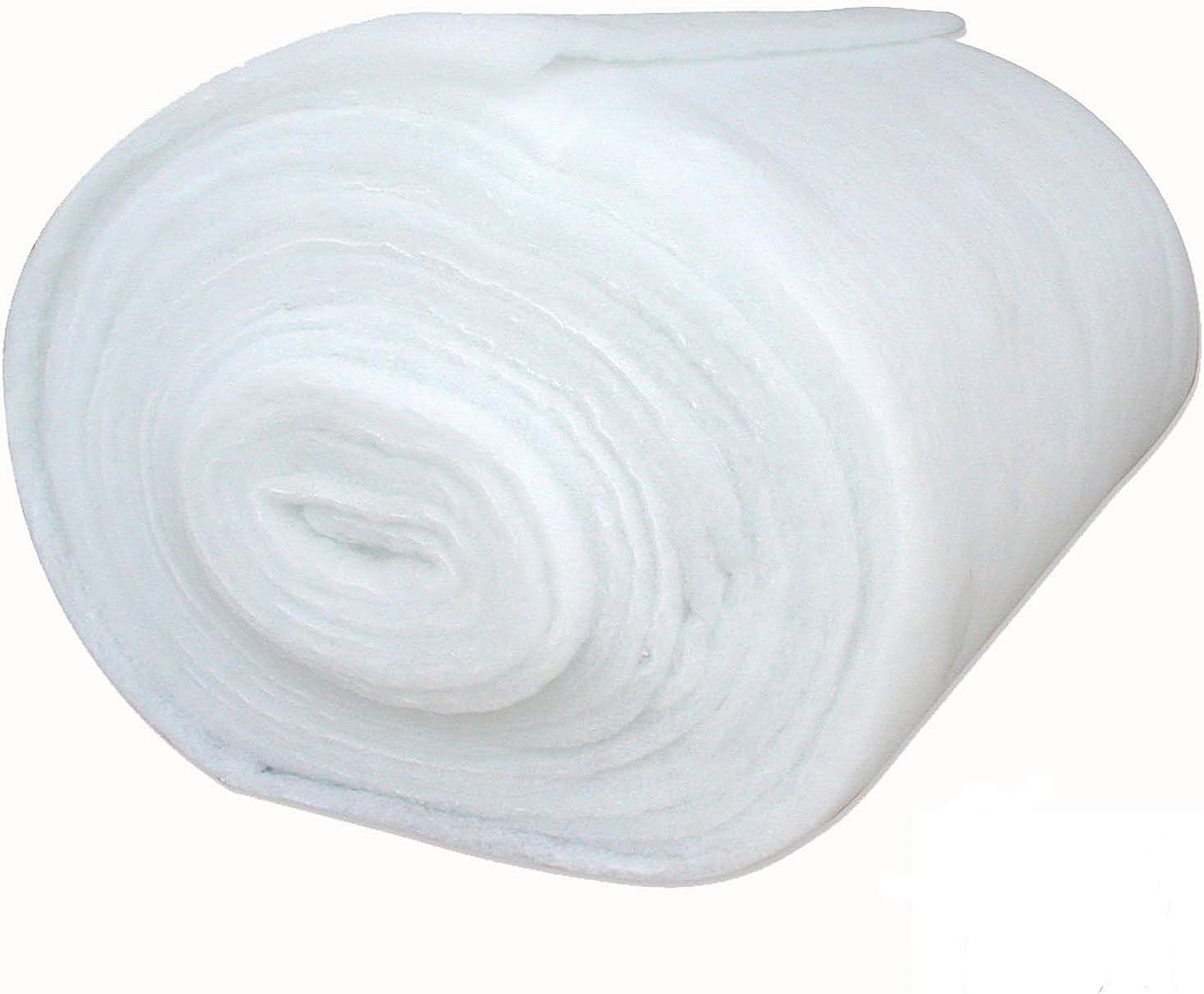
Made-in-USA Dacron sized for wrapping sofa foam without piecing
When the foam inside a couch cushion is still good but the cover has bagged out, you wrap the foam rather than replace it. This roll is 48 inches wide and 5 yards long, sold in one continuous piece, and rated at 6 ounces per square yard — the weight that gives it enough body to sit smoothly over foam. It is 100% polyester Dacron, made in the USA, and it smooths out over a foam core for a professional finish.
The application is simple: cut a piece, wrap it around the foam, and the fabric goes on over it. What buyers mention most is how well it handles that reupholstery job — one restoration saw only a single wrap around each cushion do the trick and saved the cost of replacing the whole sofa. A common tip repeated across the reviews is to tumble the cut piece in a medium-heat dryer for about five minutes with a couple of tennis balls, which puffs out the wrinkles and unevenness before you wrap.
The wrinkles are the one thing to plan around. It ships vacuum-compressed in a tightly taped box, so it looks creased on arrival, and buyers report the fluffed-up result is noticeably better. A light spray of water plus a short tumble at low heat does the same job. Opinions on the texture are split — some find it soft and easy to smooth, others describe it as rough out of the package — and the thickness runs thinner than the spec sheet implies, so treat it as a wrapping layer rather than a stand-alone cushion. Expect to refluff it once and it does the job well.
What It Handles Well
- 48 inch width wraps larger foam cores in one piece with no seams
- 6 oz per square yard gives enough body to smooth out over foam
- 5 yards in one continuous cut means fewer joins on long projects
- Puffs up nicely after a short tumble in a warm dryer
The Fine Print
- Arrives vacuum-compressed and wrinkled; fluff it in the dryer first
- Runs thinner than the spec sheet suggests, so use it as a wrap layer
- Texture splits opinion — some find it soft, others rough and uneven
- Hand wash only per the care instructions
The pick for rebuilders: a wide Dacron roll made for wrapping sofa and chair foam, and a favorite for reviving sagging cushions without buying new furniture.
Not for: anyone wanting a flat quilting batting sheet — this is a wrapping material, not a quilt layer.
5. Jecqbor 5lb Soft Polyfill Stuffing, Fluffy Pillow Stuffing for Couch Cushion

A five-pound bag that can restuff two dog beds and still have fill left
Volume is the reason to buy this one. It holds 5 pounds of 100% new polyester fiber, none of it recycled fill, with an OEKO-TEX guarantee, and it comes in a 40 oz / 2.5 lb pack size listed alongside the 5 lb option. That weight means big jobs: an owner restuffed two medium dog beds, bottom and circular rim, and reported it as the perfect amount. The white fiber is clean and consistent, with no added chemicals, and it fluffs up fast once you open the compressed pack.
Where it shines is durability through washing. The maker states the fill stays fluffy through repeated gentle-cycle washes in cold water and low tumble drying — useful for couch cushions and pet beds that get washed often. If the fill shifts over time, you just massage the item to redistribute it. It resists clumping and stays bouncy rather than flattening, and buyers rate the value highly for the amount you get.
Be ready to manage the volume. Five pounds of loose fill is a lot to store, and it arrives vacuum-packed, so you want a bin or bag to transfer the leftover into. A few people note it is slightly more expensive than a local craft store, and the price matters if you only need a little. For a household with dogs, a couch to revive, or a stack of DIY projects lined up, the bulk bag is the sensible buy. One customer put it plainly: it is the perfect amount to restuff two medium dog beds.
Bulk buying done right: 5 pounds of new polyester fiber with an OEKO-TEX guarantee, priced to go the distance across multiple cushions and pet beds.
Made for: anyone with several cushions, dog beds, or big DIY projects who wants one bag that will actually cover them all.
Skip if: you only need a small top-up for a single pillow — a smaller bag covers that without the storage headache.
6. AK TRADING CO. 36 Inch Wide Bonded Dacron Upholstery Grade Polyester Batting
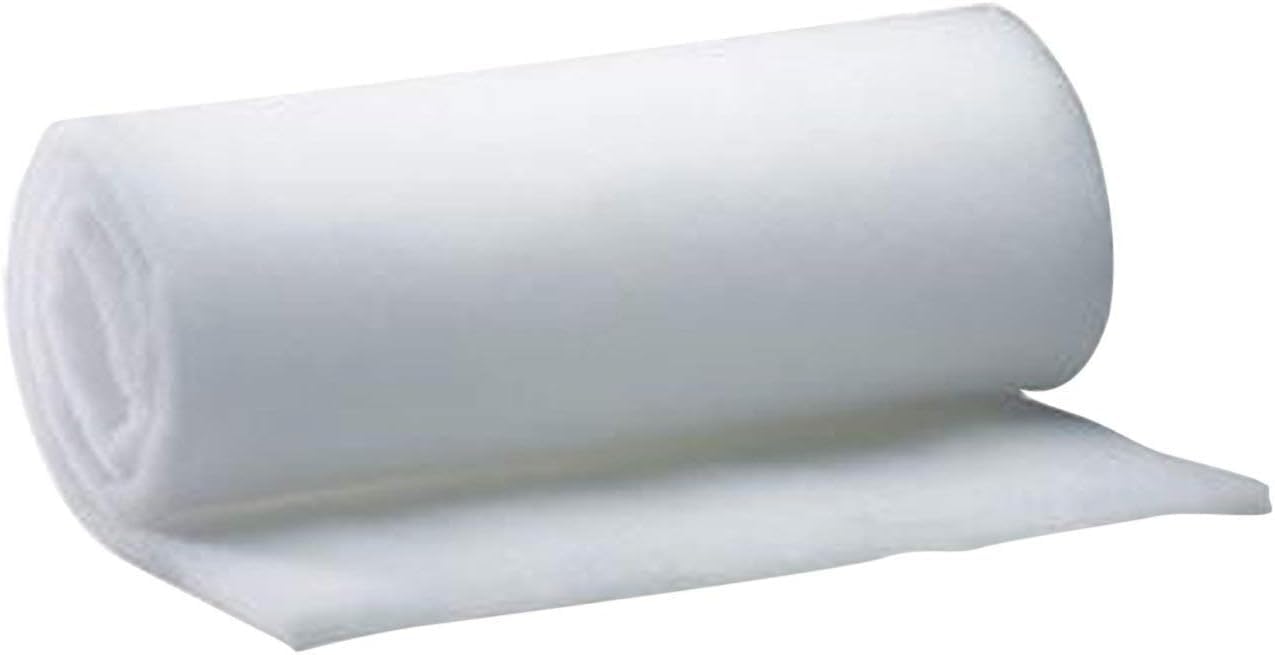
Six-ounce Dacron that gives memory quilts real body
Quilters who work on top of foam or need a sturdy backing layer know the value of a batting with structure. This roll is 36 inches wide, 5 yards long, and rated 6 ounces per square yard in 100% polyester Dacron, made in the USA. The continuous-cut option means multiple yards arrive as one piece up to 30 yards, so sizable upholstery or quilt projects do not need pieced sections. Its makers suggest decorative pillows, bedspreads, and upholstery as core uses.
The loft is real, if a little uneven. Over several days resting unrolled, the batting floofs up considerably — one buyer measured it looser at the cut edges and closer to an inch through the middle. For a memory quilt backing, that body gives T-shirt quilts a firm, professional finish, and users note it is neither too thin nor flimsy for that job. It also takes a liner role well, and one user pressed it into service as a pond-filter layer.
Because it is a heavier Dacron than a plain wrap, it works best where you want stiffness — quilt backings, upholstery, decorative pillows — and less well where you want soft drape. The listed thickness runs thinner than the marketing implies, so for a very plush cover you would layer a couple of cuts. Store the extra loosely rolled and let it rest before using, and it delivers the loft you were promised.
The quilting strength: 6 oz/sq yd Dacron with real body holds memory-quilt backing firm and takes the needle cleanly.
Best for firmer builds: memory quilts, decorative pillows, and upholstery where you want a backing with structure and a continuous cut.
Consider an alternative if: you want a soft, drapable layer for a lightweight summer quilt.
7. Upholstery Batting, Dacron Polyester Cushion Wrap for Foam Padding

A half-inch polyester wrap with job-site range beyond the couch
Some buyers want a nimble wrap they can cut and shape around curved foam, and this one fits that niche. It is 100% polyester with approximately half an inch of thickness, durable, abrasion-resistant, breathable, and quick-drying. It cuts with ordinary scissors, so it suits DIY enthusiasts, upholsterers, designers, and tailors alike, and the maker lists surprising range beyond furniture — fish tank filters, holiday displays, hydroponic farming, soundproofing, and vibration reduction.
What it does well is wrap foam cleanly. A buyer reupholstering a couch reported it as soft and worked perfectly; another said the thickness adds softness and gives a fuller, more comfortable look once wrapped and covered. Because it also resists UV and odor, it works for both indoor furniture and outdoor patio cushions. It wraps foam to protect the cover and add softness, extending the life of a favorite cushion.
Know the variance upfront. The thickness is listed as approximately half an inch, and customers disagree on how thick it actually feels — some find it thick and plush, others call it very thin, so if you need a specific build depth, order with that in mind. Strength is described as durable but opinions split on how well it holds up over long use. It is a smart buy for a flexible multi-use wrap, less so if you need guaranteed thickness.
Flexible and easy: 100% polyester, half-inch thick, UV-resistant and odorless — a wrap that handles both indoor and outdoor upholstery work.
Worth grabbing for: wrapping foam cushions, padding cornices, and general DIY upholstery where an easy-to-cut, half-inch polyester wrap does the job.
Look past if: you need guaranteed thickness for a specific build depth, since the actual loft varies.
8. HOMBYS Upholstery Batting Medium Thick, Quilt Batting by The Roll, Dacron

A budget roll that brings sagging outdoor cushions back from the dead
This one earns its place for a specific job: reviving flat patio cushions. The roll is 100% polyester, 36 inches wide and 180 inches long in five sections, with medium firmness and a resilient fill. It wraps a foam core to cut friction between core and fabric, its elasticity helps the cover hold its shape instead of stretching out, and it can be packed into cushions to make them look fuller. It is washable, and it cuts easily.
What it does best is cheap refluffing. A customer with tired outdoor patio cushions added batting inside and restored the fullness and comfort in minutes, adjusting firmness by how much they packed in. Others used it to cover new foam for a kitchen chair and to give a cushion insert a custom appearance. A notable tip from kitchen-chair users: a one-inch foam mat covered with a layer of this batting before the fabric goes on smooths over the sharp wooden edges and stops the fabric from tearing.
The honest catch is consistency of thickness. Some buyers find it thinner than expected, and one edge case arrived with a slice through the middle; the fill is also thin enough that it is easy to puncture if you handle it roughly. If you refluff, do not count on the dryer to rescue loft — some find that ineffective. The flip side is that a couple of layers fix a thin roll, and the price makes layering painless. Treat it as a wrap for fullness, not a stand-alone thick pad.
Where It Earns Its Spot
- Refluffs flat outdoor and kitchen cushions quickly and cheaply
- Wraps foam cores to reduce friction and extend cover life
- Elasticity helps fabric hold its shape instead of stretching out
- Cuts easily and customizes firmness by how much you pack in
Worth Knowing
- Runs thinner than expected — many users layer it or add foam
- Fill is thin enough to puncture with rough handling
- Dryer fluffing may not revive it for everyone
One to grab for: breathing life back into flat patio or kitchen cushions on a tight budget, using it over a foam insert for best results.
Best to pass on if: you need a thick, uniform sheet on its own — this one works best as a layered wrap over foam.
9. RRKTP Cotton Batting for Quilting, 200 g/m² Lightweight Quilt Batting Crib Size 50″×60″

Crib-sized cotton batting built for baby quilts and small projects
Not everyone needs a full couch worth of batting. This is a 50 x 60 inch sheet of 100% pure cotton batting at 200 g/m², sized precisely for baby quilts, wall hangings, table runners, pot holders, and detailed craft work. The flat, even cotton is soft, breathable, and warm, and it needles and layers without tearing or clumping, so beginners and experienced quilters both get clean stitches and a consistent finish. It arrives as one piece, ready to cut.
The finish after washing is the standout. It becomes softer and fluffier after quilting, and the manufacturer says to skip pre-washing entirely — quilt first, then machine wash cold with mild detergent and tumble dry low. A buyer making a grandchild’s quilt described the batting as soft and easy to quilt on a domestic machine, with a smooth finish that puffs up after washing and size exactly as expected. For a lightweight quilt that still holds warmth, cotton batting like this is the classic choice.
Be aware of the thinner sheet. Thickness draws mixed feelings, with some finding it perfect for a lighter quilt and others noting it is thinner than they usually use. The durability is the bigger flag — a longarm quilter reported it starting to fall apart on the frame. For a small baby quilt or table project, it is an affordable cotton option that finishes beautifully; for high-tension longarm work, choose a sturdier batting.
Small-project favorite: 50 x 60 inches of 100% cotton at 200 g/m², ideal for baby quilts, runners, and pot holders that need a soft, flat finish.
Ideal match for: baby quilts, wall hangings, and small cotton projects where an even, lightweight sheet and easy washing matter.
Skip if: you quilt on a longarm frame under high tension — this one is delicate enough to strain.
Understanding the Specs
Grams per Square Meter (g/m²)
This is how cotton batting is measured — the weight of the fabric per square meter, which translates directly to warmth and body. A 150 g/m² cotton batting is lightweight and drapable, good for summer quilts and small crafts. A 200 g/m² sheet is a touch denser, giving a slightly warmer, fuller finish. A higher number does not mean better; it means heavier and warmer. Match the number to the season and the project, and if you want a thick quilt, look for the highest g/m² you can find or layer two sheets.
Ounces per Square Yard (oz/sq yd)
Dacron upholstery batting is rated this way, and it is the number that tells you how firm a wrap will feel. A 6 oz/sq yd Dacron has enough body to smooth over foam cores on sofa cushions and hold the flat shape of a memory-quilt backing. A lighter, roughly half-inch polyester wrap is more flexible and easier to shape around curved or oddly cut foam. If you want structure, go heavier; if you want softness and drape, go lighter and add layers.
FAQ
Should I use cotton batting or polyester batting for couch cushions?
How much batting do I need to restuff a couch cushion?
Can I wash batting after it is inside a cushion?
Do I need to pre-wash cotton batting before quilting?
How do I stop batting from shifting or clumping inside my cushion?
Why did my batting arrive wrinkled and flat?
Is a 6 oz per square yard Dacron batting thick enough for upholstery?
What is the difference between polyfill stuffing and batting sheets?
Can I machine wash loose polyfill stuffing once it is inside a pillow?
How do I make my batting puff up again after it has flattened?
Final Thoughts: The Verdict
For most projects, the batting for cushions pick is the Natural Cotton Batting (68″x86″) — it earned the group’s top rating of 4.7 stars across 800+ reviews, and its needle-punched 3mm-per-inch loft keeps it even for quilting and mending without clumping. If your goal is reviving a flat couch cushion instead, reach for the Foamtouch Bonded Dacron, whose 48-inch, 6 oz/sq yd roll was built for wrapping sofa foam. And if you are restuffing hollow cushions on a budget, the Welacer Polyfill Stuffing gives you the best volume for the money in the loose-fill group.
How We Picked
We do not accept paid placement. Every pick is matched to a real buyer and a real use-case; we do not hands-on test units.
Sources & Methodology
Specifications: manufacturer listings and product documentation. Review insights: verified customer reviews, as of September 2026. Pricing: not shown on this page (it changes often); check the current price via the retailer link.
As an Amazon Associate, KitchPrep earns from qualifying purchases. This does not affect which products we feature.
Related Guides
