
A wok can be the fastest “make dinner happen” pan in your kitchen—when you pick the right one for your stove. And if you’ve been hunting for the Best Cast Iron Wok, you’re probably after two things that most lightweight pans can’t deliver at the same time: big, confident heat and zero fear of wear‑and‑tear.
Here’s the honest truth: cast iron woks behave differently than classic thin carbon‑steel woks. They’re not built for constant one‑hand tossing. They’re built to sit rock‑steady, hold heat like a champ, and keep cooking hard even when you drop in cold ingredients from the fridge. That makes them ridiculously practical for home stoves— especially electric and induction setups that struggle to keep a thin wok ripping hot.
This guide reviews 15 standout wok options on Amazon—mostly cast iron, plus a couple of smart “alternative” picks for shoppers who want the wok shape but prefer lighter handling or a nonstick lifestyle. I’m pulling from the most consistent patterns in real owner experiences: what sticks, what seasons easily, what warps, what rusts, what feels great in hand, and what becomes the pan people reach for three nights a week.
How to Choose the Best Cast Iron Wok for Your Kitchen
A wok isn’t just a “big bowl pan.” It’s a heat‑management tool. The right one makes stir‑fries faster, fried rice crispier, and vegetables brighter. The wrong one turns into a heavy decoration you avoid because it’s annoying to heat, awkward to hold, or frustrating to clean.
1. Start with your stove (this matters more than the brand)
- Gas stoves: You can use almost anything, but a flat‑bottom wok is still the easiest for stability. Cast iron shines on gas if your burner isn’t a “jet engine” level powerhouse, because it holds heat when ingredients hit the pan.
- Electric coil / smooth‑top: Flat bottom is non‑negotiable. Cast iron is a strong match because the pan stays hot even when the burner cycles.
- Induction: Cast iron and carbon steel are naturally compatible, but be mindful: induction can heat the contact area very aggressively. A thicker cast iron base is less likely to warp than thin steel, but you still want a controlled preheat.
The biggest “home wok” mistake is buying a round‑bottom wok and then trying to balance it on a flat stove. Unless you own a dedicated wok ring setup, go flat bottom.
2. Decide what kind of “nonstick” you want
When listings say “nonstick,” they can mean three totally different things:
- Natural nonstick (uncoated iron): The surface becomes more release‑friendly as seasoning builds. It’s safe at high heat, but it takes some practice.
- Textured “physical nonstick”: Some artisan cast iron woks have an intentional texture that reduces sticking once seasoned—great when done well, frustrating if the texture is too rough.
- Coated nonstick: Ceramic or modern coatings release food easily and don’t need seasoning. The tradeoff is you cook a bit gentler (medium to medium‑high is usually the happy place) to keep the coating performing long‑term.
If you love the idea of cast iron but hate maintenance, a coated wok can be your best friend. If you want maximum heat and “never worry about the surface,” uncoated cast iron is the long game.
3. Pick a size you’ll actually use
Bigger is not always better. It’s better to own a wok you heat properly than a monster pan you never fully preheat. Use this simple sizing guide:
- 10–12 inch: best for 1–3 servings, eggs, quick noodles, and small stir‑fries.
- 13–14 inch: best for families, fried rice, deep‑frying, and “protein + veg” in one session.
Also note: a big wok with a small burner can still work, but you’ll cook in batches and use the sides as “resting zones.” That’s real wok cooking—and it’s not a bad thing.
4. Handles and lids: comfort is everything
- Dual loop handles: safest for heavy cast iron. You’ll lift with two hands and you won’t fight a long handle when storing.
- Long handle + helper handle: more “skillet‑like” and familiar, but storage can be awkward.
- Wooden handles: stay cooler and feel great, but they usually limit oven use. Treat them like a comfort feature, not a “forever at 500°F” feature.
- Wooden lids: wonderful for gentle steaming and keeping splatter down, but they can crack or warp if abused. Keep them dry and don’t soak.
- Glass lids: easy visibility, good for braising—just remember glass doesn’t love sudden temperature swings.
5. The make‑or‑break details most people miss
- Surface roughness: A rough cast iron wok can absolutely cook great… after seasoning builds. Early on, roughness can snag paper towels and cling to delicate foods (think eggs or tofu). If you want easy early performance, choose a smoother finish or coated wok.
- Base stability: A slightly slick or rounded base can slide on some burner grates. If you stir aggressively, that can feel sketchy. A wide, flat base is your safety blanket.
- Heat strategy: With cast iron, “patience first” wins. Preheat longer, then cook fast. The worst results happen when you rush the preheat and then crowd the pan.
Quick Comparison: 15 Best Cast Iron Wok Picks
Use this table to spot the right match quickly, then jump to the deep‑dive review for the practical details (how it really feels, how it behaves on home stoves, and what owners consistently love—or complain about).
On smaller screens, swipe or scroll sideways to see the full table.
| Model | Wok type | Size / capacity | Best match | Amazon |
|---|---|---|---|---|
| Lodge Pre‑Seasoned Cast Iron Wok – 14″ | Uncoated cast iron | 14″ • deep bowl | The “buy once” home‑stove workhorse | Amazon |
| 21st & Main Light Weight Cast Iron Wok – 14″ | Value iron | 14″ • flat bottom | Best ultra‑budget “starter” iron wok | Amazon |
| IMUSA 14″ Light Cast Iron Wok | Light iron | 14″ • high walls | Budget wok‑shape pan with easier handling | Amazon |
| Todlabe Carbon Steel Wok – 13″ (lid + spatula) | Carbon steel | 13″ • 3.9″ deep | Quick heat + wok feel (lighter than iron) | Amazon |
| Lodge Chef Collection Wok – 12.5″ | Uncoated cast iron | 12.5″ • compact | More manageable size for smaller burners | Amazon |
| NutriChef Cast Iron Wok – 12″ (wood lid) | Coated / pre‑seasoned | 12″ • 5.8 qt | Great “lid set” for stir‑fry + steaming | Amazon |
| imarku Nonstick Wok – 12.5″ (detachable handle) | Coated nonstick | 12.5″ • deep | Easy cleanup + compact storage (no seasoning) | Amazon |
| Keleday 14″ Cast Iron Wok (wood lid + spatula) | Uncoated cast iron | 14″ • flat bottom | Traditional kit style for big batches | Amazon |
| Backcountry Iron 14″ Cast Iron Wok | Uncoated cast iron | 14″ • 4″ deep | Outdoor + home use with serious heat retention | Amazon |
| YOSUKATA Carbon Steel Wok – 13.5″ | Carbon steel | 13.5″ • deep | Best “classic wok feel” on a flat bottom | Amazon |
| WANGYUANJI Cast Iron Wok – 10.2″ (wood lid) | Uncoated cast iron | 10.2″ • ~2.9 qt | Premium small wok for 1–3 servings | Amazon |
| Sizle Masters Cast Iron Wok Set – 32cm | Set + accessories | ~12.6″ • flat | All‑in‑one bundle with spatulas + lid | Amazon |
| Lodge BOLD 14″ Seasoned Cast Iron Wok | Uncoated cast iron | 14″ • design‑forward | Premium Lodge styling + smart handle geometry | Amazon |
| Zakarian by Dash 14″ Nonstick Cast Iron Wok | Ceramic nonstick | 14″ • family size | No seasoning + easy release (modern comfort pick) | Amazon |
| WANGYUANJI Cast Iron Wok – 14.2″ (craft texture) | Uncoated cast iron | 14.2″ • large | Heirloom‑style wok for serious wok lovers | Amazon |
In‑Depth Reviews: 15 Standout Wok Picks
Below are the detailed reviews—written like you’re actually going to cook with these, not just admire them on a product page. I’ll tell you what each wok is truly good at, where it can frustrate you, and who should (and shouldn’t) buy it.
1. Lodge Pre‑Seasoned Cast Iron Wok (14″) – The “Home Stove” Heat Monster

If you want one wok that you can confidently call “my main wok” for years, this Lodge is the cleanest answer. It’s a flat‑bottom, deep‑walled cast iron bowl that’s happy on the stove, in the oven, or on the grill—and it’s built like a tank. Owners consistently praise the exact thing home cooks struggle with using thin woks: temperature drop. With cast iron mass, you don’t lose all your sizzle the second cold vegetables or chicken hit the pan.
Here’s how to think about it: this isn’t the wok you flip with one wrist like a restaurant cook. It’s the wok you preheat, add oil, and then stir‑fry with a spatula like you mean it. That sounds “less traditional,” but it’s actually the most realistic path to great stir‑fry on normal stoves. You can build a strong seasoning over time, use metal tools without panic, and cook everything from fried rice to fajitas to deep‑fried chicken in one piece of cookware.
Why it wins kitchens over
- Heat retention is the superpower – it stays hot when you add ingredients, which helps browning and keeps vegetables from turning watery.
- Flat base = stable – no wobble on glass tops, electric coils, or induction.
- Dual assist handles – safer and more practical for a heavy wok than an extra‑long handle.
- Seasoning improves with use – the “nonstick” gets better the more you cook (especially with oils and high heat).
Good to know before you buy
- It’s heavy – if you want one‑hand toss‑stir‑fry, carbon steel is a better match.
- Preheat takes patience – expect a longer warm‑up than thin pans; the payoff is steadier cooking.
- Early sticking is normal – until seasoning builds, delicate foods (eggs, tofu) need good heat + enough oil.
Ideal for: anyone who wants a tough, high‑heat wok for everyday home cooking and doesn’t mind using a spatula instead of tossing.
2. 21st & Main “Light Weight” Cast Iron Wok (14″) – Shockingly Capable for the Price

At this price, you’re not looking for perfection—you’re looking for a pan that can introduce you to wok cooking without making you regret the purchase. And that’s where this 21st & Main wok surprises people. Owners regularly describe it as “lighter than expected” for cast iron (important nuance), and they love the flat bottom for modern stoves. The wooden handle is a real quality‑of‑life perk because it stays cooler than cast iron handles during stove use.
From an “expert” lens, the main advantage here is that it encourages you to actually practice technique. If you’re coming from nonstick skillets, an affordable iron wok like this is a low‑risk way to learn the two habits that unlock good stir‑fry: preheat longer and use enough oil to lubricate—especially early on. Owners also emphasize how easy it is to clean when they follow the basics: hot water rinse, wipe dry, oil lightly.
Why it’s a smart first wok
- Very affordable – great entry point if you’re not sure how often you’ll use a wok.
- Flat base plays nicely with home stoves – stable on electric, induction, and gas.
- Wood handle comfort – less fear of grabbing a scorching handle mid‑cook.
- Good depth – useful for deep‑frying and saucy stir‑fries without splatter chaos.
Good to know
- “Light weight” is relative; many owners still find it hefty, just more manageable than classic heavy iron.
- Several reviewers wish for a second helper handle—lifting a full wok one‑handed can feel awkward.
- Like any iron pan, it can rust quickly if you air‑dry or leave it wet—dry fast, oil lightly, done.
Ideal for: first‑time wok buyers who want an iron wok feel on a tight budget and don’t mind building seasoning as they learn.
3. IMUSA 14″ Light Cast Iron Wok – Wok Cooking Without the “Gym Membership” Weight

This IMUSA wok has one job: give you the wok shape and heat behavior people love, without the full “classic cast iron” heft. And it succeeds for a lot of kitchens—especially if you’re cooking on electric and want a big pan that heats evenly and lets you work in zones (hot center, cooler sides).
The most “insider” thing you’ll see in owner feedback is that this wok often becomes a favorite after a little initial setup. Some users report the factory seasoning can flake early. That sounds scary, but it’s usually just baked oil. The fix is straightforward: scrub, rinse, dry, and re‑season with your own oil—then the performance stabilizes. Once the surface settles, people love how eggs can slide, how stir‑fries brown, and how the wok lets sauces “cling” on the sides in a way flat skillets don’t.
Why it’s popular
- More manageable than heavy iron – a common reason people actually use it often.
- Heats quickly and evenly – very helpful on electric ranges that can feel underpowered.
- Long handle + helper handle – familiar skillet‑style control and easier carrying.
- Great “zone cooking” shape – push ingredients up the sides while you sear in the center.
Good to know
- Expect a learning curve if you’ve never cared for iron: no soaking, no dishwasher, dry quickly.
- Some users strip or refresh the factory seasoning early to avoid flaking.
- Handles can get warm during long high‑heat cooks—use a mitt if you’re going hard.
Ideal for: shoppers who want a budget‑friendly 14″ wok experience with easier handling, especially on electric or smooth‑top stoves.
4. Todlabe Carbon Steel Wok (13″) – Fast Heat + Lid, Without the Price Jump

This one isn’t cast iron, but it earns a spot because it solves a very real problem: some cooks love wok food, but they simply don’t want a heavy pan. Carbon steel gives you quicker response and a lighter feel, and this Todlabe package comes with extras (a lid and a spatula) that make it feel like a “complete wok station.”
The practical reality with affordable carbon steel: performance depends on care. Many owners rave that it heats fast, develops a slick surface, and handles family‑sized stir‑fries easily. But you’ll also see warnings that if you treat it like dishwasher‑safe nonstick, you’ll be disappointed. Carbon steel needs basic maintenance: dry immediately, oil lightly, and don’t store it wet. A few users report coating/finish issues after repeated use; that’s a signal to cook with a little more restraint and avoid aggressive scraping until you understand the surface.
Why it’s worth considering
- Quick heat response – great for stir‑fry timing and adjusting on the fly.
- Lid is genuinely useful – steaming dumplings, finishing noodles, or calming splatter.
- Flat bottom works on induction – more options than classic round‑bottom wok setups.
- Great value – a “try wok cooking” pick that doesn’t feel flimsy in most kitchens.
Good to know
- Carbon steel can rust if you air‑dry—dry it like it’s your job, then oil lightly.
- Some users mention the base can feel slick on certain burners; keep one hand steady when stirring aggressively.
- If you want “set it and forget it” easy, a coated wok will feel less demanding.
Ideal for: cooks who want wok speed and lighter handling, plus a lid, without paying premium prices—especially on induction.
5. Lodge Chef Collection Wok (12.5″) – Big Performance, Easier Daily Use
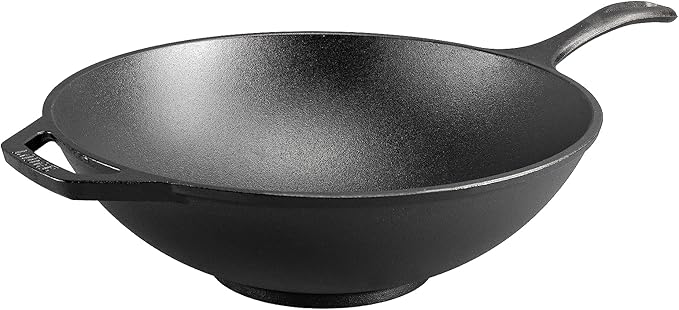
If the 14″ Lodge feels like “too much pan,” this Chef Collection wok is the sweet spot. The 12.5″ size is easier to preheat properly on standard burners, easier to lift, and easier to store, but it still has the wok shape that lets you stir‑fry, sear, and keep food moving without launching it out of the pan.
This is the kind of wok that becomes a weeknight staple because it’s not intimidating. Owners love the even heating and how food stays hot after it’s served—classic cast iron benefits. But they also repeat an important warning: cast iron is heavy, and glass‑top stoves deserve respect. If you’re on glass, set it down gently and don’t slide it like a skillet. Treat it like a sturdy tool, not a curling weight.
Why it’s a great daily driver
- More realistic size – easier to heat fully and use often than a giant wok.
- Strong heat retention – steady browning and fewer “steamed” stir‑fries.
- Versatile beyond stir‑fry – steaks, Brussels sprouts, cornbread, even “one‑pan” skillet dinners.
- Built for years – when cared for, it’s a long‑term kitchen piece.
Good to know
- Still heavy—some owners decide 10–11″ would fit their strength and stove better.
- Handle safety matters: use mitts, and assume iron handles get hot during long cooks.
- If your burner is tiny, you may cook best in batches (which is normal wok technique anyway).
Ideal for: cooks who want Lodge durability and real wok performance, but in a size that feels friendly for everyday use.
6. NutriChef Cast Iron Wok (12″) – The “Stir‑Fry + Steam” Weeknight Combo

NutriChef’s 12″ wok is for cooks who like the idea of cast iron, but also want a practical “set” feel: you get the wok, a wooden lid, and a silicone grab mitt. In owner reviews, this wok shows up in an interesting place: it’s a favorite for cuisines where you want deep heat and space—think stir‑fried vegetables, Indian dishes, braises, and anything where you want flavor to deepen in the pan.
The big performance upside is heat retention plus depth. A deep wok with a lid lets you go from “sear and toss” to “cover and finish” without switching pans. That’s especially useful for home cooks who want tender chicken without drying it out, or who like to steam vegetables after a quick stir‑fry for texture control. Many owners also note that seasoning it properly (even if it arrives pre‑seasoned) is the unlock for easy cleanup. This isn’t a pan that rewards rushing—give it a little setup love, then enjoy it for years.
Why people keep it in rotation
- Depth + lid = more cooking styles – stir‑fry, braise, steam, simmer, shallow fry.
- Heat distribution – many cooks notice better flavor and browning versus thin nonstick pans.
- Comfort accessories – the lid and mitt reduce “cast iron intimidation.”
- Great for family meals – 5.8 qt capacity handles big batches.
Good to know
- Wood lids can arrive with cosmetic variations; keep them dry and avoid soaking.
- Some buyers report packaging wear or scuffs—inspect on arrival.
- If you want ultra‑high heat “wok hei” chasing, uncoated iron or carbon steel is usually the better tool.
Ideal for: cooks who want a practical wok + lid setup for weeknight meals that bounce between searing, simmering, and steaming.
7. imarku Nonstick Wok (12.5″) – Detachable Handle, Easy Cleanup, Small‑Kitchen Friendly

This is the wok for people who want the wok shape and versatility, but don’t want the traditional maintenance routine. The big differentiator is the detachable wooden handle: it solves a very real small‑kitchen problem—storage. Long wok handles can make cabinets miserable. Being able to remove the handle can turn a “where do I put this thing?” purchase into something you actually keep and use.
The coating is described as a water‑based nonstick system designed to reduce oil and make cleanup simple. From a practical standpoint, coated woks like this are fantastic for everyday cooking: quick stir‑fries, noodles, fajita veggies, sauces, even shallow frying. The key is how you treat it: keep heat in the medium to medium‑high range, let the pan warm gradually, and use non‑metal utensils if you want the nonstick to stay strong. Think of it like a “high‑performance everyday wok,” not a “maximum heat iron wok.”
Why it fits real homes
- Detachable handle – huge win for storage and for fitting in smaller sinks.
- Nonstick convenience – less oil needed, easier cleanup, less stress.
- Works across cooktops – designed for modern kitchens (gas, electric, ceramic, etc.).
- Great for beginners – you get wok cooking benefits without seasoning anxiety.
Good to know
- Coated pans don’t love extreme “dry” high heat—avoid empty overheating to protect performance.
- The long handle + helper handle can still feel bulky if you remove/reinstall constantly; best used as “remove for storage,” not “remove every time.”
- If you’re specifically after traditional seasoning and metal‑utensil freedom, go uncoated iron instead.
Ideal for: small kitchens, busy cooks, and anyone who wants wok cooking with easy cleanup and storage flexibility.
8. Keleday 14″ Cast Iron Wok (Wood Lid + Spatula) – Big, Classic, and Built to Stick Around

If you want the “classic set” vibe—big iron wok, wooden lid, and a spatula that won’t scratch—the Keleday package is appealing. Owners who love it tend to use words like “dream wok,” “beautifully crafted,” and “will last forever.” That’s the cast iron promise: if you care for it, it becomes the pan your kids will fight over someday.
But here’s the expert‑level reality check: this wok can be either wonderful or annoying depending on your surface expectations. Some buyers report a rougher cast texture that catches lint or grabs delicate food early on. That doesn’t mean it’s unusable—it means it needs a smarter ramp‑up. With textured iron, the seasoning you build becomes even more important than on smoother pans. Cook a few rounds of “seasoning foods” (oily vegetables, fatty meats, fried rice) and you’ll often feel the surface get friendlier. Also, inspect the wooden lid edges on arrival; a few reviews mention lid quality issues. If everything arrives clean and intact, the overall package can feel like a steal for what you get.
Why it’s a strong set
- Full kit – lid + spatula makes it feel complete right away.
- Flat bottom – stable on induction and modern stovetops.
- High‑heat capable – great for searing, deep‑frying, and browning.
- Flavor building – cast iron can deepen savory “roasty” notes over time as seasoning matures.
Good to know
- Some users describe a rougher finish—expect a seasoning “break‑in” phase.
- Wood lid quality can vary; check for cracks or sharp edges immediately.
- Like all iron, it needs careful drying to avoid rust—don’t leave it wet.
Ideal for: cooks who want a traditional 14″ iron wok set and don’t mind seasoning it into greatness.
9. Backcountry Iron 14″ Cast Iron Wok – Big, Deep, and Ready for Outdoor Cooking
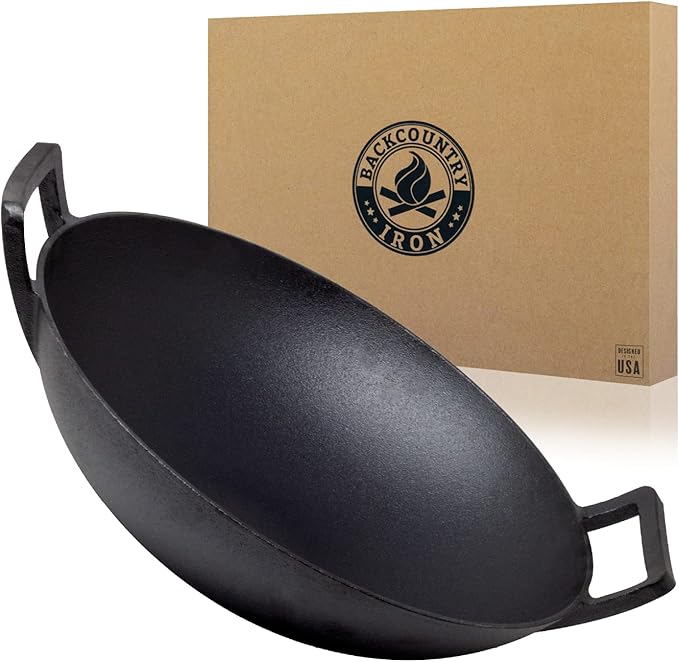
Backcountry Iron sells the romance of cast iron the right way: this wok is designed for real use—stove, grill, campfire, and everything in between. It’s a large 14″ wok with a flat base and sturdy handles, and owners repeatedly praise the way it sears and holds heat. If your goal is “takeout‑style flavor” at home—especially on a stove that isn’t restaurant powerful—this kind of heavy iron can help you get there by staying hot when you need it.
The key “expert” insight here is about expectations around “pre‑seasoned.” Some people unbox a wok expecting it to behave like a mature, glossy, nonstick pan on day one. That’s not how iron works. A factory seasoning is a starter layer. Your real nonstick comes from repeated cooking, thin oil layers, and time. A few buyers mention needing to smooth or refresh rough seasoning before it became a joy. If you’re comfortable with that process (it’s not hard, just a little gritty), you end up with an extremely durable wok that can handle metal utensils, high heat, and the kind of aggressive cooking that would destroy delicate coatings.
Why it’s a beast in the best way
- Excellent heat retention – stays hot for searing and browning, even in big batches.
- Outdoor‑friendly – grill, BBQ, fire pit: this wok is built for heat.
- Deep sides – safer deep‑frying and less mess for saucy dishes.
- Sturdy handles – easier to lift than long‑handle designs when the wok is full.
Good to know
- Some units may arrive with a rougher feel; seasoning and regular use smooth things out over time.
- It’s heavy—two‑hand lifting is normal, not a weakness.
- Cast iron care is required: dry immediately and oil lightly after cleaning.
Ideal for: home cooks who want a big, deep cast iron wok that can handle serious heat—indoors or outdoors—and will last decades.
10. YOSUKATA 13.5″ Carbon Steel Wok – The Classic Stir‑Fry “Snap” Without the Restaurant Stove
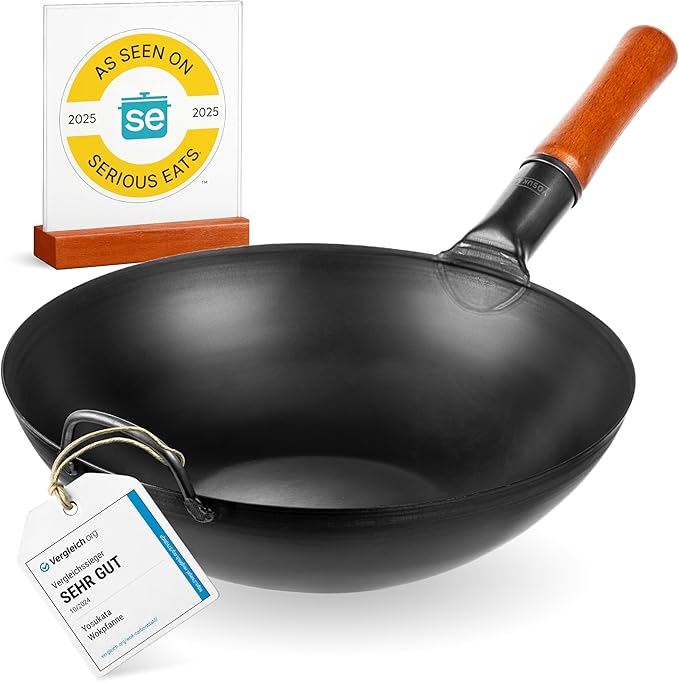
This YOSUKATA is a go‑to recommendation for people who want a more traditional wok feel—lighter than cast iron, quick to respond to heat changes, and naturally nonstick once seasoned. It’s pre‑seasoned at very high heat and designed to be used hard: stir‑fry, sear, deep‑fry, smoke, steam, grill, even campfire cooking. If you grew up watching someone cook in a wok and you want that energy, carbon steel delivers it.
The most useful “expert” angle is also the warning label: carbon steel rewards the cook who follows the rules. Several owners report issues that are almost always linked to either fast heating on induction (warping risk), or inadequate initial cleaning/seasoning (rust spots, sticking, black residue). If you’re willing to learn the very simple maintenance ritual—wash, dry immediately, warm the pan, wipe oil thin—you get a pan that can feel almost magical. If you want “no maintenance ever,” you’ll resent it.
Why it’s a classic
- Fast response – adjusts quickly to heat changes, great for stir‑fry rhythm.
- Natural nonstick over time – seasoning builds with use, no synthetic coating required.
- Versatile cooking – works on stovetops, grills, camping, open fire.
- Comfort handle – ergonomic wooden handle improves control.
Good to know
- Carbon steel can rust if you don’t dry and oil; it’s normal, but you must manage it.
- Induction users should preheat gradually to reduce warping risk.
- Some buyers report quality control issues (like handle hardware); inspect on arrival.
Ideal for: cooks who want classic wok handling and are willing to season and maintain carbon steel properly.
11. WANGYUANJI 10.2″ Cast Iron Wok – Small Size, Serious Craft Energy

Most people buy woks too big. This one is the opposite move—and it’s often the smarter one. A 10.2″ cast iron wok heats faster, matches smaller burners better, and feels less intimidating to lift and clean. It’s designed for 1–3 servings, which is exactly how many weeknight cooks actually cook. And because it’s uncoated cast iron, you get the “seasoning gets better forever” benefit without relying on synthetic nonstick.
WANGYUANJI leans into heritage craftsmanship and a textured surface that owners often describe as “crinkle” or “turtle shell‑like.” That texture can confuse first‑time buyers (some worry it’s a defect), but when you season correctly and use proper stir‑fry technique (hot pan, hot oil, ingredients ready), it can become a very satisfying cooking surface. The included accessories—spatula and cleaning tools—are a big deal here: they reduce friction for beginners and help you avoid damaging seasoning with the wrong tools.
Why it’s a sleeper hit
- Perfect for smaller burners – heats more evenly than oversized woks on typical stoves.
- Premium feel – many buyers highlight packaging, accessories, and overall build quality.
- Uncoated + re‑seasonable – you can always refresh the surface if it ever gets rough.
- Great for “one‑person mastery” – easier to learn technique on a smaller, more responsive wok.
Good to know
- It’s not a huge family wok; bigger households will batch cook or size up.
- Textured surfaces can feel “sticky” until you build seasoning; be patient early on.
- Wooden lid isn’t meant for oven abuse; use it for stovetop steaming and resting.
Ideal for: couples, small households, and cooks who want premium cast iron wok behavior in a size they’ll actually use constantly.
12. Sizle Masters Cast Iron Wok Set (32cm) – The “Everything Included” Gift‑Box Pick

If you’re buying a wok as a gift (or you’re buying for yourself but want a “complete setup” without hunting accessories), this set is the easy button. You get a pre‑seasoned cast iron wok with a wooden lid and multiple bamboo spatulas. That might sound like fluff, but it actually solves a common beginner problem: people damage seasoning early with sharp metal utensils, or they use the wrong spatula shape and scrape awkwardly. A bundle that includes gentler tools can make the learning curve feel smoother.
From a cooking perspective, the 32cm size lands in a practical middle: big enough to cook stir‑fry for a family, but not so huge that it’s ridiculous to heat on a normal burner. Owners highlight even heating and stability on induction—which matters a lot because induction users often prefer a wider flat base. If you treat the wooden lid well (no soaking, dry storage) and keep up with the simple “wash‑dry‑oil” routine, this kind of set can be a long‑term weeknight hero.
Why it’s a strong all‑in‑one
- Complete kit – wok + lid + spatulas makes it easy to start cooking immediately.
- Induction friendly – flat bottom design is stable on modern stovetops.
- Great gifting – packaging and included tools make it feel “thoughtful.”
- Versatile uses – stir‑fry, deep‑fry, sear, simmer, and cover‑finish meals.
Good to know
- Newer brands typically have less long‑term reputation than Lodge; inspect and care properly from day one.
- Bamboo tools can wear or splinter over time—replace when needed (that’s normal).
- Pre‑seasoned doesn’t mean “fully nonstick on day one”—expect seasoning to improve with use.
Ideal for: shoppers who want a ready‑to‑go cast iron wok package (especially for induction) and appreciate included accessories.
13. Lodge BOLD 14″ Seasoned Cast Iron Wok – Smart Handles, Serious Stability

Lodge’s BOLD line is basically the brand saying: “Yes, cast iron can be stylish… and smarter.” The most praised design detail is the handle geometry—integrated, modern, and positioned so the wok can sit flat (even upside down), store more neatly, and behave better in real kitchens. Owners who think deeply about cookware point out something important: many cheap cast iron woks have awkward handles that stick up, making storage, lid fitting, and general handling more annoying than it needs to be. This one feels considered.
Performance-wise, it’s still cast iron: it heats more slowly than carbon steel, but it’s steady once it’s hot. That steadiness is your advantage on home stoves. You can keep the center hot enough to sear, push ingredients up the sides to hold, then pull them back down to finish. If you’re chasing “restaurant vibe” without a restaurant burner, this style of iron wok is a strong tool—just accept you’re not going to toss it like a featherweight wok, and you won’t be disappointed.
Why it feels premium
- Thoughtful handle design – easier to store and handle compared with many traditional shapes.
- Stable base – sits flat and works on electric/induction without special gear.
- Ready‑to‑cook seasoning – good starter layer that improves with regular use.
- Long‑term durability – uncoated iron is a “lifetime” material when cared for.
Good to know
- It’s heavy—this is a feature for heat, but a limitation for tossing.
- You need organized mise en place: chop first, then cook fast once the wok is hot.
- Early seasoning is not a miracle; delicate foods need good technique at first.
Ideal for: cooks who want Lodge reliability with upgraded design details and a premium “I’ll keep this forever” feel.
14. Zakarian by Dash 14″ Nonstick Cast Iron Wok – Restaurant‑Style Shape, Weeknight‑Easy Surface
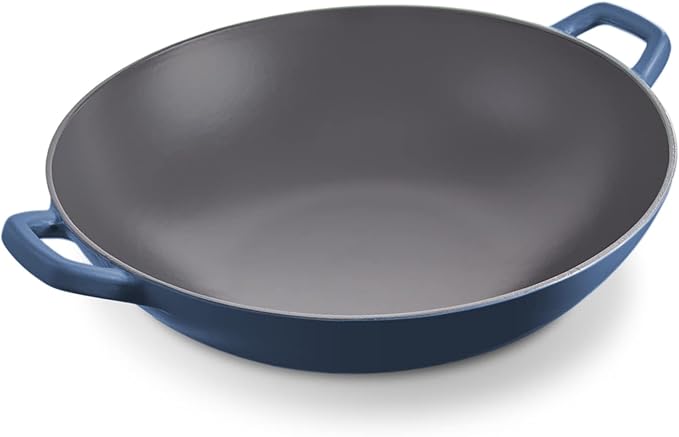
This wok is the “I want the wok shape, but I refuse to babysit cast iron” answer. It uses a titanium ceramic nonstick coating designed to release food easily and clean up fast, and it’s positioned as maintenance‑free—no seasoning routine required. That’s a big deal for busy households where the best cookware is the cookware people actually use.
Here’s the expert tradeoff: coated woks are incredible for convenience, but they change the way you cook. You can still get excellent browning, but you’ll do it with controlled heat rather than max‑smoke high‑heat aggression. That’s not “worse,” it’s simply different. Many owners love that nothing sticks and cleanup is effortless. A few purist‑leaning reviewers note they prefer uncoated woks for extremely high‑heat wok cooking. If you’re mostly doing weeknight stir‑fry, seafood, fried rice, and shallow frying, the ease factor here can be worth every penny.
Why it’s easy to love
- Nonstick release – great for eggs, tofu, delicate fish, and sticky sauces.
- No seasoning – truly beginner‑friendly and low maintenance.
- High heat rating – designed to handle serious cooking temperatures.
- Versatile – stir‑fry, steam, deep‑fry, oven finishes, and more.
Good to know
- To keep nonstick strong, avoid chronic empty overheating and harsh abrasive cleaning.
- Purists chasing maximum “wok hei” often prefer uncoated steel or iron for ultra‑high heat.
- If your kitchen is tight, 14″ is big—measure storage space first.
Ideal for: cooks who want a big wok with effortless release and cleanup, and prefer convenience over traditional seasoning rituals.
15. WANGYUANJI 14.2″ Cast Iron Wok – Craft Texture, Serious Tradition, Big Batch Power

If you want a wok that feels like a piece of culinary history, this is the one that leans into that energy. WANGYUANJI highlights heritage craftsmanship and a distinctive textured surface that’s designed to contribute to a physical nonstick effect once properly seasoned. In owner stories, the pattern is consistent: people who follow seasoning and maintenance instructions become obsessed with how nonstick it can get—even for fried rice, which is usually a “sticking stress test.”
The expert perspective is simple: this wok is not “easy mode.” It’s a serious tool that rewards correct technique. That means: heat the wok properly, add oil at the right time, avoid long acidic simmering early in its life, and treat drying/oiling as part of the cooking routine. Done right, you get an iron wok that holds heat for underpowered stoves, maintains a cooking zone gradient, and can produce deeply savory, restaurant‑style results. Done wrong, you’ll complain that it “sticks” and “needs too much oil”—which is exactly what happens when a wok isn’t seasoned or heated correctly.
Why it earns its price
- Heirloom‑style build – intended to last decades with proper care.
- Texture designed for performance – becomes slicker as seasoning builds.
- High heat retention – helps home stoves maintain searing temperatures.
- Large capacity – great for big stir‑fries, fried rice, and multi‑dish cooking sessions.
Good to know
- Not dishwasher safe; avoid soaking and avoid thermal shock (hot wok into cold water).
- Seasoning is required—plan a real first‑use session, not a rushed “unbox and cook.”
- Heavier than most pans; use two hands and treat it as a stable cooking vessel, not a tossing wok.
Ideal for: dedicated wok cooks who want a premium, tradition‑leaning cast iron wok and are happy to maintain it properly.
How Wok Cooking Works at Home (and How to Get Better Results)
Wok cooking isn’t magic. It’s heat management and moisture control. Once you understand those two, you can make insanely good stir‑fries—even without a restaurant burner. Cast iron helps because it’s a “heat battery,” but you still need the right approach.
The 3 zones inside your wok (use them on purpose)
- Zone 1: the bottom center – hottest spot for searing aromatics, browning meat, and crisping rice.
- Zone 2: the mid‑sides – medium heat for cooking through without burning (great for vegetables and noodles).
- Zone 3: the upper rim – holding zone. Use it like a “parking lot” to keep cooked items warm while you finish the rest.
This is why woks are so efficient. You’re not cooking everything at one temperature. You’re moving food through heat levels as the dish develops. If your stove feels weak, this is your secret weapon: cook in batches and use the sides to manage timing.
Cast iron vs carbon steel: what changes
- Cast iron heats slower, holds heat longer, and is heavier. It’s amazing for home stoves that lose heat when food hits the pan.
- Carbon steel heats faster, cools faster, and is easier to toss. It rewards technique and quick movement, but can be more demanding on induction.
- Coated nonstick is the easiest daily driver, but you’ll usually cook with slightly gentler heat to keep the coating happy long term.
No option is “the only right choice.” The best choice is the one you’ll actually use often.
The simplest “pro” stir‑fry method that works at home
- Prep everything first – cut meat, sauce mixed, veg washed and dried. Wok cooking is fast once it starts.
- Preheat longer than you think – especially with cast iron. You want confident heat before you add food.
- Hot wok, then oil – add oil after preheat, swirl it around, then start cooking. This improves release and reduces sticking.
- Dry ingredients = better browning – wet veggies steam. Pat them dry and don’t overload the pan.
- Cook protein first, remove – then cook aromatics + veg, then return protein at the end. This prevents overcooking.
- Finish sauce on the sides – drizzle sauce around the hot walls so it sizzles and thickens instead of pooling watery.
Cleaning that doesn’t ruin seasoning
- Rinse while warm – warm water + brush removes most residue without drama.
- Skip long soaking – soaking invites rust on iron and steel.
- Dry immediately – towel dry, then a quick heat‑dry on the stove if you want to be extra safe.
- Oil lightly – a drop or two, wiped thin. You’re not “greasing,” you’re protecting.
That’s it. If you do those steps consistently, your wok gets easier every month.
FAQ: Woks, Seasoning & Everyday Cooking
Do I really need a cast iron wok, or should I buy carbon steel?
What does “pre‑seasoned” really mean?
Can I use soap on cast iron or carbon steel?
How do I stop food from sticking in a new wok?
Are wooden lids and handles safe?
What oil should I use for seasoning?
Final Thoughts: Choosing Your Best Cast Iron Wok
A wok is one of those rare tools that can make cooking feel both faster and more fun. Done right, you’ll get crisp‑tender vegetables, browned proteins, and fried rice with actual texture—not a soggy pan of regret.
Here’s how to pick confidently:
- Want the most reliable all‑around iron wok for home stoves? Start with the Lodge 14″ Cast Iron Wok. It’s stable, proven, and built for real cooking.
- Want something easier to use every day? The Lodge Chef Collection 12.5″ is a more manageable size that still delivers cast iron performance.
- Shopping on a tight budget? Try the 21st & Main 14″ or the IMUSA 14″ and focus on technique—preheat, oil, and don’t crowd the pan.
- Want the easiest cleanup with wok shape? Go coated with the Zakarian by Dash 14″ or the storage‑friendly imarku 12.5″.
- Want premium craft and you’re willing to maintain it properly? Look at the WANGYUANJI 14.2″. It’s the “serious wok cook” choice.
When you match the wok to your stove and your cooking habits, the right pan becomes obvious. And once you’ve got your routine down, your Best Cast Iron Wok won’t feel like a specialty tool—it’ll feel like your fastest, most dependable pan for weeknight wins.
