
Cast iron isn’t trendy cookware—it’s old-school, “feed-a-crowd,” make-it-once-and-love-it-for-years cookware. The right pot lets you brown meat deeply, braise without babysitting, bake bread with a crackly crust, and keep soup hot long after you’ve turned the burner off.
If you’re hunting for the Best Cast Iron Pots, here’s the truth: the “best” one isn’t always the most expensive. It’s the one that matches how you actually cook—whether that means tomato-heavy sauces (enameled wins), campfire cooking (seasoned wins), or baking sourdough every weekend (a combo cooker can be a secret weapon).
This guide breaks down 20 high-demand cast iron pots on Amazon—enameled Dutch ovens, seasoned multi-cookers, camp ovens with coal-ready lids, and even a petite sauce pot for small-batch life. I used the specs, real owner patterns (what people praise, what they complain about, what shows up months later), and practical cooking logic to help you land on one confident choice.
Note: Prices and availability move fast on Amazon. Always double-check the current listing details before you buy.
In this article
- How to choose the right cast iron pot for your cooking style.
- Quick comparison table of 20 standout picks.
- In-depth reviews of each cast iron pot, with pros and cons.
- How cast iron actually cooks (and the habits that prevent sticking, chips, and stains).
- Answers to common questions, plus final buying tips.
How to Choose the Best Cast Iron Pots for Your Kitchen
Cast iron is simple… until you’re staring at enamel vs seasoned, oval vs round, 5 qt vs 8 qt, and a dozen lids that all claim to “self-baste.” Here’s the practical way to choose once and feel good about it.
1. Decide: enameled or seasoned cast iron?
This is the single biggest fork in the road:
- Enameled cast iron (porcelain/enamel coating) is the “easy button” for everyday cooking. It’s great for tomato sauces, wine braises, soups, and anything you want to simmer without worrying about stripping seasoning. Cleanup is usually simpler, and you don’t need to season the cooking surface.
- Seasoned cast iron (raw iron with baked-on oil) is the “forever tool” for high-heat searing, frying, baking bread, and outdoor/campfire use. It rewards you with a naturally nonstick surface over time—but it does demand good drying and occasional oiling to avoid rust.
If you cook a lot of acidic foods (think marinara, chili with tomatoes, lemony braises) or you want the lowest-maintenance path, enameled is usually the smarter move. If you love open-flame flexibility, want maximum ruggedness, or plan to use the lid as a skillet, seasoned often wins.
2. Pick the size based on servings—not “quarts”
Quarts are useful, but servings are real life. A quick, honest guide:
- 1–2 people: 3–5 qt is comfortable (chili, pasta sauce, small roast, bread).
- 3–5 people: 5.5–7.5 qt is the sweet spot (pot roast + veg, soups, big pasta nights).
- 6+ people / meal prep: 8–9 qt shines (party chili, pulled pork, big batches you freeze).
One more reality check: cast iron gets heavy fast. An 8–9 qt pot full of stew can turn into a two-hand carry. If you’re not excited about lifting that, a 6–7 qt pot will get used more often—and “used more often” beats “bigger on paper.”
3. Round vs oval: choose based on what you cook most
- Round pots are best for soups, stews, and everyday stovetop use—especially on smaller burners.
- Oval pots shine for whole chickens, long roasts, ribs, and loaf shapes that aren’t perfectly round.
If your signature move is braising a big cut of meat, oval can be a game-changer. If you’re mostly doing soups, beans, and weekday “one-pot” dinners, round is usually the easier fit.
4. Understand lids: self-basting nubs vs skillet lids vs camp lids
Lids aren’t just covers; they change outcomes:
- Self-basting lids (raised bumps/nubs) help condensation drip back evenly—great for braises and bread where moisture matters.
- Skillet lids (combo cookers / “double Dutch ovens”) give you two pans in one and often bake bread beautifully because they trap steam.
- Camp lids (flanged rims) hold coals on top—built specifically for outdoor Dutch oven cooking.
If you’ll actually use the lid as a skillet, a combo cooker can replace two purchases. If you’ll never cook outdoors, a camp lid is extra bulk you might not need.
5. The unglamorous stuff that matters: handles, knobs, and cleaning
- Big loop handles matter more than you think—especially with oven mitts.
- Knob material matters in the oven. Stainless knobs are the least fussy at high heat.
- Enamel care matters: avoid metal utensils, don’t thermal-shock (hot pot + cold water), and expect some patina over time.
- Seasoned care matters: dry fully, oil lightly, and don’t store with trapped moisture.
Quick Comparison: 20 Best Cast Iron Pots Worth Buying
Use this table to spot the right style and size fast. Then jump to the full review to see what each pot is actually like to live with— the good, the “hmm,” and the little details that change your results.
On smaller screens, swipe or scroll sideways to see the full table.
| Model | Pot style | Capacity | Best match | Amazon |
|---|---|---|---|---|
| Le Creuset Signature Oval Dutch Oven | Enameled oval | 8 qt | Heirloom-level braises + whole birds | Amazon |
| Lodge Enameled Dutch Oven (Island Spice Red) | Enameled round | 7.5 qt | Big-batch family cooking without luxury pricing | Amazon |
| Lodge Enameled Dutch Oven (Blue) | Enameled round | 6 qt | All-around size for soups, roasts, sauces | Amazon |
| Lodge Enameled Dutch Oven (Island Spice Red) | Enameled round | 6 qt | Same workhorse size, different color option | Amazon |
| Lodge Pre-Seasoned Dutch Oven (Bail Handle) | Seasoned | 9 qt | Huge roasts, smoking, campfire-friendly capacity | Amazon |
| Lodge Camp Dutch Oven (Legs + Flanged Lid) | Camp | 8 qt | Outdoor cooking with coals on top | Amazon |
| Lodge 7‑Qt Cast Iron Dutch Oven / Serving Pot | Seasoned 2‑in‑1 | 7 qt | Pot + skillet lid, bread + frying flexibility | Amazon |
| Martha Stewart Gatwick Enameled Dutch Oven | Enameled round | 7 qt | Large enamel capacity at a friendly price | Amazon |
| Overmont Enameled Dutch Oven (Cream White) | Enameled round | 5.5 qt | Balanced size + strong value + bread-friendly | Amazon |
| Mueller DuraCast Enameled Dutch Oven (Emerald) | Enameled round | 6 qt | Mid-price enamel with gift-ready polish | Amazon |
| Lodge Combo Cooker (Pot + Skillet) | Seasoned 2‑in‑1 | 3.2 qt | Sourdough + searing in one compact set | Amazon |
| CAROTE Floral Enameled Dutch Oven (Gift Box) | Enameled round | 5 qt | Giftable design with practical daily performance | Amazon |
| Amazon Basics Enameled Dutch Oven (Purple) | Enameled round | 6 qt | Budget enamel for stews, roasts, bread | Amazon |
| Miereirl Enameled Dutch Oven (Dark Blue) | Enameled round | 6 qt | Low-cost enamel with long-use durability reports | Amazon |
| Umite Chef Enameled Dutch Oven (Red) | Enameled round | 5 qt | Affordable bread + braise starter pot | Amazon |
| Overmont Cast Iron Multi Cooker (Pot + Skillet Lid) | Seasoned 2‑in‑1 | 3.2 qt | Space-saving combo for stove, oven, camping | Amazon |
| Umite Chef Enameled Dutch Oven (Cream White) | Enameled round | 5 qt | Same budget performer with lighter aesthetic | Amazon |
| Cuisinel 2‑in‑1 Multi Cooker (Pot + Lid Skillet) | Seasoned 2‑in‑1 | 3 qt | Small-batch bread, grill cooking, daily sears | Amazon |
| EDGING CASTING 2‑in‑1 Dutch Oven + Skillet Lid | Seasoned 2‑in‑1 | 5 qt | Bigger combo cooker for bread + roasts | Amazon |
| Bayou Classic Covered Cast Iron Sauce Pot | Seasoned | 1 qt | Oatmeal, sauces, small soups, tiny-kitchen life | Amazon |
In‑Depth Reviews: 20 Cast Iron Pots That Actually Earn Their Space
Below are the 20 picks, ordered from premium “buy it for life” down through strong-value workhorses and niche small-batch pieces. For each one, I’ll tell you what it’s genuinely best at, where it’s likely to annoy you, and who should skip it.
1. Le Creuset Signature Oval Dutch Oven (8 qt) – The “Do It Once” Upgrade

Le Creuset’s Signature Oval Dutch oven is expensive for one reason: it’s engineered to be the pot you stop thinking about. Heat spreads evenly, the enamel is designed to resist dulling and staining, and the light interior makes it easier to judge browning (your fond) before you deglaze. The oval shape is also more practical than people expect—it cradles long roasts and whole chickens without awkward cramming.
Where it really earns its keep is consistency. When you’re braising short ribs, the lid’s tight fit and steam-circulation design keeps moisture where you want it, so you get tender meat without needing to “check and add liquid” every 30 minutes. For bread bakers, oval is great if you prefer batard-style loaves instead of round boules.
Why it’s worth it
- High-trust enamel – Built to handle years of soups, wine braises, and tomato-heavy cooking without becoming a “stain museum.”
- Oval wins for big proteins – Whole chickens, brisket-style cuts, ribs, and long roasts sit naturally.
- Cook-and-check visibility – The light interior helps you see browning and prevent scorched fond.
- Low-friction ownership – No seasoning routine; it’s a “use it, wash it, repeat” kind of pot.
Good to know
- It’s heavy empty—and very heavy full. If carrying a full 8 qt pot feels risky, consider a smaller size.
- Enamel still hates thermal shock: let it cool before washing, and don’t blast high heat when empty.
- Shipping damage happens to heavy cookware. Inspect promptly so returns/replacements are painless if needed.
Ideal for: cooks who want a true long-term investment for braises, roasts, and frequent stovetop-to-oven meals—and who don’t want to baby seasoning.
2. Lodge 7.5‑Qt Enameled Dutch Oven – Crowd Cooking Without the Luxury Price

The Lodge 7.5 qt enameled Dutch oven hits a sweet spot for people who want “real Dutch oven cooking” at a realistic budget. It’s roomy enough for meal prep stews, large chili batches, and pot roasts with vegetables—without forcing you to jump up to a premium brand. Owners consistently describe it as heavy-duty, even-heating, and surprisingly easy to clean when you use the right approach (warm water, soap, nylon brush, and patience—no scraping battles).
The not-obvious advantage of 7.5 qt is headroom. Many “6 qt” recipes actually feel cramped once you add meat, liquid, and veg. That extra space reduces boilovers and makes stirring easier—especially for thick sauces and bean-based stews that love to bubble.
Why it’s a smart buy
- Great capacity-per-dollar – A big, functional pot that can feed a family (or stock a freezer) without premium pricing.
- Enamel convenience – No seasoning required; great for acidic foods and long simmers.
- Even heat + stable braising – Once hot, it holds temperature like a champ, which makes oven braises more forgiving.
- Weeknight + weekend friendly – Big enough for roasts, still useful for soups and pasta sauce.
Good to know
- It’s heavy—especially when full. Consider how you’ll move it safely from oven to counter.
- As with most enamel, wooden/silicone tools are the safest long-term choice.
- Expect normal enamel patina over time; it’s cosmetic, not a performance failure.
Ideal for: households that cook big batches, love braises and soups, and want a reliable enameled pot without paying “luxury cookware” prices.
3. Lodge 6‑Qt Enameled Dutch Oven (Blue) – The “Do-Anything” Workhorse
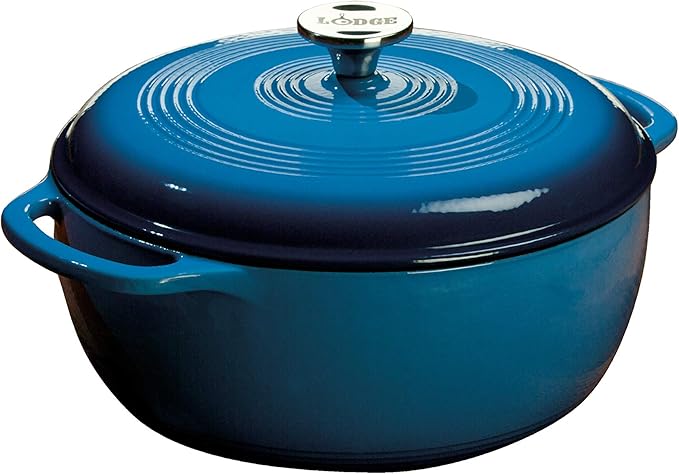
If you only buy one enameled cast iron pot, 6 quarts is the size that quietly fits almost everything: soups, stews, spaghetti sauce, braised chicken thighs, baked ziti, and a “normal” pot roast. Owners often mention two practical wins: it cooks evenly (especially for soups and sauces) and it cleans up far easier than bare cast iron because you’re not protecting seasoning.
One detail experienced cooks appreciate: the interior shape and rim design make it less annoying to stir thick foods. A slightly rounded interior helps reduce “corner scorch” when you’re simmering something thick like chili or cheese-based soup. It still takes attention—cast iron retains heat, so it can punish you if you crank the burner—but it’s a forgiving pot once you learn “medium is the new high.”
Why it works for most kitchens
- 6 qt = everyday usable – Big enough for dinner, not so big you avoid lifting it.
- Enamel makes sauces easy – Tomato and wine braises won’t fight your cookware’s surface.
- Even heating – Great for soups, stews, and braises when you want stable simmering.
- Looks table-ready – It transitions from stove to oven to serving without looking like camp gear.
Good to know
- Cast iron is heavy by nature—plan on two hands and stable landing spots.
- Handwashing helps preserve the finish longer (even if it’s technically dishwasher safe).
- Light interiors can show browning and stains; that’s normal “Dutch oven life.”
Ideal for: anyone who wants one dependable enameled pot for weekly cooking—especially soups, sauces, braises, and oven meals.
4. Lodge 6‑Qt Enameled Dutch Oven (Island Spice Red) – Classic Performance, Bold Color
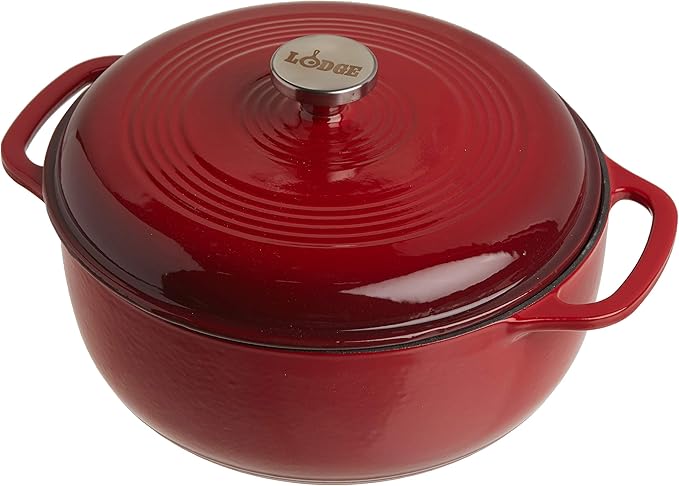
This is essentially the same 6-qt Lodge enameled platform as the blue version—just a different colorway. Why include both? Because color actually changes ownership experience: darker exteriors hide scuffs better, bright colors look incredible on the stove, and some people simply cook more when they love how their tools look.
Performance-wise, think “predictable, steady, and durable.” Owners often highlight how well it handles browning ground meat for soups and sauces without sticking disasters, and how quickly it releases cooked-on residue with warm soapy water and a nylon brush. If you’re replacing a cheaper enamel pot that discolored quickly, this model tends to earn trust over repeated use.
Why people keep it for years
- Reliable everyday pot – Great for sauce nights, stew nights, and oven braises.
- Good lid seal – Helps reduce evaporation during long cooks.
- Easy cleanup rhythm – Cool, warm soak, gentle scrub, done.
- Color that pops – If you like a statement piece, this does it.
Good to know
- Like all enamel, it rewards gentle utensils and patient cooling before washing.
- It can still scorch if you use too much heat—cast iron holds heat; it’s not a thin stainless pot.
- If you cook for 6+ often, consider 7.5 qt (more headroom, fewer boilovers).
Ideal for: shoppers who want the classic 6-qt “do-it-all” size but prefer a bold exterior and the familiar Lodge ecosystem.
5. Lodge 9‑Qt Pre‑Seasoned Dutch Oven (Bail Handle) – When “Enough Food” Isn’t Enough

A 9-quart seasoned Dutch oven is not a casual purchase—it’s a statement. This Lodge is for people who cook big, cook often, or want one pot that can move from stovetop to oven to smoker to campfire without flinching. The bail handle is more than nostalgia: it’s legitimately useful for hanging or lifting in outdoor setups, and it gives you another way to grip the pot when it’s hot.
Here’s the expert reality: in seasoned cast iron, “pre-seasoned” is a starting line, not a finish line. Many experienced owners run an extra seasoning cycle or two and then simply cook often—fats build the surface over time. Once it’s dialed in, you get a pot that’s shockingly resilient: sear, simmer, bake, and even use it for smoky chili on a grill.
Why it’s special
- Massive capacity – Big roasts, party chili, meal-prep soups, and “freeze the leftovers” cooking.
- Real outdoor versatility – Comfortable on grills, campfires, and in smokers.
- Heat retention monster – Once hot, it stays hot—great for low-and-slow cooking.
- Built for decades – Seasoning is renewable; this pot is fundamentally repairable.
Good to know
- It’s heavy. If lifting is a concern, a 6–7 qt pot is safer and more frequently used.
- Long acidic simmering is not the best “first month” task in seasoned iron—build seasoning first.
- Cleaning is simple but strict: wash, dry thoroughly, oil lightly. Skip the dishwasher always.
Ideal for: big-batch cooks, outdoor cooks, and anyone who wants one rugged pot they’ll still be using years from now.
6. Lodge 8‑Qt Camp Dutch Oven – Coals on Top, Dinner Underneath

This is not an indoor Dutch oven pretending to be outdoorsy. The legs lift the pot above coals, and the flanged lid holds coals on top, turning your pot into a true “surround heat” oven. That changes what you can do at camp: stews that simmer gently for hours, cornbread with a real top crust, cobblers, and slow-cooked meat that tastes like you worked harder than you did.
Experienced camp cooks will tell you: accessories matter. A lid lifter, good fire gloves, and a brush for ash management turn this from “fun but chaotic” into “repeatable and clean.” Owners also mention that lid fit can vary slightly—minor rocking isn’t always a deal-breaker in the outdoors, but it’s worth checking when it arrives.
Why it’s the outdoor pick
- Designed for coals – The lid rim holds coals; you can bake and roast outside like a real oven.
- Serious capacity – 8 qt is perfect for group meals or hearty “hunt camp” stews.
- Lid doubles as griddle – Flip it for a cooking surface (breakfast at camp becomes unfairly good).
- Classic durability – Clean, dry, oil, repeat; it’s built to be used hard.
Good to know
- Not ideal for sleek indoor storage—it’s bulky, and the legs take space.
- Learning curve is real: heat management is about coal count and placement, not a dial.
- Seasoned iron needs maintenance; don’t store it damp after a trip.
Ideal for: campers, hunters, backyard fire-pit cooks, and anyone who wants “outdoor oven” capability without relying on electricity.
7. Lodge 7‑Qt Cast Iron Dutch Oven / Serving Pot – Pot + Skillet Lid in One

This pot earns its reputation because it’s a “two tools, one purchase” situation. Owners love the functionality: the base is a real Dutch oven for stews, roasts, and braises, while the lid functions as a skillet for bacon, sautéing, or quick sears. That versatility matters because it reduces clutter—especially if you’re building a cast iron collection slowly.
From an expert point of view, the real win is workflow. You can brown meat in the lid skillet (less splatter in a deep pot), build a sauce in the Dutch oven, then cover and move to the oven. Or bake bread in the base and use the lid as your “cover skillet.” Once seasoning is established, the surface becomes more forgiving over time.
Why people love it
- True 2‑in‑1 value – A Dutch oven plus a usable skillet lid.
- Great for bread – Combo-style lids trap steam well for crisp crusts.
- Multi-heat-source ready – Comfortable on stove, oven, grill, and more.
- Seasoning improves – The more you use it, the better it releases food.
Good to know
- Maintenance is real: dry completely and oil lightly after washing to prevent rust.
- It’s heavy, and the lid-skillet is no exception—use two hands and good mitts.
- Acidic long simmers are best once seasoning is well developed.
Ideal for: cast iron fans who want maximum versatility—bread baking, skillet searing, and Dutch-oven braising from one purchase.
8. Martha Stewart Gatwick 7‑Qt Enameled Dutch Oven – Stylish, Spacious, Surprisingly Capable

If you want “big Dutch oven energy” without paying luxury pricing, the Gatwick 7-qt is an appealing middle lane. Owners regularly praise two things that matter in daily life: even heating and easy cleanup. The enamel interior helps food release, and the pot’s size makes it feel like a true one-pot meal machine—soups, braises, casseroles, and bread all make sense here.
The detail that makes it cook better than some budget enamel pots is the lid design. Raised grooves/nubs help return condensation back onto food, which keeps roasts and braises more tender. It also looks good on the stove, which sounds shallow until you realize: cookware that you love seeing tends to get used more.
Why it stands out
- Great size for gatherings – Plenty of room for pot roast, soups, and bread.
- Self-basting lid – Helps moisture return to food for better braises.
- Easy cleanup – Enamel interior releases well with gentle scrubbing.
- Looks like a “real” Dutch oven – Presentation-friendly for serving at the table.
Good to know
- Arrivals can vary; inspect rim/edges for dings or chips and exchange quickly if needed.
- It’s heavy (that’s cast iron), and 7 qt full of stew is a two-hand carry.
- Handwashing is recommended; treat it gently and avoid thermal shock.
Ideal for: shoppers who want a large, attractive enameled Dutch oven for braising and baking—without stepping into premium pricing.
9. Overmont 5.5‑Qt Enameled Dutch Oven – Right‑Sized, Chip‑Resistant Favorite

Overmont’s 5.5 qt enameled Dutch oven is a “smart middle” choice: big enough for real dinners, not so huge that you avoid pulling it out. Owners frequently compare it to pricier enamel pots and are pleasantly surprised by how well it holds up—especially around chipping concerns. That’s a big deal in enamel cookware, because chips are usually what end a pot’s career early.
A subtle expert note: 5.5 qt is one of the best sizes for learning. You can brown meat without crowding too badly, braise in the oven without boilovers, and bake a solid loaf of bread. It’s also a more comfortable daily lift than 7.5–9 qt options, which translates into more use and better cooking habits.
Why it’s easy to recommend
- Great “one-pot meal” size – Feeds a family without feeling oversized.
- Strong durability reports – Many owners note it holds up well without enamel chipping.
- Even heat + moisture control – Helpful lid design for tender braises.
- Easy to clean – Warm soak + soft sponge often does the job.
Good to know
- Some users note a smaller bottom area than the top—less surface space for aggressive browning.
- Still heavy compared to stainless; you’ll feel it when full.
- Light interiors can show browning stains; consider it “patina,” not failure.
Ideal for: cooks who want a versatile enameled pot that feels premium without the premium price—and who value manageable daily size.
10. Mueller DuraCast 6‑Qt Enameled Dutch Oven – Polished, Practical, Gift‑Ready

Mueller’s 6-qt DuraCast is the kind of pot people buy when they want enamel convenience plus a “nice enough to gift” look. Owners highlight the obvious strengths—heavy-duty feel, strong heat retention, good lid fit—but also mention thoughtful touches like handle comfort and little protective bumpers for storage (useful if you hate the lid clanking against enamel).
From an expert angle, this pot is strongest for the “brown, then braise” pattern: sear meat, sauté aromatics, deglaze, add liquid, and finish in the oven. Enamel is non-reactive and forgiving for these recipes. If you’re new to Dutch oven cooking, this style of pot helps you learn quickly because it’s hard to ruin the surface with a normal weeknight routine.
Why it’s user-friendly
- Classic 6‑qt capacity – A realistic “one pot for most meals” size.
- Strong heat retention – Excellent for chili, stews, roasts, and slow cooking.
- Easy cleanup – Smooth interior + warm soak makes washing simple.
- Good support reputation – Many buyers like having an accessible support option.
Good to know
- Even if a listing says dishwasher safe, handwashing usually preserves the finish longer.
- It’s not feather-light—plan two hands when moving it, especially when hot.
- As with all enamel, avoid sudden hot-to-cold temperature changes.
Ideal for: a first “serious” enameled Dutch oven, a wedding gift, or anyone who wants a solid 6 qt pot with a polished look.
11. Lodge Combo Cooker (3.2 qt) – Small Pot, Big “I Bake Now” Energy

This is one of the most “used more than expected” cast iron purchases. Why? Because it’s not just a Dutch oven—it’s a deep pot and a skillet, and it fits in smaller ovens easily. Bread bakers love it because the combo cooker traps steam well and creates an oven-like baking environment, which helps form that crisp crust and open crumb.
Here’s the expert angle: this teaches good cast iron habits. You can’t blast heat and walk away like with thin nonstick; you learn to preheat gradually, use fats wisely, and let the pan do the work. Many owners also mention that seasoning fears are overblown—use it, dry it, oil it, and it improves.
Why it’s a smart first cast iron buy
- Two pieces in one – Pot + skillet lid means more cooking options immediately.
- Perfect bread size – Excellent for boules and no-knead recipes.
- High heat tolerant – Comfortable for searing, roasting, and baking.
- Seasons over time – With use, it becomes more nonstick and easier to clean.
Good to know
- It’s heavy and “weapon-grade” solid—use care around kids and edge-of-counter situations.
- Early seasoning can feel light; consider adding one extra thin-seasoning cycle.
- Not ideal for long acidic simmers until well seasoned.
Ideal for: bread bakers, small kitchens, and anyone who wants one compact cast iron set that can sear, bake, and braise.
12. CAROTE 5‑Qt Floral Enameled Dutch Oven – Pretty Enough to Display, Tough Enough to Cook

Some “pretty” pots are decoration first, cookware second. This one aims to be both. The 5-qt size is genuinely useful for everyday cooking: chicken and dumplings, beef stew for a small family, baked pasta, and bread. Owners consistently talk about two things: the pattern looks even better in person, and the pot performs like a real enameled Dutch oven should—steady heat, good moisture retention, easy cleanup.
A practical expert detail: white/light interiors are underrated. You can see how dark your fond is getting when browning meat, which helps you deglaze at the perfect moment (flavor boost) instead of accidentally burning the base. If you’re new to braising, this makes the learning curve gentler.
Why it’s more than décor
- Gift-ready packaging – Great for weddings, housewarmings, or “upgrade your kitchen” moments.
- Excellent daily size – 5 qt fits most weeknight meals without being bulky.
- Enamel = no seasoning – Quick to use, easy to clean, friendly for sauces.
- Light interior helps browning – Easier to avoid burnt fond and nail gravies.
Good to know
- Like all enamel, it can chip if banged against sinks, racks, or hard tools—be gentle.
- 5 qt is perfect for small families; larger households may want 6–7.5 qt.
- Don’t preheat empty on high—warm gradually to protect enamel long-term.
Ideal for: cooks who want an enameled Dutch oven that looks special, performs reliably, and makes a fantastic gift.
13. Amazon Basics 6‑Qt Enameled Dutch Oven – Low Price, Real Dutch Oven Results
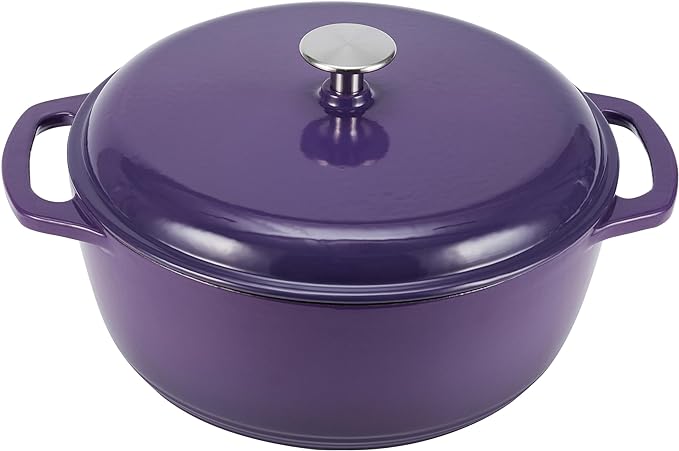
Amazon Basics enameled cast iron exists for one reason: making Dutch oven cooking accessible. And for many people, it does exactly that. Owners repeatedly describe it as heavy (good), evenly heating (important), and easy to clean (life-changing if you’re coming from thin pots). It’s commonly used for bread, chili, roasts, and soups—aka the core Dutch oven hits.
The expert reality with budget enamel: inspect, then cook smart. Some buyers mention tiny enamel imperfections (like pinholes or small bumps). These aren’t always functional problems, but you should check the interior and rim on arrival. Cook on medium or medium-low, avoid metal utensils, and let it cool before washing. Do that, and many budget enamel pots last far longer than people assume.
Why it’s a strong deal
- Excellent entry price – One of the easiest ways to get a real enameled Dutch oven into your kitchen.
- Versatile 6 qt size – Great for 4–6 servings of stews, roasts, or bread.
- Good heat retention – Helps prevent temperature swings during braising.
- Easy cleanup – Warm soapy water usually handles it without drama.
Good to know
- Quality control can vary—inspect enamel and exchange if you see chips or major defects.
- Handwash and avoid harsh cleaners to preserve the finish.
- Like all cast iron, it’s heavy—plan storage accordingly.
Ideal for: first-time Dutch oven buyers who want enameled convenience on a tight budget without sacrificing core performance.
14. Miereirl 6‑Qt Enameled Dutch Oven – Budget-Friendly, Heavy-Use Approved
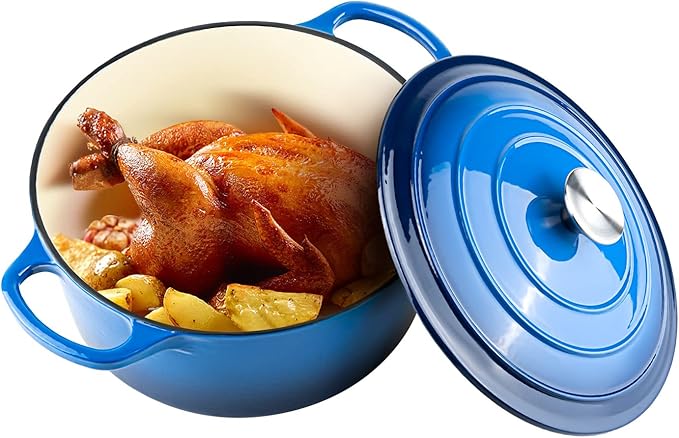
Miereirl is one of those budget enamel pots that builds credibility through sheer use. Some owners report using it for a year-plus, baking dozens of loaves and even using it in smoker setups for chili—without chips. That kind of long-use feedback matters more than shiny marketing because it suggests the enamel bond is holding up under real thermal cycles.
This is also a good “I want enamel, but I’m not precious about it” option. High-heat bread baking can discolor or stain interiors over time. If you want a pot that stays showroom-white forever, you’ll stress yourself out. If you want a pot you can use hard and clean back to “good enough,” this style of Dutch oven can be a practical win.
Why it’s worth a look
- Strong value – Often priced well below big brands while still delivering classic results.
- Good for bread – Holds heat well and creates a stable baking environment.
- Multi-cooktop compatible – Works across gas/electric/induction/ceramic setups.
- Reported durability – Many owners describe it as lasting through heavy use.
Good to know
- Staining can happen with high-heat baking—consider it cosmetic patina.
- Always avoid thermal shock: cool naturally before washing.
- Budget brands can have less predictable long-term parts/support than legacy brands.
Ideal for: home cooks who want a 6 qt enameled pot for frequent use—especially bread and stews—without spending big-brand money.
15. Umite Chef 5‑Qt Enameled Dutch Oven (Red) – Affordable, Thick, Bread‑Ready
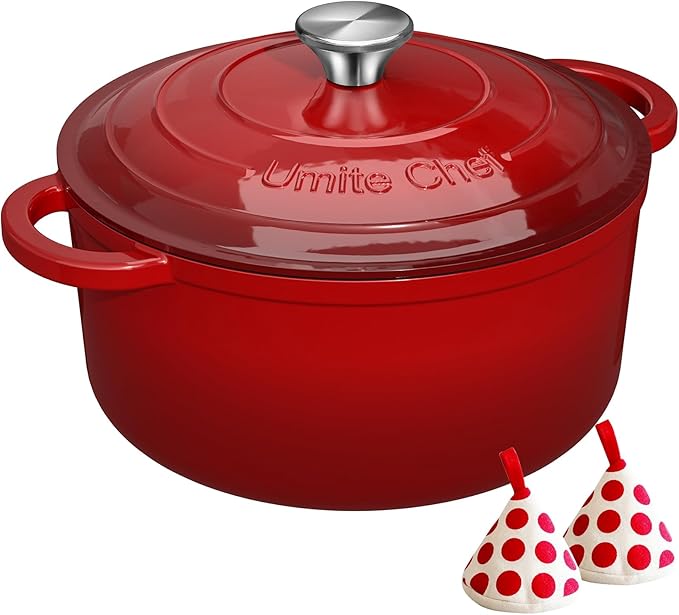
Umite Chef’s 5-qt enameled Dutch oven shows up a lot in “I want to bake bread but I’m not paying $200” stories—and it tends to deliver. Owners describe it as thick-walled and heavy enough to hold heat, with a lid that seals nicely for steam retention. That’s the combo you want for crust: high heat stored in iron plus trapped steam early in the bake.
The real expert tip with budget enamel is behavior, not brand: preheat gradually (medium-low first), avoid slamming it onto cold counters, and let it cool down before washing. This product even calls out cooling time and thermal shock risk—take that seriously. Enamel cracks are usually preventable if you treat it like glass fused to iron (because that’s exactly what it is).
Why it’s a strong value
- Excellent entry price – A realistic way to start Dutch oven baking and braising.
- Thick heat retention – Helps with bread crust and steady braising.
- Included potholders – Small bonus, but genuinely helpful for safe handling.
- Versatile cooking – Works for soups, stews, roasting, and baking.
Good to know
- Enamel longevity depends on your habits—avoid thermal shock and metal tools.
- 5 qt is best for 2–4 people; bigger families may want 6–7.5 qt.
- Budget enamel can vary; inspect on arrival for chips and exchange if needed.
Ideal for: first-time bread bakers and budget shoppers who want a 5 qt enameled pot for braises, stews, and weekly use.
16. Overmont 3.2‑Qt Cast Iron Multi Cooker – Compact 2‑in‑1 With Real Versatility

This Overmont multi cooker is built on a simple idea that works: a domed lid that flips into a skillet gives you two cooking surfaces without buying two separate pans. In real kitchens, that means fewer “I wish I had a smaller pot” moments. It’s a great size for bread boules for two, small stews, and everyday searing.
One expert caveat: some seasoned cast iron pieces arrive with a slightly rougher surface texture than premium brands. A few owners mention doing light smoothing work (or simply cooking with it until it mellows). If you’re okay with a short break-in period, this style of pot becomes a daily driver. If you expect “slick nonstick” on day one, seasoned iron is not your personality match.
Why it’s useful
- True 2‑in‑1 design – Pot + skillet lid covers most everyday tasks.
- Great for smaller ovens – Fits easily and bakes bread well.
- Seasoned, PFAS-free cooking – No synthetic coatings; seasoning improves with use.
- Works across heat sources – Stovetop, oven, grill, and even camping setups.
Good to know
- Surface may feel rougher at first; it typically smooths out with use and seasoning care.
- Handles get hot—use proper mitts (cast iron is not “cool-touch”).
- Not ideal for long acidic cooking until seasoning is mature.
Ideal for: smaller households and space-conscious kitchens that want a seasoned cast iron “multi-tool” for searing, baking, and braising.
17. Umite Chef 5‑Qt Enameled Dutch Oven (Cream White) – Same Value, Brighter Aesthetic

This is the same core Umite Chef 5-qt platform as the red version, but the cream/white look appeals to people who want a lighter, more “airy” kitchen vibe. Owners often buy this color specifically because it looks great on open shelving or stovetops, and they use it for bread, stews, and quick pasta nights.
Here’s the practical note: lighter interiors/exteriors can show stains more easily. That doesn’t mean it’s dirty or failing—it means you should treat cosmetic patina as normal. If you want to keep it looking fresh, avoid high-heat dry preheating, don’t use metal tools, and clean sooner rather than later. A warm soak plus baking soda paste can lift many stains gently.
Why it’s a nice pick
- Same cooking performance – Heat retention and lid seal are the main reasons people like this line.
- Clean, modern color – Looks great in bright kitchens and on the table.
- Beginner-friendly – Enameled interior reduces sticking and removes seasoning stress.
- Good “starter size” – 5 qt is great for learning without giant-pot weight.
Good to know
- Lighter colors show stains; if that will bother you, choose a darker enamel.
- Budget enamel requires gentle care to prevent chips and cracks.
- Not as roomy as a 6–7.5 qt pot for big families or meal prep.
Ideal for: shoppers who want a 5 qt enameled Dutch oven that’s affordable, functional, and aesthetically light/neutral.
18. Cuisinel 3‑Qt Multi Cooker – Compact Cast Iron for Daily Searing + Small Bread

The Cuisinel 3-qt multi cooker is for people who want cast iron daily, not occasionally. The lid skillet gets used constantly for quick sears, fried eggs, and grilled meals, while the pot handles small chili, soups, or bread baking for a couple. Owners often mention that the surface feels a bit rough at first but improves with use and seasoning care.
An expert note on “roughness”: it’s not always a defect—it’s a casting finish choice. Smooth cast iron can be lovely, but it also often costs more. If you’re willing to build seasoning and cook regularly, a slightly rough pan can become very nonstick over time. The key is heat control and fat: use enough oil, preheat gradually, and don’t rush.
Why it’s a great small set
- 2 pieces in one – Lid skillet plus pot covers most daily tasks.
- Great for couples – Perfect portion sizes for 1–2 people.
- Outdoor friendly – Works well on grills and camp cooking setups.
- Improves with use – Seasoning builds over time for better release.
Good to know
- Handwash only; dry thoroughly and oil lightly after cleaning.
- Not ideal for acidic simmering early in ownership (seasoning can strip).
- Small capacity: if you cook for 4+, you’ll want a bigger pot.
Ideal for: couples, small kitchens, grill cooks, and anyone who wants a compact cast iron setup for daily cooking plus occasional bread.
19. EDGING CASTING 5‑Qt 2‑in‑1 – Budget Combo Cooker With Real Bread Capacity

If you love the combo cooker concept but want more room than a 3.2-qt set, this 5-qt 2-in-1 is a practical upgrade. Owners frequently buy it specifically for sourdough—especially if they want to fit more loaves in the oven at once by using low-profile lids rather than tall knobbed lids. The skillet lid also gives you a secondary cooking surface for searing and frying.
The honest trade-off at this price: finishing and polish can be less refined. Some owners note a rougher casting surface and thinner feel compared to heavyweight brands. Functionally it can still cook extremely well—cast iron is cast iron—but you may want to do a quick wash, dry, and add a thin seasoning layer before your first high-heat bake.
Why it’s a strong value
- Big combo capacity – More room for bread and roasts than smaller multi cookers.
- Heats fast, holds heat – Great for baking and searing when preheated properly.
- Skillet lid utility – Two cooking surfaces, one purchase.
- Very affordable – Often cheaper than buying a pot and skillet separately.
Good to know
- Finish may be rougher; seasoning and use usually improve performance.
- Cast iron is heavy—plan safe lifting, especially when hot.
- Care rules apply: no dishwasher, dry fully, oil lightly.
Ideal for: bread bakers and budget shoppers who want a larger combo cooker for bigger loaves and more capacity than the typical 3‑qt sets.
20. Bayou Classic 1‑Qt Covered Sauce Pot – Tiny Pot, Big Comfort Food Energy
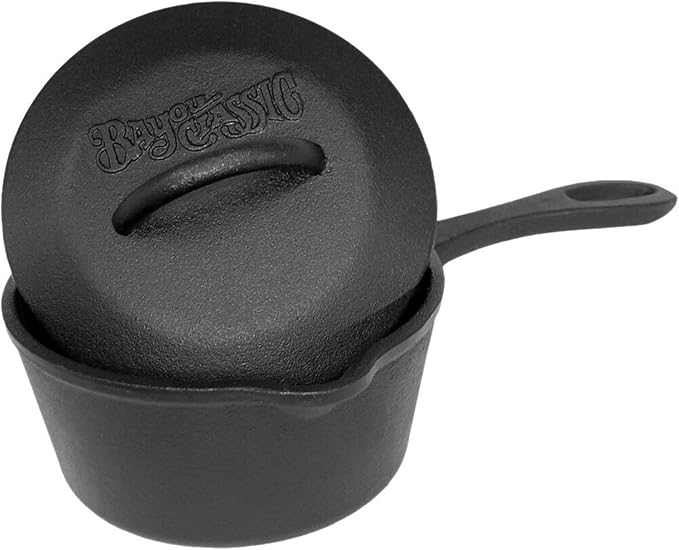
Most “best cast iron” lists ignore the tiny stuff—yet a 1-qt cast iron sauce pot can be one of the most-used pieces in a kitchen. It’s ideal for oatmeal, sauces, gravy, reheating soup, melting butter slowly, or simmering a small portion without dirtying a giant pot. Owners who use it daily often say the same thing: with steady seasoning, food release improves and cleanup gets easier and easier.
The expert move is to treat this like a seasoning practice tool. Because it’s small, you can build seasoning quickly: cook with it, wash it, dry it on low heat, wipe with a whisper-thin oil layer. Do that, and it becomes a naturally nonstick mini-pot that outlasts fussy appliances. Just remember: seasoned iron hates moisture in storage—dry it fully every time.
Why it’s unexpectedly useful
- Perfect small size – Sauces, oatmeal, small soups, and quick reheats.
- Steady heat – Great for gentle simmering and reductions.
- Seasoning-friendly – Small surface builds a nonstick patina quickly with use.
- Great for tiny kitchens – Takes little space but adds a lot of capability.
Good to know
- Seasoned care is mandatory: wash, dry, oil lightly—no exceptions if you hate rust.
- Some packaging can arrive messy; wash thoroughly before first use.
- It’s not for big batches—this is a specialist tool, not your main Dutch oven.
Ideal for: small households, sauce lovers, oatmeal people, and anyone building a “low-plastic, durable cookware” kitchen one piece at a time.
How Cast Iron Pots Actually Cook (and How to Avoid the Common Mistakes)
Cast iron feels magical when it works—and frustrating when it doesn’t. The difference usually isn’t the brand. It’s the habits. Here are the mechanics (what’s happening) and the simple behaviors that protect enamel, build seasoning, and make food release easier.
Heat retention: the superpower (and the trap)
- Cast iron stores heat – Once the pot is hot, it stays hot. That’s why braises are stable and why bread crust gets crisp.
- It heats slower – Give it time. Rushing with high heat creates hot spots and scorching.
- Medium is usually enough – On most stoves, “high” is reserved for boiling water, not simmering sauces in cast iron.
If your food sticks or burns in cast iron, the culprit is often too much heat too fast. Preheat gradually, add fat once warmed, then cook. That one change fixes more “my pot hates me” stories than any special cleaner.
Enamel care: treat it like glass fused to iron
- No thermal shock – Don’t pour cold water into a hot pot. Let it cool naturally first.
- Use gentle tools – Wood, silicone, nylon. Metal tools can scratch and shorten enamel life.
- Soak smart – Warm water soak + baking soda paste can lift stains without harsh abrasives.
Enamel will develop patina. That’s not failure. Chips and cracks are the real enemies, and they’re usually caused by impact or thermal shock—not cooking.
Seasoned cast iron: build the “easy-release” surface
- Dry fully – Water is rust’s best friend. Dry on the stove over low heat if needed.
- Oil lightly – A thin layer, wiped almost dry, keeps the surface protected.
- Cook fats early – Bacon, roasted chicken, sautéed onions—these help build seasoning fast.
Seasoned cast iron rewards consistency. If you cook with it weekly, it becomes easier and easier. If you abandon it wet in the sink, it will punish you with rust. That’s the deal.
Two “pro” tips that prevent regret
- Respect weight – Always plan where the pot will land before you lift it from the oven.
- Don’t chase perfection – Especially with enamel, “like new forever” is unrealistic. Cookware is meant to cook.
Dial in these habits and cast iron becomes the most dependable cookware you own—steady, resilient, and wildly satisfying.
FAQ: Cast Iron Pots, Answered (Without the Internet Myths)
Which is better: enameled or seasoned cast iron?
What size Dutch oven should most people buy?
Is cast iron safe for glass-top or induction stoves?
How do I stop food from sticking in cast iron?
Can I bake sourdough in any Dutch oven?
Final Thoughts: Which Best Cast Iron Pots Should You Buy?
Here’s the simplest way to make a confident decision: pick the pot that matches your most common meals, your comfort with maintenance, and what you actually enjoy cooking. Cast iron rewards consistency—and the right size and surface type makes that consistency easy.
- Want the premium “buy it once” oval for big roasts? Start with the Le Creuset Signature Oval 8 qt.
- Want the best big family enamel value? Go for the Lodge 7.5 qt Enameled Dutch Oven.
- Want a realistic “one pot for most dinners” choice? Pick a 6 qt enamel like the Lodge 6 qt (Blue) or the Lodge 6 qt (Red).
- Baking bread weekly and want max versatility? A combo cooker like the Lodge Combo Cooker is hard to beat for “pot + skillet” value.
- Cooking outdoors or want a pot that laughs at open flame? Choose the Lodge 8 qt Camp Dutch Oven or go bigger with the Lodge 9 qt Bail-Handle Dutch Oven.
- Want a big enamel pot that looks gorgeous on the stove? The Martha Stewart Gatwick 7 qt brings size and style at a friendly price point.
Any of these can become your personal set of Best Cast Iron Pots once you match the surface (enameled vs seasoned), size, and lid style to your real routine. Choose the one you’ll actually use weekly, treat it with the right habits, and it will pay you back with better browning, deeper flavor, and meals that feel like you cooked all day—without actually doing that.
