
If you cook even a few nights a week, your cutting board isn’t a “nice-to-have.” It’s your most-used kitchen surface: where herbs get chopped, sandwiches get built, chicken gets trimmed, brisket gets carved, and snacks magically appear. And when the board is wrong—too small, too slippery, too thirsty, or oddly finished—you feel it every single day.
The good news? A truly great butcher-block board changes the whole rhythm of prep. Your knife feels steadier. Your ingredients stay contained. Cleanup becomes predictable. You stop babying flimsy boards that skid across the counter, and you stop replacing “temporary” boards that stain, warp, or smell like yesterday’s onions.
This guide pulls together 13 standout butcher-block cutting boards on Amazon—from heritage maple workhorses to thick walnut end-grain blocks, from teak boards that laugh at moisture to giant bamboo slabs that double as extra countertop space. I’m using the real-world patterns that show up in owner feedback (the stuff people only discover after weeks and months): how boards arrive out of the box (dry vs ready), which ones stay flat, which finishes feel “too coated,” which grooves are actually useful, and what small design details make a board feel effortless instead of annoying.
If you’re here because you want the best butcher block cutting board for your kitchen— not just the most expensive one, not just the prettiest one—this is built to give you a crystal-clear decision with zero second guessing.
How to Choose the Best Butcher Block Cutting Board for Your Kitchen
Most people buy a cutting board the same way they buy a throw pillow: pick a size, pick a color, hope for the best. That’s exactly how you end up with a “pretty” board you avoid using, or a “practical” board that slowly drives you nuts. A butcher-block board is a tool—so let’s choose it like a tool.
1. Start with your real prep style (not your fantasy cooking life)
Here’s the simplest truth: the “right” board depends more on what happens on your counter than what looks good in photos. Ask yourself which of these sounds most like you:
- Everyday prep cook: You chop onions, slice chicken, mince garlic, and build meals fast. You need a stable, easy-to-grab board that lives on the counter without drama.
- Weekend batch prepper: You do big chopping sessions—multiple vegetables, meal prep proteins, stock ingredients. You want surface area and a board that doesn’t skate or flex.
- Carver / grill person: You’re slicing brisket, tri-tip, turkey, steak. You need a juice groove that actually catches liquid and handles you can trust when the board is heavy.
- Small-kitchen minimalist: You want one board that can do 80% of jobs, store easily, and not feel like a weightlifting session every time you wash it.
- Host / charcuterie person: You want “prep on one side, serve on the other,” with a finish that looks beautiful and cleans up easily.
Once you know your category, the “best board” becomes obvious. For example: a massive 36″ bamboo slab can be incredible as extra workspace—but it’s not the board you’ll want to hand-wash after slicing a lime. Likewise, a thin, lightweight walnut board can be the perfect daily grab board, but it won’t feel as planted as a 12-pound end-grain block when you’re breaking down a large roast.
2. Learn the 3 builds that matter: end grain, edge grain, and bamboo laminations
This is where most buying guides stay shallow. Let’s go deeper—because the build affects everything you’ll feel: knife feedback, noise, staining, and how the board ages.
-
End grain (butcher block “checkerboard” style): The fibers face upward like a bundle of straws. When you cut, the knife slides between fibers rather than slicing across them. This is why end grain often feels “softer” on knives and can look smoother over time. It’s also why end grain boards often “self-heal” visually after oiling.
What reviews reveal: End grain boards can arrive with tiny raised fibers, especially if they’re a bit dry out of the box. That can show up as “roughness” after the first wash if you don’t oil early. The fix is usually simple: proper conditioning (and occasionally a very light sanding) makes them feel luxurious. -
Edge grain (long wood strips): These boards use the long side of the wood grain, creating a tougher, tighter surface. They’re often lighter than end grain at the same size and can be very stable with less “blocky” thickness.
What reviews reveal: Edge grain boards often show knife marks more clearly at first, but they’re also easier to refresh with a quick light sand and oil if you’re the “I want it to look perfect” type. -
Bamboo laminations (layered bamboo panels): Bamboo is technically a grass, and bamboo boards are usually built from laminated pieces. Well-built bamboo boards can be impressively stable, especially when they use multi-layer construction.
What reviews reveal: Bamboo boards often stay flatter than you’d expect for their size, but they demand consistent oiling—especially giant boards used as stove covers or over-sink workstations. Neglect tends to show up as corner splitting or surface dryness.
3. Size and thickness are about stability vs. friction (and friction is everything)
Most people underestimate how much a board’s thickness changes your day-to-day experience:
- Thicker boards feel planted. They absorb chop force, reduce bounce, and make your knife feel more controlled. The trade-off is weight and washing effort.
- Thinner boards are easier to move, easier to wash, and more likely to fit in a cabinet or a dish rack. The trade-off is they can shift more easily, and they’re more sensitive to uneven drying.
A smart approach many experienced cooks use is a “two-board system”:
- One daily driver (medium size, easy to grab) for 80% of tasks.
- One heavy-duty board (thicker, larger, groove) for carving meats, batch prep, and messy jobs.
This prevents the classic mistake: buying a single giant board that’s “perfect” in theory but annoying to wash, so it ends up living on the counter… and getting used less than it should.
4. Juice grooves, handles, and feet: the “small” details that decide love vs regret
On paper, most boards sound similar. In practice, these details decide whether you’re thrilled or mildly irritated every day.
- Juice grooves: A groove is only “good” if it’s deep enough and positioned well. Shallow grooves can overflow; overly aggressive grooves can steal too much cutting space. The best boards in this guide either have a groove that genuinely contains run-off or intentionally skip it to maximize usable surface (especially for veggie prep and dough).
- Handles: Finger grips and inner handles matter most on heavy boards. If you can’t confidently lift a board when it’s loaded (think: carved brisket plus juices), you’ll avoid using it for the jobs it’s meant to do.
- Feet: Rubber feet solve two hidden problems at once: stability (no skating) and airflow (a drier underside). But they can also hide trapped moisture if you never wipe the counter under the board. The best habit: lift the board occasionally and wipe underneath—especially after juicy prep.
5. The “review signals” that separate great boards from frustrating ones
When you read real owner feedback, you’ll see the same patterns again and again. Here’s how to interpret them like a buyer who never gets burned:
- “Arrived very dry / soaked up oil like crazy” → Not automatically a flaw. Many premium boards ship on the dry side for safety and storage. The key is whether the board becomes stable and easy to clean after proper conditioning. A thirsty board can still be an heirloom board.
- “Rough after first wash” → Often means raised grain. This is common when a board needs oil. If a brand includes sanding guidance or a care card, that’s usually a clue they understand the wood reality.
- “Warping / rocking” → This is the big one. Warping is almost always an airflow + moisture balance issue: one side stays damp longer than the other. Boards with feet, thicker builds, or better seasoning routines tend to do better. For flat boards without feet, using a thin shelf liner underneath can make a dramatic difference.
- “Splinters / wood fibers” → Sometimes it’s a one-off defect; sometimes it’s a finishing issue. If the brand’s customer service is responsive, you’ll see owners reporting replacements and improved experiences. That reputation matters.
- “Looks coated / varnished” → Some boards ship with a heavier finish for gifting. If you want a raw-wood working surface, look for boards that are oil-finished (not film-finished). If a board arrives feeling waxy, many experienced users lightly sand and re-oil to make it their own.
6. Maintenance that actually works (and doesn’t take over your life)
The best boards aren’t “high maintenance,” but they are “consistent maintenance.” Here’s the routine that keeps butcher-block boards flat, beautiful, and odor-resistant:
- After every use: scrape debris, wash quickly with warm soapy water, rinse, towel dry, then air-dry with airflow (upright is ideal).
- Weekly-ish (or when the board looks dull): add a thin layer of food-grade mineral oil. Let it absorb. Wipe off excess.
- Monthly-ish (or when the board feels dry): finish with a conditioner/cream (oil + wax style) to slow down moisture exchange.
- When the board feels rough: very light sanding (fine grit) and re-oil. This is normal “wood ownership,” not a failure.
Quick Comparison: 13 Best Butcher Block Cutting Board Picks
Here’s the fast scan. Use this table to find your “type” (daily driver, carving board, countertop-expander, giftable showpiece), then jump to the full review for the real-life details that matter after the first week.
On smaller screens, swipe or scroll sideways to see the full table.
| Model | Wood & build | Size / thickness | Best match | Amazon |
|---|---|---|---|---|
| SHUMARU Mahogany End-Grain (20×13) | End grain | 20×13×1.6″ | Stable daily driver with feet & grips | Amazon |
| John Boos CB Series Maple (20×15) | Edge grain | 20×15×1.5″ | Heritage carving + prep, reversible groove | Amazon |
| COZIFA Walnut End-Grain (20×15) | End grain | 20×15×2″ | Thick statement block for serious prep | Amazon |
| QUELLUXE Walnut End-Grain (20×15) | End grain | 20×15×1.7″ | Knife-friendly carving board with groove | Amazon |
| YOUSUNLONG Acacia + Oak (20×16) | End grain | 20×16×1.5″ | BBQ, brisket, big prep sessions, reversible | Amazon |
| Virginia Boys Kitchens Walnut (17×11) | Edge/flat build | 17×11×0.75″ | Lightweight USA-made daily grab board | Amazon |
| SHUMARU Mahogany End-Grain (16.5×12.6) | End grain | 16.5×12.6×1.6″ | Groove + feet in a manageable footprint | Amazon |
| HIWARE Bamboo Countertop Board (36×24) | Bamboo | 36×24×1″ | Extra counter space + carving + serving | Amazon |
| BABILONIA Walnut End-Grain (15.7×10.2) | End grain | 15.7×10.2×1.7″ | Smart plate-slide design for clean transfers | Amazon |
| Sonder LA Laurel Teak (18×14) | Edge grain | 18×14×1.25″ | Water-resilient teak with deep groove | Amazon |
| Ironwood Gourmet Charleston (14″ square) | End grain | 14×14×1.25″ | Square board for tight counters & prep | Amazon |
| Socisen Bamboo XXL (24×18) | Bamboo | 24×18×1″ | Big prep surface with non-slip feet | Amazon |
| Socisen End-Grain Acacia (17×12) | End grain | 17×12×1.18″ | Giftable checkered look + stable feet | Amazon |
In‑Depth Reviews: 13 Standout Butcher-Block Cutting Boards
Now we zoom in. For each board, I’m focusing on the stuff that actually changes ownership: stability on real counters, how the wood behaves after washing, how it feels under a sharp knife, and what “care” realistically looks like after the honeymoon phase.
1. SHUMARU Mahogany End‑Grain (20×13×1.6″) – The “Use It Every Day” Workhorse

If you want one board that feels premium, stays stable, and doesn’t force you into a “board babysitting lifestyle,” this SHUMARU is a strong best-overall choice. The end-grain surface gives you that classic butcher-block knife feel: less harsh chatter, more controlled slicing, and a surface that tends to look better after it’s oiled and broken in.
What makes this one especially livable is the combination of thickness and feet. Many heavy boards are stable simply because they’re heavy. Feet add a second layer of stability: they reduce sliding on slick countertops and help the underside dry evenly. That airflow matters—because moisture trapped under a flat board is one of the quietest causes of rocking and warping over time.
Owner feedback tends to cluster around two realities: first, it’s gorgeous and feels like craftsmanship; second, wood is wood, so a very dry board can feel “marked” after early use if you haven’t conditioned it yet. That’s not a dealbreaker— it’s a clue. If you oil it before (and especially after) the first few washes, the surface typically settles into that silky, knife-friendly feel people buy end grain for in the first place.
Why you’ll like it
- End-grain knife feel – Slicing and chopping feels controlled and “quiet,” especially with sharp chef knives.
- Feet + thickness = stability – A practical combo for staying flat and staying put on real counters.
- Ergonomic grips – Helps you lift confidently without pinching fingers under a heavy block.
- Looks like a centerpiece – Many owners treat it as both a prep board and a serving board.
Good to know
- No juice groove on this size, which is perfect for veg prep but not ideal for very juicy carving jobs.
- If your board arrives “thirsty,” plan a solid first-week oil routine to lock in that smooth finish.
- As with most end-grain boards, early knife tracks can look dramatic—then soften after conditioning.
Ideal for: cooks who want a premium daily driver that feels stable, knife-friendly, and built to last with simple, consistent care.
2. John Boos CB Series Maple (20×15×1.5″) – Classic Maple with a True Carving Side
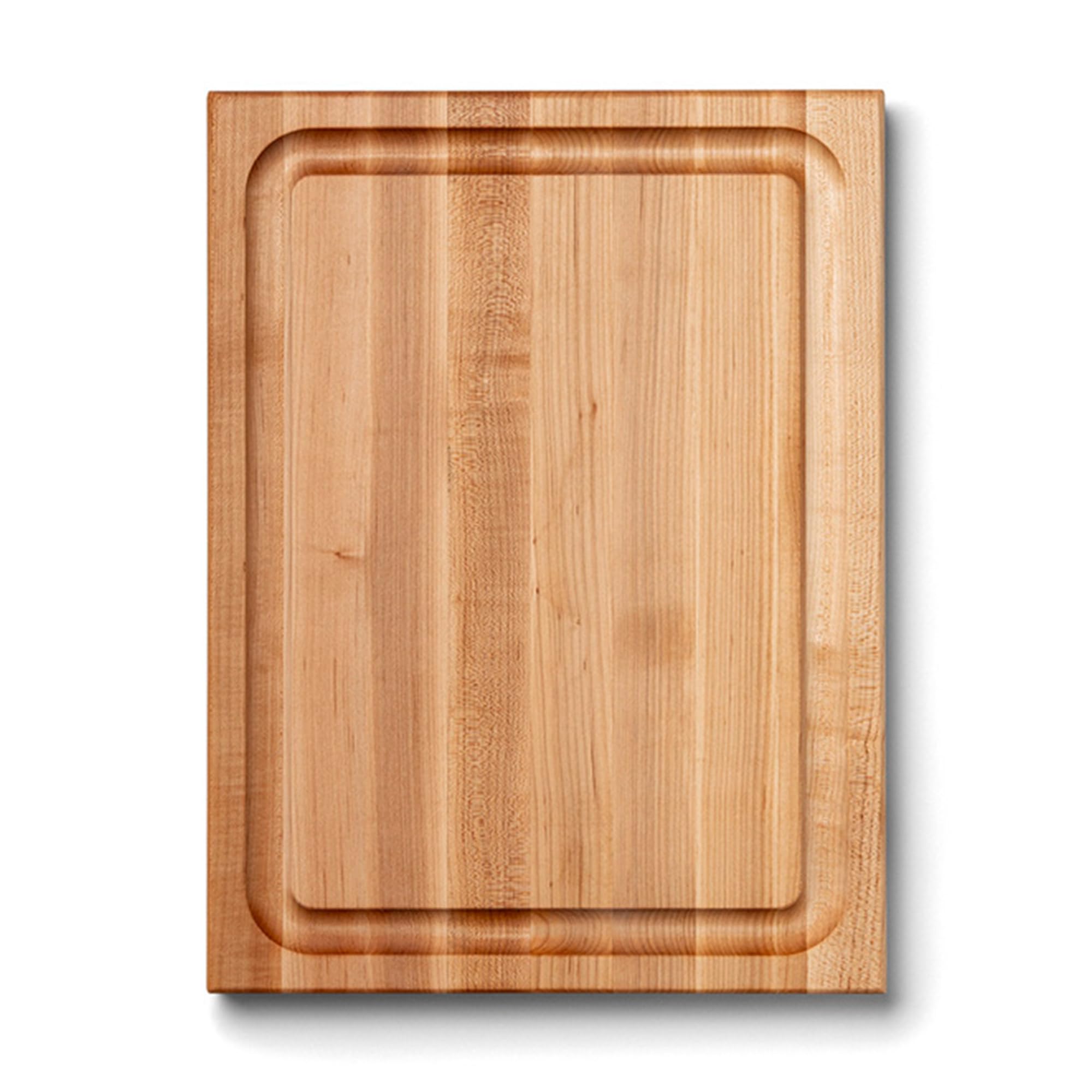
John Boos is one of those names that carries weight in kitchens for a reason: the boards are built like tools, not decorations. This CB Series maple board hits a sweet spot for people who want a substantial board without committing to a full-on end-grain “meat block” style. The edge-grain maple gives you a dense, reliable cutting surface, and the reversible design is the kind of feature that matters every week: groove side for carving and juicy fruit, flat side for everyday chopping and dough work.
Here’s the real-life ownership truth that shows up in reviews: Boos boards can arrive very dry. That’s not unusual for serious hardwood boards—dry wood travels better and is less likely to pick up weird odors in storage—but it means your first impression depends on whether you oil it properly. Many owners report the board “drinking” oil early on, then becoming dramatically easier to clean once it’s conditioned.
The other recurring theme is movement. A thick board feels stable, but any flat board can rock if moisture stays trapped underneath (especially on very smooth stone counters). The fix most experienced owners use is simple: give it airflow. Dry it upright when you can, and consider a thin grippy liner underneath if you want it absolutely locked down.
Why it stands out
- Two boards in one – A real carving groove side and a full flat prep side.
- Maple edge grain durability – A classic “work surface” feel that holds up to daily use.
- Finger grips – Small detail, huge quality-of-life upgrade when the board is wet or heavy.
- Made for refresh cycles – Thick enough to sand and recondition years down the line.
Good to know
- Plan to oil early and evenly—many boards arrive dry and need conditioning to feel their best.
- If you store it flat on a counter, prioritize airflow underneath to reduce rocking over time.
- Wood tone can vary naturally; if you’re very picky about appearance, inspect on arrival.
Ideal for: cooks who want a heritage-quality board with a true carving groove, a flat daily side, and a long lifespan you can maintain.
3. COZIFA Walnut End‑Grain (20×15×2″) – Thick, Dark, and Seriously Satisfying
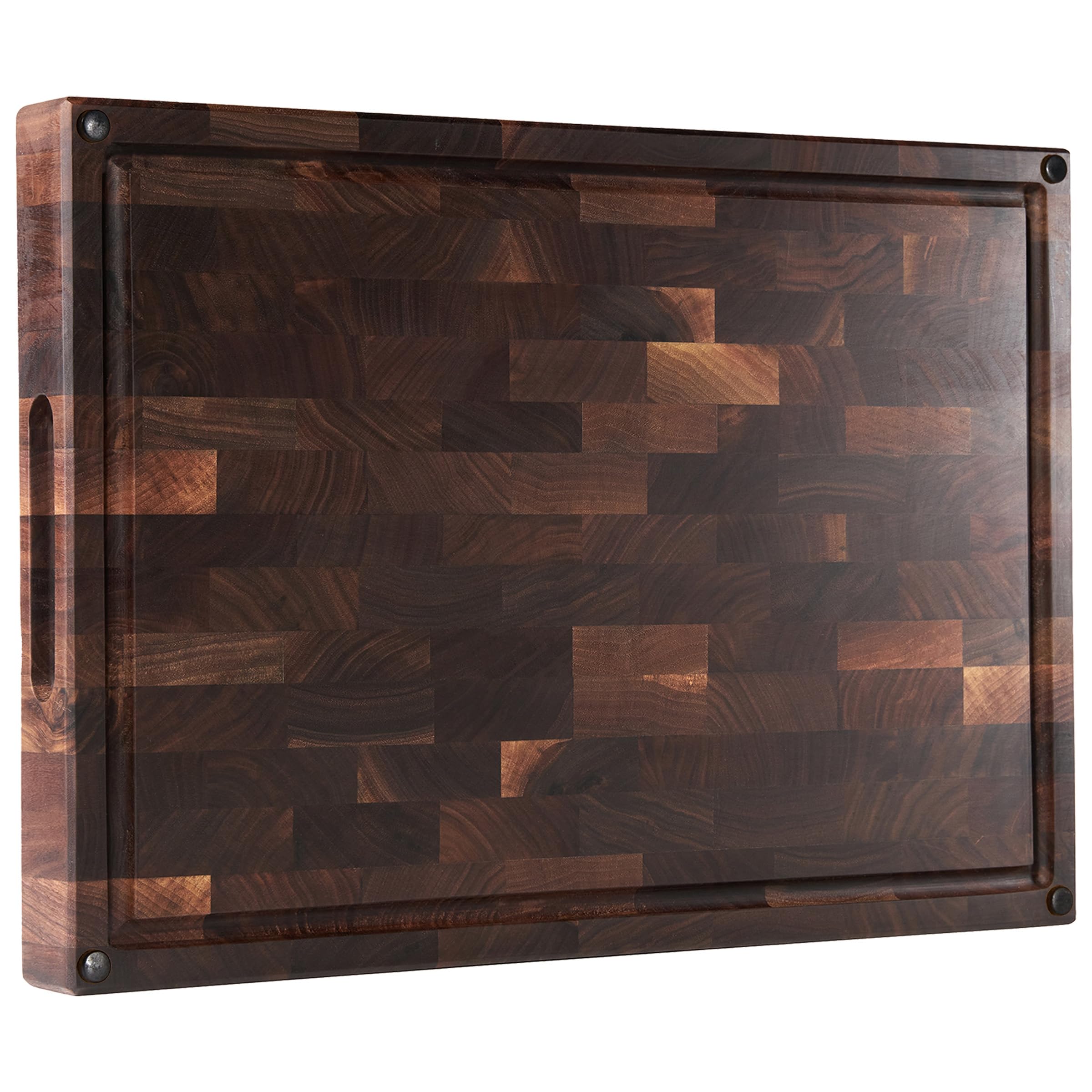
Some boards are “cutting surfaces.” This COZIFA is more like a kitchen anchor. At two inches thick, it has that confidence-inspiring feel where the board doesn’t just sit on the counter—it plants itself there. That thickness matters for two reasons people rarely explain well: it reduces bounce (your knife feels steadier), and it slows moisture imbalances that can lead to subtle rocking over time.
Walnut is also a very specific vibe. It’s rich, dark, and visually dramatic—meaning it looks incredible on the counter, but it also makes scratches and knife tracks more visible under certain light. That’s not “damage.” It’s the normal patina of a working board. If you want the board to stay photo-perfect, you’ll want to refresh it occasionally (a light sand and oil). If you want a board that looks like a pro kitchen tool, you’ll love how it ages.
The juice groove and built-in handles make it especially strong for carving and serving. This is the kind of board you can carve a roast on, then carry to the table without feeling like you’re balancing a slippery tray. Owner feedback tends to emphasize that “it feels like a piece of art,” while also noting that any board at this level should be inspected on arrival—because wood is natural, and shipping can be unkind.
Highlights
- 2″ thickness – Feels ultra-stable for heavy chopping and carving.
- End grain comfort – Smooth slicing feel, especially with sharp knives.
- Juice groove + handles – Designed for meat, watermelon, and messy prep without countertop chaos.
- “Leave it out” beauty – Walnut grain makes this a real showpiece.
Good to know
- Dark walnut can show knife marks more visibly than maple or bamboo—this is normal aging.
- Heavy boards are best as a “park it and use it” station, not something you move constantly.
- Consistent oiling matters to keep the surface smooth and stain-resistant.
Ideal for: cooks who want a thick, premium end-grain walnut block that feels planted for serious prep and looks incredible on the counter.
4. QUELLUXE Walnut End‑Grain (20×15×1.7″) – Big, Practical, Knife‑Friendly
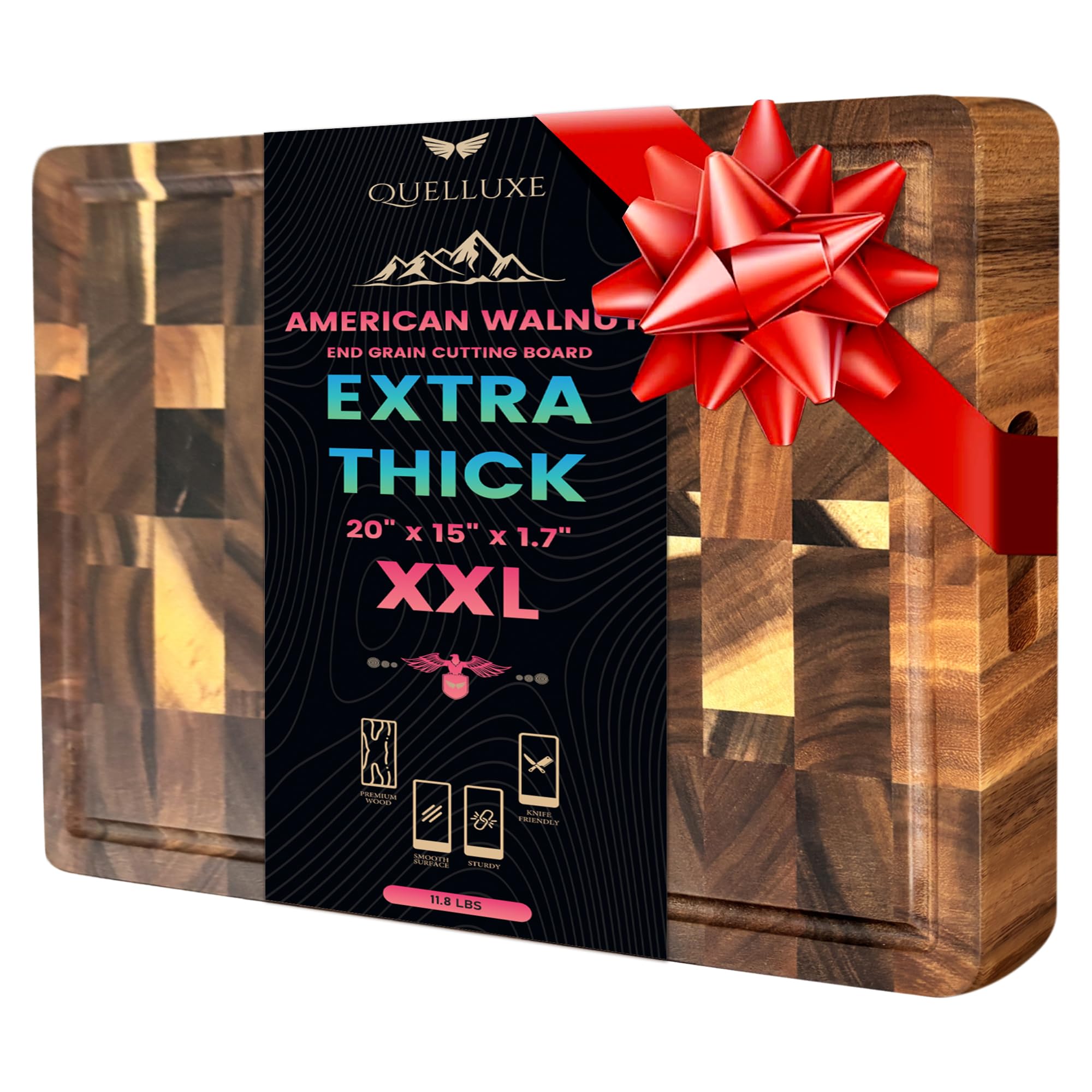
If your ideal board is “large enough for real meal prep” but not so thick it feels like a permanent countertop fixture, this QUELLUXE hits a very practical middle ground. The 20×15 footprint gives you the workspace people usually want when they say “I’m tired of tiny boards,” and the end-grain build gives you that knife-friendly feel that keeps chopping from feeling harsh or clacky.
The inner handles are the unsung hero here. On a board this size, lifting without handles turns into a weird finger pinch game—especially when the board is wet or loaded with food. Inner handles make it genuinely easier to move the board from counter to sink and back, which increases the odds you’ll actually wash and dry it properly (aka: the hidden key to keeping wood boards flat).
The juice groove is well-matched to the “carve + prep” role: it gives you a mess-contained side for meat or fruit, and you still have room to work. If you’re the kind of cook who likes one board to do it all—weekday chopping, weekend roast, charcuterie night—this is one of the more balanced designs in the lineup.
Why it earns its spot
- Large workspace – Comfortable for multi-ingredient prep without crowding.
- End-grain feel – Smooth under knives and forgiving during long prep sessions.
- Inner handles – Makes a big board easier to live with (and easier to clean correctly).
- Juice groove – Keeps carving mess contained without stealing all your surface area.
Good to know
- No rubber feet here—if your counters are slick, a thin grippy liner underneath can be a game-changer.
- Walnut’s dark tone can show lighter scratch marks; conditioning helps the board “blend” them visually.
- Like all large boards, it rewards a consistent dry-upright habit after washing.
Ideal for: anyone who wants one main board for chopping and carving, with end-grain knife feel and handles that make daily ownership easier.
5. YOUSUNLONG Acacia + Oak (20×16×1.5″) – Big Board Energy for Big Meals

This is a board for people who cook like they mean it. The 20×16 size gives you that “I can prep everything for dinner on one surface” feeling, and it’s especially satisfying for carving large meats because the board isn’t fighting for space with the food. If you’ve ever tried to carve a roast on a board that’s only barely bigger than the roast, you know how quickly juices end up on the counter. Bigger boards reduce that mess purely through geometry.
The acacia + oak mix is designed to be both durable and visually striking. Mixed-wood boards can be gorgeous, but they also demand balanced care. Different species can respond slightly differently to moisture, so your best habit here is simple: wash fast, dry thoroughly, and oil both sides consistently. When owners love a board like this, they usually mention two things: it feels like a “countertop upgrade” and it becomes the default station for prep and serving.
One real-life nuance that shows up in long reviews: some boards arrive with a heavier “gift-ready” finish feel. If you prefer a more natural, raw-wood cutting sensation, many experienced owners lightly sand and then oil/condition to make the surface exactly how they want it. Once dialed in, this board tends to become a keeper because it balances size, thickness, and handling better than you’d expect for a big slab.
Why it works
- Big prep zone – Enough space to chop, stage, and carve without crowding.
- End-grain performance – Knife-friendly feel for long prep sessions.
- Handles + groove – Built for carving and moving without spills.
- Countertop versatility – Often used as a cooktop board or serving tray, not just a cutter.
Good to know
- Big boards are heavy—this one is best if you’ll keep it out rather than constantly storing it.
- Mixed wood looks amazing, but consistent oiling matters to keep it stable over time.
- If it arrives with a “coated” feel, a light sanding + oil routine can personalize the finish.
Ideal for: brisket, roasts, turkey, big prep days, and cooks who want one large station that can handle serious food volume.
6. Virginia Boys Kitchens Walnut (17×11×0.75″) – The Grab‑and‑Go Daily Driver

Not everyone wants a massive, heavy board. Sometimes you want a board that’s always within reach: quick to wash, quick to dry, easy to store, easy to pull out for a lemon, an onion, or a weeknight chicken breast. That’s where this Virginia Boys Kitchens walnut board shines. It’s lighter and slimmer than most “butcher block” style boards, which makes it a realistic daily grab board in small kitchens—or in any kitchen where you don’t want a 10+ pound board living on the counter 24/7.
The reversible design is practical: one side with a juice groove/well for messier tasks, and one flat side for general prep. Walnut is also gentle on knives and tends to feel pleasant under the blade, with less of the “hard glassy tap” people complain about on plastic or overly hard surfaces.
The honest review patterns matter here: thinner boards demand better drying habits. Owners who dry it promptly and store it with airflow tend to stay happy. Owners who leave it flat and damp (or have other humans in the house who treat it like a plastic board) are the ones who report warping, raised grain, or splintery feel. If you want low-effort ownership, pairing this board with consistent oiling and upright drying is the difference between “best purchase” and “why is it rocking.”
Why it’s a smart choice
- Lightweight and easy to handle – Ideal for everyday tasks and quick washes.
- USA-made walnut – A big draw for people who care about domestic sourcing and craftsmanship.
- Reversible – Groove side for mess, flat side for prep.
- Great “first real wood board” – Many owners switch from plastic and never go back.
Good to know
- Thinner boards are more sensitive to uneven drying—airflow habits matter more here.
- Some owners note rougher edges or groove areas; light sanding can refine the feel.
- If your household is rough on boards, a thicker block might be more forgiving.
Ideal for: small kitchens, daily quick prep, and anyone who wants a lighter board that’s easy to live with while still feeling premium.
7. SHUMARU Mahogany End‑Grain (16.5×12.6×1.6″) – Carving-Ready Without the Bulk
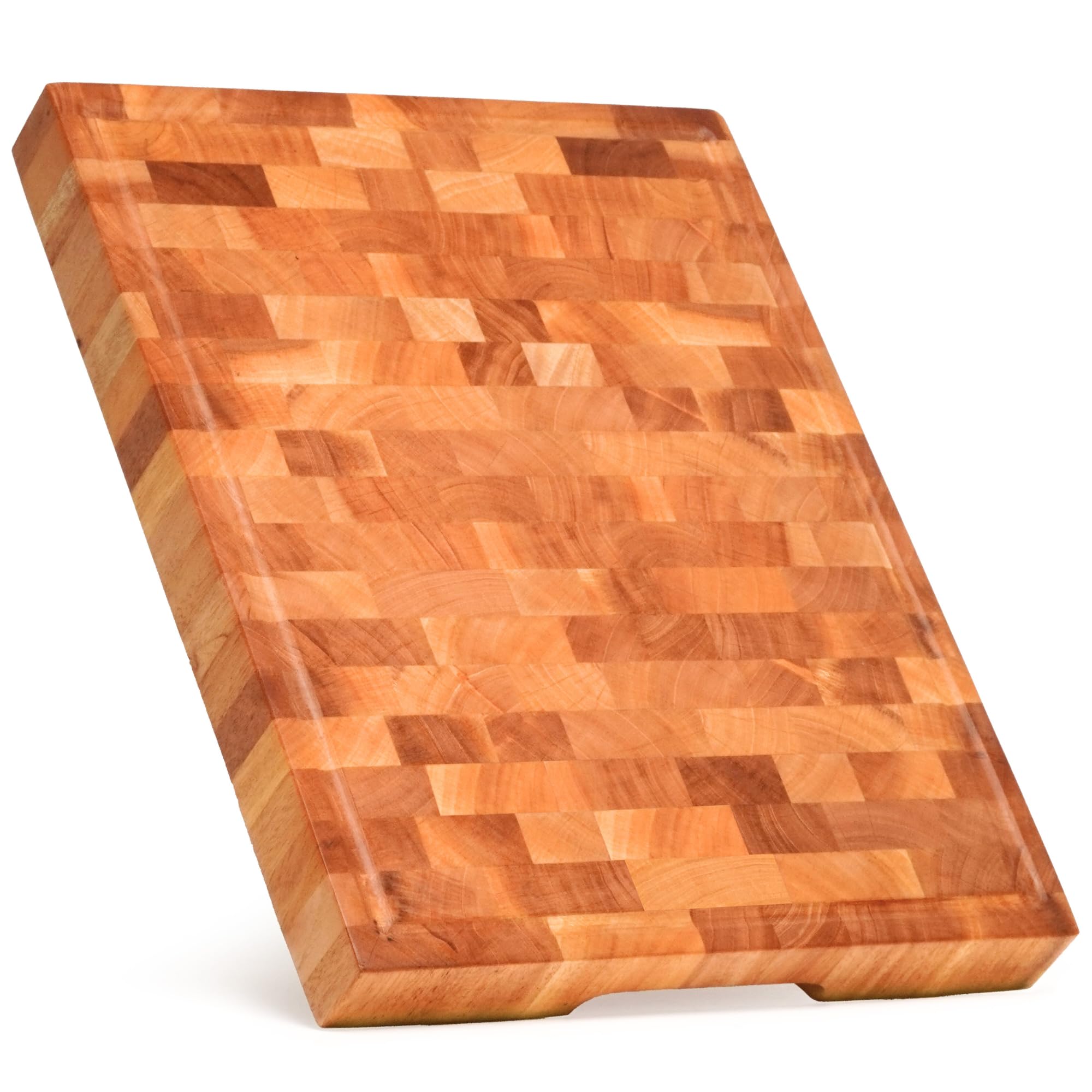
This is the SHUMARU pick for people who want the practical features that prevent mess and prevent sliding, but who don’t want a giant board dominating the kitchen. The footprint is very “everyday usable,” yet the thickness keeps it feeling like a serious butcher-block board. Add the non-slip feet and you get one of the most underrated benefits in board life: a board that dries more evenly underneath, which is a quiet but powerful defense against warping.
The juice groove makes it a better “one-board solution” than the larger groove-free SHUMARU above, especially if you regularly slice juicy meats, tomatoes, citrus, or watermelon. And because it’s reversible, you still get a clean flat side when you want maximum surface area for chopping herbs or working dough.
A common pattern in detailed reviews is that owners love the craftsmanship feel, and when there’s a problem (like a rough patch or fibers after early use), responsive customer support can turn a disappointing first impression into a long-term win. That matters because wood boards are handmade by nature—no two are exactly identical—so the brand’s willingness to stand behind the board is part of the product.
Why it’s easy to recommend
- End-grain + groove – Knife-friendly cutting with a real mess-control edge.
- Non-slip feet – Helps stability and airflow, especially on smooth counters.
- Manageable footprint – Big enough to prep, small enough to wash without dread.
- Built to be used – A practical “daily carving board” size that doesn’t feel precious.
Good to know
- As with most end-grain boards, early use can reveal dryness—oil sooner rather than later.
- For very large roasts or brisket slicing, you may want a bigger dedicated carving board.
- Feet help, but you still want to wipe underneath occasionally to avoid trapped moisture.
Ideal for: cooks who want a stable, carving-ready end-grain board with feet, without the weight and footprint of oversized blocks.
8. HIWARE Bamboo Board (36×24×1″) – When You Want More Counter, Not Just a Board

Let’s be clear: this isn’t a “cutting board” in the normal sense. This is a countertop expansion strategy. If you’ve ever felt like your kitchen is missing one extra work surface, a 36×24 board changes the entire workflow—suddenly you can stage ingredients, prep multiple dishes at once, carve large meats, and still have room to breathe.
Owners tend to use boards like this in three ways: as a giant prep station, as a serving/charcuterie surface for gatherings, and as a cooktop cover to create extra space in small kitchens. The built-in grooves and well/spout-style liquid handling are designed for messy tasks—fruit, meats, washed vegetables—where liquid control is the difference between “smooth prep” and “why is my counter wet again?”
The real-life ownership key with boards this large is maintenance-by-habit, not maintenance-by-ceremony. Because it’s a big slab, you’re less likely to move it, which means you should be intentional about wiping underneath and keeping moisture from living between board and counter. Bamboo boards are also happiest when they’re oiled consistently—especially the edges. Neglect usually shows up at corners first.
Why people love it
- Massive workspace – Turns a small kitchen into a “prep kitchen” overnight.
- Liquid control design – Grooves and a well help contain runoff from juicy tasks.
- Multi-use – Prep station, serving board, cooktop cover, even extra island space.
- Bamboo stability – Laminated builds can stay flatter than many people expect.
Good to know
- This is not a “wash in 30 seconds” board—think of it as a workstation you wipe and maintain.
- Edges and corners need oil attention to avoid dryness or splitting over time.
- Because it’s so large, measure your space and decide where it will live before buying.
Ideal for: small kitchens needing more counter space, big holiday carving, and hosts who want one giant surface for prep and serving.
9. BABILONIA Walnut End‑Grain (15.7×10.2×1.7″) – The Cleanest “Chop & Transfer” Setup
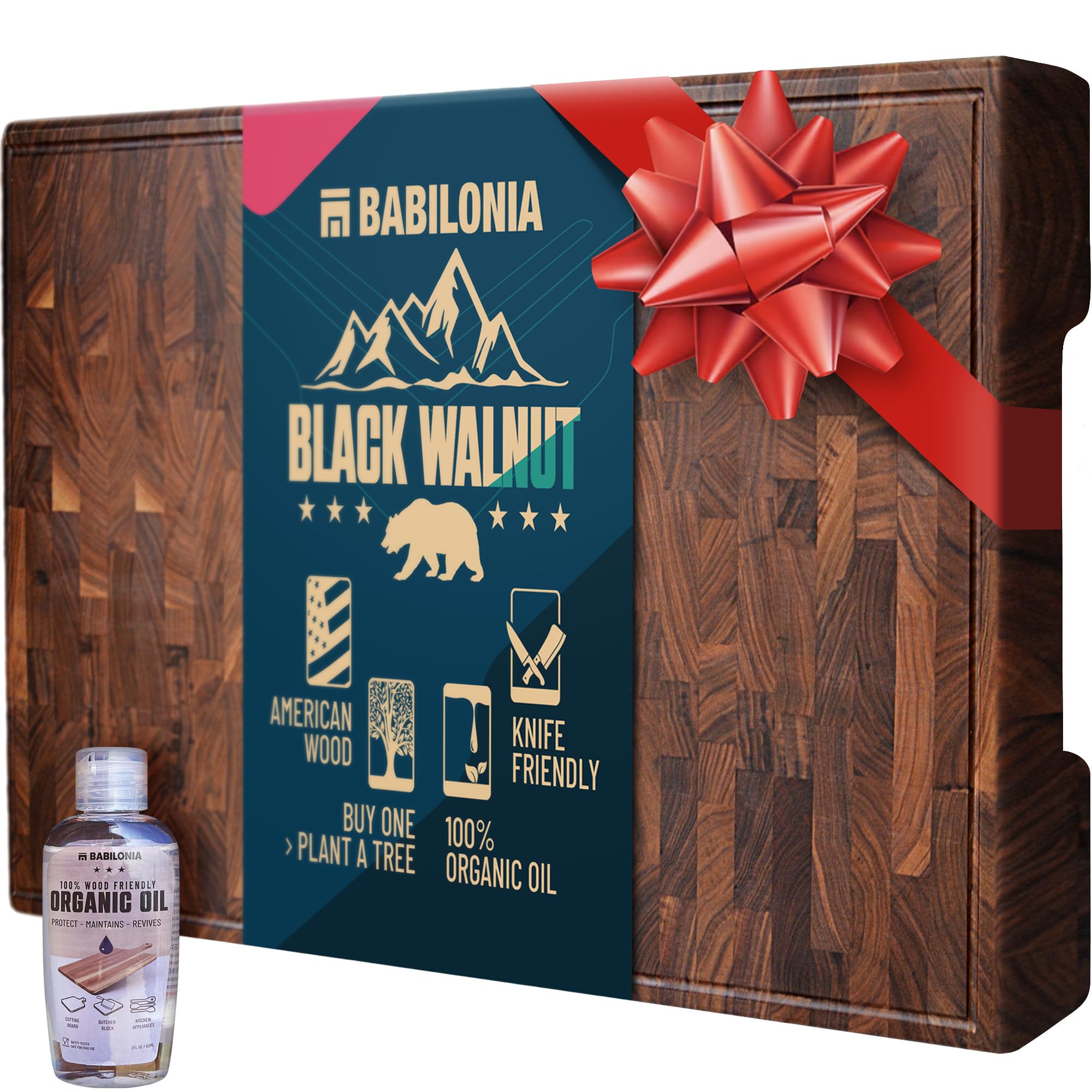
Most cutting boards make you do a little awkward dance: scoop chopped ingredients with your knife, spill a few pieces, wipe the counter, repeat. BABILONIA’s design tries to solve that problem at the source. The plate cutout/insert lets you slide chopped food directly into a plate (or dish) without lifting the whole board or scraping across a sharp edge. If you cook frequently, this is one of those “small” workflow upgrades that you start missing when it’s not there.
Because it’s end grain walnut and extra thick, it still feels like a serious board, not a gimmick. The board is sized more like a daily workstation than a turkey-carving station—perfect for weeknight meal prep, aromatics, vegetables, and protein trimming. Owners who love it tend to talk about the design being genuinely useful and the board feeling solid and well-finished.
The nuanced review signals to watch: boards with cutouts concentrate stress in specific areas, so consistent drying and oiling matter even more. If you’re the kind of person who already treats wood well, this can be a “why didn’t I buy this sooner” tool. If your household is rough on boards, you’ll want to be extra disciplined about not soaking and not leaving water sitting around the cutout.
Why it’s clever
- Plate-slide transfer – Less mess, faster cooking, fewer onion pieces escaping.
- End-grain walnut feel – Smooth cutting feedback that’s easier on knives.
- Extra thick stability – Feels planted for its footprint.
- Giftable kit vibe – Often chosen as a “nice kitchen gift” board.
Good to know
- Smaller than 20×15 boards—this is a daily prep board, not a giant carving slab.
- Cutouts demand good drying habits; don’t let water linger around the insert area.
- If you’re picky about oils/finishes, you can always maintain it with your preferred food-grade conditioner.
Ideal for: home cooks who want a smarter workflow—chop, slide, cook—without sacrificing the feel of a real end-grain board.
10. Sonder Los Angeles Laurel Teak (18×14×1.25″) – Low‑Stress, High‑Style Teak

Teak is the “calm friend” of cutting-board woods. It has natural oils that make it more water-resistant than many other woods, which can translate to less drama: fewer sudden dry patches, fewer weird stains from one careless moment, and less constant anxiety about whether your board is going to punish you for being human.
The Sonder Laurel leans into that strength with a design that’s built for real kitchens: a generous prep surface, a deep juice groove for messy ingredients, and a reversible layout that gives you a flat side when you want maximum workspace. Owners often describe this board as substantial and stable—something that stays put while chopping—and many appreciate the premium packaging when giving it as a gift.
Here’s the expert lens: teak is forgiving, but not magical. You still want to wash and dry promptly, and you still want to oil occasionally. The difference is teak tends to “stay happy” with less frequent conditioning than thirstier woods. If you want a board that feels upscale and practical without feeling like a maintenance project, teak is a very smart direction.
Why it’s a favorite
- Teak water resistance – More forgiving day-to-day than many woods.
- Deep groove – Helps keep carving and juicy prep contained.
- Reversible – Flat side for prep, groove side for mess.
- Gift-ready presentation – Strong choice for weddings, housewarmings, and cooks who love beautiful tools.
Good to know
- Edge-grain boards can show knife marks over time—this is normal “working tool” patina.
- If you want maximum knife-soft feel, end grain still wins, but teak is an excellent practical compromise.
- Size is versatile, but serious brisket carving may still prefer a bigger board.
Ideal for: cooks who want a durable, water-resilient board that looks premium, behaves predictably, and works for both prep and serving.
11. Ironwood Gourmet Charleston (14″×14″×1.25″) – Small‑Counter End‑Grain Charm

A 14-inch square board is a very specific kind of practical. It’s big enough to chop comfortably, but compact enough to fit in tighter kitchens without taking over the counter. And because it’s end grain, it delivers that smoother cutting experience people usually associate with larger butcher blocks—just in a more manageable footprint.
Acacia is also visually rich. It tends to have contrast and character, which is why many owners describe boards like this as “furniture-like” on the counter. The upside is obvious: it looks beautiful. The real-life downside is quality control matters more. When owners report issues like glue spots, flaking, or odd surface behavior, it’s usually not because acacia is bad—it’s because the finishing and assembly details decide whether the board behaves like a premium piece or a project.
The most honest way to approach this board: assume you’ll treat it like a “real wood tool.” That means: don’t soak it, dry it with airflow, oil it when it looks dull, and be willing to do a quick light sand if the surface needs refinement. Owners who do that tend to rave about how good the board feels under the knife. Owners who want a “zero effort, dishwasher safe” life should avoid wood entirely—because that’s not what wood is for.
Why it’s appealing
- End-grain in a small footprint – Great knife feel without a huge board.
- Square workspace – Efficient use of counter space for chopping and prep.
- Acacia looks gorgeous – Often doubles as a serving/charcuterie board.
- Easy to store – More cabinet-friendly than larger blocks.
Good to know
- Some owners report surface/finish quirks; inspect on arrival and be ready for light sanding if needed.
- If it has feet/pads, ensure moisture doesn’t get trapped underneath after washing.
- Regular oiling keeps acacia looking rich and feeling smooth.
Ideal for: smaller counters, apartment kitchens, and anyone who wants end-grain cutting feel in a compact, good-looking board.
12. Socisen Bamboo XXL (24×18×1″) – Big, Stable, and Built to Stay Flat
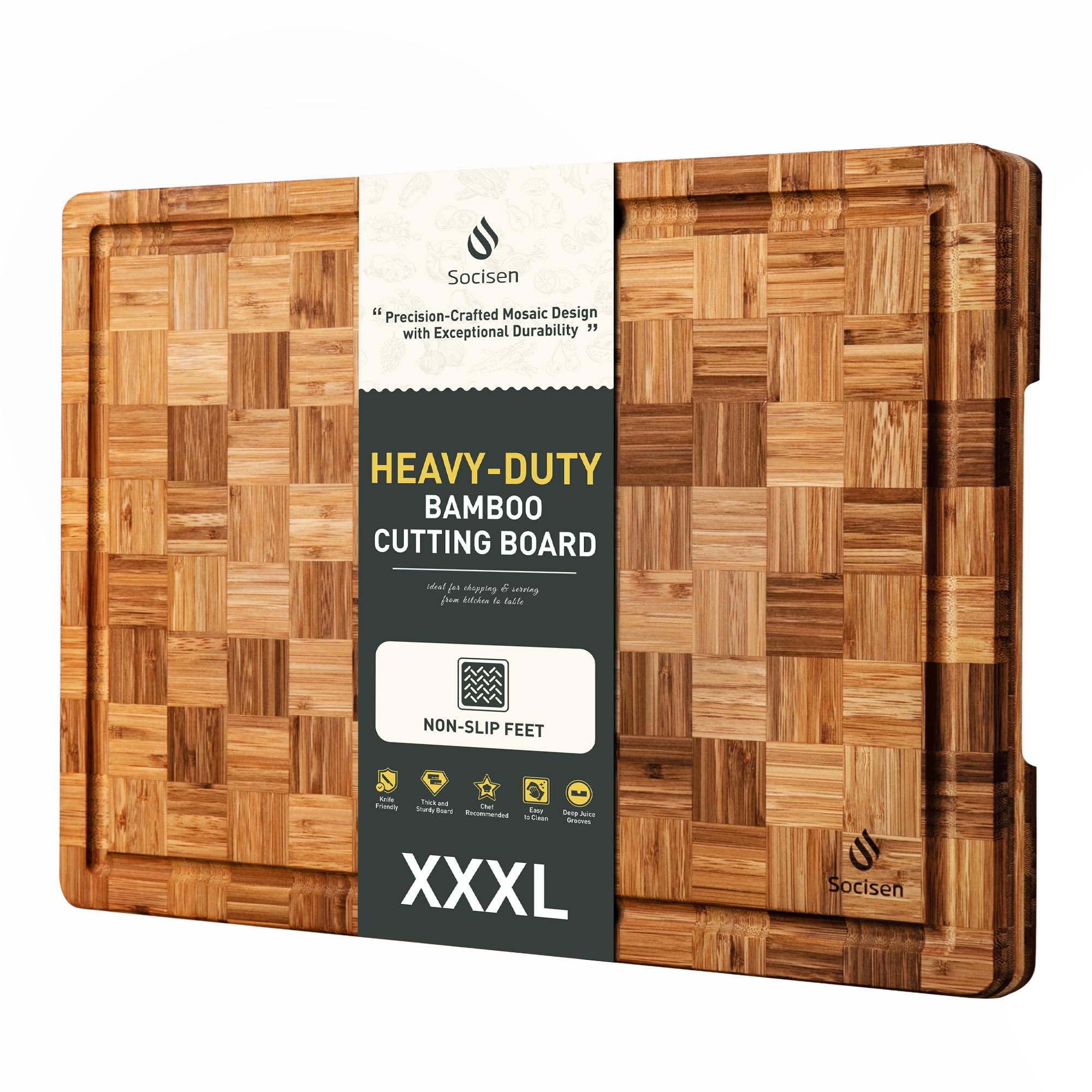
If you want a large board that behaves like a stable workstation—without the “walnut block weight”—this Socisen bamboo XXL is an underrated category winner. The non-slip feet are a huge deal on a board this size because they prevent that subtle skating that makes chopping feel unsafe. Feet also lift the board slightly, improving airflow underneath and reducing the odds of that damp-under-the-board smell that can happen when big boards live flat on counters.
The layered bamboo construction is another quietly smart detail. In long, thoughtful reviews, owners often point out that layering tends to resist warping better than single-slab styles. Whether you think of it like plywood engineering or just good manufacturing, the outcome is what matters: the board stays flatter and more predictable with daily use—assuming you do the basics (wash promptly, dry, oil occasionally).
Bamboo also has a specific personality: it’s hard, smooth, and tends not to hold odors the way some plastics do. Many owners buy bamboo specifically because they’re trying to move away from plastic boards and want something that feels clean, solid, and visually pleasing. For big everyday prep—multiple vegetables, fruit, meats—this board gives you space without needing a two-inch-thick block.
Why it’s impressive
- Large, usable workspace – Great for big prep sessions and hosting.
- Non-slip feet – Stability upgrade that also helps airflow underneath.
- Layered bamboo build – Designed for flatness and durability with regular use.
- Low odor retention – Many owners report less lingering smell compared to plastic boards.
Good to know
- Bamboo still needs oiling; neglect shows up as dryness at edges and corners first.
- It’s big—decide where it lives so you’re not constantly shifting it around.
- Like most boards, it appreciates a quick wipe underneath from time to time.
Ideal for: cooks who want a large, stable prep surface with non-slip feet and a build designed to resist warping—without the heft of thick hardwood blocks.
13. Socisen End‑Grain Acacia (17×12×1.18″) – Checkerboard Style Without the Drama
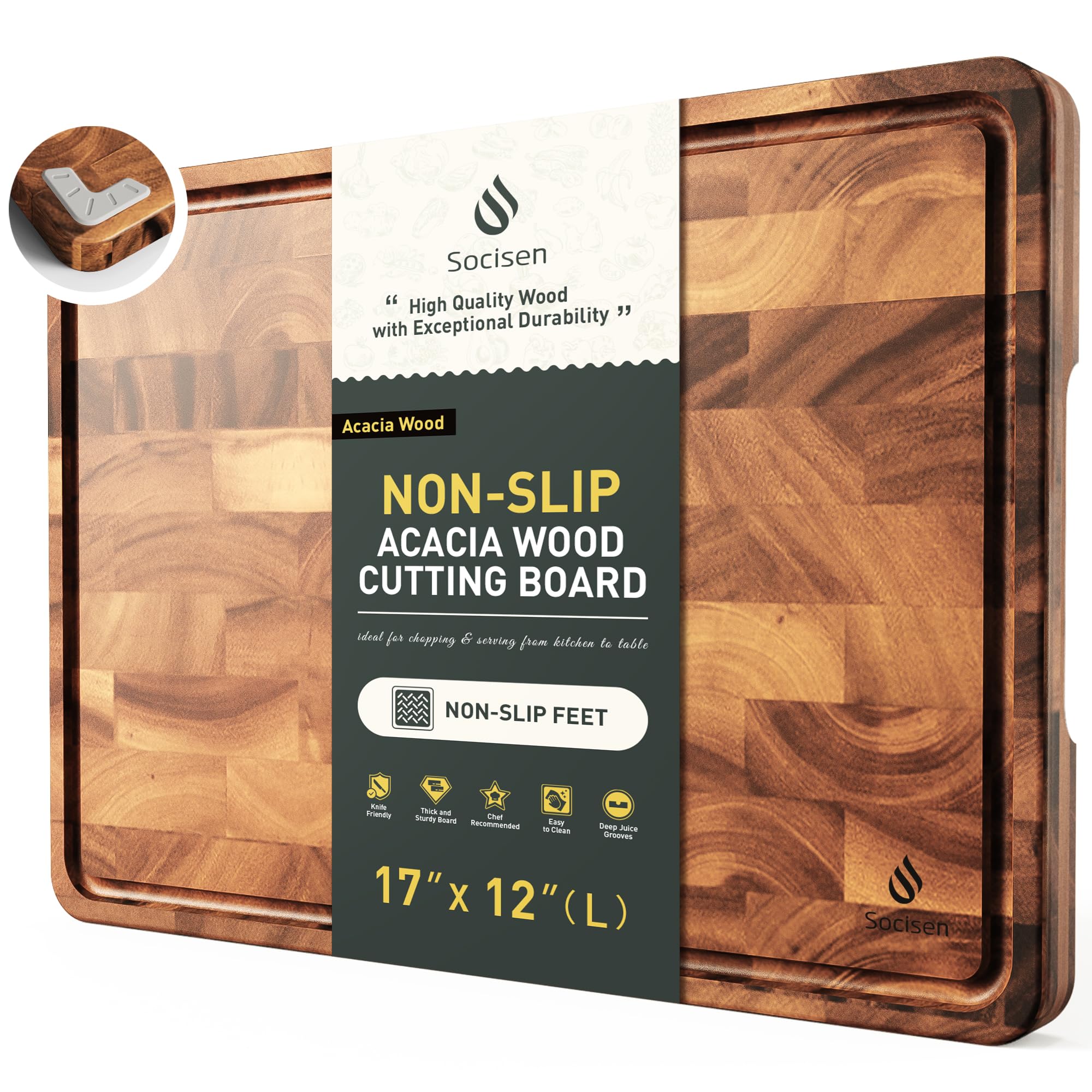
This Socisen board is aimed at a very real shopper: someone who wants that end-grain “chef board” look and feel, plus practical features (feet, groove, handles), without turning it into a huge purchase decision. The checkered end-grain pattern looks upscale, and the footprint is extremely usable for everyday meals—large enough to prep a full dinner without feeling like you’re doing everything on a postcard.
Non-slip feet do a lot of heavy lifting here. A lighter board can feel less stable during aggressive chopping, but feet increase grip and reduce movement. That’s especially useful on slick counters where many boards drift. The deep groove is also a “real-life” win when carving poultry or slicing fruit, because it reduces how often you’re wiping runaway liquid.
One nuance to know with darker, richly colored woods: knife marks can look more visible at first. That’s not a flaw—it’s how contrast works. The good news is end-grain boards often “blend” visually once they’re oiled and used regularly. Many owners treat boards like this as both prep and presentation: slice on one side, serve on the other, and keep it looking sharp with occasional oiling and a quick refresh when needed.
Why it’s a smart pick
- End-grain performance – Smooth cutting feel and a professional look.
- Feet for stability – Helps prevent slipping and encourages airflow underneath.
- Groove for mess control – A practical feature that keeps counters cleaner.
- Great “first end-grain board” – Giftable, functional, and easy to enjoy.
Good to know
- Dark wood can show lighter marks—oil helps the surface look richer and more uniform.
- Not a massive carving slab; large brisket slicing may prefer 20×15+ boards.
- Like all wood boards, it rewards quick drying and occasional conditioning.
Ideal for: shoppers who want a practical, attractive end-grain board with feet and a groove—perfect for everyday prep and easy entertaining.
How Butcher-Block Cutting Boards Actually “Work” (and Why Grain Matters)
A cutting board seems simple—until you own a few and realize they behave completely differently. The “performance” of a board isn’t about a motor or a temperature setting. It’s about wood movement, fiber orientation, glue integrity, and how your knife interacts with the surface over thousands of cuts.
Why end grain feels different (and why people get obsessed)
- Fiber orientation: End grain presents the ends of wood fibers to your blade. Many cuts slide between fibers, so the board can feel smoother and slightly quieter under chopping.
- Visual self-healing: After oiling, end-grain boards often look “refreshed” because oil helps reduce contrast in tiny cut lines.
- Knife experience: When people say “my knives feel sharper on this board,” they’re often reacting to reduced chatter and better bite control, not magical sharpening.
The trade-off is that end grain boards depend heavily on glue joins and consistent moisture balance. If one side stays wet longer than the other, the board can pull slightly. That’s why feet, thickness, and good drying habits matter so much. It’s also why many “bad board” stories are really “bad airflow” stories.
Why edge grain is still a pro choice
- Stability: Edge grain boards can be very stable and often weigh less than end-grain blocks at the same footprint.
- Easy refresh: If you like your board looking pristine, edge grain is straightforward to sand and recondition.
- Daily practicality: Edge grain often wins as a daily board when you want less weight and less bulk.
If you’re not chasing the “butcher-block feel” specifically and you just want a durable tool that looks great and behaves predictably, edge grain is an excellent choice—especially in forgiving woods like teak and maple.
The real villain: uneven moisture (how boards warp in normal homes)
- Water doesn’t have to be dramatic – You don’t need to soak a board to warp it. A damp underside on a smooth counter can be enough over time.
- Flat drying traps moisture – Boards left flat can stay wet underneath long after the top feels dry.
- Heat and airflow matter – Boards near heat sources or in very dry rooms can dry unevenly if only one side gets airflow.
This is why “feet” are more than marketing. They lift the board and help the bottom dry. If your board has no feet, a simple non-slip mat can help with stability and encourage micro-airflow.
What “good glue” means for butcher-block boards
- Every butcher-block board is a glued board – End grain and many edge grain designs are assembled from multiple pieces.
- Good boards feel seamless – The surface should feel uniform, with no raised glue ridges or rough patches where pieces meet.
- Care protects glue joints – Standing water is the enemy: it tries to penetrate seams and stress the build.
When reviewers mention glue spots or seams, that’s often a quality control clue. The best brands either ship consistently clean boards or respond quickly when a defective board slips through.
FAQ: Butcher-Block Cutting Boards, Answered
Is a wood butcher-block board safe for raw meat?
End grain vs edge grain: which one should I actually buy?
Why did my board feel rough after washing?
How often should I oil a butcher-block cutting board?
My board rocks or wobbles. Is it ruined?
What’s the easiest way to remove odors and stains?
Final Thoughts: Choosing the Best Butcher Block Cutting Board
A great board does two things at once: it makes prep feel better and it makes prep feel easier. The right surface gives you control (your knife behaves), confidence (the board stays put), and clean edges (juices and scraps stay contained).
Here’s the simplest decision path after everything you’ve read:
- Want the most balanced “buy it and use it constantly” pick? Start with the SHUMARU Mahogany End‑Grain (20×13) for stability, premium feel, and low daily friction.
- Want a classic, reversible board with a true carving side? Go with the John Boos CB Series Maple (20×15) for that heritage “real tool” experience and a groove you’ll actually use.
- Want a thick walnut statement block that feels incredible under knives? The COZIFA Walnut End‑Grain (20×15×2) delivers that planted, pro-prep vibe.
- Want the biggest possible prep surface? Choose the HIWARE Bamboo (36×24) if you’re ready to treat it as a workstation, not a quick-wash board.
Any of the 13 picks above can be your best butcher block cutting board—as long as you match the board to your real kitchen life. Pick the size you’ll actually use, choose the build that fits your knife feel and maintenance style, and commit to the simple routine that keeps wood flat and beautiful. Do that, and your board stops being “an item” and starts being the surface your whole kitchen runs on.
