
Specs are compiled from manufacturer listings and verified buyer reviews and can change over time — please confirm the key details on the product page before buying.
A damp, drafty basement window is one of the easiest home problems to fix — and one of the easiest to get wrong. The whole trick is knowing your rough opening before you buy, because these inserts drop into the frame you already have. Get the measurement right and a vinyl replacement panes in clean and seals tight. Get it wrong and you are stuck trimming a lip you did not plan for. Below are seven inserts that owners actually keep buying, ranked by how well they fit, seal, and hold up in a below-grade space.
I’m Mohammad Maruf — the founder and writer behind KitchPrep. This guide is built by comparing the manufacturers’ published specifications and the patterns across verified customer reviews, so you get each pick’s real strengths and trade-offs instead of marketing spin.
You do not need special tools or experience to swap one of these in; you need the right size and a tube of sealant. This guide breaks down the exact measurement steps, sliding versus hopper styles, and which inserts owners trust most for basement window replacement inserts.
Our Picks at a Glance
How To Choose The Best Basement Window Replacement Inserts
An insert is not the same thing as a brand-new window. A full window comes with a nailing fin you build into fresh framing. An insert is made to slot into the opening you already have — an old wooden sash, a metal basement frame, or a concrete block hole. That single fact decides almost everything about your purchase: the size, the flange, and how much sealing you will do on install day.
Measure the opening, not the old window
The number that matters is your rough opening — the actual gap in the wall where the frame sits. Measure the width and height in several spots, because old openings are rarely perfectly square. A window labeled 32 x 14 inches is usually the opening it is built for, and the real unit can run a fraction over or under. That is why an eight-of-an-inch difference can be the whole install.
Sliding or hopper, pick by how you use the room
A sliding window moves side to side and needs clear space along the wall — good for a wide, low opening where you just want light and airflow. A hopper window hinges at the bottom and opens inward from the top, so it tucks out of the way and sheds rain better in a below-grade wall. Sliders are the common choice for a narrow horizontal gap; hoppers win when you want ventilation without anything sticking out into the yard.
Glass, frame, and the little sealing details
Double-pane tempered glass gives you two things at once: a trapped air gap that slows heat loss, and glass that is heat-treated so it breaks into small rounded pieces rather than sharp shards. Look for a vinyl frame, which will not warp, peel, or corrode in a damp basement. Then check the extras: a removable screen for bugs, a galvanized latch for security, and a removable flange if you are fitting into concrete or want the option to strip it off.
Quick Comparison
| Model | Best For | Size | Style | Frame | Amazon |
|---|---|---|---|---|---|
| Vinyl Basement Window, Bathroom Sliding 30″ x 12″★ Best Overall | Tight, low openings | 30 x 12 in | Sliding | Vinyl / PVC-coated steel | Amazon |
| Vinyl Basement Sliding Window 32″ x 14″Best Value | Everyday budget retrofit | 32 x 14 in | Sliding | Vinyl | Amazon |
| 32″×18″ Vinyl Sliding Window, Removable Flange | Concrete or framed openings | 32 x 18 in | Sliding | Vinyl | Amazon |
| Kathfly 2 Pack 32” x 18” | Two openings at once | 32 x 18 in | Sliding | Aluminum | Amazon |
| Aristoclass Hopper White 32″ x 19″ | Premium sealed retrofit | 32 x 19 in | Hopper | Fusion-welded vinyl | Amazon |
In‑Depth Reviews
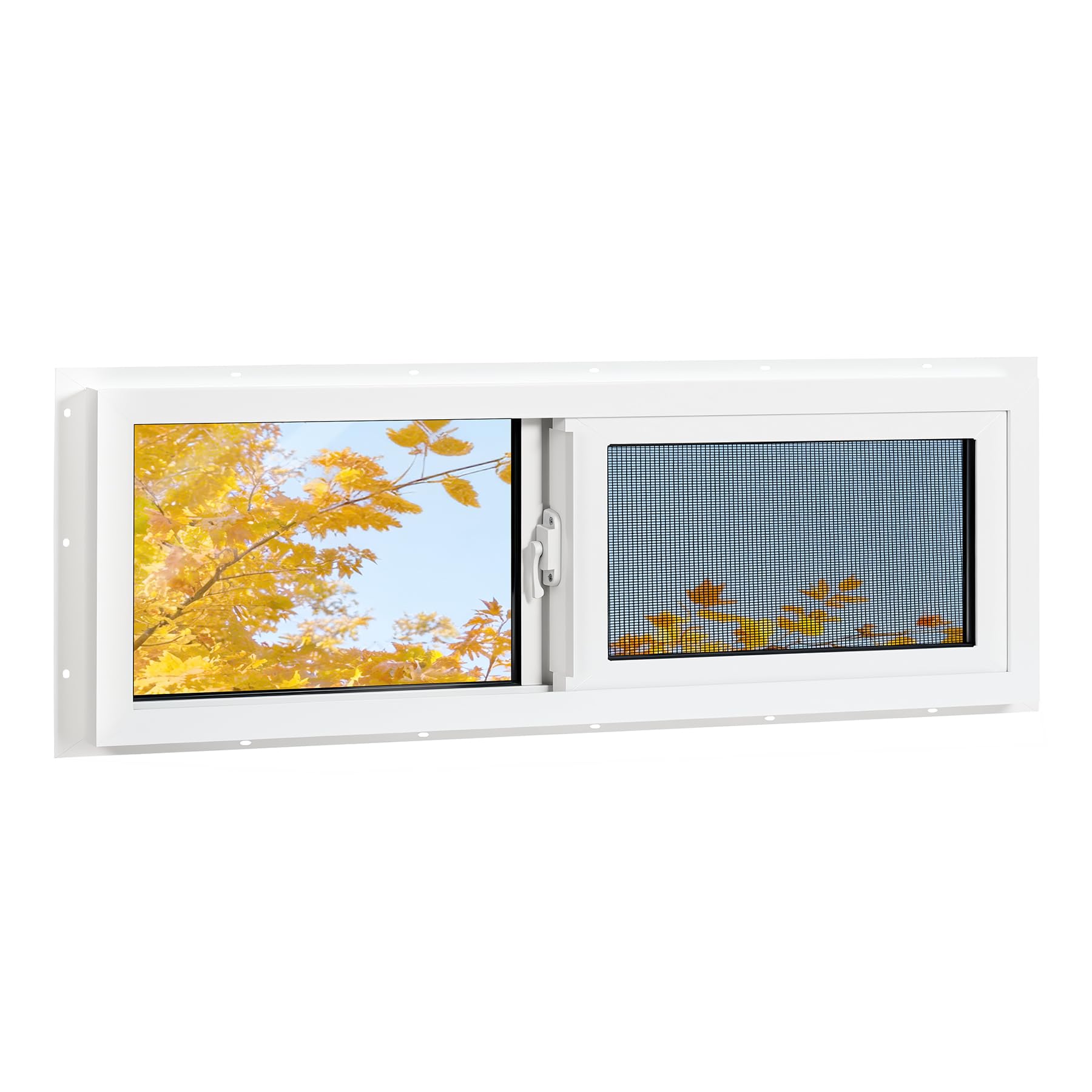
1. Vinyl Basement Window, Bathroom Sliding Window 30″ x 12″ White
Our pick — over 4.5★ from 80+ verified ratings; the strongest balance of quality and price.
The 30 x 12-inch slider built for narrow, low openings that standard 32-inch inserts are too wide for.
If your old basement window sits in a narrow horizontal gap — the classic AC sleeve, a strip of block just above grade — this is the pick that actually fits. It is a 30 x 12 inch sliding insert with double-pane tempered glass, so you get the trapped air gap for heat and the heat-treated glass for safety. The build is where it wins people over: this is the highest-scoring window in this list at 4.8 stars, and the reviews describe it as steady and solid rather than flimsy.
At 14.82 pounds it is the lightest of the 32-inch-class group here — noticeably lighter to lift into place than the 17.96-pound Vinyl Hopper Basement Window, a gap of about 3.1 pounds that matters when you are holding it one-handed on a ladder. The frame is vinyl with PVC-coated steel tracks, which shrugs off humidity in a bathroom-style space and wipes clean without special care. The screen lifts out for washing, too.
What buyers report about the sliding track is worth taking seriously. Water can pool between the two sashes at the join — one owner noted the gap “between windows where it slides” needs weatherproofing, and another said the sliding pane “rattles like crazy” and wants weather stripping. Neither is a defect; it is a strip of foam and about five minutes of work. Just budget for it.
Why It Tops The List
- 30 x 12 inch size fits tight, low openings competitors skip
- Double-pane tempered glass for heat and impact
- Vinyl frame with PVC-coated steel tracks resists corrosion
- Removable screen and galvanized latch for airflow and security
What To Know Before You Buy
- Sliding seam can let a little water pool — add weather stripping
- Sliding sash can develop play over time; tighten as needed
- Only made in the 30 x 12 inch size, so measure first
Best pick if your opening is a narrow, low gap that wider inserts cannot reach.
Skip if your frame is a standard 32-inch width, where the 32 x 14-inch models below will seat easier.
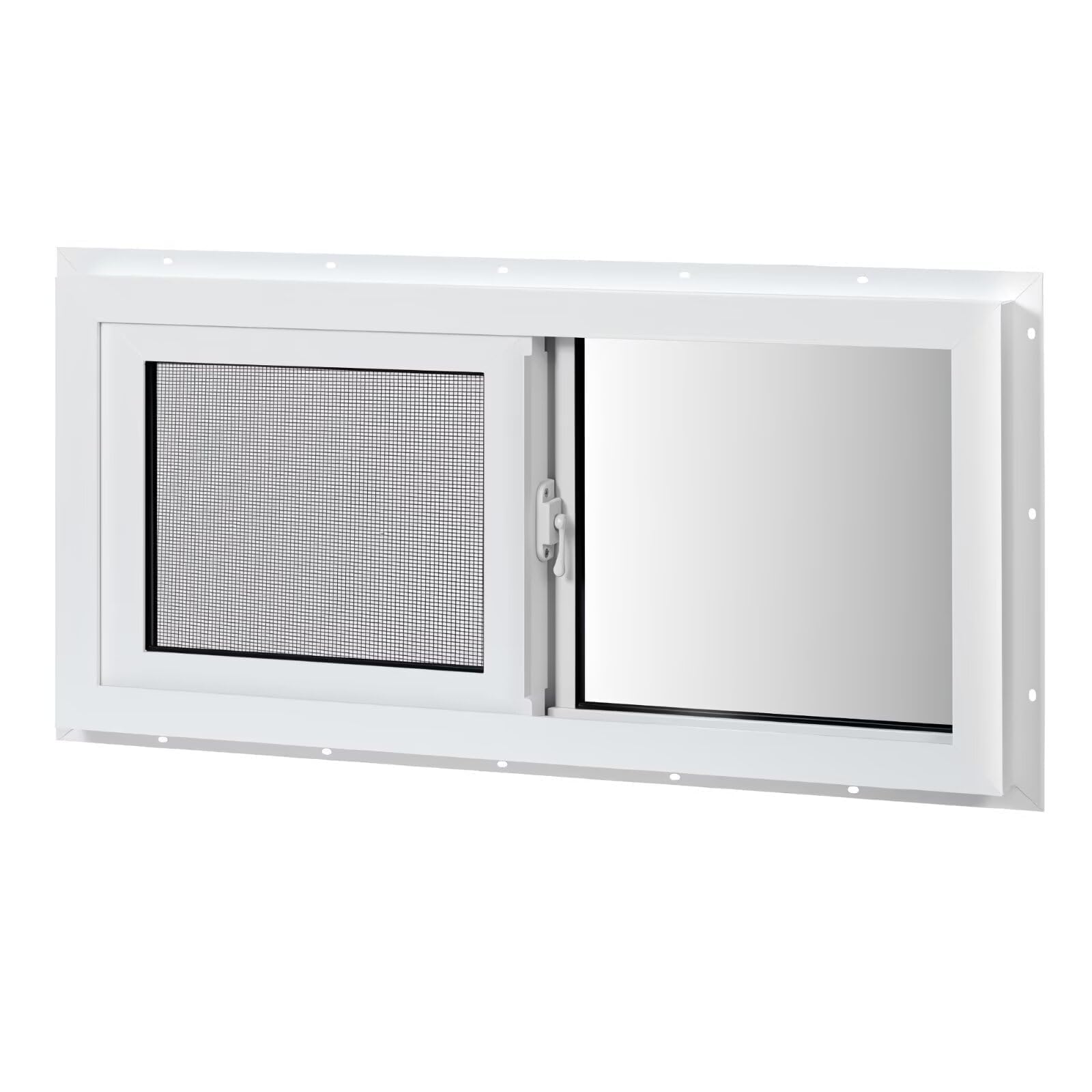
2. Vinyl Basement Sliding Window, 32″ x 14″ White
The 32 x 14-inch slider that covers the basics — light, airflow, and a vinyl frame — at the lowest price here.
This is the window you grab if you want a wide, low sliding insert that vents well and simply works. It is 32 x 14 inches with a vinyl frame that will not warp, peel, or corrode, and double-pane glass with two sliding rails so you can move the sash to the middle or either side. At 17 pounds it is the heaviest of the 32 x 14-inch options here — a real point of comparison with the 17.96-pound hopper, since both come in close.
Where it earns its keep is versatility. The maker lists it for underground parking areas, storage rooms, semi-basements, chicken coops, barns, greenhouses, and sheds — which tells you the construction is made to sit near damp ground without rotting. Owners who have run it long-term back that up: one reported installing two in a new shed three years ago and adding a third for extra lighting the following year, still happy enough to buy again.
One honest wrinkle: durability reviews split. Most find it solid, but a few reported latches that broke or a missing top strip that left an opening from outside. It is a small slice of the total picture, and the maker’s tracking speaks well of the batch, but inspect the latch and the top rail the moment the box arrives.
Solid, simple value: the vinyl and double-pane build does the job owners ask of it, and the light weight makes solo install realistic.
The one thing to check: shake-test the latch and top strip on arrival — it is the recurring note in the reviews.
Grab this one if you want broad-light ventilation at a low price and you have a standard 32 x 14 opening.
Look past it if a tamper-resistant latch is non-negotiable in your space.
3. Vinyl Hopper Basement Window 32″ x 14″ White
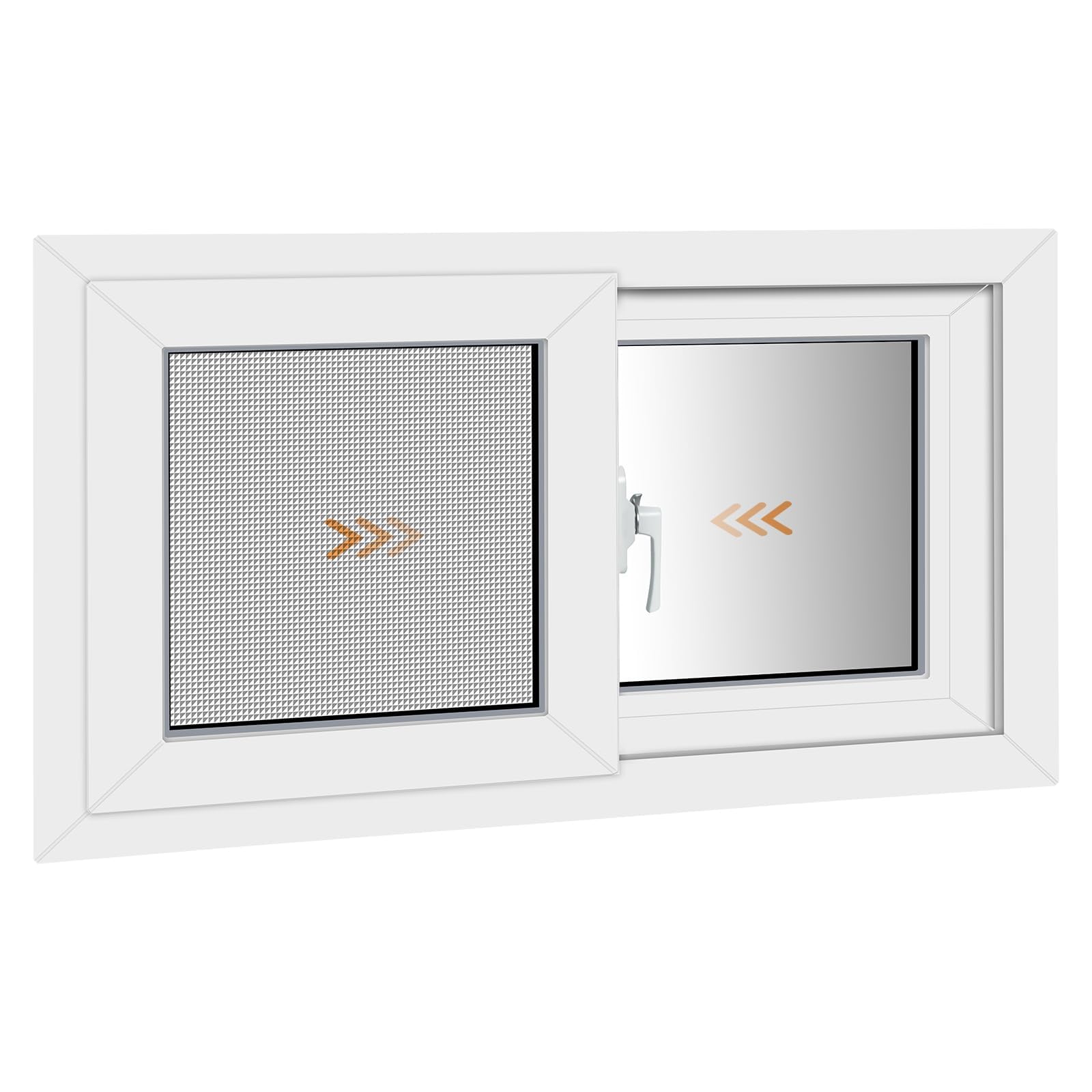
The 32 x 18-inch slider with a removable flange — strip it for a concrete or block opening, keep it for wood framing.
The flange is the mounting strip that runs around the outside edge of a window; a removable one means you can pull it off and screw straight through the frame into a block or cinder wall, or keep it on for a fresh wood frame. That flexibility is why this 32 x 18-inch slider works across so many older basement openings. It is built with double tempered glass for extra strength and comes with a full sizing guide to reduce measurement mistakes before you buy.
Owners describe it as well-built with smooth opening and closing, and packed well enough to arrive undamaged. It lets in plenty of light and air through the wide 32 x 18-inch opening. One installer noted the flanges overlapped at the edges and were a bit hard to keep in place during the dry-fit — a fair heads-up that this job goes easier with a second set of hands holding the window while you drive the screws.
The other repeated note is the latch. A couple of owners called the locking method “funky” or awkward, though the window still sealed and held up to a child trying to slide it open. Not a defect, just a mechanism you will want to test on the bench before you mount it.
What Works
- Removable flange fits framed or concrete openings
- Double tempered glass for strength and durability
- Clear rough-opening sizing guide reduces errors
- Wide 32 x 18 inch span for maximum light
Where It Falters
- Overlapping flanges can be fiddly to hold straight during install
- The latch mechanism splits opinions on feel
- Heavier to handle solo at 18 pounds
Worth the pick if your opening is concrete or an old block frame you cannot easily modify.
Skip it if you only need a straightforward wood-frame drop-in — the simpler models below will do.
4. Kathfly 2 Pack Basement Home Window 32” x 18” Mini Replacement
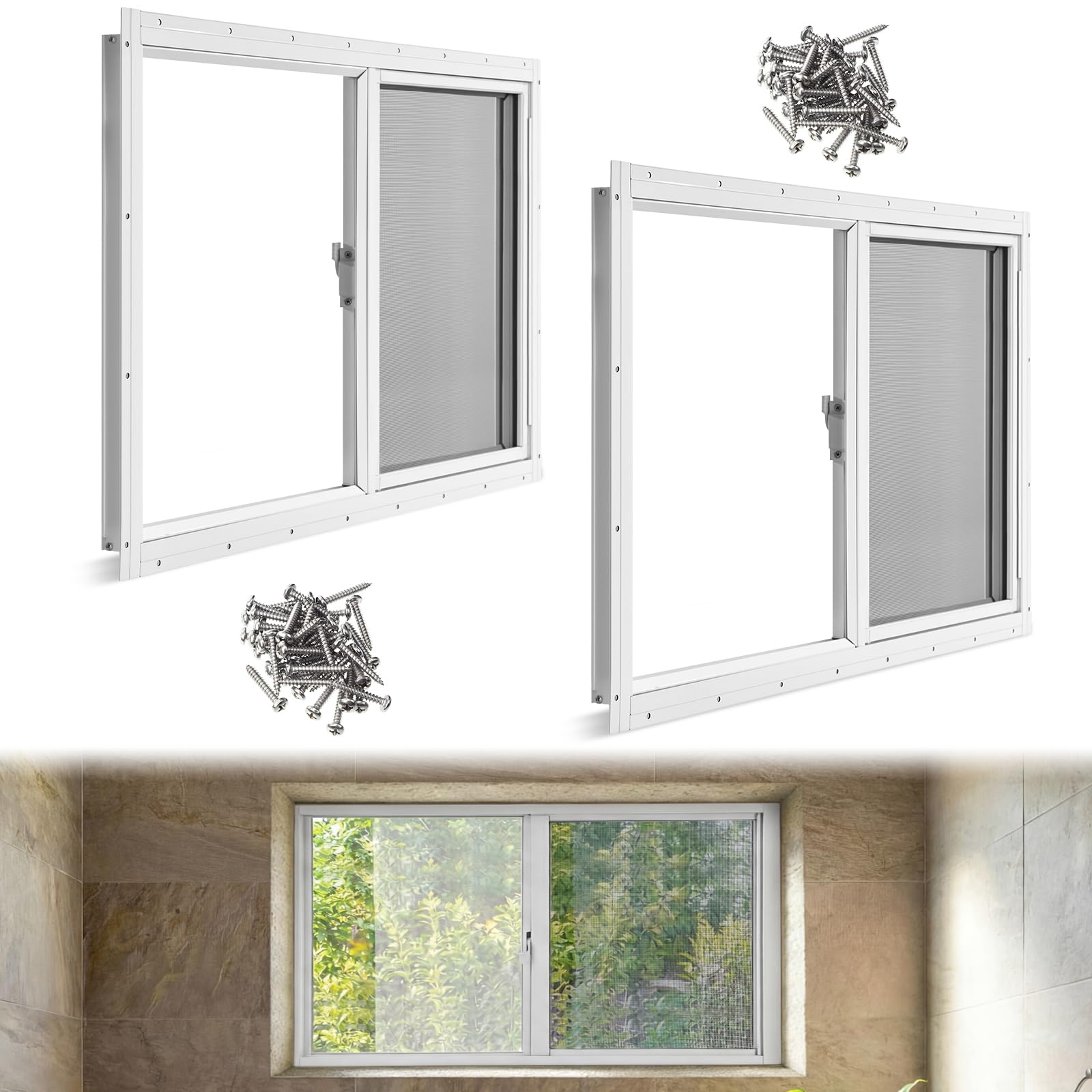
Two recessed 32 x 18-inch aluminum-frame inserts in one box, so both basement openings ship in a single order.
If you have two windows to replace, this pair of 32 x 18-inch recessed units gets both done at once. They are built with tempered glass in a rust-resistant aluminum frame, which owner feedback describes as sturdy but genuinely light to handle. Each one slides on a two-hand latch system — press the upper and lower latches together to move it — and the removable screen keeps small animals out while air circulates.
The recessed design is the key detail. Because the unit sits back into the opening, your installed size needs to be slightly smaller than the labeled 32 x 18, so check the size chart before you commit. Owners mention the fit worked on a mobile home with just the right amount of adjustment, and one noted no leaks and no issues at all after install. Screws are included, so a basic-tools DIY job covers it.
The honest edge case is packing. A single buyer found both units bent or damaged when the box was partially opened, which points at shipping rather than the product itself. Since two units share one box, inspect both before you install either.
Why Buy The Pair
- Two windows for two openings in one order
- Rust-resistant aluminum frame with tempered glass
- Removable screens and included screws
- Versatile across sheds, coops, barns, and basements
Handle With Care
- Recessed design needs a smaller-than-labeled installed size
- Two-hand latch takes a little practice to operate
- Shipping damage has been reported on the pair — open the box first
Pick the pair if you are replacing two standard 32 x 18 openings and want one order to finish the job.
Choose a single instead if you have only one window or want to test the fit before committing to two.
5. Aristoclass Hopper White 32″ x 19″
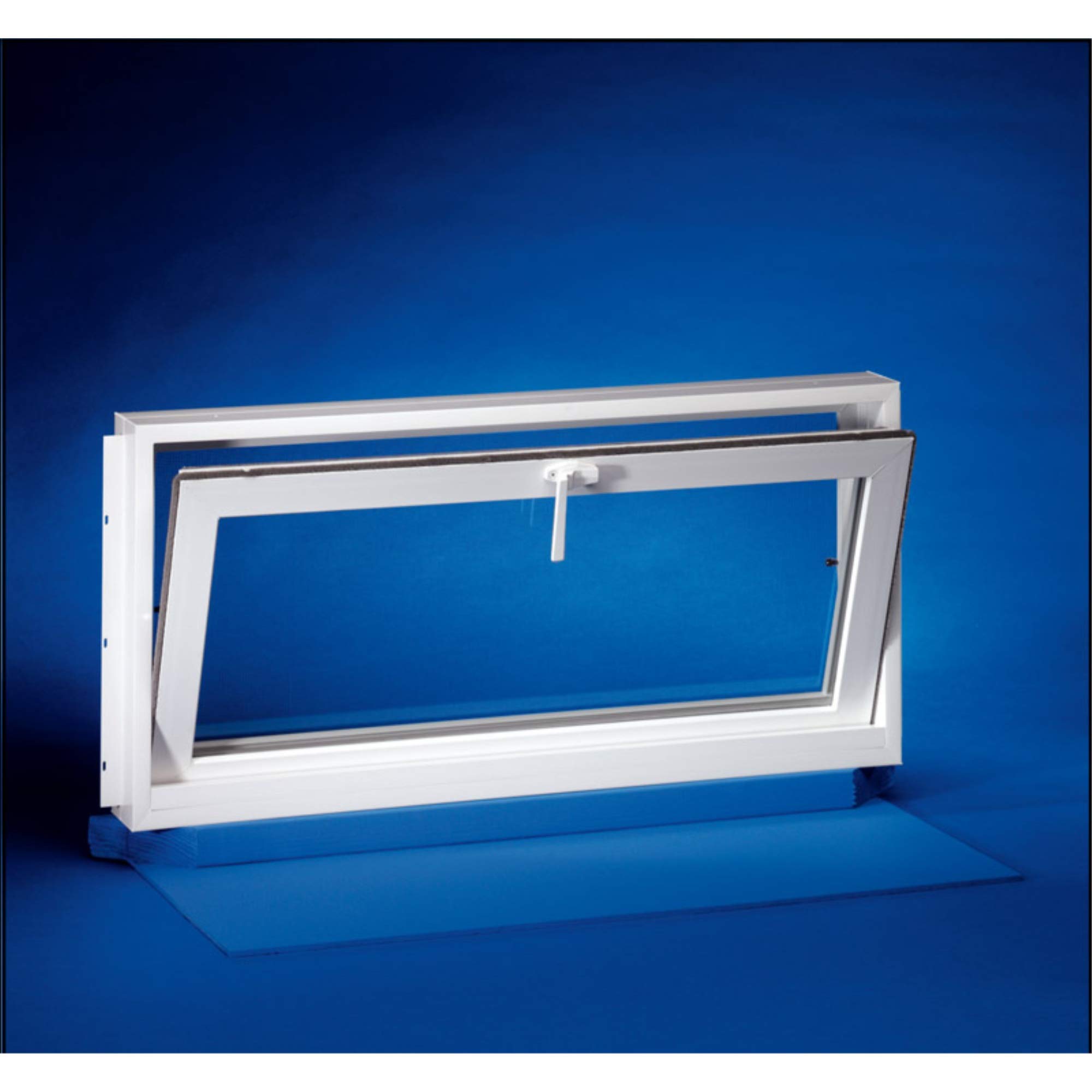
A 32 x 19-inch fusion-welded vinyl hopper with a true-sloped sill and a fully weather-stripped frame.
This is the detail-heavy pick. The frame and sash are fusion-welded vinyl — corners joined by heat rather than glue or screws, so they do not separate the way mechanically joined frames can over time. The sill is true-sloped, which sheds water off the frame instead of letting it sit. And the whole unit is fully weather-stripped from the start, which is the piece most budget windows expect you to add.
The pivoting friction hinge lets the sash open and hold at whatever angle you set, and the cam-locking handle keeps it shut and secure. No-tool sash removal makes cleaning a matter of popping the pane out. The glass is a 3/4-inch insulated unit — the thicker cavity slows heat transfer better than a thin dual pane. Mounting strips are pre-drilled and the sash block fins strip off for replacement work.
At 16.9 pounds it is the lighter end of the taller windows here, and the reviews confirm the real-world fit. One reported installing it inverted so it opens from the bottom for easier access, e.g., firewood, with no drafts and a firm close. The single recurring gripe is packaging — one unit arrived with a broken latch post because of it. If a bent frame is a risk in transit, order early and inspect on delivery.
The purist’s choice: welded corners, sloped sill, full weather-strip, and a thick insulated glass unit tell you this is built to close tightly in a cold wall.
One delivery caveat: the plastic latch post has arrived cracked in transit for at least a few buyers — inspect the latch the moment the box lands.
Worth the premium if you want the tightest-sealing, most weather-stripped hopper for a cold or drafty basement wall.
Look at a simpler unit if you need a wide horizontal opening — this one is a taller 32 x 19 hopper, not a slider.
Understanding the Specs
Sliding vs Hopper
A slider moves side to side along tracks and suits a wide, low opening where you want a broad band of light and airflow. A hopper hinges at the bottom and opens inward from the top, so it sheds rain off the frame and tucks out of the way when open. Sliders are easier to reach across; hoppers seal tighter against wind-driven rain in a below-grade wall.
Glass & Frame
Double-pane means two sheets of glass with a sealed air gap between them, which slows heat loss compared to a single pane. Tempered glass is heat-treated so it breaks into rounded pieces rather than sharp shards — a real safety point in a low window near stairs or a walkway. A vinyl frame will not warp, peel, or corrode in a damp basement, and it never needs painting.
FAQ
How do I measure my rough opening for a basement window insert?
Will a new construction window work as a replacement insert?
Do I need to weather strip a sliding basement window?
What is the difference between double pane and tempered glass?
Can I install a hopper window inverted so it opens from the bottom?
How long will a vinyl basement window frame last?
Is a two-pack worth it over buying single windows?
Why does my basement window leak between the sliding panes?
Do these inserts come with the screen and hardware included?
Can I use a basement window insert in a shed, coop, or garage instead?
Final Thoughts: The Verdict
For most basements, the basement window replacement inserts winner is the Vinyl Basement Window 30 x 12 because it fits the tight, low openings most inserts cannot reach, holds the highest score of this group, and its double-pane tempered glass does the work in a damp below-grade space. If you need broad-light ventilation at a budget-friendly price and have a 32 x 14 opening, grab the Vinyl Basement Sliding Window 32 x 14. And if your priority is a double-pane hopper that seals tight and sheds rain, the Vinyl Hopper Basement Window is the one to reach for. Measure your rough opening first, then match the style to how you use the room — that single step decides whether the install takes ten minutes or an afternoon.
How We Picked
We do not accept paid placement. Every pick is matched to a real buyer and a real use-case; we do not hands-on test units.
Sources & Methodology
Specifications: manufacturer listings and product documentation. Review insights: verified customer reviews, as of September 2026. Pricing: not shown on this page (it changes often); check the current price via the retailer link.
As an Amazon Associate, KitchPrep earns from qualifying purchases. This does not affect which products we feature.
Related Guides
