
Specs are compiled from manufacturer listings and verified buyer reviews and can change over time — please confirm the key details on the product page before buying.
You do not want two separate discs on your ceiling when one device can watch for both smoke and carbon monoxide. A 2-in-1 unit saves you ceiling clutter, saves a mounting job, and means one test button instead of two. The hard part is picking the right one, because these devices all look like white hockey pucks and the differences hide in the sensor type, the power source, and how the alarm behaves when you burn toast.
I’m Mohammad Maruf — the founder and writer behind KitchPrep. This guide is built by comparing the manufacturers’ published specifications and the patterns across verified customer reviews, so you get each pick’s real strengths and trade-offs instead of marketing spin.
You want one device that watches for both fire and carbon monoxide (CO, an invisible gas that can make you sick or worse) without doubling up on ceiling clutter. The nine combos below split by how they get power, what they sense, and who they actually suit — from a replacement that drops straight onto your old bracket to a sealed-battery unit you can leave alone for a decade. Every pick here detects both threats in a single housing, so you are never choosing between fire and gas coverage with any of them. That is the short version of what makes a dependable 2-in-1 smoke and carbon monoxide detector.
Our Picks at a Glance

How To Choose The Best 2-In-1 Smoke and Carbon Monoxide Detector
Almost every combo alarm on a shelf will detect both threats. What separates a unit you forget about for a decade from one that chirps at 3 a.m. and lies to you is three things: how it gets power, what kind of smoke sensor sits inside, and whether it talks to the rest of your house. Get those three right and you are done shopping.
Power source: battery, hardwired, or both
Battery-only combos go up in minutes with no wiring at all, which suits rentals, older homes with sparse wiring, and any room you cannot easily run a cable to. Hardwired units pull 120-volt AC power from your ceiling and keep a battery backup for outages, so they never go dark during a storm. If you already have wires poking out of your ceiling, a hardwired combo with a backup battery is the natural replacement. If your ceiling is bare, a sealed battery unit saves you the electrician.
Smoke sensing: photoelectric versus ionization
A photoelectric smoke sensor watches for particles that scatter light, which makes it quicker at catching the smoldering, smoky fires that start in upholstery and wiring. An ionization sensor reacts to fast, flaming fires and is more prone to tripping on cooking fumes. Look for a unit that names its smoke technology, because a combo that fights you every time you sear a steak is one you will eventually disable — and a disabled alarm protects nobody. Several picks below explicitly publish nuisance-reduction technology for exactly this reason.
Battery life and the end-of-life signal
A sealed 10-year battery means you never buy a 9-volt again, and the alarm simply tells you when the whole unit has reached the end of its service life. That matters, because most people do not swap detectors on schedule. Pair it with an end-of-life signal and you get a clear, deliberate nudge instead of a low-battery chirp you keep silencing. Two of the picks here carry a 10-year sealed battery, and the comparison table shows exactly which ones.
Interconnect and CO readout
Interconnect wiring links your alarms so one detection sets off every unit in the house — worth having if bedrooms sit far from the kitchen or basement. A digital CO readout is a different kind of upgrade: instead of a mystery chirp, you see a live number for carbon monoxide in the air, which tells you whether to ventilate or evacuate. Each of these features appears on a specific pick below, so match them to your layout rather than chasing the longest feature list.
Quick Comparison
| Model | Best For | Power Source | Sensor Type | Warranty | Amazon |
|---|---|---|---|---|---|
| BRK SC9120B Smoke and Carbon Monoxide Alarm★ Best Overall | Dropping onto existing BRK or First Alert wiring | Battery-powered (9V alkaline) | Ionization smoke + CO sensor | 7-year limited | Amazon |
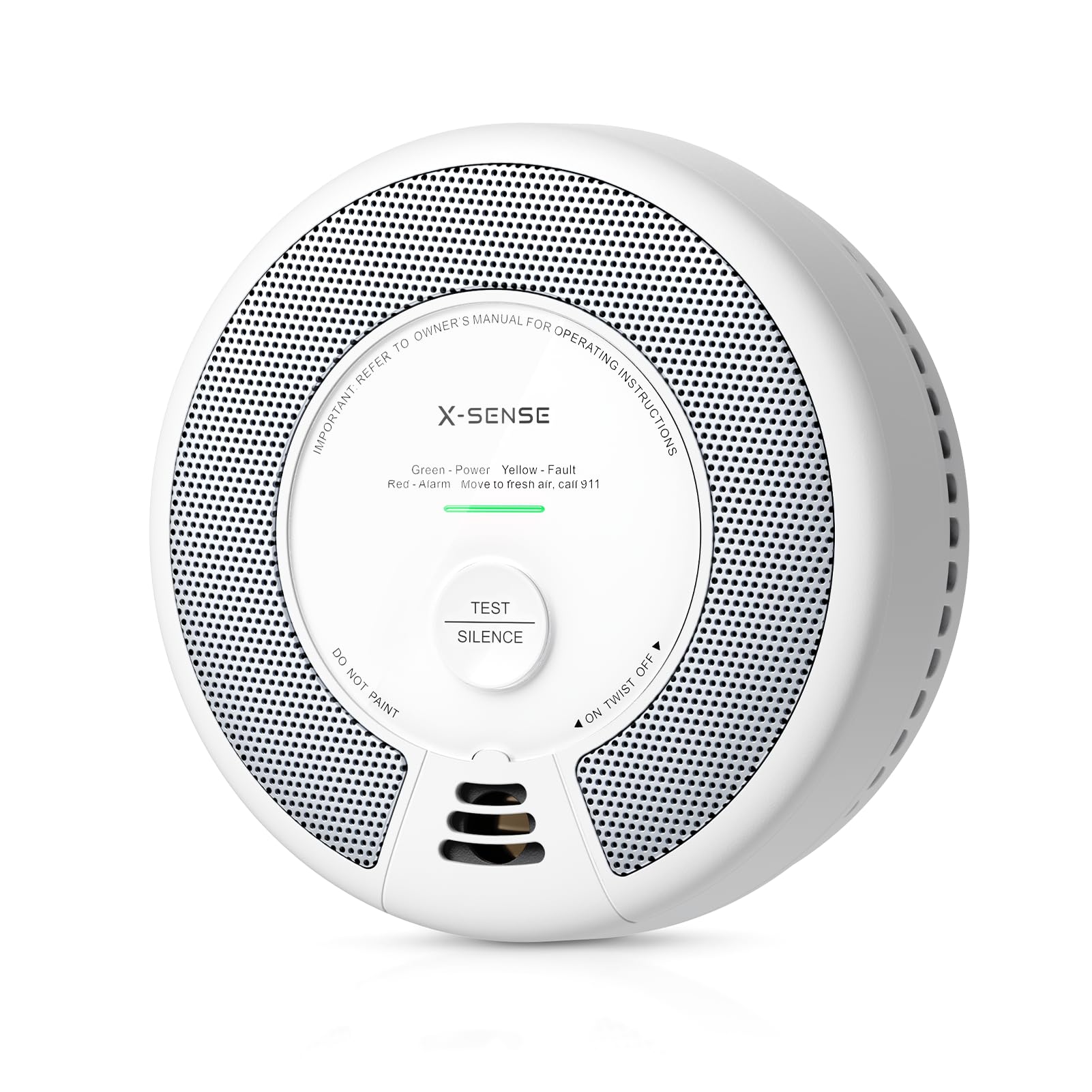
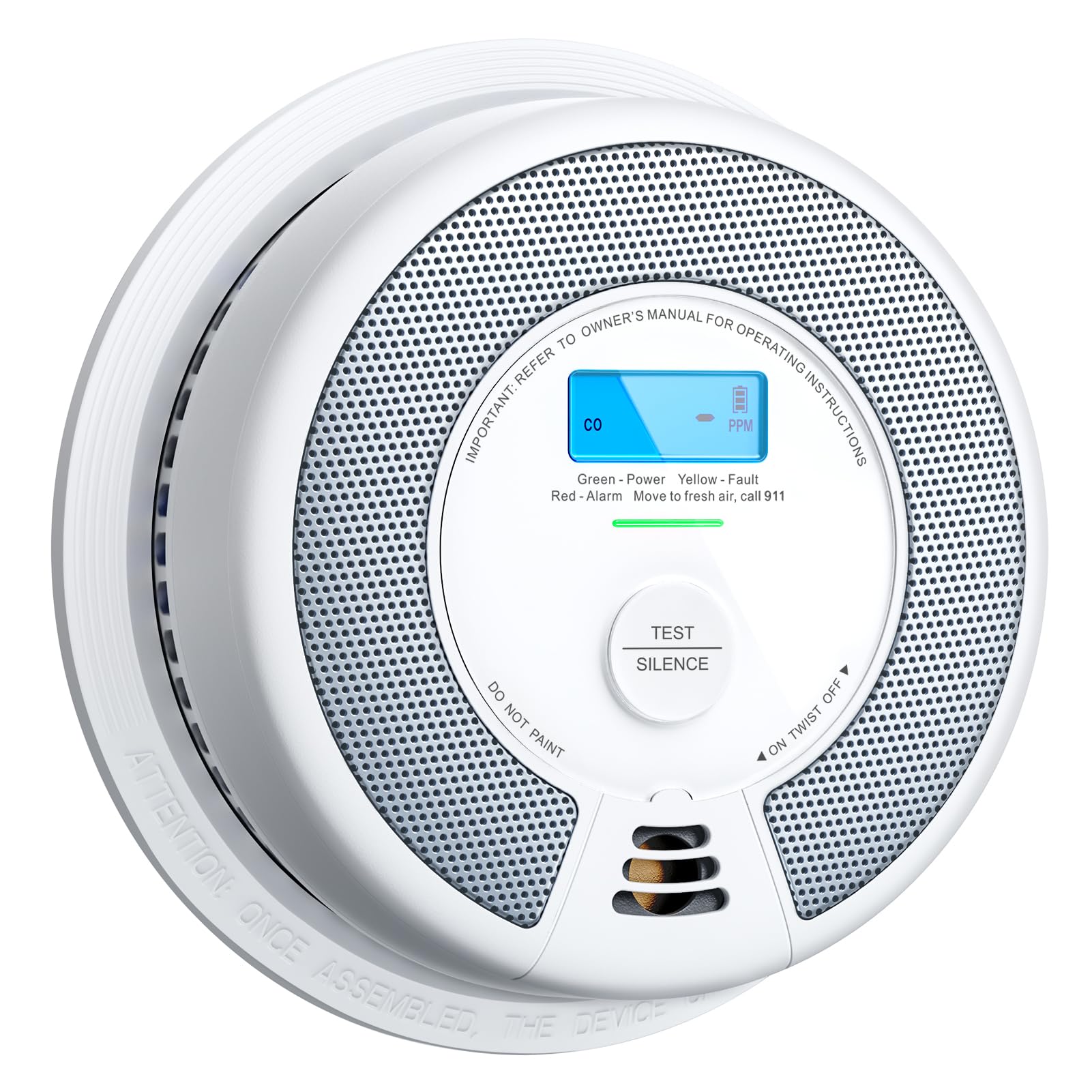
| X-Sense Smoke & Carbon Monoxide Alarm, SC06, 1-PackBest Display | No-wiring install with a live CO readout | 10-Year Sealed Battery | Photoelectric + Electrochemical | 5-year quality | Amazon |
| X-Sense Smoke Detector Carbon Monoxide Alarm Combo, XP0H-SN, 1-PackMost Versatile | Wall-mount installs with a clean finish | 10-Year Sealed Battery | Photoelectric + Electrochemical | 5-year quality | Amazon |
| First Alert Battery Combination Smoke & Carbon Monoxide Alarm | Slim profile on a visible ceiling | Battery Powered (AA) | Precision Detection dual sensor | — | Amazon |
| Kidde Smoke & Carbon Monoxide Detector, AA Battery-Powered, 30CUDR, 1 Pack | Fast smoke tripping with fewer cooking alarms | 2 AA batteries | Advanced sensing (smoke + CO) | 10-year limited | Amazon |
| 1047012 10-Year Battery Combination Smoke & Carbon Monoxide Alarm | Homes with no wiring at all | Battery Powered (built-in 10-year) | Photoelectric + Electrochemical | — | Amazon |
| Kidde Smoke & CO Detector, Hardwired & AA Battery Backup, 30CUAR, 1 Pack | Whole-home interconnect on AC power | 120V AC + 2 AA backup | Advanced sensing (smoke + CO) | 10-year limited | Amazon |
| FIRST ALERT SC9120B Corded Electric Combination Alarm with Adapter Plugs | Rewire-free swap of old hardwired alarms | Hardwired + 10-year lithium backup | Electrochemical CO + intelligent smoke sensing | 10-year limited | Amazon |
In‑Depth Reviews
1. BRK SC9120B Smoke and Carbon Monoxide Alarm
Our pick — over 4.5★ from 500+ verified ratings; the strongest balance of quality and price.
The one you buy when the ceiling already has wires and you want the job done in one afternoon.
Replacing a tired combo alarm should take minutes, not an evening with a screwdriver and a flashlight. This BRK model is built for exactly that job: it is interconnectable with BRK and First Alert hardwired smoke and carbon monoxide alarms, so it can join the network you already have rather than starting a new one. It runs on a single 9-volt alkaline battery that comes in the box, and it carries a 7-year limited warranty. That gives you a shorter coverage window than the sealed 10-year units further down this list, so plan on a replacement reminder earlier than you would with those.
Buyers who owned an older BRK or First Alert unit describe a swap that just works — the same harness clicks in, the old bracket lines up, and the test button does its job on the first press. One owner put it plainly: “We needed these to replace two that were in our new house 10 yrs ago.” That is the whole value proposition in one sentence: it is the path of least resistance when your ceiling hardware was already made by the same family of brands. Life safety aside, it is genuinely a ten-minute job for one person.
Where you should slow down is the noise. The smoke and CO latching indicators are separate, which is genuinely useful — you can tell at a glance which threat tripped the unit. But the alarm itself divides people. Some describe it as very loud, the way you want a detector to be when you are asleep two rooms away. The recurring gripe is on the other end of the dial: the chiming irritates some owners in a way they wish it would not. It is not a fault, it is a tonal preference, and the mixed noise comments are worth knowing before you commit. If you are sensitive to high, repeating tones, audition this one in person if you can.
What earns its keep
- Interconnectable with BRK and First Alert hardwired alarms, so it joins an existing network instead of replacing it
- Separate latching indicators for smoke and CO — you can see which threat triggered the alarm at a glance
- The 9-volt alkaline battery is included, so the unit is ready to mount the day it arrives
- A single silence/test button keeps the routine simple for anyone in the house
- Universal mount bracket means less drilling and fewer new holes in your ceiling
Where it gives ground
- 7-year limited warranty and a replaceable 9-volt battery mean you are back on the ceiling sooner than with the sealed 10-year picks
- Alarm tone divides owners — loud to some, irritating to others
- Ionization sensing is more prone to nuisance tripping around cooking than the photoelectric units on this list
Reach for this if: you already have BRK or First Alert hardwired hardware and want a drop-in replacement with interconnect from the start.
Look elsewhere if: you want a sealed battery that lasts the full life of the alarm — the X-Sense and Kidde sealed units below cover that ground.
2. X-Sense Smoke & Carbon Monoxide Alarm, SC06, 1-Pack
A live carbon monoxide number on the face turns a mystery chirp into an actual reading you can act on.
The large LCD display shows real-time carbon monoxide levels in the surrounding air alongside its battery level and working status. Instead of a blank alarm screaming at you and no information, you get a number. You can decide whether to open windows or get everyone outside. The display also quietly reinforces a good habit, because a glance upward tells you the detector is alive and powered.
Inside, the SC06 pairs a photoelectric smoke sensor with an electrochemical CO sensor — the light-scattering type that tends to be calmer around cooking, plus the cell that reads the gas. It meets UL 217 and UL 2034 safety standards and is ETL Listed, so the compliance boxes are ticked. Installation needs no rewiring; it mounts to any wall or ceiling with the included bracket, three screws, and anchor plugs. The power source is a 10-year sealed battery in a heat-resistant PC housing. That said, quality is the thing buyers talk about most, and the finished feel of the housing backs it up. The setup is genuinely a screwdriver-and-five-minutes job.
Here is the honest trade-off, and it is worth reading carefully: reliability is the one topic where the feedback splits. Most owners describe a device that does exactly what it should, but a minority report a unit that failed within six months. That is a real pattern in the data, and it is not unique to this brand — every manufacturer has the occasional early death, and support channels exist for it. The fair read is that this is a well-made, well-priced combo with a small tail of bad units, and the five-year quality warranty plus 60-day money-back guarantee mean the risk sits with the seller, not you.
Why the readout matters: a number on the face of your detector is the difference between guessing and knowing when the air turns bad.
The catch to weigh: sealed battery means no swapping, but the whole unit is the replacement at end of life — plan for the discard, not the battery aisle.
This is for you if: you want a detector that tells you what it is sensing and skips the annual battery ritual entirely.
Take a pass if: you want the ability to pop in fresh batteries and keep going — a battery-operated unit serves that better.
3. X-Sense Smoke Detector Carbon Monoxide Alarm Combo, XP0H-SN, 1-Pack
Plenty of alarms will hang on a wall — this one leaves the wall looking like you planned it that way.
If a detector disappears into your ceiling, you never think about it, and that is exactly what the XP0H-SN is designed for. Its 5.7-inch mounting bracket is sized to cover the footprint of whatever you are replacing, so you are not left with a fresh ring of screw holes around a smaller new unit. It runs on a 10-year sealed battery and carries UL 217 and UL 2034 certification. The package includes the alarm, a user manual, and three screws with anchor plugs. For anyone replacing a similarly-sized detector, that means you reuse your existing drill pattern and call it done.
Functionality and installation are the two things that carry this model, and they are not unrelated — the install is simple because the bracket is generous and the hardware is in the box. Buyers describe activating it, watching for the green blink that confirms it is working, and then leaving it alone. The test button works as expected, and real smoke trips the alarm. It is louder than most of what people are pulling down from their ceilings, and while it takes a moment or two longer to trip on real smoke than you might expect, it gets there. One consistent observation from the field: after you silence the alarm it takes five to seven minutes before it returns to its normal green state. That is the design, not a fault, but it is worth knowing so you do not assume the unit is stuck.
The one part buyers push back on is the mounting system. The bracket that makes it clean to install is also the piece some owners find fussy to seat correctly the first time. It is not a defect, it is a fit issue, and if ceiling access is awkward — vaulted ceilings, tight corners, high rooms — the extra screws are a fiddly five minutes rather than a quick hang. Everywhere else this is a solid, well-built unit that several owners describe as heavier and more substantial than the brand it replaced, which is a nice signal for a device meant to sit still for a decade.
Where it shines: the oversized bracket is a genuinely thoughtful touch for anyone who wants a clean install without patching paint.
One thing to know: that same five-to-seven-minute reset from silence is deliberate, so do not panic if it stays quiet a bit longer than you expected.
Choose this if: you want a sealed-battery combo with a wall-mount footprint that hides the evidence of replacement.
Consider a different pick if: you actually want a live CO number on screen — step up to the SC06 above, which shows readings instead.
4. First Alert Battery Combination Smoke & Carbon Monoxide Alarm

Half the depth of a standard alarm, which matters the moment you look up at a low ceiling.
This First Alert combo is half the depth of a standard alarm, so it sits flush against a low or vaulted ceiling and stops looking like a wart on the plaster. Inside, it uses First Alert’s Precision Detection advanced sensing, which the manufacturer says complies with new industry standards to reduce cooking nuisance alarms — meaning burnt toast is less likely to set off a false alarm. It runs on AA batteries (the smaller, easier-to-swap cell) and adds an end-of-life warning that tells you when it is time to replace the whole alarm. It is a battery-operated unit, so installation is a screwdriver and a few minutes.
Buyers describe clipping it to a base plate, seating the batteries, pressing the test button, and moving on — the same story every time. The slim housing also makes it a natural fit for rooms where a chunky detector would crowd the ceiling line. Beyond the profile, the dual smoke and CO detection in one housing saves you a mounting position and one more disc to dust — a small but real win in a hallway or stairwell where ceiling space is tight.
The honest caveat is the dual-alarm behavior. Some buyers report false alarms on this unit, and that is the single mixed point worth knowing before you buy. The flip side is that the same sensing technology that occasionally trips on nothing is what catches real smoke early. If you cook a lot in an open kitchen adjacent to where you install it, this is worth weighing against a photoelectric-forward pick. For most rooms in most homes, this unit behaves; it is in the noisy-cooking zone that the quirks show up. And to be clear on the anti-nuisance claim: that is the manufacturer’s language, not ours, so treat it as a feature being offered rather than a guarantee.
The case for it
- The slim profile hides neatly on low or angled ceilings where a full-depth detector stands out
- Battery-operated with AA power means no wiring and no electrician visit
- End-of-life warning tells you plainly when the unit itself needs replacing, rather than leaving you guessing
- Dual smoke and CO protection frees up a mounting position you would otherwise spend on a second detector
The flip side
- False alarms are the recurring complaint — the dual-alarm behavior is the one to manage around heavy cooking
- Battery-operated means a replaceable power source, so a routine check every few months is on you
Buy this if: the look and depth of your detector on the ceiling actually bothers you, and you want AA familiarity over a sealed cell.
Look past it if: your alarm will sit near a hot stove — you will hear from it more often than you want.
5. Kidde Smoke & Carbon Monoxide Detector, AA Battery-Powered, 30CUDR, 1 Pack
The one to pick when you want smoke caught quickly without a nuisance alarm every time you cook.
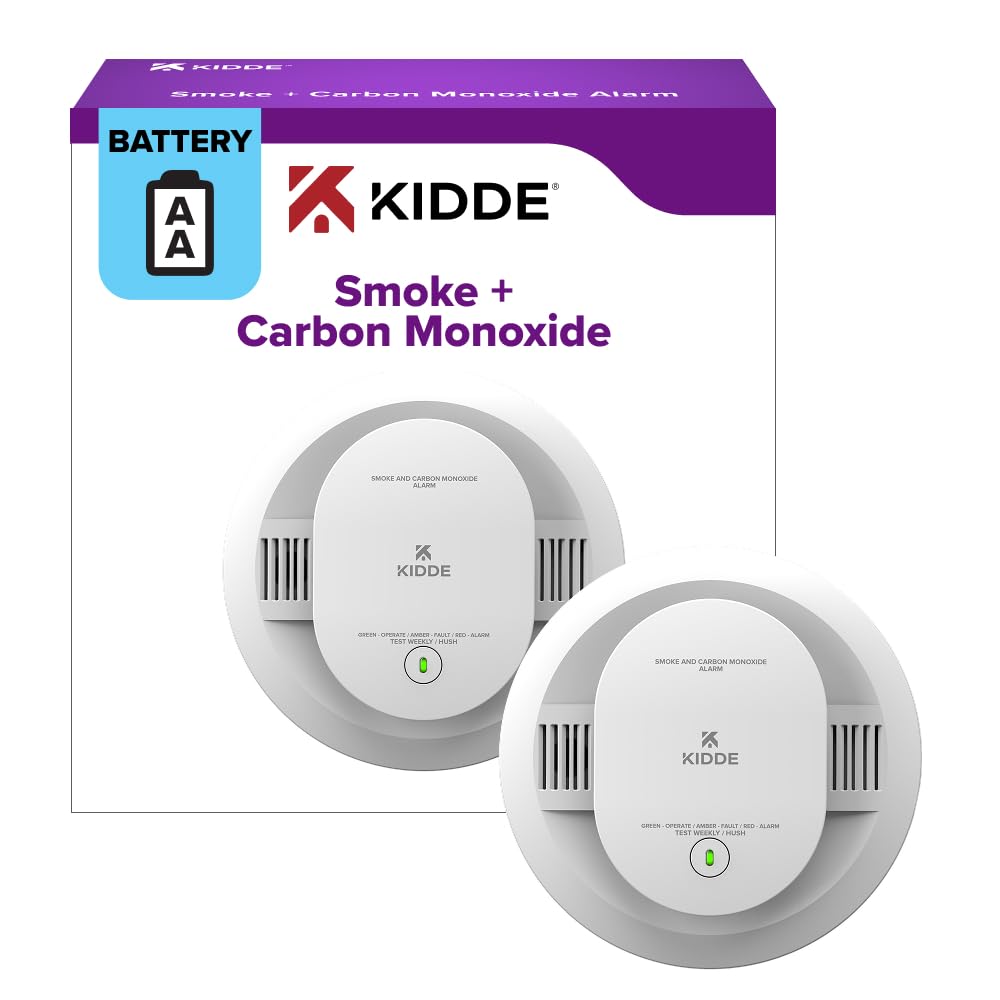
Kidde rates its sensing at over 25% faster smoke detection, paired with an 85-decibel alarm and a red LED for visual warning. This is the pick for anyone who wants the smoke side to be aggressive without being twitchy. The unit rounds out with a 10-year limited warranty, which is generous for a battery-operated alarm — and it runs on two AA batteries that come in the box, so there is no wiring involved. It carries the newer UL 217 10th Edition and UL 2034 5th Edition testing, plus FCC compliance, which puts it on the current standards rather than the aging ones.
Owners describe this model as accurate: LED status lights (small indicator lights) that tell you what is going on at a glance, a lightweight but solid housing, and mounting hardware that seats securely without flexing. Several buyers upgrade from an older no-battery model and are happy to be back in the world of replaceable power. The sensing technology is meant to distinguish real smoke from cooking steam, and owners mention it does that well enough that the alarm stops being the enemy in the kitchen.
The fair caveat is the amber fault light. A subset of owners have seen the amber indicator pop within a few months of install, and in at least some cases the culprit has been mundane: dust from a home project, or a battery that arrived weak. Compressed air into the sensor clears the dust, and the messages are typically not a directive to abandon the device — they are a prompt to check. If your detector sits where drywall dust or dust from woodworking regularly drifts, that is a maintenance call rather than a defect, and worth knowing before you install it in a workshop or a room under renovation.
The spec that matters: faster smoke detection paired with a 10-year warranty is a strong combination in an easy-to-install battery unit.
The reality check: the amber fault light will trip on dust before it trips on real failure, so keep the sensor path clean in messy environments.
Worth it for: anyone who wants a battery-powered Kidde with current UL standards and a decade-long warranty behind it.
Skip anyone who needs: hardwired interconnect or a sealed 10-year battery — those are two different product lines, and both are covered elsewhere on this list.
6. 1047012 10-Year Battery Combination Smoke & Carbon Monoxide Alarm
Made for the old house with no detector wiring — a decade of coverage without touching your ceilings twice.
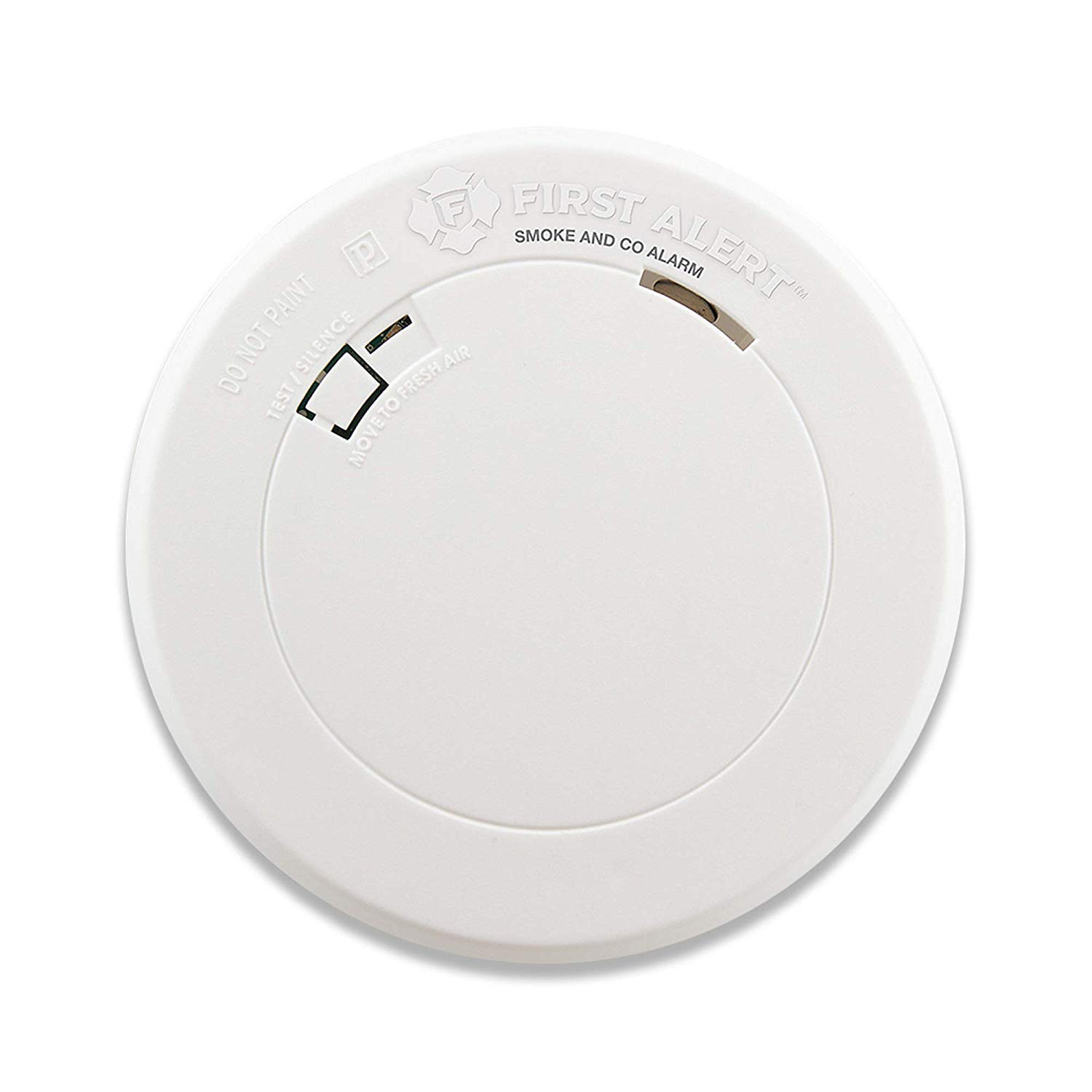
The photo tells most of the story: this is a slim, low-profile combo, designed half as thick as a standard smoke alarm, with a built-in 10-year battery that powers the unit for its whole working life. Inside, it pairs a photoelectric smoke sensor with an electrochemical CO sensor, so it watches for smoldering fires and dangerous gas in the same housing. That combination is the right one for older homes where running wire is not practical. You get coverage without an electrician, and without the running cost of replacement batteries.
Owners replacing an old First Alert are the happiest camp here, because the bracket often carries over. One described the swap as taking under two minutes and being ready for the next decade, which is the dream scenario — same holes, new alarms, no painting. The 10-year battery is what enables that confidence: no empty detectors because someone forgot the 9-volt, no low-battery chirp at midnight. For a home without smoke-detector wiring, it is one of the cleanest paths to full coverage. Owners also note that the photoelectric route (a light-based sensor that sees smoke particles) means fewer nuisance alarms than the old ionizing units they are replacing.
The trade-off you should weigh is technical: this unit is photoelectric, which is calmer around cooking but reacts more slowly to fast, flaming fires than ionization does. That is a sensing philosophy, not a defect, and it is why fire safety guidance often suggests a mix of sensing types across a house. If your home uses only photoelectric units, add ionization somewhere. If photoelectric is the family you lean toward for its nuisance-resistance, this delivers that. It is the sensible choice when the alternative is no detector at all in an unwired room.
Strong points
- Photoelectric smoke sensing plus electrochemical CO sensing covers both threat types from one small housing
- Built-in 10-year battery means continuous power for the life of the detector, no annual battery purchase
- Slim design sits low to the ceiling and barely registers in peripheral vision
- Fits existing First Alert brackets in many older homes, which turns replacement into a two-minute swap
Points to weigh
- Photoelectric sensing lags ionization on fast flaming fires — mixing sensing types elsewhere in the home covers that gap
- Sealed 10-year battery means the entire detector is replaced at end of life, not just the power source
An easy pick if: your home lacks detector wiring and you want the cleanest, longest-lived path to full smoke and CO coverage.
Consider a different route if: you have hardwired interconnect and want the whole house to wake up together — a wired unit handles that better.
7. Kidde Smoke & CO Detector, Hardwired & AA Battery Backup, 30CUAR, 1 Pack
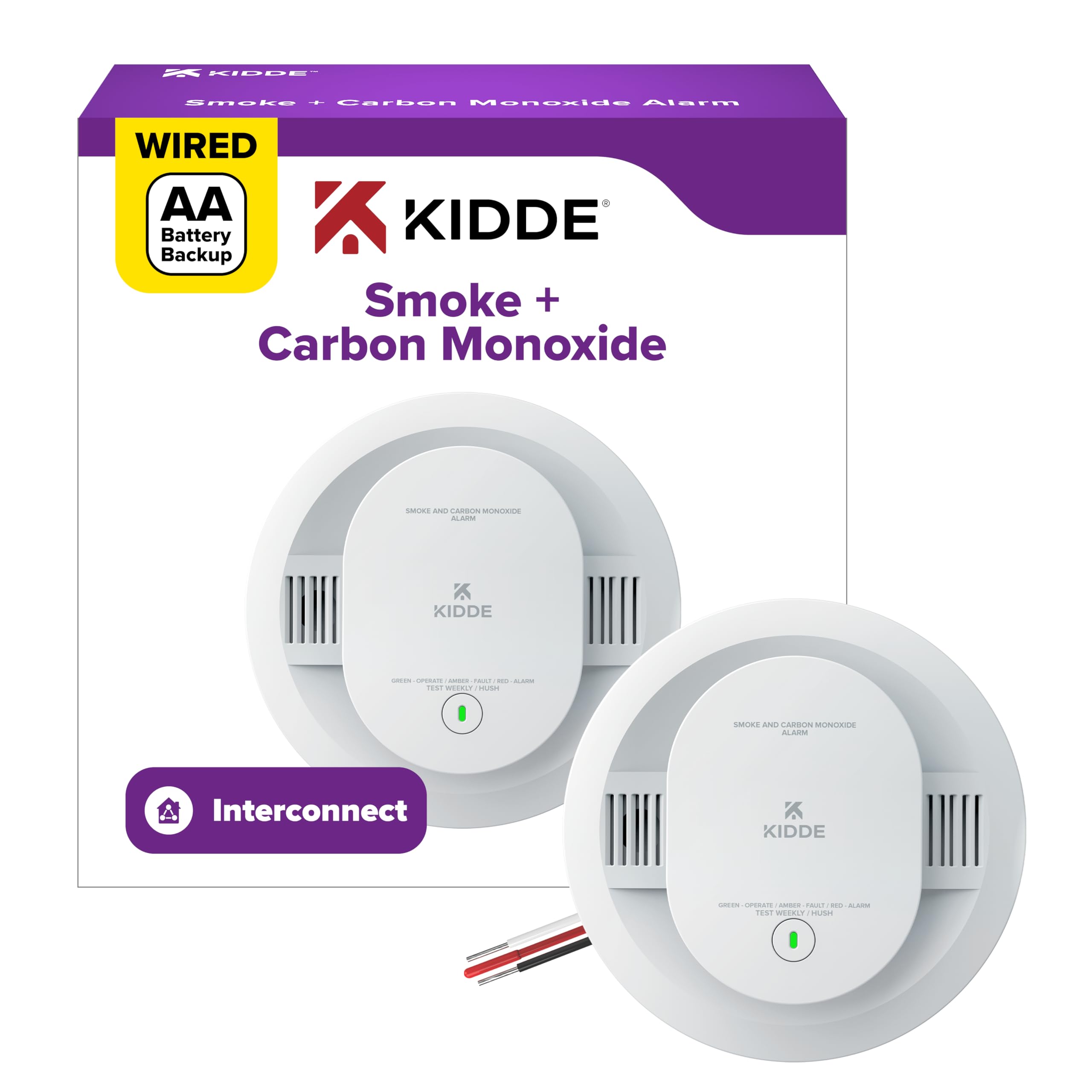
One alarm senses danger, every Kidde on the circuit sounds — the specific win of hardwired interconnect.
If your house has interconnected detectors, this is the model to slot into that system. It runs on 120-volt AC power with two AA alkaline batteries for backup (included), so a power cut never leaves you unprotected. When it links with other Kidde alarms, a detection in one location sets off every interconnected unit in the house — a real benefit in any home where bedrooms sit far from the kitchen or basement. Everything adds up: 2-in-1 smoke and carbon monoxide coverage, a loud 85-decibel alarm with a red LED, and a 10-year limited warranty that starts from the date of purchase.
The features suggest you are buying reliability through redundancy, though the raw numbers here are more complicated than the marketing copy. That said, the units that work, work — owners describe straightforward replacement of an up-to-10-year-old hardwired detector, clear wiring using the wago connectors, and LED indicators that confirm the unit is live. Installation is where this pick is most reliable: buyers consistently describe compatibility with existing ceiling mounts and existing wiring, which is exactly what you want when you are swapping an aging detector in place.
The honest caveat is that the per-unit reliability is the mixed signal in the field. A minority of customers note a unit that chirps or faults when it should not — an issue that shows up across every brand, but it is worth knowing. The practical move is to test the interconnect function the day you mount it and keep the receipt. The bright green LED, meanwhile, sits at an angle that a few owners find fussy to check from across the room, though it is plainly visible once you know where to look. If you want the wire-free simplicity of a battery-only unit, this is not the right pick — but if you already have the wires and want the family-wide alarm, it is the right tool.
What you are paying for: a wired connection to the rest of your Kidde system, which is the feature that turns one detection into a house-wide alert.
The honest caveat: reliability is the mixed-signal side of this pick, so test the interconnect and confirm the unit the day you install it.
This fits you if: your home is already wired for interconnected alarms and you want a like-for-like replacement without adding wireless receivers.
If you have no wiring: a sealed-battery standalone serves the same threat coverage without the electrician.
8. FIRST ALERT SC9120B Corded Electric Combination Alarm with Adapter Plugs

The adapter plugs turn a wiring job into a plug-and-play swap, which is why owners keep coming back for it.
The design brief here is one sentence: make replacing an old hardwired alarm painless. First Alert ships adapter plugs that let you swap out existing hardwired alarms without touching the wiring, so you sidestep the junction-box dance entirely. The unit also includes a 10-year lithium battery with a locked drawer to prevent tampering, and the unit keeps monitoring through a power failure. Inside, it pairs electrochemical carbon monoxide sensing with intelligent smoke sensing aimed at reducing nuisance alarms. You also get indicator lights on the face of the unit that show what tripped it, a single test/silence button, and an 85-decibel siren. All of this sits behind a 10-year limited warranty and a built-in end-of-life signal.
Owners consistently come to this model from a failed or expired unit that is intermittent-beeping and driving the household up the wall. The replacement stops the noise, and it stops it on the first attempt because the adapter plugs match the harness already in the ceiling. Buyers describe the swap as a matter of a few minutes, with the same ceiling mount reused and the alarm testing good on first press.
The trade-offs worth naming are the price relative to the field and the same hardwired interconnect complexity that sits behind every 120-volt alarm. Some owners find this unit on the expensive side for what it does, and that is fair — you are paying for the convenience of the adapter-plug system. The other wrinkle is the interconnect feature: First Alert notes it meets UL standards and recommends placement on every level and every bedroom, which means this is more a piece of the puzzle than a one-and-done purchase. If you are replacing a single expired unit for a single bedroom, this works. If you are building a whole-home system from scratch, factor the interconnect plan into the total.
Why buyers upgrade to it
- Adapter plugs mean you replace a hardwired alarm without touching the ceiling wiring
- Hardwired AC power with a 10-year lithium battery backup keeps the unit live through outages
- Electrochemical CO sensing plus intelligent smoke sensing reduce nuisance alarms
- Face-mounted indicator lights show whether smoke or CO triggered the alarm
- Locked battery drawer keeps the 10-year lithium cell out of casual reach
Weigh these before buying
- The adapter-plug convenience sits at a higher price point than the brand you are replacing
- Hardwired interconnect is a whole-home project, not a single-unit fix — plan with placement guidance in mind
The right call for: a homeowner replacing an expired hardwired combo who wants the job done in one trip without rewiring.
Skip it for: a single battery-only alarm on a shelf — this is a hardwired-install replacement tool, not a standalone starter.
Understanding the Specs
Photoelectric vs. electrochemical sensing
A photoelectric smoke sensor watches for particles that scatter a beam of light inside the chamber — think smoldering upholstery, overheated wiring, or a slow-burn mattress fire. It is generally quieter around cooking than ionization sensing. An electrochemical CO sensor is a small chemical cell that reacts when carbon monoxide is present, so it catches the invisible, odorless gas that a smoke sensor can never detect. A 2-in-1 combo detector needs both, and the picks above that explicitly publish “photoelectric + electrochemical” naming give you that stack. If a listing does not name the smoke sensing technology, assume it is ionization and plan your kitchen placement accordingly.
Battery type and how long you can forget about it
Three patterns show up across this category: replaceable 9-volt alkaline batteries (a swap on your schedule), replaceable AA batteries (a smaller, easier cell), and sealed 10-year lithium cells (no change ever, but the whole detector is retired at end of life). A sealed 10-year battery is the option that keeps the detector on your ceiling instead of in a drawer while someone means to buy batteries. The trade-off is that a fault on the sealed unit cannot be cleared by removing power — you fix it or you return it. Replaceable batteries win when you want the fallback of a quick reset, and a 9-volt or AA alarm lets you keep using the same unit year after year until its sensing chamber ages out.
FAQ
Will a 2-in-1 smoke and carbon monoxide detector work on my existing ceiling mount?
How often does a 2-in-1 detector need to be replaced?
Can I trust a battery-powered combo alarm to protect me during a power outage?
Is a photoelectric combo detector better than an ionization combo detector?
What is an end-of-life signal on a combo alarm and why does it matter?
Do I really need a digital CO readout on my combo detector?
Will one combo alarm cover smoke and carbon monoxide in my whole house?
How do I stop my combo alarm going off every time I cook?
Do I need to test a combo alarm I cannot reach easily?
Which matters more — the smoke sensor or the CO sensor in a 2-in-1 unit?
What does “interconnect” mean on a combo detector, and do I need it?
Final Thoughts: The Verdict
For most people replacing or upgrading a combo alarm, the BRK SC9120B is the practical pick — it slots straight into existing BRK or First Alert hardwired setups, includes its 9-volt battery, and carries separate latching indicators for smoke and CO so you always know which threat tripped it. If you want a sealed 10-year battery with a live carbon monoxide readout on the face, the X-Sense SC06 is the clear step up. And if you are covering bedrooms and hallways in one trip and want the alarm to say “Fire!” or “Warning! Carbon Monoxide!” instead of a bare siren, the Kidde 30CUD10-V two-pack is the one to reach for. Whichever you pick, buy the number of units your home needs, mount them per the manufacturer’s placement guidance, and test them on schedule — that routine matters more than any single spec sheet. The BRK SC9120B holds the highest rating on this list at 4.6 stars across 500+ ratings, so if your ceiling is already wired for BRK or First Alert, start your search there.
How We Picked
We do not accept paid placement. Every pick is matched to a real buyer and a real use-case; we do not hands-on test units.
Sources & Methodology
Specifications: manufacturer listings and product documentation. Review insights: verified customer reviews, as of September 2026. Pricing: not shown on this page (it changes often); check the current price via the retailer link.
As an Amazon Associate, KitchPrep earns from qualifying purchases. This does not affect which products we feature.
Related Guides
