
Specs are compiled from manufacturer listings and verified buyer reviews and can change over time — please confirm the key details on the product page before buying.
A wet basement is not just an unpleasant smell — it is damp air that reaches your upstairs rooms, condensation on cold pipes, and that musty odor you cannot scrub away. The right dehumidifier pulls that moisture out of the air; the wrong one leaves you emptying a bucket twice a day. This guide covers ten basement dehumidifiers, with the pint-per-day rating each one pulls at saturation.
I’m Mohammad Maruf — the founder and writer behind KitchPrep. This guide is built by comparing the manufacturers’ published specifications and the patterns across verified customer reviews, so you get each pick’s real strengths and trade-offs instead of marketing spin.
Every pick below earns its spot with a pint-per-day rating high enough for a damp basement. You will see the difference in a basement dehumidifier system pick that matches your square footage and drain setup.
Our Picks at a Glance
How To Choose The Best Basement Dehumidifier System
Four specs decide whether a dehumidifier works in your basement: pint capacity, square-foot rating, drain type, and efficiency.
Match Square Footage to Real Space
Manufacturers rate their units in square feet, but that number assumes standard ceiling height. A 6,000 sq. ft basement with high ceilings holds more air than a lower crawl space of the same footprint. Most basements fall between 1,000 and 2,000 sq. ft, so check the unit’s floor area rating against your actual space and leave headroom.
The Drain Question Comes First
A gravity drain hose needs the unit to sit higher than the floor drain or sink. If it cannot, you need a built-in pump that pushes water upward. Units without a pump cannot drain upward no matter how they are installed. Pick your drain setup before you pick a model.
Efficiency Changes the Power Bill
Dehumidifiers run long hours in humid months, so efficiency matters more than on a short-use appliance. A compressor-based unit with a higher efficiency rating pulls the same moisture while drawing less power. Units carrying the ENERGY STAR “Most Efficient” designation are rarer and held to a stricter bar than standard ENERGY STAR.
Quick Comparison
| Model | Best For | Pint Capacity | Square Footage | Pump or Gravity | Amazon |
|---|---|---|---|---|---|
| AEOCKY 6000Sq.Ft Commercial Dehumidifier★ Best Overall | Whole-home basements | 105 pints | 6000 square feet | Gravity drain hose | Amazon |
| 80 Pints Energy Star DehumidifierBest Value | Larger rooms on a budget | 80 pints | 6000 square feet | Gravity drain hose | Amazon |
| AEOCKY Dehumidifier with PumpPremium Pick | Basements with no floor drain | 80 pints | 4500 square feet | Built-in pump | Amazon |
| Vellgoo Dehumidifier for Basement | Big open spaces and garages | 140 pints | 6000 square feet | Gravity drain hose | Amazon |
| GE Dehumidifier with Pump & Hose | Below-grade basements | 50 pints | 5000 square feet | Built-in pump | Amazon |
| Waykar 150 Pint 7000 Sq.Ft | Whole-house and commercial | 150 pints | 7000 square feet | Gravity drain hose | Amazon |
| Yaufey 155 Pints Commercial Dehumidifier | Warehouses and wine cellars | 155 pints | 8000 square feet | Built-in pump | Amazon |
| Waykar 125 Pints Crawl Space Dehumidifier | Crawl spaces and ducted HVAC | 125 pints | 6500 square feet | Built-in pump | Amazon |
| Airzentti 155 Pint Commercial Dehumidifier | Attics and water damage | 155 pints | 7500 square feet | Built-in pump | Amazon |
| ALORAIR Sentinel HDi90 | Crawl spaces and yachts | 198 pints | 2600 square feet | Built-in pump | Amazon |
In‑Depth Reviews
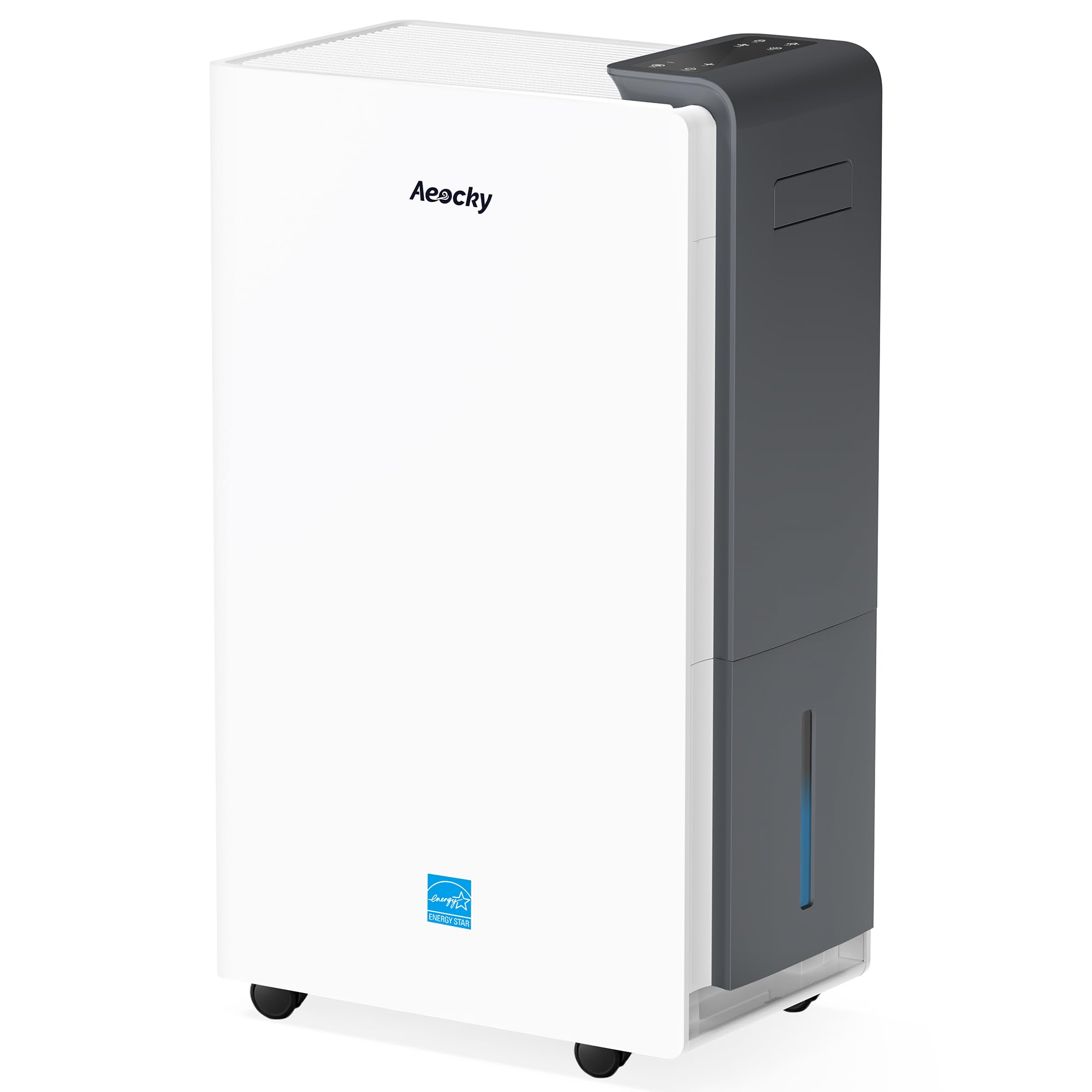
1. AEOCKY 6000Sq.Ft Commercial Dehumidifier, Energy Star Most Efficient
Our pick — 4.5★ from 6,500+ verified ratings; the strongest balance of quality and price.
Pulls 105 pints a day, then asks for almost nothing back in noise.
If your basement has no floor drain and no sink, the AEOCKY RHEA-002 still works because you can run the included drain hose to a lower point and let gravity do the rest. Its 105 pints per day rating is the highest in the mid-range group here, and the wider coverage area means it moves air across 6,000 square feet rather than one corner. That is the biggest capacity jump in this guide — 25 pints per day more than the 80-pint Kesnos at number two.
What wins people over is the low-noise side of a powerful machine. The lowest fan speed runs at 44dB, which is about the level of a quiet conversation, so the unit can sit in a basement under a bedroom without ruining sleep. It handles cold corners too, because the auto-defrost system on this unit keeps working at lower temperatures where ordinary dehumidifiers frost up and shut off.
The honest catch is the compressor. As owners put it: “Fills large bucket in ~14 hrs above 55% humidity; strong fan, moderate noise; plug-and-go.” Several long-term owners saw output drop after months of hard use and had to rely on AEOCKY’s warranty service to get a replacement. That service has been fast, but it is worth knowing you may lean on it once the seasons stack up.
Where it earns its keep
- 105 pints per day is the strongest pull in this guide
- 44dB at the lowest fan speed keeps bedrooms quiet
- Auto-defrost keeps it running in cold basements
- Covers up to 6,000 square feet from one unit
Worth knowing first
- No built-in pump, so drainage depends on gravity
- Long-term buyers report output drops after heavy seasons
- Weighs 34 lbs and needs help to move upstairs
Pick this if: you want the biggest moisture pull here and have a low drain point or a floor drain.
Think twice if: your only drain sits above the unit — go with a pump model instead.
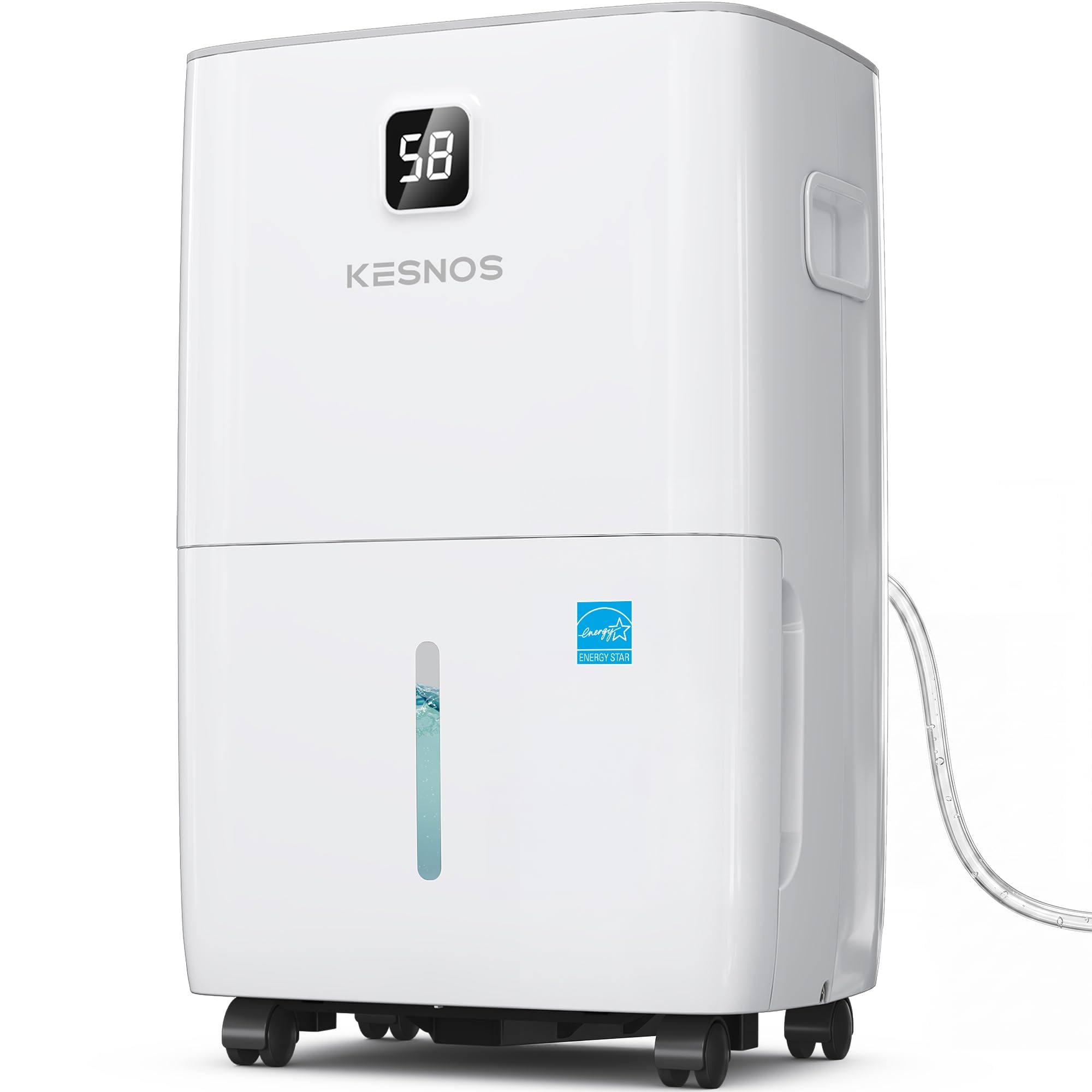
2. 80 Pints Energy Star Dehumidifier for Basement with Drain Hose, 6000 Sq. Ft
The Kesnos that dries a whole floor while you stop thinking about it.
For damp basements where your main goal is a set humidity level you can walk away from, the Kesnos 80-pint unit covers up to 6,000 sq ft and takes any setting between 30% and 80% relative humidity. The front display gives you a live humidity reading, and the MIRAGE sleep mode turns that display off while the unit keeps pulling moisture. Its rotary compressor does the heavy lifting, and the airflow capacity sits at 106 cfm to keep the room moving air.
What owners talk about most is the quietness. The unit runs low enough that one buyer with breathing issues described dropping humidity from 67% to 47% in twelve hours while it ran in the background. The washable filter helps too, because you can rinse it instead of buying replacements.
Here is the trade-off. It uses a 1.06-gallon tank that empties often in very damp conditions, so the included 3.3 ft drain hose and a floor drain is the smarter setup. One owner of a different Kesnos model saw output stop after a year, and the seller’s support was slow to respond at first. Recent service has improved, but it is a reason to keep your receipt somewhere safe.
Why the price tag works: the 80-pint capacity plus Energy Star rating means you are not paying for a label — you are paying for reduced running costs during long summer stretches.
Reach for this if: you want a set-and-monitor unit you can hook to a drain hose and forget.
Look elsewhere if: your basement floods and needs pump drainage instead of gravity.
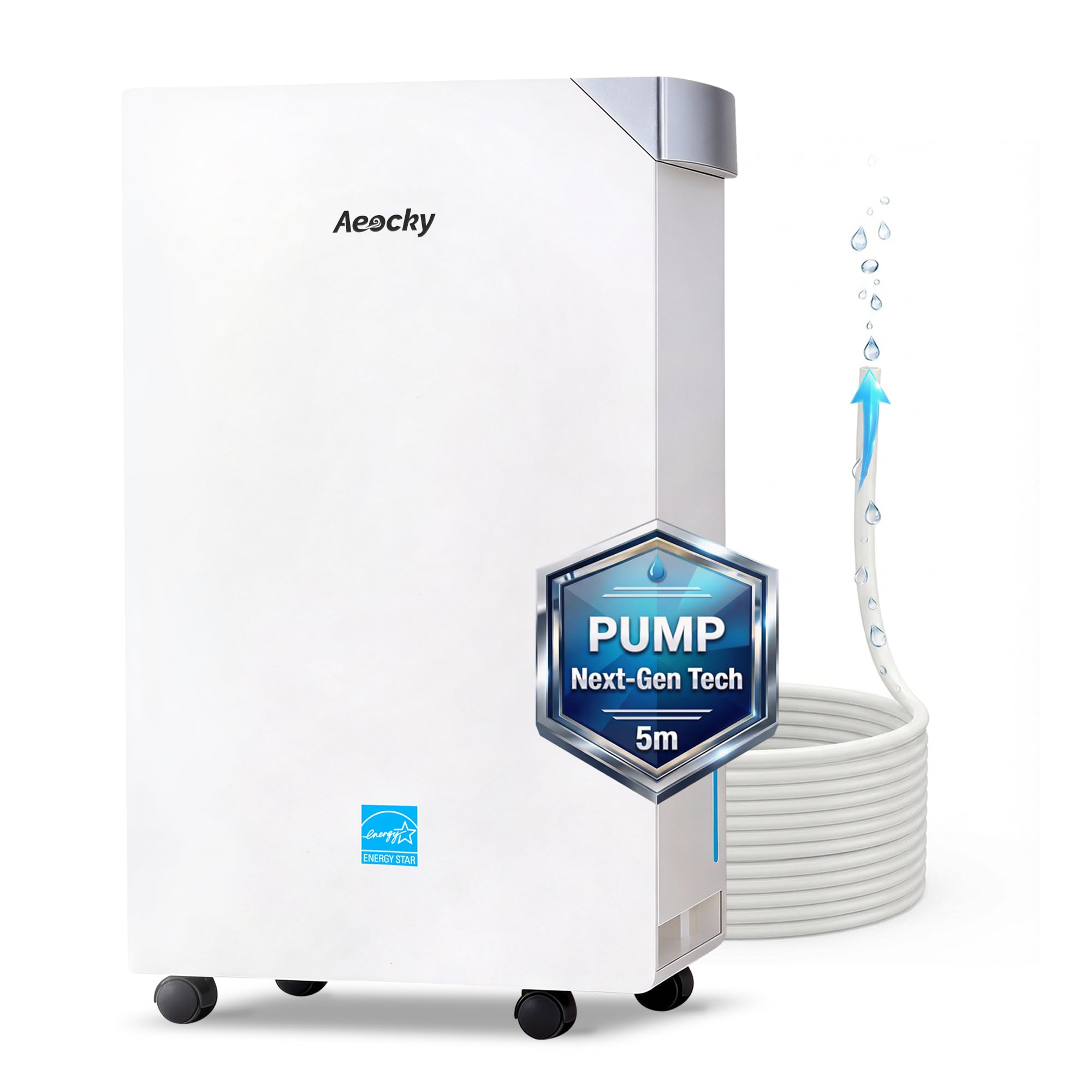
3. AEOCKY Dehumidifier with Pump Up to 16.5ft Energy Star Most Efficient
Pumps water 16.5 feet upward, so your basement drain location stops ruling your layout.
Basements with no floor drain are exactly where this AEOCKY LEO-001 earns its keep. The built-in pump pushes condensate upward for what the maker calls true 360° auto-drainage, and the included 5m hose lets you run water to a utility sink or bathroom even when gravity is working against you. At 80 pints per day, it removes enough moisture for basements and large rooms up to 4,500 sq ft in the humid season.
What owners pick out most is effectiveness — the same pull that has owners dropping humidity in whole basements within days. A buyer with an entire house basement describes it as quiet and easy to set up, with no complicated direction sheet to decode. It also carries the ENERGY STAR Most Efficient certification, a stricter bar than standard Energy Star, which the maker says is held by only an elite 2.6% of models.
The real question buyers raise is pump reliability. Some units had leaks from the pump reservoir, and one owner described two units that leaked water onto the floor within days. That is a problem with the pump assembly, not the dehumidifying core, and AEOCKY’s customer service has responded with replacement units for the people who reported it.
The installation freedom you get: run the pump hose up to a sink or bathroom, and you never touch a bucket again.
Then this: check that your chosen drain path is shorter than the pump’s lift limit, or the built-in pump will simply stop pushing water and warn you.
This fits you if: you need upward drainage and want to eliminate manual emptying for good.
Hold off if: your basement has a working floor drain — a cheaper gravity model will do the same job.
4. Dehumidifier for Basement, 6000 Sq Ft Energy Star Most Efficient
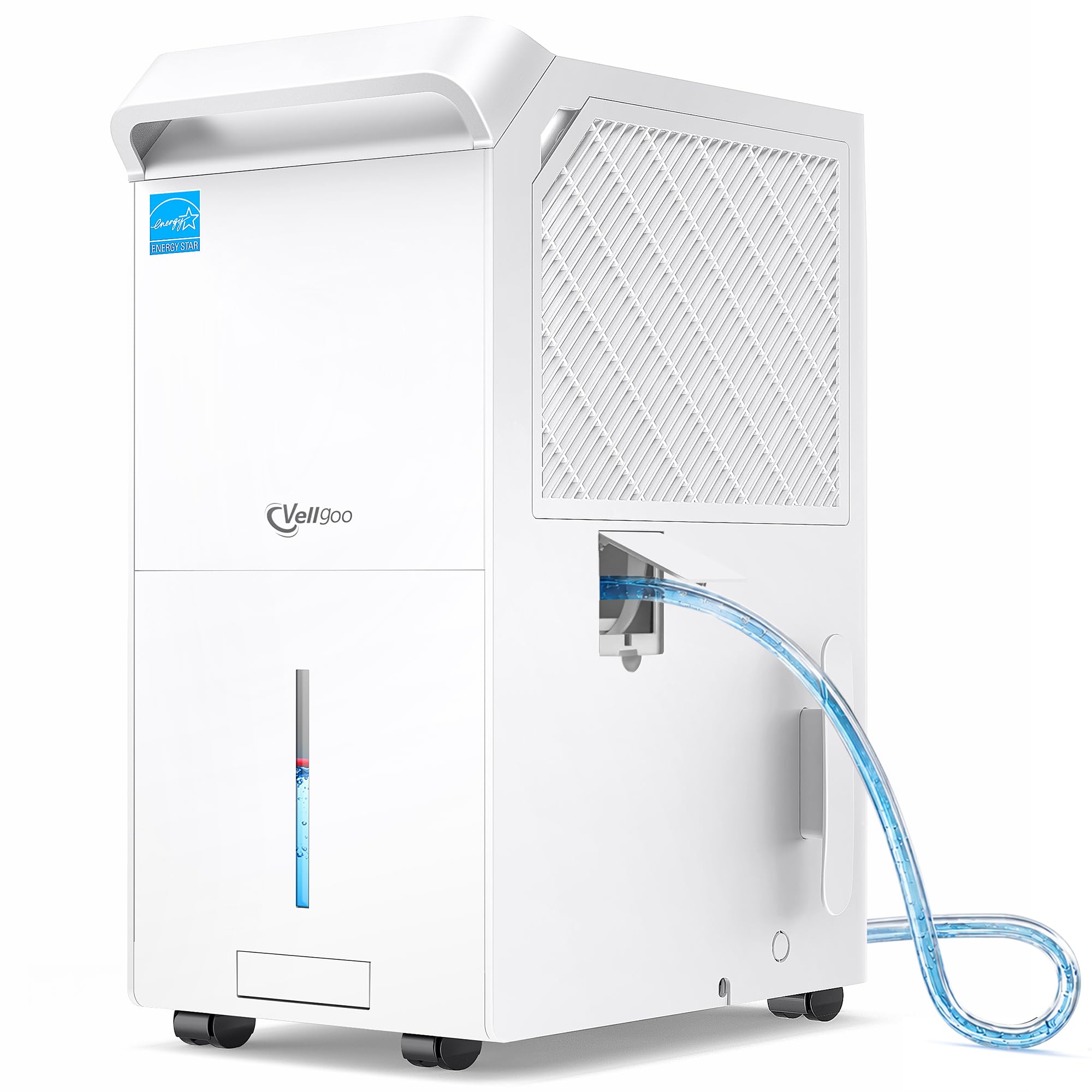
A 140-pint pull that keeps large basements and garages dry without strain.
If your basement is a big, open, humid space — or a garage that never dries out — the Vellgoo Taurus Pro is built for exactly that job. Its 140 pints per day max removal under saturated conditions makes it the most powerful unit in this group, and it still carries Energy Star Most Efficient certification. It is also packed with 17.69″D x 11.75″W x 24.41″H dimensions, so it fits under a counter or in a corner without blocking the space you are trying to dry.
What earns the most praise is its effectiveness in high-humidity climates, with one owner using it for two Texas summers in continuous mode and noting that the house finally felt cooler. It has three modes — Continuous, Custom and Sleep — and the washable filter cuts down on consumables. It also restarts after a power cut, which is a real plus in storm-prone areas.
Where it falls short is drainage flexibility. It has no built-in pump, so it cannot push water upward. You either use the 1.65-gal bucket or connect the included 6.56 ft drain hose to a floor drain or a lower sink. If your drain sits above the unit’s outlet, you will be emptying the bucket by hand.
What sets it ahead
- 140 pints per day is the highest pull in this group before the commercial tier
- Handles 6,000 sq ft of open basement or garage
- Auto-restart brings it back after power outages
- Washable filter means no replacement parts to buy
Where it drops a point
- No built-in pump, so drainage is gravity-only
- Noise level is among the most-cited concerns in owner reviews
- Rated at 4.0 stars, so a few units have failed within a year
Choose this if: you are drying a large, open basement or garage and have a floor drain nearby.
Pass if: your drain sits above the unit and you want to skip the bucket entirely.
5. GE Dehumidifier with Pump & Hose, 50 Pint for Basement & Home, 5000 Sq Ft
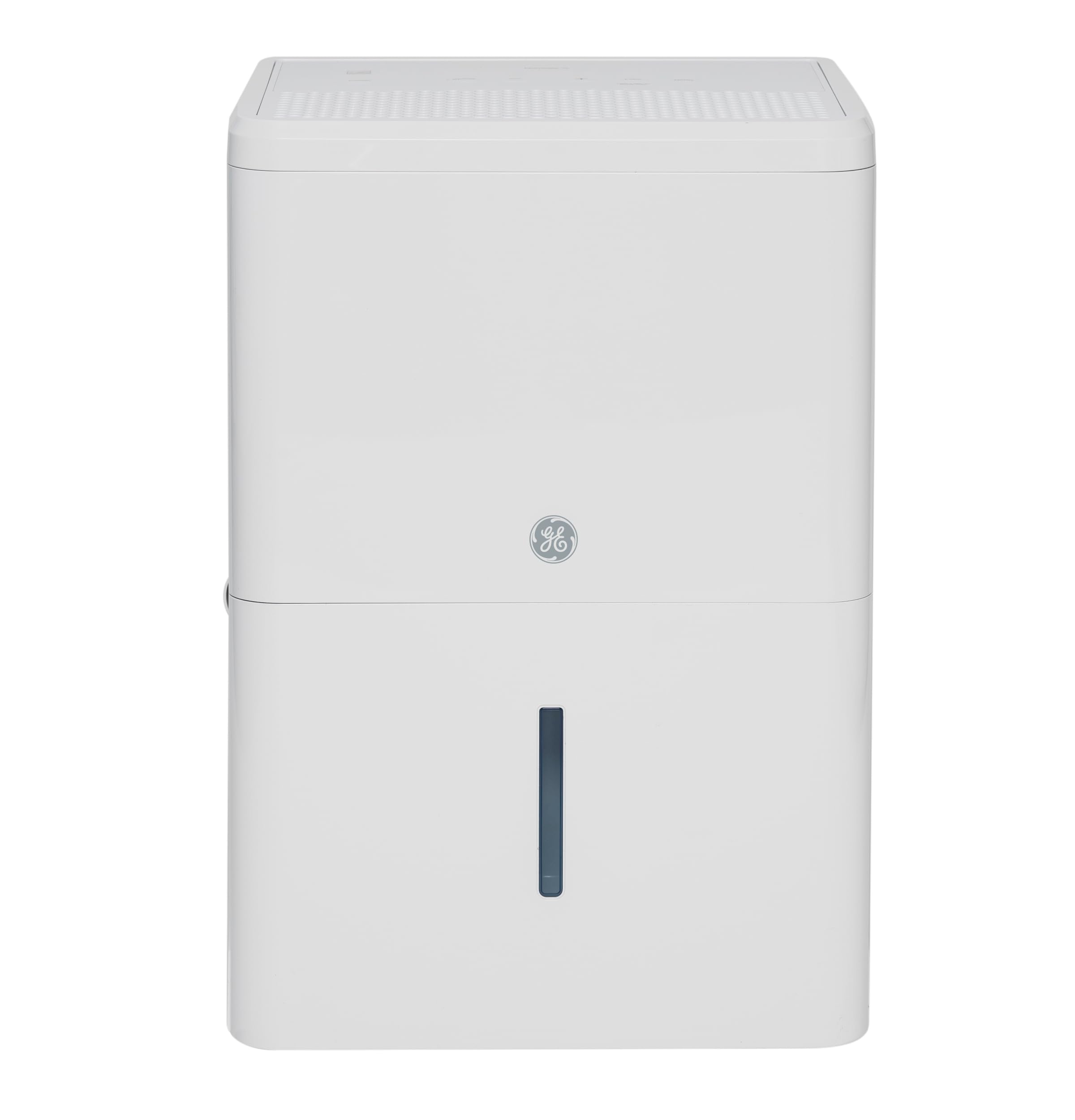
The name-brand unit that lifts water 15 feet up, for basements below the drain line.
When your basement sits below the level of the nearest drain, this GE model pumps water up to 15 vertical feet and ships with a 16 ft drain hose, so you are not hauling a bucket up the stairs in a wet season. It covers up to 5,000 sq ft and includes Smart Dry technology — the auto fan adjustment that raises or lowers speed based on the room’s current humidity.
The setup and operation are easy according to the builders of the manual, and one buyer recovering their home after a broken water pipe reported dropping house humidity from 78% to 45-50% over continuous running. The adjustable humidistat gives you a 30-70% target range, and the washable filter means you are not replacing parts.
The real limitation here is the pump. It is the feature that makes this model useful in below-grade basements, but it is also the most-cited concern in owner reviews, with a few units giving a P1 error or leaking from the pump discharge fitting after the first week. GE has a documented pattern of the pump failing within a season, so it is worth knowing that support can be slow and the return process can be a hassle.
The setup that works: run the 16 ft hose to a utility sink or floor drain above the unit and let the pump handle the uphill climb.
Then this: the 15-pint bucket is smaller than most competitors, so if the pump goes down, you will be emptying it several times a day in a damp season.
This is right for you if: you have no gravity drain and want a name-brand pump model that handles below-grade damp.
Look past it if: you want a longer track record — other picks here have years more on the pump design.
6. Waykar 150 Pint 7000 Sq.Ft Dehumidifier for Basement with Drain Hose & Tank
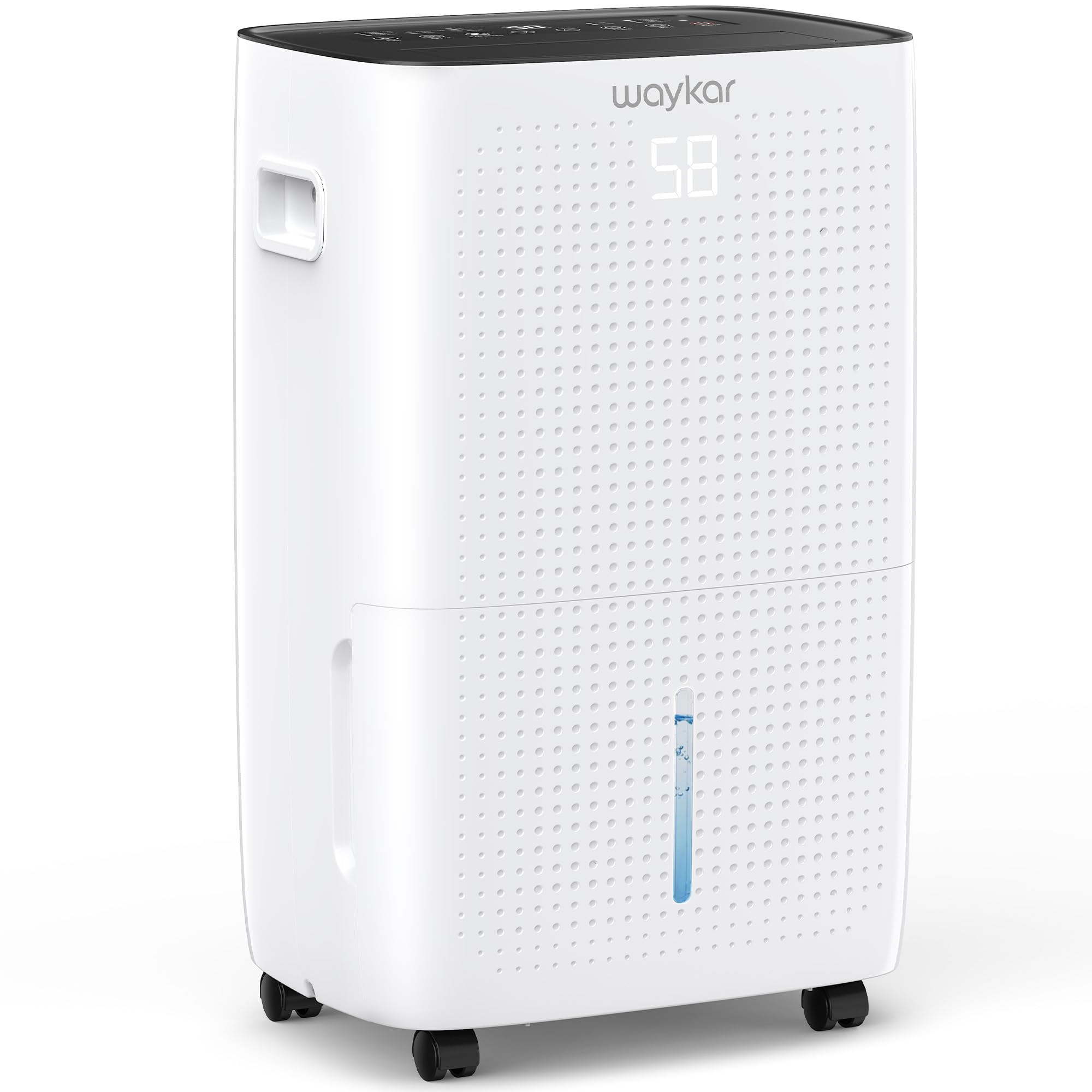
A 150-pint workhorse with a wide humidity range, for those who want one unit to cover a whole basement.
The Waykar JD026CE-150 is aimed at basements, whole homes, garages and even commercial spaces that see high humidity. Its 150 pints per day at saturated conditions is enough to dry out a 7,000 sq ft area, and its airflow is listed at 159 cfm to push the dry air around. One feature separates it — the 90° auto swing airflow that sweeps air from side to side instead of blowing in one fixed direction.
The tap that most owners mention is the wide humidity range. It adjusts between 30% and 80%, so you can push the setting down to 30% for deeper drying in crawlspaces and storage rooms. The 8L (2.11 Gal) tank gives you longer stretches between empties, and a visible water-level window saves you from guessing when to dump it.
Where the experience varies is reliability. Some owners run theirs for a year or more without trouble; others see the humidity stop dropping after nine months. Waykar’s support is widely described as fast, and replacements have been approved without much fight. The flimsy drain hose and a humidity readout that runs higher than the actual room are the other quirks to know about.
Its strongest traits
- 150 pints per day covers whole-home and commercial spaces
- 90° auto swing spreads dry air instead of pointing it one way
- Wide 30%-80% humidity range for deep drying
- 8L tank means fewer empties than compact units
Areas to think about
- Weighs 40 pounds, on the heavier end for a portable unit
- Some owners see durability drop off after a year
- Drain hose is on the flimsy side
The Waykar wins if: you need maximum coverage for a large basement and prefer a wide humidity range over a low price.
Step back if: you want a pump for uphill drainage — this one relies on gravity.
7. Yaufey 155 Pints Commercial Dehumidifier with Pump for Basement up to 8000 Sq. Ft
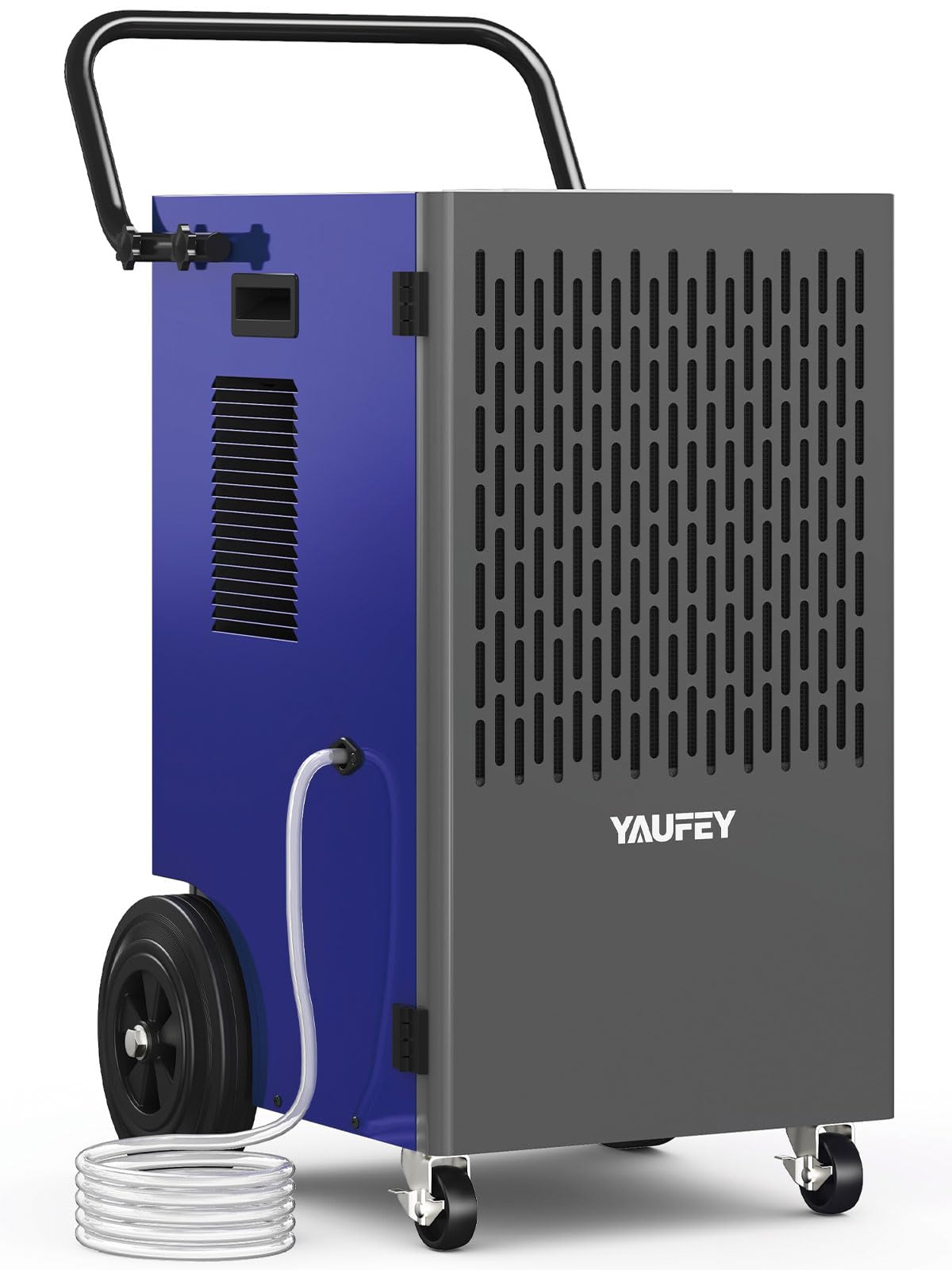
Commercial-grade metal build with a pump that lifts water 16.4 feet out of any basement.
When a standard household unit has already failed you once, this Yaufey is the upgrade that makes sense. Its 155 pints per day at saturation serves spaces up to 8,000 sq ft, and the 164.7 cfm airflow moves that volume of air without giving it a chance to sit. The build is all metal, which fits a commercial dehumidifier meant to run for years in a damp space.
The pump is where this unit stands out. It has a condensate pump with a 16.4 ft lift and a 16.4 ft drain hose, so you can place it anywhere in the basement and drain uphill. It also has an adjustable humidity range from 10% RH to 90% RH — much wider than most home units, which matters when you want a tightly controlled space like a wine cellar or wood shop.
The honest trade-off here is weight. At 79.4 pounds this is a two-person move, and the same metal construction that makes it strong will not be lifted upstairs alone. The noise is also noticeable — one owner described it as washing-machine level — so it is better suited to a basement than a bedroom. It is also priced in the premium tier, so it is a long-term buy rather than a quick fix.
Where it shines: the huge 8,000 sq ft coverage plus the wide humidity range and the 16.4 ft pump lift cover almost any basement scenario.
Buy this if: you have a large, damp basement or professional space and want a metal-bodied unit meant to last.
skip it if: you want a quiet unit for a living space — this one runs louder.
8. Waykar 125 Pints Crawl Space Dehumidifier with Remote Control and Pump
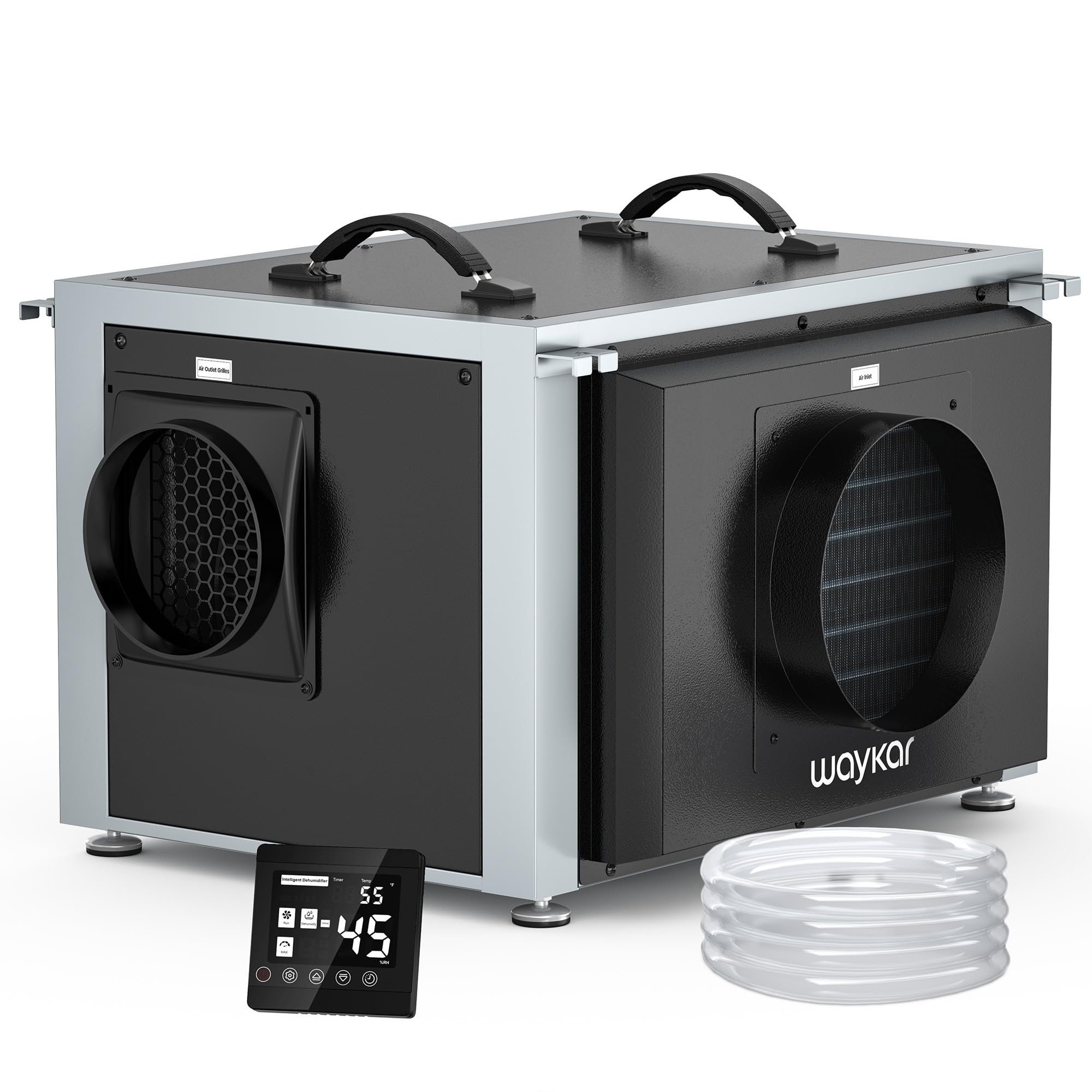
Crawl-space ready, with a remote control so you never have to crawl in to change a setting.
If your crawl space is sealed and you never want to enter it again, this Waykar is built to be controlled from outside. The wired control panel can install up to 32.8 ft away, which means you can adjust humidity settings from inside your home. The included 16.4 ft humidity sensor measures air near the space it is monitoring rather than right next to the machine, which matters when the unit sits in a corner.
The dual-duct design is the standout for whole-house setups. Separate intake and exhaust ducts let you tie the unit into an existing HVAC system, so you can pull moisture from multiple rooms at once. Its 176 CFM airflow is the highest of any unit in this pick list before the Airzentti, and its 125 pints per day covers areas up to 6,500 sq ft.
The trade-offs here are real but limited. It is a crawl-space-first design, so if you need a portable unit for your living room, look elsewhere. A few owners hit controller faults after the first year, but Waykar replaced those units under warranty — and the company backs this model with a 2-year full unit warranty plus 5-year compressor protection.
What you are actually buying: a remote-controlled, ductable machine that dries a sealed crawl space without you touching it.
Consider first: if your installation plan does not include ducting or a remote sensor, you can save money with a simpler unit.
This one fits: sealed crawl spaces, basements with HVAC integration, or any install where the unit lives where you do not.
Not for you if: you want a lightweight portable to wheel between rooms — this weighs 57.3 pounds.
9. 155 Pint Commercial Dehumidifier with Pump and Drain, Energy Star
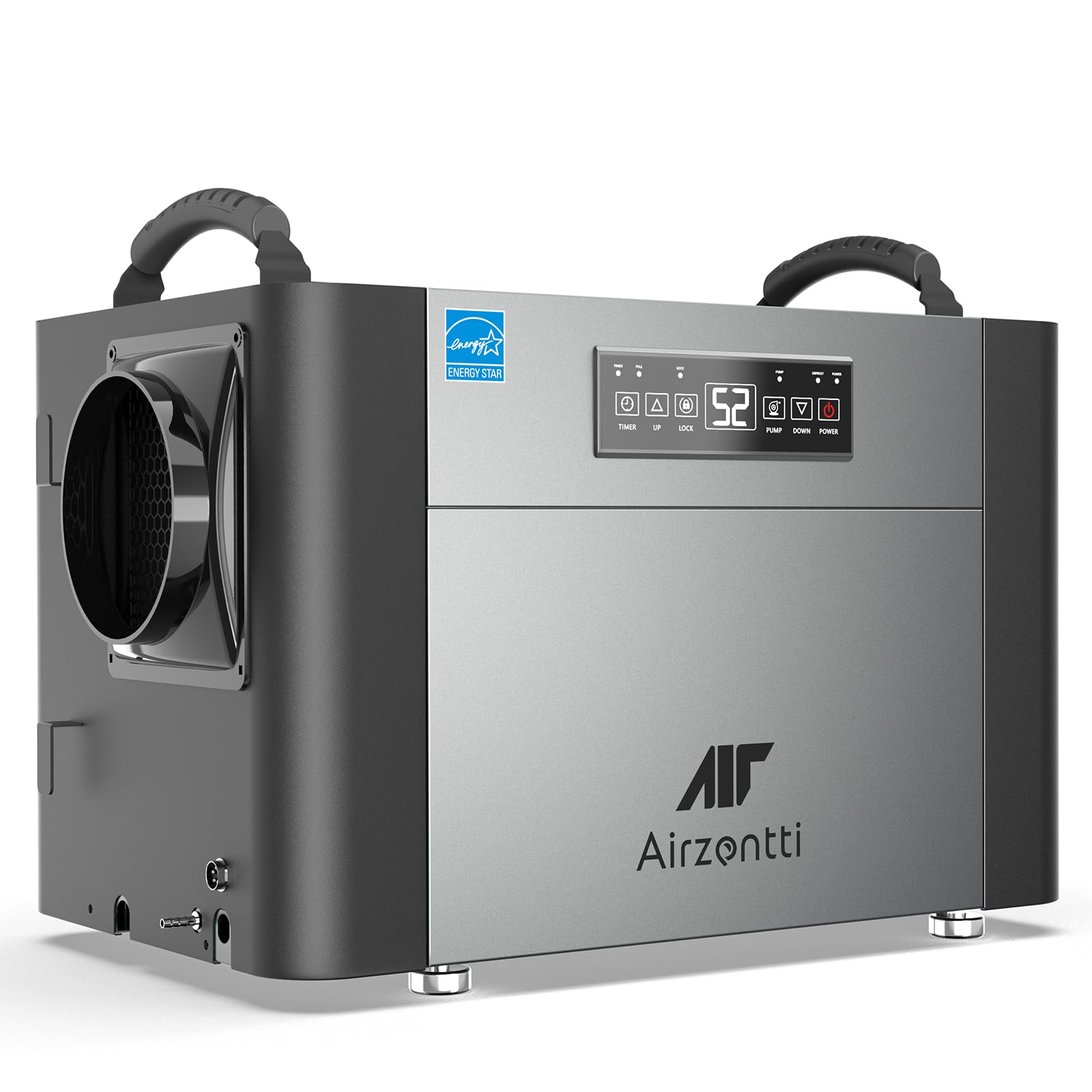
220 CFM of airflow makes it the strongest air-mover here — attics and basements dry fast.
The Airzentti is the most powerful airflow machine on this list. Its 220 CFM is the highest rating in this group, and combined with its 155 pints per day capacity it covers up to 7,500 sq ft of nearly saturated space. The built-in water pump can drain up to 16.4 feet, so it fits in spaces with no gravity drain like attics and mechanical rooms.
This is set-and-forget in the truest sense — it has a programmable timer, humidity-level settings, auto defrost, and a lockable control panel to prevent accidental changes. TÜV certification adds a third-party check on the electrical safety side. It also runs fairly quietly for a commercial unit, so much that one home owner uses it in a 1,500-1,600 sq ft basement and reports dropping humidity from 64% to 44% in under four hours.
This model is on the premium side, so you are paying for the airflow and the commercial build. It also has no tank, so it needs a drain line or a bucket system in place before you fire it up. That is more of a setup requirement than a flaw, but it is worth checking your drain situation first.
What it delivers
- 220 CFM is the highest airflow in this guide
- 155 pints per day handles 7,500 sq ft
- Built-in pump drains up to 16.4 ft upward
- Auto defrost, timer, and screen lock for hands-off running
Worth checking
- No tank option, so a drain line is required
- Weighs 59 pounds, adding to install effort
- Newer name in the space, so fewer long-term reviews
Match this to: attics, mechanical rooms, and large basements where you need airflow and a pump drain without a tank.
Think of another pick if: you want a portable tank unit you can move around the house.
10. ALORAIR 198 Pints Crawlspace Dehumidifier with Pump, Sentinel HDi90
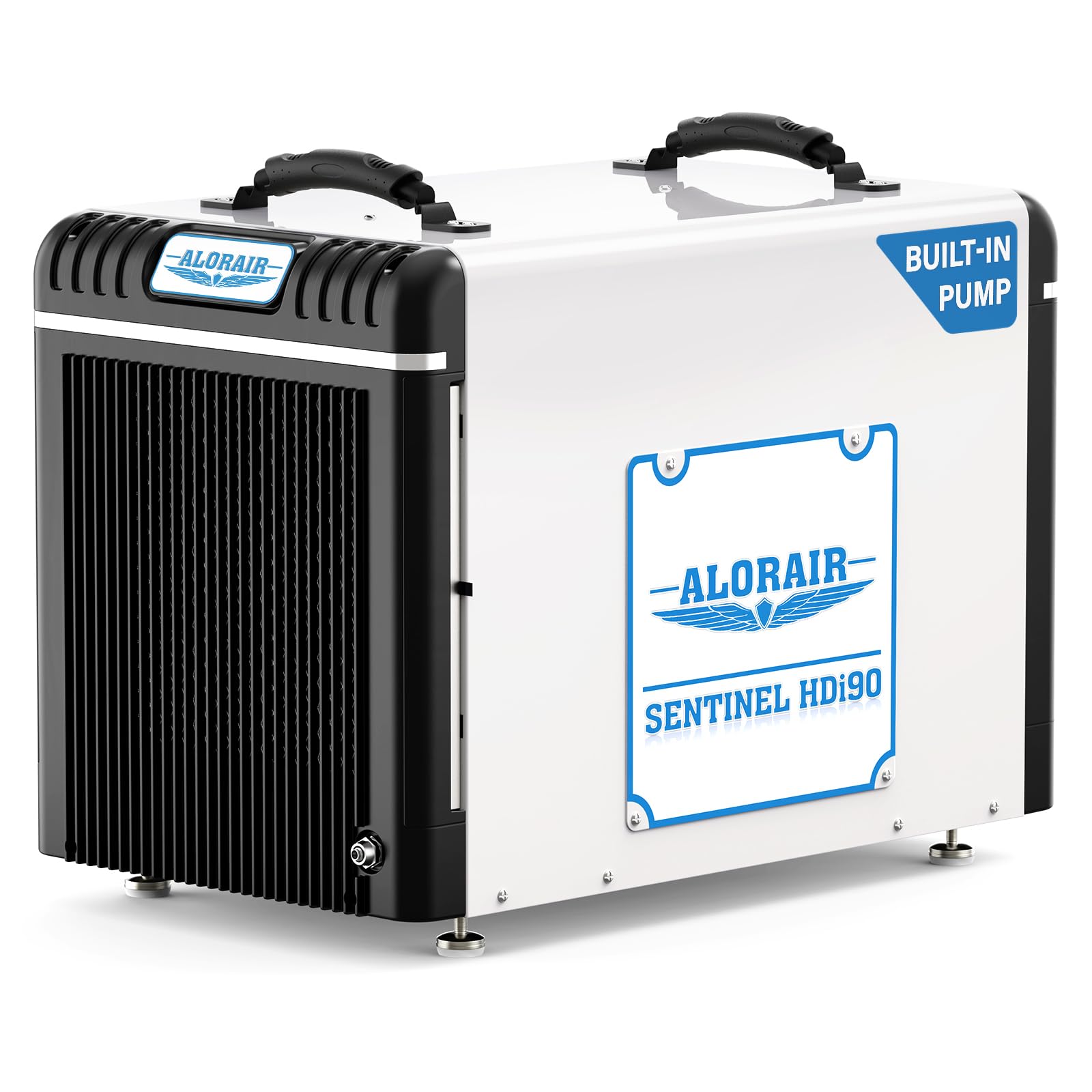
The highest pint-per-day number in the guide, and the only one built for yachts and factories.
If you have a crawl space that has been encapsulated or a below-grade space with a real moisture problem, the ALORAIR Sentinel HDi90 has the biggest water removal number here. Its 198 pints per day at saturation will not fit every crawl space, since its rated coverage is 2,600 sq ft, but that fits the typical sealed crawl space exactly. Its built-in pump handles continuous drainage without anyone emptying it.
The parts note are the remote-control function and the auto-defrost system. The humidity and temperature sensors keep the unit running in cooler conditions, and the compressor restarts when a power outage ends. It is also ETL listed for safety, and AlorAir backs it with a 6-year limited warranty, including two years of full coverage.
Owner experience varies more here than on most units. A number of units have failed within the first year, and the same group described repair shipping costs that were not trivial. When it works, it works very well — one owner with a 41-foot yacht uses it specifically for condensation control and describes it as quiet enough not to disturb them on board. It is also the heaviest unit here at 70.5 pounds, so plan where it will sit before it arrives.
Come for this: the highest water removal number in the guide and a metal build that suits crawl spaces and commercial areas.
Know before you order: the reliability pattern is more uneven than other picks here, so buy from a seller with an easy return path.
Choose it for: encapsulated crawl spaces, yachts, and commercial rooms where raw capacity is the deciding factor.
Look at the Yaufey instead if: you want near-equal capacity with a lower weight and a simpler support story.
Understanding the Specs
Pints Per Day: The Real Capacity Number
Every dehumidifier is rated by how many pints of water it removes in a day, measured at a specific temperature and humidity — usually near-saturated air. A 50-pint unit handles a damp room; a 150-pint unit handles a large basement. Do not confuse this with tank size, which only tells you how often you empty the bucket, not how much moisture the machine pulls.
Pump vs Gravity Drain
A gravity drain works when the unit sits higher than the drain point, letting water flow downhill. A built-in pump works the other way — it pushes water upward, usually 15 to 16 feet, so you can place the unit anywhere in the space. If your basement has no floor drain and no sink at floor level, a pump model saves you from constant bucket duty.
ENERGY STAR Most Efficient
Standard ENERGY STAR certification means the unit meets a baseline for energy use. The “Most Efficient” designation is a stricter label, given to a small fraction of models that hit the top tier for efficiency. Both labels matter because a dehumidifier runs for hours every damp day, unlike a short-use appliance.
Auto Defrost and Cold Basements
Dehumidifier coils get cold enough to frost over, especially when the surrounding air is below 65°F — a common basement condition. Auto defrost detects that frost and cycles it away instead of shutting the unit down. Without it, a cool basement dehumidifier will stop pulling moisture until the coils warm up.
FAQ
How many pints per day do I need for my basement?
Do I need a dehumidifier with a built-in pump?
How long should a basement dehumidifier last?
Are ENERGY STAR dehumidifiers actually cheaper to run?
Can I use a dehumidifier in a cold basement?
What is the difference between gravity drain and pump drain?
Can a dehumidifier run continuously without me emptying a tank?
What humidity level should I set my basement dehumidifier to?
Does a dehumidifier with a pump cost more to run?
Can I dehumidify a crawl space with the same unit I use in my basement?
Final Thoughts: The Verdict
For most basements, the basement dehumidifier system winner is the AEOCKY 6000Sq.Ft Commercial Dehumidifier because its 105 pints per day, 6,000 sq ft coverage, and 44dB low-fan noise balance real pulling power with a machine you can live next to. If you have no floor drain and need a pump, the AEOCKY Dehumidifier with Pump lifts water 16.5 feet upward. And for a crawl space that needs remote control and ducting, the Waykar 125 Pints Crawl Space Dehumidifier is the one to reach for. If your basement is larger than 6,000 sq ft or your damp season runs long, the Yaufey 155 Pints Commercial Dehumidifier pushes coverage up to 8,000 sq ft with a commercial-grade metal body, and its pump drains 16.4 feet upward so you can drop it anywhere in the space.
How We Picked
We do not accept paid placement. Every pick is matched to a real buyer and a real use-case; we do not hands-on test units.
Sources & Methodology
Specifications: manufacturer listings and product documentation. Review insights: verified customer reviews, as of September 2026. Pricing: not shown on this page (it changes often); check the current price via the retailer link.
As an Amazon Associate, KitchPrep earns from qualifying purchases. This does not affect which products we feature.
Related Guides
