
Fresh pasta is one of those “sounds fancy” foods that’s secretly very simple… right up until the moment your dough is too wet, your sheets tear, your kitchen looks like a flour snowstorm, and you’re wondering why you didn’t just buy a box.
That’s exactly why automatic and motor-assisted pasta machines have become kitchen hero tools. A truly dialed-in best automatic pasta maker doesn’t just “make noodles” — it removes the three pain points that make people quit: consistent hydration, smooth extrusion/rolling, and cleanup that doesn’t feel like a second job.
For this guide, I focused on what actually decides whether you’ll love a machine long-term: how forgiving it is with real-world flour and humidity, how it behaves when the dough is slightly off, whether parts are easy to align, how often owners mention jams or broken pieces, and what the day-to-day workflow feels like when you’re hungry and busy. You’ll see fully automatic extruders (mix + knead + extrude), plus motorized roller/cutter machines for classic sheet pasta like lasagna and fettuccine.
Below are 12 standout options on Amazon. Some are “set it and sip your wine” automatic extruders. Others are the artisan route: you knead dough first, then the machine rolls it into silky sheets with motor help so you don’t need a second pair of hands. Either way, by the end of this article you’ll know exactly which style fits your kitchen, your patience level, and your pasta goals.
How to Choose the Best Automatic Pasta Maker for Your Kitchen
Here’s the truth most buying guides skip: pasta machines don’t fail because “the motor is weak” or “it has fewer discs.” They fail because the workflow doesn’t match the cook. The right choice makes pasta night feel easy. The wrong choice turns it into a fiddly science project.
1. First decision: extruder pasta or sheet pasta?
This is the fork in the road. Everything else (speed, mess, shapes, cleaning) flows from it:
- Automatic extruders (mix + knead + extrude): You add flour, drizzle in liquid, and the machine extrudes spaghetti, penne-style tubes, and similar shapes through discs. Great for “fresh pasta on a Tuesday.”
- Roller/cutter machines (sheet + cut): You knead dough yourself, then the machine rolls it thin and cuts strands. This is how you make lasagna sheets, dumpling wrappers, and beautifully laminated pasta. Great for weekend cooking and “I want it perfect.”
2. Batch size isn’t a number — it’s your rhythm
Two people can cook very differently. One couple wants a small batch, fresh every time. Another couple meal-preps a big batch and freezes. Choose based on rhythm:
- “Cook now” households: Smaller extruders feel faster and easier because you’re not storing extra pasta.
- Families & entertaining: Large-capacity extruders reduce the “multiple batches” annoyance — which is usually where people burn out.
- Sheet-pasta lovers: A motorized roller saves your wrists and speeds up repetition (thin → thinner → thinnest) without rushing you.
3. The biggest skill: getting the dough texture right
Automatic extruders don’t behave like bread dough. A lot of first-time users expect a smooth ball — and that’s the moment many machines jam or extrude sticky clumps.
- Extruders usually want “wet sand” or “crumbly” dough: it should clump when pinched, but not smear like cookie dough.
- Roller machines want a smooth, rested dough: the dough should be cohesive and elastic, because you’re stretching and thinning it.
If you only remember one thing from this article, remember this: measure carefully, add liquid slowly, and let texture decide the final drops. Most frustration comes from pouring liquid too quickly or assuming all flour behaves the same.
4. Cleaning is the real make-or-break feature
Owners who love their pasta machines almost always share one habit: they clean at the right time.
- Extruder trick: let leftover flour/dough dry on discs and paddles, then tap/peel it off. Wet cleaning too early turns dough into glue.
- Roller machine rule: many roller/cutter bodies should not be washed with water; you brush them clean and keep them dry to protect cutters and rollers.
5. Features that matter more than you think
- Disc storage (built-in drawer/compartment): fewer lost parts = more use.
- Clear alignment markers: faint triangle marks and confusing locks sound minor… until you’re reassembling hungry.
- Useful accessories: a good cleaning wand, scraper, and measuring tools reduce “trial and error” dramatically.
- Workflow clarity: “Which button do I press?” is not a small question — it can be the difference between perfect pasta and a seized machine.
Once you choose your machine style (extruder vs roller), then it’s simply about matching capacity, cleaning comfort, and how much hands-on involvement you actually want. Now let’s compare the top picks.
Quick Comparison: 12 Best Automatic Pasta Maker Picks
Use this table to spot the machine style that fits your kitchen (automatic extruder vs motorized roller) and the kind of pasta you want to make most often. Then jump to the full review to understand the real-world workflow and owner-reported quirks.
On smaller screens, swipe or scroll sideways to see the full table.
| Model | Machine style | Best for | Standout strength | Amazon |
|---|---|---|---|---|
| Philips Viva Compact HR2370/05 (White) | Automatic extruder | 2–3 servings, weeknight pasta | Repeatable results when you nail “crumbly dough” | Amazon |
| Cuisinart Pastafecto PM-1 | Automatic extruder | Pasta + small-batch bread dough | Two jobs in one: pasta extruder + dough kneader | Amazon |
| Philips Viva Compact HR2371/05 (Black) | Automatic extruder | Same great pasta, darker finish | Compact footprint + built-in disc storage | Amazon |
| Philips 7000 Series HR2660/03 | Automatic extruder | Families & entertaining | Large capacity + guided recipes via app | Amazon |
| VEVOR 150W Automatic Pasta Maker (Black) | Automatic extruder | Big batches on a budget | Lots of shapes + simple mode-based workflow | Amazon |
| VEVOR 150W Automatic Pasta Maker (Blue) | Automatic extruder | Newcomers learning hydration | Fast output when you follow ratios closely | Amazon |
| MARCATO Atlasmotor 110V (Atlas 150 + Motor) | Motorized roller | Sheet pasta purists | Italian build + beautiful lamination feel | Amazon |
| Maxceysen Electric Roller & Cutter (Stainless) | Motorized roller | Dumpling skins & pasta sheets | Built-in motor keeps the counter tidy | Amazon |
| GVODE 3-in-1 Electric Sheet Roller & Cutter | Motorized roller | One-person operation | Vertical feed + suction base feels stable | Amazon |
| Shule Electric Pasta Maker (Motor + Ravioli Roller) | Motorized roller | Experimenters & hobby-style rolling | Includes ravioli roller + hand crank backup | Amazon |
| Shule Motor Set Pasta Roller (Stainless) | Motorized roller | Occasional pasta nights | Two-speed motor + adjustable thickness dial | Amazon |
| Sailnovo 180 Manual Pasta Maker | Manual roller | Simple, low-tech pasta | Surprisingly consistent sheets for the effort | Amazon |
In-Depth Reviews: 12 Standout Pasta Makers
Now we’ll zoom in. Each review is written to answer the questions that actually matter in real kitchens: What does it feel like on a busy day? What do owners consistently praise? Where do things go wrong? And who will love this machine versus quietly regret it?
1. Philips Viva Compact HR2370/05 (White) – The “Weeknight Fresh Pasta” Machine

If you want the closest thing to “press a button and get real pasta,” the Philips Viva Compact is one of the most confidence-building machines you can buy. It’s designed around a very specific, very practical goal: make fresh pasta for a small household fast, consistently, and without turning your kitchen into a production studio.
Owners who succeed with it tend to succeed immediately — not because the machine is magical, but because it enforces a repeatable rhythm: add flour, start the program, drizzle liquid slowly, and trust the machine through the mix/knead stage. One detail that shows up again and again in real-world feedback: the dough should look crumbly, not smooth. That “crumbly” look can be psychologically weird the first time, but it’s exactly what makes extrusion clean instead of sticky.
The included setup is intentionally minimal: three classic shaping discs (spaghetti, fettuccine, penne-style), plus measuring cups and a small cleaning toolkit. That’s not a limitation for most people — it’s a feature. It keeps the learning curve gentle, and it’s why so many owners say they actually use it often instead of letting it become an “occasion appliance.”
Why you’ll like it
- It rewards precision with amazing repeatability – weigh/measure carefully and you’ll get “robot-consistent” strands with very little effort.
- Perfect scale for everyday cooking – the compact workflow makes it feel normal to do pasta on a weeknight, not just on weekends.
- Smart storage for discs – fewer loose parts = fewer missing pieces = more use over time.
- Cleanup is realistic – owners who let dough dry before cleaning often describe cleanup as a quick peel/brush, not a soak-and-scrub war.
Good to know
- The alignment markers on discs can be subtle; take 10 seconds to confirm orientation and you’ll avoid most “why won’t it extrude?” stress.
- If you try to “fix” crumbly dough by adding lots of extra liquid, extrusion quality usually gets worse, not better.
- It’s sized for smaller households; if you consistently want big batches in one go, step up to a large-capacity machine.
Ideal for: anyone who wants fresh pasta often, values a compact footprint, and is happy to follow a consistent measuring routine.
2. Cuisinart Pastafecto PM-1 – Pasta Extruder + Bread Dough Helper

Cuisinart’s Pastafecto is the kind of machine that makes sense for the “I want fresh pasta… but I also bake” crowd. It mixes, kneads, and extrudes pasta, and it can also mix and knead small-batch bread dough. That combination is not just a spec-list flex — it changes whether the appliance earns counter or cabinet space.
When owners love it, they describe it in very simple terms: “push Auto and it does what it’s supposed to do.” But when owners struggle, the pattern is equally clear: the machine expects a specific dough texture (again: think wet flour/crumbly, not a smooth ball), and the controls are easiest when you understand what each button is doing. A few users report that unclear instructions or “button confusion” led to over-mixing into a solid dough ball that wouldn’t extrude — and once dough is packed into an extrusion shaft, cleanup can become frustrating.
Here’s the expert way to think about the Pastafecto: it’s a capable machine that wants you to be a tiny bit intentional. Do a dry “practice run” with the empty machine so you know what Auto/Stop, Mix, Knead Dough, and Extrude mean. Once you’ve got that mental model, it can become a reliable weekly tool instead of an occasional experiment.
Why it stands out
- Two-purpose value – it’s not only for pasta; kneading bread dough can make it feel like a “real appliance,” not a novelty.
- Great pasta when the texture is right – owners regularly praise the taste and speed once they dial in hydration.
- Disc variety – six discs cover classic shapes, letting you rotate meals without buying extra accessories immediately.
- Stores neatly – users often mention easy storage and a workflow that becomes quick after a short learning curve.
Good to know
- Some users find the included measuring cups hard to read; if you’re serious about repeatability, consider weighing ingredients.
- If dough becomes a smooth ball too early, stop and adjust rather than forcing extrusion — forcing is how shafts get packed.
- Smaller hands may find some parts harder to loosen if dough seizes; proper hydration prevents most of those situations.
Ideal for: cooks who want automatic extruded pasta and also like the idea of a helper for small-batch dough.
3. Philips Viva Compact HR2371/05 (Black) – Same Pasta Magic, Sleeker Look

If you like the idea of the Philips Viva Compact workflow but prefer a darker appliance aesthetic, the HR2371/05 is the same concept in black. And that matters more than people admit: the machines that match your kitchen and feel “at home” on the counter get used. The ones you stash away… don’t.
The user experience is familiar: the machine’s stirring bar mixes and kneads, then extrusion pushes dough through the disc. Owners regularly describe the motor as strong and the operation as straightforward once you accept that the dough texture should be crumbly. You’ll also see the same practical advice repeated by experienced users: pour liquid slowly, measure precisely, and don’t “fix” things mid-cycle with big changes.
What makes this version worth a separate mention is how many people buy it specifically to keep it out all the time. Compact counter presence plus built-in disc storage makes the workflow feel tidy. And the people who keep it out tend to be the people who build real habits with it.
Why you’ll like it
- Same reliable Philips workflow – mix, knead, extrude without a stand mixer or hand cranking.
- Compact, “leave it out” design – the more it lives on the counter, the more value you get from it.
- Quiet confidence – owners often mention the motor feels strong without being obnoxiously loud.
- Good accessories for beginners – measuring tools and cleaning pieces reduce the “guesswork phase.”
Good to know
- Disc alignment markings can be faint; a quick double-check prevents most assembly frustration.
- Multiple batches are possible but require a reset/clean between cycles; plan your workflow if you’re feeding a crowd.
- Like any extruder, it’s sensitive to “too wet” dough — learn the crumbly target and you’ll be happy.
Ideal for: anyone who wants the Philips compact automatic pasta workflow, especially if you want to keep it on the counter full-time.
4. Philips 7000 Series HR2660/03 – When You Want Pasta for a Crowd

The Philips 7000 Series is the “I’m done doing batches” answer. It’s designed for larger output, and that changes the feel of pasta night. Instead of making a small bowl, eating, and thinking “that was fun,” you can build a real family meal — or cook once and portion leftovers without immediately committing to a second cycle.
Owners who love it tend to highlight three things: sturdy build quality, easy cleaning (especially compared to older attachments and hand-crank setups), and a fast pasta workflow once they learn the ratios. The disc storage drawer is a genuinely practical feature — it reduces the “where did I put the thing?” chaos that kills momentum.
Now for the honest, expert caveat: high-output machines don’t magically eliminate the hydration learning curve. A small number of users report frustrating results when dough ends up too wet and forms a smooth mass rather than a crumbly mixture. That’s not a “bad user” issue — it’s a normal learning point. The fix is straightforward: weigh ingredients when possible, add liquid slowly, and stop early if you see the mixture turning into a single slick ball. Once you calibrate to your flour and your kitchen humidity, the machine can feel like a personal pasta station.
Why it’s worth considering
- Big capacity – ideal when you cook for families, friends, or meal-prep portions without constant restarting.
- Disc variety – eight discs give you flexibility for long and short shapes without hunting for add-on kits immediately.
- Guided recipes – app-based step-by-step help is great if you want structure, especially for gluten-free or vegan experiments.
- Designed for easier cleanup – durable, dishwasher-safe parts reduce the “cleanup dread” that stops people from using their machines.
Good to know
- It’s heavier and more substantial; plan a stable home on your counter rather than moving it often.
- Like any extruder, it’s sensitive to over-hydration; wet dough can form crusting in the disc and stall extrusion.
- When something feels “off,” pausing early saves time — forcing extrusion usually creates more work.
Ideal for: families, entertainers, and anyone who wants to cook bigger pasta batches with less repeat-cycle hassle.
5. VEVOR 150W Automatic Pasta Maker (Black) – A Budget-Friendly Shape Factory

VEVOR’s automatic pasta maker is popular for a simple reason: it offers a lot of pasta-making “surface area” for the money — multiple modes, multiple discs, and a capacity that can feed a real meal without constantly restarting. For many buyers, this is the gateway machine that proves fresh pasta is worth the effort.
The user feedback pattern is pretty consistent: once the flour-to-liquid ratio is right, the results can be genuinely impressive — to the point where people say boxed pasta suddenly tastes flat. The machine’s mode-based operation is also helpful for beginners because it reduces the “what do I press now?” confusion. You follow a recipe/ratio, choose the mode, and let it work.
Where you need to be smart: quality control and setup discipline. Some owners report receiving damaged parts or experiencing breakage under extrusion stress. That doesn’t mean it’s a bad design — it means you should inspect parts on arrival, assemble carefully, and keep your dough texture in the “crumbly” lane so the machine isn’t fighting a wet, sticky mass. Treated well, it can be a very satisfying, very productive machine.
Why people buy it
- Large batch for the category – 500g flour capacity can cover a hearty pasta dinner for multiple people.
- Shape flexibility – eight discs encourage experimentation beyond “only spaghetti.”
- Beginner-friendly structure – modes + included measuring tools reduce decision fatigue.
- Easy-clean approach – owners often recommend letting flour dry, then tapping/peeling before washing to keep cleanup fast.
Good to know
- It’s not forgiving if you add too much water — wet dough can stick, stall, or smear through the disc.
- Storage for accessories can be a little loose; keeping a small container for tools helps the routine feel tidy.
- Documentation may be basic; following the ratio table closely is where most success starts.
Ideal for: shoppers who want an automatic extruder with multiple shapes and a larger batch size without going full premium.
6. VEVOR 150W Automatic Pasta Maker (Blue) – Great Results When You Respect Hydration

This VEVOR listing represents the same core idea — fast automatic extrusion with multiple shapes — but it’s worth highlighting because the user reviews read like a mini pasta-making class. People talk about real variables that matter in the real world: altitude, dry climates, egg size, and how small changes in liquid can turn perfect fettuccine into a sticky tangle.
What’s especially helpful about the owner feedback here is the practical experimentation: mixing semolina with bread flour, resting the dough before extrusion for certain shapes, and learning to stop liquid additions at the exact line on the cup instead of “eyeballing it.” That’s the mindset that makes an extruder feel easy — you treat it like a repeatable process, not a vague recipe.
This is also one of those machines where it’s smart to lean on the included cleaning brush and dry-cleaning routine. Let the dough dry on parts, tap it off, then wash what’s meant to be washed. That habit keeps the machine pleasant to own, and it’s how frequent users avoid the “I hate cleaning this” spiral.
Why it can be a great buy
- Fast output – owners report quick, satisfying results once the ratio is correct.
- Encourages better pasta habits – reviews often mention weighing, adjusting for climate, and resting dough for cleaner extrusion.
- Good for freezing – users commonly make double batches and freeze extras, especially for lasagna-style sheets (after flattening).
- Solid accessories – measuring cups and cleaning tools help beginners avoid the classic mistakes.
Good to know
- Some listings/reviews include mixed experiences (including damaged parts); inspect on arrival and assemble carefully.
- It’s sensitive to liquid — even “a little extra” can change extrusion dramatically.
- If you want ultra-silky Italian sheet pasta, a roller machine may suit you better than an extruder.
Ideal for: beginners who want an automatic extruder and are willing to follow ratios precisely (especially in dry or high-altitude kitchens).
7. MARCATO Atlasmotor 110V – The “This Feels Like Real Pasta Craft” Machine

Let’s be clear about what the Atlasmotor is (and isn’t). This is not a “dump flour in and walk away” extruder. It’s a sheet roller — the classic Italian style — with a motor that removes the annoying part: hand-cranking while you also need hands to feed and catch dough.
When people rave about the Atlasmotor, they don’t just say “it works.” They talk about feel: smooth rollers, sturdy hardware, consistent thickness, and the kind of laminated dough results that make sauce cling beautifully. This is the machine you buy when you care about the process as much as the outcome — and you want a tool that can handle heavy use without feeling disposable.
There is one important real-world nuance: motor compatibility and attachment expectations. Some owners report that not every accessory behaves exactly the same with the motor, and that certain setups may require careful matching of parts. That doesn’t erase the Atlasmotor’s strengths — it simply means you treat it like a serious tool: confirm the configuration, understand which side the motor engages, and keep your workflow deliberate.
Why it’s loved
- Sheet-pasta excellence – lasagna sheets, fettuccine, tagliolini… this is the style built for it.
- Motor frees your hands – you can feed and catch dough without juggling a crank.
- “Built like a tank” reputation – owners often describe it as long-lasting and worth caring for properly.
- Accessory ecosystem – compatible add-ons let you expand shapes over time (if you enjoy building a pasta system).
Good to know
- Cleaning is a dry-brush routine, not a rinse-and-go routine. That’s normal for quality rollers.
- Some attachments may not be motor-friendly in the way you expect; confirm how each piece locks in before you start.
- It’s a hands-on tool — incredible results, but you’re still the dough maker.
Ideal for: anyone who loves sheet pasta, wants motor assistance, and prefers a serious long-term tool over an all-in-one extruder.
8. Maxceysen Electric Roller & Cutter (Stainless) – Great for Dumpling Skins, Wontons & Pasta
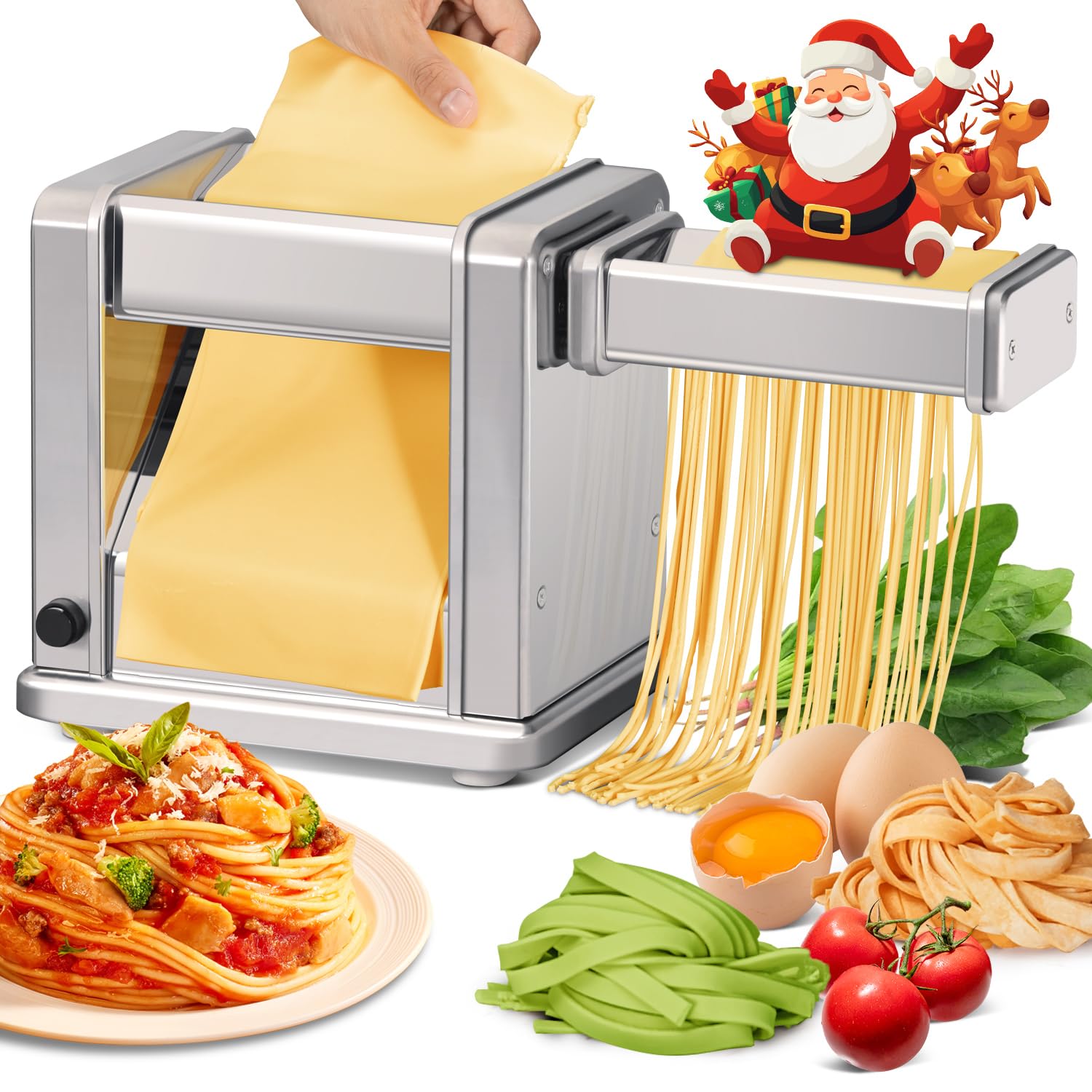
Maxceysen’s electric roller is aimed at cooks who want a multi-use dough sheeter: noodles, dumpling wrappers, wonton skins, lasagna sheets, and even thin pancakes. The integrated motor design is the big lifestyle win — you don’t have an external motor hanging off the side, and the setup looks cleaner on the counter.
The owner feedback is encouraging because it highlights a mature, realistic workflow: you still knead dough first (which many people enjoy), then the machine takes over the repetitive rolling and cutting. That separation of duties is exactly why roller machines can feel more “culinary” than extruders. You control gluten development and dough resting, then the machine handles consistency.
A recurring note is that cutting can sometimes be imperfect if the dough is too soft, too wet, or not dusted properly. That’s not a deal-breaker — it’s a technique flag. If you want cleaner cuts, aim for a slightly drier dough, dust the sheet lightly with flour, and avoid feeding sheets that are tacky on the surface. When the surface is dry-to-the-touch, cutting becomes dramatically cleaner.
Why it’s a strong choice
- Multi-purpose rolling – great for dumpling skins and noodle sheets, not just Italian pasta.
- Built-in motor look – tidy setup that feels less cluttered than bolt-on motor designs.
- Easy routine for weekly prep – many owners roll a batch, cut, then freeze portions for later.
- Good early results – users frequently report “perfect the first time” when dough is properly kneaded and rested.
Good to know
- It’s not a “mixing machine” — you still knead dough beforehand.
- If the cutter misses strands, it’s usually a dough moisture/dusting issue; adjust technique and it improves.
- Like most roller machines, it’s typically a brush-clean tool rather than a water-wash tool.
Ideal for: cooks who want an electric roller that supports Asian wrappers as well as classic pasta sheets and strands.
9. GVODE 3-in-1 Electric Pasta Maker – Vertical Feed, Fast Rolling, Less Fuss
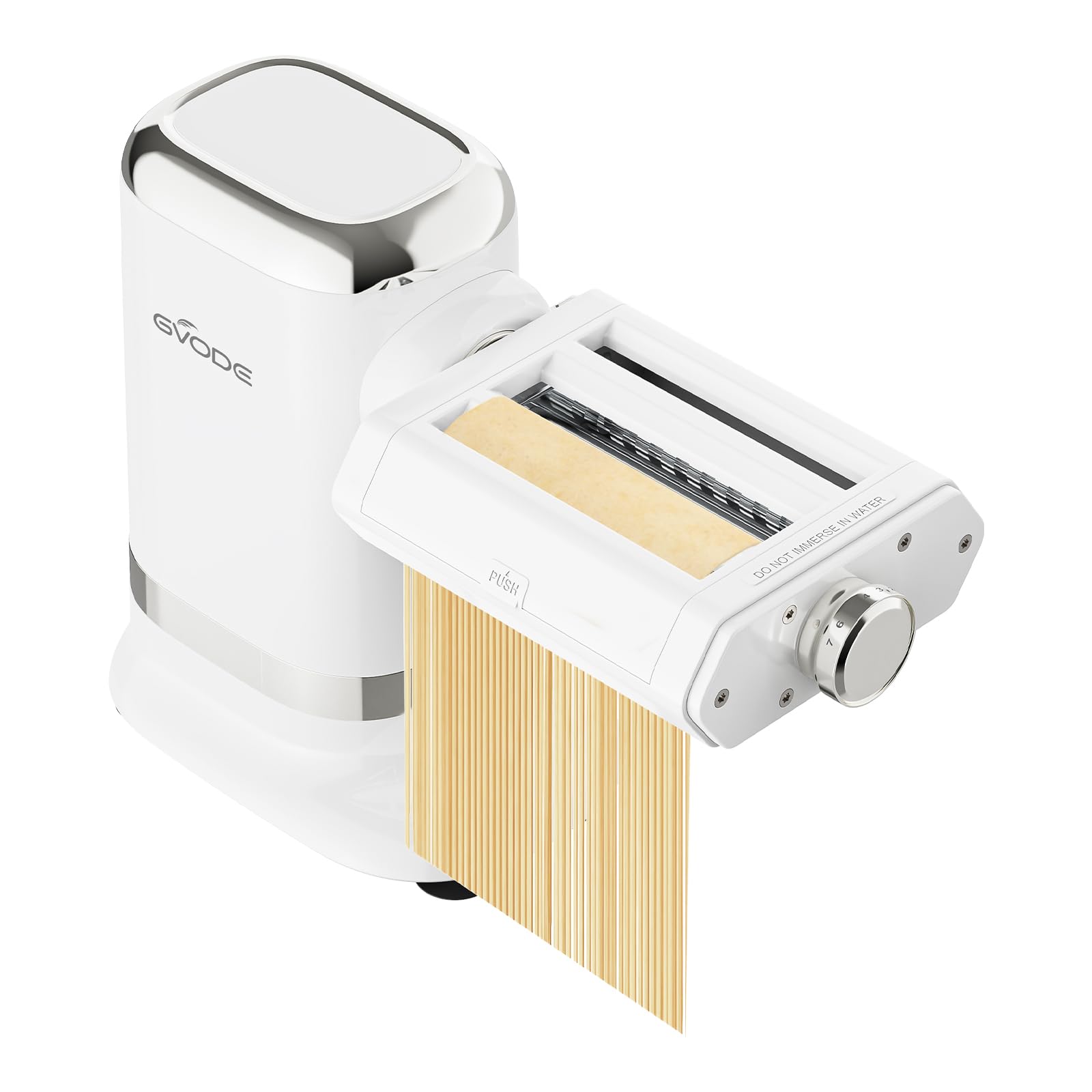
GVODE’s design philosophy is refreshingly practical: make rolling and cutting doable by one person without needing a table clamp drama. Users love the vertical feed style because it changes the ergonomics. You’re not fighting gravity as the sheet stretches out; you’re guiding it, dusting it, and catching it in a controlled way.
Owners frequently describe this as their “first-time pasta success” machine. Why? Because the machine reduces coordination challenges. You’re not cranking with one hand, feeding with another, and trying to catch noodles with a third hand you don’t have. The suction base also gets praise — it can stabilize the workflow so you feel in control.
The most important technique tip with GVODE (and any cutter machine): dust before you cut. Lightly flour the sheet, especially on humid days, and keep your dough surface dry. That’s what prevents sticking inside the cutter and gives you clean spaghetti/fettuccine strands that separate instead of clumping.
Why it’s easy to live with
- One-person operation – vertical feed and motor help reduce coordination headaches.
- Strong motor feel – users often describe it as durable and “heavy enough to feel stable.”
- Clear thickness control – eight settings make it easier to dial in sheets for ravioli, lasagna, or noodles.
- Beginner wins – many first-time pasta makers report success quickly with basic recipes.
Good to know
- Speed can feel fast at first; go slower with your hands, not with force, and you’ll adapt quickly.
- Not dishwasher safe; cleaning is brush-based and best done dry.
- This is a roller/cutter tool, not an extruder — you still knead dough first.
Ideal for: solo cooks or couples who want motorized sheet pasta without complicated clamping and multi-person coordination.
10. Shule Electric Pasta Maker (Motor + Ravioli Roller) – Fun, Fast Rolling with Extra Tools

This Shule set is for the cook who wants options: a motor for speed, a hand crank for control, cutters for different widths, and a ravioli roller to play with. It’s a “do more things” package, and that’s exactly why it’s popular with people who like exploring new kitchen projects.
Real-world feedback shows two very honest truths. First: it works, and once you figure out the motor attachment, it can make rolling much easier than pure hand cranking. Second: it’s noisy. Not “deal-breaker unbearable,” but definitely not a quiet appliance. That’s the price of motor-assisted rolling at this tier.
The ravioli roller is the polarizing part. Some users find it produces smaller ravioli than they prefer and end up using the machine mainly for sheets, then hand-cutting larger ravioli. That’s not a failure — it’s actually a smart workflow. Use the roller to create consistent sheets, then customize the stuffing and size by hand. You get better control and often less waste.
Why people enjoy it
- Motor + hand crank flexibility – speed when you want it, manual control when you need finesse.
- Multiple attachments – noodle widths plus a ravioli roller encourage experimentation.
- Solid clamp stability – many users report it holds firmly and doesn’t wobble while rolling.
- Makes pasta feel “less intimidating” – rolling by motor lowers the barrier for beginners who fear hand-crank frustration.
Good to know
- Expect noise — motorized rollers are rarely quiet.
- Cleaning is brush-based; avoid water washing the body to protect rollers and cutters.
- The ravioli attachment may feel limiting if you want large ravioli; many people prefer sheets + hand shaping.
Ideal for: experimenters who want motorized rolling plus attachments, and don’t mind a louder machine.
11. Shule Motor Set Pasta Roller (Stainless) – Convenient Motor Assist, With Realistic Expectations

This Shule motor set is a straightforward “motorized roller on a budget” option: you get the stainless body, a motor that can be removed, a thickness dial, and the core rolling/cutting functionality that makes homemade noodles and pasta far less tiring than full hand cranking.
The most useful insight from long-term owner feedback is durability realism. Many people love it early on and get great utility, but a portion of users report that after months of use the thickness setting mechanism can drift or slip. When that happens, the machine may suddenly jump from wide settings to thin settings, which can jam dough and create a mess.
Here’s the expert way to buy this class of roller machine: treat it like a helpful tool, not a forever heirloom. Keep dough well-kneaded and rested (so it feeds cleanly), avoid forcing thick dough through thin settings, and keep the rollers clean and dry. If you do that, you can get a lot of value out of it — especially if you’re using it weekly, not daily.
Why it still makes sense
- Motor assistance reduces fatigue – great for people who find hand cranking uncomfortable.
- Removable motor – you can switch to hand crank as a backup.
- Stable rolling for routine noodles – many users find it reliable for everyday pasta sheets.
- Good “secondary machine” role – handy for keeping one roller dedicated to certain dough types.
Good to know
- Some owners report thickness dial alignment issues over time; gentle operation and proper dough texture help.
- It’s loud — motor noise is normal in this category.
- Not a water-wash machine; keep it dry and brush-clean to preserve rollers and cutters.
Ideal for: occasional pasta makers who want the convenience of a motor and are okay with a more “tool-like” maintenance mindset.
12. Sailnovo 180 Manual Pasta Maker – Simple, Reliable Sheets (If You Don’t Mind Cranking)

Even though this guide focuses on automatic and motor-assisted options, a strong manual roller still deserves a place. Why? Because some people genuinely enjoy the hands-on feel — and a manual roller is simple, compact, and doesn’t add motor noise to your kitchen.
Sailnovo’s manual machine gets a lot of praise for doing the basics well: consistent rolling, easy thickness changes, and a cutter that can handle common noodle widths. Beginners often report quick success making lasagna sheets and basic noodles. The most common complaint is also classic for this category: the clamp may not feel as rock-solid on every countertop, especially if your surface is thick or rounded.
The key care rule is also crystal clear: don’t wash the cutter head in water. Owners emphasize dry brushing and careful cleaning to protect blade sharpness and prevent rust or performance loss. If you adopt that habit, a manual roller like this can stay useful for a long time — and it’s an easy “backup plan” even if you later buy an automatic extruder.
Why it’s still worth it
- Simple, low-tech reliability – no motor, fewer failure points, and very predictable results.
- Great learning tool – teaches you dough feel and thickness control in a hands-on way.
- Compact storage – easy to stash when not in use.
- Excellent for sheets – lasagna, dumpling wrappers, and noodles with a satisfying “made by hand” feel.
Good to know
- Clamp strength depends on your counter thickness and edge shape; some setups need extra padding for grip.
- It’s manual — you’ll feel it in your wrists if you do big batches often.
- Cleaning must be dry; water washing can shorten the life of blades and rollers.
Ideal for: cooks who want a low-cost, hands-on sheet pasta experience (or a simple backup machine) and don’t mind manual cranking.
How Pasta Makers Actually Work (and Why “Dough Behavior” Beats Specs)
A lot of shoppers get trapped comparing wattage, disc counts, and “number of settings.” Those specs matter — but they’re not what decides success. The real difference is how the machine reacts when dough is slightly imperfect, because in real kitchens dough is always slightly imperfect.
What automatic extruders are really doing
- Mixing: paddles distribute liquid through flour. If liquid is dumped too fast, you get wet clumps and dry pockets.
- Kneading: a compact knead develops structure without forming a smooth bread-like ball. Many machines target a crumbly “wet sand” texture.
- Extrusion: the screw/paddle system forces dough through a disc. Too wet = smear and sticking. Too dry = crumbling and stalled extrusion.
This is why pouring liquid slowly is not “a nice tip.” It’s the controlling variable. Slow pouring lets flour hydrate evenly, which makes extrusion smoother and reduces the chance of disc clogging.
What makes roller machines feel “professional”
- Rested dough feeds cleanly: resting relaxes gluten, reduces tearing, and makes thin settings easier.
- Progressive thinning: running through settings gradually prevents shock tearing and keeps thickness consistent.
- Surface dryness controls cutting: a lightly floured, dry surface separates cleanly in cutters; tacky dough clumps.
For motorized rollers, the “power” you feel isn’t about brute force. It’s about consistent speed while you guide dough. That consistency is what gives you uniform sheets, cleaner cuts, and less frustration.
If you’re chasing restaurant-level pasta texture, the roller path is often the most controllable. If you want pasta often with minimal fuss, extruders win. Both can be fantastic — as long as you buy the style that matches your cooking personality.
FAQ: Automatic Pasta Makers, Answered
Do automatic pasta makers really save time (or just move the work around)?
Why does my extruder pasta dough look crumbly instead of smooth?
Should I weigh ingredients instead of using measuring cups?
Can I make egg pasta, gluten-free pasta, or veggie pasta in these machines?
What’s the easiest way to keep cleanup from ruining pasta night?
Final Thoughts: Picking the Best Automatic Pasta Maker for You
Fresh pasta should feel like a win — not a messy science experiment. The fastest way to choose confidently is to decide what kind of pasta lifestyle you want:
- Want true “automatic extruded pasta” most nights? Start with the Philips Viva Compact HR2370/05 (or the black HR2371/05 if you prefer that look). The workflow is proven, compact, and built for habit-building.
- Need bigger batches and more variety in one go? Go premium with the Philips 7000 Series HR2660/03 for a family-friendly output rhythm.
- Want “pasta night” plus a dough helper? The Cuisinart Pastafecto PM-1 is a smart hybrid if you also make bread dough and like multi-purpose appliances.
- Prefer sheet pasta, dumpling skins, and the artisan approach? Choose a roller machine. For a long-term “serious tool,” the MARCATO Atlasmotor is a classic. For a tidy integrated-motor option, look at the Maxceysen electric roller.
- Want a budget-friendly extruder with multiple shapes? The two VEVOR options are strong contenders: VEVOR (Black) or VEVOR (Blue). Follow ratios closely, add liquid slowly, and you’ll be surprised how good fresh pasta can taste.
Ultimately, the best automatic pasta maker is the one that matches your habits: your preferred pasta style, your batch size, and how much hands-on crafting you actually enjoy. Pick the workflow you’ll repeat happily, and you’ll get the best kind of kitchen upgrade — one you use constantly, not occasionally.
