
Homemade bread is one of those “small upgrades” that quietly changes your whole week: breakfasts feel warmer, sandwiches taste fresher, and you stop paying premium prices for loaves that go stale in two days.
But here’s the truth most shopping guides skip: bread machines don’t fail because the motor is weak or because “this one has 20 programs.” They fail because real kitchens are messy. Flour varies. Humidity shifts. Yeast behaves differently on a cold counter than on a warm one. And the difference between a gorgeous loaf and a dense brick is often a 30‑second dough check in the first 10 minutes. If you’re hunting for the best automatic bread maker, you don’t need more hype—you need the kind of clarity that makes your first loaf a success.
This guide does exactly that. Below are 12 carefully chosen bread makers on Amazon—from genuinely affordable “first machine” picks to premium units built for perfect crust color and repeatable results. I’m using the real-life pain points owners mention (sticky paddles, dark bottoms, “walking” machines, confusing manuals, gluten-free collapses) and turning them into practical buying advice—plus machine-by-machine tips you can’t easily learn from a spec sheet.
In this article
How to Choose the Best Automatic Bread Maker for Your Kitchen
A bread machine is a “set it and forget it” appliance—after you set it up like a baker, not like a gambler. Pick the right pan shape, the right heating style, and the right level of control, and you’ll get consistent loaves that make store bread feel… flat.
1. Loaf shape matters more than people think
Two machines can both claim “2 lb loaves” and still feel completely different on your counter and on your plate:
- Vertical pans (taller loaves) often look impressive, but slices can be wider and shorter—sometimes awkward for standard toasters and sandwich bags.
- Horizontal pans (longer, lower loaves) tend to produce more “grocery-store familiar” sandwich slices and a more even bake across the top.
If your household lives on toast and sandwiches, prioritize slice fit and slice count—not just maximum loaf weight. If you mainly make thick slices for butter and jam, vertical loaves can be totally fine (and often save counter space).
2. The heating system is your crust “personality”
Bread machines aren’t ovens. They’re controlled fermentation boxes that also bake. The heating design changes your crust color more than the wattage number does:
- Single heater (bottom-heavy bake): common on budget models; can lead to pale tops and darker bottoms if the cycle runs hot.
- Dual heaters (top + bottom): helps even out browning and reduces the “pale lid” problem, especially on enriched breads.
- Convection assist: a fan can improve crust color and help even out temperature gradients, especially on larger loaves.
3. Kneading is where great machines earn their keep
Most bread machine disasters happen early, during mixing and kneading. What you want is consistent incorporation and a smooth dough ball:
- Single paddle: simpler, easier to clean, usually fine for standard white and wheat loaves.
- Dual paddles: better coverage in wider horizontal pans; helps avoid dry pockets of flour and improves symmetry on larger loaves.
- Collapsible paddle designs: reduce the infamous “paddle hole” in the bottom of the finished loaf (a real win if you slice for sandwiches).
And yes—machines can “walk” while kneading if the dough is stiff or unbalanced. That’s not just annoying; it’s a real safety risk. If you know you’ll knead heavier doughs (whole wheat, bagel, dense multigrain), choose a heavier unit or plan to park it on a grippy silicone mat.
4. Pan coating: the cleanup and health decision
The pan is the part you touch every bake, and it determines whether bread slides out like a dream or needs aggressive shaking:
- Traditional nonstick: common and usually easy-release when treated gently (no metal tools, no abrasive pads).
- Ceramic or “PFAS‑free” style coatings: many owners prefer these for peace of mind; they can also be excellent for sticky gluten-free dough.
- Dishwasher-safe parts: convenient, but still handle with care—coatings last longer with soft sponges and soaking.
5. Programs: count them… then ignore the marketing
Here’s the expert move: treat program count like a bonus, not the foundation. A best automatic bread machine is one that nails three things reliably: basic white, whole wheat, and dough. Everything else (jam, yogurt, cake, “meat floss,” dessert) is nice—but not what earns your trust.
What’s actually valuable:
- Gluten-free program timing that supports a single strong rise without collapse.
- Custom cycle control (edit knead/rise/bake timing) if you want to adapt to altitude, winter kitchens, or sourdough-style doughs.
- Mix-in alerts or dispensers so raisins, nuts, and seeds don’t get pulverized in the first knead.
6. The 10-minute dough check that saves most loaves
If you remember one thing from this guide, make it this: check your dough around minute 8–10 of the first knead. You’re looking for a soft, smooth ball that cleans the sides of the pan.
- If it’s too wet: it smears and never forms a ball → add flour 1 tablespoon at a time.
- If it’s too dry: it clunks, tears, or rides the paddle → add water 1 teaspoon to 1 tablespoon at a time.
That tiny adjustment is how experienced bakers get consistency even when flour brands, egg sizes, and humidity change. This is also why so many “my machine is broken” reviews are actually recipe/hydration problems in disguise.
The Best Automatic Bread Machine Feature Checklist
- Sandwich household: horizontal pan, mix-in alert, strong kneading coverage.
- Gluten-free household: ceramic/pfas-free pan, stable temperature control, proven gluten-free timing.
- “Set it overnight” household: delay timer + keep-warm + quiet motor (and a stable base that won’t wander).
- Experimenters: custom program control, editable rise/bake times, reliable service/support.
Quick Comparison: 12 Best Automatic Bread Maker Picks
Use this table to find the right “type” of machine for your kitchen—then jump into the deep-dive reviews for the real-world details that actually determine whether you’ll love your bread maker after the honeymoon phase.
On smaller screens, swipe or scroll sideways to see the full table.
| Model | Loaf style | Capacity | Best match | Amazon |
|---|---|---|---|---|
| Cuisinart CBK-110NAS Compact | Vertical loaf | Up to 2 lb | Best overall balance of simplicity, results, and brand support | Amazon |
| KBS Premium Dual Heater (Ceramic Pan) | Horizontal loaf | Up to 2 lb | Gluten-free wins + even crust with dual heaters | Amazon |
| KBS Pro 710W (Ceramic Pan + Dispenser) | Horizontal loaf | Up to 2 lb | Power kneading + fast dough cycles for pizza nights | Amazon |
| Briskind 19-Menu Glass Touch Panel | Horizontal loaf | Up to 2 lb | Big readable display + custom settings for precision bakers | Amazon |
| Neretva 20-in-1 Dual Heater (Ceramic) | Horizontal loaf | Up to 2 lb | Compact, quiet, even browning with top + bottom heat | Amazon |
| Hamilton Beach Digital (Dishwasher-Safe) | Horizontal loaf | Up to 2 lb | Easy cleanup + reliable cycles for everyday bread and dough | Amazon |
| OSIPOTO 17-in-1 Stainless Steel | Horizontal loaf | Up to 2 lb | Beginner-friendly controls + quiet baking for first-timers | Amazon |
| Rosewill 25-in-1 Dual Heater | Horizontal loaf | Up to 2 lb | Huge menu variety at a very friendly price | Amazon |
| Amazon Basics Programmable | Vertical loaf | Up to 2 lb | Lowest-cost entry into reliable basic bread and dough | Amazon |
| Cuisinart CBK-210 Convection + Dispenser | Vertical loaf | Up to 2 lb | Premium crust color + auto mix-ins + custom timing | Amazon |
| Breville BBM800XL Custom Loaf | Horizontal loaf | Up to 2.5 lb | Advanced customization + mix-in dispenser + “modify” control | Amazon |
| Zojirushi Virtuoso Plus BB-PDC20BA | Horizontal loaf | Up to 2 lb | Flagship consistency: dual heaters + dual paddles + top crust | Amazon |
In-Depth Reviews: 12 Best Automatic Bread Machine Picks
Now the fun part: the real-world breakdown. I’ll tell you where each machine shines, where it can frustrate you, and exactly how to get your best results—especially on the breads that trip people up (whole wheat, sweet doughs, add-ins, and gluten-free).
1. Cuisinart CBK-110NAS – The “Most People, Most Days” Bread Maker

This is the machine I point to when someone says, “I want fresh bread, I don’t want drama, and I don’t want to become a part-time bread scientist.” The CBK-110NAS hits that sweet spot: it’s compact enough to live on the counter, straightforward enough to use without studying a manual for an hour, and capable enough to make genuinely satisfying white, French-style, and sweet loaves with very little babysitting.
Where it earns trust is consistency. Owners routinely describe that “first loaf shock”—that moment you taste bread that’s still warm, still aromatic, and somehow better than the premium loaf you used to buy. The control panel is intentionally simple: loaf size, crust shade, program, start. That’s it. And that’s the point. This isn’t a machine that tries to impress you with 25 niche settings—it’s built to help you win the basics.
Here’s the expert nuance: this Cuisinart can produce excellent whole wheat, but whole wheat is less forgiving than white. If you dump-and-go and never check hydration, whole wheat is where people get dense loaves and blame the machine. If you do the 10-minute dough check, whole wheat becomes very doable—and the CBK-110’s kneading is good enough to reward you for that small effort.
Why you’ll like it
- Low learning curve – Clear controls, predictable cycles, and a great “first machine” feel.
- Great everyday breads – White, French-style, sweet breads, and dough cycles are where it feels most reliable.
- Compact but full-size output – Counter-friendly body, still makes up to a 2 lb loaf.
- Brand support confidence – Cuisinart’s reputation and warranty culture matter if you bake weekly.
Good to know
- If the dough is stiff, any bread maker can vibrate—keep it centered and away from counter edges.
- Whole wheat needs hydration attention; do the 10-minute dough check for your best results.
- Like most machines, the paddle can leave a small hole—remove it before bake if that bothers you.
My pro tip: For the first 3 loaves, use a scale for flour (even if you measure liquids by cup). That one change alone makes this machine feel “magically consistent.”
2. KBS Premium Dual Heater – Even Crust Color, Sticky Dough Friendly
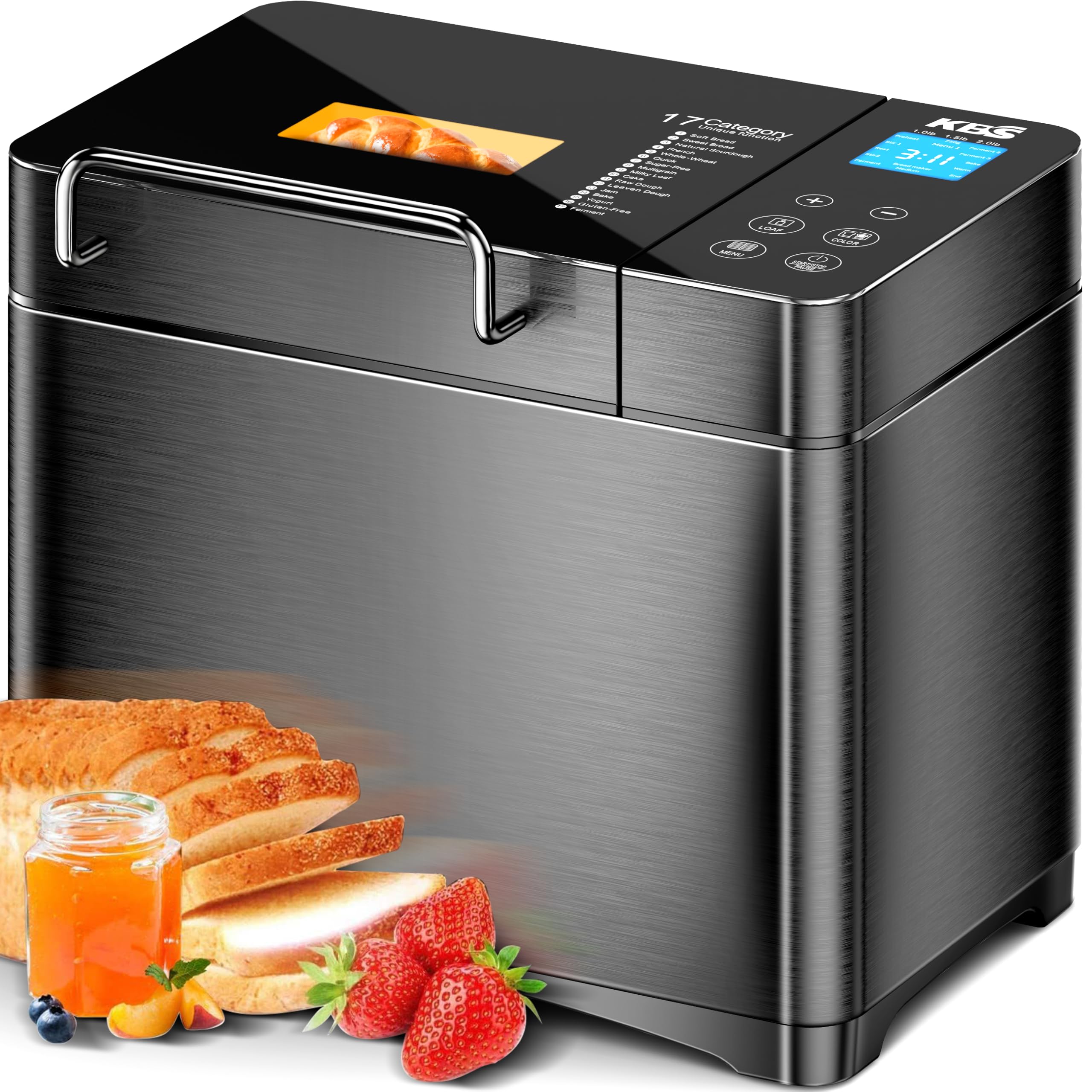
If you’ve ever made a loaf that tasted great but looked oddly pale on top (or overdone on the bottom), you already understand why dual heaters matter. This KBS Premium model adds heat from both above and below, which helps even out browning and gives you a more “finished” bakery look without hacks.
But the bigger win—especially in real kitchens—is how it handles sticky doughs. Gluten-free bread is notoriously clingy, and many pans make it a fight to remove the loaf cleanly. The ceramic-coated pan here is a genuine advantage: owners consistently describe loaves sliding out cleanly with far less drama. That’s not just convenience; it protects the pan coating because you’re not tempted to pry with tools.
The gluten-free program timing is another standout. Gluten-free is not “knead like normal bread, rise like normal bread.” It needs a single strong rise, then bake—without overproofing and collapsing. Users who’ve struggled for years with dense or sunken gluten-free loaves often report that this machine finally makes them feel like bread is back on the menu.
Why it stands out
- Dual heaters – Helps with even browning and reduces pale tops.
- Ceramic pan release – Particularly helpful for sticky gluten-free and enriched doughs.
- Quiet, steady operation – Many users describe it as surprisingly calm for a powerful machine.
- Versatile beyond bread – Dough, jam, yogurt, and bake/rise functions make it a genuine kitchen tool.
Good to know
- Some recipes in included books can feel under-explained; you may prefer trusted sources once you learn the settings.
- For add-ins, you’ll still want to watch the alert timing your first couple of bakes.
- As with all machines, check hydration early—especially on whole wheat and gluten-free.
My pro tip: For gluten-free loaves, keep a silicone spatula nearby. During the first few minutes of mixing, scrape flour pockets off the corners once, then let it run. That tiny step upgrades texture dramatically.
3. KBS Pro 710W – Fast Dough, Strong Kneading, Hands-Off Add-Ins
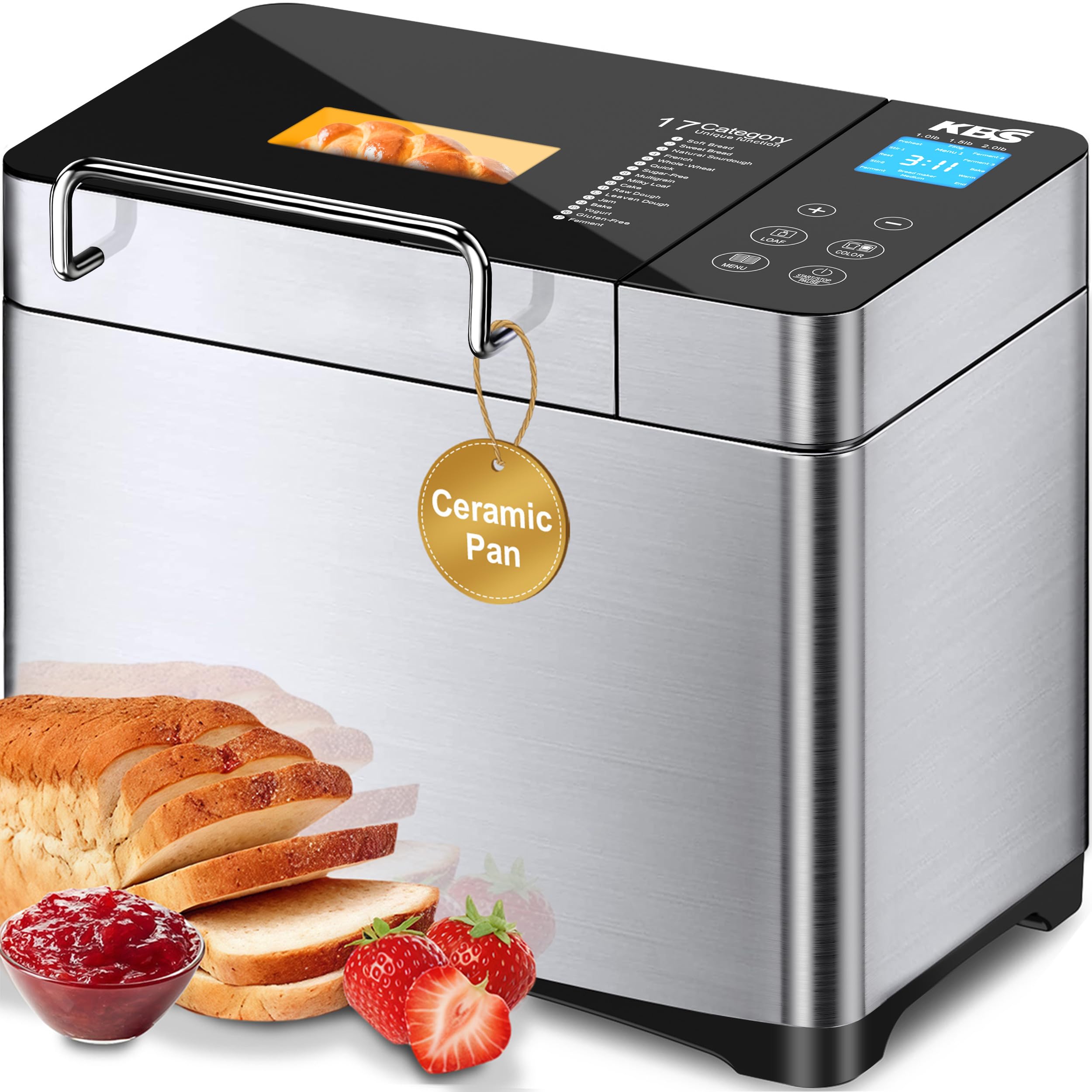
Some bread makers are “bread only.” This one is a weekly workflow machine—especially if you love pizza, rolls, buns, and anything dough-based. Owners regularly call out how quickly it turns ingredients into smooth, elastic dough, and how much it lowers the friction of making pizza at home. That matters, because the best appliance is the one you actually use on a Tuesday.
The power advantage is real here, but not for the reason most people think. Higher wattage isn’t just about “faster baking.” It’s about kneading strength and consistency when the dough thickens. The KBS Pro stays engaged as hydration shifts and the dough transforms, so you’re less likely to get dry flour pockets or uneven mixing on heavier doughs.
The ceramic pan is also doing quiet work in the background: it makes cleanup feel less like a chore and it handles sticky dough with less tearing. And the auto dispenser is the kind of feature you don’t realize you want until you’ve lived without it. If you make cinnamon-raisin, olive bread, or nutty multigrain, the timing of mix-ins changes the final loaf. Added too early, they shred and tint the dough. Added too late, they sit in layers. A dispenser helps you land in the sweet spot more often.
Highlights
- Excellent dough cycle – Great for pizza, rolls, cinnamon buns, and oven-baked artisan-style loaves.
- Ceramic pan – Easy release, easier cleanup, and kinder to sticky doughs.
- Auto mix-in dispenser – Helps raisins/nuts distribute without getting pulverized early.
- Touch panel + window – Easy to operate and satisfying to watch during the rise.
Good to know
- Instruction quality can be uneven; once you learn the settings, you’ll likely rely on your favorite recipes.
- Like any strong kneader, it can move if the dough is very stiff—park it on a grippy surface.
- If you accidentally start a cycle, learn the cancel method (usually a long-press) so you’re never “stuck.”
My pro tip: Use this machine as your “dough engine.” Let it knead and proof, then bake in your oven for a thicker, crustier artisan vibe—especially for sourdough-style recipes.
4. Briskind 19-Menu – The “Readable, Customizable, Actually Helpful” Machine

This is one of the most “thoughtfully designed for humans” bread makers in this list—especially if you care about readability and control. The angled glass touch panel and backlit display sound like small things, but in real life they change how often you use the machine. You can actually see the countdown, understand what the machine is doing, and make confident choices without squinting.
The horizontal ceramic pan is another quiet win. It produces a more traditional loaf shape (better for sandwich slicing), and the ceramic coating is a big deal for easy release. Many owners highlight that the loaf slides out cleanly and cleanup is quick, which is exactly what turns “I’ll bake sometimes” into “I bake every week.”
The deeper value, though, is how it supports experienced habits. The machine keeps working even if you lift the lid early, which is perfect for doing the 10-minute dough check and adjusting hydration without triggering errors. And the custom setting gives you leverage if you live somewhere that breaks “standard recipes”—high altitude, very dry winters, or hot humid summers. This is where a best automatic bread machine separates itself: not with more presets, but by letting you adapt without fighting the appliance.
Why it’s a strong value
- Excellent readability – Big backlit display and a clean, modern interface.
- Custom mode – Useful for dialing in rise/bake for your environment.
- Stable, “stays put” feel – Many users describe it as heavy enough to feel secure on the counter.
- Good “manual baker” compatibility – Lid checks and small adjustments feel welcome, not punished.
Good to know
- Pan insertion can take practice—learn the locking motion with an empty pan first.
- It doesn’t auto-add mix-ins, but it alerts you clearly when it’s time.
- Touch panels are easy to wipe, but also easy to bump—avoid brushing flour across the controls mid-cycle.
My pro tip: If paddle holes bother you, remove the dough after the final knead, pull the paddle, shape the loaf, then return it for the final rise and bake. It’s a tiny extra step with a big “sandwich slice” payoff.
5. Neretva 20-in-1 – Dual Heaters in a Small, Stylish Footprint

Neretva has built a reputation around “small but serious” machines, and this one fits that pattern. It’s compact enough for tight counters, it looks genuinely good (the color options are fun without feeling cheap), and it brings a feature that usually costs more: dual heaters for more even browning.
Owners who pay attention to crust color love this model for a simple reason: it reduces the classic bread-machine unevenness where the top looks underdone compared to the sides. If you’re a “medium crust, evenly baked” person, that matters. It also helps when you bake enriched breads (milk breads, egg breads) that can color unevenly if the heat is bottom-heavy.
The ceramic pan helps with release, and the machine’s quiet operation makes it a strong choice for overnight baking. One real-world downside: the program names can be a little quirky for U.S. users, and the manual doesn’t always explain what each niche program is for. That’s not a dealbreaker if you mainly use basic, French, whole wheat, and dough—but it’s something to know.
Why it works
- Compact footprint – Great for apartments, small kitchens, or minimalist counters.
- Dual heaters – Helps achieve more uniform crust color and bake consistency.
- Ceramic pan – Easier loaf release and cleanup, especially for sticky dough.
- Quiet baking – A strong “set it overnight” option if you’re sensitive to noise.
Good to know
- Some program labels are nonstandard; you may ignore half the settings and still love the machine.
- Alert beeps can be subtle—use a phone timer if you don’t want to miss mix-in prompts.
- Like all machines, it benefits hugely from the 10-minute dough check—especially on whole wheat.
My pro tip: Warm your liquids slightly (think “comfortably warm,” not hot) and start with the 1.5 lb size while learning. You’ll get more consistent rises, then scale up once you know your flour and yeast behave well.
6. Hamilton Beach Digital – Reliable Bread, Strong Dough Cycle, Low Cleanup Friction

Hamilton Beach machines tend to win on one overlooked trait: they reduce “friction.” Not friction like gears—friction like the little annoyances that stop you from baking again next week. This model is easy to program, easy to clean, and consistent enough that you don’t feel like every loaf is a science experiment.
Owners frequently mention using this machine primarily as a dough maker—because that’s often where bread machines truly shine. Let the machine do the messy part (knead, proof, time everything), then shape and bake in the oven for rolls, buns, braided loaves, or crustier breads. If you like that hybrid approach, Hamilton Beach is a very comfortable partner.
One thing to know: the included documentation may be more “how to use” than “here are 50 great recipes.” That’s not a flaw in the machine’s performance, but it does mean you’ll want a trusted recipe source once you outgrow the basics. The good news is: with consistent kneading and sensible default cycles, this machine behaves well with standard bread-machine recipes.
Why it’s a great daily driver
- Low hassle – Simple digital programming and predictable results.
- Great dough cycle – Ideal for buns, rolls, cinnamon rolls, and pizza dough workflows.
- Easy cleaning – Dishwasher-safe parts reduce the “ugh, cleanup” barrier.
- Solid bread texture – Many owners describe consistent crumb and dependable crust.
Good to know
- If you want a huge built-in recipe library, you may supplement with cookbooks or trusted sites.
- Like most single-heater machines, crust color can vary by recipe—use crust shade + loaf size to dial it in.
- For add-ins, rely on the beep timing and add them when prompted (not earlier).
My pro tip: If your bottoms are too dark, try one step down in crust shade and use the 1.5 lb size. That combo often fixes “overbaked bottom” without sacrificing a browned top.
7. OSIPOTO 17-in-1 – High Success Rate for First-Timers
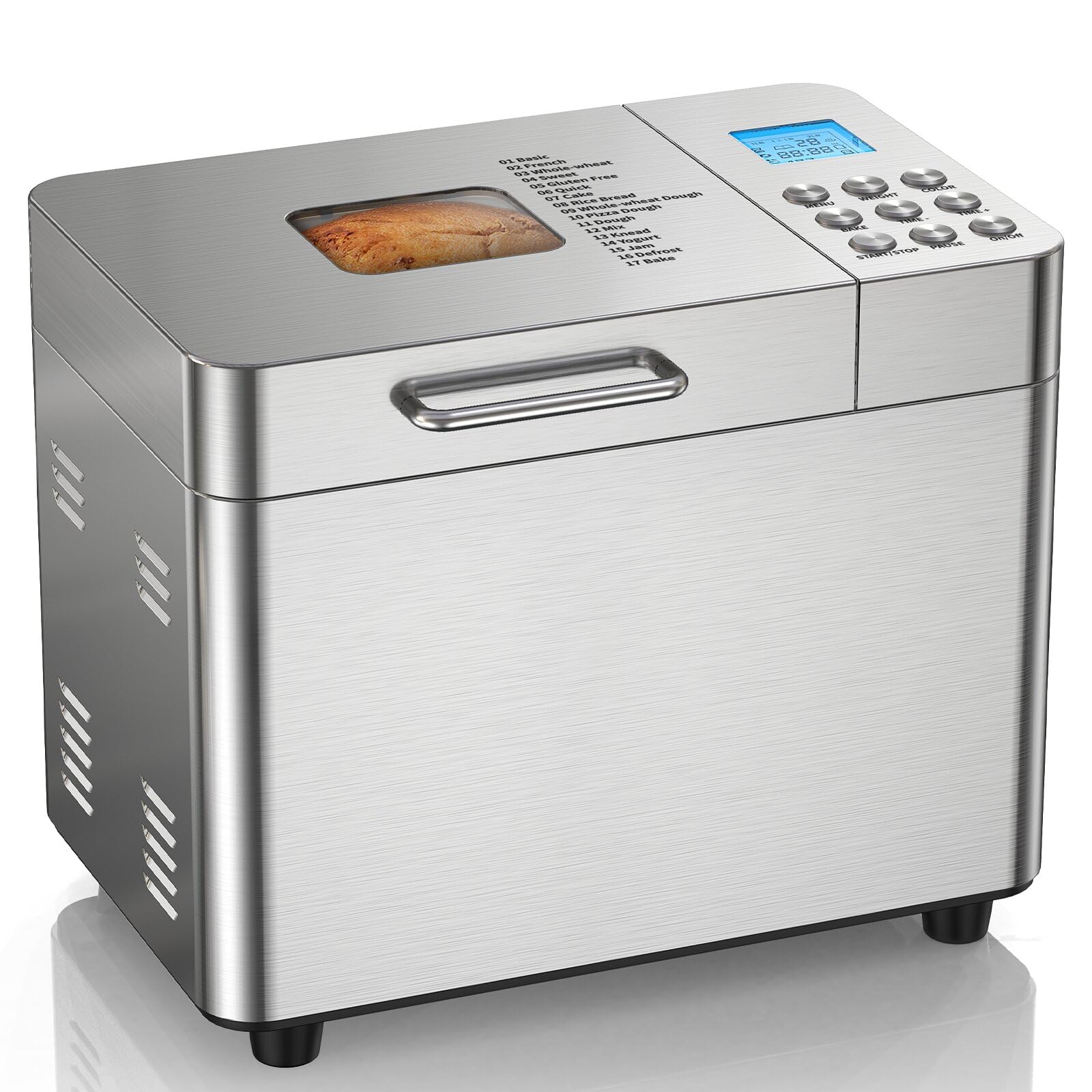
If you’re new to bread machines and you want that “press start and feel proud” experience, OSIPOTO is designed for you. The controls are beginner-friendly, the program set is broad enough to keep things interesting, and owners frequently describe consistent texture with minimal trial and error—especially once they find the program they love (French is a common favorite).
The low-noise claim matters more than you’d think. Kneading is the loud phase on most machines. Here, users regularly say it’s calm enough to run without turning your kitchen into a construction zone. That makes it a realistic “overnight timer” machine, especially if your kitchen is near bedrooms.
The most helpful real-world insight from owners: the machine is capable, but like many modern appliances, the instructions may assume knowledge. For example, “butter should be melted” or “plugging it in powers it” can be confusing if you’ve never used a bread maker. Once you understand the rhythm—liquids first, then flour, then yeast separated on top—the success rate jumps.
What it does well
- Beginner-friendly interface – Simple menu selection and clear loaf/crust options.
- Quiet enough for real homes – Less intrusive during kneading than many budget units.
- Versatile program set – Bread, dough, jam, yogurt, gluten-free options.
- Consistent crumb – Owners frequently describe smooth texture and reliable slice quality.
Good to know
- Some recipes bake slightly darker on the bottom—adjust crust setting and loaf size as needed.
- As with all machines, measuring accuracy is the difference between “great loaf” and “meh loaf.”
- Learn your favorite two programs first before exploring the full menu list.
My pro tip: Make one “calibration loaf” before judging any bread maker: a simple white or French-style loaf with a scale-measured flour weight. That tells you what the machine can do at its best.
8. Rosewill 25-in-1 Dual Heater – Feature-Rich Without the Premium Price
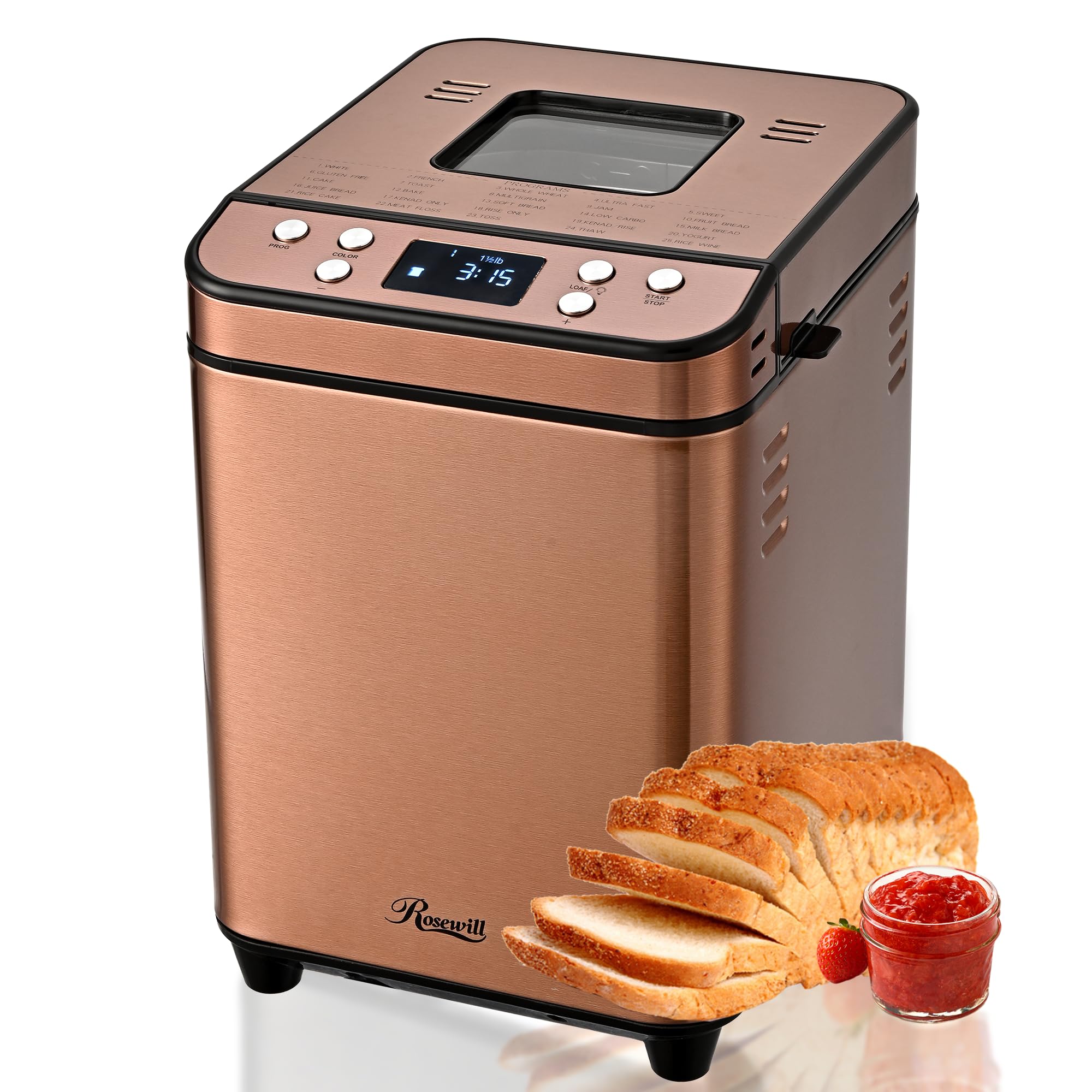
Rosewill’s pitch is simple: give people more versatility without pricing them into “luxury appliance” territory. And for a lot of households, that’s exactly right. You get a big set of programs (including gluten-free, jam, yogurt, cake), multiple loaf sizes, and dual heating designed to improve even baking.
Owners consistently describe two “wow” moments: the first is waking up to fresh bread using the delay timer, and the second is how evenly the loaf bakes top-to-bottom compared to older single-heater machines. That’s the dual heater effect in the real world: fewer pale tops, fewer underbaked bands, more uniform crust.
The most honest con is also the most normal: kneading is the loudest phase on many machines. Some owners still find kneading noisy even if baking is quiet. That’s not a failure; it’s physics. If quiet is your top priority, a heavier, dampened model may be better. If versatility and value are your priorities, this Rosewill is a very strong “do a lot for not a lot” option.
Why it’s a smart buy
- Huge program range – Great if you want to explore beyond basic bread.
- Dual heaters – Helps even out crust color and bake consistency.
- Family-size capacity – Up to 2 lb loaves for 5–6 people.
- Strong value – Owners frequently describe it as “more than I expected for the price.”
Good to know
- Kneading can be loud; keep it away from counter edges and consider a silicone mat for stability.
- With 25 programs, you won’t use everything—learn the few that match your meals.
- Like any bread maker, it rewards accurate measuring and the 10-minute dough check.
My pro tip: Ignore the temptation to try 10 recipes in week one. Pick one bread you love (white, wheat, or sweet), perfect it, then branch out. That’s how this machine becomes a staple instead of a gadget.
9. Amazon Basics Programmable – Cheap, Capable, and Surprisingly Dependable

Let’s call this what it is: a low-cost entry point that can absolutely make good bread—if you treat it like a bread machine, not a miracle box. Owners who bake weekly with it tend to say the same things: it’s simple, it works, and the bread is light and sliceable. That’s the core promise, and it delivers.
Where budget machines get tricky is stability and documentation. Kneading can be loud, and if dough is unbalanced (pizza dough is a common culprit), a lighter machine can wobble or “walk.” The fix is simple: keep it centered, keep it away from edges, and don’t run stiff dough unattended until you know how the machine behaves.
There’s also a classic budget-appliance reality: manuals can contain typos or odd recipes. The machine isn’t the recipe. If a manual recipe tastes wildly wrong (too salty, too dense), switch to a trusted bread-machine recipe source, then dial in with the dough check. Once you do, this becomes a very respectable starter machine—especially if your goal is “fresh bread without spending much.”
Why it’s worth considering
- Very affordable – One of the cheapest ways to start baking real bread at home.
- Simple operation – Add ingredients, choose a setting, press start.
- Solid basic bread – Produces sliceable bread suitable for toast and sandwiches.
- Useful extras – Dough, jam, and ExpressBake modes add flexibility.
Good to know
- Kneading can be loud and the unit can move; placement and supervision matter.
- The paddle may stick in the loaf sometimes—soak the pan to release it and consider removing the paddle before bake.
- Recipes in the booklet aren’t always your best guide; use a trusted recipe once you learn the settings.
My pro tip: Use the budget machine like a pro machine: weigh flour, check dough at minute 10, and don’t overload add-ins. That’s how a cheap machine produces “expensive-tasting” bread.
10. Cuisinart CBK-210 – Convection Crust + Automatic Mix-In Dispenser
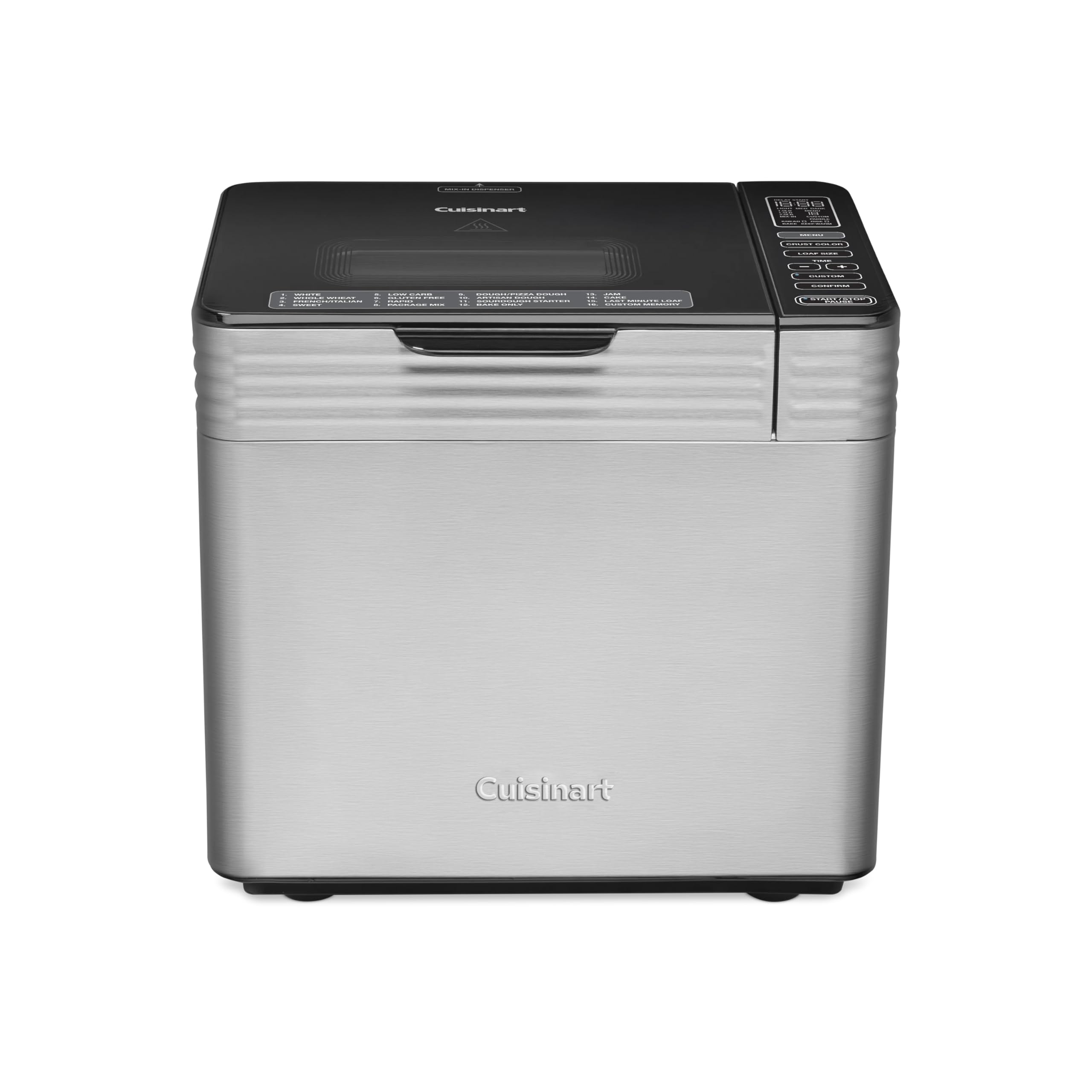
If you like the “no drama” vibe of Cuisinart but you want a more premium result—especially better crust color and easier add-in handling—the CBK-210 is the step up. The convection fan is designed to improve crust, color, and overall bake uniformity, and the automatic fruit/nut dispenser is a legit convenience upgrade.
The dispenser isn’t just about laziness. Add-ins change dough structure. Nuts and dried fruit can tear gluten strands if mixed too early; sticky add-ins can clump. A timed dispenser helps distribute mix-ins when the dough has enough strength to hold them without destroying texture. So if you bake cinnamon-raisin weekly, this feature isn’t “nice”—it’s “why didn’t my old machine do this?”
Where this machine earns its “premium” status is control. Custom timing lets you adjust cycles—useful if you want longer rises for flavor, or shorter bakes for softer crusts. If you’ve ever felt trapped by presets, this machine gives you room to grow without jumping to the highest price tier.
Why it’s a serious upgrade
- Convection assist – Better crust color and more even results on larger loaves.
- Automatic dispenser – Cleaner add-in timing and more even distribution.
- Custom control – Adjust programs to your kitchen and your recipes.
- Cuisinart build confidence – A brand people trust for long-term ownership.
Good to know
- It’s priced like a premium machine—worth it if you bake often, less compelling if you bake monthly.
- Any dispenser needs occasional cleaning; sticky add-ins can leave residue if you don’t wipe it out.
- As always: the first 10 minutes decide the loaf—check dough and adjust hydration early.
My pro tip: For raisin or nut breads, toss add-ins lightly in flour before loading (unless the recipe says otherwise). That reduces clumping and gives a more even “every slice has the good stuff” result.
11. Breville BBM800XL Custom Loaf – Modify Anything, Save Your Own Programs

Breville’s Custom Loaf is for the person who reads recipes, then immediately thinks, “Cool… but I want to change that.” It’s a premium machine, and it behaves like one: large display, modern styling, and the ability to modify programs instead of living inside presets. If you bake in a cold house, at altitude, or you simply like dialing in your perfect crumb, this flexibility is the reason to buy it.
The “Modify” capability is not just a fancy button—it’s how you turn a bread maker into a repeatable system. Maybe you want a longer rise for flavor, a slightly shorter bake to avoid a dark bottom, or a gentler cycle for enriched dough. Breville lets you adjust step durations and (where applicable) temperatures, then store custom programs. That’s how you get consistency year-round.
Owners also love two practical features: the automatic fruit/nut dispenser (set it and forget it) and the collapsible kneading paddle. That paddle design reduces the crater in the bottom of your loaf, which is a genuine quality-of-life upgrade if you slice daily. There are a few realities to accept: premium machines can still “walk” if the dough is stiff; stainless shows fingerprints; and top browning preferences vary. But if your personality is “I want control,” this machine is one of the best at giving it.
Why advanced bakers love it
- Modify presets – Adjust knead/rise/bake to match your kitchen and recipe style.
- Custom program memory – Save your best results so you can repeat them instantly.
- Auto dispenser – Hands-off add-ins done at the right time.
- Collapsible paddle – Smaller paddle hole in the finished loaf.
Good to know
- It’s a premium price; it makes the most sense for frequent bakers.
- It can move during stiff dough kneading—place it safely away from edges.
- Some users want a darker top crust; you may tweak settings to match your preference.
My pro tip: Create one “house loaf” program you adore (your everyday sandwich bread), then a second “pizza dough” program. Those two alone will justify the machine if you bake weekly.
12. Zojirushi Virtuoso Plus – The “It Just Doesn’t Fail” Bread Robot

This is the machine you buy when you’re done playing around. Zojirushi’s Virtuoso Plus has a “flagship appliance” vibe: heavy, stable, and engineered to produce repeatable results without constant fiddling. It’s famous for two design choices that genuinely matter: dual kneading blades (better mixing coverage) and dual heaters including top heat (which helps you get a real top crust instead of a steamed-looking lid).
The horizontal loaf shape is also practical: slices tend to fit toasters and sandwich routines more naturally than tall vertical loaves. And because the machine is heavy, it’s far less likely to wander on the counter, even when you knead stiffer dough. That sounds boring—until you’ve had a machine wobble toward the edge mid-cycle.
Here’s the honest truth: you don’t buy this to “save money on bread.” You buy it because you want bread you can’t reliably get from stores, you want ingredient control, and you want the process to be peaceful. Owners describe it as a real “bread robot”: load ingredients carefully, choose a course, and the machine just does the work. If you bake often, the emotional value is consistency—fewer failed loaves, fewer weird surprises, more confidence serving it to family and friends.
Why it’s legendary
- Dual kneading blades – Excellent mixing coverage and symmetry.
- Dual heaters (including lid heat) – Strong top crust and better browning.
- Heavy, stable build – Less counter movement during kneading.
- Repeatable results – “Set, trust, bake” is the core appeal.
Good to know
- It’s expensive; best for frequent bakers who will use it weekly.
- It’s large—measure your counter and storage space.
- Like all bread, results still depend on measuring and good yeast—but the machine removes a lot of variability.
My pro tip: Use gram measurements for flour and keep notes for 3 loaves. Once you lock in your hydration, this machine becomes almost comically consistent—like a kitchen appliance with a memory.
How Bread Machines Actually Work (Best Automatic Bread Machine Basics)
Bread machines are controlled environments for three phases: mixing/kneading, fermentation (rise), and baking. Most buying guides obsess over program count, but the real performance comes from how well the machine controls those phases in a normal home kitchen.
Why wattage isn’t the whole story
- Higher wattage can improve kneading strength and heat recovery, especially on large or dense doughs.
- Temperature control (sensors + program design) is what prevents overproofing, collapse, and gummy centers.
- Heater placement (single vs dual) drives crust color more than the number on the box.
This is why two 550W machines can behave totally differently: one might bake bottoms too dark, another might produce pale tops, and a dual-heater model can suddenly make your crust look “bakery finished” without changing your recipe at all.
The “expert habits” that upgrade any machine
- Weigh flour – A digital scale removes the biggest source of inconsistency (packed cups).
- Do the 10-minute dough check – Fix hydration early; don’t wait until the loaf is baked.
- Use the right yeast – Bread machine yeast or instant yeast is often more predictable for timed cycles.
- Respect add-in timing – Add raisins/nuts when prompted, not during the first knead.
- Cool completely before slicing – Cutting hot bread compresses the crumb and makes it feel gummy.
Once you bake with these habits, you stop “hoping” bread turns out and start expecting it to. And that’s exactly what people really mean when they say they found the best automatic bread maker for their home.
FAQ: Automatic Bread Makers, Answered
Why do bread machine loaves sometimes come out dense?
Do I need dual heaters or is that just a “nice to have”?
What’s the best loaf size to start with?
Can I really make gluten-free bread that tastes “normal”?
Why does the paddle leave a hole in the bottom of the loaf?
Is the delay timer safe to use overnight?
Final Thoughts: Picking the Best Automatic Bread Maker for You
The right bread maker doesn’t just bake bread—it removes the friction that keeps you buying store loaves. It gives you control over ingredients, saves you trips, and makes your kitchen smell like something good is happening.
Here’s the simplest way to choose without overthinking:
- Want the best all-around balance for most households? Start with Cuisinart CBK-110NAS. It’s approachable, consistent, and strong on the breads people bake most often.
- Need better crust color or bake gluten-free often? Look at ceramic + dual-heater options like the KBS Premium Dual Heater or the compact Neretva Dual Heater.
- Love pizza nights and dough projects? The KBS Pro 710W is a strong “dough engine” with an auto dispenser.
- Want a readable, modern interface and custom control without premium pricing? The Briskind Glass Touch Panel is a sleeper hit for precision-minded bakers.
- Shopping on a tight budget? The Amazon Basics Programmable can still make genuinely good bread if you measure well and keep it placed safely.
- Ready for a premium upgrade with more control and features? Consider the Cuisinart CBK-210 for convection + dispenser, or step into advanced control with Breville BBM800XL.
- Want the “no-compromise” flagship experience? The Zojirushi Virtuoso Plus is built for people who bake often and want maximum repeatability and top-crust quality.
If you take one action step from this guide, make it the 10-minute dough check. It’s the skill that makes almost any machine feel like a pro tool. Match the machine to your loaf shape preference, your crust expectations, and how often you’ll bake—and you’ll end up with a bread maker that feels like it was made for your kitchen.
