
Specs are compiled from manufacturer listings and verified buyer reviews and can change over time — please confirm the key details on the product page before buying.
If you are building a charge pipe, a custom exhaust, or a sanitary fluid line, the one thing that ruins the whole job is pipe that arrives thin, ovaled, or gritty with a mystery coating. You need a true 2-inch outside diameter, real stainless steel that shrugs off rust, and walls thick enough to survive a clamp and a weld. That is exactly what this shortlist sorts out: four 2-inch stainless pipes that hobby builders, fabricators, and home brewers actually finish projects with — and one clear winner for most people.
I’m Mohammad Maruf — the founder and writer behind KitchPrep. This guide is built by comparing the manufacturers’ published specifications and the patterns across verified customer reviews, so you get each pick’s real strengths and trade-offs instead of marketing spin.
Wall thickness, length, and the exact grade of steel decide whether your pipe welds clean or warps under heat. Here is how to pick the right 2-inch stainless steel pipe without guessing.
Our Picks at a Glance
How To Choose The Best 2-Inch Stainless Steel Pipe
To get the right pipe, match three numbers to your project: outside diameter, wall thickness, and length. Get those three right and the job goes fast. Get one wrong and you are reordering.
Diameter and wall thickness decide whether it fits
A 2-inch outside diameter is the measurement across the outside of the tube. That is the number that has to match your couplers, clamps, and slip joints. Wall thickness is a separate measurement — how thick the metal ring is — and it controls how much abuse the pipe takes. A thicker wall resists collapsing when you tighten a U-bolt clamp, and it gives you more material to weld without blowing through.
Steel grade is not optional
T304 stainless steel (a common rust-resistant metal mix) is the grade most DIY exhaust and intake builders choose. It fights rust and oxidation far better than mild or carbon steel, so your pipe lasts longer on a vehicle that sees rain and road salt. smooth construction, on the other hand, has no welded seam running the length of the tube, so the inside stays smoother for better flow and the pipe holds up better under pressure.
Match the end style to your connection
Some pipes end in a plain cut edge for welding or clamping. Others come with beaded humps at the ends, which give a clamp something to grip so the coupler will not slide off under boost. And sanitary spools use tri-clamp ferrules — a flat flange face that seals against a gasket. Pick the end style your system already uses.
Quick Comparison
| Model | Best For | Outside Diameter | Length | Grade / Build | Amazon |
|---|---|---|---|---|---|
| DERNORD Sanitary Spool Tube★ Best Overall | Sanitary fluid and brewing lines | 2 inches | 18 inches | Stainless Steel 304, smooth | Amazon |
| LCGP 2″ Custom Mandrel Straight Exhaust Pipe | Exhaust repairs and custom runs | 2 inches | 40 inches | Stainless Steel, mandrel straight | Amazon |
| FGJQEFG 2 Inch Straight DIY Mandrel Pipe | DIY fabrication on a tighter budget | 2 inches | 30 inches | T-304 Stainless Steel, polished | Amazon |
| BIGREAT OD 2” Turbocharger Intercooler Pipe | Turbo and intercooler charge piping | 2 inches | 30 inches | T-304 Stainless Steel, 0.125 in wall | Amazon |
In‑Depth Reviews
1. DERNORD Sanitary Spool Tube with Clamp Ends, Stainless Steel 304 smooth
Our pick — over 4.5★ from 400+ verified ratings; the strongest balance of quality and price.
The polished spool that seals on the first try — clean welds, no burrs, no leaks.
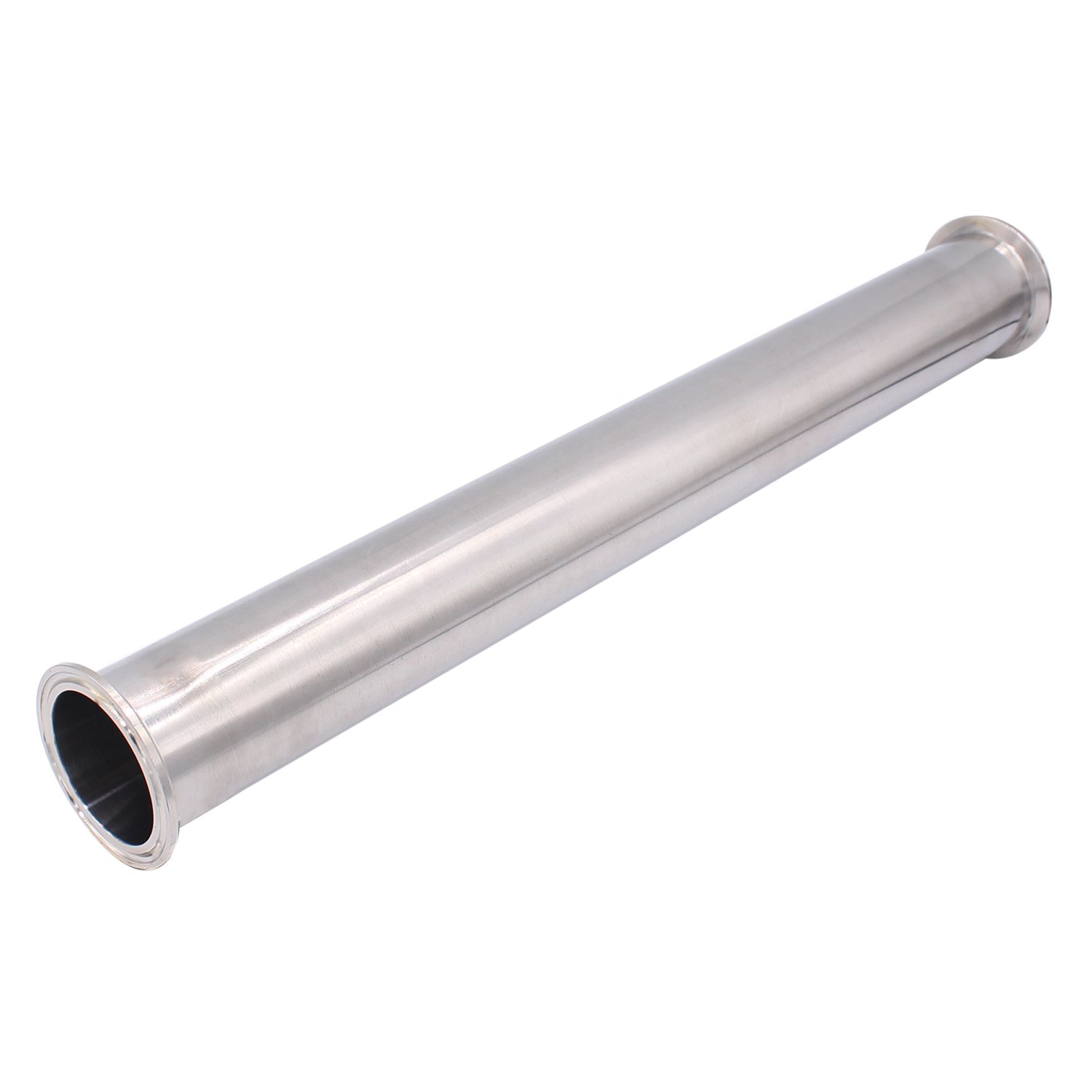
If you move liquid or gas through a 2-inch line and cannot tolerate drips, the DERNORD spool is your pick. It arrives with 2-inch tri-clamp ferrules already fitted — those are the flat flanged ends that seal against a gasket and clamp shut — so it drops straight into a brewing, dairy, or processing setup. The tube is 18 inches long with a 2-inch outside diameter, and it is smooth, meaning the wall is one continuous piece of metal rather than a welded strip. That gives you a smoother interior for flow and more burst strength than welded tubing.
It is made of Stainless Steel 304 and polished inside and out, which is what makes it suitable for sanitary service. If you are plumbing a home brewery or a small fluid system, the polished bore means residue rinses away instead of clinging to a rough surface. And unlike the 30-inch two-pack charge pipe further down this list, this one is a single 18-inch spool aimed at sealing a permanent line rather than building a boost route. The review pages tell the same story across brewers and builders: it fits existing 2-inch tri-clamps, cleans up easily, and shows no sharp edges where the ends meet the tube.
Owners rate it highest for value for money, with durability a close second. Over hundreds of ratings, value for money comes up most, with durability close behind — owners keep coming back across multiple builds and report the welds hold with no weeping at the joints. As buyers report: “All of the Dernord stainless steel spools I have purchased over the years have held up great. The welds are clean, there are no leaks, and the quality of the steel is high.” The honest catch: this is a bolt-on spool, not fabrication stock — for a cut-and-weld exhaust run, the beaded BIGREAT charge pipe or the 40-inch LCGP tube below is the better tool. This one is for bolting on and sealing.
Where it seals the deal
- smooth construction gives a smoother internal bore and greater burst strength than welded tube
- 2-inch tri-clamp ferrules with a 64MM ferrule OD fit standard clamps already in service
- Polished inside and out, so it is suitable for sanitary fluid and gas transfer
- Annealed to restore formability, which keeps it workable if you need to bend or flare the ends
Worth knowing before you order
- A single 18-inch spool — no cut-to-fit length to work with if your run is longer
- Ferrule ends are meant for tri-clamp connections, not slip-on hose or slip-fit exhaust joints
Who it is built for: Home brewers and anyone sealing a 2-inch sanitary fluid or gas line who wants a polished, leak-free spool that connects with tri-clamps.
Reconsider if a different job is on the bench: Custom exhaust and turbo charge piping need a cut-and-weld tube, and the LCGP and BIGREAT options below are made for exactly that.
2. LCGP 2″ Custom Mandrel Straight Exhaust Pipe, 40″ Long
Forty inches of weldable stainless — enough length to trim your run without splicing.
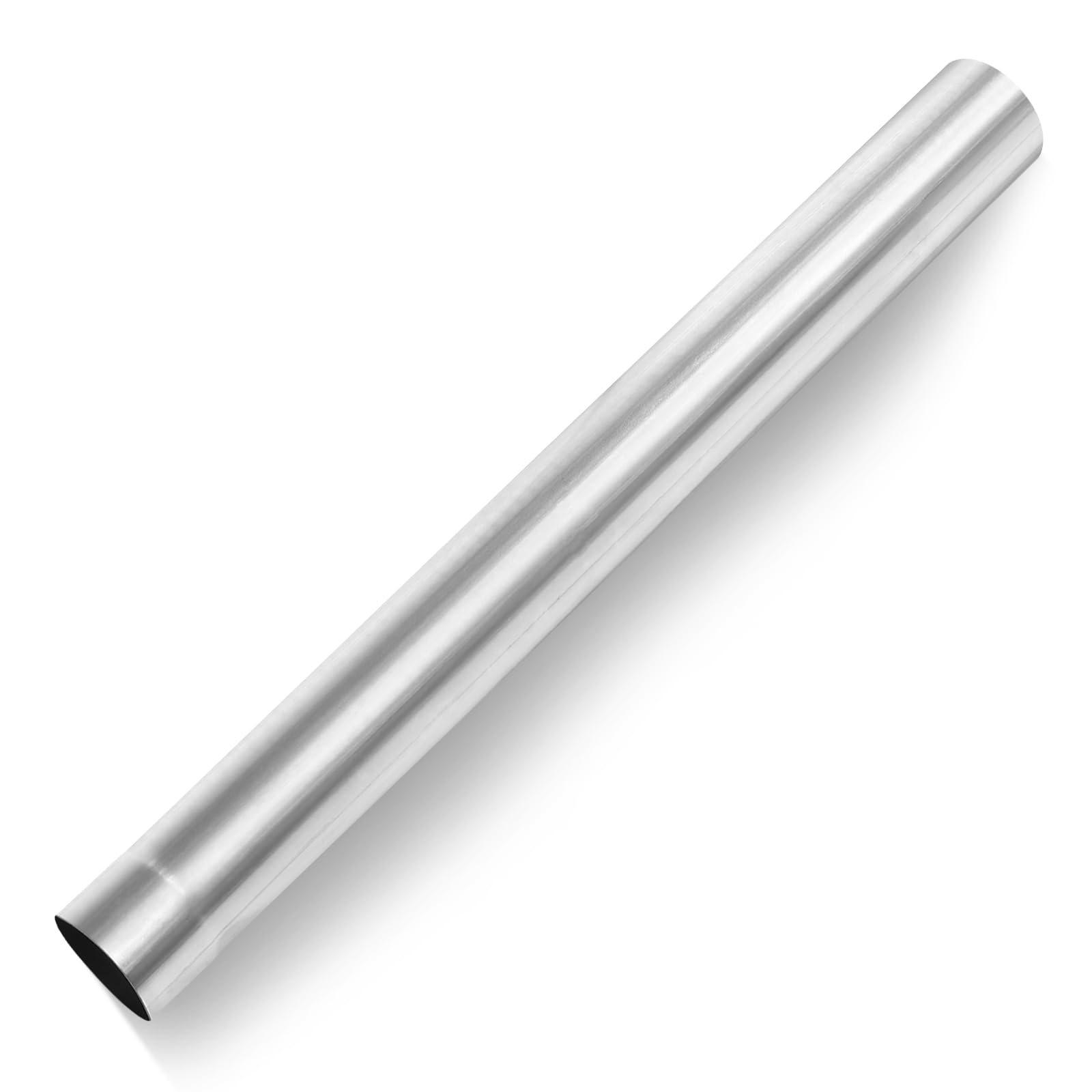
Length is the whole reason to reach for the LCGP. At 40 inches it is the longest single pipe on this list, and it clears the 30-inch FGJQEFG DIY tube by a solid margin — 40 inches versus 30, which is a third more to work with. In practice that means you can cut your exact span, angle the offcuts, or replace a long rusted-out section of exhaust in one piece instead of welding two shorter tubes together. Both ends run a 2-inch inlet and outlet, and the consistent outer and inner diameters let it slide into fit joints before you weld.
The pipe is made of high-quality stainless steel and the structure is a mandrel straight, so the diameter stays true along the full length rather than necking down. Truck and tractor owners run it on everything from a Peterbilt to small exhaust repairs, and it welds predictably. The walls are not paper-thin either — owners who expected flimsy tubing were caught off guard by how solid it feels, and it cuts and welds without fuss. It backs that with a 1 Year Warranty from LCGP, which is more coverage than most bare tube stock carries.
One practical note: the fitting depth at the joints is shallow enough that a couple of builders wished it seated a touch deeper. It still holds fine under clamp pressure on a truck exhaust, and it is easily welded for a permanent joint. If you are boxing in a tight engine bay and want something you can also clamp with beaded ends for a charge pipe, the BIGREAT two-pack below is the tighter fit. But for cut-to-length exhaust work on a budget, this is the length-to-cover pick.
The length advantage: 40 inches of single-piece tube means fewer welds and fewer leak points on a long exhaust run.
The fitting detail: joint depth is on the shallow side, so plan on welding rather than relying on a slip fit alone for a permanent fix.
Grab this when: you are repairing or building a long exhaust section and want the most tube length per piece, with a 1 Year Warranty behind it.
Look elsewhere when: you need beaded ends for a clamped charge pipe — that job belongs to the BIGREAT two-pack.
3. FGJQEFG 2 Inch Straight DIY Custom Mandrel Exhaust Pipe, 30 Inch

Real T-304 stainless at the friendliest price — and the drill bits to prove it.
This is the pipe that gets you genuine T-304 stainless steel without stretching your build budget. T-304 is the corrosion- and oxidation-resistant grade that keeps a pipe from rusting through on a vehicle that lives outside, and the FGJQEFG tube delivers it in a 2-inch outside diameter, 30-inch length, polished finish. The polish is not just cosmetic — a smooth surface sheds grime and looks sharp on a finished exhaust tip. It is a straight pipe with no bend angle, so you cut and weld it into whatever route you are building.
Owners put it to work in the most direct DIY way. Owners mention that the material welds easily and that the 304 grade gave no magnetic response on a magnet test — a quick field check that the alloy is what it claims. The same builder drilled two holes into the tube and burned through four drill bits doing it, which tells you the wall is hard enough to fight a bit rather than fold. For a universal-fit tube at the entry point of the range, that is exactly the toughness you want.
Where it differs from the DERNORD spool up top is intent: no tri-clamp ferrules, no sanitary polish spec — this is raw fabrication stock. Where it differs from the LCGP is simply length, at 30 inches to that pipe’s 40. What wins owners over on the review pages is the price-to-quality balance and how forgiving the metal is at the weld. It also shows up strong on straight strength and looks, with multiple builders calling it strong and clean. A fair caveat: you supply the ends and the measuring tape yourself, so double-check your fit before you cut. For a budget-minded welder, supplying your own ends is an easy trade.
Pick this one if: you are welding a custom exhaust or intake and want true T-304 stainless in a 30-inch straight tube at the budget-friendly end of the range.
Skip the impulse order if: your project needs pre-fitted flanges or a longer single piece — the DERNORD spool and LCGP tube handle those.
4. BIGREAT OD 2” Straight Turbocharger Intercooler Pipe, 2-Pack

Two beaded 2-inch tubes with thick 0.125-inch walls — built for boost, tough enough to clamp.
If you build turbo or intercooler setups, start here. This is a two-pack of 2-inch straight T-304 stainless tubes, each 30 inches long with a 0.125-inch nominal wall thickness — a beefy wall that resists collapsing when you cinch a U-bolt clamp down on a boosted charge pipe. Each end carries beaded humps, which give a coupler or clamp a lip to bite so the joint does not slip off under pressure. For a custom intercooler piping setup, those humps save you from tracking down a bead roller.
The steel is T-304 with the same corrosion and oxidation resistance as the other T-304 options here, and the finish is good enough that owners use the pipes beyond the engine bay. One fit is pure utility — a builder clamped one in as a mast for a heavy PTZ camera and found it strong enough to hold. Another used a piece for a semi-rigid flex exhaust application near a water heater. Thick walls are the theme: customers note the tubes will not crush under a U-bolt and that cutting them takes real effort because the metal is dense. Versus the single FGJQEFG tube above, the key gap is the unit count.
That gap is worth stating plainly: this is a 2 Count pack against the DERNORD’s 1 Count and the FGJQEFG’s single tube — a 2.0x difference in how many lengths land at your door, and here that second tube gives you enough to mock up a full charge route before you weld. The honest watch-outs: some owners found the wall thinner than the 0.125-inch spec they expected, and a few reported the length running about half an inch short, so measure your gap before cutting. Still, for a turbo build needing two beaded, polished tubes that hold under a U-bolt clamp, the 0.125-inch wall wins the day.
The turbo advantage: beaded ends plus a 0.125-inch wall mean clamps bite and the pipe holds shape under boost.
The one to measure for: expect the delivered length to run slightly short of spec, so plan your cut with a little room to spare.
Reach for this if: you are laying out turbo or intercooler charge piping and want two thick-walled, beaded 2-inch T-304 tubes that clamp without collapsing.
Steer toward a single cut-and-weld tube if: you only need one plain length for an exhaust repair rather than two beaded charge pipes.
Understanding the Specs
Outside diameter and wall thickness
The 2-inch outside diameter is the measurement across the outside of the tube — the number that has to match your clamps, couplers, and tri-clamp ferrules. Wall thickness is a separate figure: the BIGREAT charge pipe lists a 0.125-inch nominal wall, which is what lets it take a tight U-bolt clamp without crushing. A thicker wall also gives you more metal to weld. Read both numbers before you buy, because matching OD alone does not guarantee a sealed joint.
Steel grade, smooth vs welded
The grade tells you how well the pipe fights rust. T304 and T-304 stainless (the same rust-resistant metal family) resist oxidation far better than carbon or galvanized steel, which is why vehicle builders favor it. smooth construction, like the DERNORD spool, has no welded seam running the length of the tube, so the interior stays smoother for flow and the wall holds up better under pressure. Welded tubing is common in exhaust stock and is perfectly fine when the pipe is not carrying a sealed fluid line.
FAQ
Will a 2-inch outside diameter pipe fit my existing exhaust or charge pipe?
What is the difference between T304 and T-304 stainless steel?
How thick should the wall be on a 2-inch stainless pipe?
Can I cut and weld these stainless pipes myself?
What are tri-clamp ferrules and do I need them?
Is smooth stainless tubing better than welded tubing?
How long should my straight pipe be before I cut it?
Will these stainless pipes rust over time?
Do I need professional installation for a stainless exhaust pipe?
Can I use one of these pipes for an intercooler or turbo upgrade?
Final Thoughts: The Verdict
For most people sealing a 2-inch sanitary line — brewing, dairy, or small fluid systems — the DERNORD Sanitary Spool Tube is the winner, because its smooth 304 build and pre-fitted 2-inch tri-clamp ferrules deliver a polished, leak-free connection that owners keep coming back to across multiple builds. If your job is a long exhaust repair and you want the most tube per piece, the LCGP 40-inch pipe gives you the length to cut and weld without splicing. And for a turbo or intercooler charge setup, the BIGREAT 2-pack is the one to order, with beaded ends and thick 0.125-inch walls that clamp without collapsing. Whatever you are building, match the outside diameter, wall thickness, and end style to your connection first — get those three right and the job goes fast.
How We Picked
We do not accept paid placement. Every pick is matched to a real buyer and a real use-case; we do not hands-on test units.
Sources & Methodology
Specifications: manufacturer listings and product documentation. Review insights: verified customer reviews, as of September 2026. Pricing: not shown on this page (it changes often); check the current price via the retailer link.
As an Amazon Associate, KitchPrep earns from qualifying purchases. This does not affect which products we feature.
Related Guides
