
Specs are compiled from manufacturer listings and verified buyer reviews and can change over time — please confirm the key details on the product page before buying.
An 1800-watt power station is the bridge between a phone battery and a gas generator. It runs a fridge, a microwave, a CPAP machine, or a power tool without fumes, noise, or fuel. This guide breaks down the best models by capacity, charging speed, and real-world owner experience so you pick the one that fits your life.
I’m Mohammad Maruf — the founder and writer behind KitchPrep. This guide is built by comparing the manufacturers’ published specifications and the patterns across verified customer reviews, so you get each pick’s real strengths and trade-offs instead of marketing spin.
This list uses flexible matching for the best 1800 watt power station, so some picks deliver even higher continuous output, and the table shows exactly what each one offers.
Our Picks at a Glance

How To Choose The Best 1800 Watt Power Station
Your first real decision is capacity, not wattage. Wattage tells you what it can run at once; watt-hours (Wh) tell you how long it can run them. A station with 1800W output but a small battery will stop a fridge in a couple of hours, while one with a larger 2048Wh battery keeps it going all day.
Capacity: Match the battery to your outage or trip
Look at what you actually need to power. A CPAP machine and a phone overnight is a light load. A refrigerator, a router, and a few lights for a full day is a heavy one. For the latter, aim for a 1024Wh battery at minimum, and consider a 2048Wh unit if you want multi-day coverage without recharging.
Battery chemistry: Why LiFePO4 wins
Lithium iron phosphate (LiFePO4) cells are the standard for quality stations. They last far longer than older lithium-ion cells, often rated for thousands of charge cycles before degrading, and they handle heat better. If you plan to keep the station for daily use or emergency backup for years, LiFePO4 is the safe, durable choice.
Charging speed: How fast can you top it up?
Fast AC wall charging means you can top up before a storm or a trip. Look for units that hit 80% in about an hour or less. Solar input is also key if you plan to go off-grid — check the maximum wattage the station accepts, since that dictates how quickly panels can replenish it.
Quick Comparison
| Model | Best For | Capacity | AC Output | Weight | Amazon |
|---|---|---|---|---|---|
| BLUETTI AC200L★ Best Overall | Best Overall (Expandable Power) | 2048Wh | 2400W | 61.4 lbs | Amazon |
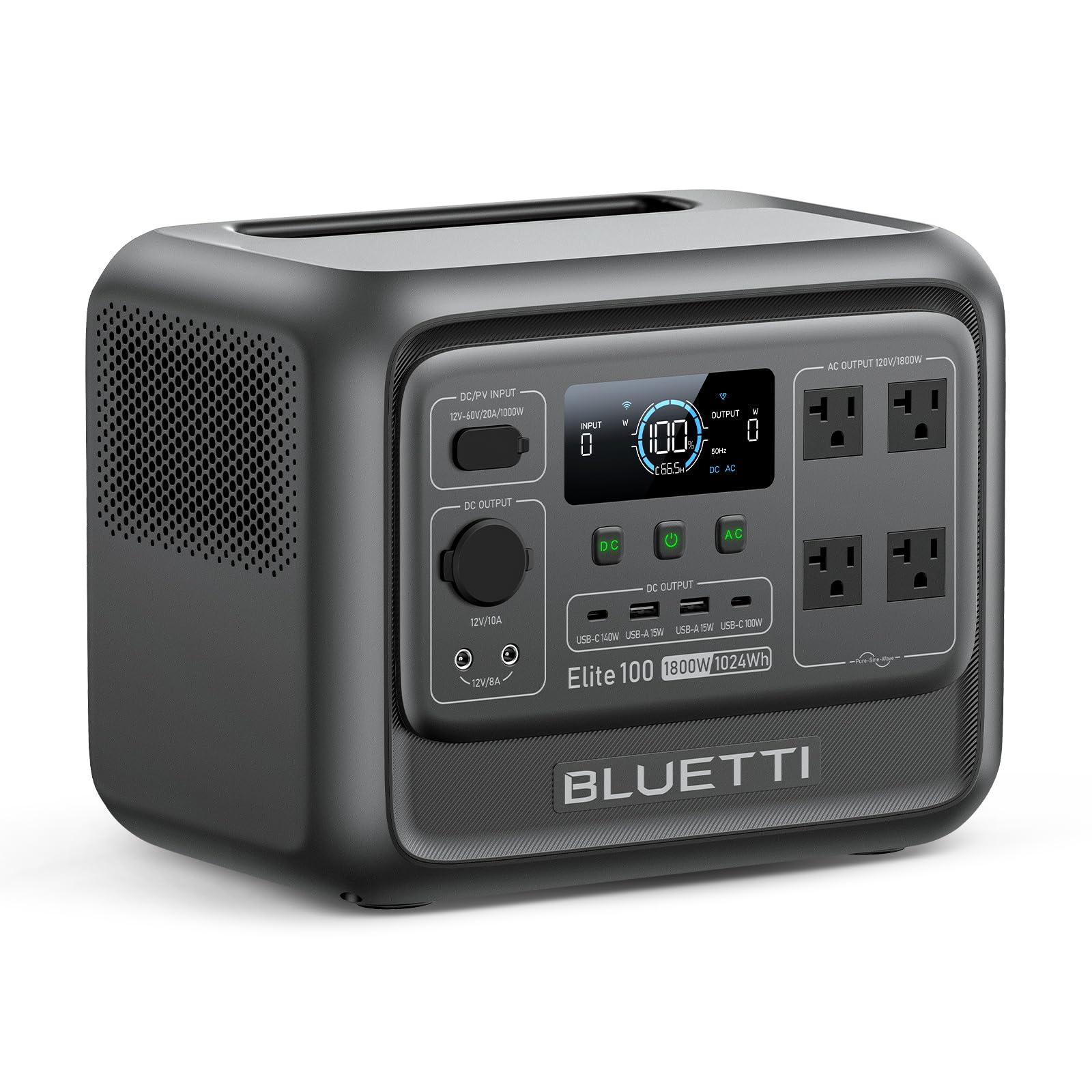
| BLUETTI Elite 100 V2Best Value | Best Value (Lightweight) | 1024Wh | 1800W | 25 lbs | Amazon |
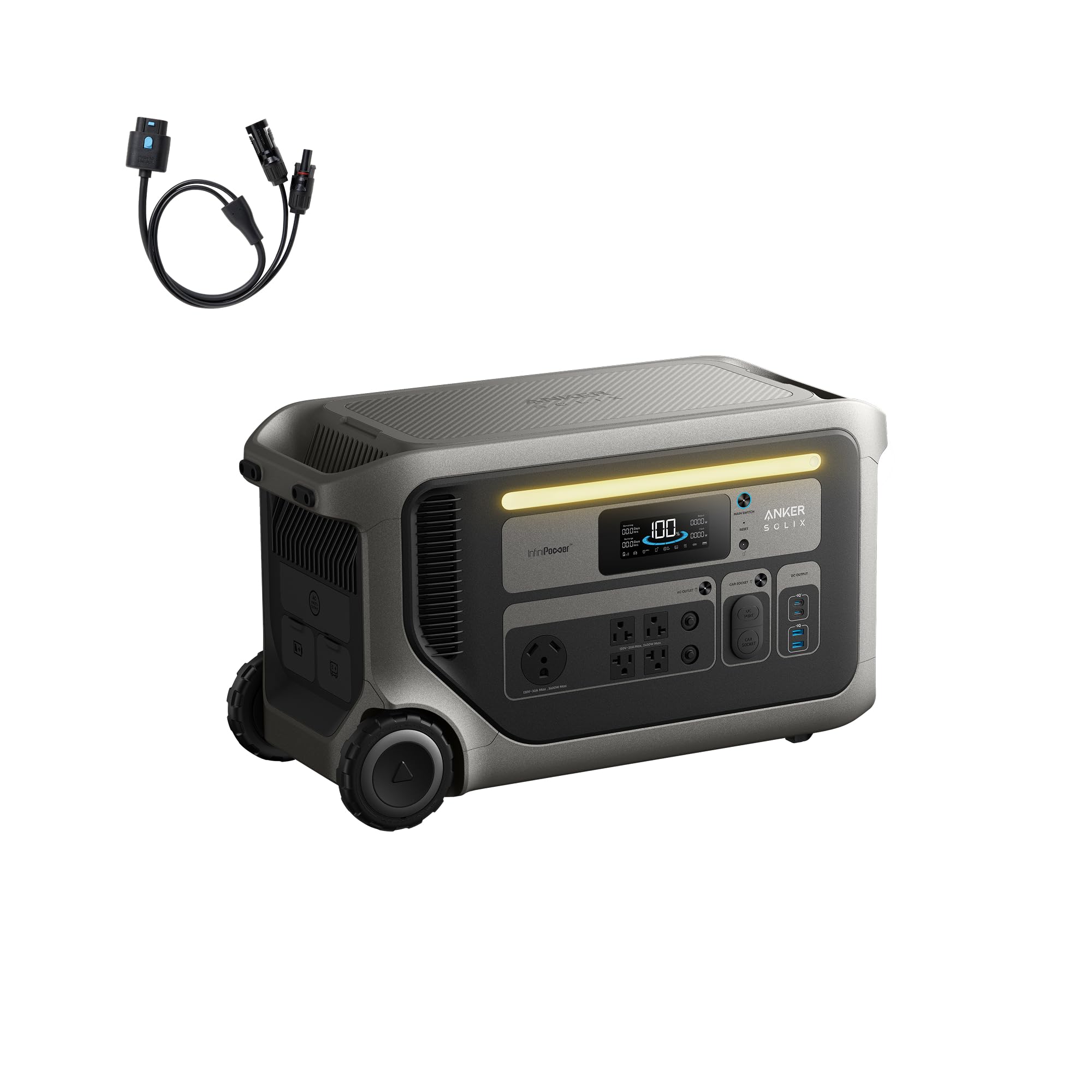
| Anker SOLIX F3000Major Power | Heavy-Duty Home Backup | 3072Wh | 6000W | 91.5 lbs | Amazon |
| Jackery HomePower 3000 | RV & Whole-Home Essentials | 3072Wh | 3600W | 59.5 lbs | Amazon |
| Anker SOLIX C2000 Gen 2 | Fast Charging & Portability | 2048Wh | 2400W | 41.7 lbs | Amazon |
| Dabbsson 2000L | Tech Features & App Control | 2048Wh | 2200W | 41 lbs | Amazon |
| EBL Acc2400 | High-Wattage Appliance Use | 1843.2Wh | 2400W | 54 lbs | Amazon |
| EF ECOFLOW DELTA 3 Max | Premium Performance | 2048Wh | 2400W | — | Amazon |
| EF ECOFLOW DELTA 3 Plus | Home Office & UPS | 1024Wh | 1800W | 27 lbs | Amazon |
| EF ECOFLOW DELTA 3 Classic | Versatile All-Rounder | 1024Wh | 1800W | — | Amazon |
| EF ECOFLOW DELTA 3 Classic + 220W Panel | Solar-Ready Camping | 1024Wh | 1800W | — | Amazon |
In-Depth Reviews
1. BLUETTI AC200L
Our pick — over 4.5★ from 500+ verified ratings; the strongest balance of quality and price.
The expandable powerhouse that runs a heavy kettle and even an air conditioner from solar.
This is the one that does it all. Owners routinely run a 1500W kettle and a 12000 BTU air conditioner for 4 hours on solar alone, confirming the 2048Wh battery and 2400W output are real-world capable. It also handles a 1500W leaf blower, making it viable for jobsite use.
What wins people over here is the flexibility. The AC200L holds 2048Wh from the start, but you can stack expansion batteries to reach a maximum 8192Wh — enough to carry a whole home through a multi-day outage. Recharging is quick with a 2400W AC input that takes 0-80% in only 45 minutes, and the 1200W solar input tops it up in 1.7-2.2 hours. The 13-port set includes a 30A RV port and a 48V/8A DC port, so it can even help charge an RV battery with the right regulator.
The honest trade-off is the weight. At 61.4 pounds, this is a two-person lift, and the review pages note it plainly — it is powerful and portable in the sense that it has a handle, not that you want to carry it far. Owners using it for Cuba solar backup report more capacity than comparable EcoFlow or Jackery units, with a 30-100% charge in one hour. Support earns high marks, with a failed unit replaced promptly after free pickup.
What Owners Rave About
- Runs a 1500W kettle and 12000 BTU A/C for 4 hours on solar
- Expandable to a huge 8192Wh maximum capacity
- Fast recharge: 0-80% in 45 minutes
- Quiet fan and reliable Bluetooth app monitoring
Consider This First
- Heavy at 61.4 pounds — needs two people to move
- Expansion batteries cost extra
Grab it if: you want one station that covers home backup, RV power, and solar off-grid living with room to grow.
Think twice if: you need something you can carry one-handed up stairs or into a tent.
2. BLUETTI Elite 100 V2
A 25-pound 1024Wh station that is 35% smaller than the competition and still delivers 1800W.
If a heavy station is your turn-off, this is the cure. At just 25 pounds and about 35% smaller than other 1kWh stations, the Elite 100 V2 fits a camping bin or a car trunk easily. Owners call it “the perfect bridge unit” between a phone battery and a gas generator, delivering silent, immediate power for a microwave or laptop during outages.
The battery is a 1024Wh LiFePO4 pack rated for over 4,000 cycles to 80%, meaning roughly a decade of daily use. Charging speed stands out here: 1200W TurboBoost AC input recharges it fully in about 70 minutes, and a 10ms UPS switchover keeps a Wi-Fi router and PC running without a blip when the grid drops. In silent mode it runs at just 30dB, which owners describe as whisper-quiet for overnight camping or indoor use.
Astrophotographers power a telescope mount, cameras, a mini PC, a tablet, and a phone at about 60W peak for 6.5-7 hour sessions on a single charge. That is the kind of real endurance buyers report. The catch is that 25 pounds still adds up, and the fans spin up on startup. A few owners mention hardware failure after months with frustrating support, but most report smooth, reliable performance.
Standout feature: The 1800W continuous output in a 17L body is a genuinely rare balance of power and portability.
Fit note: Best for campers, weekend travelers, and home backup where you want to lift it yourself.
3. Anker SOLIX F3000
A 3000Wh wheeled monster that runs a roof AC for hours and scales to 24kWh.
This is the endgame for home backup. The F3000 packs a 3,072Wh LiFePO4 battery with a 6,000W peak output, and owners have run a 13,000 BTU Coleman roof air conditioner for 6-8 hours on low cool. It runs a 190W fridge for 42 hours, and expansion batteries push the system to 24kWh.
Charging flexibility is its superpower. It handles a massive 3,600W pass-through, so you can recharge from a 120V generator while running appliances at full power. Pair a fuel generator with solar and it recharges at a hyper-fast 6,000W. Owners note the 30A input hits a full charge in about 90 minutes. Solar input is up to 2,400W through the 165V or 60V ports, and the high-voltage design lets you run three solar panels in series for a rapid charge.
The name ends in “portable,” but this unit weighs 91.5 pounds — you will want the built-in wheels. Owners appreciate the 6-inch wheels for moving it around a garage or campsite. An occasional Wi-Fi drop is noted as a minor annoyance, and some owners find the app-only controls for things like charge limits a bit limiting. One owner simulated a home outage and ran 60% of their house without issue, calling it “bulletproof” for emergencies.
Who it is for: Whole-home backup, RV owners with heavy AC needs, and anyone who wants a single station that can power most of a house.
Keep in mind: It is more machine than battery — budget for space and a strong back (or use the wheels).
4. Jackery HomePower 3000
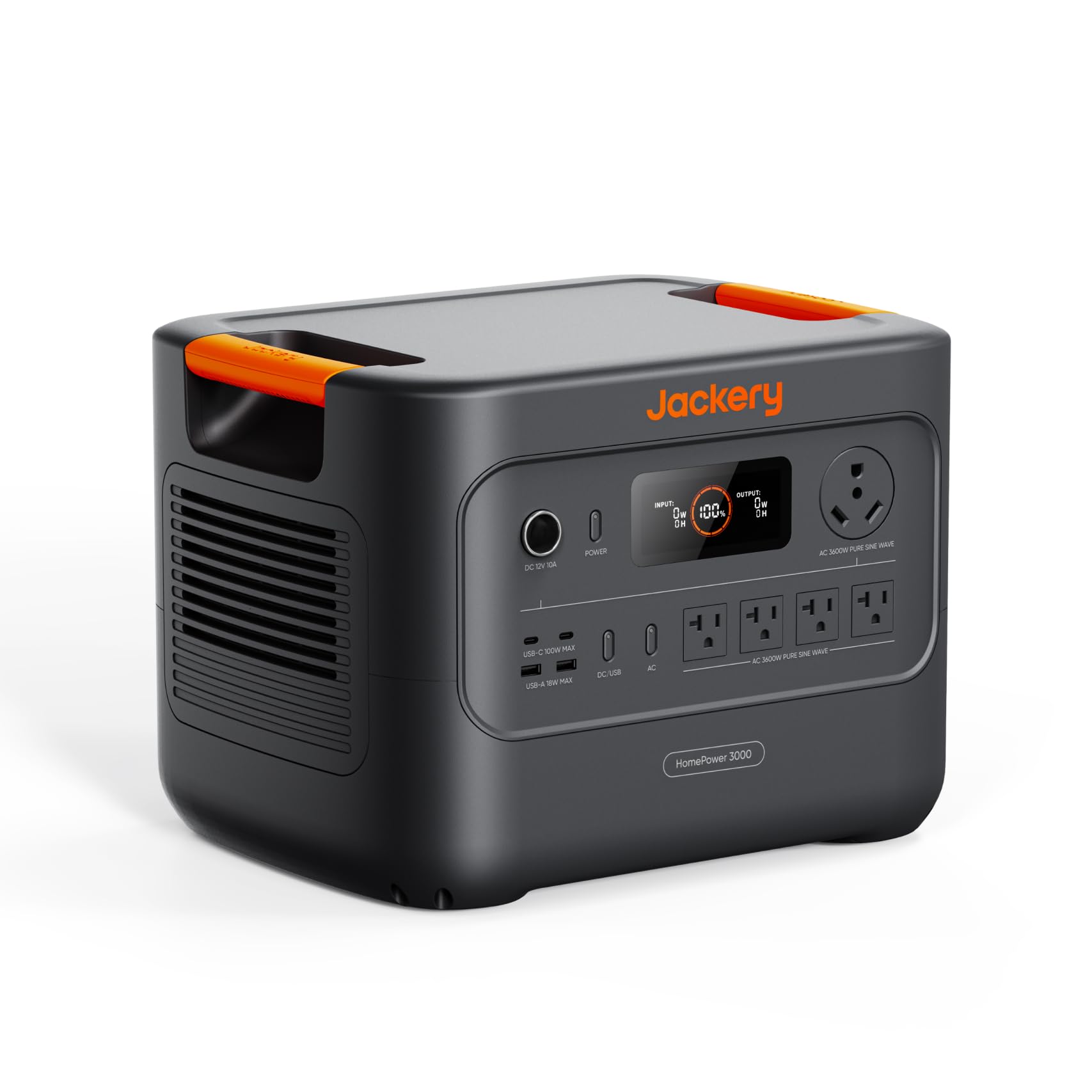
The 30A-connected backup that powers a camper, an office, and a side-by-side fridge for 30+ hours.
Jackery’s biggest station is built for the “power the essentials” crowd. The 3,072Wh capacity and 3,600W output (7,200W surge) keep a household running for up to 15 hours and a refrigerator going for 1 to 2 days. Customers note a Whirlpool side-by-side fridge running for 30+ hours, and one even runs an air fryer oven off it.
The built-in TT-30 RV port is a major reason RV owners pick this over the competition. One owner with a 30-foot travel trailer wired it directly to a 30A connection and powered the TV, microwave, and Starlink for days, going 3+ days without using the air conditioner by relying on propane appliances. It recharges fully in 1.7 hours via hybrid AC and DC, or 2.2 hours via AC alone, and supports two 200W SolarSaga panels for an 80% charge in 9 hours.
You’ll notice the weight and noise before anything else. At 59.5 pounds, you need both handles to move it, and the fan hits roughly 60dB (about as loud as a normal conversation) whenever there is any draw — noticeable indoors, which owners flag as the reason they don’t use it as a permanent UPS (uninterruptible power supply, a backup that kicks in during outages). The UL-certified ≤20ms UPS switchover does keep security cameras and medical refrigerators running through outages. A couple of owners found it inadequate for extreme cold starting a diesel truck block heater below 15°F.
Why It Stands Out
- TT-30 RV port plugs a camper directly in
- Powers a home office for days
- ChargeShield 2.0 extends battery life
- 47% smaller and 43% lighter than comparable 3kWh models
The Noise Factor
- Fan is loud (~60 dB) on any power draw
- Heavy at 59.5 pounds
Reach for this if: you have an RV with a 30A hookup or want a large home-backup battery that recharges fast.
Look elsewhere if: you need a silent, always-on UPS for a bedroom or home office.
5. Anker SOLIX C2000 Gen 2
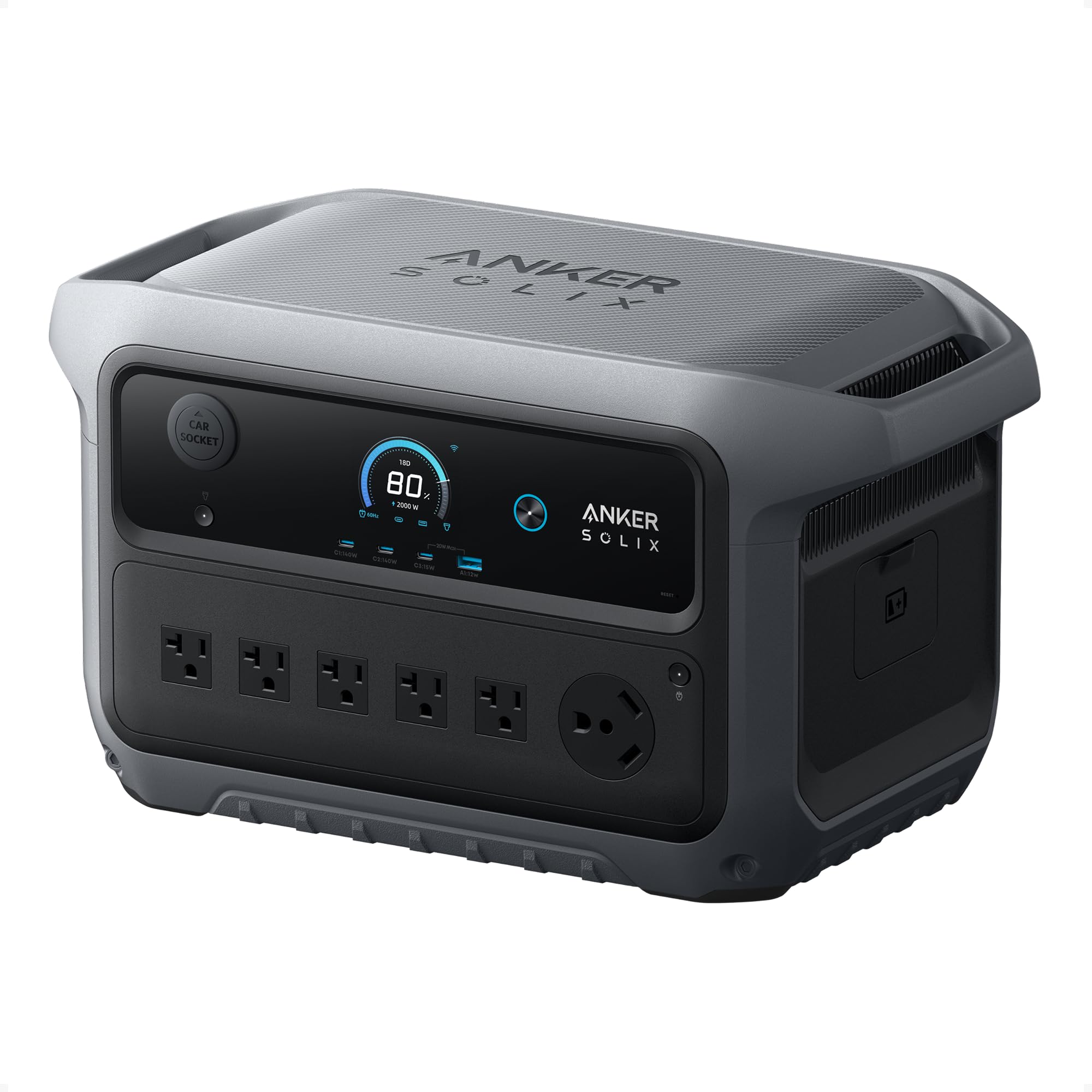
A 41.7-pound 2048Wh station that fully charges in 58 minutes and runs a fridge for 32 hours.
If your time is scarce, this is the station that respects it. Anker engineered the C2000 Gen 2 to recharge from zero to 100% in just 58 minutes via AC and solar, which owners confirm is real — one went from 27% to full in about 1 hour 10 minutes on a regular 15A outlet. The 2,048Wh battery powers a dual-door fridge for up to 32 hours, and an expansion battery pushes that to 4kWh and 64 hours.
Output is serious for its size: 2,400W rated and a massive 4,000W peak, enough to start most window and RV air conditioners. Owners run miter saws and drills on job sites without a hiccup. At 41.7 pounds it is noticeably lighter than the 61.4-pound BLUETTI AC200L at the same capacity, and Anker claims it is 25% lighter and 29% smaller than similar products. The standby draw is tiny at 9W, so it holds its charge when you are not using it.
Reviewers praise the detailed display showing charge and depletion times plus temperature, and the five extra 3-prong outlets come in handy for running heaters and tools. The 800W UltraFast alternator charging refills it from your car in 3 hours, which is 8x faster than a standard car socket. Occasional units arrive damaged, but support is consistently described as prompt with replacements. It is quiet enough for indoor use with only slight fan noise during charging.
The headline number: 58-minute full recharge is the fastest in this class.
Trade-off: For a 4kWh setup you need to buy the extra battery, and 41.7 pounds is still a two-hand carry.
6. Dabbsson 2000L
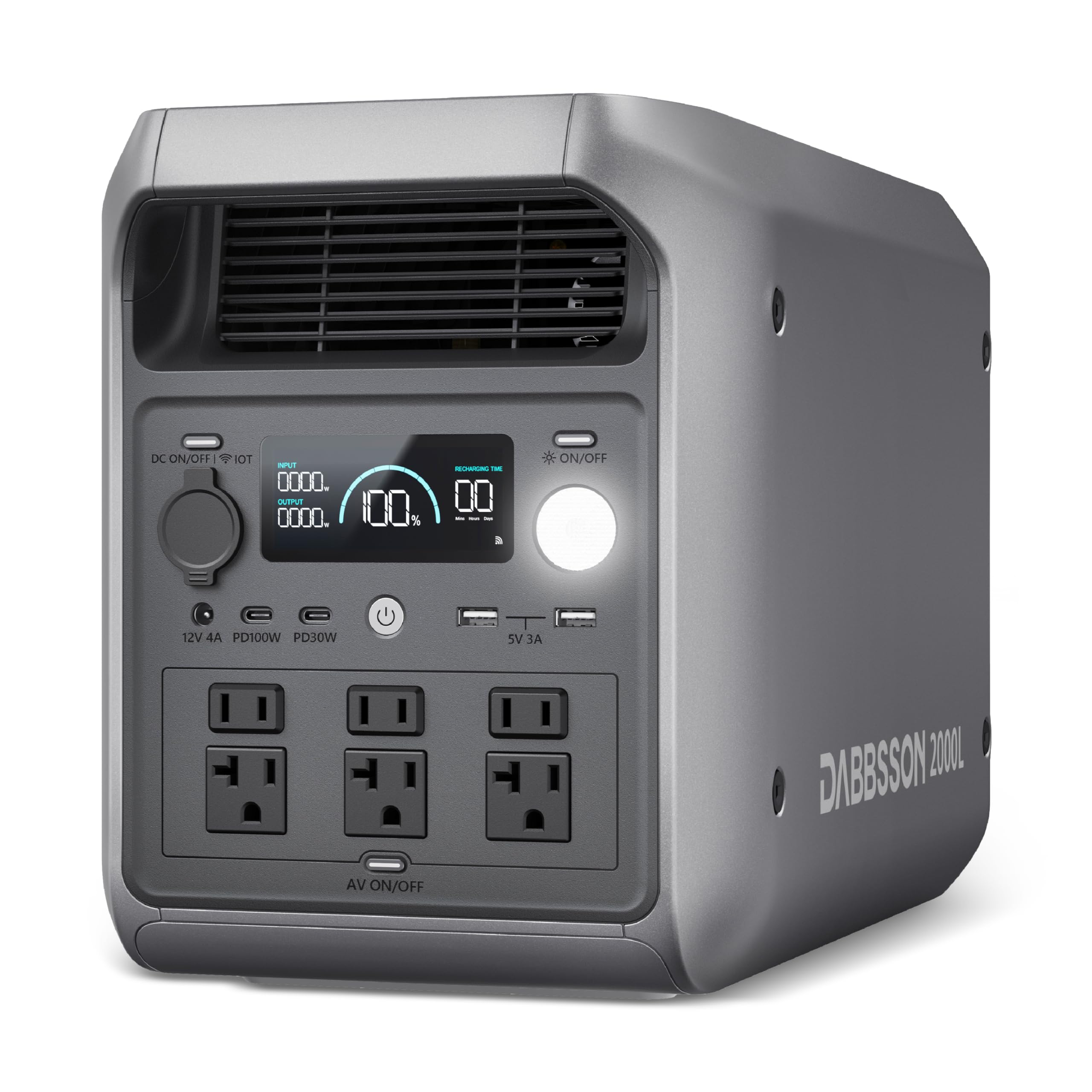
A 41-pound 2048Wh station with semi-solid battery cells and a 3300W power boost for heavy tools.
The Dabbsson 2000L brings newer battery tech to the table. Its semi-solid LiFePO4 cells (a type of lithium battery with a semi-solid electrolyte) are designed for higher stability and safety than standard LFP cells, and the UL94-V0 flame-retardant housing (a safety rating for plastic that resists burning) adds extra confidence. With a 2200W continuous output and a 3300W surge, owners run air fryers, microwaves, and power tools off it without breaking a sweat.
Charging speed is a highlight: a full recharge of the 2048Wh battery in about 1 hour via AC input. Solar input goes up to 800W MPPT, or 12V car charging, plus a hybrid dual-input mode for off-grid flexibility. The 6 AC outlets let a family or a jobsite crew run several devices at once. Owners in Cuba used it for blackouts, getting 8-10 hours of silent solar-powered night light from a single charge.
The app control is genuinely useful — with Wi-Fi/Bluetooth you can adjust charging speed, set schedules, and monitor usage remotely. The 41-pound weight and compact footprint make it easier to store than most high-capacity stations. One owner notes the plastic feels a bit flimsy despite the solid build, and the fans can get noisy under a heavy load. The 5-year warranty (3 years standard plus 2 extended) is among the better support packages in this class.
What Owners Value
- 3300W power boost handles heavy appliances
- Full recharge in about 1 hour
- Compact 41-pound build for a 2048Wh battery
- Strong 5-year warranty
Small Gripes
- Plastic housing feels less premium than metal rivals
- Fans can get noisy under heavy load
Pick it if: you want modern battery chemistry, app control, and a fast-charging 2048Wh station that won’t break your back.
skip it if: a metal-body station matters more to you than the lower weight and price.
7. EBL Acc2400
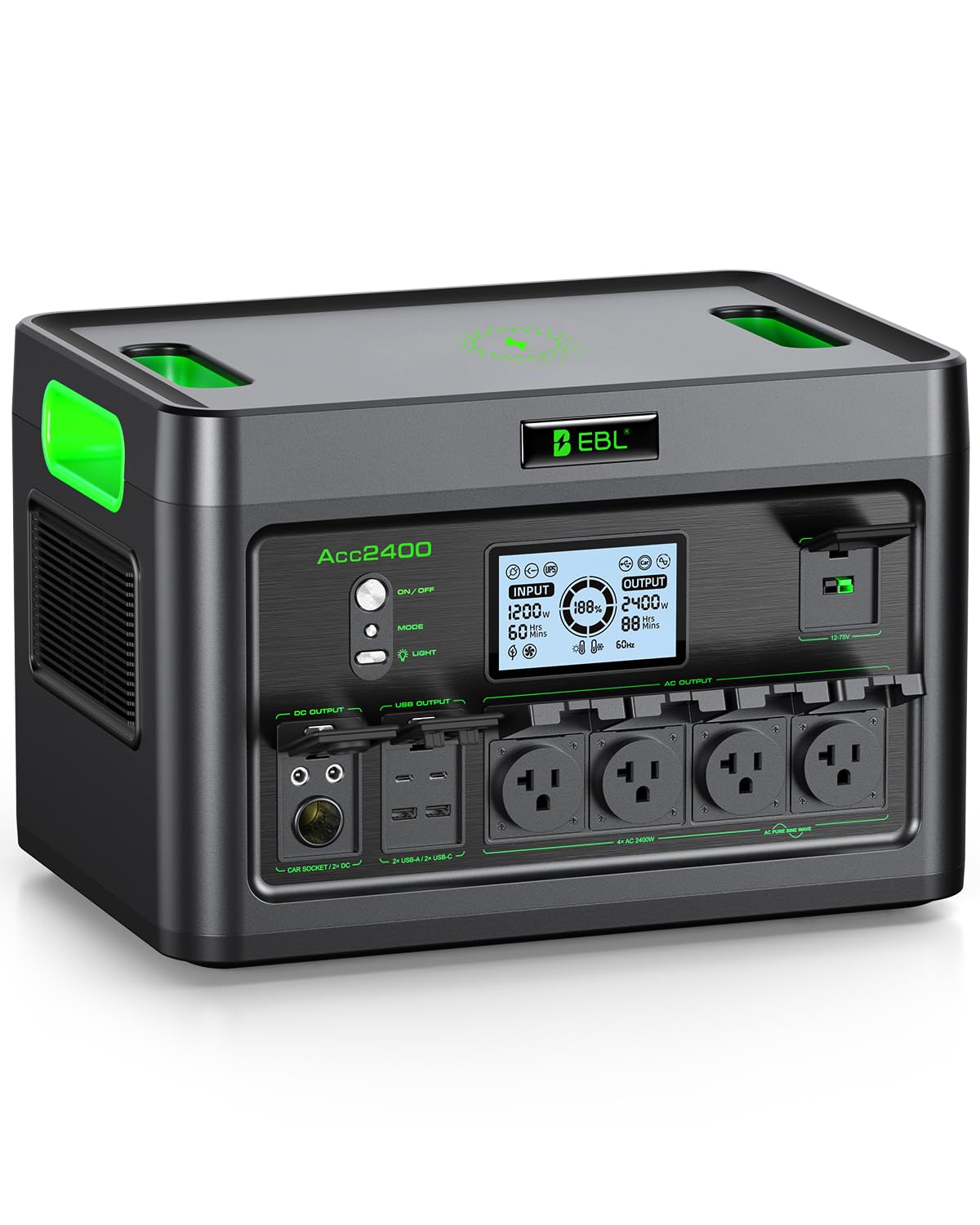
An 1843.2Wh station with 12-device simultaneous charging and a 0.1-second emergency switch.
This is a workhorse built for group outings and high-power appliances. The EBL Acc2400 delivers 2400W from a 1843.2Wh battery, and owners confirm it will run a 6000 BTU air conditioner drawing 615W for 4 hours in the heat. It powers rice cookers, hair dryers, coffee makers, and power tools — the kind of gear that trips up smaller stations.
Port coverage is the real story here: 4 AC ports, 2 USB-A ports, 2 fast-charging USB-C ports, 1 car port, 2 DC ports, and a wireless charging panel on top. That means 12 devices charging at once, which owners love for camping with a group or running a small workspace. The emergency power mode switches to battery backup in just 0.1 seconds during a blackout, protecting computers from data loss.
The 4-mode LED light covers camping and emergencies, and the dual-side handles make the 54-pound unit easier to move than the spec suggests. Durability comes from over 3,500 charge-discharge cycles and a 10+ year service life claimed by the maker. The trade-offs: some owners found the actual runtime on a 12V fridge came up short of the claimed capacity, and one reported an AC outlet failure after charging overnight. It is more budget-friendly than the premium 2048Wh stations while delivering the same class of power.
Best angle: The 12-device simultaneous charging and wireless panel make it a group-camping MVP.
Honest note: Check your runtime expectations against the 1843.2Wh capacity — it is slightly smaller than the 2048Wh rivals.
8. EF ECOFLOW DELTA 3 Max
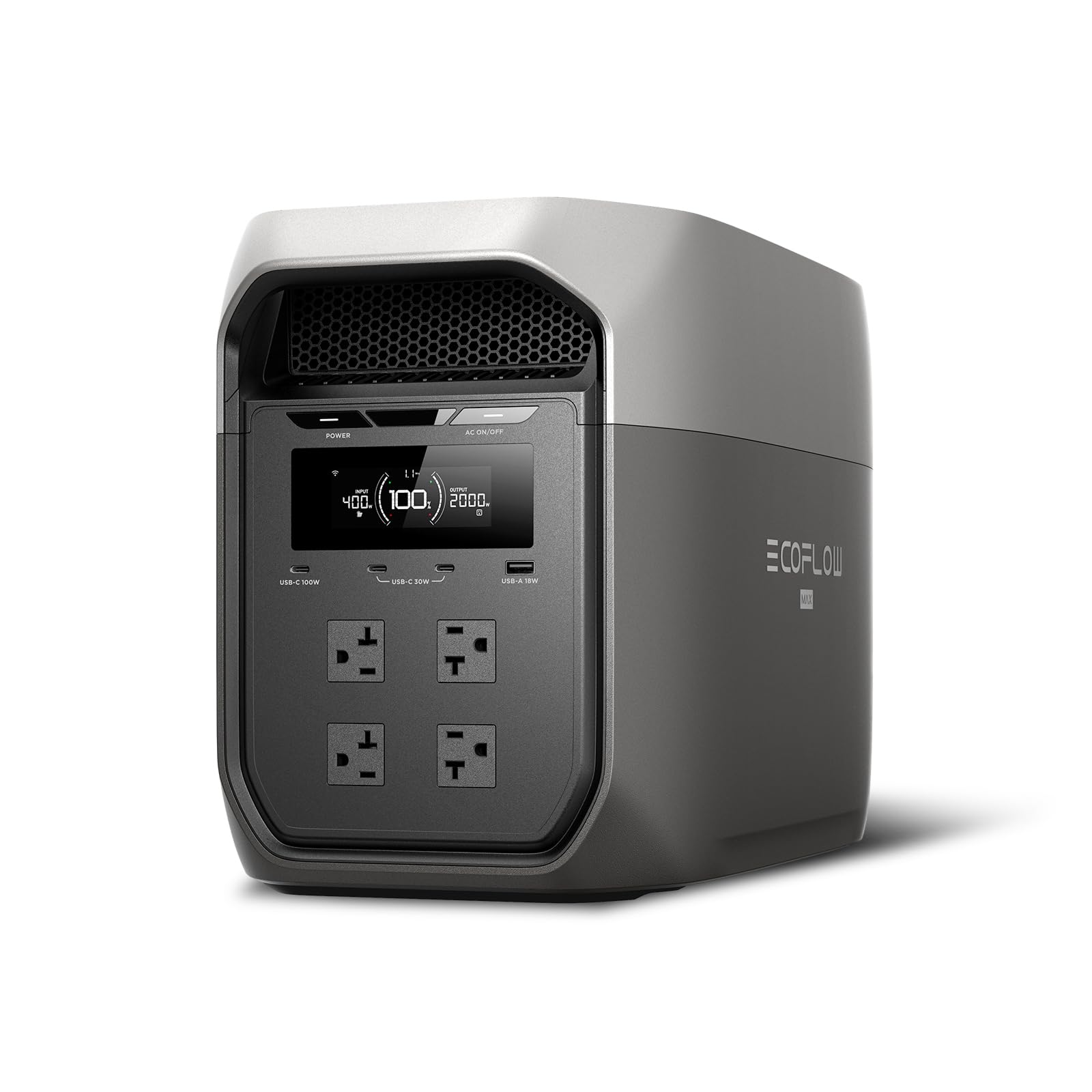
EcoFlow’s 2048Wh flagship charges 0-80% in just over an hour and lifts loads to 3400W.
The DELTA 3 Max is what happens when EcoFlow puts its best tech in one box. The 2048Wh LiFePO4 battery recharges from 0-80% in just 1.13 hours using X-Stream technology, and the 3400W X-Boost mode runs 99% of household appliances — fridges, microwaves, even power tools. Owners describe the charging as “incredibly fast” and the battery as lasting “forever” in real daily use.
It is rated as a 2400W station with a 3400W X-Boost continuous output, putting it ahead of the 1800W class while maintaining a lighter, durable build. The ultra-quiet operation makes it a good neighbor at a campsite, and the less-than-10ms transfer time keeps computers and medical devices safe during outages. The 5-year service warranty is a solid commitment to longevity.
Owners use it as backup for parents during frequent outages, powering multiple devices with solid build quality and easy operation. One compares the 2048Wh capacity to running the essentials smoothly “for a long time.” The body is a mix of aluminum and plastic, keeping weight manageable. The catch is price — this is the premium tier of the 1800W-plus class, and the battery is not expandable to the 8192Wh heights of the BLUETTI AC200L. For most home-backup and RV needs, that is more than enough.
Standout spec: 3400W X-Boost in a station that recharges to 80% in 1.13 hours.
Fit note: Ideal for owners who want a premium 2048Wh station without expansion-battery complexity.
9. EF ECOFLOW DELTA 3 Plus

A 27-pound 1024Wh station with true 10ms UPS that keeps a home office alive through blackouts.
For the work-from-home professional, a power blip means a dead call and unsaved files. The DELTA 3 Plus solves that with a genuine 10ms switch-over UPS, which owners use to keep an SMB server rack running for 8+ hours. The 1024Wh LiFePO4 battery with 4,000 cycles to 80% is rated for 10 years of daily use.
Charging flexibility is class-leading here, with five options: 1500W AC input hits 80% in 40 minutes, solar reaches 80% in 1 hour, the 800W alternator charges on the road, the smart generator tops up in 40 minutes, and hybrid AC+solar matches the same speed. The IP65 battery pack (a rating meaning fully dust-tight and protected against water jets) is splash-proof, dust-proof, and oil-proof — a rare spec at this size. Dual MPPT solar inputs (maximum power point tracking, which tune solar panel output) support up to 1000W of panels.
It powers 13 appliances at once, and owners ran a space heater on high plus dual phone charging without issue. An outage test with a fridge showed 2.5 hours of use draining from 100% to 82%, projecting about 12.5 hours total. At 27 pounds it is easy to carry anywhere. The X-Boost mode supports resistive appliances over 2200W continuously. Owners warn it is overkill for small uses and the idle draw runs about 15W with AC off, rising to 45W when the inverter is on — fine for a backup, but worth knowing.
Why It Wins
- True 10ms UPS for sensitive electronics
- Five different charging methods
- IP65 protection against dust and water
- Only 27 pounds
Know Before You Buy
- Higher idle draw when the inverter is on
- App-centric controls take some setup
Best for: home offices, NAS and server owners, and anyone who needs clean, instant backup power for electronics.
Not ideal for: extended off-grid trips — the 1024Wh capacity is a day-station, not a week-station.
10. EF ECOFLOW DELTA 3 Classic
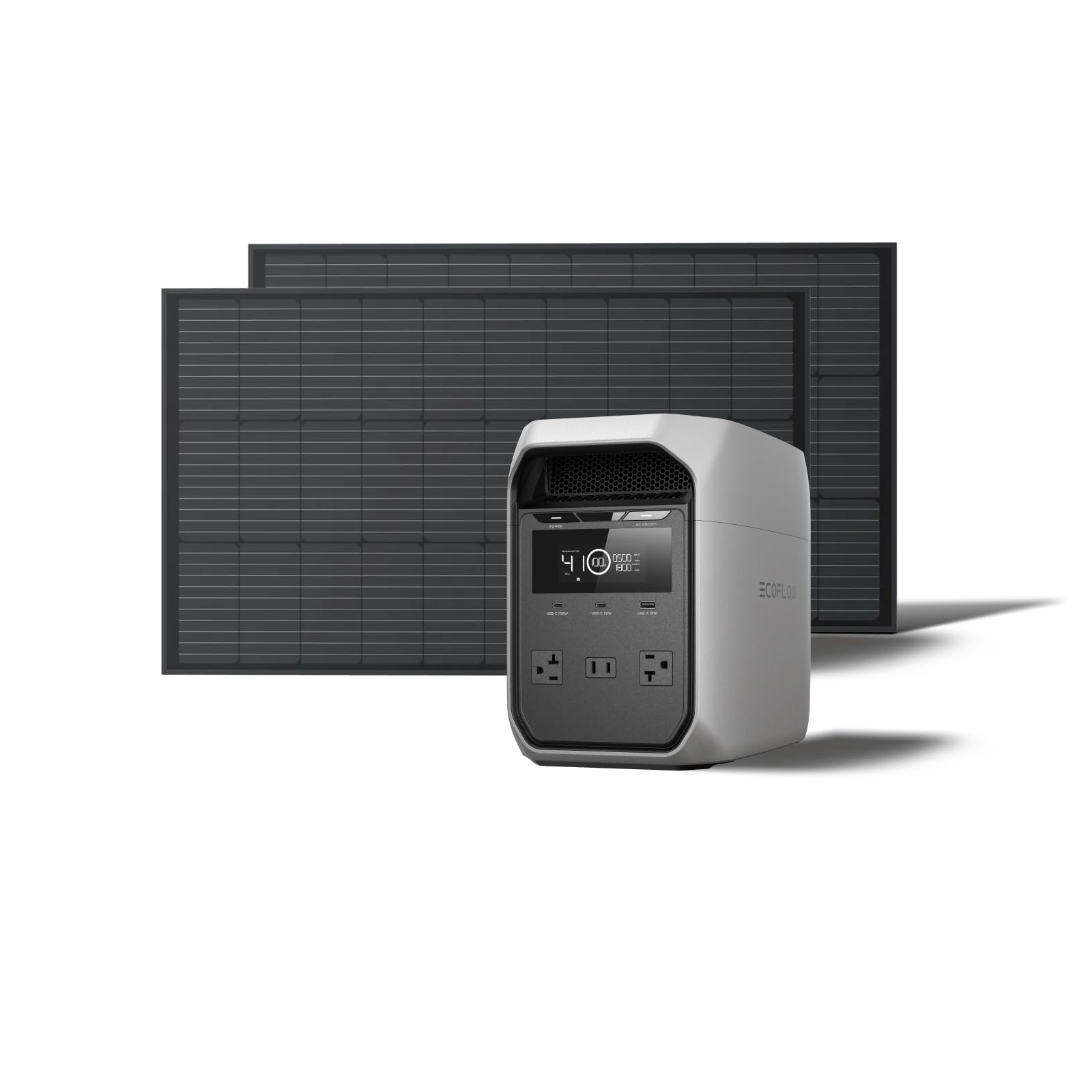
The 1800W classic with X-Boost to 2600W that survived a camping trip and two real outages.
The DELTA 3 Classic is the sensible all-rounder. It delivers 1800W of continuous output (3600W surge) with X-Boost pushing loads to 2600W for demanding devices. Reviewers point out it survived a full camping trip — charging phones, running Starlink, air mattresses, and a CPAP machine all night, waking to about 60% battery left. It recharged the next day under a 200W load with solar.
For home use, it works perfectly as a UPS through two power outages with no flicker on TVs. The 0-80% charge in 45 minutes via X-Stream AC charging keeps it ready fast, and the LiFePO4 cells are rated for 10+ years of daily use with an EV-grade CTC design. The smart app adds Storm Alert and Self-Powered modes so it can pre-charge before bad weather and run on solar when the sun is up.
The trade-off is capacity. At 1024Wh, it is a full-day station, not a multi-day backup like the 2048Wh units above. Owners note it pairs perfectly with the 100W USB-C output for quick device charging. A buyer bought it for use in Cuba and reports the charge lasts “muchísimo” (a long time) with easy panel installation. If you want the 3600W surge power in a manageable, reliable package that won’t dominate your trunk, this is the one.
Core strength: 1800W output with 3600W surge in a compact, proven EcoFlow design.
Consider: Whether 1024Wh is enough for your longest expected outage.
11. EF ECOFLOW DELTA 3 Classic with 220W Panel
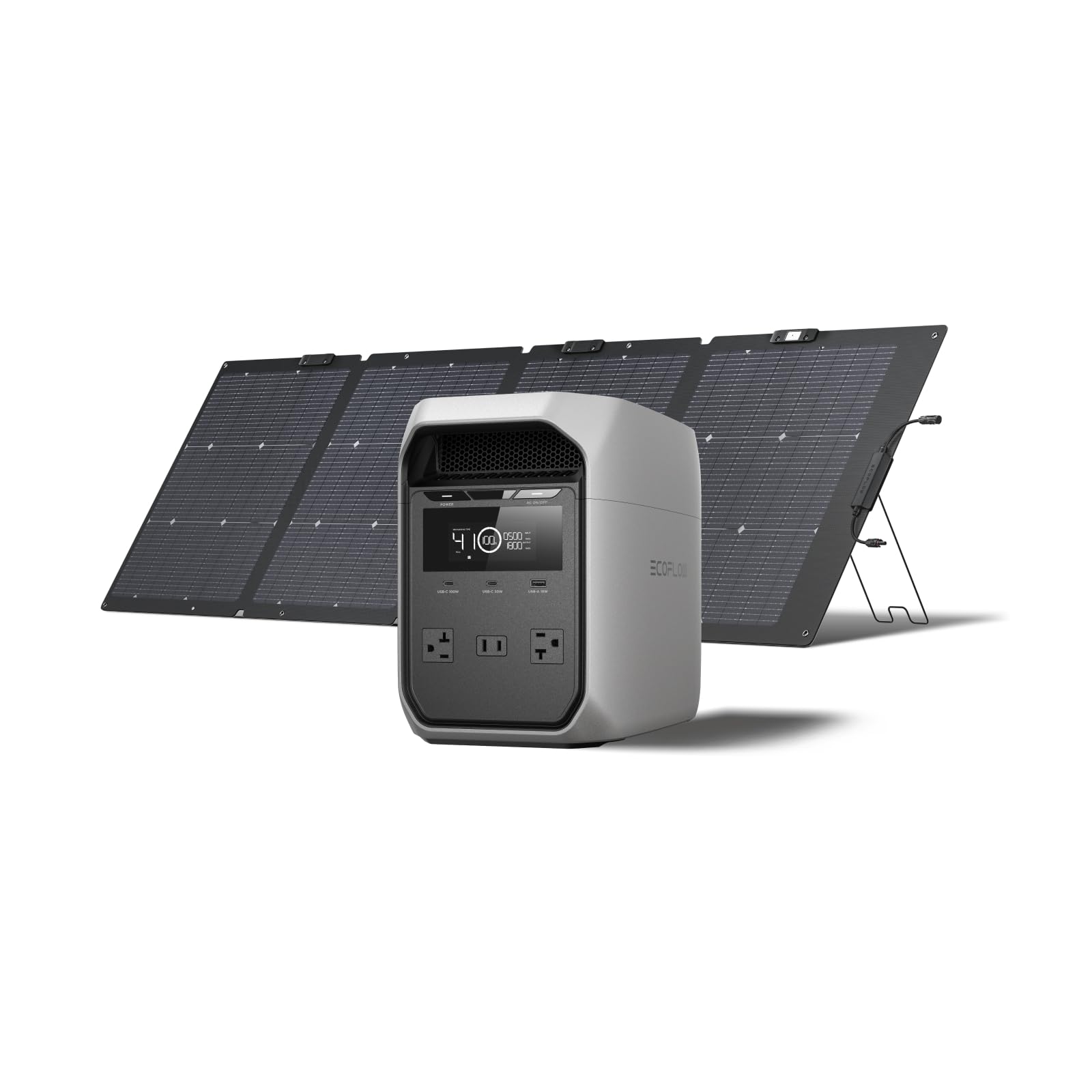
The same 1800W Classic, bundled with a 220W bifacial solar panel that recharges it in 5.8 hours.
This is the off-grid-ready version of the DELTA 3 Classic. It pairs the 1024Wh station with a 220W bifacial solar panel rated at up to 25% conversion efficiency thanks to N-Type solar cells. Shoppers say the panel delivered 190-200W even in shade, and a full solar recharge takes about 5.8 hours. One owner got a 55% charge in a few hours while charging phones and tablets the whole time.
The station side is identical to the Classic: 1800W output (3600W surge) with X-Boost up to 2600W, 0-80% AC charge in 45 minutes, and a <10ms UPS for sensitive electronics. A picnic test with two slow cookers, a drip coffee pot, and phone charging ran 3.5 hours without power loss, and the owner carried it a quarter mile easily. The CPAP and a 16-inch fan ran all night with power to spare.
The bifacial panel captures light from both sides, which helps in low-sun conditions. The catch is that the panels arrive separately from the station, so you might wait for one component to catch up. Owners describe the panels as stiff right from the start and note the 220W panel adds noticeable bulk to the kit. If you want a complete solar generator from the start without researching third-party panels, this bundle saves the guesswork.
What You Get
- 1800W station with 3600W surge
- 220W bifacial panel with up to 25% efficiency
- Full solar recharge in 5.8 hours
- Complete kit — no extra research needed
Watch Out For
- Panel and station ship separately
- 220W panel adds bulk to the kit
Choose it if: you want a turnkey solar generator for camping or off-grid cabins without mixing and matching parts.
Pass if: you already own solar panels or prefer a smaller, more portable panel.
Understanding the Specs
Capacity (Wh)
Watt-hours measure the total energy stored, like the size of a fuel tank. A 2048Wh station runs a 100W fridge for roughly 20 hours; a 1024Wh station runs it for about 10. For home backup, bigger capacity means surviving longer outages without recharging.
AC Output (W) & Surge
Continuous wattage is what the station sustains, while surge power handles the brief spike when motors start — like a fridge compressor or a power tool. An 1800W station runs most essentials, but a 2400W unit gives you headroom for air conditioners and heaters.
FAQ
What can an 1800W power station actually run?
How long will a 1024Wh station last during an outage?
What is the difference between continuous watts and surge watts?
Is LiFePO4 battery chemistry better for a power station?
Can I charge a power station with solar panels?
What does UPS mode mean and why does it matter?
Why are some power stations so heavy and is it a problem?
Can I use a power station inside my house, unlike a gas generator?
Final Thoughts: The Verdict
For the majority of shoppers, the best 1800 watt power station is the BLUETTI AC200L because it pairs a 2048Wh battery with 2400W output and expansion to 8192Wh — a station that grows with your needs. If you want a lighter, more portable pick, the BLUETTI Elite 100 V2 delivers 1800W in a 25-pound body. And if you need whole-home or RV-scale backup, the Jackery HomePower 3000 or the wheeled Anker SOLIX F3000 are the heavy hitters to reach for.
How We Picked
We do not accept paid placement. Every pick is matched to a real buyer and a real use-case; we do not hands-on test units.
Sources & Methodology
Specifications: manufacturer listings and product documentation. Review insights: verified customer reviews, as of September 2026. Pricing: not shown on this page (it changes often); check the current price via the retailer link.
As an Amazon Associate, KitchPrep earns from qualifying purchases. This does not affect which products we feature.
Related Guides
