
Specs are compiled from manufacturer listings and verified buyer reviews and can change over time — please confirm the key details on the product page before buying.
If your car sits low to the ground, a 1 1/2 ton floor jack is the only way to get under it without scraping paint off your rocker panels. A standard garage jack simply will not slide beneath a lowered coupe, and a big truck jack is overkill for a sedan. This guide narrows the field to four jacks rated at 3,000 pounds — the class that fits most cars, crossovers, and light SUVs — and explains which one to grab based on how low your car sits and how often you plan to use it.
I’m Mohammad Maruf — the founder and writer behind KitchPrep. This guide is built by comparing the manufacturers’ published specifications and the patterns across verified customer reviews, so you get each pick’s real strengths and trade-offs instead of marketing spin.
The single number that decides everything here is the minimum saddle height — how flat the jack sits before you start pumping. Super-low jacks start around 3.25 inches, which clears a Mazda Miata or a Cayman, while taller steel jacks need more room underneath. From aluminum racing jacks to steel trolley bodies, the best 1 1/2 Ton Floor Jack is the one whose saddle height matches your car and whose pump you can trust.
Our Picks at a Glance
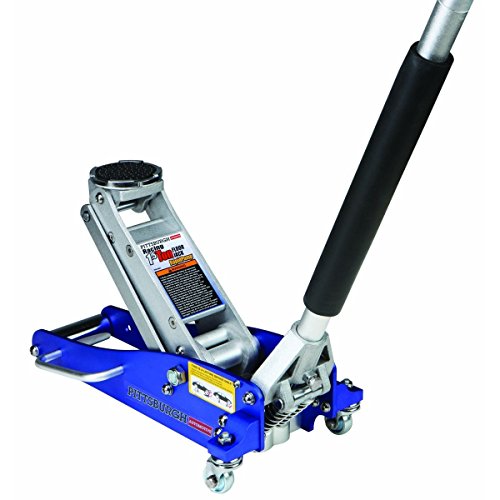
How To Choose The Best 1 1/2 Ton Floor Jack
Buying a 1 1/2 ton jack is not about picking the cheapest box on the shelf. The rating on the sticker tells you the jack holds 3,000 pounds safely — but the number that decides whether the tool actually fits under your car is the minimum saddle height. Get that wrong and the jack sits in the driveway while you scrape around with the factory scissor unit.
Minimum height first, everything else second
Look at the gap between your rocker panel and the pavement. Racing jacks in this class start as low as 3.25 inches, which is why they show up under Miatas, Minis, and lowered Jeeps. Trolley-style steel jacks tend to start higher, closer to 3-3/8 inches, because the bigger steel body needs more room. Either way, measure before you buy.
Aluminum versus steel construction
Aluminum racing jacks in this class weigh roughly 26 to 27 pounds, and one pickup in this set climbs to 33.6 pounds because it mixes steel into the frame. That weight difference shows up when you carry the jack from the garage to the driveway — or from the trailer to the pit lane. Aluminum costs more, but you feel the difference every time you lift it.
What the pump design actually does
A rapid pump or dual parallel pump system simply reduces the number of handle strokes it takes to reach full height. One jack in this set claims 5 strokes to the top, and a different rapid pump design covers the same job. If you only jack a car once a year, this feature matters less than saddle height. If you run track days, it matters a lot.
Quick Comparison
| Model | Best For | Load Capacity | Minimum Height | Item Weight | Amazon |
|---|---|---|---|---|---|
| 1.5 Ton Compact Aluminum Racing Jack with Rapid Pump★ Best Overall | Low cars, light carry | 1.5 tons | 3.25 inches | 26.8 pounds | Amazon |
| Big RED 2.5 Ton Hydraulic Low Profile Trolley Service/Floor Jack | Heavier loads, taller lift | 2.5 tons | 3-3/8 inches | 27.7 pounds | Amazon |
| New! 3000 Lb 1.5 Ton Aluminum Racing Car Auto Floor Jack | Budget aluminum racing | 1.5 tons | 3.37 inches | 26.8 pounds | Amazon |
| Torin TAM815016L Racing Floor Jack with Dual Piston Quick Lift Pump | Frequent use, easier pumping | 1.5 tons | 3-1/2 inches | 33.6 pounds | Amazon |
In-Depth Reviews
1. 1.5 Ton Compact Aluminum Racing Jack with Rapid Pump
Our pick — over 4.5★ from 600+ verified ratings; the strongest balance of quality and price.
The aluminum jack that slips under a Cayman and still pumps fast enough for track day.
Owners describe the same scene over and over: a rocker panel that sits so low a standard jack will not start underneath. This one dips to a minimum of 3.25 inches — the lowest saddle start in this group — and unlike the Torin TAM815016L above it, that lower flat profile is the whole reason it exists. If your car is lowered, or it came from the factory hugging the pavement, that number is the reason to buy this jack over anything else on this list. It holds 4.6 stars across 600+ ratings, the strongest owner record in this group.
What wins people over most is the carry weight. At 26.8 pounds, one of the lightest in this group, you can hook the two-piece knurled aluminum handle with one hand, walk it out of the garage, and set it under the car without bracing it on your knee. A foam bumper on the handle protects your car’s paint if you bump the fender — a small detail, but the kind that saves resale value on a weekend toy. The lift is also fast because of the rapid pump dual parallel design, which means noticeably fewer strokes to raise the car.
The honest catch is the max lift height. On a Mazda CX5 crossover, it barely lifts the tire off the ground, which one buyer summed up by saying it is “fine for cars.” A different owner needed a spacer under the jack to reach the jack stands. Lowering control is the other trade-off — the universal joint release works well, but easing the car down very slowly takes a steady hand, and one owner found the handle easy to twist by accident in a way that drops the car faster than expected. There is also a max-height trade-off: at 14.75 inches fully up, this one tops out a bit lower than some steel alternatives.
Where It Shines
- 3.25-inch minimum height slides under the lowest cars on this list
- 26.8 pounds — light enough to carry with one hand
- Rapid pump dual parallel system means fewer strokes to full height
- Two-piece knurled aluminum handle with foam bumper protects paint
Where It Falls Short
- Low max lift height — may not clear crossover tires for jack stands
- Release valve eases down quickly; slow drops take practice
- Not rated for trucks or large sedans — 1.5 tons is the ceiling
Reach for this if: you own a lowered car, sports coupe, or something that hugs the pavement, and you want one jack to do the whole job yourself.
Look elsewhere if: your daily driver is a full-size pickup or a crossover where you need the saddle to reach higher than this jack’s lift top.
2. Big RED 2.5 Ton Hydraulic Low Profile Trolley Service/Floor Jack with Single Piston Quick Lift Pump

The steel-bellied jack that carries 1.5 tons more than the racing jacks and reaches nearly 15 inches.
This is the only jack in the lineup that steps above the 1 1/2 ton class. The lifting range runs from 3-3/8 inches at the bottom to a maximum height of 14-15/16 inches, so the saddle reaches higher than the Compact Aluminum’s max and higher than the Torin TAM815016L. It is built from heavy-duty steel with two large steel casters and two 360-degree swivel casters, so the jack slides left and right under the chassis instead of fighting you.
The steel body, industrial luster, built-in safety bypass valve against over-loading, and carrying handle let you lift the 27.7-pound jack with one hand. There is also a limited 1-year manufacturer warranty, which is useful comfort for a tool this heavy. Owners who are happy with it tend to have bought it for one specific job: a garage chore that needed a jack low enough to slide under but strong enough to lift something heavy.
The catch is consistency. Amazon’s own review breakdown flags quality and functionality as mixed, and one buyer wrote simply “Leaked oil after one use. Don’t buy.” A second owner reported the same hydraulic leak after one use, spilling fluid on the garage floor with no control over lowering speed — the car dropped instantly with a light turn of the release knob. That is a small slice of the total owner base, but it is not a rare enough pattern to ignore. Treat the release knob as touchy: apply braking pressure slowly and keep jack stands under the car before you put your hands anywhere near it.
What earns its keep: 2.5 tons of steel capacity, a 14-15/16-inch max lift, and four casters that roll the jack where you point it. Buyers with trucks and SUVs find the extra tonnage and the taller saddle are the actual reason they picked this over the aluminum jacks.
What to watch: the hydraulic side has a real leak story behind it, and the release knob swings from fully open to fully closed faster than most drivers expect. Prime the jack, check the fluid cap before first use, and lower the car in tiny turns of the handle.
Best suited to: someone who drives an SUV or light truck and wants a budget-friendly steel jack that can handle more than the 1.5-ton class offers.
skip it if: you want the simplest, most predictable lowering action and cannot spare a few minutes learning the release knob’s feel.
3. New! 3000 Lb 1.5 Ton Aluminum Racing Car Auto Floor Jack Low Profile Rapid Pump Lift

A budget aluminum racing jack with a 3.37-inch saddle start and a builder’s reputation behind it.
At 26.8 pounds the same carry weight as the Compact Aluminum Jack above, this aluminum racing jack is a direct alternative for the buyer who wants the lighter body without paying the top of the range. The saddle starts at 3.37 inches — a hair taller than the Compact Aluminum Jack’s 3.25 inches, but low enough for lowered cars, which is exactly the design brief this jack was built to. Settle your car on jack stands and it does the lifting work honestly.
Owner reviews show it lifting more than cars. It ships with a Sapphire anodized finish and industrial-grade hardware, so the pit-crew look in the photos matches the box.
Where owners occasionally push back is lifting ability over the long haul — reviews note the saddle tops out at 14.75 inches, which is fine for brake jobs and tire changes but can be tight under a taller shock tower, and one buyer found it not tall enough for a 4WD truck. There is also a known packaging quirk worth flagging: the handle unscrews and snaps apart for shipping, so thread it snug before your first pump or it wobbles mid-lift. Check the fluid cap is tight and the reservoir is full before you pull it from the start; a handful of reviews mention minor fluid seeps.
The bottom line: if you want the aluminum racing experience with a slightly lower entry price, this delivers — same 26.8-pound frame, a 1.5-ton rating, and a machined finish that looks like it belongs in a pit crew’s trailer.
Great fit for: budget-conscious DIY owners with a low car or a garage project, who want a jack light enough to lift with one hand from shelf to driveway.
Think twice if: you want a jack with a higher top reach for truck work, or you would rather not bother checking and tightening the fluid cap before first use.
4. Torin TAM815016L Hydraulic Low Profile Aluminum and Steel Racing Floor Jack with Dual Piston Quick Lift Pump, 1.5 Ton (3,000 lb) Capacity, Black

The dual-piston Torin that reaches full height in five strokes and weighs 33.6 pounds thanks to its steel hybrid frame.
Torin’s TAM815016L trades a little aluminum for a little steel and comes out heavier than every other jack on this list — 33.6 pounds versus the 26.8-pound aluminum jacks above. That extra mass comes with a benefit: the manufacturer says the dual-piston quick-lift pump needs only 5 strokes to reach full height. For weekend detailers who jack a car twice a year, that is a nice-to-have; for anyone running track days or doing repeated brake and tire swaps, it is a clear upgrade. Buyers repeatedly call it the jack that “just works,” crediting the 5-stroke dual-piston pump.
What sells owners is the all-in-one package. The 37.2-inch handle is two-stage and detaches so you can store it upright in a small garage bay, the rubber pads and foam bumpers protect your pinch welds and paint, and the steel framework carries the flatter aluminum chassis — so the body is low enough for lowered cars while still rated to 3,000 pounds. The lifting range runs from 3-1/2 inches minimum up to 14-1/8 inches maximum. Two universal casters and a front roller let the jack roll anywhere you push it, which sounds trivial until you have tried to shimmy a jack into position under a tight fender.
The most common complaint is design, not function: this jack can shift during the lift if you do not set the parking brake. It is also the heaviest to carry in the group — one owner noted it is heavier than the flimsier Walmart jack it replaced, which is obviously the point of the steel reinforcement, but it changes how you haul it around. Durability gets mixed notes across the total owner base, with a handful mentioning trouble after extended use. With the parking brake set and the jack positioned correctly, buyers report it holding up over multiple years.
Worth knowing: if you jack cars often, the 5-stroke lift is the feature that will sell you — a quick-pump system and a longer 37.2-inch handle combine to make repeated lifts much less tiring than a basic single-pump jack.
Pick this one if: you want the fastest lift on the list and do frequent maintenance, and are happy trading a bit of carry weight for a dual-piston pump.
Consider the alternative if: you want the absolute lightest jack for pit-lane toting, in which case the 26.8-pound aluminum picks win on weight alone.
Understanding the Specs
Load Capacity (Tons and Pounds)
A “1.5 ton” jack holds 3,000 pounds — and 1.5 tons is the class most sedans, coupes, and small crossovers fall into. Anything heavier, like a full-size pickup, needs the next class up. Every jack on this list except the Big RED carries a 1.5-ton or 3,000-pound rating, so pick by your vehicle’s weight first, then add a safety margin.
Minimum Saddle Height and Maximum Lift Range
Minimum saddle height is how flat the jack sits before you start pumping, and it is the number that determines whether the frame slides under a lowered car. Maximum lift height is how high the saddle reaches at full pump — you use it to raise the car to the height your jack stands need. Both numbers are on every 1 1/2 ton jack’s spec sheet, and both matter to the job.
Aluminum vs Steel Construction
Aluminum jacks are lighter to carry but cost more to build. Steel jacks are heavier but usually cheaper per ton of lift. A hybrid jack with both materials, like the Torin, splits the difference — heavier than pure aluminum, but with stronger steel framing around the pump and chassis.
Pump Design and Handle Length
Pump design determines how many handle strokes it takes to lift the saddle. So does handle length — a longer two-piece handle like the 37.2-inch Torin gives more leverage per stroke. If you jack often, both are worth paying for. If you jack once a year, saddle height matters first.
FAQ
Will a 1.5 ton floor jack lift a crossover like a Mazda CX5?
How do I know if a jack will fit under my lowered car?
Is aluminum or steel better for a 1 1/2 ton floor jack?
What does a rapid pump floor jack do differently?
Can a 1 1/2 ton floor jack handle a truck or full-size SUV?
How long should an aluminum racing jack last?
Do I need jack stands if I have a 1.5 ton floor jack?
What should I check before the first use of a new floor jack?
Can a 1 1/2 ton floor jack be used for non-car lifting jobs?
How high does a 1 1/2 ton floor jack lift the car off the ground?
Final Thoughts: The Verdict
For most DIYers maintaining a car, the 1 1/2 ton floor jack winner is the 1.5 Ton Compact Aluminum Racing Jack with Rapid Pump. Its 3.25-inch saddle start is the lowest here, the 26.8-pound body is manageable with one hand, and the rapid pump keeps strokes low. If you need more lifting range and a heavier load ceiling, the Big RED 2.5 Ton Floor Jack is the one to reach for. And for a budget-friendly aluminum racing jack that still carries a 1.5-ton rating, the New! 3000 Lb Aluminum Racing Jack is a straight-up value play for the weekend top-up job.
How We Picked
We do not accept paid placement. Every pick is matched to a real buyer and a real use-case; we do not hands-on test units.
Sources & Methodology
Specifications: manufacturer listings and product documentation. Review insights: verified customer reviews, as of September 2026. Pricing: not shown on this page (it changes often); check the current price via the retailer link.
As an Amazon Associate, KitchPrep earns from qualifying purchases. This does not affect which products we feature.
Related Guides
