
Let’s be honest: most “best rice cooker” guides are written like the author cooked rice exactly twice—once for the photo, once for the regret. But if you’re here, you’re not shopping for a countertop decoration. You’re trying to solve a real kitchen problem: you want rice that’s consistent, clean-tasting, and reliable… without the creeping worry of coatings peeling, weird smells living in a gasket, or a pot that turns into a sticky mess every time you look away for two minutes.
If you’re specifically hunting for a stainless steel rice cooker with stainless steel inner pot, you’re already thinking like a long-term owner. You want a cooker that behaves like a tool—something you can scrub, heat, use hard, and keep for years. And here’s the nuance most guides skip: stainless isn’t automatically “better.” Stainless is different. It changes how rice releases starch, how heat spreads, how cleaning works, and how forgiving (or unforgiving) the machine feels when you’re cooking on autopilot.
This is why I built this guide around what actually decides satisfaction after the honeymoon phase: the first month of learning curve, the first time you leave rice on keep-warm too long, the first time you make brown rice on a rushed weeknight, and the first time you realize the “quick” mode still isn’t quick enough unless you adjust your workflow.
Below you’ll find 15 picks—from premium induction + pressure “rice nerd” machines to simple stainless pot cookers that are basically the cast-iron skillet of the rice world. I’m leaning heavily on real owner patterns: what people praise repeatedly (texture, speed, ease of cleaning), what they complain about (reassembly, steam vents, gasket odors, scorched bottoms), and the little usage habits that turn a “meh” rice cooker into the best appliance on your counter.
How to Choose the Right Stainless Steel Rice Cooker With Stainless Steel Inner Pot
A good rice cooker isn’t “good” because it has more menu buttons. It’s good because it makes your rice predictable—and keeps your kitchen routine calm. With stainless inner pots, the decision is less about brand hype and more about matching the cooker’s physics to your cooking style. Here’s the framework that consistently leads to a satisfying purchase.
1. Start with the pot category (this is the whole game)
When shoppers say “stainless inner pot,” they usually mean one of three realities. They are not the same, and the differences show up in texture, sticking, and how aggressively you can clean.
- True stainless, no coating: The cooking surface is stainless steel. You can scrub it hard, soak it, use metal utensils, and you’ll never see a coating flake. These pots can stick if you under-water, skip rinsing, or skip resting time—especially with short-grain rice. But once you learn the rhythm, they’re incredibly satisfying.
- Clad / multi-layer stainless: Still stainless cooking surface, but built like a good pan—layers designed to spread heat and reduce hot spots. This category often feels “more forgiving” than thin single-layer stainless because heat behaves more evenly.
- Stainless structure with a coated cooking surface: Some brands market a “stainless pot” that has a nonstick or hybrid coating (diamond, ceramic, etc.). This can be easier for beginners and still scratch-resistant compared to old-school nonstick, but it’s not the same as bare stainless.
2. Decide how “rice-serious” you are
People fall into different camps, and the right cooker is the one that fits your personality (not your fantasy self).
- The rice purist: You notice fragrance, chew, grain separation, and how rice behaves after 2 hours on warm. You’ll appreciate induction heating and pressure tuning.
- The weeknight realist: You want reliable rice and you’ll happily trade “perfect” for “easy.” A simple stainless pot cooker can be ideal.
- The meal-prep machine: You need volume, keep-warm stability, and easy cleaning. You’ll care more about capacity and warm-hold behavior than fancy modes.
- The health optimizer: You want low-carb / low-sugar modes, whole grains, and porridge—often with extra water draining systems.
- The multi-cooker minimalist: One appliance should cover rice, soups, beans, stews, yogurt, and steaming.
3. Understand heating style (why two cookers can “both cook rice” but feel worlds apart)
There are four main heating behaviors you’ll see in this list. Each affects texture, speed, and how forgiving the cooker feels.
- Classic thermostat / one-touch heating: The simplest style. It boils until the temperature changes, then flips to warm. These can make great rice—especially long-grain—if you rinse rice and dial in water. But they’re not as “intelligent” about different grains.
- Induction Heating (IH): The pot itself becomes the heat source. This makes heat control more precise and often improves consistency top-to-bottom. It also tends to improve “restaurant rice” texture—especially with short-grain and mixed grains.
- Pressure (without IH): Pressure changes how water penetrates grains. It can cook sticky rice beautifully and soften tough grains faster. But pressure systems also rely on good sealing and maintenance (gaskets, vents).
- IH + Pressure: The “high gear” category. Often faster, more consistent, and more tunable. If you eat rice often, this category can feel like a lifestyle upgrade.
4. Capacity isn’t just about people—it’s about your rhythm
Here’s the reality: a small cooker feels “premium” when it fits your life. A large cooker feels “premium” when it keeps up with your life. Choose size based on how you actually eat.
- 3-cup uncooked: best for 1–2 people, dorms, or “fresh rice every time” households.
- 5–6 cup uncooked: the sweet spot for most couples and small families.
- 10 cup uncooked: meal prep, larger families, or households where rice is a daily base food.
- 20-cup cooked class: parties, big families, batch cooking, or “I need rice ready for a crowd” energy.
5. Stainless pots require a different anti-sticking mindset
This is where most buyers get surprised. Stainless pots can be extremely easy to clean—after you learn the method. The mistake is treating them like nonstick. Instead, you want a stainless-friendly routine:
- Rinse rice well (especially short-grain) to remove surface starch that glues to metal.
- Rest after cooking with the lid closed. That rest finishes gelatinization and reduces bottom sticking.
- Fluff deliberately (lift-and-fold, don’t mash). This releases steam and prevents a compressed bottom layer.
- Use soaking smartly for brown rice and older stored rice—stainless pots reward hydration planning.
If you like the idea of stainless but hate technique, pick a model that compensates with better heat control (IH) or more even pot construction (clad).
6. Keep-warm behavior is a bigger deal than most people realize
A cooker can make perfect rice at “finish”… then ruin it at hour four on keep warm. If you meal prep or graze on rice through the day, pay attention to:
- Does the cooker keep rice moist or dry it out? Some simple cookers run warm mode hot and will dry or brown the bottom.
- Is the lid seal easy to clean? “Rice scum” can build in gaskets and around inner lids in sealed systems.
- Does the brand recommend a keep-warm limit? Some stainless pot cookers explicitly recommend shorter warm holds to avoid scorching.
7. Maintenance reality check: removable parts can be either a blessing or a curse
Removable inner lids and steam vents are good for hygiene. But the real question is: Can you remove them without feeling like you’re performing surgery?
- Some premium machines have a “clean cover” or inner lid that needs periodic removal—great in theory, frustrating if it’s stiff or unclear.
- Some budget stainless models are easier day-to-day but have tiny vents that can clog if you cook starchy grains without cleaning.
Quick Comparison: 15 Stainless Steel Rice Cooker With Stainless Steel Inner Pot Picks
Use this table to narrow down the models that match your habits, then jump to the in-depth reviews for the “real life” details— like which pots forgive small water mistakes, which lids are genuinely easy to clean, and which cookers people end up using almost daily.
On smaller screens, swipe or scroll sideways to see the full table.
| Model | Pot type | Standout strength | Best match | Amazon |
|---|---|---|---|---|
| Cuchen CRH-TWS1010PWUS (304Ti) | True stainless | IH + dual pressure with a full stainless pot for “everyday + special rice” versatility | Most households who want one premium do-it-all rice engine | Amazon |
| Cuchen CRT-RPD1010IEWUS (316Ti) | True stainless | Ultra-high pressure + IH with a surgical-grade style pot for serious grain performance | Rice enthusiasts, big families, and “buy-it-for-life” shoppers | Amazon |
| Zojirushi NP-HCC10XH (IH) | Coated pan | Legendary rice texture + keep-warm behavior that changes how often you eat rice | Rice purists who prioritize texture over pot material purity | Amazon |
| CUCKOO CRP-ST1009FW (Twin Pressure) | Coated stainless | Pressure or no-pressure gives you sticky or fluffy on demand (Korean rice style strength) | Fans of chewy/glossy rice who want speed and versatility | Amazon |
| Buffalo Classic (Clad Stainless Pot) | Clad stainless | Even heating + no coating with a “simple and sturdy” workflow | People ditching nonstick who want classic rice cooker simplicity | Amazon |
| Joydeem DFB-D300 (316L) | True stainless | Stainless pot engineered for “nonstick-like” release via micro-texture + heat control | Small families who want stainless + easy cleanup (with one lid caveat) | Amazon |
| Novaspark Low Carb (5 cup) | True stainless | Low-carb mode + stainless pot in a compact footprint with timer planning | Health-focused homes who still want good rice texture | Amazon |
| Aroma SmartCarb ARC-1120SBL | Hybrid system | Big batch capacity + carb-reducing basket + multicooker flexibility | Families who want rice + steaming + slow cooking in one machine | Amazon |
| Moosum 20-Cup Cooked (10 uncooked) | True stainless | High capacity on a budget with multiple cooking programs | Meal prep + gatherings + “feed a lot of people” homes | Amazon |
| Aroma ARC-757-1SG (14-cup cooked) | True stainless | Simple one-touch stainless pot cooker with steaming tray | Families who want stainless without premium complexity | Amazon |
| CARORI 9-in-1 Pressure Cooker (6 qt) | True stainless | One stainless pot does rice, stews, beans, yogurt, sauté, sterilize | Minimalist kitchens that want a cooker “robot” more than a rice specialist | Amazon |
| Akureo Low Sugar (304 stainless basket) | True stainless | Low-sugar style basket cooking that drains starchy water | Budget health-focused buyers who don’t mind a learning curve | Amazon |
| Moosum 5-Cup One-Touch (stainless pot) | True stainless | Fast, simple workflow for small households + long keep-warm option | People who want “press once, eat rice” energy | Amazon |
| Moosum 3-Cup Small (stainless pot) | True stainless | Tiny footprint with multifunction cooking for 1–3 people | Dorms, offices, small apartments, and single servings | Amazon |
| Aroma ARC-753SG (3-cup uncooked) | True stainless | Classic stainless pot rice cooker that’s simple, compact, and proven | First-time stainless buyers who want low-cost simplicity | Amazon |
In‑Depth Reviews: 15 Stainless Steel Rice Cooker With Stainless Steel Inner Pot Options
Now we go model by model. I’m going to review these like an owner, not a brochure: how the rice feels in your mouth, how the pot behaves when you rinse poorly once, how annoying the lid is to clean, and what you can do to make each cooker perform at its best.
1. Cuchen CRH-TWS1010PWUS (304Ti Full Stainless Pot) – Premium Results Without Feeling Pushy
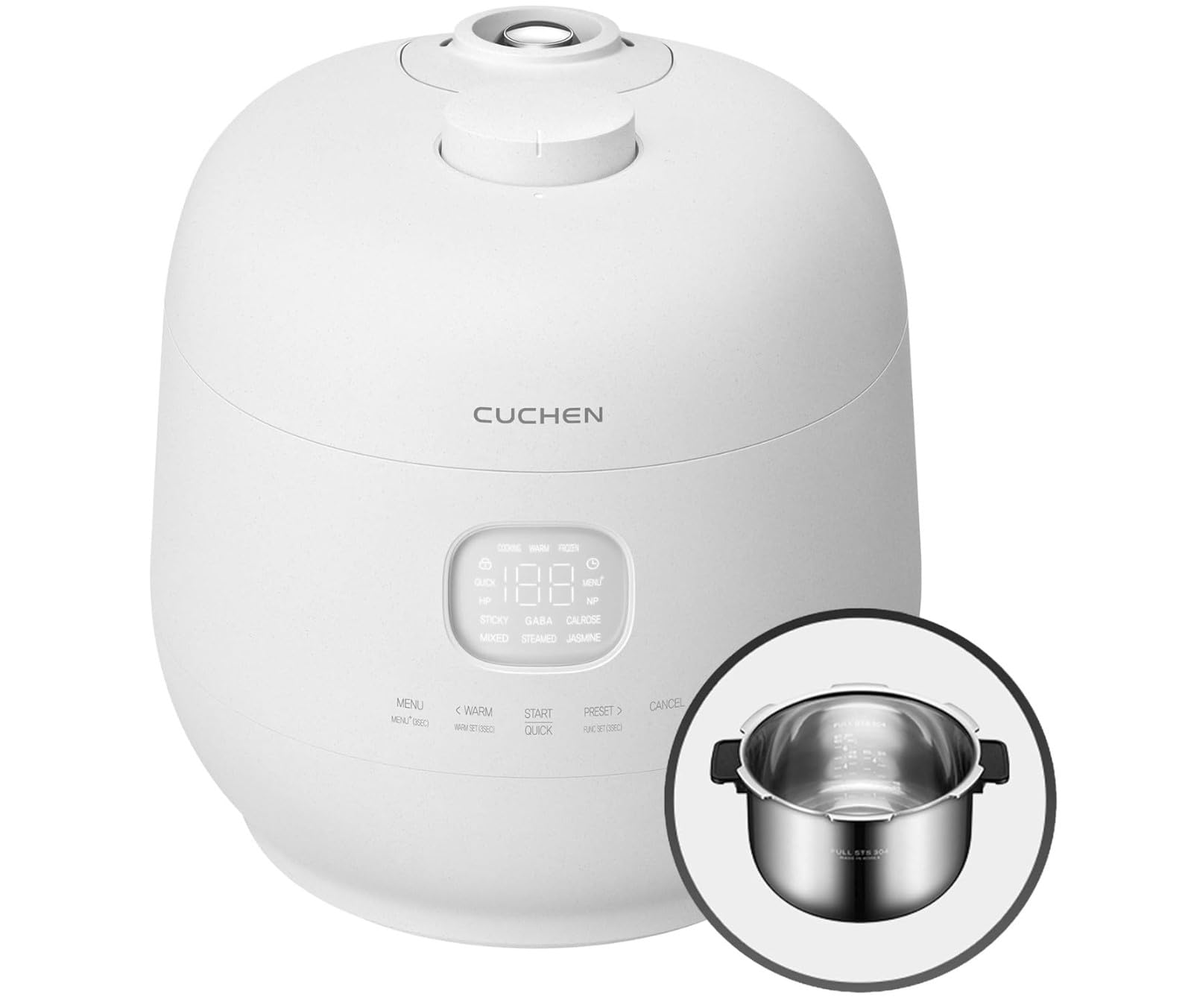
If you want one machine that can handle “daily rice” and the picky stuff—sticky rice, jasmine, mixed grains—without making you feel like you enrolled in a rice graduate program, this Cuchen hits a rare balance. It’s premium in the ways that matter (heat control, speed options, texture consistency, stainless pot confidence), but it doesn’t force you into a fragile workflow where one wrong step ruins dinner.
Here’s the expert reason it works: dual pressure + induction gives you two different “rice personalities” in one shell. Pressure is your shortcut to chewy, glossy, clingy rice (the kind that holds together for bowls and Korean-style meals). Non-pressure IH is your friend for lighter separation, delicate jasmine, and rice you want fluffy instead of sticky. The trick isn’t “which mode is better.” The trick is matching the mode to the dish you’re building.
Where this model consistently wins hearts is consistency top-to-bottom. A lot of basic cookers create the dreaded gradient: dry top, wet bottom. With stronger heat management and a well-designed pot, you get a more uniform grain finish—especially at larger batch sizes. That matters if you meal prep or feed a family: you don’t want half the pot to feel like leftovers on day one.
Stainless pot reality check: a full stainless pot won’t baby you the way a nonstick bowl does. But this machine helps by controlling heat more precisely and completing the cook with a calmer finish. If you rinse properly and let rice rest before fluffing, you’ll get results that feel genuinely “restaurant-level” without needing tricks.
Why you’ll love it
- Full stainless pot confidence – No peeling, no “coating anxiety,” and you can clean aggressively when life gets messy.
- Two rice textures on demand – Pressure for chewy/sticky; non-pressure IH for fluffy/separated.
- Consistency at larger batch sizes – Less top/bottom variation than many simple cookers.
- Built for real routines – Easy enough for weeknights, capable enough for rice people.
Good to know
- Like all sealed pressure-style machines, you’ll want to clean the steam path and inner lid regularly to keep flavors clean.
- Stainless means you may need a tiny water tweak for your favorite rice brand—once dialed in, it’s stable.
- If you only ever cook 1–2 cups, a smaller stainless cooker can feel simpler (and take less counter space).
Ideal for: households who eat rice often, want a premium upgrade, and prefer one stainless-pot machine that covers both “everyday” and “special texture” rice styles.
2. Cuchen CRT-RPD1010IEWUS (316Ti) – The “Serious Grain” Machine That Feels Built for a Decade
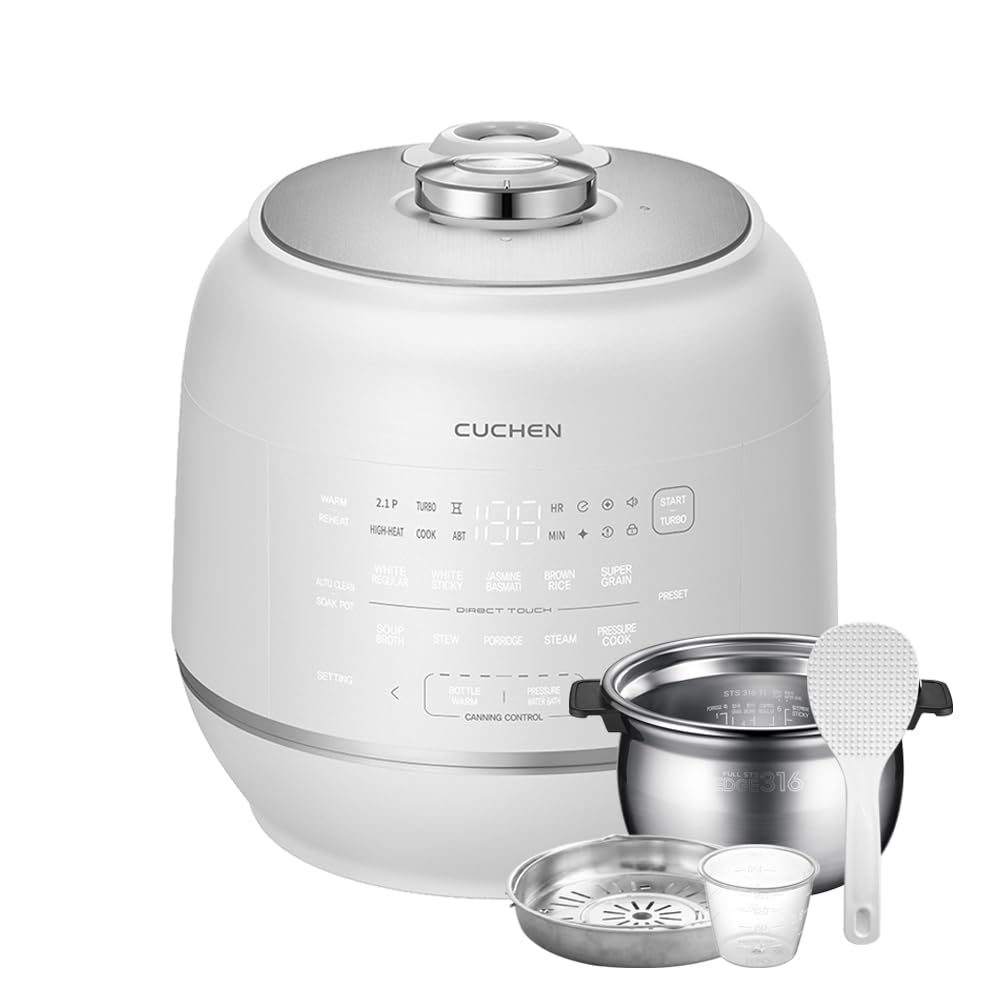
This is the cooker you buy when rice is not a side dish in your home—it’s a base food. The headline feature is the 316Ti stainless steel pot paired with induction and high pressure, and the real-world benefit is simple: it pushes tough grains toward soft, fully hydrated centers without needing you to pre-soak everything like you’re running a spa for brown rice.
Let’s talk about why 316Ti matters in plain English. Stainless steel families differ in how they resist corrosion and how they behave with acidic or salty environments. A “better” stainless formula can be more resistant over the long run, especially if you’re the type who uses the pot hard, cooks mixed grains, and occasionally forgets to rinse and dry immediately. The pot is also a psychological win: you’re not treating the cooking surface like a fragile baby. You’re treating it like cookware.
Owners who upgrade into this tier tend to rave about two things: evenness and speed. Evenness means large batches don’t punish you with dry rice on top and mush at the bottom. Speed means you can realistically decide to make rice after you start cooking protein—not three hours earlier. That “dinner becomes easier” effect is what turns a premium cooker from a luxury into an everyday tool.
Now, the honest, high-end owner reality: premium pressure cookers often have more parts you should maintain. This model includes cleaning systems and removable components, which is a win for hygiene, but some users report that certain covers can be stubborn to remove at first. Here’s the pro move: do a few “dry runs” before you’re hungry. Learn what clicks out, what slides, and what simply needs a stronger pull than you expected. Once you know, it becomes routine instead of drama.
Why it’s worth it
- 316Ti stainless pot – Built for long-term durability and no-coating peace of mind.
- Ultra-high pressure + IH – Great for brown rice, mixed grains, and the “chewy but fully cooked” texture people chase.
- Top-to-bottom consistency – Especially strong at bigger batch sizes where cheap cookers fall apart.
- Multi-cook flexibility – Useful if you want one machine that can cover more than rice.
Good to know
- Some owners find certain removable covers tight/stiff at first; it’s manageable, but not “toy simple.”
- Premium pressure machines reward regular cleaning—if you hate maintenance, choose a simpler stainless pot cooker.
- This is a large-capacity machine; if you cook tiny portions, it may feel oversized for your lifestyle.
Ideal for: rice-heavy households, big families, and “I want the best stainless pot I can buy” shoppers who value performance, speed, and long-run durability.
3. Zojirushi NP-HCC10XH (Induction) – The Cooker That Makes People Say “Wait… Rice Can Taste Like This?”

I’m including this model for a very specific reason: it’s one of the most consistently praised machines on the internet for pure rice quality. If you’ve ever eaten rice at a good Japanese restaurant and wondered why your home rice feels flat by comparison, this is the type of cooker that makes the difference feel obvious.
Now, important honesty: the inner cooking pan here is not a bare stainless pot. It’s a coated “fancy pan” designed to work with induction heating. So if your mission is strictly “stainless steel cooking surface only,” skip to the true stainless picks. But if your mission is “I want the best rice I’ve ever made and I’m willing to accept a coated pan,” this is a heavy hitter.
The real magic isn’t a single feature; it’s the way induction heating manages temperature changes throughout the cook. That precision shows up in grain definition: rice feels tender, evenly hydrated, and aromatic—especially with short-grain and jasmine. Owner feedback often reads like the same story: they’ve burned through multiple cheap cookers, finally bought this, and suddenly rice becomes a “main food” instead of an afterthought.
Where Zojirushi tends to dominate is keep-warm behavior. People regularly talk about having warm, good rice available long after cooking— not just “warm,” but still enjoyable. This matters if you snack, if your household eats at different times, or if you want rice ready without reheating in a microwave. It’s the kind of appliance that quietly changes your eating habits.
The trade-off is time. Many Zojirushi cycles are longer than basic cookers because the machine is optimizing texture, not racing the clock. You can absolutely work around it: use delay timer, cook ahead, or use quick mode when you need it. But the reason people buy this is because the results feel worth the wait.
Why people become obsessed
- Top-tier rice texture – Grain definition, aroma, and “restaurant rice” feel are a common theme.
- Induction precision – Helps consistency and reduces hot-spot issues that plague simple cookers.
- Keep-warm excellence – Great for grazing families and meal routines where rice sits for a while.
- Excellent grain menu variety – White, jasmine, sushi, porridge, brown/GABA-style options.
Good to know
- The cooking pan is coated, not bare stainless—this is a performance pick, not a “pure stainless pot” pick.
- Many modes take longer than basic cookers; planning (or using timers) is part of owning it happily.
- Like any premium machine, you’ll want to keep the inner lid area clean for best flavor over time.
Ideal for: rice lovers who prioritize flavor and texture above everything and want a “this makes rice better than I can” machine.
4. CUCKOO CRP-ST1009FW (Twin Pressure) – Korean-Style Results With a Switchable Personality

Cuckoo has a loyal following for a reason: it nails the specific “bowl rice” texture a lot of people grew up with—chewy, glossy, slightly sticky, and satisfying in a way stovetop rice often isn’t. The twin pressure concept is the real selling point: you can cook with pressure to lean into that sticky, clingy style, or cook without pressure for a fluffier, more separated finish.
This matters because different meals want different rice. Pressure rice is ideal for bowls, kimbap-style meals, and “rice as the base.” Non-pressure rice is better when you want grains that separate—fried rice base, lighter long-grain, or when you simply don’t want cling. Having both options in one machine means the cooker adapts to your menu instead of forcing your menu to adapt to the cooker.
Owners often talk about “it tastes like home.” That’s the north star here. They also talk about value—Cuckoo tends to pack in a lot of modes and automation. But the real expert advice: don’t get lost in the menu jungle. Start with the core rice modes, dial in water lines, then expand. You’ll get better results faster and avoid the frustration that comes from trying five modes before you understand one.
The biggest “watch-out” pattern is scorching or slight burning for some users in certain conditions (grain type, water ratio, or extended keep-warm). That’s not unique to Cuckoo—warm-hold can dry rice in many cookers—but pressure systems can make it feel more intense if you leave rice for long stretches. The simple fix is a habit: fluff well, then either serve and unplug, or keep warm only as long as you truly need.
Why it’s a standout
- Twin pressure flexibility – Sticky when you want it, fluffy when you don’t.
- Strong “Korean rice” results – Chewy, glossy texture is a repeated praise theme.
- Feature-rich convenience – Multiple menus plus voice guidance reduce guesswork for many users.
- Great for mixed cooking – GABA/brown, porridge, steaming, reheating options in one unit.
Good to know
- The cooking surface is not bare stainless; it’s a stainless pot with a nonstick-style coating.
- Some users report occasional scorching depending on settings/water—dial in your rice and don’t over-hold on warm.
- Pressure cookers need regular cleaning around vents and seals for best flavor and long-run reliability.
Ideal for: households who love chewy, glossy rice but still want the ability to switch to fluffy rice when the meal calls for it.
5. Buffalo Classic (Clad Stainless Pot) – The “Simple, Tough, No-Coating” Crowd Favorite

This is the cooker people buy when they’re done with fragile nonstick bowls and they want something that feels like cookware. Buffalo’s big “thing” is the clad stainless pot construction—think of it like a better pan: built to spread heat more evenly and reduce hot spots. That matters because hot spots are the silent reason cheap cookers scorch the bottom while leaving the top under-hydrated.
In practice, Buffalo owners love two things: the straightforward workflow and the clean-material mindset. It’s not trying to be a smart device. It’s trying to be a dependable rice tool with a pot you can actually trust long-term. If you grew up with a one-switch cooker and you want that simplicity—just upgraded to stainless—this is one of the most natural transitions.
Now, the nuance: stainless pots can stick. Buffalo is no exception. But “sticking” here is often less about failure and more about technique and warm-hold habits. If you rinse rice well, use the correct water line, and let the rice rest before fluffing, the pot releases far more easily. And if you do get a bottom layer, a soak (even a short soak) turns cleanup into a two-minute job.
One important real-world note: Buffalo models often recommend limited keep-warm time to avoid scorching. That’s not a weakness—it’s honesty. A simple cooker that holds warm aggressively can brown the bottom if left all day. If your household eats rice over many hours, you may prefer a premium “gentler warm” machine. If you mostly cook and serve, Buffalo is excellent.
Why people switch to it
- No coating, no flaking – Stainless pot confidence is the whole point.
- Clad pot evens heat – Helps reduce hot-spot scorching and improves batch consistency.
- Simple, reliable workflow – Buttons you’ll actually use, not a menu you’ll ignore.
- Easy deep cleaning – Stainless can be scrubbed hard when needed.
Good to know
- Keep-warm is best treated as short-term; long warm holds can dry or brown rice.
- If you never rinse rice, stainless will punish you—rinsing is part of loving this cooker.
- A small percentage of buyers report defective behavior over time; register your product and test early.
Ideal for: people replacing nonstick who want a tough stainless pot cooker that focuses on rice fundamentals and long-term material peace of mind.
6. Joydeem DFB-D300 (316L Stainless) – Stainless Pot, But Designed to Release Like It Isn’t

Joydeem’s angle is clever: give people a true stainless pot (no coating) but engineer the cooking experience to feel closer to nonstick. That usually means two things working together: surface texture and cooking algorithm. In this case, the pot’s micro-pattern is designed to help create a thin “water film” effect near the end of cooking so starch doesn’t glue itself to raw metal the way it can in basic stainless systems.
Real-owner language around this model is often about cleaning: “easy to clean,” “surprisingly nonstick,” “finally stainless without the headache.” And that’s exactly what you want if you’re switching from a coated pot and you’re worried you’ll hate stainless. This model is basically trying to make stainless feel friendly to normal people—not just cookware enthusiasts.
Where you still need to be smart: the measurement lines. A common user mistake is assuming the inner markings tell you how much rice to add. Many stainless pot cookers mark water levels, not rice volume. Your best habit is consistent: measure rice with the provided cup, rinse thoroughly, then fill water to the matching line with rice already in the bowl. Do that, and this cooker tends to deliver stable results.
The biggest “don’t do this” warning from owner patterns: don’t take apart the inner lid and silicone sealing parts unless you truly need to. Some users report reassembly is frustrating, and edges can be sharp. Instead, clean the parts that are meant for routine cleaning (wipe-down, removable cover if designed that way) and treat deeper disassembly as occasional maintenance. That one habit keeps ownership smooth.
Why it’s a smart stainless pick
- True stainless cooking surface – No coating to baby, no flaking risk.
- Designed for easy release – Micro-texture + heat control aims for less sticking than basic stainless.
- Useful menu set – Quick rice, mixed grain, steaming, congee, soup, reheat cover real-life needs.
- Great capacity for small families – A practical middle size for 2–6 people.
Good to know
- Avoid unnecessary inner lid disassembly; some owners report it’s hard to reassemble.
- As with all stainless, rinsing matters more than you think—skip it and results decline fast.
- If you want a huge-capacity cooker for meal prep, you may prefer a 10-cup class machine.
Ideal for: buyers who want a true stainless pot but still want cleanup to feel easy and not like a daily scrub battle.
7. Novaspark Low Carb Stainless Cooker – Health Modes + Stainless Pot in a Compact Shell

Low-carb rice cookers can be genuinely useful, but only if you understand what they’re doing. Most “low carb” systems work by cooking rice with extra water and separating out some starchy liquid that would otherwise be reabsorbed. That can reduce heaviness for some people and change how rice sits in your stomach—but it also changes texture. The best low-carb cookers are the ones that still leave you with rice you actually want to eat.
This Novaspark model is appealing because it pairs that low-carb approach with a stainless steel inner pot and a compact footprint. If you’re making rice for a small household and you’re trying to keep the cooking surfaces coating-free, it’s positioned in a sweet spot: small enough to live on a counter, capable enough to handle oatmeal/porridge style foods, and structured enough to feel safer than ultra-cheap plastic cookers.
Owner patterns with newer “smart-ish” brands often come down to instructions and first-use setup. If the instructions are thin, users can get stuck (literally and figuratively): cleaning covers that feel awkward to remove, power issues caused by not seating parts correctly, or confusion about which lines indicate what. The way to win with this type of cooker is simple: treat the first two cooks as calibration cooks. Cook plain white rice once, then cook your typical rice (brown, jasmine, etc.) and adjust water slightly based on texture. Once you dial it in, daily use becomes easy.
I also love that it’s designed with scheduling in mind. A delay timer and auto keep-warm are not “features,” they’re lifestyle. If your rhythm is: prep at lunch, eat at dinner—this style of cooker makes health goals easier to maintain because convenience stops fighting you.
Where it shines
- Low-carb option built in – Useful for people who want drained-starch style rice.
- Stainless inner pot – Coating-free cooking surface for peace of mind and easy scrubbing.
- Compact but functional – Good for small kitchens without sacrificing useful programs.
- Scheduling friendly – Timer + keep warm helps busy routines stay consistent.
Good to know
- Newer brands often have weaker instructions; plan a calm “setup day” rather than learning while hungry.
- Low-carb modes can change texture—expect slightly different chew and moisture than standard rice mode.
- Keep your removable parts seated correctly; many “won’t turn on” complaints are actually assembly issues.
Ideal for: small households who want stainless cooking surfaces plus low-carb functionality and are willing to do a little first-week calibration.
8. Aroma SmartCarb ARC-1120SBL – Big Batch Convenience With a Carb-Reducing Setup

If your household cooks “rice + something” constantly, the SmartCarb style machines can be a cheat code. This Aroma isn’t just a rice cooker—it’s a steamer, a slow cooker, and a big family workhorse with a carb-reducing basket concept. The biggest day-to-day win people describe is workflow: rice cooks below while vegetables steam above, and dinner feels less chaotic because the machine runs unattended.
Here’s how to think about the carb-reducing concept without getting lost in marketing: the system typically cooks rice in a way that separates part of the starchy liquid, then finishes the rice with steam. That can reduce some of the dissolved starch that would otherwise end up in your bowl. The practical trade-off is texture: some people love the lighter feel, others feel it’s slightly different than classic rice. If you’re buying this mainly for reduced-carb rice, plan to experiment with rice type and water levels until you hit the texture you enjoy.
As an expert buyer guide note, this machine is a “hybrid” in the strict stainless sense. It uses stainless components in the carb-reducing system, but it also includes a removable inner pot that is often coated. That’s not bad—it’s just important to know what surfaces your food touches on which mode. If you want zero coating anywhere, choose one of the true stainless pot cookers. If you want convenience and volume with an option to reduce starch, this is a strong value play.
Owner stories often highlight the same pattern: once people learn the simple measuring workflow (use the included cup, fill to the marked line), they use it constantly. They cook rice, then they realize the steamer is actually good, then they realize slow cook is good enough to replace a separate appliance. That’s the “3 appliances became 1” benefit that can make a kitchen feel instantly easier.
Why families love it
- Big capacity – Built for family dinners and meal prep.
- Carb-reducing option – Useful if you want drained-starch rice as part of your routine.
- Steaming while rice cooks – Makes weeknight dinners smoother.
- Multi-function value – Slow cook, sauté, steam, and rice in one footprint.
Good to know
- This is not “pure stainless everywhere”; it’s a hybrid system with different food-contact surfaces depending on mode.
- Carb-reducing rice can taste slightly different; plan to test with your preferred rice brand.
- As with all multicookers, it’s best when you stick to its strengths (rice/steam/slow cook) rather than expecting it to replace every tool perfectly.
Ideal for: families who want big batch capability, steaming convenience, and an optional reduced-starch rice approach in one machine.
9. Moosum 20-Cup Cooked (10 Uncooked) – Capacity First, With Stainless Pot Practicality
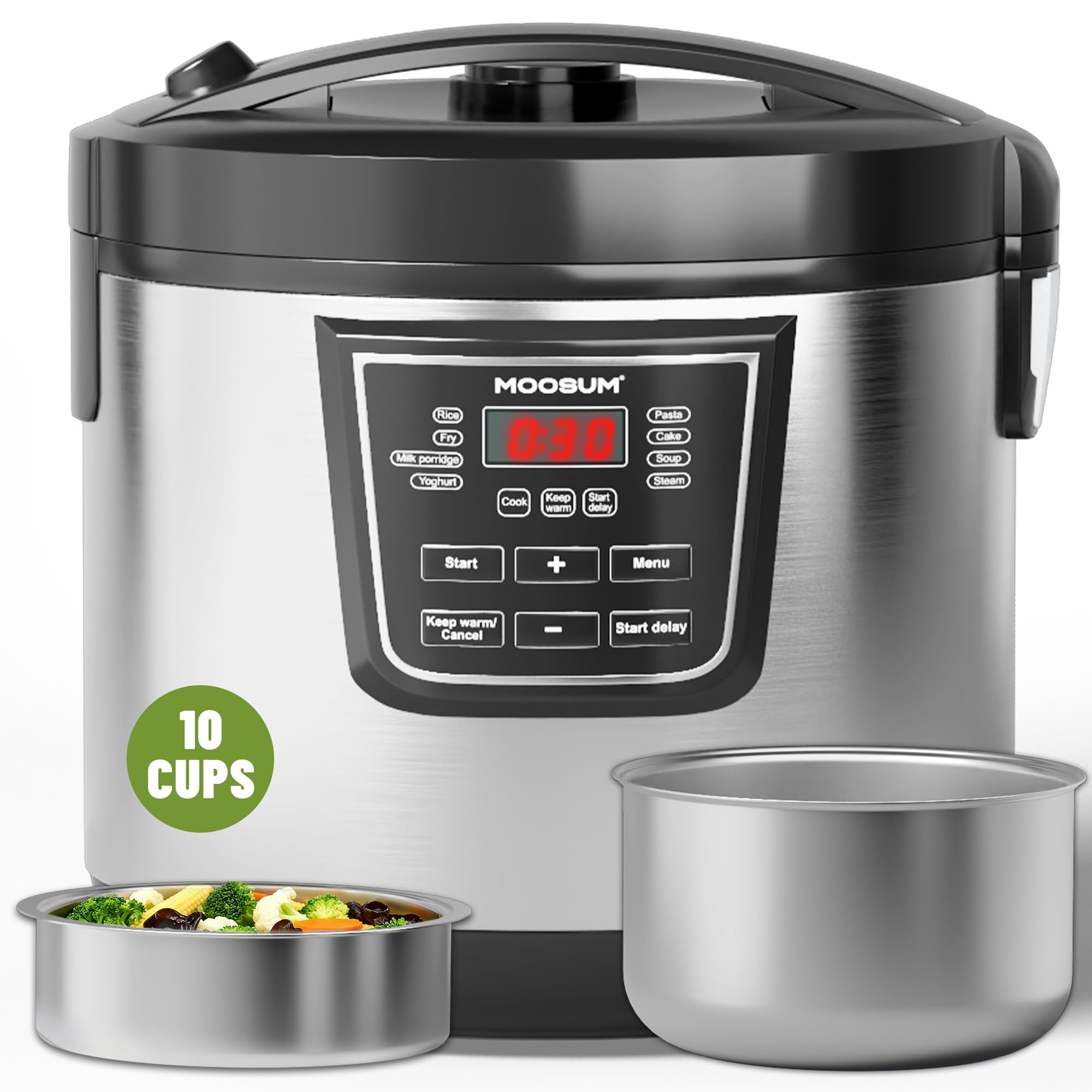
This is a “solve the volume problem” cooker. If you feed a crowd, meal prep in big trays, or cook rice for gatherings, capacity matters more than perfection. Moosum’s 20-cup cooked class model aims to deliver a lot of rice with a stainless pot and multiple cooking programs, without forcing you into premium pricing tiers.
The main expert advice for this style of cooker is to set expectations correctly: high-capacity, multi-function cookers at this tier often require a little more attention to timing and water ratios. Some users mention needing to keep an eye on overcooking or “timing it” until they learn how their preferred rice behaves. That’s not a failure—it’s normal in thermostat-driven systems where the cooker is less “intelligent” about grain types. Once you learn your baseline, it becomes consistent.
Where stainless helps here: durability and cleaning. Big batches mean big starchy residue. A stainless pot can take soaking and scrubbing without fear. You can also use the pot for non-rice foods (soups, porridge, pasta) without worrying that a coating will degrade under constant use. That makes it a better long-run tool for high-volume households.
If you want this cooker to feel premium, use one premium habit: fluff immediately after cooking and don’t compress rice back down. This stops steam from turning the bottom layer into a dense “cake,” which is the main reason big cookers get sticky bottoms. Fluff, then keep warm only as long as you need, and serve with a scoop that lifts rather than scrapes.
Why it’s a strong value
- Feeds a lot of people – The capacity is the headline feature.
- Stainless pot cleanup – Scrub-friendly and durable for repeated big cooks.
- Useful extra functions – Soup, steam, porridge, and more for batch cooking.
- Great for meal-prep routines – Cook rice + steam, then build bowls for days.
Good to know
- May require a short learning curve for water and timing, especially if you cook different rice types.
- Keep warm behavior varies; avoid leaving rice forever if you want the best texture.
- Budget multi-function machines can be less “precision-tuned” than premium IH/pressure models.
Ideal for: larger families, meal preppers, and hosts who want stainless pot durability and big-batch capacity without paying for high-end IH systems.
10. Aroma ARC-757-1SG (Stainless Pot-Style) – The Classic “Flip the Switch” Stainless Upgrade

Aroma’s stainless pot-style cookers live in a very practical lane: they’re made for people who want stainless cooking surfaces and simple operation, not a tech showcase. If you want a cooker that feels like an appliance your parents would understand instantly—add rice, add water, press down—this model fits.
The stainless pot is the star. It’s durable, it’s easy to scrub, and it removes a lot of the long-term worry about coatings degrading. But stainless also asks you to cook like an adult: rinse rice, don’t starve it of water, and let it rest. If you do those three things, this cooker can make very satisfying rice with minimal fuss. If you don’t, you might experience the classic stainless learning curve: a light layer of stuck rice at the bottom.
The included steam tray is also a real-life win. Even if you only use it once a week, it changes dinner flow: rice below, vegetables above, protein on the stove, done. That’s why these simple stainless cookers are so beloved by meal-prep folks. They don’t need to be fancy—they need to be dependable.
One caution from owner patterns in this class: some people have experienced defective “cook/warm switch” behavior on certain units (where it flips to warm too quickly). The practical buyer move is simple: test the cooker early with a full normal batch and watch the cycle. If it behaves correctly, it tends to be a steady everyday tool.
Why it’s a go-to
- True stainless cooking pot – Durable and scrubbable for long-term use.
- One-touch simplicity – No menu overwhelm, easy for beginners and seniors.
- Steaming tray – Makes weeknight meals faster and cleaner.
- Great size for families – Strong “daily rice” capacity without feeling commercial.
Good to know
- Stainless may stick if you don’t rinse and rest; technique matters more than with coated pots.
- Some users report switch defects; test early so you’re confident your unit is solid.
- Keep warm is best treated as a short-to-medium hold for best texture.
Ideal for: families who want a straightforward stainless pot rice cooker with steaming capability and minimal complexity.
11. CARORI 9-in-1 Pressure Cooker (Stainless Pot) – Not a Rice Specialist, But a Daily-Meal Cheat Code
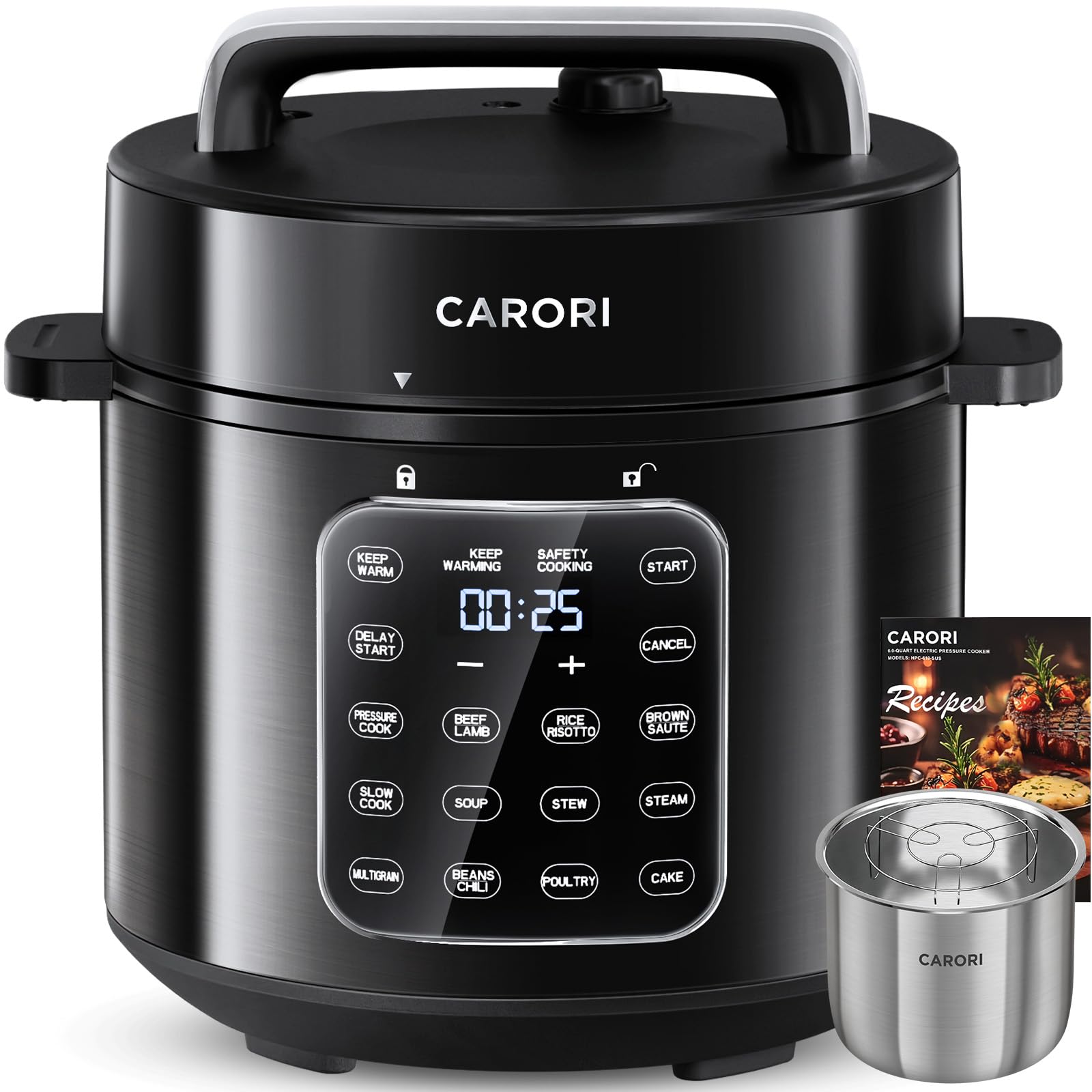
Let’s put this in the right category: this is a pressure cooker that can cook rice, not a dedicated rice cooker designed around rice texture nuance. So why is it in this guide? Because for many homes, the most powerful “rice cooker” is actually the device that handles dinner end-to-end: sauté aromatics, pressure-cook beans or lentils, simmer soups, sterilize, warm—then also cook rice when needed. And it does it all in a stainless pot.
The stainless inner pot is a big selling point because it turns the machine into real cookware. You can brown onions and garlic directly in the pot, bloom spices, then add liquids and grains and let the pressure cycle finish the job. Owners who love this style of cooker talk about speed and convenience: “one pot wonder,” “dinner faster than pickup,” and easy cleanup. That’s not marketing—that’s workflow.
Where you need to be realistic: rice texture from generic pressure cookers can be great, but it depends on your method. If you press “rice” and walk away, you may get rice that’s fine, or rice that’s slightly over/under depending on rice type. The pro method is to treat it like cooking, not like magic: rinse, measure, and adjust time for your grain. Once you find the right ratio for your rice, it’s repeatable.
Also, some users note that certain meats can come out tough if you don’t give them enough time or you choose the wrong cut. That’s not a flaw; it’s pressure cooking reality. The upside is you can dial it in—especially if you cook stews, beans, and batch meals. If your household wants one machine that does “real food” fast, this category is a great fit.
Why it earns a spot
- Stainless pot for real cooking – Sauté, deglaze, and cook without coating worries.
- 9-in-1 versatility – Great for beans, lentils, soups, baby food prep, and meal prep.
- Fast dinners – Pressure cooking can change your weeknight routine dramatically.
- Easy cleaning – Stainless + dishwasher-safe parts simplify cleanup for many users.
Good to know
- Rice texture isn’t as “rice-nerd tuned” as premium IH rice machines—expect to dial in ratios.
- Pressure cooking has a learning curve (release methods, timing, cuts of meat).
- If your main goal is perfect sushi rice every time, a dedicated rice cooker may suit you better.
Ideal for: minimalist kitchens and busy households that want one stainless-pot machine for fast meals—rice included, but not rice-only.
12. Akureo Low Sugar Cooker (304 Stainless Basket) – A Health-Mode Idea With a Learning Curve
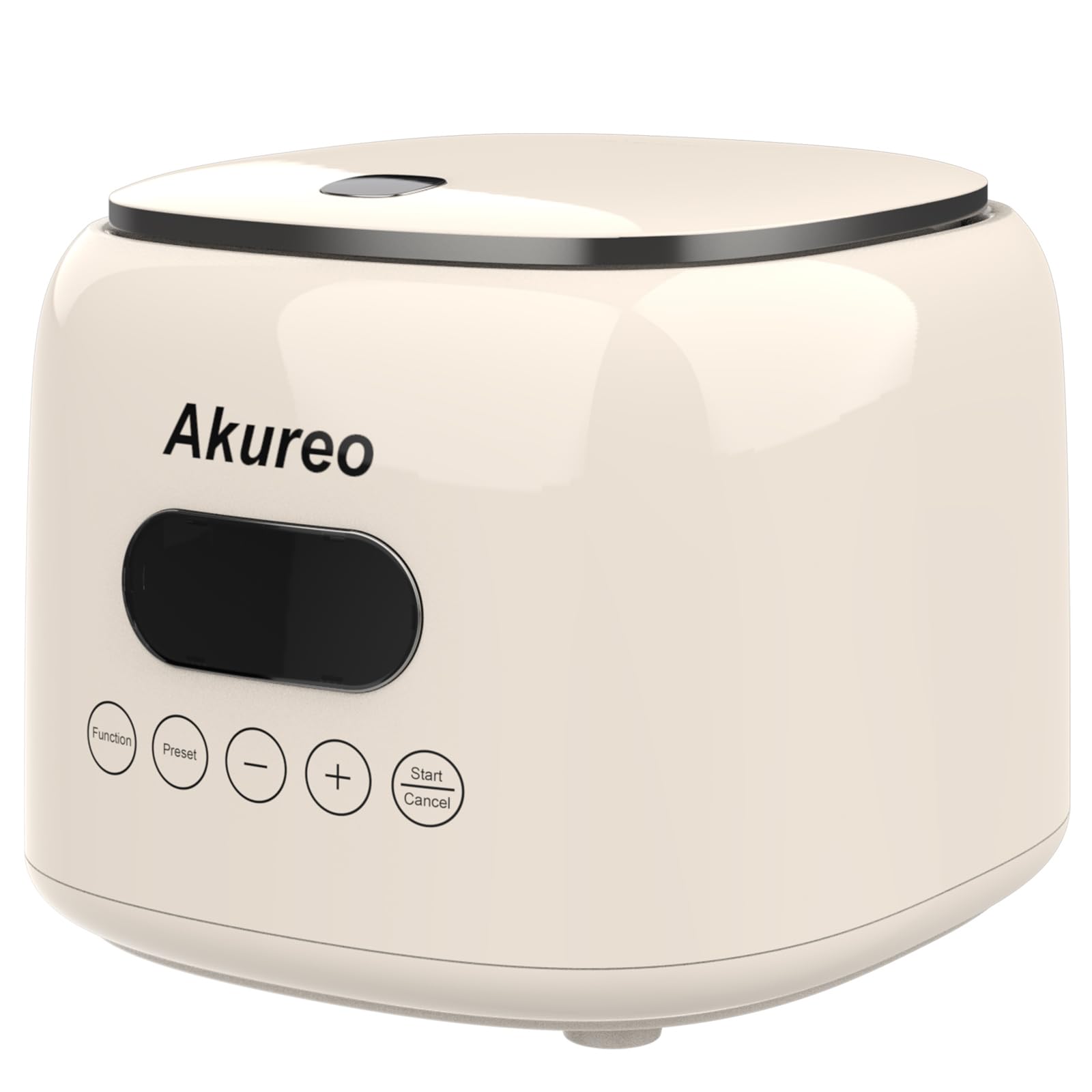
This cooker is built around a specific concept: cook rice in a way that lets starchy water separate rather than fully absorb. That’s why you see the basket/strainer approach. In theory, this can reduce some of the starch content in the final serving. In practice, the experience depends heavily on one thing: whether the instructions and your measurements line up.
Owner feedback patterns here are extremely telling—and useful. People who love it usually say some version of: “once I figured out the water, it works great.” People who hate it often say: “the instructions were awful and my first cook was a disaster.” That means this isn’t the cooker you buy if you want zero thinking. This is the cooker you buy if you’re willing to do a tiny bit of learning and you want the specific low-sugar workflow at a budget-friendly level.
Here’s the expert approach to make this style of cooker work: start by using the low-sugar feature exactly as designed—rice in the basket, enough water to cover grains (not the same as standard rice cooking), then let the machine do the drain/finish behavior. Expect rice to be a little different—some users describe it as slightly drier or chewier. If your goal is “lighter rice,” that can be a feature. If your goal is “soft sticky rice,” you may prefer a standard cooker.
The win is practicality: it’s compact, it’s easy to store, and once you dial it in, it can become a consistent part of a health-focused routine. Just don’t judge it by cook #1. Judge it by cook #3.
Why it’s worth considering
- Low-sugar workflow – Basket system supports a drained-starch style cook.
- Stainless components – Stainless pot and basket are easier to clean and feel safer for many buyers.
- Small-household friendly – Compact size works for 2–3 people and small kitchens.
- Timer planning – Reservation feature helps busy routines stay on track.
Good to know
- Instructions may be weak—plan to experiment with water to match your rice type.
- Low-sugar rice texture can be drier/chewier; that’s part of the method.
- If you want “press once and perfect rice,” pick a simpler stainless pot cooker instead.
Ideal for: budget-conscious buyers who want a low-sugar style cooking method and don’t mind a short learning phase to dial in texture.
13. Moosum 5-Cup One-Touch – Fast Rice for Small Homes (With a Keep-Warm Habit)
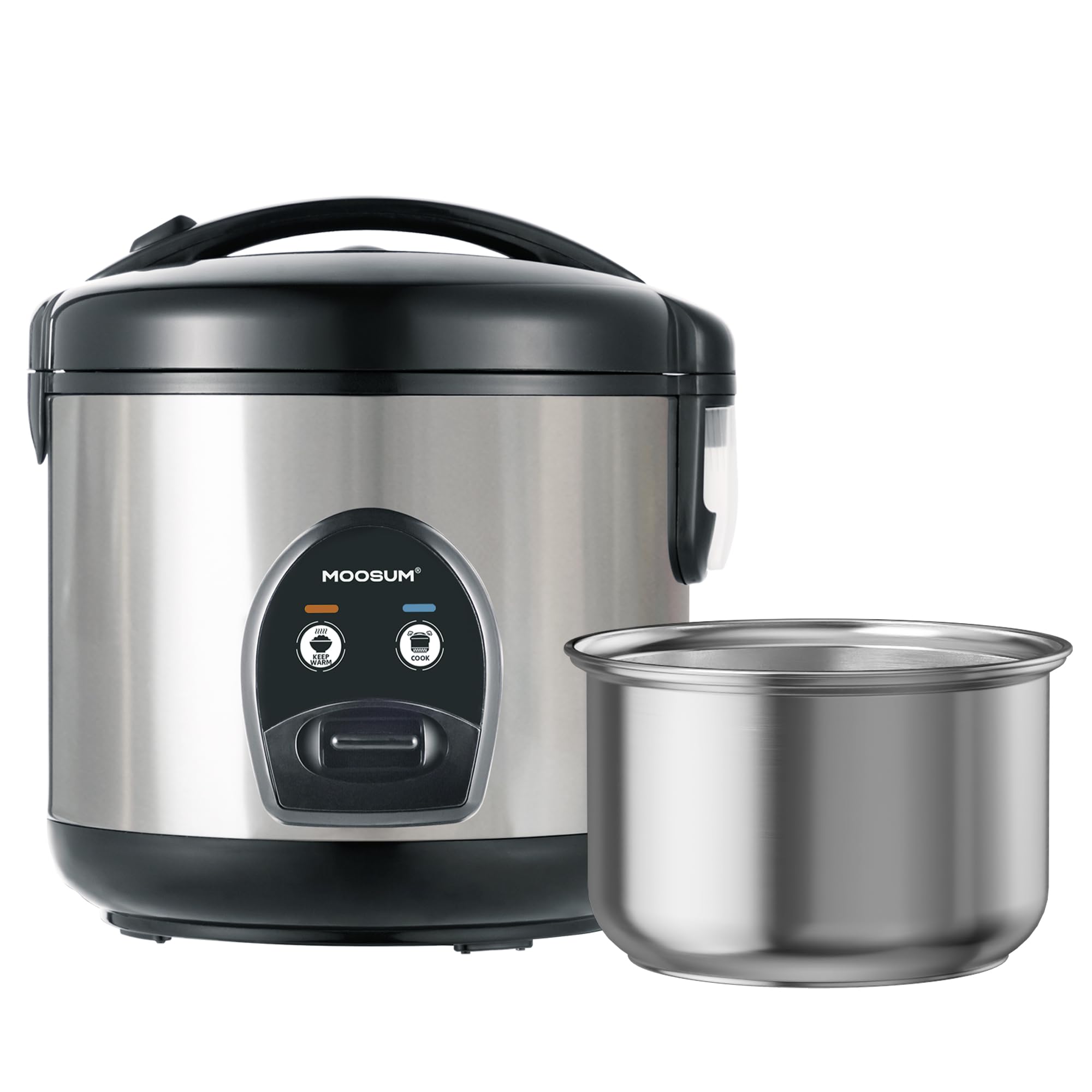
This is the “keep it simple” pick for people who want a stainless pot, small-to-mid capacity, and a one-button workflow. When these cookers are good, they’re great: you stop micromanaging rice on the stove, you get consistent results, and you build the habit of cooking rice more often because it’s no longer annoying.
Owner feedback usually clusters into two camps. Camp one: “perfect rice every time,” “better than teflon,” “high quality,” and “easy clean.” Camp two: “burned the bottom if left too long on warm” or “my unit had a defect but customer service handled it.” The takeaway isn’t that it’s unreliable; the takeaway is that this class of cooker is heavily influenced by how you treat keep warm.
Here’s the pro habit: treat keep warm as a convenience window, not a storage solution. When rice finishes, fluff it, serve what you want, then either unplug or move leftovers to a container. If you do want to keep warm for longer, add a tiny splash of water and gently fold before serving to rehydrate the top layer. That single habit dramatically improves the “next bowl” experience on simple cookers.
The stainless pot also means you can soak before washing, and you don’t need to worry about scratching. If you get a light stuck layer, don’t attack it dry. Fill with warm water, wait 10 minutes, and it wipes away. That’s the stainless game: soak beats scraping.
Why it’s a strong pick
- Simple one-touch workflow – Great for busy weeknights and beginner cooks.
- Stainless pot – No coating worry and easy cleanup with soaking.
- Good size for small families – Enough capacity without feeling bulky.
- Steaming capability – Helpful for quick vegetables and simple meals.
Good to know
- Bottom browning can happen if you keep warm too long—fluff and manage warm-hold time.
- As with many budget appliances, occasional defects happen; test early so you’re confident.
- This is not a “precision rice nerd” machine; it’s a practical one-touch cooker.
Ideal for: small households that want stainless pot durability and fast one-touch convenience, and are willing to use keep warm intelligently.
14. Moosum 3-Cup Small Stainless Pot – The Dorm/Office Hero With Surprisingly Useful Modes
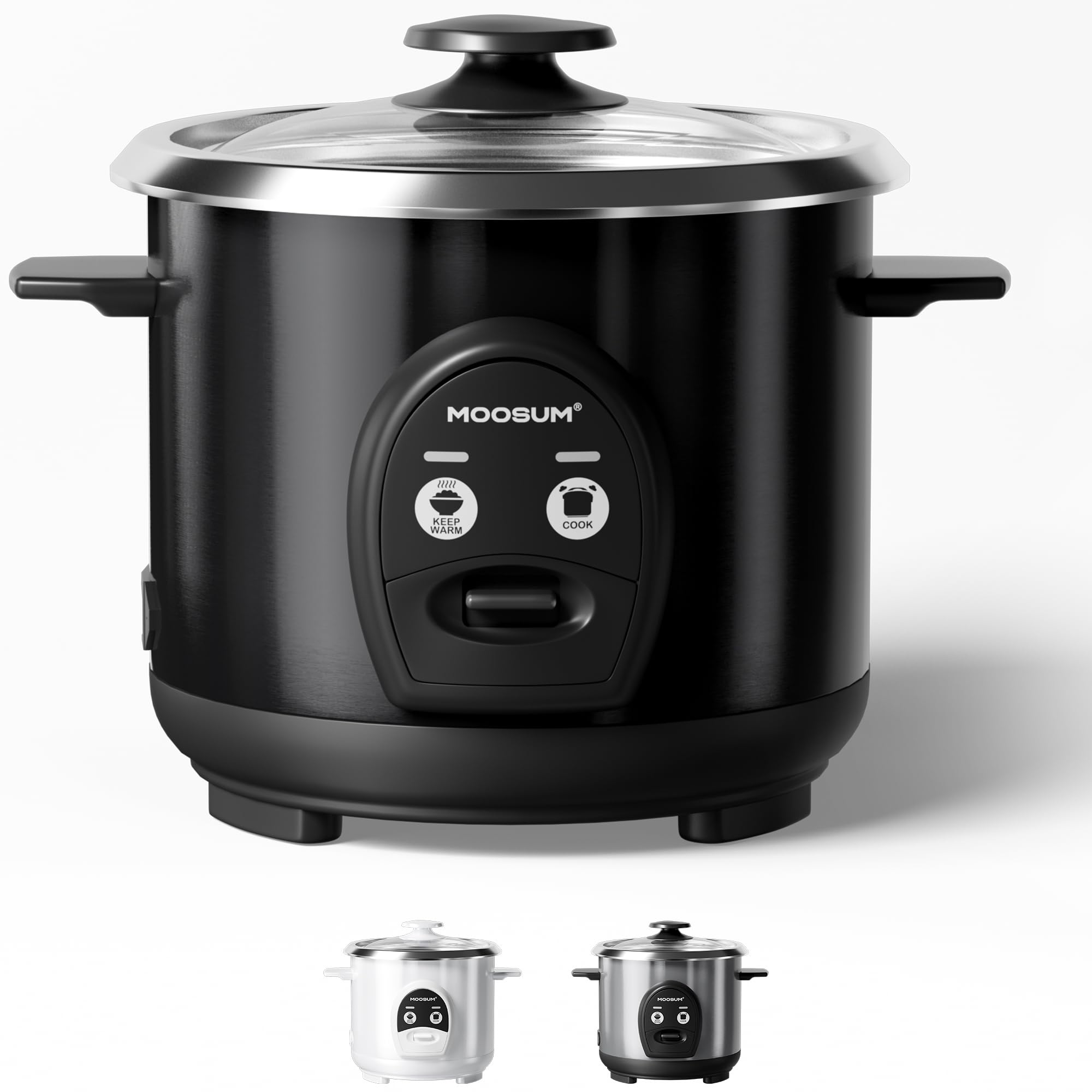
Tiny cookers are underrated. For a lot of people, the reason rice cooking feels like a chore is that they’re using a pot that’s too big, making too much, and then storing leftovers they don’t even want. A 3-cup uncooked cooker solves that. It makes “fresh rice” the default, not an event.
This Moosum small model is built around ease: one-button operation, multiple modes, and a stainless inner pot for people who want PFAS-free style peace of mind. Owners often describe it as durable and “finally easy rice,” especially for beginners who never got stovetop rice consistent. There’s also a surprisingly useful theme: people use it for more than rice—small stews, sauté tasks, yogurt experiments—because it’s right there and simple.
The biggest usability caution is heat around controls. On compact appliances, the body is closer to heat sources, so certain buttons or surfaces can get warmer than you expect. The simple habit is: press buttons early in the cycle, then use the handle and avoid hovering your hand over hot areas mid-cook.
The other realistic limitation: no tiny cooker is a “precision sensor machine” at this tier. If you want absolute perfection on every rice type, you’d move to induction. But for single servings and small households, this category can actually feel more satisfying because it matches portion size and reduces waste.
Why it works
- Perfect size for 1–3 people – Fresh rice without leftovers becoming a lifestyle.
- Stainless pot – Easy to clean and no coating to worry about.
- Beginner friendly – One-touch operation makes rice consistent fast.
- More versatile than expected – Useful for small meals beyond rice.
Good to know
- Some surfaces can get warm during cooking; treat it like a hot appliance, not a toy.
- Small capacity means it’s not for meal prep or big families.
- Expect basic automation, not premium “fuzzy logic” precision across every grain.
Ideal for: dorms, offices, small apartments, and anyone who wants fresh rice in small portions with stainless pot durability.
15. Aroma ARC-753SG (3-Cup Uncooked) – The Classic Stainless Entry Point That Just Keeps Going

This cooker has a long-running reputation because it’s simple and it works. You’ll see people buy it, use it for years, and then buy another when the switch finally wears out—or when they melt something by placing it too close to a hot burner. That’s the category: basic, compact, and proven.
The stainless pot is the key feature for long-term value. People often switch to this model specifically because they’re replacing an old nonstick cooker where the coating started peeling, and they want a stainless alternative that doesn’t cost “premium appliance” money. The pot is easy to scrub clean, and if rice sticks (which can happen in any stainless cooker), a soak solves it.
A real-life quirk with small glass-lid cookers is starchy bubbling. If you cook a very small amount of rice, the boil can foam and spit a little through the vent. It’s not dangerous; it’s rice starch doing rice starch things. If it bothers you, rinse more thoroughly and avoid overfilling water. Some owners even cover the vent lightly to reduce splatter. The point: don’t mistake normal boiling behavior for “bad quality.”
Also, this is another cooker where keep warm can cause the bottom layer to stick if you leave it plugged in too long. That’s true of many simple cookers. The winning habit is to unplug after cooking if you’re not actively keeping rice warm for serving. That single step makes cleanup easier and keeps rice tasting fresher.
Why it’s still a favorite
- True stainless pot – Durable, scrubbable, and coating-free.
- Very easy to use – Classic “set and forget” workflow.
- Compact footprint – Great for small kitchens and quick rice cooking.
- Great entry point – A simple way to move away from nonstick.
Good to know
- Small batches can foam and splatter slightly through the vent; rinsing helps.
- Long keep-warm can stick the bottom layer—unplug if you don’t need warm-hold.
- It’s a simple cooker, so don’t expect advanced grain-specific precision modes.
Ideal for: first-time stainless buyers, small households, and anyone who wants the simplest path to coating-free rice cooking.
How Stainless Pots & Pressure Actually Change Rice (and How to Stop Sticking)
Most frustration with stainless inner pots comes from one mismatch: people cook stainless like nonstick. But stainless changes the physics of rice cooking in three ways—heat behavior, starch bonding, and how moisture redistributes during resting. Once you understand those three, stainless stops feeling “hard” and starts feeling predictable.
Why stainless sometimes sticks (and why it’s not a defect)
- Starch is glue: When rice boils, starch leaves the grain and thickens the water. That starch can bond to metal surfaces if conditions are right (especially with short-grain rice and insufficient rinsing).
- Hot spots create “cement” zones: If a cooker heats unevenly, the bottom layer can over-reduce moisture and create a dense stuck layer. Clad pots and induction heating help reduce this by spreading heat more evenly.
- No resting = more sticking: Rice needs a closed-lid rest after cooking. That rest finishes hydration and loosens the bottom layer. If you open immediately and scoop aggressively, you compress rice against the pot and increase sticking.
The stainless “no-stress” routine
- Rinse until the water runs clearer – especially for short-grain, sushi rice, and sticky rice.
- Use the included measuring cup – many cookers mark water lines based on their own cup size, not a standard US cup.
- Rest 10 minutes after the cook finishes with the lid closed.
- Fluff lift-and-fold – don’t mash rice down; you’re releasing steam and separating grains.
- Soak to clean – if anything sticks, warm water + a short wait beats scraping.
How pressure changes results (in plain English)
- Pressure pushes water into grains faster – which can soften tough grains (brown, mixed grains) without long soaking.
- Pressure can make rice chewier and glossier – a texture many people love for bowls and Korean-style meals.
- Pressure systems rely on seals – keep gaskets and vents clean so rice smells like rice, not yesterday’s steam.
Three “first week” tests that make ownership easier
- Test 1: Your baseline white rice – cook your most common rice exactly to instructions. Record whether you want slightly more/less water next time.
- Test 2: Your keep-warm limit – leave rice on warm for the amount of time you realistically do (not your ideal). Taste it. If it dries, adjust your habit: fluff better, shorten warm-hold, or rehydrate lightly before serving.
- Test 3: Your cleanup proof – intentionally let a small batch sit in the pot for 20 minutes after serving. Then soak 10 minutes and wash. If cleanup is easy, you’re in the right stainless rhythm.
When you cook stainless correctly, the payoff is huge: a pot you can clean aggressively, a surface that doesn’t peel, and rice that tastes clean and honest. Stainless doesn’t just change your rice—it changes how confident you feel using the cooker every day.
FAQ: Stainless Rice Cookers (Answered Like a Real Owner)
Do stainless steel inner pots always stick?
What’s the difference between 304, 316L, and 316Ti stainless pots?
Are “low carb” rice cookers actually useful?
Why does my rice taste “off” after a few weeks in a sealed cooker?
What’s the fastest path to better rice in any cooker?
Which cooker should I choose if I want “one machine, no regrets”?
Final Thoughts: Buy the Cooker That Matches How You Actually Eat
There’s a reason people fall in love with a good rice cooker: it removes friction from daily food. The right stainless setup doesn’t just cook rice—it makes your kitchen feel calmer, cleaner, and more reliable.
If you came here specifically for a stainless steel rice cooker with stainless steel inner pot, here’s the simplest “decision shortcut” based on real-life patterns:
- Want the best overall “one machine for most homes” premium pick? Start with the Cuchen CRH-TWS1010PWUS (304Ti). It’s powerful, flexible, and built around a true stainless pot.
- Want the most premium stainless pot experience and top-tier grain performance? Choose the Cuchen CRT-RPD1010IEWUS (316Ti). This is the “serious rice household” machine.
- Want legendary rice texture and you’re okay with a coated pan? Go with the Zojirushi NP-HCC10XH for the “why does my rice taste better now?” effect.
- Want chewy sticky rice sometimes and fluffy rice other times? The CUCKOO CRP-ST1009FW is built for that switchable personality.
- Want stainless simplicity without premium complexity? Pick a classic stainless pot cooker like the Buffalo Classic or Aroma ARC-757-1SG. These are the “just cook rice reliably” picks.
- Want low-carb / low-sugar style cooking in a smaller footprint? Look at the Novaspark Low Carb or Akureo Low Sugar, and plan a short “calibration week” to dial in texture.
- Want big batches without going premium? The Moosum 20-Cup Cooked is built for volume-first homes.
- Want tiny stainless simplicity for dorms or small portions? The Aroma ARC-753SG and Moosum 3-Cup Small are the “fresh rice without leftovers” solutions.
If you only remember one thing: stainless pots reward a tiny bit of technique—but they pay you back with durability, scrubbable cleanup, and the peace of mind of cooking on a surface that doesn’t rely on a coating to behave. Choose the cooker that matches your portion size, your rice style, and your tolerance for maintenance, and you’ll feel that quiet kitchen confidence every single week.
