
Soup looks simple on paper. Chop things, heat things, blend things. But in real life, soup is where kitchens get messy: a pot that needs babysitting, a spoon that never stops stirring, steam fogging your glasses, and a blender situation that somehow splashes onto the one clean shirt you own.
That’s exactly why the modern soup maker machine has quietly become one of the smartest “quality of life” upgrades you can make. Not because you can’t make soup without it… but because it turns soup into something you do on a Tuesday without thinking—while you answer emails, help with homework, or just finally sit down for five minutes.
Here’s the catch: the market is confusing on purpose. Some products are true soup makers (heat + blend in one controlled cycle). Some are cooking blenders that happen to have a soup preset. Some are plant-milk makers that unexpectedly make better puréed soups than many “soup-only” machines. And some are not soup makers at all—they’re soup solutions (warmers, hot pots, immersion kits) that can be the right choice if you know what you’re buying.
This guide is built around the thing most “reviews” ignore: how these appliances behave when you’re tired, hungry, and trying to get dinner on the table with minimal drama. We’ll talk about texture, burn risk, real cleaning friction, noise, batch sizing, and the tiny design details that separate a counter-space hero from a regret purchase.
How to Choose a Soup Maker Machine That Actually Fits Your Kitchen
Before you pick a model, get crystal clear on this: the best machine is the one you’ll actually use on a normal weeknight. The right soup maker machine is less about “maximum features” and more about “minimum friction.”
1. Know the 4 categories (and don’t let marketing blur them)
Most people shop as if every product here is the same thing. They aren’t. When you understand the categories, your choice gets dramatically easier.
- True soup makers (heat + blend in a programmed cycle): These are designed to turn raw vegetables + liquid into finished soup with minimal thought. The best ones nail texture and tenderness without scorching.
- Cooking blenders (powerful blender with a heater plate): These are typically larger and more “appliance-y.” They can do soup, but they’re also trying to do smoothies, porridge, jam, and more. Great when you want one device to replace two or three.
- Plant milk makers (surprisingly great soup tools): These machines were built to grind + heat + manage boil-over. That skillset translates extremely well to puréed soups, broths, and creamy vegetable bases—especially if you like smooth textures.
- Soup “support tools” (warmers, hot pots, immersion kits): Not automatic soup. But sometimes the smartest choice if your priority is serving, travel, dorm life, or flexibility.
2. Batch size is a strategy, not a number
Here’s the truth: a lot of machines have a “big looking” jug, but the real working volume is controlled by minimum and maximum fill lines. That’s not a flaw—it’s how the machine keeps blades submerged, prevents boil-over, and avoids thick mixtures scorching.
- If you want leftovers: favor larger working volumes (often around the 1.6–2L range) or plant-milk makers with bigger chambers.
- If you cook for one or two: a smaller working range is a feature, not a limitation. It keeps you from making “too much soup” and then wasting it.
- If you want soup for entertaining: you may not want a soup maker at all—you may want a warmer that holds temperature for hours without breaking texture.
3. Texture is the real scoreboard: smooth, rustic, or brothy
Most disappointment happens because people expect one machine to do all textures equally well. In reality, each texture has its own “rules.”
- Velvety smooth soups: Easiest for most machines, but the hardest to make truly restaurant-silky without using the right ingredient order.
- Rustic chunky soups: The machine must cook evenly and stir gently. Some “chunky” programs still over-blend if you add small-cut vegetables.
- Brothy soups with pieces: Often better done with a hot pot or stovetop, then finished with a short blend for a partial thick base.
4. The burn-risk checklist (this is where reviews get real)
Scorching is rarely “random.” It usually comes from one of these patterns:
- Too thick too early: starches (potato, lentils, oats) sitting on the heater before enough liquid circulates.
- Sugary ingredients: carrots, pumpkin, tomato paste, sweet potatoes—amazing in soup, but sticky on heater plates if your liquid ratio is off.
- Hard ingredients cut too large: the program may finish before tenderness hits, and people blame the machine when it’s actually prep size.
- Skipped “rest” cycles: some heater/motor designs need a cool-down between back-to-back batches.
5. Cleaning is the hidden tax—be honest about your patience
Manufacturers love “self-clean.” In reality, self-clean means: “it loosens residue so you can finish quickly.” The best machines make it hard for food to hide. The worst ones create tiny traps around blades, screens, and lids.
- Fastest real-life cleanup: smooth interior, minimal seams, simple lid geometry.
- Most annoying cleanup: built-in filters and blade assemblies you can’t separate, especially if you make thick soups or nut milks often.
- Biggest habit upgrade: rinse immediately after pouring. If residue dries, you’ve just doubled your cleaning time.
6. Don’t ignore the “human factors”
The best machine is the one you can lift, pour, and store without hating it.
- Heavy glass pitchers: feel premium, pour nicely, but can be a pain when full.
- Stainless jugs: durable and heat-friendly, but you can’t always see what’s happening inside.
- Sound shields and noise control: huge if you cook early or live with light sleepers.
- Controls: dials are often simpler than touch panels for daily use, but touch panels can be great when they’re well-labeled.
Quick Comparison: 16 Soup Maker Machine Picks
This table is organized by real-world usefulness: the machines that most people will love first, followed by specialized picks for plant milk, parties, dorm life, and DIY flexibility.
On smaller screens, swipe or scroll sideways to see the full table.
| Model | Type | Best For | Key Feature | Amazon |
|---|---|---|---|---|
| Philips Viva Collection SoupMaker (HR2204/70) | Soup Maker | Fast, consistent soups | SoupPro presets + quick cycles | Amazon |
| 2L Soup Maker (Potlimepan, 6‑in‑1) | Soup Maker | Family batches | Smooth/Chunky + Compote + Reheat | Amazon |
| SoyaJoy G5 (8‑in‑1) | Plant Milk + Soup | Premium plant milks + soups | Precision grind + boil-over sensors | Amazon |
| Idavee IAE15 (1.9L, 7‑function) | Plant Milk + Soup | Large household output | Big chamber + recipe booklet | Amazon |
| 13‑in‑1 Ultra Silent Cooking Blender (Sxmprail) | Cooking Blender | Quiet, multi-use kitchen | Sound shield + delay start + keep warm | Amazon |
| GreenPan Nut Milk Maker (15‑in‑1) | Milk + Soup + Boil | Everyday versatility | Dial presets + self-clean + delay timer | Amazon |
| Countertop Food Blender Hot Soup Maker (YPCOO, 60oz) | Cooking Blender | High-power blending | 1200W motor + ice crushing | Amazon |
| 304 Stainless Steel Almond Milk Maker (Built‑In Filter, 8‑in‑1) | Filter Basket | Smoother milks + soups | Built-in strainer + removable blade head | Amazon |
| KIDISLE 51oz (10‑in‑1) | Touch Presets | Shots, juices, gentle heating | Keep-warm focus + quiet operation | Amazon |
| Homtone 1.6L Soup Maker | Soup Maker | Quick weeknight soups | Smooth/Chunky + sensors + self-clean | Amazon |
| Soup Maker 1.6L (Potlimepan, 4‑in‑1) | Soup Maker | Simple controls | Smooth/Chunky + Blend + Clean | Amazon |
| Blac Panther 16‑in‑1 (50oz) | Budget Multi | Affordable all-in-one | Noise cover + many presets | Amazon |
| Health Pot 1.5L Double‑Layer Glass Kettle (9‑in‑1) | Kettle + Stew | Tea, soup, porridge routines | Stew cup + touch display | Amazon |
| SYBO SB‑6000 Commercial Soup Kettle (10.5 qt) | Warmer | Serving & catering | Holds temp (not for boiling) | Amazon |
| Topwit Hot Pot Electric (1.6L) | Hot Pot | Dorms, travel, desk lunch | Dual power + stainless interior | Amazon |
| Immersion Blender Set (1100W, 5‑in‑1) | DIY Tool | Maximum flexibility | Trigger speed + chopper + whisk | Amazon |
In‑Depth Reviews: 16 Soup Maker Machine Options, Ranked by Real‑World Use
Specs tell you what a machine can do. Real cooking tells you what it will do when you’re hungry and impatient. Below, I’ve ranked these based on the stuff that actually matters: texture, burn risk, batch usefulness, noise, cleaning friction, and how often owners end up reaching for it.
1. Philips Viva Collection SoupMaker (HR2204/70) – The “Dinner Appears” Button

If you want a machine that feels like it was designed by someone who actually cooks on weekdays, this is it. The Philips SoupMaker shines because it’s purpose-built: it heats, cooks, and blends with a tight program logic that tends to produce dependable texture without you having to micromanage timing.
Here’s the practical magic: you rough-chop ingredients, add liquid to the line, choose a program, and walk away. The machine “stirs” through blending cycles instead of running full blast the whole time, which is a big reason it can land both smooth and chunky styles without turning chunky soup into purée. Owners who love it tend to describe the same pattern: it becomes a routine appliance because it’s predictable—like a rice cooker, but for soup.
There are two real-world nuances to know. First, the working fill range is deliberately constrained (that’s how it avoids boil-over and undercooked chunks). Translation: you’re not making a party vat of soup in one run. Second, the lid/top design can be awkward when you remove it mid-stream or right after cooking—because the blade shaft is attached to the motor head. The best workflow is simple: plan your seasoning and add-ins so you’re not constantly lifting the top, and have a plate ready if you do remove it.
Why it’s the top pick
- Consistent texture: Smooth soups come out creamy without feeling “watery,” and chunky programs tend to keep pieces intact.
- True hands-off cooking: The whole point is you don’t hover or stir.
- Good learning curve: Once you nail cut size and liquid level once, results stay repeatable.
- Weeknight friendly: It’s fast enough to be a habit, not a weekend project.
Good to know
- The top/lid assembly is awkward to set down unless you use a plate or tray.
- Batch size is intentionally limited by fill markers (great for 1–2 meals, not huge catering).
Ideal for: Anyone who wants a reliable soup routine with minimal fuss—and values “repeatable results” more than endless manual control.
2. 2L Soup Maker (Potlimepan, 6‑in‑1) – The Batch Builder

If the Philips is the “dinner appears” button, this Potlimepan 2L model is the “leftovers on purpose” machine. It’s built around the most important family reality: soup isn’t just dinner—it’s tomorrow’s lunch, it’s the base for pasta sauce, it’s something you can stretch with bread, rice, or a quick grilled cheese.
The strongest part of this machine is that it keeps the control scheme simple (Smooth / Chunky / Blend / Clean) while adding genuinely useful extras like Compote (hello, fruit preserves and apple-pear topping) and Reheat (which matters when you don’t want to microwave a creamy soup into separation). The overfill detection sensor is not just a “nice to have”—it’s a stress reducer. You can prep quickly without constantly second-guessing whether you’re about to cause a boil-over situation.
Real-world note: the outside can get hot during cooking. That’s not rare in this category, but it’s worth treating like you would a stock pot—place it where elbows won’t bump it, and don’t let kids “help” by grabbing the sides. Another practical quirk: some owners mention the end-of-cycle beeping being more persistent than they’d like. That’s annoying, but it also means you won’t forget soup inside.
Texture-wise, it performs best when you respect ingredient size. If you want chunky soup with distinct pieces, cut veg slightly larger than you think you should. If you cut everything tiny, “chunky” will lean rustic-thick, because even gentle blending moves those edges toward softness.
Why it’s a family favorite
- Useful capacity: Makes enough for family dinner without forcing a giant pot.
- Reheat mode: Great for creamy soups you want smooth again, not separated.
- Compote mode: A bonus feature that’s actually fun and practical.
- Overfill detection: Helps prevent messes when you’re moving fast.
Good to know
- Exterior can get hot—treat it like a cooking pot, not a cool-touch kettle.
- If you’re sensitive to beeping alerts, you may find the end signal a bit loud/long.
Ideal for: Families, meal preppers, and anyone who wants soup to cover multiple meals with one run.
3. SoyaJoy G5 (8‑in‑1) – The Smoothness Specialist

This is one of those machines that wins not by being flashy, but by being engineered around a difficult task: grinding ingredients extremely fine while heating in a controlled way that avoids boil-over and weird textures. That’s why people buy it for plant milks—and why it can be sneakily excellent for silky soups.
The big advantage is the grind. Soups like cauliflower, carrot-ginger, tomato-basil, mushroom, and “creamless” potato-leek live or die by mouthfeel. A machine that leaves grit turns “healthy soup” into “why did I do this.” The SoyaJoy’s internal design (and its programmed heating/blending patterns) is built to reduce that grit problem. You still need to strain for the smoothest plant milks, but for soups, you can often skip the straining step and still get a creamy result—especially when you include a small fat source (olive oil, coconut milk, cashew, or even a spoon of tahini).
The real-world feedback pattern is consistent: people love the taste and the ease once they learn the rhythm. They also mention two things that matter for daily life: (1) it’s best cleaned right away, and (2) it can be a bit noisy during grinding cycles. Not “jet engine blender” noisy, but not whisper quiet either. If you cook early mornings, this might influence where you place it.
One expert-use tip: don’t overload fibrous ingredients when you’re experimenting (like shredded coconut, very dense nuts, or thick oat bases). The machine is powerful, but thick mixtures can trigger errors in many multi-makers. When in doubt, run a slightly lighter batch, then do a second run for volume.
Why it feels premium
- Better mouthfeel: Excellent for creamy soups where texture matters most.
- Boil-over awareness: Sensors reduce the “hot foam eruption” problem common in heated blending.
- Versatile presets: Milks, porridges, cocoa, and soup bases without babysitting.
- Countertop confidence: Built to be used frequently, not occasionally.
Good to know
- You may still want to strain some plant milks for ultra-smooth results.
- Noisy during grinding bursts, and you’ll want to respect its batch limits on dense mixes.
Ideal for: Anyone who wants restaurant-smooth soup textures and makes plant milk often enough to justify a premium multi-maker.
4. Idavee IAE15 (1.9L, 7‑Function) – The “Half-Gallon Rhythm” Machine

Some people want a cute little soup maker. Other people want a machine that can carry a household. This Idavee lives in the second category. The standout feature here isn’t a fancy screen—it’s the capacity strategy. If you routinely make enough soup for multiple days, or you make plant milks in volume, the larger chamber changes your whole workflow.
Owners who love it tend to talk about two things: (1) output volume that fits real storage containers, and (2) the included accessories and recipe guidance that make it easier to get consistent results quickly. That matters because larger machines can be more punishing if you mess up your ratios—when you waste a big batch, it hurts more.
Here’s the “expert use” angle: big machines are not automatically better—they just have different constraints. Several long-time users emphasize letting these machines rest between cycles. That’s not a weakness; it’s how you protect the motor and heater. If you plan to run back-to-back batches (like soup + milk in the same hour), build the rest time into your routine and you’ll likely enjoy better longevity.
Texture-wise, it shines most when you treat it like a “make base, then customize” machine. For soups: build a strong blended base (like roasted red pepper + tomato + broth), then finish your bowl with add-ins (cheese, herbs, shredded chicken, croutons). You get the creamy foundation without trying to make the machine do delicate final-stage additions.
Why it’s great for volume
- Large-capacity workflow: Better for households that batch cook on purpose.
- Multi-function logic: Milks, porridge, soups, and juices in a single routine.
- Helpful accessories: The included tools reduce trial-and-error for new users.
- Customer service reputation: Many users highlight responsive support when issues arise.
Good to know
- Some machines in this category need cool-down time between runs—plan for it.
- Larger footprint: it earns counter space if you use it often.
Ideal for: Bigger households, dedicated batch-cookers, and anyone who wants a machine that keeps pace with heavy weekly use.
5. 13‑in‑1 Ultra Silent Cooking Blender (Sxmprail) – The “Don’t Wake Anyone” Cooker
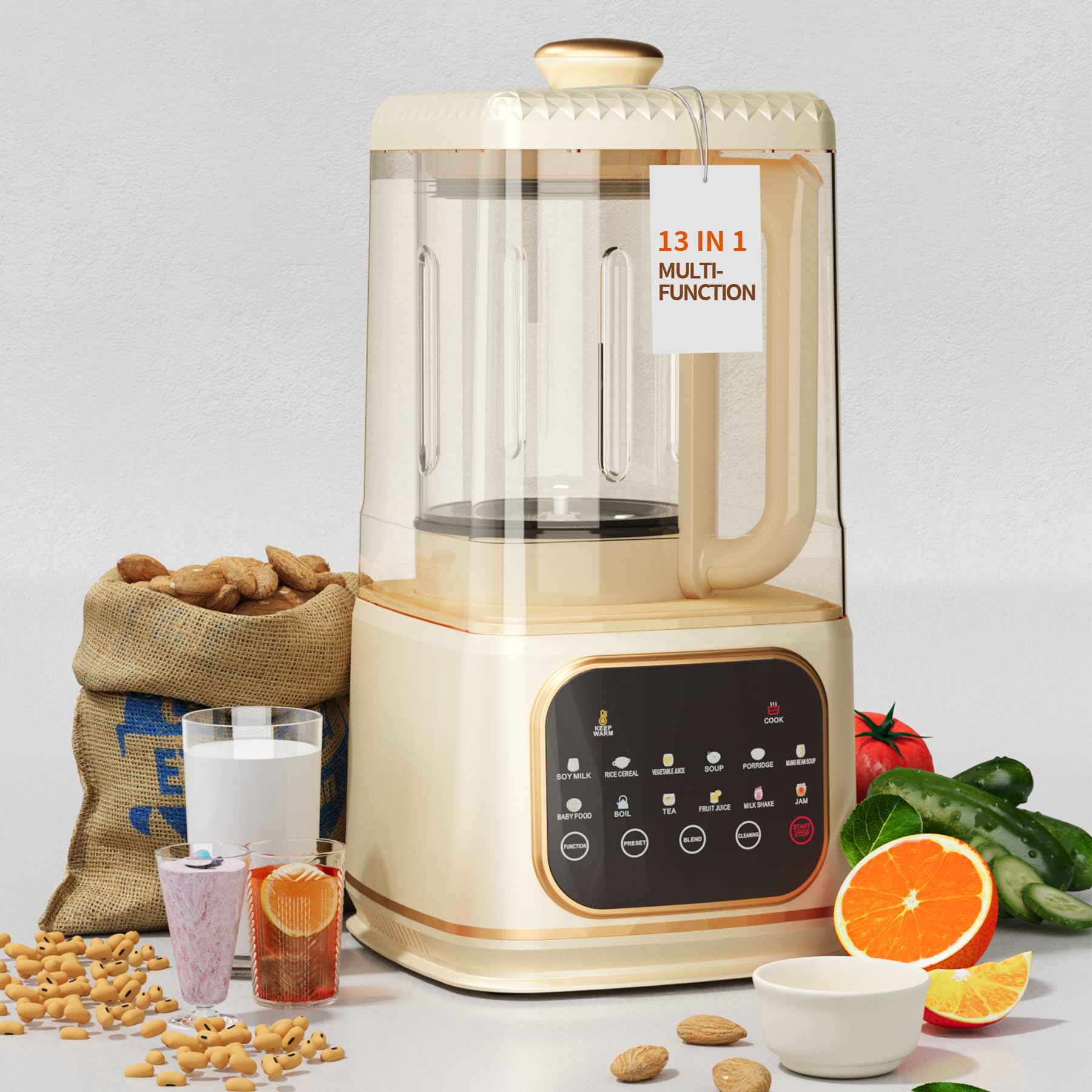
If noise is the reason you avoid using your blender, this kind of design can be a game-changer. The built-in soundproof shield isn’t a gimmick—when you’re blending hot liquids early in the morning, a quieter appliance changes whether you actually use it.
What I like most here is the full “household timing” feature set: delay start so you can prep ingredients and have something ready when you wake up, and keep warm so your soup doesn’t go cold the minute the cycle ends. Those two features make the machine feel less like a gadget and more like a small kitchen system.
The deep reality check: some users love the performance but complain the blade and bottom are not separable, which can make cleaning feel more manual than the “one-touch” label suggests. That doesn’t mean it’s a bad buy; it means it’s a better fit for people who mostly make smoother recipes and don’t let sticky residue bake on. If you’re a “cook now, clean later” person, you’ll want to be disciplined with a quick rinse immediately after.
Another detail that shows up in real kitchens: a lighter base can make lid removal feel fiddly (you’re pulling up on the lid while the base wants to shift). The fix is simple—hold the base with one hand, then twist the lid. If that sounds annoying, it might not be your personality match. If it sounds normal, you’ll be fine.
Why people love it
- Lower noise profile: More likely to be used daily, not “only when the house is empty.”
- True multi-function: Soup, porridge, jam, smoothies, and more without changing appliances.
- Delay + keep warm: Fits real schedules and messy mornings.
- Large pitcher: Useful batch sizes for families and meal prep.
Good to know
- Cleaning can be harder if the blade area can’t fully detach.
- A very light base can make lid removal feel awkward until you learn the grip.
Ideal for: Early-morning households, noise-sensitive kitchens, and anyone who wants one machine to handle soups and smoothies without chaos.
6. GreenPan Nut Milk Maker (15‑in‑1) – The “Use It for Everything” Gadget

Some appliances are “specialists.” This GreenPan is a daily driver. The control scheme is simple enough that you don’t dread using it: a dial with presets that cover the most common jobs (plant milks, soup, smoothies, boiling water, self-clean, delay timer). That’s exactly the kind of interface that makes a machine stick around long-term.
Where it shines in real kitchens: it replaces small routines. Boil water for tea? Done. Make oat milk without additives? Done. Throw vegetables and broth in and let it cook to a creamy soup while you do something else? Also done. People who become fans often mention an unexpected pivot: they buy it for plant milk, then keep using it because of how good it is for cream soups and quick blended dips.
The main “real-life” downside isn’t performance—it’s the byproduct. If you make nut milks, you’ll create pulp. Some households love using pulp in muffins, cookies, smoothies, or granola; other households end up with “a container of good intentions” in the fridge that gets tossed. That’s not a GreenPan problem; it’s a plant milk reality. If you think you won’t use pulp, you may prefer machines that can grind finer or recipes that use oats (which can produce less obvious pulp depending on method).
For soups specifically, this machine rewards a simple formula: aromatic base (onion/garlic), main veg, broth, then finish with fat and acid at the end. The result tastes like you worked harder than you did.
Why it’s a “daily driver”
- Practical presets: Not twenty confusing modes—just the ones you actually use.
- Boil water mode: Sounds small, but it boosts daily usefulness.
- Self-clean: Helps keep cleanup from becoming the reason you stop using it.
- Compact footprint: Easier to store than many large cooking blenders.
Good to know
- Nut milk pulp is real—plan a simple “pulp habit” (muffins or smoothie add-in).
- Capacity is family-friendly but not “big party pot” large.
Ideal for: Households that want one appliance to handle plant milk, soup, and daily kitchen tasks without turning into a complicated hobby.
7. Countertop Food Blender Hot Soup Maker (YPCOO, 60oz) – The Muscle Option

This is the pick for people who don’t want delicate—they want power. When users talk about this blender, the theme is “it replaces multiple appliances.” That’s what a high-watt motor and aggressive blade setup is supposed to do: crush, grind, puree, and make thick blends without you needing perfect prep.
For soup, high power matters most in two cases: (1) you want very smooth purées without straining, and (2) you use tougher ingredients (nuts, fibrous vegetables, frozen ingredients, dense cooked beans). A stronger motor is also less likely to stall when a recipe thickens. In practice, this makes the machine feel forgiving—especially if you’re improvising.
The caution from real owner feedback: some units have thrown error codes (like an E3) or arrived missing a part, and in those cases, the frustration isn’t “the soup tasted bad,” it’s “I couldn’t use it reliably.” That’s why I don’t rank it above the more established “set it and forget it” soup makers. But when it works, people genuinely love the performance and how quickly it smooths thick mixtures.
Expert-use advice: if you buy a high-power heated blender, don’t start with the thickest recipe you can imagine. Start with a classic vegetable soup (broth-heavy), then gradually move to thicker blends once you learn how the machine circulates heat. This reduces burn risk and helps you understand how the presets behave.
Why it’s a powerhouse
- Strong blending: Great for velvety soups and nut-heavy recipes.
- Hot + cold versatility: Handles smoothies and hot blends in one unit.
- Convenient programs: One-touch modes plus self-cleaning routine.
- Big pitcher: Useful if you want more than two bowls per run.
Good to know
- Some users report reliability issues (error codes) or missing parts on delivery.
- Thicker recipes amplify burn risk if you don’t respect liquid ratios.
Ideal for: Power-first cooks who want one machine for smoothies, soups, and thick blends—and are comfortable learning the machine’s rhythm.
8. 304 Stainless Steel Almond Milk Maker (Built‑In Filter, 8‑in‑1) – The “Less Grit” Approach
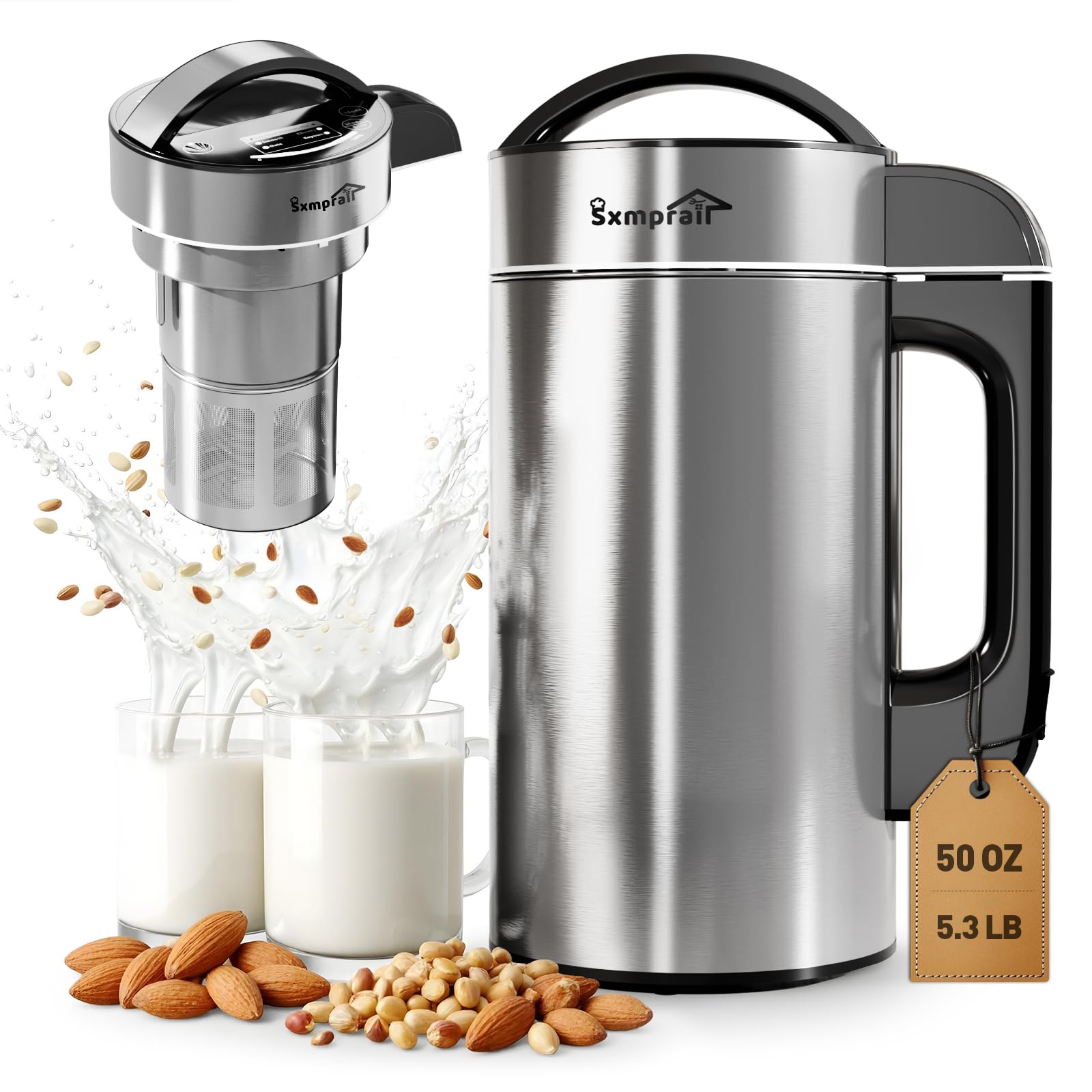
If you’ve ever made homemade plant milk and thought, “Why does this taste slightly sandy?”, you already understand the value of a filter basket design. This machine’s built-in strainer helps separate pulp during the process, which can translate to smoother results with less effort.
For soup, the filter basket creates an interesting advantage: it can keep fibrous bits from dominating texture. That’s helpful for soups like roasted red pepper, broccoli cheddar (when you want it silky), or mushroom soups where you want a smooth base without needing to strain a whole pot afterward.
The tradeoff is exactly what experienced owners mention: filter baskets can be small, and depending on how much pulp your ingredients create, you may need to run a cycle twice or accept a small amount of fine pulp passing through. In real kitchens, this becomes a “personality match” question. If you’re okay with a tiny bit of texture (or you strain once at the end), you’ll love the convenience. If you expect cafe-level filtration without any pulp management, you may get annoyed.
A design detail I genuinely like: the blades are positioned on the motor head so you can lift the assembly and rinse it directly under the tap—much easier than scraping around a bottom blade assembly. That doesn’t erase cleaning, but it reduces the “ugh” factor.
Why it’s smart
- Built-in filter basket: Helps reduce grit in milks and some soups.
- Stainless interior: Durable, heat-friendly, and less odor retention than plastic.
- Rinse-friendly blade head: Easier to clean than many bottom-blade designs.
- Good preset variety: Hot/cold modes plus cleaning function.
Good to know
- Some fine pulp may still pass through; ultra-smooth fans may strain once more.
- No visible max-fill line can make first uses feel like guesswork—measure carefully.
Ideal for: Anyone who values smoother texture and likes the idea of built-in filtering without dealing with separate nut milk bags.
9. KIDISLE 51oz (10‑in‑1) – The “Quiet Prep Station”
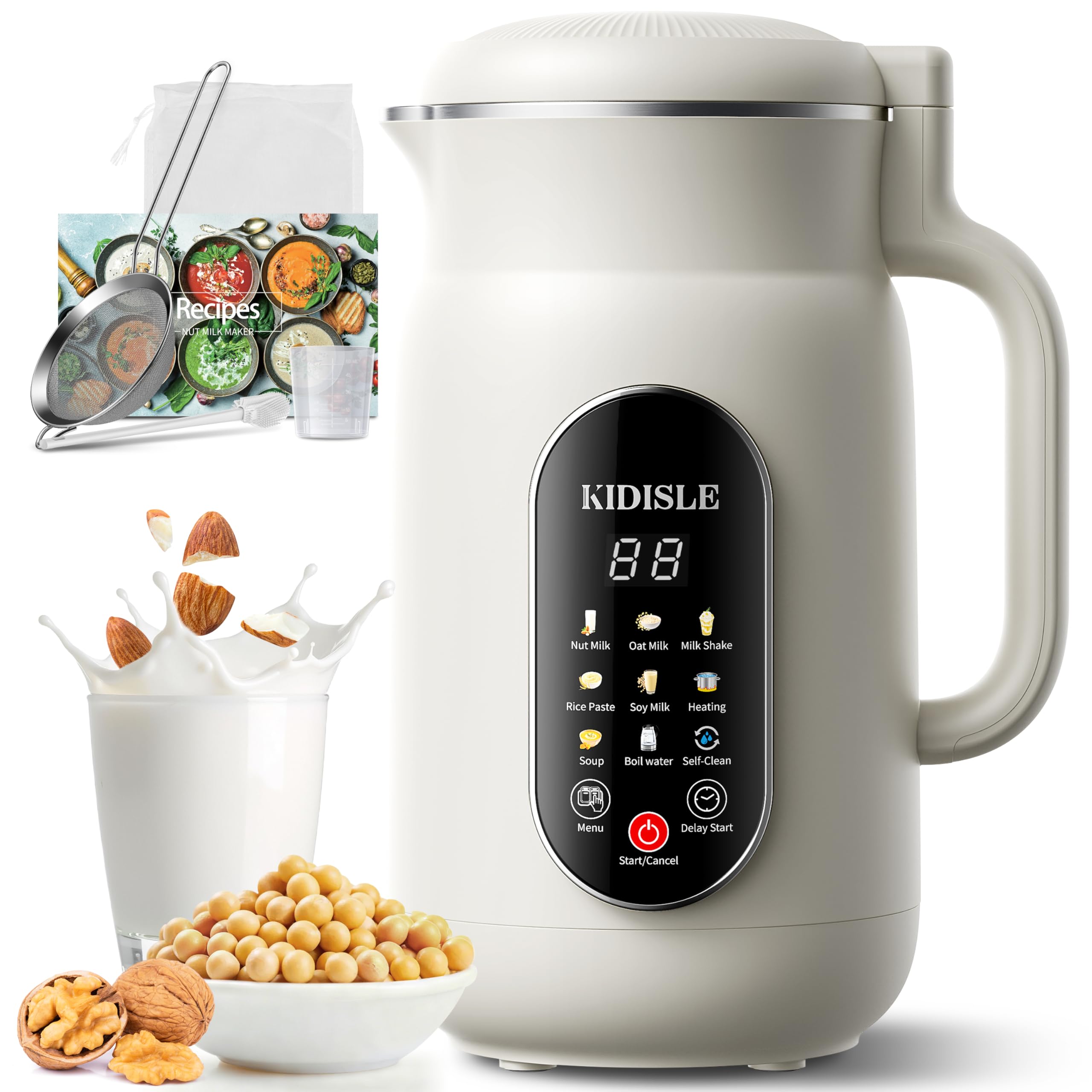
This machine is best understood as a routine builder. People who buy it often have a specific daily goal: lemon-ginger shots, celery/cucumber juice, oat milk, warm drinks, or a gentle soup-like blend they can sip without thinking.
The standout is the “set it and forget it” feel: touch screen controls, self-cleaning, and a keep-warm focus that supports busy mornings. If you like waking up to something ready (or coming home to something warm), that timing flexibility can be worth more than raw power.
One important expectation-setting detail: machines in this category often emphasize “warming” temperatures and comfort-drink style heating. That’s perfect for wellness routines, porridge-style blends, and warmed beverages. If your definition of soup is “fully cooked, piping hot, chunky vegetables,” you’ll likely be happier with a dedicated soup maker. But if your definition is “smooth, warm, nourishing blends I can drink and go,” this machine fits beautifully.
Best use strategy: treat it like your kitchen’s “quiet station.” Keep a small set of repeat recipes (like ginger + lemon + water + honey, or cucumber + celery + water, or oat + water + pinch of salt) and you’ll get huge value from its consistency.
Why it works
- Routine-friendly: Great for daily drinks, milks, and gentle heated blends.
- Keep-warm support: Useful when your schedule is unpredictable.
- Touch interface: Clear and modern for day-to-day use.
- Self-cleaning: Helps you stay consistent with daily use.
Good to know
- Best for drinks and smooth blends; not the strongest pick for chunky, fully cooked soups.
- Like all multi-makers, performance depends on using recipes that match its heating profile.
Ideal for: Wellness routines, daily juices/milks, and anyone who values quiet convenience over “maximum heat and chunk cooking.”
10. Homtone 1.6L Soup Maker – The Quick-Soup Minimalist
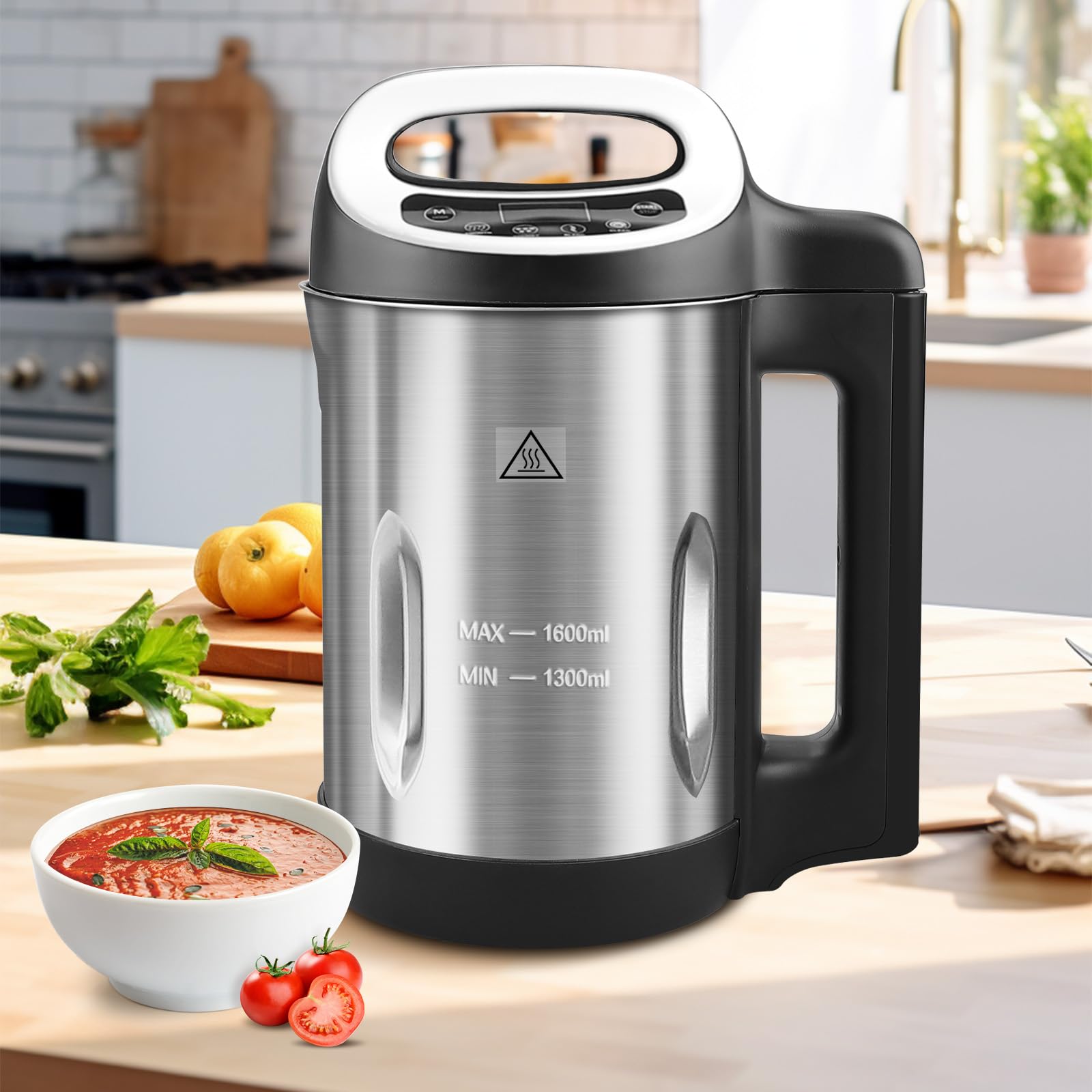
When people love this machine, they love it for one reason: it makes soup feel fast. Chop, pour, press Smooth or Chunky, and it does the rest. That’s the entire pitch—and when it performs correctly, it’s exactly what you want from an automatic soup appliance.
Where the real-world feedback gets nuanced: some users report that their Smooth program didn’t blend automatically and they had to manually run Blend afterward. That’s a big deal if it happens, because it defeats the “press one button” promise. Other users report excellent results (including specific shout-outs for soups like cream of asparagus), which suggests variability between units or learning curve issues around fill levels and ingredient placement.
Here’s the expert approach to reduce frustration if you choose this model: on your first run, make a simple soup that blends easily—zucchini, broccoli, or tomato with enough broth. Avoid sticky, sugary bases like thick carrot or sweet potato until you confirm your unit’s blending cycle engages properly. Also, don’t overdo liquid; too much can reduce blending effectiveness and create overflow risk.
If your unit behaves properly, this is a strong value pick: 1.6L hits the sweet spot for 2–4 servings, sensors add peace of mind, and self-clean helps keep it from becoming a one-week novelty.
Why it’s appealing
- Fast soup workflow: Good for busy nights when you want minimal steps.
- Practical capacity: Enough for dinner plus a leftover bowl.
- Safety sensors: Helps reduce overfill and dry-burn issues.
- Self-clean mode: Encourages repeat use instead of avoiding cleanup.
Good to know
- Some owners report inconsistent “Smooth” blending behavior on certain units.
- Thick soups are more likely to scorch if you run too low on liquid.
Ideal for: People who want quick soups and are comfortable doing a careful “first run” to confirm how their unit behaves.
11. Soup Maker 1.6L (Potlimepan, 4‑in‑1) – The Straightforward Classic

This model exists for a very good reason: most people don’t need twelve programs. They need four that work. Smooth. Chunky. Blend. Clean. That’s the whole story, and for many kitchens, that’s exactly the right story.
In daily use, the best part is decision simplicity. You can plan a week of soups and never once wonder which icon to press. That reduces friction more than most people realize. The machine also leans into a “dump and go” style, which is exactly what makes soup makers worth owning in the first place.
Real-world owner patterns to pay attention to: several users rave about the soup quality and easy cleaning, while others mention units failing after a handful of uses. That split suggests you should prioritize buying habits that protect longevity: avoid running it empty, don’t exceed fill levels, and don’t hammer it with back-to-back thick cycles without giving it a breather.
If you want the best outcomes, focus on two recipes to “lock in” first: (1) smooth tomato + basil (tomatoes + broth + onion + garlic + oil), and (2) chunky chicken vegetable (use pre-cooked chicken and larger-cut veg). Those give you a feel for the machine’s cooking and blending rhythm without being overly demanding.
Why it’s practical
- Simple modes: No confusion—just the functions you’ll actually use.
- Good for weekly routines: Easy to repeat recipes and get consistent outcomes.
- Compact batch size: Strong fit for small families and couples.
- Quick cleanup: Clean mode helps prevent residue from sticking.
Good to know
- Some users report durability issues; treat it gently and follow fill limits strictly.
- Exterior can get hot; place it safely and avoid bump zones.
Ideal for: Anyone who wants the simplest soup maker interface possible and values “repeatable weekly use” over extra features.
12. Blac Panther 16‑in‑1 (50oz) – The Affordable All‑Rounder
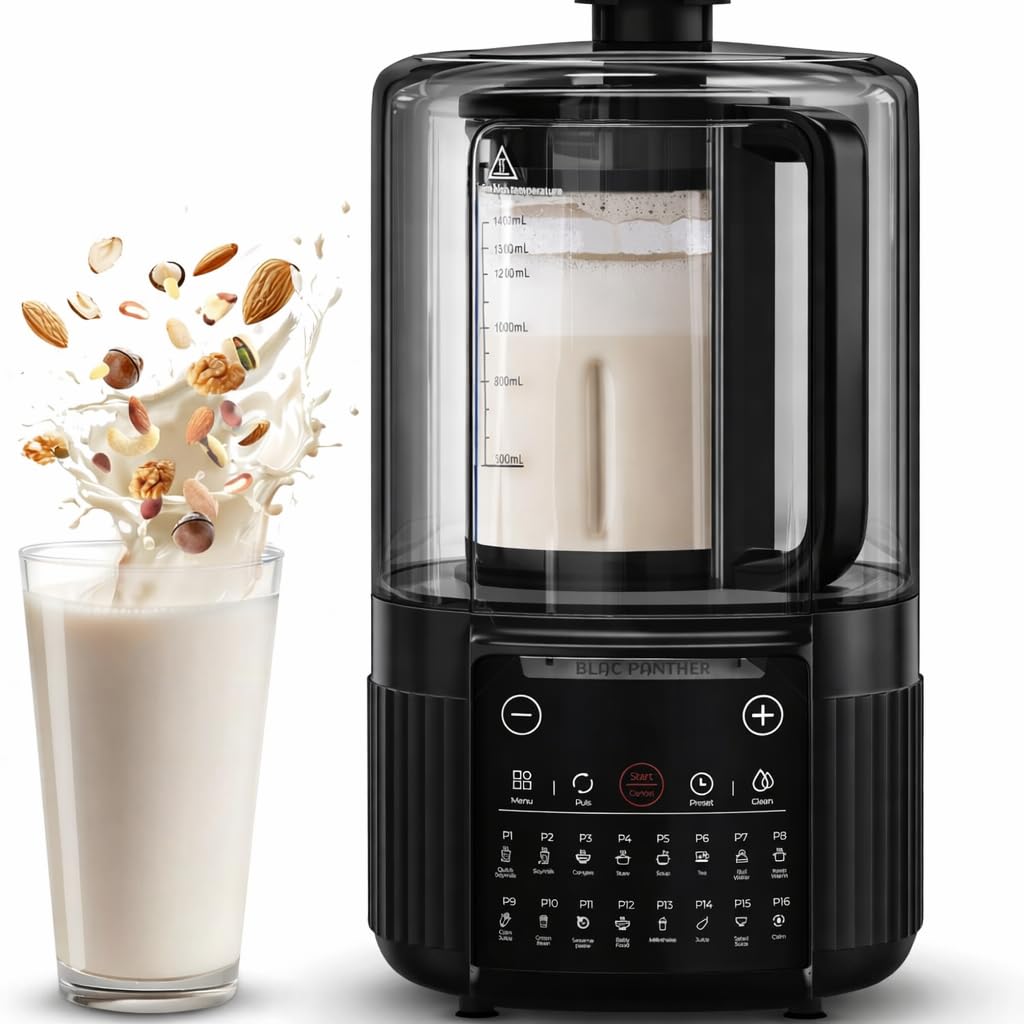
This is the kind of machine people buy when they want one appliance that can do a lot—without feeling like they bought a “project.” The value is straightforward: multiple presets, a usable jug size, and a noise-reduction cover that makes it less disruptive than typical high-speed blending.
In real use, owners tend to be impressed by how smooth it can get almond/oat/soy blends and how quickly it produces creamy results for soups and smoothies. The auto-timer and self-clean modes are the kind of features that keep the appliance from turning into a dusty shelf ornament.
But here’s the practical reality: multi-function budget machines often have a learning curve. Some users complain it’s not user-friendly at first, and others mention a “two-step or three-step” menu selection process. This is where you win by treating it like a system: keep a small card in your kitchen drawer with your three most-used programs and the button sequence. After that, it stops being confusing and starts being convenient.
One very specific tip mentioned by the manufacturer is worth following: after pressing start, let the machine sit briefly so the water reaches an ideal temperature for smoother texture. Whether you use that exact timing or not, the underlying principle is real: for soups and hot plant milks, giving heat a moment to stabilize before aggressive blending can improve mouthfeel and reduce foam.
Why it’s a value pick
- Wide functionality: Milks, soups, smoothies, baby food, and more.
- Noise-reduction cover: Helps make blending more livable.
- Self-clean mode: Reduces the “cleanup resistance” that kills habits.
- Good jug size: Enough for multiple servings without being huge.
Good to know
- Controls may feel confusing until you learn the menu selection rhythm.
- Like most heated blenders, it performs best when you respect water levels and batch limits.
Ideal for: Value shoppers who want broad functionality and are willing to spend one week learning the controls to unlock long-term convenience.
13. Health Pot Double‑Layer Glass Electric Kettle (1.5L, 9‑in‑1) – The Comfort Routine Builder
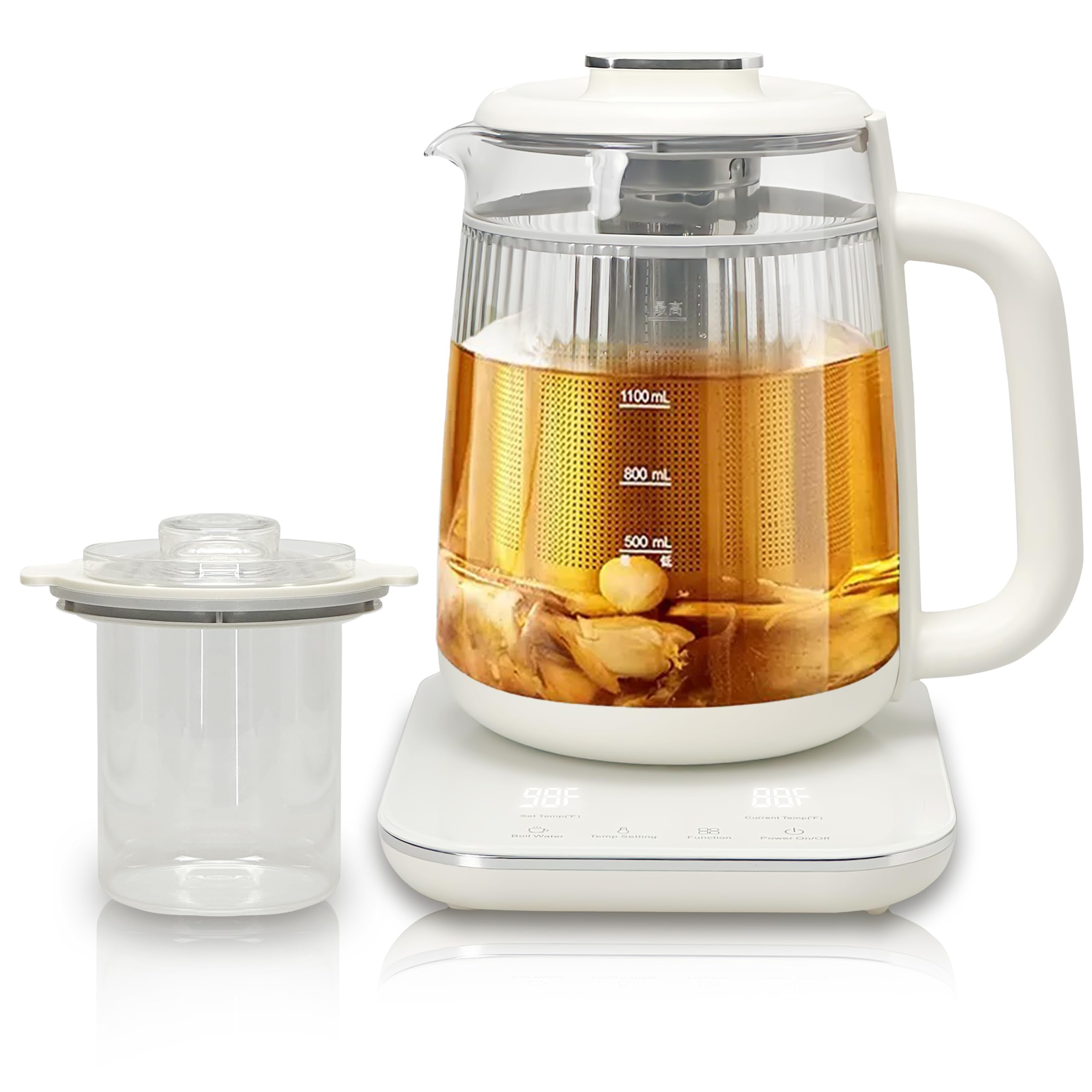
This isn’t a “throw raw vegetables in and get blended soup” machine. It’s a different kind of soup tool: a multi-function kettle with a stew cup that supports small-batch nourishment—herbal teas, porridge, gentle soups, and single-serving tonics.
The double-layer design is meant to keep the exterior cooler to the touch while retaining heat better, which is great for family households and anyone who does frequent hot drinks. The touch panel and digital display are also a real usability upgrade versus old-school kettles where you guess and hope.
Now the real-life honesty: documentation confusion shows up in owner feedback. Some people love the sleek design and fast boiling but wish the attachments were explained clearly. That’s not a dealbreaker, but it means you’ll likely experiment. The “stew cup” is genuinely useful once you commit to a couple routines—think ginger tea, herbal blends, small servings of porridge, or warming broth while you prep other food.
One more practical note: some users report boil-over issues even when filled conservatively. With any kettle-like device, the safest strategy is simple—stay well below the line until you learn its behavior, especially when making starchy liquids (oats, porridge, soup bases) that foam more than water.
Why it’s useful
- Great for daily rituals: Tea, porridge, gentle broths, and small nourishment servings.
- Touch panel clarity: Easier for all ages to operate confidently.
- Safety features: Auto shut-off and boil-dry protection add peace of mind.
- Stew cup: Enables “single serving” cooking without dirtying a pot.
Good to know
- Not a true soup blender; best for heated liquids and small stew/tonic portions.
- Documentation may be confusing; you’ll likely learn through trial use.
Ideal for: People who want a wellness kettle that supports soups and porridge routines—especially when “small batch” is the goal.
14. SYBO SB‑6000 Soup Kettle (10.5 qt) – The Buffet & Catering Workhorse

This is not a soup maker. It is a soup power move—a warmer designed to keep soup at serving temperature for long stretches without burning the bottom the way a stovetop pot can when left unattended.
If you host family gatherings, run events, cater, or just love the idea of “serve yourself” soup nights, a warmer changes everything. You can make soup however you want (stove, pressure cooker, blender), then transfer it into this kettle to hold it hot for hours. The hinged lid is a surprisingly big deal: you don’t need to find a clean place to set a lid every time someone wants a bowl, and you reduce the “lid dripping all over the counter” mess.
Owner feedback highlights the core win: it holds creamy soups at correct temperatures without burning, looks professional, and cleans easily thanks to the detachable stainless insert. The real-world caution is stability during transport. Some users mention the three-foot design being less stable when moving a full kettle, which means you should transport it thoughtfully: supported on all sides, not balanced on one hand while you open a door.
If your goal is a buffet line, this is one of the most practical “soup lifestyle” tools you can buy.
Why it’s a pro tool
- Holds soup hot: Great for long service windows without scorching.
- Hinged lid: Cleaner, easier serving during gatherings.
- Detachable insert: Makes cleanup dramatically easier.
- Professional look: Perfect for events and buffet-style serving.
Good to know
- Designed to keep warm, not to boil or “cook from raw.”
- Transport carefully—support the base fully when moving with hot contents.
Ideal for: Entertainers, caterers, churches, events, and anyone who wants soups served hot all day with minimal maintenance.
15. Topwit Hot Pot Electric (1.6L) – The “Soup Anywhere” Cooker

This is the sleeper hit for people who don’t have a full kitchen—or don’t want to use one. A small electric pot with dual power settings sounds basic, but it solves a real-life problem: hot food with minimal equipment.
Owners love it because it boils water quickly, can sauté simple ingredients, and makes one- or two-serving soups without the overhead of a full stove. That makes it ideal for dorms, offices, travel, van life, and anyone who wants to prep a hot lunch at work.
The stainless interior is also a practical health and durability choice, especially compared to cheap nonstick coatings that can scratch. The flip side: stainless can discolor or show marks depending on water and heat patterns. Some users note cosmetic discoloration even with bottled water. That’s usually a “maintenance” thing (a gentle cleanser often fixes it), not a functional failure.
Where it’s not the answer: if you want automatic blending and “press button, soup is done,” you’ll want a true soup maker. This is for people who enjoy simple cooking but want it faster, smaller, and more portable.
Why it’s so useful
- Portable cooking: Great for dorms, offices, travel, and small apartments.
- Dual power: Simmer gently or boil faster when you need speed.
- Stainless interior: Durable, easy to clean, and coating-free.
- Surprisingly flexible: Ramen, eggs, porridge, soup, and quick sauté meals.
Good to know
- Stainless can discolor cosmetically—normal for many heated stainless pots.
- Not an automatic blender; this is a cooking pot, not a soup maker.
Ideal for: Dorm rooms, office lunches, travel kitchens, and anyone who wants simple soup and noodles without a full stove setup.
16. Immersion Blender Set (1100W, 5‑in‑1) – The “Any Pot Becomes a Soup Maker” Kit

If you want maximum flexibility, an immersion blender is still the king. It doesn’t force you into a fixed batch size, it doesn’t care about fill lines, and it lets you cook soup the traditional way (stovetop, slow simmer, sauté flavors) and then blend directly in the pot.
This specific kit stands out because it pairs high power with a trigger-style variable speed, which is a big deal for soup. Why? Because soup blending isn’t about “high speed all the time.” It’s about control—starting slow to prevent splatter, then ramping up to finish smooth. A trigger control makes that feel natural.
The included attachments (chopper, whisk, frother) expand it into an all-purpose kitchen helper. You can chop onions, whisk cream soups, emulsify dressings, froth drinks, and blend baby food. And unlike many “all-in-one” machines, you can replace individual pieces over time by swapping accessories (though availability varies by brand).
The real-world downside reported by some owners is durability of plastic containers (cracking/leaking after extended use). That’s common in many budget accessory kits. The blender motor unit may still be fine, but the containers can become the weak link. If you buy this, treat the containers gently (avoid heat shock, avoid aggressive dishwasher cycles), and consider using your own sturdy bowls when possible.
Why it’s still unbeatable
- Unlimited batch size: Make soup for one or for a crowd.
- Best flavor development: You can sauté, simmer, and build depth like a chef.
- Control: Trigger speed reduces splatter and improves smoothness.
- Versatile attachments: Chopper and whisk make it more than just a blender.
Good to know
- Accessory containers can crack over time—handle with care.
- Not hands-off: you still cook the soup separately.
Ideal for: People who love traditional cooking but want fast blending, flexible batch sizes, and a tool that works with any pot they already own.
Performance Guide: The Specs That Actually Predict Great Soup
If you want to buy smart, ignore the marketing fluff and focus on the handful of design factors that control texture, tenderness, and cleanup in real life.
1) Heating design: plate vs. enclosed base
A heater plate can cook fast but is more sensitive to thick mixtures and sugars (think tomato paste, pumpkin, carrots). Enclosed heating designs can be gentler, but sometimes take a little longer to reach strong heat. If you love thick soups, prioritize machines with good circulation and safety sensors.
2) The min/max fill lines are your best friend
Fill lines look annoying until you respect them. They exist for three reasons: keeping blades submerged, preventing boil-over, and ensuring the program cooks evenly. If you want to “double the batch,” do two runs instead of forcing one.
3) Blade geometry matters more than blade count
Sharp, well-positioned blades that circulate liquid create smoother soups than “more blades” that just chop. Top-mounted blade heads can be easier to rinse; bottom-mounted blade assemblies can trap residue if they’re not designed well.
4) Jar material changes daily behavior
Glass lets you see the cook and feels premium, but can be heavy when full. Stainless is durable and heat-friendly, but you lose visibility. Plastic can be light and easy to handle, but quality varies—especially around long-term odor and stain retention.
5) Self-clean is helpful, not magic
Good self-clean cycles loosen residue and reduce scrubbing time. But any machine becomes hard to clean if soup dries inside. The best habit is boring and powerful: rinse right after pouring, then run clean mode.
6) The best “feature” is predictability
A machine that makes soup you enjoy every week beats a machine with a dozen programs you never trust. Favor appliances with simple controls, clear feedback, and consistent behavior across different recipes.
FAQ: Soup Makers, Cooking Blenders, and Real‑World Problems
Why did my soup scorch or burn on the bottom?
How do I get restaurant-smooth soup without straining?
Can I use frozen vegetables?
Why does “chunky” soup sometimes turn into thick stew?
What’s the best cleaning routine if I hate cleanup?
Do I need a soup maker if I already have an immersion blender?
Final Thoughts: The Verdict
If you want the most reliable “press a button, get soup” experience, the Philips Viva Collection SoupMaker is the best overall balance of results and real-life ease. For bigger households and leftovers, the Potlimepan 2L Soup Maker earns its keep quickly. And if you want premium smoothness plus plant milks in the same machine, the SoyaJoy G5 is the “texture-first” pick that feels built for frequent use.
