
A garbage disposal is one of those kitchen upgrades that only gets “credit” when it isn’t causing drama. When it’s right, your sink stays cleaner, your trash smells less, and cleanup feels faster. When it’s wrong, it’s the opposite: clogs that appear out of nowhere, weird rattles, that one stubborn smell that keeps coming back, and a motor that sounds like it’s fighting for its life over a handful of rice.
If you’re shopping for a sink trash disposal, you’re not really shopping for horsepower. You’re shopping for confidence: confidence that weeknight scraps won’t jam it, confidence your dishwasher drain won’t burp water back into the sink, confidence that the unit won’t chew up cabinet space, and confidence that if something does go sideways, you can fix it without turning your Saturday into a plumbing saga.
Most buying guides miss what actually matters after the first week. Real-world performance isn’t “can it grind a lemon.” It’s the day-to-day friction points: how the mounting ring behaves when you’re installing in a cramped cabinet, how easy it is to remove and rinse the splash guard (because that’s where smells start), whether the drain outlet lines up with your existing trap without forcing weird angles, and whether the motor style matches your cooking habits (fast-spinning permanent magnets vs torque-heavy induction motors).
This guide is built differently. I’m going to treat each model like it lives under your sink for years—because it will. I’ll explain what owners consistently praise (easy installs, quiet operation, clean under-sink fit), what they complain about (weight, confusing gasket steps, missing cords, awkward dishwasher knockouts), and the “expert-only” details most people don’t learn until after they’ve already bought the wrong unit.
Below are 14 standout picks—from premium quiet grinders that feel like a serious kitchen upgrade, to value models that punch above their weight, to simple, reliable workhorses that just keep going. Use the table to shortlist fast, then jump into the deep reviews to pick the one that actually fits your sink, your wiring, your cabinet space, and your cooking style.
In this article
- How to choose the right disposal for your kitchen (and avoid the common “oops” purchases).
- Quick comparison table of 14 standout models.
- In-depth reviews of each disposal, with real-life pros and cons.
- How disposals work in real homes (mounts, drain alignment, dishwasher hookups).
- FAQ answers: smells, jams, septic, what to grind, and final buying tips.
How to Choose the Right Sink Trash Disposal
A good garbage disposal isn’t “better” because the box is louder about features. It’s better because it solves the three kitchen problems people actually feel: (1) messy cleanup, (2) clogs and slow drains, and (3) noise and odor. Here’s the decision framework I use when I’m helping someone buy a disposal they’ll still like years from now.
1. Start with your household’s “waste personality”
Most kitchens fit one of these patterns. Be honest about yours, because the right unit depends more on habits than on specs.
- The light-use kitchen: mostly plate scraping, occasional veggie ends, minimal cooking. You want a compact, dependable unit that installs easily and doesn’t hog cabinet space.
- The daily-cook kitchen: lots of prep scraps, frequent peels, cooked leftovers, and dishwasher support matters. You want stronger grinding, better clog resistance, and easy cleaning access.
- The “busy family” kitchen: constant volume, kids dumping things they shouldn’t, and the disposal gets used hard. You want more torque, better anti-jam behavior, and an install that stays tight.
- The “quiet matters” kitchen: open-concept home, baby naps, late-night cleanup, or someone who simply hates noise. You want sound insulation, anti-vibration design, and a splash guard that doesn’t amplify resonance.
- The “tight cabinet” kitchen: pull-out trash bins, IKEA-style sink base layouts, or very limited under-sink space. You want compact height, smart outlet positioning, and a design that doesn’t interfere with drawers or slide-outs.
2. Understand what horsepower doesn’t tell you
People fixate on horsepower, but two motors with the same rating can feel totally different in your sink. What changes real-world performance is the combination of: motor type, grind system design, and how quickly waste exits the chamber.
- Induction motors (torque-heavy feel): These often feel “steady” and durable. They don’t rely on super-high RPM to perform. In practice, they can feel more forgiving when you accidentally overload the chamber. Many classic, long-lived disposals use induction motors because they’re built for longevity and consistent torque.
- Permanent magnet motors (fast-spinning feel): These tend to deliver instant speed. They can feel impressively quick on common scraps and are often used in “quiet + high RPM” designs. The sound can be different too: less grinding “growl,” more smooth spinning “whirr,” depending on insulation and sink resonance.
- Multi-stage grinding (clog resistance, not bragging rights): A 2-stage or 3-stage grind system isn’t about showing off. It’s about reducing the size of the waste so it moves through the trap and into the line more easily. That’s the difference between “it grinds” and “it grinds and clears.”
The practical takeaway: if your frustration is clogs or “bits left sitting in the chamber,” prioritize a better grind system and better discharge behavior. If your frustration is noise, prioritize sound insulation and a better baffle design. If your frustration is constant jams, prioritize torque and anti-jam protection (plus better habits—more on that below).
3. Noise isn’t just the motor—your sink is an amplifier
This is the part most guides skip: a garbage disposal doesn’t “sound” the same in every kitchen. A thinner stainless sink can amplify vibration like a drum. A deep single-bowl can resonate differently than a double bowl. A tight cabinet can bounce sound back up toward you.
So what actually reduces noise in the real world?
- Sound insulation around the housing: polymer shells and sound-dampening layers reduce vibration and airborne noise.
- Anti-vibration mounting behavior: a mount that clamps cleanly and stays tight reduces “rattle” noise over time.
- A well-designed splash guard (baffle): this matters for both noise and odor. A removable baffle is also a big hygiene win.
- Balanced grinding components: less wobble means less resonance, which means the sink “rings” less.
If you’re sensitive to noise, don’t just buy “more power.” Buy better sound management. That’s why premium options can feel like a totally different category: you can hear the water more than the motor.
4. Installation is where most “good disposals” get a bad reputation
A lot of negative reviews aren’t about the disposal failing—they’re about the installation being frustrating. And that usually comes down to four things: mount type, unit weight, drain alignment, and wiring/cord setup.
- Mount type: Some models use an EZ Mount style, some use a standard 3-bolt, and some use brand-specific quick-lock systems. If you’re replacing the same brand/mount type, life is usually easy. If you’re switching mount styles, plan on a full flange replacement.
- Weight: Heavy disposals often feel more premium (denser materials, thicker housings), but you need a realistic plan to lift and lock it in place. A simple trick: use an upside-down bucket, a sturdy box, or stacked boards to support the unit while you align it.
- Drain alignment: The outlet height and angle determines whether your existing trap lines up. If the outlet is slightly higher or lower than your old unit, you may need a small plumbing adjustment. That’s normal—just don’t force weird angles that create “slow drain” conditions later.
- Power cord realities: Some units include a cord for easy plug-in. Others require a separate cord kit or hardwiring. Before you buy, open your cabinet and answer one question: Do you have a switched outlet under the sink? That answer determines whether “cord included” is a major convenience or irrelevant.
5. Dishwasher hookups: the most common hidden “gotcha”
If your dishwasher drains into your disposal (very common), you need two things:
- A dishwasher inlet connection on the disposal (most have it).
- The knockout plug removed (some designs make this easy; others turn it into a scavenger hunt).
Here’s the expert tip people don’t learn until too late: the “hard part” isn’t knocking it out—it’s retrieving the plug so it doesn’t rattle around inside. Some owners spend more time fishing out that plug than installing the whole unit. If dishwasher support matters to you and you hate fiddly tasks, prioritize designs known for easier inlet management and clearer instructions.
6. Anti-jam isn’t magic—your habits still matter
Even the best disposer can jam if it eats the wrong thing at the wrong time. The best units reduce the frequency and recover faster, but habits still win. If you want fewer jams and fewer smells, do these “boring” steps consistently:
- Run water before, during, and after grinding so the line flushes fully.
- Feed gradually instead of dumping a whole bowl of scraps at once.
- Use cold water for greasy scraps so fats stay more solid and flush instead of coating pipes.
- Cut large scraps into smaller pieces (especially dense, fibrous items).
- Never treat it like a blender—it’s a grinder, not a compost machine.
If you want a disposal to feel “high-end,” the real secret is: pair a good model with good habits. That combination is what makes a kitchen feel clean, fast, and low-maintenance.
Quick Comparison: 14 Sink Trash Disposal Picks
Use this table to match a model to your kitchen priorities, then jump to the full reviews for the real-life details— like which ones owners describe as genuinely quiet, which ones are easiest to swap in, and which ones are best when cabinet space is tight.
On smaller screens, swipe or scroll sideways to see the full table.
| Model | Category | Real-life strength | Best match | Amazon |
|---|---|---|---|---|
| InSinkErator EVOLUTION 0.75HP (Advanced Series) | Premium quiet | Refined grinding + low-drama ownership: quieter feel, better “clears the chamber” behavior | Most households who cook regularly and want a true upgrade | Amazon |
| KRAUS WasteGuard 3/4 HP (KWD211-75MCG) | Modern kit | QuietStorm soundproofing + full install-ready bundle (cord, flange, plunger) | Renovations, modern kitchens, “I want everything in one box” buyers | Amazon |
| InSinkErator Power 1HP (Power Series) | Heavy duty | More torque, strong grind, compact body—built for “we use it hard” kitchens | Busy families, frequent cooks, tough scraps (within reason) | Amazon |
| InSinkErator Badger 5XP 3/4 HP | Workhorse | Reliable, familiar, replacement-friendly—strong “standard series” upgrade path | People replacing older InSinkErator mounts and wanting more power | Amazon |
| InSinkErator Power 0.75HP (Power Series) | Best sweet spot | Compact, strong, and less clog-prone than basics—great balance for many kitchens | Most households who want a strong mid-tier replacement | Amazon |
| Garbage Disposal MAX-4 (3/4 HP) | Quiet value | Very quiet feel + stainless grind chamber + cord included (heavier build) | Buyers who want “premium feel” without premium pricing psychology | Amazon |
| Trifecte Pro 3/4 HP (3800 RPM) | Fast grind | High-speed DC motor + turbo-style discharge feel; cord included | Small-to-medium households wanting speed, quieter operation, and easy DIY | Amazon |
| TECASA HyperCrush 75 (3/4 HP) | Budget 3/4 HP | Compact body + cord included + strong everyday grind for the money | Value shoppers who still want a step above entry-level power | Amazon |
| InSinkErator Badger 5 (1/2 HP) with Power Cord | Mainstream | Classic “just works” replacement with plug-in convenience | Standard household use, quick swaps, first-time replacement buyers | Amazon |
| InSinkErator Badger 5 (1/2 HP) | Mainstream | Same workhorse feel, ideal if you’re hardwired or reusing an existing cord setup | People who already have compatible wiring and want reliable basics | Amazon |
| Waste King L-1001 (1/2 HP) | Lightweight | Easy install reputation + compact body + fast daily grinding | Small-to-mid households wanting a compact, popular, DIY-friendly unit | Amazon |
| InSinkErator Badger 1 (1/3 HP) with Power Cord | Basic plug-in | Simple, compact, easy replacement for light use | Apartments, condos, light cooking households | Amazon |
| InSinkErator Badger 1 (1/3 HP) | Basic | Same compact design, ideal for hardwire installs or existing cord kits | Light-use kitchens needing a straightforward replacement | Amazon |
| Waste Maid 10-US-WM-058-3B (1/2 HP) | Budget pick | Anti-jam grinding feel + 3-bolt mounting + strong “value over hype” setup | Budget upgrades, rentals, DIYers who want simple and capable | Amazon |
In‑Depth Reviews: 14 Sink Trash Disposal Options (Real-World, No Fluff)
Now we’ll go model by model. I’ll talk like someone who has actually crawled under a sink: what’s easy, what’s annoying, what lasts, what stays quiet, what gets smelly if you don’t clean it, and what owners consistently say after the “honeymoon week” is over.
1. InSinkErator EVOLUTION 0.75HP – The “Finally, This Feels Premium” Upgrade

If you want a disposal that feels like a genuine kitchen upgrade—not just “another grinder under the sink”—this is the one I’d start with. The EVOLUTION 0.75HP sits in that perfect zone where the unit is strong enough for real cooking households, refined enough to be noticeably quieter, and designed in a way that reduces the everyday annoyances people blame on disposals.
Here’s what “premium” means in practice: it doesn’t just grind, it clears. Owners who replace older, rusted, louder disposals often notice the difference immediately. The sound is less harsh, the startup feels smoother, and scraps don’t linger in the chamber as often. That last part matters more than most people realize—leftover bits are what create the repeating “mystery smell” cycle. A better grind pattern and better chamber flow helps you avoid that entire problem in the first place.
This model is also a strong choice for replacement scenarios, especially if you’re already in the InSinkErator ecosystem. Many people report that pipes line up well and the swap feels straightforward when you’re replacing a similar mount. But even when you do need a small drain tweak, it tends to be the kind of adjustment that makes sense (not the kind that forces you into awkward angles).
One detail I love from an “owner reality” perspective: the removable collar/baffle approach. If you’re the person who has ever tried to clean under a fixed splash guard and thought “why is this so hard,” you’ll appreciate being able to remove, rinse, and reinstall that part properly. Odor control isn’t about fancy marketing—odor control is about being able to clean the places that actually hold grime.
Why you’ll like it
- Feels quieter in real kitchens – Not just “marketing quiet,” but less harsh and less sink-rattling for many setups.
- Better “clears the chamber” behavior – Less lingering sludge means fewer recurring smells and fewer “second run” moments.
- Strong performance without feeling oversized – A great match for daily cooks who don’t want a giant unit.
- Replacement-friendly design – Many owners report smooth swaps when coming from older InSinkErator units.
- Hygiene-friendly baffle design – The ability to clean the splash area well is a big long-term win.
- Confidence build – It’s the kind of disposal you stop thinking about because it simply behaves.
Good to know
- Some versions require a separate power cord kit if you’re doing plug-in instead of hardwire—check your cabinet setup before buying.
- If your old disposal used a different mount style, plan for a full flange replacement (a normal project, just plan for it).
- Quieter doesn’t mean silent—your sink material still affects what you hear.
- Like any premium unit, it’s happiest when you feed scraps gradually with plenty of running water.
Ideal for: most households who cook regularly and want a disposal that feels smoother, quieter, and more “finished” than basic workhorses—without stepping into a huge, top-end unit that can feel like overkill.
2. KRAUS WasteGuard 3/4 HP – A Modern, Quiet Setup That Comes Ready
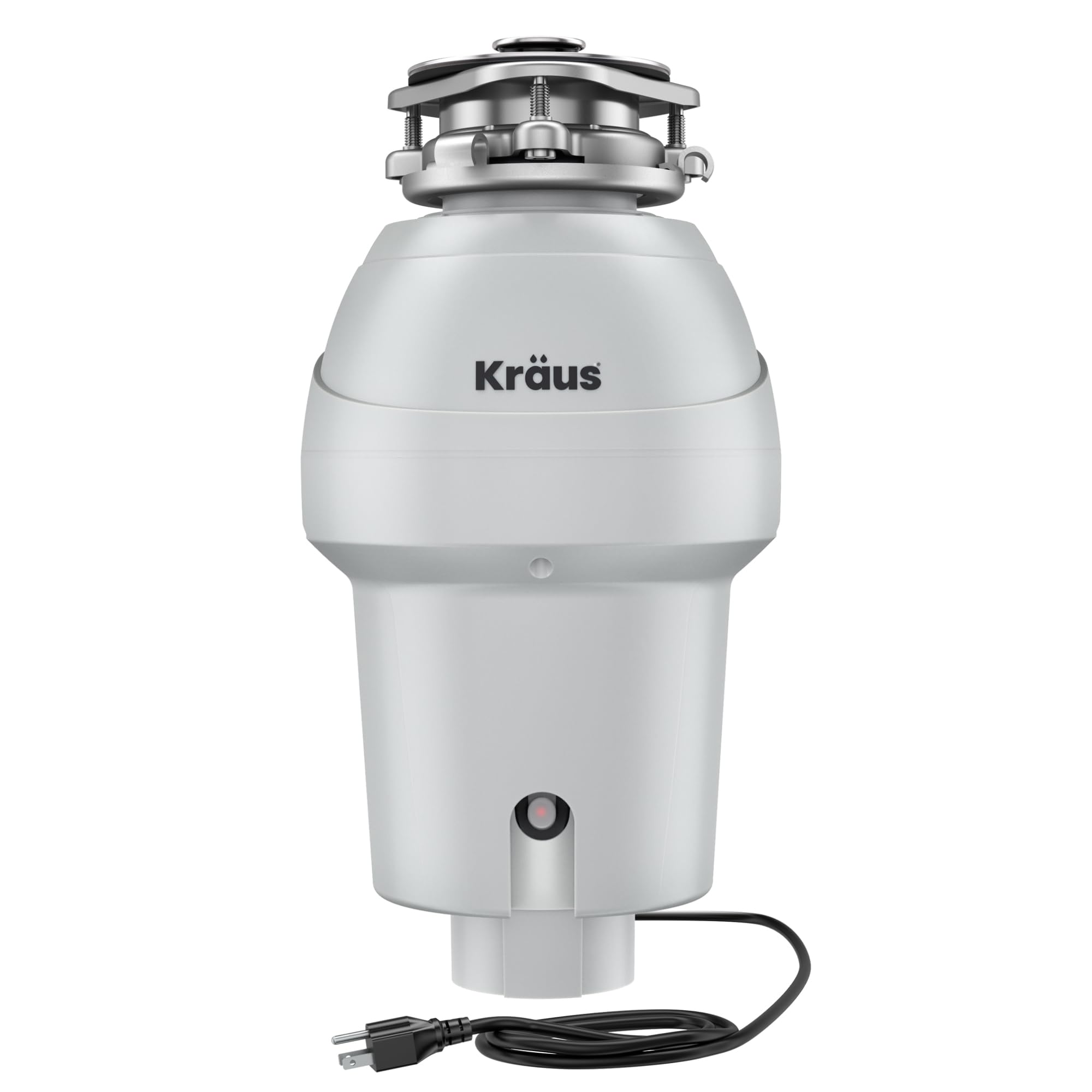
Some people don’t want to “piece together” a disposal install. They don’t want to discover they need a separate flange. They don’t want to realize the stopper is flimsy. They don’t want to finish the job and then learn they also needed a plunger-style stopper to push scraps down efficiently. If that sounds like you, the KRAUS WasteGuard approach is refreshing because it’s built as an installation-ready system.
In real-world use, what owners notice first is how modern it feels. KRAUS products tend to focus on the total kitchen aesthetic and the “touch points” you interact with. That matters more than it sounds: a better splash guard design, a better stopper/plunger design, and easier rinsing access changes the daily experience. One review highlight I love: people specifically appreciating that the splash guard is removable so it can be rinsed. That’s not a tiny feature—it’s a long-term odor and hygiene advantage.
Performance-wise, this style of unit tends to feel fast. It’s the kind of disposal that “gets to work” quickly, which makes cleanup feel efficient—especially for common scraps like cooked leftovers, soft veggie waste, and normal plate residue. It also tends to fit well in renovation contexts because it’s designed for universal mounting behavior and straightforward connections.
One expert note: because this is a newer entry in the disposal world compared with legacy brands, the long-term reputation is still building. That doesn’t make it a bad choice—it simply means it’s especially attractive if you value modern design, quiet behavior, and an install kit that feels complete. If you’re renovating, that “everything matches and everything feels intentional” is worth more than people expect.
Why it stands out
- Install-ready bundle – Cord, flange, splash guard, and stopper/plunger reduce “extra trip to the store” moments.
- Quiet feel in daily use – Soundproofing + anti-vibration mindset helps it feel less harsh during normal grinding.
- Removable splash guard – Easy rinsing is a big hygiene win and reduces odor creep over time.
- Modern design touchpoints – Looks and feels like a newer-generation kitchen component, not an industrial box.
- Fast grind behavior – Great for “clean as you go” cooking routines.
- Good renovation match – Straightforward installation pattern works well when you’re redoing sinks/counters.
Good to know
- If you have an extremely tight cabinet setup, still measure—some high-performance bodies are taller than basics.
- Quiet performance is partly sink-dependent; thin sinks can amplify any disposer’s vibration.
- As with all disposals, it performs best when you avoid dumping a whole bowl of scraps at once.
- Because it’s newer, some buyers prefer a legacy brand for “decades of track record”—that’s a personal comfort choice.
Ideal for: renovation buyers, modern-kitchen homeowners, and anyone who wants a quiet, install-ready kit that feels complete without extra add-ons.
3. InSinkErator Power 1HP – The “We Cook a Lot” Muscle Pick (Still Compact)

This is the model you buy when you’re done babying your disposal. You want something that feels like it has headroom: headroom for busy weeks, headroom for heavy prep days, headroom for “how did this much food end up in the sink?” And you want it without sacrificing cabinet space.
What owners tend to rave about with a strong 1HP-style unit is the confidence factor. It feels more eager, it clears faster, and it often improves the “sink drains quickly again” feeling if your previous unit was leaving mush behind. Another common theme: people are shocked that a stronger disposal can also feel quieter than the old one it replaced. That’s partly better design, and partly that older disposals get louder over time as components wear and mounts loosen. A fresh, well-seated unit often feels smoother immediately.
Installation is a big part of why this model has a strong reputation. InSinkErator’s lift-and-latch style concept helps reduce the “hold a heavy unit with one arm while twisting with the other” problem. If you’ve ever installed a disposal alone, you know that problem is real. This design doesn’t eliminate weight, but it can reduce the awkwardness of the final lock-in.
Where this model truly shines is in households that cook frequently. If you eat lots of fruits and vegetables, do daily meal prep, or clean up big dinners often, this is the kind of unit that feels like it stays calm. The biggest “expert warning” is also simple: don’t treat the extra power as permission to grind truly inappropriate items. It’s stronger—but it’s still a home disposer, not a restaurant unit. Good habits still matter.
Why it’s worth it
- High-confidence grinding – Feels like it has power in reserve, especially for frequent-cook kitchens.
- Compact under-sink fit – Strong performance without demanding a massive cabinet footprint.
- Better “clears quickly” behavior – Less lingering waste reduces odor cycles and second-run grinding.
- Improved noise experience vs older units – Many replacements feel noticeably less annoying than older “jet engine” disposers.
- Installation design helps – Mounting approach can reduce the worst part of solo installs: holding and twisting a heavy unit.
- Good long-term mindset – This is the “buy once and stop thinking about it” category for many families.
Good to know
- Some setups require a separate power cord kit for plug-in installations—confirm what your cabinet wiring expects.
- It’s heavier than basic units; plan a support (box/bucket) during install if you’re working solo.
- If your household is truly light-use, this can be overkill—you’ll pay for headroom you won’t use.
- Extra power doesn’t replace good habits: gradual feed + plenty of running water still wins.
Ideal for: big families, frequent cooks, and anyone upgrading from a tired or underpowered disposal who wants a strong, compact “muscle” unit that feels like it can keep up.
4. InSinkErator Badger 5XP – The Familiar Workhorse with a Power Bump

The Badger series exists for one big reason: millions of kitchens just need something reliable that fits and works. The 5XP is a favorite in that lineup because it gives you a noticeable power upgrade while staying in the “simple, proven, no-nonsense” world. If you’re replacing an older InSinkErator and you want the swap to feel familiar, this model is often a comfortable pick.
Where it shines is the replacement experience. Owners frequently choose it because they already had an InSinkErator mount and want a direct-feeling upgrade. When that happens, installation can be surprisingly fast, and plumbing tends to line up more easily than cross-brand swaps. If you’ve ever modified pipes just to make a new disposal fit, you already understand why “it lined up perfectly” is an underrated feature.
Performance-wise, it’s strong for everyday food scraps. It handles normal kitchen waste well and can feel like a big quality-of-life bump if you’re coming from a weaker model. Noise-wise, it can be “average” rather than whisper-quiet—this is still a standard-series, rugged-style unit. If you want the quietest experience possible, you’ll usually be happier in the premium insulation tiers. But if your priority is proven reliability and a familiar install, this is a solid move.
One expert tip: the Badger series is often simple to work on. If you ever need to retrieve something dropped (spoon, bottle cap, kids’ mystery object), the internal access and reset habits are straightforward. And if you buy a unit like this, learning the two essential skills pays off fast: (1) where your reset button is, and (2) how to use the included jam-buster tool when needed.
Why people keep buying it
- Familiar replacement experience – Great if you’re already on an InSinkErator mount and want an easy swap.
- Power upgrade without complexity – More confident grind than entry models, still simple to own.
- Compact and practical – Doesn’t usually demand major cabinet rearranging.
- Reliable “standard series” behavior – Built for daily use and straightforward operation.
- Good everyday grinding – Handles typical scraps well when used with good water flow.
- Easy to understand – No complicated tech; it’s a tool that behaves like a tool.
Good to know
- Standard-series designs are often louder than premium insulated models.
- Some installs require separate wiring/cord decisions—check your under-sink power setup first.
- Galvanized-style internals can show age over time in harsh environments; routine flushing and cleaning helps.
- If quiet is your #1 priority, consider stepping into a more sound-managed model.
Ideal for: anyone who wants a straightforward, recognizable upgrade—especially replacing an older InSinkErator and aiming for a dependable 3/4 HP-class workhorse.
5. InSinkErator Power 0.75HP – The Sweet Spot for Strong, Compact Performance

If you want something that feels legitimately strong but still fits the reality of most kitchen cabinets, this is a smart pick. Owners often describe this model with the same trio of words: solid, easy to install, and efficient. That’s the sweet spot: it’s strong enough to feel like an upgrade, but not so large that it becomes a cabinet-space bully.
One real-world detail that matters more than it should: under-sink interference. Some kitchens (especially with pull-out bins or drawer-style sink bases) have limited clearance. People specifically mention this style of compact build fitting where other disposals can hit or block slide-out hardware. If you’re in a modern cabinet system, that’s not a small detail—fit is a make-or-break factor.
Performance is best described as “confident everyday power.” It’s the kind of unit that handles typical scraps without drama: plate residue, cooked leftovers, peels, smaller bits. It’s not trying to be a commercial machine, but it’s noticeably less stressed than entry-level units. That lower-stress feeling usually equals fewer nuisance jams and fewer “why is the sink draining slowly now?” moments.
Noise is also a common point of praise: not silent, but less annoying than older, cheaper disposals. And just as important, the removable baffle approach makes it easier to clean the area that actually holds gunk. That’s an underrated long-term benefit: if you can clean it easily, you’ll do it more often, and odors stay under control.
Why it’s a practical winner
- Strong “everyday” grinding – A noticeable step up from entry models without being extreme.
- Compact under-sink fit – Especially helpful for tighter cabinet layouts and slide-out systems.
- Owner-friendly installation – Many people report fast installs and easy alignment when replacing older units.
- Cleaner maintenance access – Removable baffle design makes it easier to keep smells away.
- Good balance of noise and power – Feels less harsh than many basic disposals.
- Reliable “daily driver” vibe – Designed to be used often without feeling fragile.
Good to know
- Some setups need a separate power cord kit for plug-in installations—verify your power plan.
- It’s still a disposal: avoid feeding fibrous items in large quantities and always flush well.
- If your goal is “quietest possible,” the premium insulated tier can still feel more refined.
- For very large families, you may prefer the headroom of a 1HP-class unit.
Ideal for: most households who want a strong, compact, owner-friendly upgrade that fits real kitchen cabinets and handles daily cooking waste with confidence.
6. MAX-4 (3/4 HP) – Surprisingly Quiet, Premium Feel (Heavy Build)

This is one of those models that surprises people because it doesn’t feel “budget” once it’s installed. Owners consistently mention two things: it’s quiet and it feels premium. That premium feel usually comes from weight and materials—dense housings, solid grinding components, and a build that feels like it belongs in a serious kitchen.
Let’s talk about the weight honestly, because this is where real-life experience matters. A heavier disposal can be a good sign (more substantial materials), but it also changes how you should install it. If you try to freehand lift and twist a heavy unit while kneeling under the sink, you’ll hate it. If you support it with a box, bucket, or stacked boards at the correct height, the install becomes dramatically easier. This is one of those “expert hacks” that turns a frustrating project into a smooth one.
Noise performance is a standout. Several owners describe it as so quiet that running water can be louder than the disposal itself. That’s the best kind of quiet: the kind that doesn’t make you flinch when someone runs it while you’re nearby. If you have an open kitchen or just dislike mechanical noise, this model earns attention.
The main caveat is also real: foreign metal objects can be brutal on any disposal, and some owners report that a hard jam event can be a motor killer. That’s not unique to this model—it’s a disposal reality—but it’s a reminder to treat “quiet and powerful” as a reason to be disciplined, not careless. A tight splash guard is also part of the safety and noise story; it can keep debris from flying up and can reduce noise, but it may require you to use the stopper/plunger to push scraps through.
Why it earns respect
- Quiet operation – Often described as noticeably quieter than older, basic disposals.
- Premium material feel – Dense, sturdy build that doesn’t feel flimsy under the sink.
- Cord included – Plug-in convenience reduces installation friction for many kitchens.
- Stainless grinding chamber mindset – Built to resist corrosion and stay cleaner-feeling over time.
- Strong daily performance – Handles typical food waste smoothly with minimal vibration.
- Good “swap” potential – Works well when you reuse an existing flange/mount setup (when compatible).
Good to know
- It’s heavy—plan a support platform during installation to avoid a frustrating solo install.
- Some plumbing setups may require a small adjustment for perfect drain alignment (normal, but plan for it).
- Like all disposals, it’s vulnerable to hard metal jams—retrieve dropped cutlery before running it.
- A tight splash guard can slow drain flow slightly until it “breaks in” or until you get used to pushing scraps through.
Ideal for: buyers who want a quieter, premium-feeling 3/4 HP-class disposal with plug-in convenience and solid materials—especially if you’re willing to install it the smart way (supported, not freehand lifted).
7. Trifecte Pro 3/4 HP – High-Speed Grinding That Feels Quick and Clean
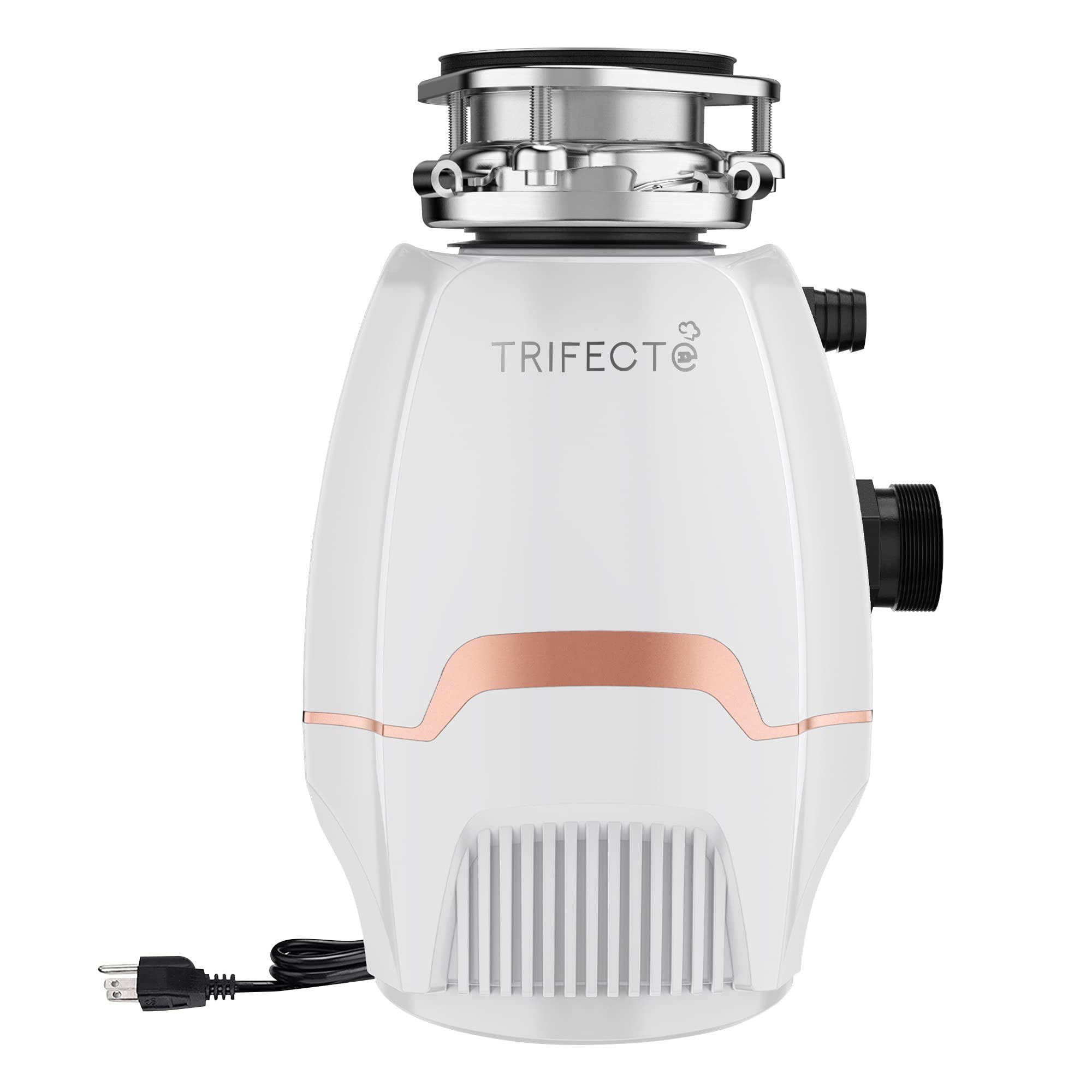
Trifecte’s Pro 3/4 HP is the type of disposal that wins people over through feel, not brand legacy. Owners who replaced older “standard” disposals often describe this as faster, stronger, and noticeably quieter. That trio matters, because in real life those are the three things you experience every day: speed (how long you have to run it), strength (whether it stalls), and noise (whether you hate hearing it).
The high-speed motor behavior is a big part of its personality. Instead of feeling like it slowly ramps into a grind, it feels like it gets to work quickly. When you combine that with a multi-stage grind concept and a “turbo” style discharge mindset, you get a disposal that feels like it clears waste decisively. That “clears decisively” feeling is a secret ingredient for long-term happiness, because it reduces the odds that mush sits and turns into odor.
DIY friendliness is also a standout here. Owners mention that replacement installs can be smooth, and that the drain outlet location can line up reasonably well with common older units. That’s a big deal because a disposal replacement should be “remove, install, test, done” — not “remove, install, then redesign the entire trap.” This model also includes a power cord and dishwasher connection support, which reduces the number of extra parts you need to think about.
The main drawback people mention is instructions. This is common with newer challengers: the product itself can be solid, but the instruction clarity isn’t always at legacy-brand levels. If you’re new to disposals, you may want to go slow, lay parts out, and pay attention to gasket order. Once installed correctly, owners tend to be very happy with the value and performance.
Why people like it
- Fast, confident grinding – High-speed behavior feels quick on everyday scraps.
- Noticeably quieter than older basics – Many replacements feel less harsh and less “jet engine.”
- Included power cord – Plug-in readiness is a real convenience for many kitchens.
- Dishwasher hookup support – Designed with common kitchen setups in mind.
- Multi-stage grind feel – Better breakdown helps waste move through the drain line more cleanly.
- Strong value reputation – Owners often compare it favorably to more expensive legacy options in daily experience.
Good to know
- Instructions can be less beginner-friendly—take your time with gasket placement and part naming.
- The unit can be heavier than very basic disposals; a support box makes installation easier.
- If you have rigid plumbing, minor trimming/adjustment may be needed (normal for many replacements).
- A tight splash guard is good for safety and noise, but you may need to use the included stopper to push scraps through.
Ideal for: small-to-mid households who want a fast, quieter-feeling 3/4 HP-class disposal with plug-in convenience and strong “clears waste” behavior, and who don’t mind being a little patient during installation.
8. TECASA HyperCrush 75 – Compact 3/4 HP Value That Fits Busy Kitchens
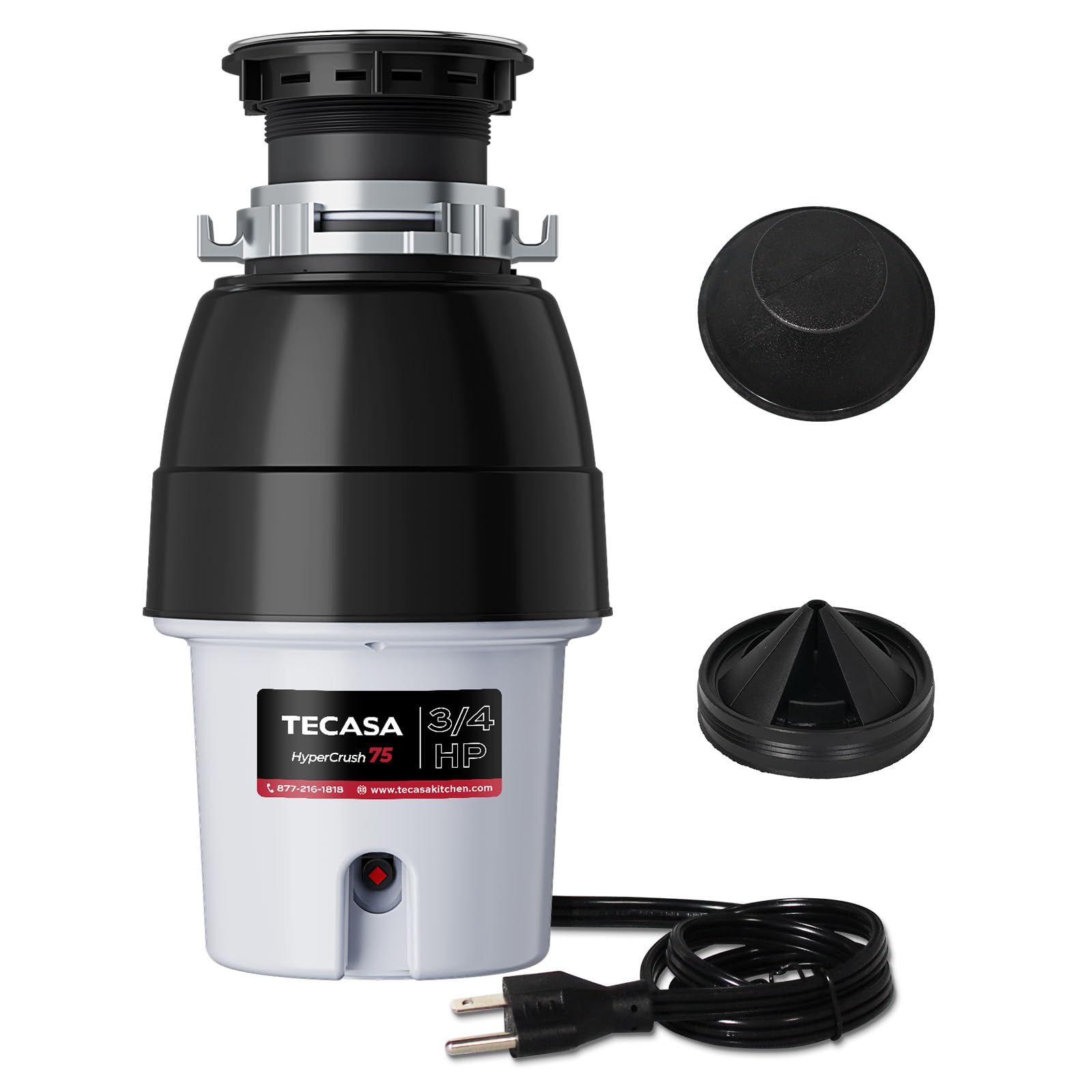
If you want 3/4 HP-class daily performance without stepping into the premium price tier, TECASA’s HyperCrush 75 is a strong contender. Owners often describe it as easy to install, space-saving, and powerful enough for normal family use. That combination is exactly what most people are chasing: a disposal that doesn’t hog cabinet room but still feels confident during cleanup.
The compact design is more important than many people realize. Under-sink cabinets aren’t just empty boxes—they hold cleaning supplies, pull-out bins, water filters, or just the stuff every household stores. When a disposal is oversized, you don’t just “lose space,” you lose usable space. This model’s smaller body helps it feel more compatible with real cabinets.
Noise is another common theme. Some owners describe it as fairly quiet compared to what they replaced. Others say it’s louder than their previous unit. That mismatch is usually explained by sink resonance and expectation: a brand-new unit can feel quieter because it’s not worn out, but a thin sink can still amplify sound. Either way, it tends to land in the “reasonable for the category” zone, especially when installed firmly and paired with steady water flow.
Installation experiences are mostly positive, with one recurring snag: the rubber ring/gasket step can confuse first-timers. This is where “expert behavior” helps: lay the parts out, follow the sequence, and don’t tighten everything until you’ve dry-fit aligned the unit. If you do that, it tends to be a smooth install—especially because a power cord is already included for plug-in setups.
Why it’s a strong value
- Compact under-sink fit – Leaves more room for storage and cabinet hardware.
- 3/4 HP-class daily power – Feels like a real upgrade from entry-level disposals.
- Power cord included – Plug-in convenience reduces install friction.
- Noise reduction approach – Many owners find it quieter than older or cheaper disposals.
- DIY-friendly installation – Straightforward for mechanically inclined buyers.
- Solid everyday performance – Handles typical scraps without constant stalling or drama.
Good to know
- The rubber ring/gasket step can be confusing—watch the sequence carefully during install.
- Noise perception varies by sink type; thin sinks can amplify any disposal.
- As with all continuous-feed models, it performs best when you feed gradually and flush well.
- If you want “luxury quiet,” a premium insulated model will still feel more refined.
Ideal for: value-focused shoppers who want a compact 3/4 HP-class disposal with a cord included—strong enough for everyday family use without demanding premium-tier spending.
9. InSinkErator Badger 5 (with Power Cord) – The “Just Replace It” Classic

There’s a reason the Badger 5 is everywhere: it’s the benchmark “standard household” replacement. When someone’s disposal fails and they just want a reliable unit that fits and works, this is often where they land. The version with the attached power cord is especially appealing because it reduces a common install headache. If you have a switched outlet under the sink, plug-in makes the job feel cleaner and faster.
Owners often describe the experience the same way: installation is doable with basic tools, it runs smoothly, and it grinds typical scraps without fuss. That’s exactly what most people need. It’s not trying to be a luxury quiet machine; it’s trying to be dependable. And for many kitchens, that’s the correct goal.
Here’s the real-world nuance: the Badger line is a “simple grinder” design compared to premium multi-stage units. That means it’s happiest with normal scraps and good flushing habits. If you dump fibrous scraps in large amounts or treat it like a blender, you can create the kind of mush that sticks in traps and causes slow drains. But if you use it like a disposal should be used—gradual feeding with plenty of water—it’s a very satisfying everyday tool.
The most common frustration isn’t performance—it’s little install details. Some people dislike fishing out the dishwasher knockout plug on certain setups. Others wish basic install consumables were included. This is exactly why I recommend doing a “cabinet prep” before install day: confirm your dishwasher drain plan and have basic supplies ready. When you do that, the Badger 5 becomes what it’s meant to be: a fast replacement that gets your kitchen back to normal.
Why it’s so widely used
- Plug-in convenience – The attached cord can make installation faster and cleaner for many kitchens.
- Dependable mainstream performance – Handles common scraps well when used correctly.
- Compact and familiar – Fits many under-sink cabinets without major rearranging.
- Replacement-friendly mindset – A common choice when people just want the swap done.
- Good value for normal use – Strong enough for everyday needs without premium complexity.
- Huge owner feedback ecosystem – Many how-to videos and troubleshooting tips exist for this style of installation.
Good to know
- Not the quietest category—premium insulated models are noticeably more refined.
- If you have a dishwasher, plan for the inlet/knockout step so it doesn’t slow you down.
- It’s a “standard grind” style; heavy-cook households may prefer a stronger multi-stage option.
- Good habits matter: gradual feeding + solid flushing prevents slow drain problems.
Ideal for: standard households who want a reliable, plug-in-friendly replacement that’s easy to live with and easy to find support for.
10. InSinkErator Badger 5 – Same Workhorse, Better If You’re Reusing Wiring

This is essentially the same “reliable mainstream” disposal experience as the corded Badger 5, but it’s best when you already have a plan for wiring. If your current setup is hardwired, or you already have a cord kit you plan to reuse, this version makes a lot of sense. It’s a classic replacement option that keeps the project simple and predictable.
Owners consistently highlight the same benefits: it installs smoothly (especially as a direct replacement), it runs reliably, and it keeps the sink functional without demanding premium-tier budgeting. The Badger 5 is the type of disposal you rarely “love,” but you often appreciate—because it quietly keeps life moving.
From an expert perspective, what makes it a good choice is the simplicity. There’s less to break, fewer special systems to learn, and plenty of long-term familiarity in plumbing communities. That matters because disposals don’t usually fail in a convenient week. They fail when you’re busy. A simple, widely supported model has advantages when you want fixes and parts knowledge to be easy to find.
The limitations are the same as any standard grinder. If you cook heavily and generate lots of fibrous waste, you’ll get more “effortless” results from multi-stage premium models. But for normal use, this unit remains one of the most straightforward replacement decisions you can make.
Why it’s still a go-to
- Great for like-for-like swaps – Especially if you’re replacing an older InSinkErator and want a smooth replacement.
- Simple ownership – No complicated tech; just a solid, reliable disposal.
- Compact under-sink footprint – Generally cabinet-friendly for standard kitchens.
- Good everyday performance – Handles routine scraps reliably with proper water flow.
- Widely supported – Plenty of installation and troubleshooting resources exist for this style.
- Comfortable “basic” decision – Great if you want reliability over premium features.
Good to know
- Wiring may require a separate cord kit or hardwiring steps—match it to your cabinet setup.
- Noise is “standard,” not premium quiet.
- Heavy-cook households may prefer a stronger grind system to reduce clog risk.
- Dishwasher connections can add an extra step; plan your inlet setup before install.
Ideal for: homeowners who have an existing wiring plan (hardwire or cord kit) and want a dependable mainstream replacement without premium complexity.
11. Waste King L-1001 – Compact, Fast, and Very DIY-Friendly
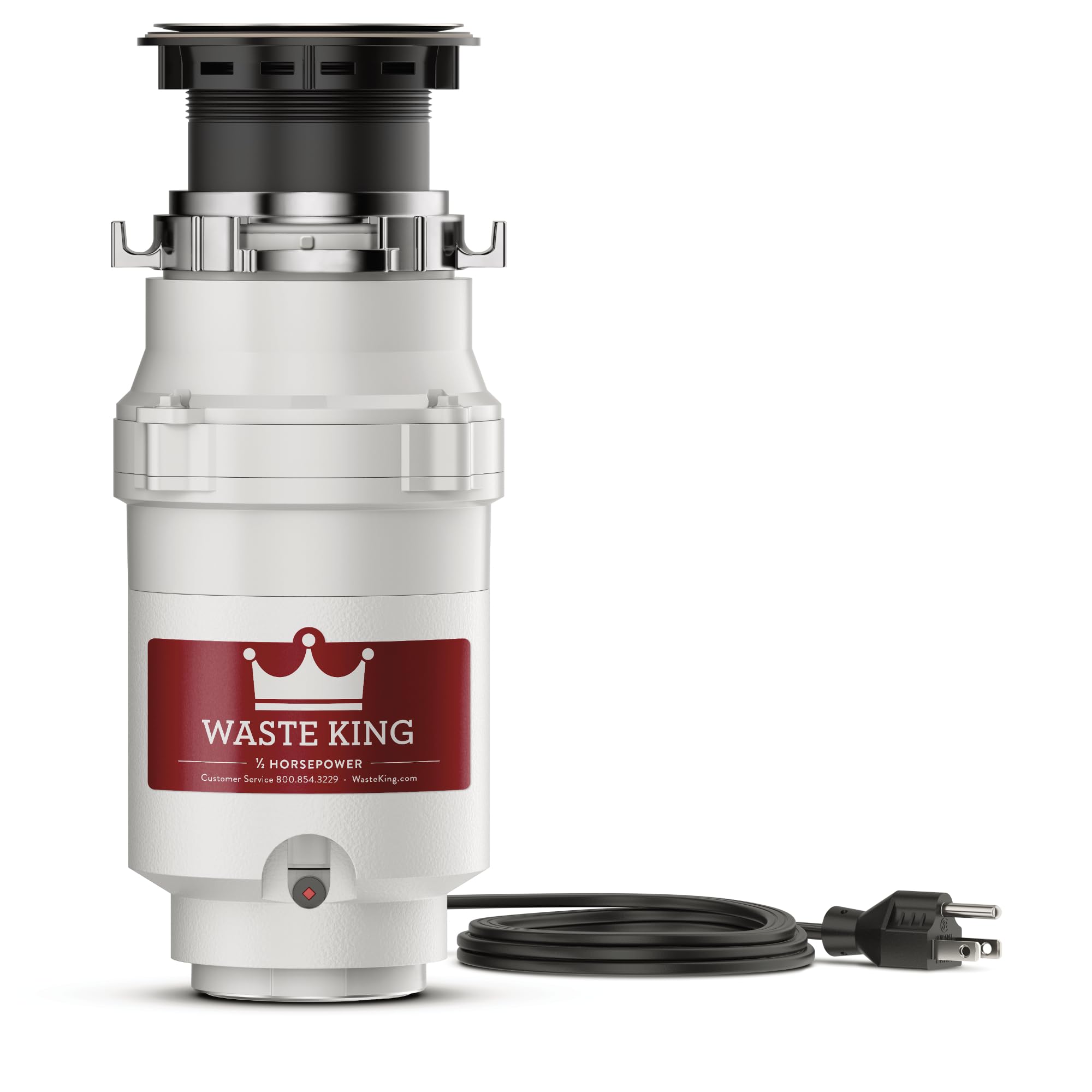
If you want a disposal that’s popular for a reason—easy to install, compact under the sink, and quick in daily grinding—the Waste King L-1001 is a strong option. One of the biggest “real life” advantages is that it doesn’t feel intimidating. People who are not plumbers regularly install this type of unit successfully, which tells you the design is forgiving and well-documented.
The motor style here tends to feel fast. That speed is helpful for everyday scraps because it makes the unit feel efficient: you run it for a shorter time and it clears quickly. Owners often describe it as quieter than older disposals they replaced, especially older standard workhorse units. It may not be “premium quiet,” but it often feels like a big improvement if your previous disposal was worn out and rattly.
Another standout is cabinet space. This model is compact and lightweight compared to many heavy-duty units, which makes it an especially good match for smaller kitchens, condos, and setups where you need to keep room for storage or a pull-out bin. If you’ve ever installed a huge disposal and then realized you lost half your cabinet, you’ll appreciate a compact body.
The biggest install “myth” people worry about is mount compatibility. Some owners replace older 3-bolt setups without special adapters; others prefer to swap the flange for a clean installation. What matters is your specific sink mount situation. If you’re unsure, plan for a full flange reset so the install is clean and secure. That approach also reduces leaks long-term because everything is freshly seated.
Why it’s a crowd favorite
- DIY-friendly reputation – Many owners successfully install it with basic tools and patience.
- Compact, space-saving body – Great for tighter cabinets and practical under-sink storage.
- Power cord included – Plug-in convenience for kitchens with an outlet under the sink.
- Fast daily grinding feel – Quick performance makes cleanup feel efficient.
- Easy cleaning access – Removable splashguard concept makes maintenance easier.
- Strong “value over hype” identity – Doesn’t try to be fancy; focuses on reliable everyday performance.
Good to know
- Noise level is good for the category, but not the same as premium sound-managed units.
- Mount compatibility can vary by sink’s existing hardware—plan a flange reset if you want the cleanest install.
- As with all disposals, correct plumbing alignment matters; avoid forced angles that cause slow draining.
- If you grind a lot of fibrous waste, a stronger multi-stage model may feel more effortless.
Ideal for: DIYers who want a compact, popular, easy-to-install disposal that handles everyday kitchen scraps well and keeps under-sink space usable.
12. InSinkErator Badger 1 (with Power Cord) – Simple, Compact, Gets the Job Done

If you’re in a small household or you simply don’t cook heavily, a basic disposal can be the correct purchase. The Badger 1 with a power cord is exactly that: simple, compact, and easy to install in plug-in setups. Owners frequently describe the installation as straightforward and the performance as surprisingly quiet for an entry-level unit.
The reason it works well is also the reason it’s limited: it’s not built for heavy abuse. If your routine is mostly plate scraping, light prep, and normal leftovers, this unit can feel totally fine. If your routine is heavy meal prep with lots of peels, fibrous scraps, and frequent use, you’ll likely outgrow it emotionally even if it still “works.” That’s when people start describing their disposal as “weak” or “easy to jam.”
From an expert viewpoint, the best way to use a smaller disposal is to treat it like a finishing tool, not a primary waste system. Scrape plates, don’t dump bowls of prep waste. Run plenty of water. Feed slowly. Do those things and a basic unit can feel clean and low-maintenance. Ignore those habits and even the best units can struggle.
The corded version is specifically a good choice for people who want the simplest wiring story: plug it in, test it, and you’re done. That simplicity has real value in apartments, condos, and starter homes.
Why it makes sense
- Compact size – Great for tight cabinets and small kitchens.
- Plug-in convenience – Attached cord simplifies installation in many setups.
- Quiet enough for the class – Often quieter than people expect from a basic model.
- Easy replacement – Straightforward swap if you’re replacing a similar mount style.
- Simple ownership – Minimal complexity; easy to understand and maintain.
- Best for light-duty households – Perfect when your waste volume is modest.
Good to know
- Not designed for heavy cooking waste or constant high-volume use.
- More likely to jam if you overload it—feed gradually and flush thoroughly.
- If you have a big family, you’ll usually be happier stepping up to a stronger class.
- Dishwasher hookups add steps; plan inlet setup carefully if applicable.
Ideal for: apartments, condos, and small households that want the simplest plug-in replacement for light everyday scraps.
13. InSinkErator Badger 1 – The Basic Choice When You Already Have Wiring Sorted

This is the same core “basic disposal” story as the corded version, but it’s best when you’re either hardwired or you already have a cord kit plan. Owners often buy this model as a simple replacement: their old unit died, they want a known brand, they want the swap done, and they don’t need premium features. That’s a valid buying scenario, especially for light-use kitchens.
The biggest advantage is still the compact body. In small cabinets, a giant disposal can feel like you installed a bowling ball where your cleaning supplies used to live. A compact unit keeps the cabinet functional. The second advantage is simplicity: fewer moving parts, no specialized systems to learn, and lots of installation familiarity out there.
The limitations remain important: this is not built for heavy use. If you cook a lot, you will usually feel happier long-term stepping into a stronger grind system. It’s not that this unit can’t handle scraps—it can—but it feels “closer to the edge” when you ask it to do more. That’s where jams and frustration happen.
The most “expert” advice I can give for basic units is: keep your expectations aligned with your habits. If your kitchen waste is light and your goal is simply to keep the sink clean and reduce trash odor, this works. If your goal is “eat anything, never think,” you want a stronger model.
Why it’s still useful
- Compact under-sink fit – Keeps cabinets more usable than oversized disposals.
- Simple replacement mindset – A straightforward choice for basic needs and light use.
- Reliable brand ecosystem – Lots of installation resources and community knowledge exist.
- Quiet enough for the class – Often feels smoother than ancient worn-out disposals.
- Works well for routine scraps – Plate residue and small prep waste are in its comfort zone.
- Good “rental property” logic – Simple, known, easy to service.
Good to know
- No power cord included—plan hardwire or purchase a compatible cord kit if needed.
- Not ideal for heavy daily cooking or lots of fibrous waste.
- Overloading increases jam risk; gradual feeding and flushing matter even more here.
- If you want quiet, premium feel, you’ll want to step up in tier.
Ideal for: light-use kitchens where wiring is already sorted and the goal is a compact, straightforward replacement without premium extras.
14. Waste Maid 058 (1/2 HP) – Anti-Jam Value with 3-Bolt Simplicity

If you want a budget pick that still feels like a real tool—not a flimsy “placeholder” unit—the Waste Maid 058 is worth attention. Owners often describe it as better than expected, easy to install, and quieter than what it replaced (with the honest note that it’s still a disposal). That’s exactly what a good budget model should be: capable, predictable, and not frustrating.
The 3-bolt mounting style is also practical for a lot of DIY replacements. If you’re already on a compatible 3-bolt mount, this can be a quick swap. That matters because the hardest part of disposal replacement is often the flange/mount reset, not the disposal itself. A compatible mount can turn this from a project into a straightforward job.
Owners also mention the splash guard feel. A thicker guard can help reduce splash and can dampen noise, but it can slow drain flow slightly. That’s not necessarily a dealbreaker—it’s a tradeoff. If you notice slower draining through the guard, it’s usually solved by simply running water more deliberately and pushing scraps through instead of letting them sit on top. It’s also worth noting that thick guards can help keep smells down by limiting airflow and splash-back.
One “real buyer” note: packaging and included extras can vary. Some people mention included plumbers putty, others report packaging quirks. The good news: plumbers putty is easy to source and is not an expensive item, but it’s smart to have it ready before you begin. The goal is a clean, leak-free flange seal—and having basic supplies ready makes that happen.
Why it’s a smart budget buy
- Surprisingly capable performance – Handles everyday scraps well and feels stronger than many expect.
- 3-bolt replacement potential – Great if your sink is already set up for a 3-bolt mount.
- Anti-jam mindset – Designed to reduce stall-and-reset frustration.
- Compact under-sink fit – Keeps cabinet space more usable than many oversized units.
- Quieter-than-expected vibe – Not silent, but often less harsh than older disposals.
- Strong “value” identity – A practical choice for budget upgrades and rentals.
Good to know
- A thicker splash guard can slow drain flow slightly until you adjust your routine.
- It’s still a budget unit; premium insulated models will feel more refined and quieter.
- Packaging/extras can vary; have basic install supplies ready before you start.
- As with all disposals, avoid hard metal objects and flush thoroughly after grinding.
Ideal for: budget-focused buyers who want a capable, straightforward disposal with 3-bolt mounting simplicity and a reputation for “better than expected” daily performance.
How Garbage Disposal Installs Actually Work (and Why Most DIY Jobs Go Wrong)
Most frustration with disposals isn’t “the unit is bad.” It’s that installation details were rushed. A disposal is basically two systems working together: (1) the mounting system that seals and supports the unit, and (2) the drain + dishwasher + power connections that determine whether the kitchen stays leak-free, clog-free, and low-noise. Here’s what actually matters when you’re installing (or replacing) one.
The mount system: where leaks and rattles are born
- Sink flange seal: This is where water can leak onto the cabinet floor if the putty/gasket is wrong or uneven.
- Backup ring + snap ring: These parts hold the flange tight under the sink. If they’re not seated properly, the whole unit can wobble.
- Mount lock-in: Whether it’s EZ Mount, 3-bolt, or quick-lock, the final “twist to lock” step must be fully engaged.
- Support during install: Heavy disposals are easier when supported at the correct height (bucket/box/stacked boards). This prevents cross-threading and frustration.
If you want a quieter disposal experience, the mount matters more than people realize. A firm mount reduces vibration. Less vibration means less sink resonance. Less sink resonance means less “I can hear it across the house” annoyance.
The drain outlet: your hidden clog predictor
- Outlet height alignment: If the outlet is too high or too low relative to your trap, you can create slow draining or standing water.
- Avoid forced angles: Sharp angles and stressed joints collect gunk faster.
- Tighten without over-tightening: Overtightening can distort gaskets; undertightening leaks. Snug, then test with a full sink of water.
A simple “expert test” after install: fill the sink partially, pull the stopper, and watch the flow. It should drain smoothly and consistently without glugging or backing up.
Dishwasher hookups: the step that eats your time
- Confirm your dishwasher drain route: If the dishwasher drains into the disposal, you must connect the hose securely and clamp it well.
- Knockout plug removal: Many disposals ship with the dishwasher port blocked. Remove the plug before connecting the hose.
- Retrieve the plug: Don’t leave it inside—rattles and problems happen when that piece stays in the grinding chamber.
- High loop or air gap: Your kitchen’s plumbing configuration matters for preventing dirty water from flowing back into the dishwasher.
Power setup: plug-in vs hardwire (don’t improvise this)
- Plug-in setup: Easiest when you have a switched outlet under the sink. Cord-included models make this smoother.
- Hardwire setup: Works well in many homes, but you need proper strain relief and correct connections.
- Reset button awareness: Learn where your reset is. A “dead disposal” is often a tripped reset after a stall.
- Jam tool knowledge: Many units include a tool to manually rotate the grinding plate from below. That can save a service call.
The best disposal installation is the one you don’t think about again. A clean mount, straight drain alignment, correct dishwasher hookup, and tidy power setup is what makes a good unit feel great.
FAQ: Buying and Using a Garbage Disposal (Without Regrets)
What’s the #1 mistake people make when buying a disposal?
How do I keep my disposal from smelling?
Why does my sink drain slowly after installing a new disposal?
My disposal is “dead.” Is it broken?
Should I buy a model with a power cord included?
Can I put “anything” down a high-power disposal?
Final Thoughts: Pick the Disposal That Matches Your Kitchen Reality
A great disposal isn’t the one with the loudest claims. It’s the one that fits your sink and cabinet cleanly, stays quieter than your old unit, clears waste reliably, and doesn’t turn maintenance into a chore. If you choose based on your household habits and installation setup, you’ll end up with a kitchen that feels cleaner, faster, and calmer.
Here’s how to translate this guide into a confident purchase:
- Want the best overall “premium but practical” upgrade? Start with the InSinkErator EVOLUTION 0.75HP. It’s the best blend of refined grinding, quieter feel, and long-term “I stop thinking about it” ownership.
- Want a modern, installation-ready kit with quiet behavior? Go for the KRAUS WasteGuard 3/4 HP. It’s built for people who want everything to feel intentional—from the splash guard to the plunger-style stopper.
- Cook constantly and want muscle without losing cabinet space? Choose the InSinkErator Power 1HP. It’s the “headroom” pick for busy kitchens.
- Replacing an older InSinkErator and want a familiar workhorse upgrade? The Badger 5XP is a comfortable step up in a familiar format.
- Want a strong mid-tier that fits tight cabinets? Look at the InSinkErator Power 0.75HP for compact strength and a great day-to-day balance.
- Want quiet performance at a value-feel tier? Consider the MAX-4 or the Trifecte Pro 3/4 HP if you want a quieter, faster-feeling experience without going full premium tier.
- Want the best budget-friendly 3/4 HP-class option? The TECASA HyperCrush 75 is compact, cord-included, and built for normal family use.
- Want a mainstream plug-in classic for standard kitchens? Pick the Badger 5 with Power Cord. It’s the “replace it and move on” choice many homeowners love.
- Need a compact, DIY-friendly lightweight unit? Try the Waste King L-1001 for easy installs and space-saving practicality.
- Want the simplest light-use option? The Badger 1 with Power Cord is a straightforward pick for small households and condos.
- Want a budget pick with 3-bolt simplicity? The Waste Maid 058 is the “better than expected” value option that many DIYers appreciate.
Pick the sink trash disposal that matches how you actually live—how you cook, how much space you have under the sink, whether you’re plug-in or hardwired, and whether dishwasher hookup is part of your setup—and your kitchen will feel cleaner with less effort every single day.
