
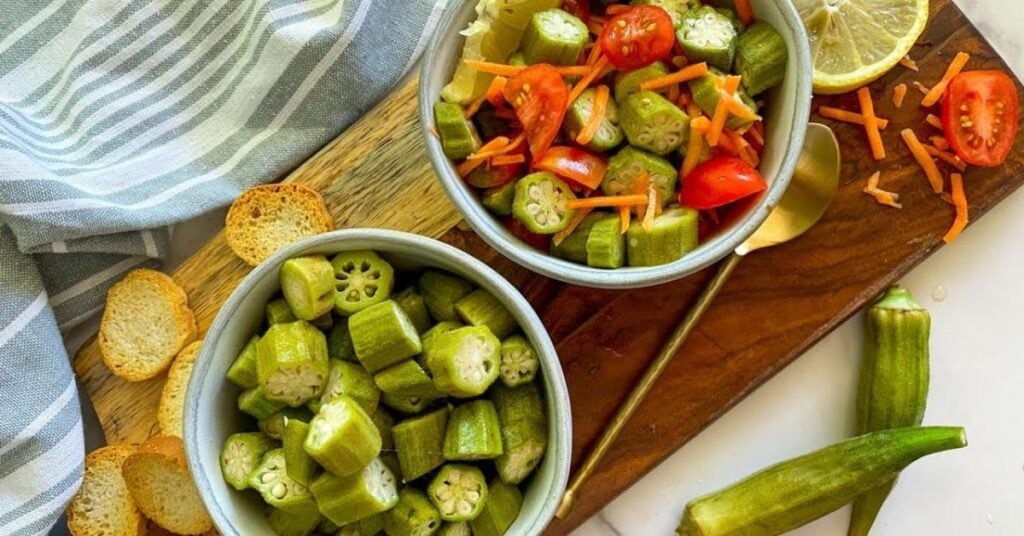
This refrigerator pickled okra recipe uses a cold brine and simple spices for crisp, tangy pods in 5–7 days—no canning, heat, or special gear.
Short on time and want crunchy pickled okra without hauling out a canner? This method leans on a cold, vinegar-forward brine and a tight pack so the pods stay firm. You’ll make a clean base brine once, pour it over fresh okra, and let the fridge handle the rest. The result: bright snap, balanced salt, and a clean dill-garlic backbone that works on snack boards, with beans and rice, or beside fried catfish.
What You’ll Need And Why It Works
Pickling is simple chemistry. Vinegar lowers pH; salt and low temperature slow spoilage; clean produce and containers reduce off-flavors. Okra loves bold acid and aromatics, and because we don’t heat the jars, the pods keep that crisp bite many hot-pack recipes lose.
Table #1: within first 30%
Core Ingredients And Smart Swaps
| Ingredient | Standard Amount (per 1 quart) | Easy Substitutes |
|---|---|---|
| Fresh Okra (3–4 in, firm) | 12–16 oz (350–450 g) | Baby okra for extra snap; avoid bruised pods |
| White Distilled Vinegar (5%) | 1 cup (240 ml) | Apple cider vinegar (5%) for softer fruit notes |
| Water (filtered) | 1 cup (240 ml) | All vinegar for extra tang; or 1.5 c water + 0.5 c vinegar for milder |
| Kosher Salt (non-iodized) | 1 Tbsp (10–12 g) | Pickling salt; avoid iodized table salt |
| Garlic | 2–3 cloves, smashed | Roasted garlic for mellow flavor |
| Dill | 1 tsp seed or 2 sprigs | Coriander seed or celery seed |
| Spice Heat | ½–1 tsp red pepper flakes or 1 chili | Black peppercorns or mustard seed for zero-heat spice |
| Optional Add-Ins | ¼ tsp mustard seed; ¼ tsp coriander; 1 bay leaf | Lemon peel strip or ¼ tsp sugar for balance |
Step-By-Step: Cold Brine, Tight Pack, Fridge Rest
1) Prep The Pods
Rinse okra under cool water. Pat dry. Keep stems intact, trimming only the brown tip so you don’t expose the seed cavity. Any cut pod will leak mucilage and cloud the brine.
2) Mix A Clean Brine
In a pourable container, whisk 1 cup 5% white vinegar, 1 cup water, and 1 Tbsp kosher salt until fully dissolved. Taste: brine should be bright and salty like a potato chip. If you like sharper bite, bump vinegar to 1¼ cups and reduce water to ¾ cup.
3) Load The Jar
Into a clean quart jar, add garlic, dill, peppercorns, and chosen heat. Stand pods upright, tips up, as tightly as you can without crushing.
4) Cover And Submerge
Pour in cold brine to cover by at least ½ inch. Tuck in a food-safe weight or a folded piece of parchment to keep tips submerged. Leave ¼ inch headspace. Lid the jar.
5) Chill And Wait
Refrigerate right away. Flip the jar once a day during the first two days to move aromatics. Taste at day 3 for seasoning and at day 5–7 for full flavor. Keep pods submerged between tastes.
Refrigerator Okra Pickles Recipe Steps (Cold Brine)
Quick Reference
- Rinse and dry 12–16 oz okra.
- Make brine: 1 c vinegar (5%), 1 c water, 1 Tbsp kosher salt.
- Pack with 2–3 garlic cloves, dill, and spices in a quart jar.
- Top with brine; weight; lid.
- Refrigerate; taste from day 3; peak at day 5–7.
For a sweeter Southern deli vibe, add ½–1 tsp sugar per quart. It rounds sharp edges without turning the jar into dessert.
Refrigerator Pickled Okra Recipe Variations By Heat Level
No-Heat, Pepper-Forward
Skip chilies. Use ½ tsp black peppercorns and ½ tsp mustard seeds. You get aroma and snap with zero burn.
Medium Heat
Add ½ tsp red pepper flakes or one halved jalapeño. Seeded chilies bring warm, steady heat.
Hot And Smoky
Toss in a sliced serrano plus ¼ tsp smoked paprika. The paprika colors the brine and gives a hint of grill.
Flavor Tuning That Keeps Crunch
Vinegar Choices
Distilled white vinegar keeps flavors clean and color bright. Apple cider vinegar adds a round fruit note. Rice vinegar softens edges; you may need a touch more salt to keep balance. For food safety and predictable acidity in preserved products, extension services point to 5% acidity vinegar as the tested standard; while this is a refrigerator method, sticking with 5% keeps the math simple and the taste consistent. For broader context on acid and pickling basics, see the NCHFP pickling guidance.
Salt That Dissolves Clean
Use kosher or pickling salt. Iodized table salt can cloud the brine and bring a slight metallic edge. If you only have table salt, measure by weight—10 to 12 grams per quart—and expect slower dissolving.
Freshness And Size Matter
Choose pods 3–4 inches long, bright green, and firm. Large, seedy pods turn squeaky or hollow. The best crunch comes from young okra that packs tightly without bending.
Packed Tight, But Not Bruised
A snug pack limits float and keeps tops submerged, which protects texture. If a few tips rise, press a lightweight insert on top or slide in a peeled carrot stick as a tidy brace.
Brine Science, Cloudy Jars, And That “Slime” Question
Okra’s mucilage—the gel that thickens gumbo—dissolves into water when cells break or when pods are cut. Keep pods whole, trim lightly, and avoid rough handling. A cold brine and quick chill help hold the gel in the pod. If brine clouds early, that’s often just spices shedding fine particles. True spoilage usually smells off or shows surface growth; when in doubt, toss the jar.
Safety Basics You Should Know
This is a refrigerator method, not shelf-stable canning. Always keep jars cold. Acid is your friend; vinegar brings pH down and discourages dangerous growth. If you ever shift to hot-pack, shelf-stable canning, use tested formulas and proper acidity. Canadian guidance spells out the pH 4.6 line between high-acid and low-acid foods; it pairs the right process with the food type. Read more at Home canning safety.
Make It Yours Without Losing Crunch
Herb Swaps That Fit Okra
- Dill + Coriander: clean, lemony lift.
- Dill + Celery Seed: deli style.
- Dill + Bay Leaf: deeper savory finish.
Cider Or White?
White vinegar keeps color vivid and flavors direct. Cider vinegar adds a soft apple note that pairs with mustard seed, garlic, and a pinch of sugar. Both should read 5% acidity on the label to keep the brine consistent from batch to batch.
Touch Of Sweet
A quarter to one teaspoon sugar per quart lifts fruit notes and rounds edges without turning these into bread-and-butter slices.
Table #2: after 60%
Flavor Profiles By Spice Mix
| Spice Mix | Taste Notes | Best Use |
|---|---|---|
| Dill + Garlic + Peppercorn | Clean, classic, bright acid | Snack boards; sandwiches |
| Dill + Mustard Seed | Sharp, slightly tangy finish | Seafood plates; deviled eggs |
| Dill + Coriander + Bay | Lemony, herbal depth | Rice bowls; grilled chicken |
| Jalapeño + Dill | Medium heat, fresh green | Beans and cornbread nights |
| Serrano + Smoked Paprika | Warm heat, faint smoke | BBQ platters; picnic sides |
| Celery Seed + Black Pepper | Deli vibe, no burn | Cold cuts; tuna salad |
| Lemon Peel + Dill | Bright citrus lift | Fish tacos; grain salads |
Troubleshooting And Fine-Tuning
Soft Pods
Likely older okra, bruising, or warm storage during the first day. Start with firm, small pods. Chill jars right away. Keep everything submerged.
Too Salty
Salt never disappears, but you can dilute. Pour off ¼ of the brine and replace with equal parts vinegar and water. Give it a day to re-balance.
Not Tangy Enough
Swap ¼ cup of the water for vinegar, or add 1–2 tsp vinegar directly to the jar. Let flavors settle for 24 hours before judging.
Pods Floating
They often do on day one. Use a small weight, a parchment tuck, or pack tighter next time. As they take on brine, float usually eases.
Cloudy Brine
Fine spice dust or garlic sulfur can cloud the jar and still be safe. Signs to toss: gas, fizzing, surface growth, rotten odors, or mush. If anything feels off, discard.
Batch Scaling, Shelf Life, And Serving Ideas
Scaling Up Or Down
Double or halve brine easily; keep the same ratio. Two quarts fill a standard 2-quart pitcher. If you’re prepping for a cookout, mix brine in a measuring bowl with a spout for easy, spill-free pours.
Storage Window
Refrigerated jars are best within 3–4 weeks for prime crunch. They’ll stay tasty longer, but texture slowly relaxes. Always keep the jar cold and the pods under brine.
Serving Ideas
- Slice lengthwise and fan over pimento cheese toast.
- Chop and toss through a tomato-cucumber salad with feta.
- Thread on cocktail picks for a briny garnish.
- Dice with red onion and parsley for a quick relish.
Why This Method Beats Hot-Pack For Crunch
Heat softens pectin in plant cell walls. Skipping the boil keeps that structure intact, so bite stays snappy. You trade shelf stability for texture, which is a fair trade when the fridge is doing the work. If you ever switch to heat-processed jars for pantry storage, use tested recipes and confirmed 5% vinegar strength. The science behind acid barriers and safe processing is covered clearly in the NCHFP’s general pickling page and Health Canada’s home canning safety guide.
Clean Tools, Better Flavor
Jar Hygiene
Wash jars and lids in hot, soapy water, rinse well, and air-dry. This isn’t sterilization for shelf storage; it’s just smart to start clean to avoid off aromas.
Spice Freshness
Old seed loses punch. If dill seed smells faint, bloom it: warm it in a dry pan for 30–45 seconds, then cool before adding to the jar.
Water Quality
Heavily chlorinated water can dull flavor. If your tap water smells strongly of chlorine, use filtered or let water sit uncovered for 1 hour so some chlorine dissipates.
Your First Taste Plan
Start tasting on day 3. You’ll get early garlic, fresh dill, and a mild salt bite. By day 5–7, acid moves deep into the pods and heat settles into the seeds. That’s the sweet spot for most palates. If you want a stronger pucker, leave the jar longer and keep it cold.
Template Card You Can Save
One-Quart Refrigerator Okra Pickles
Pack 12–16 oz small okra with 2–3 smashed garlic cloves, 1 tsp dill seed or 2 dill sprigs, ½–1 tsp red pepper flakes, and 6–8 peppercorns. Pour over 1 cup white vinegar (5%), 1 cup water, and 1 Tbsp kosher salt—stirred until clear. Submerge, cap, and refrigerate. Taste day 3; best at day 5–7; keep for 3–4 weeks for top crunch.
Final Notes Before You Refrigerate
Label the lid with the date so you know when the jar hits peak flavor. If you’re making gifts, tie on a card with the brine ratio and a “keep refrigerated” cue. This refrigerator pickled okra recipe is also a solid starting point for green beans and carrot sticks—same brine, same wait, new textures.
Use This Recipe As A Base For Other Pickled Veg
Want a mixed jar? Keep okra whole and add a few coins of carrot and a couple of green beans for color. As long as everything stays submerged and the jar stays cold, you’ll get a crisp, bright mix. Treat this refrigerator pickled okra recipe like a simple ratio you can scale and season to taste.
