
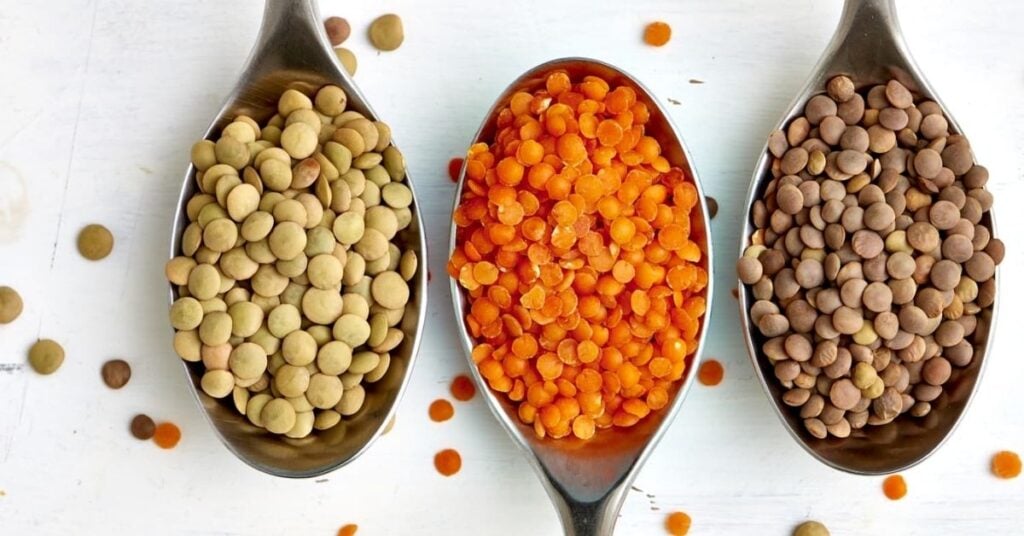
Red Vs Brown Lentils differ in cook time and texture: red turn creamy fast, while brown hold shape longer with a firmer bite.
Lentils are pantry gold. They’re cheap, quick to cook, and versatile. The two everyday types most shoppers see are red and brown. On the shelf they look similar, yet on the stove they behave very differently. This guide compares red vs brown lentils for flavor, texture, nutrition, and cooking so you can pick the right bag for dinner, meal prep, or a budget-friendly protein swap.
Red Vs Brown Lentils At A Glance
Use this head-to-head to choose in seconds. It covers the traits cooks care about most: speed, texture, flavor, and best dishes.
Table #1 (within first 30%)
| Attribute | Red Lentils | Brown Lentils |
|---|---|---|
| Form | Often split and hulled | Usually whole with skins |
| Cook Time (Stovetop) | 10–15 minutes | 20–30 minutes |
| Texture | Soft, creamy, breaks down | Holds shape, tender bite |
| Flavor | Mild, slightly sweet | Earthier, deeper |
| Best For | Dal, creamy soups, purées | Salads, stews, patties |
| Color Shift When Cooked | Orange → golden, loses color | Brown → khaki, keeps color |
| Salt/Acid Sensitivity | Less sensitive | A bit slower with early salt/acid |
| Storage (Cooked) | Up to 4 days chilled | Up to 5 days chilled |
| Freeze-Friendliness | Great for soups/purées | Good; texture stays intact |
What They Are
Both red and brown lentils are pulses—the dried edible seeds of legumes. That pulse definition matters because it explains why both options pack protein and fiber. The FAO pulse criteria describe pulses as dry-harvested legumes with low fat and high protein. Lentils fit that box neatly and appear in cuisines from South Asia to the Mediterranean.
Processing And Types
Red lentils are usually split and hulled. That processing makes them cook fast and fall apart into a creamy base. Brown lentils are typically whole with their skins on, which slows cooking a bit and helps each seed stay intact. You’ll see many sub-varieties on labels—masoor for red; pardina or “regular brown” for brown—but the cook-behavior pattern holds true across brands.
Red Versus Brown Lentils By Use Case
Think about the end texture you want. Need a silky dal or a soup that thickens itself? Go red. Need lentils that can handle tossing, reheating, or pan-searing into patties? Go brown.
Best Uses For Red Lentils
- Creamy Dal: They melt into a smooth base without a blender.
- Quick Weeknight Soups: They thicken in minutes; no roux needed.
- Hidden Veggie Purées: Fold into tomato sauce or curry to add body and protein.
Best Uses For Brown Lentils
- Salads: They stay distinct, so dressings don’t turn them mushy.
- Hearty Stews: They hold their form across long simmers.
- Burgers And Patties: Their structure binds with oats, egg, or flax.
Flavor And Seasoning Notes
Red lentils run mild and slightly sweet. They drink up garlic, ginger, turmeric, cumin, and coconut milk. Brown lentils lean earthy and play well with bay, thyme, smoked paprika, and tomato. If you want a brighter bowl, squeeze lemon at the end; if you want deeper notes, bloom spices in oil first, then add the lentils.
Nutrition, Satiety, And Health Context
Cooked lentils of any color deliver protein, fiber, folate, iron, and potassium with very little saturated fat. One of the reasons they fill you up is fiber and resistant starch. For a broad, research-based snapshot of lentil nutrition and health effects, see Harvard’s overview of lentils, which notes their fiber, polyphenols, and slow-digesting carbs that support steady energy.
Red Vs Brown Nutrition Differences
Side by side, red and brown lentils are more alike than different on nutrients per cooked serving. Processing can nudge small changes—red (often hulled/split) may cook to slightly higher glycemic impact when fully broken down, while whole brown lentils’ skins add a touch more intact fiber. Portion size and recipe style matter far more than color for day-to-day nutrition.
Protein And Fiber Targets
A typical 1/2-cup cooked serving brings a solid bump toward daily fiber goals and adds plant protein you can count on at lunch. Government guidance lists cooked lentils among top fiber sources per small serving size in its data tables; see the Dietary Guidelines’ page on food sources of fiber for context.
Buying, Sorting, And Storing
Grab bags with minimal broken seeds and no visible dust. At home, pour lentils onto a tray and pick out tiny pebbles if present. Store dry lentils in a sealed jar in a cool, dark cabinet for up to a year. Older stock still cooks, but it may take longer and finish a bit drier.
Cooking Basics: Water Ratios And Timing
You don’t need to soak lentils. Rinse them, then simmer in plenty of water or a measured ratio if you prefer precise textures. Salt at the start for red; for brown, you can salt early or midway. Acid (tomato, vinegar, lemon) can slow browns slightly, so add it near the end if you’re chasing a tender bite on a tight timeline.
Step-By-Step For Red Lentils
- Rinse 1 cup red lentils until water runs clear.
- Add 3 cups water or light stock; bring to a gentle simmer.
- Skim foam; stir now and then.
- Season and cook 10–15 minutes for soft and creamy.
- Finish with fat (ghee or olive oil) and lemon for brightness.
Step-By-Step For Brown Lentils
- Rinse 1 cup brown lentils.
- Add 3–4 cups water or stock; bring to a simmer.
- Cook 20–25 minutes for salads; up to 30 for stews.
- Taste at 18 minutes; stop when tender yet intact.
- Drain extra liquid; season with vinegar, herbs, and oil.
Red Vs Brown Lentils For Meal Prep
Batch-cooking pays off. Make a pot on Sunday and build fast bowls all week. Red lentils shine in soups that reheat perfectly. Brown lentils keep their shape in jars and bento boxes. Both freeze well; red keeps the silken feel, while brown keeps a toothsome bite. Label containers and aim to eat refrigerated portions within four to five days.
Table #2 (after 60%)
Cooking Variables Cheat Sheet
| Variable | Red Lentils | Brown Lentils |
|---|---|---|
| Rinse/Soak | Rinse; no soak | Rinse; no soak |
| Water Ratio | 1:3 for creamy | 1:3 for tender; more for soups |
| Simmer Time | 10–15 minutes | 20–30 minutes |
| Doneness Cues | Seeds collapse; spoon-thick | Tender center; keeps shape |
| Salt Timing | Start or midway | Start or midway; may add minutes |
| Acid Timing | Any time | Near the end for fastest cook |
| Pressure Cooker | 2–3 min high; quick release | 6–8 min high; natural release 5 |
| Storage (Cooked) | Up to 4 days at 4 °C | Up to 5 days at 4 °C |
| Freezer | Great in soups/purées | Great for salads and stews |
Common Mistakes And Easy Fixes
Too Mushy Brown Lentils
You cooked them like red lentils. Next time, taste early. Stop at the first sign of tenderness and drain. A splash of vinegar firms texture a touch.
Gritty Or Tough Texture
Old stock or hard water can slow things down. Add a pinch of baking soda to the pot to soften the water, or cook a little longer with extra liquid.
Bland Results
Bloom spices in oil before liquid goes in. Add alliums early and acids late. Finish with salt to taste and a small knob of butter or ghee for roundness.
Cost, Availability, And Swaps
Both types are budget buys. Price varies by brand and bag size, but red and brown usually sit within the same narrow range. If your store runs out of red, you can still mimic the feel: cook brown longer, then mash a portion to thicken. If you need intact texture and only have red, pulse-cook them just to al dente and cool fast to slow carryover.
Sustainability Angle
Lentils fix nitrogen in the soil and need modest water compared with many animal proteins. That farm footprint is one reason cooks reach for pulses more often when prices rise or when they want lower-impact meals. You’ll still want to plan around local availability and storage, but either color supports a thrifty, high-protein menu.
Which One To Choose Today
Match the lentil to the job. If you want a creamy base or faster dinner, red lentils win. If you want distinct grains that reheat well for days, brown lentils win. Keep both in your pantry and you can cover soup night, salad boxes, stews, and burger nights with one small shelf of ingredients.
Red Vs Brown Lentils In Real Recipes
Quick Red Lentil Tomato Soup
Sweat onion, garlic, and cumin in olive oil. Stir in 1 cup red lentils, 1 can crushed tomatoes, 3 cups stock, and a pinch of chili. Simmer 12 minutes. Blend or whisk to smooth. Finish with lemon and a spoon of yogurt.
Warm Brown Lentil Salad
Simmer 1 cup brown lentils until just tender. Drain, then toss hot with olive oil, sherry vinegar, Dijon, shallot, parsley, and roasted carrots. Add feta or toasted nuts for crunch.
Final Pick: Match Texture To Task
For creamy bowls, choose red. For shape and bite, choose brown. That’s the whole game. Stock both, and weeknight cooking gets easier and cheaper—no guesswork, no wasted pots, just reliable results.
Keyword usage notes inside the article body (natural placements)
The exact phrase “Red Vs Brown Lentils” appears in H1 and one H2; and naturally twice in the body text above.
