
If you’ve ever stood in your kitchen at 6:17 pm doing the mental math of time, dishes, and energy, you already understand the real reason people shop for a pressure cooker slow cooker combo: you want one countertop workhorse that can handle tonight’s dinner and tomorrow’s leftovers without turning your sink into a disaster zone.
But here’s what most buying guides get wrong: these machines aren’t interchangeable. On paper, lots of multicookers “do everything.” In real life, a few small details decide whether you’ll use it three times a week or banish it to a cabinet like a bulky regret.
This guide is built around the friction points that show up in real owner feedback (and in real kitchens): the slow-cook mode that runs cooler than you expect, the steam release that makes you jump, the pot that sears beautifully… or spins when you stir, the silicone ring that holds onto last week’s curry, the air-fry basket that looks big until you try to cook for four, and the lid situation (one lid, two lids, three lids—yes, it matters).
I’m also going to say the quiet part out loud: for many families, “combo” doesn’t just mean pressure + slow. It means a cooking workflow that feels natural—brown the meat, build flavor, cook fast, finish gently, keep warm, and clean up quickly. When a machine supports that flow, it becomes your weeknight cheat code. When it doesn’t, you fight it.
Below you’ll find 16 standout picks across every style of kitchen and every level of “I want buttons” vs “please don’t make me read a manual.” Some are classic pressure/slow staples. Some add crisping and grilling. A couple are slow-cooker-first options for people who learned the hard way that not all slow modes are created equal.
How to Choose the Right Pressure Cooker Slow Cooker Combo
The best cooker isn’t the one with the longest list of presets. It’s the one that consistently produces the results you want, with the least “kitchen drama,” across the moments that actually matter: browning, building flavor, controlling steam, finishing texture, and cleaning up fast. Here’s the decision framework I use when I want you to buy once and feel great about it for years.
1. Start with your “main cooking mood” (because it drives everything)
Most households live in one dominant pattern. Pick yours first, then buy the machine that supports it.
- The Weeknight Sprinter: You want fast meals with minimal supervision—beans, shredded chicken, rice, soups, pasta-ish one-pot dinners.
- The Sunday Batch Cook: You cook big once, portion it, and coast—chili, stew, stock, pulled meat, meal prep grains.
- The “I Need Texture” Cook: You love pressure speed, but you also want crisp wings, browned tops, roasted edges, or grilled sear marks.
- The Slow-Comfort Person: You actually want true low-and-slow results—roasts, braises, sauces, long simmered flavor without babysitting.
- The Minimalist: You want fewer buttons and fewer decisions. You’d rather set time + temp than decode “Preset #14.”
- The Tiny-Kitchen Strategist: You need compact, easy-to-store, and still capable—small households, dorms, apartments.
2. Understand the three “combo categories” (this prevents disappointment)
In the real world, these products cluster into three categories. Mixing them up is the #1 reason people feel buyer’s remorse.
- True pressure + slow multicookers (the classic combo): These are your Instant Pot-style machines. They pressure cook quickly, they can slow cook, they sauté, steam, do rice/yogurt, and so on. They’re unbeatable for speed, batch cooking, and “set it and forget it” convenience.
- Pressure + slow + crisping/grilling machines: These add a second (or third) lid with a heating element and fan so you can finish with crisp texture. If you love “tender inside, crispy outside” results, this category can feel like a superpower—when the basket size and lid workflow match your household.
- Slow-cooker-first multi-cookers (not always pressure cookers): Some machines focus on slow cooking, braising, sautéing, steaming, baking, and oven finishing with a nonstick or ceramic pot. They can be incredible if you value true slow cooker behavior and easy cleanup, but they may not pressure cook at all.
None of these categories is “better.” They’re just built for different lives. The secret is buying the one that fits how you actually cook.
3. Pot material is not a spec—it’s the personality of your cooker
When people say “I love this cooker” or “I hate this cooker,” they’re often reacting to the inner pot more than the base unit. Here’s the practical breakdown:
- Stainless steel (tri-ply / thick bottom): Best for searing and deglazing, best long-term durability, dishwasher friendly, and doesn’t mind high heat. Trade-off: starches (rice, oatmeal, some beans) can stick if your heat + liquid ratio is off.
- Ceramic-coated or nonstick-style interiors: Amazing for easy release and fast cleanup, especially for rice, oatmeal, and sticky sauces. Trade-off: long-term care matters—avoid aggressive scraping and be mindful with high-heat searing if the brand doesn’t recommend it.
- Hard-anodized removable pots (some slow-cooker-first models): Fast and even heating, often metal-utensil safe depending on coating design, and great for “brown then slow” workflows. Trade-off: these are usually in machines that are more slow-cooker-centric (and may not pressure cook).
If you cook lots of roasts, stew bases, and “brown first, then cook” meals, stainless steel gives you the strongest flavor-building control. If you’re mostly cooking grains, oats, and low-effort meals—and you want cleanup to feel effortless—ceramic/nonstick can be a joy.
4. Lid design determines whether your combo feels smooth or annoying
You can have the best heating tech in the world, but if the lid workflow doesn’t fit your kitchen, you’ll use it less. Here’s what to watch for:
- One-lid systems: Simplest storage and daily use. Great if you pressure cook and slow cook but don’t need crisp finishing.
- Two-lid systems: More capability (pressure + crisp) but you need a storage plan for the extra lid. This matters in small kitchens.
- Three-lid systems: Maximum flexibility (pressure + air fry + slow/grill) but also the highest “where do I put this?” friction.
If you’re tight on space, choose a machine you’ll actually keep accessible. A combo you store in a high cabinet becomes a “sometimes” appliance fast.
5. Steam release is where confidence is won or lost
Pressure cooking is safe and common, but the experience varies a lot by design. Look for features that reduce “steam anxiety”:
- Hands-free or automatic steam release: Great for beginners and busy kitchens. It removes the “did I do it right?” moment.
- Quiet or diffused release designs: If you hate loud venting (or you cook while kids sleep), this is a real quality-of-life upgrade.
- Angled/redirected steam vents: Steam that vents away from your hands and face makes pressure release feel calmer and safer.
- Clear progress indicators: A progress bar or stage lights reduce the urge to hover and second-guess.
Steam release design doesn’t just affect comfort—it affects how often you’ll choose pressure cooking over “I’ll just do it the old way.”
6. Slow-cook mode is the most misunderstood feature in this category
This matters, so I’m going to be blunt: some multicookers technically slow cook, but don’t behave like a traditional slow cooker. Owners often notice this when they try a recipe they’ve done for years (like chili or stew) and it feels less “bubbly” or less reduced than expected.
A few reasons:
- Heat source shape: Pressure cookers heat from the bottom. Traditional slow cookers often heat from the sides too, which changes simmer behavior.
- Evaporation differences: Sealed lids retain more moisture, which can make sauces thinner unless you finish with sauté or reduce afterward.
- Temperature tuning: Some slow modes are intentionally gentle to avoid scorching, but that can feel like “not hot enough” if you expect a classic slow cooker simmer.
If slow cooking is your main love language, consider a model praised for slow-cook performance—or even a slow-cooker-first multi-cooker. If pressure cooking is your main tool, treat slow mode as a gentle finishing and holding function, and use smart workflow tricks (you’ll learn them below).
7. Capacity is about more than servings—it’s about what fits comfortably
You’ll see 3-quart, 4-quart, 6-quart, and 8-quart models in this guide. Don’t choose by “how many people” alone—choose by what you physically cook.
- 3–4 quart: Perfect for singles/couples, sides, beans for the week, small soups, small kitchens.
- 6 quart: The sweet spot for most households—enough for meal prep without dominating your counter.
- 8 quart: Best for batch cooking, big roasts, entertaining, big families, and “cook once, eat all week” routines.
Also consider pot shape. A wider pot can make sautéing and stirring feel easier (more pan-like). A taller pot can be great for stock and big batch soups, but can feel a bit “chimney-like” when you’re trying to evaporate liquid during sauté.
8. The two maintenance realities that most guides ignore
Two things quietly determine long-term happiness:
- Sealing ring management: Silicone rings can hold aroma. Dedicated rings (one for savory, one for mild) can keep rice from tasting like garlic. Some brands include extras; others are easy to source. This is a small habit that makes a big difference.
- Cleaning the lid system: Any pressure lid has crevices—steam valve, anti-block shield, gasket channel. If you want a machine you’ll use often, choose one whose lid you don’t dread cleaning. Dishwasher-safe lids and easy disassembly matter more than most people think.
If you’re a “minimal cleanup” person, don’t underestimate these. The best cooker is the one you feel good cleaning at 9:30 pm.
9. Decide how much “smart” you actually want
Smart features range from helpful to annoying depending on your personality:
- Guided recipes and app control: Incredible for beginners, busy brains, or anyone who wants step-by-step coaching.
- Built-in scales and probes: Great for precision and repeatability—especially for proteins.
- Simple touchscreen time/temp: Great if you hate presets and want fewer decisions.
If you love autonomy, a simple dial-driven Instant Pot can feel better than a “smart” cooker. If you love guidance, smart features can be the difference between “I’m not a cook” and “I make amazing food now.”
Quick Comparison: 16 Pressure Cooker Slow Cooker Combo Picks
Use this table to match your cooking style to the right category fast, then jump to the reviews for the details that decide real-life satisfaction— like steam release comfort, lid storage friction, slow-cook behavior, and which pots people actually love cleaning.
On smaller screens, swipe or scroll sideways to see the full table.
| Model | Combo type | Real-life strength | Best match | Amazon |
|---|---|---|---|---|
| Instant Pot Pro Crisp 11‑in‑1 (8 Qt) | Pressure + slow + crisp | Most complete all-around workflow: sear → pressure → crisp → keep warm | Families who want one “do it all” machine that’s actually fun to use | Amazon |
| GreenPan Elite 14‑in‑1 Slow Cooker (6 Qt) | Slow-cooker-first | PFAS-free ceramic nonstick + in-pot browning for true slow-cook comfort meals | Slow-cook lovers who want easy cleanup and “brown then slow” flavor | Amazon |
| Nuwave Duet 450‑in‑1 (6 Qt) | Pressure + slow + air fry + grill | Temperature probe + grill plate + combo cooking for tender-and-crisp results | “I want texture” cooks who love experimenting and dialing in results | Amazon |
| Nuwave Duet 540‑in‑1 Deluxe (6 Qt) | Pressure + slow + air fry | More accessories + more memory slots = more “kitchen playground” potential | People who want a multi-stage machine and don’t mind a learning curve | Amazon |
| Our Place Dream Cooker (6 Qt) | Pressure + slow | Simple touchscreen + auto steam release + ceramic nonstick = low intimidation | Busy cooks who want “clean design, clean cooking, clean counter vibe” | Amazon |
| Instant Pot Duo Plus WhisperQuiet 9‑in‑1 (8 Qt) | Pressure + slow | Quiet steam release + guided progress bar for calm batch cooking | Meal preppers and big families who hate noisy venting | Amazon |
| CHEF iQ Smart Pressure Cooker (6 Qt) | Smart pressure + slow | Built-in scale + guided recipes = “personal coach” cooking with fewer dishes | Beginners, busy brains, and anyone who wants step-by-step confidence | Amazon |
| Instant Pot Duo 7‑in‑1 (8 Qt) | Pressure + slow | Classic reliability + huge recipe ecosystem + big-batch capacity | Families who want the “standard” that just keeps working | Amazon |
| Instant Pot Pro 10‑in‑1 (6 Qt) | Pressure + slow | Better sauté control + sous vide + handled inner pot for easier daily use | People who cook often and want “pro feel” without complexity overload | Amazon |
| Instant Pot Duo Plus 9‑in‑1 (6 Qt) | Pressure + slow | Real-time indicators + detachable cord = easy daily use and storage | Most households who want a balanced, well-known multicooker | Amazon |
| Ninja PossibleCooker PRO (8.5 Qt) | Slow-cooker-first | Huge capacity + cooker-to-oven finishing for entertaining-style meals | People who host, batch cook, and want true slow-cook vibes (no pressure) | Amazon |
| Instant Pot Duo 7‑in‑1 (6 Qt) | Pressure + slow | The “OG” everyday cooker—simple, proven, and widely supported | Budget-minded shoppers who want reliability and endless recipes | Amazon |
| Midea 12‑in‑1 Electric Pressure Cooker (8 Qt) | Pressure + slow | Big capacity + straightforward controls + solid results once learned | First-time pressure cooks who want big-batch capability | Amazon |
| COSORI Pressure Cooker (6 Qt) | Pressure + slow | Ceramic inner pot + safer venting design + easy cleanup feel | People who want a nonstick-style interior with multicooker flexibility | Amazon |
| Instant Pot Duo Mini (3 Qt) | Pressure + slow | Small, mighty, and perfect for sides, beans, and tiny kitchens | Singles/couples, dorms, RVs, and “I want a sidekick” households | Amazon |
| Instant Pot RIO Mini (4 Qt) | Pressure + slow | Compact size with a wide cooking surface that feels more “pan-like” | Small families who want comfort meals without a giant footprint | Amazon |
In‑Depth Reviews: 16 Combo Cookers That People Actually Keep Using
Now we’ll go model by model. I’m not going to “spec sheet” you to death. We’re going to talk like real cooks: what feels effortless, what feels fiddly, what owners repeatedly praise, and what to know before you commit—especially around slow-cook behavior, steam release confidence, and cleanup.
1. Instant Pot Pro Crisp 11‑in‑1 (8 Qt) – The “Do It All, Still Feels Simple” Powerhouse

If you want one appliance that genuinely replaces multiple weeknight tools—pressure cooker, slow cooker, sauté pan, steamer, and a crisping finish—the Pro Crisp is the most complete “one-and-done” setup in this guide. It’s not just that it does a lot. It’s that the workflow makes sense for how humans cook: brown in the pot, build flavor, pressure cook fast, then finish with a crisp top when you want texture.
Where this model quietly wins is consistency. Owners tend to describe it as reliable and versatile across comfort foods: pot roast that goes from “Sunday project” to “Tuesday reality,” soups and stews that taste long-simmered, and crisp finishes that rescue foods that can feel a little soft after pressure cooking. If you like the “tender inside, browned outside” vibe, this category is where you stop compromising.
The real trade-off is physical: it’s bulky and the air-fryer lid needs a home. But here’s the honest perspective: if you’ll actually use crisping weekly (wings, roasted potatoes, finishing casseroles, browning cheese), the lid storage becomes a small inconvenience compared to the “I don’t need another appliance” payoff.
Why you’ll love it
- Best all-around workflow – Sear → pressure → crisp is the fastest path to “restaurant texture at home.”
- Stainless pot performance – Great deglazing and flavor-building; holds up to frequent use.
- Big-batch confidence – Ideal for meal prep, families, and entertaining-style cooking.
- Accessory ecosystem – The included basket/racks make multi-level cooking feel built-in, not improvised.
Good to know
- It’s large and the crisping lid is large—plan storage before it arrives.
- Air fry space is always “basket space,” not pot volume; plan crisping for portions, not fantasies.
- Like all stainless pots, starchy foods can stick unless you dial in ratios and use proper deglazing/soaking habits.
Ideal for: families who want the most complete combo setup—fast meals, slow comfort meals, and crisp finishing—in one machine they’ll actually keep on the counter.
2. GreenPan Elite 14‑in‑1 (6 Qt) – PFAS‑Free Ceramic Comfort Cooking with In‑Pot Browning
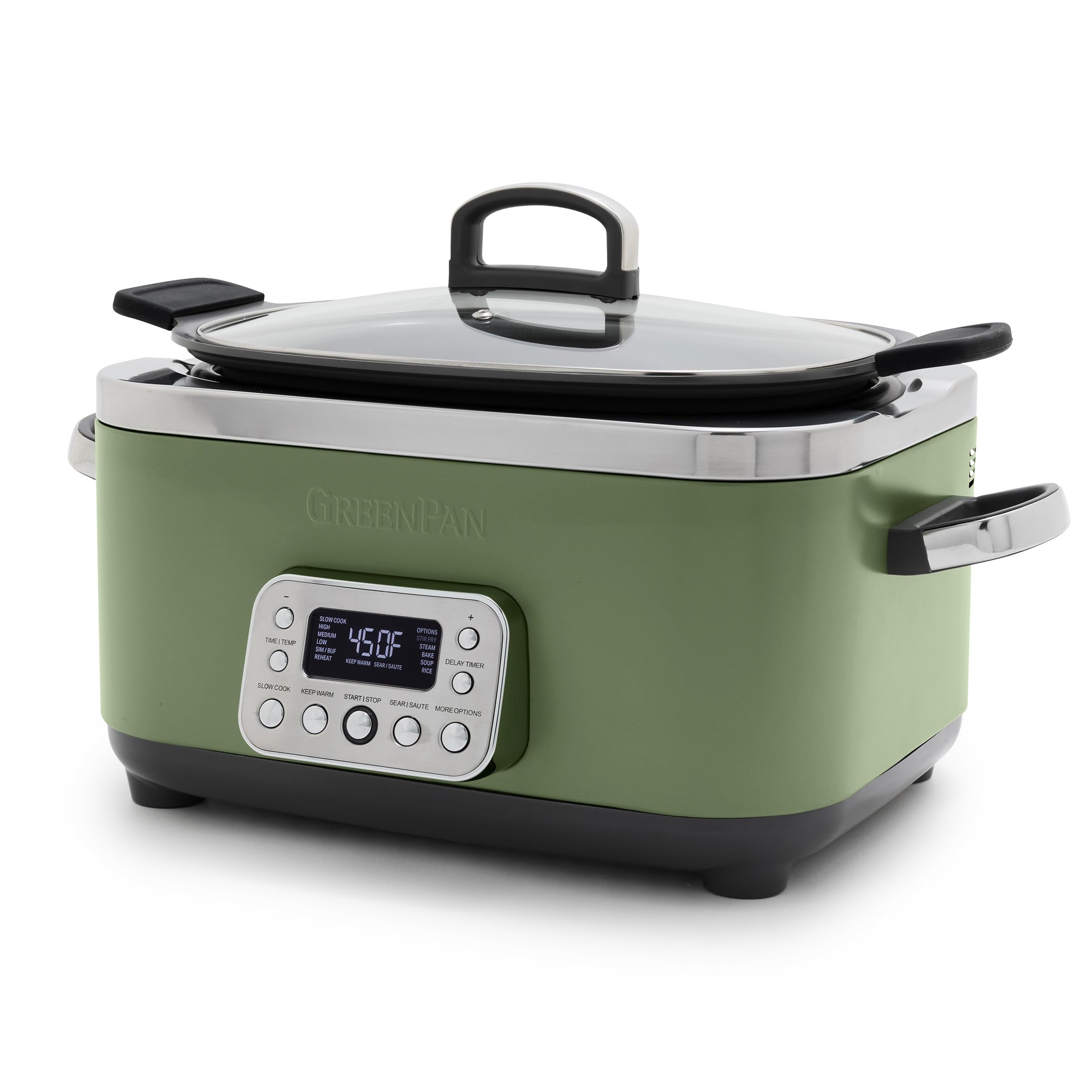
This is a key pick for a very specific (very real) shopper: the person who tried a pressure multicooker’s slow-cook mode and thought, “Wait… why doesn’t this feel like my old slow cooker?” The GreenPan Elite is slow-cooker-first, and it leans into the thing slow cookers do best: gentle, steady heat and comfort-food reliability— with the modern upgrade everyone wants: the ability to brown right in the pot.
Owners repeatedly praise the “one-pot” feeling: sear meat, sweat aromatics, then slow cook without transferring to a skillet. That single workflow change is huge because it’s what gives slow-cooked meals depth. It also has the kind of nonstick that makes weeknight cleanup feel almost unfairly easy—especially for sticky sauces, braises, and stews. And if you care about cookware materials, the ceramic nonstick focus (PFAS-free positioning) is the reason this model exists in the premium lane.
This is not a pressure cooker, so think of it as the “slow-cook perfectionist” option. If you want pressure speed, choose one of the true pressure models. If you want the slow-cook experience to feel confident every single time—and you want cleanup to be fast—this is where the GreenPan shines.
Why it’s special
- In-pot browning – The flavor-building step happens where it should: in the same pot.
- Nonstick cleanup joy – Great for stews, sauces, and foods that usually cling to stainless.
- Designed for slow cooking first – If slow-cook results matter most, this category delivers.
- Thoughtful extras – Presets and included accessories support real cooking, not just reheating.
Good to know
- This is not a pressure cooker—choose it for slow cooking, searing, and multi-cook versatility.
- Button-based controls may feel less intuitive for people who strongly prefer physical dials.
- Because the pot is premium, you’ll want to treat the surface with respect for long-term performance.
Ideal for: slow-cook lovers who want premium nonstick comfort cooking with real browning power—and who don’t want to gamble on a multicooker’s slow mode.
3. Nuwave Duet 450‑in‑1 (6 Qt) – Pressure + Air Fry + Grill for “Tender & Crisp” Meals

The Nuwave Duet is built for the cook who cares about results and likes to experiment. It’s not the simplest machine in the guide, but it’s one of the most “kitchen-lab” capable: pressure cooking for speed and tenderness, air frying for crisp texture, and grilling/searing support—plus a temperature probe to help you stop guessing with proteins.
In real owner feedback, you’ll see the same pattern: people love the idea of replacing multiple appliances, and many report strong performance once they learn the machine. Steaks with visible sear lines, chicken cooked from frozen quickly, and a general sense of “this thing can do a lot if you let it.” The big reality check is air-fry surface area. The pot may be large, but air frying is limited by basket footprint. That’s not a flaw—it’s physics—but it matters for households that expect to crisp food for a crowd.
The other real-life consideration is the multi-lid workflow. Pressure cooking means steam. If you want to switch to crisping, you’ll vent, open, then swap lids. Some cooks love that flexibility. Others decide they’d rather choose one method for that meal. If you’re the kind of person who likes learning a tool and then using it hard, the Duet can be a satisfying “master it once, enjoy it forever” machine.
Why it’s worth it
- Probe-driven confidence – Great for proteins when you hate overcooking or undercooking.
- Combo cooking potential – Pressure for tenderness, air fry for crisp: the best of both worlds.
- Strong feature density – Lots of presets and customization for people who like control.
- Good “space saver” logic – If it replaces multiple appliances, the footprint makes sense.
Good to know
- Air frying capacity is smaller than the overall pot size suggests—plan realistic batch sizes.
- Multi-lid storage and swapping is part of the deal; it’s amazing for some cooks, annoying for others.
- Like many advanced machines, it’s best after a few practice runs—don’t learn it on your busiest weeknight.
Ideal for: cooks who want pressure speed plus crisp/grill finishing, and who enjoy a “dial it in” appliance with a probe for precision.
4. Nuwave Duet 540‑in‑1 Deluxe (6 Qt) – The “Kitchen Playground” Version

Think of this model as the “more toys in the box” version of the Duet concept. If you like trying new methods—dehydrating, multi-stage cooking, experimenting with racks and pans—this bundle is designed to make the appliance feel like a full cooking system, not just a pot with a lid.
Owners commonly describe the pressure cooking performance as the standout: tender roasts, great stew bases, and a satisfying “set it, come back later” rhythm. Air frying works well, but (again) expect the basket space limitation—most combo machines air fry best when you treat it as “crisp finishing for tonight’s protein” rather than “deep fryer replacement for a party.”
This is also the kind of machine where small technique adjustments matter. For example, bacon or thin foods can scorch if you use a default program without accounting for preheat. Cooks who are willing to tweak temperature and time love this because it gives them control. Cooks who want “press button, perfect result” might feel like it’s too much personality. If you’re buying the Deluxe bundle, you’re basically saying: “I want options, and I’m okay learning them.”
Why it stands out
- Accessory depth – More ways to cook, more ways to finish, more ways to experiment.
- Pressure cooking strength – Great for tender meats, soups, and comfort meals.
- Customization – Memory slots reward cooks who like saving “my perfect settings.”
- Solid build feel – Many users describe it as sturdy and capable once learned.
Good to know
- Default presets can be aggressive for certain foods—expect a short learning curve.
- Heat venting can warm your kitchen (common with powerful air-fry lids).
- As with any multi-lid system, you need storage space and a rhythm for swapping lids.
Ideal for: cooks who want a feature-rich combo machine and enjoy customizing results with accessories and saved settings.
5. Our Place Dream Cooker (6 Qt) – Beautiful, Beginner-Friendly, and Surprisingly Capable
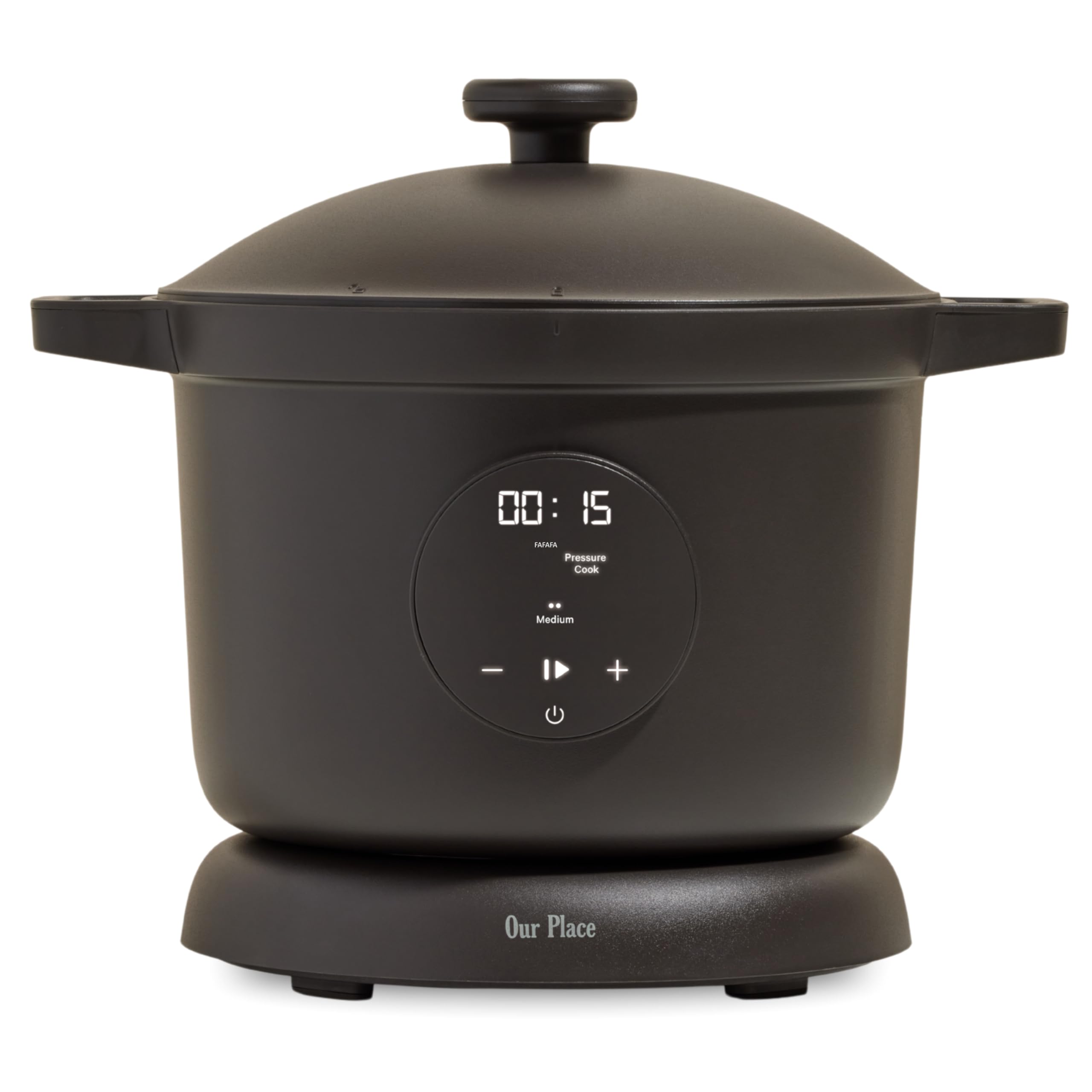
The Dream Cooker is what happens when a brand looks at multicookers and says, “Why are we making people memorize button language?” Instead of burying you in preset names, it focuses on four modes—pressure cook, sauté/sear, slow cook, warm— and makes you feel like you’re choosing cooking logic rather than decoding a device.
This is why owners who felt overwhelmed by other multicookers tend to love it. They talk about it like a kitchen confidence booster: sear directly in the pot, cook beans without planning a whole afternoon, do rice and stews with minimal effort, and clean up without a battle because the ceramic nonstick releases easily. The hands-free auto steam release is a major psychological win too. It removes the “steam moment” that makes many first-time pressure cooks hesitant.
The Dream Cooker is also honest in what it isn’t: it’s not an air fryer, it’s not trying to be 17 appliances, and it won’t overwhelm you with dozens of presets. If you want maximum feature density, choose a Pro Crisp or a Nuwave. If you want a cooker that you’ll actually use because it feels calm and simple, this one is a strong contender.
Why people love it
- Low intimidation – Simple modes and a clean touchscreen make it easy to learn quickly.
- Auto steam release – Removes pressure-cooking anxiety and reduces “hovering.”
- Nonstick cleanup – Great for sticky grains, beans, and weeknight sauces.
- Countertop aesthetics – The rare multicooker people proudly leave out (and actually use more).
Good to know
- Fewer presets means you may use outside recipes for times and technique—great for some, annoying for others.
- Ceramic nonstick is happiest with gentle tools and mindful cleaning habits.
- If crisping is a priority (wings, fries), you’ll want a model with an air-fry lid.
Ideal for: busy cooks who want a simple, beautiful machine that makes pressure cooking feel approachable and makes cleanup feel easy.
6. Instant Pot Duo Plus WhisperQuiet 9‑in‑1 (8 Qt) – Calm, Guided, Big‑Family Cooking

If you cook big batches and hate the drama of loud venting, this model is a quiet hero. WhisperQuiet isn’t a gimmick for many households—it’s the difference between “I’ll pressure cook anytime” and “I only pressure cook when I feel like dealing with the noise.” Add a progress display that shows where you are in the cooking cycle, and you get a cooker that feels more guided and less mysterious.
Owners who batch cook love the capacity jump. It’s the kind of size that makes meal prep feel efficient: a big pot of chili, a pile of shredded chicken, a full batch of beans, or a large cut of meat that would be cramped in smaller pots. People also consistently praise the build quality and the feeling of “this will last.”
One expert-level note: tall 8-quart pots can be amazing for volume, but sautéing and reducing can take longer because evaporation has to travel up and out. That’s not a dealbreaker; it’s just the reality of a deeper vessel. If you reduce sauces often, finish with sauté a little longer than you would in a wide pan—or do your reduction after pressure cooking with the lid off to concentrate flavors.
Why it’s a kitchen upgrade
- Quiet pressure release – A true quality-of-life feature for calm households.
- Big-batch capacity – Great for meal prep, gatherings, and large families.
- Guided cooking feel – The progress bar reduces uncertainty and helps beginners relax.
- Stainless durability – Built for frequent use and easy cleaning.
Good to know
- Big capacity also means a bigger footprint—plan counter or storage space.
- Deep pots can reduce slower than wide pans—finish sauces with lid off and patience.
- If you want crisping, you’ll want a crisp/air-fry lid model instead.
Ideal for: meal preppers and big families who want quiet steam release, guided usability, and a reliable large-capacity cooker.
7. CHEF iQ Smart Pressure Cooker (6 Qt) – Built‑In Scale + Guided Recipes That Actually Change Your Cooking

CHEF iQ is the rare “smart appliance” that can genuinely make you a better cook—especially if your friction point is the mental load of cooking. Instead of asking you to measure everything and remember liquid ratios, it uses a built-in scale and guided recipes to walk you through meals step by step. For the right person, it feels like having a calm instructor in the kitchen.
Owner stories often read like this: “I didn’t like cooking… now I cook.” That’s not about hype. It’s about removing decision fatigue. The machine helps with timing, prompts you for next steps, and makes one-pot cooking feel organized. It also supports multiple pressure release methods and has auto-release functionality, which reduces the “pressure moment” stress.
Where CHEF iQ shines is repeatability. Once you find a meal you love, it becomes easy to replicate without thinking. And long-term satisfaction often comes from support and durability: owners frequently describe using it weekly for years, and some report excellent customer service when parts wear out. The realistic downside is that app-connected devices can occasionally desync or feel “techy.” If you want zero app dependency, choose a classic Instant Pot. If you want the highest chance of cooking success with the least mental effort, CHEF iQ is a standout.
Why it’s a game changer
- Built-in scale – Reduces measuring clutter and improves consistency.
- Guided cooking – Step-by-step prompts help beginners and busy cooks succeed.
- Auto pressure release options – A calmer, safer-feeling pressure experience for many users.
- Recipe ecosystem – Helps you move beyond “I only make chili in it” into real variety.
Good to know
- Smart features are amazing when they work smoothly, but occasional app sync issues can happen.
- If you dislike cooking with a phone nearby, you may prefer a dial-and-button cooker.
- Tech-forward appliances are best when you’re willing to learn the system once and then enjoy the payoff.
Ideal for: anyone who wants guided confidence, fewer dishes, and a smart ecosystem that makes cooking feel easier and more repeatable.
8. Instant Pot Duo 7‑in‑1 (8 Qt) – The “Reliable Standard” for Big Meals and Big Batches

This is the classic “everyone has one” model for a reason: it works, it’s widely supported, and the recipe ecosystem is massive. If you want a cooker that can pressure cook quickly, slow cook gently, make rice, steam vegetables, sauté aromatics, and keep food warm without a learning cliff, the Duo line remains a safe, proven choice.
In long-term owner feedback, you’ll see durability stories: people using Instant Pots for years, replacing older units with newer ones, and buying multiple sizes to batch cook more efficiently. That’s a real indicator of usefulness—not just satisfaction in week one, but reliance in year three. If you like cooking once and eating for days, the 8-quart size is a gift. It lets you cook full bags of frozen proteins, big batches of eggs, large soups, and party-sized comfort meals.
The “pro-level” reality: managing the sealing ring is part of Instant Pot ownership. Silicone can hold flavors. Many experienced users keep separate rings for savory foods and lighter foods (like plain rice). It’s a tiny habit that makes the machine feel more versatile and keeps flavors cleaner. Once you adopt that habit, the Duo becomes a dependable everyday engine.
Why it’s a staple
- Reliability + community – Endless recipes, tips, and troubleshooting support.
- Great for batch cooking – Big capacity makes meal prep feel efficient.
- Simple core functions – Does pressure/slow/rice/steam/sauté without fuss.
- Durable stainless pot – Built for frequent use and dishwasher cleanup.
Good to know
- Sealing rings can hold aroma; extra rings or deeper cleaning keeps flavors neutral.
- 8-quart size is big—amazing for batches, but store it intentionally.
- Slow cook mode is best treated as gentle; for “traditional crock” behavior, consider slow-cooker-first models.
Ideal for: families and meal preppers who want classic reliability, huge capacity, and a massive recipe/support ecosystem.
9. Instant Pot Pro 10‑in‑1 (6 Qt) – Better Sauté Control, Better Daily Ergonomics

The Instant Pot Pro is the model for people who actually cook—meaning you sauté often, you build sauces, you care about browning, and you want the appliance to feel stable and ergonomic rather than “basic.” Two practical upgrades make a big difference: a more controlled sauté experience (multiple heat levels) and a handled inner pot that’s easier to lift out safely.
Owners who come from nonstick inner pots often fall in love with the stainless insert here because it ages beautifully. It doesn’t scratch the way coatings can, it tolerates aggressive stirring, and it’s excellent for deglazing. If you make curries, gravies, or anything with fond-building, stainless is your friend. The sous vide function is another hidden win: it lets you do precision proteins without another gadget.
What’s also quietly important is the “it remembers settings” feel. When a cooker behaves consistently—same preheat rhythm, same sauté strength, same interface—you cook with more confidence. That confidence translates into fewer overcooked meals and fewer “why didn’t this work” frustrations. If you want a 6-quart size that feels like a serious tool, this is a strong choice.
Why it earns “Pro” status
- Better sauté control – Multiple heat levels help you simmer, reduce, and brown with more precision.
- Handled inner pot – Easier lifting and stirring stability are real daily-life improvements.
- Stainless durability – Great for searing, deglazing, and long-term toughness.
- Extra functions that matter – Sous vide and sterilize can genuinely replace other gadgets.
Good to know
- Stainless requires technique for rice/oats; use correct liquid ratios and allow natural release when needed.
- If you only pressure cook occasionally, a simpler model may feel “enough.”
- For crisp finishing, you’ll need a separate air fryer or a crisp-lid model.
Ideal for: frequent cooks who want a durable stainless setup, better sauté control, and a 6-quart size that feels easy to use daily.
10. Instant Pot Duo Plus 9‑in‑1 (6 Qt) – The “Most Households” Sweet Spot

The Duo Plus is the model I point to when someone says, “I want an Instant Pot, but I want it to feel modern and easy.” It hits the sweet spot: enough functions to cover everyday life (pressure, slow, sauté, steam, rice, yogurt, keep warm, sterilize), plus a display that keeps you informed without turning into a cockpit.
Owners who use it for a year or more often describe it as indispensable. Not because it’s flashy—because it quietly eliminates repetitive kitchen work: rice that comes out reliably, soups and stews that become weeknight friendly, meats that tenderize without babysitting, and a pot you can clean without special rituals. It’s also one of those appliances people buy repeatedly for family members because it’s easy to teach.
There’s also a very real “small design details matter” lesson here. For example, alignment markings on some units can be subtle in low light, and that can be annoying. But the bigger picture remains: if you want a 6-quart multicooker that’s easy to live with, easy to find recipes for, and easy to recommend, Duo Plus stays in the top tier.
Why it works for most people
- Balanced feature set – Covers everyday cooking without being overwhelming.
- Helpful display – Real-time indicators reduce guesswork.
- Easy storage – Detachable cord makes it easier to tuck away.
- Strong long-term usage – Many owners report using it weekly for years.
Good to know
- Like all pressure cookers, lid and gasket cleaning habits improve long-term satisfaction.
- Some design markings can be subtle depending on color; learn your lid alignment once and it becomes automatic.
- If crisp finishing is your main goal, you’ll want a crisp-lid model instead.
Ideal for: most households who want a modern, easy multicooker with a strong support ecosystem and a comfortable daily-use experience.
11. Ninja PossibleCooker PRO (8.5 Qt) – The Big-Capacity Slow‑Cook Machine for Hosts

If your dream meal is “big pot of something that feeds everyone,” the PossibleCooker is built for that life. This is a slow-cooker-first multi-cooker with a massive capacity, a pot designed to move from cooker to oven, and a workflow that feels like real cooking—not just warming and waiting.
Owners consistently praise the convenience of sautéing and then cooking in the same vessel. They also mention speed compared to older slow cookers—some meals finish faster than expected— which can be a win as long as you learn how your unit behaves. It’s the kind of machine that makes roasts, chili, pasta sauces, and one-pot meals feel easy for a crowd, and it can be a serious upgrade for anyone retiring an old crockpot that feels slow and uneven.
Important clarity: this is not a pressure cooker. So if what you want is “cook beans in 35 minutes,” choose a true pressure model. But if your priority is large-batch slow cooking, easy searing, and the ability to finish in the oven for a browned top, this category can be more satisfying than a pressure multicooker pretending to slow cook like a crock.
Why hosts love it
- Huge capacity – Built for parties, meal trains, and “feed the whole crew” cooking.
- Cooker-to-oven finishing – Great for browned tops, roasted edges, and casserole-style meals.
- One-pot workflow – Sear and slow cook without transferring dishes.
- Easy everyday use – Many owners describe it as simple, sturdy, and satisfying.
Good to know
- This is not a pressure cooker—choose it for slow cooking, braising, steaming, and oven finishing.
- The nonstick pot is happiest with mindful utensil choices and gentle cleaning habits.
- Large capacity means it takes space; it’s best when you’ll actually use that size.
Ideal for: entertaining households who want a large-capacity cooker that behaves like a true slow cooker and supports real browning and oven finishing.
12. Instant Pot Duo 7‑in‑1 (6 Qt) – The Proven “First Multicooker” for Most Kitchens

This is the “starter model” that became a household standard—because it just works. If you want pressure cooking, slow cooking, sautéing, steaming, rice, yogurt, and keep-warm in one tool, and you don’t need the newest interface design, the Duo remains a smart buy. It’s especially good for people who learn best by following the thousands of recipes already written for this style of cooker.
What long-time owners tend to love is the time savings: meats tenderize quickly, grains cook reliably, and weeknight soups become “I can do that” meals rather than “maybe this weekend” meals. And because it’s so common, troubleshooting is easy: you can find answers instantly if you forget a step (like sealing the valve). This sounds small, but it reduces the learning stress for new pressure cooks dramatically.
The biggest “expert tip” with the Duo is to treat it like a system. Use sauté to build flavor before pressure cooking. Let thick dishes rest a few minutes before quick release to reduce splatter risk. Clean the gasket thoroughly, and consider a second gasket if you do lots of spicy cooking and also want neutral rice. If you do those things, the Duo becomes a reliable, low-drama kitchen engine.
Why it’s still a bestseller
- Proven reliability – Many owners use it for years and buy again when upgrading sizes.
- Huge recipe ecosystem – Easy to find times, conversions, and meal ideas.
- Does the core jobs well – Pressure, slow, sauté, rice, steam, yogurt, warm.
- Easy to clean – Stainless pot and dishwasher-friendly parts simplify cleanup.
Good to know
- Slow cook mode can be gentler than a classic crockpot; use technique (preheat, finish with sauté) if needed.
- Gasket aromas are real; separate rings keep flavors cleaner.
- If you want crisping, you’ll need a separate air fryer or a crisp-lid model.
Ideal for: anyone who wants a classic, proven multicooker with massive recipe support and reliable day-to-day performance.
13. Midea 12‑in‑1 Electric Pressure Cooker (8 Qt) – Big Capacity, Big Convenience (Once You Learn It)

If you want an 8-quart pressure multicooker for big meals and meal prep, the Midea is compelling because it focuses on the fundamentals: capacity, solid cooking performance, and a stainless pot that’s easy to maintain. Owners often describe it as sturdy and capable—and once they get comfortable, it becomes a “throw it in and go” machine.
One of the most interesting real-world benefits people mention is odor containment. Pressure cooking naturally keeps cooking smells more contained than open-pot simmering, so if you’re sensitive to lingering onion/garlic aroma in your home, pressure cooking can feel like a hidden upgrade. Chili and stew can taste like you cooked all day, without turning your home into a spice cloud for the next 12 hours.
The trade-off is polish. First-time pressure cooks sometimes find the included manual less helpful than they’d like. If you’re comfortable learning from online recipes (and you are, if you’re reading this), that’s not a big problem—but it’s worth knowing so you don’t judge the cooker based on the first five minutes with the booklet. Once you learn the core pressure basics, the machine’s value is in how much food it can handle at once.
Why it’s a smart pick
- Big-batch capacity – Great for families, meal prep, and entertaining.
- Stainless inner pot – Durable, easy to clean, and great for browning.
- Odor containment – Pressure cooking can reduce lingering cooking smells in your home.
- Beginner-friendly controls – Once you know the basics, it’s simple to operate.
Good to know
- Documentation quality may not feel “premium”; plan to learn from recipes and practice.
- As with any pressure cooker, mastering release methods improves results and prevents splatter.
- If you want crisping, this category doesn’t provide it without an air-fry lid.
Ideal for: first-time pressure cooks who want a large-capacity machine and are willing to learn technique from recipes rather than relying only on the manual.
14. COSORI Pressure Cooker (6 Qt) – Easy Cleanup + Safer Venting for Daily Cooking
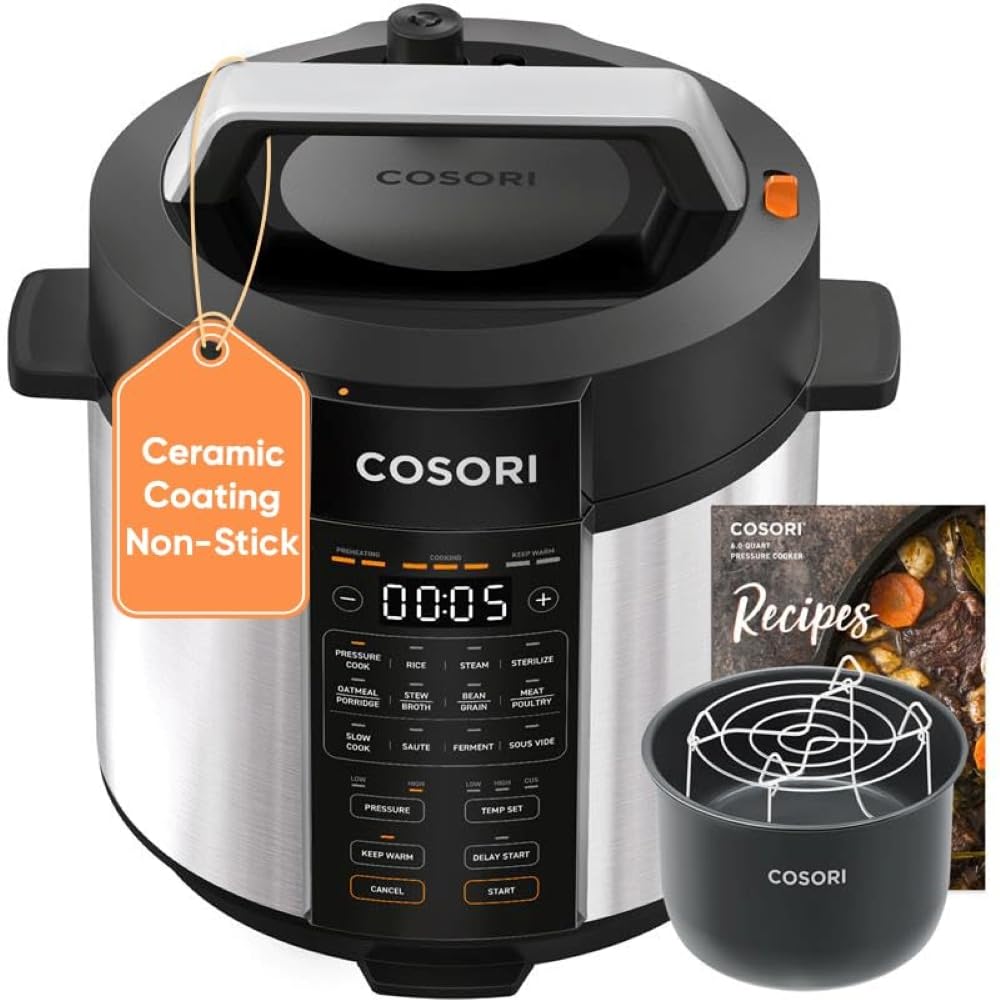
COSORI is well known in air-fryer circles, and their pressure cooker offering is designed to feel modern, safe, and easy to clean. The standout here is the ceramic inner pot experience: food releases easily, cleanup feels fast, and many owners describe it as a “first pressure cooker” that removed intimidation.
Venting design matters more than most buyers realize. When the steam release is positioned and angled thoughtfully, you don’t feel like you’re playing a hot-steam game every time you cook. Owners often call out the venting comfort as one of their favorite safety/ergonomic details, because it makes quick release less stressful and less “hands near steam.” That confidence tends to make people use pressure cooking more often—and that’s where the value comes from.
Performance-wise, this category is usually about fast everyday meals: soups, stews, rice, beans, braises, and quick proteins. If you want a cooker that feels intuitive and “clean” to use, COSORI is a strong value pick. If you want a huge recipe community like Instant Pot, Instant still wins on ecosystem. But for many households, this is the kind of machine that quietly becomes a daily dinner saver.
Why people choose it
- Ceramic nonstick release – Easy cleanup for sticky foods and daily cooking.
- Comfortable vent design – Steam release feels safer and less stressful for beginners.
- Modern, easy-to-use interface – Built for “I just want dinner done” simplicity.
- Solid everyday versatility – Handles the common meals most people actually cook.
Good to know
- Ceramic pots are happiest with gentle tools and sensible cleaning routines.
- If you want the biggest online recipe ecosystem, Instant Pot remains the easiest community to tap.
- For crisp finishing, choose a crisp-lid or air-fry combo model instead.
Ideal for: beginners and busy cooks who want easy cleanup, a calm venting experience, and a straightforward multicooker for everyday meals.
15. Instant Pot Duo Mini (3 Qt) – Small Counter, Big Utility

The Duo Mini is proof that “small” doesn’t mean “limited.” For singles, couples, dorm life, RV kitchens, or anyone who wants a second pot for sides, a 3-quart multicooker can be the most-used appliance you own—because it’s easy to store and fast to deploy.
This size is perfect for practical meals: a pot of rice, a batch of beans, a small soup, steamed vegetables, oatmeal, or shredded chicken for tacos without cooking enough for an entire neighborhood. It’s also an underrated strategy for households with a larger main cooker: use the big one for the main dish and the mini for a side, or cook two components at once without juggling stovetop burners.
The main limitation is obvious: you can’t throw in a huge roast. But for everyday cooking, the mini often feels more “right sized,” which means you’ll use it more. And because it’s in the Instant Pot ecosystem, recipes and help are easy to find—just mentally scale down batch sizes.
Why it’s so useful
- Fits small kitchens – Easy to store, easy to keep on the counter.
- Perfect for sides and meal components – Rice, beans, oats, soups, steamed veggies.
- Instant Pot recipe ecosystem – Easy learning curve and lots of community support.
- Great “second pot” strategy – Helps big-cooker households cook more efficiently.
Good to know
- Not built for large cuts of meat or big batch meal prep.
- Small volume means timing can feel faster—avoid overfilling and follow liquid minimum guidance.
- If your household regularly cooks 4–6 servings, a 6-quart will feel more natural.
Ideal for: singles/couples, small kitchens, dorms, RVs, and anyone who wants a compact multicooker that still delivers real pressure-cooking convenience.
16. Instant Pot RIO Mini (4 Qt) – Compact Size with a More “Pan‑Like” Cooking Surface
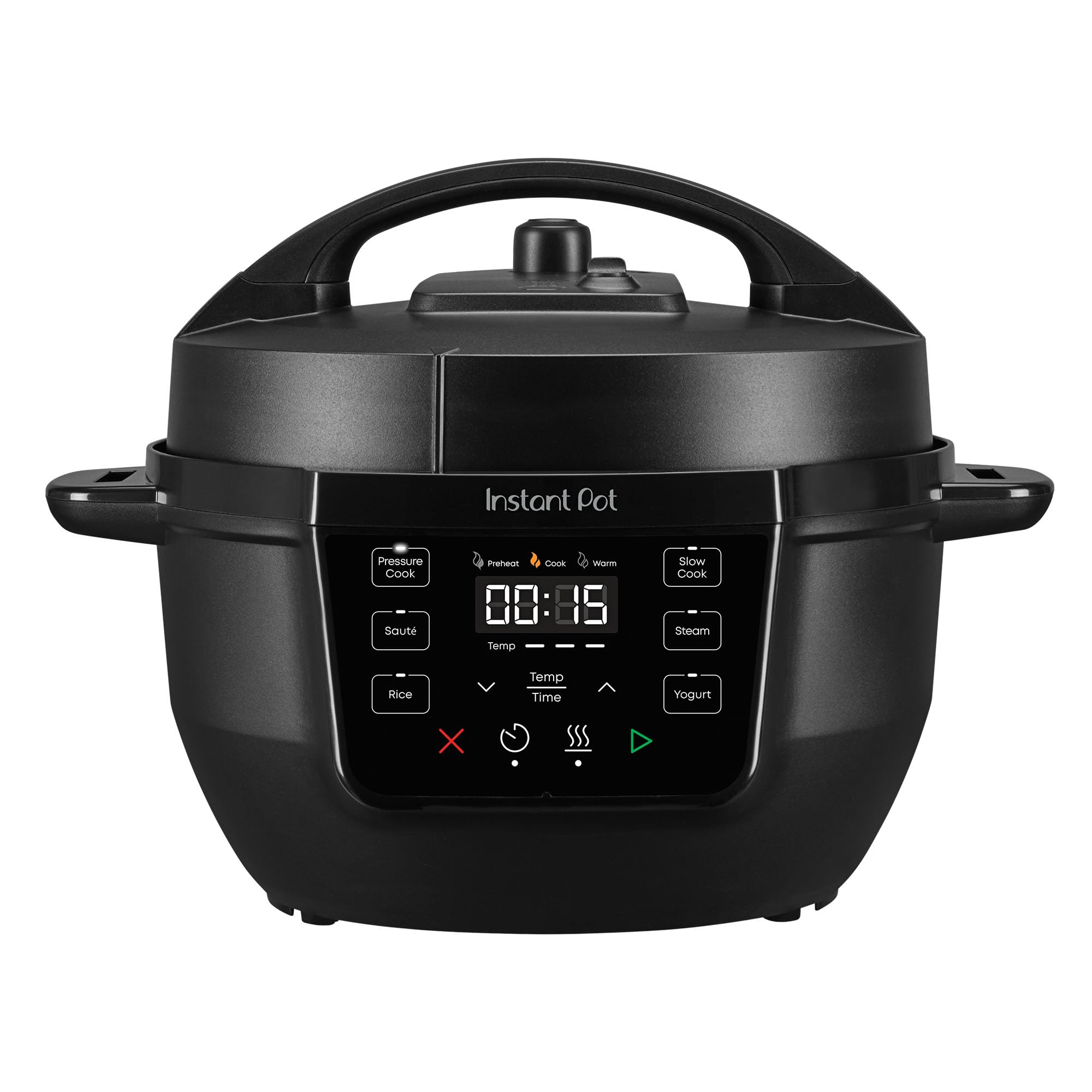
The RIO Mini sits in a sweet spot for small households that still want real meal flexibility. A 4-quart cooker is roomy enough for leftovers and comfort meals without feeling oversized, and many people find the cooking surface shape more pleasant for sautéing than tall, narrow pots. That matters because browning and stirring are where multicookers can either feel empowering or awkward.
Owners often describe this size as “apartment perfect”: big enough to cook for one or two plus leftovers, small enough to store without resentment. You can do soups, lentils, shredded meats, rice, yogurt, and steamed vegetables easily, and the progress indicator helps beginners feel oriented during the pressure cycle.
The key advantage over a 3-quart mini is breathing room. You can cook slightly larger portions, and you get a bit more flexibility for one-pot meals that include protein + vegetables + broth. If your kitchen is small but your appetite is real, 4-quart is often the underrated “right answer.”
Why it fits small life well
- Compact, but not cramped – Great for small households who still want leftovers.
- Better sauté feel – Wider cooking surface can feel more natural for browning and stirring.
- Everyday versatility – Covers pressure/slow/sauté/steam/rice/yogurt/warm basics.
- Easy cleanup – Stainless inner pot and dishwasher-friendly components simplify maintenance.
Good to know
- Still not a big-batch machine; large families will prefer 6–8 quart.
- As with any multicooker, slow cook mode can be gentler than a classic crockpot—use finishing techniques for thicker sauces.
- If you want crisp finishing, choose a crisp-lid combo model instead.
Ideal for: small families and apartment kitchens that want real pressure/slow versatility with a compact footprint and an easier sauté experience.
How Combo Cooking Actually Works (and Why “Slow Cook” Can Surprise You)
Most buyer frustration isn’t about quality—it’s about expectation mismatch. Pressure cooking and slow cooking are fundamentally different heat ecosystems, and when one appliance tries to do both, the “personality” of each mode matters. Here’s the practical truth, explained like a cook, not an engineer.
Why pressure cooking feels magical (and what it’s really doing)
- Pressure raises boiling temperature – Water can get hotter than a normal simmer, so collagen breaks down faster.
- Sealed environment traps moisture – Great for tenderness, but it can dilute sauces unless you reduce after.
- Time savings are real – You can get “slow-cooked tenderness” in a fraction of the time for many meats and legumes.
- Release method affects texture – Quick release can jolt delicate foods; natural release can keep things calmer and reduce splatter risk.
This is why pressure multicookers are so loved for beans, shredded meats, soups, stews, and grains. They don’t just cook faster—they make weeknight cooking feel possible when you’re tired.
Why “slow mode” sometimes disappoints in pressure multicookers
- Heat distribution differs – Many pressure cookers heat mainly from the bottom, while traditional slow cookers warm from sides too.
- Less evaporation – A sealed lid keeps moisture in, so sauces can stay thinner than you expect.
- Gentle tuning – Some slow modes run intentionally low to prevent scorching; that can feel like “not hot enough.”
This is where slow-cooker-first models (like GreenPan Elite and Ninja PossibleCooker) often feel more familiar: they’re designed to behave like true slow cookers first, with browning built in.
How to get the best results from any combo cooker
- Use sauté strategically – Brown meat, bloom spices, and reduce aromatics before you pressure or slow cook. This is where flavor begins.
- Finish with lid off when you want thickness – After pressure cooking, switch to sauté and reduce sauces to concentrate flavor.
- Master your release styles – Thick soups and stews often behave best with a short natural release, then quick release.
- Think in stages – Pressure cook for tenderness, then slow cook or keep warm to hold, then crisp (if you have an air-fry lid) to finish.
- Separate sealing rings (if you’re sensitive to aroma) – This keeps rice and yogurt from tasting like last week’s garlic-heavy meal.
“Tender & crisp” combo cooking: the simple mental model
- Pressure = internal doneness – Great for breaking down tough cuts and cooking proteins quickly.
- Air fry/grill = surface texture – Great for browning, crisping, and making food feel “finished.”
- Don’t overcrowd the basket – Crisp texture needs airflow; batch if needed for best results.
Once you think in stages, these machines stop feeling like mystery boxes and start feeling like predictable tools. And predictable tools are the ones you’ll rely on when life gets busy.
FAQ: Pressure + Slow Cooking Without the Confusion
Will a combo cooker replace my slow cooker completely?
Why did my chili come out thinner than usual?
Stainless steel or ceramic/nonstick—what’s better?
Do I need an air-fry lid, or is it just extra hype?
What’s the easiest way to avoid steam-release stress?
What size should I get: 6 quart or 8 quart?
Final Thoughts: Pick the Cooker That Matches Your Real Life
The best cooker is the one that makes you feel, halfway through a busy week, “Okay… dinner is handled.” Not because you became a different person—but because you bought a tool that matches how you actually cook.
Here’s how to translate this guide into a confident purchase:
- Want the best all-around “do it all” machine? Start with the Instant Pot Pro Crisp 11‑in‑1 (8 Qt). It’s the most complete pressure + slow + crisp workflow—and the one that makes weeknight meals feel easiest.
- Slow cooking is your top priority (and you want easy cleanup)? Choose the GreenPan Elite 14‑in‑1 (6 Qt) or the Ninja PossibleCooker PRO (8.5 Qt). These are slow-cooker-first options that feel more like classic comfort cooking (with modern browning perks).
- Want crisp texture and you like experimenting with a probe and grill plate? Look at the Nuwave Duet 450‑in‑1 or the Nuwave Duet 540‑in‑1 Deluxe. These are for cooks who enjoy dialing in results and want tender-and-crisp meals in one system.
- Want the simplest pressure cooking experience with a calm interface? The Our Place Dream Cooker is a strong pick for “no confusing presets” cooking with hands-free steam release.
- Want quiet steam release for big batches? Consider the Instant Pot Duo Plus WhisperQuiet (8 Qt). It’s made for calm batch cooking when noise is a real factor.
- Want guided “personal chef” help and fewer measuring dishes? Choose the CHEF iQ Smart Pressure Cooker. The built-in scale and guided recipes can be a genuine lifestyle upgrade for busy households.
- Want a classic, proven multicooker with huge recipe support? The Instant Pot Duo Plus (6 Qt) and Instant Pot Duo (6 Qt) are the steady “most kitchens” choices.
- Need compact power for a small kitchen? Grab the Instant Pot Duo Mini (3 Qt) or Instant Pot RIO Mini (4 Qt). Small doesn’t mean weak—it means you’ll actually use it.
The best purchase is the one you’ll still feel good about when you’re tired, hungry, and you just want dinner to work. Pick the pressure cooker slow cooker combo that matches your real rhythm—fast pressure meals, true slow comfort meals, crisp finishing, or guided cooking— and you’ll stop shopping and start enjoying the easiest version of home-cooked food.
